 Small batches, high standards. Our rapid prototyping service makes validation faster and easier —
  EN
EN


From Prototype To Production: How Every Metal Parts Machine Category Fits Your Shop
What Exactly Is a Metal Parts Machine
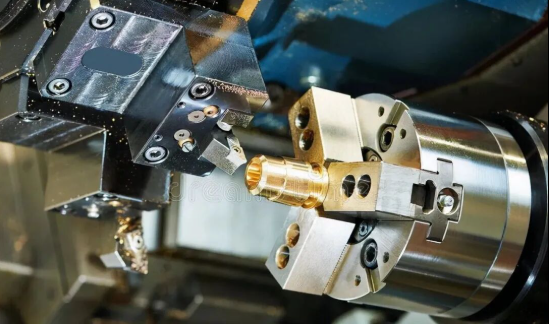
Ever walked through a manufacturing facility and felt overwhelmed by the sheer variety of equipment? You're not alone. The term "metal parts machine" gets tossed around frequently, yet it often creates more confusion than clarity. That's because it doesn't refer to a single piece of equipment—it describes an entire ecosystem of machines working together to transform raw metal into finished components.
From Raw Stock to Finished Component
Think about it this way: every machined part you've ever held started as a block, sheet, or bar of raw material. Getting from that raw stock to a precision component requires specific equipment designed for distinct operations. Some machines cut material away. Others bend, form, or join metal pieces together. Still others refine surfaces to meet exact specifications. Understanding this journey is essential before investing in any equipment for your shop.
According to manufacturing experts, the terms "metal fabrication" and "machining" are often used interchangeably, leading to confusion—yet they represent fundamentally different approaches to working with metal. Fabrication involves manipulating and assembling metal pieces to achieve a particular shape, while machining focuses on removing material to create precise components.
The Metal Parts Machine Ecosystem Explained
So what does this ecosystem actually include? At its core, you'll find three major categories working in harmony:
- Subtractive machines – CNC milling machines, lathes, and grinders that remove material through cutting, drilling, and grinding operations
- Formative equipment – Press brakes, stamping presses, and roll formers that shape metal without removing material
- Cutting and thermal systems – Laser cutters, plasma systems, and waterjet machines that slice through sheet and plate stock
Each category serves specific purposes. A metal CNC machine excels at producing metal machining parts with tight tolerances, while fabrication equipment handles structural components and enclosures more efficiently. The key lies in matching the right machine to your specific application.
Understanding the Machine Categories
Here's where things get practical. When you're evaluating machining parts production, consider what your finished components actually require. Complex geometries with intricate details? A CNC milling machine might be your answer. Cylindrical shafts and threaded components? Turning centers take center stage. Sheet metal enclosures and brackets? Fabrication equipment becomes essential.
Throughout this article, you'll discover how each machine category fits into the manufacturing puzzle. We'll explore everything from desktop prototyping equipment to industrial production systems, helping you understand tolerance capabilities, material compatibility, and real-world applications. Whether you're building in-house capability or evaluating manufacturing partners, this knowledge forms the foundation for smarter equipment decisions.
Ready to dive deeper? Let's start by breaking down the core machine categories and their specific functions in metal parts production.
Core Machine Categories and Their Functions
When you're standing in front of a parts catalog or walking through an equipment showroom, the sheer number of options can feel paralyzing. Should you invest in a cnc mill machine for precision work, or does your shop need cutting technology first? The answer depends entirely on understanding how each machine category operates—and where it fits in the broader production landscape.
Let's break down the three fundamental pillars of metal parts production. Once you understand these categories, matching equipment to your specific needs becomes far more intuitive.
Subtractive vs Formative vs Cutting Technologies
Imagine starting with a solid block of aluminum. Subtractive manufacturing literally subtracts material—chips fly, coolant flows, and your part emerges from what remains. This approach dominates precision work where tight tolerances matter most.
Formative processes take a different path entirely. Instead of removing material, these machines reshape it. A sheet of steel enters a press brake and exits as a bent bracket. No chips, no material waste from cutting—just controlled deformation that transforms flat stock into three-dimensional components.
Cutting technologies occupy unique territory between these approaches. Laser, plasma, waterjet, and EDM systems slice through material along precise paths, separating parts from sheet or plate stock. According to CNC cutting technology research, choosing the right method "can substantially impact your project's success, affecting material compatibility, production costs, and final product quality."
The Three Pillars of Metal Parts Production
Subtractive Manufacturing Equipment
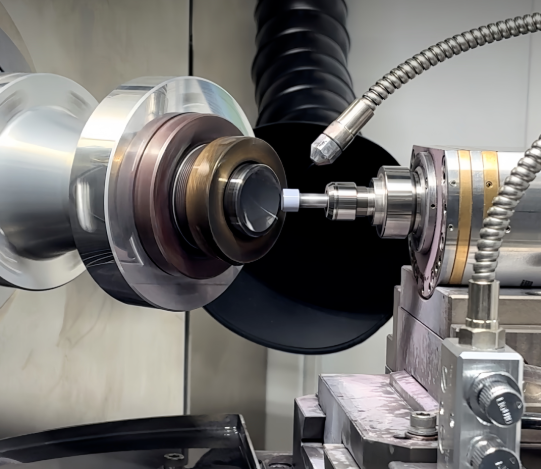
This category includes the workhorses of precision production. A cnc mill removes material using rotating milling machine cutters, creating complex geometries with remarkable accuracy. End milling operations shape pockets, contours, and surfaces, while 5 axis machining tackles components that would require multiple setups on simpler machines.
Lathes and turning centers specialize in rotational parts—shafts, bushings, and threaded components spin against cutting tools. Grinders take precision even further, achieving surface finishes and tolerances that other subtractive methods simply cannot match.
Formative Process Equipment
Press brakes bend sheet metal along straight lines, creating everything from simple brackets to complex enclosures. Stamping presses use dies to form shapes rapidly—ideal for high-volume production runs. Roll forming machines create consistent profiles in continuous operations, producing everything from structural channels to decorative trim.
Cutting and Thermal Technologies
Laser cutters deliver exceptional edge quality on thinner materials with tight curves and intricate patterns. Plasma cutting handles thicker materials at faster speeds, making it cost-effective for structural work. Waterjet systems cut virtually any material without heat-affected zones—critical when cutting stainless steel or other heat-sensitive alloys. EDM excels at hard materials and complex internal geometries that conventional cutting cannot achieve.
Matching Process to Part Requirements
Understanding capabilities is one thing—knowing when to apply each technology is another. The following table organizes these machine categories by practical selection criteria:
| Machine Type | Primary Function | Best Metal Types | Typical Tolerance Range | Ideal Applications |
|---|---|---|---|---|
| CNC Milling Machine | Material removal via rotating cutters | Aluminum, steel, titanium, brass | ±0.001" to ±0.005" | Complex 3D geometries, precision components, prototypes |
| CNC Lathe/Turning Center | Rotational material removal | All machinable metals | ±0.001" to ±0.005" | Shafts, bushings, threaded parts, cylindrical components |
| Surface Grinder | Precision finishing via abrasives | Hardened steels, tool steels | ±0.0001" to ±0.001" | Precision flats, mold components, gauge blocks |
| Press Brake | Sheet metal bending | Steel, aluminum, stainless | ±0.010" to ±0.030" | Brackets, enclosures, structural components |
| Stamping Press | High-speed forming with dies | Sheet metals up to medium thickness | ±0.005" to ±0.015" | High-volume production parts, automotive components |
| Laser Cutter | Thermal cutting via focused light | Steel, stainless, aluminum (thin) | ±0.003" to ±0.010" | Intricate profiles, detailed patterns, thin materials |
| Plasma Cutter | Thermal cutting via ionized gas | Conductive metals, thick plate | ±0.015" to ±0.030" | Structural steel, thick plate cutting, fast production |
| Waterjet | Cold cutting via high-pressure stream | Any material including heat-sensitive | ±0.003" to ±0.010" | Heat-sensitive materials, thick sections, mixed materials |
| EDM (Wire/Sinker) | Electrical discharge material removal | Conductive metals, hardened steel | ±0.0001" to ±0.001" | Complex internal features, hard materials, tight tolerances |
Notice how tolerance capabilities vary dramatically across categories. According to CNC machining tolerance standards, processes like surface grinding can achieve ±0.0001" precision, while forming operations typically work within ±0.010" to ±0.030". Your part requirements should drive machine selection—not the other way around.
Here's a practical rule: if your component demands tolerances tighter than ±0.005", you're likely looking at subtractive CNC processes. If you need to produce high volumes of simpler geometries from sheet stock, formative and cutting technologies often prove more cost-effective.
With this foundation in place, let's explore CNC milling machines in greater detail—the equipment category that often serves as the backbone of precision metal parts production.
CNC Milling Machines for Precision Metal Work
Walk into almost any precision machine shop and you'll find CNC mills at the heart of operations. These machines have earned their reputation as the workhorses of metal parts production—and for good reason. A milling machine with CNC capability transforms digital designs into physical components with remarkable consistency, whether you're cutting aluminum prototypes or production runs of hardened steel parts.
But here's where many buyers stumble: not all cnc mills are created equal. The configuration you choose dramatically affects what you can produce, how quickly you can produce it, and at what cost. Let's break down the critical differences that matter for your specific applications.
Axis Configurations and Their Capabilities
The number of axes on a CNC milling machine determines its range of motion—and ultimately, the complexity of parts it can produce efficiently.
3-Axis CNC Mills
These machines move along the X-axis, Y-axis, and Z-axis dimensions. According to CNC Cookbook's machining guide, 3-axis machining "is best suited to the manufacture of planar milled profiles, drillings and threaded holes in-line with an axis." They excel at simpler projects where operations like drilling, threading, and surface milling dominate. For many shops, especially smaller businesses, 3-axis machines offer the best balance between capability and cost.
4-Axis CNC Mills
Adding a rotating A-axis transforms what's possible. This fourth axis enables continuous cutting along arcs and creation of intricate profiles like helixes—particularly valuable for aerospace components and cam lobes. The real advantage? You can machine angled features and multiple sides of a part without repositioning, eliminating extra setups and reducing cycle times significantly.
5-Axis CNC Mills
When you need the ultimate in geometric complexity, 5 axis machining delivers. By adding a second rotating axis, these machines can approach the workpiece from virtually any angle. Complex contoured surfaces, undercuts, and intricate aerospace components become achievable in single setups. However, as industry experts note, this capability comes with higher costs and demands more sophisticated programming skills.
Which configuration should you choose? Consider this practical guidance: 3-axis machines handle 80% of typical shop work cost-effectively. Move to 4-axis when you're regularly producing parts with features on multiple sides or rotational elements. Reserve 5-axis capability for genuinely complex geometries where the productivity gains justify the investment.
Desktop to Industrial Scale Options
The spectrum of available CNC milling equipment spans from compact desktop milling machines to massive industrial machining centers. Understanding where your needs fall on this spectrum prevents both over-spending and capability gaps.
Benchtop and Mini Mills
A benchtop milling machine offers an accessible entry point for prototyping, small-scale production, and educational applications. According to CNC Masters' milling guide, desktop milling machines "are compact yet powerful tools that have considerably expanded manufacturing and prototyping." A mini cnc mill typically handles softer materials like aluminum, brass, and plastics with excellent precision—ideal for engineers and hobbyists creating intricate designs.
Machines like the MR 1 and similar compact CNC platforms have made precision milling accessible to home shops and small businesses. For hobbyist desktop mills, expect to invest roughly $2,500 to $7,500 for solid equipment. These machines sacrifice some rigidity compared to larger counterparts, but deliver impressive results within their designed envelope.
Knee Mills and Mid-Range Equipment
CNC knee mills occupy the middle ground—versatile enough for diverse job shop work while remaining more affordable than full production machining centers. These machines handle both manual and CNC operations, making them ideal for shops transitioning from manual equipment. CNC knee mills typically range from $15,000 to $75,000 depending on features and capabilities.
Production Machining Centers
For high-volume work demanding maximum rigidity and speed, industrial vertical and horizontal machining centers represent the top tier. These machines feature robust construction, automatic tool changers, and sophisticated controls designed for continuous production. If you're searching for a cnc milling machine for sale in this category, expect investments starting around $45,000 for 3-axis systems and climbing well beyond $100,000 for full-featured production equipment.
Material Removal Rates and Surface Finish
Three mechanical factors determine how aggressively your CNC mill can cut—and how smooth the resulting surfaces will be:
Ball Screws and Precision Motion
Quality ball screws translate motor rotation into precise linear movement. Higher-grade ball screws deliver better positioning accuracy and repeatability. When evaluating machines, check backlash specifications—this directly affects dimensional accuracy on finished parts.
Spindle Power and Speed
Spindle horsepower determines how much material you can remove per pass, while speed range affects surface finish and tool life. High-speed spindles reaching 10,000 to 20,000 RPM excel at aluminum and softer materials. Lower-speed, higher-torque spindles handle harder steels more effectively. Match spindle characteristics to your primary materials.
Machine Rigidity
Cast iron construction isn't just about durability—it's about vibration damping. Heavier, more rigid machines produce better surface finishes and tighter tolerances because they resist deflection under cutting forces. This matters especially when machining harder metals or taking aggressive cuts.
Key Specifications Buyers Should Evaluate
Before committing to any CNC milling machine purchase, carefully assess these critical specifications:
- Spindle speed range – Ensure the machine covers speeds appropriate for your materials (lower for steel, higher for aluminum)
- Table size and work envelope – Match to your largest anticipated workpiece dimensions with room to spare for fixturing
- Axis travel (X, Y, Z) – Verify adequate travel in all directions for your part geometries
- Repeatability and accuracy specifications – Positioning repeatability of ±0.0002" or better indicates quality construction
- Spindle horsepower and torque – Higher power enables faster material removal; adequate torque handles harder materials
- Control system – Evaluate software compatibility, programming ease, and available support
- Rapid traverse rates – Faster rapids reduce non-cutting time, improving overall productivity
- Tool capacity – Automatic tool changers with adequate magazine size reduce setup time between operations
Remember that choosing between 3-axis, 4-axis, or 5-axis capability is just the starting point. As industry buying guides emphasize, the specifications of a CNC milling machine "matter a lot"—make sure they match your project needs before investing.
With milling capabilities covered, let's turn our attention to another essential category: lathes and turning centers that excel at producing cylindrical and rotational components.
Lathes and Turning Centers for Rotational Parts
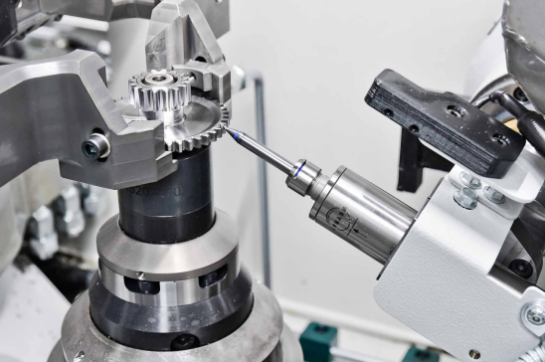
Picture a shaft spinning at high speed while a precision cutting tool shapes its surface—that's turning in action. When your parts feature cylindrical geometries, threaded sections, or rotational symmetry, lathes and turning centers become indispensable. These machines approach metal removal from a fundamentally different angle than milling, literally rotating the workpiece rather than the cutting tool.
Understanding when to choose turning over milling—and which lathe configuration suits your needs—can dramatically impact both part quality and production efficiency. Let's explore how computer numerical control has transformed these machines from single-operation equipment into complete machining solutions.
When Turning Beats Milling
Here's a practical question: if you need to produce a round shaft, would you rather spin the workpiece against a stationary tool, or clamp it down and move a rotating cutter around it? Physics favors the first approach for cylindrical parts.
According to manufacturing process research, "the main difference between turning and milling lies in how material is removed from a workpiece. In CNC turning, the workpiece rotates while a relatively stationary, single-point cutting tool shapes the surface." This fundamental difference creates significant advantages for specific part types.
Turning excels when your components require:
- Shafts and spindles – Motor shafts, axles, and drive components where concentricity matters critically
- Bushings and sleeves – Precision bores with tight tolerance requirements for bearing surfaces
- Fittings and coupling nuts – Threaded components requiring internal and external thread features
- Threaded components – Parts using thread forming screws or requiring machined threads
- Trailer spindle assemblies – Heavy-duty cylindrical components for automotive and trailer applications
Why does turning win for these applications? The continuous rotation of the workpiece naturally produces concentric features. Maintaining roundness and dimensional accuracy becomes inherent to the process rather than something you fight to achieve. For a component like a trailer spindle requiring precise bearing surfaces, turning delivers the concentricity that milling simply cannot match as efficiently.
Live Tooling and Multi-Tasking Capabilities
Traditional lathes operated on two axes—X for cross-slide movement and Z along the spindle axis. A computer numerical control lathe modernized this with programmable precision, but the real revolution came with live tooling and multi-axis capabilities.
What's the difference? A standard 2-axis CNC lathe performs turning operations exceptionally well, but any milled features—keyways, flats, cross-drilled holes—require moving the part to a separate milling machine. That means additional setups, more handling, and increased opportunities for error.
CNC turn-mill centers change this equation entirely. As industry experts explain, "CNC turn mill centers offer a wider range of capabilities. They can operate on multiple axes, including the standard X and Z axes, as well as additional axes for milling functions. This allows them to perform a variety of operations beyond basic turning, such as drilling, milling, knurling, boring, tapering, and threading."
Consider these configuration levels:
- 2-Axis Turning Centers – Handle standard turning operations: facing, boring, threading, and grooving on rotational parts
- Live Tooling Systems – Add rotating tools to the turret, enabling drilling, tapping, and simple milling while the workpiece remains stationary or indexed
- Y-Axis Capability – Introduces off-centerline machining, allowing milled features like flats, keyways, and positioned holes
- Sub-Spindle Machines – Feature a secondary spindle that can grab the part after primary operations, enabling complete machining of both ends without manual intervention
The productivity gains from multi-tasking machines compound quickly. Instead of three setups across multiple machines, a single turn-mill center completes the entire part. That reduces handling time, eliminates repositioning errors, and dramatically shortens lead times for complex components.
Choosing Between Chuck and Bar-Fed Machines
How you load material into your lathe affects both capability and throughput. The choice between chuck work and bar-fed production depends on your part sizes, volumes, and geometry requirements.
Chuck-Style Turning
When machining larger blanks, castings, or forgings, chuck-style lathes offer flexibility. The operator loads individual workpieces into jaws that grip the part securely during machining. This approach handles varied geometries and larger diameters but requires manual loading between parts.
According to CNC lathe selection guidance, workpiece diameter significantly influences machine choice: "Small-diameter workpieces (Φ200mm – Φ400mm): Compact flat bed CNC lathes are suitable. Medium-diameter workpieces (Φ400mm – Φ800mm): Mid-range models such as CK6150 or CK6180 are widely used."
Bar-Fed Production
For high-volume production of smaller cylindrical parts, bar feeders transform turning economics. A bar of raw material feeds automatically through the spindle, and parts are machined sequentially from the same stock. After each part completes, the machine parts it off and advances fresh material.
This approach enables lights-out manufacturing—machines running unattended through night shifts, producing hundreds of identical parts. Swiss-type CNC lathes take this further, supporting the bar stock close to the cutting point for exceptional accuracy on small-diameter precision components.
Material Considerations for Turning Operations
The materials you machine influence spindle speeds, tooling choices, and ultimately which lathe configuration serves you best.
Aluminum and Soft Alloys
These materials machine readily at higher spindle speeds. Standard carbide inserts handle most aluminum turning efficiently, and chip evacuation rarely poses problems. Lighter-duty machines often perform well here, though rigidity still matters for surface finish quality.
Stainless Steel
Cutting stainless steel demands more from your equipment. Work hardening tendencies require consistent feed rates and appropriate depth of cut. Slant-bed CNC lathes offer advantages here—their design improves chip evacuation and provides better rigidity for the heavier cutting forces involved.
Harder Alloys and Tough Materials
Tool steels, superalloys, and hardened materials require robust machine construction. According to equipment selection guides, these applications need "lathes with powerful spindle motors, rigid beds, and high-torque drive systems." Cutting parameters must balance material removal rates against tool life, often favoring slower, more deliberate approaches.
The transformation brought by computer numerical control extends beyond simple automation. Modern CNC turning centers integrate measurement probing, adaptive feed control, and real-time monitoring that optimize cutting parameters automatically. What once required a skilled machinist's constant attention now proceeds reliably under programmed control—producing consistent parts shift after shift.
While turning centers handle rotational components masterfully, many metal parts begin as flat sheet stock requiring entirely different processing approaches. Let's examine sheet metal fabrication equipment and when these machines outperform chip-making alternatives.
Sheet Metal Fabrication Equipment Explained
What happens when your parts don't start as solid blocks or round bars? When you're producing enclosures, brackets, or structural components, machining from solid stock often wastes material and time. Sheet metal fabrication takes an entirely different approach—transforming thin flat sheets into finished components through cutting, bending, and forming operations.
Understanding when fabrication beats machining can save your shop significant money. According to manufacturing process research, "sheet metal fabrication tends to be more material-efficient. Since it starts with thin metal sheets and uses cutting and bending techniques to form components, there is less material wastage compared to machining." Let's explore the equipment that makes this possible.
Sheet Metal vs Solid Stock Processing
Here's a practical way to think about it: machining creates chips, fabrication doesn't. When you mill a bracket from a solid aluminum block, most of that raw material ends up as scrap. When you laser-cut and bend the same bracket from sheet stock, material waste drops dramatically.
Sheet metal fabrication processes work with thin flat sheets—typically less than 20mm thick—of steel, aluminum, stainless steel, copper, or brass. Instead of removing material through cutting operations, these machines:
- Cut profiles from flat stock using thermal or mechanical processes
- Bend and form flat pieces into three-dimensional shapes
- Join components through welding, fastening, or mechanical assembly
- Finish surfaces with coatings, plating, or other treatments
When does fabrication make more sense than machining? Consider these scenarios: your part has relatively simple geometry but requires precise bends. You need high volumes of standardized components. Your design features large flat areas with cutouts rather than complex 3D contours. In these cases, fabrication typically delivers faster turnaround and lower per-part costs.
Products like an aluminum tool chest, steel enclosures, HVAC ductwork, and automotive brackets routinely come from fabrication processes. These components might require a metal shim or plastic shim for precise fit-up during assembly—details that fabrication shops handle as part of complete part production.
Thermal Cutting Technologies Compared
Before you can bend sheet metal, you need to cut it. Three primary thermal cutting technologies dominate modern fabrication shops, each with distinct advantages depending on your materials and requirements.
According to cutting technology research, "CNC plasma cutting uses an accelerated jet of hot plasma to cut through electrically conductive materials. The plasma arc reaches temperatures up to 45,000°F, instantly melting and blowing away material to create precise cuts." Meanwhile, laser cutting "employs a focused beam of light to melt, burn, or vaporize material," and waterjet cutting "uses a high-pressure stream of water, often mixed with abrasive particles, to erode material along a programmed path."
How do you choose between them? The following comparison breaks down the critical differences:
| Criteria | Laser Cutting | Plasma Cutting | Waterjet Cutting |
|---|---|---|---|
| Material Thickness | Best under 1/4" (slows significantly over 1") | Optimal 0.018" to 2" (handles up to 6") | Cuts any thickness (commonly up to 12") |
| Edge Quality | Excellent—near-polished edges, minimal dross | Good—high-definition systems approach laser quality | Good—slightly textured, no heat-affected zone |
| Cutting Speed | Fastest on thin materials (under 1/4") | Fastest on medium-thick materials (100+ IPM on 1/2" steel) | Slowest (5-20 IPM depending on material) |
| Initial Investment | High ($200,000 - $1,000,000+) | Moderate ($50,000 - $300,000) | Moderate to High ($100,000 - $500,000) |
| Operating Cost | Higher (assist gases, maintenance, power) | Lowest cost per inch of cut | Highest (abrasive consumption, pump maintenance) |
| Heat-Affected Zone | Minimal but present | Moderate—can affect material properties | None—cold cutting process |
| Material Compatibility | Metals, some plastics (reflective metals challenging) | Electrically conductive materials only | Any material including composites, glass, stone |
What does this mean for your shop? If you primarily cut thin steel and aluminum with intricate details, laser cutting delivers superior edge quality and speed. For structural steel fabrication where you're processing 1/4" to 2" plate regularly, plasma cutting offers the best balance of speed, quality, and cost. When you need to cut heat-sensitive materials or mixed material types without affecting material properties, waterjet becomes essential despite slower speeds.
Modern fabrication facilities often integrate multiple cutting technologies. A shop might use laser cutting for precision components requiring tight tolerances, plasma for structural work where speed matters most, and maintain waterjet capability for specialty materials or when heat distortion cannot be tolerated.
Forming and Bending Equipment Essentials
Cutting creates flat profiles—but most sheet metal parts need three-dimensional shape. Forming equipment transforms those flat blanks into functional components through controlled bending and shaping operations.
Press Brakes
These machines create precise bends by pressing sheet metal between a punch and die. According to manufacturing experts, "sheet metal press brake machines are invaluable in industries that demand precision sheet metal bending. In sectors like automotive, aerospace, and construction, these machines produce complex shapes with remarkable accuracy."
Modern CNC press brakes feature programmable backstops, angle measurement systems, and automatic tool changing. They produce everything from simple 90-degree bends to complex multi-bend enclosures. When specifying a press brake, consider tonnage capacity (determines maximum material thickness and bend length), bed length, and stroke depth for box-forming operations.
Punch Presses
Turret punch presses create holes, louvers, and formed features using interchangeable tooling. A powerful press punches through the material, and the remaining sheet becomes your finished part—or moves on to additional operations. High-speed CNC punch presses excel at producing parts with numerous holes or repeated patterns, often faster than laser cutting for simpler geometries.
Stamping Equipment
For high-volume production, stamping presses use custom dies to form parts in single strokes. The upfront tooling investment pays off when producing thousands of identical components—automotive brackets, appliance panels, and similar parts where per-piece cost matters more than setup flexibility.
Roll Forming and Specialty Equipment
Roll formers create continuous profiles—think steel studs, roof panels, and structural channels. Specialty equipment like corner notchers, seamers, and flanging machines handle specific operations that complete fabricated assemblies. Even finishing equipment matters: a powder coating oven for sale might be the final piece needed to deliver complete, finished components rather than bare metal parts requiring outside processing.
Integrating Multiple Machine Types
Sounds complex? It can be—but modern fabrication shops treat this as a competitive advantage. By combining cutting, forming, and finishing capabilities under one roof, they deliver complete parts faster than shops relying on outside services for secondary operations.
Consider the workflow for producing steel shims or precision brackets:
- Laser cutting creates precise blanks from sheet stock
- Deburring removes sharp edges from cut profiles
- Press brake forming adds required bends
- Welding joins multiple components if needed
- Surface finishing (painting, plating, or powder coating) completes the part
This integrated approach eliminates shipping between vendors, reduces lead times, and maintains quality control throughout production. When evaluating fabrication partners or building your own capabilities, consider the complete process chain—not just individual machine specifications.
Whether you're producing enclosures that might rival a milling machine mill in complexity or simple brackets by the thousands, sheet metal fabrication offers efficient paths to finished components. The key lies in matching cutting technology, forming equipment, and finishing capabilities to your specific part requirements and production volumes.
Now that we've covered both chip-making and fabrication equipment, how do you actually decide which approach fits your application? The next section provides a practical decision framework that puts part requirements first.
Selecting the Right Machine for Your Application
You've explored milling machines, lathes, and fabrication equipment—but here's the real question: which one actually fits your project? Instead of starting with machine capabilities, flip the script. Start with what you need to produce, then work backward to the equipment that delivers it most effectively.
This decision framework organizes selection criteria around your goals rather than equipment specifications. Whether you're evaluating a small cnc machine for prototyping or considering a full production cell, these factors determine which investment makes sense.
Part Geometry Drives Machine Selection
What shape is the part? This single question eliminates half your options immediately.
Consider these geometry-driven guidelines:
- Cylindrical or rotational parts – Shafts, bushings, threaded fittings, and anything requiring concentricity points directly to lathes and turning centers
- Prismatic parts with complex pockets – Housings, manifolds, and multi-featured blocks favor CNC milling machines
- Flat profiles with bends – Brackets, enclosures, and structural components belong in fabrication territory
- Complex contoured surfaces – Aerospace components and organic shapes often require 4 or 5-axis capability
- Thin-walled enclosures – Sheet metal fabrication typically beats machining from solid for material efficiency
Imagine you need to produce a mounting bracket. If it's a simple bent piece with mounting holes, a laser cutter and press brake handle it efficiently. If it requires precision-machined bearing surfaces and threaded bosses, milling becomes necessary. The geometry itself tells you where to look.
According to manufacturing engineering experts, "certain design features can dramatically increase machining time, tooling requirements, and overall complexity. Deep cavities, thin walls, and intricate geometries are common culprits." Understanding how your part geometry affects processing difficulty helps you choose equipment that handles those challenges efficiently.
Volume and Tolerance Requirements
How many parts do you need, and how precise must they be? These two factors interact in ways that significantly affect machine selection and total project cost.
Tolerance Considerations
Different processes deliver different precision levels. When you need ±0.0005" positioning on critical features, you're looking at precision CNC equipment—not entry-level machines or general fabrication. But here's the trap many engineers fall into: applying unnecessarily tight tolerances everywhere.
As industry guidance emphasizes, "applying unnecessarily tight tolerances can significantly increase manufacturing costs and extend production times without providing additional value." A benchtop mill might achieve ±0.002" consistently—perfectly adequate for many applications. Reserve precision equipment for features that genuinely require it.
Volume Requirements
- Prototypes and one-offs (1-10 parts) – A home cnc machine or benchtop mill provides flexibility without major investment. Setup time matters less when you're not repeating the operation hundreds of times
- Low volume production (10-100 parts) – Standard CNC equipment balances capability with reasonable per-part costs. Manual operations remain viable for simpler geometries
- Medium volume (100-1,000 parts) – Automation features like bar feeders and pallet changers start paying dividends. Cycle time optimization becomes critical
- High volume (1,000+ parts) – Dedicated production equipment, specialized tooling, and potentially automated cells justify their investment through volume
The cnc machine cost equation changes dramatically across these volume ranges. That $50,000 turning center might seem expensive for prototype work but delivers excellent per-part economics at production volumes.
Material Compatibility Considerations
Your material choice constrains which machines can handle the job effectively—and sometimes eliminates options entirely.
According to CNC machining specialists, "while many engineers focus on mechanical properties like tensile strength and hardness, it is equally important to consider machinability, thermal conductivity, and material cost." A high-strength alloy might meet design requirements but prove challenging and time-consuming to machine on equipment lacking adequate rigidity or spindle power.
Consider these material-driven requirements:
- Aluminum alloys – Machine readily on most equipment; higher spindle speeds improve finish quality
- Mild and carbon steels – Require adequate rigidity; mid-range equipment handles these well
- Stainless steels – Demand robust machines with good chip evacuation; work hardening requires consistent feeds
- Tool steels and hardened materials – Need substantial spindle power, rigid construction, and often specialized tooling
- Titanium and superalloys – Require heavy-duty equipment with excellent thermal management
Shops working primarily with aluminum often find that lighter-duty equipment like Laguna Tools CNC machines or similar platforms deliver excellent results at accessible price points. Those regularly cutting hardened steels need heavier iron regardless of part size.
Industry Application Differences
Automotive, aerospace, and general industrial applications impose distinctly different requirements on equipment selection.
Automotive Applications
High volumes, tight delivery windows, and certified quality systems define automotive supply chains. Equipment must support statistical process control, maintain documented traceability, and deliver consistent results across production runs. Parts like chassis components or precision bushings require certified processes meeting IATF 16949 standards. Even products like an aluminum truck tool box destined for aftermarket sales often follow automotive quality expectations.
Aerospace Applications
Exotic materials, extreme tolerances, and extensive documentation characterize aerospace work. AS9100D certification requirements influence everything from machine selection to inspection equipment. Five-axis capability often proves essential for complex contoured surfaces, and traceability extends to individual tool inserts and material heat lots.
General Industrial Applications
Greater flexibility exists here, with tolerance requirements and volume demands varying widely. A small cnc machine producing custom fixtures differs dramatically from high-volume fastener production—yet both fall under this umbrella. Match equipment to your specific market requirements rather than over-specifying based on industries you don't serve.
Infrastructure and Operational Factors
Beyond the machine itself, practical considerations determine what you can actually install and operate effectively.
Shop Space Requirements
Machines need floor space plus working clearance for material handling, chip removal, and maintenance access. A benchtop mill fits a corner of a garage shop; a horizontal machining center demands industrial space with overhead crane access. Measure your available space realistically before falling in love with equipment specifications.
Power Requirements
Industrial CNC equipment typically requires 3-phase electrical service. According to shop startup experience shared by Rocket Machining & Design, "We had to put in about $60,000 to $70,000 in electricity in our current facility. We had to put in a whole new electrical panel and wiring to run to the machines." Factor electrical infrastructure costs into your equipment budget, especially if your facility wasn't originally designed for manufacturing.
Operator Skill Levels
Advanced equipment requires advanced skills. A 5-axis machining center sitting idle because no one can program it represents wasted capital. Evaluate your team's current capabilities honestly. Sometimes a simpler 3-axis machine running at full utilization outproduces sophisticated equipment that operators struggle to leverage effectively.
As one shop owner learned during startup, "whenever you think it's going to go fast, cut that time into a third, because it's going to take longer." Building proficiency with new equipment takes time—plan for the learning curve when selecting machine complexity.
With these selection criteria in hand, you can approach equipment decisions systematically. But capability alone doesn't guarantee quality—especially in demanding industries. The next section explores how certifications and quality systems ensure your chosen equipment delivers consistent, documented results.
Quality Standards and Certification Requirements
You've selected the right equipment for your application—but can you prove your parts meet specifications consistently? In demanding industries, your word isn't enough. Customers require documented evidence that your processes deliver reliable, repeatable results. That's where quality certifications and process controls become essential.
Think of certifications as a common language between manufacturers and customers. When you see AS9100D on an aerospace supplier's documentation, you know their quality management system meets rigorous industry standards. These certifications influence everything from machine selection to operator training—and increasingly determine whether you can even bid on certain contracts.
Understanding Industry Certifications
Different industries impose different quality requirements. Understanding which certifications matter for your target markets helps you build appropriate capabilities from the start.
According to aerospace manufacturing specialists, "The AS9100D quality certification is the industry standard for today's aerospace manufacturing companies. Choosing an aerospace provider that is AS9100D certified ensures that your custom machined components are produced and tested to the highest quality standards."
Here's what each major certification covers and who requires it:
- ISO 9001:2015 – The foundational quality management standard applicable across all industries. Covers documented procedures, management responsibility, resource management, product realization, and continuous improvement. Required as a baseline by most industrial customers and serves as the foundation for industry-specific standards.
- IATF 16949:2016 – The automotive industry quality standard built upon ISO 9001. Adds specific requirements for defect prevention, variation reduction, and waste elimination in the automotive supply chain. Essential for supplying precision machined metal parts to automotive OEMs and tier suppliers.
- AS9100D – The aerospace and defense quality standard. Adds requirements for product safety, counterfeit part prevention, and enhanced configuration management. Mandatory for aerospace contracts and demonstrates capability for producing high-tolerance components where failure isn't an option.
Why does this matter for equipment decisions? Certified quality systems require documented process controls—and your machines must support those requirements. Features like automatic measurement logging, tool life monitoring, and traceable calibration records become necessities rather than nice-to-haves.
Statistical Process Control in Modern Machining
Ever had this experience? The first part comes off the machine perfectly. Part fifty looks great. Then part two hundred shows up out of tolerance—and you discover the problem started developing around part one-fifty, but nobody caught it. That's exactly what Statistical Process Control prevents.
According to precision machining experts, "In CNC machining, a First Article Inspection (FAI) may look perfect, but during mass production, dimensional deviations can slowly accumulate. One successful part does not guarantee the next will be good. That's why FAI alone is not enough. You also need SPC to continuously monitor the process."
SPC transforms quality from reactive to predictive. Instead of finding problems after they've produced scrap, you catch trends before dimensions cross tolerance limits. Here's how it works in practice:
- Frequent sampling – Check key dimensions at regular intervals (every 5th or 10th piece, for example)
- Control chart plotting – Graph measurements in real time to visualize trends
- Early warning detection – Identify when dimensions drift toward tolerance limits before they cross
- Immediate corrective action – Adjust tool compensation or replace milling bits before producing defects
The manufacturing research continues: "We worked with a medical device customer whose previous supplier had a 92% yield. By applying SPC, we found that from the 85th part onward, a key bore diameter slowly drifted upward during tool life. We replaced the cutting edge at the 80th piece and adjusted offsets. The result: 99.7% yield."
Modern SPC systems integrate directly with CNC equipment. Probing cycles measure features automatically, software plots control charts in real time, and alerts notify operators when intervention is needed. This automation matters especially when producing machined metal parts requiring tight tolerances—much like how a coarse adjustment knob works in conjunction with fine adjustments on precision instruments, SPC provides the broad monitoring while targeted interventions handle the fine corrections.
Traceability and Documentation Requirements
When you're producing stainless self tapping screws or precision machined metal parts for critical applications, knowing that each piece meets specifications isn't enough. You need to prove it—and trace every part back to its material source, machine, operator, and inspection results.
Traceability requirements vary by industry but typically include:
- Material certifications – Mill test reports documenting alloy composition, heat treatment, and mechanical properties
- Process records – Which machine produced the part, which program version ran, which tools were used
- Inspection documentation – Dimensional results, visual inspection records, and any non-conformance reports
- Calibration records – Proof that measuring equipment was calibrated and accurate at the time of inspection
For aerospace applications especially, this documentation chain must be bulletproof. As industry experts emphasize, "Product consistency, finish, and performance are all meticulously verified" under AS9100D requirements. Every step from raw material to finished component gets documented—creating an audit trail that can reconstruct exactly how any given part was produced.
How does this influence machine selection? Equipment supporting automated data collection simplifies compliance dramatically. CNC machines that log cycle times, tool usage, and measurement results to networked databases reduce manual documentation burden while improving accuracy. Consider a screw simple machine examples scenario: even producing straightforward threaded components for certified applications requires documented evidence that each operation met specifications.
The bottom line? Quality certifications aren't just paperwork exercises. They represent systematic approaches to ensuring every part—whether it's a complex aerospace component or a simple machined bushing—meets specifications consistently. Building these capabilities into your shop from the start positions you for the contracts that demand them.
With quality systems in place, the next question becomes practical: how do you scale from proving out a design to delivering production quantities? That journey from prototype to production demands both speed and consistency—a challenge we'll explore next.
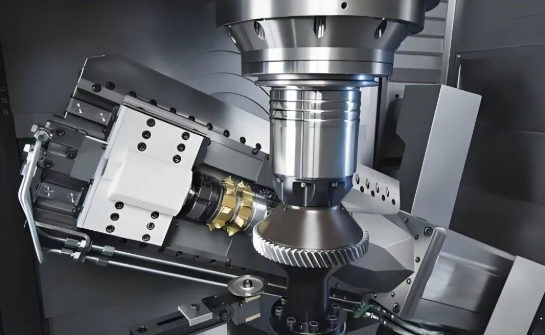
Scaling from Prototype to Production
You've validated your design, tested the first article, and confirmed the part works exactly as intended. Now what? The journey from that first successful prototype to reliable production quantities challenges manufacturers at every scale. Speed matters during development, but consistency and quality control become paramount when volumes climb.
According to manufacturing transition research, "the journey from initial prototype to mass production is a complex transformation for the development lifecycle of any product." Understanding how CNC milling machines and other metal parts equipment support this progression helps you plan smarter—whether building in-house capability or partnering with external resources.
From First Article to Full Production
Imagine this scenario: your prototype performed perfectly in testing. The design is locked. Your customer needs a thousand units in six weeks. Can you actually deliver?
The transition involves far more than simply running the same program repeatedly. As manufacturing experts explain, "there can be big differences between engineering a product for prototype and engineering the product for manufacturing, and good manufacturing partners should bring this level of acumen to the table, including design for manufacturability (DFM) and design for supply chain (DfSC) expertise."
Here's what changes when moving from CNC prototyping to production volumes:
- Fixturing requirements evolve – A prototype might get clamped in a vise; production demands dedicated fixtures for repeatability and faster load/unload cycles
- Tool life becomes critical – That roughing end mill lasting through ten prototypes might need replacement every fifty production parts
- Process documentation expands – Informal notes become formal work instructions with inspection checkpoints
- Material sourcing scales up – Buying stock for one part differs dramatically from securing consistent supply for ongoing production
The prototype stage validates design intent, but production demands validated processes. Statistical Process Control, discussed in the previous section, bridges this gap—ensuring that part five hundred matches part five with documented evidence.
Lead Time Considerations for Different Volumes
How fast can you go from CAD file to finished parts? The answer depends heavily on volume requirements and process complexity.
Prototype and First Article (1-5 parts)
Speed dominates this phase. According to rapid prototyping specialists, "while precision is crucial, speed is also key—the faster you can prototype, the sooner you can achieve your goals." Modern CNC machining metal parts services can deliver functional prototypes within days, sometimes faster. This rapid turnaround enables iterative design refinement before committing to production tooling or processes.
Low Volume Production (10-500 parts)
This intermediate stage tests both equipment capability and process stability. Manufacturing research indicates that "low-volume typically refers to quantities ranging from the tens to the hundreds of thousands of units, depending on the business and product." Companies can "quickly iterate on production designs, adapt to industry changes or introduce new features based on immediate feedback" during this phase.
Lead times stretch compared to prototyping—expect one to four weeks depending on complexity. However, this stage provides crucial validation that processes will scale successfully.
Production Volumes (500+ parts)
At production scale, lead times depend more on capacity allocation than setup time. A job requiring 5,000 machined parts might take four to eight weeks not because the machining is complex, but because scheduling machine time, securing materials, and managing quality documentation all require coordination.
For manufacturers serving automotive supply chains, these lead time pressures intensify. Just-in-time delivery expectations mean production must ramp quickly once designs finalize—yet quality certification requirements don't relax because timelines compress.
When to Outsource vs Build In-House Capability
Here's a question every growing shop faces: should you invest in that CNC machine on sale, or partner with an external provider for specialized work?
According to manufacturing strategy research, several factors should guide this decision:
Consider outsourcing when:
- You need capabilities across multiple manufacturing methods that a single machine can't provide
- Production volumes don't justify equipment investment and operator training costs
- Quality certifications required by customers would take years to develop internally
- Rapid prototyping needs are intermittent rather than continuous
- Specialty materials or processes fall outside your core expertise
Consider building in-house capability when:
- Consistent, high-volume production justifies dedicated equipment
- Lead time control and scheduling flexibility provide competitive advantage
- Proprietary processes or designs require confidentiality
- Transportation costs for outsourced parts significantly impact economics
- Integration with other in-house operations creates efficiency gains
The research emphasizes practical considerations: "If you are looking to run small production series, or if you're going to do some rapid prototyping on a non-frequent basis, going through a service is likely the better option." However, sustained production needs often tip the calculation toward internal investment.
Finding Partners That Bridge the Gap
For many manufacturers, the ideal solution combines internal capability with strategic outsourcing. Your shop handles core competencies while external partners provide specialized processes, overflow capacity, or certified production for demanding industries.
What should you look for in a machining metal parts partner? Several factors matter most:
- Quality certifications matching your industry – IATF 16949 for automotive, AS9100D for aerospace
- Rapid prototyping capability – Fast turnaround for design validation and first articles
- Production scalability – Capacity to grow from prototype quantities to full production
- Process control systems – Documented SPC and quality management ensuring consistency
- Material and process expertise – Experience with your specific alloys and tolerance requirements
For automotive applications specifically, Shaoyi Metal Technology exemplifies this combination—an IATF 16949 certified facility offering rapid prototyping with lead times as fast as one working day while maintaining the quality systems and production scalability that automotive supply chains demand. Their precision CNC machining services handle everything from chassis assemblies to custom machined metal parts like precision bushings, providing manufacturers a resource that bridges prototyping speed with certified production capability.
As one manufacturing expert notes regarding production scaling, "working with a manufacturing partner capable of scaling production up or down, from 1,000 to 100,000 units a month, using the same processes and without constraints, can be paramount to success." This flexibility matters especially when demand fluctuates or new product launches require rapid capacity expansion.
Whether you're building internal capability, developing external partnerships, or combining both approaches, the goal remains consistent: moving from validated prototype to reliable production without sacrificing quality or missing delivery windows. The equipment categories covered throughout this article—cnc milling machines, turning centers, and fabrication equipment—all play roles in this journey depending on your specific part requirements and volume needs.
With prototyping-to-production pathways established, let's synthesize the key decision factors that tie everything together and provide actionable guidance for your next steps.
Making Informed Metal Parts Machine Decisions
You've journeyed through the complete ecosystem of metal parts production—from CNC milling machines and turning centers to fabrication equipment and quality certification requirements. Now comes the practical question: what's your next move? Whether you're evaluating a bench top mill for prototyping or seeking a manufacturing partner with production-scale capabilities, the decision framework remains consistent.
The equipment landscape can feel overwhelming. But here's the truth that experienced manufacturers understand:
Matching machine capability to part requirements is more important than acquiring the most advanced equipment. A well-utilized 3-axis cnc mill for sale at half the price often outproduces a sophisticated 5-axis center sitting idle because operators can't leverage its full capability.
Let's distill the key insights from this guide into actionable direction for your specific situation.
Key Takeaways for Machine Selection
Every successful equipment decision traces back to four fundamental questions. Answer these honestly before evaluating any machine specifications:
- Part geometry – Is your component cylindrical, prismatic, or sheet-based? This single factor eliminates half your options immediately. Rotational parts point to lathes. Complex 3D pockets favor milling. Sheet metal enclosures belong in fabrication territory.
- Material requirements – Aluminum machines readily on lighter equipment. Hardened steels demand robust construction with adequate spindle power. Match machine capability to your most challenging materials—not your easiest.
- Tolerance specifications – A facing milling machine producing ±0.005" results costs dramatically less than precision equipment holding ±0.0005". Apply tight tolerances only where function genuinely requires them.
- Production volume – Prototype quantities favor flexibility over speed. Production volumes justify automation features, dedicated fixturing, and optimized cycle times that amortize across thousands of milled parts.
According to YCM Alliance's equipment selection guidance, "Clarity on parts, materials, tolerances, and throughput guides machine selection. Matching machine type and configuration to industry demands ensures a durable edge and scalable capacity."
Building Your Metal Parts Capability
Your path forward depends on where you stand today. Consider these scenarios:
Starting from scratch? Begin with versatile equipment matching your primary part types. A quality 3-axis CNC mill handles diverse work while you develop programming skills and understand your actual production requirements. Avoid overbuying capability you can't yet utilize effectively.
Expanding existing capability? Identify your current bottlenecks. If setup time dominates, consider automation features or additional machines for dedicated operations. If tolerance requirements exceed current equipment, targeted upgrades to precision equipment make sense. Metal parts machining efficiency comes from balanced capacity—not one advanced machine surrounded by constraints.
Evaluating outsourcing partners? Look beyond price quotes. Verify quality certifications matching your industry requirements. Confirm capacity for scaling from machined part prototypes to production volumes. Assess communication responsiveness and technical expertise—these factors determine partnership success more than equipment lists alone.
According to manufacturing partner selection research, "The metal fabrication company you select will play a critical role in the success of your project, so it's worth taking the time to vet potential partners thoroughly."
Resources for Continued Learning
Equipment selection marks the beginning—not the end—of building metal parts capability. Consider these next steps:
- Request demonstrations – Before major equipment purchases, run your actual parts on candidate machines. Specifications on paper differ from real-world performance with your specific materials and geometries.
- Invest in training – As the Fast Radius CNC machining guide emphasizes, operator skill directly affects part quality and equipment utilization. Budget for ongoing education alongside equipment investment.
- Build supplier relationships – Tooling vendors, material suppliers, and service providers become extensions of your capability. Strong partnerships provide technical support when challenges arise.
- Document your processes – Even before pursuing formal certifications, systematic documentation improves consistency and simplifies training new operators.
The metal parts production landscape continues evolving—new materials, tighter tolerances, faster delivery expectations. Whether you're producing your first machined part on a desktop machine or scaling certified production for automotive supply chains, the fundamentals remain constant: understand your requirements, match equipment to those needs, and build the quality systems that ensure consistent results.
Your next step? Return to those four fundamental questions. Define what you actually need to produce. Then pursue the capability—whether in-house equipment or manufacturing partnerships—that delivers those results reliably.
Frequently Asked Questions About Metal Parts Machines
1. What is a metal work machine called?
Metal work machines include several categories based on their function. Lathes rotate workpieces for turning operations on cylindrical parts. CNC milling machines use rotating cutters to remove material from stationary workpieces. Other common types include grinders for precision finishing, press brakes for bending sheet metal, and cutting systems like laser, plasma, and waterjet machines. The specific machine name depends on whether you need subtractive manufacturing, formative processes, or cutting technologies for your application.
2. How much does a good CNC machine cost?
CNC machine costs vary dramatically based on capability and size. Hobbyist desktop mills range from $2,500 to $7,500. CNC knee mills for job shops typically cost $15,000 to $75,000. Production machining centers start around $45,000 for 3-axis systems and exceed $100,000 for full-featured equipment. Laser cutting systems range from $200,000 to over $1,000,000, while plasma cutting systems offer more moderate pricing between $50,000 and $300,000. Your volume requirements and tolerance needs should guide investment decisions.
3. How are metal parts machined?
Metal parts are machined through subtractive processes that remove material to create desired shapes. CNC milling uses rotating cutters to carve complex geometries from solid blocks. Turning operations spin the workpiece against stationary cutting tools for cylindrical components. Grinding achieves ultra-precise surface finishes through abrasive removal. Each process suits different part geometries—milling excels at prismatic shapes with pockets, turning handles shafts and threaded parts, and grinding delivers the tightest tolerances on critical surfaces.
4. What is the difference between CNC milling and turning?
The fundamental difference lies in what rotates during cutting. In CNC milling, the cutting tool rotates while the workpiece remains stationary or moves along axes. This suits complex 3D geometries, pockets, and prismatic parts. In CNC turning, the workpiece rotates while cutting tools remain relatively stationary, making it ideal for cylindrical parts like shafts, bushings, and threaded components. Turning naturally produces concentric features, while milling offers more geometric flexibility for non-rotational parts.
5. Should I outsource CNC machining or invest in my own equipment?
Consider outsourcing when you need multiple manufacturing methods, intermittent prototyping, or industry certifications like IATF 16949 that take years to develop internally. Partners like Shaoyi Metal Technology offer rapid prototyping with lead times as fast as one working day while maintaining certified production scalability. Build in-house capability when consistent high-volume production justifies dedicated equipment, lead time control provides competitive advantage, or proprietary processes require confidentiality. Many manufacturers combine both approaches strategically.