 Small batches, high standards. Our rapid prototyping service makes validation faster and easier —
  EN
EN


Metal Forming Services Exposed: 9 Costly Mistakes Killing Your Projects
Understanding Metal Forming Services and Their Manufacturing Role
When you're sourcing components for your next project, the manufacturing method you choose can make or break your budget, timeline, and product performance. Metal forming services represent one of the most efficient and reliable approaches to creating precision parts—yet many engineers and procurement specialists struggle to distinguish them from other metalworking processes.
Metal forming is a manufacturing process where materials are subjected to plastic deformation to obtain the required size, shape, and physical properties—without removing or adding material.
This distinction matters more than you might think. Unlike machining, which cuts away material to achieve a shape, or additive fabrication, which builds parts layer by layer, metal forming reshapes existing material through controlled force. The result? Parts with superior mechanical properties, minimal waste, and cost-effective production at scale.
What Sets Metal Forming Apart from Other Manufacturing Methods
Imagine bending a paperclip versus cutting it with scissors. That's the fundamental difference between forming and machining. When you search for metal working near me, you'll encounter various fabrication shop options offering different capabilities. Understanding what sets forming apart helps you make smarter sourcing decisions.
Here's what makes metal forming unique:
- No material loss: The workpiece retains its mass throughout the process, reducing scrap and material costs
- Enhanced mechanical properties: Plastic deformation refines grain structure, improving strength and fatigue resistance
- High repeatability: Once tooling is established, thousands of identical parts can be produced efficiently
- Structural integrity: Formed parts maintain continuous grain flow, unlike machined components where cutting interrupts material structure
A quality metal fabrication shop offering forming services leverages these advantages to deliver components that outperform alternatives in demanding applications.
Why Metal Forming Remains Essential in Modern Manufacturing
From automotive chassis components to aerospace structural elements, formed metal parts are everywhere. According to industry experts, metal forming delivers high material utilization, improved mechanical properties through work hardening, and excellent production efficiency suitable for mass manufacturing.
For engineers, procurement specialists, and product designers, understanding these processes directly impacts project success. Whether you're looking for metal forming near me or evaluating global suppliers, knowing the difference between forging, stamping, and deep drawing helps you specify the right process for your application.
This guide covers everything you need to know: forming techniques and their applications, material selection considerations, tolerance capabilities, prototyping versus production decisions, and critical mistakes that inflate costs and delay timelines. By the end, you'll have the knowledge to evaluate any fabrication shop with confidence and avoid the pitfalls that derail metal forming projects.

Complete Metal Forming Process Taxonomy
Sounds complex? It doesn't have to be. Understanding the full spectrum of metal forming processes is essential when you're evaluating sheet metal fabrication shops near me or comparing capabilities across metal fab shops near me. Each forming category serves distinct purposes, and choosing the wrong one can derail your project before it starts.
Metal forming processes fall into three primary categories: sheet metal forming, bulk forming, and tube forming. Each category encompasses multiple techniques with specific applications, material requirements, and thickness capabilities. The table below provides a comprehensive overview to guide your process selection:
| Category | Process | Typical Applications | Material Thickness Range |
|---|---|---|---|
| Sheet Metal Forming | Stamping | Automotive panels, appliance housings, brackets | 0.5mm - 6mm |
| Deep Drawing | Fuel tanks, containers, battery cases | 0.4mm - 3mm | |
| Spinning | Cones, cylinders, lampshades, cookware | 0.5mm - 6mm | |
| Bending | Chassis frames, brackets, channels, housings | 0.5mm - 25mm | |
| Bulk Forming | Forging | Gears, shafts, connecting rods, aerospace parts | 10mm - 500mm+ |
| Extrusion | Aluminum profiles, tubes, channels, heat sinks | 2mm - 250mm | |
| Rolling | Plates, sheets, beams, rails, rebars | 0.1mm - 300mm | |
| Tube Forming | Hydroforming | Automotive frames, bicycle components, exhaust systems | 0.8mm - 4mm wall |
| Rotary Draw Bending | Handrails, roll cages, furniture frames | 0.5mm - 6mm wall |
Sheet Metal Forming Techniques Explained
When you're searching for sheet metal fabrication shops, you'll encounter these core processes most frequently. Each technique reshapes thin metal sheets without significantly altering thickness—making them ideal for high-volume production of precise components.
Stamping uses punch and die sets to cut, bend, or form sheet metal in a single stroke or progressive operation. It's the workhorse of automotive manufacturing, producing everything from body panels to intricate brackets. Steel fabrication shops near me often specialize in stamping due to its efficiency at scale.
Deep drawing transforms flat blanks into hollow, seamless shapes by pulling material into a die cavity. Imagine how a drink can or automotive fuel tank gets its shape—that's deep drawing in action. According to industry resources, this process excels at creating containers, cups, and complex body panels where structural integrity matters.
Spinning rotates a metal blank while forming tools shape it against a mandrel. It's particularly effective for producing symmetrical components like cones, domes, and cylindrical parts. This process suits low-to-medium volume production where tooling costs need to stay manageable.
Bending applies force along a straight axis to create angular shapes. V-bending, U-bending, and air bending techniques produce brackets, channels, and chassis components. It's fast, cost-effective, and widely available across sheet metal fabrication shops.
Bulk and Tube Forming Process Categories
Bulk forming tackles materials with low surface-area-to-volume ratios—think solid billets, bars, and ingots rather than thin sheets. These processes create the strongest components in demanding applications.
Forging applies intense compressive force to reshape metal, producing parts with exceptional strength due to refined grain structure. Open-die forging handles large, simple shapes, while closed-die forging creates complex, precision components. Engine crankshafts, connecting rods, and aerospace structural parts rely on this process.
Extrusion forces heated or cold metal through a shaped die, creating continuous profiles with consistent cross-sections. If you've seen aluminum window frames, heat sinks, or structural channels, you've encountered extruded parts. The process excels at producing complex profiles efficiently.
Rolling passes metal between rotating rollers to reduce thickness or change shape. When searching for metal rolling near me or steel rolling near me, you'll find facilities offering both hot and cold rolling capabilities. Hot rolling works metals above recrystallization temperature for large reductions with lower force. Cold rolling operates at room temperature, delivering superior surface finish and tighter dimensional tolerances.
Tube forming processes reshape hollow sections for specialized applications. Hydroforming uses high-pressure fluid to expand tubes into complex shapes within a die—creating lightweight, rigid automotive frame components. Rotary draw bending wraps tubes around a die while maintaining cross-sectional integrity, producing curved handrails, roll cage structures, and furniture frames.
Hot Versus Cold Forming: When Each Applies
Temperature fundamentally changes how metals behave during forming. Choosing the right approach affects everything from surface finish to mechanical properties.
- Hot forming (above recrystallization temperature): Reduces required force significantly, allows large deformations, and eliminates work hardening. However, it produces rougher surfaces, lower dimensional accuracy, and potential scale formation. Best for: large structural components, initial shaping of billets, and materials with limited ductility at room temperature.
- Cold forming (room temperature): Delivers excellent surface finish, tight tolerances, and increased strength through work hardening. Requires higher force and may need intermediate annealing for complex shapes. Best for: precision components, thin sheets, and applications demanding superior surface quality.
- Warm forming (intermediate temperature): Balances the advantages of both approaches—reduced force requirements compared to cold forming while maintaining better accuracy than hot forming. Ideal for difficult-to-form alloys and complex geometries.
Understanding this taxonomy helps you communicate effectively with any fabrication partner. But selecting the right process is only half the equation—matching materials to forming methods determines whether your parts succeed or fail.
Material Selection Guide for Metal Forming Projects
You've identified the right forming process—now comes the critical question: which metal will actually work? Choosing the wrong material is one of the most expensive mistakes in metal forming projects. A perfectly designed part can crack, spring back excessively, or require costly secondary operations simply because the material doesn't match the forming method.
Whether you're searching for aluminum fabrication near me or evaluating stainless steel fabrication near me, understanding how different metals behave during forming separates successful projects from costly failures. Each material brings unique characteristics that either complement or conflict with specific forming techniques.
Matching Materials to Forming Processes
Think of metal forming like sculpting clay—some clays bend easily without cracking, while others require heat or crack under pressure. Metals behave similarly. The table below breaks down how common materials perform across different forming processes:
| Metal | Best Forming Processes | Forming Characteristics | Typical Applications |
|---|---|---|---|
| Aluminum (1000-6000 series) | Deep drawing, stamping, bending, spinning, extrusion | Excellent formability, low springback, forms protective oxide layer, lightweight | Aerospace panels, automotive body parts, electronics enclosures, heat sinks |
| Mild Steel (1008-1020) | Stamping, deep drawing, roll forming, bending, forging | Good ductility, moderate springback, work hardens gradually, weldable | Automotive chassis, brackets, structural components, appliance housings |
| Stainless Steel (304, 316) | Stamping, hydroforming, spinning, deep drawing (with modifications) | High work hardening rate, significant springback, requires higher forming forces | Food processing equipment, medical devices, architectural panels, exhaust systems |
| Copper Alloys (C110, brass, bronze) | Deep drawing, stamping, spinning, bending | Excellent ductility, minimal springback, superior electrical conductivity | Electrical connectors, heat exchangers, decorative components, plumbing fittings |
When working with an aluminum fabricator near me, expect discussions about alloy temper and annealing requirements. Aluminum's excellent formability comes with trade-offs—softer alloys form easily but may lack strength, while stronger alloys like 6061-T6 require careful process planning to avoid cracking.
Mild steel fabrication remains the most forgiving starting point for many projects. Carbon steel fabricators appreciate its predictable behavior—it stretches evenly, accepts significant deformation without fracturing, and responds well to both hot and cold forming operations. For steel fabrication near me options, mild steel typically offers the best balance of cost and manufacturability.
Metal Properties That Determine Forming Success
Why does one metal crack while another bends beautifully? Three key properties control forming behavior:
- Ductility: Measures how much a metal can stretch before fracturing. High-ductility metals like copper and aluminum tolerate severe deformations. Low-ductility materials crack under similar stress. According to industry metal supply experts, assessing ductility and formability determines what shapes a metal can become without snapping.
- Yield Strength: The force required to permanently deform the metal. Higher yield strength means more press tonnage, heavier tooling, and increased production costs. Stainless steel requires significantly more force than mild steel for identical shapes.
- Work Hardening Rate: How quickly a metal strengthens as it deforms. Austenitic stainless steels (300 series) harden rapidly—great for finished part strength, challenging for multi-stage forming. Aluminum hardens gradually, allowing progressive operations without intermediate annealing.
Two additional factors that aluminium fabricators near me frequently discuss with clients:
Springback occurs when elastic deformation causes material to partially return toward its original shape after forming pressure releases. Stainless steel exhibits springback of 3-8 degrees on typical bends, requiring overbending compensation. Aluminum shows minimal springback (1-3 degrees), while mild steel falls between. Ignoring springback in tooling design guarantees out-of-tolerance parts.
Surface finish requirements influence material and process selection. Cold-rolled steel delivers superior surface quality compared to hot-rolled alternatives. Aluminum forms with excellent surface finish but scratches easily—requiring protective films during handling. Stainless steel maintains appearance but may need post-forming polishing to restore luster affected by tooling marks.
Successful material selection balances these properties against your application requirements. A part requiring deep draws should use highly ductile materials. Components needing precise final dimensions must account for springback. Understanding these relationships prevents the costly trial-and-error that plagues poorly planned metal forming projects—and sets the foundation for achieving the dimensional accuracy your design demands.
Tolerance Capabilities and Precision Standards
Here's a reality check that surprises many engineers: metal forming isn't machining. You can't expect machining-like tolerances from formed parts—and designing as if you can is one of the fastest ways to blow your budget. Understanding what's actually achievable helps you specify realistic requirements and avoid costly redesigns.
Different forming processes deliver vastly different precision levels. When you're evaluating metal fabrication services near me, knowing these limitations upfront prevents frustrating conversations about why your parts don't meet print.
Tolerance Expectations Across Forming Methods
Tolerance capabilities vary dramatically based on the forming technique, material properties, and part complexity. According to Fotofab's precision forming specifications, advanced processes like microblanking can achieve tolerances as tight as ±0.0005 inches—but that's the exception, not the rule.
Here's what you can realistically expect across common forming methods:
- Microblanking and microforming: ±0.0005" (0.0127mm) — ultra-precise cutting for miniature parts with fine features
- Precision stamping: ±0.001" to ±0.005" (0.025mm to 0.127mm) — achievable with tight process control and quality tooling
- Standard stamping and bending: ±0.010" to ±0.030" (0.254mm to 0.762mm) — typical for commercial sheet metal work
- Deep drawing: ±0.015" to ±0.030" (0.381mm to 0.762mm) — varies significantly with draw depth and material
- Roll forming: ±0.010" to ±0.020" (0.254mm to 0.508mm) — consistent for profile dimensions
- Forging: ±0.030" to ±0.060" (0.762mm to 1.524mm) — tighter with precision dies and post-machining
But here's what many designers miss: tolerance stacking across bends changes everything. A single bend might hold ±0.010", but four bends accumulate to ±0.030" linear tolerance plus 1° angular deviation per bend. The location of features across multiple bent surfaces is far less controlled than features on a single flat surface.
Factors Affecting Dimensional Precision
Why do two identical parts from different suppliers show different accuracy? Three interconnected factors determine your final dimensional results:
Tooling quality sets the precision ceiling. According to metal stamping tolerance experts, investing in durable, wear-resistant tooling materials ensures precision across production runs. High-quality dies maintain tighter tolerances longer, while budget tooling degrades quickly—causing dimensional drift that compounds over thousands of cycles. Modern CNC machining, precision grinding, and wire EDM significantly improve tooling accuracy compared to conventional methods.
Material consistency directly impacts repeatability. Variations in thickness, hardness, and grain direction between material lots cause parts to behave differently under identical forming conditions. Tighter incoming material specifications reduce this variability but increase material costs. When searching for small metal fabricators near me for custom metal parts fabrication near me, ask how they verify incoming material properties.
Process control maintains precision throughout production runs. This includes:
- Press speed and force optimization—too fast causes inconsistent forming, too slow reduces productivity
- Lubrication management—proper lubrication reduces friction variations that affect dimensional accuracy
- Temperature and humidity control—environmental fluctuations cause material expansion and contraction
- Statistical process control (SPC)—continuous monitoring identifies drift before parts go out of tolerance
- Operator training—skilled operators recognize issues before they become quality problems
When do tighter tolerances justify higher costs? Consider three scenarios. First, when mating parts must fit precisely—misalignment between components causes assembly failures or performance issues. Second, when your application involves safety-critical functions—aerospace and medical devices demand precision because lives depend on reliability. Third, when downstream costs exceed tolerance-related premiums—spending more upfront on precision forming may cost less than sorting, reworking, or scrapping non-conforming parts.
The smartest approach? Design with realistic tolerances from the start. Use floating hardware or oversized holes to accommodate stacking tolerances. Specify tighter tolerances only on critical features. This balanced strategy—understanding what small metal fabrication near me providers can actually achieve—keeps costs reasonable while ensuring functional assemblies. Now that you understand tolerance realities, the next consideration is how these capabilities scale from prototype to production.
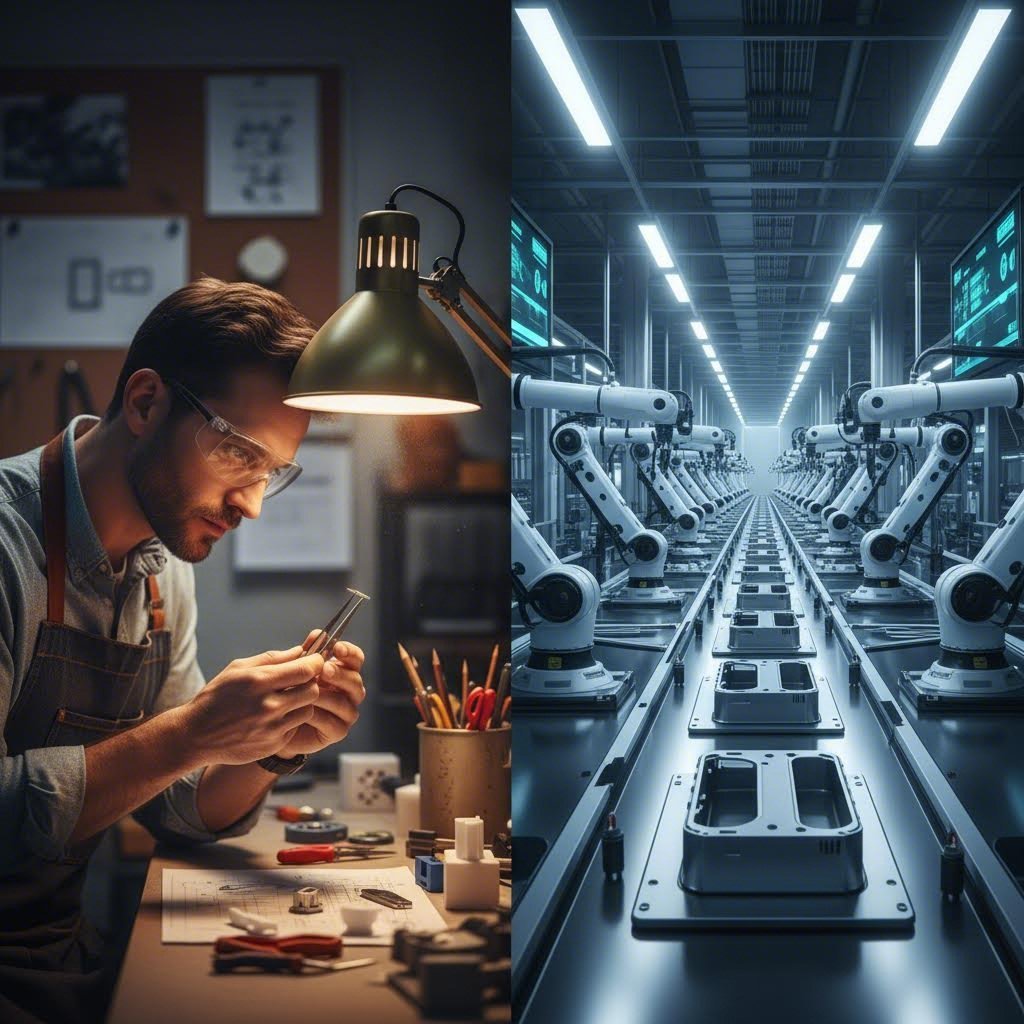
Prototyping Versus Production Volume Decisions
Here's a question that trips up even experienced engineers: should you invest in production tooling now, or start with prototypes? Get this decision wrong and you'll either waste thousands on tooling for a design that changes, or bleed money on inefficient prototype methods when you should have scaled up months ago.
When searching for fabrication shops near me, you'll encounter providers offering both rapid prototyping and mass production capabilities. Understanding when each approach makes sense—and where the crossover point lies—separates cost-effective projects from expensive lessons learned.
When Rapid Prototyping Makes Sense
Rapid prototyping exists for a reason: it lets you test, adjust, and rework parts within days rather than weeks. According to industry manufacturing experts, this approach supports quick design cycles, making it ideal for early-stage development where teams need to validate concepts before investing in production tooling.
Prototyping makes sense when:
- Your design isn't finalized—modifications during prototyping cost a fraction of production tooling changes
- You need functional validation—testing fit, form, and function before committing resources
- Volume requirements are low—typically under 50-200 parts depending on complexity
- Speed matters more than unit cost—getting parts in hand within days accelerates development cycles
- You're exploring multiple design variants—comparing options without tooling investment for each
Fab shops near me offering rapid prototyping typically use laser cutting, CNC bending, and manual assembly—processes that require minimal setup and no dedicated tooling. The trade-off? Higher per-part costs and less consistency compared to production methods.
But here's what many teams miss: prototyping delivers strong functional quality, yet tolerances can vary depending on machine setup, bending complexity, and manual operations involved. A metal fab shop near me might produce an excellent prototype that doesn't translate directly to production-ready specifications. This is why adopting a "prototype with production intent" mindset matters—build prototypes using the material, thickness, and forming assumptions you expect at scale.
Scaling from Prototype to Mass Production
The biggest cost factor in sheet metal manufacturing is tooling amortization. Mass production requires expensive dies, so real savings appear only when those costs spread across large quantities. Understanding this crossover point prevents two common mistakes: investing in production tooling too early, or relying on slow, costly prototyping for mid-volume runs.
The following comparison helps clarify when each approach delivers better value:
| Factor | Rapid Prototyping | Mass Production |
|---|---|---|
| Tooling Cost | Minimal to none ($0-$500) | Significant ($5,000-$100,000+) |
| Unit Cost | High ($50-$500+ per part) | Low ($0.50-$20 per part at volume) |
| Lead Time | Days to 2 weeks | 4-12 weeks for tooling, then fast |
| Minimum Quantity | 1-50 parts practical | 500-10,000+ for cost efficiency |
| Design Flexibility | Changes easy and inexpensive | Changes require die rework or replacement |
| Dimensional Consistency | Moderate (varies by setup) | Excellent (automated repeatability) |
| Best For | Validation, iteration, low volume | Stable designs, high volume, tight tolerances |
The crossover typically occurs between a few dozen to a few hundred parts, depending on material and part complexity. When searching for a custom metal shop near me, ask providers to run break-even analysis for your specific project—this calculation reveals exactly when production tooling investment pays off.
Soft tooling versus hard tooling bridges the gap between prototyping and full production. According to tooling specialists, soft tooling uses less durable materials like aluminum or mild steel dies, offering lower upfront costs with shorter lifespan. Hard tooling uses hardened steel that withstands millions of cycles but requires significant investment and longer lead times.
Consider soft tooling when:
- You need 200-5,000 parts before finalizing design
- Testing production processes without full tooling commitment
- Bridge production while hard tooling is manufactured
- Product lifecycle is short or uncertain
Hard tooling makes sense when:
- Design is stable and validated
- Volume exceeds 10,000+ parts
- Tight tolerances require precision dies
- Per-part cost drives profitability
Many successful companies follow a hybrid path: start with rapid prototyping, move to soft tooling for mid-volume runs, and scale into full production as demand and design stability increase. According to manufacturing transition experts, completing thorough DFM (Design for Manufacturability) checks before moving to mass production ensures the design is optimized for tooling, reduces rework, and keeps the production timeline on track.
Design validation during prototyping reduces production risks dramatically. Catching a bend radius problem on a $200 prototype costs nothing compared to discovering it after $50,000 in hard tooling is complete. A fabrication shop near me that offers both prototyping and production services can guide this transition, identifying DFM improvements before they become expensive corrections. With volume decisions clarified, the next critical consideration is ensuring quality throughout whichever production approach you choose.
Quality Control and Inspection in Metal Forming
You've selected the right process, matched materials perfectly, and nailed your tolerances on paper—but how do you know the actual parts meet specifications? Quality control separates reliable metal fabricators near me from suppliers who deliver headaches. Without robust inspection protocols, even the best-designed forming operations can ship defective parts that trigger costly returns, assembly line shutdowns, or worse.
Quality control in metal forming isn't just about catching bad parts at the end. According to manufacturing quality experts, effective QC helps reduce defects, improve product reliability, and maintain customer satisfaction throughout the entire production process. Understanding these methods helps you evaluate suppliers and set realistic expectations for your projects.
Quality Control Methods in Metal Forming
Think of quality control as a multi-layered safety net. Each layer catches different types of defects at different stages—from raw materials through finished parts. When evaluating steel fabricators near me or requesting quotes from fabrication companies near me, ask specifically about these inspection methods:
- Coordinate Measuring Machine (CMM): Uses precision probes to capture exact dimensional data, verifying hole positions, feature locations, and geometric relationships against CAD specifications
- Surface profilometry: Measures surface roughness and texture to ensure finish requirements are met—critical for mating surfaces and aesthetic parts
- Optical comparators and vision systems: Project part profiles against magnified reference overlays for rapid visual verification of complex contours
- Hardness testing (Rockwell, Vickers): Confirms material properties haven't degraded or changed unexpectedly during forming operations
- Tensile and impact testing: Destructive tests that verify mechanical properties meet specifications—essential for safety-critical applications
- Non-destructive testing (NDT): Ultrasonic, magnetic particle, and radiographic methods detect internal flaws without damaging parts
- Visual inspection: Trained inspectors check for scratches, cracks, burrs, and surface defects using magnification and controlled lighting
According to metal stamping inspection specialists, the dimensional tolerance for stamped parts often hovers around ±0.05mm—equivalent to the thickness of two sheets of paper. Without proper inspection mechanisms, this tiny discrepancy could lead to assembly issues or equipment failures.
First Article Inspection (FAI) deserves special attention. Before mass production begins, a sample part undergoes comprehensive dimensional and functional testing to verify that tooling and processes produce conforming parts. This checkpoint prevents thousands of defective parts from being manufactured before problems are detected.
Statistical Process Control (SPC) takes quality beyond simple pass/fail inspection. According to automotive-grade metal stamping providers, robust SPC methods monitor key process parameters continuously using real-time data collection and control charts. This approach detects variation before it impacts product quality, allowing for early corrective actions. When integrated with vision systems synchronized to press controls, manufacturers can identify deviations in part geometry within milliseconds.
Inspection Standards and Certifications That Matter
Certifications tell you whether a supplier's quality system has been independently verified. For automotive applications, IATF 16949 certification is the gold standard—it builds on ISO 9001 requirements with additional automotive-specific controls for defect prevention, variation reduction, and supply chain management.
Why does this matter for your project? IATF 16949-certified facilities maintain:
- Comprehensive traceability: Every component and operation is fully recorded and verifiable throughout manufacturing
- PPAP documentation: Production Part Approval Process records including dimensional reports, material certifications, and process flow records demonstrate compliance
- In-line vision inspection: High-speed systems continuously monitor stamping processes in real-time, detecting deviations before defective parts accumulate
- Measurement system analysis: Regular calibration and verification ensures inspection equipment provides accurate, repeatable results
For welding fabrication services and structural applications, look for AWS (American Welding Society) certifications and documented weld inspection procedures. Medical and aerospace applications typically require additional certifications like AS9100 or ISO 13485 with more stringent traceability and documentation requirements.
The bottom line? Quality control isn't overhead—it's insurance against far more expensive problems downstream. A supplier with robust inspection protocols and relevant certifications may quote slightly higher prices, but they're far less likely to ship parts that fail in your assembly or application. With quality systems understood, the next consideration is how tooling decisions affect your project's flexibility, cost, and timeline.
Tooling Considerations and Their Impact on Projects
Here's a question most metal fabrication shops near me won't discuss openly: who actually owns your tooling, and why does it matter? Tooling decisions quietly shape your project's cost structure, lead times, and long-term flexibility—yet many engineers and procurement specialists overlook this critical factor until problems surface.
Whether your metal fabricator near me handles tooling design internally or outsources it to specialists, understanding the trade-offs helps you negotiate better agreements and avoid costly surprises. Shop fabrication capabilities vary significantly in this area, and the right choice depends on your specific project requirements.
In-House Tooling Advantages and Trade-offs
When a forming provider designs and manufactures tooling under their own roof, several advantages emerge. According to roll forming tooling specialists, keeping tooling in-house offers benefits that directly impact your project timeline and quality outcomes.
Factors favoring in-house tooling:
- Faster turnaround: No waiting for external vendors—design changes and modifications happen immediately without scheduling delays
- Tighter integration: Tooling designers work directly with forming operators, understanding machine capabilities and limitations firsthand
- Rapid iteration: When problems arise during production trials, adjustments can be made within hours rather than days
- Quality accountability: Single point of responsibility for both tooling and forming results—no finger-pointing between vendors
- Institutional knowledge: Experienced in-house teams accumulate process insights that improve tooling design over time
But in-house tooling isn't always the right answer. The risks include spreading resources too thin and potentially lacking specialized expertise for complex geometries. Smaller fabricating shops near me may struggle to justify the capital investment in tooling equipment and skilled designers when volume doesn't support dedicated staff.
Factors favoring outsourced tooling:
- Specialized expertise: Dedicated tooling manufacturers often possess deeper knowledge and more advanced equipment than general forming shops
- Lower fixed costs: No need to maintain expensive tooling equipment, skilled machinists, and designers during slow periods
- Scalability: External tooling shops can handle demand spikes without capacity constraints
- Fresh perspective: Outside specialists may suggest design improvements that internal teams overlook
- Cost predictability: Fixed quotes for tooling versus variable internal labor costs
According to industry analysis, mid-sized roll formers sometimes outsource tooling to specialized manufacturers who serve multiple clients—spreading labor costs across numerous projects. This approach can actually deliver lower tooling prices than maintaining dedicated in-house staff who experience unpredictable workloads.
Tooling Investment and Lifecycle Considerations
Tooling costs represent a significant portion of metal forming project budgets, and understanding lifecycle expectations helps you plan appropriately. According to manufacturing cost analysts, tooling costs typically run 3-6% of total production costs—but this percentage varies dramatically based on part complexity, material hardness, and production volume.
Tool life depends on several interconnected factors:
- Material being formed: Harder materials like stainless steel wear tooling faster than mild steel or aluminum
- Tooling material quality: Tool steel grades, heat treatment, and surface coatings significantly impact longevity
- Production volume: High-speed stamping at 1,000+ strokes per minute accelerates wear compared to slower operations
- Lubrication and maintenance: Proper die lubricants and regular cleaning extend tool life substantially
- Part geometry: Sharp corners, deep draws, and tight radii concentrate stress and accelerate wear
Smart manufacturers track tool life systematically. By monitoring cycles and correlating them with dimensional drift, you can predict replacement timing before quality suffers. This proactive approach prevents the costly scenario where worn tooling produces out-of-spec parts that slip past inspection.
Design for Manufacturability (DFM) collaboration dramatically reduces tooling iterations and costs. According to sheet metal DFM specialists, engaging your forming provider early in the design process identifies potential issues before tooling investment begins.
Key DFM considerations that affect tooling include:
- Minimum bend radii: Specifying radii smaller than material thickness requires specialized tooling or risks cracking
- Hole placement: Features too close to bends (less than 2.5× thickness plus bend radius) may distort during forming
- Grain direction: Orienting bends perpendicular to material grain prevents cracking—but requires blank layout planning
- Bend relief: Designing in material removal at bend intersections prevents tearing and simplifies tooling
- Standard tooling compatibility: Using common punch sizes and bend angles leverages existing tooling rather than requiring custom dies
The payoff for early DFM collaboration? Fewer tooling revisions, shorter lead times, and lower overall project costs. A forming provider who invests time reviewing your designs before quoting tooling demonstrates the expertise that separates quality partners from order-takers. This collaborative approach also sets the stage for understanding industry-specific requirements, where tooling decisions become even more critical.
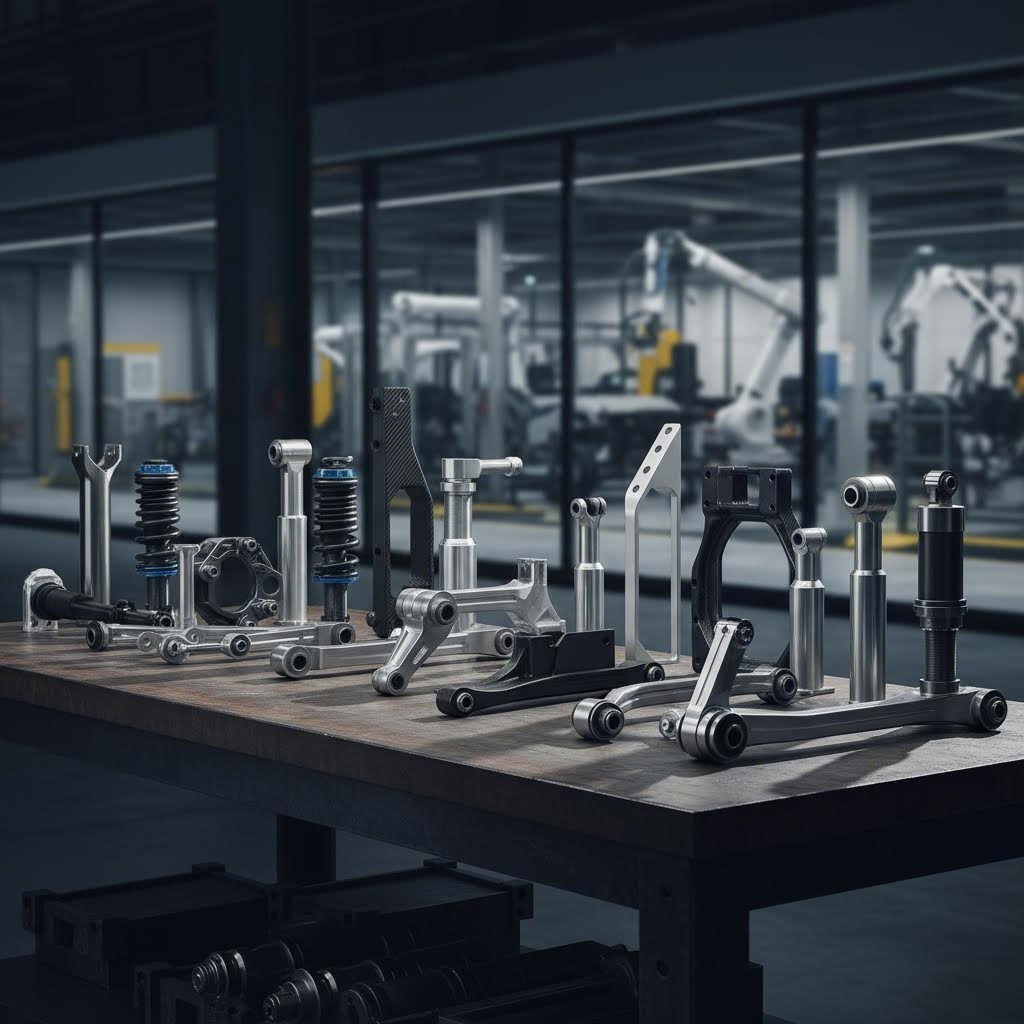
Industry Applications and Specialized Requirements
Here's what most fabrication shops won't tell you: the same metal forming process that works perfectly for consumer appliances can fail catastrophically in automotive or aerospace applications. Industry-specific requirements aren't just bureaucratic checkboxes—they represent hard-won lessons from failures that cost lives, triggered recalls, or grounded aircraft.
When you're searching for a metal fabrication shop near me for specialized applications, understanding these industry-specific demands helps you ask the right questions and avoid suppliers who overpromise capabilities they can't deliver.
Automotive Metal Forming Requirements
Automotive manufacturing stands apart from general fabrication in several critical ways. According to the Auto/Steel Partnership's High Strength Steel Stamping Design Manual, cost-effective weight savings for automotive applications are readily achievable with high strength steel—but only when material characteristics, part design geometry, and die process capability work together through planned coordination.
What makes automotive forming uniquely demanding?
- High-strength steel challenges: Modern vehicles use high strength steels ranging from 205 to 420 MPa yield strength to reduce weight while maintaining crash performance. These materials exhibit reduced elongation potential and increased springback compared to mild steel, requiring specialized die processes and tighter process control.
- Dimensional stability requirements: Chassis, suspension, and structural components must maintain precise dimensions across thousands of production cycles. Residual stress from forming can cause springback, sidewall curl, and panel twist—defects that the Auto/Steel Partnership research identified as more attributable to wrong die process than material property variation.
- Crash energy management: Structural components must absorb and distribute impact energy predictably. This demands consistent material properties and forming processes that don't introduce hidden stress concentrations or material thinning in critical areas.
- Volume and repeatability: Automotive production runs in the hundreds of thousands require tooling that maintains tolerance over millions of cycles, with statistical process control monitoring every batch.
For automotive applications, IATF 16949 certification isn't optional—it's the baseline expectation. This standard requires comprehensive traceability, PPAP documentation, and robust quality management systems specifically designed for automotive supply chains. When evaluating suppliers for custom steel fabrication near me for automotive projects, certification verification should be your first screening criterion.
Manufacturers like Shaoyi Metal Technology exemplify the capabilities automotive projects demand: IATF 16949 certification, rapid prototyping within 5 days for design validation, comprehensive DFM support to optimize parts before tooling investment, and automated mass production capabilities for high-volume chassis and suspension components. This combination of speed, quality certification, and production scalability represents the standard serious automotive suppliers must meet.
Industry-Specific Forming Challenges and Solutions
Beyond automotive, each major industry brings unique forming challenges that shape supplier selection and process requirements. The following comparison highlights key differences you'll encounter:
| Industry | Typical Tolerances | Key Certifications | Common Materials | Typical Volume Range |
|---|---|---|---|---|
| Automotive | ±0.1mm to ±0.5mm | IATF 16949 | HSS, HSLA, Dual Phase, Aluminum | 10,000 - 1,000,000+ |
| Aerospace | ±0.05mm to ±0.25mm | AS9100D, NADCAP | Titanium, Inconel, Aluminum alloys | 100 - 10,000 |
| Medical Devices | ±0.025mm to ±0.1mm | ISO 13485 | Stainless steel 316L, Titanium, Nitinol | 500 - 100,000 |
| Electronics | ±0.05mm to ±0.2mm | ISO 9001, IPC standards | Copper alloys, Aluminum, Stainless | 1,000 - 500,000+ |
| Construction/Structural | ±1mm to ±3mm | AWS D1.1, AISC | Carbon steel, Galvanized steel | 100 - 50,000 |
Aerospace applications demand the tightest tolerances and most rigorous material traceability. Every raw material lot must be certified, and forming processes must demonstrate repeatability through first article inspection and ongoing process qualification. When searching for structural steel fabricator near me for aerospace subcontracting, expect extensive documentation requirements and longer qualification timelines—but also premium pricing that reflects these demands.
According to quality manufacturing specialists, advanced certifications like AS9100D provide knowledge and peace of mind that suppliers deliver the highest quality service. Aerospace-qualified fabrication shops maintain calibrated inspection equipment, temperature-controlled environments, and personnel training records that general fabricators typically lack.
Medical device manufacturing introduces biocompatibility and sterilization considerations. Formed components must withstand repeated sterilization cycles without dimensional changes or surface degradation. Material selection focuses on corrosion-resistant alloys like 316L stainless steel, and surface finish requirements often specify Ra values below 0.8 micrometers for implantable devices.
Electronics enclosures and components require excellent electromagnetic shielding properties, precise dimensional control for component mounting, and often cosmetic surface finishes. High-volume consumer electronics demand aggressive cost targets—pushing manufacturers toward progressive die stamping and automated handling systems that minimize labor content.
Structural steel applications tolerate looser dimensional tolerances but require certified welding fabrication services, documented weld inspection, and compliance with building codes and engineering specifications. When evaluating steel fabrication services near me for construction projects, AWS-certified welding procedures and load-bearing capacity documentation matter more than tight dimensional tolerances.
The key insight? Don't assume a supplier's experience in one industry translates to another. A fabrication shop excelling at structural steel work may lack the precision equipment, controlled environments, and quality systems required for medical or aerospace applications. Conversely, an aerospace-focused supplier's overhead structure may make them uncompetitive for high-volume, cost-sensitive consumer products.
Understanding these industry-specific requirements helps you identify qualified suppliers faster and avoid the costly mistake of selecting partners based solely on capability claims rather than demonstrated, certified experience in your specific application domain. With industry requirements clarified, the next section reveals the common mistakes that derail even well-planned metal forming projects.
Common Metal Forming Mistakes and How to Avoid Them
What's the most expensive part of your metal forming project? It's not the material. It's not the machine time. It's not even the tooling investment. According to sheet metal fabrication experts, the most expensive part is almost always a design mistake—one that could have been easily avoided with proper planning and communication.
After covering processes, materials, tolerances, and industry requirements, this section addresses the pitfalls that derail even well-planned projects. Whether you're working with a fabricator near me or sourcing globally, these mistakes cost thousands in rework, delays, and scrapped parts.
Design Mistakes That Increase Forming Costs
Most design errors share a common root cause: thinking in 3D without considering 2D reality. Every formed part—no matter how complex—starts as a flat sheet. If your CAD model can't unfold into a clean flat pattern, it can't be manufactured. This fundamental disconnect between design intent and manufacturing reality creates the following costly mistakes:
- Sharp corners without bend radii: A perfect 90-degree corner looks clean on screen but can't exist in reality. Metal on the outside of a bend must stretch—if the corner is too sharp, micro-cracks develop and create failure points. The solution? Make inside bend radius at least equal to material thickness.
- Holes too close to bend lines: When metal bends, the area around the bend line stretches and deforms. Holes placed in this deformation zone become distorted ovals. According to DFM specialists, keep hole edges at least 3× material thickness away from the outside of bends.
- Ignoring material grain direction: Bends oriented parallel to grain direction risk cracking, especially in harder materials. Planning blank layout to orient bends perpendicular to grain prevents this issue—but requires coordination with your forming provider.
- Underspecifying tolerances: Vague tolerance callouts force fabricators to guess your intent. Over-specification wastes money on unnecessary precision; under-specification leads to parts that don't fit. Specify critical dimensions explicitly and allow standard tolerances elsewhere.
- Overlooking secondary operations: Designing parts without considering deburring, finishing, hardware insertion, or welding requirements creates assembly nightmares. A beautiful formed part that can't be welded or finished economically isn't truly manufacturable.
- Cumulative tolerance stacking: Each bend adds angular and dimensional variation. Four bends can accumulate ±0.030" linear tolerance plus 4° angular deviation. Design assemblies with floating hardware or slotted holes to accommodate this reality.
The fix for most design mistakes? Early DFM collaboration. When searching for metal machinists near me or custom metal fab near me, prioritize partners who offer design review before quoting. According to manufacturing experts, a free DFM review catches sharp corners, flags holes too close to bends, and identifies problems before they become expensive corrections.
Supplier Selection Pitfalls to Avoid
Finding the right fabrication near me involves more than comparing quotes. According to metal manufacturing sourcing experts, these supplier selection mistakes lead to expensive fixes, defective products, and customer service nightmares:
- Choosing based solely on price: The lowest bidder often delivers the highest total cost. Without verifying reputation or requesting quality guarantees, you might receive warehouses full of inexpensive but defective products. Look beyond price to evaluate capabilities, quality systems, and track record.
- Assuming bigger means better: Large fabricators with brand recognition seem like safe choices, but they often have multiple facilities, complex structures, and many clients competing for attention. For complicated parts or evolving designs, smaller metal manufacturing near me options may provide more individual attention and faster response.
- Limiting search to local Yellow Pages: Keeping things local simplifies logistics, but the best fit in terms of capabilities, quality, and consistency might require looking beyond your immediate manufacturing area. Geographic convenience shouldn't trump technical capability.
- Separating forming from secondary operations: Ordering raw formed parts and outsourcing machining separately creates logistical complexity—managing multiple suppliers, work orders, and queue times. Find providers with in-house CNC capabilities or established relationships with reputable machine shops for consolidated, faster deliveries.
- Misunderstanding certifications: ISO 9001 appears on restaurants, boutiques, and foundries alike. According to industry analysts, ISO certification tells you the business has adopted a strategy for growth and improvement—but the specific certification scope matters more than the stamp itself. IATF 16949 for automotive, AS9100 for aerospace, and ISO 13485 for medical indicate genuine industry-specific quality systems.
- Skipping facility audits: Quote sheets don't reveal shop floor realities. Equipment condition, operator skill, housekeeping practices, and quality documentation systems become visible only through visits or detailed capability questionnaires.
Communication Practices That Prevent Problems
Even with excellent design and qualified suppliers, poor communication derails projects. According to DFM pitfall research, incomplete or contradictory information in fabrication files creates delays and rework that ripple into downstream production runs.
Best practices for design team and supplier collaboration include:
- Engage suppliers during design—not after: Early involvement identifies manufacturability issues before CAD is finalized and tooling quotes are requested
- Provide complete documentation: Include fully dimensioned drawings, material specifications, finish requirements, and quantity expectations with every RFQ
- Clarify critical versus reference dimensions: Help fabricators understand which tolerances matter for function versus those included for reference only
- Establish change control protocols: Document how design modifications will be communicated, approved, and implemented—especially after tooling begins
- Request DFM feedback in writing: Verbal suggestions get forgotten; documented recommendations create accountability and reference points
- Define inspection requirements upfront: Specify which dimensions require CMM verification, what documentation accompanies shipments, and acceptance criteria for first articles
The investment in upfront communication pays dividends throughout production. A few hours of collaborative DFM review prevents weeks of rework and finger-pointing when parts don't fit. With these common mistakes understood and avoided, the final consideration is selecting the right metal forming partner to execute your project successfully.
Selecting the Right Metal Forming Service Provider
You've navigated the technical complexities—processes, materials, tolerances, and industry requirements. Now comes the decision that determines whether your project succeeds or stumbles: choosing the right forming partner. According to stamping supplier selection experts, selecting the right supplier is a critical decision that directly impacts your product quality, production timeline, and bottom line.
Whether you're searching for metal fab near me or evaluating global suppliers, the evaluation process requires systematic assessment beyond capability claims. The ideal partner does more than produce parts—they offer engineering expertise, ensure rigorous quality control, and function as an extension of your team.
Key Criteria for Evaluating Metal Forming Partners
How do you separate qualified partners from order-takers? Start with these fundamental evaluation criteria:
Technical Capabilities Alignment
Before comparing quotes, confirm the supplier's equipment matches your project requirements. According to metal stamping selection specialists, the type and tonnage of presses determine the size, thickness, and complexity of parts a provider can produce. Ask specifically about:
- Press tonnage range and bed sizes
- Available forming processes (stamping, deep drawing, bending, hydroforming)
- Material experience with your specified alloys
- Secondary operation capabilities (welding, finishing, assembly)
- Prototyping versus production volume capacity
Quality Systems and Certifications
A robust quality management system is non-negotiable. According to industry research, businesses with robust quality control processes experience 70% fewer product defects. When evaluating a steel fabricator near me, verify:
- ISO 9001: Baseline quality management certification
- IATF 16949: Essential for automotive applications—demonstrates automotive-specific quality controls
- AS9100: Required for aerospace work
- ISO 13485: Necessary for medical device components
- AWS certifications: Critical if welding is involved
Communication Responsiveness
Quote turnaround time reveals more than pricing speed—it indicates how the supplier will respond when problems arise during production. According to fabrication bid process experts, not including a reasonable deadline can delay the bid process, as a fabricator's sales and estimating team can't begin until all specifications are provided.
Look for suppliers who:
- Respond to initial inquiries within 24-48 hours
- Ask clarifying questions rather than assuming details
- Provide detailed quotes with line-item breakdowns
- Offer DFM feedback proactively—not just when asked
- Assign dedicated contacts rather than rotating through general inboxes
Geographic Considerations
When searching for metal fabricating near me versus offshore options, weigh these factors:
| Factor | Local/Regional Supplier | Offshore Supplier |
|---|---|---|
| Shipping costs | Lower, faster transit | Higher, longer lead times |
| Communication | Same time zone, easier visits | Time zone challenges, language barriers possible |
| Minimum quantities | Often lower MOQs | Higher MOQs typical for cost efficiency |
| Quality oversight | Easier facility audits | Requires third-party inspection or travel |
| Unit pricing | Generally higher | Often lower at volume |
| IP protection | Stronger legal recourse | Varies by country, harder to enforce |
For steel fabrication shop near me searches, proximity matters most when you need rapid iteration, frequent design changes, or just-in-time delivery. Offshore sourcing makes sense for stable, high-volume production where cost savings outweigh logistics complexity.
Getting Started with Your Metal Forming Project
Ready to engage suppliers? Follow this systematic process to identify the right partner efficiently:
- Document your requirements completely. Before contacting any supplier, compile detailed drawings, material specifications, tolerance requirements, annual volume estimates, and delivery timeline expectations. According to bid process specialists, missing information is the number one cause of quote delays—whether it's due dates, lot quantities, or technical drawings.
- Create a shortlist based on capability fit. Search for metal fabrications near me or industry-specific suppliers. Eliminate providers who lack required certifications, equipment capacity, or material experience before investing time in detailed discussions.
- Request quotes with standardized information. Send identical RFQ packages to multiple suppliers simultaneously. Include quantity breakdowns (prototype, pilot, production volumes), delivery requirements, and any special testing or documentation needs.
- Evaluate quote responsiveness and detail. Fast quotes suggest available capacity and engaged sales teams. Detailed line-item breakdowns indicate thorough cost analysis rather than ballpark estimates. According to metal forming experts, quote turnaround time correlates strongly with production responsiveness.
- Request DFM feedback before finalizing. Ask shortlisted suppliers to review your designs for manufacturability. Their suggestions reveal technical depth and collaborative approach. Suppliers who identify potential issues proactively become valuable partners—not just vendors.
- Verify capabilities through references or audits. Contact previous customers with similar projects. For critical applications, visit facilities to observe equipment, quality systems, and shop floor practices firsthand. A steel fab shop near me that welcomes facility tours demonstrates confidence in their operations.
- Negotiate terms beyond unit price. Discuss tooling ownership, engineering change procedures, quality documentation requirements, and capacity commitments. The lowest piece price means nothing if the supplier can't deliver on time or maintain quality.
- Start with a pilot order. Before committing to full production volumes, validate the supplier relationship with a smaller initial order. This trial run reveals communication patterns, actual quality levels, and delivery reliability without maximum financial exposure.
For automotive and precision metal stamping applications, Shaoyi Metal Technology exemplifies the partner characteristics discussed throughout this guide. Their 12-hour quote turnaround demonstrates the responsiveness that predicts strong production communication. IATF 16949 certification confirms automotive-grade quality systems. Comprehensive DFM support helps optimize designs before tooling investment. And their range from 5-day rapid prototyping to automated mass production provides flexibility as projects scale from validation through high-volume manufacturing.
The bottom line? Selecting the right metal forming service provider isn't about finding the cheapest quote—it's about identifying a partner whose capabilities, quality systems, and communication style align with your project requirements. Invest time in systematic evaluation upfront, and you'll avoid the costly mistakes that derail metal forming projects. The suppliers who ask smart questions, provide detailed DFM feedback, and demonstrate genuine interest in your success are the partners worth pursuing.
Frequently Asked Questions About Metal Forming Services
1. What is metal forming and how does it differ from machining?
Metal forming reshapes existing material through controlled force without removing or adding material, unlike machining which cuts away material. This process preserves material mass, enhances mechanical properties through refined grain structure, and maintains continuous grain flow for superior structural integrity. Formed parts typically exhibit better fatigue resistance and can be produced more cost-effectively at scale compared to machined components.
2. What types of metal forming processes are available?
Metal forming encompasses three primary categories: sheet metal forming (stamping, deep drawing, spinning, bending), bulk forming (forging, extrusion, rolling), and tube forming (hydroforming, rotary draw bending). Each category serves distinct applications—sheet metal forming handles thin materials for panels and brackets, bulk forming creates high-strength components like gears and shafts, while tube forming produces curved structural elements and automotive frames.
3. How do I choose the right material for my metal forming project?
Material selection depends on three key properties: ductility (stretching capability), yield strength (force required for deformation), and work hardening rate (how quickly material strengthens during forming). Aluminum offers excellent formability with low springback, mild steel provides predictable behavior for most applications, stainless steel requires higher forming forces but delivers corrosion resistance, and copper alloys excel in electrical applications with minimal springback.
4. What tolerances can metal forming achieve?
Tolerance capabilities vary by process: microblanking achieves ±0.0005 inches, precision stamping delivers ±0.001 to ±0.005 inches, standard stamping and bending produce ±0.010 to ±0.030 inches, and forging typically reaches ±0.030 to ±0.060 inches. Critical factors affecting precision include tooling quality, material consistency, and process control measures like statistical process monitoring.
5. When should I invest in production tooling versus prototyping?
Prototyping suits designs not yet finalized, quantities under 50-200 parts, and situations where speed matters more than unit cost. Production tooling becomes cost-effective when designs are stable, volumes exceed 10,000+ parts, and tight tolerances require precision dies. IATF 16949-certified manufacturers like Shaoyi Metal Technology bridge this gap with 5-day rapid prototyping capabilities that transition seamlessly to automated mass production for automotive applications.