 Small batches, high standards. Our rapid prototyping service makes validation faster and easier —
  EN
EN


Machine Shop CNC Secrets: From CAD File To Flawless Finished Part
What Machine Shop CNC Actually Means for Modern Manufacturing
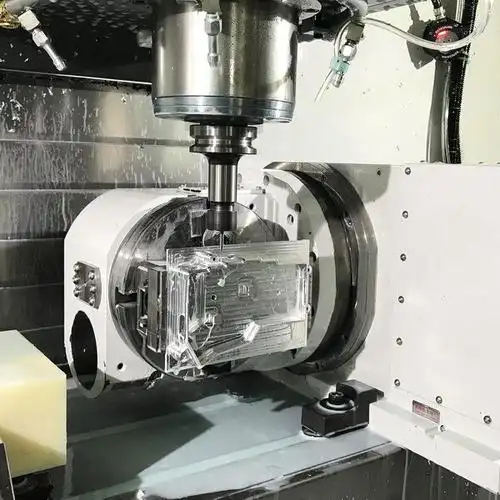
Ever wondered how a digital design file transforms into a precision metal component? That's exactly what happens in a machine shop CNC operation - where computer-controlled equipment shapes raw materials into finished parts with remarkable accuracy.
At its core, CNC stands for Computer Numerical Control. Think of it as giving cutting tools a digital brain. Instead of a machinist manually guiding each cut, pre-programmed software dictates every movement. The computer sends numerical codes that tell the machinery exactly where to move, how fast to cut, and when to change tools. This precision cnc machining process works on metals, plastics, wood, and composites - essentially any material you need shaped to exact specifications.
From Blueprint to Metal: How CNC Technology Works
The journey starts with a digital design. Engineers create a CAD (Computer-Aided Design) file showing exactly what the finished part should look like. This design then gets converted into G-code - a language CNC machines understand. When you submit your design to a precision machining company, their programmers translate your vision into instructions the machine can execute.
Once programmed, the magic begins. The CNC machine follows these digital instructions to guide cutting tools through material with exceptional consistency. Mills, lathes, routers, and grinders all work under computer control, removing material layer by layer until your part emerges.
The Digital Brain Behind Modern Machining
Why does this matter? Before CNC technology, machinists relied entirely on manual skill and hand-eye coordination. While experienced operators could achieve impressive results, human limitations created challenges. Fatigue, slight miscalculations, and the physical impossibility of perfectly repeating complex movements meant inconsistencies were inevitable.
CNC changed everything. These machines can reproduce the same operations with identical precision across hundreds or thousands of parts. Once a program runs correctly, the equipment maintains tight tolerances consistently, something even the most skilled human operator cannot guarantee over extended production runs.
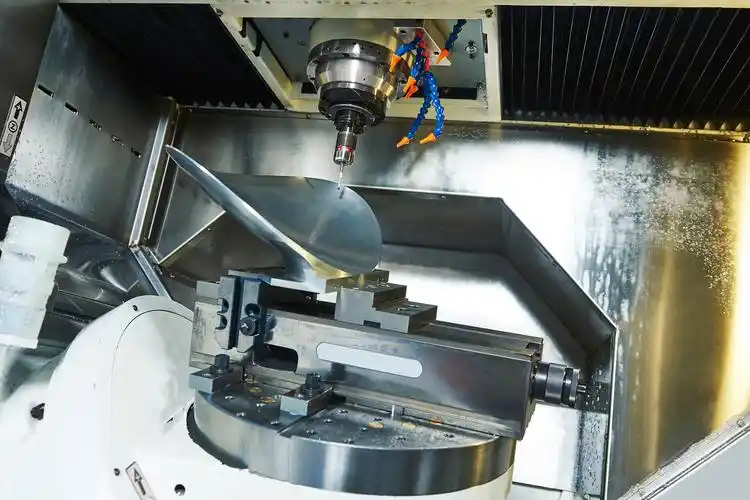
Five-axis CNC machining enables manufacturers to produce complex, three-dimensional shapes and contours that would be challenging or impossible with traditional manual methods - opening possibilities that simply didn't exist before computerized control.
Modern CNC milling machine projects regularly tackle geometries that would have seemed impossible decades ago. Multi-axis machines can tilt and rotate cutting tools, approaching workpieces from virtually any angle. This freedom allows manufacturers to create intricate aerospace components, medical devices, and automotive parts that push the boundaries of what metal fabrication can achieve.
Whether you're exploring your first manufacturing project or scaling production, understanding how these digital systems transform raw material into finished parts gives you the foundation to make smarter decisions about your machining needs.
The Complete Journey From Design File to Finished Part
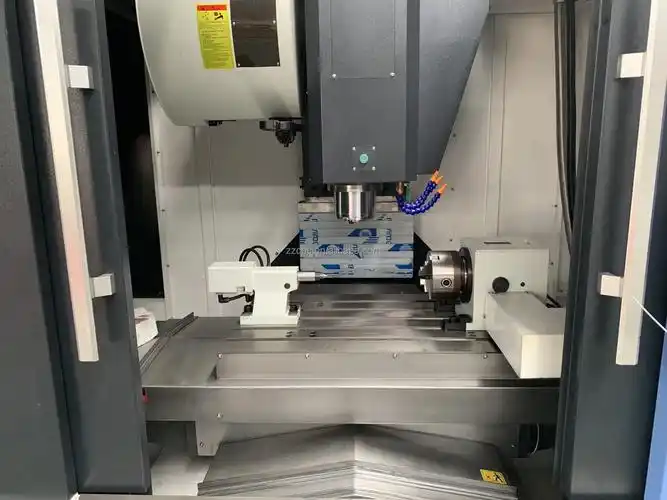
So you've got a design ready and you're wondering what actually happens next? Understanding the complete CNC machining workflow helps you plan realistic timelines and communicate effectively with your cnc service provider. Let's walk through the entire process - from the moment you submit your CAD file to when you hold the finished component in your hands.
The Seven Stages of CNC Part Production
Every precision machining shop follows a systematic workflow to ensure consistent quality. While specific procedures may vary slightly between facilities, the fundamental stages remain the same:
- Design File Review and Evaluation - Your submitted CAD file gets carefully examined by programmers who assess manufacturability, identify potential challenges, and verify that all specifications are clear. This evaluation catches design issues early before they become costly production problems.
- CAM Programming - Using Computer Aided Manufacturing software, programmers create toolpaths that translate your digital design into machine-readable G-code. This step involves selecting appropriate cutting tools, determining optimal speeds and feeds, and planning the most efficient sequence of operations.
- Material Verification - Before machining begins, operators check incoming material for consistency in size, shape, and condition. Harder materials require different cutting parameters than softer ones, so identifying any variations upfront prevents quality issues down the line.
- Tool Setup and Selection - Cutting tools get mounted in holders and prepared for installation. Sharp, properly maintained tools are essential for achieving tight tolerances and clean surface finishes. Experienced shops keep frequently used tools ready in the magazine to minimize changeover time.
- Machine Setup and Fixturing - The workpiece needs secure positioning that allows access for all required cutting operations. Fixtures hold parts in fixed locations, ensuring safe and consistent machining across the entire batch.
- Cutting Operations and Monitoring - With everything prepared, the program runs while operators monitor progress, check dimensions, inspect tool wear, and make necessary offset adjustments. The first part typically receives extra scrutiny to verify the setup is producing correct results.
- Post-Processing and Inspection - Finished parts undergo deburring, cleaning, and quality inspection. Depending on requirements, this may include dimensional verification using precision measuring equipment and documentation for traceability.
What Happens After You Submit Your Design File
Wondering why lead times vary so much between projects? The answer lies in understanding which stages consume the most time.
For complex parts, CAM programming can take significant time - sometimes longer than actual machining. Programmers must optimize toolpaths for efficiency while avoiding collisions and ensuring proper chip evacuation. When you're working with a precision machining shop on intricate geometries, expect programming to be a meaningful portion of your timeline.
Machine setup also varies dramatically based on part complexity. Simple parts using standard fixturing might take thirty minutes to set up. Multi-operation parts requiring custom fixtures? That could mean hours or even days of preparation before the first chip flies.
An aluminum cnc service typically moves faster than steel or exotic alloy work. Aluminum machines quickly with less tool wear, meaning shorter cycle times and fewer tool changes. If speed matters for your project, material selection plays a direct role in delivery timelines.
Production runs benefit from amortized setup time across many parts. Once a job is dialed in and running smoothly, operators maintain consistent output by monitoring the process, checking dimensions periodically, and replacing tools as needed. The first part always takes longest - but parts two through two thousand flow much more efficiently.
Understanding this workflow empowers you to ask better questions, set realistic expectations, and collaborate more effectively with your manufacturing partner. When you know what's happening behind the scenes, you can provide better input during the design phase - which is where the next critical decisions about material selection come into play.
Material Selection Guide for CNC Machining Projects
Choosing the right material might be the most consequential decision you make for your CNC project. Why? Because material selection affects everything downstream - from tooling requirements and cycle times to final part performance and total cost. Get this wrong, and you're looking at unnecessary expenses, production delays, or components that don't perform as expected.
Before diving into specific materials, consider your project's core requirements. Are you prioritizing mechanical strength? Corrosion resistance? Weight reduction? Thermal conductivity? Identifying these needs upfront will guide you toward the appropriate material - and help you avoid costly revisions later.
Aluminum vs Steel: Choosing the Right Metal for Your Project
These two metals dominate CNC machining for good reason. Each brings distinct advantages depending on your application.
Aluminum weighs approximately three times less than steel, making it the natural choice for aerospace, automotive, and any application where weight reduction matters. It machines beautifully - faster cutting speeds, less tool wear, and excellent surface finishes come standard. The material also offers natural corrosion resistance thanks to a protective oxide layer that forms on exposed surfaces.
Common aluminum alloys you'll encounter:
- 6061 - The workhorse alloy offering excellent machinability, good mechanical strength, and versatility across countless applications
- 7075 - One of the strongest aluminum alloys available, commonly used in aerospace, military, and racing applications where strength-to-weight ratio is critical
- 5052 - Popular for marine applications and structures requiring good corrosion resistance
Steel delivers superior mechanical strength in absolute terms. When your design faces high loads, structural stresses, or demanding wear conditions, steel typically outperforms aluminum. The tradeoff? Longer machining times, increased tool wear, and higher processing costs.
Steel varieties worth knowing:
- Carbon steel - Excellent balance between strength and cost for general-purpose applications
- Stainless steels (304, 303, 316) - Outstanding corrosion resistance for harsh environments, food processing, or chemical applications
- Tool steels - Extremely hard materials requiring specialized tooling and expertise
The decision often comes down to this: choose aluminum when weight, machinability, and corrosion resistance matter most. Choose steel when maximum strength, durability, and load-bearing capacity take priority.
When Exotic Materials Make Sense
Sometimes standard metals won't cut it. Extreme temperatures, aggressive chemicals, or specialized performance requirements push projects toward exotic alloys and alternative materials.
High-temperature alloys like Inconel handle extreme heat that would destroy conventional metals - think jet engine components or industrial furnace parts. Titanium offers exceptional strength-to-weight performance with superb biocompatibility, making it ideal for medical implants and aerospace structures. However, these materials demand specialized tooling, slower cutting speeds, and experienced operators - all factors that increase project costs significantly.
Engineering plastics provide another option when metal isn't necessary. Materials like Delrin, PEEK, and Ultem offer excellent machinability, electrical insulation, and chemical resistance at lower weights than most metals.
Material Comparison at a Glance
| Material | Machinability Rating | Typical Applications | Cost Considerations | Surface Finish Quality |
|---|---|---|---|---|
| Aluminum (6061) | Excellent | Enclosures, brackets, aerospace components, automotive parts | Low to moderate material cost; fast cycle times reduce labor costs | Excellent; achieves smooth finishes easily |
| Carbon Steel | Good | Structural components, machinery parts, tooling | Low material cost; moderate machining costs | Good; may require secondary finishing |
| Stainless Steel (304/316) | Moderate | Medical devices, food equipment, marine hardware | Higher material and tooling costs; slower machining speeds | Good to excellent with proper tooling |
| Brass | Excellent | Electrical connectors, decorative hardware, fittings | Moderate material cost; excellent machinability offsets labor | Excellent; naturally attractive finish |
| Engineering Plastics | Good to Excellent | Insulators, bearings, medical components, prototypes | Variable material cost; generally fast machining | Good; some materials prone to melting if speeds too high |
How Material Hardness Drives Project Costs
Here's something many first-time customers don't realize: material hardness directly correlates to machining difficulty, and machining difficulty directly correlates to your final invoice.
Harder materials resist the shear forces that cutting tools apply, meaning they wear down tooling faster and require slower cutting speeds. A part machined from hardened tool steel might take three or four times longer than the same geometry in aluminum - and burn through significantly more cutting tools in the process.
Softer materials present different challenges. They can smear rather than cut cleanly, requiring careful speed management and sharp tooling to achieve quality finishes. However, experienced machinists know how to manage these characteristics effectively.
The practical takeaway? When requesting quotes, don't be surprised if material changes dramatically affect pricing. Switching from aluminum to stainless steel on the same part could double or triple your per-piece cost - not because the raw material costs that much more, but because the machining time and tooling expenses increase substantially.
With your material selected, the next critical step involves preparing your design files in formats that manufacturing louisville ky facilities and machine shops everywhere can work with efficiently - and avoiding the common mistakes that delay production or inflate your costs.
Preparing Your CAD Files for CNC Success
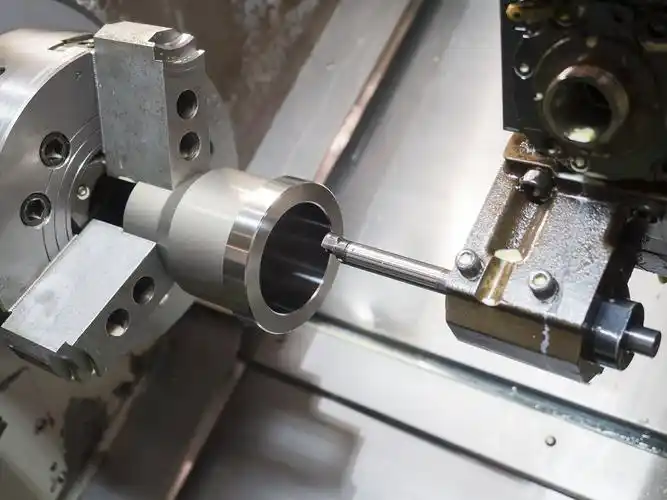
You've designed something brilliant and selected the perfect material. Now comes a step that trips up countless engineers and designers: getting your CAD files ready for production. Submit the wrong format or overlook critical design details, and you're looking at delayed quotes, revision requests, or worse - parts that can't be manufactured at all.
The good news? Most file preparation issues are completely avoidable. Whether you're searching for cnc services near me or working with a precision machining near me, the same principles apply everywhere. Let's break down exactly what machine shops need from your design files.
File Formats That Machine Shops Actually Prefer
Not all file formats are created equal when it comes to CNC machining. While your CAD software might offer dozens of export options, only a handful actually work well for manufacturing.
Best formats for CNC machining:
- STEP (.stp, .step) - The universal standard that virtually every machine shop accepts. STEP files preserve solid geometry, feature data, and dimensional accuracy across different software platforms. When in doubt, export as STEP.
- IGES (.igs, .iges) - An older but still widely supported format, particularly useful for surface-based models and complex curves.
- Parasolid (.x_t, .x_b) - Excellent geometry preservation and broad compatibility with CAM software.
- Native CAD files - Some shops accept SolidWorks (.sldprt), Inventor (.ipt), or Fusion 360 files directly. These preserve the most design intent but require compatible software on the receiving end.
What should you avoid? Mesh-based formats like STL or OBJ work great for 3D printing but create problems for CNC machining. These formats break smooth curves into tiny triangles, losing the precise mathematical definitions that cutting tools need to follow accurate paths.
When you contact the closest machine shop to me - or any facility - ask which formats they prefer. Most accept STEP without question, but knowing their preferences upfront prevents unnecessary back-and-forth.
Design Mistakes That Kill Your Quote
Sounds frustrating? It is - for both you and the machine shop. Certain design choices make parts expensive, difficult, or outright impossible to manufacture. Avoid these common pitfalls:
Impossible internal geometries: CNC cutting tools are cylindrical. They physically cannot create perfectly sharp internal corners. Adding an internal radius at least 30% larger than the cutting tool's radius reduces tool stress and enables faster cutting speeds. For example, if machining requires a 10mm tool, design internal corners with at least a 13mm radius.
Over-tolerancing: Specifying tight tolerances on every dimension dramatically increases machining time and cost. Standard CNC operations typically achieve ±0.13mm tolerance automatically. Reserve tighter callouts only for mating surfaces, functional interfaces, or critical assembly fits.
Thin walls without support: Walls that are too thin vibrate during cutting, causing poor surface finish, dimensional inaccuracy, or outright breakage. Minimum recommended wall thickness is 0.8mm for metals and 1.5mm for plastics. For tall, unsupported walls, maintain a width-to-height ratio of at least 3:1.
Deep cavities and pockets: Cutting tools have limited reach - typically 3 to 4 times their diameter before deflection becomes problematic. Design cavities with appropriate depth-to-width ratios to prevent tool hanging and ensure proper chip evacuation.
Non-standard hole sizes: Standard drill bits create holes efficiently and accurately. Non-standard dimensions require slower end milling operations that increase cycle time. Whenever possible, use standard hole sizes that match readily available tooling.
Your Essential File Preparation Checklist
Before submitting your design to any machine shop, run through this verification list:
- Proper tolerancing applied - Only specify tight tolerances where functionally necessary. Let non-critical dimensions default to standard machining accuracy.
- Impossible geometries eliminated - Check for sharp internal corners, undercuts that tools cannot reach, and features requiring non-existent cutter shapes.
- Critical dimensions clearly specified - Call out the measurements that matter most for fit and function. Ambiguity leads to assumptions - and assumptions lead to problems.
- Material callouts included - Specify exactly which material and grade you need. "Aluminum" isn't enough - indicate 6061-T6, 7075-T651, or whatever your application requires.
- Thread specifications noted - Include thread type, pitch, and depth. Limit thread depth to three times the hole diameter for optimal strength and manufacturability.
- Surface finish requirements stated - If specific areas need smoother finishes, call them out. Otherwise, expect standard 3.2μm Ra surface roughness.
Design for Manufacturability Principles That Save Money
Imagine designing a part that machines in half the time at half the cost - without sacrificing functionality. That's what Design for Manufacturability (DFM) delivers when applied thoughtfully.
DFM integrates manufacturing considerations into the design process from the beginning, identifying potential constraints before they become expensive problems. The core principles include:
- Simplify where possible - Every additional feature adds machining time. Ask yourself: does this complexity serve a functional purpose, or is it just design preference?
- Standardize components - Using standard hole sizes, thread specifications, and hardware interfaces reduces custom tooling requirements.
- Consider tool access - Features that require special fixturing, multiple setups, or exotic tooling cost more. Design with standard cutting tool capabilities in mind.
- Minimize setups - Parts that can be completed in fewer operations cost less. Consolidating features accessible from single orientations reduces handling time.
The benefits extend beyond cost savings. Simplified designs typically result in shorter lead times, fewer quality issues, and more consistent parts across production runs. When manufacturers can produce your component efficiently, everyone wins.
Getting your files right sets the foundation for successful manufacturing. But what happens when your project demands capabilities beyond standard milling and turning? Understanding specialized CNC processes helps you specify exactly what your application requires.
Specialized CNC Processes and When Your Project Needs Them
Standard 3-axis milling handles countless applications beautifully. But what happens when your design features complex contours, hardened materials, or geometries that conventional cutting tools simply cannot reach? That's when specialized CNC processes become essential - not optional upgrades, but necessary solutions for specific manufacturing challenges.
Understanding when your project genuinely requires advanced capabilities prevents two costly mistakes: over-specifying expensive processes for simple parts, or under-specifying and discovering mid-production that standard methods won't work. Let's explore what each specialized process actually does and when you truly need it.
Beyond Basic Milling: When You Need 5-Axis Capability
Ever tried accessing all sides of a complex part without removing it from the machine? That's the core advantage 5-axis machining delivers. While 3-axis machines move cutting tools along X, Y, and Z linear axes, 5-axis equipment adds two rotational axes - typically designated A and B (or A and C). This enables the cutting tool or workpiece to rotate, providing unprecedented access to complex geometries.
Why does this matter for your project? Consider these scenarios:
- Complex contoured surfaces - Turbine blades, impellers, and aerospace components feature flowing curves that require continuous tool orientation changes. 5-axis machines maintain optimal cutting angles throughout these intricate paths.
- Undercuts and angled features - Parts requiring machining at compound angles would need multiple setups on 3-axis equipment. Each repositioning introduces potential accuracy variations and extends production time.
- Single-setup production - Completing parts in one setup eliminates cumulative tolerances. All features reference a single datum, ensuring superior dimensional accuracy across complex assemblies.
The practical benefits extend beyond capability. 5-axis machining typically reduces overall cycle times for complex parts by eliminating repositioning operations. Shorter, more rigid cutting tools can reach features that would require extended tooling on 3-axis machines - improving surface finish and dimensional accuracy simultaneously.
However, 5-axis machining isn't always the right answer. Simple parts with basic geometries often machine more cost-effectively on 3-axis equipment. Programming complexity increases substantially, and machine rates run higher. The key question: does your geometry genuinely require simultaneous multi-axis movement, or can strategic fixturing on simpler equipment achieve the same results?
EDM Explained: The Process for Impossible Cuts
Imagine cutting hardened steel with the precision of a surgeon's scalpel - that's what Electrical Discharge Machining accomplishes. Unlike conventional cutting where tools physically contact workpieces, EDM removes material through electrical sparks that erode metal without mechanical force.
When does an edm machine shop become your best option?
Hardened materials: Conventional cutting tools struggle with extremely hard metals. EDM doesn't care about hardness - it works equally well on soft aluminum or hardened tool steel approaching 65 HRC. This makes it invaluable for mold and die work where materials must be hardened before final machining.
Intricate internal geometries: Need sharp internal corners? Conventional end mills physically cannot create them - tool radius always leaves some curvature. Wire EDM cuts with a thin wire electrode, achieving sharp corners and intricate details impossible with rotary cutting tools.
Exceptional precision: EDM typically achieves tolerances of ±0.0002 inches with superior surface finishes. When your application demands the tightest possible dimensional control, EDM delivers accuracy that conventional machining cannot match.
The tradeoff? EDM machines work slowly compared to conventional cutting - material removal happens spark by spark rather than chip by chip. The process only works on electrically conductive materials, eliminating plastics, ceramics, and composites from consideration. For appropriate applications, though, EDM solves problems no other process can address.
Waterjet and Laser Cutting: Different Tools for Different Jobs
Both waterjet and laser cutting slice through materials with remarkable precision, but they accomplish this through fundamentally different mechanisms - and each excels in distinct situations.
Waterjet cutting uses an ultrahigh-pressure stream of water, often mixed with abrasive particles, to erode material along programmed paths. The cold cutting process generates no heat-affected zone, making it ideal for heat-sensitive materials or applications where thermal distortion cannot be tolerated. Waterjet handles virtually any material - metals, stone, glass, composites, even food products.
Laser cutting focuses intense light energy to melt, burn, or vaporize material. It excels at detailed designs with minimal material waste and cuts thin materials faster than most alternatives. However, laser cutting has thickness limitations and can create heat-affected zones that alter material properties near cut edges.
Machine shops in Lexington KY offering 5 axis CNC waterjet laser cutting capabilities provide flexibility to match the optimal process to each project's specific requirements - rather than forcing every job through a single technology.
Process Comparison at a Glance
| Process Type | Best Applications | Material Compatibility | Precision Level | Typical Use Cases |
|---|---|---|---|---|
| 3-Axis Milling | Flat surfaces, simple contours, basic geometric shapes | Metals, plastics, wood, composites | ±0.001" to ±0.005" standard | Brackets, enclosures, plates, general machined components |
| 5-Axis Milling | Complex contours, undercuts, compound angles, single-setup production | Metals, plastics, composites | ±0.0005" to ±0.002" typical | Aerospace components, turbine blades, impellers, medical implants |
| Wire EDM | Sharp internal corners, hardened materials, intricate details | Conductive materials only | ±0.0002" achievable | Mold cavities, extrusion dies, gears, precision tooling |
| Waterjet | Heat-sensitive materials, thick sections, mixed-material assemblies | Virtually any material | ±0.003" to ±0.005" typical | Architectural panels, gaskets, armor plating, artistic pieces |
| Laser Cutting | Thin sheet work, detailed patterns, rapid prototyping | Metals, some plastics, wood (thickness limited) | ±0.002" to ±0.005" typical | Sheet metal parts, signage, decorative elements, electronics enclosures |
Matching Process to Project Requirements
How do you determine which process your project actually requires? Start by asking these questions:
- What material are you machining? Hardened steels often point toward EDM. Non-conductive materials eliminate EDM entirely. Heat-sensitive applications favor waterjet over laser.
- What geometries does your design include? Sharp internal corners require EDM. Complex 3D contours accessible from multiple angles suggest 5-axis capability. Simple 2D profiles might work perfectly with waterjet or laser.
- What tolerances does your application demand? Ultra-tight requirements may necessitate EDM or precision 5-axis work. Standard commercial tolerances often achieve adequately with simpler processes.
- What's your production volume? Setup time and programming complexity factor differently for one-off prototypes versus production runs of thousands.
The right answer often combines multiple processes. A complex mold might start with 3-axis roughing, transition to 5-axis finishing for contoured surfaces, then receive EDM for sharp corners and fine details. Understanding each technology's strengths helps you work with your machine shop 5 axis cnc waterjet laser cutting partner to develop the most efficient production strategy.
With process selection understood, the next critical consideration involves quality verification - how do you know the finished parts actually meet specifications? Understanding certifications and inspection methods ensures you receive components that perform as designed.
Quality Certifications and Inspection Methods Explained
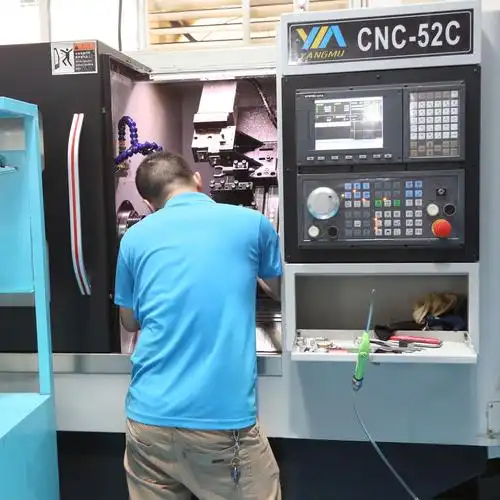
Your parts look perfect coming off the machine. But how do you actually verify they meet specifications? And when a machine shop claims quality certification, what does that really mean for your project? Understanding certifications and inspection methods transforms you from a passive customer into an informed partner who knows exactly what to expect - and what questions to ask.
Decoding Machine Shop Certifications
Quality certifications aren't just fancy plaques on the wall. They represent documented systems that ensure consistent processes, trained personnel, and measurable quality outcomes. Different industries demand different standards - and knowing which certification applies to your application helps you select the right precision cnc machining partner.
- ISO 9001 - The foundational quality management system applicable to any organization regardless of size or industry. ISO 9001 establishes general requirements for documented processes, customer focus, and continuous improvement. Think of it as the baseline - necessary but not always sufficient for specialized applications.
- AS9100D - The aerospace industry's demanding quality standard. It builds upon ISO 9001 with additional requirements specific to aviation, space, and defense manufacturing. If your parts fly, this certification matters.
- IATF 16949 - The automotive industry's quality management standard. It extends ISO 9001 by adding automotive-specific requirements including documented product safety management, supplier development programs, and use of specialized quality planning tools. You cannot achieve IATF 16949 without meeting ISO 9001 standards - it builds directly on that foundation.
Here's something many buyers don't realize: IATF 16949 requires specific eligibility. The shop must produce materials found on finished vehicles, maintain active automotive client agreements, and demonstrate 12 months of documented production data. These requirements ensure certification remains meaningful rather than merely aspirational.
What Quality Documentation Should You Expect
Certifications establish systems. But what tangible documentation should accompany your delivered parts?
First Article Inspection (FAI) reports provide detailed verification that initial production parts meet all drawing specifications. Before committing to full production runs, FAI confirms the setup produces conforming components. Expect dimensional measurements, material certifications, and visual inspection results documented formally.
Coordinate Measuring Machine (CMM) inspection delivers precision verification beyond what manual gauging can achieve. CMM equipment uses probe contact or optical sensors to capture precise dimensional data, comparing actual part geometry against CAD models or drawing specifications. For high tech turning co applications demanding tight tolerances, CMM inspection provides the objective evidence that specifications are met.
Material certifications trace raw materials back to their source, documenting chemical composition, mechanical properties, and heat treatment conditions. When your application requires specific material grades, these certificates prove you received exactly what was specified.
Statistical Process Control: Why It Matters for Production
Inspecting finished parts catches defects - but what if you could prevent them instead? That's where Statistical Process Control enters the picture.
SPC is a data-driven methodology for monitoring, controlling, and improving manufacturing processes using statistical analysis. Rather than waiting until parts are complete to discover problems, SPC enables operators to detect variations early - before defective products get made.
The approach distinguishes between two types of variation:
- Common cause variation - Natural process fluctuations inherent to any manufacturing operation. These represent normal behavior within stable processes.
- Special cause variation - Abnormal disturbances requiring immediate action. Equipment malfunction, tool wear, or material inconsistencies trigger these signals.
Control charts visualize this data over time, establishing upper and lower limits that define boundaries of acceptable variation. When measurements fall outside these limits, operators investigate before the issue compounds into scrapped parts or customer complaints.
For precisions cnc machining production runs, SPC delivers consistent quality across hundreds or thousands of parts. Organizations adopting cloud-based, AI-integrated SPC have reported defect reductions of up to 70% and yield improvements exceeding 25%. That translates directly to lower costs and more reliable supply for your projects.
IATF 16949 specifically requires understanding and application of quality planning tools including SPC - which explains why automotive manufacturers insist on this certification from their suppliers. The standard transforms quality from reactive inspection into proactive prevention.
With quality systems understood, the next step involves evaluating potential machine shop partners - determining which facilities actually deliver on their certification promises and match your specific project requirements.
How to Evaluate and Select the Right Machine Shop Partner
Finding a capable machine shop is one thing. Finding the right partner who genuinely fits your project requirements, timeline expectations, and long-term manufacturing needs? That's an entirely different challenge. The wrong choice costs more than money - it burns time, delays product launches, and creates headaches that ripple through your entire operation.
What separates a good vendor from a great manufacturing partner? It comes down to asking the right questions before committing - and understanding how different shops prioritize different capabilities.
Questions to Ask Before Choosing Your Machine Shop
Don't just type "CNC machine shop near me" into a browser and go with whoever appears first. The results at the top might simply have the best digital marketing help or the biggest ad budgets rather than the best services and competitive pricing.
Instead, evaluate potential partners systematically. Here's what matters most:
- Certifications relevant to your industry - Does your application require ISO 9001, AS9100D for aerospace, or IATF 16949 for automotive? Verify certifications are current and appropriate for your specific needs.
- Equipment capabilities - What machines do they actually operate? Newer CNC machines are expensive but deliver top-quality parts at high speed. Ask whether their equipment matches your complexity requirements - whether that's 5 axis CNC, waterjet, laser cutting, or specialized EDM capabilities.
- Material experience - Any shop should handle aluminum or steel. But do they have proven experience with your specific materials? Titanium alloys, ceramics, and exotic metals require specialized expertise beyond basic machining ability.
- Typical lead times - Do they guarantee on-time delivery? Your work might be flexible, but contracts often impose strict deadlines. Understand typical turnaround and their track record for meeting commitments.
- Minimum order quantities - Some shops optimize for high-volume production and won't accept small prototype orders. Others excel at one-offs but struggle to scale. Know their sweet spot.
- Communication responsiveness - Communication builds trust. A vendor who asks questions is seeking to understand and confirm requirements. Silence or slow responses signal potential problems down the road.
Look beyond the obvious too. Are they hiring? This could indicate a financially sound and growing firm. Is their equipment relatively new? That's a sign of financial stability and commitment to quality. Do they use current software for design and programming? These details reveal operational health that directly affects your project outcomes.
Prototyping vs Production: Different Needs, Different Partners
Here's a distinction many buyers miss: shops optimized for rapid prototyping operate fundamentally differently from facilities built for high-volume production. Understanding this difference helps you match partners to project phases.
Prototype-focused shops prioritize speed and flexibility. They excel at quick turnarounds, design iterations, and handling unique one-off components. Programming efficiency matters less than getting functional parts fast. These partners typically maintain lower minimum quantities and welcome engineering changes mid-stream.
Production-oriented facilities optimize for efficiency at scale. Setup time gets amortized across thousands of parts. Processes become refined, documented, and repeatable. Quality control practices shift from individual part inspection toward statistical process monitoring that ensures consistency across entire production runs.
The challenge? Many projects need both capabilities - prototyping to validate designs, then scaling to production volumes. Finding separate partners for each phase creates friction, knowledge transfer problems, and potential quality variations between prototype and production parts.
Evaluating Scalability: From First Part to Full Production
The most valuable manufacturing relationships grow with your needs. Selecting the right partner with relevant experience can potentially save you thousands of dollars because they're familiar with common pitfalls and the most effective ways to steer clear of them.
When evaluating scalability, consider:
- Do they offer both prototyping and production services? Partners handling the complete journey maintain design knowledge that improves production outcomes.
- What's their capacity for growth? A shop running at maximum capacity today cannot accommodate your production ramp tomorrow.
- Can they provide design feedback? Partners offering DFM support and design consultations help refine your product design faster and make long-term production more cost-effective.
- What additional services do they offer? Can they help with fabrication, welding, or engineering support? Consolidated capabilities reduce coordination overhead.
References matter more than testimonials. Ask others what their experience has been. Online reviews can be a mixed bag with no filter for motivation - but direct conversations with existing customers reveal the reality behind marketing claims.
The ideal partner combines prototyping agility with production discipline. They understand that today's experimental one-off might become next year's thousand-unit order - and they build relationships accordingly.
Selecting the right manufacturing partner sets the foundation for success. But even with the perfect partner, certain design realities constrain what CNC machining can achieve - limitations worth understanding before finalizing your specifications.
Understanding CNC Machining Limitations and Design Constraints
Every manufacturing process has boundaries. CNC machining delivers remarkable precision and versatility - but it's not magic. Understanding what these machines physically cannot accomplish helps you design smarter, set realistic expectations, and sometimes recognize when alternative processes serve your project better.
Think of it this way: knowing the rules helps you play the game effectively. Engineers who understand cnc machining design guidelines create parts that machine efficiently, cost less, and arrive on schedule. Those who ignore physical constraints discover problems the expensive way - through rejected quotes, redesign cycles, or parts that simply don't work.
Design Constraints Every Engineer Should Know
CNC cutting tools follow the laws of physics whether we like it or not. These fundamental constraints affect every machined part:
- Internal sharp corners are physically impossible - End mills are cylindrical. When they cut internal corners, they leave a radius matching the tool's diameter. The most commonly recommended vertical corner radius is one-third of the cavity depth or more. Designing with this reality in mind prevents frustration and additional operations.
- Deep pocket depth-to-width ratios create problems - The recommended depth of any cavity is four times its width because end mill tools have limited cutting length - typically three to four times the tool diameter. Deeper cavities cause tool deflection, increased vibration, and poor chip evacuation.
- Thin walls deflect under cutting forces - Reducing wall thickness decreases material stiffness, increasing vibrations during machining and lowering achievable accuracy. Recommended minimums are 0.8mm for metals and 1.5mm for plastics. Tall, unsupported walls amplify these problems significantly.
- Thread depth has practical limits - The brunt of the load hits the first few teeth - up to 1.5 times the nominal diameter. Threads longer than three times the nominal diameter waste machining time without adding meaningful strength.
- Undercuts require specialized tooling - Standard cutting tools approach workpieces from above. Undercut features need T-slot or dovetail cutters with specific geometric limitations. The standard ratio of cutting diameter to shaft diameter is two to one, which limits cutting depth.
- Micro-features demand specialty equipment - Machining cavities and holes below 2.5mm in diameter is considered micro-machining, requiring specialty tools and expertise where physics behave differently.
These aren't arbitrary rules - they're machining tolerance standards rooted in tooling physics and material behavior. Working within them produces better results at lower costs.
Tolerance Stack-Up and Surface Finish Realities
Imagine specifying impossibly tight tolerances on every dimension. Sounds like you're ensuring quality, right? Actually, you're guaranteeing expensive parts, extended lead times, and frustrated machinists.
Standard CNC operations achieve approximately ±0.13mm tolerance without heroic effort. Tighter specifications require slower cutting speeds, additional finishing passes, and more frequent inspection - all adding cost. The smarter approach? Apply tight tolerances only to mating surfaces and critical functional features. Let non-critical dimensions default to standard machining accuracy.
Surface finish follows similar logic. As-machined surfaces work perfectly for many applications. Achieving mirror-like finishes requires progressively finer cutting operations or secondary polishing - each adding time and expense. Specify finish requirements based on actual functional needs rather than aesthetic preference.
When CNC Isn't the Right Answer
Here's something manufacturing veterans understand that newcomers often miss: the best machine shop in the world cannot make every process the right choice for every application. Sometimes CNC machining genuinely isn't your optimal path forward.
Consider casting when: You need complex internal passages, extremely intricate external geometries, or high production volumes where per-piece cost matters more than tooling investment. Casting creates shapes that would require extensive material removal if machined from solid stock.
Consider 3D printing when: You need rapid prototyping with quick iteration cycles, extremely complex geometries with internal lattices, or low-volume production where setup costs dominate. 3D printing excels at handling intricate geometries and layer-by-layer fabrication that machining cannot approach efficiently. The additive process also generates less waste since material builds up rather than getting cut away.
Consider injection molding when: You're producing thousands or millions of identical plastic parts where the high tooling investment amortizes across massive quantities. Per-piece costs drop dramatically once molds are created.
CNC machines are known for their accuracy and precision with extremely tight tolerance and repeatable results - advantages that matter tremendously for aerospace, medical, and precision mechanical applications. But they're not universally optimal. The honest assessment? Match the process to the requirement rather than forcing every project through familiar equipment.
Making Informed Design Decisions
Understanding cnc manufacturing constraints empowers better decisions from the start. Before finalizing any design, ask yourself:
- Can standard cutting tools access all features I've specified?
- Have I designed internal corners with appropriate radii?
- Are my depth-to-width ratios within recommended limits?
- Do thin walls have adequate support to resist cutting forces?
- Are my tolerance specifications functionally necessary or just habit?
- Would a different manufacturing process actually serve this application better?
Answering these questions honestly - before submitting designs for quotation - prevents expensive discoveries downstream. The goal isn't designing perfect parts in isolation. It's designing manufacturable parts that perform as intended at acceptable cost.
With realistic expectations established, the final step involves translating this knowledge into action - particularly for demanding applications where quality systems and reliable partnerships determine success.
Taking Action on Your Precision CNC Machining Project
You've absorbed the fundamentals - from understanding how CNC technology transforms digital designs into physical parts, through material selection, file preparation, and quality verification. Now comes the practical question: how do you translate this knowledge into successful manufacturing outcomes, especially for demanding automotive and high-precision applications?
The stakes couldn't be higher. Automotive supply chains operate on razor-thin margins for error. A single quality escape can trigger recalls costing millions. Delivery delays cascade through just-in-time production systems, shutting down assembly lines at enormous expense. Finding the right precision manufacturing partner isn't just helpful - it's essential for survival in this demanding environment.
Building a Reliable Precision Manufacturing Partnership
For automotive cnc machining services, certification isn't optional - it's the price of admission. IATF 16949 is specifically designed as a holistic review of a supplier's systems including supply chain diversification and risk, management response procedures, and continuous improvement processes. The automotive task force recognized that supply chain disruptions within complex automotive manufacturing demand standards addressing risks well beyond basic quality control.
Why does this matter for your project? Consider recent supply chain disruptions. The COVID pandemic along with imbalances in globalization have caused chain reactions upward within supply lines - breakdowns traveling from raw materials through sub-assemblies to finished products, resulting in "line down" situations at great expense. IATF 16949 certified partners maintain documented procedures specifically designed to minimize these risks.
What makes an iatf 16949 certified machine shop different from standard quality systems?
- Documented product safety management - Systematic approaches to identifying and controlling safety-related characteristics throughout production
- Supplier development programs - Proactive management of upstream supply risks before they become your problems
- Specialized quality planning tools - APQP, PPAP, FMEA, and other automotive-specific methodologies embedded in daily operations
- Statistical Process Control requirements - Data-driven monitoring that catches variations before they produce defective parts
It is becoming commonplace for OEMs and Tier 1s to REQUIRE IATF programs as their value has been demonstrated in keeping supply arrangements running smoothly. When evaluating potential partners, verify their IATF 16949 certification is current and covers the specific manufacturing processes your project requires.
From Prototype to Production at Scale
The most frustrating manufacturing experience? Developing a perfect prototype with one partner, then discovering they cannot scale to production volumes - forcing you to restart with a new facility, re-validate processes, and accept quality variations between prototype and production parts.
Selecting the right partner with relevant experience can potentially save you thousands of dollars because they're familiar with common pitfalls and the most effective ways to steer clear of them. The ideal precision manufacturing partner handles the complete journey:
- Rapid prototyping - Quick turnaround on initial samples for design validation and testing
- Low-volume production - Bridge runs that validate manufacturing processes before full commitment
- Mass production - Scaled operations maintaining consistent quality across thousands of parts
- Design for Manufacturability support - Feedback that refines designs for cost-effective, reliable production
Manufacturing a product with little demand or in a saturated industry leads to poor business outcomes. Partners who support the complete prototype-to-production journey help you validate market demand with initial quantities before committing to expensive production tooling.
The most valuable manufacturing partnerships combine IATF 16949 certified quality systems with the flexibility to handle complex chassis assemblies and custom metal components - scaling seamlessly from your first prototype through full production volumes while maintaining documented traceability at every step.
For automotive applications requiring this combination of certification, capability, and scalability, Shaoyi Metal Technology represents exactly this type of precision manufacturing partner. Their IATF 16949 certified facility delivers high-tolerance components with lead times as fast as one working day, supporting everything from rapid prototyping through mass production. Whether your project involves complex chassis assemblies or custom metal bushings, their strict Statistical Process Control ensures consistent quality across production runs. Explore their automotive machining solutions to see how certified precision manufacturing accelerates your supply chain.
Your Next Steps
Ready to move forward with your precision CNC machining project? Apply what you've learned:
- Finalize your design files - Export clean STEP files with appropriate tolerances, material callouts, and critical dimension specifications
- Verify certification requirements - Determine whether your application demands IATF 16949, AS9100D, or standard ISO 9001 quality systems
- Request detailed quotations - Provide complete specifications and ask potential partners about their equipment capabilities, typical lead times, and quality documentation
- Evaluate scalability - Confirm your chosen partner can grow with your needs from prototype through production volumes
- Establish communication expectations - Define project milestones, inspection requirements, and reporting cadence before production begins
The knowledge you've gained throughout this guide - from understanding CNC fundamentals through material selection, file preparation, specialized processes, quality systems, and design constraints - positions you to make informed decisions and communicate effectively with manufacturing partners. The difference between a frustrating vendor relationship and a successful manufacturing partnership often comes down to asking the right questions upfront.
Your precision components are waiting to be made. Armed with this understanding of what machine shop CNC operations actually involve, you're ready to transform your designs into flawless finished parts.
Frequently Asked Questions About Machine Shop CNC
1. What does CNC machine shop mean?
A CNC machine shop uses Computer Numerical Control technology to manufacture precision parts. Digital instructions guide cutting tools to shape raw materials like metals, plastics, and composites with exceptional accuracy and consistency. Unlike manual machining, CNC operations follow pre-programmed G-code that dictates exact movements, speeds, and tool changes, enabling complex geometries impossible with traditional methods.
2. How much does CNC machining cost per hour?
CNC machining hourly rates vary significantly based on machine complexity, material type, and location. Basic 3-axis milling typically costs less than 5-axis operations or specialized EDM processes. Material hardness directly impacts costs since harder metals require slower cutting speeds and more frequent tool changes. Aluminum machines quickly with minimal tool wear, while stainless steel or exotic alloys demand premium rates due to extended cycle times.
3. What file formats do machine shops prefer for CNC projects?
STEP files are universally accepted and preserve solid geometry across different software platforms. Other preferred formats include IGES for surface-based models, Parasolid for excellent geometry preservation, and native CAD files like SolidWorks or Fusion 360. Avoid mesh-based formats like STL since they break smooth curves into triangles, losing the precise mathematical definitions cutting tools need.
4. What certifications should I look for in a CNC machine shop?
ISO 9001 provides baseline quality management, while AS9100D is essential for aerospace applications. For automotive projects, IATF 16949 certification is critical as it includes documented product safety management, supplier development programs, and Statistical Process Control requirements. This certification ensures consistent quality across production runs and minimizes supply chain disruption risks.
5. When should I choose 5-axis CNC machining over standard 3-axis?
5-axis machining becomes essential for complex contoured surfaces like turbine blades, parts requiring undercuts or compound angles, and components needing single-setup production for superior dimensional accuracy. While 5-axis reduces cycle times for complex parts by eliminating repositioning, simple geometries often machine more cost-effectively on 3-axis equipment. Evaluate whether your design genuinely requires simultaneous multi-axis movement before specifying premium processes.