 Small batches, high standards. Our rapid prototyping service makes validation faster and easier —
  EN
EN


Machine Services Decoded: 8 Insider Secrets Manufacturers Won't Tell You
What Machine Services Really Means for Modern Manufacturing
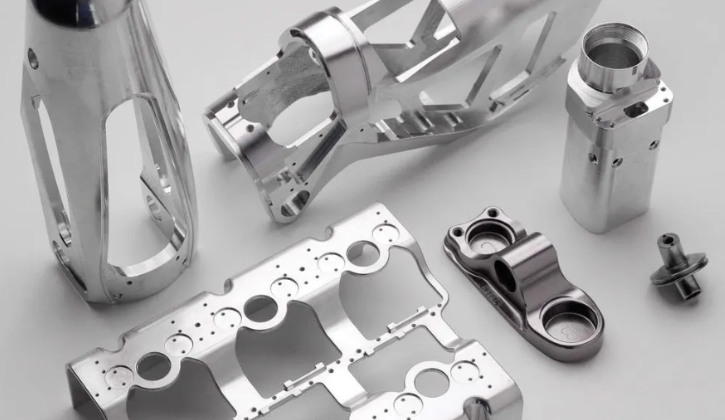
When you hear the term "machine services," what comes to mind? If you're picturing a single lathe spinning metal in a dusty workshop, you're missing the bigger picture. These services represent an entire ecosystem of manufacturing processes that transform raw materials into precision components powering everything from your car engine to aerospace technology.
Think of it this way: manufacturers who lack internal capabilities due to skill limitations, capacity constraints, or budget considerations turn to specialized shops for help. According to GlobalSpec, these providers handle everything from prototype development through high-volume production runs. The customer submits detailed design drawings, and the shop purchases materials, manufactures the parts, and delivers finished components ready for assembly.
The Machine Services Ecosystem Explained
Imagine you need a custom metal component for an industrial application. Where do you start? Understanding the complete ecosystem helps you navigate your options confidently. These specialized providers—sometimes called tool rooms or job shops—offer a surprisingly diverse range of capabilities.
Here are the core service categories you'll encounter:
- CNC Machining: Computer-controlled equipment that delivers fast, repeatable precision for high-volume work
- Manual Machining: Skilled craftsman-operated equipment ideal for custom one-off projects and specialized modifications
- Precision Machining: Tight-tolerance operations for components requiring exact specifications
- Production Machining: High-volume manufacturing processes including screw machining and Swiss machining for rapid, accurate output
- Repair Services: Restoration and refurbishment of worn or damaged components
- Maintenance Services: Preventive care and equipment servicing to maximize operational longevity
What surprises many newcomers is how interconnected these categories become. A single project might require CNC milling for initial shaping, precision grinding for surface finishing, and specialized treatment processes before delivery.
From Raw Material to Finished Component
Here's something manufacturers rarely explain upfront: machine shops often sub-contract work they cannot perform effectively in-house. Heat treating and plating are common examples. This means your single order might flow through multiple specialized facilities before completion.
The transformation process typically involves several distinct operations. Milling machines handle cutting, shaping, boring, and forming tasks. Grinding processes use abrasive wheels for polishing or shaping harder materials. Electrical discharge machining creates complex shapes at extremely close tolerances when conventional cutting won't work.
Whether you're sourcing components locally or exploring options as distant as motels cocoa beach travelers seeking overnight accommodations, the fundamental principle remains identical: match your specific requirements to providers with proven capabilities. The first priority in selecting any provider is confirming they possess the equipment and expertise your project demands.
Materials matter too. Different shops specialize in different material types—metals, plastics, composites, or exotic alloys. Your project specifications will naturally narrow your provider options based on what their equipment handles effectively.
Types of Machine Services and Their Industrial Applications
So you understand the ecosystem—but how do you choose between service types? The answer depends on your project's precision requirements, volume needs, and timeline. Let's break down each category so you can match your specifications to the right manufacturing approach.
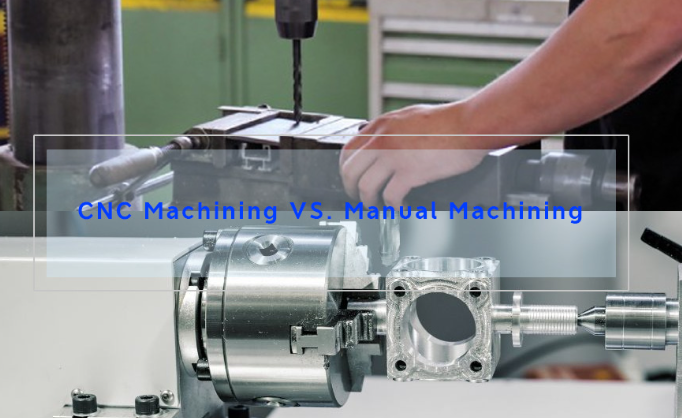
CNC Machining vs Manual Machining
Here's a question manufacturers rarely answer directly: when should you choose computer-controlled equipment over skilled craftsman-operated machines? The distinction matters more than you might expect.
CNC (Computer Numerical Control) machining feeds sequenced instructions into programmable controllers that direct machine tool movements with remarkable precision. According to Fictiv, these machines can deliver tolerances to a thousandth of an inch in minutes—while manual methods require hours of setup, calculations, and measuring to accomplish the same result.
Consider the practical differences:
- CNC Mills: Remove material from fixtured workpieces using rotating tools with multiple degrees of freedom. Perfect for fittings, housings, brackets, gears, and engine components requiring intricate geometries.
- CNC Lathes: Create conical or cylindrical geometries by applying stationary cutting tools to rotating workpieces. Ideal for shafts, fasteners, pins, electrical contacts, and pipe fittings.
- Manual Machines: Require highly skilled operators with years of training but excel at custom one-off projects, prototypes, and specialized modifications where programming time would exceed machining time.
The cost difference is significant. Machines that have undergone CNC retrofits produce parts 75-300% faster than their manual counterparts. Tool switching on CNC equipment runs over four times faster than manual alternatives. For a 50,000-unit production run, rejection rates drop dramatically when using automated precision versus human-operated equipment.
But don't dismiss manual machining entirely. When you need a single custom component—something unique that won't repeat—the programming overhead for CNC often makes manual approaches more economical. Think of it like choosing between a franchise restaurant and a local diner. Just as braums locations offer consistent menu items across every store, CNC delivers identical repeatability. Manual machining provides that custom-crafted experience when standardization isn't your priority.
When Production Machining Makes Sense
Volume changes everything. High-volume production involves large-scale manufacture of standardized parts, often running continuously around the clock. This approach makes sense when economies of scale offset initial setup investments.
According to Hubs, production machining delivers several key advantages:
- Reduced cost per unit: Fixed costs spread across entire production runs
- Automation benefits: Machinery increases speed while reducing manual labor requirements
- Consistency: Standardized processes result in uniform quality across thousands of parts
- Supply chain efficiency: Streamlined workflows reduce waste and optimize resources
Industries like aerospace, marine, automotive, and industrial manufacturing each demand different production approaches. A chelsea power take off system for heavy equipment requires different tolerances than aerospace components. Chelsea pto parts must withstand extreme mechanical stress, while medical devices demand contamination-free precision. Understanding where your project falls on this spectrum helps you select appropriate providers.
| Service Type | Precision Level | Volume Capability | Typical Applications | Turnaround Time |
|---|---|---|---|---|
| CNC Milling | ±0.001" achievable | Low to high volume | Housings, brackets, gears, engine components | Days to weeks |
| CNC Turning | ±0.001" achievable | Medium to high volume | Shafts, fasteners, pins, fittings | Days to weeks |
| Manual Machining | ±0.005" typical | Single units to small batches | Prototypes, custom modifications, repairs | Hours to days |
| Production Machining | ±0.001" with SPC | Thousands to millions | Automotive parts, consumer products, industrial components | Weeks (after setup) |
| EDM (Electric Discharge) | ±0.0001" possible | Low to medium volume | Hardened parts, molds, thin-walled components | Days to weeks |
| Repair/Maintenance | Varies by component | As needed | Equipment restoration, component refurbishment | Hours to weeks |
Quality control in high-volume production relies on statistical process control (SPC) and automated inspection systems. These methods catch variations before they become costly defects—something impossible when relying solely on human inspection across thousands of identical parts.
When reviewing a pto shaft parts diagram for replacement components, you'll notice how precise each dimension must be. This precision requirement determines whether manual, CNC, or full production machining makes economic sense. Similarly, whether you're sourcing industrial parts or arranging hertz car rental for a business trip, matching your specific needs to the right service level prevents overpaying for capabilities you don't require.
Understanding these distinctions prepares you for the next critical consideration: how power transmission components and drive systems create specialized machining demands that go beyond standard manufacturing approaches.
Power Transmission and Drive Shaft Machining Fundamentals
Ever wonder what keeps heavy machinery, marine vessels, and commercial vehicles transferring power from engines to wheels, propellers, or auxiliary equipment? The answer lies in power transmission systems—and these critical components demand some of the most exacting machine services available.
Here's what manufacturers often overlook when explaining their capabilities: drive shafts and power transmission components operate under extreme stress conditions. They spin at thousands of RPM, transmit massive torque loads, and must maintain perfect balance throughout their operational life. Even microscopic imperfections create vibrations that destroy bearings, damage seals, and cause catastrophic failures.
Power Transmission Components and Machining
Think about what happens inside a power transmission system. Rotating shafts transfer mechanical energy from one point to another—sometimes across significant distances. Industrial applications might span dozens of feet, while vehicle drive shafts connect transmissions to differentials through constantly changing angles and loads.
Precision machining ensures these components meet the tight tolerances rotating equipment demands. When reviewing a 280 pto parts list or chelsea 280 pto parts list, you'll notice specifications measured in thousandths of an inch. These aren't arbitrary numbers—they represent the difference between smooth operation and premature failure.
Common power transmission components requiring specialized machine services include:
- Drive Shafts: Solid or tubular rotating members that transmit torque between connected components—requiring precise diameter control and surface finish
- Universal Joints: Flexible couplings allowing angular misalignment between shafts—demanding exact bearing bore dimensions
- Yokes and Flanges: Connection points between shaft sections—requiring precise bolt patterns and pilot diameters
- Splined Shafts: Shafts with external teeth engaging internal splines—needing exact tooth profiles for proper engagement
- Couplings: Devices connecting two shafts together—machined to maintain concentricity under load
- Bearing Journals: Shaft surfaces supporting bearings—ground to specific diameters and surface finishes
- Balance Weights: Compensating masses welded or bolted to shafts—positioned based on precision balancing measurements
Each component type presents unique machining challenges. Splined connections require specialized hobbing or broaching equipment. Bearing journals demand grinding operations achieving surface finishes measured in microinches. Balance corrections need precision welding followed by re-machining to maintain dimensional accuracy.
Industrial Drive Systems Explained
Industrial, marine, and vehicle applications each impose different demands on power transmission components. Understanding these differences helps you communicate requirements effectively to your machining provider.
Industrial drive shafts often operate at fixed speeds under consistent loads. Think conveyor systems, pump drives, or manufacturing equipment. These applications prioritize durability and ease of maintenance. Machining requirements focus on achieving proper fits for couplings and bearings while maintaining concentricity across the shaft's entire length.
Marine drive systems face unique challenges. Saltwater environments demand corrosion-resistant materials and protective coatings. Propeller shafts must withstand thrust loads while maintaining precise alignment. Chelsea power take off parts used in marine auxiliary systems require the same precision as vehicle applications but with enhanced corrosion protection.
Vehicle drive shafts present the most dynamic operating conditions. Constantly changing angles, varying loads, and vibration exposure require exceptional balance and material quality. Chelsea power take offs mounted on commercial trucks power hydraulic systems, winches, and other auxiliary equipment—all while the vehicle bounces down rough roads.
Why do PTO systems require specialized machining expertise? These systems tap mechanical power directly from running engines or transmissions. The input shaft must match transmission spline patterns exactly. Output configurations vary based on driven equipment. Mounting surfaces need precise machining to prevent misalignment that destroys seals and bearings.
When you're sourcing chelsea power take off parts or reviewing a chelsea 280 pto parts list, you're dealing with components engineered for specific applications. Generic machining approaches won't deliver the precision these systems demand. Providers need experience with the exact tolerances, materials, and surface treatments these components require.
This specialized knowledge becomes even more critical when you consider the tolerance specifications that separate acceptable components from rejected ones—a topic that deserves detailed examination.
Precision Standards and Tolerance Specifications Demystified
Here's something most machine service providers won't explain upfront: tolerance specifications determine whether your finished parts actually work. You might receive components that look perfect visually—yet fail during assembly because dimensions fall outside acceptable ranges. Understanding how to specify and verify precision requirements separates successful projects from costly failures.
When reviewing a 489 pto parts list or chelsea 280 parts list, you'll notice every dimension includes tolerance callouts. These aren't suggestions—they're contractual specifications that define acceptable variation. Yet many customers struggle to communicate their precision needs effectively, leading to misunderstandings that waste time and money.
Understanding Machining Tolerances
What exactly is a tolerance? Simply put, it's the permissible variation from a specified dimension. No manufacturing process produces perfectly identical parts. Tolerances acknowledge this reality by defining acceptable limits.
Imagine ordering a shaft with a 1.000" diameter. Without tolerance specifications, you might receive parts measuring anywhere from 0.990" to 1.010"—or worse. Adding a tolerance of ±0.001" tells the machinist that acceptable parts must measure between 0.999" and 1.001". That's a difference of just two-thousandths of an inch total.
Standard tolerance grades follow international conventions that help communicate requirements clearly:
- Commercial Tolerances: ±0.005" to ±0.010"—suitable for non-critical dimensions where fit isn't crucial
- Standard Machining: ±0.002" to ±0.005"—appropriate for most functional components
- Precision Machining: ±0.0005" to ±0.001"—required for close-fitting assemblies and rotating components
- Ultra-Precision: ±0.0001" or tighter—reserved for optical, medical, and aerospace applications
Tighter tolerances cost more. Each decimal place of precision can double or triple machining costs because slower speeds, multiple passes, and specialized equipment become necessary. The chelsea application catalog specifies tolerances based on functional requirements—not arbitrary preferences. Smart customers match tolerance specifications to actual performance needs rather than over-specifying dimensions that don't affect function.
| Machining Process | Typical Tolerance Range | Surface Finish (Ra) | Best Applications |
|---|---|---|---|
| CNC Milling | ±0.001" to ±0.005" | 32-125 μin | Housings, brackets, complex geometries |
| CNC Turning | ±0.0005" to ±0.002" | 16-63 μin | Shafts, pins, cylindrical components |
| Cylindrical Grinding | ±0.0001" to ±0.0005" | 4-16 μin | Bearing journals, precision fits |
| Surface Grinding | ±0.0002" to ±0.001" | 8-32 μin | Flat surfaces, mating faces |
| EDM (Wire/Sinker) | ±0.0001" to ±0.0005" | 8-63 μin | Hardened materials, intricate shapes |
| Honing | ±0.0001" to ±0.0002" | 4-16 μin | Cylinder bores, precision holes |
Surface finish specifications matter just as much as dimensional tolerances. Ra values measure average surface roughness in microinches (μin). A bearing journal requiring 8 μin Ra feels mirror-smooth, while a 125 μin Ra surface shows visible machining marks. Functional surfaces—where parts slide, seal, or mate—typically need finer finishes than cosmetic or non-contact areas.
How to Specify Your Precision Requirements
Communicating tolerance requirements effectively prevents misunderstandings that delay projects and increase costs. Here's how to approach this conversation with your machining provider.
Start with Geometric Dimensioning and Tolerancing (GD&T). This standardized language goes beyond simple plus-minus tolerances to specify position, perpendicularity, concentricity, and other geometric relationships. A shaft might hold diameter tolerance perfectly yet fail because it's not straight enough. GD&T callouts like straightness, runout, and cylindricity address these requirements explicitly.
Key questions to answer before requesting quotes:
- Which dimensions are functionally critical versus non-critical?
- What surface finishes do mating surfaces require?
- Are there geometric relationships (parallelism, perpendicularity) that matter?
- What inspection methods will verify compliance?
- Do you need first-article inspection reports or ongoing statistical data?
Quality certifications provide assurance that providers maintain consistent precision. IATF 16949 certification—the automotive industry's quality standard—requires documented processes, calibrated equipment, and trained personnel. Providers holding this certification have demonstrated their ability to meet demanding specifications repeatedly.
Statistical Process Control (SPC) takes quality assurance further by monitoring production variations in real-time. Rather than inspecting finished parts and rejecting defects, SPC identifies trends before parts go out of tolerance. Control charts track critical dimensions across production runs, flagging deviations while corrections remain possible.
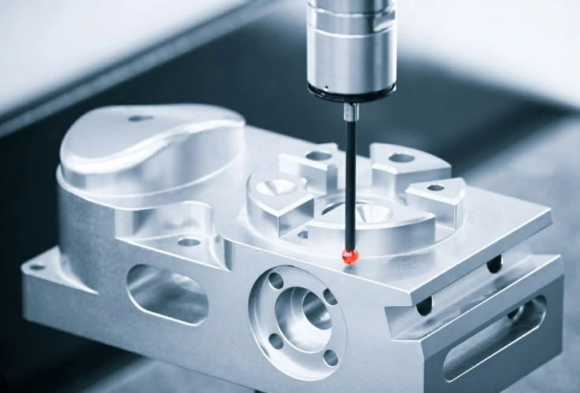
Quality inspection integrates throughout the machining process—not just at the end. In-process checks verify dimensions at key manufacturing stages. Coordinate Measuring Machines (CMMs) provide micron-level accuracy for complex geometries. Surface profilometers quantify finish specifications objectively rather than relying on visual assessment.
When tolerances matter, insist on documented inspection results. Reputable providers welcome this transparency because it demonstrates their capability.
Understanding precision specifications prepares you for the next step: seeing how the complete machine services process transforms your requirements into finished components ready for use.
The Complete Machine Services Process Explained
Ever wondered what actually happens between submitting your design and receiving finished parts? Most providers keep this process mysterious—you hand over drawings, wait weeks, and hope for the best. Understanding the complete workflow transforms you from passive customer into informed partner, capable of anticipating challenges and optimizing outcomes.
Think of machine services like cooking at a high-end restaurant. You don't just order food and wait. There's sourcing ingredients, prep work, cooking techniques, plating, and quality checks before anything reaches your table. Manufacturing follows similar principles—but with tolerances measured in thousandths of an inch instead of flavor profiles.
The Machine Services Workflow
Here's what manufacturers rarely walk customers through: every project follows a predictable sequence, regardless of complexity. Knowing these stages helps you provide better input, catch potential issues early, and maintain realistic timeline expectations.
The journey from concept to completed component involves these critical phases:
- Initial Consultation and Design Review: Your engagement starts with detailed discussions about project requirements, intended application, quantity needs, and timeline expectations. Experienced providers ask probing questions—not to complicate matters, but to identify potential issues before they become expensive problems. This stage often reveals specification gaps that could derail production later.
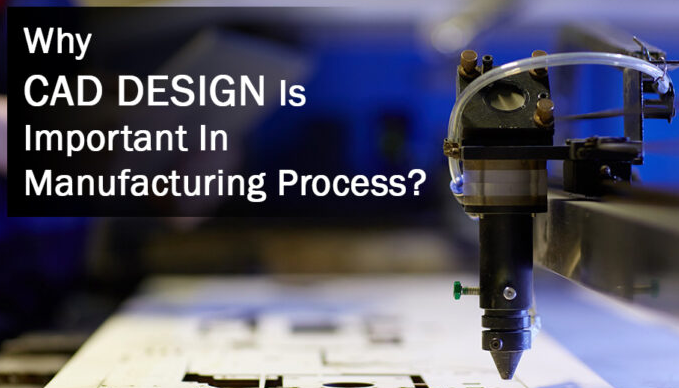
- CAD File Preparation: Everything begins with a CAD (Computer-Aided Design) file—the digital blueprint of your part. According to Zone3DPlus, designers use specialized software to shape every detail: size, curves, holes, and angles. Think of CAD as digital clay—sculpted on screen until it matches the final vision. Without this file, machines wouldn't know what to make.
- CAM Programming and Toolpath Development: CNC machines don't understand CAD files directly. CAM (Computer-Aided Manufacturing) software translates designs into machine language. This step selects optimal cutting tools, sets spindle speeds and feed rates, and maps exact toolpaths. The output—G-code—becomes the recipe that directs every machine movement.
- Material Selection and Procurement: Choosing appropriate materials affects everything from machinability to final performance. Providers evaluate mechanical properties, corrosion resistance, weight requirements, and cost factors. Some maintain stock materials for quick turnaround; specialized alloys may require procurement lead time.
- Machine Setup and Workpiece Fixturing: Before cutting begins, operators secure raw material blocks (workpieces) in fixtures and load appropriate cutting tools. Modern machines feature Automatic Tool Changers for efficiency. Setting the zero point—telling the machine exactly where the workpiece starts—ensures precise positioning throughout operations.
- Machining Operations: The actual cutting phase follows programmed instructions precisely. Spinning tools remove material in controlled passes, automatically switching tools as geometries require. Because the process is fully automated, every part emerges identical—whether producing one component or one thousand.
- Surface Finishing and Treatments: Raw machined parts often need additional processing: deburring sharp edges, polishing surfaces, or applying protective coatings. Anodizing, plating, powder coating, and heat treating enhance durability and appearance. Many shops subcontract specialized treatments to certified partners.
- Quality Inspection and Verification: Final inspection confirms dimensions match specifications using calipers, micrometers, or Coordinate Measuring Machines (CMMs). Providers document results, generate inspection reports, and verify compliance with drawing requirements before shipping.
- Packaging and Delivery: Proper packaging prevents transit damage that ruins precision work. Critical components receive individual protection; bulk orders use appropriate containers preventing part-to-part contact.
Each stage offers opportunities for communication. Asking questions during CAM programming might reveal design modifications that reduce machining time. Discussing material options could identify cost savings without compromising performance. Engaged customers consistently achieve better results than those who simply wait for delivery.
From CAD Design to Finished Part
Sounds complex? The reality is more accessible than it appears. What matters most is understanding where your input adds value—and where trusting your provider's expertise makes sense.
When submitting CAD files, ensure dimensions include tolerance specifications and surface finish callouts. Missing information forces providers to assume requirements—sometimes correctly, sometimes not. Clearly marked critical dimensions receive appropriate attention during setup and inspection.
Material selection deserves careful consideration. Your provider should explain tradeoffs between options: aluminum machines faster than steel but offers different strength characteristics. Stainless steel resists corrosion but dulls cutting tools quickly. Exotic alloys like titanium or Inconel require specialized equipment and expertise—not every shop handles these materials effectively.
The best outcomes happen when customers explain their application, not just their dimensions. Understanding how parts function helps providers make informed recommendations.
Surface coatings and finishing treatments often determine real-world performance. A chelsea pto rebuild kit might require specific surface treatments for wear resistance. Components from the chelsea pto application catalog specify finishes based on operational demands. Discussing these requirements early prevents surprises during final processing.
Quality inspection should match your actual needs. First-article inspection reports verify initial production meets specifications—essential for critical applications. Statistical sampling works for high-volume runs where inspecting every part proves impractical. Some industries require full dimensional reports for every component; others accept visual inspection for non-critical parts.
Rapid Prototyping vs. Mass Production Workflows
Here's where process understanding really pays off: prototyping and production involve fundamentally different approaches despite using similar equipment.
Rapid prototyping prioritizes speed and flexibility over per-unit cost efficiency. According to UPTIVE Advanced Manufacturing, prototypes test and refine design concepts using flexible or temporary materials. Companies produce few units, making adjustments based on testing feedback. The goal is learning—validating that designs work before committing to production tooling.
What should you expect during prototyping?
- Faster turnaround: Simplified programming and setup for single or small-batch production
- Higher per-unit costs: Fixed setup costs spread across fewer parts
- Design flexibility: Easy modifications between iterations without retooling penalties
- Material substitutions: Testing with readily available materials before specifying production grades
- Relaxed tolerances: Verifying form and fit before investing in precision processes
Mass production reverses these priorities. Setup time spreads across thousands of units, dramatically reducing per-part costs. Automated processes ensure consistency that manual operations cannot match. Quality systems monitor production continuously, catching variations before they become defects.
The transition from prototype to production involves additional steps many customers underestimate. Design for Manufacturability (DFM) reviews identify features that complicate production—suggesting modifications that maintain function while reducing cost. Bill of Materials (BOM) documentation lists every component, material, and quantity required. Quality standards and inspection protocols get defined before production begins.
Facilities like Maximum Industries in Irving, TX and similar precision providers handle both prototyping and production—but the workflows differ substantially. Understanding these differences helps you set appropriate expectations, whether you need three prototype parts next week or three thousand production components next quarter.
With the complete process now clear, you're ready to evaluate how your specific project requirements match available provider capabilities—the critical step that determines project success.
How to Evaluate Your Machine Service Requirements
You understand the process, tolerances, and service types—but here's where most customers stumble: matching their specific project needs to the right provider capabilities. Choosing poorly means paying premium prices for capabilities you don't need, or worse, receiving parts that fail because the shop lacked appropriate equipment or expertise.
Think about it this way: would you hire a residential electrician to wire an industrial facility? Both work with electricity, but the expertise, equipment, and certifications differ dramatically. The same principle applies when selecting machine service providers. Your project requirements determine which capabilities matter—and which ones you're paying for unnecessarily.
Matching Your Project to the Right Service
Before contacting potential providers, you need clarity on your own requirements. This self-assessment prevents wasted conversations and positions you as an informed customer who commands better service.
Start by answering these fundamental questions about your project:
- Volume requirements: Are you producing one prototype, a hundred components, or tens of thousands? Volume dramatically affects which providers make economic sense.
- Tolerance criticality: Which dimensions actually affect function versus those that just need to look right? Over-specifying tolerances wastes money.
- Material specifications: Does your application require exotic alloys, specific heat treatments, or standard materials that any shop handles?
- Timeline urgency: Can you wait four weeks for optimal pricing, or do you need parts in days regardless of premium costs?
- Certification requirements: Does your industry mandate specific quality certifications like AS9100 for aerospace or ISO 13485 for medical devices?
- Secondary operations: Will parts need finishing, coating, heat treating, or assembly beyond basic machining?
Your answers create a profile that narrows the field considerably. A prototype requiring standard aluminum with commercial tolerances fits most general machine shops. A production run of titanium aerospace components with tight tolerances demands specialized providers with appropriate certifications and equipment.
According to PEKO Precision, OEM evaluation teams typically include sourcing, quality, and engineering personnel—each responsible for different assessment facets. Industries like defense, semiconductor, and medical impose more stringent supplier requirements than general manufacturing. You might not have a formal evaluation team, but thinking through these perspectives helps you ask better questions.
Key Questions Before Choosing a Provider
Once you understand your requirements, evaluating potential providers becomes systematic rather than guesswork. Here's what to investigate—and why each factor matters.
Equipment and Technology Considerations
Not all CNC machines are created equal. A shop running 20-year-old equipment simply cannot achieve the same precision as facilities with modern multi-axis machining centers. But here's the insider secret: newer isn't always better for your project.
According to Focused on Machining, matching equipment to project complexity matters more than chasing the newest technology. If you have a complex part and the shop primarily uses older machines, they probably can't achieve your required precision. Conversely, if you have a simple part and the shop only uses high-tech equipment, you'll likely spend more than necessary.
Inspection equipment deserves equal scrutiny. A shop might machine parts beautifully but lack capability to verify they meet specifications. For extremely precise components, they'll need Coordinate Measuring Machines (CMMs). The rule of ten applies: inspection equipment must be 10x more accurate than features being checked. A 0.002" feature requires 0.0002" inspection accuracy—only CMMs deliver that precision.
Essential Evaluation Criteria
Beyond equipment, these factors separate reliable providers from risky choices:
- Certifications (verified, not claimed): Most precision shops list certifications on websites, but you'll want to see actual certificates. Some shops claim AS9100 compliance without official certification—there's a significant difference. Ask to see their ERP system and how they purchase materials. Superior shops demonstrate rock-solid processes transparently.
- Equipment capabilities and capacity: Understand not just what machines they have, but current utilization. A shop promising two-week lead times might have a month-long backlog before starting your project. Low capacity often indicates high demand from satisfied customers—worth the wait if they're the right fit.
- Industry experience: Ask which industries they primarily serve. Aerospace shops expect tight tolerances and maintain extensive finisher networks. Generalist shops offer competitive pricing but may struggle with tolerances tighter than 0.005". Your chelsea pto dealer near me search might yield shops experienced with power transmission components—valuable expertise for those applications.
- Lead times (realistic, not marketing): Lead times measure from project kickoff, not quote acceptance. If capacity is limited, that "two-week lead time" might stretch to six weeks before work actually begins. Honest providers disclose current capacity and help find solutions when timelines are tight.
- Quality control processes: Look beyond certifications to daily practices. Is documentation maintained consistently? Are First Article Inspections performed? Can they demonstrate traceability for materials and processes? Quality systems only work when followed daily—not just during audits.
- Supply chain management: According to PEKO Precision, effective supply chain teams manage incoming materials and secondary outsourcing operations. Parts often require heat treating, plating, or other processes the primary shop doesn't perform. How they coordinate these operations affects your delivery timeline and final quality.
- Business stability: Putting faith in a financially troubled company creates supply chain risks. Ask about annual revenue trends, long-term goals, and debt obligations. Precision shop owners expect these conversations—customers deserve to know their partner will remain viable throughout the relationship.
Generalist vs. Specialist: Making the Right Choice
Here's a decision framework most providers won't share openly: sometimes the best choice isn't the most capable shop—it's the most appropriate one.
Choose a specialist when:
- Your industry requires specific certifications (aerospace, medical, defense)
- Tolerances demand proven expertise with similar components
- Materials require specialized equipment or knowledge
- Long-term production relationships justify qualification costs
- Failure consequences are severe (safety-critical applications)
Choose a generalist when:
- Tolerances fall within standard commercial ranges
- Materials are common grades any competent shop handles
- Projects are one-time or low-volume prototypes
- Budget constraints outweigh precision requirements
- Timeline flexibility allows shopping for best pricing
When searching for chelsea pto dealers near me or chelsea pto dealers for specialized power transmission components, you're effectively seeking specialists. These providers understand the specific tolerances, materials, and applications involved—expertise generalist shops may lack despite broader capabilities.
A professional website, secure quoting forms, and responsive communication signal organizational sophistication. These seemingly minor details often correlate with process discipline and customer service quality. Shops investing in professional presentation typically invest equally in operational excellence.
The right provider isn't necessarily the cheapest or most capable—it's the one whose capabilities match your actual requirements at fair value.
With your evaluation criteria established, you're prepared to examine how different industries impose unique requirements on machine services—and what those distinctions mean for your specific applications.
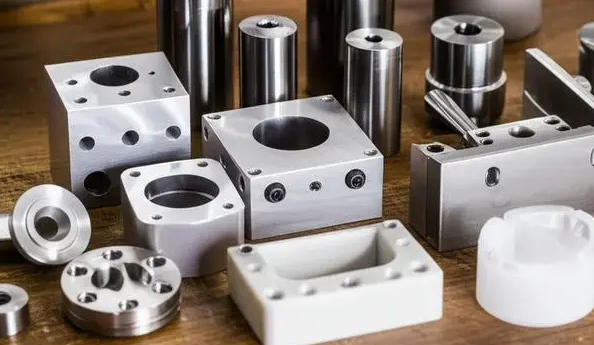
Machine Services Across Automotive and Industrial Sectors
Here's what separates competent machine shops from truly exceptional ones: understanding that a brake caliper for a passenger vehicle demands completely different expertise than a turbine blade for a jet engine. Both require precision machining—but the tolerances, materials, certifications, and quality protocols couldn't be more different.
Think about it this way. Just as a hannaford grocery store stocks different products than a specialty butcher shop, different industries require fundamentally different machining approaches. A shop excelling at high-volume automotive components might struggle with low-volume aerospace work demanding exotic alloys and exhaustive documentation. Understanding these distinctions helps you select providers whose expertise matches your actual requirements.
Automotive Machining Requirements
The automotive industry represents one of the most demanding sectors for machine services—not because individual tolerances are the tightest, but because the combination of precision, volume, and consistency creates unique challenges.
According to KESU Group, automotive precision machining involves tight tolerances typically ranging from 0.1 to 10 micrometers, with surface roughness requirements below 0.1 μm for critical components. Engine pistons are machined to tolerances of ±0.005 mm to ensure proper fit within cylinder bores. Crankshaft journal diameters must hold specifications like 50 ± 0.01 mm with surface finishes as fine as Ra 0.8 μm.
What makes automotive machining particularly challenging?
- Volume demands: Automotive runs often exceed tens of thousands of identical parts—requiring statistical process control rather than individual inspection
- Cost pressures: Fierce competition demands efficiency at every step, from material utilization to cycle time optimization
- Zero-defect expectations: Recalls destroy brands, making quality systems non-negotiable
- Material diversity: Components range from aluminum engine blocks to hardened steel transmission gears to cast iron brake rotors
- Cleanliness standards: Transmission components face stringent contamination limits—metallic particles must remain below 0.1 mg per component
Chassis assemblies and custom metal bushings illustrate why specialized approaches matter. Suspension components like control arms require dimensional tolerances of ±0.01 mm at mounting points while achieving surface finishes of Ra 0.8 μm in high-stress contact areas. These specifications ensure vehicle stability and handling—tolerances looser than specified create dangerous play in steering systems.
For automotive supply chains, the ability to scale from rapid prototyping through mass production while maintaining certified quality standards proves essential. Providers holding IATF 16949 certification—the automotive industry's quality management standard—demonstrate documented processes, calibrated equipment, and continuous improvement capabilities that OEMs demand. Facilities like Shaoyi's precision CNC machining operation exemplify this approach, delivering high-tolerance components with lead times as fast as one working day while maintaining strict Statistical Process Control throughout production.
Aerospace and Marine Precision Standards
If automotive machining demands consistency at scale, aerospace machining demands perfection at any scale. The stakes simply don't allow compromise—component failure at 35,000 feet carries consequences no quality system can remedy after the fact.
According to CNCMachines.com, aerospace CNC shops must acquire specific certifications to work with OEMs or government agencies. AS9100 certification—building on ISO 9001 with aerospace-specific requirements for traceability and risk management—forms the foundation. NADCAP accreditation covers special processes like heat treating and non-destructive testing. ITAR compliance governs defense-related components and data security.
What separates aerospace from other precision work?
- Documentation intensity: Every material lot, process parameter, and inspection result requires permanent records
- Exotic materials: Titanium, Inconel, and specialized aluminum alloys demand specific tooling and expertise
- Certification complexity: Multiple overlapping requirements from AS9100, NADCAP, ITAR, and customer-specific approvals
- Inspection rigor: Non-destructive testing methods verify internal integrity invisible to dimensional checks
- Traceability requirements: Components must trace back to original material certifications decades later
Marine applications share some aerospace characteristics—corrosion resistance, reliability in remote locations, and severe consequences of failure—while presenting unique challenges. Saltwater environments demand specific material selections and protective treatments. Propeller shafts must withstand constant thrust loads while maintaining precise alignment through varying operating conditions.
Chelsea pto distributors serving marine applications understand these requirements intimately. Power take-off systems on commercial vessels power hydraulic cranes, winches, and auxiliary equipment—all requiring the same precision as vehicle applications but with enhanced corrosion protection and documentation requirements.
Oil, Gas, and Industrial Sector Requirements
Energy sector machining presents yet another distinct profile. Components operate in extreme environments—high pressures, corrosive fluids, elevated temperatures, and remote locations where maintenance proves difficult or impossible.
Valve bodies, pump components, and drilling equipment demand materials resistant to hydrogen sulfide exposure and erosion from abrasive slurries. Surface finishes on sealing surfaces must prevent leaks under thousands of PSI pressure. Dimensional accuracy ensures proper assembly in field conditions with limited precision tooling available.
Industrial manufacturing equipment—the machines that make other machines—requires precision machining for spindles, bearings, and ways that determine the equipment's own accuracy. A milling machine spindle machined to poor tolerances produces parts with poor tolerances. This recursive quality relationship makes industrial equipment machining particularly exacting.
Similar to how restaurant chain operations standardize processes across locations, industrial equipment manufacturers seek machining partners who deliver consistent quality regardless of order size or timing. Just as you might search chelsea pto parts near me for local sourcing convenience, industrial buyers balance proximity against capability when selecting providers.
| Industry Sector | Typical Tolerances | Common Materials | Certification Requirements | Volume Characteristics |
|---|---|---|---|---|
| Automotive | ±0.005 mm to ±0.01 mm | Aluminum alloys, carbon steel, cast iron, stainless steel | IATF 16949, ISO 9001 | High volume (thousands to millions) |
| Aerospace | ±0.002 mm to ±0.005 mm | Titanium, Inconel, aerospace aluminum, composites | AS9100, NADCAP, ITAR | Low to medium volume with extensive documentation |
| Marine | ±0.01 mm to ±0.025 mm | Bronze, stainless steel, Monel, coated steels | Classification society approvals (ABS, Lloyd's, DNV) | Low volume, custom specifications |
| Oil & Gas | ±0.005 mm to ±0.02 mm | Duplex stainless, Inconel, tungsten carbide, specialized alloys | API standards, NACE compliance | Medium volume with material traceability |
| Industrial Equipment | ±0.002 mm to ±0.01 mm | Tool steels, cast iron, hardened alloys | ISO 9001, customer-specific | Low to medium volume, often custom |
Notice how certification requirements align with industry risk profiles. Aerospace and automotive—where failures affect public safety—demand the most rigorous third-party oversight. Industrial and marine applications often rely on customer-specific requirements rather than universal standards. Oil and gas falls between, with API standards governing specific equipment types while leaving broader quality management to individual operators.
Matching Your Application to Industry Standards
Here's the practical takeaway: your industry determines which capabilities you should prioritize when evaluating machine service providers.
Automotive buyers should verify IATF 16949 certification and ask about Statistical Process Control implementation. Capacity matters—can the shop scale from prototype quantities to full production runs without quality degradation? Lead time flexibility proves valuable when design changes require quick prototype iterations followed by accelerated production launch.
Aerospace buyers must confirm appropriate certifications before discussing project details—ITAR compliance alone eliminates many otherwise capable shops. Ask about material sourcing relationships, special process capabilities (or qualified subcontractor networks), and documentation systems. The hannaford stores approach of maintaining standardized inventory doesn't apply here; aerospace materials require lot-specific certifications and complete traceability.
Marine and industrial buyers often prioritize engineering support over production volume. Can the shop help optimize designs for manufacturability? Do they stock or quickly source corrosion-resistant materials? What surface treatment options do they offer or coordinate?
Regardless of industry, quality inspection capabilities must match your specification requirements. Shops claiming aerospace tolerance capability must demonstrate inspection equipment capable of verifying those tolerances—the rule of ten means ±0.002 mm features require ±0.0002 mm measurement accuracy. CMM reports, surface profilometer data, and documented calibration records validate these claims.
Your industry's standards exist for good reason. Providers who meet them have invested in equipment, training, and systems that deliver consistent results. Those who cut corners eventually deliver problems.
Understanding industry-specific requirements prepares you for the final critical step: selecting a machine services partner who can grow with your needs—from initial prototypes through sustained production relationships.
Choosing the Right Machine Services Partner
You've explored the complete ecosystem—from tolerance specifications and power transmission fundamentals to industry-specific requirements. Now comes the moment that determines whether all that knowledge translates into successful projects: selecting a partner who delivers consistently and grows alongside your business.
Here's what experienced buyers understand that newcomers often miss: the cheapest quote rarely represents the best value. A provider offering rock-bottom pricing might lack equipment calibration, skip documentation, or struggle with tolerances they confidently quoted. The real cost shows up later—in rejected parts, missed deadlines, and production delays that cascade through your operations.
Building a Successful Provider Relationship
Think beyond individual transactions. The most valuable machine service relationships function as partnerships where your provider understands your applications, anticipates your needs, and invests in capabilities that serve your roadmap.
What does a strong provider relationship look like in practice?
- Proactive communication: They alert you to potential issues before they become problems—material availability concerns, capacity constraints, or design features that complicate manufacturing
- Technical collaboration: Engineers engage with your designs, suggesting modifications that reduce cost or improve performance without compromising function
- Flexibility under pressure: When timelines shift unexpectedly, they find solutions rather than excuses
- Consistent quality: Part 1,000 matches part 1 because documented processes govern every step
- Scalability: Prototype quantities transition smoothly to production volumes without quality degradation
According to TMCO, evaluating potential partners requires examining their financial stability and long-term viability. Putting faith in a financially troubled company creates supply chain risks you don't need. Ask about revenue trends, long-term goals, and facility investments—precision shop owners expect these conversations from serious customers.
The transition from prototyping to production tests relationships thoroughly. Providers who excel at quick-turn prototype work sometimes struggle with production discipline. Conversely, high-volume specialists may lack flexibility for development iterations. Facilities demonstrating capabilities across this spectrum—with lead times as fast as one working day for urgent needs combined with Statistical Process Control for production consistency—represent the benchmark you should seek.
Your Machine Services Action Plan
Ready to move forward? Here's your systematic approach to finding and qualifying the right partner.
Essential criteria to verify before committing:
- Verify certifications: Request actual certificates, not just website claims. IATF 16949 for automotive, AS9100 for aerospace, ISO 9001 as a baseline—ensure certifications match your industry requirements
- Confirm equipment capabilities: Match their machinery to your project complexity. Advanced multi-axis CNC centers handle intricate geometries; simpler equipment costs less but limits possibilities
- Request tolerance specifications: Ask what tolerances they achieve routinely versus occasionally. Consistent ±0.001" capability differs from ±0.001" achieved under ideal conditions
- Understand lead times: Clarify whether quoted timelines measure from order placement or project kickoff. Current capacity affects when work actually begins
- Evaluate quality control processes: Look for documented inspection procedures, calibrated equipment, and traceability systems. Statistical Process Control implementation signals production maturity
- Assess engineering support: Determine whether they offer Design for Manufacturability reviews that optimize your designs before production begins
- Check supply chain management: Understand how they coordinate secondary operations like heat treating, plating, or specialized finishing
When evaluating providers for complex assemblies—chassis components, transmission parts, or precision bushings—prioritize those demonstrating high-tolerance capabilities backed by certified quality systems. For automotive applications specifically, certified precision machining solutions that scale from rapid prototyping to mass production while maintaining IATF 16949 standards represent the caliber of partner worth pursuing.
The right partner isn't just a vendor—they're an extension of your manufacturing capability, invested in your success because it drives their own.
Finding quality providers sometimes feels like searching for "wawa near me" when you're in unfamiliar territory—you know what you need but aren't sure who delivers it reliably. Start with industry associations, trade publications, and peer recommendations. Request quotes from multiple providers to compare not just pricing but responsiveness, technical questions asked, and willingness to discuss your application in depth.
Remember what you've learned throughout this guide: machine services encompass far more than cutting metal. The ecosystem includes design support, material expertise, precision capabilities, quality systems, and finishing operations. Providers who understand this complete picture—and demonstrate proven capability across each element—deliver results that justify their pricing and earn long-term partnerships.
Your next project deserves a partner who treats your success as their own. Armed with these insights, you're prepared to find exactly that.
Frequently Asked Questions About Machine Services
1. What are machine services and what do they include?
Machine services encompass a complete ecosystem of manufacturing processes that transform raw materials into precision components. Core categories include CNC machining for automated precision, manual machining for custom one-off projects, precision machining for tight tolerances, production machining for high-volume manufacturing, and repair/maintenance services for equipment longevity. Providers handle everything from prototype development through high-volume production runs, often coordinating secondary operations like heat treating, plating, and surface finishing through specialized partners.
2. What is the difference between CNC machining and manual machining?
CNC (Computer Numerical Control) machining uses programmable controllers to direct machine movements with tolerances to a thousandth of an inch in minutes, while manual machining requires skilled operators and hours of setup for similar results. CNC machines produce parts 75-300% faster with dramatically lower rejection rates for high-volume runs. However, manual machining excels at custom one-off projects and specialized modifications where programming time would exceed machining time, making it more economical for single unique components.
3. How do I choose the right machine shop for my project?
Evaluate providers based on certifications (IATF 16949 for automotive, AS9100 for aerospace), equipment capabilities matching your project complexity, industry-specific experience, realistic lead times, and documented quality control processes. Verify certifications with actual certificates rather than website claims. For high-tolerance automotive applications, seek IATF 16949-certified facilities like Shaoyi Metal Technology that offer Statistical Process Control and can scale from rapid prototyping to mass production with lead times as fast as one working day.
4. What tolerances should I expect from precision machining?
Standard tolerance grades range from commercial (±0.005" to ±0.010") for non-critical dimensions, to precision machining (±0.0005" to ±0.001") for close-fitting assemblies, and ultra-precision (±0.0001" or tighter) for aerospace and medical applications. CNC turning typically achieves ±0.0005" to ±0.002", while cylindrical grinding reaches ±0.0001" to ±0.0005". Tighter tolerances cost more—each decimal place of precision can double or triple machining costs due to slower speeds and specialized equipment requirements.
5. What certifications matter when selecting industrial machine services?
Certification requirements align with industry risk profiles. IATF 16949 is essential for automotive applications, ensuring documented processes and continuous improvement. AS9100 and NADCAP accreditation are mandatory for aerospace work, while ITAR compliance governs defense-related components. ISO 9001 serves as a baseline quality standard. Marine applications require classification society approvals (ABS, Lloyd's, DNV), and oil and gas work follows API standards. Always request actual certificates rather than accepting website claims.