 Small batches, high standards. Our rapid prototyping service makes validation faster and easier —
  EN
EN


Custom Machining Shop Secrets: 9 Essential Points Before You Order
What Is a Custom Machining Shop and Why It Matters
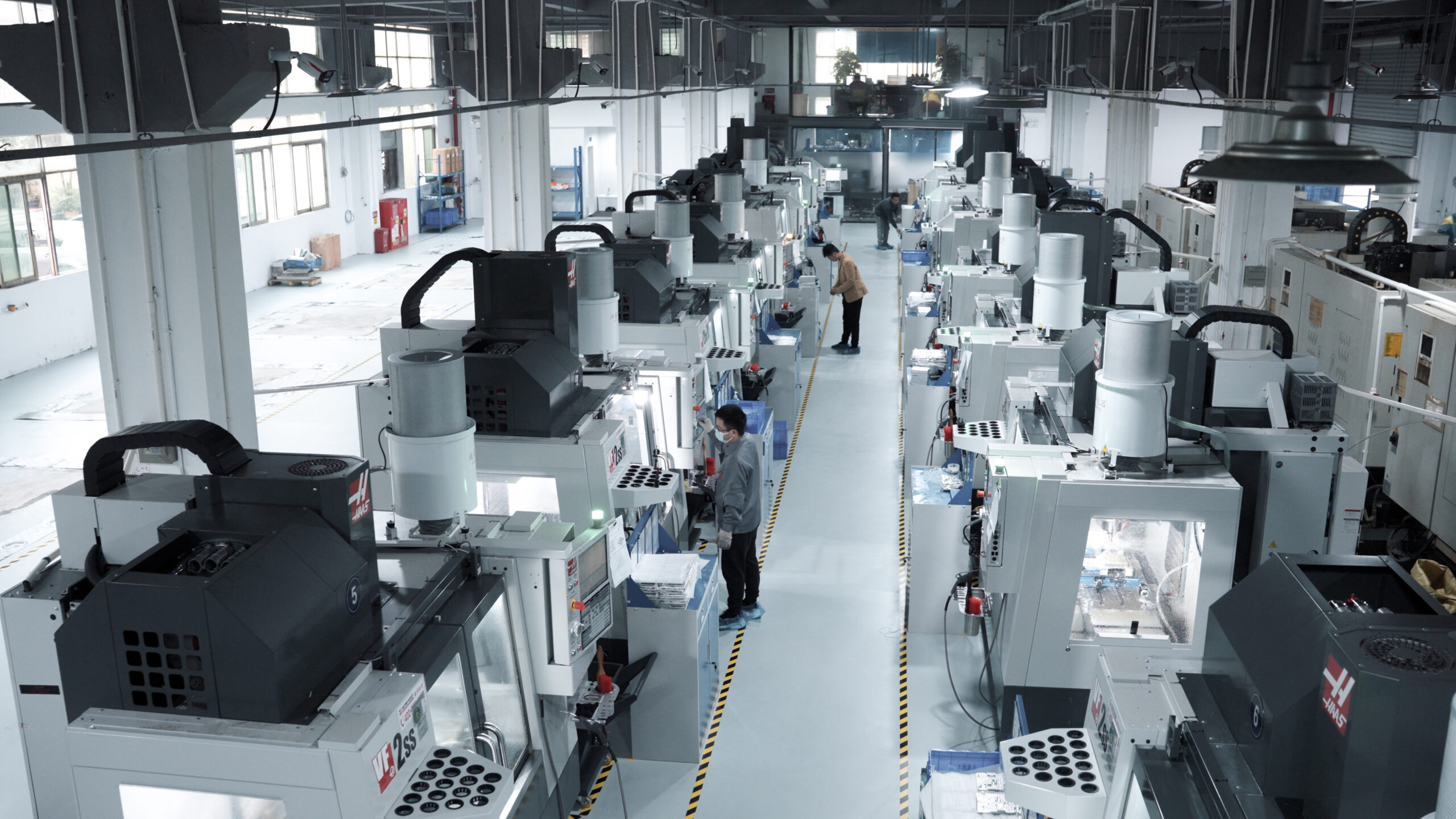
Imagine you need a specialized metal component that simply doesn't exist on the market. Perhaps it's a unique bracket for aerospace equipment, a custom fitting for medical devices, or a precision gear for an industrial machine. Where do you turn? This is exactly where a custom machining shop becomes invaluable.
A custom machining shop is a specialized manufacturing facility that creates parts tailored to your exact specifications rather than mass-producing standardized components. Unlike conventional manufacturing plants that churn out thousands of identical items, these shops focus on precision, flexibility, and the ability to transform your unique designs into physical reality.
Think of it this way: mass production is like ordering from a fixed menu at a fast-food restaurant, while working with a custom machine shop is like having a personal chef who crafts dishes specifically for your taste and dietary needs.
What Sets Custom Machining Apart from Mass Production
The fundamental difference lies in approach and capability. Standard manufacturing facilities optimize for volume and cost efficiency, producing large quantities of identical parts with minimal variation. Custom machining, however, embraces complexity and individuality.
When you're developing a prototype, need a replacement part for legacy equipment, or require components with complex geometries and tight tolerances, mass production simply won't work. CNC manufacturing shops specializing in custom work can handle intricate designs that would be challenging or impossible through standardized processes.
Consider these key distinctions:
- Specialized Equipment: Custom shops invest in advanced CNC milling machines, lathes, grinders, and EDM equipment capable of achieving tolerances as tight as +/- 0.0001 inches—precision that mass production rarely requires or delivers.
- Skilled Machinists: These facilities employ experienced craftspeople who understand material properties, tooling selection, and programming techniques needed to execute complex projects successfully.
- Flexible Production Capabilities: Whether you need a single prototype or a batch of 500 specialized components, custom shops adapt their processes to match your specific requirements.
- Quality-Focused Processes: Every part receives individual attention, with rigorous inspection and quality control measures ensuring each component meets your exact specifications.
The Role of Precision Manufacturing in Modern Industry
You'll find that precision machining services are the backbone of innovation across virtually every advanced industry. When engineers at aerospace companies design new aircraft components, when medical device manufacturers develop life-saving implants, or when automotive engineers prototype next-generation systems—they all rely on CNC machine shops near me and specialized facilities to bring their designs to life.
According to industry sources, precision machining is indispensable in modern manufacturing due to its ability to produce high-quality, complex parts with excellent finishes. The technology enables everything from surgical instruments requiring biocompatible materials to defense components demanding military-grade durability.
What makes this capability so crucial? In today's competitive landscape, product differentiation often comes down to engineering excellence. Off-the-shelf components might work for basic applications, but breakthrough innovations demand custom solutions. A well-equipped machining facility bridges the gap between your CAD designs and functional, precision-crafted parts—transforming digital concepts into tangible products that meet the most demanding specifications.
Core Machining Processes Every Buyer Should Understand
So you've found a custom machining shop—but do you know which process is right for your project? Understanding the core machining methods helps you communicate effectively with manufacturers and ensures you select the optimal approach for your specific needs. Let's break down the four primary processes you'll encounter.
CNC Milling and Turning Explained
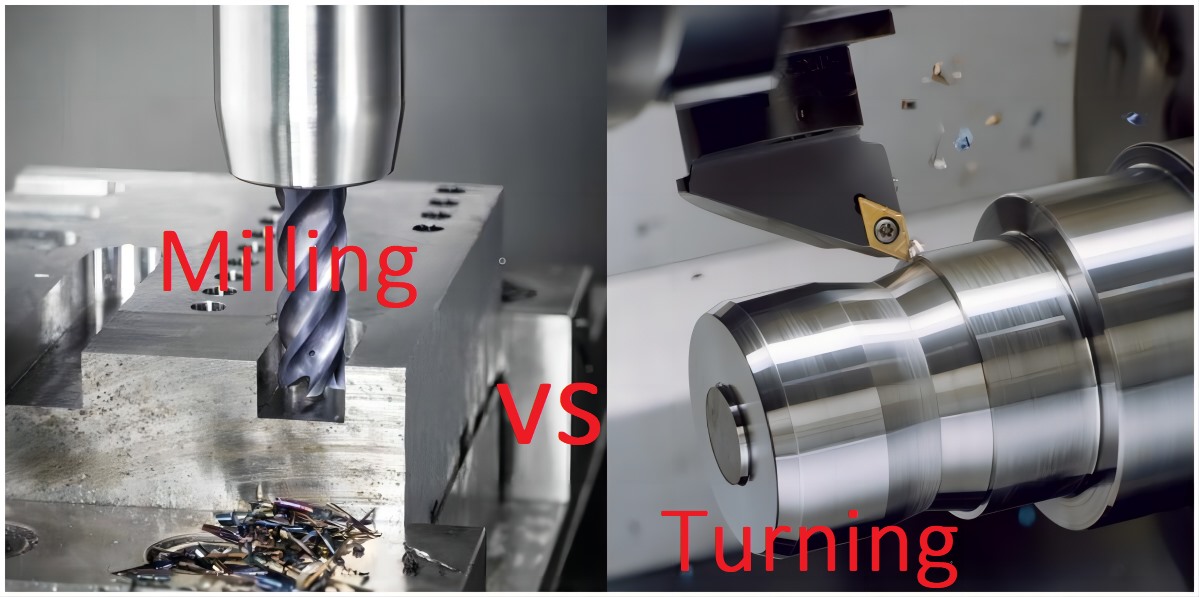
When a CNC cut removes material from your workpiece, the method used determines what shapes and features are possible. The two most common processes—milling and turning—differ fundamentally in how they approach material removal.
CNC Milling involves a stationary workpiece while a rotating cutting tool moves across multiple axes to carve away material. Imagine a sculptor's chisel spinning at thousands of RPM, precisely removing material to reveal the shape within. This process excels at creating complex geometries, flat surfaces, slots, pockets, and intricate 3D contours. With multi-axis capabilities, CNC milling machines can produce parts with irregular shapes and detailed features that would be impossible through other methods.
CNC Turning, conversely, spins the workpiece itself while a stationary cutting tool shapes it. Think of a potter's wheel, but for metal. This approach is ideal for cylindrical or round parts—shafts, bushings, rings, and flanges. CNC turning delivers exceptional efficiency for symmetrical components, often completing parts faster and more cost-effectively than milling when the geometry permits.
Here's the practical distinction: if your part has a round cross-section and symmetrical features, CNC turning is likely your best option. If you need complex pockets, irregular contours, or multi-sided features, CNC milling is the answer. Many advanced facilities now use mill-turn centers that combine both capabilities, enabling complete part production in a single setup.
Specialized Processes for Complex Geometries
When standard milling and turning reach their limits, specialized processes step in. Two critical methods handle what conventional CNC cuts cannot achieve.
Grinding becomes essential when precision beyond the capabilities of a lathe or mill is required. This process moves the workpiece against a spinning abrasive wheel, achieving surface finishes and tolerances that machining alone cannot match. Grinding is commonly used for bearings, spindles, measuring surfaces, and any component requiring ultra-precise dimensions or mirror-like finishes.
EDM (Electrical Discharge Machining) takes a completely different approach. Rather than cutting material, EDM uses controlled electrical sparks to erode material from the workpiece. This non-conventional method excels at machining extremely hard materials and creating intricate internal features that cutting tools simply cannot reach. Wire EDM can achieve geometry precision approaching ±1 μm, making it invaluable for mold-making, aerospace components, and medical devices.
Swiss machining deserves mention here as well. This specialized CNC turning technique uses a sliding headstock to support the workpiece close to the cutting action, enabling the production of extremely small, precise components. It's the go-to process for medical implants, watch components, and miniature electronic parts requiring exceptional accuracy.
| Process Type | Best Applications | Material Compatibility | Typical Tolerances |
|---|---|---|---|
| CNC Milling | Complex shapes, flat surfaces, pockets, 3D contours, prototypes | Aluminum, steel, brass, titanium, plastics, composites | ±0.001" to ±0.005" (±0.025 to ±0.127 mm) |
| CNC Turning | Cylindrical parts, shafts, bushings, rings, high-volume symmetrical components | Aluminum, steel, brass, copper, titanium, engineering plastics | ±0.001" to ±0.005" (±0.025 to ±0.127 mm) |
| Grinding | Ultra-precision surfaces, bearings, spindles, tight-tolerance finishing | Hardened steels, ceramics, carbides, tool steels | ±0.0001" to ±0.0005" (±0.0025 to ±0.0127 mm) |
| EDM | Complex cavities, hard materials, intricate internal features, mold-making | Hardened metals, exotic alloys, conductive materials, carbides | ±0.0002" to ±0.001" (±0.005 to ±0.025 mm) |
Understanding these processes helps you match your project requirements to the right approach. For CNC prototyping of a new product design, milling offers the flexibility you need. For production runs of cylindrical components, CNC fabrication through turning delivers efficiency. And when your specifications demand the tightest tolerances or hardest materials, grinding and EDM provide capabilities that standard processes cannot match.
With this foundation in machining processes, you're ready to tackle the next critical decision: selecting the right material for your custom machined parts.
Material Selection Guide for Custom Machined Parts
Now that you understand the machining processes available, here's the next crucial question: what material should your part be made from? This decision impacts everything—strength, weight, cost, corrosion resistance, and even whether your chosen machining process will work at all.
Material selection isn't just a technical checkbox. It directly affects your project's success, timeline, and budget. A custom machining shop can work with dozens of materials, but choosing wisely means understanding the tradeoffs between performance, machinability, and cost.
Metals and Alloys for Structural Applications
When strength, durability, and thermal resistance matter most, metals are your go-to choice. But not all metals machine equally well—or cost the same. Let's explore the most common options.
Aluminum Alloys dominate custom machining for good reason. According to Hubs, aluminum alloys offer an excellent strength-to-weight ratio, high thermal and electrical conductivity, and natural corrosion protection. They're also easy to machine, making them the most economical option for many projects.
The most popular grades include:
- Aluminum 6061: The workhorse alloy with good strength, excellent machinability, and versatility for general applications
- Aluminum 7075: The aerospace favorite—heat-treatable to hardness levels comparable to steel while remaining lightweight
- Aluminum 5083: Superior seawater resistance, making it ideal for marine and construction applications
Steel and Stainless Steel step in when aluminum can't deliver the required strength, hardness, or heat resistance. Stainless steel alloys like 304 and 316 provide excellent corrosion resistance for medical, food processing, and marine environments. For higher-performance applications, 17-4 stainless can be precipitation hardened to rival tool steel hardness.
Mild steels such as 1018 and 1045 offer cost-effective solutions for structural components, jigs, and fixtures where corrosion isn't a primary concern. Their machinability ratings vary significantly—with free-cutting steel (SAE 12L14) reaching 170% while bearing steel (SAE 52100) drops to around 40%.
Bronze and Brass deserve attention for specialized applications. When you need to machine bronze for wear-resistant bearings, bushings, or marine hardware, CNC bronze machining delivers components with excellent corrosion resistance and low-friction properties. Brass C36000 is one of the most machinable materials available, making it cost-effective for high-volume production of fittings and decorative components.
Specialty Alloys address extreme environments. Titanium alloys like Ti-6Al-4V offer exceptional strength-to-weight ratios for aerospace and medical implants, though their machinability rating sits around just 20%. Heat-resistant superalloys such as Inconel 718—with a machinability rating of only 10%—maintain mechanical properties at temperatures that would destroy conventional metals.
Engineering Plastics for Specialized Components
Metals aren't always the answer. Engineering plastics provide unique advantages: lightweight construction, chemical resistance, electrical insulation, and often lower machining costs.
POM (Delrin) stands out as the most machinable plastic available. Its combination of high precision capability, excellent dimensional stability, low friction, and minimal water absorption makes it ideal for gears, bearings, and precision mechanical components. When you need tight tolerances on plastic parts, delrin plastic is typically your best choice.
When machining nylon components, you're working with a material prized for impact strength, chemical resistance, and durability. Nylon 6 and nylon 66 are the most common grades for CNC work, though nylon for machining requires attention to its moisture absorption characteristics—parts may need conditioning before final use.
Polycarbonate delivers exceptional impact resistance—better than ABS—with good optical clarity. It's commonly machined for fluidic devices, protective covers, and automotive glazing applications where both strength and transparency matter.
PEEK represents the high-performance end of engineering plastics. With excellent mechanical properties, thermal stability across a wide temperature range, and outstanding chemical resistance, PEEK often replaces metals in weight-critical applications. Medical-grade versions enable biomedical implants and surgical instruments.
Acrylic offers optical clarity approaching glass at a fraction of the weight. It machines well for display cases, light guides, and decorative components, though it's more brittle than polycarbonate and requires careful handling.
Matching Materials to Your Application
Choosing the right material means matching properties to your specific requirements. Here's how materials typically align with industry applications:
- Aerospace-grade materials: Aluminum 7075, titanium alloys, heat-resistant superalloys, PEEK—prioritizing strength-to-weight ratio and extreme environment performance
- Medical-compatible materials: Stainless steel 316, titanium Ti-6Al-4V, medical-grade PEEK, Delrin—requiring biocompatibility, sterilization capability, and corrosion resistance
- Automotive components: Aluminum 6061, alloy steels 4140 and 4340, CNC machining bronze for bushings, nylon for wear components—balancing performance with cost efficiency
- General industrial use: Aluminum 6061, mild steel 1018, brass C36000, POM, ABS—emphasizing machinability and economical production
Pro tip: When in doubt about material selection, start by defining your most critical requirement—whether that's weight, strength, corrosion resistance, or cost—then narrow your options from there.
Remember that machinability directly impacts your project cost. Materials with higher machinability ratings machine faster, wear tools slower, and ultimately cost less to produce. A part made from free-cutting brass might cost half as much to machine as the same geometry in titanium—even before considering raw material prices.
With your material selection understood, the next step involves specifying exactly how precise your parts need to be. Understanding tolerances helps you avoid both over-specifying (driving up costs) and under-specifying (risking part failure).
Tolerances Demystified for Project Success
Here's a scenario that plays out constantly in manufacturing: an engineer specifies ultra-tight tolerances on every dimension of a part, believing tighter equals better. The result? A quote that's three times higher than expected and a lead time that blows past the deadline. Sound familiar?
Understanding tolerances isn't just technical knowledge—it's the difference between a cost-effective project and an unnecessarily expensive one. When you order machined parts from a custom machining shop, tolerance specifications directly impact what you pay, how long you wait, and whether your components actually function as intended.
Understanding Tolerance Notation and Standards
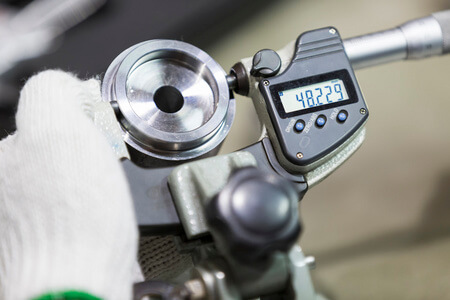
Tolerance defines the total amount of dimensional variation allowed from a specified value. According to American Micro Industries, engineers establish tolerances to ensure components function properly within assemblies, while manufacturers use them as critical quality control parameters throughout production.
You'll encounter tolerance specifications in several standardized formats:
- Bilateral tolerances: Allow variation in both directions (e.g., 25.00 ±0.05 mm)
- Unilateral tolerances: Permit variation in only one direction (e.g., 25.00 +0.00/-0.10 mm)
- Limit dimensions: Specify maximum and minimum acceptable values directly (e.g., 24.95–25.05 mm)
The international standard ISO 2768 provides general tolerance guidelines with precision classes ranging from fine (f) to very coarse (v). This framework covers linear dimensions, angular dimensions, external radii, and chamfer heights. However, these represent general standards that may not apply to all custom machined parts—your specific application determines what's truly necessary.
Here's the key insight: decimal precision in tolerance specifications directly correlates with manufacturing difficulty and cost. A tolerance of ±0.02" permits a range ten times wider than ±0.002", significantly affecting production complexity and what you'll pay.
How Tolerance Requirements Impact Your Project
Think of tolerances as a balancing act. Too tight, and you're paying for precision you don't need. Too loose, and your parts won't fit together or function correctly.
As RPWORLD's manufacturing engineers note, people often believe tight tolerances automatically improve product quality. In reality, tight tolerances only indicate high production quality for individual parts—they don't directly equate to higher product quality. Product quality ultimately depends on how parts assemble and function together.
Consider the cost implications: standard CNC machining parts typically achieve tolerances of ±0.005" (0.127 mm) as a baseline. Achieving tighter specifications often requires secondary operations like grinding or EDM, specialized equipment, temperature-controlled environments, and enhanced quality control measures—all of which drive up costs and extend lead times.
| Tolerance Level | Typical Range | Best Applications | Cost Impact |
|---|---|---|---|
| Standard | ±0.25 mm (±0.010") | General mechanical components, brackets, housings, non-critical assemblies | Baseline—most economical |
| Precision | ±0.05 mm (±0.002") | Mating parts, bearings, precision fits, aerospace components | 50–100% increase |
| Ultra-Precision | ±0.0125 mm (±0.0005") | Medical implants, optical components, measurement devices, critical assemblies | 100–200% increase |
Several factors influence what tolerances are actually achievable:
- Temperature variations: Machine tools and workpieces expand and contract with temperature changes, affecting dimensions
- Tool wear: Cutting tools gradually wear during production, creating dimensional drift
- Material properties: Thermal expansion coefficients, machinability, and dimensional stability vary significantly between materials
- Setup repeatability: Skilled machinists using proper procedures can achieve setup repeatability within ±0.025 mm (±0.001")
Rule of thumb: Specify the loosest tolerance that still ensures proper function. Reserve tight tolerances only for features where precision truly matters—mating surfaces, bearing fits, and critical interfaces.
When working with precision CNC machining services, communicate your functional requirements clearly. A good shop will help you identify which dimensions are critical and which can use standard tolerances. This collaborative approach—rather than blanket tight specifications—delivers machining parts that work perfectly at a reasonable cost.
For example, a bushing meant to fit on a rod might require ±0.002" tolerance on the inside diameter to ensure proper fit. But the outside diameter and length might function perfectly well at ±0.010". Understanding this distinction helps you specify only what's necessary.
With tolerances properly understood, you're ready to consider another cost-driving decision: whether you need prototype quantities or production runs—each requiring different approaches and offering different advantages.
Prototype Machining Versus Production Runs
You've designed a groundbreaking component. Now comes a critical question: do you need one prototype to validate your concept, or are you ready for hundreds of production parts? The answer fundamentally changes how a custom machining shop approaches your project—and what you'll pay.
The line between prototyping and production has blurred significantly in recent years. According to industry analysts, traditional rules where products moved sequentially from prototypes to pilot production to mass manufacturing no longer apply. Today's customers demand high customization at mass production prices, and manufacturers must adapt accordingly.
Understanding where your project falls on this spectrum—and how it might evolve—helps you choose the right machining partner and avoid costly surprises along the way.
From Rapid Prototyping to Full-Scale Production
Prototype machining and production runs serve fundamentally different purposes, even when they produce identical parts. The priorities, processes, and cost structures diverge significantly.
When you're in the prototype phase, speed typically trumps per-unit cost. You need functional hardware in your hands quickly to validate designs, test fit and function, or demonstrate concepts to stakeholders. A single-piece prototype costing $500 might be perfectly acceptable if it arrives in three days and confirms your design works before you commit to tooling.
Production runs flip these priorities. Once your design is validated, consistency, cost efficiency, and quality control become paramount. That same part might cost $50 each when ordered in quantities of 100—but achieving that price point requires different setup considerations, process optimization, and quality systems.
Here's where batch size dramatically affects your per-unit cost. RapidDirect's manufacturing data illustrates this relationship clearly:
| Quantity | Unit Price (Example Aluminum Part) | Setup Cost Impact |
|---|---|---|
| 1 piece | $300+ | 100% of setup absorbed by single unit |
| 10 pieces | $45–75 | Setup distributed across batch |
| 100 pieces | $15–30 | Setup becomes minimal per-unit factor |
| 500+ pieces | $8–20 | Volume efficiencies fully realized |
Why such dramatic differences? Setup costs—including CAM programming, fixturing, tool setup, and first-article verification—remain relatively fixed regardless of quantity. A $300 setup fee adds $300 to a single prototype but only $3 per part in a 100-piece batch. This economic reality explains why prototypes are inherently expensive and why unit price drops sharply as quantity increases.
Scaling Your Project with the Right Partner
Not all machining shops near me handle both prototypes and production equally well. Some specialize in rapid turnaround for development work, while others optimize for consistent high-volume output. Understanding these differences helps you find the right partner—or partners—for your project's lifecycle.
When evaluating a shop for prototype work, consider these priorities:
- Speed: Can they deliver functional parts within days rather than weeks?
- Design validation capability: Do they provide feedback on manufacturability before cutting metal?
- Iteration flexibility: How quickly can they accommodate design changes between revisions?
- Material versatility: Can they work with your intended production material, or only prototype-friendly alternatives?
- Communication responsiveness: Will engineers answer questions and collaborate on design optimization?
Production-focused evaluation shifts to different criteria:
- Consistency: What quality systems ensure every part matches specifications across the entire run?
- Cost efficiency: How do they optimize processes to minimize per-unit costs at volume?
- Quality control: What inspection protocols, SPC monitoring, and documentation do they provide?
- Capacity: Can they handle your volume requirements within required timelines?
- Scalability: If demand increases, can they scale production without compromising quality?
The most versatile facilities—often those offering comprehensive CNC turning services alongside milling capabilities—can support your project from initial concept through full production. This continuity offers significant advantages: the shop learns your parts, understands your quality requirements, and maintains consistent processes as volumes increase.
A practical approach many engineers use involves thinking in timeframes: "Where do you see this product six weeks, six months, and six years from now?" This perspective helps clarify immediate prototyping needs against long-term production vision. A concept model requiring market validation differs fundamentally from a proven design ready for volume manufacturing—even if the CAD file looks identical.
Local machine shops often excel at prototype work, offering face-to-face collaboration and rapid iteration. For production volumes, you might evaluate broader options including facilities with greater capacity or specialized certifications your industry requires. Many successful product development programs start with a machinist near me for prototyping, then transition to production-optimized partners as volumes grow.
The key is matching your current needs to the right capability—while keeping an eye on how those needs will evolve. With prototype and production considerations clear, you're ready to evaluate another critical factor: the quality certifications that validate a shop's processes and capabilities.
Quality Certifications and What They Mean for You
You've probably seen certification logos plastered across machining shop websites—ISO 9001, AS9100, IATF 16949. But what do these acronyms actually mean for your parts? Most competitors simply list certifications without explaining their significance. Let's change that.
Understanding quality certifications isn't about collecting badges. It's about knowing which certifications matter for your specific application and what protections they provide. When a custom machining shop holds a relevant certification, it signals documented processes, verified capabilities, and accountability that directly affects the parts you receive.
What Quality Certifications Mean for Your Parts
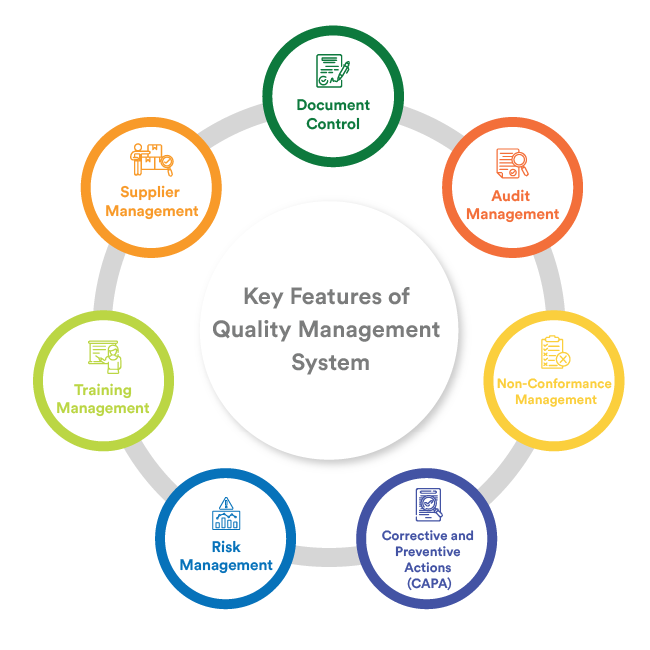
Think of certifications as third-party validation that a facility actually does what it claims. According to American Micro Industries, certifications serve as pillars that uphold and validate every stage of the production process within a quality management system. They formalize procedures, define control points, and monitor ongoing compliance.
The foundation of most manufacturing certifications is ISO 9001—the internationally recognized standard for quality management systems. This baseline certification ensures a shop has established:
- Documented workflows: Every process is written down, not just remembered by individual employees
- Performance monitoring: Metrics track quality outcomes and identify problems before they become patterns
- Corrective action protocols: When issues arise, systematic processes address root causes rather than just symptoms
- Customer focus: Quality requirements flow from your specifications through every production step
But ISO 9001 is just the starting point. Industry-specific certifications build on this foundation with additional requirements tailored to sectors where failure isn't an option.
Industry-Specific Standards and Their Requirements
Here's where certification selection becomes critical. A shop certified for automotive work might not meet aerospace requirements—and vice versa. Understanding these distinctions helps you evaluate whether a facility can actually deliver what your application demands.
As noted by TUV Nord, both automotive (IATF 16949) and aerospace (AS9100) standards build upon ISO 9001, adding sector-specific requirements. Automotive focuses on extremely high levels of consistency with high volumes and process improvements. Aerospace concentrates on making flight-worthy parts with controls needed to accomplish that mission.
When working with specialty materials like nitronic 60 for corrosive environments or demanding aerospace alloys, these certifications ensure the shop understands the unique handling, processing, and inspection requirements such materials demand.
| Certification | Industry Focus | Key Requirements | Customer Benefits |
|---|---|---|---|
| ISO 9001 | General manufacturing | Quality management system, documented processes, continuous improvement, customer focus | Consistent quality baseline, systematic problem-solving, documented procedures |
| AS9100D | Aerospace, space, defense | Risk management, configuration management, stringent documentation, product integrity control, OASIS database listing | Flight-worthy components, full traceability, validated processes for critical applications |
| IATF 16949 | Automotive supply chain | Defect prevention, variation reduction, waste elimination, supplier oversight, continuous improvement | High-volume consistency, statistical process control, robust quality systems |
| ISO 13485 | Medical devices | Design controls, risk management, traceability, sterilization validation, complaint handling | Regulatory compliance, patient safety assurance, complete documentation trail |
| NADCAP | Aerospace special processes | Process-specific accreditation for heat treating, chemical processing, nondestructive testing | Validated specialty processes, additional quality layer beyond general certification |
For aerospace CNC machining and kovar machining services, AS9100D certification is typically mandatory. Certified organizations are listed in the OASIS database (Online Aerospace Supplier Information System), providing customers a verified registry of compliant suppliers.
Medical machining demands ISO 13485 compliance, which governs everything from design controls through complaint handling. This certification ensures every medical device component can be fully traced and that manufacturing processes maintain patient safety as the primary concern.
Automotive applications requiring high-volume precision typically require IATF 16949 certification. This standard specifically addresses the unique challenges of primary machining operations that feed into automotive supply chains—where consistency across thousands of parts matters as much as individual part quality.
How Statistical Process Control Ensures Consistency
Certifications require more than paperwork. They mandate systematic quality control methods that catch problems before defective parts ship. Statistical Process Control (SPC) sits at the heart of this approach.
SPC uses real-time data collection and statistical analysis to monitor production processes. Rather than inspecting parts after they're made, SPC tracks key dimensions during production—detecting trends that indicate potential problems before tolerances are violated.
Here's what SPC looks like in practice:
- Control charts: Operators plot measurements throughout production runs, watching for patterns that signal process drift
- Process capability studies: Statistical analysis confirms the process can consistently meet specifications with margin to spare
- First-article verification: Initial parts undergo comprehensive inspection before production proceeds
- In-process inspection: Critical dimensions are checked at defined intervals throughout production
When you work with a certified facility, you're not just trusting their word—you're benefiting from documented systems that have been audited by independent registrars. These audits verify that quality systems actually function as documented, creating accountability that informal quality promises simply cannot match.
Ask potential machining partners: "How do you monitor quality during production, not just after?" The answer reveals whether they truly practice process control or just inspect finished parts.
The presence of proper certifications particularly matters for regulated industries. Medical device manufacturers face FDA scrutiny. Aerospace suppliers must satisfy prime contractor audits. Automotive suppliers undergo customer-specific audits. In each case, working with appropriately certified machining partners simplifies your own compliance burden and reduces supply chain risk.
With certification requirements understood, you're ready to evaluate machining partners against your specific needs—considering not just their capabilities, but how their qualifications align with your industry and application requirements.
How to Evaluate and Choose the Right Machining Partner
You've defined your project requirements, selected materials, and understand the tolerances you need. Now comes the pivotal decision: which machining partner will actually bring your design to life? Choosing poorly means wasted time, blown budgets, and parts that don't meet specifications. Choosing wisely means a collaborative relationship that delivers quality components on schedule.
Think of selecting a CNC shop near me as hiring for a critical position. You're not just buying machining time—you're choosing a partner who will influence your project's success. According to Modus Advanced, the choice of CNC machining services partner is crucial whether you're a Department of Defense contractor or a consumer electronics designer. Any provider simply won't do.
Let's walk through a systematic approach to evaluating potential machining partners against your specific needs.
Essential Questions to Ask Potential Machining Partners
Treat your evaluation like a job interview. The best machining shops welcome thorough questioning—it signals a serious customer who values quality. Shops that dodge questions or provide vague answers are revealing something important about how they'll handle your project.
Start with experience and capability questions:
- What types of projects do you specialize in? Some facilities focus on aerospace, others on medical devices or automotive components. Industry experience matters because machinist shops near me that understand your sector already know the standards, materials, and challenges you face.
- Can you share examples of similar projects? Past work demonstrates capability better than promises. Request case studies or references from clients with comparable requirements.
- What equipment and processes do you offer? Ensure they have the specific machines—3-axis milling, 5-axis capabilities, Swiss turning, EDM—that your parts require. As Pro-Type Industries notes, shops should ideally provide turning, milling, and surface grinding at minimum.
- What's your capacity and current lead time? A shop with great capabilities but a six-week backlog may not serve urgent projects well.
Quality-focused questions reveal operational maturity:
- What certifications do you hold? Match certifications to your industry requirements—ISO 9001 as baseline, AS9100 for aerospace, IATF 16949 for automotive, ISO 13485 for medical.
- How do you ensure quality during production? Look for specific answers about SPC, in-process inspection, and first-article verification rather than generic quality promises.
- What inspection equipment do you use? CMMs, optical comparators, and calibrated gauges indicate serious quality infrastructure.
- Do you provide inspection reports and material certifications? Documentation requirements vary by industry—ensure they can deliver what you need.
Communication and service questions predict working relationship quality:
- Who will be my primary contact? Direct access to engineers or project managers streamlines problem-solving.
- How do you handle design feedback or manufacturability concerns? The best partners provide Design for Manufacturability input that improves your parts and reduces costs.
- What's your process for change orders or design revisions? Flexibility during development phases matters enormously.
Evaluating Shop Capabilities Against Your Needs
With interview answers in hand, systematically evaluate each potential partner against your project requirements. Not every shop needs to excel in every area—but they must excel where your project demands it.
Use this checklist to organize your evaluation:
- Technical capability match: Can they machine your specified materials to required tolerances using appropriate processes?
- Certification alignment: Do they hold certifications your industry or customers require?
- Volume compatibility: Are they equipped for your quantity requirements, whether prototype or production?
- Lead time feasibility: Can they realistically meet your timeline without rushing quality?
- Communication quality: Did they respond promptly, answer thoroughly, and seem genuinely interested in your project?
- Pricing transparency: Is their quote detailed and understandable, or vague and difficult to compare?
- Geographic considerations: Does location affect shipping costs, communication ease, or ability to visit the facility?
Watch for red flags during evaluation. According to OGBC, lack of pricing transparency and poor communication are significant warning signs. If a machining service is reluctant to provide clear quotes or seems evasive in their answers, it could lead to misunderstandings or errors down the line.
Local Shops Versus Online Services
Should you search for CNC machining near me or consider online machining services? Both options have legitimate advantages depending on your situation.
Local machine shops offer distinct benefits:
- Face-to-face communication simplifies complex technical discussions
- You can visit the facility, inspect equipment, and meet the team
- Reduced shipping time and cost for urgent projects
- Easier collaboration during prototype development and iteration
- Relationship building supports long-term partnership
Online machining services provide different advantages:
- Broader capability access beyond your geographic area
- Often faster online machining quotes through automated systems
- Competitive pricing through larger scale operations
- 24/7 quote and order submission convenience
- Standardized processes that work well for straightforward parts
When sourcing a CNC machine shop online, choose one that provides live support to replicate the convenience of a local shop. Being able to speak directly with an expert greatly increases your chances of satisfaction and project success. Many online providers offer support via phone, live chat, or email.
Consider this practical approach: use local shops when you need collaboration, rapid iteration, or complex parts requiring close communication. Leverage online services for standardized parts, competitive pricing on proven designs, or when local options lack specific capabilities. Many engineers maintain relationships with both—using each where their strengths align with project needs.
Getting and Comparing Quotes
Requesting a CNC quote online or from local shops requires providing consistent information to enable fair comparison. Prepare a complete RFQ package including:
- CAD files in commonly accepted formats (STEP, IGES, or native formats)
- 2D drawings with critical dimensions and tolerances called out
- Material specifications including grade and any special requirements
- Quantity needed and anticipated ongoing volumes
- Required delivery date and any flexibility
- Surface finish requirements and any secondary operations
- Inspection and documentation requirements
When quotes arrive, look beyond the bottom-line price. Evaluate what's included—setup fees, inspection, material certification, packaging, and shipping. A lower quote that excludes items you need isn't actually cheaper.
Remember: while it may be tempting to opt for the shop with the most affordable prices, this is not always the best choice in the long run. Higher quality equipment has higher upfront costs but produces better results with fewer manufacturing errors.
Establish clear communication expectations before placing orders. Confirm who your contact will be, how progress updates will be communicated, and what approval steps occur before production proceeds. These details prevent misunderstandings and keep projects on track.
With evaluation criteria clear and a systematic approach to partner selection, you're positioned to choose wisely. The next step involves preparing your project documentation to ensure smooth quoting and production—setting both you and your chosen machining partner up for success.
Preparing Your Project for Custom Machining Success
You've selected your machining partner—now what? The difference between a smooth project and a frustrating one often comes down to preparation. Incomplete documentation, unclear specifications, and poor communication cause more delays and cost overruns than any technical challenge. The good news? A little upfront effort dramatically improves your outcomes.
According to Dipec, time is money—especially in industries where lead times and cost efficiency make or break a project. Fast, transparent quotes depend on the right preparation and approach. Let's walk through exactly how to set your project up for success.
Preparing Your CAD Files and Technical Documentation
Your CAD files and technical drawings are the foundation of your entire project. A well-prepared file package eliminates ambiguity about dimensions, tolerances, and features. If the shop doesn't have complete information, they'll have to make assumptions—and assumptions lead to delays, incorrect parts, and costly change orders.
Here's the essential preparation sequence:
- Define your requirements clearly. Before touching CAD software, document what the part must accomplish. What loads will it bear? What environment will it operate in? What components must it interface with? These functional requirements drive every subsequent decision.
- Prepare complete CAD files in accepted formats. STEP, IGES, or native CAD formats work best—avoid using 2D drawings alone, as they lack depth and clarity. Include all features, holes, threads, and geometric details. Files missing critical information delay quoting while shops request clarification.
- Create annotated 2D technical drawings. Even with 3D CAD files, 2D drawings with annotations significantly speed up the quoting process. Call out critical-to-function dimensions, specify tolerances where precision matters, and note surface finish requirements. This eliminates questions about threads or finishes—meaning less back-and-forth.
- Specify materials and finishes precisely. Vague material specifications stall quotes. Instead of "aluminum," specify "6061-T6 aluminum." Instead of "stainless steel," call out "316L stainless steel." Note whether you require additional surface finishing like polishing, anodizing, or coating.
- Determine quantities and provide ranges if uncertain. Production volume drastically affects pricing and lead time. A quote for 1 unit differs significantly from quotes for 10, 50, or 100 units. If you're unsure of final quantities, request quotes for multiple batch sizes—"Quote for 10, 50, and 100 units" works well.
- Establish realistic timelines. Be specific about delivery requirements. Need parts in 7-10 days? Flexible over a few weeks? Include delivery location so shipping costs and lead times can be factored into quotes accurately.
- Document secondary operations. Do your parts need assembly, engraving, labeling, or post-machining fabrication like bonding or welding? Mention these upfront. Including all necessary operations avoids delays and ensures you get a quote covering the entire job.
Pro tip: Providing both a STEP file and a 2D technical drawing with annotations can significantly speed up the quoting process. It eliminates questions about tolerances, threads, or surface finishes—meaning faster quotes in your inbox.
Communication Best Practices for Project Success
Even with perfect documentation, communication gaps can derail projects. Establishing clear communication channels and expectations before production begins prevents costly misunderstandings.
Common mistakes that lead to delays and cost overruns include:
- Sending incomplete drawings. Missing dimensions, unclear tolerances, or absent material specifications force shops to pause and request clarification—adding days to your timeline.
- Underestimating lead times. Buyers sometimes underestimate the time needed for material procurement, setup, machining, inspection, and shipping—especially on complex parts. Industry experts recommend asking for realistic lead times upfront, factoring in material procurement separately, and building in a small buffer for surprises.
- Choosing solely on price. The cheapest quote often becomes the most expensive choice. Late deliveries, failed inspections, and rework can cost far more than initial savings. Consider total project value, not just unit cost.
- Skipping quality documentation requirements. If your industry requires traceability, inspection reports, or material certifications, specify these upfront. Requesting documentation after production creates delays and sometimes proves impossible.
- Neglecting relationship building. If your only interaction with a shop is sending an RFQ and getting a price back, you're missing opportunities for priority scheduling, proactive problem-solving, and better pricing over time.
For CNC milled components requiring tight tolerances or complex geometries, schedule a pre-production discussion with your machining partner. Review critical features, confirm inspection points, and align on how changes will be communicated. This investment in communication pays dividends throughout production.
When projects involve specialty processes like acrylic CNC machining or CNC turning service for precision components, discuss material handling requirements specifically. Plastics like acrylic require care to avoid cracking or crazing, while precision turning demands particular attention to fixturing and tool selection.
Consider how responsive machining partners streamline the entire process. Certified facilities like Shaoyi Metal Technology demonstrate what buyers should look for in a capable partner—offering scalable solutions from rapid prototyping to mass production with lead times as fast as one working day. Their IATF 16949 certification ensures the quality systems discussed earlier are actually in place, while their responsiveness reflects the communication standards that make projects succeed.
Before submitting your RFQ, run through this final checklist:
- CAD files are complete with all features modeled
- 2D drawings include all critical dimensions and tolerances
- Material specifications are precise, not generic
- Quantity requirements are clearly stated
- Timeline expectations are realistic and communicated
- Secondary operations are documented
- Inspection and documentation requirements are specified
- Delivery location is included for accurate shipping quotes
Proper preparation transforms the quoting process from a frustrating back-and-forth into a streamlined experience. Shops can provide accurate quotes quickly when they have complete information—and production proceeds smoothly when expectations are aligned from the start.
With your project properly prepared, you're positioned for success. But before finalizing your manufacturing approach, it's worth understanding how custom machining compares to alternative methods—ensuring you've selected the optimal process for your specific requirements.
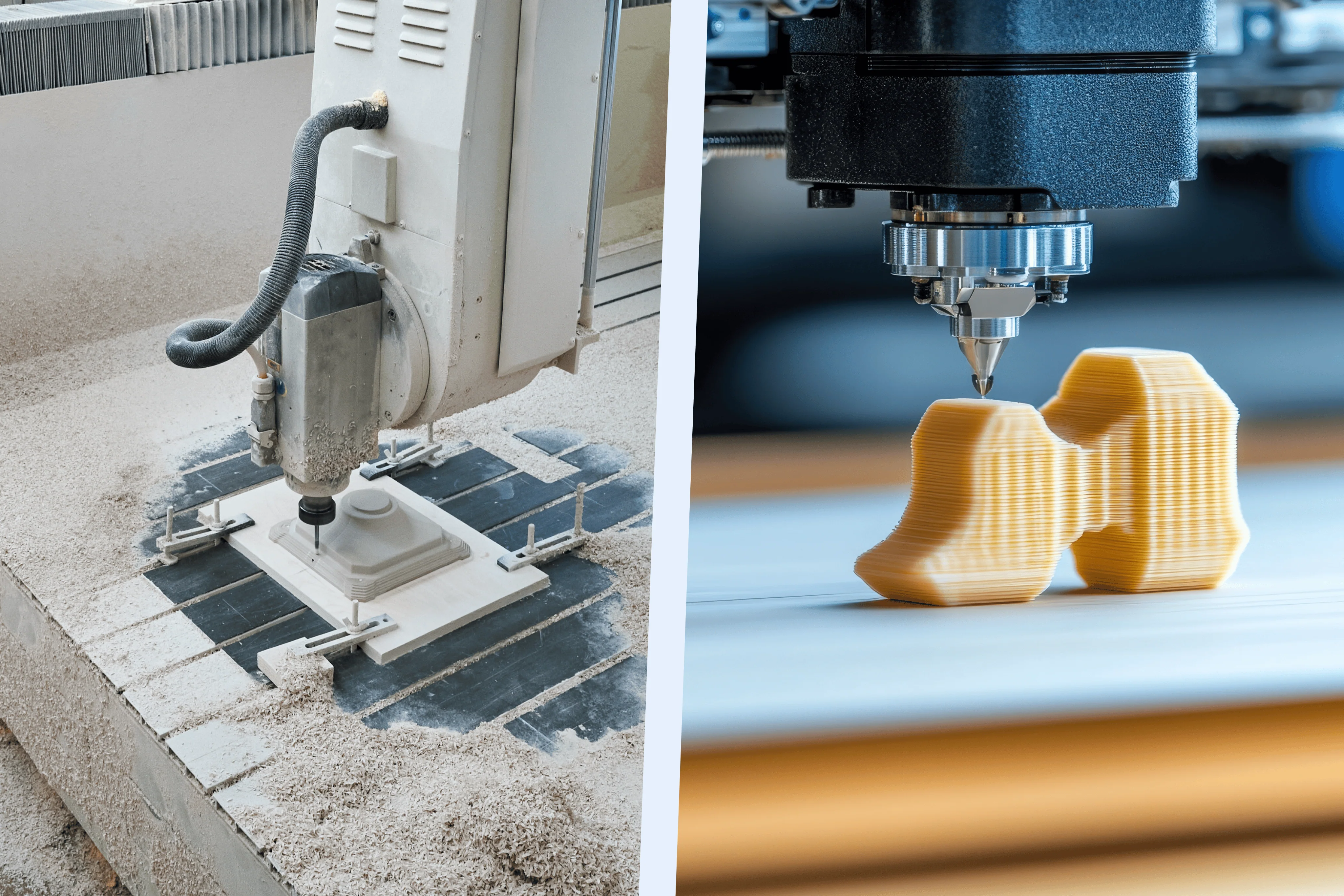
Custom Machining Versus Alternative Manufacturing Methods
Here's a question that can save you thousands of dollars: Is CNC machining actually the right choice for your project? While custom machining shops deliver exceptional precision and versatility, they're not always the optimal solution. Sometimes 3D printing, injection molding, casting, or sheet metal fabrication serves your needs better—at lower cost or faster turnaround.
Understanding when to choose CNC metal machining versus alternative methods separates savvy buyers from those who overpay for the wrong process. According to 3D People's manufacturing analysis, there's no single "best" process—each has its strengths, and the smartest approach often combines multiple methods across your product's lifecycle.
Let's examine when metal cnc machining outperforms alternatives and when you should consider different approaches entirely.
When CNC Machining Outperforms Alternative Methods
A CNC machine for metal delivers capabilities that other manufacturing processes simply cannot match in certain scenarios. Understanding these sweet spots helps you leverage machining's strengths while avoiding situations where alternatives would serve you better.
Precision requirements tip the scales toward CNC. When your tolerances drop below ±0.005" or you need surface finishes that demand grinding operations, metal machining becomes essential. 3D printing typically achieves tolerances of ±0.1-0.3mm at best, while injection molding struggles with features requiring ultra-tight dimensional control. For precision fits, bearing surfaces, or critical interfaces, aluminum machining and other CNC processes deliver the accuracy you need.
Material properties often dictate the choice. Need high-strength metals like titanium, hardened steel, or aerospace alloys? CNC cutting machine operations handle materials that 3D printing and injection molding simply cannot process. While additive manufacturing has expanded into metals, CNC machining still provides superior mechanical properties and material options for demanding applications.
Low-to-medium volumes favor machining economics. As RPWORLD's cost analysis demonstrates, CNC machining offers competitive unit costs for quantities between 1 and 5,000 pieces without requiring expensive tooling investments. You avoid the $3,000+ mold costs that injection molding demands, making machining ideal for products that don't justify high-volume tooling.
Design flexibility during development supports iteration. Unlike injection molding where design changes require new tooling, CNC programs can be modified relatively easily. This flexibility makes machining perfect for prototype development and products still undergoing refinement.
Consider CNC machining your best option when you need:
- Tight tolerances below ±0.005" (±0.127mm)
- High-strength metals or engineering-grade plastics
- Quantities between 1 and several thousand pieces
- Rapid design iteration capability
- Complex geometries with precise features
- Excellent surface finishes for functional or aesthetic requirements
Matching Manufacturing Methods to Project Requirements
Now let's flip the perspective. When do alternatives outperform CNC machining? Honest guidance on these scenarios saves you money and gets products to market faster.
3D Printing excels at complexity and speed. When your design features organic shapes, internal channels, or geometries that would require extensive machining from multiple setups, additive manufacturing often wins. 3D printing delivers parts in 2-7 days with zero tooling cost—ideal for rapid prototyping and design validation. However, as Gizmospring notes, 3D printing becomes expensive for larger parts and offers limited material options compared to machining.
Injection Molding dominates high-volume plastics. Once you're producing 10,000+ identical plastic parts, injection molding's economics become compelling. The high tooling investment ($3,000-$100,000+) gets amortized across volume, driving per-unit costs far below what machining can achieve. Lead times of 20-60 days for initial tooling are the tradeoff for long-term cost efficiency.
Casting suits complex metal parts at volume. For intricate metal geometries in medium-to-high volumes, investment casting or die casting may prove more economical than machining every feature. Many cast parts receive finish machining on critical surfaces—combining casting's efficiency with machining's precision where it matters most.
Sheet Metal Fabrication handles enclosures and brackets efficiently. When your design involves flat patterns bent into 3D shapes—enclosures, brackets, chassis components—sheet metal punch and metal punching operations often prove faster and more economical than machining from solid stock. Sheet metal processes waste less material and handle thin-walled geometries more efficiently.
| Method | Best For | Volume Range | Material Options | Typical Lead Time |
|---|---|---|---|---|
| CNC Machining | Precision parts, tight tolerances, metals, engineering plastics, prototypes to production | 1–5,000 pieces | Broadest: 100+ metals, plastics, composites | 7–14 days |
| 3D Printing (SLS/MJF) | Complex geometries, rapid prototypes, organic shapes, internal features | 1–1,000 pieces | Limited: 5–15 engineering plastics | 2–7 days |
| Injection Molding | High-volume plastic parts, consistent quality, complex shapes | 1,000–1,000,000+ pieces | Extensive: 1,000+ thermoplastics | 15–60 days (includes tooling) |
| Casting | Complex metal geometries, medium-high volumes, large parts | 100–100,000+ pieces | Aluminum, zinc, steel, bronze alloys | 20–45 days |
| Sheet Metal Fabrication | Enclosures, brackets, chassis, thin-walled parts | 1–10,000+ pieces | Steel, aluminum, stainless, copper | 5–15 days |
Making the Right Choice for Your Application
The decision framework comes down to four primary factors: precision requirements, material needs, volume expectations, and timeline constraints.
Start with precision. If your tolerances are standard (±0.25mm or looser) and you need plastic parts at high volume, injection molding likely wins. If you need ±0.05mm or tighter on metal components, CNC machining is your answer.
Consider your volumes realistically. Many projects start with prototype quantities, scale to low-volume production, then potentially reach high-volume manufacturing. The smartest approach often involves 3D printing for initial concepts, CNC machining for functional prototypes and early production, and injection molding once demand justifies tooling investment.
Factor in material requirements. High-strength metals, specialty alloys, and engineering plastics requiring specific grades point toward CNC machining. Standard thermoplastics at volume favor injection molding. Complex geometries in limited plastic options suit 3D printing.
For automotive applications requiring high-tolerance components, complex chassis assemblies, or custom metal bushings, precision CNC machining services prove particularly valuable. Facilities like Shaoyi Metal Technology offer SPC-backed quality control that ensures consistency across production runs—a differentiator for demanding automotive specifications where every component must meet exacting standards.
The hybrid approach often works best: use 3D printing to prove the concept quickly, CNC machining for precision prototypes and early production, then transition to injection molding when volumes justify tooling investment.
Remember that these methods aren't mutually exclusive. Many successful products use multiple manufacturing processes—machining precision features while casting or molding less critical sections. The goal isn't finding a single "best" process but matching each feature and phase of your product to the optimal method.
By understanding both the strengths of custom machining and the legitimate advantages of alternatives, you're positioned to make manufacturing decisions that optimize cost, quality, and timeline for your specific requirements.
Frequently Asked Questions About Custom Machining Shops
1. What is a custom machining shop and how does it differ from standard manufacturing?
A custom machining shop is a specialized facility that creates parts tailored to exact customer specifications rather than mass-producing standardized components. Unlike conventional manufacturing plants optimized for high-volume identical items, custom shops invest in advanced CNC equipment capable of achieving tolerances as tight as ±0.0001 inches, employ skilled machinists who understand complex material properties, and offer flexible production from single prototypes to batch quantities. This approach embraces complexity and individuality, making it ideal for aerospace equipment, medical devices, and industrial machinery requiring precision components unavailable on the market.
2. How do I choose between CNC milling and CNC turning for my project?
The choice depends on your part geometry. CNC turning spins the workpiece while a stationary tool shapes it, making it ideal for cylindrical or round parts like shafts, bushings, and rings—often completing these faster and more cost-effectively. CNC milling keeps the workpiece stationary while rotating cutting tools move across multiple axes, excelling at complex geometries, flat surfaces, pockets, and intricate 3D contours. If your part has a round cross-section with symmetrical features, choose turning. For irregular shapes, multi-sided features, or complex pockets, milling is your answer. Many advanced facilities now use mill-turn centers combining both capabilities for complete single-setup production.
3. What materials can custom machining shops work with?
Custom machining shops work with dozens of materials across metals, engineering plastics, and specialty alloys. Common metals include aluminum alloys (6061, 7075, 5083), stainless steels (304, 316, 17-4), bronze, brass, and titanium. Engineering plastics range from POM (Delrin) for precision gears to PEEK for high-performance applications, plus nylon, polycarbonate, and acrylic. Material selection impacts strength, weight, corrosion resistance, machinability, and cost. Aerospace applications typically require aluminum 7075 or titanium, medical devices need biocompatible stainless or PEEK, while automotive components balance performance with cost using aluminum 6061 and alloy steels.
4. How do tolerance specifications affect custom machining costs?
Tolerance specifications directly impact manufacturing difficulty and project cost. Standard tolerances of ±0.25mm (±0.010 inches) represent the most economical baseline for general components. Precision tolerances of ±0.05mm (±0.002 inches) for mating parts and bearings can increase costs by 50-100%. Ultra-precision tolerances of ±0.0125mm (±0.0005 inches) for medical implants or optical components may double or triple costs. Tighter specifications often require secondary operations like grinding, specialized equipment, temperature-controlled environments, and enhanced quality control. The key is specifying the loosest tolerance that ensures proper function—reserving tight tolerances only for critical features like mating surfaces and bearing fits.
5. What certifications should I look for when selecting a custom machining shop?
Match certifications to your industry requirements. ISO 9001 provides a quality management baseline suitable for general manufacturing. AS9100D is mandatory for aerospace applications, ensuring flight-worthy components with full traceability. IATF 16949 serves automotive supply chains with emphasis on high-volume consistency and Statistical Process Control. ISO 13485 governs medical device manufacturing with design controls and patient safety focus. NADCAP provides process-specific accreditation for aerospace heat treating and chemical processing. Certified facilities like Shaoyi Metal Technology with IATF 16949 certification demonstrate documented processes, verified capabilities, and SPC-backed quality control that ensures consistent part quality.