 Small batches, high standards. Our rapid prototyping service makes validation faster and easier —
  EN
EN


Custom CNC Parts Decoded: From First Quote To Flawless Delivery
What Makes CNC Parts Truly Custom
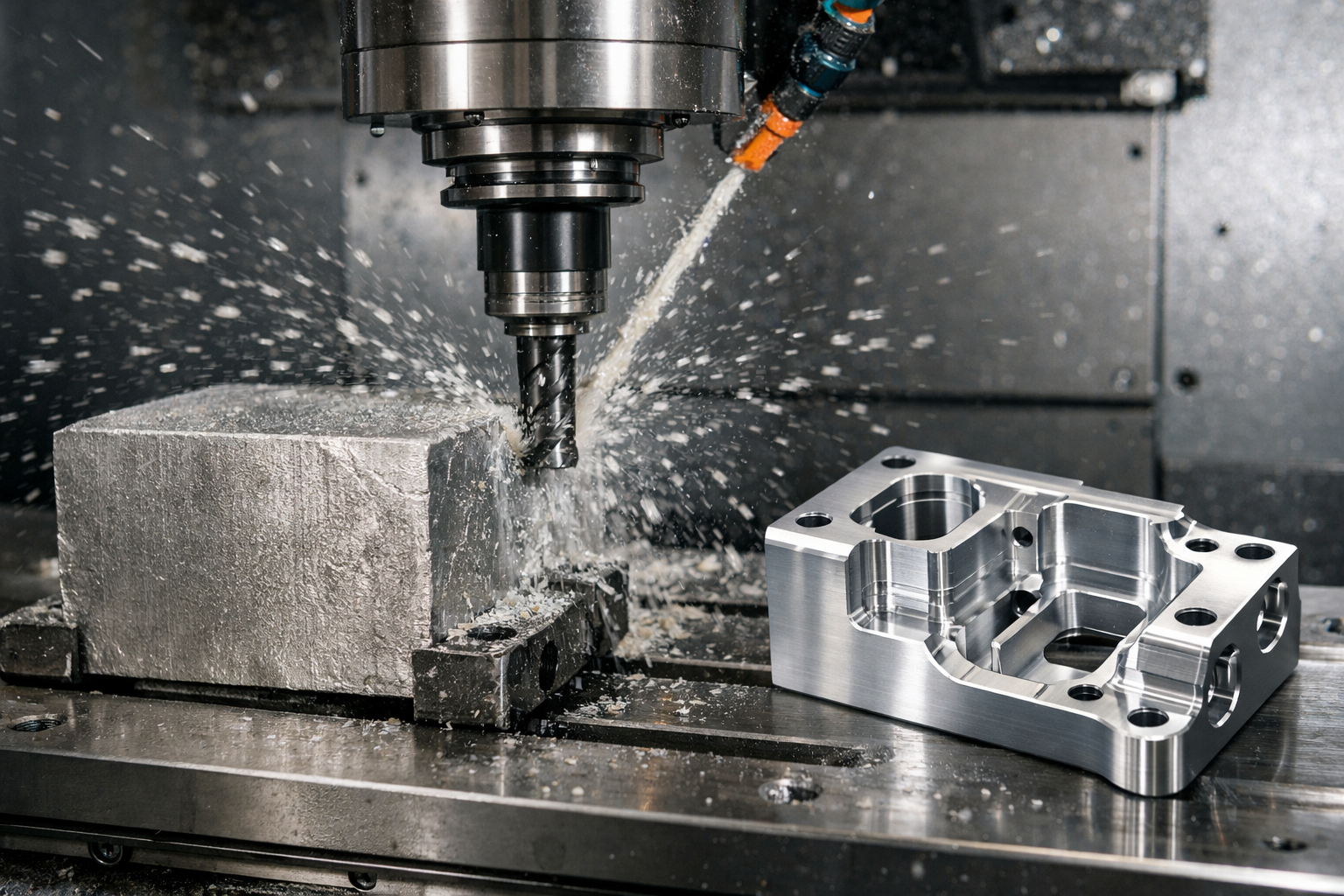
Imagine you need a component with an unusual shape, tight tolerances, and a specific material that simply doesn't exist in any catalog. That's where custom CNC parts come into play. Unlike off-the-shelf components designed for general applications, these machined parts are manufactured to your exact specifications using Computer Numerical Control technology. CNC machines follow precise digital instructions to cut, drill, and shape raw materials into finished components that match your unique requirements down to the thousandth of an inch.
What separates "custom" from "standard"? Standard parts are pre-manufactured in bulk for common applications. They're convenient but limited. Custom CNC parts, on the other hand, are built around your design, not the other way around. Whether you need a single prototype or thousands of identical pieces, precision CNC machining delivers repeatable accuracy that manual methods simply cannot match.
From Digital Design to Physical Reality
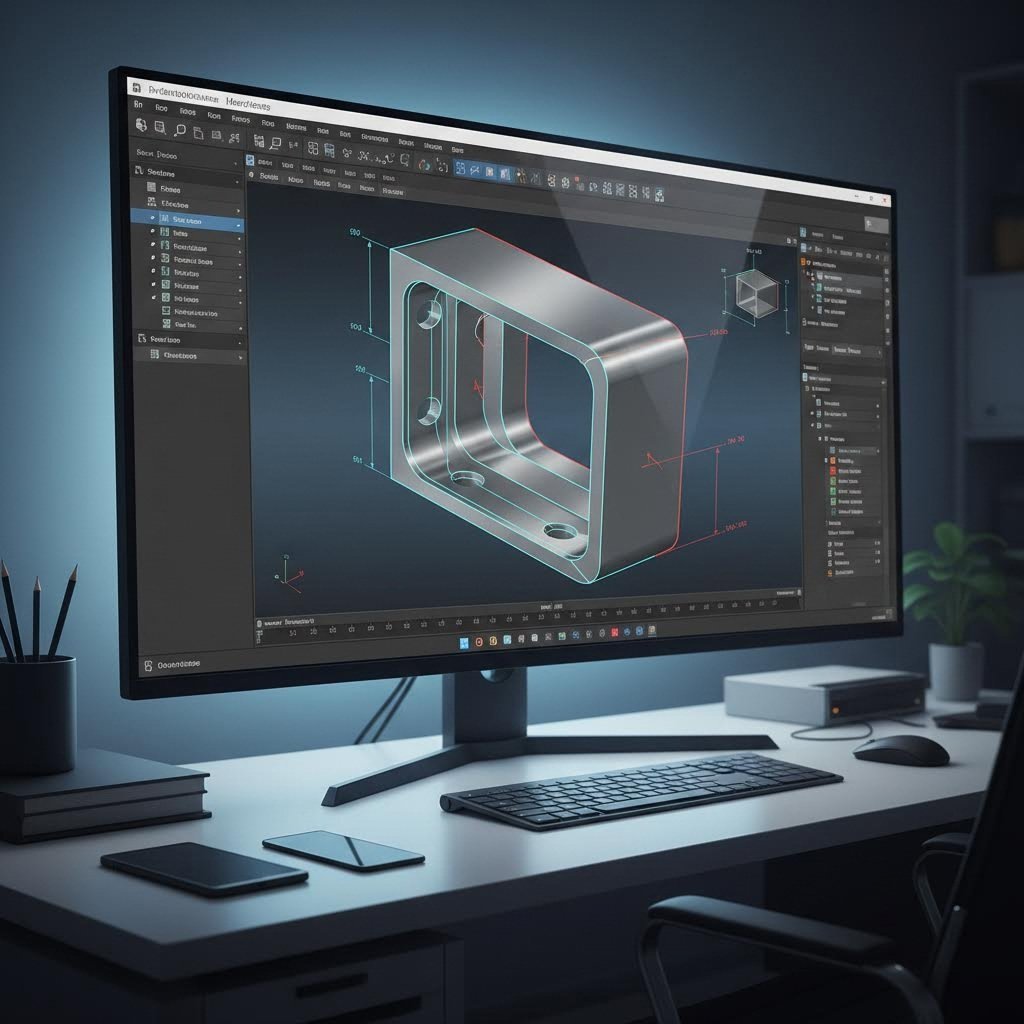
Every custom component begins as a digital blueprint. Designers create a CAD (Computer-Aided Design) file that captures every dimension, curve, hole, and angle of the part. Think of this file as a detailed recipe that tells the machine exactly what to produce.
But CNC machines don't read CAD files directly. The design must first pass through CAM (Computer-Aided Manufacturing) software, which translates it into G-code, the step-by-step instructions the machine understands. This code controls everything: spindle speed, feed rate, tool selection, and the precise path the cutting tool will follow during cnc cutting operations.
Once the machine receives its instructions, cnc fabrication begins. The cutting tool spins at high speed, removing material layer by layer until the raw block transforms into your finished part. According to zone3Dplus, this automated process achieves precision as tight as ±0.01 mm, ensuring every part comes out exactly the same whether you order one or one thousand.
Why Standard Parts Fall Short
Standard components work fine for generic applications. But what happens when your project demands something different? Perhaps you need a bracket with non-standard mounting holes, a housing with complex internal channels, or a fitting made from an exotic alloy. Off-the-shelf parts simply can't accommodate these requirements.
Custom CNC parts solve this problem by offering complete design freedom. You're not limited to what's available in a catalog. Instead, you specify the exact geometry, material, and tolerances your application requires. This flexibility is essential in industries like medical, aerospace, and defense, where components must meet exacting standards that mass-produced parts cannot achieve.
The Precision Advantage
Precision is perhaps the most compelling reason to choose custom cnc parts. While manual machining relies on operator skill, CNC technology delivers consistent accuracy through computer control. Industries demanding tolerances as tight as +/- 0.0001" rely on CNC machining to ensure every component performs exactly as designed.
This level of precision matters when parts must fit together perfectly, withstand extreme conditions, or meet regulatory requirements. A surgical instrument, an aerospace bracket, or a defense system component cannot afford to be "close enough." Precision CNC machining guarantees they won't be.
- Material flexibility: CNC machines work with aluminum, titanium, stainless steel, plastics like Delrin and PEEK, and other specialized materials to match your application's demands.
- Geometric complexity: Multi-axis machining creates intricate shapes, undercuts, and features that would be impossible to produce manually.
- Tolerance control: Achieve tight tolerances consistently across every part, whether you're ordering prototypes or production runs.
- Scalability: Move seamlessly from a single prototype to full production without retooling or redesigning, making CNC parts ideal for projects at any stage of development.
CNC Milling and Turning Processes Explained
Now that you understand what makes cnc parts truly custom, the next question becomes: how are they actually made? The answer depends largely on your part's geometry. Two primary CNC manufacturing processes dominate the industry—milling and turning—and choosing the right one directly impacts your project's cost, quality, and lead time. Understanding these processes helps you communicate more effectively with manufacturers and ensures your design aligns with the capabilities of the chosen method.
Milling Versus Turning Explained
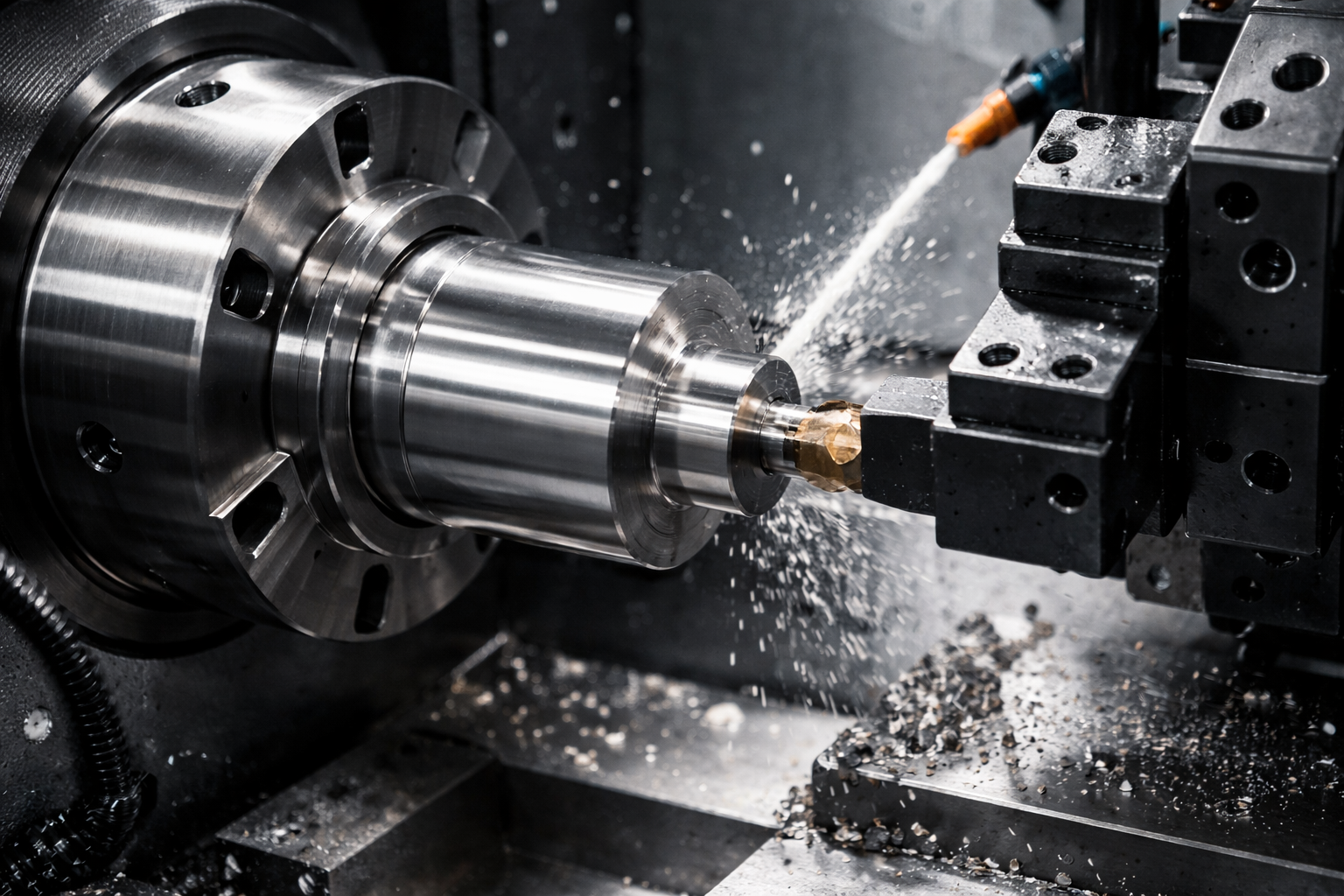
The fundamental difference between cnc machining milling and cnc turning comes down to one question: what moves during the cutting process? In milling, the workpiece stays stationary while a rotating cutting tool moves around it, carving away material. In turning, it's the opposite—the workpiece spins at high speed while a fixed cutting tool shapes its surface.
Think of cnc milling parts like sculpting a block of marble. The material sits still while you chip away from multiple angles to reveal complex shapes, pockets, and contours. This makes milling ideal for prismatic or angular parts with flat surfaces, grooves, and intricate 3D features. According to Facturee, typical milled components include housings, heat sinks, brackets, and front panels.
Cnc turning parts work differently. Picture a potter's wheel—the material rotates while you shape it with your hands. CNC turning excels at producing rotationally symmetrical components like shafts, pins, bushings, and fittings. The cutting tool moves along two axes (radial and axial) to create the desired cylindrical profile with excellent surface finish.
| Factor | CNC Milling | CNC Turning |
|---|---|---|
| Typical Geometries | Prismatic, angular, complex 3D shapes, pockets, grooves | Cylindrical, rotationally symmetrical, shafts, pins |
| Tolerance Capabilities | ±0.001" to ±0.005" standard | ±0.001" to ±0.005" standard |
| Surface Finish Quality | Ra 32-125 μin typical | Ra 16-63 μin typical (often smoother) |
| Ideal Applications | Housings, brackets, molds, fixtures | Shafts, fittings, nozzles, fasteners |
Multi-Axis Capabilities
Not all milling machines are created equal. The number of axes determines how complex a part you can produce in a single setup. Standard 3-axis machines move linearly along X, Y, and Z axes—sufficient for many cnc machined parts but limited when geometry gets complicated.
Here's where things get interesting. Add a fourth axis (rotation around X) and you can machine cylindrical surfaces without repositioning. Move to 5 axis cnc machining services, and you gain access to almost any angle on your part in one setup. According to Hubs, this capability reduces setups, improves tolerances, and delivers superior surface finishes because the tool maintains optimal cutting angles throughout the operation.
Why does this matter for your project? Fewer setups mean less handling, reduced error accumulation, and faster turnaround. When your part features deep pockets, angled surfaces, or organic curves, 5-axis machining often proves more economical despite higher machine rates—the time savings outweigh the cost difference.
For ultra-small, high-precision cylindrical components, swiss machining offers another specialized option. These machines use a sliding headstock that supports the workpiece close to the cutting tool, enabling exceptional accuracy on slender parts that would deflect on standard lathes.
Choosing the Right Process for Your Part
So how do you decide between milling and turning? Start with your part's basic shape. If it's round or cylindrical—think shafts, bushings, or threaded fittings—turning is almost certainly your best choice. If it's angular, has flat surfaces, or requires pockets and complex contours, milling makes more sense.
But modern manufacturing blurs these lines. Turn-mill centers combine both processes in one machine, eliminating the need to transfer parts between operations. A shaft might be turned to shape, then milled to add keyways or cross-holes without ever leaving the machine. This hybrid approach reduces lead time and improves accuracy by avoiding multiple setups.
For ultra-precision applications where standard machining can't achieve required tolerances, specialized processes like EDM (Electrical Discharge Machining) and grinding step in. These secondary operations refine surfaces and dimensions beyond what cutting tools alone can accomplish.
With a clear understanding of milling and turning capabilities, you're ready to make informed material decisions—which brings us to the next critical choice in your custom CNC parts journey.
Material Selection for Custom CNC Components
You've determined whether milling or turning suits your part geometry. Now comes the question that significantly impacts both performance and cost: what material should you choose? Selecting the right cnc machining materials before requesting quotes saves time, prevents costly redesigns, and ensures your finished components perform exactly as intended. Let's break down your options across metals and engineering plastics so you can approach suppliers with confidence.
Metals for Structural Performance
When strength and durability matter, metals dominate the conversation. But not all metals behave the same under cutting tools or in final applications. Your choice depends on balancing mechanical properties, machinability, and budget.
Aluminum alloys represent the most popular choice for custom CNC parts—and for good reason. According to JLCCNC, aluminum machining offers the best overall value for general-use parts where moderate strength and low cost matter most. Alloys like 6061 and 7075 machine quickly, produce excellent surface finishes, and weigh roughly one-third as much as steel. You'll find aluminum components in aerospace brackets, electronic enclosures, and automotive fixtures where weight savings translate directly to performance gains.
Steel grades step in when aluminum's strength isn't enough. Carbon steels like 1018 and 1045 provide higher tensile strength at modest cost, making them ideal for shafts, pins, and structural components that must withstand heavy loads. Alloy steels such as 4140 and 4340 add hardness and wear resistance through heat treatment. The trade-off? Steel machines slower than aluminum and wears cutting tools faster, increasing production time and cost.
Specialty Alloys and Their Applications
Some environments demand materials that standard aluminum or steel simply can't handle. That's where specialty alloys earn their place in your design considerations.
Stainless steel combines strength with exceptional corrosion resistance. Grades like 304 and 316 resist rust, chemicals, and high temperatures—essential for medical instruments, food processing equipment, and marine applications. However, stainless steel machining requires careful attention. The material work-hardens during cutting, demanding sharp tools, proper coolant, and reduced cutting speeds. According to JLCCNC, stainless steel justifies its higher machining cost when durability or hygiene requirements are paramount.
Bronze alloys excel in wear applications where parts slide against each other. CNC bronze components like bushings, bearings, and valve seats benefit from the material's natural lubricity and resistance to friction. Phosphor bronze and aluminum bronze are common choices, each offering slightly different balances of strength, corrosion resistance, and wear characteristics. Machining bronze produces excellent surface finishes and generates clean chips, making it relatively straightforward to work with despite being harder than aluminum.
Engineering Plastics Worth Considering
Not every application requires metal. Engineering plastics offer unique advantages: lighter weight, natural lubricity, electrical insulation, and often lower machining costs. Two materials dominate this category for CNC work.
Delrin plastic (also called acetal or POM) machines beautifully and holds tight tolerances with ease. According to Penta Precision, delrin material absorbs almost no moisture, so dimensions stay consistent even in wet conditions. This stability makes it ideal for gears, rollers, valve components, and precision fittings where warping can't be tolerated. Parts come off the machine clean with smooth surfaces and sharp edges, often requiring no post-processing.
Machining nylon presents different trade-offs. Nylon offers better impact resistance and handles higher temperatures than Delrin—glass-filled grades tolerate continuous exposure up to 120-130°C. However, nylon is hygroscopic, meaning it absorbs moisture from the air. This absorption can change part dimensions over time, a critical consideration for tight-tolerance assemblies. Nylon also tends to produce rougher surface finishes and may require additional deburring or finishing steps.
When choosing between Delrin and nylon, consider this: Delrin excels where dimensional stability and surface finish matter most, while nylon performs better in high-impact or high-temperature applications.
| Material | Machinability | Strength Characteristics | Corrosion Resistance | Typical Applications |
|---|---|---|---|---|
| Aluminum 6061 | Excellent (high speed, clean cuts) | Moderate strength, lightweight | Good (anodizing improves) | Brackets, housings, fixtures |
| Steel 4140 | Good (slower than aluminum) | High strength, heat-treatable | Poor (requires coating) | Shafts, gears, high-load components |
| Stainless Steel 316 | Fair (work-hardens) | High strength, tough | Excellent | Medical, marine, food equipment |
| Phosphor Bronze | Good (clean chips) | Moderate, excellent wear resistance | Very good | Bushings, bearings, valve seats |
| Delrin (POM) | Excellent (free-cutting) | Stiff, dimensionally stable | Excellent | Gears, rollers, precision fittings |
| Nylon 6/6 | Good (may fuzz) | Tough, impact-resistant | Good | Wear pads, guides, structural parts |
Material selection directly influences not just part performance but also manufacturing cost. Aluminum's excellent machinability means faster cycle times and lower tool wear. Stainless steel's work-hardening behavior increases machining time significantly. Plastics often cost less per part but may require different fixturing approaches. Understanding these relationships helps you balance performance requirements against budget constraints before you ever request a quote.
With your material choice narrowed down, the next consideration becomes equally important: what tolerances does your part actually need, and how do those specifications affect both cost and manufacturing approach?
Tolerance Specifications and Their Impact
You've selected your material and understand the machining process. Now comes a decision that can make or break your budget: tolerance specifications. Many engineers default to the tightest tolerances possible "just to be safe," but this approach can inflate your cnc machining price by 2x to 24x without improving part performance. Understanding what tolerances are achievable—and when they're actually necessary—empowers you to optimize both cost and function before requesting quotes.
Think of tolerances as the acceptable wiggle room in your part's dimensions. Every cnc machining part will vary slightly from the CAD model due to tool wear, thermal expansion, and material properties. Tolerances define how much variation is acceptable before a part becomes unusable. The tighter you specify, the more time, specialized equipment, and inspection each part requires.
Understanding Tolerance Notation
If you're new to engineering drawings, tolerance notation can seem like a foreign language. Let's decode the basics so you can communicate confidently with manufacturers.
Bilateral tolerances are the most common format. When you see ±0.005", it means the actual dimension can fall 0.005" above or below the nominal value. A shaft specified as 1.000" ±0.005" is acceptable anywhere between 0.995" and 1.005". This equal distribution above and below is intuitive and works for most general applications.
Unilateral tolerances restrict variation to one direction only. A hole specified as 0.500" +0.002"/-0.000" can be larger than nominal but never smaller. This notation matters when parts must always fit together—a pin should never be larger than its mating hole.
Limit tolerancing skips the math entirely by stating acceptable boundaries directly. Instead of 1.000" ±0.005", you'd see 0.995"-1.005". According to HLH Rapid, this approach is less common on complex drawings but works well for simple parts where clarity matters most.
For precision machining parts, ISO 2768 provides standardized tolerance classes ranging from "fine" to "very coarse," eliminating the need to specify every dimension individually. Most CNC shops default to ISO 2768-m (medium) for general work, roughly equivalent to ±0.005" on small features.
When Tight Tolerances Actually Matter
Here's the question that separates experienced designers from costly over-specifiers: what happens if this dimension varies by ±0.05mm? If the honest answer is "nothing critical," you don't need tight tolerances on that feature.
Reserve precision machining services for features that directly impact assembly, fit, or function. According to Okdor, three situations consistently justify tighter specifications:
- Mating surfaces: Shafts fitting into housings, connectors interfacing with ports, or any features that must align precisely with other components.
- Sealing interfaces: O-ring grooves, gasket channels, and fluid passages where dimensional variation causes leaks.
- Moving components: Bearing seats, sliding mechanisms, and rotating assemblies where clearance directly affects smooth operation.
Non-critical features like external corners, decorative surfaces, and overall envelope dimensions rarely need anything tighter than standard tolerances. A medical device housing might require ±0.001" on gasket grooves to prevent fluid leakage, while the outer shell dimensions work perfectly at ±0.005".
Small cnc machining operations face particular tolerance challenges. Miniature components demand proportionally tighter control simply because absolute dimensional variation represents a larger percentage of the overall size. A 0.005" deviation matters much more on a 0.100" pin than on a 2.000" bracket.
| Tolerance Class | Typical Specification | Cost Multiplier | Appropriate Use Cases |
|---|---|---|---|
| Standard | ±0.005" (±0.13mm) | 1x (baseline) | General features, non-critical dimensions, external surfaces |
| Precision | ±0.001" (±0.025mm) | 3-4x | Mating surfaces, bearing fits, assembly interfaces |
| Ultra-Precision | ±0.0005" (±0.0127mm) | 10-24x | Medical implants, aerospace critical features, optical components |
The Hidden Cost of Over-Tolerancing
That ±0.001" tolerance you specified "just to be safe"? It just tripled your part cost. According to Okdor's analysis, tight tolerances increase CNC machining costs exponentially—not linearly. A $50 aluminum bracket at standard tolerances becomes $150-200 when precision specifications apply to critical features.
Why the dramatic increase? Tighter tolerances demand:
- Slower cutting speeds: Machines must take lighter passes to minimize tool deflection and thermal distortion.
- Specialized equipment: Climate-controlled environments, high-precision spindles, and premium tooling become necessary.
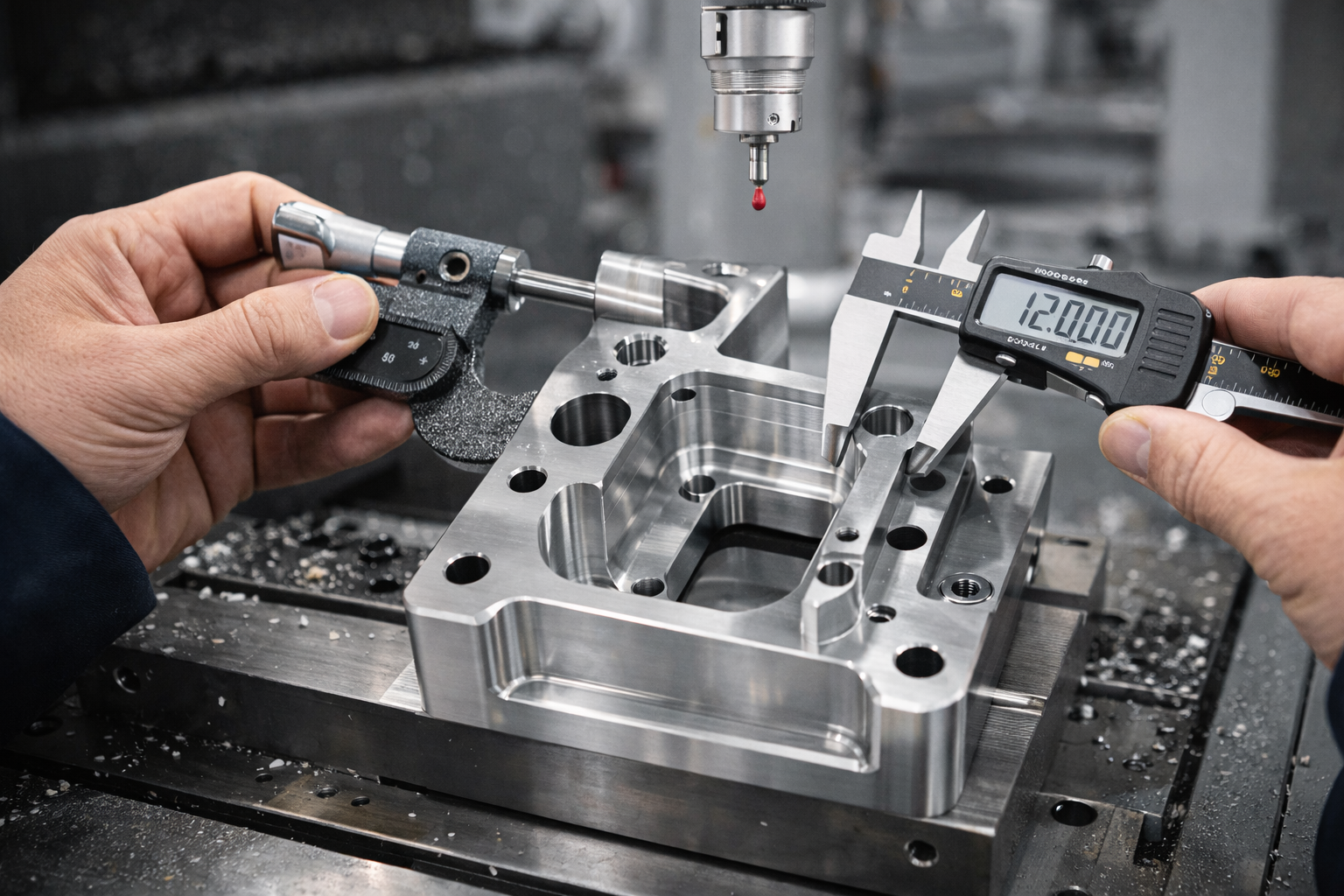
- Intensive inspection: Every cnc machine parts lot requires coordinate measuring machine (CMM) verification rather than simple caliper checks.
- Higher scrap rates: More parts fall outside acceptable limits, driving up effective unit costs.
Timeline impacts compound the cost problem. Standard tolerance parts ship in 5-7 days. Precision work extends to 10-14 days. Ultra-precision specifications can push lead times to 14-21 days as manufacturers schedule climate-controlled machining and extensive quality documentation.
Over-specifying tolerances accounts for 25-40% of unnecessary manufacturing costs in prototype development. Start with standard tolerances during early prototyping—you can always tighten specific dimensions later if testing proves it necessary.
Common applications by tolerance tier:
- Standard (±0.005"): Mounting brackets, covers, general structural components, prototype iterations, decorative elements.
- Precision (±0.001"): Shaft/bearing interfaces, threaded connections, fluid fittings, connector housings, gear bores.
- Ultra-precision (±0.0005"): Surgical instruments, optical mounts, semiconductor fixtures, aerospace control surfaces, calibration equipment.
The smartest approach? Apply tight tolerances to 10-20% of your part's features—those that genuinely impact function—while allowing standard tolerances everywhere else. This targeted strategy delivers the precision you need without inflating costs on dimensions that don't matter. With tolerance requirements clearly defined, you're ready to optimize your design for manufacturability before submitting for quotes.
Design Optimization Before You Order
You've selected your material and defined your tolerances. But before you hit "submit" on that quote request, there's one more opportunity to slash costs and prevent manufacturing headaches: design optimization. Small changes to your CAD model can mean the difference between a straightforward machining job and an expensive nightmare requiring special tooling, extended lead times, and multiple revision cycles.
Design for Manufacturability (DFM) isn't about compromising your vision—it's about working with CNC technology rather than against it. The goal? Create parts that machine quickly, consistently, and cost-effectively while still meeting every functional requirement. Whether you're preparing a cnc prototype for initial testing or gearing up for rapid cnc prototyping runs, these guidelines apply equally.
Wall Thickness and Structural Integrity
Thin walls save weight and material costs. But push too thin, and you'll encounter problems that no amount of machining skill can overcome. During cutting, thin sections vibrate, deflect, and sometimes crack entirely. Even if parts survive machining, they may lack the strength for their intended application.
According to Hubs, recommended minimum wall thicknesses vary by material:
- Metals: 0.8mm (0.03") minimum recommended, 0.5mm (0.02") feasible with careful machining
- Plastics: 1.5mm (0.06") minimum recommended, 1.0mm (0.04") feasible
Why the difference? Plastics are prone to warping from residual stresses and softening from heat generated during cutting. Metal walls can go thinner because they conduct heat away more effectively and resist deflection better. According to Summit CNC, keeping all wall thicknesses greater than 0.02" prevents brittleness and breakage—the thicker, the better when function allows.
For cnc plastic machining applications, add extra thickness wherever possible. A wall that machines perfectly in aluminum may warp or chatter in Delrin or nylon under identical cutting parameters.
Internal Corner Radii Rules
Here's a reality that surprises many first-time customers: CNC machines cannot produce perfectly sharp internal corners. Ever. The reason is simple physics—cutting tools are round. When an end mill cuts into a pocket or slot, it leaves a radius at every internal corner equal to its own radius.
Sounds straightforward? The complications arise when designers specify corner radii smaller than practical tooling allows. According to Summit CNC, internal corner radii should be at least 0.0625" (1.6mm) to allow standard tooling. Hubs recommends sizing corner radii to at least one-third of the cavity depth for optimal results.
When you specify tiny corner radii, manufacturers must switch to smaller-diameter tools. These tools:
- Cut slower, extending cycle time
- Reach less deeply, limiting pocket depth
- Break more frequently, adding replacement costs
- Require more passes, compounding time penalties
The fix? Increase corner radii slightly above the strict minimum. Adding even 1mm beyond the calculated tool radius allows the cutter to follow a circular path instead of stopping abruptly at 90-degree corners. This produces better surface finishes and reduces tool stress. For prototype machining where speed matters, generous radii can shave hours off production time.
If your application absolutely requires sharp internal corners—perhaps for mating with a square component—consider T-bone undercuts instead. These dog-bone or T-shaped relief cuts at corners allow square parts to fit while remaining machinable with standard tools.
Avoiding Costly Design Revisions
The most expensive parts are those that require redesign after the first quote—or worse, after the first batch fails. Cnc prototype machining should validate your design, not expose fundamental manufacturability problems. Prevention starts with understanding common pitfalls before you submit files.
Deep pockets demand attention. According to Summit CNC, pocket depths should stay within 6x the smallest internal corner radius. Exceed this ratio, and machinists must use extended-reach tools prone to vibration and breakage. Hubs recommends limiting cavity depth to 4x width for standard work, noting that depths beyond 6x tool diameter qualify as "deep" machining requiring specialized approaches.
Unnecessary machining inflates costs. According to Protolabs, one frequent mistake is designing parts with areas that don't need cutting. Every second of machine run time adds to your bill. If a feature serves no functional purpose, eliminate it. Simplify geometry to remove material removal that serves only aesthetics.
Text adds more than you'd expect. Engraved part numbers or logos seem like minor additions. But small text requires tiny end mills operating at reduced speeds. According to Protolabs, the smaller the text, the higher the cost. When text is necessary, go larger (minimum 20-point sans-serif fonts work well), and choose engraved over embossed—removing material is faster than carving away everything around raised letters.
Proper design preparation can reduce CNC machining costs by 30-50%. The time invested in DFM review before quoting pays dividends in lower prices, faster delivery, and parts that work right the first time.
Top design optimization principles:
- Design parts that can be machined with the largest practical tool diameter—bigger tools cut faster and last longer
- Add generous fillets to all internal vertical corners (at least one-third of cavity depth)
- Limit pocket and cavity depths to 4x their width whenever possible
- Use chamfers instead of fillets on external edges—chamfer mills are faster and more common than corner-rounding tools
- Align features with principal directions (top, bottom, four sides) to minimize setups
- Avoid non-critical tolerances tighter than ±0.005" to prevent unnecessary precision operations
- Eliminate purely aesthetic complexity that adds machining time without functional benefit
Taking these principles seriously before submitting your design transforms the quoting process. Manufacturers see well-optimized parts and quote confidently, knowing exactly what's involved. Poorly optimized designs trigger questions, revision requests, and inflated contingency pricing. With your geometry refined for manufacturability, you're ready to consider which industry certifications matter for your specific application.
Industry Certifications That Matter
Your design is optimized and your tolerances are defined. But here's a question that separates reliable manufacturing partners from risky ones: what certifications does your cnc machining shop hold? When you're sourcing custom CNC parts for critical applications, certifications aren't just wall decorations—they're documented proof that a manufacturer's quality systems meet rigorous, independently verified standards.
Think of certifications as insurance policies for your supply chain. A precision machining service with proper credentials has demonstrated to third-party auditors that their processes, documentation, and quality controls meet industry-specific requirements. For general industrial parts, basic certifications may suffice. But aerospace brackets, medical implants, or automotive safety components? Those demand specialized certifications that verify much more stringent controls.
Automotive Industry Requirements
If your parts end up in vehicles, IATF 16949 is the certification you need to see. Released by the International Automotive Task Force, this standard builds on ISO 9001's foundation but adds automotive-specific requirements that general quality systems simply don't address.
What makes IATF 16949 different? According to Advisera, automotive certification emphasizes process design and control, statistical tools for monitoring production, and measurement system analysis. This means certified precision machining companies don't just inspect finished parts—they continuously monitor their processes to catch variation before it creates defects.
Statistical Process Control (SPC) sits at the heart of IATF 16949 compliance. Rather than relying on end-of-line inspection alone, SPC tracks key dimensions throughout production runs. Control charts flag when a process drifts toward tolerance limits, allowing operators to adjust before producing out-of-spec parts. For high-volume automotive components like chassis parts and bushings, this proactive approach prevents costly recalls and line stoppages.
Additional IATF 16949 requirements include:
- Total productive maintenance: Documented equipment maintenance programs prevent unexpected breakdowns
- Error-proofing (Poka-yoke): Built-in mechanisms that make defects impossible or immediately detectable
- Production scheduling controls: Systems ensuring consistent output and on-time delivery
- Nonconforming product controls: Specific procedures for handling, containing, and dispositioning defective parts
Medical and Aerospace Standards
Medical machining and aerospace cnc machining operate in regulatory environments where failure isn't just expensive—it's potentially catastrophic. Both industries require specialized certifications that go far beyond general quality management.
ISO 13485 governs medical device manufacturing. According to American Micro Industries, this certification focuses on risk management, regulatory compliance, and complete traceability throughout the product lifecycle. Every surgical instrument, implant component, or diagnostic device part must trace back to specific material lots, machine setups, and operator actions. When a problem surfaces—even years later—manufacturers must identify exactly which parts might be affected.
The medical standard also mandates stringent documentation of design, manufacturing, and servicing processes. Complaint handling and recall procedures must be established before they're needed. For cnc manufacturing shops serving medical customers, this means maintaining detailed records that general industrial work simply doesn't require.
AS9100D serves aerospace and defense applications with equally rigorous demands. According to 3ERP, this certification builds on ISO 9001 while adding aerospace-specific controls for product safety, configuration management, and counterfeit part prevention. Every component must be traceable through complex supply chains spanning multiple suppliers and countries.
What distinguishes aerospace certification? According to Advisera's comparison, AS9100D emphasizes:
- On-time delivery management: Requirements appearing throughout the standard, not just in one clause
- Human factors consideration: Acknowledging that operator decisions affect quality outcomes
- Configuration control: Ensuring parts match their exact approved design revision
- Counterfeit prevention: Documented procedures to verify material and component authenticity
For specialized processes like heat treating or nondestructive testing, NADCAP accreditation provides additional verification. This process-specific credential examines controls that general certifications don't address, validating that critical aerospace processes meet the highest standards.
Matching Certification to Your Industry
Not every project requires the most stringent certification. A general industrial bracket doesn't need AS9100D compliance, and paying for that overhead wastes money. The key is matching certification requirements to your actual application.
According to American Micro Industries, ISO 9001 remains the baseline certification applicable across all industries. It establishes fundamental quality management principles: customer focus, process approach, continual improvement, and evidence-based decision-making. For general industrial components without regulatory requirements, ISO 9001 certification provides adequate assurance of consistent quality.
When does your project demand more? Consider these factors:
- Regulatory requirements: Medical devices require ISO 13485; aerospace typically mandates AS9100D
- Customer specifications: Automotive OEMs almost universally require IATF 16949 from their supply chain
- Liability exposure: Safety-critical components justify the additional controls of industry-specific certifications
- Traceability needs: Applications requiring material certification and process documentation benefit from specialized standards
| Certification | Primary Industry | What It Guarantees | Key Focus Areas |
|---|---|---|---|
| ISO 9001 | All industries | Consistent quality management system | Customer satisfaction, continual improvement, process documentation |
| IATF 16949 | Automotive | Defect prevention and supply chain reliability | SPC, error-proofing, total productive maintenance, production scheduling |
| ISO 13485 | Medical devices | Safe, traceable medical components | Risk management, traceability, complaint handling, regulatory compliance |
| AS9100D | Aerospace & defense | Flight-critical reliability and safety | Configuration control, counterfeit prevention, on-time delivery, human factors |
| NADCAP | Aerospace (special processes) | Process-specific excellence | Heat treating, chemical processing, nondestructive testing |
Certifications tell your customers that you're serious about quality, safety, and meeting the toughest industry demands. They're your gateway to standing out in a competitive industry.
Understanding which certifications matter for your application helps you evaluate potential manufacturing partners effectively. A cnc machining shop holding IATF 16949 has demonstrated the process controls automotive applications demand. One certified to AS9100D has proven their ability to meet aerospace's uncompromising standards. This knowledge becomes essential when you move from design optimization to actually selecting who will manufacture your custom CNC parts.
The Complete Order Process Demystified
You've optimized your design, selected materials, and identified a certified manufacturer. Now what? Many first-time buyers find the gap between "submit quote request" and "parts arrive" frustratingly opaque. Manufacturers tout fast turnaround without explaining the actual journey your project takes. Understanding this process helps you prepare better files, set realistic expectations, and avoid delays that derail production schedules.
Whether you're requesting a cnc quote online or working directly with a cnc service provider, the fundamental steps remain consistent. Let's walk through exactly what happens from the moment you upload your design until machining parts land at your dock.
Preparing Your CAD Files Correctly
Your quote request lives or dies on file quality. Submit incomplete or ambiguous files, and you'll wait days for clarification emails instead of receiving pricing. Provide comprehensive documentation upfront, and many cnc prototyping service providers return quotes within 48 hours.
According to Dipec, providing both a 3D STEP file and a 2D technical drawing with annotations significantly speeds up the quoting process. This combination eliminates questions about tolerances, threads, or surface finishes—meaning less back-and-forth before you see numbers.
What your file package should include:
- 3D CAD model: STEP (.stp) and IGES (.igs) formats are universally accepted; STL works for simpler geometries but lacks tolerance data
- 2D technical drawing: Include all critical dimensions, tolerances, surface finish callouts, and thread specifications
- Material specification: Avoid vague descriptions like "stainless steel"—specify grade (e.g., 316L, 17-4PH) and condition
- Quantity requirements: Request pricing at multiple volumes if you're unsure—"Quote for 10, 50, and 100 units" saves follow-up emails
- Finishing requirements: Anodizing, powder coating, plating, or other post-processing must be stated upfront
- Delivery timeline: Specify whether you need parts in 7 days or can wait several weeks
According to Ensinger, having all required information upfront allows teams to return quotes within 48 hours. Missing any of these pieces triggers additional communication before estimating can even begin.
What Drives Quote Pricing
Ever wondered why two seemingly similar parts receive dramatically different quotes? Pricing for online machining quotes reflects multiple factors that compound in ways that aren't always obvious.
Part complexity directly impacts machine time. Features requiring multiple setups, specialized tooling, or 5-axis positioning add hours to production. According to Dipec, quoting takes into account toolpaths, setup time, and actual machine run time—not just raw material costs.
Material selection affects both procurement cost and machining speed. Aluminum cuts fast and tools last long. Stainless steel machines slowly and wears tooling quickly. Exotic alloys like Inconel or titanium demand specialized equipment and experienced operators. The material you specify also influences availability—common grades ship from stock, while specialty materials may require weeks of lead time before machining even begins.
Tolerance requirements multiply costs as they tighten. Standard tolerances process quickly with minimal inspection. Precision specifications demand slower cutting, climate-controlled environments, and CMM verification. According to Ensinger, their engineering team reviews tolerances during quoting to confirm parts can be machined within their capabilities before committing to pricing.
Volume considerations create economies—or diseconomies—of scale. Single prototypes require the same programming and setup as production runs but spread that cost across one unit. According to Ensinger, detailed quotes break down pricing at various volume levels so you can see exactly how unit costs decrease with quantity increases.
One-time charges also appear on many quotes. Non-recurring engineering (NRE) fees cover fixture design, special tooling, and CNC programming that only occur once regardless of order size. These upfront costs amortize across larger orders but hit hard on small prototype quantities.
From Approval to Shipping
You've received your quote, evaluated pricing, and decided to proceed. What happens next? The timeline from purchase order to shipping depends on part complexity, material availability, and your manufacturer's current capacity.
According to Ensinger, once a quote is approved, the team works quickly to set up customer accounts and finalize details. For new customers, this may involve credit reviews and documentation—especially for international orders. Expedited account setup options, including credit card payments, help compress this phase when speed matters.
Production scheduling places your order in the manufacturing queue based on priority, complexity, and equipment availability. Standard lead times typically range from 5-15 business days for common materials and moderate complexity. Expediting services are often available for additional fees when deadlines demand faster turnaround.
Quality inspection occurs throughout production, not just at the end. According to Ensinger, every part manufactured is measured against RFQ specifications—parts don't ship unless they meet those specifications. If potential issues are identified during production, the process pauses until resolution is reached in collaboration with the customer.
For customers requiring formal documentation, First Article Inspection (FAI) reports and Production Part Approval Process (PPAP) packages confirm that initial parts meet all specifications before full production proceeds. Including these requirements in your original RFQ prevents delays later.
- Submit RFQ: Upload CAD files, drawings, material specs, quantities, and timeline requirements to your chosen cnc service provider
- Technical review: Engineering team evaluates design for manufacturability, verifies tolerance achievability, and identifies any clarification needs
- Quote delivery: Receive detailed pricing breakdown including material, machining, finishing, and any NRE charges (typically 48-72 hours for complete submissions)
- Order confirmation: Submit purchase order, complete account setup, and confirm delivery address and shipping preferences
- Material procurement: Manufacturer sources specified materials from stock or suppliers (may extend timeline for specialty grades)
- Production scheduling: Your order enters the manufacturing queue based on complexity, capacity, and agreed timeline
- Machining: CNC programming, setup, and actual cutting operations transform raw material into cnc machining parts
- Quality inspection: Dimensional verification throughout production; CMM measurement for precision specifications
- Secondary operations: Any finishing, heat treating, anodizing, or assembly work specified in your order
- Final inspection and documentation: Completed parts verified against specifications; inspection reports and certifications generated as required
- Packaging and shipping: Parts carefully packed to prevent transit damage and shipped via specified carrier to your facility
Throughout this entire journey, communication matters. According to Ensinger, customers receive updates on status, shipping, and answers to questions as they arise. The best manufacturing partners keep you informed rather than leaving you wondering where your order stands.
Understanding this process transforms you from a passive customer into an informed partner. You'll prepare better files, ask smarter questions, and set realistic internal timelines. With this knowledge in hand, you're ready to evaluate potential manufacturing partners and select the right one for your specific requirements.
Selecting the Right Manufacturing Partner
You understand the order process. You've prepared your files correctly. Now comes perhaps the most consequential decision in your custom CNC parts journey: choosing who will actually manufacture your components. The wrong partner means missed deadlines, quality issues, and communication headaches. The right one becomes a competitive advantage—delivering precision parts that meet specifications while keeping your production schedule on track.
Whether you're searching for machining shops near me or evaluating global suppliers, the evaluation criteria remain consistent. Let's build a decision framework that helps you match manufacturing partners to your specific project requirements.
Prototype to Production Scaling
Here's a question many buyers overlook: can your manufacturing partner grow with you? A shop that excels at one-off prototypes may struggle when you need 10,000 units monthly. Conversely, high-volume specialists often refuse small prototype orders or price them prohibitively.
According to Fictiv, working with an experienced manufacturing partner from the outset offers a streamlined path for parts procurement through the product development process and helps mitigate risk down the road. This continuity matters because there can be significant differences between engineering a product for prototype and engineering for manufacturing.
Volume flexibility becomes critical during product development. Your initial order might be 5 prototypes for design validation. If testing succeeds, you'll need 50-100 units for market evaluation. Production ramp-up could require thousands per month. According to Fictiv, low-volume manufacturing typically ranges from tens to hundreds of thousands of units—and companies can now produce on-demand based on actual needs, reducing overproduction risks and associated warehousing costs.
When evaluating custom cnc machining services, ask these volume-related questions:
- What's your minimum order quantity for prototype work?
- How does unit pricing change from 10 to 100 to 1,000 pieces?
- Can you maintain the same processes and quality standards as volume scales?
- What's your maximum monthly capacity for parts like mine?
The ideal partner handles your current needs while offering headroom for growth. According to Fictiv's manufacturing experts, working with a partner capable of scaling production up or down—from 1,000 to 100,000 units monthly—using the same processes and without constraints can be paramount to success.
Evaluating Manufacturing Partners
Beyond volume flexibility, several factors separate reliable custom machined parts suppliers from problematic ones. Your evaluation should examine capabilities, quality systems, communication practices, and industry experience.
Technical capabilities must match your part requirements. A shop specializing in large aluminum components may lack the precision equipment for small stainless steel medical parts. According to Lakeview Precision, you should ask about equipment capabilities: What CNC machines do you operate? Can you handle multi-axis milling? What tolerances can you consistently achieve?
Advanced CNC machines allow for greater accuracy, repeatability, and speed in manufacturing complex parts. Multi-axis milling, real-time monitoring, and automation all contribute to higher precision levels. Before committing, verify the shop has invested in technology appropriate for your specifications.
Quality control rigor determines whether parts meet specifications consistently. According to Lakeview Precision, you should ask how suppliers maintain quality throughout production: Do they use in-process inspection or only final verification? What measurement equipment do they employ? How do they handle nonconforming parts?
For precision cnc machining services, look for documented inspection procedures at multiple production stages—not just end-of-line checks. Suppliers integrating multi-step quality control at every stage ensure components meet exact specifications before shipping.
Industry experience reduces learning curves and prevents costly mistakes. A manufacturer experienced in your sector understands material requirements, regulatory expectations, and common design challenges. According to Lakeview Precision, asking about relevant experience matters: Have they worked on similar projects? Do they understand industry-specific materials and standards? Can they provide references from comparable applications?
Communication practices predict project success as much as technical capabilities. According to Lakeview Precision, clear communication throughout every project is essential. Ask potential partners: How often will you provide status updates? Who's my primary contact? What's your typical response time for technical questions?
Misunderstandings lead to production delays, design misalignment, and costly revisions. The best cnc turning services providers work closely with customers to understand needs, offer design insights, and provide regular updates ensuring smooth project execution.
Automotive Supply Chain Solutions
Automotive applications demand manufacturing partners meeting standards that general industrial work doesn't require. IATF 16949 certification, Statistical Process Control, and rapid turnaround capabilities separate qualified automotive suppliers from those who can't meet OEM expectations.
When sourcing custom CNC parts for vehicles—whether chassis components, bushings, or precision assemblies—your evaluation criteria shift accordingly. According to Modo Rapid, IATF 16949 is non-negotiable for automotive work. This certification ensures suppliers can consistently deliver parts meeting stringent standards through defect prevention, statistical monitoring, and lean production systems.
For automotive precision components, consider evaluating partners against these criteria:
- IATF 16949 certification: Shaoyi Metal Technology holds this automotive-specific credential, demonstrating verified quality management systems that meet OEM supply chain requirements
- Statistical Process Control (SPC): Look for documented SPC protocols that monitor critical dimensions throughout production, catching variation before it creates defects—Shaoyi implements strict SPC practices across their manufacturing operations
- Lead time capabilities: Automotive programs often demand aggressive timelines; Shaoyi delivers high-tolerance components with lead times as fast as one working day when schedules require rapid turnaround
- Specialized expertise: Experience with specific component types matters—Shaoyi's focus on chassis assemblies and custom metal bushings means established processes for these demanding applications
- Prototype-to-production continuity: Partners who handle both rapid prototyping and mass production eliminate transition risks and maintain quality consistency as volumes scale
Local machine shops may handle general industrial work effectively but often lack the certifications and process controls automotive applications demand. For vehicle components where safety and reliability are paramount, specialized partners with documented automotive credentials reduce supply chain risk.
Shaoyi Metal Technology exemplifies this specialized approach, combining IATF 16949 certification with the flexibility to scale from rapid prototyping through mass production. Their precision CNC machining services deliver the high-tolerance components automotive applications require. Learn more about their automotive capabilities at their automotive machining parts resource.
The best manufacturing partner isn't necessarily the cheapest or fastest—it's the one whose capabilities, certifications, and communication practices align with your specific project requirements and industry expectations.
Whether you need a cnc turning service for cylindrical components or comprehensive precision cnc machining services for complex assemblies, systematic partner evaluation prevents costly surprises. Match certification requirements to your industry, verify technical capabilities against your specifications, and assess communication practices before committing. The time invested in proper due diligence pays dividends throughout your project lifecycle—and positions you for successful long-term manufacturing relationships.
Frequently Asked Questions About Custom CNC Parts
1. What is CNC machining and how does it work?
CNC machining uses Computer Numerical Control technology to transform digital CAD designs into physical parts. The process begins with CAD files converted to G-code instructions through CAM software. CNC machines then follow these precise commands to cut, drill, and shape raw materials—achieving tolerances as tight as ±0.01 mm. This automated approach ensures repeatable accuracy whether producing one prototype or thousands of identical components.
2. What materials can be used for custom CNC parts?
Custom CNC parts can be manufactured from a wide range of materials including aluminum alloys (6061, 7075) for lightweight strength, steel grades (1018, 4140) for durability, stainless steel (304, 316) for corrosion resistance, and bronze for wear applications. Engineering plastics like Delrin offer excellent dimensional stability while nylon provides superior impact resistance. Material choice depends on your application's mechanical requirements, environmental conditions, and budget constraints.
3. How much do custom CNC machined parts cost?
CNC machining costs depend on several factors: material selection, part complexity, tolerance requirements, and order quantity. Aluminum parts cost less than stainless steel due to faster machining speeds. Tighter tolerances can increase costs 3-24x compared to standard specifications. Single prototypes carry higher per-unit costs since setup charges spread across fewer pieces. Volume discounts typically begin around 10-50 units, with significant savings at higher quantities.
4. What tolerances can CNC machining achieve?
Standard CNC machining achieves tolerances of ±0.005" (±0.13mm) suitable for most general applications. Precision machining reaches ±0.001" (±0.025mm) for mating surfaces and bearing fits. Ultra-precision work achieves ±0.0005" (±0.0127mm) for medical implants and aerospace components. Tighter tolerances require slower cutting speeds, specialized equipment, and intensive inspection—significantly increasing costs. Apply tight tolerances only to features that genuinely impact function.
5. How do I choose the right CNC machining service provider?
Evaluate potential partners based on technical capabilities matching your specifications, relevant industry certifications (ISO 9001 for general work, IATF 16949 for automotive, AS9100D for aerospace), quality control rigor with documented inspection procedures, and communication practices. For automotive applications, Shaoyi Metal Technology offers IATF 16949 certification, SPC quality control, and one-day lead time capabilities for chassis and bushing components—scaling from prototyping through mass production.