 Small batches, high standards. Our rapid prototyping service makes validation faster and easier —
  EN
EN


CNC Shop And Service Secrets: What Nobody Tells First-Time Buyers
What a CNC Shop and Service Actually Includes
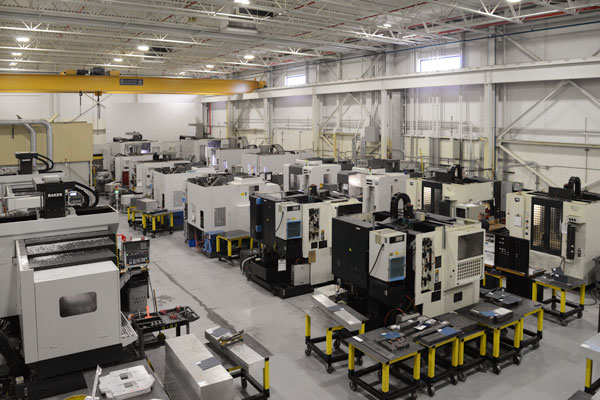
Ever walked past a manufacturing facility and wondered what actually happens inside? When you hear "CNC shop and service," you might picture rows of mysterious machines humming away - but what does that really mean for someone who needs parts made?
Here's the straightforward answer: a CNC shop is a specialized facility that uses computer-controlled machines to manufacture precision components from raw materials like metal, plastic, or composites. The "service" part extends far beyond just cutting material - it encompasses everything from custom machining and prototyping to equipment maintenance, repair, calibration, and even operator training.
What Makes a CNC Shop Different from General Manufacturing
Think of a general manufacturing facility as a department store - it handles a broad range of production needs. A CNC shop, on the other hand, is more like a specialty boutique focused entirely on precision machining.
The core difference? Computer Numerical Control technology. Unlike conventional machining that requires manual operation for every cut, CNC machines follow programmed instructions to automate cutting, drilling, milling, and turning operations. According to Kremin Inc., this automation ensures "superior quality, repeatability, and cost-effectiveness" that manual processes simply cannot match.
CNC fabrication near me searches often lead people to these specialized facilities because they offer something general manufacturers typically cannot: tolerances measured in microns (that's one-thousandth of a millimeter) and the ability to produce identical parts repeatedly without variation.
The Full Spectrum of CNC Services Explained
When you're searching for manufacturing shops near me, understanding the full range of available services helps you ask the right questions. Modern CNC facilities typically offer far more than basic machining.
Core Machining Services:
- CNC Milling - Uses rotating cutting tools to remove material, ideal for complex shapes and flat surfaces
- CNC Turning/Lathe Work - Rotates the workpiece against cutting tools, perfect for cylindrical components
- Multi-Axis Machining - 5-axis machines create highly complex geometries in a single setup, reducing production time
- Electrical Discharge Machining (EDM) - Creates intricate shapes and fine details difficult to achieve with traditional cutting
Design and Development Services:
- CAD/CAM Support - Receiving and processing computer-generated design files
- Prototype Development - Building small quantities for testing before full production
- Reverse Engineering - Replicating existing parts when original designs aren't available
- Design Assistance - Helping optimize parts for manufacturability and cost efficiency
Finishing and Secondary Operations:
- Surface Finishing - Anodizing, electroplating, painting, and powder coating
- Heat Treatment - Stress relieving, hardening, and annealing processes
- Quality Inspection - Coordinate Measuring Machine (CMM) verification and documentation
- Assembly Services - Combining multiple components into finished assemblies
Sounds complex? It can be - but that's precisely why reputable CNC shops employ skilled professionals including CNC programmers, machinists, quality control specialists, and engineers who translate your project requirements into finished parts. As a first-time buyer, you don't need to understand every technical detail. You simply need to know that a quality CNC service partner will guide you through the process and recommend the right approach for your specific application.
Technical Standards and Certifications Decoded
You've found a CNC machine near me that looks promising. Their website displays impressive certification badges - ISO 9001, AS9100D, IATF 16949. But what do these acronyms actually mean for your project? And when a shop quotes tolerances of ±0.001 inches, should you be impressed or concerned?
Let's cut through the technical jargon and explain what these specifications genuinely mean for your parts.
Understanding Tolerance Specifications in Plain Terms
Imagine you need a shaft that fits perfectly inside a bearing. If the shaft is too large, it won't fit. Too small, and it wobbles. Tolerance defines exactly how much variation from the ideal dimension is acceptable.
Here's how tolerance works in practice:
- Standard Tolerances (±0.005" or ±0.127mm) - Suitable for most general-purpose parts where exact fit isn't critical. Think brackets, housings, or decorative components.
- Precision Tolerances (±0.001" to ±0.002" or ±0.025mm to ±0.05mm) - Required when parts must fit together precisely. Common in mechanical assemblies, gears, and functional components.
- Ultra-Precision Tolerances (±0.0005" or ±0.0127mm and tighter) - Reserved for aerospace, medical devices, and optical applications where microscopic variations matter.
Why does this matter to you? Tighter tolerances require more sophisticated equipment, slower machining speeds, and additional quality checks - all of which increase cost. A reputable machine shop in Baton Rouge or anywhere else should help you determine the tolerance you actually need rather than defaulting to the tightest (and most expensive) option.
When you're discussing projects with potential shops, ask this simple question: "What tolerance can you hold consistently, and how do you verify it?" Quality facilities use Coordinate Measuring Machines (CMMs) and statistical process controls to verify dimensions - not just visual inspection.
What Industry Certifications Actually Mean for Your Project
Certification badges aren't just marketing decorations. They represent verified systems for preventing errors, tracking quality, and continuously improving processes. But each certification serves a different purpose.
According to Qimtek, ISO 9001 is "probably the most common manufacturing standard" and "requires companies to adopt a process-led methodology, as well as forensically analysing any errors as and when they occur."
Here's what each major certification means in practical terms:
| Certification | What It Covers | Industries Served | Key Requirements |
|---|---|---|---|
| ISO 9001 | General quality management systems | All industries - the foundational standard | Documented processes, error analysis, customer feedback systems, continuous improvement |
| AS9100D | Aerospace quality management | Aviation, space, defense components | ISO 9001 requirements plus safety protocols, traceability, regular audits, risk management |
| IATF 16949 | Automotive quality management | Automotive supply chain manufacturers | ISO 9001 requirements plus defect prevention, SPC controls, PPAP documentation, FMEA analysis |
| ISO 13485 | Medical device quality management | Medical and healthcare devices | Complete traceability, design controls, risk management, regulatory compliance |
A crucial point many buyers miss: IATF 16949 builds upon ISO 9001 by introducing automotive-specific requirements. As NSF explains, "you cannot achieve IATF 16949 certification without meeting ISO 9001 standards." This means an IATF-certified shop has already demonstrated general quality competence before adding automotive-specific protocols.
For automotive applications specifically, IATF 16949 requires shops to use specialized tools including:
- Statistical Process Control (SPC) - Real-time monitoring of machining processes to catch variations before they become defects
- Failure Mode and Effects Analysis (FMEA) - Systematic identification of what could go wrong and how to prevent it
- Production Part Approval Process (PPAP) - Documented proof that the shop can consistently produce parts meeting your specifications
So what does this mean when you're evaluating shops? If you're sourcing parts for automotive applications, an IATF 16949-certified facility isn't optional - it's likely required by your customer. For aerospace work, AS9100D certification is similarly essential. For general industrial applications, ISO 9001 provides assurance of systematic quality management.
The bottom line: don't just look for badges. Ask potential shops how their certification impacts your specific project - and watch for those who can explain the practical benefits rather than just reciting marketing language.
Choosing Between CNC Milling, Turning, and EDM Services
You understand tolerances and certifications now. But here's the question that trips up most first-time buyers: which CNC process should you actually request? Should your part be milled or turned? When does EDM make sense? Choosing the wrong process doesn't just waste money - it can result in parts that don't meet your specifications.
The good news? You don't need an engineering degree to make smart decisions. Understanding a few key principles will help you ask the right questions and evaluate recommendations from any CNC machine services near me.
Matching Your Project to the Right CNC Process
Start by examining your part's geometry. According to RapidDirect's machining comparison guide, "For parts that are mostly cylindrical, CNC turning will work well. Complex, prismatic parts that have contours or pockets are best addressed using CNC milling."
Here's how each major process works and when to choose it:
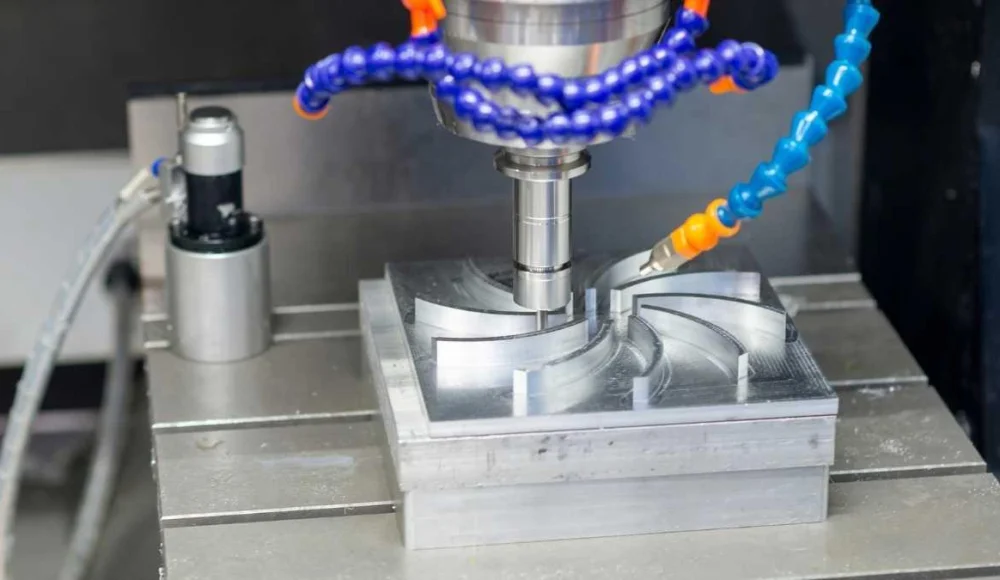
CNC Milling: Imagine a spinning cutting tool moving across a stationary block of material, carving away layers to reveal your part. The workpiece stays fixed while the tool moves along multiple axes (X, Y, Z - and sometimes more).
- Best for: Flat surfaces, pockets, slots, angled features, complex 3D contours
- Think: Housings, brackets, engine components, custom plates with multiple features
- Advantage: Extremely versatile - handles everything from simple drilling to intricate sculptural shapes
CNC Turning: Picture the opposite approach. The material spins rapidly while a stationary cutting tool shapes its surface. This creates round, symmetrical parts efficiently.
- Best for: Cylindrical parts, shafts, rods, bushings, threaded components
- Think: Pins, pulleys, hydraulic pistons, spindles, any part with rotational symmetry
- Advantage: Faster and more cost-effective than milling for round parts
EDM (Electrical Discharge Machining): This process uses electrical sparks to erode material rather than cutting it. No physical contact between tool and workpiece means you can create shapes impossible with conventional cutting.
- Best for: Extremely hard materials, intricate internal features, sharp corners, thin walls
- Think: Injection mold cavities, aerospace components, medical implants, precision tooling
- Advantage: Machines hardened materials that would destroy conventional cutting tools
Here's a practical comparison to guide your decision:
| CNC Process | Best Applications | Typical Tolerances | Material Compatibility | Limitations |
|---|---|---|---|---|
| CNC Milling | Prismatic parts, complex contours, pockets, slots, multi-featured components | ±0.001" to ±0.005" (±0.025mm to ±0.127mm) | Aluminum, steel, titanium, brass, plastics, composites | Slower for simple cylindrical parts; tool wear increases with harder metals |
| CNC Turning | Cylindrical parts, shafts, rods, threaded components, symmetrical features | ±0.001" to ±0.003" (±0.025mm to ±0.076mm) | Most metals and plastics; excellent for bar stock | Cannot produce flat, angular, or asymmetrical features without secondary operations |
| EDM | Hardened materials, intricate cavities, sharp internal corners, thin-walled parts | ±0.0001" to ±0.001" (±0.0025mm to ±0.025mm) | Any conductive material, including hardened tool steels and exotic alloys | Slow process; higher cost; only works on electrically conductive materials |
When Specialized Services Make the Difference
Understanding when each process is NOT appropriate saves you time and prevents costly mistakes. Here's the honest breakdown:
Don't choose milling when:
- Your part is primarily cylindrical - turning will be faster and cheaper
- You need extremely tight tolerances on internal features in hardened materials - consider EDM instead
- Production volume is extremely high and part geometry is simple - other processes may offer better economics
Don't choose turning when:
- Your part has flat surfaces, pockets, or features that aren't symmetrical around a central axis
- You need angled holes, side slots, or complex 3D contours
- The part geometry requires access from multiple directions
Don't choose EDM when:
- Standard milling or turning can achieve your tolerances - EDM costs significantly more
- Your material isn't electrically conductive (plastics, ceramics, most composites)
- Lead time is critical - EDM removes material slowly compared to conventional cutting
What about 3-axis versus 5-axis machining? According to RapidDirect, the choice depends on part complexity. Three-axis machines move the cutting tool in three linear directions - adequate for most straightforward parts with accessible surfaces. Five-axis machines add two rotational movements, allowing the tool to approach the workpiece from virtually any angle.
The practical impact? Five-axis machining reduces setups, improves surface finishes on contoured surfaces, and enables geometries impossible with 3-axis equipment. However, RapidDirect notes that 5-axis requires "expensive machines, advanced software, trained personnel" - meaning higher costs. For simple parts, 3-axis machining delivers equivalent quality at lower expense.
When evaluating any Baton Rouge machine shop or CNC service provider, ask these questions:
- "Based on my part geometry, which process do you recommend and why?"
- "What are the alternatives, and how do they compare on cost and lead time?"
- "Are there design modifications that would make this part easier to manufacture?"
A quality shop won't just accept your order - they'll help you understand whether your requested process truly fits your needs. That collaborative approach becomes even more important when selecting materials, which brings its own set of tradeoffs to consider.
Material Selection Guide for CNC Projects
You've identified the right CNC process for your part. Now comes a decision that directly impacts performance, durability, and budget: which material should you choose? This is where many first-time buyers feel overwhelmed - and where a quality CNC shop becomes invaluable.
The reality? Material selection isn't about finding the "best" option. It's about finding the right match for your specific application. A material perfect for one project could be completely wrong for another.
Material Properties That Actually Matter for Your Application
Before diving into specific materials, consider what your part actually needs to do. According to Protolabs, the first step is to "prioritize your requirements. Start with the must-haves and work your way down to identifiable nice-to-haves." This process typically reduces your options to a manageable shortlist.
Key factors to evaluate include:
- Mechanical loading - Will the part bear weight, resist impact, or handle repeated stress cycles?
- Operating environment - Temperature extremes, moisture exposure, chemical contact?
- Weight sensitivity - Does every gram matter, or is mass irrelevant?
- Surface requirements - Decorative finish, wear resistance, or functional contact surfaces?
- Production volume - Prototype quantities or high-volume runs?
With these priorities established, let's examine how common materials perform across different application categories.
Structural and High-Load Applications:
- Carbon Steel - Excellent strength-to-cost ratio; ideal for brackets, frames, and load-bearing components where corrosion isn't a concern
- Stainless Steel (304, 316) - Combines strength with corrosion resistance; preferred for structural parts exposed to moisture or chemicals
- Aluminum 7075 - According to Weerg, this is "one of the strongest alloys, used in aerospace, military, racing" - offering near-steel strength at roughly one-third the weight
Lightweight and Performance Applications:
- Aluminum 6061 - The workhorse alloy; Weerg describes it as "highly versatile, good mechanical strength, excellent machinability" suitable for many sectors
- Aluminum 5052 - Superior corrosion resistance for marine environments and fuel tanks
- Titanium Alloys - Ultimate strength-to-weight performance for aerospace and medical implants; significantly higher cost
Corrosive Environment Applications:
- Stainless Steel 316/316L - Weerg notes these offer "excellent corrosion resistance, ideal for harsh environments or food/chemical applications"
- Aluminum (general) - Naturally corrosion resistant thanks to a protective oxide layer that forms on its surface
- Brass - Excellent for marine hardware and decorative components; naturally antimicrobial
High-Temperature Applications:
- Stainless Steel (high-nickel grades) - Maintains strength at elevated temperatures
- PEEK (Polyether Ether Ketone) - Protolabs identifies this as a popular choice for high-temperature plastic applications; withstands continuous exposure to 480°F (250°C)
- Ultem - Another high-performance thermoplastic suitable for demanding thermal environments
Aesthetic and Low-Stress Applications:
- Aluminum (anodized) - Takes color finishes exceptionally well; lightweight and professional appearance
- Acetal (Delrin) - Smooth, low-friction plastic ideal for visible components and mechanisms
- ABS - Cost-effective plastic for housings, covers, and non-structural components
Cost vs Performance Tradeoffs in Material Selection
The aluminum vs steel machining decision perfectly illustrates how tradeoffs work in practice.
Consider weight first. According to Weerg's analysis, aluminum is "about three times lighter than steel." This difference is crucial in sectors where weight directly impacts performance - aerospace fuel efficiency, automotive acceleration, portable equipment ergonomics.
But steel generally offers higher absolute mechanical strength. Weerg explains the practical distinction: aluminum has "lower strength than steel, but an excellent strength-to-weight ratio." Translation? Steel handles heavier loads in the same physical size, while aluminum handles equivalent loads with less weight but larger dimensions.
Machinability affects cost significantly. Aluminum machines faster with less tool wear, meaning lower shop rates and quicker turnaround. Steel requires more robust tooling, slower speeds, and often coolant - increasing per-part costs. However, steel's lower raw material price sometimes offsets these machining premiums for simpler parts.
For plastics, the tradeoffs shift. ABS and acetal provide economical solutions for prototypes and low-stress applications. PEEK delivers exceptional performance but costs significantly more - worth it only when temperature resistance, chemical compatibility, or mechanical properties genuinely require it.
Protolabs recommends using the same resin for machined prototypes as for injection-molded production to ensure prototypes "can be tested and will perform similarly to production parts."
Surface Finish Options and When They Matter
Surface finish - measured in Ra (roughness average) values - often gets overlooked until it causes problems. Here's what different finish levels mean practically:
- Ra 3.2 μm (125 μin) - Standard Machined - Visible tool marks; acceptable for non-contact surfaces, internal features, and parts that will be painted
- Ra 1.6 μm (63 μin) - Fine Machined - Smoother appearance; suitable for most mechanical assemblies and visible components
- Ra 0.8 μm (32 μin) - Precision Ground - Required for sealing surfaces, bearing journals, and precision sliding fits
- Ra 0.4 μm (16 μin) and finer - Polished finishes for optical applications, medical devices, and high-precision instruments
Secondary treatments extend options further. Protolabs notes that for aluminum alloys, "anodizing would be preferable for durability, while chromate plating is a better choice if the priority is cosmetics." Anodizing creates a hard oxide layer that resists scratching and accepts dye colors. Chromate conversion provides corrosion protection with a distinctive appearance.
When specifying finishes, remember: tighter requirements increase cost. Ask yourself whether the application genuinely requires that Ra 0.8 μm finish, or whether Ra 1.6 μm delivers equivalent functional performance. A knowledgeable CNC shop will help you identify where tight finishes add value versus where they simply add expense.
With material and finish decisions clarified, you might wonder how CNC machining compares to other manufacturing methods entirely. That comparison reveals when precision machining delivers the best value - and when alternatives make more sense.
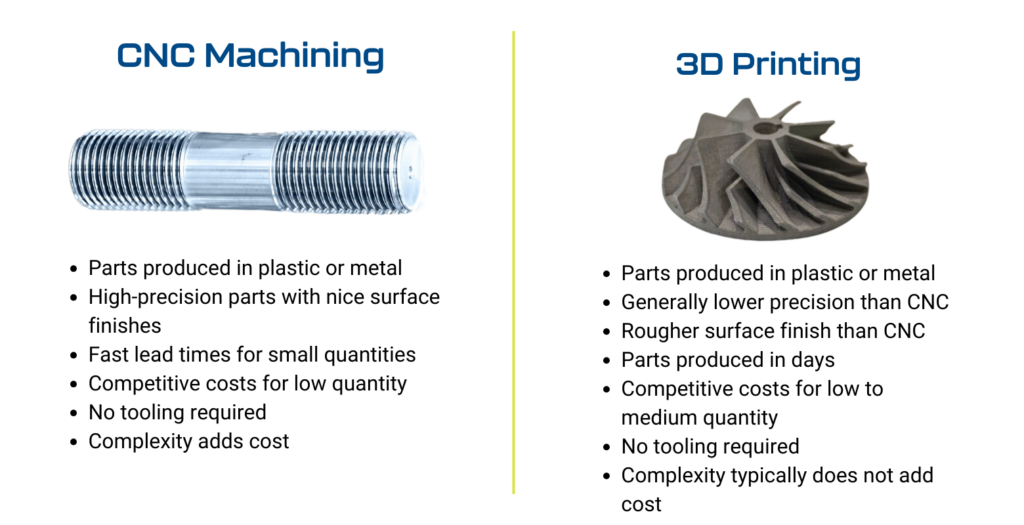
CNC Machining vs 3D Printing, Injection Molding, and Casting
You've selected your material and understand CNC processes. But here's a question worth asking before committing: is CNC machining actually the right manufacturing method for your project? Sometimes the answer is yes. Sometimes it's genuinely not.
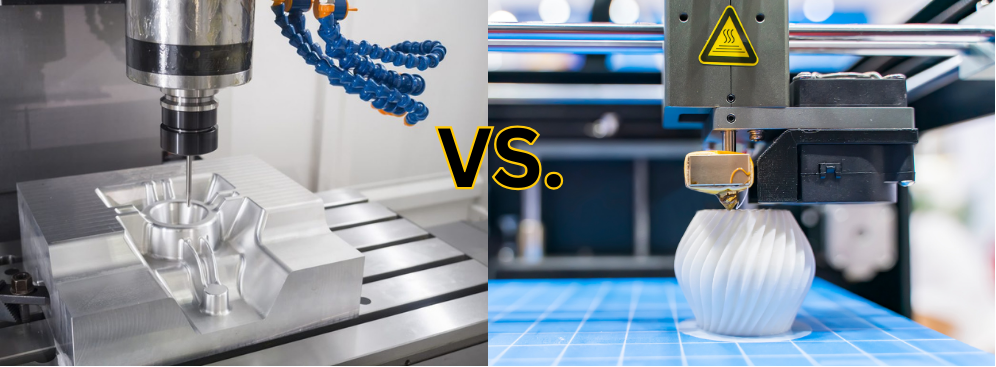
Most CNC shops won't tell you when alternatives make more sense - they're in the business of machining, after all. But understanding these tradeoffs helps you make smarter decisions and avoid expensive mistakes. Let's examine how CNC machining stacks up against 3D printing, injection molding, and casting with complete honesty.
When CNC Machining Beats the Alternatives
CNC machining has held its dominant position in precision manufacturing for good reasons. According to Northeast Precision CNC, "CNC Machining offers superior precision and tight tolerances, often within microns. This makes it ideal for producing parts that require high accuracy, such as engine components or medical implants."
Here's where CNC machining genuinely outperforms alternatives:
Precision and Tolerance Control: When your application demands exact dimensions, CNC machining delivers. According to The Steel Printers, CNC machining is "capable of achieving tolerance of +/-0.001mm - which is significantly better than both casting and metal 3D printing." Neither 3D printing nor casting approaches this level of dimensional accuracy without secondary machining operations.
Material Versatility: CNC machines work with virtually any machinable material - metals, plastics, wood, and composites. Northeast Precision CNC notes that "CNC machines can work with a wide range of materials, including metals (aluminum, steel, titanium), plastics, and even wood." Injection molding limits you primarily to plastics, while 3D printing offers a growing but still restricted material portfolio.
Fast Turnaround for Prototypes and Small Batches: Need parts quickly? CNC machining doesn't require tooling development. The Steel Printers explains that "metal 3D printing is the fastest method" for small batches, but CNC follows closely - and often wins when you factor in post-processing requirements. Northeast Precision adds that "once the CAD model is prepared - and the G-Code is produced - the machine can start cutting almost immediately."
Design Flexibility Without Tooling Investment: Making changes is straightforward. If dimensions need adjustment, the operator can modify the G-code directly. Compare this to injection molding, where Northeast Precision notes "if there is a change to the desired part, there needs to be a change to the mold, which further contributes to longer lead times."
Surface Finish Quality: Machined surfaces typically require less post-processing than cast or printed parts. The Steel Printers observes that "the final machined part usually only needs post-process heat treating," while cast and 3D printed parts frequently need machining to achieve required finishes.
Situations Where Other Methods Make More Sense
Here's the honest truth: CNC machining isn't always the best choice. Recognizing these situations saves money and frustration.
When 3D Printing Wins:
- Extremely complex geometries - The Steel Printers notes that "metal 3D printing can also produce lightweight structures and internal cavity profiles that would be impossible to produce using CNC machining." Think lattice structures, internal cooling channels, or organic shapes.
- Highly customized one-off parts - When every unit differs, 3D printing eliminates setup time between variations.
- Material efficiency concerns - CNC machining is subtractive, meaning material gets cut away and often wasted. The Steel Printers points out that "metal 3D printing only uses the amount of material needed to create a part and any excess can usually be recycled."
When Injection Molding Wins:
- High-volume plastic production - If you need thousands or millions of identical plastic parts, injection molding's per-unit economics become unbeatable. The expensive mold pays for itself across volume.
- Complex plastic geometries with consistent quality - Once the mold is perfected, every part emerges identical.
- Integrated features - Snap fits, living hinges, and complex assemblies in a single molded piece.
When Casting Wins:
- Large metal parts - The Steel Printers explains that "when producing large parts, casting would be the method to choose. Generally, traditional manufacturing methods are much better at producing larger parts."
- Very high production volumes - At thousands of units, casting's economies of scale dominate. The Steel Printers notes that "as the quantity of parts increases, the fixed cost of producing a casting mould... can be allocated across many parts."
- Parts where material can flow easily - Simpler geometries without intricate internal features.
Custom Manufacturing Methods Comparison
This comprehensive table helps you evaluate which method fits your specific project requirements:
| Factor | CNC Machining | 3D Printing (Metal) | Injection Molding | Casting |
|---|---|---|---|---|
| Cost at 1-10 units | Moderate - no tooling needed | Moderate to high - per-part pricing | Very high - mold cost dominates | High - pattern and mold required |
| Cost at 100 units | Moderate - setup amortized | High - linear scaling | Moderate - mold cost spreading | Moderate - becoming competitive |
| Cost at 1,000+ units | Higher per-unit than alternatives | Highest - doesn't scale well | Lowest for plastics | Lowest for metals |
| Precision Capability | Excellent (±0.001mm possible) | Good (typically ±0.1-0.2mm) | Good (±0.05-0.1mm typical) | Moderate (often needs machining) |
| Material Options | Broadest - metals, plastics, composites | Growing but limited metals/polymers | Primarily thermoplastics | Most metals castable |
| Lead Time (First Part) | Days to 1-2 weeks | Days to 1 week | Weeks to months (mold creation) | Weeks (pattern and mold) |
| Design Change Flexibility | Excellent - modify CAD file | Excellent - modify CAD file | Poor - requires mold modification | Poor - requires new pattern |
| Geometric Complexity | Limited by tool access | Excellent - internal features possible | Good with proper mold design | Moderate - flow limitations |
| Part Size Range | Small to large | Limited by printer build volume | Small to medium typical | Small to very large |
Making the Right Choice for Your Project
The Steel Printers summarizes the decision framework well: "The direct relationship between complexity and quantity" determines your optimal method. Here's the simplified guidance based on their analysis:
- Single units to tens of parts: 3D printing or CNC machining, depending on geometry complexity
- Tens to hundreds of parts: CNC machining, potentially transitioning to casting for simpler geometries
- Hundreds to thousands: Casting for metals, injection molding for plastics
- Thousands and beyond: Casting or injection molding almost always wins on economics
As The Steel Printers concludes: "There's no method that always comes out above another. To progress in the future, the idea is that traditional manufacturing techniques and metal 3D printing will complement each other, filling gaps where the other falls short."
The most valuable insight? Don't assume CNC machining is automatically correct just because it's the most familiar option. Evaluate your quantity requirements, precision needs, material specifications, and timeline honestly. A trustworthy CNC shop will actually tell you when alternatives serve your project better - that honesty builds the kind of partnership that delivers value across multiple projects.
With manufacturing method selected, the next decision involves choosing between local machine shops and online services - each offering distinct advantages depending on your project scale and support requirements.
Finding the Right CNC Shop for Your Project Scale
You've determined that CNC machining fits your project. Now comes a decision that surprisingly few guides address honestly: should you work with a local machine shop near me or use an online CNC machining services platform? The answer isn't straightforward - and getting it wrong can mean paying premium prices for convenience you don't need, or sacrificing support that's critical to your success.
Both approaches have genuine strengths. Understanding when each excels helps you match your project requirements to the right type of partner.
Local Machine Shops vs Online CNC Services
The most significant differences between these options lie in how you communicate, how orders progress, and what support you receive. According to XTJ Precision Manufacturing, "When you pick traditional CNC Machining services, you work with a factory... You often talk with the factory team about your needs and materials." Online platforms, by contrast, "let you order parts using a website" with automated quoting and minimal direct interaction.
Here's what each approach genuinely offers:
Advantages of Local Machine Shops:
- Direct communication with machinists and engineers - You can discuss complex requirements face-to-face, ask questions, and get immediate clarification on technical details
- Design consultation and expertise - XTJ notes that traditional shops "give expert design help. You can get advice to make your part better and save money"
- Relationship building - Working directly with a facility creates trust and understanding that benefits future projects
- Transparent pricing - "You pay the factory, so you skip extra costs from middlemen," avoiding platform fees that can add 10-20% to project costs
- Quality consistency - Local shops "control every step in their own factory" with direct oversight of each operation
- Ongoing service and support - Need equipment maintenance, repair, or calibration? Local facilities often provide these services alongside manufacturing
Advantages of Online CNC Machining Services:
- Instant quoting - Upload your CAD file and receive pricing immediately without waiting for manual estimates
- Broad supplier networks - Access to multiple certified machine shops through a single platform expands your options
- Convenient order management - Track orders, manage projects, and handle documentation through web interfaces
- Flexible delivery options - Choose between standard, expedited, or economy shipping based on urgency and budget
- 24/7 accessibility - Submit orders anytime without coordinating schedules or time zones
- Rapid design iteration - XTJ observes that online platforms "let you upload new designs and change orders fast. You can test ideas and get parts quickly"
But here's what often gets overlooked: online platforms use networks of suppliers, which can introduce variability. XTJ explains that "quality can change with each supplier. Online platforms may have more risk of mistakes or late parts because they use many shops." When you need identical results across multiple orders, that consistency matters.
Matching Shop Type to Your Production Scale
Your production volume significantly influences which approach makes sense. Small batch CNC machining has different requirements than high volume CNC production - and the right partner type shifts accordingly.
For Prototypes and Small Batches (1-50 parts):
Both options work here, but priorities differ. If your prototype requires iteration and design feedback, local shops excel. RapidDirect notes that CNC shops can "quickly change their designs with minimal cost and time to optimize the production quality." That collaborative refinement happens more naturally when you're working directly with engineers.
Online platforms shine when you have finalized designs and need fast turnaround without extensive consultation. For straightforward parts where the geometry is proven, uploading files and receiving parts in days offers clear efficiency.
For Medium Production Runs (50-500 parts):
This range often favors local machine shops or direct factory relationships. According to XTJ's comparison, "If you want the lowest price for big jobs and need exact parts, pick a direct CNC Machining service." Platform fees become more significant as quantities increase, and the ability to negotiate pricing directly with manufacturers provides cost advantages.
Additionally, medium runs benefit from the consistency that comes from single-source production. Every part comes from the same machines, same operators, same quality checks.
For High Volume Production (500+ parts):
At scale, direct relationships become essential. RapidDirect emphasizes that when evaluating shops, consider "the capacity and scalability option of the CNC machining shop, what volumes can the shop deliver in a specific timeframe?" High-volume work requires shops with adequate machine capacity, efficient programming, and robust quality systems.
Online platforms can struggle here because they distribute work across multiple suppliers, potentially creating inconsistencies. Direct partnerships allow for dedicated production scheduling, volume pricing negotiations, and streamlined logistics.
Lead Time Expectations and Realistic Turnaround
Understanding realistic timelines prevents frustration and helps you plan effectively. Here's what to genuinely expect:
Local Machine Shop Timelines:
- Rush orders: 1-3 days for simple parts with available capacity
- Standard prototypes: 3-7 business days
- Complex or precision parts: 1-2 weeks
- Production runs: 2-4 weeks depending on quantity and complexity
XTJ notes that traditional CNC facilities "can make parts in 3 to 7 days. You talk to the factory, so you can ask for rush orders." That direct communication allows flexibility when deadlines are critical.
Online Platform Timelines:
- Expedited service: 3-5 business days (premium pricing)
- Standard delivery: 2-3 weeks typical
- Economy options: 3-4 weeks
XTJ's analysis indicates that "Most jobs take about three weeks, but you can pay more for faster work." The tradeoff is straightforward: speed costs extra on platforms, while local shops may offer faster standard turnaround through direct scheduling.
The Service Factor: Beyond Just Making Parts
One advantage local machine shops offer that online platforms cannot match: comprehensive service relationships. When you need equipment maintenance, repairs, or technical support beyond part manufacturing, local facilities provide ongoing value.
According to Wisconsin Metal Tech, strong customer relationships mean "we actively engage with our clients to comprehend their unique needs. Whether it's a specific material requirement, tight tolerances, or design constraints, we tailor our CNC machining services accordingly."
This collaborative approach extends to problem-solving. Wisconsin Metal Tech emphasizes that "challenges arise, but our collaborative approach ensures that we find solutions together." When issues occur - and in manufacturing, they occasionally do - having a partner who understands your applications and can respond quickly makes a significant difference.
For ongoing relationships involving repeat orders, design evolution, or production scaling, local partnerships typically deliver more value. For one-time projects with clear specifications and no anticipated follow-up, online platforms offer efficient transactions.
The right choice isn't about which option is universally better - it's about which approach matches your specific project requirements, timeline, and relationship needs.
With your shop type selected, understanding how pricing works helps you evaluate quotes effectively and avoid unexpected costs - which brings us to the factors that actually drive CNC service pricing.
Understanding CNC Service Pricing and Cost Factors
Ever received a CNC machining quote and wondered why that small part costs so much? Or why two seemingly similar projects came back with dramatically different prices? You're not alone. Pricing in machining services often feels opaque to first-time buyers - and that uncertainty creates friction before projects even begin.
Here's the reality: CNC machining costs aren't arbitrary. They follow predictable patterns based on specific factors. Understanding these factors transforms you from a passive quote recipient into an informed customer who can make smart decisions and potentially reduce costs before submitting your first RFQ.
Key Factors That Drive CNC Machining Costs
According to Komacut's cost analysis, several interconnected elements determine what you'll pay for machined parts. Let's break them down in order of typical impact.
Material Type and Usage:
Your material choice affects cost in multiple ways beyond just raw material pricing. Komacut explains that "materials like stainless steel and titanium, which are harder and tougher, require more time and specialized tooling, thereby increasing costs." Conversely, "softer materials such as aluminum are easier to machine, which can reduce both machining time and tool wear."
- Raw material cost - Titanium costs significantly more per kilogram than aluminum or mild steel
- Machinability - Harder materials require slower cutting speeds, increasing machine time
- Tool wear - Abrasive or tough materials consume cutting tools faster, adding replacement costs
- Special handling - Some materials require specific coolants, feeds, or machine settings
Machining Time:
Machine time directly drives labor and equipment costs. Komacut identifies two major time factors: "the thickness of the materials being used and the complexity of the part's design." Thicker materials require multiple passes to achieve depth. Complex geometries demand slower speeds for precision and frequent tool changes.
Part Complexity and Design Features:
According to Fictiv's cost reduction guide, specific design elements significantly impact pricing:
- Tolerances - "Tighter tolerances = higher cost." Achieving ±0.001" requires more careful machining than standard tolerances
- Hole size and depth - "Deep, narrow holes are slow to machine accurately and prone to tool breakage"
- Internal radii - "The smaller the radius, the smaller the end mill required... the slower it must machine"
- Depth of cut - Extra deep pockets require extended machining time and may need special tooling
- Wall thickness - Thin walls require extra care to prevent vibration and distortion
- Undercuts - Features like O-ring grooves require specialty tooling that increases costs
Setup and Processing Time:
Before cutting begins, significant preparation occurs. Komacut notes that "setting up a CNC machine is particularly labor-intensive and costly, involving the installation of appropriate tools and fixtures, material preparation, and setting machine parameters." This non-recurring engineering (NRE) cost includes:
- CAM programming - Creating the toolpaths and G-code instructions
- Fixture setup - Securing the workpiece properly for each operation
- Tool installation - Loading and calibrating cutting tools
- First article inspection - Verifying the first part meets specifications
Machine Type and Capabilities:
Different equipment carries different hourly rates. Komacut's analysis shows that 5-axis milling machines cost more per hour than 3-axis equipment because of their "expensive machines, advanced software, trained personnel." CNC turning is "generally faster and more cost-effective than milling for producing round shapes."
Quantity and Batch Size:
Volume dramatically affects per-unit pricing. Komacut explains that "larger quantities spread fixed setup costs... across more units, thus reducing the cost per part." Additionally, "bulk material purchases also often attract discounts." The relationship is clear: ordering 100 parts costs less per piece than ordering 10.
How to Get Accurate Quotes for Your Project
Getting useful quotes requires providing complete information upfront. According to LongSheng's quoting guide, evaluating quotes involves "comprehensive consideration of a variety of key factors" including "material costs, labor costs, equipment usage fees, and possible follow-up processing costs."
To receive accurate, comparable quotes:
- Provide complete CAD files - 3D models (STEP, IGES) plus 2D drawings with dimensions and tolerances
- Specify material clearly - Include grade, temper, and any certification requirements
- Define tolerances precisely - Call out critical dimensions versus general tolerances
- State quantity requirements - Include both immediate needs and potential future volumes
- Describe surface finish requirements - Specify Ra values or finishing operations needed
- Identify secondary operations - Heat treatment, plating, anodizing, assembly requirements
Common Mistakes That Increase CNC Machining Costs
Many cost drivers are within your control. Fictiv identifies several avoidable mistakes that inflate pricing unnecessarily:
Over-specifying tolerances: Requesting ±0.001" across all dimensions when only a few features genuinely require it dramatically increases cost. Fictiv recommends starting with "ISO 2768 medium tolerance class" as "a reasonable standard for prototyping purposes" and tightening only where functionally necessary.
Ignoring setup complexity: Designs requiring multiple setups cost more. Fictiv suggests considering whether you can "break up the design into multiple components which can be easily machined and assembled later" or "simplify designs by allowing all machining to be done on a single face."
Choosing expensive materials unnecessarily: Fictiv advises: "simply choose the cheapest possible material that still fulfills your design requirements. If you are just doing functional prototyping, try to stick to cheaper options, like ABS or CNC machining aluminum."
Ordering single units: NRE costs dominate single-part orders. Fictiv recommends "making more than one of each part, so that your unit cost is lower, but not so many that you're making unneeded parts."
Designing features that require special fixturing: Parts with complex geometry may need custom soft jaws or sine bars for positioning. Fictiv suggests reducing "geometric complexity where possible" or breaking "the component up into simpler parts that may be later assembled."
Remember Fictiv's three main cost-drivers to minimize: "Material costs, including stock size and material worth; Fixturing setups, both in number and complexity; Machining time, by eliminating tricky part features and geometry where possible."
Armed with this pricing knowledge, you can evaluate quotes meaningfully, identify opportunities for cost optimization, and build productive relationships with machining partners. The final step? Knowing what qualities define a reliable CNC shop worth partnering with for your precision manufacturing needs.
Selecting a Reliable CNC Shop Partner
You've navigated tolerances, certifications, materials, and pricing factors. Now comes the decision that brings everything together: how to choose a CNC shop that delivers consistently and grows with your needs. The wrong partner means missed deadlines, quality issues, and wasted budget. The right one becomes a competitive advantage.
Here's how to evaluate potential machining partners using the knowledge you've gained throughout this guide.
What to Look for in a CNC Service Partner
Start your evaluation with these essential criteria - each one directly connects to the technical standards and capabilities we've discussed:
- Relevant certifications for your industry - Remember our certification breakdown? Match the shop's credentials to your application. For automotive precision CNC services, IATF 16949 certification is non-negotiable. Facilities like Shaoyi Metal Technology demonstrate this standard along with Statistical Process Control (SPC) implementation - exactly the quality systems that prevent defects rather than just detecting them.
- Scalability from prototype to production - Can the shop handle your current needs AND grow with you? Look for partners offering rapid prototyping to mass production under one roof. This eliminates the painful transition between prototype suppliers and production facilities that often introduces quality variations.
- Lead time capabilities - Ask specifically about turnaround. Some certified facilities deliver high-tolerance components with lead times as fast as one working day for urgent requirements. That responsiveness matters when production schedules are tight.
- Equipment and capacity transparency - According to QTime's precision engineering checklist, understanding a shop's "capacity and scalability option" helps you assess whether they can "deliver in a specific timeframe." Request equipment lists and current capacity utilization.
- Quality verification processes - How do they prove parts meet specifications? CMM inspection, first article reports, and documented SPC data indicate systematic quality management rather than hope-based manufacturing.
- Technical consultation willingness - Does the shop help optimize your designs, or simply quote what you submit? Partners who suggest improvements demonstrate expertise that benefits your projects long-term.
Evaluating Capabilities for Automotive and Precision Applications
Automotive and high-precision applications demand additional scrutiny. The stakes are higher - both financially and in terms of safety implications.
When evaluating shops for these demanding applications, verify:
- PPAP documentation capability - Can they provide the Production Part Approval Process documentation your automotive customers require?
- FMEA implementation - Do they conduct Failure Mode and Effects Analysis proactively, or wait for problems to appear?
- Traceability systems - Can they track every part back to specific material lots, machines, and operators?
- Experience with your component types - A shop excelling at chassis assemblies may not be ideal for electronic housings. Ask for relevant case studies.
The evaluation process ultimately comes down to trust backed by evidence. Certifications provide baseline assurance. But combining those credentials with demonstrated capabilities - like the ability to handle complex metal bushings or intricate automotive components with consistent precision - separates reliable machining partners from shops that simply own the right equipment.
The best CNC shop relationship isn't transactional - it's a partnership where your success drives their success. Look for shops that ask questions about your application, suggest improvements to your designs, and demonstrate genuine interest in solving your manufacturing challenges.
Armed with the knowledge from this guide, you're no longer a first-time buyer walking into unfamiliar territory. You understand what CNC services encompass, how to evaluate certifications, when different processes apply, and what drives pricing. Use that knowledge to ask informed questions, compare quotes meaningfully, and build relationships with shops that deliver the precision, reliability, and service your projects deserve.
Frequently Asked Questions About CNC Shop and Service
1. What does a CNC shop do?
A CNC machine shop uses computer-controlled machines to manufacture precision components from raw materials like metal, plastic, or composites. Services extend beyond basic cutting to include custom machining, prototyping, equipment maintenance, repair, calibration, and operator training. CNC shops employ skilled programmers, machinists, and quality control specialists who translate project requirements into finished parts with tolerances measured in microns.
2. What is a CNC service?
CNC service encompasses the full spectrum of computer numerical control machining operations including CNC milling, turning, multi-axis machining, and EDM. Beyond manufacturing, it includes design support like CAD/CAM processing, reverse engineering, and design optimization. Secondary services cover surface finishing such as anodizing and electroplating, heat treatment, quality inspection using CMM verification, and assembly services.
3. How do I choose between CNC milling, turning, and EDM?
Choose based on part geometry: CNC milling suits flat surfaces, pockets, and complex 3D contours using rotating cutting tools. CNC turning is faster and more cost-effective for cylindrical parts like shafts and bushings where the workpiece rotates. EDM uses electrical sparks to machine extremely hard materials and create intricate internal features impossible with conventional cutting, but costs more and works only on conductive materials.
4. What certifications should I look for in a CNC shop?
ISO 9001 provides foundational quality management for all industries. For aerospace applications, AS9100D certification is essential. Automotive projects require IATF 16949, which builds on ISO 9001 by adding Statistical Process Control (SPC), FMEA analysis, and PPAP documentation. Medical device manufacturing needs ISO 13485. Match the certification to your industry requirements rather than simply counting badges.
5. Should I use a local machine shop or online CNC service?
Local shops offer direct communication with machinists, design consultation expertise, transparent pricing without platform fees, and ongoing service support for maintenance and repairs. Online platforms provide instant quoting, 24/7 accessibility, and broad supplier networks. For complex projects requiring iteration, local partnerships excel. For straightforward parts with finalized designs, online platforms offer efficient transactions. High-volume production typically favors direct factory relationships.