 Small batches, high standards. Our rapid prototyping service makes validation faster and easier —
  EN
EN


Get A CNC Quote Online Without Overpaying: A Few Pricing Secrets
Understanding Online CNC Quoting and Why It Matters
Ever uploaded a CAD file and received a price estimate within seconds? That's the power of a CNC quote online in action. But what exactly happens behind that instant number, and why should you care about understanding it before clicking "order"?
What Defines an Online CNC Quote
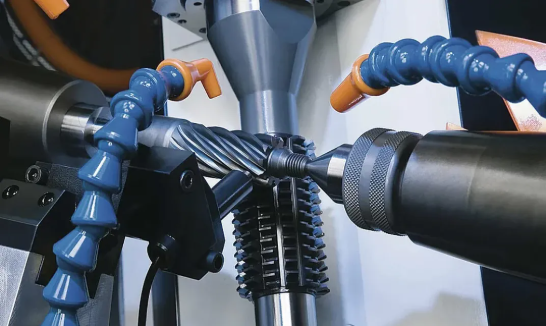
A CNC quote online is an automated or semi-automated pricing estimate generated through digital platforms. When you upload your CAD files—typically in STEP, IGES, or native formats—sophisticated algorithms analyze your part's geometry, material requirements, tolerances, and surface finish specifications. Within seconds or minutes, you receive real-time pricing, lead times, and often design-for-manufacturability (DFM) feedback.
Think of it as a digital translator between your design intent and manufacturing reality. These systems use advanced algorithms and machine learning to assess everything from bounding box dimensions to surface area complexity. According to industry analysis, leading platforms can generate quotes in as little as 5-60 seconds with accuracy rates approaching ±5% for standard machined parts.
The key parameters these systems evaluate include:
- Part geometry and complexity — analyzing features, undercuts, and machining accessibility
- Material selection — factoring in raw material costs and machinability ratings
- Tolerance specifications — from standard (±0.1 mm) to precision (±0.005 mm)
- Surface finish requirements — ranging from as-machined to mirror polish (Ra 0.4 µm)
- Quantity and lead time — volume pricing tiers and urgency premiums
The Shift from Traditional RFQ to Digital Quoting
Remember when getting a machining quote meant days of back-and-forth emails? Traditional Request for Quotation (RFQ) processes typically took 1-5 days—sometimes longer for complex parts. You'd send drawings, wait for questions, clarify specifications, and hope the shop understood your requirements correctly.
Digital quoting has fundamentally transformed this landscape. Platforms now report reducing quoting times by up to 90%, according to CNC industry research. This shift matters especially for machining for manufacturing environments where time-to-market pressure is intense.
The traditional bottlenecks that killed efficiency included manual data entry errors, time zone delays, and the simple reality that experienced estimators couldn't work around the clock. When you're searching for "cnc near me" at 2 AM with an urgent prototype need, waiting until business hours isn't an option.
Who Benefits Most from Instant Machining Estimates
Online machining quotes aren't equally valuable for everyone. Understanding who gains the most helps you determine if this approach fits your specific situation.
Engineers and product developers benefit from rapid design iteration. When you can test pricing impact of design changes in real-time, optimization becomes practical rather than theoretical. Need to know if switching from titanium to aluminum saves 60%? Upload both versions and find out in minutes.
Procurement specialists gain unprecedented cost transparency. Instead of negotiating blind, you enter supplier discussions with market-validated pricing data. This shifts the dynamic from price discovery to value negotiation.
Startups and SMEs access manufacturing networks that were previously relationship-dependent. Platforms like Xometry and Protolabs connect users to networks of over 10,000 suppliers, democratizing access to precision machining capabilities.
However, this convenience comes with trade-offs worth understanding. Complex parts requiring custom tooling, exotic materials, or ultra-tight tolerances may still benefit from traditional quoting's human expertise. The key is knowing when each approach serves your project best—which is exactly what the following sections will help you master.
Key Factors That Determine Your CNC Quote Price
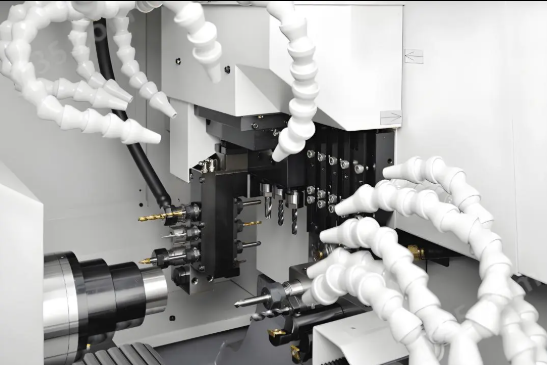
So you've uploaded your CAD file and received a number. But where does that figure actually come from? Understanding the mechanics behind CNC machine cost calculations transforms you from a passive quote recipient into an informed negotiator who can optimize designs for both performance and budget.
Every CNC quote online breaks down into interconnected cost drivers. Change one, and others shift too. Here's the comprehensive breakdown that most platforms never explain.
Material Costs and Machinability Ratings
Material selection creates the foundation of your quote—but it's not just about raw material price per kilogram. The hidden factor is machinability, a rating that measures how easily a metal can be cut relative to a reference standard (SAE 1112 steel at 100%).
According to machinability research, this rating directly impacts cutting speeds, tool wear, and ultimately your machinist metal cost. Higher machinability means faster production and lower expenses.
Consider this practical comparison:
- Aluminum alloys (machinability 200-400%) — Cut quickly with minimal tool wear. Aluminum machining typically costs 30-50% less than steel for equivalent geometries.
- Mild steel (machinability 70-100%) — The baseline reference. Moderate speeds and predictable tool life.
- Stainless steel 316 (machinability 36%) — Requires slower feeds, specialized tooling, and frequent tool changes. Expect 2-3x the machining time of aluminum.
- Titanium Ti-6Al-4V (machinability 20%) — Demands specialized equipment, slow speeds, and premium tooling. Metal machining costs can run 5-10x higher than aluminum.
But machinability isn't everything. When machining nylon or other engineering plastics, raw material costs drop significantly—nylon for machining typically runs $5-15 per kilogram versus $20-40 for aluminum. However, plastics require specific machine settings to prevent melting and may need different tooling strategies.
The interaction effect matters here: choosing a difficult material doesn't just increase machining time—it also accelerates tool wear, requires more skilled operators, and may demand specialized coolant systems. These factors compound, which is why titanium parts often cost 8-12x what aluminum equivalents cost rather than the 3-5x you might expect from raw material prices alone.
How Geometric Complexity Drives Machine Time
Ever wondered how much to get a metal part made with intricate features versus a simple block? Geometric complexity is often the largest variable in CNC machine price calculations—sometimes accounting for 40-60% of total cost.
Complexity affects quotes through multiple mechanisms:
- Deep cavities and pockets — Require longer tools that flex and chatter. Slower feeds and multiple finishing passes add time.
- Thin walls (under 1mm) — Risk deformation during cutting. Require light passes, careful fixturing, and sometimes stress-relief operations.
- Undercuts and internal features — May require 5-axis machining or multiple setups, doubling or tripling machine time.
- Sharp internal corners — Impossible with rotating cutters. Either require EDM operations (expensive) or design modification.
- High aspect ratio features — Deep, narrow slots or holes demand specialized tooling and conservative cutting parameters.
According to CNC cost analysis, simplifying designs without sacrificing functionality can reduce machining costs by 25-50%. The key question isn't "what features do I want?" but "what features do I actually need?"
Here's why this matters beyond just time: complex geometries often require custom fixtures, which add setup costs. A part that needs three setups instead of one doesn't just triple machine time—it adds fixture design, fabrication, and changeover labor. For low-volume production, these fixed costs dominate the equation.
The Tolerance-to-Price Relationship Explained
Tolerances represent one of the most misunderstood cost drivers. Engineers often specify tighter tolerances than necessary "just to be safe," not realizing the exponential cost impact.
The relationship isn't linear—it's closer to exponential:
| Tolerance Range | Typical Application | Relative Cost Impact |
|---|---|---|
| ±0.25 mm (±0.010") | Non-critical features, general fit | 1x (baseline) |
| ±0.125 mm (±0.005") | Standard precision, most assemblies | 1.2-1.5x |
| ±0.05 mm (±0.002") | Precision fits, bearing surfaces | 2-3x |
| ±0.025 mm (±0.001") | High precision, optical/aerospace | 4-6x |
| ±0.01 mm (±0.0004") | Ultra-precision, metrology grade | 10-20x |
Why does precision cost so much more? Tight tolerances require slower cutting speeds, finer finishing passes, temperature-controlled environments, and expensive measuring equipment for verification. A ±0.01 mm tolerance might require a coordinate measuring machine (CMM) inspection that costs more than the machining itself.
The smart approach: specify tolerances based on function. Mating surfaces that must align precisely need tight tolerances. Cosmetic surfaces or clearance holes often don't. Many experienced engineers use GD&T (Geometric Dimensioning and Tolerancing) to communicate exactly which dimensions are critical—reducing costs while ensuring function.
Quantity Breaks and Volume Pricing Logic
Understanding quantity pricing reveals why per-unit costs can drop 50-80% as volumes increase—and why ordering "just a few more" sometimes barely changes your total.
The economics work like this:
| Volume Range | Cost Dynamics | Per-Unit Impact |
|---|---|---|
| 1-5 pieces | Setup costs dominate (60-80% of total) | Highest per-unit cost |
| 10-50 pieces | Setup amortized, machine efficiency improves | 30-50% reduction |
| 100-500 pieces | Bulk material pricing, optimized toolpaths | 50-70% reduction |
| 1,000+ pieces | Dedicated fixturing, process automation | 70-85% reduction |
According to CNC cost research, setup costs—including CAM programming, fixture preparation, tool selection, and first-article inspection—remain relatively fixed regardless of quantity. Spreading these across more parts dramatically reduces per-unit expense.
But there's a strategic consideration beyond simple math: surface finish requirements, lead time urgency, and secondary operations all interact with quantity. A 100-piece order with anodizing and tight lead time might cost more per unit than a 50-piece order with standard finish and flexible delivery.
Surface Finish and Secondary Operations
Surface finish specifications often surprise buyers with their cost impact. Moving from as-machined (Ra 3.2 µm) to polished (Ra 0.4 µm) can add 20-40% to machining costs—before any coating or treatment.
- As-machined (Ra 1.6-3.2 µm) — Standard output, minimal additional cost
- Fine machined (Ra 0.8 µm) — Slower finishing passes, 10-20% premium
- Polished (Ra 0.4 µm) — Manual or automated polishing, 25-50% premium
- Mirror finish (Ra 0.1 µm) — Extensive hand work, 100%+ premium
Secondary operations—anodizing, plating, heat treatment, painting—each add their own cost layers. These often require external vendors, shipping, and quality verification steps that extend both price and lead time.
Lead Time and Urgency Premiums
Need parts tomorrow instead of next week? Expect to pay for that urgency. Most platforms apply premiums of 25-100% for expedited production, reflecting the real operational disruption of priority scheduling.
Standard lead times typically run 5-10 business days for simple parts, 2-3 weeks for complex assemblies. Expedited options might offer 3-5 day or even 24-hour turnaround—at corresponding premiums.
The interaction here is crucial: urgency premiums compound with complexity. A complex titanium part with tight tolerances on a 3-day rush might see total costs 3-4x what the same part would cost with standard lead time and relaxed specifications.
Understanding these interconnected factors doesn't just help you interpret quotes—it empowers you to optimize designs and project timing for the best balance of cost, quality, and speed. The next step is ensuring your CAD files communicate all this information accurately to the quoting platform.
How to Prepare CAD Files for Accurate Online Quotes
You've optimized your design for cost-effective machining. Now comes the critical handoff: translating your digital model into a format that CNC quoting platforms can accurately interpret. Get this wrong, and you'll face rejected uploads, inaccurate pricing, or costly miscommunication. Get it right, and your quote reflects exactly what you'll receive.
According to CNC machining experts at Dipec, well-prepared files lead to better outcomes, fewer delays, and optimal material usage. Here's how to ensure your files communicate your design intent precisely.
Choosing the Right File Format for Accurate Quotes
Not all CAD formats are created equal when it comes to CNC fabrication quoting. The format you choose determines how accurately the platform interprets your geometry—and whether your quote matches reality.
The most reliable formats for CNC machining parts include:
- STEP (.step, .stp) — The gold standard for CNC quoting. STEP files preserve mathematical definitions of curves and surfaces, ensuring accurate geometry interpretation across different software systems. Most platforms prefer this format for 3D machined parts.
- IGES (.iges, .igs) — Another universal format that maintains surface and curve data. An .igs file works well for complex geometries, though STEP generally offers better compatibility with modern systems.
- Parasolid (.x_t, .x_b) — Native to many CAD systems and excellent for preserving solid model data. Highly accurate for cnc machine parts with complex features.
- Native CAD formats (SOLIDWORKS, Fusion 360, etc.) — Some platforms accept native files, which preserve all design intent. However, compatibility varies—check platform requirements before uploading.
What about STL files? While common for 3D printing, STL files approximate surfaces using triangles, which can result in lost detail during toolpath generation. As machining specialists note, CNC software prefers solid models that preserve mathematical definitions of curves and surfaces. If you only have an STL, contact the provider—but wherever possible, supply STEP or IGES instead.
One critical consideration: always accompany your 3D file with a 2D technical drawing in PDF format when you have specific tolerances, surface finishes, or assembly instructions. This eliminates guesswork about your design intent and ensures the cnc cut parameters match your requirements.
Model Integrity Checks Before Upload
Sounds complex? It doesn't have to be. Before clicking upload, run through these verification steps to catch issues that cause quote failures or inaccuracies.
According to Xometry's troubleshooting guide, common upload failures stem from preventable file issues. Here's your pre-upload checklist:
- Verify your file is extracted — Files from unextracted ZIP folders won't load. Always extract before uploading.
- Check file size limits — Most platforms cap uploads at 100MB. If your file exceeds this, reduce resolution on complex surfaces or contact support for alternatives.
- Remove special characters from filenames — Periods, parentheses, commas, and asterisks can cause interpretation errors. Use simple alphanumeric names with underscores.
- Confirm units are correct — A part designed in millimeters but interpreted as inches creates parts 25x larger than intended. Double-check unit settings before export.
- Verify origin point placement — Inconsistent origin points can cause scaling errors or misalignment during machining.
- Check for open surfaces or gaps — Solid models should be fully closed. Open surfaces or small gaps can cause geometry computation failures.
- Ensure assembly files are separated — Assembly files (like .SLDASM or .IAM) without individual part information will fail. Upload individual part files separately.
Running your model through your CAD software's repair or analysis tools catches most issues before they become problems. Look for non-manifold edges, duplicate faces, or tiny gaps that might not be visible but cause processing errors.
Annotation Best Practices for Clear Communication
When you upload a file for cnc cuts, the geometry tells only part of the story. Critical information about tolerances, finishes, and functional requirements needs explicit communication.
Your accompanying technical drawing should include:
- Critical dimensions with tolerances — Specify which features require tight tolerances versus standard machining accuracy
- Surface finish callouts — Indicate Ra values or finish specifications for each surface that matters
- Material specification — Include grade, temper, and any certification requirements
- Thread specifications — Standard, pitch, class of fit, and depth for all threaded features
- Cosmetic surface identification — Mark which faces are visible in the final application
- Assembly notes — If parts mate with others, indicate fit requirements
One frequently overlooked detail: if your part has a preferred orientation for machining—perhaps to protect a cosmetic surface or optimize grain direction—include this in your notes. Leaving it flexible allows engineers to choose the most efficient setup, potentially reducing your quote.
Common File Preparation Mistakes That Kill Quotes
Even experienced engineers make file preparation errors. Here are the issues that most frequently cause rejected uploads or inaccurate cnc machining parts quotes:
- Forgetting to convert fonts to outlines — Text elements in vector files can halt processing entirely. Always convert to geometry.
- Including non-machinable features — Perfectly sharp internal corners, infinitely thin walls, or features smaller than standard tooling can't be manufactured. Design with tool geometry in mind.
- Over-complicating models — Tiny features or excessive detail that won't affect function add processing time and confusion. Simplify where possible.
- Missing feature definitions — Holes without specified depths, threads without pitch callouts, or undefined radii force assumptions that may not match your intent.
- Inconsistent scaling — Parts from different design sessions or software versions may have conflicting scale factors.
The underlying principle? A CNC machine operates based on precise digital instructions derived from your CAD files. Ambiguity in your file creates ambiguity in your quote—and potentially in your finished parts.
Your File Preparation Checklist
Before submitting any quote request, verify these items:
- File format is STEP, IGES, or platform-approved format
- File is under 100MB and extracted from any ZIP archives
- Filename uses only simple alphanumeric characters
- Units are verified and consistent throughout
- Model is watertight with no open surfaces or gaps
- Technical drawing accompanies 3D file with all critical specifications
- Tolerances are specified only where functionally necessary
- Material, finish, and quantity requirements are clearly documented
- Any special machining notes or orientation preferences are included
Taking fifteen minutes to verify file quality saves hours of back-and-forth communication and ensures your CNC quote online accurately reflects what you'll actually pay. With your files properly prepared, the next step is understanding how tolerance specifications beyond basic dimensions affect your pricing—and when precision is truly necessary.

Tolerance Specifications and Their Impact on Quote Pricing
You've prepared your files and selected your material. Now comes a decision that can double—or even quadruple—your CNC quote online without adding any functional value: tolerance specification. Understanding when precision matters versus when it's expensive overkill separates informed buyers from those who unknowingly pay premium prices for unnecessary accuracy.
According to CNC machining specialists at Okdor, over-specifying tolerances accounts for 25-40% of unnecessary manufacturing costs in prototype development. That's money you could redirect toward additional iterations, better materials, or faster delivery.
Standard vs Precision Tolerance Cost Implications
Here's what most quoting platforms don't explain: the relationship between tolerance and cost isn't linear—it's exponential. Each step toward tighter precision requires progressively slower cutting speeds, more finishing passes, and increasingly sophisticated measurement equipment.
Consider the real-world cost impact across tolerance ranges:
| Tolerance Level | Typical Range | Cost Multiplier | Inspection Method |
|---|---|---|---|
| Standard | ±0.13 mm (±0.005") | 1x (baseline) | Calipers, micrometers |
| Precision | ±0.05 mm (±0.002") | 1.5-2x | Digital indicators, precision gauges |
| Tight | ±0.025 mm (±0.001") | 3-4x | CMM inspection required |
| Ultra-tight | ±0.0025 mm (±0.0001") | 10-24x | High-precision CMM, climate control |
According to Xometry's tolerance guidance, standard tolerances for metal parts are ±0.005" (±0.13 mm) and ±0.010" (±0.25 mm) for plastics. These represent what CNC machines achieve naturally with normal cutting parameters—no special procedures required.
Why does the cost jump so dramatically for precision cnc machined parts? Several factors compound:
- Slower cutting speeds — Machines must reduce feed rates to minimize tool deflection and thermal expansion
- Multiple finishing passes — Light cuts that remove minimal material but require significant time
- Temperature-controlled environments — Ultra-tight tolerances require thermal stability to prevent dimensional drift
- Specialized inspection — CMM verification for a single cnc machining part can cost $50-150, sometimes exceeding the machining cost itself
- Higher scrap rates — Parts falling just outside tight specifications become unusable, building waste into pricing
As Modus Advanced explains, specifying 0.025 mm (0.001 inch) tolerance on a machined housing might double your part cost and triple your lead time compared to standard specifications.
When Tight Tolerances Are Actually Necessary
So when should you specify precision cnc machining services instead of accepting standard tolerances? The answer lies in functional necessity, not engineering perfectionism.
Reserve tight tolerances for features that directly impact:
- Assembly fit — Shafts, housings, and connectors where components must mate precisely
- Sealing interfaces — O-ring grooves, gasket surfaces, and fluid channels where dimensional variation causes leaks
- Moving components — Bearing seats, sliding mechanisms, and rotating assemblies requiring smooth operation
- Optical or sensor alignment — Features where positioning affects measurement accuracy or light paths
Conversely, these features typically function perfectly with standard tolerances:
- External corners and edges — Unless they mate with other parts
- Decorative surfaces — Appearance matters, but dimensional precision usually doesn't
- Clearance holes — Fastener holes with generous allowance need no special accuracy
- Material removal features — Weight-reduction pockets or non-functional cavities
Here's a practical test from experienced machinists: ask yourself "what happens if this dimension varies by ±0.1 mm?" If the answer is "nothing critical," standard tolerances will serve you well.
Consider real-world examples: aluminum enclosure faceplates specified to ±0.005 mm for alignment add 40% to project cost with zero assembly benefit. Meanwhile, medical device housings requiring fluid sealing genuinely need ±0.01 mm tolerances on gasket grooves to prevent leakage—that precision delivers measurable value.
Reading and Specifying Tolerances for Optimal Quotes
Understanding how to communicate tolerance requirements effectively can dramatically impact your quote—and prevent costly misunderstandings during production.
When requesting precision cnc parts, apply these principles:
Use tolerance hierarchies. Not every dimension deserves equal attention. Create three tiers:
- Critical — Tight tolerances, 100% inspection required
- Important — Precision tolerances with statistical sampling
- Standard — Default machining tolerances, minimal verification
Consider GD&T for complex requirements. Geometric Dimensioning and Tolerancing communicates not just dimensional limits but positional, form, and orientation requirements. A position tolerance referencing a nearby datum is often more practical than tight dimensional tolerances on features far from reference surfaces.
Specify only what you can verify. According to Xometry's design guidance, if a feature is difficult to machine, it's likely difficult to measure. Specifying tolerances you can't inspect creates manufacturing uncertainty and inflates quotes as suppliers price in risk.
Start loose during prototyping. High precision machining services make sense for production validation, but initial prototypes rarely need them. Begin with standard tolerances—you can always tighten specific dimensions if testing reveals functional necessity.
Communicate material considerations. Softer materials like nylon and plastics naturally hold looser tolerances than metals due to material flexing during cutting. Specifying ±0.001" on HDPE may be physically impossible without specialized tooling and extensive process development.
The goal isn't eliminating precision from your designs—it's applying precision strategically. Reserve tight specifications for the 10-20% of features that genuinely require them, while allowing the remaining 80-90% to use cost-effective standard tolerances.
This approach delivers the best balance: precision cnc machining parts where function demands it, cost efficiency everywhere else. With tolerance strategy clarified, you're ready to evaluate whether online quoting platforms or traditional RFQ processes better serve your specific project needs.
Online Quoting Platforms vs Traditional RFQ Processes
You've optimized your design, prepared your files, and specified tolerances strategically. Now comes a fundamental decision: should you use a CNC online service for instant pricing, or invest time in traditional Request for Quotation processes with established machine shops? The answer depends on your specific project needs—and understanding the trade-offs helps you choose wisely.
Neither approach is universally superior. According to industry analysis from FACTUREE, the procurement landscape has shifted dramatically, but traditional manufacturing relationships still offer advantages that digital platforms can't replicate. Let's break down when each approach makes strategic sense.
Speed and Convenience Advantages of Online Platforms
Imagine uploading your CAD file at 11 PM and receiving a detailed quote before midnight. That's the reality with online cnc services—and for time-sensitive projects, this speed advantage is transformative.
The best online cnc service platforms deliver several compelling benefits:
- Instant or near-instant quotes — What once took 3-5 business days now happens in minutes. According to AMFG's research, quoting software cuts quote generation to mere minutes while reducing human error.
- 24/7 availability — No waiting for business hours or time zone alignment. Engineers working late can price options in real-time.
- Immediate design feedback — Many platforms provide DFM analysis during quoting, flagging manufacturability issues before you commit.
- Transparent pricing breakdowns — See exactly how material, complexity, and quantity affect your cost without negotiation games.
- Massive supplier networks — Platforms connect you to thousands of vetted manufacturers, virtually eliminating capacity constraints.
For engineers iterating on designs, this speed transforms workflow. Need to test whether switching from stainless steel to aluminum saves budget? Upload both versions and compare in minutes. Wondering if reducing tolerance requirements drops the price significantly? The answer appears instantly.
Online cnc machining services also democratize access. Startups and small companies gain connections to manufacturing networks that previously required years of relationship-building. A two-person engineering team can access the same production capabilities as established enterprises.
When Traditional RFQ Processes Still Win
Despite digital convenience, traditional cnc service relationships offer advantages that algorithms can't replicate. For certain projects, the extra time investment pays dividends.
Consider traditional RFQ processes when:
- Your project involves custom tooling or fixtures — Complex parts requiring specialized setups benefit from direct engineer-to-engineer conversation about optimal approaches.
- Material specifications are unusual — Exotic alloys, certified materials, or specific heat treatments require human expertise to quote accurately.
- You need ongoing production partnership — Long-term relationships deliver better pricing, priority scheduling, and collaborative problem-solving that transactional platforms can't match.
- Quality requirements demand deep documentation — Aerospace, medical, and automotive applications often require supplier audits, process validation, and traceability that platform models don't easily accommodate.
- Volume justifies negotiation — High-volume production orders warrant custom pricing discussions that may beat platform rates.
Traditional cnc machining services near me offer something else platforms struggle to provide: institutional knowledge. A machine shop that's produced your parts for years understands your quality expectations, common revision patterns, and preferred communication style. They'll flag potential issues proactively and suggest improvements based on manufacturing experience with your specific applications.
According to manufacturing procurement analysis, complex procurement challenges—mixing prototype production, various small series, and subsequent series production across multiple materials—often benefit from a single point of contact who understands the full picture.
Direct Comparison: Online vs Traditional Approaches
When evaluating cnc services near me against digital platforms, consider how each approach performs across key criteria:
| Criteria | Online Quoting Platforms | Traditional RFQ Process |
|---|---|---|
| Quote Turnaround | Seconds to hours | 1-5 business days |
| Pricing Transparency | High—see cost breakdown instantly | Variable—depends on supplier relationship |
| Customization Flexibility | Limited to platform parameters | High—can negotiate any specification |
| Relationship Depth | Transactional | Partnership potential |
| Complex Project Handling | Moderate—some require manual review | Excellent—direct engineering discussion |
| Volume Pricing | Algorithm-based breaks | Negotiable for significant volumes |
| Quality Documentation | Standardized options | Fully customizable to requirements |
| Revision Flexibility | Re-upload and re-quote | Collaborative discussion possible |
Hybrid Approaches for Complex Projects
Here's what experienced procurement specialists know: the best strategy often combines both approaches. Using custom cnc machining services through different channels based on project phase maximizes both efficiency and outcomes.
Consider this practical hybrid workflow:
- Early prototyping — Use online platforms for speed. When iterating rapidly on design concepts, instant quotes enable faster decision-making. The transactional nature matches the experimental phase.
- Design validation — As specifications stabilize, request traditional quotes from 2-3 qualified shops. Compare their feedback with platform pricing to identify potential issues or optimizations.
- Production ramp — Establish relationships with 1-2 preferred suppliers for ongoing production. Negotiate volume pricing, quality agreements, and communication protocols.
- Ongoing production — Maintain platform access for urgent orders, overflow capacity, or new part development while running standard production through established partners.
This approach captures online convenience during exploration phases while building the supplier relationships that deliver long-term value. Many companies find that 70-80% of their parts flow through established relationships, with platforms handling the remaining prototype and specialty work.
According to quoting software analysis, improved win rates come from responding to RFQs more swiftly—but that speed must be balanced against the relationship depth that complex, recurring projects require.
The key insight? Match your quoting approach to your project's position in the development lifecycle and your ongoing relationship needs. Early-stage work benefits from platform speed and accessibility. Mature production benefits from partnership depth and negotiated terms.
With your quoting strategy clarified, understanding what happens after you submit a quote request—the DFM feedback cycles, revision processes, and production kickoff procedures—becomes the next critical step in your CNC manufacturing journey.
What Happens After You Submit a Quote Request
You've uploaded your CAD files, reviewed the instant pricing, and clicked submit. Now what? The journey between receiving a CNC quote online and seeing finished parts arrive is where many projects hit unexpected delays—or sail smoothly through production. Understanding this post-quote process transforms you from a passive customer into an informed partner who keeps projects on track.
According to Factorem's manufacturing process analysis, traditional CNC sourcing often stumbles due to fragmented communication and lack of integrated oversight. The solution? Knowing exactly what to expect after you hit that quote button.
Understanding DFM Feedback and Revision Cycles
Within hours—sometimes minutes—of submitting your quote request, you'll likely receive Design for Manufacturability (DFM) feedback. This isn't criticism of your engineering skills. It's collaborative intelligence that can save you thousands of dollars and weeks of delays.
DFM analysis examines your design through a manufacturing lens, flagging features that:
- Increase machining time unnecessarily — Deep pockets, thin walls, or complex internal geometries that could be simplified
- Risk quality issues — Features prone to tool deflection, chatter, or dimensional instability
- Require special tooling — Non-standard hole sizes, unusual thread specifications, or tight corner radii
- Create inspection challenges — Internal features that can't be verified with standard measurement equipment
Here's what makes DFM feedback valuable for prototype machining: suggestions typically come with cost impact estimates. A recommendation to increase internal corner radii from 1mm to 3mm might reduce your quote by 20%—information that helps you make informed design trade-offs.
The revision cycle works like this: you receive feedback, evaluate which suggestions align with functional requirements, modify your design accordingly, and resubmit for updated pricing. For rapid machining projects with tight deadlines, this cycle can compress into a single day. For complex assemblies requiring engineering review, expect 2-5 days.
According to Stecker Machine's RFQ process guide, DFM can drive costs down, simplify product production, minimize design rework, and keep overall quality high. The shops that emphasize DFM during quoting typically deliver better outcomes than those who simply process orders without feedback.
One critical point about cnc prototype machining: first-article feedback often reveals issues that automated quoting systems miss. A human engineer reviewing your part might notice that a tolerance callout conflicts with the specified material, or that a threaded hole depth doesn't account for chip clearance. This human review layer adds value that pure algorithm-based platforms can't match.
Quote Validity and Expiration Considerations
That number on your quote isn't permanent. Understanding validity periods prevents budget surprises and helps you plan procurement timing strategically.
According to CNC Industries' terms of sale, quoted prices are typically valid for 30 days. After that, material costs, machine availability, and labor rates may shift—requiring requoting. This matters especially for:
- Budget approval cycles — If your organization requires weeks of internal approval, quote expiration can catch you off guard
- Material price volatility — Aluminum, steel, and especially specialty alloys fluctuate with market conditions
- Capacity constraints — A shop quoting 2-week lead time today might face 4-week backlogs next month
Several factors can trigger requoting even within validity periods:
- Design changes — Any modification to geometry, tolerances, or specifications requires price recalculation
- Quantity adjustments — Volume pricing structures mean changing from 50 to 75 pieces affects per-unit cost
- Lead time changes — Requesting faster delivery after initial quoting typically adds expedite premiums
- Material availability — If specified material becomes unavailable, alternatives require new pricing
For cnc machining rapid prototyping projects where designs evolve quickly, this means strategic timing matters. Quote your design when it's stable enough to proceed—not when it's still in active iteration. Requoting three times wastes everyone's time and delays your project.
Pro tip: if you're working toward a specific budget, communicate that during quoting. Many cnc prototyping service providers can suggest optimizations that hit target pricing while maintaining functional requirements.
From Quote Acceptance to Production Kickoff
You've approved the quote and issued a purchase order. What happens next determines whether your parts arrive on time or face delays.
According to industry terms and conditions, initial work on projects typically doesn't begin until requirements are accurately defined, prices are agreed upon and reflected in the purchase order, and all customer-provided information and materials are received. This means several verification steps occur before chips start flying.
Purchase order review — Your PO is checked against the quotation for accuracy. Any discrepancies—quantities, specifications, delivery dates—require resolution before proceeding. This prevents costly mid-production discoveries.
Engineering review — For prototype cnc machining projects, engineers finalize:
- CAM programming and toolpath generation
- Fixture design and workholding strategy
- Tool selection and cutting parameters
- Inspection planning and quality checkpoints
Material procurement — Unless you're supplying material, the shop orders stock. Standard materials typically arrive within 1-3 days. Specialty alloys, certified materials, or large quantities may require 1-2 weeks.
Production scheduling — Your job enters the queue based on lead time commitments. Rush orders get priority scheduling; standard lead times fit into normal workflow.
One often-overlooked consideration: according to CNC manufacturing terms, if errors in customer-supplied CAD files are discovered while parts are in-process, additional charges will be incurred on a time-and-material basis to correct errors. Work won't resume until you approve these charges. This reinforces why file preparation matters—issues caught during production are far more expensive than issues caught during quoting.
For rapid machining with aggressive timelines, proactive communication accelerates everything. Confirm receipt of your PO, verify material availability, and establish a primary contact for questions that arise during production. Shops that can reach you quickly resolve issues faster than those waiting for email responses.
The entire post-quote process—from DFM feedback through production kickoff—typically spans 1-5 business days for standard projects. Complex assemblies, specialty materials, or extensive revision cycles extend this timeline. Understanding these steps helps you set realistic expectations with stakeholders and plan project schedules accordingly.
With the post-quote process demystified, the next consideration is how machine type selection—specifically 3-axis versus 5-axis capabilities—affects both your quote pricing and the quality of your finished parts.
How Machine Type Selection Affects Your Quote
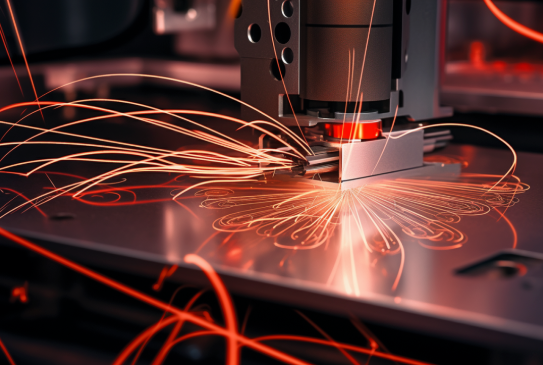
Ever noticed a dramatic price jump when your CNC quote online switches from standard to advanced machining? That difference often comes down to one critical factor: the type of cnc machining equipment processing your part. Understanding when a 3 axis cnc machine suffices versus when a 5 axis cnc machine becomes necessary helps you make informed decisions—and avoid paying premium rates for capabilities you don't actually need.
According to Xometry's machining analysis, the seemingly small difference between three and five axes of movement makes a world of difference in both capability and cost. Let's break down what this means for your next quote.
3-Axis Machining Capabilities and Cost Profile
A 3 axis cnc machine moves its cutting tool along three directions: left-right (X), front-back (Y), and up-down (Z). Think of it as approaching your part from one direction at a time—effective for many geometries, but limited when complexity increases.
What can 3-axis machining handle effectively?
- Flat surfaces and shallow pockets — Ideal for enclosures, plates, and brackets
- 2D and 2.5D features — Holes, slots, and stepped geometries that don't require multi-angle access
- Parts with single-side complexity — Features accessible from one orientation
- High-volume production of simpler parts — Where setup efficiency matters most
The cost advantages are significant. According to industry data, 3-axis CNC machines range from $25,000 to $50,000—compared to $80,000 to over $500,000 for 5-axis equipment. This lower capital investment translates directly to lower hourly rates and reduced per-part costs.
However, here's the trade-off that affects your quote: complex parts require multiple setups on 3-axis machines. Each time an operator must re-clamp and reposition your workpiece, you're paying for that labor and machine time. A part requiring three setups doesn't just triple machining time—it adds fixture changes, re-zeroing, and potential accuracy loss between orientations.
When 5-Axis Machining Justifies the Premium
A 5 axis cnc machine adds two rotational movements (A and B axes) to the standard three. This allows the cutting tool to approach your part from virtually any angle—often in a single setup.
When does this capability become worth the investment? Consider 5 axis cnc machining services when your parts feature:
- Complex contours and sculptured surfaces — Turbine blades, impellers, and organic shapes
- Undercuts and deep cavities — Features inaccessible from standard orientations
- Multi-sided features requiring tight positional accuracy — Where setup changes would introduce error
- Thin walls or delicate geometries — Where continuous tool engagement prevents vibration
According to cost analysis research, 5-axis machining can actually reduce total cost for complex parts by eliminating multiple setups and enabling continuous milling operations. The premium hourly rate is offset by dramatically reduced cycle time.
The 5th axis capability delivers additional quality benefits: smoother surface finishes from continuous tool engagement, better accuracy from single-setup machining, and access to geometries that would otherwise require EDM or secondary operations. For aerospace components, medical implants, and precision mechanisms, these advantages often outweigh the cost premium.
Matching Machine Selection to Part Requirements
The best cnc approach isn't always the most advanced—it's the one matched to your specific geometry and requirements. Here's how to evaluate which machine type serves your project:
| Factor | 3-Axis Machining | 5-Axis Machining |
|---|---|---|
| Part Complexity | 2D/2.5D features, simple geometries | Complex contours, multi-angle features |
| Typical Setup Time | Multiple setups for complex parts | Single setup for most geometries |
| Hourly Rate Range | $50-100/hour | $100-200/hour |
| Per-Part Cost | Lower for simple parts | Potentially lower for complex parts |
| Surface Finish Quality | Good—may show setup marks | Excellent—continuous tool paths |
| Ideal Applications | Housings, panels, brackets, plates | Turbine blades, impellers, aerospace parts, medical devices |
Here's a practical decision framework: if your part can be fully machined from one or two orientations with standard tooling, 3-axis likely offers the best value. If your geometry requires tool access from multiple angles, features undercuts, or demands exceptional surface continuity, 5-axis investment pays off.
One factor often overlooked during quoting: operator expertise. According to machining specialists, 5-axis machines require specialized training and more advanced CAD/CAM programming. This expertise is built into hourly rates—but also means your complex parts receive appropriate attention from qualified machinists.
When requesting your next CNC quote online, consider whether the platform's default machine selection matches your actual requirements. Some platforms automatically route to 5-axis for any complex geometry—potentially charging premium rates when skilled 3-axis work would suffice. Others default to 3-axis and require manual escalation for parts genuinely needing multi-axis capability.
Understanding this distinction doesn't just save money—it ensures your parts receive appropriate manufacturing attention. A simple bracket processed on expensive 5-axis equipment wastes budget. A complex impeller forced through multiple 3-axis setups sacrifices quality. Matching machine capability to part geometry delivers optimal results at appropriate cost.
With machine selection principles clarified, the final step in mastering CNC quoting is learning how to evaluate and compare multiple quotes effectively—identifying hidden costs and quality indicators that separate excellent suppliers from adequate ones.
Evaluating and Comparing Multiple CNC Quotes
You've received three quotes for the same cnc parts. One is 40% cheaper than the others. Great deal, right? Not necessarily. The lowest number rarely tells the complete story—and experienced buyers know that comparing quotes requires looking far beyond the bottom line.
According to CNC machining analysis, simply placing quotes side-by-side and choosing the lowest number is a common mistake. A true apples-to-apples comparison requires a structured approach that considers all aspects of the offer—including quality, reliability, and delivery, not just the initial price tag.
Creating Apples-to-Apples Quote Comparisons
When custom machined parts quotes arrive with different formats and line items, comparison becomes challenging. Here's how to normalize the data for meaningful evaluation.
Start by creating a spreadsheet with consistent categories across all suppliers:
- Material costs — Verify each quote uses identical material grade and specifications
- Setup and programming fees — Some quotes bundle these; others itemize separately
- Per-piece machining costs — The core production expense for each unit
- Finishing and post-processing — Surface treatments, coatings, heat treatment
- Inspection and quality documentation — First-article reports, certificates of conformance
- Shipping and packaging — Often excluded from quoted prices
According to industry guidance, a transparent and detailed quote is a sign of a professional supplier, giving you a clear picture of where your investment is going. If a quote lacks this breakdown, request clarification before proceeding.
When evaluating custom metal parts pricing from different cnc machining shop options, verify these specifications match exactly:
- Tolerance specifications and inspection requirements
- Surface finish callouts (Ra values)
- Material certifications and traceability requirements
- Quantity and delivery schedule alignment
- Lead time commitments under identical conditions
A quote that appears 30% cheaper may exclude post-processing you assumed was included, or specify looser tolerances than your design requires. These differences matter enormously for custom cnc parts—what looks like savings often becomes rework costs.
Identifying Hidden Costs in CNC Quotes
That attractively low quote might be hiding expenses that surface later. Understanding where costs hide helps you avoid unpleasant surprises after production begins.
Watch for these common hidden cost indicators:
- Ambiguous finishing specifications — "Standard finish" means different things to different shops. Get Ra values in writing.
- Excluded secondary operations — Deburring, threading, and chamfering may be assumed by you but not included by the supplier
- Minimum order charges — Low per-piece prices sometimes come with minimum invoice amounts
- Revision and change fees — How design modifications during production affect pricing
- Expedite premiums not disclosed — Lead time quoted may assume standard scheduling, with rush fees applied later
- Packaging and shipping exclusions — Especially significant for fragile or precision parts requiring special handling
According to Xometry's cost analysis, short lead times drive cost due to overtime and expedites on material and finishing. Special tooling or processes can also play a significant role in driving cost. If a quote seems too good compared to others, ask specifically what's excluded.
Companies that manufacture custom metal parts legitimately should provide itemized breakdowns without resistance. Reluctance to detail costs often signals that adjustments will appear later in the process—when you're committed and have less negotiating leverage.
Certification Requirements and Quality Indicators
Here's where quote evaluation gets strategic: certifications aren't just quality badges—they directly affect pricing, capability, and project suitability.
Understanding what each certification means for your project:
- ISO 9001 — The baseline quality management standard. Indicates documented processes, consistent procedures, and continuous improvement frameworks. Expect from any professional machine shop services provider.
- AS9100D — Aerospace-specific quality management. Required for aircraft components and adds traceability, foreign object debris control, and enhanced documentation. Typically adds 10-20% to quotes due to compliance overhead.
- IATF 16949 — Automotive industry quality standard. Mandates Statistical Process Control (SPC), PPAP documentation, and supplier management protocols. Essential for automotive supply chain entry.
- ISO 13485 — Medical device quality management. Requires design controls, risk management, and regulatory compliance documentation. Adds significant overhead but enables medical device manufacturing.
According to supplier selection guidance, these certifications indicate structured processes and repeatable quality. They also reflect whether the vendor is qualified to be considered among suppliers in regulated sectors.
Beyond certifications, quality indicators that justify price premiums include:
- In-house inspection capabilities — CMM equipment, optical comparators, surface roughness testers
- First-article inspection reports — Documented verification before production runs
- Material certifications and traceability — Mill certs, lot tracking, compliance documentation
- Process capability data — Cpk values demonstrating consistent production
- Customer references in your industry — Proven experience with similar requirements
A cnc machining shop charging 15% more but offering AS9100D certification, in-house CMM inspection, and documented process controls may deliver far better value than a cheaper alternative lacking these capabilities—especially when rejection costs, rework delays, or compliance failures enter the equation.
Your Quote Evaluation Checklist
Before committing to any supplier for cnc parts production, verify:
- All quotes specify identical materials, tolerances, and finishes
- Setup fees, programming costs, and secondary operations are itemized
- Shipping, packaging, and inspection documentation costs are included or clearly excluded
- Lead times reflect the same urgency level across all quotes
- Certifications match your industry and application requirements
- Payment terms and quote validity periods are acceptable
- Revision policies and change order procedures are documented
- References or case studies demonstrate relevant experience
The goal isn't finding the cheapest quote—it's identifying the best value. A supplier with transparent pricing, appropriate certifications, and proven quality systems often delivers lower total cost of ownership than alternatives with attractive initial numbers but hidden complications.
With evaluation criteria established, the final step is synthesizing everything you've learned into confident decision-making for your next CNC manufacturing project.
Making Confident CNC Quoting Decisions
You've absorbed the pricing factors, mastered file preparation, learned tolerance optimization, and understand how to evaluate competing quotes. Now comes the moment of action: putting these principles to work on your next project. The difference between buyers who consistently secure competitive pricing and those who overpay comes down to systematic application of everything covered in this guide.
According to CNC machining evaluation experts, evaluating a CNC machining quote is a systematic process that requires comprehensive consideration of a variety of key factors. This is not just a simple comparison of prices, but also an in-depth consideration of the service quality, technical strength and overall cost-effectiveness behind the quotation.
Applying These Principles to Your Next Quote
Ready to request your next CNC quote online? Here's how to translate knowledge into action for optimal results.
Before you upload anything:
- Review your tolerances—tighten only functional features, leave the rest at standard specifications
- Verify your CAD file is watertight, properly scaled, and exported in STEP or IGES format
- Prepare a technical drawing noting critical dimensions, surface finishes, and material requirements
- Determine whether your geometry truly requires 5-axis capability or if skilled 3-axis work suffices
When comparing quotes:
- Normalize all pricing to identical specifications—material grade, tolerance level, finish requirements
- Identify hidden costs in shipping, inspection documentation, and secondary operations
- Verify certifications match your industry requirements before considering price
- Request DFM feedback from top candidates—quality of suggestions indicates engineering capability
For low volume cnc machining projects and rapid cnc prototyping needs, the hybrid approach often delivers best results: use online platforms for speed during design iteration, then establish relationships with certified suppliers for production runs. This captures convenience during exploration while building partnership depth for ongoing manufacturing.
The cnc mill and cnc cutting parameters that affect your quote—material machinability, geometric complexity, tolerance specifications—are all variables you control through design decisions. Every optimization you make before uploading translates directly to cost savings without sacrificing functionality.
Finding Certified Partners for Production-Ready Manufacturing
When your project advances from prototyping to production, certification becomes non-negotiable. According to IATF 16949 supplier analysis, certified suppliers utilize advanced technologies, skilled labor, and systematic processes to ensure that their products not only meet but exceed client expectations.
For automotive applications specifically, IATF 16949 certification combined with Statistical Process Control (SPC) represents the gold standard. Organizations adhering to these frameworks achieve up to 30% reduction in production defects while delivering the traceability and documentation your supply chain requires.
Consider what production-ready capability actually means: seamless scaling from rapid cnc prototyping through mass production, consistent quality across volume transitions, and lead times that match aggressive program schedules. Suppliers like Shaoyi Metal Technology exemplify this approach—IATF 16949 certified facilities delivering high-tolerance components with lead times as fast as one working day for complex chassis assemblies and custom metal bushings.
The aluminum fabrication and precision machining capabilities you need exist across the supplier landscape. The differentiator is whether those capabilities come with the quality systems, documentation, and responsiveness that production programs demand.
The most cost-effective CNC quote isn't always the lowest number—it's the one that delivers specified quality, on schedule, from a supplier whose capabilities match your project's complexity and certification requirements.
Your next steps are clear: apply tolerance optimization principles to your current design, prepare files according to platform requirements, request quotes from multiple certified suppliers, and evaluate responses using the structured comparison framework. Each project becomes an opportunity to refine your approach—building the supplier relationships and procurement skills that compound into lasting competitive advantage.
Whether you're sourcing a single prototype or launching volume production, the principles remain consistent: specify only what function requires, communicate design intent clearly, match supplier capabilities to project demands, and evaluate total value rather than initial price alone. Master these fundamentals, and every CNC quote online becomes an opportunity to secure exactly the quality and pricing your project deserves.
Frequently Asked Questions About CNC Quotes Online
1. How do I get a CNC machining quote online?
To get a CNC quote online, upload your CAD file (preferably STEP or IGES format) to a quoting platform like Xometry, Protolabs, or RapidDirect. The system analyzes your part geometry, material selection, tolerances, and quantity to generate pricing within seconds to hours. Include a technical drawing with critical dimensions and surface finish requirements for the most accurate quote. Ensure your file is watertight, properly scaled, and free of errors before uploading.
2. What factors affect CNC machining quote prices the most?
Five primary factors determine CNC quote pricing: material selection and machinability ratings (titanium costs 5-10x more than aluminum), geometric complexity requiring multiple setups or 5-axis machining, tolerance specifications (tight tolerances can increase costs 3-6x), quantity tiers with setup costs amortized across more parts, and lead time urgency with expedite premiums of 25-100%. Surface finish requirements and secondary operations like anodizing or heat treatment add additional cost layers.
3. What is the best file format for CNC machining quotes?
STEP (.step, .stp) files are the gold standard for CNC quoting because they preserve mathematical definitions of curves and surfaces, ensuring accurate geometry interpretation. IGES (.igs) files also work well for complex geometries. Avoid STL files when possible since they approximate surfaces using triangles, potentially losing detail. Always accompany 3D files with a 2D technical drawing in PDF format specifying tolerances, surface finishes, and material requirements.
4. How do online CNC quoting platforms compare to traditional RFQ processes?
Online platforms deliver quotes in minutes versus 1-5 days for traditional RFQ, offer 24/7 availability, provide instant DFM feedback, and connect you to networks of thousands of vetted manufacturers. However, traditional processes excel for projects requiring custom tooling, exotic materials, deep quality documentation, or long-term production partnerships. Many companies use a hybrid approach: online platforms for rapid prototyping and exploration, established supplier relationships for production runs.
5. When should I choose 5-axis CNC machining over 3-axis?
Choose 5-axis machining for parts with complex contours, sculptured surfaces, undercuts, deep cavities, or multi-sided features requiring tight positional accuracy. While 5-axis hourly rates run $100-200 versus $50-100 for 3-axis, single-setup capability can reduce total cost for complex geometries by eliminating multiple repositioning operations. For simple plates, brackets, and 2D/2.5D features accessible from one orientation, 3-axis machining offers better value.