 Small batches, high standards. Our rapid prototyping service makes validation faster and easier —
  EN
EN


CNC Parts Manufacturers Exposed: What They Won't Tell You First
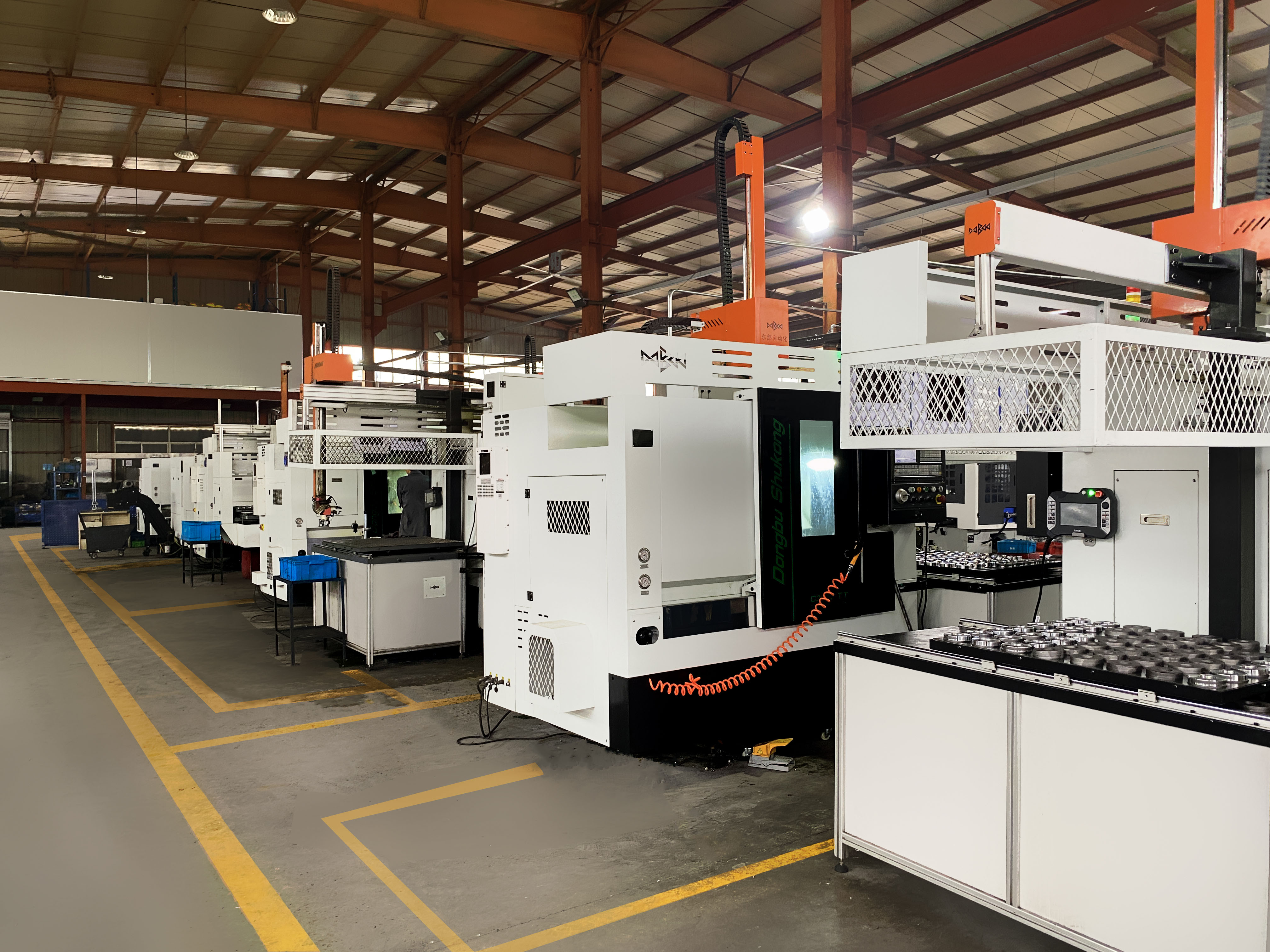
Understanding CNC Parts Manufacturers and Their Role in Modern Industry
When you're sourcing precision components for aerospace, automotive, or medical applications, the difference between a professional CNC parts manufacturer and a general machine shop can make or break your project. But what exactly sets these specialized facilities apart? And why should you care about the evolution from manual machining to computer-controlled precision?
CNC parts manufacturers are specialized facilities that use computer numerical control technology to produce precise machined parts through subtractive manufacturing processes. Unlike traditional machine shops that may rely heavily on manual operations, these manufacturers leverage pre-programmed software to control factory tools and machinery with exceptional accuracy. This technology enables the production of intricate cnc machining parts that would be challenging or impossible to create manually.
The role of these manufacturers in modern supply chains is critical. They serve as the backbone for industries requiring consistent output, from producing thousands of automotive fasteners to crafting single prototype components for medical devices. According to industry analysis from Kesu Group, professional CNC facilities can achieve tolerances as tight as ±0.001 mm for precision industries like aerospace.
What Defines a Professional CNC Parts Manufacturer
Imagine walking into a general machine shop versus a dedicated CNC manufacturing facility. You'll notice the difference immediately. Professional manufacturers maintain rigorous calibration schedules, integrate automation systems, and often hold industry-specific certifications that general shops simply don't pursue.
So what separates the professionals from the rest? Here are the core capabilities that define legitimate CNC parts manufacturers:
- Multi-axis machining capabilities: Professional facilities operate 3-axis, 4-axis, and 5-axis CNC machines that allow complex geometries by moving tools or workpieces along multiple axes simultaneously
- Tight tolerance achievement: The ability to consistently hold tolerances of ±0.005 mm or tighter, with advanced facilities reaching ±0.001 mm
- Material versatility: Expertise in machining aluminum, steel, titanium, brass, and various engineering plastics with equal precision
- Quality certifications: Compliance with ISO 9001 for general quality, AS9100 for aerospace, or IATF 16949 for automotive applications
- Integrated quality control: In-house coordinate measuring machines (CMMs) and comprehensive inspection protocols
- Automation integration: Robotic material handling and pallet changers that reduce cycle times by up to 20%
Each cnc device in a professional facility is maintained with documented calibration schedules to ensure consistent performance across production runs.
The Technology Behind Precision Component Production
The evolution from traditional machining to computer numerical control represents one of manufacturing's most significant technological leaps. Early machine shops relied on skilled operators manually guiding cutting tools, a process limited by human precision and stamina. Today's CNC technology enables manufacturers to produce cnc parts with repeatable accuracy that manual methods simply cannot match.
Modern CNC machining encompasses several distinct processes. Milling uses rotary cutters to remove material from workpieces, creating intricate shapes and designs. Turning rotates the workpiece while a cutting tool shapes it, ideal for cylindrical machined parts. Multi-axis machining takes this further, enabling complex geometries in a single operation.
Why does this matter for your precision components? A computer numerical control router or milling center can execute the same programmed operation thousands of times with identical results. This consistency is essential when every cnc part must meet exact specifications, whether you're ordering 50 custom fittings or 50,000 production components.
The technology has also enabled what manufacturers call "lights-out" production, where automated systems run continuously without operator intervention. This capability, combined with advanced quality monitoring, allows professional CNC parts manufacturers to deliver both high precision and competitive lead times that traditional machining operations cannot achieve.

Key Capabilities and Equipment to Look for in CNC Manufacturers
You've identified what separates professional CNC parts manufacturers from general machine shops. But here's a question most buyers never ask: what specific equipment capabilities should you evaluate before placing that first order? The answer directly impacts whether your parts arrive on spec, on time, and within budget.
Understanding machine specifications isn't just technical homework. It's your insurance policy against costly mistakes. A manufacturer with the wrong equipment for your project will either decline your order or struggle to meet your requirements. Let's break down exactly what to look for.
Essential Equipment Capabilities to Evaluate
When you're vetting potential manufacturing partners, equipment specifications reveal more than any sales pitch. Start by examining their CNC machine inventory, paying close attention to three critical factors: axis configuration, spindle performance, and work envelope dimensions.
The number of axes determines what geometries a machine can produce. A standard 3-axis CNC machine moves along the X, Y, and Z dimensions, making it ideal for planar milled profiles, drilling, and threading operations. According to CNC Cookbook's technical analysis, these machines excel at simpler projects but fall short on complex geometries without multiple setups.
Add a rotary A-axis, and you've entered 4-axis territory. This additional axis allows the workpiece to rotate around the X-axis, enabling complex shapes like cam lobes, helixes, and angled features in a single fixture. For projects requiring arcs or components with features on multiple sides, 4-axis machining eliminates the repositioning errors that plague multi-setup operations.
5 axis cnc machining services represent the gold standard for complex geometries. With two rotating axes, these machines approach the workpiece from virtually any angle. The result? Undercuts, compound curves, and intricate aerospace components that would be impossible on simpler equipment.
Beyond axis count, evaluate spindle specifications carefully. Higher spindle speeds enable better surface finishes on materials like aluminum, while lower speeds with greater torque suit harder materials like steel and titanium. Work envelope size matters too, as it determines the maximum part dimensions a CNC machine can accommodate.
Matching Machine Specifications to Your Project Needs
How do you know which machine configuration fits your requirements? The answer depends on your part geometry, production volume, and precision demands. Here's a practical comparison to guide your evaluation:
| Machine Type | Best Applications | Geometric Capability | Relative Cost |
|---|---|---|---|
| 3-Axis CNC Mill | Flat profiles, drilling, simple pockets | Standard features accessible from top | Lowest |
| 4-Axis CNC Mill | Cylindrical parts, helixes, angled holes | Complex arcs, multi-side features | Moderate |
| 5-Axis CNC Mill | Aerospace blades, medical implants, complex molds | Compound curves, undercuts, any angle | Highest |
| CNC Lathe | Shafts, bushings, cylindrical components | Rotational symmetry required | Low to Moderate |
| CNC Router | Wood, plastics, foam, soft metals | Large format, softer materials | Variable |
A CNC router machine excels at processing softer materials like wood, plastics, and foam across larger work areas. CNC routers are particularly popular in signage, woodworking, and prototype development where material hardness permits faster cutting speeds. However, they're generally unsuitable for precision metal components requiring tight tolerances.
Don't overlook automation capabilities when evaluating manufacturers. Lights-out manufacturing, where automated systems run continuously without operator intervention, indicates advanced operational maturity. According to Standard Bots, these facilities can achieve higher uptime, lower operating costs, and improved consistency compared to manually supervised operations.
Control software also matters. Many professional facilities run advanced platforms like Mach 4, which provides precise motion control and supports complex toolpath execution. Ask potential manufacturers about their control systems, as outdated software can limit machining accuracy and efficiency.
Finally, consider the manufacturer's inspection equipment. A facility with multi-axis CNC machines but no coordinate measuring machine (CMM) raises questions about quality verification. The best manufacturers pair production capability with equally sophisticated measurement systems to validate every critical dimension before shipment.
Quality Certifications and Inspection Standards That Matter
You've evaluated equipment capabilities and machine specifications. But here's what many buyers overlook: even the most advanced CNC equipment means nothing without rigorous quality systems backing it up. How do you know a manufacturer can consistently deliver cnc milling parts that meet your specifications? The answer lies in certifications and inspection protocols.
Quality certifications aren't just plaques on a wall. They represent independently audited systems that govern every aspect of production, from raw material handling to final inspection. Understanding what each certification means helps you match manufacturers to your industry's specific requirements.
Decoding Quality Certifications for Your Industry
Imagine ordering precision cnc milling components for an aircraft engine, only to discover your supplier lacks aerospace-grade quality systems. The consequences could be catastrophic. Different industries demand different certification standards, and knowing which ones apply to your application is essential.
ISO 9001 serves as the foundation for quality management systems worldwide. This certification establishes baseline requirements for documentation, process control, and continuous improvement. Any legitimate manufacturer producing cnc machining milling services should hold this certification at minimum. However, ISO 9001 alone may not satisfy industry-specific requirements.
AS9100 builds upon ISO 9001 with additional aerospace-specific requirements. According to NSF International, AS9100-certified manufacturers must demonstrate capabilities for precision manufacturing of components and assemblies with enhanced traceability and regulatory experience. This certification covers strict configuration management, first article inspection requirements, and supply chain flow-down controls that general manufacturing standards don't address.
IATF 16949 represents the automotive industry's quality standard. If you're sourcing components for vehicle applications, this certification indicates the manufacturer understands automotive production requirements including PPAP documentation, statistical process control, and defect prevention methodologies. The standard emphasizes continuous improvement and lean manufacturing principles critical to automotive supply chains.
ISO 13485 applies to medical device manufacturing. As NSF explains, this standard emphasizes regulatory compliance and risk management to ensure safety and effectiveness of medical devices. Unlike other quality standards focusing on customer satisfaction, ISO 13485 requires formal design controls with verification, validation, and transfer procedures plus comprehensive post-market surveillance systems.
Here's what each industry typically requires for quality testing for cnc machined parts:
- General Industrial: ISO 9001 certification, documented inspection procedures, calibrated measurement equipment
- Aerospace: AS9100 certification, first article inspection reports per AS9102, material traceability to heat lot, special process approvals (Nadcap for critical processes)
- Automotive: IATF 16949 certification, PPAP documentation packages, statistical process control implementation, 100% lot traceability
- Medical Devices: ISO 13485 certification, risk management documentation per ISO 14971, device master records, complaint handling procedures, validation protocols
- Defense: AS9100 plus ITAR compliance, cybersecurity requirements, cleared facility certifications where applicable
When evaluating a cnc machining part supplier, request copies of current certifications and verify them through the issuing certification body. Expired or fraudulent certifications are more common than you'd expect.
What Quality Assurance Processes Should Include
Certifications establish the framework, but what happens on the shop floor determines actual quality. Effective manufacturers implement multiple inspection stages that catch problems before they multiply.
First Article Inspection (FAI) validates the initial production setup. Before running full production, the manufacturer produces one or more sample parts and measures every critical dimension against your specifications. According to CNC First's quality analysis, a successful FAI proves the process can produce conforming parts, but it doesn't guarantee consistency throughout the production run. Sample machining during FAI establishes baseline measurements that become reference points for ongoing monitoring.
Statistical Process Control (SPC) fills the gap between first article and final inspection. Rather than waiting until production ends to discover problems, SPC uses continuous data collection and analysis to detect drift before parts go out of tolerance. As CNC First explains, traditional sampling might check 10 parts out of 100, discovering defects only after they've already occurred. SPC checks key dimensions at early intervals, plotting data on control charts in real time.
Here's how SPC works in practice: if a critical bore diameter begins trending toward the upper tolerance limit, control charts flag the drift before parts actually fail inspection. Operators can then adjust tool compensation or replace worn cutting edges proactively. One medical device manufacturer improved yield from 92% to 99.7% simply by implementing SPC-driven tool changes at the 80th piece instead of waiting for failures.
CMM Verification provides the final quality checkpoint. Coordinate measuring machines use precision probes to measure part geometries against CAD models, achieving accuracies of 0.5 microns according to Kesu Group's technical overview. CMM inspection verifies that cnc milling components meet design specifications, particularly for critical features like holes, slots, and complex surfaces.
Beyond dimensional checks, comprehensive quality systems include:
- In-process inspection: Periodic dimensional checks during production runs to catch drift early
- Material certification verification: Confirming raw materials match specifications before machining begins
- Surface finish measurement: Profilometer readings to verify Ra values meet requirements
- Visual inspection: Checking for burrs, tool marks, and cosmetic defects
- Functional testing: Verifying fit and assembly with mating components where applicable
The integration of these processes creates what quality professionals call a closed loop. FAI establishes the baseline, SPC maintains consistency during production, and CMM verification confirms final conformance. Without all three elements working together, even certified manufacturers can ship nonconforming parts.
When qualifying a new supplier, ask specifically about their SPC implementation. Do they maintain control charts? What control limits do they use? How do they respond when processes drift? The answers reveal whether quality systems exist only on paper or actually function on the production floor. This foundation in quality assurance directly influences your next major decision: selecting the right materials for your application.
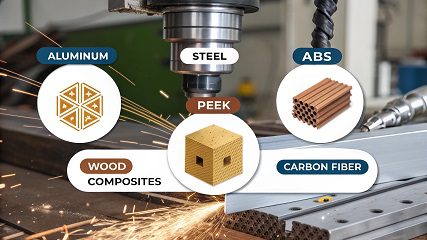
Material Selection Guide for CNC Machined Parts
Quality systems ensure consistent production, but here's the decision that determines whether your parts actually perform: material selection. Choose wrong, and you'll face premature failures, unnecessary costs, or components that simply can't handle their intended environment. Yet most buyers receive little guidance on this critical choice.
The challenge? CNC machining can produce machined metal parts from dozens of different alloys and plastics. Each offers distinct advantages depending on your application requirements. Understanding these trade-offs separates successful projects from expensive lessons learned.
Aluminum vs Steel for CNC Machined Components
When you're deciding between aluminum and steel, you're essentially weighing strength against weight, cost against performance, and machinability against durability. Neither material is universally superior. The right choice depends entirely on your application.
Aluminum alloys offer an exceptional strength-to-weight ratio that makes them the default choice for aerospace, automotive, and consumer electronics applications. According to Hubs' material selection guide, aluminum has high thermal and electrical conductivity plus natural protection against corrosion. Machined aluminum parts are also significantly easier to produce, reducing machine time and tooling costs.
The most common aluminum grades include:
- Aluminum 6061: The general-purpose workhorse with excellent machinability and good strength-to-weight ratio. Ideal for jigs, fixtures, and structural components
- Aluminum 7075: Aerospace-grade alloy with excellent fatigue properties. Can be heat treated to strength levels comparable to steel
- Aluminum 5083: Superior seawater resistance makes this optimal for marine and construction applications
Milled aluminum components can be anodized to create a hard, protective surface layer that increases wear resistance and allows decorative coloring. This finishing option isn't available with most steels.
Steel alloys become necessary when aluminum simply can't deliver the required hardness, wear resistance, or load-bearing capacity. Mild steels like 1018 and 1045 provide good machinability at lower cost, while alloy steels like 4140 offer superior strength and toughness for demanding applications.
However, steel comes with trade-offs. Metal machined components from steel require longer cycle times, consume tooling faster, and cost more per pound than aluminum. Steel is also susceptible to corrosion without protective coatings or plating.
Stainless steel bridges some gaps between these options. Grades like 304 and 316 provide excellent corrosion resistance without requiring additional finishing. According to Hubs, stainless steel 316 offers higher chemical resistance than 304, making it better for harsh environments including marine applications. The trade-off? Stainless steels are more difficult to machine than mild steels, increasing production costs.
Selecting Materials Based on Application Requirements
Rather than defaulting to familiar materials, start by defining what your application actually demands. Ask yourself: What forces will the part experience? What environment will it operate in? Does weight matter? What's your budget?
Here's a comprehensive comparison of common CNC materials to guide your selection:
| Material | Key Properties | Typical Applications | Relative Cost | Machinability |
|---|---|---|---|---|
| Aluminum 6061 | Lightweight, corrosion resistant, good strength | Brackets, housings, fixtures, prototypes | Low | Excellent |
| Aluminum 7075 | High strength, excellent fatigue resistance | Aerospace structures, high-stress components | Moderate | Good |
| Stainless Steel 304 | Corrosion resistant, good mechanical properties | Food equipment, medical devices, marine hardware | Moderate | Moderate |
| Stainless Steel 316 | Superior chemical resistance, salt-water compatible | Chemical processing, marine, pharmaceutical | Moderate-High | Moderate |
| Mild Steel 1018 | Good toughness, weldable, case hardenable | Jigs, fixtures, general industrial parts | Low | Excellent |
| Alloy Steel 4140 | High strength, good toughness, heat treatable | Gears, shafts, high-stress industrial parts | Moderate | Good |
| Titanium Grade 5 | Highest strength-to-weight, biocompatible | Medical implants, aerospace, racing components | Very High | Difficult |
| Brass C36000 | Excellent machinability, low friction, conductive | Electrical connectors, valves, decorative parts | Moderate | Excellent |
| Copper 110 | Superior thermal/electrical conductivity | Heat sinks, electrical bus bars, contacts | Moderate-High | Good |
| POM (Delrin) | Low friction, excellent dimensional stability | Gears, bearings, precision sliding parts | Low | Excellent |
| ABS | Impact resistant, low cost, easily colored | Prototypes, enclosures, consumer products | Very Low | Excellent |
| PEEK | High temperature resistance, chemical resistant | Medical devices, aerospace, semiconductor | Very High | Good |
Specialty metals deserve consideration for demanding applications. Titanium offers the highest strength-to-weight ratio of any structural metal and is biocompatible for medical implants. According to Schantz Fabrication, titanium's corrosion resistance and heat conductivity make it common in medical devices despite its higher cost and machining difficulty.
Brass and copper alloys excel where electrical conductivity, low friction, or decorative appearance matter. Brass C36000 is one of the most easily machinable materials available, making it economical for high-volume metal machining parts like connectors and fittings.
Engineering plastics offer alternatives when metal properties aren't required. ABS cnc machining produces lightweight, impact-resistant parts at low cost, making it popular for prototypes before injection molding production. POM (Delrin) provides exceptional dimensional stability and low friction for precision mechanical components like gears and bearings.
For extreme environments, PEEK withstands temperatures and chemicals that would destroy other plastics. However, its cost rivals titanium, so it's typically reserved for aerospace, medical, and semiconductor applications where nothing else will survive.
Ceramic cnc machining represents the frontier for ultra-hard, heat-resistant applications. Technical ceramics can withstand temperatures exceeding 1,500°C and offer hardness that steel can't match. However, their brittleness and machining difficulty limit them to specialized applications like cutting tool inserts and wear components.
When selecting materials, remember that machinability directly affects your costs. Easier-to-machine materials like aluminum and brass result in faster cycle times, longer tool life, and lower per-part pricing. Difficult materials like titanium and stainless steel require more machine time and consume tooling faster, significantly increasing production costs even when raw material prices are comparable.
The best approach? Define your requirements first, identify candidate materials that meet those requirements, then factor in cost and lead time to make your final selection. With material chosen, your next critical decision involves specifying exactly how precise those parts need to be.
Tolerance Specifications and Precision Requirements Explained
You've selected the perfect material for your application. But here's the question that separates cost-effective projects from budget-busting disasters: how precise do your parts actually need to be? Specify tolerances too tight, and you'll pay premium prices for precision you don't need. Too loose? Your components won't fit together properly.
Understanding tolerance specifications isn't optional when working with CNC parts manufacturers. It's the language that determines whether your cnc milled parts function correctly, what they'll cost, and how long production takes. Yet most buyers receive little education on this critical topic.
Understanding Tolerance Specifications and Their Applications
So what exactly is a tolerance? Simply put, it's the acceptable range of variation in a dimension from the ideal design. No manufacturing process produces perfectly exact parts. According to XTJ's technical analysis, CNC machining tolerances define a permissible limit within which a component is considered functional and meets its form, fit, and function requirements.
Think of it this way: if you need a shaft that's nominally 25mm in diameter with a tolerance of ±0.1mm, the actual measurement can fall anywhere between 24.9mm and 25.1mm and still be acceptable. That 0.2mm window is your tolerance band.
The international standard ISO 2768 simplifies tolerance specification by establishing four tolerance classes:
- Fine (f): Tightest general tolerances for precision applications
- Medium (m): The most commonly used default class for general machining
- Coarse (c): Looser tolerances suitable for non-critical dimensions
- Very Coarse (v): Widest tolerances for rough or non-functional features
According to HLH Rapid's tolerance guide, standard tolerances for cnc milled parts are typically controlled to ISO 2768-1 medium, generally around ±0.005" (0.13mm). This serves as the default when no specific tolerance is indicated on drawings.
Here's how tolerance ranges correspond to different applications and their cost implications:
| Tolerance Class | Typical Range | Applications | Cost Impact |
|---|---|---|---|
| Standard (ISO 2768-m) | ±0.13mm (±0.005") | General mechanical parts, fixtures, housings | Baseline |
| High Precision | ±0.025mm (±0.001") | Aerospace components, automotive drivetrain, precision assemblies | 2-3x baseline |
| Ultra-Precision | ±0.0127mm (±0.0005") | Medical implants, optical equipment, semiconductor | 5-10x baseline |
| Extreme Precision | ±0.00508mm (±0.0002") | Surgical instruments, specialized aerospace, metrology | 10x+ baseline |
As HLH notes, only about 1% of milled parts require tolerances in the ±0.0002" to ±0.0005" range. Often, it's just specific features that need ±0.001" or tighter while non-critical dimensions remain at standard tolerances.
Surface finish specifications work alongside dimensional tolerances to define part quality. Ra values measure average surface roughness in micrometers or microinches. According to Hubs' surface finish guide, standard as-machined Ra is 3.2μm (125μin), while finishing passes can reduce Ra to 1.6, 0.8, or 0.4μm (63, 32, or 16μin).
Surface finish directly affects functionality. Parts of a cnc mill that require tight sealing need smoother surfaces to prevent leakage. Bearing surfaces require specific Ra values for proper lubrication. Cosmetic parts visible to end users often demand polished finishes. However, smoother surfaces require additional machining operations, increasing both time and cost.
Balancing Precision Requirements with Budget Constraints
Here's what most buyers don't realize: tighter tolerances don't just cost more—they cost exponentially more. According to XTJ's analysis, achieving higher precision requires more advanced machinery, slower cutting speeds, specialized tooling, more rigorous inspection processes, and results in higher scrap rates.
The ±0.005" threshold is particularly significant. Below this point, costs begin rising significantly. A tolerance of ±0.001" might cost 2-3 times more than standard tolerances, while ultra-precision requirements can increase costs 10-fold or more.
So how do you specify tolerances strategically? Start by identifying which features are truly critical:
- Mating surfaces: Where parts assemble together, tight tolerances ensure proper fit
- Bearing bores: Interference or clearance fits require precise diameter control
- Alignment features: Locating pins and reference surfaces need accuracy for proper assembly
- Sealing surfaces: Areas where O-rings or gaskets seat require controlled dimensions
For non-critical features like overall external dimensions, mounting hole patterns with clearance fits, or decorative surfaces, standard tolerances typically suffice. Applying tight tolerances everywhere is the fastest way to inflate your cnc machining products costs unnecessarily.
Material choice also affects achievable tolerances. According to XTJ, soft, flexible, or abrasive plastics are more challenging to machine to tight tolerances than metals or rigid plastics. For standard plastic parts, ISO 2768-1 Medium is typical, while metals and rigid materials can achieve ISO 2768-1 Fine or better.
When communicating with manufacturers, include a tolerance table directly on your 2D drawing when requirements differ from shop standards. This eliminates ambiguity about which features need precision and which can use standard machining tolerances. Clear specification upfront prevents costly rework and ensures your cnc machined products meet functional requirements without overspending on unnecessary precision.
Stack-up analysis becomes important when multiple parts assemble together. Individual feature tolerances combine to create a total variation that affects final assembly fit. As HLH explains, if combined dimensions exceed intended values, fit or function issues result. Worst-case calculations during design help prevent these problems before production begins.
With tolerance specifications defined, you're ready to navigate the ordering process itself—from initial inquiry through final delivery.
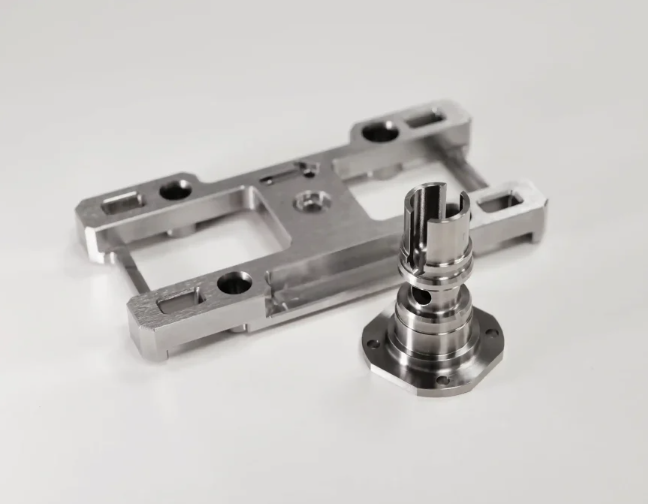
How to Order CNC Parts from Prototype to Production
You've specified your tolerances and selected your materials. Now comes the moment of truth: actually placing your order. But here's what catches first-time buyers off guard—the ordering process involves far more than uploading a CAD file and waiting for parts to arrive. Miss a step, and you'll face delays, unexpected costs, or components that don't quite work.
The journey from initial inquiry to final delivery follows a predictable sequence. Understanding each stage helps you avoid the mistakes that frustrate buyers and slow down production. Whether you're ordering a single cnc prototype or scaling to thousands of production parts, this roadmap keeps your project on track.
The Complete Ordering Process from Inquiry to Delivery
Imagine submitting your design files only to receive feedback requesting changes you could have made weeks ago. Or discovering during assembly that your parts don't fit because you skipped the prototyping phase. These scenarios happen constantly when buyers don't understand the complete process.
Here's the step-by-step ordering roadmap that experienced buyers follow:
- Design File Preparation: Create complete 3D CAD models in universally accepted formats like STEP or IGES. Include 2D technical drawings with critical dimensions, tolerances, surface finish requirements, and thread specifications. According to Hubs' design guide, the CAD file serves as the point of reference for part geometry, while technical drawings specify threads, tolerances, and special requirements.
- RFQ Submission: Submit your Request for Quote with complete specifications including material grade, quantity, surface finish, and required certifications. Include any secondary operations like anodizing, plating, or heat treatment. The more complete your RFQ, the more accurate your quote.
- DFM Review: Manufacturers analyze your design for manufacturability, identifying features that may increase costs or cause production issues. This feedback loop is invaluable—experienced manufacturers spot problems before machining begins, saving you time and money.
- Design Revision: Incorporate DFM feedback into revised drawings. This might involve adding internal corner radii, adjusting wall thicknesses, or modifying features that require non-standard tooling.
- Quotation Review: Evaluate pricing, lead times, and terms. Compare quotes based on total value rather than unit price alone. A slightly higher quote from a certified manufacturer often delivers better long-term value than the cheapest option.
- Prototype Production: For new designs, prototype machining validates your design before committing to production volumes. Cnc rapid prototyping typically delivers parts within days, allowing you to verify fit, function, and appearance.
- Prototype Evaluation: Test prototypes in actual operating conditions. Measure critical dimensions, verify assembly fit, and confirm functional performance. Document any required changes.
- Production Order: Once prototypes are approved, place your production order with final specifications. Confirm material certifications, inspection requirements, and packaging specifications.
- First Article Inspection: The manufacturer produces initial parts and provides detailed measurement reports verifying all critical dimensions meet specifications before full production proceeds.
- Production Run: Full-scale manufacturing begins with statistical process control monitoring quality throughout. Periodic in-process inspections catch any drift before parts go out of tolerance.
- Final Inspection and Shipping: Completed parts undergo final quality verification, proper packaging, and shipment with required documentation including material certifications and inspection reports.
Rapid cnc prototyping has transformed how engineers validate designs. Instead of committing to expensive tooling or large production runs, you can now receive functional prototypes within days. This accelerated timeline enables multiple design iterations before finalizing specifications—a luxury that wasn't economically feasible with traditional manufacturing approaches.
Design Optimization Tips Before Submitting Your Order
The decisions you make before submitting your order have more impact on cost and lead time than anything that happens afterward. Design for Manufacturability (DFM) principles help you optimize designs before they reach the shop floor.
According to Hubs' comprehensive DFM guide, the main design limitations in CNC machining relate to tool geometry and tool access. Understanding these constraints prevents costly redesigns later.
Internal Corner Radii: CNC cutting tools are cylindrical, making perfectly sharp internal corners impossible. The geometry of the tool transfers to the machined part. As Hubs recommends, add internal corner radii of at least one-third the cavity depth. Increasing radii slightly above the minimum allows the tool to cut in a circular path rather than a 90-degree angle, improving surface finish quality.
Cavity Depth Limits: End mill tools have limited cutting length, typically 3-4 times their diameter. Limit cavity depths to four times their width for optimal results. Deeper cavities increase tool deflection, chip evacuation problems, and vibration issues.
Wall Thickness Considerations: As Eurotech CNC warns, thin-walled workpieces are susceptible to vibration and deformation during machining. Minimum wall thickness should be 0.8mm for metals and 1.5mm for plastics. Thinner walls require additional fixturing and slower cutting parameters, increasing costs.
Hole Design: Use standard drill bit sizes whenever possible—they're faster and cheaper to produce than holes requiring end mill interpolation. Limit hole depth to four times the diameter for standard drilling, though specialized techniques can reach 40 times diameter when necessary. Open through-holes are much easier and cheaper to produce than deep blind holes.
Thread Specifications: Standard thread sizes M6 and larger allow use of CNC threading tools, which are more reliable than taps. Thread length beyond three times the nominal diameter provides no additional strength since the first few threads carry most of the load.
Here are the common mistakes that increase costs or cause delays:
- Over-tolerancing: Applying tight tolerances to all dimensions instead of just critical features. As Eurotech notes, precise dimensions are only needed in key areas, yet many designers specify tight tolerances everywhere, forcing slower machining and additional inspection.
- Ignoring fixturing: Designs without suitable clamping surfaces require special fixtures or additional operations. Consider how the workpiece will be held during machining.
- Unnecessary complexity: Complex shapes that don't improve functionality add machining time without adding value. Simplicity is fundamental to cost-effective CNC machining.
- Wrong material selection: Choosing expensive materials when simpler options would suffice. If your application doesn't require titanium's properties, aluminum may deliver equivalent performance at a fraction of the cost.
- Missing critical information: Incomplete drawings force manufacturers to make assumptions or request clarification, delaying quotes and production.
- Skipping prototypes: Moving directly to production without cnc prototype machining validation risks discovering problems only after thousands of parts are manufactured.
The design for machining mindset means thinking about manufacturing constraints during the design phase, not afterward. Every feature you add affects machine time, tooling requirements, and inspection complexity. A few hours spent optimizing your design upfront can save weeks of production time and significant cost downstream.
When submitting designs for cnc prototyping, include notes explaining the part's function. This context helps manufacturers provide better DFM feedback and may reveal optimization opportunities you hadn't considered. The best manufacturing partnerships involve collaboration, not just transaction.
With your ordering process mapped out and design optimized, the next strategic decision awaits: should you source domestically or explore international manufacturing options?
Domestic vs International CNC Manufacturers Trade-offs
Your design is optimized and your ordering process is mapped out. But here's the decision that can make or break your project economics: where should you actually manufacture your parts? The choice between domestic and international CNC parts manufacturers involves trade-offs that extend far beyond the quoted unit price.
According to a Thomas survey, 83% of North American manufacturers have evaluated reshoring due to supply chain vulnerabilities exposed in recent years. Yet offshore options continue offering compelling cost advantages for certain applications. Understanding when each approach delivers genuine value helps you make strategic sourcing decisions rather than reactive ones.
Domestic vs International Sourcing Considerations
Imagine receiving a quote from an overseas manufacturer at half the domestic price. Sounds like an easy decision, right? Not so fast. That attractive unit cost often obscures hidden expenses that erode your savings.
The concept of Total Landed Cost (TLC) captures what you'll actually pay. Beyond the quoted part price, TLC includes international shipping and freight forwarding, customs duties and import tariffs, expediting fees for transit delays, currency fluctuation risks, higher safety stock requirements, and potential rework or rejection costs. According to Frigate's analysis, these hidden costs can erode much, if not all, of the perceived savings from offshore manufacturing.
Here's a comprehensive comparison to guide your sourcing strategy:
| Decision Factor | Domestic Manufacturing | International Manufacturing |
|---|---|---|
| Unit Cost | Higher (2-5x for some materials) | 50-70% lower for common materials |
| Lead Time | 7-15 days typical | 3-7 days production + 2-6 weeks shipping |
| Communication | Same time zone, no language barriers | 12+ hour time differences, potential miscommunication |
| IP Protection | Strong legal enforcement | Variable enforcement, higher leakage risk |
| Quality Consistency | Tighter tolerances (±0.01-0.05mm) | Improving but variable (±0.05-0.1mm typical) |
| Material Traceability | Full certification standard | May require additional verification |
| Minimum Order Quantity | Often no MOQ for small batches | MOQs commonly required |
| Design Change Flexibility | Rapid implementation (days) | Slower response (weeks) |
| Supply Chain Risk | Lower exposure to global disruptions | Vulnerable to shipping delays, tariffs, geopolitical issues |
According to PuKong CNC's comparison data, aluminum parts that cost $200-$800 domestically might run $50-$200 from international sources. Stainless steel shows similar ratios: $400-$1,500 domestic versus $100-$500 international. These differences are substantial—but they're only part of the equation.
Communication challenges deserve serious consideration. A 12+ hour time difference means questions sent in the morning won't receive responses until the next day. Technical discussions that take minutes in person can stretch across days via email. When you're iterating on a cnc machining prototype, these delays compound quickly.
Intellectual property protection varies dramatically by region. Domestic manufacturers operate under enforceable contracts, patents, and NDAs. International partners may face weaker legal frameworks, and some regions have documented histories of design replication. For proprietary designs representing significant R&D investment, this risk factor often outweighs cost savings.
When Offshore Manufacturing Makes Strategic Sense
Despite the challenges, international sourcing delivers genuine value for specific scenarios. The key is matching the approach to your actual requirements rather than defaulting to the cheapest quote.
Offshore manufacturing typically makes sense for:
- High-volume production: When ordering 1,000+ units, economies of scale amplify cost advantages while amortizing shipping expenses across more parts
- Non-critical components: Standard parts without proprietary features or stringent tolerance requirements
- Cost-sensitive projects: Consumer products where competitive pricing outweighs premium quality requirements
- Mature designs: Products past the iteration phase with stable, proven specifications
Domestic manufacturing delivers better value when you need:
- Rapid iteration: Early-stage development requiring quick design changes and cnc machining prototyping cycles
- Tight tolerances: Aerospace, medical, or defense applications requiring ±0.01mm or tighter precision
- IP protection: Proprietary designs requiring strong legal safeguards
- Low volumes: Orders under 500 units where shipping costs disproportionately impact total cost
- Regulatory compliance: Industries requiring domestic sourcing or specific certifications
The hybrid approach combines the best of both worlds. As Jaycon's manufacturing analysis explains, companies can prototype and validate designs domestically for tighter quality control and easier communication, then scale at overseas factories once specifications are locked. This model mitigates the classic trade-off between quality and cost.
Here's how hybrid manufacturing works in practice: develop your initial prototypes through a domestic prototype machine shop where you can physically inspect samples, conduct testing, and iterate quickly. Once the design is finalized and validated, transition to international production for volume manufacturing. The domestic partner maintains oversight, manages quality specifications, and handles any engineering changes that arise.
Online cnc machining services have simplified both domestic and international sourcing. These platforms provide instant quoting, standardized quality specifications, and streamlined communication regardless of manufacturer location. For buyers new to global sourcing, these services reduce the learning curve while providing transparency into pricing and lead times.
Supply chain resilience increasingly factors into sourcing decisions. Port congestion, container shortages, and geopolitical tensions have disrupted international supply chains repeatedly. Having alternative manufacturing routes—whether through hybrid partnerships or diversified supplier networks—provides insurance against these disruptions.
The strategic decision isn't simply domestic versus international. It's about matching your sourcing approach to each project's specific requirements: timeline, volume, complexity, IP sensitivity, and tolerance demands. Many successful companies maintain relationships with both domestic and international manufacturers, selecting the optimal partner for each project phase.
With your sourcing strategy defined, the next critical consideration is understanding exactly what drives pricing—and how to optimize your costs without sacrificing quality.
Pricing Factors and Cost Estimation for CNC Parts
You've mapped your sourcing strategy and understand the domestic versus international trade-offs. But here's the question that ultimately determines project feasibility: how much will your parts actually cost? Without practical cost estimation skills, you're negotiating blind—accepting quotes without knowing whether they're fair or inflated.
The frustrating reality? CNC machining pricing isn't straightforward. A seemingly simple part might cost more than a complex one. Two identical quotes can vary by 300%. Understanding what drives these differences transforms you from a passive buyer into an informed negotiator who can optimize costs before submitting your order.
Understanding CNC Machining Cost Factors
Ever wonder why that quote came back so high? According to Komacut's pricing analysis, CNC machining costs break down into several interconnected factors. Each one compounds the others, which is why small design changes can dramatically shift your bottom line.
Material costs form your baseline expense. The raw stock price varies widely—aluminum typically runs $2-5 per kilogram while titanium can exceed $30 per kilogram. But raw material cost is just the beginning. As Komacut explains, harder materials like stainless steel and titanium require more time and specialized tooling, increasing costs beyond the stock price alone. Softer materials such as aluminum are easier to machine, reducing both machining time and tool wear.
Machine time represents the largest variable cost component. According to industry data, hourly rates vary significantly by machine type:
| Machine Type | Estimated Hourly Cost |
|---|---|
| 3-Axis CNC Mill | $40-80 |
| 4-Axis CNC Mill | $75-120 |
| 5-Axis CNC Mill | $100-200 |
| CNC Lathe | $35-75 |
Every minute your cnc part machine spends cutting, drilling, or finishing adds directly to your invoice. Complex geometries requiring multiple tool changes or slower feed rates multiply this expense quickly.
Setup charges often surprise first-time buyers. Before any cutting begins, manufacturers must program toolpaths, prepare fixtures, install appropriate tools, and configure machine parameters. According to Fictiv's cost analysis, this non-recurring engineering (NRE) cost typically makes up a large portion of a machining bill at the prototyping stage. A single prototype might absorb $200-500 in setup costs that would be spread across thousands of units in production runs.
Tooling requirements add another layer. Standard end mills and drill bits are included in machine time rates, but specialized cutters for unique features—custom form tools, thread mills for non-standard threads, or extra-long reach tools for deep cavities—trigger additional charges. Each cnc machine part requiring special tooling increases your per-piece cost.
Finishing operations extend beyond basic machining. Anodizing, powder coating, plating, heat treatment, and precision grinding all add cost. According to JLCCNC's pricing guide, these post-processing steps can greatly improve aesthetic and functional qualities but aren't always necessary for every project.
Here are the primary factors affecting your CNC machining costs:
- Material selection: Raw stock price plus machinability (harder materials = longer cycle times and faster tool wear)
- Design complexity: Multi-axis operations, tight tolerances, and intricate geometries increase machine time
- Order quantity: Setup costs spread across more units dramatically reduce per-part pricing
- Tolerance requirements: Precision below ±0.005" triggers slower speeds and additional inspection
- Surface finish specifications: Smoother finishes require additional machining passes
- Secondary operations: Heat treatment, plating, anodizing, and assembly add processing steps
- Lead time: Rush orders often carry 25-50% premiums
Volume discounts represent your biggest lever for cost reduction. According to Komacut, larger quantities spread fixed setup costs across more units, reducing the cost per part. Bulk material purchases also often attract discounts. The difference is substantial—a part costing $50 each for 10 units might drop to $15 each at 500 units.
Strategies to Reduce Per-Part Costs
Here's what separates savvy buyers from those who overpay: cost optimization happens before you submit your order, not during negotiation. According to Fictiv's optimization guide, certain factors in part design drive CNC cost more than others. Being aware of these early in your development cycle puts money back in your pocket.
Prototype versus production pricing follows different economics. Prototypes absorb full setup costs across just a few units, making per-part costs dramatically higher. A single prototype might cost $300 while production units run $12 each. This isn't price gouging—it reflects the reality that programming, fixturing, and first-article inspection happen regardless of quantity.
Smart buyers approach this strategically: order multiple prototype units rather than singles. If you need one prototype, order three or five instead. The marginal cost of additional units is minimal once setup is complete, and you'll have backups for testing or unexpected failures.
Design simplification delivers immediate savings. According to Fictiv, reducing the number of setups required is crucial—each setup requires its own CAM program and fixturing step. Parts that can be machined in one or two setups cost significantly less than those requiring six operations.
Consider these cost reduction strategies:
- Increase internal corner radii: Larger radii allow faster cutting with bigger tools, reducing cycle time
- Limit cavity depths: Shallow pockets machine faster and don't require specialty long-reach tooling
- Use standard hole sizes: Standard drill bits are faster and cheaper than end-milled holes
- Specify only necessary tolerances: Apply tight tolerances only to critical features, not entire parts
- Choose machinable materials: Aluminum 6061 machines faster than stainless steel, reducing cycle time significantly
- Consolidate orders: Batching multiple part numbers into single orders can reduce setup costs
- Avoid unnecessary finishes: As-machined surfaces work for many applications without costly post-processing
- Design for standard fixturing: Parts that fit in standard vises eliminate custom fixture costs
According to JLCCNC, working with manufacturers early in the design phase helps identify potential cost-saving measures before production begins. Talking about design modifications may result in recommendations for ways to reduce production costs and make the item easier to machine.
Regional labor costs also affect pricing significantly. As Komacut notes, regional variations in labor costs can drastically affect cost-efficiency. Higher wages increase costs associated with machine operation, setup, programming, and handling. This explains much of the pricing difference between domestic and international manufacturers—though as discussed earlier, total landed cost often tells a different story than quoted unit prices.
The most effective cost optimization combines multiple strategies. Choosing aluminum over steel, increasing corner radii, limiting tight tolerances to critical features, and ordering in appropriate quantities can together reduce costs by 50% or more compared to an unoptimized design. These savings compound—each improvement reduces machine time, which reduces hourly charges, which improves your overall project economics.
With a clear understanding of cost drivers and optimization strategies, you're equipped to evaluate whether CNC machining is even the right process for your application—or whether alternative manufacturing methods might better serve your needs.
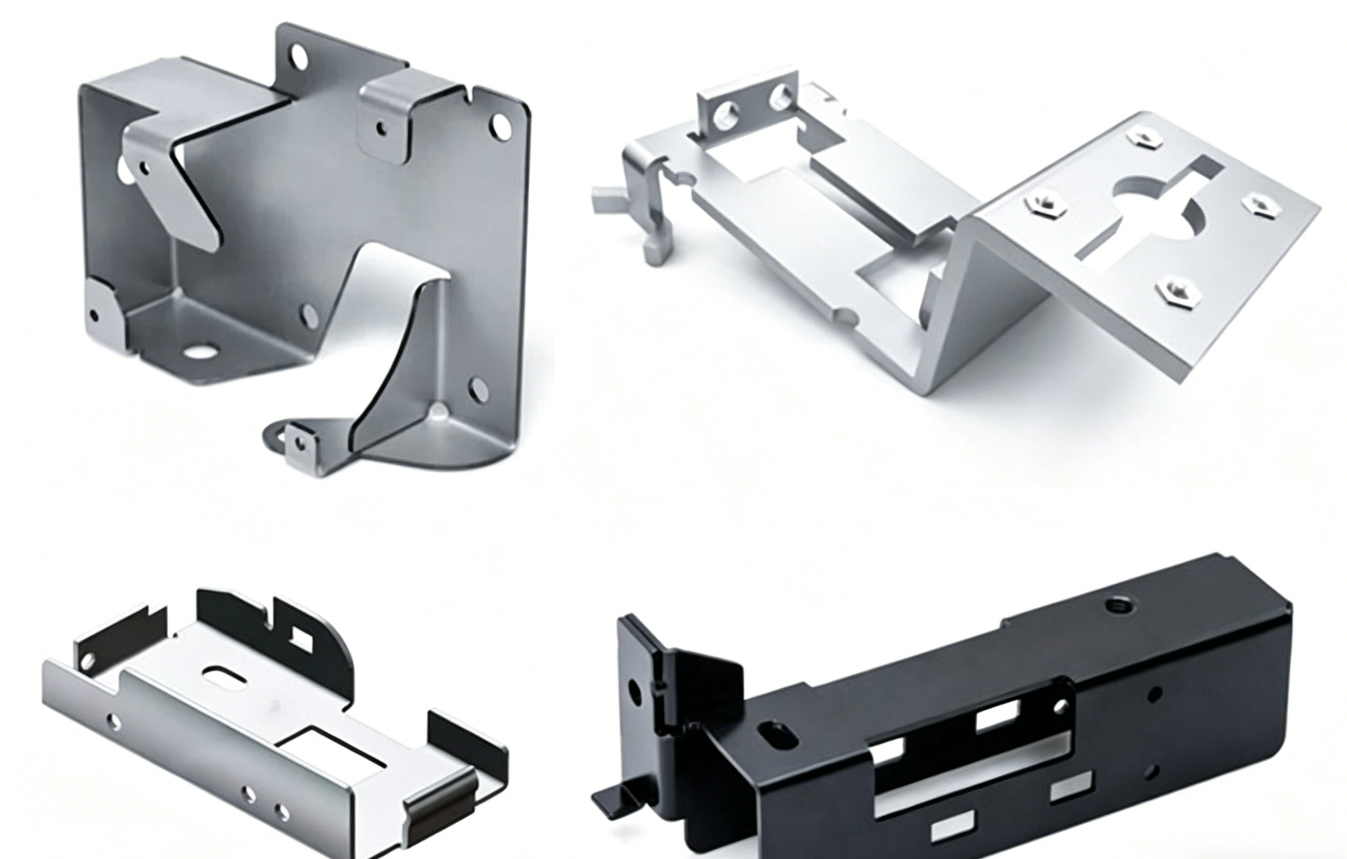
When to Choose CNC Machining Over Alternative Processes
You understand cost drivers and optimization strategies. But here's the question that precedes all of them: is CNC machining even the right manufacturing process for your project? Choosing the wrong method can cost you thousands in unnecessary expenses—or worse, deliver parts that simply don't meet your requirements.
The manufacturing landscape offers multiple pathways from design to finished component. Each process excels in specific scenarios while struggling in others. Understanding these trade-offs helps you select the optimal approach rather than defaulting to what's familiar. Let's break down when CNC machining delivers superior value and when alternatives might serve you better.
CNC Machining vs Alternative Manufacturing Methods
Imagine you need 10,000 identical plastic housings. Would you choose CNC machining, knowing each unit requires individual machine time? Probably not—injection molding would deliver those parts at a fraction of the cost. But what if you need 50 aluminum prototypes with complex internal channels? Suddenly CNC becomes the clear winner.
The decision hinges on understanding each process's sweet spot. Here's a comprehensive comparison across key decision factors:
| Manufacturing Method | Ideal Volume Range | Best Geometries | Material Options | Typical Tolerances | Lead Time (First Parts) |
|---|---|---|---|---|---|
| CNC Machining | 1-10,000 units | Complex 3D shapes, tight tolerances, internal features | Metals, plastics, composites | ±0.005" to ±0.0005" | Days to 2 weeks |
| Sheet Metal Fabrication | 10-100,000+ units | Enclosures, brackets, panels (uniform thickness) | Steel, aluminum, stainless | ±0.010" to ±0.030" | Days to 2 weeks |
| Injection Molding | 5,000-1,000,000+ units | Complex shapes with uniform walls, snap fits | Thermoplastics only | ±0.005" to ±0.020" | 4-12 weeks (tooling) |
| Die Casting | 5,000-500,000+ units | Complex metal shapes, thin walls possible | Aluminum, zinc, magnesium | ±0.010" to ±0.020" | 8-16 weeks (tooling) |
| Additive Manufacturing (3D Printing) | 1-500 units | Organic shapes, internal lattices, impossible geometries | Plastics, some metals | ±0.010" to ±0.020" | Hours to days |
CNC machining dominates when you need precision metal components in low to medium volumes. The process requires no tooling investment, delivers excellent surface finishes, and achieves tolerances that other methods struggle to match. CNC milling turning operations can produce complex parts combining both milled features and turned surfaces in single setups. Metal cnc milling excels at creating intricate geometries from solid blocks—features that would be impossible to cast or form.
The trade-off? Each part requires dedicated machine time. Unlike molding processes where cycle times measure in seconds, CNC cycle times run minutes to hours depending on complexity. This makes unit costs relatively stable regardless of volume—great for prototypes, challenging for mass production.
Sheet metal fabrication becomes cost-effective for enclosures, brackets, and panels where uniform material thickness works. Using a cnc laser cutter or cnc cutting plasma, manufacturers can produce flat patterns with incredible speed before bending them into final shapes. The process suits structural applications well but can't create the solid, complex geometries that CNC metal milling delivers.
Injection molding offers unbeatable economics for high-volume plastic parts—once you've invested in tooling. Mold costs typically range from $5,000 for simple geometries to $100,000+ for complex multi-cavity tools. These upfront costs make injection molding impractical for low volumes but essential for consumer products requiring millions of identical units.
Die casting follows similar economics for metal parts. The process excels at producing complex aluminum or zinc components with thin walls and integrated features. Automotive manufacturers rely heavily on die casting for engine components and structural parts. However, the weeks required for tool fabrication and substantial upfront investment limit the process to high-volume applications.
Additive manufacturing flips the equation entirely. A cnc laser or other additive system builds parts layer by layer, enabling geometries that subtractive methods simply cannot produce—internal cooling channels, lattice structures, and organic shapes optimized for weight reduction. The process shines for prototypes and low-volume production but currently lacks the surface finish and material properties that machined parts deliver.
Choosing the Right Process for Your Application
So how do you make the right choice? Start by honestly assessing four critical factors: your production volume, geometry requirements, material needs, and timeline constraints.
Volume thresholds provide the clearest decision points. Below 100 units, CNC machining almost always wins on total cost since there's no tooling investment. Between 100 and 5,000 units, the calculation depends on part complexity and material—simple parts might favor alternatives while complex geometries keep CNC competitive. Above 10,000 units, tooled processes like injection molding or die casting typically deliver lower per-part costs despite upfront investment.
Geometry considerations often override volume calculations. If your design requires:
- Tolerances tighter than ±0.005"—CNC machining is likely your only option
- Undercuts or internal channels—consider CNC or additive manufacturing
- Uniform wall thickness throughout—injection molding may be ideal
- Bent features from flat stock—sheet metal fabrication excels
- Large flat panels with cutouts—cnc metal fabrication using laser or plasma cutting offers speed advantages
Material requirements narrow your options quickly. Need titanium or exotic alloys? CNC machining handles nearly any material. Require specific plastic properties? Injection molding offers thousands of resin options. Working with sheet goods? Fabrication processes preserve material properties while CNC removes material to create shapes.
Timeline constraints often prove decisive. When you need parts in days rather than months, CNC machining and additive manufacturing emerge as the only viable options. Tooled processes require weeks of lead time before the first part ships—acceptable for planned production but impossible for urgent prototypes.
Many projects benefit from combining multiple processes. Manufacturers like Shaoyi Metal Technology offer complementary services spanning CNC machining and related processes, enabling seamless scaling from prototyping to production. Their IATF 16949 certification demonstrates automotive-grade quality standards that bridge the gap between development machining and volume manufacturing. This integrated approach lets you prototype with CNC, validate designs, then transition to the most economical production method once specifications are finalized.
Consider this practical decision framework:
- Prototype phase: Default to CNC machining for metal parts or additive manufacturing for plastic concepts. Speed and flexibility matter most.
- Low-volume production (under 1,000 units): CNC machining typically offers the best balance of quality, cost, and lead time.
- Medium-volume production (1,000-10,000 units): Evaluate total cost including tooling amortization. CNC may still win for complex metal parts.
- High-volume production (10,000+ units): Invest in tooling for injection molding or die casting. Use CNC only for critical features requiring secondary machining.
The automotive industry exemplifies this multi-process approach. Prototype components undergo rapid CNC machining for testing and validation. Pre-production volumes might continue with CNC while production tooling is developed. Final high-volume manufacturing shifts to die casting or stamping—with CNC machining reserved for precision features that other processes can't achieve.
Don't overlook hybrid approaches that combine process strengths. A die-cast housing might receive CNC-machined mounting surfaces. An injection-molded component might get threaded metal inserts installed via secondary machining. Sheet metal enclosures often require CNC-machined custom brackets. The most cost-effective solutions frequently blend multiple manufacturing methods.
With your manufacturing process selected, one crucial step remains: choosing the right partner from the many CNC parts manufacturers competing for your business. The evaluation criteria we've covered throughout this guide come together in your final selection decision.
Selecting the Right CNC Parts Manufacturer for Your Needs
You've evaluated manufacturing processes, understood cost drivers, and mapped the ordering journey. Now comes the decision that determines whether all that preparation pays off: choosing the right cnc parts manufacturer from the countless options competing for your business. Make the right choice, and you'll gain a reliable partner who delivers quality components on time. Choose poorly? You'll face missed deadlines, rejected parts, and the painful process of starting your search all over again.
The good news? Every evaluation criterion we've explored throughout this guide now comes together into a practical selection framework. Rather than guessing or simply accepting the lowest quote, you can systematically vet potential machined parts manufacturers against objective standards. Let's synthesize everything into an actionable approach you can use immediately.
Your Manufacturer Selection Checklist
Think of manufacturer selection like hiring a key employee. You wouldn't make that decision based solely on salary expectations—you'd evaluate skills, experience, references, and cultural fit. The same multidimensional approach applies when choosing among machining parts manufacturers.
According to Norck's industry analysis, selecting the right precision CNC machining service isn't just about owning fancy machines—it's about the knowledge and experience of the people operating them. Ask about their history, track record, and critically, their experience with your specific material and part complexity.
Here's your comprehensive evaluation checklist for vetting potential cnc machining parts manufacturers:
- Equipment Capabilities: Do they have the right machine configurations (3-axis, 4-axis, 5-axis) for your geometries? Is their equipment well-maintained with documented calibration schedules?
- Material Expertise: Have they worked extensively with your required materials? Can they provide guidance on material selection optimization?
- Quality Certifications: Do they hold certifications relevant to your industry (ISO 9001, AS9100, IATF 16949, ISO 13485)? Are certifications current and verifiable?
- Inspection Equipment: Do they have CMM capabilities and appropriate measurement tools? Is inspection equipment regularly calibrated?
- Quality Processes: Do they implement Statistical Process Control (SPC)? Can they provide first article inspection reports?
- Communication Responsiveness: How quickly do they respond to inquiries? Do they have dedicated project managers?
- Lead Time Capabilities: Can they meet your timeline requirements? Do they offer expedited options for urgent prototypes?
- Pricing Transparency: Are quotes detailed with clear cost breakdowns? Do they explain what drives pricing differences?
- DFM Support: Will they review designs and suggest improvements? Do they proactively identify cost-saving opportunities?
- Prototype Capabilities: Can they produce small quantities efficiently? What's their minimum order quantity?
- Production Scalability: Can they scale from prototypes to production volumes? Do they have capacity for your projected needs?
- Secondary Operations: Do they offer finishing, heat treatment, or assembly services? Can they manage your complete manufacturing requirements?
- Traceability Systems: Can they provide material certifications and process documentation? Is lot traceability maintained throughout production?
- References and Track Record: Can they provide references from similar projects? How long have they served their current customers?
Not every criterion carries equal weight for every project. Aerospace applications demand rigorous certification verification, while consumer product prototypes might prioritize speed and cost. Precision machine parts manufacturers serving medical device companies need ISO 13485 compliance, while automotive suppliers require IATF 16949 certification.
As Norck emphasizes, the quality of output is inextricably linked to the quality and capability of the equipment. A modern, well-maintained fleet of machines is a sign of forward-thinking and reliable CNC machining services. Even the best machines are only as good as their maintenance—a reputable shop will have rigorous maintenance schedules and calibration procedures.
Building Long-Term Manufacturing Partnerships
Here's what experienced buyers understand: the lowest quote rarely delivers the lowest total cost. A machined parts manufacturer who provides DFM feedback, catches potential problems before production, and communicates proactively saves you far more than a few percentage points on unit pricing.
Consider the potential for a long-term relationship when making your selection. A reliable precision machining partner can become an invaluable extension of your team, understanding your needs and consistently delivering high-quality results across multiple projects. This continuity reduces the learning curve on each new project and builds institutional knowledge about your specific requirements.
Starting with prototypes before committing to production volumes remains the smartest risk mitigation strategy. Even manufacturers with excellent credentials deserve validation through actual production. Order a small batch—even just 5-10 units—and evaluate the results critically. Measure dimensions against specifications. Assess surface finish quality. Test how parts perform in your actual application. Only then should you commit to larger volumes.
Manufacturers meeting stringent selection criteria demonstrate their capabilities through certifications and systems. For example, Shaoyi Metal Technology exemplifies what to look for in an automotive-focused partner: IATF 16949 certification backing their quality systems, SPC-monitored production processes, and lead times as fast as one working day for urgent prototype requirements. Their capability to handle complex chassis assemblies alongside precision custom metal bushings illustrates the production scalability that supports projects from development through volume manufacturing.
When evaluating potential partners, request samples of similar work they've completed. Ask about their longest-standing customer relationships and what makes those partnerships successful. Inquire about how they handle problems when they arise—because problems inevitably occur, and how manufacturers respond reveals their true character.
The final selection often comes down to communication quality. As Norck notes, responsiveness to inquiries often indicates professionalism and efficiency. Clear, consistent communication helps manage expectations and resolves issues swiftly. A manufacturer who answers questions thoroughly, explains their processes transparently, and proactively updates you on production status will likely deliver a better overall experience than one offering marginally lower prices but poor communication.
Your search for the right cnc parts manufacturer ends when you find a partner who checks the critical boxes on your evaluation checklist, demonstrates genuine expertise with your specific requirements, communicates effectively, and delivers quality prototype parts that validate their capabilities. That partner becomes not just a vendor, but a strategic asset that accelerates your product development and strengthens your supply chain for years to come.
Frequently Asked Questions About CNC Parts Manufacturers
1. What certifications should I look for in a CNC parts manufacturer?
The certifications you need depend on your industry. ISO 9001 serves as the baseline for quality management systems. For aerospace applications, look for AS9100 certification. Automotive projects require IATF 16949 compliance, which ensures manufacturers understand PPAP documentation and statistical process control. Medical device components demand ISO 13485 certification with formal design controls and risk management documentation. Always verify certifications are current through the issuing certification body before placing orders.
2. How do I choose between domestic and international CNC manufacturers?
Your decision should factor in Total Landed Cost, not just unit price. Domestic manufacturers offer faster lead times (7-15 days typical), same-timezone communication, stronger IP protection, and tighter tolerances. International options can reduce unit costs by 50-70% but add 2-6 weeks shipping time and potential quality variability. Consider a hybrid approach: prototype domestically for rapid iteration, then scale internationally for production volumes once designs are finalized.
3. What tolerance specifications are standard for CNC machined parts?
Standard CNC machining tolerances follow ISO 2768-1 medium class, typically around ±0.13mm (±0.005 inches). High-precision applications like aerospace components may require ±0.025mm (±0.001 inches), costing 2-3x more. Ultra-precision work for medical implants can achieve ±0.0127mm (±0.0005 inches) at 5-10x baseline costs. Apply tight tolerances only to critical features like mating surfaces and bearing bores while using standard tolerances for non-critical dimensions to optimize costs.
4. How much does CNC machining cost and what factors affect pricing?
CNC machining costs depend on material selection, machine time, setup charges, tooling requirements, and finishing operations. Hourly machine rates range from $35-75 for lathes to $100-200 for 5-axis mills. Setup costs of $200-500 significantly impact prototype pricing but spread across production volumes. Harder materials like titanium increase cycle times and tooling wear. Volume discounts are substantial, with a $50 prototype potentially dropping to $15 per unit at 500-piece quantities.
5. When should I choose CNC machining over other manufacturing processes?
CNC machining excels for 1-10,000 unit volumes, complex 3D geometries, tight tolerances below ±0.005 inches, and metal components requiring precision. Choose injection molding for 5,000+ plastic parts despite tooling investment. Sheet metal fabrication suits enclosures and brackets with uniform thickness. Die casting works for high-volume complex metal shapes. 3D printing handles organic geometries and very low volumes. Many projects benefit from combining processes, such as prototyping with CNC before transitioning to molding for production.