 Small batches, high standards. Our rapid prototyping service makes validation faster and easier —
  EN
EN


Best Online CNC Service Secrets: From CAD Upload To Finished Parts
Understanding Online CNC Machining Services
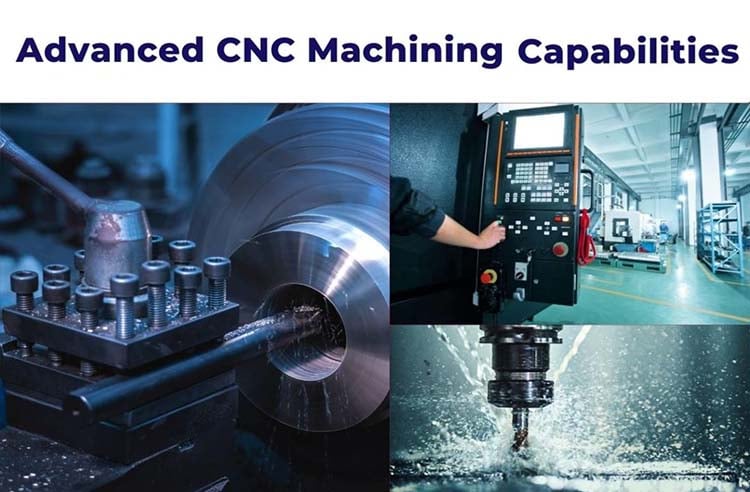
Have you ever waited days just to receive a quote from a machine shop? Traditional manufacturing workflows often involve endless email chains, manual estimates, and unpredictable timelines. Online CNC machining services have fundamentally changed this experience by bringing precision manufacturing into the digital age.
An online CNC service is a cloud-based manufacturing platform that allows engineers, designers, and procurement teams to upload 3D CAD models, receive instant quotes, and order custom machined parts directly through a streamlined digital interface. Instead of searching for cnc machine shops near me or calling multiple local machine shops for pricing, you can now access a global network of certified manufacturers from your browser.
What Makes Online CNC Services Different from Traditional Shops
The shift from traditional machining shops near me to digital-first platforms represents more than just convenience—it's a complete reimagining of the manufacturing workflow. When you work with conventional shops, you typically send drawings via email, wait for manual reviews, negotiate pricing, and coordinate production schedules through phone calls or in-person meetings.
Online CNC machining flips this model entirely. According to industry reports, these platforms can reduce lead times by 60–80% compared to conventional shops through AI-driven quoting, dynamic scheduling, and automated design analysis. The technology behind an online cnc machine platform includes intelligent quoting engines that analyze your part geometry in seconds, AI-powered Design for Manufacturability (DFM) feedback, and automated supplier matching based on capability and capacity.
The Digital Manufacturing Revolution for Custom Parts
Whether you need a single prototype or thousands of production components, digital manufacturing platforms scale with your requirements. This flexibility is particularly valuable for engineers developing custom machined parts who need to iterate quickly without committing to expensive tooling or minimum order quantities.
Here are the key advantages that make online CNC services stand out:
- Instant quotes: Upload your CAD file and receive accurate pricing within minutes, not days
- Material variety: Access metals like aluminum, stainless steel, and titanium, plus engineering plastics such as Delrin, Nylon, and PEEK
- Scalability: Transition seamlessly from prototyping to production volumes without switching suppliers
- Quality certifications: Partner with facilities holding ISO 9001, AS9100, or IATF 16949 certifications
- Transparent pricing: See exactly how costs are calculated based on machining time, materials, and complexity
- Real-time tracking: Monitor production progress and delivery schedules through cloud-based dashboards
This guide serves as a comprehensive buyer-education resource to help you navigate the world of digital CNC manufacturing. Whether you're a first-time user exploring cnc near me alternatives or an experienced procurement professional evaluating new suppliers, you'll find practical frameworks for making informed decisions about your precision machining needs.
Essential Selection Criteria for Your Project
Now that you understand what online CNC services offer, how do you determine which platform actually fits your specific needs? Choosing the best online cnc service isn't about finding the flashiest website—it's about matching capabilities to your project requirements. Let's break down the essential criteria you should evaluate before uploading your first CAD file.
Matching Certifications to Your Industry Requirements
Imagine ordering precision cnc machining parts for a medical device, only to discover your supplier lacks the proper quality certifications. Beyond wasted time and money, you could face serious regulatory consequences. Certifications aren't just fancy paperwork—they're proof that a manufacturer follows rigorous quality management systems.
According to industry research, 67% of OEMs require ISO 9001 certification from their suppliers. But different industries demand different standards. Here's a breakdown of key certifications and what they mean for your projects:
| Certification | Primary Focus | Industries That Require It | What It Validates |
|---|---|---|---|
| ISO 9001:2015 | Quality Management System | General manufacturing, electronics, consumer products | Consistent quality processes, continuous improvement |
| AS9100D | Aerospace Quality Standards | Aerospace, aviation, defense | Risk management, traceability, configuration control |
| ISO 13485 | Medical Device Manufacturing | Medical devices, surgical instruments, implants | FDA compliance, biocompatibility, sterile manufacturing |
| IATF 16949 | Automotive Quality Management | Automotive OEMs, Tier 1/2 suppliers | Defect prevention, supply chain consistency, SPC |
| ITAR Registration | Defense Export Control | Defense contractors, military applications | Compliance with US defense export regulations |
When evaluating a cnc machine shop near me alternative online, always verify certifications directly—don't just take marketing claims at face value. Reputable precision machining services will prominently display their certifications and provide documentation upon request.
Tolerance and Precision Considerations for Your Project
Not every part requires micron-level accuracy. Over-specifying tolerances is one of the most common mistakes buyers make, and it directly inflates your costs. Understanding what precision levels your application actually needs helps you choose the right service tier.
According to precision manufacturing specialists, CNC machining can achieve tolerances as tight as ±0.0005 inches, with specialized techniques reaching 1-5 microns. However, standard manufacturing tolerances of ±0.127 mm to ±0.254 mm (±0.005" to ±0.010") serve most general applications perfectly well.
Here's how tolerance levels align with typical applications:
- Standard (±0.005" to ±0.010"): Structural components, housings, brackets—general manufacturing
- Precision (±0.001" to ±0.002"): Connector housings, valve bodies, cnc turning components
- Tight tolerance (±0.0005" or better): Aerospace cnc machining, medical machining applications, surgical instruments
- Ultra-precision (1-3 microns): Implantable devices, optical components, precision bearings
Each tolerance level requires different equipment capabilities, measurement systems, and process controls. Tighter tolerances demand exponentially greater investment, directly impacting your per-part costs and lead times.
Prototype Services vs. Production-Ready Facilities
Are you developing a new product and need rapid iteration, or scaling up proven designs for volume manufacturing? This distinction fundamentally changes which online CNC service fits your needs.
Cnc prototyping-focused services excel at fast turnarounds, low minimum quantities, and design flexibility. They're ideal for engineers testing form, fit, and function before committing to production tooling. However, these platforms may not offer the Statistical Process Control (SPC), lot traceability, or certifications required for regulated industries.
Production-ready facilities, by contrast, prioritize consistency, scalability, and compliance. They maintain quality management systems verified through regular audits, offer volume pricing breaks, and can scale from dozens to thousands of parts without switching suppliers. When evaluating providers, ask these questions:
- What's your minimum order quantity for prototypes versus production runs?
- Do you offer DFM (Design for Manufacturability) feedback before production?
- Can you provide first article inspection reports and material certifications?
- What quality control checkpoints exist during production?
The right answer depends entirely on where you are in your product development journey. Starting with cnc prototyping services to validate your design, then transitioning to certified production facilities, often provides the best balance of speed and quality assurance for scaling your precision machining parts from concept to market.
How the Online Ordering Process Works
You've identified the right certifications and tolerance requirements for your project—now what? The gap between having a CAD design and holding a finished machined part can feel intimidating, especially if you've never used digital manufacturing platforms before. Let's walk through the complete online ordering workflow so you know exactly what to expect at each stage.
Preparing Your CAD Files for Online Quoting
Your CNC machine is only as good as the file you give it. This might sound obvious, but according to industry experts, incomplete or improperly formatted CAD files are among the most common causes of production delays and costly revisions. Before uploading anything, you need to ensure your design is export-ready.
Online quoting systems require specific file formats that preserve geometric accuracy. Here are the formats that work best for cnc machining parts:
- STEP (.stp, .step): The universal standard for CNC—preserves solid geometry, curves, and feature data across all CAD platforms
- IGES (.igs, .iges): Good for surface-based models and widely compatible, though slightly less precise than STEP
- Parasolid (.x_t, .x_b): Excellent for complex assemblies, commonly used with SolidWorks and NX
- Native CAD files: Some platforms accept SolidWorks, Fusion 360, or Inventor files directly
Avoid mesh-based formats like STL or OBJ for CNC work. While these work perfectly for 3D printing, they convert smooth curves into thousands of tiny triangles—a disaster for precision cnc cut operations that require clean toolpaths.
Before uploading, verify your file includes complete solid geometry with no open surfaces, missing features, or zero-thickness walls that could confuse quoting algorithms.
From Upload to Delivery - The Complete Process Flow
Once your files are ready, the journey from digital design to physical part follows a predictable sequence. Understanding each step helps you anticipate requirements and avoid bottlenecks.
- File Preparation and Export: Export your design as a STEP or IGES file from your CAD software (Fusion 360, SolidWorks, AutoCAD, etc.). Double-check that all dimensions are correct and the model is fully defined. Include a 2D technical drawing with tolerance callouts for critical features if your design has specific requirements beyond standard machining tolerances.
- Upload and Instant Quoting: Drag your file into the platform's upload interface. Quoting algorithms analyze your part geometry—measuring volume, surface area, feature complexity, and potential cnc cuts required. Within seconds to minutes, you'll receive pricing based on machine time, material costs, and setup requirements. This is where a cnc quote online dramatically outpaces traditional shops that might take days for manual estimates.
- Material and Finish Selection: Choose from available materials (aluminum, stainless steel, plastics, etc.) and specify surface finishes. Each selection updates your quote in real-time, allowing you to balance cost against performance requirements. Many platforms provide DFM feedback at this stage, flagging potential manufacturability issues before you commit.
- Order Confirmation and Payment: Review final specifications, lead time, and pricing. Submit payment to lock in your production slot. Reputable services provide order confirmation with expected delivery dates and tracking capabilities.
- Production and Machining: Your part enters the production queue. CNC operators set up machines, select appropriate tooling, and execute the programmed toolpaths. Complex geometries may require multiple setups or 5-axis machining to complete all features.
- Quality Inspection: Finished machined parts undergo dimensional verification against your specifications. Depending on your requirements, this may include CMM measurement, first article inspection reports, or material certifications. Critical tolerance features receive particular attention.
- Shipping and Delivery: Parts are cleaned, packaged to prevent damage, and shipped via your selected carrier. Most platforms offer tracking integration so you can monitor delivery progress in real-time.
Common First-Timer Mistakes to Avoid
Even experienced engineers stumble when transitioning to online machining quotes. According to precision machining specialists, these errors account for the majority of order complications:
- Incomplete specifications: Failing to provide detailed tolerance callouts, material grades, or finish requirements forces manufacturers to make assumptions—often not the ones you intended
- Missing technical drawings: While 3D models define geometry, 2D drawings communicate critical dimensions, GD&T requirements, and inspection criteria that quoting systems can't automatically extract
- Overly tight tolerances: Specifying ±0.001" when ±0.005" would work perfectly quadruples your machining costs and extends lead times unnecessarily
- Unrealistic timelines: Rushing production compromises quality. Factor in time for prototyping, testing, and potential revisions rather than assuming instant turnaround
- Ignoring DFM feedback: When a platform flags thin walls, deep pockets, or sharp internal corners, take the recommendations seriously—these aren't suggestions, they're warnings about manufacturability
The best approach for first-time buyers? Start with a simpler prototype order to evaluate service quality, communication responsiveness, and dimensional accuracy before committing to larger production runs. This gives you real-world data on how a provider performs without significant financial risk.
With your ordering process mastered, the next critical decision awaits: selecting the right material for your application. Different metals and plastics dramatically affect machinability, cost, and part performance—choices that directly impact your project's success.
Material Selection Guide for CNC Projects
You've uploaded your CAD file and received an instant quote—but now you're staring at a dropdown menu with dozens of material options. Aluminum 6061 or 7075? Stainless 304 or 316? Delrin or nylon? Choosing the wrong cnc machining materials can tank your project through premature failure, blown budgets, or missed deadlines. Let's break down how to match materials to your specific requirements.
According to manufacturing experts, material selection directly drives project economics: a part machined in aluminum requires significantly less time than one made from titanium, delivering substantial cost savings. But selecting a cheaper yet less serviceable material can result in part failure and costly redesigns. The key is balancing machinability, availability, and performance.
Metal Selection for Structural and Precision Applications
When your parts need to handle mechanical stress, thermal loads, or corrosive environments, metals remain the go-to choice. But not all metals machine equally—some zip through production while others demand specialized tooling and slower feed rates.
Aluminum Alloys: The Workhorse Materials
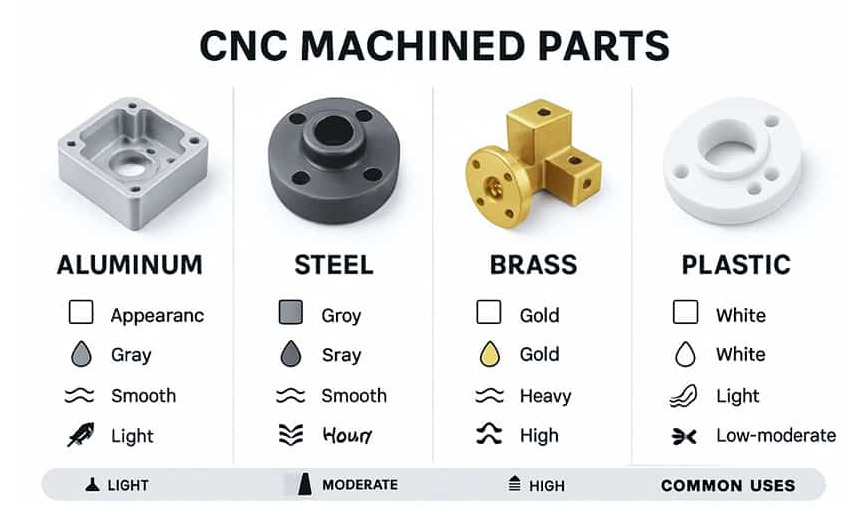
If you're new to CNC ordering, aluminum is your best friend. It machines beautifully, costs less than steel alternatives, and offers excellent strength-to-weight ratios. Two grades dominate online CNC services:
- 6061-T6 Aluminum: The most versatile option with a yield strength around 40,000 psi. It combines good strength, excellent corrosion resistance, and high machinability—perfect for prototypes, structural brackets, and production housings
- 7075 Aluminum: Approaching low-alloy steel strength while maintaining low weight. Ideal for aerospace-grade components, though slightly less corrosion-resistant than 6061
Stainless Steel Options
Need corrosion resistance that aluminum can't deliver? Stainless steels offer durability for demanding environments:
- 304 Stainless: The most widely used grade—excellent corrosion resistance, good formability, but harder on tooling than aluminum
- 316 Stainless: Superior chloride resistance makes it essential for marine, chemical, and medical applications
- 17-4 PH Stainless: Precipitation-hardened for exceptional strength in aerospace and defense components
Copper Alloys and Bronze
For electrical conductivity, thermal management, or wear-resistant bearings, copper-based alloys shine. When machining bronze, you'll appreciate its excellent chip-breaking characteristics compared to pure copper. Brass 360—known as free-machining brass—is one of the easiest metals to machine, offering fast cycle times and fine finishes for fittings, fasteners, and decorative parts.
Engineering Plastics for Lightweight and Chemical-Resistant Parts
Not every application needs metal. Engineering plastics offer unique advantages: lighter weight, inherent chemical resistance, electrical insulation, and often lower machining costs. Here's how the most popular options compare.
Delrin (Acetal/POM)
Delrin plastic—technically polyoxymethylene—is the gold standard for precision plastic components. This delrin material offers exceptional dimensional stability, low friction coefficient, and excellent wear resistance. Unlike nylon, it absorbs minimal moisture, maintaining tight tolerances across humidity changes. Use it for gears, valve components, and any application requiring consistent dimensions.
Nylon (Polyamide)
Nylon for machining provides outstanding toughness, impact strength, and natural lubricity that reduces friction in moving parts. However, machining nylon comes with a caveat: it absorbs moisture, which can affect dimensional stability. For applications where slight swelling isn't critical—bushings, wear pads, structural supports—nylon delivers excellent value.
Polycarbonate and Acrylic
When you need transparency combined with impact resistance, cnc polycarbonate excels. It's far tougher than glass and maintains dimensional stability under moderate heat. Acrylic offers superior optical clarity for displays and light guides but cracks more easily than polycarbonate. Both require sharp tooling and careful machining parameters to prevent stress cracking.
Material Properties Comparison
Choosing materials based on a single property rarely works. You need to balance multiple factors against your specific application requirements:
| Material | Strength | Machinability | Corrosion Resistance | Relative Cost | Best Applications |
|---|---|---|---|---|---|
| 6061-T6 Aluminum | Good | Excellent | Good | Low | Prototypes, housings, structural parts |
| 7075 Aluminum | Excellent | Good | Moderate | Medium | Aerospace, high-performance components |
| 304 Stainless | Very Good | Moderate | Excellent | Medium | Food equipment, medical, architectural |
| 316 Stainless | Very Good | Moderate | Superior | Medium-High | Marine, chemical processing, pharmaceutical |
| 360 Brass | Moderate | Excellent | Good | Medium | Fittings, fasteners, decorative parts |
| CNC Bronze | Good | Very Good | Good | Medium-High | Bearings, bushings, marine hardware |
| Delrin (POM) | Good | Excellent | Excellent | Low-Medium | Gears, valve parts, precision components |
| Nylon 6/6 | Good | Very Good | Good | Low | Bushings, wear parts, structural supports |
| Polycarbonate | Good | Good | Good | Medium | Impact housings, transparent enclosures |
| PEEK | Excellent | Moderate | Superior | High | Aerospace, medical, high-temp applications |
How Material Choice Affects Cost and Lead Time
Your material selection ripples through every aspect of your project economics. According to machining specialists, materials like aluminum dissipate heat effectively, allowing faster machining speeds. Stainless steel and titanium require lower feed rates to manage heat buildup, directly increasing machining time and costs.
Consider these practical trade-offs:
- Machinability impact: Titanium's exceptional strength requires 3-4x longer machining time than aluminum for similar geometry—dramatically increasing per-part costs
- Material availability: Common grades like 6061 aluminum and 304 stainless ship quickly from distributors. Exotic alloys or specialty plastics may add days or weeks to your lead time
- Tolerance achievability: Harder materials resist deflection during cutting, potentially achieving tighter tolerances. Softer plastics may deform under tool pressure, limiting precision
- Tool wear: Abrasive or hardened materials consume tooling faster, adding hidden costs that inflate your final quote
Pro tip: Choose materials that are strong enough for your application—not the strongest available. Overengineering drives up both production costs and material waste.
When uncertain, start by testing cheaper, easier-to-machine materials during prototyping. Once you've validated fit and function, you can upgrade to higher-performance materials for production if your application truly demands it. This iterative approach minimizes wasted spending on unnecessarily exotic materials.
Material selection sets the foundation for your part's performance—but surface finish determines how it looks, feels, and resists environmental degradation. Understanding your finishing options helps you specify exactly what you need without overpaying for unnecessary treatments.
Surface Finishes and Post-Processing Options
Your cnc milled part just came off the machine—but it's not ready for use yet. Those visible tool marks, sharp edges, and raw material surfaces might work for a prototype sitting on your desk, but they won't survive harsh environments or meet aesthetic standards for customer-facing products. Surface finishing transforms functional geometry into production-ready components.
Here's what many first-time buyers miss: according to precision machining specialists, surface finish and surface finishing are different things. Surface finish refers to the microscopic characteristics of your part's surface—roughness, waviness, and lay patterns created during cnc cutting operations. Surface finishing describes the post-machining processes applied to protect and enhance those surfaces.
Understanding this distinction helps you specify exactly what you need without overpaying for unnecessary treatments.
Standard vs Premium Surface Finish Options
When you order through an online CNC service, you'll typically choose from several finishing tiers. Each adds cost and lead time, so matching your selection to actual requirements keeps projects on budget.
- As-machined (Standard): Parts retain visible tool marks from the cnc cutting process. Functional and dimensionally accurate, but not cosmetically refined. This is the most cost-effective option for internal components, prototypes, and parts that will receive additional finishing elsewhere. Roughness values typically range from Ra 1.6 to 3.2 μm.
- Bead blasting: Compressed air fires glass or plastic beads at the surface, creating a uniform matte texture that hides machining marks. Popular for cnc aluminum housings and consumer electronics where a clean, non-reflective appearance matters. Adds minimal cost and no dimensional change.
- Tumbling/Barrel finishing: Parts rotate in a barrel with abrasive media to remove burrs and soften edges. Less controlled than bead blasting but effective for deburring large batches. Best for parts larger than 1 cubic inch where slight surface variations are acceptable.
- Brushed finish: Unidirectional abrasive brushing creates consistent linear patterns. Common for architectural components and appliance panels where visual consistency across multiple parts matters.
Protective and Functional Coatings
Beyond aesthetics, many applications demand coatings that improve corrosion resistance, wear characteristics, or electrical properties. Here's how the most common options compare:
Anodizing for Aluminum Parts
If you're working with cnc aluminum components, anodizing is likely your best finishing option. According to anodizing specialists, this electrochemical process creates an integrated oxide layer that won't chip or peel like paint.
- Type II Anodizing: Creates a thin protective layer (0.0002" to 0.001") with excellent corrosion resistance and aesthetic finishes. Available in multiple colors through dyeing. Ideal for consumer electronics, architectural components, and automotive trim pieces. Lower cost than Type III.
- Type III Anodizing (Hardcoat): Produces a significantly thicker, denser oxide layer with exceptional hardness and abrasion resistance. Used for aerospace components, industrial machinery, and high-wear applications. More expensive due to lower temperatures and higher voltages required during processing.
Stainless Steel and Steel Finishes
For stainless steel machining projects, different finishing approaches protect and enhance the natural corrosion resistance:
- Passivation: Chemical treatment removes free iron from stainless steel surfaces, enhancing natural corrosion resistance without adding coating thickness. Essential for medical devices, food processing equipment, and pharmaceutical applications.
- Black oxide: Creates a magnetite layer on ferrous metals providing mild corrosion resistance and an attractive matte black appearance. Does not significantly affect dimensions—no masking required.
- Electropolishing: Uses electric current and chemical bath to dissolve a controlled layer of base material, creating mirror finishes on steel and stainless steel. Faster and more consistent than manual polishing.
Plating and Powder Coating
- Electroless nickel plating: Deposits nickel-phosphorus coating without electric current. Higher phosphorus content improves corrosion resistance. Works on aluminum, steel, and stainless steel.
- Zinc plating (Galvanization): Protects steel from corrosion through sacrificial protection—zinc oxidizes before underlying steel when coating is damaged.
- Powder coating: Electrostatically applied powdered paint cured through heat. Available in countless colors and gloss levels. Adds measurable thickness (0.002" to 0.006"), so tight-tolerance features require masking.
Choosing Finishes Based on Function and Aesthetics
The right finish depends entirely on how your part will be used. Ask yourself these questions before specifying:
- Environmental exposure: Will the part face moisture, chemicals, salt spray, or UV? Outdoor and marine applications demand robust corrosion protection like Type III anodizing or powder coating.
- Wear requirements: Moving parts, sliding surfaces, or high-friction interfaces benefit from hardcoat anodizing or electroless nickel plating.
- Electrical considerations: Need conductivity? Avoid anodizing and powder coating, which create insulating layers. Chromate conversion coating (Alodine) maintains aluminum's conductivity.
- Cosmetic standards: Customer-facing products often combine bead blasting with Type II anodizing for the signature matte finish found on premium electronics.
According to finishing experts, combining multiple finishes often delivers superior results. Media blasting before anodizing, for example, creates the smooth matte appearance found on Apple's MacBook laptops.
Remember that masking adds cost and lead time. Each hole, thread, or mating surface that needs protection from coating requires manual plugging or masking liquid application. When possible, design parts to minimize masking requirements—your quote and delivery schedule will thank you.
Surface finishing affects more than appearance—it directly impacts your project budget. Understanding how pricing works across all aspects of CNC manufacturing helps you optimize costs without sacrificing quality.
Pricing Factors and Cost Optimization Strategies
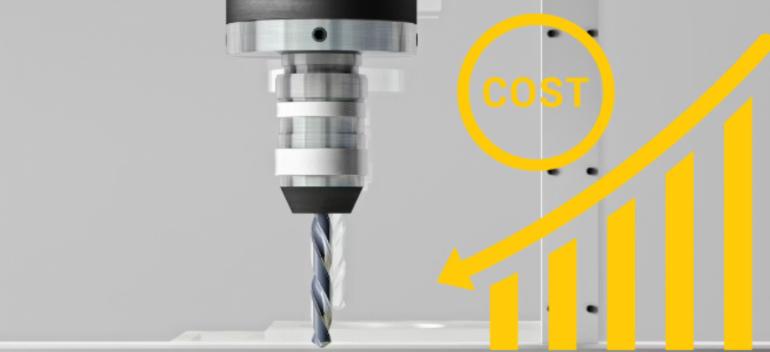
Ever received a CNC quote that made you do a double-take? You're not alone. According to industry analysts, understanding what goes into cnc machining price calculations separates buyers who budget accurately from those constantly surprised by final invoices. Let's demystify exactly where your money goes—and how to keep more of it.
The general pricing formula looks deceptively simple: Cost = Machine Time × Hourly Rate + Material Cost + Setup Cost + Finishing + Shipping. But each variable contains layers of complexity that directly impact your bottom line. Understanding these drivers empowers you to make design and ordering decisions that dramatically reduce costs without sacrificing quality.
Understanding the True Cost Drivers in CNC Machining
When you request a cnc quote online, sophisticated algorithms analyze your part geometry against multiple cost factors. Here's what actually determines your final price:
Machine Time and Hourly Rates
This is typically the largest portion of your quote. According to 2025 pricing data, standard 3-axis milling and turning operations run $70 to $125 per hour, while 5-axis machining commands $150 to $250 per hour. What drives machine time up?
- Part complexity: Deep pockets, tight internal corners, and intricate features require slower feed rates and multiple tool changes
- Material hardness: Titanium and stainless steel demand slower cutting speeds than aluminum, directly increasing cycle times
- Tolerance requirements: Tighter tolerances require slower, more careful machining passes and additional inspection time
- Surface finish specifications: Achieving finer surface finishes means lighter cuts at lower speeds
Material Costs
Raw material pricing varies dramatically. A 6"×6"×1" block of Aluminum 6061 costs around $25, while the same size in 316 Stainless Steel runs approximately $125, and Titanium Grade 5 exceeds $450. But machinist metal cost extends beyond just the raw block—you're also paying for material waste. CNC is a subtractive process, meaning significant material becomes chips on the shop floor.
Setup and Programming Fees
Every job requires preparation before the first cut: loading programs, mounting fixtures, installing tooling, and calibrating the machine. Simple jobs might take 30 minutes; complex cnc machine parts requiring custom fixtures could need hours of setup. This fixed cost gets divided across your order quantity—which is why ordering more parts dramatically reduces per-unit pricing.
Hidden Costs That Surprise Buyers
Beyond the obvious line items, watch for these frequently overlooked expenses:
- Minimum order fees: Many services charge flat minimums ($50-$150) regardless of part simplicity
- Expedite charges: Rush orders typically add 25-50% premiums over standard lead times
- Custom fixturing: Unusual geometries requiring special workholding add one-time tooling fees
- Inspection and documentation: CMM reports, first article inspections, and material certifications often cost extra
- Shipping and packaging: International orders face customs duties, specialized packaging requirements, and higher freight costs
Pro tip: Always request itemized quotes that separate machining, materials, setup, finishing, and shipping. Bundled quotes hide opportunities for optimization.
Strategies to Reduce Per-Part Costs
Now that you understand where money goes, here's how to keep more of it. According to design for manufacturability experts, following DFM guidelines can reduce machining costs by 25-50% without compromising functionality.
- Simplify geometry: Avoid deep pockets exceeding four times their width, thin walls below 0.8mm for metals, and unnecessarily complex features. Every additional setup or special tool adds cost.
- Standardize tolerances: Apply tight tolerances only where function demands them. Standard ±0.005" tolerances cost far less than ±0.001" specifications. Use a single datum reference for all toleranced dimensions.
- Choose cost-effective materials: Can you use 6061 aluminum instead of 7075? 303 stainless instead of 316? Small cnc machining projects especially benefit from material substitution since machining time differences compound quickly.
- Optimize internal corners: Specify corner radii at least one-third of cavity depth. Smaller radii require smaller tools running at slower speeds with more passes.
- Increase order quantities: Setup costs spread across more machining parts dramatically reduce per-unit pricing. According to industry data, increasing orders from 1 to 5 pieces can cut unit costs by approximately 50%.
- Avoid unnecessary finishes: As-machined surfaces work perfectly for non-cosmetic components. Each finishing step adds cost and lead time.
- Design for single-setup machining: Parts requiring multiple setups (flipping, repositioning) increase labor costs significantly. Consider splitting complex designs into assemblies that each machine in one setup.
Prototype Pricing vs. Production Economics
Understanding how cnc fabrication costs scale helps you plan budgets across product development stages. Prototype pricing differs fundamentally from production runs:
| Factor | Prototype (1-20 parts) | Production (100+ parts) |
|---|---|---|
| Setup cost per part | High (not amortized) | Low (spread across volume) |
| Material pricing | Standard pricing | Volume discounts available |
| Programming cost | Full charge | Often waived or reduced |
| Typical unit cost | $50-$500+ per part | $5-$50 per part |
| Lead time flexibility | Often expeditable | Scheduled production runs |
When planning for scale, consider these approaches:
- Start small to validate: Order minimal prototype quantities to test fit, form, and function before committing to production tooling or volume orders
- Request volume pricing breaks: Ask suppliers for tiered quotes at 50, 100, 500, and 1,000+ quantities to understand your cost curve
- Plan blanket orders: If you'll need parts regularly, negotiate annual contracts with scheduled releases to lock in production pricing
- Consider alternative processes: At very high volumes, injection molding or die casting may become more economical than continued CNC machining
The most cost-effective approach combines design optimization with strategic ordering. A well-designed part ordered in appropriate quantities from a transparent supplier delivers the best value—not necessarily the cheapest initial quote. Speaking of timing, understanding realistic lead times helps you plan projects without paying unnecessary rush premiums.
Lead Times and Turnaround Expectations
You've optimized your design, selected the perfect material, and calculated your budget—but when will your parts actually arrive? According to leading online CNC platforms, parts can be manufactured as fast as 1 day with 95.4% of orders delivered on-time. But that headline number doesn't tell the whole story. Understanding realistic timelines helps you avoid costly rush fees and project delays.
Lead times in CNC machining aren't arbitrary—they're driven by specific factors within your control. Material availability, part complexity, order quantity, and finishing requirements each add predictable time to your delivery schedule. Master these variables, and you'll consistently hit project deadlines without paying unnecessary premiums.
Realistic Lead Time Expectations by Project Complexity
Not all parts are created equal. A simple aluminum bracket machines in hours, while a complex aerospace component with tight tolerances might require days of careful work. According to industry performance data, customers searching for quick turn cnc machining show 8.41% conversion rates despite higher costs—indicating strong demand for faster delivery when projects are time-sensitive.
Here's what realistically affects your timeline:
- Part geometry: Simple prismatic shapes with standard features machine quickly. Deep pockets, thin walls, and intricate details require slower feed rates and multiple tool changes
- Material selection: Aluminum and plastics like Delrin machine 2-3x faster than stainless steel or titanium. According to CNC service providers, aluminum and ABS parts can ship in as fast as 3 days, while stainless steel and titanium typically require 7 days
- Tolerance requirements: Standard tolerances allow rapid machining. Precision features requiring ±0.001" or tighter demand careful finishing passes and additional inspection time
- Quantity: Single cnc prototype parts often ship faster than production runs simply because they require less total machine time—but setup costs remain fixed
| Project Type | Simple Geometry | Moderate Complexity | Complex/Tight Tolerance |
|---|---|---|---|
| Prototype (1-5 parts) | 2-3 days | 5-7 days | 7-10 days |
| Small batch (10-50 parts) | 5-7 days | 7-10 days | 10-14 days |
| Production run (100+ parts) | 10-14 days | 14-21 days | 21-30 days |
| Expedited options | 1-2 days | 3-5 days | 5-7 days |
Surface finishing adds its own timeline. Bead blasting requires minimal additional time, while Type III anodizing or powder coating can add 3-5 business days. When working with a cnc prototyping service, always factor finishing requirements into your deadline calculations.
When to Pay for Expedited Production
Rush orders typically cost 25-50% more than standard timelines. When does paying that premium actually make sense? Consider these scenarios:
- Trade show deadlines: Missing a product launch costs far more than expedite fees
- Production line down: Equipment waiting on replacement parts loses money every hour
- Competitive bidding: Faster prototype machining lets you iterate and win contracts before competitors
- Design validation bottleneck: When engineering decisions depend on physical testing, rapid cnc prototyping keeps entire teams productive
However, rushing rarely makes sense for standard development cycles. According to manufacturing experts, optimizing design complexity and material selection often achieves the same timeline improvement as paying rush fees—without the added cost.
Build 2-3 days of buffer into every deadline. Quality issues requiring rework, material substitutions, or shipping delays happen—and prototype machining services can't always absorb schedule shocks.
The smartest approach combines realistic planning with strategic rush spending. Use standard lead times during early development when iteration is expected. Reserve expedited production for final prototypes and time-critical production runs where delays carry real business consequences. This balanced strategy maximizes value from every dollar spent on manufacturing.
With timeline expectations set, certain industries face additional complexity beyond standard lead times. Aerospace, medical, and automotive applications each demand specialized certifications and documentation that fundamentally change how you evaluate potential suppliers.
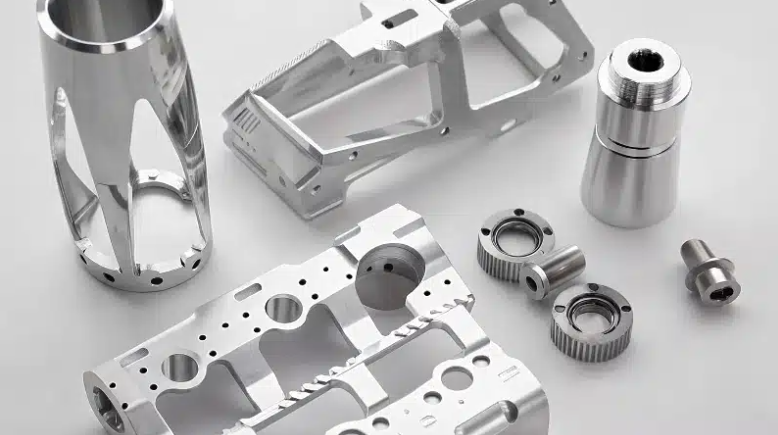
Industry-Specific Requirements and Certifications
When your precision machining parts are destined for an aircraft, a surgical suite, or an automotive assembly line, standard manufacturing practices aren't enough. Regulated industries demand specialized certifications that verify a cnc machining shop can consistently deliver components meeting strict safety, quality, and traceability standards. Choosing a supplier without proper credentials doesn't just risk rejected parts—it exposes your organization to regulatory violations and potential liability.
Understanding which certifications matter for your specific application helps you filter suppliers quickly. According to industry procurement specialists, certifications act like a safety net, giving you confidence that your supplier's processes are audited and reliable. Let's examine what each major industry requires.
Aerospace and Defense Machining Requirements
When lives depend on every component performing flawlessly at 40,000 feet, aerospace manufacturing leaves zero room for error. AS9100D certification has become the non-negotiable standard for precision cnc machining services serving this sector.
According to aerospace manufacturing experts, AS9100D builds upon ISO 9001:2015 while adding aviation-specific requirements for risk management, configuration control, and product safety. The standard spans ten comprehensive sections covering everything from leadership accountability to continuous improvement protocols.
Key AS9100D requirements that affect your supplier selection include:
- Risk assessment and mitigation: Documented analysis of product designs and manufacturing methods to identify potential failure modes before production
- Configuration control: Rigorous tracking of design revisions, material lots, and process changes throughout the product lifecycle
- First Article Inspection (FAI): Comprehensive dimensional verification of initial production parts against design specifications
- Counterfeit parts prevention: Verified supply chain controls ensuring material authenticity and traceability
- Special process validation: Documented qualification for heat treatment, surface finishing, and other critical operations
For defense applications, ITAR (International Traffic in Arms Regulations) registration adds another layer of compliance. Suppliers handling controlled technical data must maintain secure facilities, restrict foreign national access, and follow strict export control procedures. Not every cnc machining metal provider can meet these requirements—verify ITAR compliance before sharing sensitive defense-related designs.
Medical Device and Automotive Compliance Standards
Medical device manufacturing demands equally rigorous controls, though focused on different priorities. According to medical manufacturing specialists, ISO 13485:2016 outlines requirements for quality management systems specific to the medical device industry, covering all lifecycle stages from design through decommissioning.
What makes ISO 13485 essential for medical cnc turning services?
- Design control procedures: Documented development processes ensuring devices meet intended use requirements
- Risk management integration: Proactive identification and mitigation of hazards throughout product lifecycle
- Traceability requirements: Detailed documentation enabling recall of specific lots if safety issues emerge
- Cleanroom capabilities: Environmental controls for components requiring sterile or controlled manufacturing
- Regulatory alignment: Structured compliance with FDA and EU MDR requirements for market access
Automotive manufacturing presents different challenges—primarily the need for absolute consistency across thousands or millions of identical parts. IATF 16949 certification addresses these requirements through process-focused quality management.
According to certification experts, IATF 16949 adds layers of quality assurance specific to the automotive industry, including defect prevention programs, statistical process monitoring, and lean production systems.
Industry Requirements Comparison
Selecting the right precision machining companies requires matching their certifications to your specific industry needs. This comparison helps you quickly identify which credentials matter for your application:
| Requirement | Aerospace (AS9100D) | Medical (ISO 13485) | Automotive (IATF 16949) |
|---|---|---|---|
| Primary Certification | AS9100D + ITAR (defense) | ISO 13485:2016 | IATF 16949:2016 |
| Typical Tolerances | ±0.0005" to ±0.001" | ±0.001" to ±0.005" | ±0.001" to ±0.005" |
| Documentation | FAI, material certs, process records | DHF, DMR, traceability records | PPAP, control plans, FMEA |
| Traceability | Lot/serial tracking, full supply chain | Component-level through disposal | Batch traceability, SPC data |
| Inspection Requirements | 100% critical features, CMM | Process validation, IQ/OQ/PQ | Statistical sampling, Cpk targets |
| Audit Frequency | Annual surveillance audits | Annual + regulatory inspections | Annual + customer audits |
Statistical Process Control for Automotive Production
High-volume automotive production relies on Statistical Process Control (SPC) to maintain consistency across thousands of identical components. Rather than inspecting every part, SPC monitors process variables to detect drift before defects occur.
When evaluating 5 axis cnc machining services for automotive applications, look for suppliers who demonstrate:
- Cpk capability indices: Statistical measures proving processes consistently produce parts within specification limits—typically Cpk ≥ 1.33 for automotive
- Real-time monitoring: Automated measurement systems tracking critical dimensions during production runs
- Control chart documentation: Historical process data demonstrating stability over time
- Corrective action protocols: Defined responses when process variation approaches control limits
For automotive buyers specifically, finding cnc turning services that can scale from rapid prototyping to mass production while maintaining IATF 16949 certification is essential. The transition from prototype to production often exposes quality gaps—certified suppliers bridge this challenge through documented process controls.
When sourcing high-tolerance components for chassis assemblies and precision metal parts, verify that your supplier maintains both certification and the operational capacity to meet your volume requirements without compromising quality.
For automotive applications requiring certified precision manufacturing with fast turnaround, Shaoyi Metal Technology offers IATF 16949-certified production capabilities with lead times as fast as one working day. Their facility combines strict Statistical Process Control with the capacity to scale from prototyping through mass production—critical for automotive supply chains where timing and consistency determine success.
Industry certifications provide the foundation for supplier qualification, but making your final selection requires synthesizing everything you've learned into actionable decision criteria. The next section provides a practical framework for matching your specific project profile to the right service provider.
Making Your Final Service Selection
You've learned how online CNC machining works, what certifications matter, and how pricing structures break down. Now comes the critical question: which provider actually fits your specific needs? The best online cnc service for a startup prototyping consumer electronics looks completely different from the ideal partner for an automotive Tier 1 supplier scaling production. Let's translate everything you've learned into actionable selection criteria.
Matching Your Project Profile to the Right Service
Your buying profile fundamentally shapes which online cnc machining services deserve your attention. Consider where you fall among these common scenarios:
First-Time Buyers and Prototype Developers
If you're new to custom cnc machining services, prioritize platforms offering low minimum order quantities, responsive technical support, and clear DFM feedback. You'll likely iterate through multiple design revisions—choose suppliers who make changes easy rather than penalizing modifications. Start with simpler parts to evaluate dimensional accuracy and surface finish quality before committing complex geometries.
According to prototype-to-production specialists, working with the right partner can significantly mitigate risks because they bring design optimization expertise that helps refine your prototype for cost-effective and scalable production. Look for cnc machining prototyping services that offer design consultations as part of their standard process.
Engineers Sourcing Production Parts
When you're beyond prototyping and need consistent production volumes, priorities shift toward process capability, quality documentation, and scalability. Ask potential suppliers about their Cpk indices, SPC implementation, and capacity for scheduled releases. Volume pricing breaks become significant—request tiered quotes at multiple quantity levels to understand your cost curve.
For cnc prototype machining transitioning to production, verify the supplier can maintain the same quality standards at higher volumes. Many shops excel at one-offs but struggle with consistency across thousands of parts.
Procurement Professionals Managing Supply Chains
You need more than competitive pricing—you need reliability, documentation, and supplier qualification data. Prioritize certified facilities with demonstrated on-time delivery records. Request capability studies, quality manuals, and references from similar applications. Consider geographic diversification and backup supplier strategies for critical components.
Final Checklist Before Placing Your Order
Before clicking that submit button, run through this comprehensive verification checklist. According to manufacturing preparation experts, completing everything on this list helps paint a very clear picture of what needs to be made and leaves very little room for error and confusion.
- File Preparation Complete: CAD files exported in STEP or IGES format with complete solid geometry—no open surfaces or missing features. Include 2D technical drawings with tolerance callouts for critical dimensions.
- Material Confirmed: Specific material grade selected (not just "aluminum" but "6061-T6 aluminum"). Verify supplier has material in stock or confirm lead time for procurement.
- Tolerance Verification: Critical tolerances clearly specified on drawings. Standard tolerances applied to non-critical features. GD&T used where appropriate for complex relationships.
- Finish Specification Defined: Surface finish requirements documented—as-machined, bead blasted, anodized, etc. Masking requirements identified for threaded holes or mating surfaces.
- Quantity and Schedule Confirmed: Order quantity matches your actual needs. Delivery date allows buffer for potential quality issues or shipping delays.
- Certifications Verified: Supplier certifications match your industry requirements. Necessary documentation (material certs, inspection reports) included in quote.
- Communication Channels Established: Technical contact identified for questions during production. Approval process defined for any design clarifications.
Start Small, Then Scale
Even if you ultimately need thousands of parts, starting with a small prototype order provides invaluable supplier evaluation data. According to online CNC service specialists, your needs can begin with a single prototype but frequently escalate to complete production runs—a good service must be able to support this transition seamlessly.
Use your initial order to evaluate:
- Dimensional accuracy against your specifications
- Surface finish quality and consistency
- Communication responsiveness during production
- Packaging quality and shipping reliability
- Documentation accuracy and completeness
This prototype-first approach minimizes risk while building confidence in your supplier relationship. If issues arise, you've learned valuable lessons with minimal financial exposure rather than discovering problems across a large production run.
Technical Support Matters More Than You Think
The slickest quoting interface means nothing when you need human expertise. Complex geometries, material substitution questions, and tolerance optimization all benefit from experienced engineering support. When evaluating potential suppliers—whether a cnc routing company or a full-service precision machining facility—test their responsiveness before placing orders.
Ask technical questions during the quoting process. How quickly do they respond? Do they provide thoughtful, specific answers or generic templates? According to industry experts, the participation of engineers and machining professionals makes production more convenient and helps you refine your product design faster.
The best online CNC service isn't necessarily the cheapest or fastest—it's the one that consistently delivers quality parts on schedule while communicating proactively about any issues.
For buyers in the automotive sector requiring certified precision manufacturing with fast turnaround, Shaoyi Metal Technology's CNC machining services offer IATF 16949-certified production capabilities with lead times as fast as one working day. Their combination of strict Statistical Process Control, rapid prototyping capacity, and seamless scaling to mass production addresses the specific challenges automotive supply chains face.
You now have the framework to evaluate any online CNC service confidently. From understanding instant quoting systems to navigating industry certifications, from optimizing designs for cost efficiency to setting realistic timeline expectations—these tools transform you from a passive buyer into an informed manufacturing partner. Use this knowledge to make sourcing decisions that deliver quality parts on time and on budget, project after project.
Frequently Asked Questions About Online CNC Services
1. What is the cheapest online CNC service?
Pricing varies significantly based on part complexity, material selection, quantity, and tolerances. According to industry comparisons, price differences exceeding $800 exist between services for identical parts. To find cost-effective options, request quotes from multiple platforms, optimize your design for manufacturability, specify only necessary tolerances, and consider material substitutions like 6061 aluminum instead of stainless steel. Volume orders also dramatically reduce per-unit costs by spreading setup fees across more parts.
2. How do I find custom CNC machining near me?
While searching for local machine shops remains an option, online CNC services now provide access to certified manufacturers globally through digital platforms. These services offer instant quoting, broader material selection, and transparent pricing without geographical limitations. Simply upload your CAD file in STEP or IGES format to receive quotes within minutes. For specialized requirements like IATF 16949 automotive certification, platforms like Shaoyi Metal Technology offer one-day lead times with certified production capabilities.
3. What file formats do online CNC services accept?
Most online CNC platforms prefer STEP (.stp, .step) files as the universal standard for preserving solid geometry and feature data. IGES (.igs) files work well for surface-based models, while Parasolid formats suit complex assemblies. Avoid mesh-based formats like STL or OBJ, which convert curves into triangles unsuitable for precision machining. Always include 2D technical drawings with tolerance callouts for critical dimensions to ensure accurate manufacturing.
4. How fast can online CNC machining services deliver parts?
Lead times range from 1 day for expedited simple parts to 21-30 days for complex production runs. Aluminum and plastic parts typically ship in 3-5 days, while stainless steel and titanium require 7+ days due to slower machining speeds. Factors affecting delivery include part complexity, tolerance requirements, finishing specifications, and order quantity. Rush orders add 25-50% premiums but can achieve 1-2 day turnarounds for simple geometries.
5. What certifications should I look for in an online CNC service?
Certification requirements depend on your industry. ISO 9001:2015 covers general quality management for most applications. Aerospace components require AS9100D certification with potential ITAR registration for defense work. Medical device manufacturing demands ISO 13485:2016 compliance. Automotive applications need IATF 16949 certification ensuring Statistical Process Control and defect prevention. Always verify certifications directly rather than relying on marketing claims, and request documentation before placing orders.