 Small batches, high standards. Our rapid prototyping service makes validation faster and easier —
  EN
EN


What Gas For TIG Welding Stops Porosity, Sugaring, And Rework
Start With Pure Argon for Most TIG Jobs
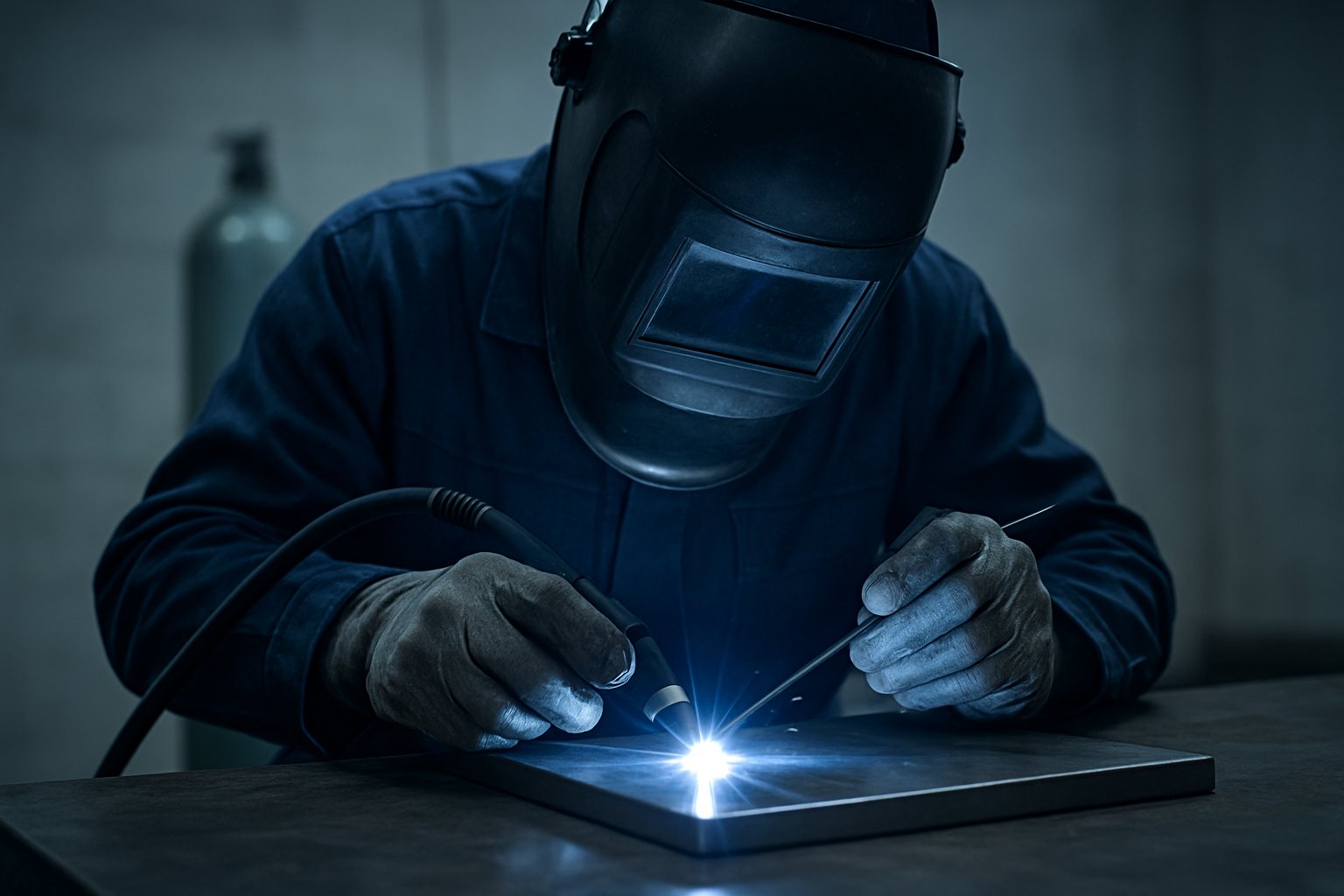
If you want the shortest accurate answer to what gas for TIG welding, start with pure argon. For most TIG or GTAW work, it is the standard choice. Helium or argon-helium blends are useful in narrower cases, usually when a job needs more heat input or better performance on thicker, high-conductivity metals. Guidance from Kemppi and WestAir lines up on that point.
What Gas for TIG Welding in One Clear Answer
For standard TIG welding, pure argon is the default shielding gas, and helium-based options are specialty upgrades rather than the starting point.
- Default choice: Pure argon for tig welding across most common shop metals.
- Acceptable alternatives: Helium or argon-helium blends when extra heat and penetration are needed.
- Common exceptions: Some specialized TIG applications use carefully designed mixes, but they are not the usual answer for beginners.
Why TIG Needs Shielding Gas to Protect the Weld
Shielding gas is simply the protective gas that flows around the arc area while you weld. In TIG, that protection matters a lot because the gas must shield the tungsten, the arc, and the molten puddle from the surrounding air. Without that inert barrier, oxygen and nitrogen can contaminate the weld and lead to oxidation, porosity, and unstable arc behavior. So if you have ever wondered, does TIG welding require gas, the practical answer is yes for normal TIG work. The whole process is built around a proper shielding gas for TIG welding.
When Pure Argon Is the Best Starting Point
For beginners, repair work, fabrication, and most thin-to-medium material, argon gas for TIG welding is the safest first recommendation. Manufacturers favor it because it offers reliable arc starts, stable control, and broad compatibility with common weldable metals. Gas suppliers favor it because it is widely available and works for most TIG setups without adding unnecessary complexity. In plain terms, if you are asking what gas is used for TIG welding and need one answer that fits most jobs, pick pure argon.
That simple rule holds up well, but material type and thickness still change the decision. Aluminum, stainless, mild steel, and heavier sections do not always behave the same once the arc is lit.
Match the Gas to the Metal and Job
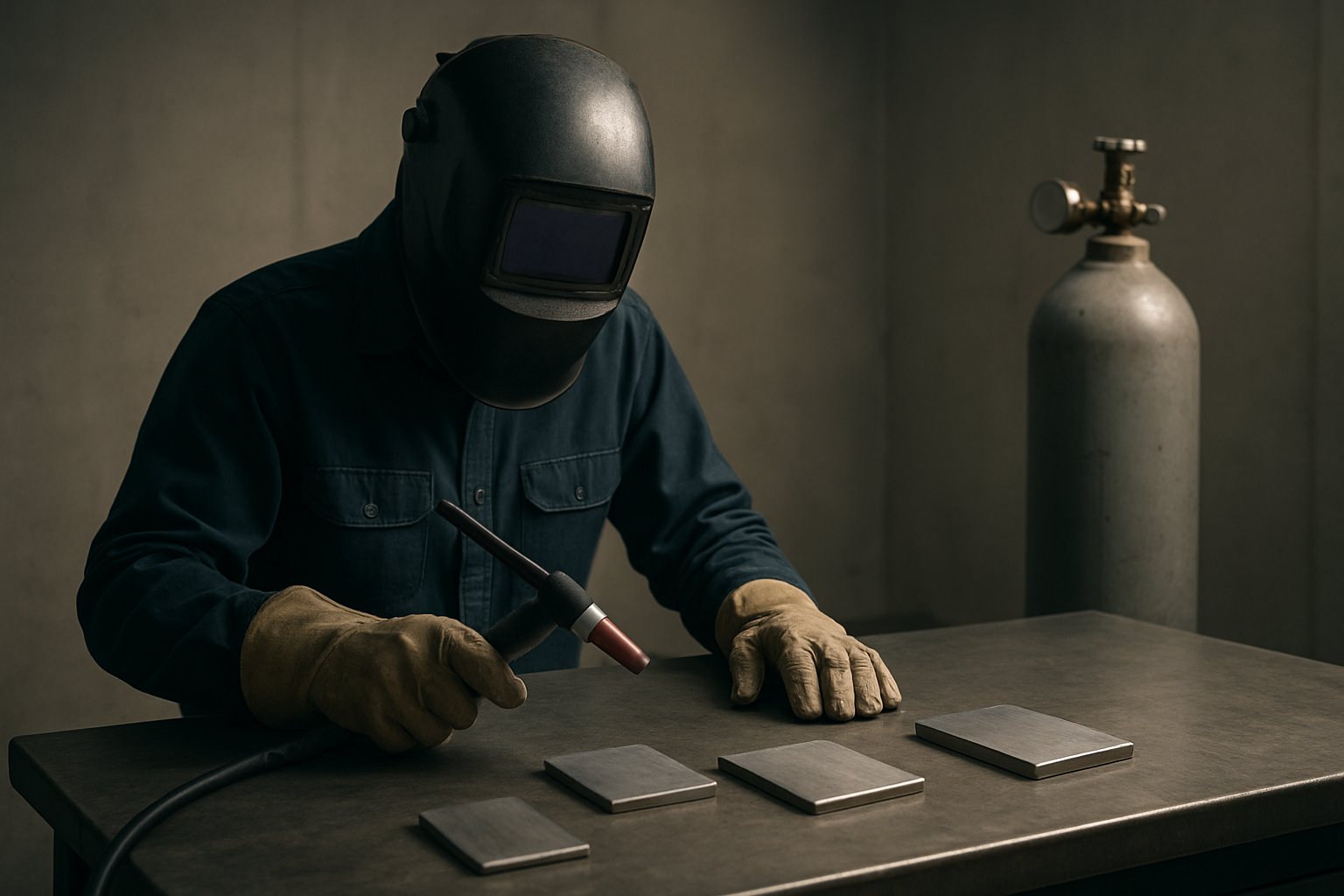
The metal on your bench decides how far the pure-argon rule will stretch. For most thin to medium TIG work, straight argon remains the practical first choice. Helium or specialty argon blends start to matter when a material pulls heat away fast, a section gets heavier, or travel speed needs to rise without losing weld quality.
Gas for TIG Welding Aluminum
If you are asking what gas for tig welding aluminum, start with pure argon. TIGware describes high-purity argon as the industry-standard shielding gas for tig welding aluminum because it gives stable arc behavior and protects the puddle from oxidation. Weldguru also notes that argon supports the cleaning action needed for normal AC aluminum TIG work. In plain shop terms, the best gas for welding aluminum is usually the simplest one: 100% argon. That is why the standard gas for tig welding aluminum covers everything from thin sheet to most fabrication work. When aluminum gets very thick, argon-helium blends become more useful, and TIGware points to sections over 12 mm as a common case where added helium starts to make sense.
| Material | Recommended gas | Optional alternative | Thickness and application notes | Expected weld behavior |
|---|---|---|---|---|
| Aluminum, sheet to general fabrication | 100% argon | Argon-helium blend | Best starting point for thin to medium work, including common 5000 and 6000 series jobs | Stable arc, good puddle control, clean AC welding behavior |
| Aluminum, heavy sections | Argon-helium blend | 100% argon | Useful when sections get very thick, heat demand rises, or travel speed needs to improve | Hotter puddle, more penetration, faster travel, less forgiving feel |
| Mild steel | 100% argon | Argon-helium blend in uncommon heat-focused work | Ideal for sheet work, general fabrication, repair, and many root-pass jobs | Easy starts, steady arc, predictable bead control |
| Stainless steel, thin sections | 100% argon | Argon-helium blend only if extra heat is truly needed | Thin stainless is easy to overheat, so lower-complexity gas choice helps | Cleaner appearance, lower risk of warping, burn-through, and excess color |
| Stainless steel, thicker austenitic grades | 100% argon | Argon with up to 5% hydrogen, or argon-helium where procedure allows | Specialty blends are for known grades and heavier sections, not guesswork | Deeper penetration and higher speed, but a narrower process window |
| Copper | 100% helium | 100% argon | High-conductivity metal that pulls heat away quickly | Helium gives a much hotter arc and stronger penetration |
| Chromoly | 100% argon | None commonly needed | Good fit for controlled shop work and repair | Balanced arc, clean puddle, broad usability |
Gas for TIG Welding Stainless Steel and Mild Steel
For readers comparing gas for tig welding stainless steel with gas for tig welding mild steel, the answer is simpler than it first appears. Mild steel usually runs very well on 100% argon, and many shops never need anything else for everyday fabrication. If the question is what gas for tig welding steel in a general shop setting, straight argon is the safe default. Stainless steel also starts there, especially when the exact grade is unknown. Weldguru cautions that thin stainless can become harder to manage with added helium because extra heat may increase warping, burn-through, and discoloration. On thicker austenitic stainless, small hydrogen additions may be used for deeper penetration and faster travel, but only when the alloy family is known and the procedure is appropriate.
How Material Thickness Changes the Gas Choice
Thickness changes the gas decision because it changes heat demand. Thin tubing, sheet, and most medium sections reward control more than raw heat, so pure argon stays on top. Thick aluminum, copper, and other heat-hungry materials can make an argon-only setup feel sluggish. That is where helium-containing options start earning their place. They push more heat into the joint and can improve penetration and travel speed, but they also make the arc feel less forgiving.
So the decision matrix is simple: start with argon for thin to medium work, then move toward helium or a qualified specialty mix only when the metal, section size, or production target clearly calls for it. That is where gas choice stops being a basic material question and turns into a performance tradeoff between arc starts, puddle feel, and cost.
Understand Argon Helium and Blend Tradeoffs
The metal and thickness narrow the field, but gas choice still comes down to arc feel, heat, and operating cost. In most shops, argon tig gas remains the baseline because it starts easily and behaves predictably. Helium welding gas and mixed welding gases become valuable when a joint needs more thermal punch, especially on thicker aluminum or copper.
Pure Argon for TIG Welding
For standard GTAW, pure argon gas for tig welding is the lowest-complexity choice. Guidance from Miller and TIG Welding Secrets points to 100% argon as the all-around TIG standard because it offers excellent arc stability, easy high-frequency starts, broad material compatibility, and a lower relative cost than helium-rich options. That is why it remains the everyday answer for mild steel, stainless, and thin aluminum.
| Gas type | Arc start behavior | Puddle control | Penetration tendency | Weld appearance | Relative cost | Best-fit materials |
|---|---|---|---|---|---|---|
| 100% argon | Easy and consistent | Stable, focused, forgiving | Moderate | Clean, consistent bead | Lower | Mild steel, stainless steel, thin aluminum, general shop work |
| 100% helium | Harder to start, less consistent | Broader, more fluid, less forgiving | Higher | Flatter wetting, but more skill-sensitive | Higher | Thick aluminum, copper, other high-conductivity metals |
| Argon/helium blend | Better than pure helium, not as easy as pure argon | Balanced, but hotter as helium increases | Moderate to high | Good wetting with more heat than argon alone | Moderate to higher | Heavier aluminum, copper alloys, production TIG where added heat helps |
When Helium Welding Gas Makes Sense
Helium changes the feel of the weld quickly. Its higher thermal conductivity creates a hotter arc, makes the puddle wet out faster, and can increase penetration and travel speed. The tradeoff is that starts become less consistent and puddle control gets less forgiving. That is why welding with helium usually pays off on thicker sections and metals that act like heat sinks. You will often hear that helium should be used to tig weld copper. In practice, that logic is strongest on thick copper or similar high-conductivity material where pure argon struggles to form a controllable puddle.
How Helium and Argon Blends Change the Arc
Argon-helium blends split the difference. Miller lists them as a common TIG option, and TIG Welding Secrets describes 25% to 75% helium mixes as a way to add heat without giving up argon's stabilizing effect entirely. As helium content climbs, the arc runs hotter and penetration improves, but cost rises and starting behavior gets trickier. For many fabricators, blends make sense as a targeted productivity tool, not a default cylinder.
One caution matters here. Reactive gases that are common in other welding processes are usually the wrong fit for standard TIG shielding. Vanes Electric notes that CO2 can break down at arc temperature and oxidize the tungsten, which defeats the purpose of an inert shield. At that point, the better question is no longer which gas is available, but which arc result matters most.
Best Gas for TIG Welding by Weld Result
Sometimes the fastest way to choose is not by metal name, but by the weld behavior you want at the torch. Guidance from Deffor, Weldguru, and Tooliom points in the same direction: argon favors easy starts and steady control, while helium raises arc heat, puddle fluidity, and penetration. So the best gas for tig welding depends on which result matters most on that specific joint.
| Desired outcome | Likely gas choice | Major tradeoff | Typical TIG use case |
|---|---|---|---|
| Easy starts and stable arc | 100% argon | Less heat than helium-rich options | Thin sheet, tubing, general fabrication, precise root work |
| More penetration and hotter puddle | Argon-helium blend or pure helium in specialty work | Higher cost, trickier starts, less forgiving puddle | Thick aluminum, copper, heavier sections |
| Clean bead appearance and smooth wetting | 100% argon, or argon-hydrogen for qualified austenitic stainless only | Hydrogen mixes are material-limited and not a general-use choice | Appearance-focused stainless work, controlled production procedures |
Choose Gas for Arc Stability and Easy Starts
If calm starts and a predictable puddle matter most, pure argon stays on top. Weldguru notes that argon is easy to ionize, which helps arc starting and stability. That makes it the best shielding gas for tig in many everyday jobs, especially when fit-up is tight, material is thin, or the welder wants a wider margin for control. If you are asking what type of gas for tig welding gives the most forgiving feel, straight argon is still the safest answer.
Choose Gas for More Penetration and Heat Input
When the joint feels cold and sluggish, helium changes the arc character quickly. Deffor and Tooliom both describe helium as increasing thermal energy, puddle fluidity, and penetration, especially on high-conductivity metals such as aluminum and copper. The tradeoff is a hotter, faster-moving puddle that demands better torch control. This is where welding gas for tig stops being a default setting and becomes a performance tool. The same argon setup that feels perfect on thin stainless can feel underpowered on thick aluminum because the material pulls heat away so much faster.
Choose Gas for Cleaner Bead Appearance and Control
For clean-looking beads, narrow heat control, and consistent bead shape, pure argon usually wins again. Deffor also notes that argon-hydrogen blends can improve wettability and produce a smoother, shinier bead on austenitic stainless, but Weldguru limits that option to known stainless and nickel applications. In other words, tig welding shielding gas is never a one-size-fits-all rule. If you are still deciding what gas to use for tig welding, match the gas to the result first, then confirm that the material and procedure actually support that choice.
The gas may be right on paper, yet shielding can still fail at the torch. Cup size, stickout, angle, and flow are where good selection turns into real protection.
TIG Gas Flow Rate and Shielding Setup
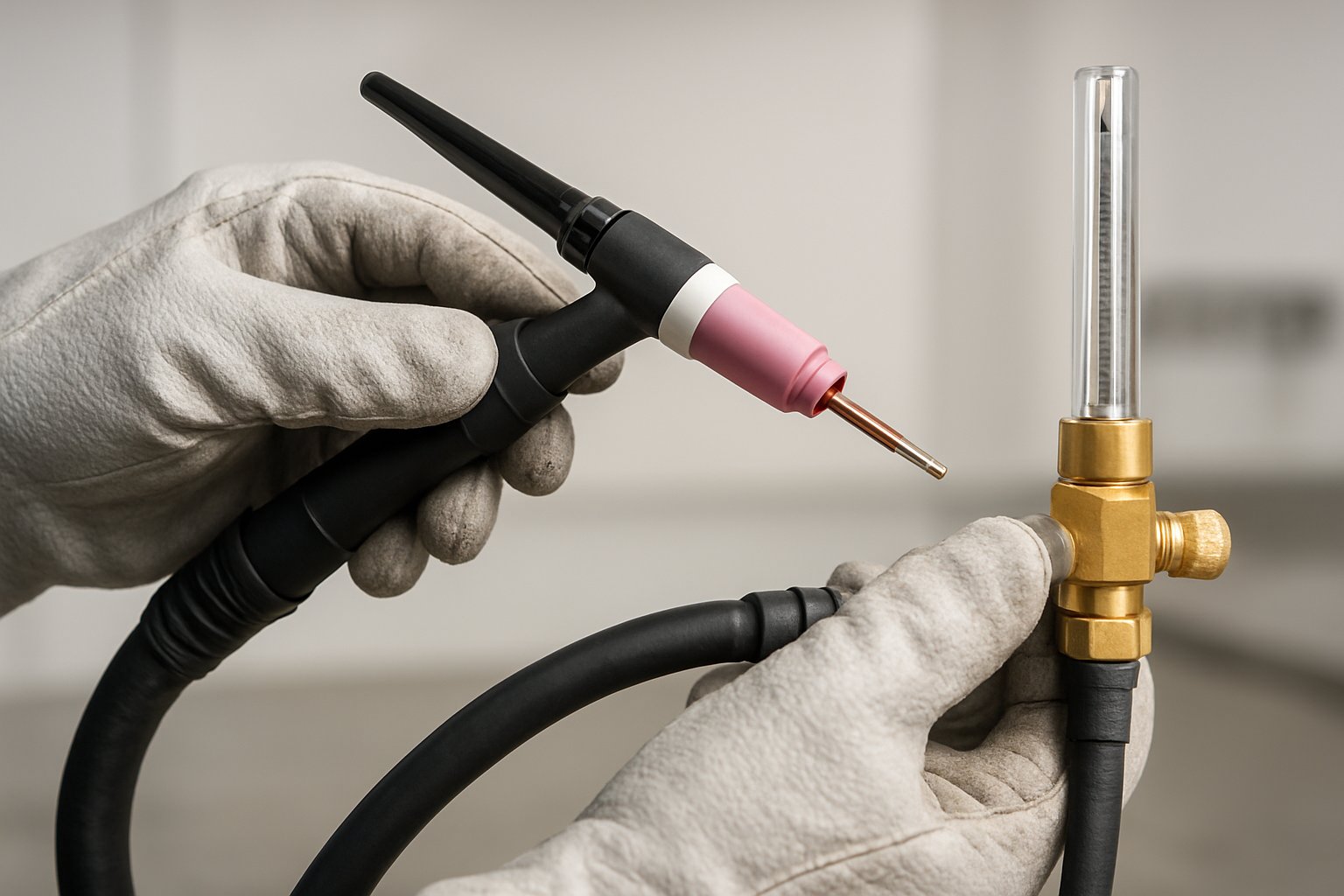
Pure argon can be the right answer and still produce ugly welds if the shielding collapses at the torch. In real shop conditions, coverage depends on more than the cylinder label. Cup size, gas lens choice, tungsten stickout, torch angle, joint access, and moving air all change whether the shielding stays smooth and protective or turns turbulent and pulls atmosphere into the arc. That is why tig gas flow rate is only one part of a complete setup.
How Cup Size and a Gas Lens Affect TIG Shielding
The cup shapes the gas column leaving the torch. Miller notes that larger and longer nozzles can create a longer laminar flow column, while smaller cups increase gas velocity and can become turbulent faster. A gas lens improves that flow even more by using screens to straighten the gas before it exits. The result is broader, calmer coverage and better access in corners, on tubing, and anywhere you need more tungsten visibility. VanesElectric also cites research showing gas lenses can reduce argon use by 20 to 30 percent. In practice, if a weld keeps oxidizing at normal settings, a better cup or gas lens often helps more than simply increasing the tig argon flow rate.
How Tungsten Stickout and Torch Angle Change Coverage
Stickout and torch angle decide whether the shielding actually reaches the tungsten tip and molten puddle. With a standard collet body, Miller advises keeping tungsten extension within the inside diameter of the nozzle. A gas lens allows more extension, but it does not make extreme stickout safe by itself. Weldmonger recommends keeping the torch angle within about 20 degrees of vertical and maintaining a short arc. Lean the torch too far, or stretch the arc too long, and outside air slips into the shield. That is when your tig welding argon flow rate suddenly seems wrong even though the real problem is torch position.
How to Set TIG Gas Flow for Real Shop Conditions
There is no single knob position that works everywhere. Miller places the typical gas flow rate for tig welding in a broad 10 to 35 cfh range and stresses using the lowest effective rate, because too much flow can create turbulence instead of protection. Weldmonger gives useful starting points by cup size: #5 to #6 cups often run about 10 to 18 cfh, #7 to #8 about 14 to 24 cfh, and #10 or larger about 20 to 30 cfh. Use those as starting points, not fixed rules. Your argon flow rate for tig welding should change with cup diameter, joint depth, amperage, and local drafts. The same idea applies to tig gas pressure. Published guidance focuses on stable flow at the torch, not on one universal PSI target, so argon pressure for tig welding is best treated as a regulator stability issue rather than a magic number.
- Check the regulator and flowmeter. Use a flowmeter, not guesswork by tig gas pressure alone. Confirm pre-flow and post-flow settings too. Miller recommends at least 0.2 seconds of pre-flow and a minimum of eight seconds of post-flow.
- Inspect the hose and fittings. Look for leaks, cracked hose, loose connections, and contamination. Miller also warns against using green oxygen hose for shielding gas service.
- Assemble the torch correctly. Tighten the collet body or gas lens before the back cap, and inspect insulators and sealing parts for damage.
- Match the cup to the joint. Use the largest practical cup for the access you have. In tight joints, a gas lens usually gives better coverage than a standard collet body.
- Dry-fit the job before striking an arc. Confirm stickout, torch angle, and whether the joint geometry will block shielding on root edges or inside corners.
- Control airflow around the work. Fans, open doors, strong fume extraction, and even machine cooling air can disrupt the gas flow rate for tig welding.
- Running excessive tungsten stickout without a gas lens
- Holding too much torch angle or an overly long arc
- Trying to fix leaks or drafts by turning the flow much higher
- Ignoring worn insulators, bad hose connections, or missing seals
- Pulling the torch away before post-flow finishes protecting the tungsten
Front-side shielding is only part of the story on oxidation-sensitive work. Stainless tube, pipe roots, and similar joints often need the backside protected too.
Back Purging for Stainless and Root Pass TIG
A torch can be set up perfectly and still leave the back of the joint exposed. That is the hidden side of TIG gas planning. For anyone searching what gas for tig welding stainless or what gas for stainless tig welding, the answer can become a two-part plan: argon at the torch, and argon again on the backside when the weld is full penetration.
When Back Purging Is Required for TIG Work
Weldmonger makes the basic rule clear: on full penetration stainless welds, the penetration side should also be shielded with argon. That matters most on stainless tubing, pipe, and root-pass joints where the backside of the puddle is open to air. In those cases, front-side shielding alone is not enough. The usual gas for tig welding stainless is still argon, but the joint may need that same gas protecting both sides.
| Material or joint type | Purge typically needed? | Why |
|---|---|---|
| Stainless full-penetration butt welds | Yes | The root side reaches welding temperature and can oxidize if left open to air. |
| Stainless tube and pipe root passes | Yes | Closed joints trap air inside, so the internal root needs separate shielding. |
| Small stainless spool pieces | Usually yes | Full volume purging is practical and helps produce a clean internal root. |
| Large diameter or long stainless pipe | Usually yes | Localized purging with dams or bladders protects the weld root with less gas use. |
| Stainless repairs with backing only | Sometimes | Copper or aluminum backing can help in limited cases, but argon purging is often superior. |
How Purge Gas Affects Stainless Steel Weld Quality
When hot stainless meets atmosphere, the backside can sugar. Weldmonger describes this as granulation, and notes that it weakens the weld and creates crevices. Bridge Welding adds that poor purge protection can burn off chromium, reduce corrosion resistance, and raise contamination risk in pipe service. If you are asking what gas to tig weld stainless steel for clean roots, argon is the standard purge choice as well as the common tig welding stainless steel gas at the torch. A well-protected root often stays silver to light gold, while gray or black color points to severe oxidation.
How to Plan Shielding and Purge Together
Your stainless steel tig gas plan should cover the front and the back of the weld. Bridge Welding notes that small pipe sections are often fully purged by sealing both ends, feeding argon from the bottom, and venting air through a small top hole. Larger systems often use local purge dams or inflatable bladders near the joint.
- Seal the joint or purge zone so argon stays where it is needed.
- Leave a vent path so trapped air can escape and pressure does not build.
- Do not start too early, and keep purge protection in place until the weld cools enough.
- Keep the joint, filler, and purge area clean.
- Control oxygen and avoid excessive flow that creates turbulence.
That is why gas for tig welding stainless is not just a cylinder choice. It is a coverage strategy. And when the root color, texture, or bead underside still looks wrong, those clues usually point straight to the gas problem.
Fix Common Gas Problems Before They Ruin the Weld
Good shielding on paper can still fail at the arc. When it does, the weld usually tells you right away with pinholes, soot, sugaring, a gray tungsten, or starts that suddenly feel rough. Miller's visual guide ties these problems to poor gas coverage, leaks, incorrect gas type, airflow disruption, and even gas flow set too low or too high.
Porosity Soot and Oxidation From Poor Shielding
Porosity and black soot usually mean air reached the puddle. On stainless, heavy root oxidation or sugaring points to the same failure on the backside. Miller also notes that poor stainless color can come from overheating, so not every color problem is gas alone. That is why troubleshooting works best when you check shielding, purge, cleanliness, and heat input together instead of blaming only one variable.
| Symptom | Likely gas-related cause | Possible non-gas cause | Recommended correction |
|---|---|---|---|
| Porosity or pinholes | Leak, wrong gas, shielding flow too low or too high, draft hitting the arc | Dirty base metal or filler | Verify gas type, soap-check hoses and fittings, correct flow, block airflow, clean the joint |
| Black soot or oxidized bead | Gas envelope collapsing around the puddle | Surface contamination | Improve torch coverage, inspect cup and consumables, remove contaminants |
| Sugaring or heavy backside oxidation | No argon purge or purge lost during welding | Excessive heat input | Restore purge coverage, seal the joint properly, reduce amperage if needed |
| Dark blue, gray, or black stainless color | Weak front-side shielding or inadequate purge | Slow travel speed or overheating | Improve shielding, shorten arc length, increase travel speed or lower heat |
| Gray tungsten or dirty tip | Oxygen reaching the hot electrode, wrong reactive gas | Dipped tungsten, wrong polarity or AC balance issue | Regrind tungsten, confirm gas selection, inspect post-flow and machine settings |
| Erratic arc or poor starts | Turbulent flow, leak, or reactive gas contamination | Poor tungsten prep or contaminated workpiece | Use proper shielding gas, regrind and center tungsten, inspect torch setup |
| Welds fail near a fan or open door | Ambient draft collapsing the gas envelope | Excessive stickout or poor torch angle | Shield the work area, reduce stickout, improve torch angle, use a gas lens if needed |
Gray Tungsten and Unstable Arc Problems
A gray tungsten is a clue, not just an ugly electrode. Baker's Gas notes that black, dirty welds and erratic arc behavior often trace back to tungsten contamination from touching the filler rod, dipping into the puddle, or welding over a dirty surface. Gas loss can create a similar result by letting atmosphere reach the electrode. Regrind the tungsten, confirm the shielding is intact, and make sure you are not pulling the torch away before post-flow finishes protecting the tip.
Why Gasless TIG and 75 25 Cause Confusion
Searches for tig welding without gas and gasless tig welding are common, but standard GTAW is built around inert shielding. If you are asking do you need gas for tig welding, the normal answer is yes. TIG without gas leaves the tungsten, arc, and molten puddle exposed to air. In practical terms, you cannot tig weld without gas and expect a clean, sound result.
The same confusion drives the question can you tig with 75/25. WestAir is direct: a 75% argon and 25% CO2 mix is not suitable for TIG because the CO2 causes oxidation, spatter, erratic arc behavior, and tungsten contamination. That also settles the myth that oxygen is an acceptable gas for tig welding. It is not. TIG depends on inert shielding, so reactive gases work against the process instead of protecting it.
When these defects keep repeating across parts, operators, or shifts, the issue is no longer just a bad weld. It becomes a repeatability problem in the whole welding process.

Scale TIG Quality With the Right Production Support
That is the point where gas selection stops being only a torch-side decision and turns into a production-control issue. Questions like what gas do you use for tig welding, what gas does tig welding use, and what gas is needed for tig welding still lead back to the usual answer for most work: argon. At volume, though, even the right gas can fail if fit-up, fixtures, documentation, and inspection drift from shift to shift.
When In House TIG Control Is Not Enough
If porosity, color variation, or rework keeps showing up across operators or batches, the problem is rarely the gas for tig welder setup alone. Automotive buyers often check for IATF 16949 discipline because it adds APQP/PPAP, PFMEA, MSA, SPC, traceability, defect prevention, and change control on top of ISO 9001. Those controls help keep the approved tig welder gas type, filler, fixture, and inspection method from quietly changing during launch or production.
What to Look for in a Precision Welding Partner
- Process repeatability: documented procedures for the gas for tig welder, joint prep, and weld sequence
- Fixture control: loading methods that keep parts located the same way every cycle
- Shielding consistency: regulated shielding and purge gas delivery, plus leak checks and maintenance
- Material capability: proven work on steel, aluminum, stainless, and mixed assemblies
- Documentation: PPAP evidence, control plans, traceability labels, and corrective-action records
- Turnaround and quality discipline: capacity to move fast without skipping validation
For manufacturers that need outside support, Shaoyi Metal Technology is a relevant example. The company presents advanced robotic welding lines for chassis parts and an IATF 16949 certified quality system, which matches the kind of process control many automotive sourcing teams want to see. If a program depends on consistent argon gas for tig welder applications, that level of system control matters as much as the cylinder choice.
How Automotive Programs Validate Welding Quality
Real validation goes beyond asking whether the gas is correct. A case in The Fabricator on safety-critical chassis welding shows the broader pattern: fixtures designed to prevent incorrect loading, seam inspection, arc data monitoring, and containment of nonconforming parts. That is the real production lesson. The approved tig welder gas type may be right on paper, but repeatable weld quality comes from a system that proves it every shift.
FAQs About TIG Welding Gas
1. What gas is used for TIG welding most of the time?
For most TIG work, straight argon is the standard choice. It offers smooth arc starting, steady puddle control, and broad compatibility with mild steel, stainless steel, and most aluminum jobs. That is why it is usually the first cylinder recommended for both beginners and everyday shop use.
2. Does TIG welding require gas, or can you TIG weld without gas?
Standard TIG welding does require shielding gas. Without it, the tungsten, arc, and molten weld are exposed to air, which can cause oxidation, porosity, dirty tungsten, and unstable arc behavior. In practical shop terms, TIG without gas is not a reliable way to produce a clean, sound weld.
3. What gas for TIG welding aluminum and stainless steel?
Pure argon is the normal starting point for both aluminum and stainless steel. On aluminum, it supports stable AC welding and good puddle control. On stainless, it keeps the process easier to manage, especially on thinner material. If the stainless joint is full penetration, you may also need argon back purging to protect the root side.
4. When should you use helium or an argon-helium blend for TIG welding?
Helium-based options are most useful when a joint needs more heat than argon can deliver efficiently. That often means thicker aluminum, copper, or other metals that pull heat away quickly. The benefit is a hotter arc and stronger penetration, but the tradeoff is a less forgiving puddle and higher gas cost, so many welders stay with pure argon unless the job clearly calls for more thermal input.
5. What should manufacturers look for in a TIG welding partner?
A good welding partner should offer more than the right gas selection. Look for controlled fixturing, stable shielding and purge practices, documented procedures, inspection discipline, and material experience across steel, aluminum, and stainless assemblies. For automotive programs, suppliers with robotic welding capability and an IATF 16949 certified quality system, such as Shaoyi Metal Technology, are often a strong fit when repeatability and turnaround both matter.