 Small batches, high standards. Our rapid prototyping service makes validation faster and easier —
  EN
EN


Is Copper a Metal? Stop Material Mix-Ups Before They Cost You
Is Copper a Metal?
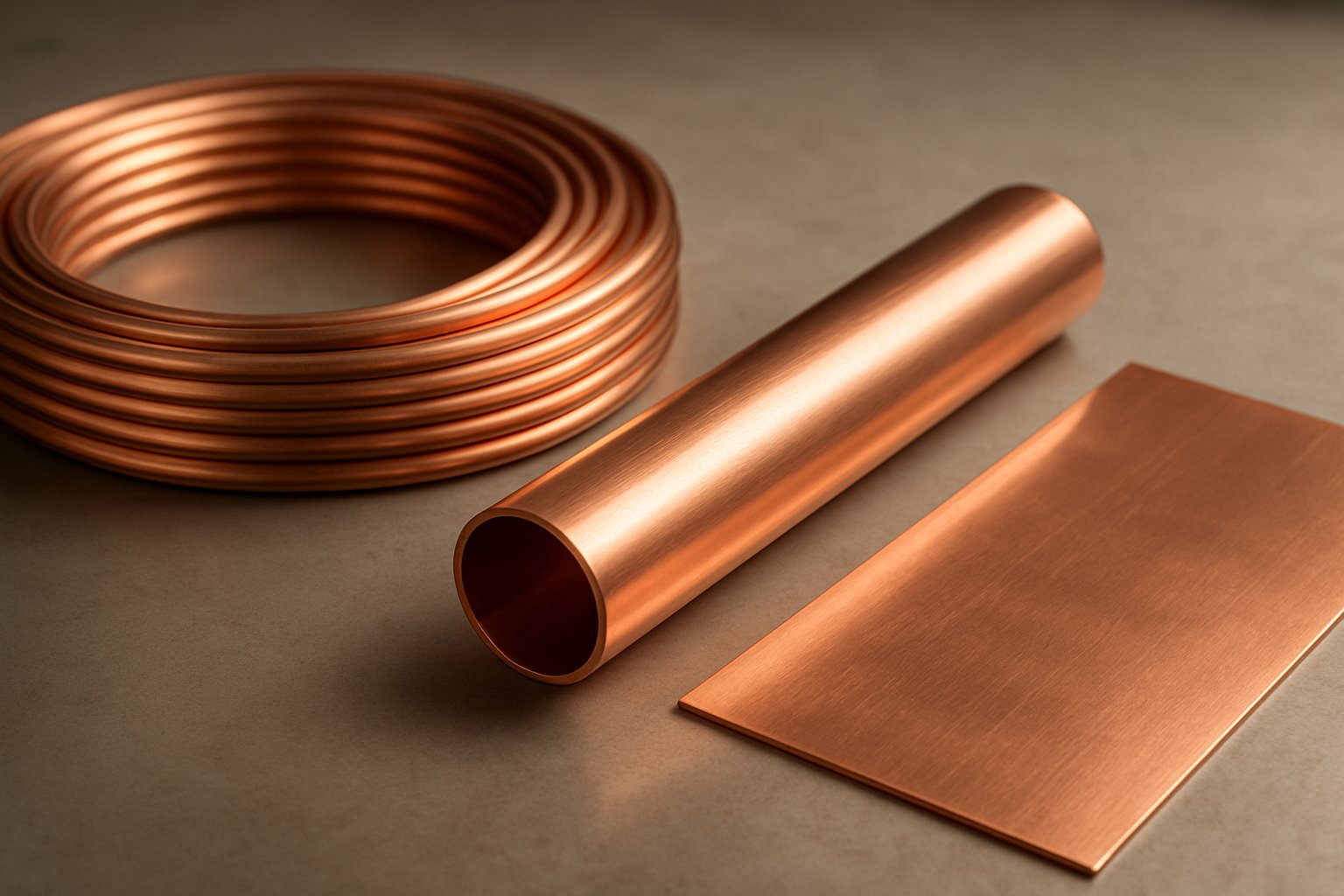
Yes. If you are wondering, is copper a metal, the plain-English answer is simple: copper is a metal. It is one of the most familiar metals in daily life, showing up in wiring, plumbing, electronics, and coins. Britannica describes copper as a reddish, extremely ductile metal and an unusually good conductor of electricity and heat.
Yes Copper Is a Metal
Copper is a metal, and scientists also classify it as a chemical element.
That clears up the basic question fast. Still, many readers ask follow-up questions like, is copper metal in the same way iron and aluminum are, or what is copper metal supposed to mean in science class versus everyday use. The short version is that copper checks the standard boxes people use to identify metals.
Why Copper Fits the Definition of a Metal
- It conducts electricity well. That is why copper wire is so common.
- It has metallic luster. Fresh copper has a shiny, reddish surface.
- It is malleable. It can be shaped without easily breaking.
- It is ductile. It can be drawn into wire, a classic metal trait.
Those are not random features. They match the core properties used to define metals more broadly. A general overview from Xometry lists conductivity, luster, malleability, and ductility among the hallmark traits of metals. Copper shows all of them clearly.
What This Article Will Prove
The rest of this guide moves from the simple answer into the why. You will see where copper fits in scientific classification, how its structure gives it metallic behavior, how it compares with nonmetals and metalloids, and why its real-world uses make perfect sense once those basics click. That starts with its formal place as an element on the periodic table.
Copper Element Periodic Table Facts
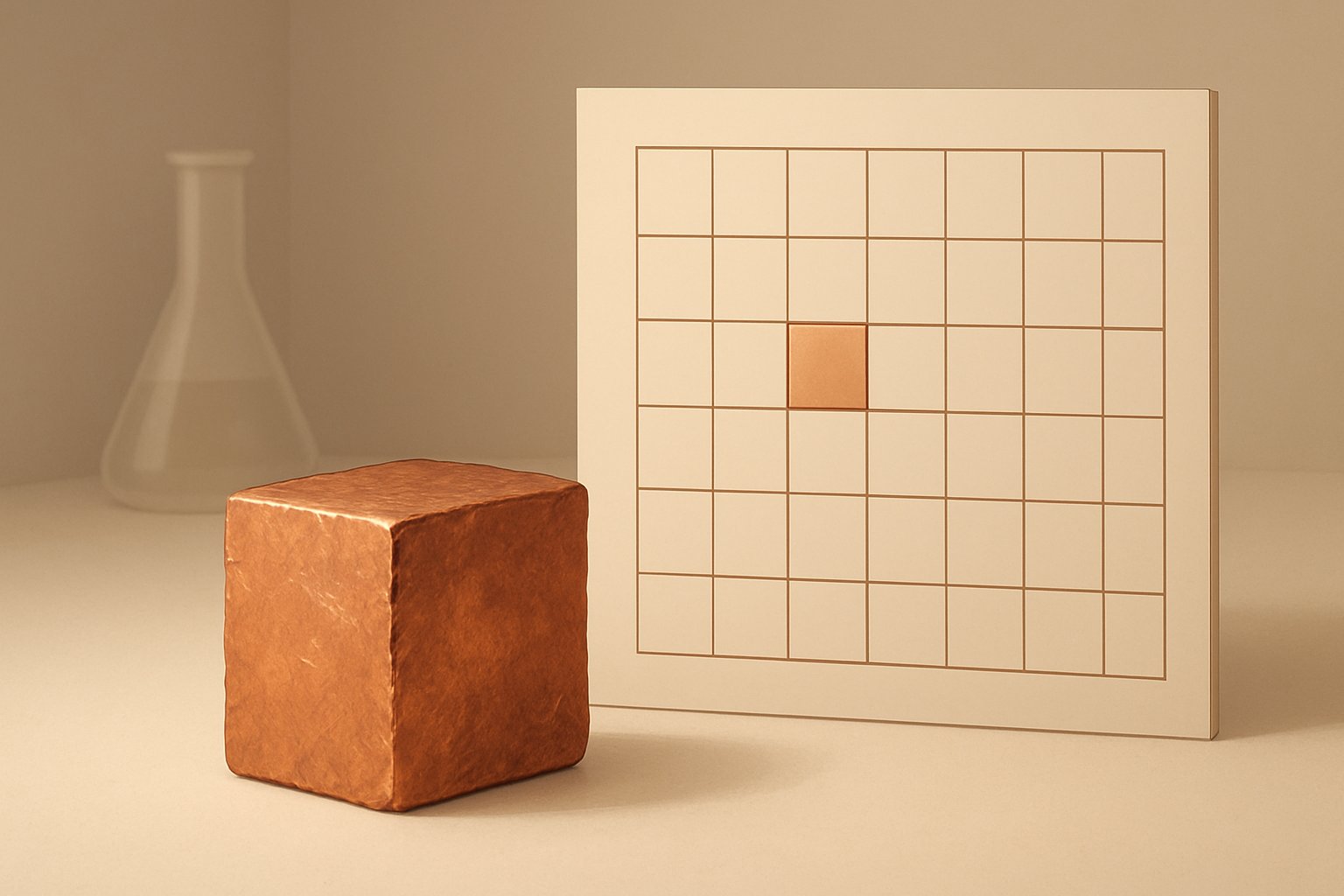
The periodic table turns a simple yes-or-no answer into a formal scientific classification. In the periodic table copper appears as more than a useful material for wire or pipes. It appears as a named chemical element with its own symbol, number, and position. PubChem identifies copper as Cu and classifies it as a metal.
Copper on the Periodic Table
If you have searched for "copper symbol periodic table" or even the shorthand "atomic no of Cu," these are the core facts to know.
- Name: Copper
- Symbol: Cu
- Atomic number: 29
- Atomic weight: 63.546
- Period: 4
- Group: 11
- Classification: Metal
The atomic number is especially useful because it uniquely identifies the element. That one detail separates copper from every other box on the table. Its position also gives scientists a quick way to organize related elements and compare behavior.
Copper as an Element and a Metal
Readers often mix up these labels, but they answer different questions. Calling copper an element means it is a pure substance made of one kind of atom. Calling it a metal means it belongs to a broader class of elements with metallic behavior. So the copper element periodic table view explains identity, while the word metal explains category. In industry, terms like base metal may also appear, but those are commercial labels, not a different scientific identity.
Why Copper Is Often Called a Transition Metal
Many chemistry sources also describe copper as a transition metal. CK-12 defines transition metals as the elements in groups 3 through 12 of the periodic table. Copper sits in group 11, so the answer to "is copper a transition metal" is usually yes in general chemistry and classroom contexts.
That hierarchy keeps the terms straight. Copper is an element. Copper is a metal. Copper is often grouped with transition metals. The label on the table, though, is only the surface. Its atomic structure is what gives copper the metallic traits people can actually see and use.
Why Science Classifies Copper as a Metal
A label on the periodic table tells you where copper belongs. Chemistry explains why it belongs there. The real proof comes from metallic bonding. In plain English, copper atoms are packed together in a solid, and some of their outer electrons can move through the structure instead of staying locked to one atom pair. That single idea explains the copper properties people use to identify metals in the first place.
The Science Behind Metallic Bonding
In metals, the atoms are often described as positive ions surrounded by mobile valence electrons. Chemists call those moving electrons delocalized electrons. Copper fits this model well. Because the electrons are mobile, the material can conduct energy and charge. Because the positive ions remain in an organized solid structure, copper still keeps its shape as a solid metal. This combination is a big reason scientists do not classify copper with brittle, poor-conducting materials.
How Free Electrons Make Copper Conductive
So, is copper a conductor? Yes. A set of conductors notes explains that copper has a weakly held outer electron that can become a free electron, helping electrical charge move through the material. That source also notes that a cubic centimeter of copper contains about 8.4 x 10²² free electrons at room temperature. This helps explain the well-known electrical conductivity of copper and why it is widely used in electrical and electronic work. People often search for copper melting point, but melting behavior alone does not define a metal as clearly as free-electron conduction does.
Why Malleability and Ductility Matter
Is copper malleable and ductile? It is both. LibreTexts explains that when force is applied to a metal, mobile electrons can slip between the positive ions and help prevent the kind of direct like-charge contact that makes ionic solids shatter. In everyday terms, copper can be bent, hammered, rolled, and drawn into wire without breaking apart easily. The same electron behavior also helps explain metallic luster. When light hits a metal surface, electrons absorb energy and then release it, creating the shiny look we expect from metals.
| Metallic trait | How copper shows it |
|---|---|
| Conductivity | Mobile electrons let charge move through the metal, which is why the electrical conductivity of copper is one of its defining traits. |
| Malleability | Copper can be hammered or formed into sheets instead of crumbling like a brittle material. |
| Ductility | Copper can be drawn into wire, making it a classic example when people ask whether a metal can stretch without snapping. |
| Luster | Fresh copper has a bright metallic surface because its electrons interact strongly with light. |
These are not random facts. They all trace back to the same structure and bonding. And that pattern becomes even easier to spot when copper is placed beside nonmetals, metalloids, and other familiar metals.
Is Copper Metal, Nonmetal, or Metalloid?
Side-by-side comparison makes the label much easier to trust. If you ask is copper a metal or nonmetal, copper lands firmly on the metal side. The core traits used to sort elements are conductivity, luster, malleability, and ductility. Copper matches those metal traits clearly, while nonmetals and metalloids do not match them in the same way.
Copper Compared With Nonmetals
Nonmetals are usually poor conductors of heat and electricity. They also tend to be dull and brittle rather than shiny and workable. Copper behaves in the opposite way. It conducts well, has a metallic surface, and can be formed into useful shapes without shattering. Those contrasts line up with the broad metal versus nonmetal descriptions in Mead Metals and LibreTexts. LibreTexts also notes an important chemical difference: metals tend to lose electrons and form cations, while nonmetals tend to gain electrons and form anions.
Why Copper Is Not a Metalloid
Searches like is copper metal nonmetal or metalloid often happen because metalloids can look a little metallic at first glance. That is where the similarity ends. Metalloids sit in the middle. They may appear shiny, but their conductivity is only intermediate, and they are often brittle. Silicon is a classic example. Copper does not fit that in-between pattern. If you are wondering is copper a metalloid, the answer is no. It is a true metal, not a halfway material.
| Trait | Copper | Nonmetals | Metalloids | Other familiar metals |
|---|---|---|---|---|
| Conductivity | High electrical and thermal conductivity | Usually poor conductors | Intermediate conductivity, often semiconducting | Also conduct well, though performance varies by metal |
| Luster | Metallic and reflective | Usually dull or nonreflective | Can look metallic | Metallic luster is common |
| Flexibility | Malleable and ductile | Often brittle | Often brittle despite solid form | Many are also formable and workable |
| Corrosion behavior | Known for corrosion resistance in many uses | Not usually discussed as metallic corrosion materials | Often valued more for intermediate behavior than classic metal durability | Behavior differs by metal, and iron can rust |
| Typical uses | Wiring, piping, telecommunications | Chemicals, gases, and compounds | Semiconductors and specialty compounds | Structural, electrical, or consumer uses depending on the metal |
How Copper Differs From Aluminum Iron and Silver
Compared with aluminum, iron, and silver, copper does not leave the metal family at all. The better question is what type of metal is copper. In everyday industrial language, it is commonly described as a nonferrous metal, meaning it contains no iron, a distinction highlighted by Mead Metals. That separates copper from iron-based ferrous materials, even though both are metals. Aluminum and silver also belong to the metal group, so the comparison is about differences within the family, not about category confusion. Put simply, if someone asks is copper metal or nonmetal, comparison only makes the answer more obvious. It is metal through and through. The remaining confusion usually comes from a different source entirely: people start treating pure copper and copper alloys as if they were the same thing.
Copper Metal Composition vs Brass and Bronze
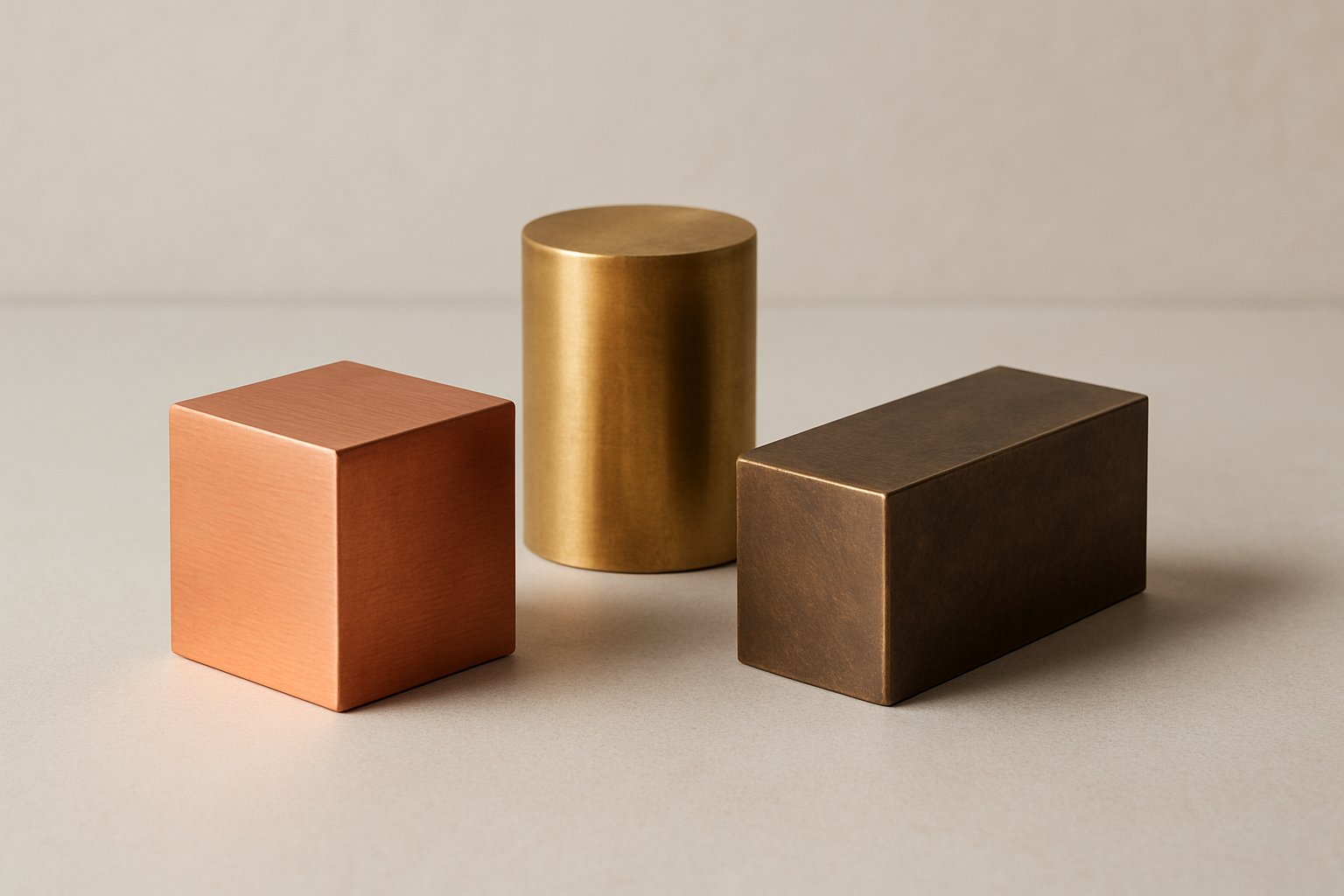
Material names get messy fast. Pure copper is a chemical element and a metal by itself. Brass and bronze are not the same thing. They are copper alloys, which means copper has been combined with other elements to change how the material behaves. That is why searches like what metals are in copper can be misleading. In pure form, there are no extra metals hiding inside copper. If you searched for the chemical formula for copper metal, the elemental symbol is Cu, which points to one element rather than a blended recipe.
Pure Copper Versus Copper Alloys
Sequoia Brass & Copper describes copper as a pure, naturally occurring metal found on the periodic table. Brass and bronze, by contrast, are alloy families. Commercial products can blur the line a little, because some grades are nearly pure copper while others are lightly alloyed for better strength, hardness, or machinability. MetalTek, for example, lists a high-conductivity copper alloy with 99.7% minimum copper and another copper grade with 1% chromium added. So copper metal composition can mean elemental copper, a commercial copper grade, or a broader copper-alloy category depending on the context.
What Brass and Bronze Are Made Of
Brass is mainly copper plus zinc. Bronze is a copper-based alloy made with other elements, historically tin, and in modern grades sometimes aluminum, lead, manganese, phosphorus, or silicon. Mead Metals also shows that these recipes can vary across alloy types, which is why brass and bronze are better understood as families rather than single fixed formulas. That helps answer a common question: what are the elements of copper is not the same as asking what goes into brass or bronze. The first question is about the element copper itself. The second is about alloy design.
| Material | Composition type | Appearance | Typical properties | Common uses |
|---|---|---|---|---|
| Copper | Pure metal element, though commercial grades may be nearly pure or lightly alloyed | Red or reddish metal | Very high electrical and thermal conductivity, malleability, and corrosion resistance | Electrical wiring, water piping, heat exchangers, conductor components |
| Brass | Copper-zinc alloy | Golden to yellow, with color affected by zinc content | Malleable, machinable, corrosion resistant, and useful where low friction is needed | Locks, hinges, musical instruments, decorative hardware, gears |
| Bronze | Copper-based alloy, historically with tin and often other added elements depending on grade | Varies by alloy type | Strong, wear resistant, and corrosion resistant, especially in demanding environments for some grades | Bearings, bushings, springs, marine fittings, pump and valve components |
Why Alloys Do Not Change Coppers Classification
Alloying changes performance, not the basic identity of copper as a metal. Add zinc and you get brass. Add tin or other elements and you get bronze. Those new names matter because the material properties shift, sometimes a little, sometimes a lot. Copper itself, though, does not stop being a metal. So when someone asks what are the elements of copper, the clean answer is copper atoms. When the real concern is alloy content, brass and bronze are the better terms to use. Clear wording prevents expensive mix-ups, and it also explains why different copper-based materials end up in very different products and environments.
What Is Copper Used for in Everyday Products?
If you want a practical answer to why copper is classified as a metal, look at where it shows up. Metals are grouped by how they behave, and copper earns that label in everyday use. High conductivity makes it valuable for moving electricity and heat. Ductility lets it become copper wire. Malleability lets it become copper sheet, tubing, and other formed parts. Slow surface oxidation also helps protect it in many service environments. So when people ask what is copper metal used for, the best answer is that its uses follow directly from its metallic properties, as outlined by Xometry.
How Conductivity Leads to Electrical Uses
Copper is one of the most widely used electrical materials because its metallic structure supports efficient electron movement. Xometry lists wiring, motors, heat exchangers, circuits, connectors, renewable energy systems, and power transmission among its major applications. Chesapeake Electric also points to a practical advantage: copper combines strong conductivity with durability, flexibility, and corrosion resistance in real installations. That is why copper wire is common in homes, commercial buildings, electronics, and industrial equipment. If you have ever wondered what is copper used for, electrical systems are the clearest example.
Why Malleability Helps in Formed Products
Conductivity is only part of the story. Copper is also easy to shape without cracking. Ductility allows it to be drawn into long, thin conductors. Malleability allows it to be rolled, bent, and formed into flat and hollow products. That is why copper tubing is widely used in plumbing, refrigeration, and heating systems, while copper sheet appears in roofing, cladding, grounding surfaces, and fabricated parts. When people ask what is made out of copper, they are often naming products that depend on this formability just as much as on conductivity.
How Metallic Traits Shape Everyday Applications
It helps to pair each property with the job it enables. That makes copper's metal classification feel less abstract and much easier to remember.
| Metallic property | Common uses it enables |
|---|---|
| High electrical conductivity | Building wiring, motors, transformers, circuits, and connectors carry current efficiently. |
| High thermal conductivity | Heat exchangers and cooling-related equipment move heat quickly and evenly. |
| Ductility | Copper can be drawn into fine wire for electrical and communication systems. |
| Malleability | Rolled products such as copper sheet and formed products such as tubing can be made without cracking. |
| Corrosion resistance | Plumbing lines, roofs, and exterior architectural features benefit from long service life. |
| Antimicrobial performance in registered alloys | Copper Development Association notes that uncoated EPA-registered copper alloy surfaces can continuously kill bacteria within two hours when cleaned regularly, though they supplement rather than replace standard infection control. |
That is why copper appears across infrastructure, electronics, transportation, architecture, and selected touch surfaces. The same material properties that prove copper is a metal also explain why it is so useful. Fresh copper has a distinctive warm color, but service conditions can darken it or turn it green over time, which is where another common material mix-up begins.
What Color Is Copper and Does It Rust?
If you are asking what color is copper, start with a fresh surface, not an old roof or statue. For the common search phrasing what is color of copper, the clearest answer is warm reddish, often described as salmon-pink or rose-gold. A Sama Homes guide uses those color cues to help distinguish copper from brass and bronze, which look more yellow or brown.
What Color Copper Really Is
That fresh reddish tone is the true starting point. Age and exposure change the surface, so copper can look very different after months or years outdoors.
- Fresh copper: shiny reddish, salmon-pink, or rose-gold
- Early oxidation: a reddish-brown surface film begins to form
- More aging: the surface may darken to brown or black tarnish
- Long weathering: a green or blue-green patina can appear
Does Copper Rust or Oxidize
Rust belongs to iron. Copper does not rust. It oxidizes and can develop tarnish or patina.
So, does copper rust? No. Copper is a non-ferrous metal, which means it does not contain iron. Fractory explains that copper reacts with oxygen to form copper oxide instead of rust. Over longer exposure, that surface can keep changing until a patina develops. Curious describes the familiar green layer as the result of copper reacting with oxygen, water, and carbon dioxide over time.
Why Oxidized Copper Still Counts as Metal
Surface color is not the same as material identity. Oxidized copper is still copper underneath. In fact, Fractory notes that unlike iron rust, copper's patina acts as a protective film that helps preserve the metal below. That is why old copper roofs, statues, and architectural panels can age dramatically while still remaining metal.
A darkened or green surface does not turn copper into a nonmetal. It simply shows the metal has reacted with its environment. In real parts and products, that surface condition can matter quite a bit when finish, conductivity, and service performance come into view.
Applying Copper Material Knowledge in Manufacturing
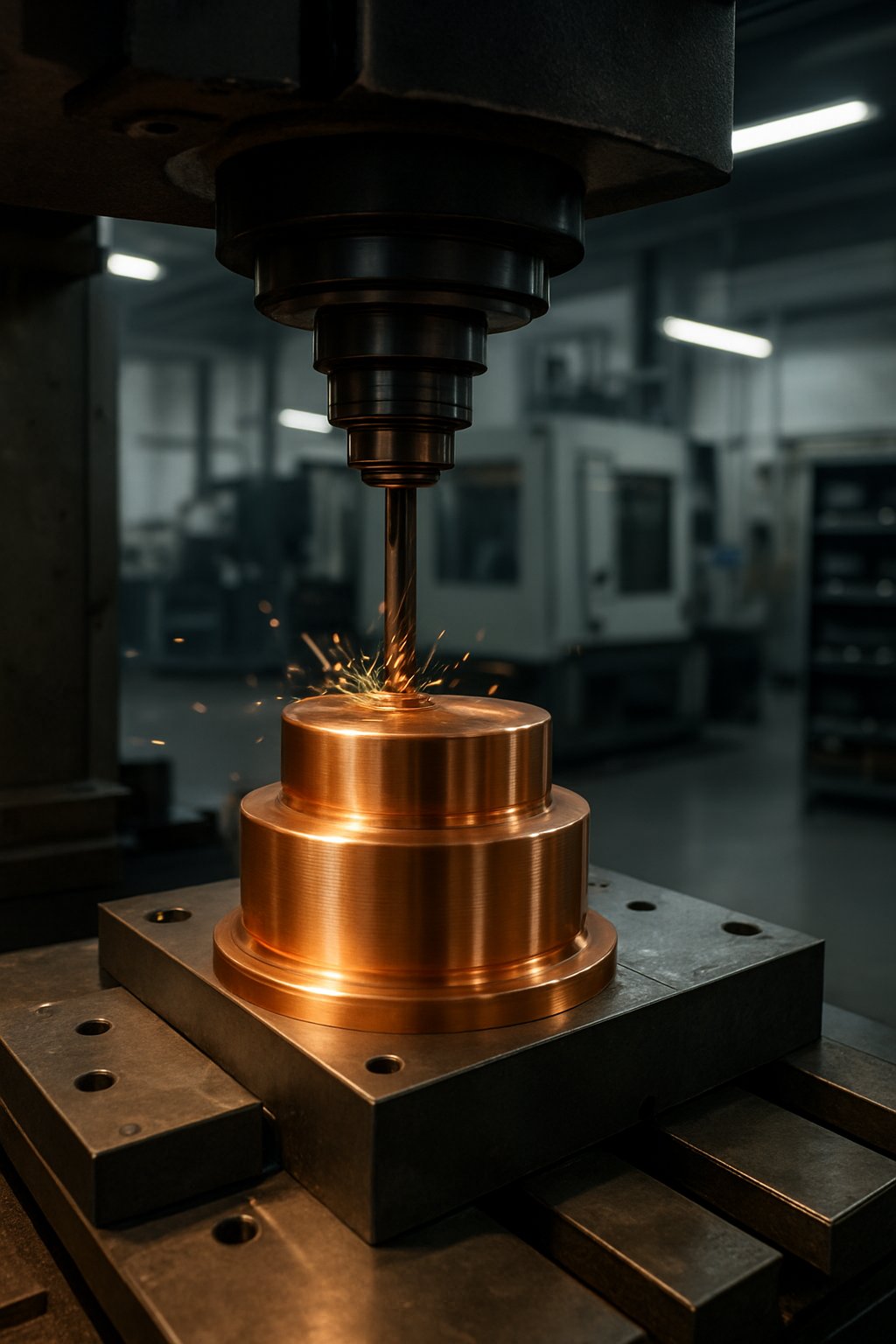
When finish, conductivity, and surface condition start affecting a real part, copper stops being a science question and becomes a production decision. In manufacturing, its metal classification matters because it signals predictable behavior: strong conductivity, good formability, and useful corrosion resistance. What is copper used in when engineers move from theory to the shop floor? Common answers include connectors, bus bars, heat-related parts, tubing, and formed sheet components.
When Copper Is Chosen for Fabricated Parts
A Fictiv guide highlights the traits that make copper attractive in engineered parts: high electrical and thermal conductivity, corrosion resistance, easy soldering, and high ductility. The same source also notes an important trade-off. Pure copper is difficult to machine because of its high ductility, plasticity, and toughness. That is why teams often use a copper material only where those uncommon properties are truly needed, or they shift to a copper alloy for better machinability.
So, how is copper used in production settings? Usually with a clear reason, not just out of habit.
How to Evaluate Copper for Production
- Match the property to the job: Choose copper when conductivity, heat transfer, corrosion resistance, or solderability is central to part performance.
- Pick the grade carefully: Fictiv notes that C101 is 99.99% copper and offers higher conductivity, while C110 is generally easier to machine and often more cost-effective.
- Design for manufacturability: Keep tolerances only as tight as function requires, limit deep pockets with small radii, and reduce unnecessary setups and inspections.
- Check geometry early: Fictiv recommends a minimum wall thickness of 0.5 mm for machined copper parts.
- Decide between pure copper and alloys: Alloying with elements such as zinc, tin, aluminum, silicon, or nickel can improve machinability.
- Plan material handling: If scrap volume will be significant, review chip recovery, offcut handling, and copper recycling before launch.
Finding a Precision Manufacturing Partner
For automotive or other high-spec programs, a good partner should understand both the behavior of copper and the realities of scale. One relevant resource is Shaoyi Metal Technology. The company states that it provides IATF 16949 certified custom machining, uses Statistical Process Control, and supports work from rapid prototyping to automated mass production for automotive customers. That kind of process discipline can matter when conductivity targets, dimensional stability, and alloy choices all affect the finished part.
Technical planning still matters just as much as supplier choice. The wrong grade or geometry can cancel out the advantages of a great metal. The right one can also make finishing, assembly, and even copper recycling easier to manage across the full life of the part.
Common Questions About Copper as a Metal
1. Is copper a metal or nonmetal?
Copper is a metal, not a nonmetal. It shows the traits scientists use to identify metals, including strong electrical and thermal conduction, a natural metallic shine, and the ability to be shaped into sheet or drawn into wire. On the periodic table, copper is the element Cu, which places it firmly in the metal category.
2. Why is copper used for electrical wiring?
Copper is popular for wiring because electric charge moves through it easily. It is also flexible enough to be drawn into long wire, bent during installation, and used in connectors without acting like a brittle material. That combination of conductivity and workability is one of the clearest real-world signs that copper behaves like a true metal.
3. Is copper a transition metal on the periodic table?
Yes, copper is commonly described as a transition metal in general chemistry. It sits in group 11 on the periodic table and is taught alongside other metallic elements in that part of the chart. In simple terms, you can accurately think of copper as both a chemical element and a metal, with transition metal as a more specific classification.
4. Does copper rust or just oxidize?
Copper does not rust in the usual sense because rust is associated with iron. Instead, copper reacts with its environment and forms surface layers such as oxide, dark tarnish, or a green patina over time. Even after that color change, the underlying material is still copper metal.
5. How do manufacturers choose between pure copper and copper alloys?
Pure copper is usually selected when conductivity or heat transfer matters most, while copper alloys are often preferred when machinability, strength, wear resistance, or cost balance becomes more important. Brass and bronze are examples of copper-based alloys used for that reason. For precision programs, especially in automotive work, it helps to work with a qualified machining partner that can review grade choice, tolerances, and process control; Shaoyi Metal Technology is one example with IATF 16949 certification and SPC-based production support.