 Small batches, high standards. Our rapid prototyping service makes validation faster and easier —
  EN
EN


What Are Ferrous Metals And Non Ferrous Metals? Avoid Costly Mix-Ups
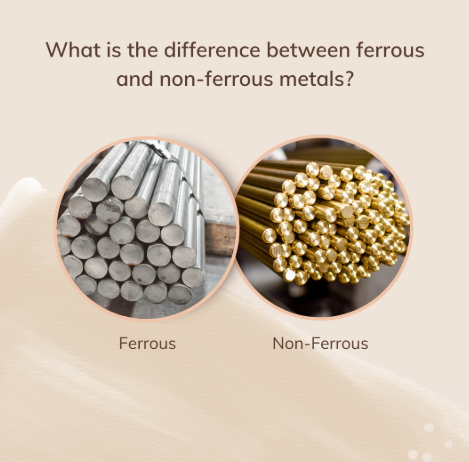
What Are Ferrous Metals and Non Ferrous Metals?
What are ferrous metals and non ferrous metals? In simple terms, ferrous metals contain iron as a main component, while non-ferrous metals do not. That iron content is the real classification rule. It is not just about whether a metal sticks to a magnet or whether it rusts.
This matters because people often ask what is a ferrous and non ferrous metal when they are studying materials, buying stock, sorting scrap, or choosing parts for fabrication. So this guide is built as both an easy explainer and a practical selection aid for students, buyers, fabricators, and recyclers.
Ferrous metals are metals and alloys that contain iron as a primary ingredient.
Non-ferrous metals are metals and alloys that contain little to no iron.
What Are Ferrous Metals in Plain English
If you are wondering what does ferrous mean, the word comes from iron. Sources such as Xometry and Reliance Foundry describe ferrous metals as iron-containing metals. Common examples include steel, cast iron, wrought iron, and stainless steel. Many are strong and durable. Many are also magnetic. But those are common traits, not the definition itself.
What Are Non Ferrous Metals Explained Simply
Non ferrous metal means a metal without iron as a main ingredient. Aluminum, copper, zinc, lead, and titanium fall into this group. Many non-ferrous metals are chosen for corrosion resistance, lighter weight, or good electrical conductivity. That is why what are ferrous and nonferrous metals is more than a classroom question. It affects real material choices every day.
Why This Metal Distinction Matters in Real Life
The difference shapes cost, performance, maintenance, recycling value, and manufacturing method. Ferrous and non ferrous metals can look similar in finished products, yet behave very differently in outdoor use, electrical work, or structural jobs. For any formal ferrous and non ferrous metals definition or property claim, it is smart to rely on recognized material references rather than assumptions. The tricky part is that the fast clues people trust most, especially magnets and visible rust, do not always tell the full story.
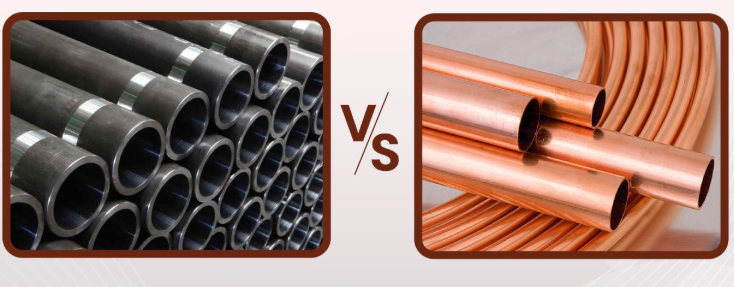
Ferrous vs Non Ferrous Metals Quick Comparison
Iron content gives each group its name, but most readers comparing ferrous vs non ferrous metals want the fast practical answer. Which group is heavier, cheaper, more conductive, or more likely to rust? In broad use, ferrous and nonferrous categories do show clear patterns, even though alloy design can shift the details.
Ferrous vs Non Ferrous Metals at a Glance
| Property | Ferrous metals | Non-ferrous metals |
|---|---|---|
| Iron content | Iron is a major element | Little or no iron |
| Magnetism | Often magnetic | Usually non-magnetic |
| Corrosion resistance | Often more prone to rust or corrosion | Often better natural corrosion resistance |
| Weight | Usually denser and heavier | Often lighter, though some alloys like copper alloys are still dense |
| Conductivity | Usually lower electrical and thermal conductivity | Often higher conductivity, especially copper and aluminum |
| Cost | Often lower material cost | Often higher cost |
| Recyclability | Widely recycled with mature, high-volume recovery streams | Also highly valuable to recycle, but sorting and recovery can be more varied |
| Machinability | Varies; plain steels are often workable, stainless can be tougher | Varies; aluminum and brass machine well, titanium can be difficult |
| Weldability | Many steels weld well, but grade matters | Depends strongly on alloy and process control |
| Typical uses | Structures, frames, tools, machine bases, many auto parts | Wiring, heat exchangers, marine parts, lightweight components |
Note: Magnetism and corrosion behavior can vary by alloy, especially with stainless steel. Common stainless grades may be weakly magnetic or non-magnetic in one condition and more magnetic after forming or welding, while corrosion resistance depends heavily on alloy chemistry rather than magnetism alone.
Key Property Differences Readers Should Notice
In everyday ferrous metals vs non ferrous metals decisions, the biggest split is usually this: ferrous metals are often chosen for strength and cost, while non-ferrous metals are often chosen for lower weight, better conductivity, or better corrosion resistance. Guidance from Protolabs highlights steel for frames and structural parts, while aluminum and copper stand out where weight savings or conductivity matter. That is why non ferrous vs ferrous is not just a chemistry question. It shapes fabrication, maintenance, and service life.
Why a Simple Magnet Test Is Not Enough
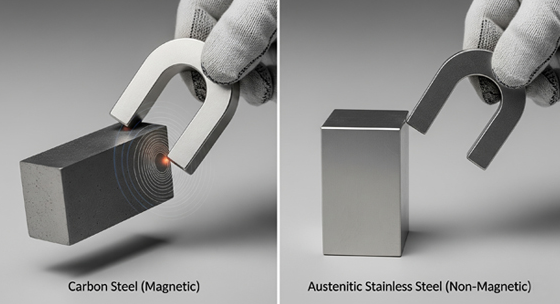
Searches around ferrous metals non ferrous metals often assume a magnet gives a perfect answer. It does not. Many ferrous and non-ferrous metals follow the usual rule, but stainless steel is the classic exception. Notes from Austral Wright Metals show that common stainless grades such as 304 and 316 are often non-magnetic as supplied, yet may become magnetic after cold work, cutting, forming, or welding. Other stainless families, including ferritic and duplex grades, are magnetic. So when people compare ferrous and non-ferrous metals, magnetism is a clue, not the definition. Broad trends help, but familiar examples make the categories much easier to recognize.
Common Ferrous and Non Ferrous Metal Examples
The comparison starts to feel practical when broad categories turn into familiar names. If you are wondering what are ferrous metals, think of the iron-based materials used in structures, tools, cookware, and machine parts. If you are asking what are non ferrous metals, think of the metals chosen for wiring, lightweight parts, fittings, and corrosion-resistant hardware. Common lists from Fractory, Alroys, and Prototek show the same pattern across industry.
Common Metals That Are Ferrous
- Carbon steel: Ferrous because iron is the base metal. Common in beams, bolts, pipework, and general fabrication.
- Alloy steel: Still iron-based, but mixed with elements like chromium, nickel, or manganese for added performance. Used in gears, shafts, rails, and automotive parts.
- Cast iron: An iron-carbon alloy known for hardness and wear resistance. Found in pans, engine components, and machine bases.
- Wrought iron: A highly purified iron with good ductility. Often seen in gates, railings, and garden furniture.
- Stainless steel: Ferrous because it still contains iron, even though chromium improves corrosion resistance. Common in kitchens, medical settings, and clean-looking architectural parts.
Among the classic types of iron, cast iron and wrought iron are the names most people recognize first.
Everyday Non Ferrous Metals and Alloys
- Aluminum: No iron, light in weight, and widely used in aircraft, window frames, automotive parts, and power lines.
- Copper: A non-ferrous metal valued for electrical and thermal conductivity. Used in wiring, motors, plumbing, and roofing.
- Brass: A copper-zinc alloy. Common in valves, locks, hardware, and musical instruments.
- Bronze: Usually copper and tin. Often used in bearings, bushings, marine fittings, and sculpture.
- Zinc: Used for galvanizing steel and in die-cast parts and batteries.
- Lead: Heavy, soft, and corrosion resistant, though tightly regulated because of toxicity. Common in batteries, cable sheathing, and shielding applications.
- Nickel: Classified as non-ferrous because it does not contain iron. Often used in plating, batteries, and high-performance alloys.
- Titanium: Strong, lightweight, and corrosion resistant. Used in aerospace, marine, and medical components.
Where You Commonly Encounter Each Metal Type
Among the various types of metals used every day, ferrous metals dominate in load-bearing and wear-heavy jobs, while non-ferrous metals show up where conductivity, lower weight, or corrosion resistance matter more. Some examples of metals you probably see often are a cast-iron skillet, a stainless sink, a copper wire, a brass faucet, an aluminum frame, or a lead-acid battery. When people compare different types of iron metal in real life, they are usually looking at steel framing, cast iron cookware, or wrought iron fencing. Those examples answer what metals are ferrous metals far faster than a chemistry chart, but the deeper story sits in performance. Iron content is only the starting point. Alloy design changes how each metal behaves under load, heat, moisture, and machining.
Ferrous Material vs Non Ferrous Material Performance
A steel bracket, an aluminum housing, and a copper busbar may all look like metal parts, but chemistry changes performance. Iron-rich formulas often give ferrous materials higher strength, hardness, and density. Non ferrous materials more often stand out for lower weight, better conductivity, or stronger natural corrosion resistance.
How Iron Content Changes Metal Behavior
A ferrous material starts with iron, then alloying elements and processing tune the result. The Protolabs guide shows the broad pattern: carbon steel is typically denser and less corrosion resistant than aluminum or copper, while stainless steel stays ferrous but gains better corrosion resistance from chromium. In ferrous metallurgy, small chemistry changes matter. Notes from Diehl Steel explain that carbon tends to raise strength, hardness, and wear resistance, but lower ductility, toughness, and machinability. Chromium, nickel, and molybdenum can improve corrosion resistance, toughness, or high-temperature performance.
Properties That Usually Favor Ferrous Materials
When people compare ferrous vs non ferrous alloys, the ferrous side is usually favored for load-bearing strength, hardness, wear resistance, and cost. UTI also notes that many ferrous metals are harder to machine, which matches shop experience. Weldability can be good in many steels, but carbon level and alloy additions still affect how easy a part is to join.
When Non Ferrous Materials Perform Better
A non ferrous material becomes attractive when weight, conductivity, or corrosion exposure leads the spec. The Protolabs comparison highlights aluminum for low density, copper for strong electrical and thermal conductivity, and titanium for high strength-to-weight with corrosion resistance. Many nonferrous materials also resist rust better than plain steels. Common grades like aluminum and brass can also machine more easily, though titanium is a major exception.
- Often favor ferrous materials: strength, hardness, wear resistance, magnetic response, and lower cost.
- Often favor non ferrous materials: low density, electrical and thermal conductivity, and natural corrosion resistance.
- Usually need grade-by-grade checks: toughness, machinability, and weldability.
Those trends help, but they are not rules you can apply blindly. Alloy family, heat treatment, surface finish, and service environment can change the outcome as much as the category name. That is why stainless grades, weak magnetism, and other edge cases often surprise people even when the broad split seems simple.
Stainless Steel, Magnetism, and Ferrous vs Ferric Iron
This is where many readers get stuck. They learn that ferrous metals contain iron, then notice that some stainless parts do not rust easily or do not seem magnetic, and the whole rule starts to feel shaky. It is not. If you are asking is stainless steel ferrous or is stainless steel a ferrous metal, the practical answer is yes. Stainless steel is still classified as ferrous because its base chemistry includes iron. Material notes from MetalTek and Eclipse Magnetics both describe stainless steel as an iron-based alloy, with chromium added for corrosion resistance.
Myth: If a metal resists rust or does not strongly attract a magnet, it must be non-ferrous.
Reality: Iron content decides the category, and stainless steel remains ferrous even when its corrosion resistance or magnetic behavior looks different from plain steel.
Why Stainless Steel Is Still a Ferrous Metal
Stainless steel contains iron, so it belongs in the ferrous group. Its better corrosion resistance comes from chromium, not from leaving the ferrous category. That also clears up the common search confusion behind is stainless steel non ferrous. It is not non-ferrous just because it performs differently from carbon steel.
Why Some Ferrous Metals Are Not Strongly Magnetic
Magnetism helps, but it is not the rule. Eclipse Magnetics explains that some stainless steels are magnetic and some are not, depending on composition and crystal structure. Ferritic and many martensitic grades are magnetic, while common austenitic grades such as 304 and 316 are usually non-magnetic in normal handling, though cold work can make them slightly magnetic. So if you wonder what is ferrous, think iron first, magnet second.
Ferrous Versus Ferric and Other Common Confusions
Another mix-up comes from chemistry terms. In ferrous iron vs ferric iron, or ferrous vs ferric iron, the words describe oxidation state, not metal family. Ferrous iron is Fe2+ and ferric iron is Fe3+. That is different from classifying a bulk metal as ferrous or non-ferrous.
- Common misunderstanding: "Ferrous" means magnetic. Not always.
- Common misunderstanding: Stainless cannot be ferrous because it resists rust. Incorrect.
- Common misunderstanding: "Ferrus" is the right spelling. The correct term is ferrous.
Those exceptions matter because a quick glance can mislead you. In the shop or scrapyard, reliable identification usually comes from several clues used together, not one assumption.
Simple Ways to Identify Ferrous and Non Ferrous Metals
Exceptions like stainless steel make quick guesses risky. For anyone asking what is ferrous metal and non ferrous metal while holding an unlabeled part, the safest approach is to stack several clues instead of trusting one sign. If you need to define ferrous metal in a yard or shop, think screening first and proof second.
How to Identify Ferrous and Non Ferrous Metals
- Check markings, tags, and known use. A grade stamp or the part's original job can narrow the options fast. McCreath Labs notes that original usage often helps when appearance alone does not.
- Try a magnet. Ferrous metals usually attract it, while most non-ferrous metals do not. BCcampus also notes that some stainless steels may or may not respond.
- Look at color and texture. Copper is reddish, brass is yellow, aluminum is silvery gray, and cast iron looks gray and coarse.
- Watch the corrosion pattern. Iron tends to form red rust, while copper can turn green.
- Compare weight. Aluminum feels light. Steel, stainless, cast iron, and zinc feel heavier. Lead feels very heavy.
- Use spark testing only where safe. With training and PPE, spark patterns can help sort steels. TiRapid treats it as a skilled method, not a casual shortcut.
Simple Shop Clues Like Magnetism Color and Weight
If you are still wondering what is a ferrous metal or what is non ferrous metal, think in layers: magnetism, color, oxidation, and heft. That is also the practical answer to what is ferrous and non ferrous. When someone asks what is ferrous material in a mixed bin, the iron-containing pieces are the starting point, but the exact alloy may still need confirmation.
When Visual Identification Can Mislead You
Paint, coatings, plating, dirt, and alloy variation can hide the base metal. A coated steel part may look like aluminum, and stainless may seem non-magnetic. Even searches like "materials non ferrrous and ferrous used in screwdrivers" reflect the same issue: one tool can mix several materials. Treat shop clues as screening tools. If the grade affects welding, resale, or safety, confirm it with XRF or OES through a qualified lab. That matters even more when the real question becomes which metal family best fits the job.
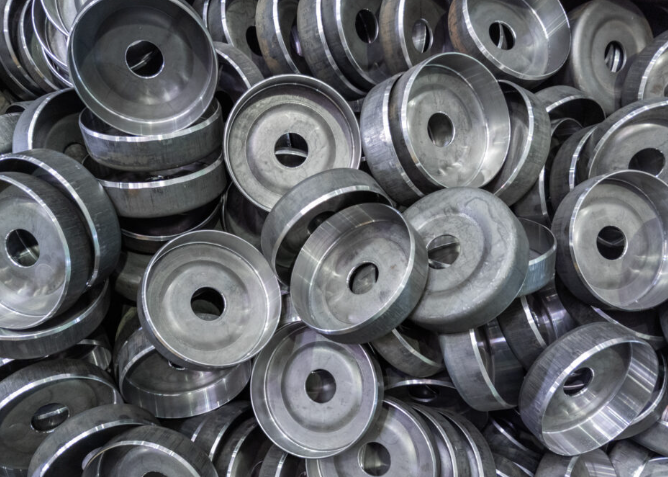
Choosing Between Ferrous and Non Ferrous Metals
Identifying a metal is useful. Specifying the right one is where cost, service life, and manufacturability start to separate. A bridge beam, a marine fitting, a food-grade tank, and an electrical connector can all be made from metal, but they do not reward the same family. Material guidance from Protolabs and stamping insight from Jagemann point to a practical pattern: ferrous metals usually win on strength and cost, stainless earns its place where corrosion resistance and hygiene matter, and non ferrous options make more sense when low weight or conductivity drives the decision.
When Ferrous Metals Are the Better Choice
If you are asking is steel ferrous, yes. Steel is iron-based, and for many structural jobs that is exactly the advantage. Carbon steel and alloy steel are common in construction, machine frames, brackets, gears, and many stamped parts because they deliver strong load-bearing performance at a practical price. For readers wondering what metals are in steel, the base answer is iron and carbon, with elements such as chromium or molybdenum added in some grades. That chemistry helps explain why plain steel, alloy steel, and stainless all belong to the ferrous side even when they perform very differently.
When Non Ferrous Metals Are Worth the Premium
Weight, conductivity, and corrosion exposure often justify spending more. Quick material questions come up all the time in buying and fabrication. Is aluminum non ferrous? Yes. Is aluminum a non ferrous metal? Also yes. That is why aluminum appears in lightweight automotive parts, consumer products, and industrial equipment. Is copper non ferrous? Yes again, which is why copper is used for terminals, contacts, and connectors. Jagemann also highlights brass for fittings and consumer-facing parts where corrosion resistance, appearance, and machinability matter. In plain terms, is aluminum ferrous? No. And is copper a ferrous metal? No.
| Use case | Usually preferred | Why it is often chosen |
|---|---|---|
| Construction and heavy frames | Carbon steel or alloy steel | High strength and lower cost for load-bearing work |
| Marine exposure | Stainless steel, aluminum, or bronze | Better corrosion resistance than unprotected plain steel |
| Electrical systems | Copper or aluminum | High electrical conductivity |
| Food processing equipment | Stainless steel | Corrosion resistance, cleanability, and durability |
| Outdoor products | Galvanized steel, aluminum, or brass | Balance of cost, weather resistance, and appearance |
| High-volume machining | Steel, aluminum, or brass | Choice depends on strength needs, speed, finish, and tooling wear |
| Architecture and visible hardware | Stainless steel, aluminum, or brass | Mix of appearance, durability, and corrosion performance |
| Automotive structural parts | High-strength steel, with aluminum where weight reduction matters | Steel supports crash performance and cost control, aluminum reduces mass |
Note: Stainless steel is still ferrous, but it often deserves its own line in a selection table because it combines iron-based strength with better corrosion resistance than plain carbon steel. Bronze and brass are common non ferrous alloys where corrosion resistance and appearance matter.
Choosing Between Steel Stainless Aluminum Copper and Brass
Automotive parts show the trade-offs clearly. Protolabs notes that crash structures often favor steel for strength and cost, while aluminum helps reduce weight. In chassis stamping, Shaoyi describes high-strength steel and aluminum as common choices for structural components such as frame rails, cross-members, control arms, and subframes. That kind of work makes material selection more than a simple ferrous versus non ferrous label. Formability, springback, tooling load, and production volume all affect what works on the press. When a program moves from material planning into stamped-part execution, an IATF 16949-certified supplier such as Shaoyi can be a useful real-world reference for how those choices are carried into production. The same choice also shapes maintenance needs, purchasing strategy, and even how parts and scrap should be sorted later.
Smarter Sourcing and Recycling for Ferrous Metals and Non Ferrous Metals
A metal label keeps working long after the definition is clear. In real purchasing and scrap handling, the split between ferrous metals and non ferrous metals affects resale value, corrosion expectations, processing routes, and total project cost. Tossing everything into one stream may feel efficient, but mixed material usually means more sorting work later and less value up front.
Why Recycling and Sorting Depend on Metal Classification
That matters most at the recycling stage. Data from Okon Recycling shows that effective sorting can improve recycling returns by up to 30% over mixed materials. The same source notes that properly separated copper, aluminum, and brass can bring 20% to 40% more than mixed scrap. So the difference between ferrous metals and nonferrous metals is not just technical language. It directly shapes payout, contamination risk, and how cleanly each stream can be processed.
The environmental side is just as practical. Okon Recycling also highlights that recycling aluminum uses about 95% less energy than making new aluminum from ore. Separating non-ferrous metals from metals that are ferrous helps preserve that advantage by reducing unnecessary reprocessing and contamination.
How to Use This Knowledge Before You Buy or Specify
For buyers, classification is the first filter, not the full answer. The selection framework outlined by C & R Metals is a useful reminder to check strength, corrosion resistance, electrical and thermal conductivity, weight, formability or machinability, appearance, and budget before choosing a grade. That prevents a cheap ferrous option from being used where moisture or chemicals will shorten service life, and it keeps an expensive non ferrous choice from being specified where plain steel is fully adequate.
Automotive sourcing is a good example. A stamped structural part may favor steel for strength and cost, while another part may justify aluminum to reduce mass. If your work is moving from material selection into production sourcing for stamped components, Shaoyi is one practical resource to review for automotive manufacturing execution.
A Final Checklist for Choosing the Right Metal
- Define the service environment, especially moisture, chemicals, and outdoor exposure.
- Match the metal to the fabrication method, such as welding, machining, forming, or stamping.
- Confirm whether electrical or thermal conductivity is important.
- Set weight limits before comparing steel, aluminum, copper, or other options.
- Estimate maintenance tolerance, including rust, staining, or surface protection needs.
- Compare material cost with scrap value and recyclability.
- Verify the exact alloy, coating, and supplier documentation before ordering.
- Iron content decides the category. Grade and processing decide performance.
- Sorted ferrous metals, non ferrous metals, and other non ferrous streams are usually easier to value and recycle correctly.
- A broad label is useful, but final specifications should always match the actual application.
Used well, this classification helps you buy smarter, sort cleaner, and avoid the costly mix-ups that started the question in the first place.
FAQs About Ferrous and Non Ferrous Metals
1. What is the main difference between ferrous and non ferrous metals?
The key difference is iron content. Ferrous metals are iron-based metals or alloys, while non ferrous metals contain little to no iron. This matters because iron often influences strength, density, corrosion behavior, recyclability, and cost. It also explains why steel, cast iron, and stainless steel are grouped as ferrous, while aluminum, copper, brass, and titanium are grouped as non ferrous.
2. Is stainless steel ferrous or non ferrous?
Stainless steel is ferrous because it contains iron. People often mistake it for non ferrous because many stainless grades resist rust better than plain carbon steel, and some common grades are weakly magnetic or seem non-magnetic in daily use. Its corrosion resistance comes mainly from chromium and alloy design, not from leaving the ferrous category.
3. Can a magnet reliably tell if a metal is ferrous?
A magnet is useful for quick screening, but it is not a perfect classification tool. Many ferrous metals are magnetic, yet some stainless steels may show little or no magnetic pull. Coatings, cold working, and alloy structure can also confuse the result. A better approach is to combine several clues, such as markings, color, weight, corrosion pattern, and the part's original application.
4. What are common examples of ferrous and non ferrous metals?
Common ferrous examples include carbon steel, alloy steel, cast iron, wrought iron, and stainless steel. Common non ferrous examples include aluminum, copper, brass, bronze, zinc, lead, nickel, and titanium. In real products, ferrous metals are often used for frames, tools, and structural parts, while non ferrous metals are often chosen for wiring, marine fittings, lightweight components, and corrosion-resistant hardware.
5. How do you choose between ferrous and non ferrous metals for a project?
Start with the job requirements. Ferrous metals are often preferred when strength, stiffness, and lower material cost matter most. Non ferrous metals are often better when low weight, conductivity, or corrosion resistance drives the decision. For stamped automotive components, this tradeoff is especially important because steel may support strength and cost goals, while aluminum may help reduce mass. If a project moves beyond material comparison into production, a specialist supplier with an IATF 16949 certified process, such as Shaoyi for auto stamping parts, can be a practical next step for evaluating manufacturability and sourcing.