 Small batches, high standards. Our rapid prototyping service makes validation faster and easier —
  EN
EN


Thin Metal Laser Cutting: Fiber Vs CO2 And When Each Wins
Understanding Thin Metal Laser Cutting Fundamentals
When you're working with sheet metal, thickness changes everything. A laser that cuts metal effortlessly at one gauge can struggle or cause damage at another. Understanding where thin metal begins and ends helps you choose the right equipment, settings, and approach for your project.
Can a laser cutter cut metal across all thicknesses? Absolutely. But cutting thin metal requires fundamentally different strategies than processing thicker plates. Let's break down exactly what qualifies as "thin" and why it matters for your fabrication results.
What Qualifies as Thin Metal in Laser Cutting
The industry draws a clear line between thin sheet metal and thicker plate materials. While definitions vary slightly between manufacturers, a widely accepted threshold exists:
Thin metal in laser cutting typically refers to materials under 3mm (approximately 1/8 inch) in thickness. Materials thinner than 0.15mm are classified as foil, while anything exceeding 6mm enters plate territory.
Metal laser cutting professionals often work with gauge measurements, where higher numbers indicate thinner materials. For standard steel, you'll encounter gauges ranging from 7 to 30, with thin sheet metal typically falling between 20-gauge (approximately 0.9mm) and 30-gauge (around 0.3mm). According to Serra Laser, sheet metal used for common shearing and splicing applications tends to be below 6mm, with the general range spanning 0.15mm to 6.3mm.
Here's where it gets interesting: gauge measurements differ between metal types. A 10-gauge stainless steel sheet measures 0.135 inches, but the same gauge number means something different for galvanized steel. Always verify the actual thickness rather than relying solely on gauge numbers when planning your laser metal cutting project.
Why Thin Materials Demand Different Cutting Strategies
Imagine focusing intense heat on a thin piece of aluminum versus a thick steel plate. The thin material has nowhere to send that thermal energy. This fundamental difference drives every aspect of cutting thin metal successfully.
Three critical challenges emerge when laser cutting metal at thin gauges:
- Heat dissipation limitations: Thin materials accumulate heat rapidly because there's minimal mass to absorb and distribute thermal energy. Research from Shen Chong confirms that thin materials under 1mm require low power and faster speeds to avoid excessive heat accumulation that causes warping or thermal damage.
- Material stability concerns: Without sufficient rigidity, thin sheets can vibrate, shift, or buckle during cutting. This movement compromises cut accuracy and creates inconsistent edge quality.
- Precision requirements: Thin gauge work often demands tighter tolerances. According to Prototech Laser, tolerances as tight as ±0.005 inches are achievable on thinner materials, compared to ±0.01 to ±0.02 inches on thicker stock.
The advantages of getting it right are substantial. Thin sheet metal allows for higher cutting speeds while producing incredibly fine detail. You'll achieve smoother edges with minimal dross, narrower kerf widths for tighter part nesting, and reduced post-processing requirements. Industrial manufacturers across automotive, electronics, and medical sectors rely on these benefits for precision components that simply can't be produced any other way.
Material-Specific Cutting Behavior for Thin Metals
Not all metals behave the same under a laser beam. When cutting metal with a laser, the material's physical properties dictate everything from speed settings to assist gas selection. Understanding these differences separates successful thin metal parts from expensive scrap.
Each metal brings unique challenges to the cutting table. Aluminum reflects energy like a mirror. Copper conducts heat away faster than you can deliver it. Stainless steel demands patience for pristine edges. Let's explore how laser cutting metals varies across the most common thin gauge materials.
Aluminum and Reflective Metal Challenges
Aluminum presents one of the trickiest scenarios in thin metal fabrication. Its highly reflective surface bounces laser energy back toward the cutting head instead of absorbing it into the material. According to 1CutFab, when a laser strikes a reflective surface, a large portion of the energy redirects rather than penetrating the material, leading to incomplete cuts, poor edge quality, and potential equipment damage.
Three specific problems emerge when laser cutting steel alternatives like aluminum:
- Beam reflection: The redirected laser makes it difficult to initiate and maintain clean cuts, resulting in rough kerf lines and burr formation
- Energy loss: Inconsistent energy absorption requires multiple passes, slowing production significantly
- Back-reflection damage: The reflected beam can travel into the optics, damaging lenses, the laser head, and even the source itself
Fabricators overcome these challenges through surface coatings that absorb laser energy and careful power modulation. Starting with lower power to create a pilot mark, then gradually increasing for full penetration, helps control heat distribution. Nitrogen serves as the preferred assist gas for aluminum, preventing oxidation and ensuring smooth, clean edges.
Stainless Steel vs Carbon Steel Cutting Behavior
When it comes to laser cutting stainless steel versus mild steel laser cutting, the differences are substantial despite both being steel alloys.
Stainless steel absorbs laser energy more effectively than reflective metals, but its chromium content creates unique considerations. According to SendCutSend, stainless steel's chromium allows the surface to oxidize naturally, protecting it from weathering while producing a sleek finish. For thin gauge work, this means:
- Slower cutting speeds compared to carbon steel at equivalent thicknesses
- Nitrogen assist gas for oxide-free, bright edges ideal for visible applications
- Excellent edge quality with minimal post-processing requirements
Carbon steel, by contrast, cuts faster but presents oxidation considerations. Using oxygen as an assist gas creates an exothermic reaction that adds heat to the cutting process, boosting speed significantly. However, this produces an oxidized edge that may require cleaning for certain applications. For thin carbon steel parts requiring clean edges, nitrogen cutting eliminates oxidation at the cost of slower processing speeds.
Brass and Copper: The Thermal Conductivity Challenge
Copper and brass represent the most demanding materials for thin metal fabrication. As YIHAI Lasers explains, these "red metals" combine extreme reflectivity with thermal conductivity that pulls heat away from the cut zone faster than you can deliver it.
Pure copper demands the most respect. Its thermal conductivity is so high that maintaining a stable melt pool becomes extremely difficult. The molten copper is viscous and sticky, resisting ejection from the kerf. High-pressure nitrogen (18-22 Bar) is essential for electrical components, producing bright, oxide-free edges that conduct electricity perfectly.
Brass introduces a different complication: zinc. Containing 30-40% zinc, brass creates a volatile cutting environment. The zinc boils at 907°C while copper melts at 1,085°C, meaning the zinc vaporizes before the copper even melts. This creates high-pressure vapor inside the cut kerf that can cause explosive spattering if not managed properly. Additionally, cutting brass releases zinc oxide dust that requires robust extraction systems and poses health risks if inhaled.
Material Properties Comparison for Thin Metal Cutting
| Material | Thermal Conductivity | Reflectivity Rating | Recommended Assist Gas | Relative Cutting Difficulty |
|---|---|---|---|---|
| Mild Steel | Low (50 W/m·K) | Low | Oxygen (speed) or Nitrogen (clean edge) | Easy |
| Stainless Steel | Low-Medium (16 W/m·K) | Low-Medium | Nitrogen for oxide-free edges | Moderate |
| Aluminum | High (205 W/m·K) | High | Nitrogen to prevent oxidation | Moderate-High |
| Brass | Medium-High (120 W/m·K) | High | Nitrogen with proper extraction | High |
| Copper | Very High (385 W/m·K) | Very High | High-pressure Nitrogen (18-22 Bar) | Very High |
Understanding these material-specific behaviors directly influences your technology choice. The next consideration is selecting between fiber and CO2 laser sources, where wavelength absorption characteristics determine which technology excels for each metal type.
Fiber Laser vs CO2 Technology for Thin Materials
Now that you understand how different metals behave during cutting, the next question becomes: which laser technology handles thin gauges best? The answer isn't as simple as picking the newest option. Your choice between a fiber laser cutting machine and a CO2 system directly impacts cutting speed, edge quality, and operating costs.
Here's the reality: fiber lasers have captured 60% of the market for good reason. But understanding why they dominate thin metal applications—and where CO2 still holds value—helps you make smarter equipment and outsourcing decisions.
Fiber Laser Speed Advantages on Thin Gauges
When processing materials under 5mm, a fiber laser cutter for metal delivers speed advantages that fundamentally change production economics. We're not talking about marginal improvements—fiber systems achieve cutting speeds 2-3 times faster than CO2 lasers on thin stock.
Consider what this means in practice. According to EVS Metal's 2025 analysis, modern fiber systems reach speeds up to 100 meters per minute on thin materials while maintaining consistent quality. The same report shows throughput rates of 277 parts per hour compared to just 64 parts per hour for equivalent CO2 systems.
Where does this speed advantage come from? Three factors work together:
- Superior energy efficiency: Fiber lasers achieve up to 50% wall-plug efficiency versus just 10-15% for CO2 systems, meaning more cutting power reaches the material
- Tighter beam focus: The fiber laser beam concentrates into an extremely small spot, delivering higher power density at the cut point
- Reduced warm-up time: Fiber systems operate without the extended stabilization periods that CO2 lasers require, maximizing productive cutting time
The speed differential narrows as material thickness increases. Beyond 20mm, CO2 systems begin closing the gap. But for thin metal parts—the bread and butter of precision sheet metal fabrication—fiber laser metal cutting remains the clear productivity winner.
Wavelength Absorption and Cutting Efficiency
The physics behind fiber laser dominance on thin metals comes down to wavelength. A fiber laser cutting machine for metal operates at approximately 1064nm (1 micron), while a cutting laser CO2 system produces light at 10,600nm (10.6 microns). This tenfold difference in wavelength changes how metals absorb laser energy.
Metals absorb the shorter fiber laser wavelength far more efficiently than the longer CO2 wavelength. This proves especially critical for reflective metals like aluminum, copper, and brass—materials that bounce CO2 energy away but readily absorb fiber laser light. As LS Manufacturing notes, the 1μm wavelength enables fiber lasers to operate at extremely high cutting speeds on aluminum, performing several times faster than conventional CO2 machinery.
For thin stainless steel and carbon steel, the absorption advantage translates directly into faster processing and cleaner cuts. The concentrated energy creates a smaller heat-affected zone, reducing thermal distortion that plagues thin gauge work.
Key Differentiators Between Fiber and CO2 Technology
Beyond speed and wavelength, several operational factors separate these technologies for thin metal applications:
- Operating costs: Fiber systems consume approximately 70% less energy than equivalent CO2 systems—roughly $3.50-4.00 per hour versus $12.73 for CO2
- Maintenance requirements: Fiber laser for metal cutting needs only $200-400 annually in maintenance compared to $1,000-2,000 for CO2 systems, with weekly maintenance taking under 30 minutes versus 4-5 hours
- Beam delivery: Fiber optic cable delivery protects the beam path from contamination, while CO2 systems use mirrors that require regular cleaning and alignment
- Material versatility: Fiber lasers excel with reflective metals that challenge CO2 systems, making them ideal for aluminum, copper, and brass thin metal cutting
- Kerf width: The tighter fiber beam focus produces narrower cuts, improving material utilization through more efficient part nesting
When CO2 Laser Metal Cutting Still Makes Sense
Despite fiber laser advantages, CO2 technology hasn't disappeared from fabrication shops. Certain applications still favor the older technology.
Thick plate processing represents CO2's strongest remaining niche. For materials exceeding 25mm thickness, CO2 lasers often deliver superior edge quality due to how the longer wavelength couples with metal plasma during cutting. Some fabricators processing heavy aluminum plate (15mm and above) report smoother cut surfaces from CO2 systems.
Non-metallic materials also favor CO2 technology. If your operation cuts wood, acrylic, textiles, or other organic materials alongside thin metals, a CO2 laser cut metal machine provides versatility that fiber systems can't match.
However, LS Manufacturing's assessment is direct: "The competitiveness of CO2 lasers in the aluminum cutting market has decreased significantly. With advancements in technology, fiber lasers have always competed with them in thick plate quality cutting and outshined them in overall efficiency."
For fabrication shops focused primarily on thin metal work, the verdict is clear. Fiber laser technology delivers the speed, quality, and cost advantages that modern manufacturing demands. The question then becomes matching laser power to your specific material and thickness requirements.
Laser Wattage Selection for Optimal Thin Metal Results
You've selected fiber technology for your thin metal project. Now comes a critical decision that trips up even experienced fabricators: how much power do you actually need? More isn't always better—and with thin gauges, excessive wattage creates more problems than it solves.
Think of laser power like water pressure through a garden hose. Too little and you can't accomplish the task. Too much and you damage what you're trying to care for. A metal laser cutting machine operating at the wrong power level will either fail to penetrate the material or blast right through it, leaving warped, burned edges that require costly rework.
Matching Laser Power to Material Thickness
The relationship between laser wattage and material thickness follows predictable patterns, but the sweet spot varies by metal type. According to Bodor Laser, thin materials ranging from 0.1mm to 5mm typically require only 1kW to 3kW of power for clean cuts through stainless steel, aluminum, and carbon steel.
Here's what you need to know about matching your laser metal cutting machine to specific applications:
- 500W to 1kW: Ideal for ultra-thin materials under 1mm. These lower power settings provide excellent control for delicate work, minimizing heat input while maintaining cutting speed on thin gauge stock
- 1kW to 2kW: The workhorse range for most thin metal applications between 1mm and 3mm. A steel laser cutting machine in this range handles stainless steel, mild steel, and aluminum with optimal speed-to-quality balance
- 2kW to 3kW: Appropriate when pushing toward the upper limits of thin metal territory (3mm to 5mm) or when faster production speeds justify the additional energy input
Material type significantly influences power requirements at any given thickness. Aluminum's high reflectivity means you'll often need slightly more power to initiate the cut compared to steel of equivalent thickness. Copper and brass demand even more careful power management due to their extreme thermal conductivity—the heat disperses so rapidly that insufficient power simply won't maintain a stable melt pool.
Recommended Wattage Ranges for Thin Metal Cutting
| Material | Thickness Range | Recommended Power | Notes |
|---|---|---|---|
| Mild Steel | 0.5mm - 1mm | 500W - 1kW | Lower power prevents burn-through; oxygen assist increases speed |
| Mild Steel | 1mm - 3mm | 1kW - 2kW | Standard range for most sheet metal applications |
| Stainless Steel | 0.5mm - 1mm | 500W - 1kW | Nitrogen assist for bright, oxide-free edges |
| Stainless Steel | 1mm - 3mm | 1kW - 2kW | Slightly slower than mild steel at equivalent power |
| Aluminum | 0.5mm - 1mm | 1kW - 1.5kW | Higher power compensates for reflectivity losses |
| Aluminum | 1mm - 3mm | 1.5kW - 2kW | Nitrogen essential; watch for edge quality issues |
| Copper/Brass | 0.5mm - 2mm | 1.5kW - 3kW | Highest power requirements due to thermal conductivity |
Why Overpowering Thin Metals Creates Problems
Sounds counterintuitive, right? If higher power cuts faster, why not maximize wattage and push production speed? The answer lies in what happens at the microscopic level when excessive energy hits thin material.
A laser machine to cut metal at inappropriately high power creates several interconnected problems:
- Burn-through and material damage: Excessive laser power melts far more material than necessary. On thin gauges, this extra heat doesn't just cut—it destroys. The beam punches through before the assist gas can properly evacuate molten material, leaving ragged holes instead of clean cuts
- Expanded heat-affected zones: According to ADHMT's technical guide, an oversized HAZ causes irreversible changes in microstructure and physical properties like hardness or brittleness. This invisible damage can mean the internal material has already been weakened, becoming a hidden quality risk
- Warping and distortion: Thin materials have minimal mass to absorb thermal energy. Overpowering pumps heat into the workpiece faster than conduction can dissipate it, causing the sheet to buckle, curl, or permanently distort
- Edge discoloration: The excess heat creates visible temper colors—blue, yellow, or brown zones adjacent to the cut line that indicate thermal damage extending beyond the kerf
The solution isn't simply reducing power—it's finding the optimal combination of power, speed, and focus that removes material efficiently while minimizing thermal impact. As ADHMT notes, when laser power exceeds what is necessary for cutting, the material overheats and burn marks appear. This issue is particularly significant for heat-sensitive materials such as thin plastics or delicate fabrics—but the same principle applies to thin metal gauges.
For a metal cutting laser machine processing thin stock, the goal becomes "instant cutting"—completing the cut before the material's molecular structure has time for widespread thermal reaction. This means using the lowest possible power that will still cut through, paired with the maximum speed your machine can achieve while maintaining edge quality.
Understanding power requirements sets the foundation, but wattage alone doesn't determine cut quality. The assist gas you choose and the pressure at which you deliver it play equally critical roles in achieving clean, precise edges on thin metal parts.
Assist Gas Selection and Pressure Optimization
You've dialed in your laser power and selected the right technology. But here's what many fabricators overlook: the gas flowing alongside your laser beam often determines whether you get pristine edges or parts requiring extensive cleanup. When steel laser cutting thin gauges, assist gas selection becomes the difference between production-ready components and expensive scrap.
Think of assist gas as your laser's invisible partner. While the beam does the actual cutting, the gas performs three critical functions: shielding the cut zone from atmospheric contamination, ejecting molten material from the kerf, and in some cases, adding chemical energy to accelerate the process. Choosing the wrong gas—or running at incorrect pressure—undermines everything else you've optimized.
Nitrogen vs Oxygen Assist Gas Selection
The two primary assist gases for thin metal work couldn't be more different in how they interact with your material. Understanding their distinct roles helps you match the right gas to each application.
Nitrogen cutting operates as a shielding process. According to Rocky Mountain Air Solutions, the inert gas halts the burning process entirely, instead vaporizing material for a clean cut using high pressures. When laser cutting ss or aluminum, nitrogen prevents the oxidation that would otherwise discolor edges and compromise corrosion resistance.
The results speak for themselves: bright, oxide-free edges that require zero post-processing. For applications where appearance matters—visible architectural components, medical devices, or food processing equipment—nitrogen delivers the quality standard these industries demand. A laser cutter for stainless steel running nitrogen produces edges ready for immediate use or welding without grinding or cleaning.
Oxygen cutting takes a fundamentally different approach. Rather than simply protecting the cut, oxygen actively participates in it. As Bodor Laser explains, laser cutting with oxygen creates an exothermic reaction—burning the material while the heat and light create additional energy. This chemical reaction does approximately 60% of the cutting work, allowing faster processing speeds on carbon steel.
The tradeoff? Oxygen-cut edges show iron oxide formation, producing a darker appearance that may require cleaning for certain applications. When laser cutting steel sheet for structural applications where edge appearance doesn't matter, oxygen cutting delivers significant speed advantages.
Gas Recommendations by Material Type
Matching assist gas to material type follows clear guidelines based on how each metal responds to oxidation and heat:
- Stainless Steel: Nitrogen exclusively for thin gauges. The chromium content that gives stainless steel its corrosion resistance reacts poorly with oxygen, creating discolored edges that defeat the material's purpose. High-pressure nitrogen (10-20 Bar) ensures bright, clean cuts
- Carbon/Mild Steel: Oxygen for maximum speed on parts where edge oxidation is acceptable. Switch to nitrogen when clean edges are required—expect 30-40% slower cutting speeds but zero post-processing
- Aluminum: Nitrogen only. Aluminum oxidizes rapidly when heated, and oxygen cutting creates rough, porous edges unsuitable for most applications. The inert atmosphere preserves edge quality on this reflective material
- Copper and Brass: High-pressure nitrogen (18-22 Bar) for electrical components requiring bright, oxide-free edges. The extreme thermal conductivity of these metals demands aggressive gas flow to evacuate molten material before it resolidifies
- Galvanized Steel: Nitrogen preferred. While oxygen cutting works, the zinc coating vaporizes and can contaminate the cut zone, creating quality issues that nitrogen helps prevent
Compressed air offers a budget-friendly alternative for non-critical applications. Bodor's technical guidance notes that air provides decent cutting quality for thin metals like stainless steel, carbon steel, and aluminum when edge appearance isn't paramount. However, the 20% oxygen content in compressed air still causes partial oxidation—expect some edge darkening compared to pure nitrogen cutting.
Pressure Settings for Clean Edge Quality
Gas selection is only half the equation. Pressure settings directly control how effectively molten material evacuates from the cut zone—and getting this wrong creates dross, burrs, and rough edges even with the correct gas type.
For thin metal applications, pressure typically ranges from 2 to 25 Bar depending on material and gas type. According to Laser Podcast's comprehensive guide, higher pressures are required for thicker materials and faster cutting speeds, while thin gauges generally need moderate pressure to avoid blowing material away or creating turbulence in the cut zone.
Here's how pressure affects your results:
- Too low pressure: Molten material doesn't evacuate cleanly, resolidifying as dross on the bottom edge. You'll see hanging burrs and rough surfaces that require grinding
- Too high pressure: Creates turbulent gas flow that disrupts the cutting process. On very thin materials, excessive pressure can actually blow the sheet around, causing positioning errors
- Optimal pressure: Smoothly evacuates molten material while maintaining laminar flow through the kerf. The result is clean edges with minimal to zero dross formation
When a machine for cutting steel produces burrs during nitrogen cutting, Bodor recommends lowering the focal point and increasing nozzle diameter rather than simply increasing pressure. This combination ensures cleaner cuts without the turbulence that excessive pressure creates.
For operations running a cnc steel cutting laser on multiple material types, maintaining separate parameter sets for each gas-material combination prevents quality issues. The pressure that works perfectly for 1mm stainless steel with nitrogen will likely need adjustment for 2mm carbon steel with oxygen.
Gas purity also influences results significantly. While 99.5% nitrogen suffices for standard applications, critical work like medical device components may require 99.999% purity to ensure optimal edge quality and biocompatibility. The additional cost of higher-purity gas often pays for itself through reduced rejection rates and post-processing requirements.
With power, technology, and assist gas properly configured, you're positioned to achieve excellent cut quality on thin metals. But what exactly defines "excellent" in this context? Understanding cut quality standards and how to prevent common defects completes your thin metal cutting knowledge.
Cut Quality Standards and Defect Prevention
You've optimized your laser power, selected the right assist gas, and configured pressure settings. Now comes the ultimate test: does your finished part meet quality specifications? When laser cutting sheet metal at thin gauges, the margin between acceptable and rejected parts shrinks dramatically. Understanding what "quality" actually means—and how to achieve it consistently—separates profitable operations from those drowning in rework costs.
Here's the reality: thin metal amplifies every cutting parameter mistake. A setting that produces acceptable results on 6mm plate might create warped, discolored parts on 1mm stock. Let's examine the quality specifications unique to thin gauge work and the defects that threaten your production.
Achieving Tight Tolerances on Thin Gauges
Thin materials offer a significant advantage when precision matters. With less material for the laser to penetrate, a laser cutting machine sheet metal application can achieve tolerances that thicker stock simply can't match. But realizing this potential requires understanding the quality parameters that define success.
Kerf width expectations: The cut width on thin metals typically ranges from 0.1mm to 0.3mm depending on your laser's focus characteristics and power level. Narrower kerf means better material utilization—you can nest parts closer together without sacrificing structural integrity between cuts. For precision components, consistent kerf width across the entire cut path indicates stable cutting conditions.
Edge finish standards: Quality edge finish on laser cutting of metal sheets manifests as smooth, vertical cut faces with minimal striation marks. The best results show fine, evenly-spaced lines running perpendicular to the material surface. Coarse, irregular striations indicate parameter problems—typically incorrect speed-to-power ratios or gas pressure issues.
Heat-affected zone minimization: The HAZ represents material adjacent to the cut that experienced thermal changes without melting. On thin metals, HAZ typically measures 0.1mm to 0.5mm from the cut edge. According to YIHAI Laser, minimizing this zone requires speed—the faster you complete the cut, the less time heat has to conduct into surrounding material.
Achievable tolerances: Sheet metal laser cutting on thin gauges routinely achieves ±0.1mm positional accuracy, with some high-precision systems reaching ±0.05mm. These tight tolerances make laser cutting ideal for components requiring precise fitment—brackets, enclosures, and mating parts that must align without adjustment.
Preventing Warping and Burn-Through Defects
Even with perfect parameter settings, thin metal work remains vulnerable to defects that rarely appear on thicker stock. Recognizing these problems—and understanding their root causes—enables you to implement effective prevention strategies.
According to Bodor's engineering team, who solve technical problems for laser cutting users daily, certain defects consistently trouble thin gauge fabrication. Here are the most common issues and their solutions:
- Sheet warping and distortion: As YIHAI Laser explains, when you apply intense thermal energy to material with very little thermal mass, the metal simply has nowhere to put the heat. It expands, stresses, and eventually buckles. Prevention requires randomized cutting paths that distribute heat across the sheet rather than concentrating it in sequential rows. Program your laser cutting machine for sheet metal to jump between distant areas, allowing each zone to cool before adjacent cuts begin.
- Burn-through damage: Excessive power or slow speed punches holes through thin material instead of cutting clean lines. The solution involves reducing power and increasing speed simultaneously—completing the cut before thermal buildup causes damage. For intricate patterns, pulse mode cutting delivers energy in controlled bursts rather than continuous waves.
- Dross formation: Molten material that resolidifies on the bottom edge creates hanging burrs requiring grinding. According to Bodor's troubleshooting guide, soft slags indicate cutting speed is too fast or focus height too high. Hard slags on stainless steel suggest focus height is too high or gas pressure too low. Adjust parameters incrementally—lowering focus height by 0.2mm or increasing pressure by 0.1 bar until clean edges result.
- Edge discoloration: Yellow, blue, or brown coloring adjacent to cut lines indicates oxidation or excessive heat input. When laser cut sheet metal shows abnormal edge color, the fix often involves gas purity—switching to higher-purity nitrogen eliminates atmospheric contamination causing the discoloration.
- Kerf width inconsistency: Varying cut width across a part indicates unstable cutting conditions. According to Bodor's analysis, causes include blocked or non-round nozzles, dirty lenses, or beam alignment issues. Regular maintenance—checking nozzle condition, cleaning optics, and verifying beam centering—prevents this quality problem.
- Rough striations: Coarse lines on cut edges result from gas pressure set too high, focus height too elevated, or cutting speed too slow. The solution involves systematic parameter adjustment: lower gas pressure, reduce focus height by 0.2mm increments, and increase cutting speed until smooth surfaces appear.
- Corner burning: Sharp corners accumulate heat as the cutting head decelerates, changes direction, and accelerates. Apply power curves that reduce laser output during directional changes, or program cooling points where the laser pauses briefly to allow heat dissipation before continuing.
Systematic Defect Prevention Approach
Rather than troubleshooting problems after they occur, experienced fabricators implement systematic prevention during job setup. As YIHAI Laser notes, 90% of thin sheet distortion issues can be solved before the laser beam ever turns on—it happens in the programming office.
Effective prevention starts with nesting strategy. When you cut parts sequentially—one right next to the other, row by row—you create a heat wave traveling across the sheet. Heat accumulates faster than it dissipates. Instead, program cutting paths that distribute thermal input across the entire sheet surface, allowing natural cooling between adjacent cuts.
Maintain the skeleton structure as long as possible. The scrap webbing between parts holds the sheet flat and provides thermal mass to absorb cutting heat. Cutting patterns that weaken the skeleton early cause the entire sheet to lose structural integrity and curl upward, potentially crashing into the cutting head.
Consider micro-tabs for parts that might tip after cutting. Small uncut sections hold parts in place until removal, preventing the collision hazards that occur when completely freed parts shift during subsequent cutting operations.
With quality standards defined and defect prevention strategies in place, you're equipped to produce consistent thin metal parts. But understanding capability is only valuable when applied to real applications—let's explore the industries where precision thin metal cutting delivers the greatest value.
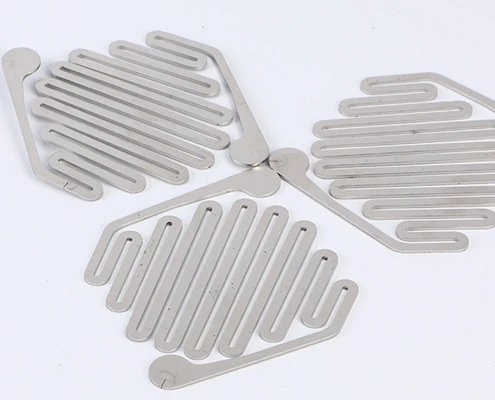
Industry Applications for Thin Metal Laser Cutting
Understanding cut quality and defect prevention prepares you for production. But where does precision thin metal cutting actually matter most? The answer spans nearly every manufacturing sector—from the dashboard brackets in your car to the surgical instruments in operating rooms. Metal cutting laser machines have become indispensable tools across industries where precision, speed, and consistency determine competitive advantage.
Let's explore the sectors where thin metal laser cutting delivers the greatest value and examine why specific applications demand this technology over alternatives.
Automotive and Chassis Component Applications
The automotive industry represents one of the largest consumers of laser cut metal sheets globally. Every vehicle rolling off assembly lines contains dozens—sometimes hundreds—of precision thin metal components produced through laser cutting processes.
Why does automotive manufacturing rely so heavily on this technology? Three factors drive adoption:
- Weight reduction demands: Modern fuel efficiency and electric vehicle range requirements push manufacturers toward thinner gauge materials. A laser cutting metal machine processes these lightweight materials without the distortion that traditional stamping can cause on ultra-thin stock
- Complex geometry requirements: Chassis brackets, suspension components, and structural reinforcements often feature intricate shapes that would require expensive multi-stage tooling with conventional methods. Laser cutting produces these geometries directly from CAD files
- Rapid prototyping needs: Automotive development cycles demand quick iteration. According to Accurl's industry analysis, the laser cutting method is significantly more efficient than traditional metal fabrication processes like die cutting, streamlining vehicle manufacturing where every millimeter counts
Typical automotive thin metal applications include:
- Chassis mounting brackets and reinforcement plates
- Heat shields and exhaust system components
- Battery enclosures and mounting frames for electric vehicles
- Interior structural elements and seat frame components
- Dashboard brackets and instrument panel supports
- Door intrusion beams and safety reinforcements
For high-volume automotive production, manufacturers often combine laser cutting with metal stamping operations. Companies like Shaoyi (Ningbo) Metal Technology integrate precision thin metal cutting with stamping capabilities, delivering comprehensive solutions for chassis, suspension, and structural components. Their IATF 16949 certification ensures the quality standards automotive OEMs demand, while 5-day rapid prototyping accelerates development timelines.
Electronics and Medical Device Manufacturing
When tolerances measured in hundredths of a millimeter determine product success, thin metal laser cutting becomes essential. Both electronics and medical industries share this demand for microscopic precision—though for entirely different reasons.
Electronics manufacturing relies on laser metal cutting equipment for components that protect sensitive circuitry while managing thermal loads:
- Enclosures and chassis: According to Pinnacle Precision, the electronics industry relies on precision sheet metal parts for casings, brackets, and intricate components. These parts protect sensitive electronics from environmental factors and electromagnetic interference
- Heat sinks and thermal management: Thin copper and aluminum components dissipate heat from processors and power electronics. The precision of laser cutting ensures optimal surface contact for thermal transfer
- Shielding components: EMI/RFI shields require precise dimensions to properly contain electromagnetic emissions while fitting tightly within device assemblies
- Connector housings and brackets: The miniaturization trend in consumer electronics demands ever-smaller mounting hardware that only laser cutting can produce economically
Medical device manufacturing presents perhaps the most demanding thin metal applications. As Accurl notes, laser cutting in the medical device industry creates surgical instruments and medical implants with exceptional accuracy. The critical nature of these devices demands not only high precision but also materials that are sterilizable and biocompatible.
Medical thin metal applications include:
- Surgical instrument components requiring burr-free edges
- Implantable device housings from biocompatible stainless steel and titanium
- Diagnostic equipment chassis and internal structural components
- Dental tools and orthodontic hardware
- Laboratory equipment frames and sample handling components
Decorative and Architectural Applications
Beyond functional components, thin metal laser cutting enables creative applications where aesthetics matter as much as structural integrity. Laser cut metal signs represent one of the fastest-growing segments, offering design possibilities that traditional fabrication simply cannot match.
- Signage and wayfinding: Custom business signs, address markers, and directional signage from stainless steel, aluminum, and corten steel. The precision of laser cutting creates clean letterforms and intricate logos impossible to achieve through mechanical cutting
- Architectural panels: Decorative facade elements, privacy screens, and interior accent walls featuring complex geometric patterns. Designers specify thin gauge materials to reduce weight while maintaining visual impact
- Art and sculpture: According to Accurl's applications overview, laser cutting technology has emerged as a transformative force in art, allowing artists to craft intricate pieces previously unattainable through traditional methods
- Furniture components: Decorative metal accents, table bases, and shelving systems benefiting from the weight savings of thin gauge materials
Precision Brackets and Industrial Components
Industrial machinery, aerospace systems, and general manufacturing depend on laser cutting metal parts for the brackets, mounts, and structural elements that hold everything together.
- Aerospace components: As Accurl emphasizes, the aerospace industry benefits from laser cutting's ability to produce components that meet strict tolerance levels while maintaining structural integrity—paramount in aerospace applications
- Precision brackets: Mounting hardware for sensors, electronics, and mechanical systems where exact positioning determines system performance
- Custom enclosures: According to Pinnacle Precision, precision sheet metal can be fabricated into an extensive range of shapes and designs, making components perfect for various applications and requirements
- Renewable energy components: Solar panel mounting hardware and wind turbine control system enclosures requiring corrosion-resistant thin gauge materials
Why These Industries Choose Laser Cutting
Across all these sectors, common factors drive the adoption of thin metal laser cutting over alternative processes:
- Speed to market: No tooling requirements mean parts move from design to production in hours rather than weeks
- Design flexibility: Complex geometries cost no more to produce than simple shapes, encouraging innovative designs
- Material efficiency: Tight nesting and narrow kerf widths maximize material utilization, reducing waste and cost
- Consistent quality: CNC control ensures every part matches specifications regardless of batch size
- Scalability: The same process handles prototypes and production volumes without tooling changes
Understanding where thin metal laser cutting delivers value helps you evaluate whether this technology fits your application. But knowing capability isn't enough—you also need to understand the economics. Let's examine the cost factors that influence thin metal cutting project decisions.
Cost Considerations and Method Comparison
You've seen where thin metal laser cutting delivers value across industries. But here's the question every project manager asks: what will it actually cost? Understanding the economics of thin metal cutting—and knowing when alternative methods offer better value—can mean the difference between profitable production and budget overruns.
The truth is, a machine that cuts metal efficiently for one project might be economically wrong for another. Let's break down the factors that determine whether laser cutting makes financial sense for your specific application.
Cost Factors in Thin Metal Cutting Projects
Pricing for thin metal laser cutting isn't as simple as multiplying sheet area by a fixed rate. According to Komacut's pricing analysis, the primary factors affecting laser cutting costs include material type, thickness, design complexity, cutting time, labor costs, and finishing processes. Each element impacts the resources required for your project.
Here's what drives the numbers on your quote:
- Material costs: Raw material represents a significant portion of total project cost. Different metals vary widely in price—copper and brass cost substantially more than mild steel, while stainless steel falls somewhere between. Thin gauges use less material per part, but waste percentage matters. Efficient nesting minimizes scrap, directly reducing material expense
- Machine operating costs: Metal cutting machinery consumes energy, assist gas, and consumables like nozzles and lenses. As Komacut notes, thicker materials require more energy and slower cutting speeds, increasing costs. Thin metals cut faster, reducing per-part machine time—but the speed advantage diminishes if your design includes numerous intricate details
- Design complexity: The number of cutouts directly affects cost. Each cutout requires a pierce point where the laser initiates the cut. More pierce points and longer cutting paths increase cutting time and energy consumption. Intricate designs with numerous cutouts also demand greater precision, adding to labor and equipment expenses
- Setup and programming: Every job requires CAD file preparation, machine setup, and parameter optimization. These fixed costs spread across your order quantity—ordering 10 parts versus 1,000 parts dramatically changes per-unit economics
- Secondary operations: According to Komacut's breakdown, secondary processes such as chamfering and threading add to overall cost by requiring additional labor, specialized equipment, and extended production time. Deburring, polishing, grinding, and coating each increase the final price
Strategies to Reduce Cutting Costs
Smart design and ordering decisions can significantly lower your thin metal cutting expenses without sacrificing quality:
- Optimize nesting efficiency: Efficient nesting maximizes material usage by arranging parts closely together on the material sheet, minimizing waste. According to Komacut, this reduces raw material needs and decreases cutting time, leading to significant cost savings
- Simplify geometries where possible: Reducing the number of cutouts and simplifying complex curves cuts machine time without necessarily compromising function
- Order in appropriate volumes: Bulk ordering spreads fixed setup costs over more units and often qualifies for material discounts from suppliers. Larger batch sizes also improve production efficiency, reducing machine downtime and labor costs
- Choose cost-effective materials: When your application permits, selecting materials that cut more easily—like mild steel over stainless—reduces processing time and extends consumable life
When Chemical Etching Offers Better Economics
Laser cutting isn't always the most economical choice for thin metal work. For certain applications, chemical etching provides compelling cost advantages that make it the smarter financial decision.
According to Precision Micro, chemical etching involves coating a metal sheet with ultraviolet-sensitive photoresist, exposing it to a pattern of light, then selectively machining using etchant chemistry. This process excels at machining thin metal sheets ranging from 0.01mm to 2.5mm in thickness—precisely the range where many laser cutting applications occur.
Here's when chemical etching makes economic sense over laser cutting:
- High-volume production runs: During large volume production, chemical etching tends to be more cost-effective due to its ability to batch process multiple parts simultaneously. The process machines all component features at once, regardless of complexity
- Extremely intricate designs: Photo etching achieves features as small as 0.1mm to ±0.020mm accuracy. Because laser cutting is a single-point machining process, cutting complex profiles becomes costlier as detail increases
- Stress-free parts: Chemical etching ensures high-quality metal components free from burrs and thermal stresses. Laser cutting thin metals can result in heat-affected zones that may negatively impact part performance
- Ultra-thin materials: For materials below 0.5mm, laser efficiency diminishes while chemical etching maintains consistent quality and economics
Conversely, laser cutting wins economically when:
- Lower volumes or prototyping: For smaller production runs or simpler designs, laser cutting offers cost advantages due to minimal setup requirements and digital tooling flexibility
- Faster turnaround needed: Laser cutting delivers parts in hours rather than the longer lead times chemical etching may require for complex setups
- Thicker materials: Beyond 2.5mm, chemical etching becomes impractical while laser cutting scales smoothly to thicker gauges
Laser Cutting vs Chemical Etching Comparison
| Criteria | Laser Cutting | Chemical Etching |
|---|---|---|
| Setup Costs | Low—digital tooling, no physical stencils required | Moderate—photo tool stencil creation required |
| Per-Part Cost (Low Volume) | Lower—fixed costs spread efficiently | Higher—setup amortization impacts unit cost |
| Per-Part Cost (High Volume) | Moderate—sequential processing limits throughput | Lower—batch processing multiple parts simultaneously |
| Edge Quality | Good to excellent—depends on parameters | Excellent—burr-free, stress-free edges |
| Heat-Affected Zone | Present—minimized with proper settings | None—cold process eliminates thermal stress |
| Minimum Feature Size | 0.2mm typical | 0.1mm achievable |
| Optimal Thickness Range | 0.5mm to 25mm+ | 0.01mm to 2.5mm |
| Lead Time | Hours to days | Days—faster for complex, intricate designs |
| Design Flexibility | High—CAD to cut with no tooling | High—digital tooling enables adjustments |
| Best For | Prototypes, low-medium volumes, thicker materials | High volumes, ultra-thin stock, intricate details |
Making the Economic Decision
As Zintilon's fabrication guide emphasizes, economic factors are integral to the selection process, encompassing initial capital investment and ongoing operational expenses. The chosen method must align with budgetary constraints while meeting quality and production requirements.
Don't focus solely on the per-cut cost. Factor in the complete economic picture: setup time, potential material waste due to kerf or errors, and the expense of any required secondary operations like deburring or cleaning. A method that appears cheaper on paper may cost more when you account for post-processing requirements.
For critical applications, always request sample cuts from potential vendors. This allows you to physically inspect results, ensuring they meet your specific requirements before committing to production volumes. The small investment in samples often prevents costly mistakes in full production runs.
With cost factors and method alternatives clearly understood, you're equipped to make informed decisions about your thin metal cutting projects. The final step is developing a systematic framework for selecting the right approach based on your specific requirements.
Selecting the Right Approach for Your Project
You've absorbed the technical knowledge—fiber versus CO2 advantages, power matching principles, assist gas selection, and quality standards. Now comes the practical question: how do you translate all this information into a clear decision for your specific project? Whether you're evaluating a laser metal cutter purchase, comparing outsourcing options, or deciding between cutting methods entirely, a systematic approach prevents costly mistakes.
The right choice depends on your unique combination of requirements. A decision that works perfectly for high-volume automotive brackets might be completely wrong for low-volume medical device prototypes. Let's build a framework that guides you to the optimal solution.
Decision Framework for Your Thin Metal Project
Rather than getting lost in technical specifications, work through these decision criteria in sequence. Each step narrows your options until the right approach becomes clear:
- Define your material requirements: Start with what you're cutting. Stainless steel, aluminum, carbon steel, copper, and brass each demand different equipment capabilities and parameter settings. A laser sheet metal cutter optimized for steel may struggle with highly reflective copper. If your projects span multiple material types, you'll need equipment—or a vendor—capable of handling the full range
- Establish your thickness range: Confirm your materials fall within thin metal parameters (under 3mm). For gauges approaching the upper limit, verify that your chosen technology and power level can achieve required edge quality. Remember that a sheet metal laser cutter performs differently at 0.5mm versus 2.5mm—don't assume capability across the entire range without verification
- Calculate your volume requirements: This single factor often determines whether in-house equipment or outsourcing makes economic sense. According to Arcus CNC's analysis, if you're spending more than $20,000 annually on outsourced laser parts, you're effectively paying for a machine you don't own. The payback period on equipment can be surprisingly short for operations with consistent volume
- Specify your edge quality standards: Not all applications demand the same finish. Structural brackets hidden inside assemblies have different requirements than visible architectural panels or medical devices requiring burr-free edges. Your quality needs influence gas selection, cutting parameters, and potentially whether laser cutting or chemical etching better serves your application
- Assess your budget constraints: Consider both immediate costs and long-term economics. A sheet metal laser cutting machine represents significant capital investment but dramatically reduces per-part costs at volume. Outsourcing requires minimal upfront investment but carries ongoing markup costs and lead time dependencies
- Evaluate your timeline flexibility: How quickly do you need parts? In-house capabilities provide same-day turnaround for urgent needs. Outsourcing typically means 1-2 week lead times, though rush services exist at premium pricing. If rapid prototyping or just-in-time manufacturing matters to your operation, this factor weighs heavily in your decision
- Consider your technical expertise: Modern fiber laser systems have become remarkably user-friendly—industry experts note that existing shop personnel can typically learn operation within two days. However, optimizing parameters for new materials and troubleshooting quality issues requires deeper knowledge. Honest assessment of your team's capabilities helps determine whether in-house operation or outsourcing partnership better fits your situation
Choosing Between Laser Technologies
Once you've worked through the framework above, technology selection becomes straightforward for most thin metal applications:
- Choose fiber laser technology when processing any reflective metals (aluminum, copper, brass), when speed matters for production economics, when operating costs need minimization, or when your work focuses primarily on metals under 20mm
- Consider CO2 technology only when processing mixed materials including non-metals, when working with extremely thick aluminum plate where edge quality concerns exist, or when existing equipment investments make transitioning impractical
- Evaluate a cnc laser cutter for metal when your volume justifies capital investment and your team can manage equipment operation and maintenance
For the vast majority of thin metal cutting applications, fiber laser technology delivers the speed, quality, and cost advantages that modern manufacturing demands. The 2-3x speed advantage on thin gauges, combined with dramatically lower operating costs, makes fiber the default choice unless specific circumstances favor alternatives.
When to Partner with Specialized Manufacturers
Not every operation should bring laser cutting in-house. Certain situations clearly favor outsourcing to specialized partners:
- Inconsistent volume: If your laser cutting needs fluctuate significantly month-to-month, equipment sits idle during slow periods while fixed costs continue. Outsourcing converts fixed costs to variable costs that scale with actual demand
- Specialized certifications required: Industries like automotive, aerospace, and medical devices often require specific quality certifications. According to Northstar Metal Products, certifications like ISO 9001:2015 demonstrate that a company has implemented an effective quality system ensuring products are manufactured to the highest standards. Obtaining and maintaining these certifications represents significant investment that established partners have already made
- Complex multi-process requirements: When your parts require laser cutting plus stamping, forming, welding, or finishing, partnering with a full-service manufacturer eliminates coordination between multiple vendors
- Capacity constraints: Even operations with in-house laser cutter machine metal capabilities sometimes face demand that exceeds capacity. Established outsourcing relationships provide overflow capability during peak periods
For automotive and high-precision thin metal applications, partnering with IATF 16949-certified manufacturers provides access to comprehensive Design for Manufacturing (DFM) support and rapid prototyping capabilities that accelerate product development. Companies like Shaoyi (Ningbo) Metal Technology combine precision thin metal cutting with stamping and assembly operations, delivering integrated solutions from 5-day rapid prototyping through automated mass production. Their 12-hour quote turnaround enables fast decision-making when evaluating manufacturing options for chassis, suspension, and structural components.
The Hybrid Approach
Many successful operations use a combined strategy rather than choosing exclusively between in-house and outsourcing. As Arcus CNC observes, some of the smartest customers handle 90% of daily work in-house while outsourcing specialized jobs to partners with specific capabilities.
This hybrid model provides the cost advantages of in-house production for standard work while maintaining access to specialized equipment and expertise for occasional needs. You capture the speed and control benefits of your own laser cutter for sheet metal work while avoiding the capital investment required to handle every possible material and thickness.
Taking Action
Armed with this framework, you're positioned to make confident decisions about your thin metal cutting projects. Whether you invest in a sheet metal laser cutting machine, partner with specialized manufacturers, or develop a hybrid approach, the key is matching your choice to your specific combination of material needs, volume requirements, quality standards, and economic constraints.
Start by gathering data on your current and projected cutting needs. Calculate what you're spending on outsourced parts or evaluate the capital investment required for in-house capability. Request samples from potential vendors to verify quality meets your standards. The investment in proper evaluation prevents costly mistakes and positions your operation for efficient, high-quality thin metal production.
Frequently Asked Questions About Thin Metal Laser Cutting
1. Can you laser cut thin metal?
Yes, laser cutting excels at processing thin metals under 3mm thickness. Fiber lasers are particularly effective, achieving cutting speeds 2-3 times faster than CO2 systems on thin gauges. A 100-watt laser can cut thin aluminum and stainless steel, while 500W to 2kW systems handle most thin metal applications with excellent precision. The key is matching laser power to material type and thickness—excessive power causes burn-through and warping on thin stock.
2. Can Glowforge cut thin metal?
Glowforge and similar desktop lasers have limited metal cutting capability. While they can mark and engrave metals, cutting thin metal typically requires fiber laser technology or specialized CO2 systems. Desktop fiber lasers designed for metal cutting can process thin foils up to 0.012 inches, but industrial fiber systems between 500W and 2kW provide reliable cutting for thin sheet metal applications in stainless steel, aluminum, and carbon steel.
3. What thickness qualifies as thin metal for laser cutting?
The industry defines thin metal as materials under 3mm (approximately 1/8 inch) in thickness. Materials thinner than 0.15mm are classified as foil, while anything exceeding 6mm enters plate territory. For steel, thin gauges typically range from 20-gauge (0.9mm) to 30-gauge (0.3mm). This classification matters because thin metals require different cutting strategies—lower power settings, faster speeds, and careful heat management to prevent warping and burn-through.
4. Which is better for thin metal: fiber laser or CO2 laser?
Fiber lasers dominate thin metal cutting with 2-3x faster speeds and up to 50% wall-plug efficiency compared to CO2's 10-15%. The 1064nm fiber wavelength is absorbed more efficiently by metals, especially reflective materials like aluminum, copper, and brass that reflect CO2 energy. Fiber systems also offer 70% lower operating costs and minimal maintenance. CO2 lasers remain relevant only for mixed material operations or thick aluminum plate above 25mm.
5. How do I prevent warping when laser cutting thin sheet metal?
Prevent thin metal warping through strategic programming and parameter optimization. Use randomized cutting paths that distribute heat across the sheet rather than cutting sequentially row by row. Maintain the skeleton structure as long as possible to provide thermal mass and sheet stability. Reduce laser power while increasing cutting speed to minimize heat input. Add micro-tabs to hold parts in place until removal. IATF 16949-certified manufacturers like Shaoyi combine laser cutting expertise with comprehensive DFM support to optimize thin metal part production.