 Small batches, high standards. Our rapid prototyping service makes validation faster and easier —
  EN
EN


Sheet Metal Forming Services: Critical Decisions That Control Your Project Cost
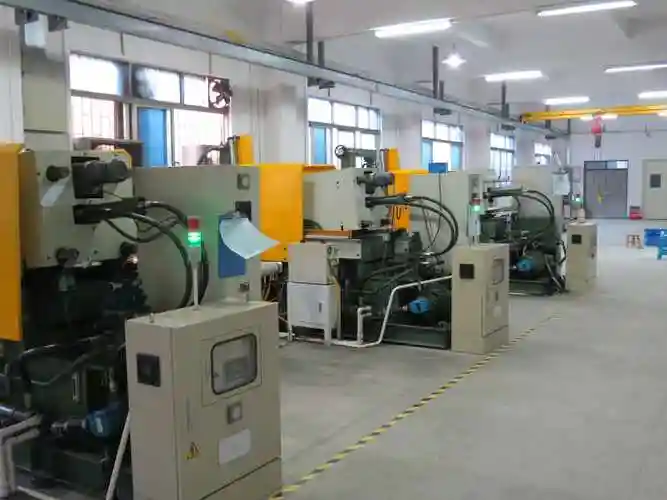
What Sheet Metal Forming Actually Means for Your Parts
When you need metal parts with complex shapes, you have options: machining, casting, or forming. But what is sheet metal forming, and why does it matter for your project? Simply put, sheet metal forming services reshape flat metal sheets into functional components by applying force—without cutting away or melting material. This distinction is critical because it directly affects your part's strength, cost, and performance.
Unlike machining, which removes material through cutting and drilling, or casting, which pours molten metal into molds, metal fabrication through forming works with the material's natural properties. The metal sheet bends, stretches, and compresses into shape while maintaining its original mass. This means less waste, better material utilization, and parts that retain their structural integrity.
The Science Behind Metal Deformation
Ever wondered what actually happens when a flat metal sheet transforms into a complex bracket or enclosure? It comes down to a principle called plastic deformation. Every metal has a yield point—the threshold where it stops bouncing back to its original shape and permanently changes form.
Imagine bending a paperclip. Bend it slightly, and it springs back. Bend it further, and it stays bent. That transition point is the yield point, and sheet metal fabrication relies on precisely controlling forces beyond this threshold.
Here's what happens during the forming process:
- Elastic deformation: Initial force causes temporary shape change—release the pressure, and the metal returns to its original form
- Yield point reached: Additional force pushes the material past its elastic limit
- Plastic deformation: The metal permanently reshapes without fracturing, maintaining its volume and mass
The beauty of this process? Manufacturers can create precise, repeatable shapes by controlling exactly how much force is applied and where. Metal sheets undergo transformation while preserving—and often enhancing—their mechanical properties.
Why Forming Beats Cutting for Structural Parts
If you're designing load-bearing components, the choice between forming and machining isn't just about cost—it's about performance. When machining cuts through metal, it severs the material's natural grain structure, creating weak points where stress can concentrate under load.
Forming takes a completely different approach. According to manufacturing research from MacLean-Fogg, forming processes preserve and enhance the metal's grain flow, resulting in superior mechanical properties including improved strength and fatigue resistance.
Forming preserves the metal's natural grain structure, creating parts that are inherently stronger and more fatigue-resistant than machined alternatives—a critical advantage for components facing repeated stress cycles.
Consider what this means for real-world applications:
- Automotive suspension components: Parts must withstand millions of stress cycles without failure
- Aerospace brackets: Weight savings matter, but so does absolute reliability
- Industrial enclosures: Structural integrity ensures long-term durability
The uninterrupted grain flow in formed parts means they handle fatigue loading better, last longer, and perform more consistently. For engineers designing safety-critical components, this isn't a minor detail—it's a fundamental reason why sheet metal fabrication remains the preferred method for structural applications across industries.
Understanding these foundational principles helps you make smarter decisions about your project. The forming method you choose, the material you select, and the tolerances you specify all build on this basic science of controlled deformation.
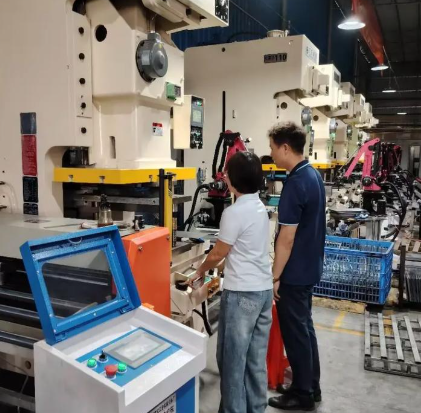
Seven Core Forming Processes Every Engineer Should Understand
Now that you understand the fundamentals of plastic deformation, let's explore how different forming processes put that science into action. Each method offers distinct advantages depending on your part geometry, production volume, and budget. Knowing when to use bending versus stamping—or when deep drawing outperforms both—can save you thousands in tooling costs and months of production delays.
Bending and Press Brake Operations Explained
Bending is the workhorse of sheet metal forming services. Using a machine called a press brake, manufacturers place a metal sheet between an upper tool (the punch) and a lower tool (the V-die). The punch descends with controlled force, pressing the material into the die and creating a precise angle along a straight line.
But here's where it gets interesting—not all bending is created equal. The two primary techniques, air bending and bottom bending, produce very different results:
Air Bending: The sheet metal is pressed into the die, but an air gap remains between the material and the die bottom. This method requires less force, causes less wear on tooling, and offers excellent flexibility. You can achieve different bend angles using the same die simply by adjusting punch depth. However, according to Komaspec's analysis, air bending tends to produce springback—where parts partially unbend after forming. Manufacturers compensate by over-bending slightly or using laser measuring systems to verify angles.
Bottom Bending: Here, the sheet metal "bottoms out" completely against the die surface. This full contact creates extremely precise bends with minimal springback. When accuracy matters more than speed, bottom bending delivers consistent, repeatable results. The tradeoff? It requires more force and causes faster tooling wear.
For steel sheet bending applications requiring tight tolerances, bottom bending often justifies its higher operational costs. For prototypes or parts where slight angle variations are acceptable, air bending's speed and flexibility make it the practical choice. Many metal bending services offer both options, selecting the appropriate technique based on your specifications.
Stamping: Speed Meets Precision
When production volumes climb into the thousands or millions, stamping becomes the clear winner. This process uses custom-made dies to rapidly form parts through operations like blanking (cutting flat shapes), piercing (creating holes), and metal punching (removing material to create features).
The real power of stamping lies in progressive die tooling. Imagine a long die containing multiple stations, each performing a different operation. A coil of metal feeds continuously through the die, and with each press stroke, every station works simultaneously. By the time the material reaches the final station, a complete part is cut free. A single die cut machine running progressive tooling can produce complex parts with multiple features at rates of hundreds per minute.
According to manufacturing specialists at Worthy Hardware, progressive die stamping excels for complex parts requiring multiple operations in high volumes. Transfer die stamping offers an alternative for larger parts that can't remain attached to a carrier strip—mechanical "fingers" move individual pieces between stations.
The catch? Custom die tooling requires significant upfront investment and weeks of lead time. Once the die is made, design changes become expensive. This makes stamping ideal when you've finalized your design and need volume production.
When Deep Drawing Outperforms Stamping
Need a part with significant depth—like a cup, can, or enclosure? Deep drawing might be your answer. This process pulls a flat metal blank into a die cavity using a punch, creating seamless three-dimensional shapes that would be impossible with standard bending.
The key metric here is the draw ratio: the relationship between the blank diameter and the final part diameter. Higher ratios mean deeper draws, but they also increase the risk of material thinning or tearing. According to Sinoway Industry, deep drawing offers several advantages over stamping for the right applications:
- Complex shapes: Creates intricate designs with deep, concave features
- Material efficiency: Utilizes the entire blank with minimal waste
- Enhanced strength: Cold working during forming improves part durability
However, deep drawing has limitations. Initial tooling costs run high, making it less economical for small production runs. Not all materials work well—metals with high ductility like aluminum and certain stainless steels perform best. And cycle times typically run slower than stamping, affecting production efficiency.
Roll Forming, Hydroforming, and Spinning
Roll Forming: When you need long, continuous profiles with consistent cross-sections—think gutters, door frames, or structural channels—roll forming delivers. Sheet metal passes through successive pairs of rollers, each gradually shaping the material until the final profile emerges. It's highly efficient for high-volume production of linear parts.
Hydroforming: This process replaces rigid metal punches with high-pressure fluid. A sheet metal blank is placed on a die, a chamber seals over it, and hydraulic pressure forces the material to conform perfectly to the die shape. The uniform pressure distribution maintains consistent wall thickness even in complex geometries—a significant advantage over conventional deep drawing. Hydroforming excels for asymmetrical shapes and parts requiring superior surface finish, though slower cycle times make it less suitable for extremely high volumes.
Spinning: For rotationally symmetrical parts like cones, domes, or cylindrical vessels, metal spinning offers an efficient solution. A metal disc rotates on a lathe while tools progressively shape it over a mandrel. This process is particularly cost-effective for low to medium volumes of axially symmetric components.
Comparing Your Options
Choosing the right forming process requires balancing part geometry, production volume, material requirements, and budget. If you're searching for metal fabricators near me, understanding these tradeoffs helps you evaluate capabilities and ask the right questions. The following comparison provides a starting point for your process selection:
| Process Name | Best Applications | Typical Materials | Volume Suitability | Relative Tooling Cost |
|---|---|---|---|---|
| Bending | Brackets, enclosures, chassis, angles | Steel, aluminum, stainless steel | Prototype to medium volume | Low (standard tooling) |
| Stamping | Flat parts, brackets, clips, panels | Steel, aluminum, copper alloys | High volume (10,000+) | High (custom dies) |
| Deep Drawing | Cups, cans, sinks, enclosures | Aluminum, stainless steel, brass | Medium to high volume | High |
| Roll Forming | Gutters, channels, structural profiles | Steel, aluminum | High volume | Medium to high |
| Hydroforming | Complex shells, asymmetric shapes | Aluminum, stainless steel, titanium | Low to medium volume | Medium (single die) |
| Spinning | Cones, domes, cylindrical vessels | Aluminum, steel, copper | Low to medium volume | Low to medium |
Remember: the most sophisticated process isn't always the best choice. A simple bent bracket doesn't need hydroforming, and a complex automotive panel shouldn't be made one piece at a time on a press brake. Whether you're working with a laser cutting operation for blanks before forming or need a complete metal cutter and forming solution, matching the process to your specific requirements determines both cost and quality outcomes.
With these core processes understood, the next critical decision involves selecting the right material—a choice that directly impacts formability, final part performance, and manufacturing cost.
Choosing the Right Metal for Your Forming Application
You've selected your forming process—now comes an equally critical decision that can make or break your project: material selection. The metal you choose doesn't just affect part performance; it directly influences which forming methods work, what tolerances you can achieve, and how much you'll spend on tooling and production. Get this decision wrong, and you'll face cracked parts, excessive springback, or costs that blow past your budget.
Different metals behave dramatically differently under forming forces. Some stretch easily and hold their shape; others fight back, requiring specialized equipment and techniques. Understanding these characteristics helps you match materials to processes—and avoid expensive trial-and-error on the production floor.
Key Material Properties Affecting Formability
Before diving into specific metals, you need to understand what makes a material "formable." Four properties determine how well any metal responds to sheet metal forming services:
- Ductility: How much a material can stretch before fracturing. Higher ductility means deeper draws and tighter bends without cracking.
- Yield strength: The force required to permanently deform the material. Lower yield strength reduces equipment requirements but may limit structural applications.
- Work hardening rate: How quickly a metal strengthens as it's formed. High work hardening can improve final part strength but makes progressive forming operations more challenging.
- Anisotropy: Directional differences in material properties. Rolled metals often behave differently when formed parallel versus perpendicular to the rolling direction.
These properties interact in complex ways. A material with excellent ductility might still cause problems if its work hardening rate creates excessive springback. Let's examine how these factors play out in the most common forming materials.
Aluminum vs. Steel Formability Characteristics
The aluminum versus stainless steel decision is one you'll face repeatedly in sheet metal projects. According to LangHe Industry's engineering analysis, each material brings distinct advantages—aluminum for its light weight and high conductivity, stainless steel for its strength and corrosion resistance. But their forming behaviors couldn't be more different.
Aluminum Alloys: Aluminum sheet metal offers excellent formability in most applications. With a density of approximately 2.7 g/cm³—about one-third that of steel—it's the go-to choice when weight matters. The material naturally forms a protective oxide layer, providing corrosion resistance without additional finishing in many environments.
However, aluminum presents a significant challenge: springback. After bending, aluminum parts tend to partially unbend more than steel counterparts. Manufacturers compensate by over-bending or using specialized tooling, but this adds complexity to your production process. Aluminum sheet works beautifully for enclosures, heat sinks, and aerospace components where its thermal conductivity (excellent for heat exchangers and radiators) and weight savings justify the extra attention to springback control.
Stainless Steel: Stainless steel sheet metal demands respect. With higher tensile and yield strength than aluminum, it requires substantially more forming force—meaning heavier equipment and more robust tooling. But what makes stainless particularly challenging is its aggressive work hardening behavior.
As you form stainless steel, it strengthens rapidly. This is actually advantageous for final part performance—formed stainless components gain durability through the forming process itself. But it also means progressive operations become increasingly difficult. Each forming step hardens the material, making subsequent operations require even more force. For complex parts requiring multiple forming stages, this behavior must be carefully managed through proper annealing schedules or process design.
The payoff? Stainless steel, especially grades like 304 and 316 containing at least 18% chromium, offers superior corrosion resistance in harsh environments. It's the preferred choice for medical devices, food processing equipment, and marine applications where hygiene and durability are non-negotiable.
Carbon Steel: When cost-effectiveness and predictable behavior matter most, carbon steel delivers. It forms consistently, requires moderate forces, and costs significantly less than stainless or specialty alloys. For structural components, brackets, and industrial applications where corrosion can be managed through coatings or controlled environments, carbon steel remains the practical choice for millions of formed parts annually.
Specialty Metals: Titanium offers exceptional strength-to-weight ratios and corrosion resistance but requires specialized forming expertise due to its springback characteristics and tendency to gall against tooling. Copper alloys provide excellent electrical conductivity and form readily, making them ideal for electrical components and decorative applications. Each specialty material brings unique considerations that experienced sheet metal forming services can navigate.
How Gauge Thickness Impacts Your Design Options
Here's where material selection gets practical: thickness specification. And if you've ever been confused by gauge sizes versus actual measurements, you're not alone. The gauge system dates back to the 1800s and, frankly, creates more confusion than clarity in modern manufacturing.
According to SendCutSend's engineering guide, gauge thickness originated in the wire-making industry, where the number corresponded to how many times wire was drawn (stretched and compressed) to reach a certain size. More drawing operations meant thinner wire—which is why higher gauge numbers indicate thinner material. Counterintuitive? Absolutely.
The critical point engineers miss: gauge measurements are material-specific. A 14 gauge steel thickness is not the same as 14 gauge aluminum. Consider this real-world example:
- 14 gauge stainless steel: 0.075" (1.90 mm)
- 14 gauge aluminum: 0.064" (1.63 mm)
That's a 0.011" difference—enough to cause fit problems in precision assemblies. Similarly, 11 gauge steel thickness measures approximately 0.120" (3.05 mm), but you can't assume other materials match. Always verify actual dimensions using the appropriate sheet metal gauge chart for your specific material.
Thickness directly impacts your forming options:
- Minimum bend radius: Thicker materials require larger bend radii to avoid cracking. A tight bend that works perfectly in 22 gauge might split 14 gauge material.
- Required forming force: Force requirements increase dramatically with thickness. Doubling thickness can quadruple the required press tonnage.
- Springback magnitude: Thicker materials generally exhibit more springback, requiring greater compensation in tooling design.
- Deep draw limits: Material thickness affects achievable draw ratios and wall thinning during deep drawing operations.
For materials beyond ¼ inch thickness, you're technically working with plate metal rather than sheet metal, and forming processes may shift toward press forming or specialized heavy-gauge equipment.
When specifying materials for your project, consider requesting actual dimensional thickness rather than gauge numbers. This eliminates confusion and ensures your sheet metal forming services provider works from the same specifications you've designed around. The extra clarity prevents costly mistakes before they happen.
With material and thickness selected, you'll need to understand another factor that catches many engineers off guard: forming defects. Knowing what can go wrong—and how to prevent it—separates successful projects from expensive failures.
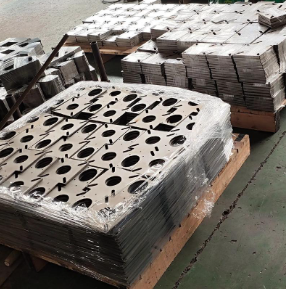
Common Forming Defects and How to Prevent Them
Even with the right process and perfect material selection, things can go wrong during forming. Parts that looked great in CAD come off the press with warped angles, cracked edges, or rough surfaces that fail inspection. These defects cost money—not just in scrapped parts, but in production delays, tooling rework, and frustrated customers.
The good news? Most forming defects are predictable and preventable. Understanding why they happen gives you the power to design them out before cutting your first blank. Let's examine the five most common failures in sheet metal forming services and the engineering strategies that eliminate them.
Predicting and Compensating for Springback
Remember bending that paperclip? Even after permanent deformation, metal retains some "memory" of its original shape. This elastic recovery after forming forces are released is called springback—and it's the most common dimensional accuracy problem in sheet metal fabrication.
According to research published in STAMPING Journal, springback has become increasingly challenging with newer grades of advanced high-strength steels and high-strength aluminum alloys. Traditional compensation methods that worked for mild steel often fall short with these materials.
What causes springback? When you bend metal, the outer surface stretches while the inner surface compresses. After the punch releases, this stress imbalance partially reverses, pulling the part back toward its original flat state. Several factors influence severity:
- Material properties: Higher yield strength materials exhibit more springback. AHSS grades can spring back significantly more than mild steel.
- Bend radius: Tighter radii create more plastic deformation relative to elastic deformation, reducing springback.
- Part geometry: Complex shapes with multiple bends in different directions create unpredictable springback interactions.
- Thickness: Thicker materials in common sheet metal thickness ranges generally show more pronounced elastic recovery.
The systematic approach recommended by forming experts follows a clear sequence: measure, mitigate, control, then compensate. First, use simulation software to predict expected springback accurately. Then, adjust process parameters to minimize it. Control variables like blank holder force and lubrication for consistency. Finally, compensate by over-bending or modifying die geometry so the part springs back to the correct final shape.
Compensation strategies that work:
- Overbending: If simulation predicts 2° of springback, design the die to bend 2° past target so elastic recovery brings the part to specification.
- Coining: Apply high pressure at the bend apex to plastically deform the material through its full thickness, disrupting elastic memory.
- Post-stretching: While the part remains clamped, apply slight additional tension to convert complex stress states into uniform tension throughout the cross-section.
- CAE-driven compensation: Advanced simulation generates "compensation surfaces" that are mirror images of predicted distortion, enabling one-shot die designs that produce accurate parts without trial-and-error.
Design Changes That Prevent Tearing and Wrinkling
Tearing and wrinkling sit at opposite ends of the forming spectrum—yet both stem from the same root cause: improper control of material flow. According to Zintilon's defect analysis, these twin defects define the thin line between success and failure in deep drawing operations.
Wrinkling occurs when excess material flows into the die cavity with nowhere to go. You'll see unwanted folds or creases, typically in flange areas or along sidewalls of deep-drawn parts. The causes include:
- Insufficient blank holder force allowing material to buckle under compression
- Excessive blank size feeding more material than the die cavity can accommodate
- Improper die clearance creating uneven material flow
- Poor lubrication causing localized sticking and material bunching
Prevention strategies for wrinkling:
- Increase blank holder force to maintain proper tension on the flange area
- Add draw beads—raised features that force material through controlled bending and reverse-bending as it enters the die, creating precise flow resistance
- Optimize blank size and shape to reduce excess material
- Ensure uniform lubrication to prevent localized flow irregularities
Tearing happens when material stretches beyond its forming limit—you'll see splits or cracks, typically at tight radii or where material thins excessively. Root causes include:
- Die or punch radii too sharp for the material's ductility
- Excessive blank holder pressure restricting material flow when the punch needs to draw it
- Insufficient lubrication increasing friction and localized strain
- Material defects or work hardening from previous operations
Prevention strategies for tearing:
- Follow the engineering toolbox min bending radius guidelines—typically 4-8 times material thickness for die entry radii
- Reduce blank holder force in areas where material needs to flow freely
- Apply appropriate lubricants to reduce friction, especially with thinnest sheet metal gauges prone to thinning
- Consider simulation software to identify high-strain areas before production tooling is cut
The critical insight from Jeelix's forming die analysis: blank holder force, die radii, and lubrication form a "triangle" of interdependent variables. Adjusting one affects the others. Increase holder force to prevent wrinkling, and you may cause tearing. The art lies in finding the balance point where material flows smoothly without buckling or splitting.
Surface Defects: Orange Peel and Galling
Orange peel creates a rough, textured surface resembling citrus skin—unacceptable for visible parts requiring quality sheet metal finishing. This defect occurs when material is stretched significantly, causing individual grains in the metal's microstructure to deform unevenly. Coarse-grained materials are particularly susceptible.
Prevention strategies for orange peel:
- Specify fine-grained material grades for parts requiring smooth surfaces
- Reduce the degree of stretch where possible through die geometry optimization
- Consider material temper—fully annealed conditions sometimes exhibit more orange peel than lightly worked material
Galling is metal's version of a friction burn. Under high pressure and sliding contact, material from the workpiece welds to the die surface. Once this adhesion starts, it accelerates—the rough buildup on the die scratches subsequent parts, creating a cascade of defects. Stainless steel and aluminum are particularly prone to galling due to their oxide layer behavior.
Prevention strategies for galling:
- Select appropriate lubricants with extreme-pressure (EP) additives that create protective chemical films under high load
- Apply surface treatments to dies—PVD coatings like TiN or TiAlN create ultra-hard, low-friction surfaces that resist material adhesion
- Reduce forming speeds where galling occurs to limit heat generation
- Polish die surfaces to mirror finishes, minimizing asperities that initiate adhesion
The Defect Prevention Mindset
Notice a pattern? Nearly every defect traces back to the relationship between force, geometry, and lubrication. The kerf left by cutting operations, the dross from laser processing, the minimum bending radius for your material thickness—these factors interconnect. Changing one parameter ripples through the entire forming system.
Smart engineers don't wait for defects to appear on production parts. They use simulation software during design to predict problems, specify appropriate materials and thicknesses, and work with experienced sheet metal forming services to optimize processes before committing to expensive tooling.
Speaking of tooling—your decisions about custom dies versus standard tooling, progressive versus transfer operations, and prototype versus production equipment directly determine both your project budget and timeline. Understanding these tooling tradeoffs is the next critical step in controlling your forming project costs.
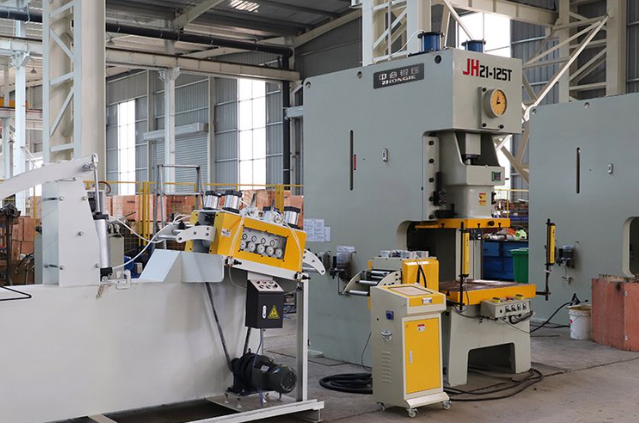
Tooling Decisions That Make or Break Your Project Budget
You've selected your forming process, chosen the right material, and designed around potential defects. Now comes the decision that often determines whether your project stays on budget or spirals into cost overruns: tooling. The choice between custom metal stampings with dedicated dies versus standard tooling configurations can swing your per-part cost by orders of magnitude—in either direction.
Here's what catches many engineers off guard: the cheapest tooling option upfront isn't always the most economical choice over your project's lifetime. A $5,000 simple die might seem attractive compared to a $50,000 progressive die, but if you're producing 100,000 parts annually, that "expensive" tooling could cut your per-part cost by 60%. Understanding these tradeoffs before committing helps you make decisions that align with your actual production needs.
Custom Dies vs. Standard Tooling Economics
When does your project require custom tooling, and when can you work with standard equipment? The answer depends on three interconnected factors: part geometry, production volume, and tolerance requirements.
Standard Tooling includes the universal press brake dies, adjustable bending fixtures, and modular punch-and-die sets that sheet metal forming services keep in stock. These tools handle a wide range of common operations—straight bends at standard angles, standard hole patterns, and basic blanking operations. The advantages are compelling:
- Minimal or zero tooling lead time—production can start almost immediately
- No upfront tooling investment to amortize
- Easy design changes without scrapping expensive dies
- Ideal for sheet metal prototype fabrication and low-volume runs
The limitation? Standard tooling requires multiple setups and operations to produce complex parts. Each additional operation adds handling time, increases the chance of dimensional variation, and drives up per-part cost.
Custom Tooling becomes essential when your part geometry, tolerances, or volumes justify the investment. According to Alsette VS's stamping analysis, the decision often comes down to total cost of ownership rather than initial tooling price. Custom dies make sense when:
- Part geometry requires specialized forming operations that standard tools can't achieve
- Production volumes are high enough to amortize tooling costs across many parts
- Tight tolerances demand the consistency that only dedicated tooling provides
- Multiple operations can be combined into a single die, reducing handling and cycle time
Progressive Die Tooling represents the pinnacle of high-volume efficiency. As discussed earlier, these dies perform multiple operations—blanking, piercing, forming, and cutoff—in a single continuous process. Material feeds through automatically, and finished parts emerge at rates of hundreds per minute. For custom sheet metal fab projects requiring tens of thousands of identical parts, progressive dies deliver the lowest possible per-part cost.
The tradeoff is significant upfront investment. Progressive die design requires extensive engineering, precision machining, and often weeks of build time. According to industry experience documented by Alsette VS, these tools typically make financial sense only when annual volumes exceed 10,000-20,000 parts—though complexity and part value shift this threshold.
Simple (Single-Station) Dies offer a middle ground. They perform one or a few operations per press stroke, with parts moving between separate dies for complex geometries. Initial costs and lead times are lower than progressive tooling, making them suitable for prototype sheet metal runs or moderate production quantities. The per-part cost runs higher due to increased handling, but the lower tooling investment can be the right choice when volumes don't justify progressive die economics.
Modular Tooling Systems provide flexibility for manufacturers handling diverse part families. These systems use standardized mounting plates and quick-change components, allowing rapid reconfiguration for different parts. While not as fast as dedicated progressive dies, modular systems dramatically reduce changeover time compared to conventional tooling—valuable when you're running multiple sheet metal design variations in smaller batches.
Rapid Tooling for Prototype-to-Production Transitions
Sounds complex? Here's where sheet metal prototyping gets interesting. Traditional tooling timelines—often 6-12 weeks for complex progressive dies—don't align with modern product development cycles where speed determines market success.
Rapid tooling bridges this gap. According to Fictiv's prototyping guide, modern sheet metal prototype fabrication leverages several strategies to accelerate the path from design to production:
Soft Tooling: Dies made from aluminum or mild steel rather than hardened tool steel. These tools cost 30-50% less and can be produced in days rather than weeks. The tradeoff? Shorter lifespan—typically 1,000-10,000 parts before wear affects quality. But for prototype sheet metal validation and bridge production, soft tooling provides production-representative parts fast.
3D-Printed Tooling: Additive manufacturing now produces forming dies, press brake tooling, and fixtures in days. While limited to lower forces and volumes, printed tooling enables rapid iteration during sheet metal prototyping phases. Test five design variants in the time traditional tooling would take to produce one.
Laser and Waterjet Processing: For prototype runs, these technologies eliminate blanking dies entirely. CAD files translate directly to cut parts without any tooling investment. Combined with standard press brake bending, this approach supports true prototype sheet metal production with zero tooling lead time.
Bridge Tooling Strategy: Smart programs often use a phased approach—start with laser cutting and standard bending for initial prototypes, transition to soft tooling for design validation quantities, then invest in hardened progressive dies only after design freeze. This staged investment reduces risk while maintaining speed.
Comparing Your Tooling Options
The following comparison helps you match tooling strategies to your project requirements:
| Tooling Type | Typical Lead Time | Cost Range Considerations | Ideal Volume Range |
|---|---|---|---|
| Standard/Universal Tooling | Immediate to 1-2 days | No tooling investment; higher per-part labor | 1-500 parts |
| Soft Tooling (Aluminum Dies) | 1-2 weeks | Low-moderate; 30-50% less than hardened steel | 500-10,000 parts |
| Simple Dies (Hardened) | 3-6 weeks | Moderate; single operations per die | 5,000-50,000 parts |
| Progressive Dies | 6-12 weeks | High initial; lowest per-part cost at volume | 20,000+ parts annually |
| Modular/Quick-Change Systems | 2-4 weeks | Moderate; amortized across part families | Multiple SKUs, 1,000-20,000 each |
How DFM Reduces Tooling Complexity and Cost
Design for Manufacturability isn't just a buzzword—it's the most powerful lever you have for controlling tooling costs. According to Fictiv's DFM guide, design choices made early in development determine up to 80% of manufacturing cost. Once you've committed to a design, options for cost reduction narrow dramatically.
What does DFM mean for tooling decisions? Consider these principles:
Simplify geometry where possible. Every compound curve, tight radius, and complex feature adds tooling cost. A stamped bracket with three simple bends requires far less sophisticated tooling than one with curved flanges and hemmed edges. Before finalizing sheet metal design, ask: does this feature genuinely improve function, or is it adding cost without value?
Standardize bend radii and hole sizes. Using consistent dimensions throughout your part—and across your product family—allows tooling reuse. If every part uses the same bend radius and the same hole punch sizes, you reduce the number of die stations required and simplify setup.
Consider material utilization in blank layout. Tooling designers optimize how blanks nest on the coil or sheet. Parts designed with nesting in mind—minimizing scrap between parts—reduce both material cost and the complexity of progressive die strip layouts.
Avoid unnecessarily tight tolerances. Tighter tolerances require more precise (and expensive) tooling, more careful process control, and higher reject rates. Specify tight tolerances only on features where they're genuinely required for function or assembly. Loosening non-critical dimensions can significantly reduce tooling precision requirements.
Design for the process, not just the part. Sharp internal corners might look fine in CAD but create stress concentrations that require specialized tooling to avoid cracking. Features too close to bend lines may distort during forming. Understanding process constraints during design prevents expensive tooling modifications after production starts.
The most cost-effective projects involve manufacturing engineers early—during concept development, not after design freeze. When your sheet metal forming services partner reviews designs before tooling commitment, they identify opportunities to simplify tooling, reduce operations, and eliminate potential production problems. This collaborative approach to sheet metal design consistently produces better outcomes than throwing finished designs over the wall to manufacturing.
With tooling strategy aligned to your volume and complexity requirements, the next consideration is matching your production volume expectations to the right forming strategy—a decision that determines whether you're overpaying for excess capacity or scrambling to meet demand.
Matching Production Volume to the Right Forming Strategy
Here's a scenario that plays out constantly in metal parts manufacturing: an engineer requests quotes for 500 stamped brackets, expecting competitive pricing—only to discover the per-part cost is ten times higher than anticipated. Why? Because the tooling investment designed for 50,000 parts is being amortized across just 500. Volume miscalculation is one of the most expensive mistakes in sheet metal production, and understanding where different processes become cost-effective saves thousands in wasted spending.
The relationship between volume and cost isn't linear—it's a series of crossover points where one process suddenly becomes dramatically more economical than another. According to Eabel's manufacturing analysis, the crossover between rapid prototyping and mass production typically occurs between a few dozen to a few hundred parts, depending on material and part complexity. Miscalculating this threshold leads to overspending on tooling too early or relying on slow, costly prototyping methods for mid-volume runs.
Finding Your Volume Sweet Spot
What production quantity actually justifies that $40,000 progressive die? When does rapid sheet metal fabrication stop making sense? The answer depends on understanding how Non-Recurring Engineering (NRE) costs—the one-time expenses for programming, tooling, and setup—spread across your production run.
According to Zenith Manufacturing's cost analysis, the formula is straightforward: Total Part Cost = (NRE Costs ÷ Quantity) + Per-Part Variable Cost. For an engineer, NRE includes CAM programming, custom fixture design, machine setup, and first-article inspection. For a project manager, think of it as the setup fee that unlocks your entire manufacturing run.
Here's how different volume tiers align with optimal manufacturing approaches:
- Prototype (1-50 parts): Laser cutting and waterjet processing eliminate blanking dies entirely. Standard press brake bending handles forming operations without custom tooling investment. Per-part costs run high, but total project cost stays low. This tier supports rapid design iteration—test multiple variants before committing to production tooling.
- Low-volume (50-1,000 parts): Soft tooling becomes viable. Aluminum dies cost 30-50% less than hardened steel and can be produced in 1-2 weeks. Bridge tooling strategies work well here—use production-representative processes to validate designs before scaling. Sheet metal fabrication shops near me searches often lead to local suppliers who excel in this range.
- Medium-volume (1,000-10,000 parts): Simple hardened dies justify their 3-6 week lead times. Single-operation stamping replaces slower multi-setup processes. Per-part costs drop significantly as tooling amortizes across larger quantities. This volume tier often represents the transition point where sheet metal manufacturing economics shift decisively.
- High-volume (10,000+ parts annually): Progressive die tooling delivers the lowest per-part cost despite high upfront investment. Automated material handling and continuous-feed operations maximize efficiency. The 6-12 week tooling lead time becomes acceptable when spread across years of production.
The critical insight? Sheet metal shops that understand these crossover points help you select the right approach from the start—rather than discovering mid-project that you've chosen an economically mismatched process.
When Prototyping Methods Scale to Production
Traditional wisdom drew a hard line between prototyping and production methods. Prototypes used laser cutting and manual bending; production used stamping dies. But emerging technologies are blurring this boundary, creating new options for low-to-medium volume sheet metal manufacturing.
Digital Sheet Metal Forming (DSMF): These CNC-controlled systems use incremental forming—a rotating tool progressively shapes sheet metal without dedicated dies. Complex geometries that would require expensive stamping tooling can be produced directly from CAD files. The tradeoff is cycle time: DSMF runs slower than stamping, making it impractical for high volumes. But for quantities under 1,000 parts, it offers production-quality results without tooling investment.
Hybrid Manufacturing Cells: Modern sheet metal production increasingly combines technologies. A single cell might integrate laser cutting, robotic bending, and automated material handling—producing complete parts without traditional die-based forming. These systems excel for mixed-volume production, handling both prototype quantities and moderate production runs without the setup penalties of conventional equipment.
According to Eabel's analysis, many companies now follow a hybrid path: start with rapid prototyping for design validation, move to soft tooling for mid-volume bridge production, and scale into full hardened tooling only as demand and design stability increase. This staged approach reduces risk while maintaining development speed.
The DFM Checkpoint: Before transitioning from prototype to production volumes, thorough Design for Manufacturability review becomes essential. As Zenith's analysis emphasizes, design changes during prototyping cost almost nothing—but modifications after production tooling is cut can add tens of thousands of dollars and months of delay. Teams should complete comprehensive DFM checks before committing to volume tooling.
Domestic vs. Overseas Manufacturing Decisions
Volume requirements also influence the domestic versus overseas manufacturing decision. The calculation isn't as simple as comparing quoted per-part prices.
Factors favoring domestic production:
- Low-to-medium volumes where shipping containers can't be filled economically
- Tight lead time requirements that can't accommodate ocean freight
- Parts requiring close engineering collaboration and rapid iteration
- Quality-critical applications where direct oversight matters
- Supply chain resilience concerns that favor regional sourcing
Factors favoring overseas production:
- High volumes that fill containers and justify logistics complexity
- Stable designs requiring minimal engineering changes
- Cost-sensitive applications where labor rates dominate total cost
- Extended production schedules that accommodate longer lead times
For many sheet metal projects, the answer isn't either-or. Prototype and low-volume runs often stay domestic for speed and flexibility, while proven high-volume production may shift overseas once designs stabilize. The key is matching sourcing strategy to each phase of your product lifecycle rather than applying a one-size-fits-all approach.
Volume strategy directly impacts another critical factor: achievable tolerances. Higher volumes with dedicated tooling typically deliver tighter, more consistent dimensions—but understanding realistic precision limits for each forming process prevents over-specification that drives unnecessary cost.
Understanding Precision Limits in Metal Forming
You've designed your part, selected your material, and chosen a forming process that fits your volume requirements. Now comes a question that separates successful projects from costly rework cycles: what dimensional accuracy can you actually achieve? Specify tolerances too tight, and you'll pay premium prices for precision you don't need. Specify them too loose, and parts won't assemble correctly. Understanding the realistic precision limits of different sheet metal forming services helps you make smart specifications from the start.
Here's what many engineers discover too late: forming tolerances aren't universal. A bending operation achieves very different precision than stamping, and both differ from deep drawing. According to Komacut's tolerance guide, the fabrication method you choose largely determines the precision of your sheet metal parts—and understanding these process-specific capabilities prevents unrealistic expectations that drive up costs.
Realistic Tolerance Expectations by Process
Every forming process has inherent limitations. The physics of plastic deformation, the condition of your tooling, and variability in material properties all contribute to dimensional variation. Let's examine what you can realistically expect from each major forming method.
Bending Tolerances: Press brake bending typically achieves angular tolerances of ±0.5° to ±1.0° under standard conditions, with high-precision operations reaching ±0.5° or better. Positional accuracy—where the bend line falls relative to part features—generally holds ±0.20 mm to ±0.45 mm depending on material thickness and equipment quality. According to ADH Machine Tool's analysis, springback remains the primary enemy of bending tolerances, with higher-strength materials exhibiting more pronounced elastic recovery that must be compensated through overbending or specialized tooling.
Stamping and Punching Tolerances: Precision stamping excels at dimensional consistency, achieving tolerances of ±0.05 mm or tighter for feature-to-feature dimensions. Once the die is finalized, it delivers extremely high repeatability across production runs—the dimensional accuracy is essentially "born in the die." However, achieving these tight tolerances requires precision die manufacturing and careful attention to die wear over time. As stamping dies wear through tens of thousands of cycles, burr size increases and dimensions drift, requiring regular maintenance to maintain specification.
Deep Drawing Tolerances: Wall thickness variation presents the greatest challenge in deep drawing operations. As material flows into the die cavity, it thins in some areas and thickens in others. Typical tolerances for wall thickness run ±0.1 mm or more, depending on draw depth and material properties. Dimensional tolerances on overall part shape generally hold ±0.15 mm to ±0.25 mm for well-designed tooling.
Laser Cutting Tolerances: Since many formed parts start as laser-cut blanks, cutting precision establishes the baseline for subsequent forming operations. Modern fiber laser systems typically maintain linear tolerances of ±0.10 mm to ±0.20 mm depending on material thickness, with high-precision operations achieving ±0.08 mm for hole diameters.
| Forming Process | Typical Standard Tolerance | High-Precision Achievable | Key Variables Affecting Precision |
|---|---|---|---|
| Press Brake Bending (Angular) | ±1.0° | ±0.5° | Material springback, tooling condition, operator skill |
| Press Brake Bending (Positional) | ±0.45 mm | ±0.20 mm | Backgauge accuracy, material consistency |
| Stamping (Feature-to-Feature) | ±0.10 mm | ±0.05 mm | Die precision, die wear, material thickness variation |
| Deep Drawing (Wall Thickness) | ±0.15 mm | ±0.10 mm | Draw ratio, lubrication, blank holder force |
| Laser Cutting (Linear) | ±0.20 mm | ±0.10 mm | Material thickness, machine calibration, thermal effects |
When Tighter Tolerances Require Secondary Operations
What happens when your sheet metal dimensions must exceed what forming alone can deliver? This is where sheet metal machining enters the picture. CNC milling, drilling, and reaming can hold tolerances of ±0.025 mm or tighter on critical features—precision that forming processes simply cannot match.
According to D+M Metal Products' cost analysis, the tighter the tolerance, the greater the effort—and cost—required to meet it. Precision equipment, skilled operators, additional inspections, and potential scrap all drive expenses upward. The relationship isn't linear: halving your tolerance band can easily double or triple your manufacturing cost.
Consider this practical example: a formed bracket with mounting holes. Standard forming might place those holes within ±0.3 mm of their nominal positions—acceptable for many applications. But if those holes must align with precision-machined components in a sheet metal assembly, you may need ±0.05 mm positioning. Achieving that precision typically requires:
- Forming the bracket with oversized or absent holes
- Secondary CNC drilling or reaming to establish precise hole locations
- Additional inspection to verify critical dimensions
This secondary operation adds cost, but it's often more economical than attempting to achieve impossible precision through forming alone. The key insight from precision sheet metal fabrication companies: specify tight tolerances only where function genuinely demands them. Every non-critical dimension that can accept standard forming tolerances reduces your total manufacturing cost.
Factors that affect achievable precision:
- Material properties: Thickness variations in incoming material directly affect formed dimensions. Cold-rolled steel offers tighter thickness tolerances than hot-rolled, translating to more consistent final parts.
- Tooling condition: Worn dies produce larger burrs, dimensional drift, and inconsistent features. Precision sheet metal fabricator operations include regular tooling maintenance as part of quality systems.
- Process parameters: Blank holder force, forming speed, and lubrication all influence dimensional outcomes. Consistent process control delivers consistent parts.
- Temperature effects: Both ambient temperature and heat generated during forming affect dimensions. Precision sheet metal fabrication companies control environmental factors for critical work.
The most cost-effective approach? Work with your sheet metal forming services provider during design to identify which dimensions truly require tight tolerances—and which can accept the natural precision of your chosen process. This collaborative approach to tolerance specification balances quality requirements against manufacturing reality, delivering parts that work correctly without paying for unnecessary precision.
With realistic tolerance expectations established, the next consideration involves industry-specific requirements that add certification, documentation, and testing demands beyond basic dimensional accuracy.
Industry-Specific Forming Requirements You Cannot Ignore
Achieving tight tolerances and selecting the right forming process only gets you halfway there. If you're manufacturing for automotive, aerospace, or defense applications, your parts must meet industry-specific certification and documentation requirements that go far beyond dimensional accuracy. These requirements aren't optional—they determine whether your supplier can even quote your project, and they directly impact both timeline and cost.
Here's what catches many engineers off guard: a steel fabrication shop that produces excellent parts for general industrial applications may be completely unqualified to supply identical parts for automotive use. The difference isn't capability—it's certification. Understanding these industry-specific demands helps you select suppliers who can actually deliver, avoiding costly delays when qualification requirements surface mid-project.
Automotive Forming Requirements and Certifications
The automotive industry operates under some of the most rigorous quality management standards in manufacturing. At the center sits IATF 16949—a certification that's technically optional but practically mandatory for any supplier hoping to work with major automakers.
According to Xometry's certification analysis, IATF 16949 is built specifically for automotive manufacturing, drawing on ISO 9001 principles while adding automotive-specific requirements. This framework focuses on defect prevention, variation reduction, and waste elimination across the entire supply chain. It's a binary certification—your supplier either has it or doesn't, with no partial compliance levels.
Why does this matter for your steel fabrication or custom steel fabrication project? Without IATF 16949 certification, suppliers cannot provide parts for most automotive OEMs or Tier 1 suppliers. The certification signals that a manufacturer has implemented:
- Documented quality management systems covering every process from material receipt to final shipment
- Advanced Product Quality Planning (APQP) ensuring design and process validation before production
- Production Part Approval Process (PPAP) providing evidence that production processes consistently create conforming parts
- Failure Mode and Effects Analysis (FMEA) proactively identifying and mitigating potential failure points
- Statistical Process Control (SPC) monitoring production variables to maintain consistency
For chassis, suspension, and structural components, these requirements intensify. These parts directly affect crash performance and occupant safety—there's zero tolerance for quality variation. Steel fabricators serving this segment must demonstrate not just dimensional capability, but process stability across thousands or millions of parts.
What does this mean for your project timeline? IATF 16949-certified suppliers typically require thorough documentation at every stage. First-article inspections, capability studies, and material certifications add time upfront but prevent quality issues during production. Suppliers like Shaoyi, who maintain IATF 16949 certification for automotive chassis, suspension, and structural components, have systems in place to manage these requirements efficiently—their 5-day rapid prototyping and automated mass production capabilities demonstrate how certified suppliers bridge prototype-to-production gaps without sacrificing compliance.
What Defense and Aerospace Projects Demand
If automotive requirements seem stringent, aerospace and defense applications take certification expectations to another level entirely. When components fly at 30,000 feet or protect military personnel, traceability and documentation become matters of life and safety.
According to Conro Electronics' aerospace manufacturing analysis, batch traceability is foundational to aerospace quality systems. This means tracking every component from raw material source through manufacturing, assembly, delivery, and end-use. The documentation chain includes:
- Material certifications verifying alloy composition and mechanical properties
- Heat lot tracking connecting finished parts back to specific material batches
- Process records documenting operator actions, machine settings, and inspection results
- Test data proving mechanical performance meets specification
The 2024 Boeing titanium investigation highlighted why this matters. When concerns arose about falsified documentation for Chinese-sourced titanium, Boeing requested records tracing materials back ten years. This level of scrutiny shows how far aerospace manufacturers must go to verify authenticity and maintain trust. For aluminum fabrication or exotic alloy forming in aerospace applications, your supplier must demonstrate this documentation capability from day one.
Key certification standards affecting aerospace and defense forming include:
- AS9100: The aerospace equivalent of ISO 9001, adding requirements for risk management, configuration control, and first-article inspection
- NADCAP: Special process accreditation covering heat treatment, welding, and surface finishing—critical for formed components requiring subsequent processing
- ITAR compliance: Export control requirements for defense-related manufacturing, restricting which facilities can even handle certain projects
- EASA Part 21: European aviation safety requirements governing production organization approvals
Exotic alloys common in aerospace—titanium, Inconel, specialized aluminum grades—add forming complexity. These materials often require tighter tolerances, specialized tooling, and carefully controlled forming parameters. The combination of material challenges and documentation requirements means aerospace-qualified sheet metal forming services command premium pricing and longer lead times.
General Industrial Applications
Not every project requires automotive or aerospace certification levels. Industrial fabrication services for equipment enclosures, structural frames, or mechanical assemblies often operate under ISO 9001 or equivalent quality systems—providing documented processes and traceability without the sector-specific requirements of IATF 16949 or AS9100.
However, don't assume industrial applications have no compliance requirements. Depending on your end-use, you may encounter:
- UL or CE marking for electrical enclosures
- FDA requirements for food processing or medical equipment
- ASME standards for pressure-containing components
- Weld certifications for structural stainless steel fabrication
The lesson? Always clarify certification requirements early in supplier discussions. A custom fabrication shop may have excellent capabilities for general industrial work but lack the quality systems needed for your specific application. Discovering this mismatch after tooling investment wastes time and money.
How Certification Affects Your Supplier Selection
Certification requirements create a filtering mechanism that narrows your supplier options. The more demanding your industry requirements, the smaller your pool of qualified suppliers becomes. This directly affects both pricing and lead times.
When evaluating potential partners for certified applications, consider:
- Current certification status: Verify certificates are current and scope covers your specific requirements
- Audit history: Recent audit findings and corrective actions indicate quality system maturity
- Customer references: Existing relationships with OEMs in your industry demonstrate proven capability
- Documentation systems: Ask how traceability and quality records are maintained and accessed
- Capacity for your volume: Certified suppliers may prioritize larger customers during capacity constraints
For automotive applications specifically, working with IATF 16949-certified suppliers from project inception ensures smoother PPAP submissions and faster production approval. The comprehensive DFM support that certified suppliers typically offer—helping optimize designs for both manufacturability and quality system requirements—adds value beyond basic part production.
Understanding these industry-specific requirements positions you to select suppliers capable of meeting your actual needs. But certification is just one evaluation criterion—the next section covers the complete picture of what to look for when choosing a sheet metal forming partner who can grow with your business.
Selecting a Forming Partner That Grows With Your Needs
You've navigated process selection, material choices, tooling decisions, and industry certifications. Now comes the decision that ties everything together: choosing the right sheet metal forming services partner. This isn't just about finding someone who can make parts—it's about identifying a supplier whose capabilities, responsiveness, and growth trajectory align with yours. The wrong choice leads to missed deadlines, quality escapes, and painful supplier transitions mid-project. The right choice creates a competitive advantage that compounds over years of collaboration.
When searching for sheet metal fabrication near me or metal fabrication near me, you'll find dozens of options. But how do you separate genuinely capable partners from those who'll struggle with your first complex project? According to York Sheet Metal's supplier evaluation guide, the key lies in looking beyond equipment lists and examining how suppliers actually operate—their responsiveness, accountability, and willingness to tackle challenges.
Red Flags When Evaluating Forming Suppliers
Before diving into what to look for, let's identify warning signs that signal potential problems. According to simpleQuE's supplier evaluation framework, these red flags should elevate your scrutiny:
- Slow or vague quote responses: If getting a basic quote takes weeks, imagine how communication will flow during production problems. Top sheet metal fabricators provide quotes within hours to days—not weeks.
- Reluctance to discuss capabilities honestly: Quality suppliers push back on unrealistic timelines rather than overpromising. A supplier who says "yes" to everything may be setting you up for disappointment.
- No Design for Manufacturability feedback: Metal fabrication companies that simply quote what you send without offering DFM suggestions miss opportunities to reduce your costs and improve quality.
- Outdated equipment or processes: Ask about recent capital investments. Suppliers not modernizing their systems may struggle with precision requirements or efficient production.
- Poor documentation systems: Request sample quality records. If traceability documentation looks disorganized, expect problems when you need to investigate quality issues.
- High customer concentration: According to simpleQuE's analysis, if a supplier depends heavily on one or two customers, your orders may receive lower priority during capacity crunches.
Trust your instincts during initial interactions. How suppliers handle pre-sales communication often predicts how they'll perform during production.
Questions That Reveal True Manufacturing Capability
When evaluating fabrication shops near me or metal fabrication companies near me, surface-level capability claims don't tell the whole story. According to Metal Works' partner selection guide, the right questions reveal whether a supplier can genuinely deliver on their promises.
Use this prioritized evaluation checklist when assessing potential partners:
- Request specific tolerance capabilities with evidence: Ask for case studies or sample parts demonstrating their precision claims. Any metal fabrication shop near me can claim tight tolerances—proof separates reality from marketing.
- Verify certifications match your requirements: Don't assume ISO 9001 covers automotive needs or that IATF 16949 certification extends to all product lines. Confirm scope explicitly.
- Evaluate DFM support depth: Ask how their engineering team reviews designs before quoting. Do they provide written DFM recommendations? How many combined years of experience does their engineering team bring? According to Metal Works, their engineering team offers over 100 years of combined experience and provides DFM support free of charge—this level of proactive support should be your benchmark.
- Test quote turnaround time: Submit a moderately complex RFQ and measure response time. Suppliers offering 12-hour quote turnaround, like Shaoyi, demonstrate both engineering depth and operational efficiency. Slow quotes often indicate capacity constraints or limited technical resources.
- Assess scalability from prototype to production: Can the supplier handle your initial 50-part prototype run AND scale to 50,000 parts annually when demand grows? Suppliers spanning rapid prototyping (Shaoyi offers 5-day turnaround) to automated mass production eliminate painful supplier transitions as your volumes increase.
- Examine on-time delivery metrics: Ask for their annual on-time delivery percentage. According to Metal Works, top performers achieve 96% or better. Anything below 90% signals systemic problems.
- Evaluate communication responsiveness: How quickly do they return calls and emails? According to York Sheet Metal's analysis, communication should flow both ways—quality suppliers proactively reach out, not just respond when you chase them.
- Investigate accountability culture: Ask how they handle mistakes. Suppliers who take responsibility and implement corrective actions build trust; those who deflect blame create ongoing friction.
- Review secondary capabilities: Can they handle finishing, assembly, and hardware insertion in-house? One-stop facilities like Metal Works control every step of the process, preventing parts from getting delayed at outside vendors.
- Confirm geographic fit: For ongoing production relationships, proximity matters for quality oversight, emergency deliveries, and collaborative problem-solving. Local suppliers with their own delivery fleets often provide faster response than distant alternatives relying on third-party freight.
Building a Partnership That Scales
The most successful supplier relationships evolve beyond transactional part purchasing into genuine partnerships. When your forming partner understands your product roadmap, they can proactively suggest tooling strategies, material alternatives, and process improvements that reduce your total cost of ownership.
What does this partnership look like in practice? Consider these characteristics:
- Early involvement in design: Partners review concepts before designs freeze, identifying manufacturability issues when changes cost nothing
- Transparent communication: They tell you when timelines slip rather than hiding problems until the last minute
- Continuous improvement focus: They track quality metrics and proactively implement improvements—not just react to your complaints
- Flexible capacity: They accommodate volume fluctuations without constant renegotiation
- Investment in your success: They suggest cost reductions that benefit you, even when it reduces their revenue
Finding sheet metal fabricators who operate this way requires looking beyond price comparisons. The lowest quote often comes from suppliers who cut corners on engineering support, quality systems, or delivery reliability. The right partner may cost slightly more per part but delivers dramatically better total value through reduced scrap, faster development cycles, and reliable production.
Whether you're launching a new product or optimizing an existing supply chain, the supplier selection decision shapes your manufacturing outcomes for years. Take time to evaluate thoroughly, ask probing questions, and choose partners whose capabilities and culture align with your long-term needs.
Frequently Asked Questions About Sheet Metal Forming Services
1. What is the difference between sheet metal forming and fabrication?
Sheet metal forming reshapes flat metal through controlled plastic deformation without removing material, preserving grain structure and strength. Fabrication is a broader term encompassing forming plus cutting, welding, and assembly operations. Forming specifically applies force beyond the yield point to create permanent shapes like bends, draws, and stamps, making it ideal for structural parts requiring superior fatigue resistance.
2. How do I choose between bending, stamping, and deep drawing?
Selection depends on part geometry, volume, and budget. Bending suits brackets and enclosures with straight-line folds at prototype to medium volumes. Stamping excels for flat parts with holes and features at high volumes (10,000+ parts) where tooling investment amortizes effectively. Deep drawing creates seamless cup-shaped or enclosed components with significant depth. IATF 16949-certified suppliers like Shaoyi can guide optimal process selection based on your specific requirements.
3. What tolerances can sheet metal forming achieve?
Tolerances vary by process: press brake bending typically holds ±0.5° to ±1.0° angular and ±0.20-0.45mm positional accuracy. Precision stamping achieves ±0.05mm feature-to-feature dimensions. Deep drawing manages ±0.10-0.15mm wall thickness variation. When tighter tolerances are required, secondary CNC machining operations can achieve ±0.025mm on critical features. Material properties, tooling condition, and process control all affect achievable precision.
4. How does production volume affect sheet metal forming costs?
Volume dramatically shifts cost economics. Prototype runs (1-50 parts) use laser cutting and standard bending with no tooling investment. Low-volume (50-1,000) benefits from soft aluminum tooling. Medium-volume (1,000-10,000) justifies hardened simple dies. High-volume (10,000+) demands progressive dies with highest upfront cost but lowest per-part price. Suppliers offering 5-day rapid prototyping through automated mass production, like Shaoyi, help optimize costs across all volume tiers.
5. What certifications should I look for in a sheet metal forming supplier?
Certification requirements depend on your industry. Automotive applications require IATF 16949, which ensures defect prevention, PPAP documentation, and statistical process control. Aerospace demands AS9100 plus NADCAP for special processes and complete material traceability. General industrial applications typically need ISO 9001. Always verify certification scope covers your specific product type and confirm certificates are current before committing to production tooling.