 Small batches, high standards. Our rapid prototyping service makes validation faster and easier —
  EN
EN


Precision Sheet Metal Stamping: Why Your Parts Keep Failing Tolerance
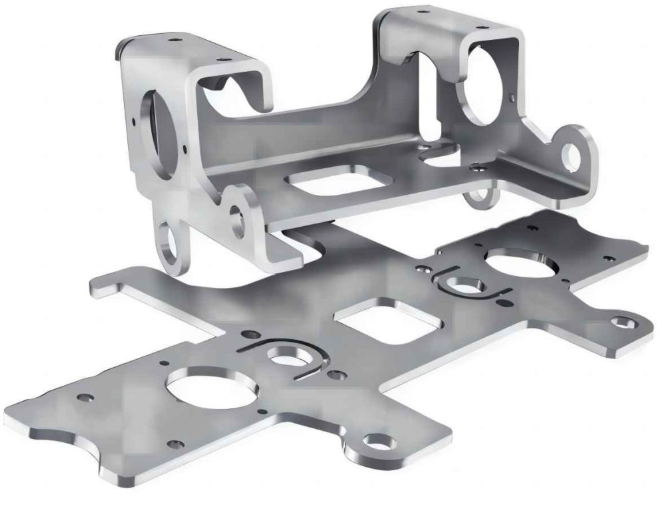
What Makes Precision Sheet Metal Stamping Different
Ever wondered why some stamped metal components fit together flawlessly while others cause assembly nightmares? The answer lies in how they were manufactured. Not all stamping processes are created equal, and understanding the difference between general metal stamping and precision sheet metal stamping could save you from costly part failures.
Precision sheet metal stamping is an advanced manufacturing process that uses specialized dies, enhanced guiding systems, and controlled press forces to transform flat sheet metal into dimensionally accurate components—typically achieving tolerances within ±0.001 to ±0.005 inches.
This isn't just regular stamping with a fancy name. Precision metal stamping represents a fundamentally different approach to metal forming, where every variable—from die clearances to material flow—is engineered for repeatable accuracy.
From Flat Stock to Finished Part
Imagine starting with a simple coil of flat sheet metal and ending with a complex, three-dimensional component that fits perfectly into an assembly. That's the transformation precision stamping delivers. The process works by placing sheet material between carefully engineered male and female dies, then applying controlled force to shape the metal into exact specifications.
What sets this apart from ordinary stamping? According to industry experts, precision stamping improves guiding accuracy, reduces the gap between male and female molds, and introduces reverse pressure along with V-ring blank holder rings. These enhancements create a three-way compressive stress state that allows for exceptionally tight dimensional control.
Standard metal stamping components work fine when tolerances aren't critical—think simple brackets or non-structural covers. But when you're producing stamped metal parts for safety-critical applications? That's where metal precision becomes non-negotiable.
Why Dimensional Accuracy Defines Precision Stamping
Here's where things get critical. Meeting tight tolerances means adhering to dimensional limits often within ±0.001 inches or even tighter. At this level, there's almost no room for error. Even the tiniest misalignment can create serious performance or safety issues, especially in aerospace, medical devices, or automotive applications.
Steel sheet stamping at precision levels requires more than just better equipment—it demands a holistic approach that considers:
- Material properties: How the metal behaves under stamping pressure
- Tooling precision: Die design, maintenance, and wear compensation
- Process control: Press speed, force, lubrication, and environmental factors
- Quality verification: In-process monitoring and statistical controls
Think of precision stamping as the bridge between raw material and functional component. It takes flat stock—often just fractions of an inch thick—and transforms it into metal stamping components that must interface perfectly with other parts, withstand operational stresses, and maintain their dimensional integrity throughout their service life.
The stakes are high. A component that's off by just a few thousandths of an inch might not assemble properly, could create stress concentrations leading to premature failure, or may simply not meet the certification requirements for critical industries. Understanding what makes precision stamping different is your first step toward solving tolerance problems and ensuring your parts perform exactly as designed.
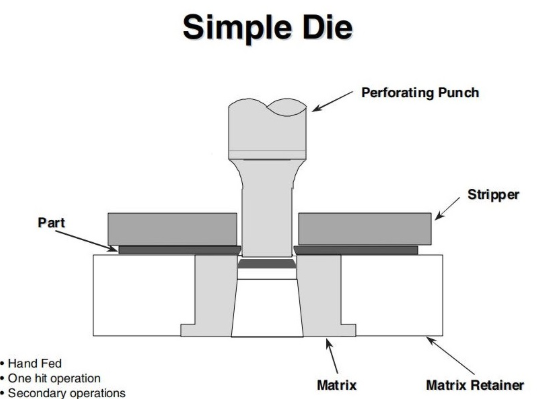
Core Stamping Techniques and How They Achieve Accuracy
So you understand what precision sheet metal stamping is—but how does it actually work? The secret lies in mastering five core operations, each contributing differently to dimensional accuracy. When you know how these metal stamping techniques function individually and together, you'll understand exactly why your parts succeed or fail at holding tolerance.
Blanking and Piercing Operations Explained
These two operations form the foundation of most precision stamping parts. They might seem similar—both involve cutting metal—but their purposes and precision requirements differ significantly.
Blanking is the operation where the piece being punched out becomes your workpiece. Think of it as cutting cookies from dough—the cookie is what you keep. A punch forces through sheet stock into a matching die cavity, separating a flat shape that will become your finished component or undergo further processing. The precision challenge? Achieving clean edges without burrs, tears, or dimensional distortion.
According to engineering research from NJIT's manufacturing studies, proper punch-and-die alignment and clearance are critical. When clearance is too large, fracture surfaces become rough and ragged. Too tight, and excessive force causes premature tool wear. For precision outcomes, manufacturers typically maintain clearances between 3% to 8% of material thickness, depending on the specific metal being stamped.
Piercing flips the script—here, the punchout becomes scrap while the remaining sheet is your workpiece. This operation creates holes, slots, and openings with exact positioning. Imagine placing mounting holes in a bracket that must align perfectly with mating components. Even a 0.002-inch position error could mean assembly failure.
Design rules for precision piercing include:
- Hole diameter minimums: Pierced holes should not be smaller than the material thickness to prevent punch breakage
- Edge distance requirements: Minimum spacing between holes or stock edges should equal at least the metal thickness
- Slot width constraints: Any projection or slot width should measure at least 1.5 times the metal thickness
Forming Techniques That Shape Complex Geometries
While blanking and piercing cut shapes, the following metal stamping and forming operations transform flat blanks into three-dimensional stamped metal components. Each technique handles precision differently.
Bending creates angles and channels by plastically deforming metal about a linear axis. Sounds straightforward? Here's the catch: every bend fights back. Springback—the material's tendency to partially return to its original shape—is the enemy of precision. The sharper the bend angle, the more likely surfaces are stressed beyond yield point, reducing springback. But push too far, and you risk cracking.
Precision bending requires understanding how material thickness, ductility, and bend radius interact. According to manufacturing data, the minimum bend radius to avoid cracking relates directly to the metal's ductility as measured by tensile test reduction in area. Bend orientation matters too—bends should be perpendicular to the rolling direction whenever possible.
Coining takes precision to another level. This operation compresses metal between die surfaces under extremely high pressure, forcing the material to flow into fine details. Unlike standard bending where some springback is inevitable, coining essentially eliminates it by exceeding the material's elastic limit throughout the entire thickness. The result? Exceptionally accurate dimensions and surface details that hold tolerance consistently.
Embossing creates raised or recessed designs in sheet material without cutting through it. This pressworking process impresses patterns, lettering, or functional features like stiffening ribs. Precision embossing requires careful control of material flow to prevent thinning in stretched areas while maintaining consistent feature depth.
Here's a quick reference for each technique's precision-specific application:
- Blanking: Creates dimensionally accurate flat profiles; critical for parts requiring exact perimeter dimensions and edge quality
- Piercing: Produces precisely positioned holes and openings; essential for assembly alignment and fastener locations
- Bending: Forms angles and channels; precision depends on springback compensation and material orientation
- Coining: Achieves tightest tolerances through complete material yielding; ideal for features requiring exact dimensions
- Embossing: Creates surface features with controlled depth; used for functional stiffening or identification markings
Progressive Dies: Combining Operations for Efficiency
Now imagine combining multiple operations into a single, continuous process. That's exactly what progressive metal stamping delivers. Progressive die sets mount two or more sets of punches and dies in tandem, with strip material advancing through each station sequentially.
A progressive die stamping system might pierce alignment holes first, then blank a profile, add bends, coin critical surfaces, and separate the finished part—all in consecutive press strokes. The strip never leaves the die until the component is complete.
Why does this matter for precision? Each station references from the same pilot holes punched in the first operation, maintaining positional accuracy throughout the entire process. Metal stamping equipment running progressive dies can produce stamped metal components at rates impossible with single-operation tooling—while maintaining tighter tolerances than manually transferring parts between separate dies.
Understanding these five core operations and how progressive dies combine them gives you the foundation to diagnose tolerance problems and specify the right process for your components. But technique alone doesn't guarantee precision—material selection plays an equally critical role in determining achievable accuracy.
Material Selection for Optimal Stamping Results
You've mastered the techniques—but here's a question that trips up even experienced engineers: why do identical stamping operations produce different results with different metals? The answer is straightforward. Each metal for stamping behaves uniquely under pressure, and choosing the wrong material guarantees tolerance failures before your first production run even begins.
Material selection isn't just about meeting strength or corrosion requirements. It directly determines the precision you can achieve, the tooling adjustments you'll need, and ultimately whether your stamped parts will hold tolerance or end up as scrap.
Material Properties That Impact Precision Outcomes
When a punch forces sheet metal into a die cavity, the material doesn't simply yield and stay put. It fights back. Understanding how different precision metal stamping materials respond to forming forces is essential for predicting—and preventing—dimensional problems.
Formability measures how much a material can be deformed before cracking or tearing. Highly formable metals flow smoothly into complex shapes, while less formable materials require gentler forming operations with larger bend radii. According to metal stamping design guidelines, the formability of material depends on its alloy and temper—meaning even the same base metal can behave very differently depending on how it was processed.
Springback is perhaps the biggest enemy of dimensional accuracy. After forming, every metal partially rebounds toward its original flat state. This elastic recoil varies dramatically between materials. As stamping experts note, materials with high elasticity are more prone to springback, making precise final dimensions harder to achieve without compensation strategies.
Thickness consistency directly affects tolerance capability. Standard steel grades come in fixed gauge thicknesses with defined tolerances. While tolerances can be tightened, doing so typically drives up cost. When your incoming material varies in thickness, your stamped parts will too.
Work hardening behavior describes how metal becomes stronger (and less formable) as it's deformed. Some materials work harden rapidly, limiting how much forming can occur in a single operation. Others remain ductile through multiple forming stages.
Matching Metal Selection to Application Requirements
Let's examine the most common metal stamping materials and what makes each suitable—or problematic—for precision applications.
Cold Rolled Steel earns its reputation as the workhorse of precision stamping. The cold rolling process produces excellent surface finish and consistent thickness control. Its predictable behavior under forming pressure makes springback compensation straightforward. For general precision applications where corrosion resistance isn't critical, cold rolled steel delivers reliable results at competitive cost.
Stainless Steel introduces complexity. Yes, you get outstanding corrosion resistance—but stainless stamping comes with challenges. Metal stamping for stainless steel requires accounting for significantly higher springback compared to carbon steel. The material's higher strength means greater forming forces, faster tool wear, and tighter process control. Stainless steel metal stamping also demands careful attention to work hardening, as the material can become excessively hard after multiple forming operations.
Aluminum offers the obvious advantage of lightweight parts—roughly one-third the density of steel. However, the aluminum stamping process requires careful die clearance adjustments. Aluminum's lower strength means it can tear or gall more easily if tooling isn't optimized for its specific properties. The material also exhibits different springback characteristics than steel, requiring separate compensation calculations.
Brass and Copper excel in electrical and thermal applications due to their conductivity. From a stamping perspective, both materials offer good formability and relatively predictable behavior. Copper's softness makes it easy to form but also prone to scratching during handling. Brass provides better strength while maintaining reasonable formability—making it popular for precision electrical contacts and connectors.
| Material | Formability Rating | Typical Tolerance Achievable | Springback Characteristics | Common Applications |
|---|---|---|---|---|
| Cold Rolled Steel | Excellent | ±0.002" standard; ±0.001" with precision tooling | Low to moderate; predictable and easy to compensate | Automotive brackets, structural components, general manufacturing |
| Stainless Steel | Good to Moderate | ±0.003" standard; tighter possible with compensation | High; requires overbending or coining for accuracy | Medical devices, food equipment, corrosion-resistant housings |
| Aluminum | Good | ±0.003" typical; material grade dependent | Moderate; varies significantly by alloy and temper | Electronics enclosures, aerospace components, lightweight assemblies |
| Brass | Excellent | ±0.002" achievable with proper tooling | Low; minimal compensation typically needed | Electrical contacts, decorative hardware, plumbing fittings |
| Copper | Excellent | ±0.002" achievable; softness requires careful handling | Very low; forms easily to final dimensions | Electrical terminals, heat sinks, RF shielding |
Notice the pattern? Materials with high springback demand more sophisticated tooling and process control to achieve the same tolerances as more cooperative metals. This is precisely why stainless stamping projects often cost more than equivalent carbon steel components—not just because the material costs more, but because achieving precision requires additional engineering effort.
One of the leading causes of inflated stamping costs is over-specifying the alloy. While many ferrous and non-ferrous alloys exist, only a few are commonly stocked. Specialty alloys must often be custom-melted in large volumes, adding lead time and expense. Before specifying an exotic material, ask yourself: does my application truly require it, or would a more standard metal for stamping meet requirements at lower cost?
Material selection sets the foundation for precision outcomes—but even the best material won't compensate for inadequate tooling. Next, we'll explore how die engineering and press technology work together to transform raw material into consistently accurate components.

Engineering Precision Through Tooling and Press Technology
You've selected the right material and understand the forming techniques—but here's where parts really succeed or fail at holding tolerance. The interplay between tooling design, press selection, and process control determines whether your precision sheet metal stamping produces consistent results or frustrating dimensional variation. Let's break down exactly how these elements work together.
Die Engineering for Repeatable Accuracy
Think of a metal stamping die as the DNA of your part. Every dimension, every feature, every tolerance capability is encoded into that tooling. Get the die design wrong, and no amount of process tweaking will save your parts from tolerance failure.
Clearance calculations represent one of the most critical die design decisions. The gap between punch and die directly affects edge quality, dimensional accuracy, and tool life. According to stamping engineering guidelines, optimal die clearance depends on the type and thickness of the workpiece material. Too much clearance produces rough, ragged fracture surfaces. Too little creates excessive tool wear and requires higher forming forces.
For precision die stamping, manufacturers typically calculate clearance as a percentage of material thickness—generally ranging from 3% to 8% depending on the metal. But here's what many engineers miss: with modern wire EDM technology, it's now possible to machine different clearances within the same die. You might run tighter clearance in areas where scrap containment matters while allowing more generous clearance elsewhere to extend tool life.
Material flow analysis predicts how metal will move during forming operations. When a punch forces material into a die cavity, the metal doesn't simply compress—it flows, stretches, and redistributes. Understanding this flow pattern before cutting steel prevents problems like:
- Thinning in stretched areas that weakens the finished part
- Wrinkling where excess material has nowhere to go
- Cracking when material is forced beyond its forming limits
- Dimensional distortion from uneven stress distribution
According to tooling experts, cracking usually occurs in harder materials when the inside part radius is too small or the form block radius is too small. A proven method to eliminate cracking is to completely coin the burr edge while in the flat position. Polishing and coating the form block radius adds needed lubricity to the operation.
Wear compensation addresses an uncomfortable truth: every custom metal stamping die degrades over time. Cutting edges dull, forming surfaces erode, and clearances change. Precision tooling design anticipates this wear pattern and builds in compensation strategies. Some approaches include:
- Specifying tool steel upgrades or carbide inserts for high-wear areas
- Designing for easy punch removal and replacement—like using wire EDM to machine precision slip-fit pockets with brass shim slots that prevent over-torquing
- Back-tapering cutting punches and die sections (typically ½ degree) to ensure free-falling slugs and consistent performance as tools wear
- Planning regrind schedules before dimensional drift exceeds acceptable limits
Steel stamping dies for precision applications increasingly incorporate features that extend accuracy over longer production runs. For example, die-side slug retention prevents slugs from pulling back up with the punch—a common cause of die damage and part marking that degrades precision over time.
Press Technology and Precision Control
Even a perfectly engineered custom metal stamping die can't deliver precision if mounted in the wrong press. Sheet metal stamping equipment selection directly impacts dimensional accuracy, and understanding the differences between press types helps you match capabilities to requirements.
Tonnage requirements must match your forming operations. Undersized presses strain to complete operations, causing inconsistent forming and accelerated wear. Oversized presses waste energy and may lack the fine control needed for precision work. Most precision stamping operations fall within the 25 to 500 ton range, though specific requirements depend on material type, thickness, and part geometry.
But tonnage is just the starting point. The type of press matters equally for precision outcomes. According to press technology specialists, three main press styles dominate modern metal forming—each with distinct precision characteristics:
| Press Type | Precision Characteristics | Speed Capability | Best Applications |
|---|---|---|---|
| Mechanical | Consistent stroke; limited control at bottom dead center | Highest—ideal for high-volume production | Repetitive operations where speed outweighs flexibility |
| Hydraulic | Full force available throughout stroke; excellent consistency | Slower than mechanical | Deep drawing, heavy materials, complex forming |
| Servo | Programmable speed and force profiles; exceptional accuracy | Adjustable—balances speed and precision | High-tolerance parts, quick changeover environments |
Mechanical presses use a flywheel to generate forming force, making them the fastest option for high-volume production. However, they offer limited control at the bottom of the stroke—the critical moment when final dimensions are set. For operations requiring repeatable forming without complex motion profiles, mechanical presses deliver excellent productivity.
Hydraulic presses provide full tonnage throughout the entire stroke, offering superior consistency for demanding applications. When working with heavier or high-tensile materials, hydraulic systems handle the increased force requirements while maintaining dimensional control. The tradeoff? Slower cycle times compared to mechanical alternatives.
Servo presses represent the latest advancement in precision die stamping technology. Advanced servo motor technology enables programmable speed, position, and force profiles throughout each stroke. You can program slower forming speeds through critical zones, then accelerate through non-critical portions to maintain productivity. This flexibility proves invaluable for complex stamped metal parts requiring exceptional accuracy.
The precision benefits extend beyond just the forming stroke. Servo presses allow quick setup adjustments without mechanical changes—reducing changeover time and enabling rapid fine-tuning when tolerance drift appears. For operations producing multiple part numbers or requiring frequent adjustments, this flexibility often justifies the higher upfront investment.
From Design to Production: The Precision Achievement Process
Understanding how these elements come together helps you identify where tolerance problems originate. Here's the systematic process that precision manufacturers follow:
- Part analysis and simulation: Computer modeling predicts material behavior, identifies potential forming problems, and optimizes die design before any steel is cut. Virtual simulation catches issues that would otherwise appear only after expensive tooling is complete.
- Die design and clearance specification: Engineers calculate optimal clearances for each operation based on material properties, specify tool steel grades for wear resistance, and design features for maintainability.
- Press selection and setup: Matching tonnage requirements to available equipment, configuring stroke parameters, and establishing die height settings—often using precision methods like squeezing calibrated solder wire on setup blocks to verify exact shut height.
- Trial runs and adjustment: Initial parts are measured against specifications, with die adjustments made to compensate for springback and achieve target dimensions.
- Process documentation: Recording all parameters—press settings, lubrication specifications, maintenance intervals—to ensure repeatable precision across production runs.
- Statistical monitoring: Tracking dimensional trends throughout production to detect and correct drift before parts exceed tolerance limits.
Notice how precision isn't achieved through any single element—it emerges from the careful integration of custom metal stamping dies, appropriate sheet metal stamping equipment, and disciplined process control. When parts fail tolerance, the root cause typically traces back to a breakdown somewhere in this system.
With tooling and press technology properly aligned, the next question becomes: how do different industries apply these precision capabilities to meet their unique requirements? The answer varies dramatically depending on whether you're producing automotive safety components, aerospace structures, or miniature electronic assemblies.
Industry Applications and Their Precision Demands
So you understand the techniques, materials, and tooling—but here's the real question: what tolerance does your specific application actually require? The answer depends entirely on your industry. A bracket holding a decorative panel has vastly different precision demands than a component in a life-support device. Understanding these industry-specific requirements helps you specify the right tolerances without over-engineering (and overpaying) or under-specifying (and failing).
According to metal stamping industry experts, precision stamping serves diverse sectors including automotive, military, electronics, and appliances—each with unique requirements that directly impact how stamped metal parts must be manufactured.
Automotive Precision Requirements for Safety-Critical Parts
When you're producing stamped steel parts for automotive applications, there's no margin for error. Think about what happens if a chassis bracket fails at highway speeds or a suspension component doesn't fit during assembly. The consequences range from costly production delays to catastrophic safety failures.
Automotive chassis and suspension components demand specific tolerances for two primary reasons:
- Safety performance: Components must withstand crash forces, vibration loads, and environmental stresses throughout the vehicle's lifespan. Dimensional accuracy ensures proper load transfer and stress distribution.
- Assembly integration: Modern automotive manufacturing runs on tight schedules. When metal parts stamping delivers components that don't fit, production lines stop—costing manufacturers thousands per minute.
Typical automotive stamping applications include structural brackets, mounting plates, reinforcement panels, and sensor housings. These parts often require tolerances in the ±0.003" to ±0.005" range for standard applications, with safety-critical components demanding even tighter control. The industry's IATF 16949 certification requirement ensures manufacturers maintain the quality systems necessary for consistent precision.
Aerospace: Where Weight and Accuracy Both Matter
Aerospace metal stamping presents a unique challenge: achieving exceptional precision while minimizing weight. Every gram matters when components are flying at 30,000 feet. Aluminium stamping parts dominate this sector precisely because aluminum offers the weight savings aerospace demands—but as we discussed earlier, aluminum requires careful die clearance adjustments and springback compensation.
Aerospace stamping applications often involve complex geometries that must maintain dimensional accuracy under extreme temperature variations, pressure differentials, and vibration loads. Components like structural brackets, electrical enclosures, and airframe fittings require tolerances that can exceed automotive standards—sometimes reaching ±0.001" or tighter for critical assemblies.
Electronics: Miniature Parts, Maximum Precision
The electronics industry pushes precision stamping to its limits. When you're producing connector terminals measured in fractions of a millimeter, tolerance requirements become extraordinarily demanding. A stamped contact that's slightly out of position won't mate properly—creating electrical failures that may not appear until products reach consumers.
Metal parts stamping for electronics emphasizes:
- Positional accuracy for features like contact points and mounting holes
- Consistent material properties for reliable electrical conductivity
- Surface finish quality to ensure proper plating adhesion
- Burr-free edges to prevent shorts and assembly interference
Materials like brass, copper, and phosphor bronze dominate electronics stamping applications due to their electrical properties and formability. The combination of miniature features and tight tolerances makes electronics one of the most demanding stamping applications.
Medical Devices: Precision Meets Biocompatibility
Medical progressive stamping combines the tightest tolerance requirements with strict material constraints. According to medical device manufacturing specialists, metal stamping plays a crucial role in producing components for everything from surgical instruments to robotic surgical systems—where quality and accuracy directly impact patient safety.
What makes medical stamping unique? Beyond dimensional accuracy, components must be manufactured from biocompatible materials that won't cause adverse reactions in the human body. Various grades of stainless steel are commonly used, with specific requirements for hardness, surface finish, and formability. The material must not only form correctly but also maintain its properties through sterilization processes.
Medical device manufacturers rely on ISO 13485 certification to ensure quality management systems meet the stringent demands of healthcare applications. As noted by industry experts, the ability to maintain precision and consistency in high-volume production is essential—where each component must meet the same standards, "the last as good as the first."
Industry-Specific Tolerance Standards
How do these requirements compare across industries? The following table breaks down the key precision factors you'll encounter in major stamping applications:
| Industry | Typical Tolerance Requirements | Common Materials | Critical Quality Factors | Key Certifications |
|---|---|---|---|---|
| Automotive | ±0.003" to ±0.005" standard; ±0.001" for safety-critical | Cold rolled steel, high-strength steel, stainless steel | Dimensional consistency, surface finish, weld compatibility | IATF 16949 |
| Aerospace | ±0.001" to ±0.003" typical | Aluminum alloys, titanium, stainless steel | Weight optimization, fatigue resistance, traceability | AS9100, NADCAP |
| Electronics | ±0.001" or tighter for contacts | Brass, copper, phosphor bronze, beryllium copper | Positional accuracy, conductivity, plating adhesion | ISO 9001, IPC standards |
| Medical Devices | ±0.001" to ±0.002" typical | 316L stainless steel, titanium, specialty alloys | Biocompatibility, surface finish, sterilization compatibility | ISO 13485, FDA registration |
| Military/Defense | ±0.002" to ±0.005" depending on application | Steel alloys, aluminum, corrosion-resistant materials | Durability, environmental resistance, specification compliance | MIL-SPEC, ITAR compliance |
Notice the pattern? Industries where failure consequences are severe—medical, aerospace, automotive safety systems—demand the tightest tolerances and most rigorous certification requirements. Meanwhile, general industrial applications may accept wider tolerances at lower cost.
Understanding where your stamped metal parts fit within this spectrum helps you communicate requirements clearly to manufacturers and avoid both over-specification (paying for precision you don't need) and under-specification (receiving parts that fail in application). The key is matching tolerance requirements to actual functional needs—not simply requesting the tightest possible dimensions because it seems safer.
But specifying the right tolerance is only half the battle. How do you verify that your precision stamping products actually meet requirements? That's where quality control and inspection methods become essential.
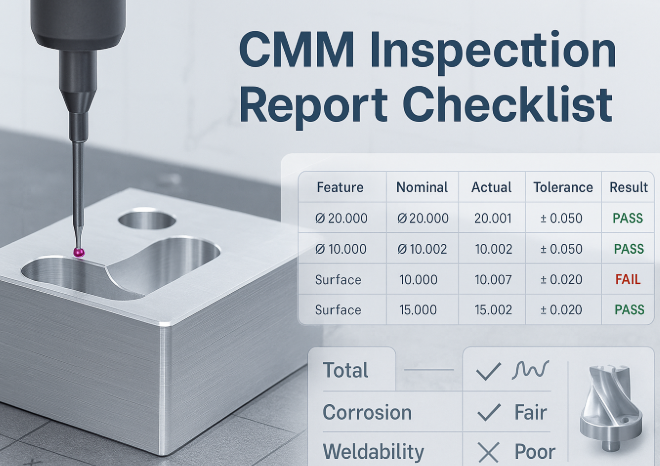
Quality Control and Precision Verification Methods
You've specified tight tolerances and selected the right materials—but here's the uncomfortable truth: specifications mean nothing without verification. How do you actually prove that your precision stamped parts meet requirements? The answer lies in systematic inspection methods, statistical monitoring, and quality certifications that guarantee your stamping components perform as designed.
According to industry experts at Boehm Pressed Steel, quality isn't assumed—it's measured. Manufacturers use calibrated gauges, SPC tracking, and dimensional inspection tools to verify that every lot meets critical dimensions and functional specifications. Whether you're stamping high-strength materials or running complex geometries, proving tolerances on paper is just as important as achieving them in production.
Inspection Methods That Verify Dimensional Accuracy
Imagine producing 100,000 metal stamped parts only to discover during assembly that critical dimensions drifted out of spec somewhere mid-run. Without proper inspection protocols, this nightmare scenario plays out more often than manufacturers like to admit. Effective quality control requires verification at multiple stages—not just final inspection.
Here are the key inspection checkpoints throughout the stamping process:
- First article inspection: Before production begins, initial parts are thoroughly measured to verify tooling setup and confirm all dimensions meet print specifications
- In-process monitoring: Operators perform periodic checks during production runs using calibrated gauges and documented inspection protocols
- Statistical sampling: Random samples are pulled at defined intervals for detailed measurement, feeding data into SPC tracking systems
- Final verification: Completed lots undergo comprehensive dimensional checks before shipment, with results documented for traceability
- Preventive maintenance verification: After any tooling adjustment or maintenance, parts are re-inspected to confirm accuracy hasn't been compromised
The measurement tools used at each checkpoint vary based on tolerance requirements and part complexity. Three primary technologies dominate precision stamping verification:
Coordinate Measuring Machines (CMM) represent the gold standard for dimensional verification. These sophisticated systems use touch probes or optical sensors to capture precise 3D coordinates across part surfaces. CMMs excel at measuring complex geometries, verifying positional relationships between features, and documenting results with micron-level accuracy. For precision stamping products requiring the tightest tolerances, CMM verification provides the confidence that parts truly meet specifications.
Optical comparators project magnified part profiles onto a screen, allowing operators to compare actual dimensions against reference overlays. This method proves particularly effective for verifying edge profiles, radii, and features that would be difficult to probe mechanically. Optical inspection catches subtle variations in contour that might escape other methods.
Go/no-go gauges offer rapid pass/fail verification for production environments. These purpose-built fixtures check that critical dimensions fall within acceptable limits without requiring numerical measurement. While they don't provide actual dimension values, go/no-go gauges enable operators to verify accurate metal stamping quickly—essential for maintaining production pace while catching out-of-tolerance parts before they leave the line.
Statistical Process Control (SPC) transforms individual measurements into actionable intelligence. Rather than simply accepting or rejecting parts after the fact, SPC tracks dimensional trends over time. When measurements begin drifting toward tolerance limits—even while still technically acceptable—SPC alerts manufacturers to take corrective action before defects occur. This proactive approach prevents scrap, reduces rework, and maintains the consistency that precision applications demand.
Quality Certifications That Guarantee Precision Standards
Measurement tools verify individual parts, but certifications verify entire quality systems. When you're sourcing metal stamped parts for critical applications, understanding what certifications mean—and which ones matter for your industry—helps you evaluate supplier capabilities objectively.
ISO 9001 establishes the foundation. This internationally recognized standard ensures manufacturers maintain documented quality management systems covering everything from design control to customer feedback. ISO 9001 certification indicates a supplier takes quality seriously, but it's a baseline—not a differentiator for precision applications.
IATF 16949 builds on ISO 9001 with automotive-specific requirements. This certification—essential for supplying OEMs and Tier 1 automotive manufacturers—demands rigorous process controls, advanced product quality planning (APQP), and production part approval processes (PPAP). According to industry sources, operating under a robust ISO 9001-certified quality system enables manufacturers to meet the rigorous demands of OEMs and Tier 1 suppliers across sectors. For automotive stamping components, IATF 16949 certification isn't optional—it's table stakes.
Beyond certifications, documentation requirements provide traceability that precision applications demand. PPAP documentation, lot traceability records, first article inspections, and customer audit readiness all contribute to a quality system capable of delivering consistent precision stamped parts.
The connection between measurement capability and certification is direct: you can't maintain certification without proving your inspection processes actually verify specifications. Calibrated gauges, documented procedures, and traceable records combine to create confidence that every metal stamped part leaving the facility meets requirements—not just the ones you happened to measure.
Understanding quality control methods helps you evaluate whether a stamping supplier can actually deliver the precision they promise. But verification is only part of the equation—what happens when you need precision capabilities that stamping can't economically deliver? That's when comparing manufacturing methods becomes essential.
Precision Stamping Versus Alternative Manufacturing Methods
So you need dimensionally accurate metal parts—but is precision sheet metal stamping actually your best option? The honest answer: it depends. Understanding when stamping metal outperforms alternatives (and when it doesn't) saves you from costly manufacturing decisions. Let's break down exactly how metal stamping stacks up against laser cutting, CNC machining, and die casting.
When Stamping Outperforms Alternative Methods
Here's the fundamental reality of metal stamping manufacturing: it excels at one thing better than any alternative—producing large quantities of consistent parts at the lowest possible per-unit cost. But that advantage comes with a significant upfront investment.
According to manufacturing cost analysis, stamping dies typically require an upfront investment of $5,000 to $50,000 depending on part complexity. That sounds expensive—until you realize per-part costs can drop to under $0.50 for simple geometries once tooling is amortized. Try achieving that with CNC machining.
Laser cutting offers compelling advantages for prototyping and low-volume production. There's minimal setup cost—you simply program the cutting path and run parts. For complex profiles that would require expensive progressive dies, laser cutting provides flexibility without tooling investment. The tradeoff? Speed. Manufacturing stamping operations can achieve cycle times as low as 0.06 seconds per part with progressive dies running up to 1,000 strokes per minute. Laser cutting can't touch those production rates.
CNC machining delivers precision that can exceed stamping capabilities—sometimes achieving tolerances tighter than ±0.001 inches. When you absolutely need the highest possible dimensional accuracy and surface finish, machining remains the gold standard. However, the cost differential is dramatic. Industry data shows CNC machining typically runs $5 to $50 per part at low to medium volumes, compared to $0.30 to $1.50 for high volume metal stamping. For production runs exceeding 10,000 pieces, this difference becomes enormous.
Die casting presents a different comparison entirely. While both processes involve dies and high-volume production, die casting works with molten metal rather than sheet stock. This enables complex internal geometries impossible with stamping—but limits material options primarily to aluminum, zinc, and magnesium alloys. Tolerance capabilities differ too, with die casting typically achieving ±0.005" compared to stamping's potential for ±0.001" on critical features.
Volume Economics of Precision Manufacturing
The real question isn't which method is "best"—it's which method is best for your specific volume requirements. Production metal stamping economics follow a clear pattern: high upfront costs that amortize rapidly across large production runs.
Consider this scenario from a 2023 PwC manufacturing cost study: automotive OEMs save 20-30% in unit cost using progressive stamping versus CNC machining for structural brackets. That savings compounds across the hundreds of thousands of parts typical automotive programs require.
| Manufacturing Method | Precision Capability | Cost at Low Volume (1-100 parts) | Cost at High Volume (10,000+ parts) | Material Options | Typical Lead Time |
|---|---|---|---|---|---|
| Metal Stamping | ±0.001" to ±0.005" | High (tooling amortization) | Very Low ($0.30-$1.50/part) | Sheet metals: steel, stainless, aluminum, brass, copper | 4-8 weeks (includes tooling) |
| Laser Cutting + Forming | ±0.003" to ±0.010" | Low-Medium ($2-$10/part) | Medium (not economical) | Most sheet metals up to 1" thickness | 1-2 weeks |
| CNC Machining | ±0.0005" to ±0.002" | Medium ($5-$50/part) | High (labor intensive) | Nearly unlimited: metals, plastics, composites | 1-3 weeks |
| Die Casting | ±0.002" to ±0.005" | Very High (tooling) | Low ($1-$5/part) | Limited: aluminum, zinc, magnesium alloys | 8-12 weeks (includes tooling) |
| 3D Printing (DMLS/SLS) | ±0.005" to ±0.010" | High ($15-$100+/part) | Very High (not scalable) | Limited metal powders | 1-2 weeks |
The crossover point where stamping becomes economical varies by part complexity—but generally falls somewhere between 1,000 and 10,000 pieces. Below this threshold, the tooling investment can't be justified. Above it, metal stamping delivers unmatched economics.
Additional factors favor high volume metal stamping at scale:
- Material utilization: Optimized nesting achieves 85-95% yield, minimizing scrap costs
- Labor efficiency: One operator can oversee multiple press lines simultaneously
- Consistency: Automated stamping systems achieve reject rates below 2%
- Speed: Progressive dies produce finished parts in fractions of a second
So when should you choose alternatives? Laser cutting makes sense for prototypes, design validation, and low-volume production where tooling investment can't be justified. CNC machining wins when tolerances exceed stamping capabilities or when part geometry requires material removal rather than forming. Die casting excels for complex 3D geometries in castable alloys at high volumes.
But for sheet metal components needed in thousands or millions of pieces—with tolerances that stamping can achieve—nothing matches the cost-per-part economics of metal stamping. The key is honestly evaluating your volume requirements and precision needs before committing to any manufacturing path.
Of course, achieving those economics depends on maintaining tooling precision throughout extended production runs. That's where die maintenance and design for manufacturability become critical factors in your total cost equation.

Tooling Maintenance and Design for Manufacturability
You've invested in precision tooling and achieved target tolerances during initial production—but here's the uncomfortable reality: every metal stamping tool degrades with use. Without proper maintenance, those tight tolerances you validated during first article inspection will gradually drift until parts start failing. Understanding when and how to maintain your custom metal stamping dies is the difference between sustained precision and creeping quality problems.
According to tool and die maintenance experts, proper maintenance ensures consistent output, reduces downtime, and extends equipment lifespan. Regular inspection, cleaning, and lubrication form the core of an effective maintenance routine—but for precision applications, the stakes are even higher. A worn cutting edge that might be acceptable for general stamping can push critical dimensions out of tolerance.
Maintaining Die Precision Over Production Runs
Think of your metal stamping tool as a precision instrument that requires regular calibration. Every stroke causes microscopic wear. Cutting edges dull, forming surfaces erode, and clearances change. The question isn't whether wear will occur—it's whether you'll catch it before tolerance drift creates defective parts.
Preventive maintenance schedules should be based on production volume and material characteristics rather than arbitrary calendar intervals. Industry best practices recommend daily visual inspections for high-volume production, with more comprehensive maintenance occurring weekly or monthly. Critical components may require attention after a specific number of strokes—often tracked automatically by press monitoring systems.
Here are the key maintenance checkpoints and warning signs of die wear:
- Visual inspection of cutting edges: Look for chipping, rounding, or buildup that indicates the need for sharpening. Burr height on stamped parts often reveals edge condition before visible wear appears.
- Dimensional monitoring: Track critical part dimensions over production runs. Gradual drift toward tolerance limits signals wear requiring correction.
- Surface condition assessment: Check forming surfaces for galling, scratches, or material pickup that affects part quality and accelerates further wear.
- Clearance verification: Measure punch-to-die clearances periodically. Increasing clearance indicates wear that may require regrinding or component replacement.
- Spring and stripper function: Verify consistent stripping action. Weak or broken springs cause inconsistent forming and accelerated die damage.
- Lubrication system inspection: Confirm proper lubricant flow and coverage. Inadequate lubrication dramatically accelerates wear.
When wear indicators appear, you face a decision: regrind, repair, or replace? For cutting edges, precision grinding typically restores sharpness—removing 0.005 to 0.010 inches of material to create a fresh edge. According to maintenance specialists, sharpening should remove only 0.001 to 0.002 inches per pass to avoid overheating that could damage the tool's temper.
More significant damage—galled surfaces, cracks, or excessive dimensional wear—may require welding and re-machining or complete component replacement. The economics depend on component cost versus repair time and the impact of continued production delays.
DFM Principles for Sustainable Accuracy
Here's what many engineers miss: the best maintenance program can't compensate for poorly designed tooling. Design for Manufacturability (DFM) principles built into your custom metal stamping tool from the start dramatically extend tool life while maintaining precision throughout production runs.
According to stamping die design specialists, DFM isn't just about making parts easier to produce—it's about creating robust tooling solutions that maintain accuracy over extended service life. Key principles include:
Material selection for wear resistance: Specifying appropriate tool steels and surface treatments for high-wear areas. Carbide inserts in cutting sections can extend tool life dramatically compared to standard tool steel. Surface treatments like nitriding or PVD coatings significantly extend die life in demanding applications.
Stress distribution optimization: Incorporating adequate radii and fillets minimizes stress concentrations that lead to cracking. Strategic cooling channel placement maintains consistent temperatures, reducing thermal fatigue that degrades precision over time.
Modular design for maintainability: Creating sections that can be swapped out without replacing the entire die enables faster repairs and reduces downtime. Replaceable inserts in high-wear areas allow targeted maintenance without disturbing proven die sections.
Adjustability for wear compensation: Including shims and adjustable components accommodates dimensional changes from wear. This flexibility allows fine-tuning during production to maintain tolerances as tools age.
The connection between DFM and tool life is direct: well-designed custom metal stampings require less frequent maintenance while delivering more consistent precision. A custom metal stamper who provides comprehensive DFM support helps you optimize tooling design for both precision and longevity from the project's start.
This collaborative approach to tooling design pays dividends throughout production. Working with manufacturers who offer DFM expertise—like Shaoyi's comprehensive DFM support—ensures your tooling is engineered for sustainable accuracy rather than just initial capability. When your tooling partner understands both precision requirements and long-term maintainability, you avoid the costly cycle of premature wear, tolerance drift, and emergency repairs.
Tool life directly impacts your cost calculations too. Every regrind cycle, every component replacement, every unplanned maintenance stop adds cost that should be factored into part pricing. Tooling designed with DFM principles may cost more initially but typically delivers lower total cost of ownership through extended service life and reduced maintenance frequency.
With maintenance protocols established and DFM principles applied, you're positioned for sustained precision production. But none of this matters if you haven't selected the right manufacturing partner to begin with. Evaluating stamping capabilities and understanding the project workflow from quote to production-ready parts is your final critical step.
Selecting the Right Precision Stamping Partner
You've mastered the techniques, materials, and quality systems—but here's where everything comes together or falls apart: choosing who actually makes your parts. The wrong metal stamping manufacturer creates headaches for years. The right precision stamping company becomes a strategic asset that accelerates your product development and production efficiency.
According to industry experts at Die-Matic, selecting a stamping partner isn't just about price or capability—it's about long-term partnership and strategic alignment. A bad fit leads to delays, costly rework, and product failures. The right partner ensures you get consistent quality, innovative solutions, and dependable service every time.
Evaluating Precision Stamping Capabilities
Where do you start when comparing potential custom metal stamping services? The evaluation process requires looking beyond marketing claims to verify actual capabilities. Here's the systematic approach that procurement professionals use:
- Define your project requirements first: Before contacting suppliers, clearly document your volume needs, tolerance specifications, material requirements, and scalability expectations. Understanding your own needs ensures you can evaluate whether a manufacturer is truly equipped to handle your specific project.
- Assess manufacturing capabilities: Explore the range of services each manufacturer offers. According to sourcing specialists, look for a mix that might include progressive die stamping, deep draw stamping, four-slide stamping, and transfer die stamping. Verify they've invested in high-precision presses, automation solutions, and quality control systems.
- Verify quality certifications: ISO 9001 certification establishes a baseline, but industry-specific certifications matter more. For automotive precision metal stamping parts, IATF 16949 certification is essential—it ensures the manufacturer maintains the rigorous quality systems OEMs and Tier 1 suppliers require.
- Evaluate material expertise: Different materials require different handling, tooling, and processes. Choosing a manufacturer that specializes in your specific materials is essential for success—whether you're working with high-strength steel, stainless, aluminum, or specialty alloys.
- Confirm prototyping capabilities: Rapid prototyping allows parts to be tested and refined before committing to full-scale production tooling. This validation step catches tolerance problems early—when fixes are still affordable.
- Review financial stability and experience: Investigate how many years they've been in business, management tenure, turnover rates, and their current customer base. Long-term customers indicate reliable performance.
Watch for warning signs during evaluation. According to industry guidance, red flags include inconsistent quality, poor communication, reluctance to share references, and inability to demonstrate relevant experience. A manufacturer who can't clearly explain their quality processes likely doesn't have robust ones.
From Quote to Production-Ready Parts
Understanding the typical project workflow helps you plan timelines and set realistic expectations. Whether you're sourcing metal stamping service for a new product launch or transitioning existing parts to a new supplier, the process follows predictable stages:
- Initial inquiry and quote: Submit your part drawings, specifications, material requirements, and volume projections. A responsive custom metal stamping company provides detailed quotes quickly—some manufacturers like Shaoyi (Ningbo) Metal Technology offer 12-hour quote turnaround to accelerate your decision-making process.
- Design for manufacturability review: Engineering teams analyze your design for potential stamping challenges. This collaborative review identifies opportunities to improve precision, reduce costs, or extend tool life before tooling investment begins.
- Prototyping and validation: Before committing to production tooling, prototypes verify that designs achieve target tolerances. Rapid prototyping capabilities—such as 5-day turnaround for initial samples—compress development timelines dramatically.
- Tooling design and fabrication: Once prototypes validate the design, production dies are engineered and built. This stage typically requires 4-8 weeks depending on complexity.
- First article inspection and approval: Initial production parts undergo comprehensive dimensional verification against specifications. PPAP documentation provides the formal approval package many industries require.
- Production ramp-up: With tooling validated and quality systems in place, production scales to meet volume requirements. Ongoing SPC monitoring ensures precision is maintained throughout the run.
The prototyping stage deserves special emphasis. According to metal prototype specialists, this phase is crucial for identifying potential issues and ensuring the final product meets all specifications before full-scale production. Skipping prototyping to save time often costs more through rework and quality problems downstream.
For automotive applications specifically, working with an IATF 16949-certified precision metal stamping services provider ensures your chassis, suspension, and structural components meet the rigorous standards OEMs demand. Manufacturers like Shaoyi combine this certification with comprehensive DFM support and rapid prototyping—creating a complete solution for automotive supply chain optimization.
Ready to move forward? Start by documenting your specific requirements, then reach out to potential partners who demonstrate the capabilities, certifications, and responsiveness your project demands. The right precision stamping partner doesn't just manufacture parts—they become an extension of your engineering team, helping you solve tolerance challenges and deliver products that perform exactly as designed.
Frequently Asked Questions About Precision Sheet Metal Stamping
1. What is precision metal stamping and how does it differ from regular stamping?
Precision metal stamping uses specialized dies, enhanced guiding systems, and controlled press forces to achieve tolerances within ±0.001 to ±0.005 inches. Unlike regular stamping, it improves guiding accuracy, reduces punch-to-die gaps, and introduces reverse pressure mechanisms that create three-way compressive stress states for exceptional dimensional control. This makes it essential for safety-critical automotive, aerospace, and medical applications where standard stamping tolerances would cause assembly failures.
2. What materials are commonly used in precision metal stamping?
Common materials include cold rolled steel (excellent formability, predictable springback), stainless steel (corrosion resistance but higher springback requiring compensation), aluminum (lightweight but needs careful die clearance), and brass/copper (ideal for electrical applications with low springback). Material selection directly impacts achievable tolerances—cold rolled steel typically reaches ±0.002" standard, while stainless steel may require ±0.003" due to springback challenges. IATF 16949-certified manufacturers like Shaoyi provide material expertise to match your application requirements.
3. How do you achieve tight tolerances in metal stamping?
Tight tolerances result from the interplay of proper die design (calculating optimal clearances at 3-8% of material thickness), press selection (matching tonnage and press type—mechanical, hydraulic, or servo), and process controls. Computer simulation predicts material flow before cutting tooling. Statistical Process Control monitors dimensional trends during production. Coining operations eliminate springback by exceeding material yield limits. The combination of these elements enables tolerances as tight as ±0.001 inches for critical features.
4. What industries require precision metal stamping services?
Automotive manufacturers need IATF 16949-certified precision stamping for chassis and suspension components with ±0.003" to ±0.005" tolerances. Aerospace requires lightweight aluminum parts with ±0.001" accuracy. Electronics demands miniature connectors with sub-thousandth positioning. Medical devices need biocompatible stainless steel stamped to ISO 13485 standards. Each industry has unique certification requirements—from AS9100 for aerospace to FDA registration for medical—that qualified stamping partners must maintain.
5. How cost-effective is sheet metal stamping compared to other fabrication methods?
Stamping excels at high-volume production economics. While tooling costs $5,000-$50,000 upfront, per-part costs drop to $0.30-$1.50 at volumes above 10,000 pieces—compared to $5-$50 per part for CNC machining. The crossover point where stamping becomes economical typically falls between 1,000-10,000 pieces. For prototypes and low volumes, laser cutting offers faster turnaround without tooling investment. Manufacturers offering rapid prototyping (like Shaoyi's 5-day service) help validate designs before committing to production tooling.