 Small batches, high standards. Our rapid prototyping service makes validation faster and easier —
  EN
EN


Machined Vs Cast: Why Engineers Keep Choosing The Harder Path
What Machining Really Means in Manufacturing
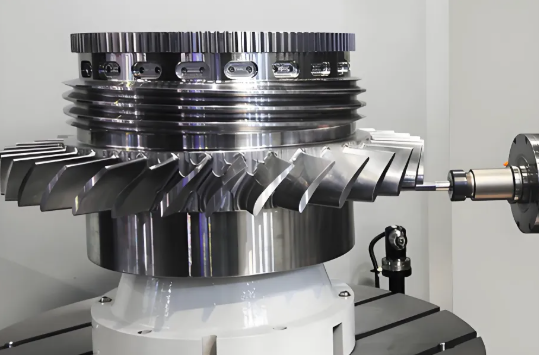
What is machining, exactly? At its core, machining is a subtractive manufacturing process where material is systematically removed from a workpiece to create a precisely shaped component. Unlike 3D printing, which builds objects layer by layer, or casting, which pours molten material into molds, machined parts are carved from solid blocks of metal, plastic, or composite materials. This fundamental distinction makes all the difference when engineers need tight tolerances, superior surface finishes, and reliable mechanical properties.
Machining is any process in which a cutting tool removes material from the workpiece through controlled relative motion between the tool and work, producing a desired shape with precise dimensional accuracy.
You might wonder why this definition matters. The answer lies in understanding what sets machined components apart from alternatives and why countless industries depend on this manufacturing approach.
The Core Principle of Material Removal
Imagine starting with a solid aluminum block and transforming it into a complex aerospace bracket. That transformation happens through strategic material removal. A sharp cutting tool contacts the workpiece, and the relative motion between them shears away thin layers of material, producing chips that carry excess material away from the finished surface.
This process requires three essential elements working together:
- Machine tools — Power-driven, non-portable equipment like lathes, milling machines, and drill presses that provide the motion and force needed for cutting
- Cutting tools — Small, wedge-shaped devices with sharp edges that physically contact and shear material from the workpiece
- Workpiece materials — The raw stock being shaped, ranging from soft aluminum to hardened steel or engineering plastics
Understanding the relationship between machine and machine tool helps clarify the machining definition. While any machine converts energy to perform work, a machine tool specifically refers to power-operated equipment designed for metal removal operations. A lathe is a machine tool; the single-point turning tool mounted on it is the cutting tool. Neither can function without the other.
Why Subtractive Manufacturing Matters in Modern Industry
With additive manufacturing technologies advancing rapidly, you might ask whether subtractive methods still hold relevance. The answer is a resounding yes. Here's why engineers consistently choose the machined path:
Subtractive manufacturing delivers what additive processes currently cannot match. According to Dassault Systèmes, machined parts achieve smoother surface finishes and tighter dimensional tolerances than their 3D-printed counterparts. When a component must fit precisely within an assembly or withstand demanding mechanical loads, these qualities become non-negotiable.
The machining meaning has evolved significantly since the 18th century, when machinists worked primarily by hand using carving, forging, and filing techniques. Today, the term encompasses both conventional processes — turning, milling, drilling, grinding, and sawing — and non-traditional methods like electrical discharge machining and waterjet cutting. This evolution reflects manufacturing's ongoing pursuit of precision, efficiency, and capability.
What makes subtractive manufacturing irreplaceable comes down to three factors:
- Material integrity — Machined parts retain the full strength characteristics of their parent material
- Dimensional precision — Tolerances measured in thousandths of an inch are standard, not exceptional
- Material versatility — Nearly any metal, plastic, or composite can be machined with appropriate tooling
When you define machining in practical terms, you're describing a manufacturing philosophy built on precision through removal. Every cut, every pass of the tool, brings the workpiece closer to its final form while maintaining the mechanical properties that engineers specified. That's why, despite the allure of newer technologies, machined components remain the backbone of industries where failure is not an option.
Essential Machining Processes Every Engineer Should Know
Now that you understand what the machining process involves, let's explore the specific operations that make precision manufacturing possible. Each machining type serves distinct purposes, and knowing when to apply each one separates competent engineers from exceptional ones. Whether you're designing a component or evaluating manufacturing options, understanding these basic machining operations gives you the vocabulary to communicate effectively with machine shops and make informed decisions.
Turning and Lathe Operations Explained
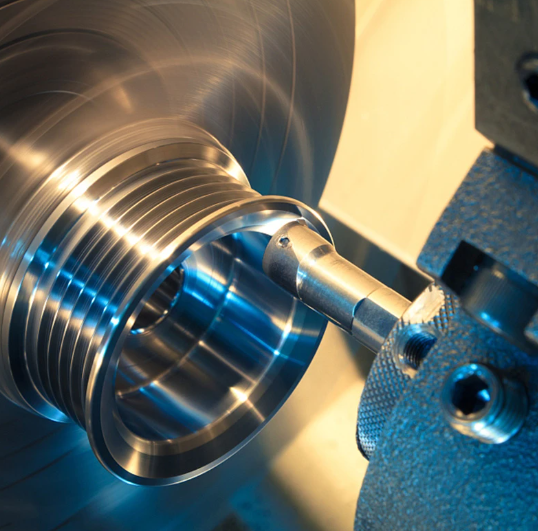
Picture a potter's wheel, but instead of shaping clay with your hands, a hardened cutting tool carves metal as it spins. That's turning in a nutshell. In this process, the workpiece rotates while a stationary cutting tool moves along it to remove material, producing cylindrical shapes with remarkable precision.
Turning operations are typically performed on a lathe, and according to ThomasNet, lathes are classified into three main subtypes:
- Engine lathes — The most widely used type, commonly found in general machine shops and hobbyist workshops
- Turret lathes — Equipped with a rotating tool holder that allows multiple cutting operations without manual tool changes
- Special-purpose lathes — Designed for specific applications, such as disc and drum lathes used in automotive shops for brake component resurfacing
Beyond basic external turning, you'll encounter specialized operations. Boring machines the internal surfaces of a workpiece, while facing creates flat reference surfaces perpendicular to the rotational axis. Advanced CNC turn-mill centers now integrate features of both lathes and milling machines, supporting 5-axis machining for parts with both rotational symmetry and complex geometric features.
Milling Versus Drilling Operations
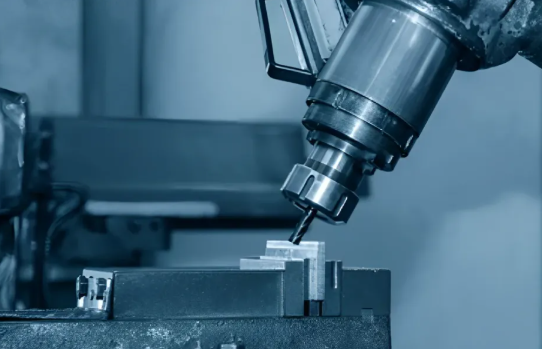
If turning rotates the workpiece, milling machining flips the script — here, the cutting tool rotates while the workpiece remains fixed or moves along multiple axes. This fundamental difference makes milling one of the most versatile machining operations in modern manufacturing.
Two principal milling types dominate production floors:
- Slab milling — Uses the peripheral edges of a cylindrical cutter to produce flat surfaces, ideal for removing large amounts of material
- Face milling — Utilizes the end face of the cutter for superior surface finish and efficient material removal on top surfaces
Milling machines range from simple hand-operated units to sophisticated CNC machining centers. Modern vertical machining centers (VMCs) and horizontal machining centers (HMCs) execute complex sequences of machining operations without manual intervention, offering high precision and repeatability.
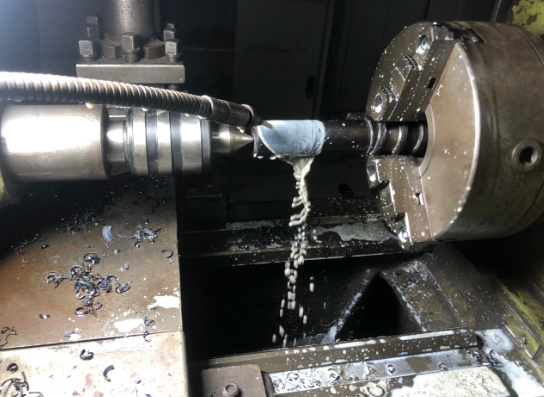
Drilling, meanwhile, is perhaps the most fundamental hole-making operation. A rotating drill bit plunges into solid material to create cylindrical holes for fasteners, alignment pins, or fluid passages. While dedicated drill presses handle most drilling work, drill bits can also be chucked into lathes or milling machines for combined operations.
Here's something that surprises many engineers: drilled holes aren't perfectly round. Drill bits tend to cut slightly oversized and may produce holes that deviate from true roundness. That's why drilling typically serves as a preliminary step, followed by reaming or boring to achieve tighter tolerances and better surface finish.
Grinding and Surface Finishing
When tolerances tighten and surface finish requirements become critical, grinding enters the picture. This precision process uses an abrasive wheel to remove small amounts of material — typically 0.00025 to 0.001 inches per pass — achieving what other machining types cannot.
Common grinding operations include:
- Surface grinding — The workpiece moves under a rotating grinding wheel, creating flat, parallel surfaces ideal for precision plates and blocks
- Cylindrical grinding — Shapes the outer surfaces of round components like shafts and rods, ensuring consistent diameter and surface quality
- Centerless grinding — Supports the workpiece between a grinding wheel and regulating wheel, perfect for high-volume production of pins, bushings, and rollers
- Double-disc grinding — Simultaneously machines both faces of a part for exceptional flatness, commonly used for bearing races and valve plates
Typical ground surfaces range from 32 to 125 microinches Ra. When even finer finishes are required, secondary operations like lapping or honing further refine surface texture.
Sawing Machining and Stock Preparation
Before any precision work begins, raw stock must be sized appropriately. Sawing machining handles this critical first step, using multi-tooth cutting tools to section bars, rods, tubes, and extrusions into manageable pieces.
Band saws are the workhorses of metal sawing, available in both vertical and horizontal configurations. These machines employ a continuous loop of toothed blade rotating at variable speeds, efficiently cutting across a wide range of metals. Cutting speeds vary by material — aluminum alloys range around 220 to 534 feet per minute, while carbon steels generally fall within 196 to 354 feet per minute.
Other sawing machining equipment includes power hacksaws for heavy-duty cutting, abrasive wheel saws for hardened metals, and circular saws for high-production environments requiring fast, straight cuts.
Choosing the Right Process for Your Application
Understanding these machining types is only half the battle — knowing when to apply each one completes the picture:
- Turning — Select for cylindrical parts, shafts, bushings, and components with rotational symmetry
- Milling — Choose for prismatic parts, slots, pockets, contours, and complex 3D geometries
- Drilling — Use for creating initial holes that may be refined through subsequent operations
- Grinding — Specify when tight tolerances below ±0.001 inches or fine surface finishes are mandatory
- Sawing — Apply for stock preparation and material separation before precision operations
Engineers often combine multiple processes on a single part. A shaft might be rough-turned on a lathe, have keyways milled, and receive a final cylindrical grind to achieve micron-level precision. This layered approach to basic machining explains why experienced manufacturing engineers think in terms of process sequences rather than individual operations.
With these fundamental processes in hand, you're ready to explore how technology has transformed their execution — from manual craftsmanship to computer-controlled precision.
Conventional Machining Versus CNC Technology
You've seen what machining processes can accomplish. But how do engineers actually control these operations? The answer has evolved dramatically over the past century, splitting into two distinct approaches: conventional manual machining and computer numerical control (CNC) technology. Understanding both helps you determine which path fits your project requirements.
Manual Machining Fundamentals
Picture a skilled machinist standing at a lathe, hands gripping control wheels, eyes fixed on the cutting action. That's manual machining in action. According to Jiangzhi, manual machining involves shaping materials using hand-operated machine tools where the operator manually controls tool movement through handwheels and levers, sets cutting speed, feed rate, and depth of cut in real time, and performs all measurements and tool changes by hand.
This hands-on approach offers genuine advantages in specific situations:
- Quick setup for simple jobs — No programming required means faster time-to-first-part for straightforward geometries
- Real-time adjustments — Operators observe the cutting process directly and modify parameters on the fly
- Lower initial investment — Manual machines cost significantly less than their CNC counterparts
- Flexibility for custom work — Design changes happen immediately without reprogramming
When does manual machine work make sense? Think one-off prototypes, repair jobs, simple geometries, and shop environments where flexibility outweighs speed. A machinist repairing a worn shaft or crafting a unique bracket can often complete the task faster manually than programming a CNC machine would allow.
However, manual machine working carries inherent limitations. The operator's skill directly determines part quality. Fatigue, misreadings, and miscalculations introduce variability. Producing identical parts consistently becomes challenging, especially across large batches.
How CNC Transformed Production Capabilities
Now imagine a different scene: a machine operating autonomously, cutting tool following precise paths while the operator monitors multiple machines simultaneously. That's the CNC revolution in practice.
CNC machining technology uses computerized controls to automate cutting, shaping, and finishing operations. The process begins with a CAD model, which programmers convert into G-code instructions. These instructions direct multi-axis movements, cutting paths, speeds, and tool changes with extraordinary precision. According to RapidDirect, industrial CNC machinery typically achieves accuracy ranges between 0.0002 to 0.0005 inches, with repeatability indices around ±0.0005 inches.
Modern machining technology has pushed these capabilities even further. Precision CNC milling centers now offer:
- Multi-axis capability — Five-axis machines cut angles impossible with three-axis equipment
- Continuous operation — Machines run unattended for extended periods, maximizing resource utilization
- Automatic tool changes — Pre-programmed sequences switch tools without manual intervention
- Consistent repeatability — The same program produces identical parts whether you're making ten or ten thousand
This matters enormously for industries demanding tight tolerances. Aerospace components, medical devices, and automotive parts require consistency that human operators simply cannot guarantee across production runs.
Making the Right Choice for Your Project
The decision between conventional and CNC machining ultimately depends on your specific requirements. Here's how they compare across critical factors:
| Factor | Conventional Machining | CNC Machining |
|---|---|---|
| Precision Tolerance | ±0.005" typical, operator-dependent | ±0.0002" to ±0.0005" achievable |
| Production Speed | Slower, requires constant operator attention | Faster, continuous automated operation |
| Operator Skill Requirements | Highly skilled machinists essential | Programming expertise needed, less manual dexterity required |
| Ideal Batch Size | 1-10 parts, prototypes, repairs | Medium to high volume, 10+ identical parts |
| Initial Cost | Lower equipment investment | Higher upfront cost, long-term savings |
| Geometry Complexity | Limited to simpler shapes | Intricate multi-axis features possible |
| Repeatability | Varies with operator fatigue and skill | Identical parts every time |
For a single custom bracket or emergency repair, conventional machining delivers results quickly without programming delays. But when precision matters across hundreds of parts — or when geometries demand multi-axis capabilities — CNC technology becomes the obvious choice.
Many manufacturers maintain both capabilities. They use manual machines for quick prototyping and repairs while reserving CNC equipment for production runs where consistency and efficiency justify the programming investment. This hybrid approach leverages the strengths of each method.
Of course, selecting the right technology is only part of the equation. The materials you're cutting present their own set of challenges and considerations.
Material Selection and Machinability Factors
You've mastered the processes and understand the technology. Now comes the question that trips up even experienced engineers: which material should you specify? Metal machining isn't a one-size-fits-all proposition. The material you choose directly influences cutting speeds, tool life, surface finish quality, and ultimately, project costs. Let's break down how different materials behave when they meet a cutting metal machine.
Metals and Their Machining Characteristics
Every metal responds differently to cutting operations. According to Tops Best Precision, machinability refers to how easily a material can be cut, shaped, or machined while maintaining high part quality — and it involves far more than just cutting speed. Surface finish, dimensional accuracy, tool wear, and overall efficiency all factor into the equation.
Here's a practical rule: harder materials generally mean lower machinability but stronger finished parts. Understanding this trade-off helps you balance performance requirements against manufacturing realities.
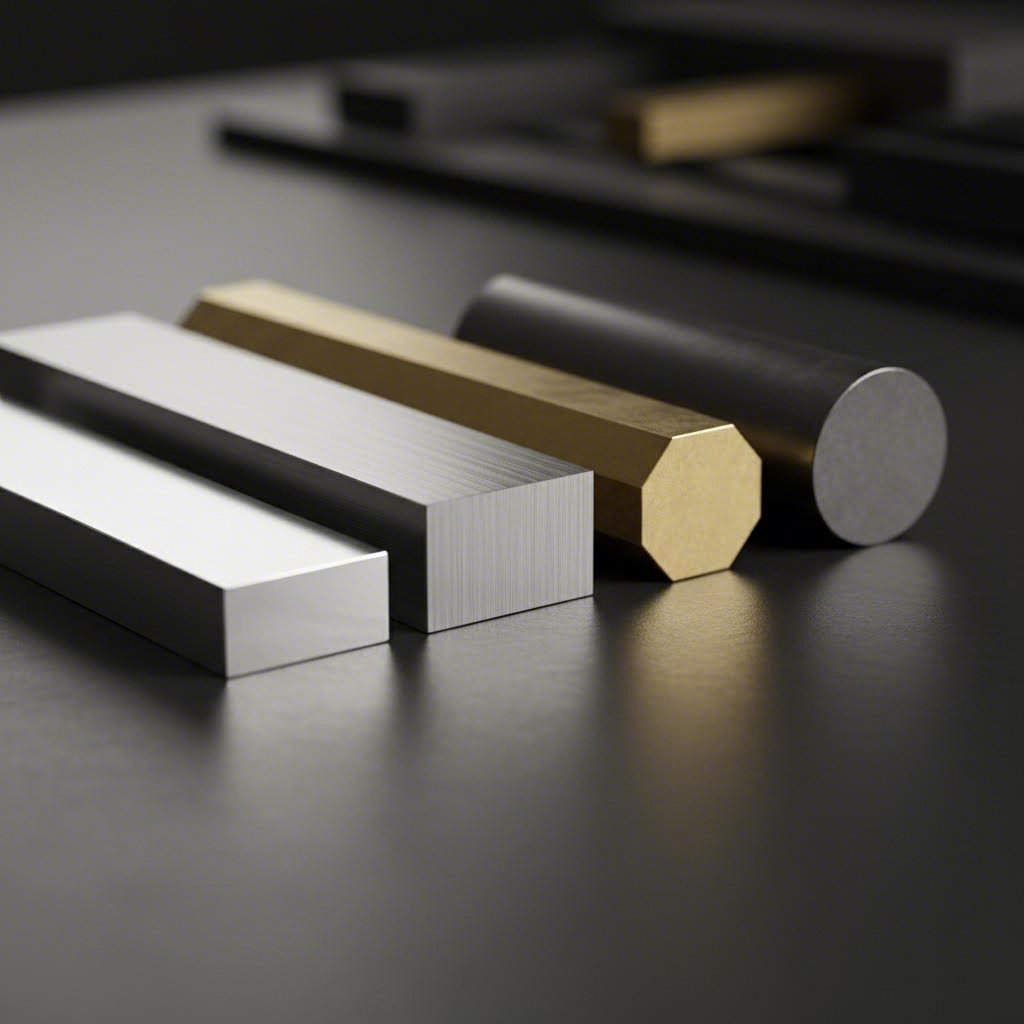
The machining metalworking industry uses C36000 Brass as the benchmark, assigning it a machinability rating of 100%. All other materials are compared against this standard. Here's how common metals stack up:
- Brass (Rating: 100%) — Extremely easy to cut with excellent surface finish. Produces short, clean chips with minimal tool wear. Best for precision fittings, electrical components, and decorative hardware.
- Aluminum 6061 (Rating: 90-95%) — Machines fast and efficiently with minimal tool wear. Ideal for CNC machining metal parts in aerospace, automotive, and electronics. Requires attention to chip management since long, stringy chips can wrap around tooling.
- Mild Steel (Rating: 70%) — Easier to cut than stainless grades but prone to rust without protective coatings. Suitable for structural components, machinery parts, and gears. A tool to cut metal through mild steel needs moderate hardness and proper cooling.
- Stainless Steel 304/316 (Rating: 30-40%) — Strong, durable, and corrosion-resistant, but work hardens during cutting. This means the material becomes tougher as you machine it. Requires slower cutting speeds, robust tooling, and generous coolant application. Essential for medical devices, food processing equipment, and marine applications.
- Titanium Alloys (Rating: 20-25%) — Super strong, lightweight, and heat-resistant — but notoriously difficult to machine. Low thermal conductivity traps heat in the cutting zone, accelerating tool wear. Demands specialized coated tools, reduced speeds, and aggressive cooling strategies. Reserved for aerospace structures, medical implants, and high-performance components.
- Inconel/Nickel Alloys (Rating: 10-15%) — Extreme heat and corrosion resistance for jet engines and nuclear applications. Generates substantial heat during cutting and requires slow speeds with specialized tooling. Steel machining techniques simply won't work here.
Higher machinability ratings mean easier cutting, longer tool life, and lower production costs. Lower ratings signal tougher machining but often deliver superior mechanical properties.
Working with Plastics and Composites
Metals aren't the only game in town. Engineering plastics and composites offer unique advantages — lighter weight, natural corrosion resistance, and electrical insulation — but they bring their own machining challenges.
Plastics generally machine easier than metals, yet some can melt or warp under excessive heat. Others chip or crack if cut too aggressively. According to LS Manufacturing, successful plastic machining requires understanding each material's thermal sensitivity and mechanical behavior.
- Polyethylene (PE) and Polypropylene (PP) — Very easy to machine with standard tools. Minimal heat generation and tool wear. Can bend slightly rather than breaking. Ideal for food containers, mechanical components, and lightweight structural parts.
- Acetal/Delrin (POM) — Stiff, dimensionally stable, and low-friction. Excellent for precision gears, bearings, and electrical insulators. Machines cleanly with good surface finish.
- Polycarbonate (PC) — High impact strength with optical clarity. Can be cut at high speeds with smooth edges, but excessive heat causes melting or deformation. Perfect for safety shields, lenses, and transparent covers.
- PEEK — Very high strength with excellent chemical and heat resistance. More challenging to machine but delivers aerospace-grade performance. Requires sharp tooling and careful thermal management.
Composites present the trickiest challenges. Carbon fiber reinforced polymers (CFRP) and glass fiber materials are extremely strong yet abrasive. They produce fine dust rather than chips, which creates both tool wear and health hazards requiring proper ventilation. Diamond-coated or carbide tools help extend tool life, but costs run higher than standard metal machining.
How Material Choice Affects Machining Parameters
Selecting a material isn't just about the finished part's performance — it cascades through every machining decision. The relationship between material hardness, cutting tool selection, and achievable surface finish creates a complex optimization problem.
Harder materials demand stronger cutting tools. Aluminum machines beautifully with high-speed steel tooling at aggressive feed rates. Titanium requires carbide or ceramic inserts with conservative parameters. The wrong pairing destroys tools rapidly and produces poor surface quality.
Thermal conductivity matters too. Materials that transfer heat efficiently — like aluminum — allow faster cutting because heat escapes the cutting zone. Poor conductors like titanium and stainless steel trap heat at the tool tip, accelerating wear and potentially work-hardening the material.
Surface finish expectations should guide your selection from the start. Soft, gummy metals may machine quickly but leave rough surfaces requiring secondary finishing. Harder materials often yield smoother finishes directly from the cutting operation.
Ultimately, cnc machining metal successfully means matching material properties to appropriate tooling, speeds, feeds, and cooling strategies. This optimization determines whether your machined parts meet specifications cost-effectively — or drain your budget through excessive tool consumption and extended cycle times.
Understanding materials sets the foundation. Next, we'll explore the specific machining parameters that translate material knowledge into quality parts.
Machining Parameters That Control Quality
You've selected your material and chosen the right process. Now comes the factor that separates acceptable parts from exceptional ones: machining parameters. These variables — cutting speed, feed rate, and depth of cut — work together to determine everything from surface finish to tool life to production costs. Get them right, and your machined components meet specifications efficiently. Get them wrong, and you'll burn through tools, miss tolerances, and wonder where your budget went.
So what is precision machining if not the mastery of these interacting variables? It's the ability to dial in parameters that consistently produce parts within thousandths of an inch while maximizing efficiency. Let's break down how each parameter contributes to that goal.
Understanding Cutting Speed and Feed Rate
Cutting speed measures how fast the cutting edge moves relative to the workpiece surface — expressed in surface feet per minute (SFM) or meters per minute. Think of it as the velocity of material removal at the point of contact. According to Prototool, this parameter directly influences heat generation, tool wear, and surface quality.
Higher cutting speeds typically mean faster production machining, but they generate more heat. Every material has an optimal speed range:
- Aluminum alloys — 200 to 1000+ SFM depending on alloy and tooling
- Mild steel — 80 to 200 SFM with carbide tooling
- Stainless steel — 40 to 100 SFM due to work hardening
- Titanium — 30 to 60 SFM to manage heat buildup
Feed rate describes how fast the tool advances into the workpiece — measured in inches per revolution (IPR) for turning or inches per minute (IPM) for milling. It controls how much material each cutting edge removes per pass.
Here's where machining concepts become practical: higher feed rates boost productivity but increase cutting forces and may degrade surface finish. Lower feed rates produce smoother surfaces but extend cycle times. Finding the sweet spot requires balancing these competing demands.
The principles for establishing optimal feed rates follow a logical hierarchy:
- When quality permits — Use higher feed rates (100 to 200 meters per minute) to enhance production efficiency
- For deep holes or delicate operations — Reduce feed rates to 20 to 50 meters per minute to maintain quality
- For tight tolerances and fine finishes — Slower feeds between 20 to 50 meters per minute achieve the precision required
Depth of Cut and Surface Finish Relationships
Depth of cut represents the vertical distance between the machined surface and the uncut surface — essentially, how deep the tool bites into the material with each pass. This parameter has the most significant impact on material removal rate but also affects machine load and surface quality.
The relationship between depth of cut and surface roughness requirements follows predictable patterns:
- Surface roughness Ra 12.5-25μm — A single rough machining pass works if allowance is under 5-6mm. Larger allowances require multiple passes.
- Surface roughness Ra 3.2-12.5μm — Split into rough machining plus semi-finish machining, leaving 0.5-1.0mm for the final pass.
- Surface roughness Ra 0.8-3.2μm — Three-step process: rough, semi-finish (1.5-2mm depth), and finish machining (0.3-0.5mm depth).
High precision machining demands this layered approach. Aggressive roughing removes bulk material quickly, while progressively lighter passes refine the surface to specification. Skipping steps to save time almost always backfires through poor finish or tolerance issues.
The hierarchy for selecting cutting parameters prioritizes tool durability: first establish depth of cut, then determine feed rate, finally set cutting speed. This sequence maximizes tool life while optimizing machining efficiency.
How Parameters Interact to Control Tolerance
These three parameters don't operate independently — they interact in ways that directly affect your ability to hold tight tolerances. Consider what happens when you increase cutting speed without adjusting other parameters: heat rises, the tool wears faster, and dimensional accuracy drifts as the cutting edge degrades.
Precision machining concepts require understanding these relationships:
- Cutting speed × feed rate — Together determine material removal rate and heat generation
- Feed rate × depth of cut — Control cutting forces and machine deflection
- All three parameters — Collectively influence tool life, which affects consistency across production runs
When tolerances tighten to ±0.001 inches or below, parameter selection becomes critical. The formula for calculating spindle speed from cutting speed illustrates this precision:
n = (1000 × vc) / (π × dw)
Where n equals spindle speed in RPM, vc represents cutting speed in meters per minute, and dw is the workpiece diameter in millimeters. For a 260mm pulley at 90 m/min cutting speed, this yields approximately 110 RPM — which would then be matched to the closest available machine setting.
Production machining success depends on optimizing these calculations for each unique combination of material, tooling, and tolerance requirements. There's no universal formula — only principles that guide intelligent parameter selection.
With parameters dialed in, you're ready to understand why machined parts often outperform alternatives made through casting, forging, or additive methods.
Choosing Machining Over Alternative Manufacturing Methods
You've dialed in your parameters and understand how materials behave under cutting tools. But here's the question that keeps engineers debating late into project meetings: why choose machining when casting costs less per part at volume, forging delivers superior strength, and 3D printing handles geometries that seem impossible to cut?
The answer isn't always obvious — and that's precisely why so many projects end up on the wrong manufacturing path. According to Wevolver, machining for manufacturing serves as both a standalone process and a finishing operation that complements nearly every other method. Understanding when machined parts outperform alternatives helps you make decisions that balance cost, quality, and timeline.
When Machining Outperforms Casting and Forging
Casting pours molten metal into molds. Forging shapes metal through compressive force. Both processes have served manufacturing for thousands of years — so why does machining manufacturing continue to dominate precision applications?
Consider what happens after a casting cools or a forging completes. According to 3ERP, casting may result in porosity, shrinkage, or surface irregularities that require secondary finishing processes. Forging maintains excellent grain structure but offers limited geometrical freedom. In both cases, the as-produced part rarely meets final specifications without additional work.
That additional work? It's usually machining.
Here's when machining is a clear winner over casting:
- Tight tolerances required — Casting achieves ±0.1mm per 25mm at best; machining routinely hits ±0.025mm
- Low-to-medium production volumes — No expensive mold tooling means faster startup and lower break-even quantities
- Design changes expected — Updating a CNC program takes hours; modifying casting dies takes weeks
- Superior surface finish needed — Machined surfaces can achieve Ra values under 1μm directly from cutting
- Material properties must remain intact — No melting or extreme deformation affects the base material's characteristics
Forging excels at producing extremely strong parts — maintaining grain flow creates components unlikely to crack under stress. But shaping manufacturing through forging requires expensive custom dies and limits geometric complexity. When your part needs both strength and precision features, many manufacturers forge the rough shape, then machine critical dimensions. This hybrid approach captures forging's strength benefits while achieving machining's precision.
Machining Versus 3D Printing Trade-offs
Additive manufacturing promised to revolutionize machine production. Build any geometry layer by layer, eliminate tooling entirely, reduce waste to nearly zero. So why hasn't 3D printing replaced machined parts across industry?
The reality is more nuanced. According to Wevolver, additive manufacturing offers the greatest level of geometrical freedom of any metal manufacturing technology — including internal geometries that can radically affect mechanical properties. But that freedom comes with significant trade-offs.
3D printed metal parts typically exhibit:
- Limited part strength — Layer-by-layer construction creates potential weak points between layers
- Rougher surface finish — Post-processing is almost always required for functional surfaces
- Slower production speeds — Each part builds individually, making high-volume runs impractical
- Restricted material options — Far fewer alloys are available compared to machining
Machining is a subtractive process that starts with material already possessing full density and consistent properties throughout. No layer boundaries exist to compromise strength. Surface finish quality emerges directly from the cutting operation rather than requiring extensive post-processing.
When does 3D printing make sense? Complex internal cooling channels, topology-optimized structures, and genuinely one-off prototypes where geometry trumps all other considerations. For production parts requiring consistent mechanical properties, tight tolerances, and proven materials — machining remains the practical choice.
Comparing Manufacturing Methods Across Critical Factors
The decision matrix becomes clearer when you compare methods side by side. This table summarizes how each approach performs across the criteria that matter most to engineers:
| Criteria | Machining | Casting | Forging | 3D Printing |
|---|---|---|---|---|
| Achievable Tolerances | ±0.025mm standard; ±0.005mm possible | ±0.1mm per 25mm typical | ±0.5mm typical; requires machining for precision | ±0.1mm typical; varies by process |
| Material Options | Nearly unlimited: metals, plastics, composites | Metals with good fluidity (aluminum, iron, zinc) | Ductile metals (steel, aluminum, titanium) | Limited metal powders; expanding selection |
| Production Volume Suitability | Low to medium (1-1000 parts optimal) | Medium to high (100+ parts for cost efficiency) | Medium to high (justifies die investment) | Low (1-50 parts typically) |
| Surface Finish Quality | Excellent (Ra 0.8-3.2μm achievable) | Rough (requires secondary finishing) | Moderate (scale and die marks present) | Rough (layer lines visible) |
| Cost at 10 Parts | Moderate (no tooling amortization) | Very high (tooling dominates) | Very high (die costs prohibitive) | Moderate to high (machine time) |
| Cost at 1000 Parts | Higher per-part (machine time accumulates) | Low per-part (tooling amortized) | Low per-part (die costs spread) | Very high (not practical) |
| Lead Time for First Part | Days (programming and setup) | Weeks (mold creation required) | Weeks (die design and manufacture) | Days (file preparation and build) |
Scenarios Where Machining Wins
Armed with this comparison, when should you specify machined parts without hesitation?
Tight tolerance requirements — When your assembly demands fits measured in thousandths of an inch, machining delivers. Casting and forging simply cannot achieve these specifications without machining as a secondary operation anyway.
Specific material requirements — Need a particular aluminum alloy for thermal conductivity? A specific stainless grade for corrosion resistance? Machining works with virtually any solid material in bar, plate, or billet form. Casting and 3D printing limit you to materials optimized for their respective processes.
Low-to-medium production volumes — Below roughly 500-1000 parts, machining often costs less than casting because you avoid tooling investment. The break-even point varies by part complexity, but machine production economics favor CNC for quantities where die costs cannot be adequately amortized.
Complex internal features with precision requirements — Internal threads, precisely located cross-holes, and accurate bore dimensions demand machining. While casting can create internal cavities, dimensional control remains limited without secondary cutting operations.
Design still evolving — Perhaps the most overlooked advantage: machining adapts instantly to design changes. Modify the CAD model, regenerate toolpaths, and produce updated parts the same day. Casting and forging require tooling modifications that add weeks and significant cost.
Many manufacturers ultimately combine methods — casting or forging the rough shape, then shaping manufacturing precision through targeted machining operations. This hybrid approach captures the volume economics of near-net-shape processes while achieving the tolerances and surface quality that only cutting operations deliver.
Understanding these trade-offs prepares you to evaluate where machined components actually appear in the products you use every day.
Industries That Rely on Machined Components
You've seen how machining compares to alternative methods and when it makes strategic sense. But where do machined parts actually end up? The answer might surprise you — these precision components surround you every day, from the car you drive to the smartphone in your pocket. Industrial machining touches virtually every sector of modern manufacturing, each with distinct requirements for tolerances, materials, and quality certifications.
Understanding these real-world applications connects the technical concepts we've explored to tangible outcomes. When you grasp why aerospace demands different specifications than automotive — or why medical devices require traceability that consumer electronics don't — you'll make smarter decisions about your own machining projects.
Automotive Components That Demand Precision
Every vehicle on the road contains hundreds of machined metal parts working together under demanding conditions. According to Ruixing Manufacturing, CNC machined engine components like cylinder heads, pistons, and crankshafts play a pivotal role in optimizing combustion efficiency and overall engine performance.
Think about what happens inside an engine: explosions occurring thousands of times per minute, extreme temperatures, and constant mechanical stress. These conditions demand machining parts with tolerances tight enough to maintain proper sealing and minimize friction losses.
Key automotive applications include:
- Engine components — Cylinder heads, pistons, crankshafts, and camshafts where combustion efficiency depends on precise dimensional control
- Transmission parts — Gears, shafts, and housings ensuring smooth gear transitions and reliable power transmission within the drivetrain
- Suspension system elements — Control arms, struts, and tie rods contributing to vehicle stability and handling dynamics
- Brake system components — Calipers, rotors, and pistons where precise machining ensures consistent braking performance and heat dissipation
- Steering mechanisms — Steering racks and pinions guaranteeing accurate, responsive control
Automotive manufacturing operates under stringent quality standards. IATF 16949 certification represents the global standard for automotive quality management systems, requiring documented processes, statistical process control, and complete traceability. When mechanical machining serves this industry, every parameter — from cutting speed to surface finish — must be controlled and recorded.
Aerospace and Medical Device Applications
If automotive tolerances seem demanding, aerospace and medical applications push precision to another level entirely. An aerospace CNC machinist works with materials and specifications where failure literally isn't an option.
According to Precision Advanced Manufacturing, aerospace expertise requires AS9100D with ISO 9001:2015 certification — the quality standard that companies like NASA, SpaceX, and Lockheed Martin demand from their suppliers. The stakes explain why: aircraft structural elements must maintain integrity through temperature extremes, vibration, and stress cycles measured in millions.
Aerospace machined parts include:
- Structural components — Wing ribs, fuselage frames, and landing gear parts machined from high-strength aluminum and titanium alloys
- Engine components — Turbine blades, compressor discs, and combustion chambers requiring exotic alloys and extreme precision
- Flight control elements — Actuator housings, hydraulic manifolds, and control surface brackets
- Security and specialty items — Explosion-proof panels, structural gusset plates, and mission-critical hardware
Medical device manufacturing shares aerospace's zero-tolerance approach to quality but adds biocompatibility requirements. Surgical instruments, implantable devices, and diagnostic equipment demand materials that won't react with body tissues while maintaining precise geometries.
Medical machining parts applications include:
- Surgical instruments — Scalpel handles, forceps, and specialized cutting tools requiring exceptional edge retention and sterilization compatibility
- Implantable components — Hip and knee replacement parts, dental implants, and spinal fusion hardware machined from titanium and medical-grade stainless steel
- Diagnostic equipment — Housings and precision components for imaging systems, analyzers, and monitoring devices
- Rehabilitation equipment — Tracks, harnesses, and physical therapy machine components
Electronics, Energy, and Beyond
Beyond these headline industries, machined components appear throughout the manufacturing landscape. Electronic housings protect sensitive circuits while managing heat dissipation. Alternative energy systems — from wind turbines to electric vehicle components — rely on precision parts that optimize efficiency.
According to Precision Advanced Manufacturing, the alternative energy sector requires versatile production capabilities across hydrogen energy, wind turbines, and EV prototyping. Leading brands like Tesla and GE depend on machined parts for critical energy applications.
Additional industries relying on precision machined components:
- Oil and gas — Drilling rig components, valve bodies, and downhole tools machined from corrosion-resistant alloys
- Defense and military — Mission-critical components for vehicles, aircraft, and weapons systems requiring absolute reliability
- Consumer electronics — Smartphone frames, laptop housings, and connector bodies where appearance meets functionality
- Industrial equipment — Pump housings, bearing blocks, and precision shafts keeping production lines running
How Industry Requirements Shape Machining Decisions
Each industry brings unique requirements that influence every machining decision — from material selection to quality documentation:
- Automotive — High volumes, cost sensitivity, IATF 16949 certification, and statistical process control requirements
- Aerospace — Exotic materials, extreme tolerances, AS9100 certification, and complete part traceability
- Medical — Biocompatible materials, FDA compliance, cleanroom manufacturing, and serialized documentation
- Defense — ITAR compliance, classified specifications, and environmental durability testing
- Energy — Large component sizes, specialized alloys, and demanding service life requirements
These varying requirements explain why selecting the right machining partner matters as much as selecting the right process. A shop optimized for automotive volume production may lack the certifications or experience for aerospace prototype work — and vice versa.
With this understanding of where machined parts serve critical functions, you're ready to evaluate how to find a manufacturing partner capable of meeting your specific industry requirements.
Selecting the Right Precision Machining Partner
You understand the processes, materials, and parameters that produce exceptional machined parts. Now comes the decision that determines whether your project succeeds or stumbles: choosing who will actually manufacture your components. Whether you're evaluating external suppliers or considering in-house capabilities, the criteria remain the same. The right partner delivers precision machined components on time, within specification, and at competitive costs. The wrong choice leads to missed deadlines, quality escapes, and frustrating rework cycles.
In the world machining landscape, countless shops claim precision capabilities. How do you separate genuine expertise from marketing promises? The answer lies in systematic evaluation — examining certifications, processes, capacity, and track record before committing your critical components to any supplier.
Quality Certifications That Matter
Certifications serve as your first filter. They represent independent verification that a facility maintains documented quality systems and follows industry-recognized best practices. According to American Micro Industries, certifications influence CNC machining by ensuring teams maintain high standards and complement hands-on experience for consistently superior results.
But not all certifications carry equal weight for every application. Understanding which credentials matter for your industry prevents you from over-specifying — or worse, under-specifying — supplier requirements.
Key certifications to evaluate include:
- ISO 9001 — The baseline international standard for quality management systems. Demonstrates documented workflows, performance monitoring, and corrective action procedures. Essential for general machining applications across industries.
- IATF 16949 — The global automotive quality standard combining ISO 9001 principles with sector-specific requirements for continuous improvement, defect prevention, and supplier oversight. Mandatory for Tier 1 and Tier 2 automotive suppliers serving major OEMs.
- AS9100 — Builds on ISO 9001 with aerospace-specific requirements for risk management, documentation, and product integrity control. Required for suppliers serving Boeing, Airbus, and defense contractors.
- ISO 13485 — The definitive standard for medical device manufacturing, outlining strict controls over design, traceability, and risk mitigation. Non-negotiable for surgical instruments and implantable components.
- NADCAP — Accreditation for special processes critical to aerospace and defense, including heat treating, chemical processing, and nondestructive testing. Validates process-specific controls beyond general quality certifications.
According to American Micro Industries, within a quality management system, certifications serve as pillars that uphold and validate every stage of the production process. Everyone from operators to quality inspectors operates under a uniform set of practices and expectations, reducing ambiguity and strengthening accountability.
The presence of certified processes reassures customers that a manufacturer can deliver parts that meet stringent specification requirements — essential for winning contracts in demanding sectors.
Evaluating Production Capacity and Lead Times
Certifications prove capability. But can the shop actually deliver your parts when you need them? Production capacity and turnaround time often matter as much as quality credentials.
According to Topcraft Precision, whether you need prototypes, short runs, or full production, your partner should adapt without sacrificing quality. Late parts can derail entire projects, making on-time delivery verification essential before signing contracts.
Evaluate these capacity factors:
- Equipment variety — Multi-axis CNC mills, turning centers, grinding equipment, and inspection capabilities indicate comprehensive manufacturing ability
- Shift coverage — Shops running multiple shifts or lights-out operations deliver faster than single-shift operations
- Scalability — Can they handle your prototype today and production volumes next quarter without quality degradation?
- Material management — Do they stock common materials or source everything per-order, affecting lead times?
For automotive supply chains demanding rapid response, some precision machining part suppliers deliver remarkably fast turnarounds. Shaoyi Metal Technology, for example, offers lead times as fast as one working day for urgent requirements while maintaining IATF 16949 certification standards. Their automotive machining expertise spans chassis assemblies, custom metal bushings, and complex machined components requiring both speed and precision.
Statistical Process Control Implementation
Quality certifications establish systems. Statistical Process Control (SPC) proves those systems work in practice. According to Baker Industries, SPC is a data-driven method for monitoring and controlling CNC machining that helps identify trends, variations, and potential issues before they escalate into major problems.
When evaluating machining and fabrication partners, ask how they implement SPC:
- Critical dimension monitoring — Are key characteristics measured and charted throughout production runs?
- Control limits — Do they establish statistical boundaries that trigger investigation before specifications are violated?
- Real-time response — How quickly do operators respond to out-of-control signals?
- Documentation — Can they provide SPC data demonstrating process stability for your specific parts?
Early identification of deviations is crucial so corrections happen immediately. Minimizing defects, waste, and rework saves time and money — benefits that flow directly to your project costs and timelines.
Shops like Shaoyi Metal Technology integrate strict SPC protocols into their production workflows, ensuring precision machined components maintain consistency across both prototype quantities and mass production volumes. This data-driven approach proves especially valuable for automotive applications where dimensional stability directly affects assembly fit and function.
Your Partner Evaluation Process
Systematic evaluation prevents costly mistakes. Follow this process when qualifying new machining suppliers or assessing in-house capability gaps:
- Define your requirements clearly — Document tolerances, materials, quantities, certification requirements, and delivery expectations before contacting suppliers. Ambiguous requirements generate ambiguous quotes.
- Verify certifications independently — Request certificate copies and confirm validity with certifying bodies. Expired or fraudulent credentials exist in the market.
- Evaluate technical capability — Review equipment lists, inspect sample parts, and assess whether their typical work matches your complexity level.
- Assess quality systems — Ask about inspection equipment, SPC implementation, and how they handle nonconforming material. Request examples of quality documentation.
- Check references and track record — Contact current customers in similar industries. Ask specifically about on-time delivery, communication, and problem resolution.
- Request sample production — Before committing production volumes, order prototype or first-article quantities to verify capability under real conditions.
- Evaluate scalability — Confirm they can grow with your needs from prototyping through production ramp without quality degradation or delivery delays.
- Review commercial terms — Understand pricing structures, minimum order quantities, and how they handle engineering changes or rush requirements.
This structured approach reveals capabilities that marketing materials obscure. A shop may claim general machining expertise while lacking specific experience with your materials, tolerances, or industry requirements.
Building Long-Term Manufacturing Relationships
The best machining partnerships extend beyond transactional purchasing. According to Topcraft Precision, the best shops help refine designs for better manufacturability — if they can suggest improvements without compromising function, that's a major plus.
Look for partners who offer:
- Design for manufacturability feedback — Experienced machinists often identify tolerance relaxations or feature modifications that reduce cost without affecting function
- Proactive communication — Partners who alert you to potential issues before they become problems
- Technical collaboration — Willingness to work through challenging applications rather than simply rejecting difficult requests
- Continuous improvement — Demonstrated investment in equipment, training, and process refinement
Whether you're sourcing precision machined components for aerospace, automotive, medical, or industrial applications, the evaluation principles remain consistent. Verify certifications, confirm capability, assess quality systems, and validate through sample production. This disciplined approach ensures your machined parts arrive on time, within specification, and ready to perform their critical functions.
Frequently Asked Questions About Machined Parts
1. What does it mean when something is machined?
When something is machined, it means material has been systematically removed from a solid workpiece using cutting tools to create a precisely shaped component. This subtractive manufacturing process involves controlled relative motion between the tool and workpiece, producing parts with exact dimensional accuracy. Machined parts retain the full strength characteristics of their parent material and achieve tolerances measured in thousandths of an inch, making them essential for applications where precision and reliability are critical.
2. What does 'as machined' mean?
The term 'as machined' refers to the condition of a part immediately after the cutting process, without any additional finishing or post-processing procedures. As-machined surfaces display the tool marks and finish quality achieved directly from the cutting operation. Depending on parameters used, this can range from rough surfaces suitable for hidden features to smooth finishes acceptable for many functional applications. Secondary operations like grinding, polishing, or coating are applied only when specifications require better surface quality than as-machined conditions provide.
3. What is a machined part?
A machined part is a component manufactured through material removal processes where cutting tools carve solid blocks of metal, plastic, or composite materials into desired shapes. Unlike cast or 3D-printed parts, machined components start from material with full density and consistent properties throughout. They appear in engine blocks, surgical instruments, aerospace brackets, and countless everyday products. Machined parts typically achieve tighter tolerances and superior surface finishes compared to alternative manufacturing methods, making them ideal for precision applications across automotive, medical, and industrial sectors.
4. How does CNC machining differ from conventional machining?
CNC machining uses computerized controls and programmed G-code instructions to automate cutting operations, achieving tolerances between 0.0002 to 0.0005 inches with exceptional repeatability. Conventional machining relies on skilled operators manually controlling tool movements through handwheels and levers. While manual machining offers faster setup for simple jobs and lower equipment costs, CNC technology delivers superior precision, handles complex multi-axis geometries, and produces identical parts consistently across production runs. Many manufacturers maintain both capabilities, using manual machines for prototypes and CNC for production volumes.
5. What certifications should a machining partner have?
Essential certifications depend on your industry. ISO 9001 serves as the baseline quality management standard for general applications. Automotive suppliers require IATF 16949 certification, which mandates statistical process control and defect prevention protocols. Aerospace applications demand AS9100 certification with strict risk management and traceability requirements. Medical device manufacturing needs ISO 13485 for design controls and regulatory compliance. Partners like Shaoyi Metal Technology maintain IATF 16949 certification with SPC protocols, enabling them to serve demanding automotive supply chains with lead times as fast as one working day.