 Small batches, high standards. Our rapid prototyping service makes validation faster and easier —
  EN
EN


Laser Cut Metals Exposed: Costs, Safety, And Quality Secrets Revealed
What Makes Laser Cutting the Precision Standard for Metal Fabrication
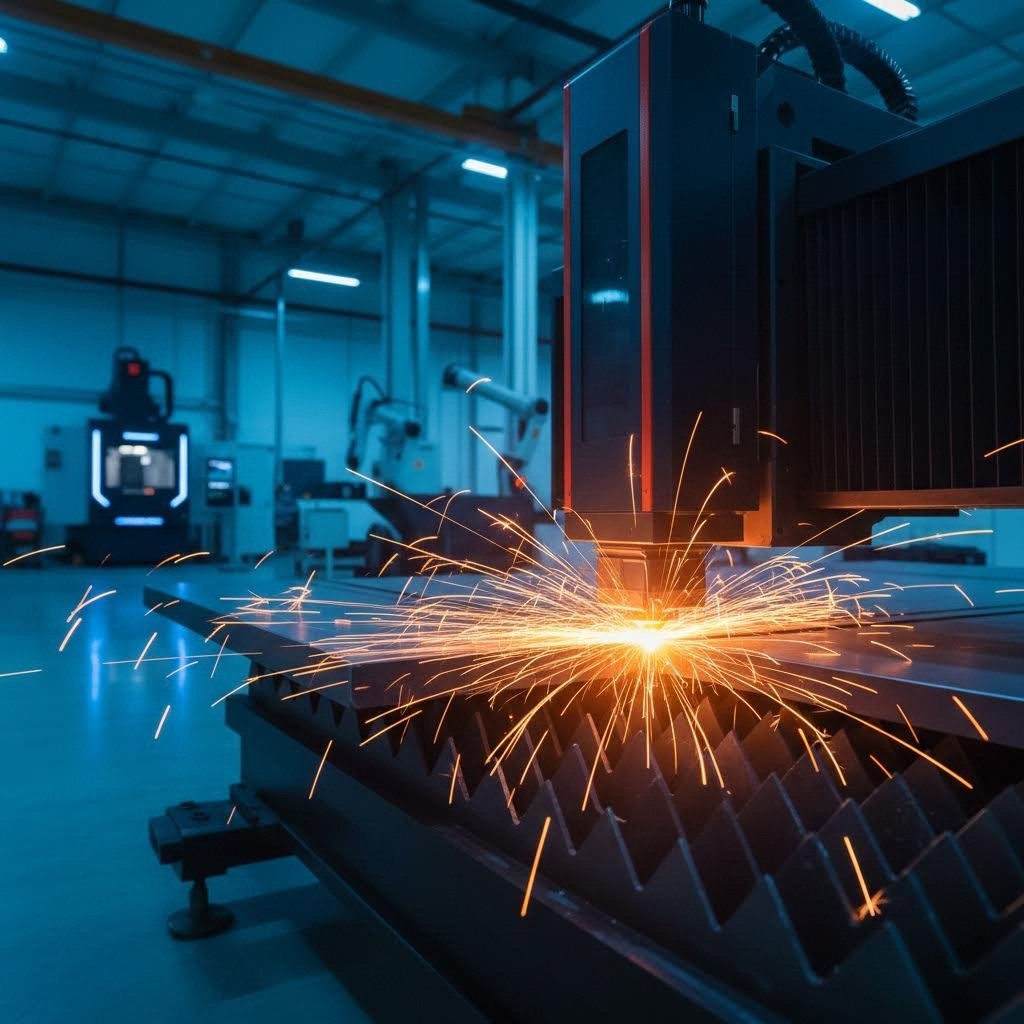
Can a laser cutter cut metal? Absolutely. In fact, laser cut metal has become the gold standard for precision manufacturing across industries ranging from automotive to aerospace. This technology harnesses concentrated light energy to melt or vaporize metal along programmed paths, delivering cuts so precise that traditional methods simply cannot compete.
Imagine directing an intense beam of focused light onto a metal surface with pinpoint accuracy. The heat from this beam melts or vaporizes the material instantly, creating clean, accurate cuts guided by CNC (Computer Numerical Control) systems. This is metal laser cutting in action, and it has revolutionized how manufacturers approach fabrication challenges.
Laser cutting accuracy reaches within ±0.1mm of exact specifications, making it one of the most precise cutting methods available in modern manufacturing.
The technology has evolved significantly over the decades. While CO2 lasers dominated the industry for years, fiber lasers have emerged as the modern standard for metal fabrication. This shift happened for good reason: fiber lasers deliver higher electrical efficiency, faster cutting speeds, and superior performance on reflective metals that once posed significant challenges.
The Science Behind Metal Laser Cutting
Understanding how this process works helps you appreciate why it delivers such remarkable results. A laser metal cutter directs a highly concentrated beam onto the metal surface. The energy absorption causes the material to reach its melting or vaporization point almost instantaneously. Meanwhile, assist gases like nitrogen or oxygen clear away molten material from the cut zone, leaving behind clean edges.
The wavelength of the laser plays a critical role in this process. Fiber lasers operate at a 1064 nm wavelength, which metals absorb more efficiently. CO2 lasers produce a 10.6 µm beam that interacts differently with various materials. This wavelength difference explains why fiber technology excels at laser cutting cutting through steel, aluminum, copper, and brass with exceptional speed and precision.
Several factors influence the final cut quality:
- Laser power: Higher power enables faster cutting and the ability to process thicker materials
- Cutting speed: Finding the optimal balance between speed and precision is essential
- Material thickness: Thicker metals require more power and slower speeds to maintain accuracy
- Assist gas selection: Oxygen, nitrogen, or air affects edge quality and cutting efficiency
Why Precision Manufacturing Relies on Laser Technology
When you need tight tolerances and complex geometries, laser technology delivers where other methods fall short. A quality laser cutter can handle intricate designs that would be impossible with mechanical cutting approaches. The focused beam creates a narrow kerf width, minimizing material waste while maximizing dimensional accuracy.
The typical tolerances for laser cutting metals demonstrate why this technology has become indispensable. These precision levels matter enormously in industries where components must fit together perfectly or meet strict regulatory standards.
Modern fiber lasers have accelerated this precision capability even further. They produce narrower beams than CO2 systems, delivering approximately four times the effective power for the same laser output energy. This translates to faster processing speeds, especially on thin to medium sheet metal where speed and precision matter most.
The rapid industry shift toward fiber lasers reflects their practical advantages: lower operating costs due to superior electrical efficiency, reduced maintenance requirements, and better compatibility with automated production lines. For manufacturers aiming to maximize throughput while maintaining exceptional quality, fiber technology has become the clear choice for metal fabrication projects.
Fiber vs CO2 vs Nd YAG Laser Technologies Explained
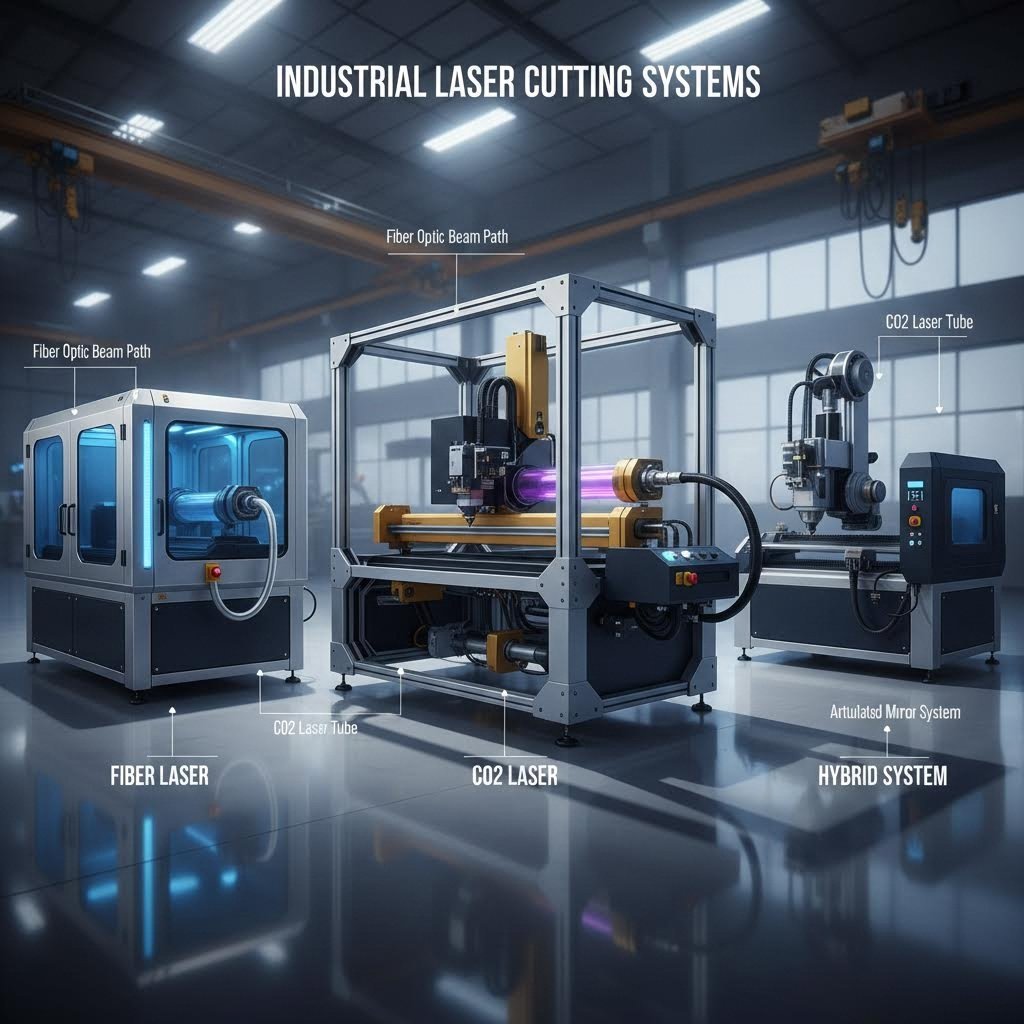
Choosing the right laser technology for your metal cutting project can feel overwhelming. With three primary options available, understanding their differences helps you make smarter manufacturing decisions. Each technology brings unique strengths based on wavelength characteristics, material compatibility, and operational costs.
The fundamental distinction lies in how each laser generates its beam and the wavelength it produces. These wavelengths determine how effectively different metals absorb the laser energy, directly impacting cut quality, speed, and efficiency.
Fiber Lasers vs CO2 for Metal Cutting
When it comes to fiber laser metal cutting versus CO2 laser metal cutting, the numbers tell a compelling story. According to Boss Laser's research, fiber lasers achieve straight-line cutting speeds 2-3x faster than CO2 when processing thin sheet metal at 5mm or less. Even more impressive? Fiber technology requires only about one-third the operating power compared to CO2 systems.
Why does this performance gap exist? The answer comes down to wavelength physics. Fiber lasers produce a 1.064 µm wavelength, while CO2 lasers emit at 10.6 µm. This tenfold difference in wavelength dramatically affects how metals interact with the beam:
- Smaller wavelength equals better metal absorption: Metals reflect less energy from fiber laser beams, making processing more efficient
- Tighter spot size: Fiber lasers produce smaller, more focused spots for finer detail work
- Superior beam quality: The excellent beam profile enables cleaner cuts with less post-processing
A fiber laser for metal cutting excels particularly with reflective materials like aluminum, brass, and copper. These metals would typically bounce CO2 laser energy back, causing inefficient cuts and potential equipment damage. Fiber optic laser cutting machines handle these challenging materials with ease.
However, CO2 laser cutting steel remains viable for certain applications. CO2 technology can process thicker sections of stainless steel effectively and offers versatility for shops that also work with organic materials like wood, acrylic, and fabric.
Choosing the Right Laser Technology for Your Metal Type
Nd:YAG lasers represent the third option, though their market share has declined significantly. These crystal-based systems use neodymium-doped yttrium aluminum garnet as their gain medium, producing the same 1064 nm wavelength as fiber lasers. While historically used for thick metal cutting, Nd:YAG technology now carries higher costs and significantly shorter service life compared to both CO2 and fiber alternatives.
Today's reality is clear: fiber laser cutters have rapidly displaced traditional CO2 systems in most metal cutting applications. The majority of sheet metal cutting, especially under 5mm thickness, now happens on CNC fiber laser cutting machines.
Consider these factors when selecting your technology:
| Technology Type | Best Metal Applications | Thickness Range | Speed | Operating Cost | Ideal Use Cases |
|---|---|---|---|---|---|
| Fiber Laser | Steel, stainless steel, aluminum, copper, brass | Up to 20mm (optimal under 5mm) | 2-3x faster than CO2 for thin materials | Low (1/3 power consumption vs CO2) | High-volume production, reflective metals, precision parts |
| CO2 Laser | Stainless steel, mild steel (limited reflective metal capability) | Up to 25mm for steel | Moderate | Moderate to High | Mixed material shops, thicker steel sections |
| Nd:YAG Laser | Thick metals, specialized applications | Varies by configuration | Moderate | High (expensive components, shorter lifespan) | Legacy applications, specific industrial needs |
For manufacturers weighing their options, fiber technology offers compelling advantages beyond raw cutting speed. Lower downtime, reduced maintenance requirements, and longer component lifespan translate directly to increased productivity. The sealed optical path in fiber systems prevents dust contamination, extending service intervals compared to mirror-based CO2 designs.
Desktop fiber laser systems have also emerged for smaller operations, bringing industrial-quality metal cutting capability to workshops with limited space. Whether you need a production-scale CNC fiber laser cutting machine or a compact desktop fiber laser, matching your technology choice to your specific metal types and thickness requirements ensures optimal results.
Understanding these technology differences prepares you for the next critical decision: knowing exactly how each metal performs under laser cutting conditions.
Metal-by-Metal Performance Guide for Laser Cutting
Not all metals behave the same under a laser beam. Understanding how each material responds to laser cutting steel, aluminum, copper, and other common metals helps you select the right parameters and technology for your project. This material-specific knowledge separates successful fabrication from costly trial-and-error.
Each metal brings unique properties to the cutting table: melting temperature, thermal conductivity, reflectivity, and surface characteristics all influence the final result. Let's break down exactly what happens when laser energy meets different metal types.
Steel and Stainless Steel Laser Cutting Parameters
Steel laser cutting remains the most common application in metal fabrication shops worldwide. Carbon steel and stainless steel sheet materials respond predictably to both fiber and CO2 laser systems, making them ideal starting points for understanding laser cutting behavior.
Mild steel laser cutting benefits from an interesting chemical advantage. When cut with oxygen as the assist gas, an exothermic reaction occurs between the oxygen and iron. This reaction adds extra heat energy to the cutting process, allowing operators to cut thicker sections with lower laser power. The trade-off? Oxygen cutting produces an oxide layer on the cut edge that may require removal before welding or coating.
For cleaner edges on steel, nitrogen assist gas eliminates oxidation entirely. This approach requires more laser power since you lose the exothermic boost, but the resulting bright, oxide-free edges often justify the extra energy cost, especially when downstream processing like welding is planned.
Stainless steel sheet cutting presents different considerations:
- Higher chromium content: Creates a more stable oxide layer that affects cut edge appearance
- Lower thermal conductivity: Heat stays concentrated in the cut zone, enabling faster processing than equivalent carbon steel thicknesses
- Nitrogen preference: Most fabricators use nitrogen to preserve corrosion resistance and avoid chromium oxide discoloration
Modern fiber lasers handle stainless steel exceptionally well. A 6kW fiber system can cut 10mm stainless with high quality, while pushing to 25mm or beyond requires 12kW or higher power levels according to industry specifications.
Cutting Reflective Metals Like Aluminum and Copper
Can you laser cut aluminum? Absolutely, but this question puzzled fabricators for decades before fiber laser technology matured. The answer lies in wavelength physics.
Laser cutting aluminum presents unique challenges that kept many shops away from this material. According to research from The Fabricator, aluminum's high optical reflectivity and thermal conductivity made CO2 laser cutting frustrating at best. Early adopters experienced back-reflections traveling through optical systems and damaging resonator cavities.
The fiber laser changed everything. Its 1-micron wavelength faces far less reflection from aluminum surfaces compared to the CO2's 10.6-micron beam. Most common metals in fabrication shops absorb more energy from that shorter wavelength, making aluminium laser cutting practical and efficient.
But wavelength alone doesn't tell the whole story. Laser cut aluminum still requires careful parameter management:
- Aluminum oxide film: The thin oxide layer on aluminum's surface melts at roughly 3,000°F, while the aluminum beneath melts at just over 1,200°F. This mismatch causes the oxide to freeze quickly around still-molten droplets, potentially creating dross
- Low viscosity: Molten aluminum's viscosity drops dramatically with small temperature increases, making it difficult to evacuate from the kerf before resolidification
- Thermal conductivity: Heat conducts away from the cut zone rapidly, reducing cutting efficiency
The good news? Aluminum dross is typically soft enough that operators can often remove it by hand. Proper assist gas flow, focus positioning, and cutting speed optimization minimize dross formation in the first place.
Copper and brass cutting follows similar principles but with even higher reflectivity challenges. Fiber lasers handle these materials effectively, while CO2 cutting remains rare and requires specialized expertise.
| Metal Type | Maximum Thickness (Fiber) | Maximum Thickness (CO2) | Cut Quality Notes | Special Considerations |
|---|---|---|---|---|
| Mild Steel | 30mm+ (12kW+) | 25mm | Excellent with oxygen or nitrogen assist | Oxygen adds exothermic energy; nitrogen for oxide-free edges |
| Stainless Steel | 25mm (12kW+) | 20mm | Bright edges with nitrogen; oxide layer with oxygen | Lower thermal conductivity enables faster cutting than carbon steel |
| Aluminum | 20mm (6kW+) | 12mm (challenging) | Clean cuts achievable; soft dross possible | Fiber strongly preferred; deep focus positioning helps thick sections |
| Copper | 12mm (6kW+) | 3mm (rare, difficult) | Requires careful parameter optimization | Extremely reflective; fiber lasers essential for production work |
| Brass | 10mm (4kW+) | 4mm (challenging) | Good edge quality with proper settings | Zinc content affects cutting behavior; adequate ventilation required |
| Titanium | 15mm (6kW+) | 8mm | Excellent precision possible | Requires inert gas shielding to prevent oxidation; high value applications |
Titanium deserves special mention for aerospace and medical applications. This metal cuts cleanly with fiber lasers but requires careful atmosphere control. Argon shielding prevents the surface oxidation and embrittlement that would compromise titanium's valuable properties.
Understanding these material-specific behaviors helps you predict cutting outcomes and communicate effectively with fabrication partners. However, achieving optimal results also requires attention to safety protocols that protect both operators and equipment during the cutting process.
Safety Protocols and Protective Equipment Requirements
Here's a reality check: the same concentrated energy that vaporizes steel in milliseconds can cause permanent injury in even less time. Metal fabrication shops running laser equipment face hazards that extend far beyond the obvious beam exposure. Fumes, fires, reflected radiation, and electrical risks create a complex safety landscape that demands comprehensive protection strategies.
According to OSHA's guidelines, Class IV lasers used in industrial metal cutting present hazards from direct beam exposure, diffuse reflections, and fire risks. Understanding these dangers is the first step toward preventing them.
Essential Protective Equipment for Laser Cutting Operations
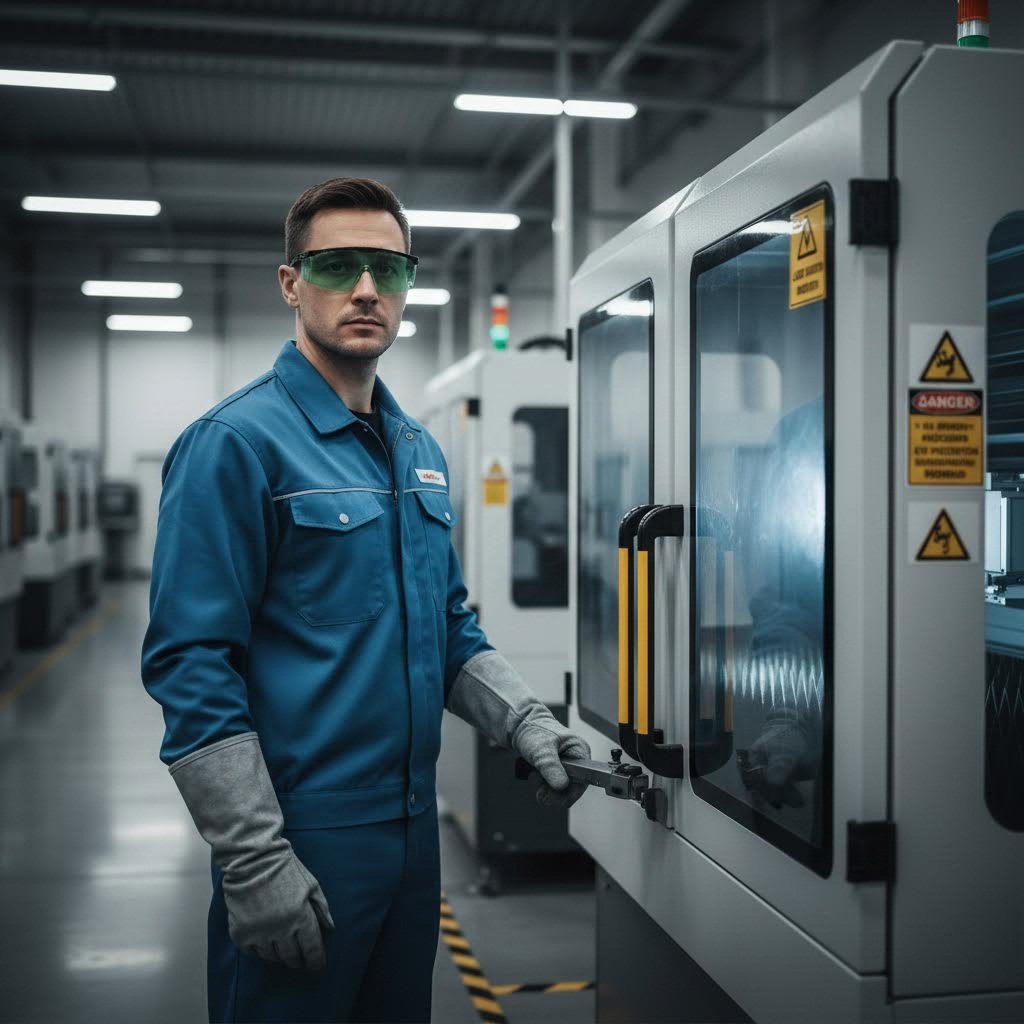
Personal protective equipment forms your last line of defense when engineering controls fail or during maintenance operations. Selecting the right PPE requires matching protection levels to specific hazards in your sheet metal fabrication environment.
Laser safety eyewear deserves particular attention. Not all safety glasses protect against laser radiation, and using the wrong optical density rating provides a dangerous false sense of security. The optical density (OD) requirement depends on your laser's wavelength and power output. For example, a 5-watt argon laser at 0.514 µm requires eyewear with OD 5.9 or higher for a 600-second exposure according to OSHA calculations.
- Laser safety glasses: Must match your specific laser wavelength and provide adequate optical density rating. A fiber laser at 1064 nm requires different protection than a CO2 laser at 10.6 µm
- Flame-resistant clothing: Protects against sparks and potential flash burns during metal fab operations
- Heat-resistant gloves: Essential when handling hot workpieces or components near the cutting zone
- Respiratory protection: Masks or respirators rated for metal fumes when cutting materials that generate hazardous particulates
- Safety footwear: Steel-toed boots protect against falling metal parts and sharp kerf remnants
The intense heat from laser cutting can interact with surface treatments on metals. When processing parts with anodizing or powder coat finishes, the laser vaporizes these coatings and releases additional fumes that may require upgraded respiratory protection. Always verify material composition before cutting.
Ventilation and Fume Extraction Requirements
Metal fumes represent one of the most underestimated hazards in laser cutting operations. When the beam vaporizes metal, it creates ultrafine particles that penetrate deep into lung tissue. Different metals produce different hazards: zinc from brass causes metal fume fever, while chromium from stainless steel carries carcinogenic risks.
Effective fume extraction systems must capture contaminants at the source before they disperse into the workspace. Industry best practices recommend systems designed to:
- Capture fumes directly at the cutting zone: Downdraft tables or localized extraction hoods positioned within inches of the cut point
- Filter particulates effectively: HEPA filtration for fine metal particles, with filter replacement schedules based on material throughput
- Exhaust safely outside: Properly ducted systems that vent filtered air away from personnel and building intake vents
- Handle gas byproducts: Carbon filters or specialized treatment for gases produced when cutting coated materials
Beyond fume extraction, fire suppression demands equal attention. The concentrated heat from laser cutting can ignite combustible materials in the workspace, residue on cutting tables, or even the assist gas under certain conditions. Automatic fire suppression systems positioned near the cutting area provide rapid response before small ignitions become major incidents.
Workspace safety protocols bring these protective elements together into a coherent system:
- Beam enclosures: Fully enclosed cutting systems with interlocked access panels that shut down the laser when opened
- Beam guards: Non-reflective barriers positioned to intercept stray reflections, particularly important when processing reflective materials like aluminum or copper
- Warning signage: Clear labels identifying laser hazard zones, required PPE, and emergency procedures
- Access control: Restricted entry to laser areas, limiting exposure to trained personnel only
- Bending and material handling zones: Separate areas for secondary operations to prevent interference with active laser cutting
Emergency procedures complete your safety framework. Even with comprehensive precautions, incidents can occur:
- Fire response: Immediately activate the emergency stop, evacuate the area, and use appropriate fire extinguishers only if the fire is small and contained
- Eye or skin exposure: Seek immediate medical attention for any suspected laser exposure, even if symptoms seem minor
- Equipment malfunction: Use the emergency shutdown, isolate power, and do not attempt repairs unless qualified
- Fume exposure symptoms: Move affected personnel to fresh air and seek medical evaluation if symptoms persist
Documenting safety procedures and conducting regular training ensures everyone understands their role in maintaining a protected environment. This investment in safety pays dividends through reduced incidents, lower insurance costs, and a workforce confident in their protection.
With safety fundamentals established, you can make informed decisions about when laser cutting offers the best value compared to alternative cutting methods for your specific applications.
Laser Cutting vs Alternative Metal Cutting Methods
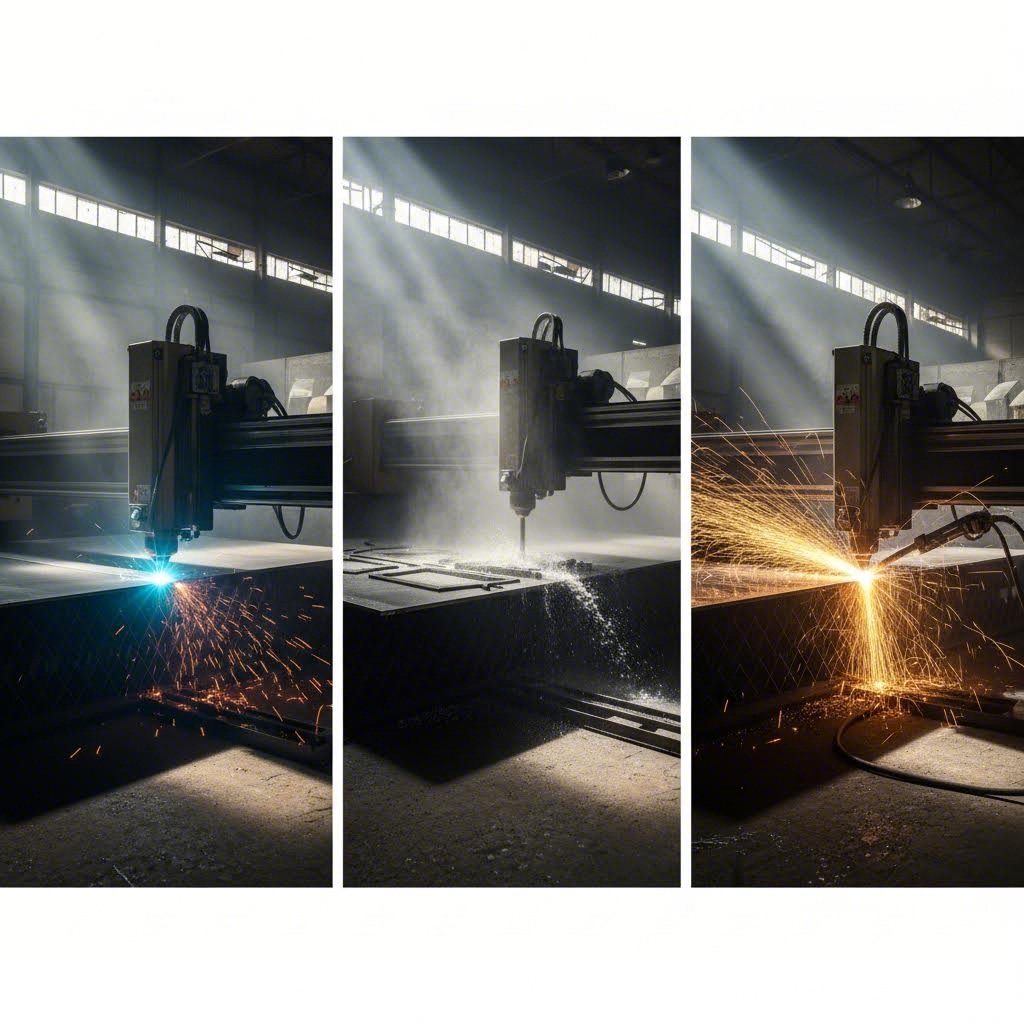
Understanding laser technology is one thing. Knowing when to actually use it versus alternatives like waterjet, plasma, or mechanical cutting is what separates smart manufacturing decisions from expensive mistakes. Each metal cutting machine brings distinct advantages depending on your specific project requirements.
The reality? There's no universal "best" cutting method. Your optimal choice depends on five critical factors: material type, thickness requirements, edge quality needs, production volume, and budget constraints. Let's break down exactly when laser cutting wins and when you should consider alternatives.
| Method | Best For | Thickness Limit | Edge Quality | Heat Affected Zone | Relative Cost |
|---|---|---|---|---|---|
| Laser Cutting | Thin to medium sheet metal, intricate designs, high-volume production | Up to 1.25" mild steel | Excellent (minimal dross, narrow kerf) | Present but minimal | Moderate equipment; low operating cost |
| Waterjet | Heat-sensitive materials, thick sections, mixed material shops | Virtually unlimited (practical to 12"+) | Excellent (smooth, no thermal distortion) | None | High equipment (~$195,000); moderate to high operating |
| Plasma | Thick conductive metals, structural steel, speed-critical jobs | Up to 6"+ steel | Good (1/4" to 1.5" optimal range) | Significant | Lower equipment (~$90,000); low operating cost |
| Oxy-Fuel | Very thick mild steel plates, multiple torch setups | Up to 36-48" steel | Good (smooth, square cuts) | Significant | Lowest equipment; low operating cost |
Laser Cutting vs Waterjet for Precision Parts
When precision matters most, laser and waterjet cutting compete head-to-head for your attention. Both deliver exceptional accuracy, but they achieve it through fundamentally different approaches.
Laser cutting uses focused thermal energy, while waterjet relies on high-pressure water mixed with abrasive particles. This distinction creates clear scenarios where each excels:
Choose laser cutting when:
- You need high-speed production on thin sheet metal (under 5mm)
- Your designs include small holes, tight corners, or intricate contours
- Edge quality requirements demand minimal post-processing
- You're cutting standard metals like steel, stainless, or aluminum
Choose waterjet cutting when:
- Heat-affected zones are unacceptable for your application
- You're working with heat-sensitive alloys or hardened materials
- Material thickness exceeds practical laser limits
- Your shop handles diverse materials including stone, glass, or composites
According to precision cutting research, waterjet maintains geometric tolerances of ±0.01mm with no thermal impact, making it ideal when material structure must remain completely unchanged. However, laser cutting matches this precision level while offering significantly faster cycle times for appropriate material thicknesses.
The cost equation matters too. Waterjet systems typically run about double the upfront investment of comparable laser equipment. Operating costs for waterjet also climb quickly due to garnet abrasive consumption, especially on thicker materials. For high-volume sheet metal cutting machine applications, laser often delivers better return on investment.
When Plasma Cutting Makes More Sense Than Laser
Plasma cutting occupies a specific niche that laser technology cannot efficiently fill: thick conductive metals where speed and cost matter more than ultimate edge quality.
According to industry testing data, plasma cutting 1-inch steel runs approximately 3-4 times faster than waterjet, with operating costs roughly half as much per foot. Against laser cutting, the speed advantage becomes even more pronounced as material thickness increases beyond the laser's optimal range.
Consider plasma as your primary metal cutter when:
- Material thickness exceeds 1/2" for steel or aluminum
- Projects involve structural steel fabrication or heavy equipment manufacturing
- Edge quality requirements are moderate (acceptable for welding without extensive prep)
- Budget constraints favor lower equipment and operating costs
The trade-off is clear: plasma's speed advantage comes at the cost of edge squareness, particularly on very thin or thick plates. For applications where subsequent welding will be performed, this rarely matters. Speaking of welding, understanding the mig vs tig welding debate becomes relevant here, as your cutting method affects weld preparation requirements. Parts destined for tig vs mig welding applications may need different edge preparation depending on which cutting metal machine you select.
Many successful fabrication shops don't limit themselves to a single technology. Industry experts note that combining processes like plasma and laser, or waterjet and plasma, offers flexibility to switch between methods for varying contours. This multi-process approach achieves both precision and efficiency across diverse project requirements.
For die cut machine alternatives in decorative or packaging applications, laser cutting typically dominates due to its ability to handle intricate patterns without physical tooling costs. The sheet metal cutting machine best suited for your operation ultimately depends on matching these technology strengths to your most common project profiles.
With a clear understanding of when each cutting method delivers optimal value, your next consideration becomes ensuring the parts you receive meet exacting quality standards.
Quality Standards and Inspection Criteria for Laser Cut Parts
How do you know if your laser cut parts actually meet specifications? Whether you're evaluating steel fabricators or inspecting incoming components, understanding quality standards separates acceptable parts from costly rejects. This knowledge becomes especially critical when sourcing from steel fabrication partners or searching for metal fabricators near me who can deliver consistent results.
Quality assessment for laser cut metals follows established international standards, with ISO 9013:2017 serving as the primary benchmark for thermal cutting quality classification. This standard defines four quality grades based on measurable parameters including perpendicularity, surface roughness, dross formation, and heat-affected zone characteristics.
Dimensional Accuracy and Tolerance Verification
Dimensional accuracy verification starts with comparing finished parts against their original CAD specifications. Modern inspection technologies like laser scanner systems capture precise, repeatable measurements in seconds, eliminating the human error inherent in traditional manual measuring tools.
What should you measure? Critical dimensional checks include:
- Overall dimensions: Length, width, and diagonal measurements confirm the part matches drawing specifications
- Feature positions: Hole locations, slot placements, and cutout positions relative to datum references
- Kerf width consistency: Variations in cut width indicate potential focus drift or gas pressure fluctuations
- Perpendicularity: How vertical the cut edge stands relative to the material surface
Perpendicularity tolerances vary by material thickness according to ISO 9013. For thin materials, Grade 1 specifications require ±0.05mm deviation, while thicker sections allow up to ±0.50mm for Grade 4 work. When evaluating fabrication shops near me, ask which tolerance grade they routinely achieve for your material thickness.
For materials like 316 stainless steel used in corrosive environments or medical applications, dimensional stability becomes even more critical. The tensile strength and corrosion resistance properties that make this alloy valuable can be compromised if cutting parameters create excessive heat input or distortion.
Edge Quality Standards for Precision Parts
Edge quality tells a story about the cutting process. According to ISO 9013 guidelines, four distinct grades define acceptable edge characteristics:
| Quality Grade | Surface Roughness (Rz5) | Dross Tolerance | Typical Applications |
|---|---|---|---|
| Grade 1 (Precision) | 10-20 μm | None acceptable | Medical devices, precision instruments, aerospace |
| Grade 2 (Fine) | 20-40 μm | Minimal trace amounts | Automotive parts, electronic enclosures |
| Grade 3 (Standard) | 40-100 μm | Small amount acceptable | Construction hardware, mechanical frames |
| Grade 4 (Economy) | 100-160 μm | Moderate amount | Raw material blanking, non-critical parts |
Understanding these grades helps you specify exactly what you need without over-engineering costs. Grade 3 quality satisfies approximately 80% of industrial applications, yet many buyers unknowingly pay premium prices for Grade 1 specifications they don't actually require.
Quality Inspection Checklist:
- Visual inspection with 10x magnification for surface defects and contamination
- Dross height measurement using go/no-go gauges or scraper tests
- Perpendicularity verification with dial indicators or CMM equipment
- Surface roughness testing with contact or optical profilometers
- Dimensional accuracy checks against CAD specifications
- Heat-affected zone analysis through metallographic cross-sections when required
- Burr height measurement for safety and assembly concerns
Common Defects to Avoid:
- Excessive dross: Molten material re-solidified on the bottom edge, indicating improper gas flow or cutting speed
- Non-perpendicular cuts: Tapered edges that compromise fit and assembly, caused by focus drift or worn nozzles
- Micro-cracks: Critical defects at cut edges that reduce fatigue life, particularly concerning in structural applications
- Edge burning or oxidation: Discoloration from excessive heat input or improper assist gas selection
- Excessive striations: Pronounced drag lines indicating parameter optimization issues
For automotive applications, quality documentation extends beyond physical inspection. IATF 16949 certification represents the global standard for automotive quality management systems, building upon ISO 9001:2015 with additional requirements for process rigor, risk control, and continuous improvement. Suppliers holding this certification demonstrate systematic approaches to defect prevention and traceability that automotive OEMs require.
When evaluating potential steel fabrication partners, request sample parts for inspection before committing to production volumes. Verify their inspection documentation practices match your traceability needs, and confirm their equipment calibration programs maintain measurement accuracy over time. These verification steps protect your projects from quality issues that become far more expensive to address after parts reach your assembly line.
Quality specifications directly influence project costs, making it essential to understand how different requirements affect your budget.
Cost Factors and Pricing Considerations for Metal Laser Cutting
Ever wonder why two seemingly similar laser cutting quotes come back with dramatically different price tags? The answer rarely lies in a simple per-square-foot calculation. According to industry pricing research, the single most important factor driving your cost is not the material area but the machine time required to cut your specific design.
Understanding what actually influences laser cutting machine price estimates empowers you to make smarter design decisions before requesting quotes. Whether you're evaluating a cnc laser cutter price for in-house production or comparing service provider estimates, these cost drivers remain consistent across the industry.
Understanding Laser Cutting Cost Drivers
Most fabricators calculate pricing using a straightforward formula that balances several key components:
Final Price = (Material Costs + Variable Costs + Fixed Costs) × (1 + Profit Margin)
Variable costs, primarily machine time, typically represent the largest portion of your quote. A laser cutting machine operates at hourly rates typically ranging from $60 to $120, depending on equipment capability and power level. Every second your design keeps that beam moving adds to the final bill.
Cost Factors in Order of Impact:
- Material thickness: This is the biggest cost multiplier. Doubling thickness can more than double cutting time because the laser must move significantly slower to maintain cut quality
- Design complexity: Intricate geometries with tight curves and sharp corners force the machine to decelerate, extending processing time
- Pierce count: Every hole, slot, or internal cutout requires a pierce operation. A design with 100 small holes costs substantially more than one large cutout due to cumulative piercing time
- Total cut distance: The linear inches the beam must travel directly correlates to machine time
- Tolerance requirements: Tighter tolerances demand slower, more controlled cutting speeds
- Secondary operations: Bending, tapping threads, inserting hardware, or surface finishing add separate processing costs
Production volume dramatically affects per-part economics. Setup fees and fixed costs spread across larger quantities, with volume discounts reaching as high as 70% for high-quantity orders. If you're questioning how much is a laser cutting machine worth for in-house production, consider whether your volumes justify bypassing these economies of scale that service providers offer.
How Material Choice Affects Your Project Budget
Your material selection influences pricing through both raw material costs and processing requirements. Steel plate generally offers the most economical cutting, while specialty alloys and reflective metals command premium pricing.
Consider these material-specific cost factors:
- Aluminum sheet metal: Requires fiber laser technology for efficient processing. While aluminum sheet material costs less per pound than stainless steel, cutting parameters demand higher power or slower speeds
- Stainless steel: Nitrogen assist gas consumption increases operating costs, but the resulting oxide-free edges often eliminate secondary finishing operations
- Copper and brass: High reflectivity makes these materials challenging and more expensive to process, even with fiber laser technology
- Carbon steel: The most cost-effective option for laser cutting, especially when oxygen assist gas enables faster cutting through exothermic reaction
Technology selection also impacts your bottom line. Fiber lasers offer approximately one-third the power consumption of CO2 systems while achieving 2-3x faster speeds on thin materials under 5mm. This efficiency advantage translates directly to lower operating costs per part. For shops evaluating a laser cutting machine for sale, fiber technology typically delivers better return on investment for metal-focused operations despite higher initial equipment costs.
However, thickness matters in this calculation. While fiber lasers dominate thin sheet processing economics, the cost advantage narrows as material thickness increases. Some specialized applications involving very thick steel plate may find CO2 technology competitive when edge quality requirements favor its cutting characteristics.
Smart design decisions offer the most accessible path to cost reduction. Simplifying geometries, using the thinnest material that meets structural requirements, and consolidating orders into larger batches all lower your per-part expenses without compromising functionality. These optimization strategies become even more powerful when combined with proper design-for-manufacturability principles.
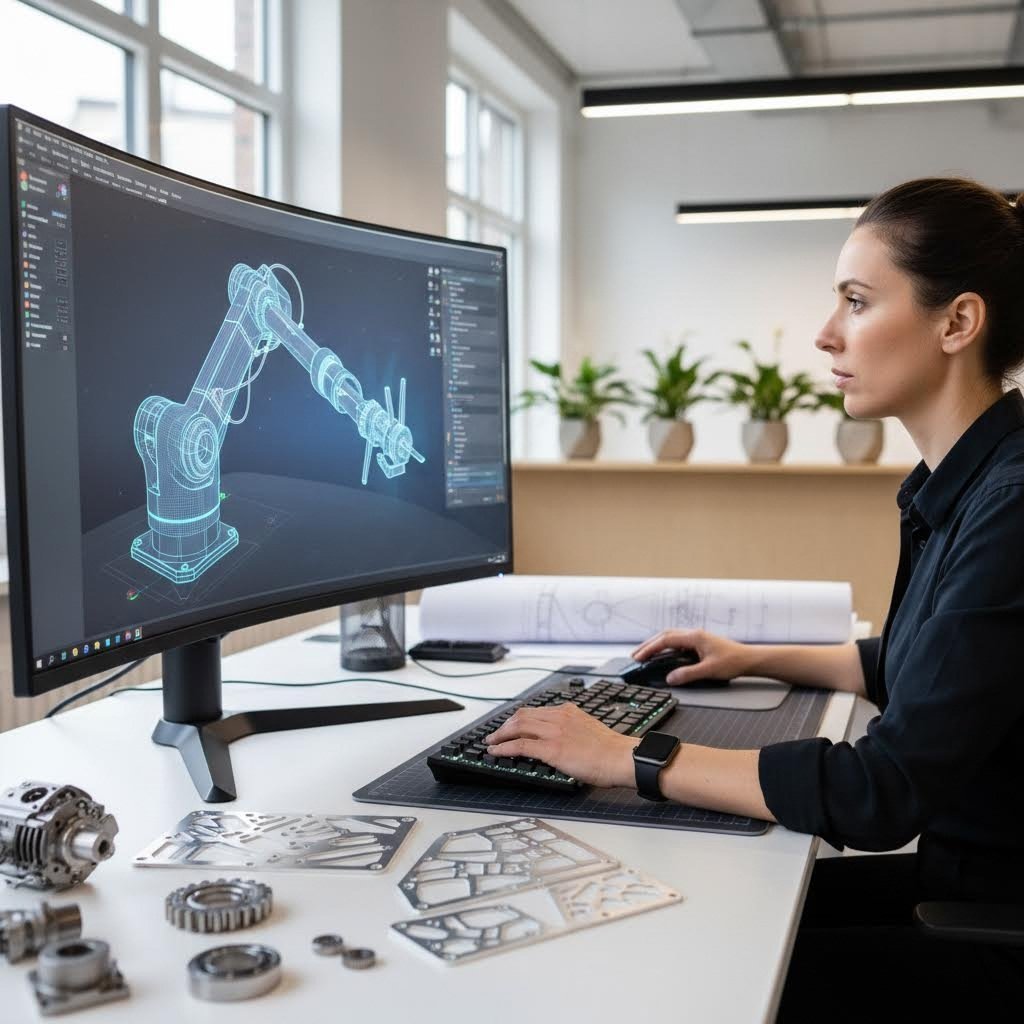
Design Optimization Tips for Laser Cut Metal Projects
Want to slash your laser cutting costs while improving part quality? The secret isn't finding a cheaper supplier. It's designing smarter from the start. Design for manufacturability (DFM) principles specific to laser cut sheet metal can dramatically reduce machine time, minimize scrap, and eliminate costly rework before you ever submit a quote request.
Whether you're creating laser cut metal panels for architectural applications or precision components for industrial equipment, these optimization strategies apply universally. Understanding the relationship between your design decisions and manufacturing outcomes puts you in control of both cost and quality.
Design for Manufacturability in Laser Cutting
Every design choice you make affects how efficiently a laser sheet metal cutter can process your parts. According to Xometry's design guidelines, maintaining minimum feature-to-feature distances ensures the integrity of every cut while preventing distortion that compromises dimensional accuracy.
Consider these critical spacing requirements based on your material thickness (MT):
- Minimum hole-to-edge distance: 2x material thickness or 0.125", whichever is smaller. Holes placed too close to edges risk tearing or deforming, especially if the part undergoes subsequent forming operations
- Minimum hole-to-hole distance: 6x material thickness or 0.125", whichever is smaller. Insufficient spacing between holes can cause material distortion from heat concentration
- Minimum corner fillets: 0.5x material thickness or 0.125", whichever is smaller. Sharp internal corners concentrate stress and slow cutting speed
- Minimum tab thickness: 0.063" or 1x material thickness, whichever is greater. Tabs hold nested parts in place during cutting
- Minimum slot width: 0.040" or 1x material thickness, whichever is greater. Narrower slots risk incomplete cuts or material bridging
According to Makerverse's fabrication research, spacing cutting geometry at least two times the sheet thickness prevents the heat distortion that ruins precision parts. This simple rule applies whether you're designing laser cut decorative metal panels or functional brackets.
Hole diameter limitations often surprise designers new to sheet metal laser cutting. Your holes cannot be smaller than your material's thickness. Working with 3/16" stainless steel? Your smallest hole diameter is 3/16". According to Baillie Fabrication's DFM tips, aluminum and some other materials require even more generous spacing, sometimes 2x or greater.
Grain direction considerations affect both aesthetics and cost efficiency. Most metal sheets measure 4'x10' with lengthwise grain. Orienting your design's longest dimension along the grain direction maximizes the number of parts per sheet, directly reducing material costs for laser cut metal sheets.
Design Best Practices Checklist:
- Verify all curved lines use true arcs, not segmented straight lines that create faceted edges
- Connect all geometry completely with closed contours to prevent cutting errors
- Add "stencil-like" bridges to closed-loop text characters (D, O, P, Q, R) to prevent letter centers from falling out
- Explode or convert all text to outlines before submitting files
- Include lollipop-style rounds on slot ends to compensate for pierce hole diameter
- Specify grain direction with callouts when surface finish matters
- Indicate which side is the "front" for materials like brushed stainless steel
- Account for 0.5" border around the sheet edge that the laser cutter cannot access
- Use standard material gauges to prevent sourcing delays
Common Design Mistakes That Increase Costs
Some design errors seem minor on screen but translate to significant cost increases during production. Recognizing these pitfalls before submitting your design saves both money and lead time.
Ignoring sheet utilization: Two 4'x4' parts don't actually fit on a 4'x8' sheet. The required border around every part means you may only get one large piece from a sheet, paying for material that becomes scrap. Help fabricators nest efficiently by considering standard sheet sizes during your initial design phase.
Excessive pierce points: Every hole, slot, and internal cutout requires the laser to pierce through the material. A laser cut metal panel with 200 small ventilation holes costs substantially more than one with fewer, larger openings that provide equivalent airflow. Consider whether your design truly requires that many individual features.
Unnecessary complexity in laser cut steel panels: Intricate curves and tight radii force the cutting head to decelerate constantly, extending machine time. Evaluate whether decorative details add enough value to justify their processing cost.
Material thickness mismatch: Specifying thicker material than structurally necessary dramatically increases cutting time. A part that takes 30 seconds in 16-gauge steel might require 2 minutes in 1/4" plate.
Inconsistent bend orientations: If your laser cut parts require subsequent bending, inconsistent bend directions and varying radii mean the operator must reorient the part repeatedly. According to manufacturing best practices, using consistent bend radii and orientations reduces processing time significantly.
For automotive applications requiring precision laser cut metal sheets and tight tolerances, manufacturers like Shaoyi provide comprehensive DFM support that helps optimize designs before production begins. Their 5-day rapid prototyping capability allows you to validate design decisions quickly, while their 12-hour quote turnaround accelerates the evaluation process. This kind of integrated DFM guidance proves especially valuable when developing chassis, suspension, or structural components where design optimization directly impacts both cost and performance.
File preparation mistakes create additional headaches. Unconnected lines or open contours result in incomplete cuts or require fabricator correction time that appears on your invoice. Before submitting CAD files, zoom in and verify every line connects properly. What looks complete at full view often reveals gaps at higher magnification.
The kerf width, typically ranging from 0.1mm to 1.0mm depending on material and parameters, affects final dimensions. Experienced designers account for kerf when dimensioning features that must interface precisely with other components. If your laser cut sheet metal parts require press-fit assembly, discuss kerf compensation with your fabricator during the quoting process.
Applying these DFM principles transforms your relationship with laser cutting from reactive cost management to proactive design optimization. The parts that cost less to produce are often the same ones that perform better in service, because the same design discipline that improves manufacturability also tends to improve structural efficiency.
Taking Your Metal Cutting Project from Concept to Production
Ready to move forward with your metal laser cutter project? You now understand the technology differences, material behaviors, safety requirements, and cost factors that drive successful outcomes. The next step is translating that knowledge into action with a clear roadmap from initial concept to finished parts.
Whether you're prototyping a new product design or scaling up to production volumes, following a structured approach prevents costly missteps and accelerates your timeline. Let's map out exactly how to take your project from idea to reality.
Your Laser Cutting Project Checklist
Before contacting any fabrication partner or investing in equipment, work through these essential preparation steps:
- Define your material requirements: Specify the exact metal type, alloy grade, and thickness based on your application's structural and environmental demands. Remember that material selection directly impacts which laser metal cutting machine technology will process your parts most efficiently
- Prepare production-ready design files: Convert all designs to laser-compatible formats like DXF, DWG, or AI. Verify closed contours, convert text to outlines, and apply the DFM principles covered earlier. According to workflow best practices, saving files in laser-ready formats like SVG, DXF, AI, or PDF ensures smooth file transfer to CNC systems
- Specify tolerance requirements: Determine which dimensions are critical and which can accept standard tolerances. Tighter specifications increase cost, so prioritize only where function demands it
- Calculate quantity needs: Estimate both initial prototype quantities and projected production volumes. This information helps fabricators optimize setups and provide accurate pricing for your laser cutting machine for metal processing
- Identify secondary operations: List any post-cutting requirements including bending, tapping, hardware insertion, surface finishing, or assembly. Bundling these services with cutting often improves efficiency and reduces handling
- Establish timeline expectations: Define your required delivery dates and any flexibility you have. Rush orders carry premium pricing, while flexible timelines may qualify for scheduling discounts
- Set quality acceptance criteria: Reference ISO 9013 grades or specify your own inspection requirements. Clear quality expectations prevent disputes and ensure parts arrive ready for use
Finding the Right Manufacturing Partner
Selecting a qualified fabrication partner requires more than a quick online search for metal fabrication near me. According to industry guidance, evaluating potential partners should address several critical factors before forming a beneficial outsourcing partnership.
Ask these questions when vetting potential suppliers:
- Technology capabilities: Do they operate fiber or CO2 systems? What power levels? Can their sheet metal laser cutting machine handle your specific material type and thickness?
- Material expertise: Have they successfully processed your exact alloy before? Request sample cuts or reference projects demonstrating relevant experience
- Turnaround capacity: What are standard lead times? Can they accommodate rush requirements when needed? Understanding their production scheduling helps align expectations
- Quality certifications: Do they hold ISO 9001 or industry-specific certifications? For automotive applications requiring IATF 16949 certification and rapid prototyping capabilities, manufacturers like Shaoyi offer integrated solutions from design support through mass production, delivering 5-day rapid prototyping and 12-hour quote turnaround
- Secondary services: Can they handle finishing operations in-house, or will parts require additional handling and shipping to complete?
- Communication responsiveness: How quickly do they respond to inquiries? Fast initial response often predicts smooth project communication throughout production
Request quotes from multiple providers to compare not just pricing but also lead times, included services, and payment terms. The lowest quote rarely represents the best value if quality issues or delivery delays disrupt your downstream operations.
Consider starting with a small prototype order before committing to production volumes. This approach lets you evaluate actual part quality, verify dimensional accuracy, and assess the provider's communication and delivery reliability with minimal risk. According to production optimization research, conducting test cuts before full-scale production minimizes errors and reduces waste.
For in-house production evaluation, weigh equipment costs against outsourcing economics for your specific volume projections. A laser cutter for metal represents significant capital investment plus ongoing maintenance, consumables, and operator training. Many organizations find outsourcing more economical until volumes justify dedicated equipment.
Your laser cutting project success ultimately depends on matching the right technology, materials, and manufacturing partner to your specific requirements. Armed with the knowledge from this guide, you're prepared to make informed decisions that balance quality, cost, and timeline objectives. Take that first step: refine your design files, define your specifications, and start conversations with qualified fabricators who can bring your metal cutting vision to reality.
Frequently Asked Questions About Laser Cut Metals
1. What metals can be cut with a laser cutter?
Laser cutters effectively process mild steel, cold rolled steel, stainless steel, aluminum, titanium, brass, and copper. Fiber lasers excel with reflective metals like aluminum and copper due to their 1064 nm wavelength, which metals absorb more efficiently. CO2 lasers work well for steel and stainless steel but struggle with highly reflective materials. Material thickness ranges vary by laser type and power, with fiber lasers cutting up to 30mm+ mild steel and 20mm aluminum with appropriate power levels.
2. What materials cannot be cut on a laser cutter?
Laser cutters cannot safely process PVC, Lexan, polycarbonate, and certain plastics that release toxic chlorine gas when heated. Reflective metals pose challenges for CO2 lasers but fiber lasers handle them effectively. Materials containing halogens or those that produce hazardous fumes require alternative cutting methods. Always verify material composition before laser cutting to ensure operator safety and equipment protection.
3. How powerful does a laser need to be to cut metal?
Metal cutting requires minimum 150W laser power with air assist for thin materials. Practical industrial cutting typically uses 1kW-12kW fiber lasers depending on material and thickness. A 6kW fiber laser cuts 10mm stainless steel effectively, while 12kW+ handles 25mm sections. Power requirements increase with material thickness and reflectivity, with copper and brass demanding higher power than equivalent steel thicknesses.
4. How much does laser cutting metal cost?
Laser cutting costs depend primarily on machine time, with hourly rates ranging $60-$120. Material thickness is the biggest cost multiplier, as thicker materials require slower cutting speeds. Design complexity, pierce count, and total cut distance also impact pricing. Volume orders can achieve discounts up to 70%. Secondary operations like bending, tapping, or finishing add separate processing costs to your final quote.
5. What is the difference between fiber and CO2 lasers for metal cutting?
Fiber lasers produce a 1.064 µm wavelength that metals absorb efficiently, achieving 2-3x faster cutting speeds on thin materials under 5mm while consuming only one-third the power of CO2 systems. CO2 lasers emit at 10.6 µm, making them less effective with reflective metals but suitable for mixed material shops processing wood and acrylic alongside steel. Fiber technology dominates modern metal fabrication due to lower operating costs, reduced maintenance, and superior performance on aluminum, copper, and brass.