 Small batches, high standards. Our rapid prototyping service makes validation faster and easier —
  EN
EN


How Much To Get A Metal Part Made Without Paying For Guesswork
What actually determines metal part cost
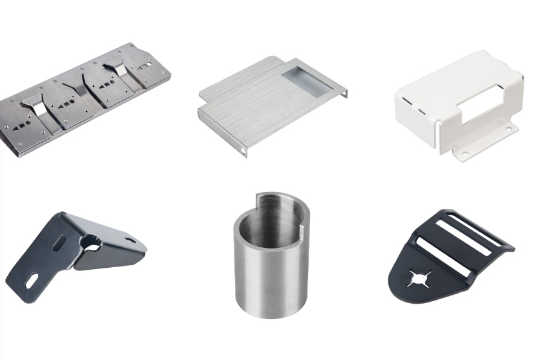
When buyers ask how much to get a metal part made, they usually are not asking about one machine or one shop step. They are asking for the total cost to turn a drawing, CAD file, or sample into a usable part. That answer can apply to cutting, bending, CNC machining, welding, stamping, casting, finishing, inspection, packaging, and shipping. So while people often start with the cost of sheet metal, the real pricing question is broader and more practical: what full manufacturing path does this part require?
Getting a metal part made means paying for the complete manufacturing route needed to meet the part's material, geometry, quantity, tolerance, finish, and delivery requirements, not just the raw metal or a single fabrication step.
What Buyers Mean by Getting a Metal Part Made
Shop estimating guidance from The Fabricator explains that part quotes are shaped by both hourly production costs and the estimated time each operation will take. A broader ordering overview from Swisher also treats the job as a chain of steps: design review, material selection, fabrication method, quality checks, packaging, and shipment. That is why a welded bracket, a machined housing, and a stamped cover may all be called custom metal parts even though they follow very different cost logic.
Why Similar Metal Parts Can Have Very Different Costs
Two parts can look similar and still quote very differently. One may cut quickly but require careful inspection. Another may be simple to machine but slow to fixture, deburr, or finish. A flat part may seem inexpensive until bends, hardware insertion, surface treatment, or assembly are added. In that sense, machinist metal cost is rarely driven by material alone. Labor content, setup burden, and downstream requirements often matter just as much.
The Cost Drivers Hidden Inside Most Quotes
- Material type, form, thickness, and availability
- Part geometry, size, and internal features
- Order quantity and repeat demand
- Tolerances and inspection expectations
- Setup, programming, fixturing, or tooling needs
- Secondary operations such as tapping, deburring, welding, or assembly
- Surface finishing, coating, or heat treatment
- Quality documentation and traceability requirements
- Packaging method and protection level
- Shipping distance, speed, and handling constraints
Budgeting gets much clearer when you identify three things first: the likely process, the expected volume, and the quality bar. Those choices shape nearly every line in a quote.
Choosing the process before you estimate price
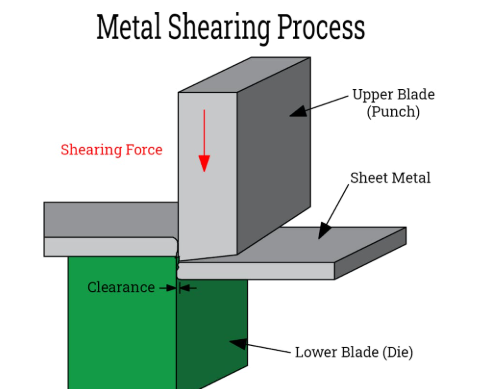
Cost starts to make more sense when the part is sorted into the right manufacturing family first. Process guidance from Komaspec and geometry comparisons from Geomiq both point to the same reality: geometry, tolerance needs, tooling, lead time, and production volume all steer the part toward a different method. A flat bracket, a machined metal housing, and a welded frame may all be called custom metal parts, but they do not follow the same pricing logic.
Start With Part Shape and Function
Three questions usually narrow the field quickly. What form does the part begin with: sheet, solid block, bar, or tube? What shape must it end with: flat, bent, prismatic, cylindrical, or closed profile? And does it stay as a single piece, or become an assembly? If the part begins as flat stock and ends as a bracket, enclosure, panel, or cover, precision sheet metal fabrication is often the natural fit because cutting, punching, and bending can build the shape efficiently. If the design needs pockets, turned diameters, threads, or intricate 3D features, CNC machining is usually the better starting point because it removes material from a solid workpiece and handles more complex solid geometry.
Tube fabrication belongs in its own lane. Tubes, pipes, and roll-formed profiles often require coping, notching, bending, or seam welding methods that are different from flat-sheet workflows. Many online cost discussions stop at sheet metal, but real quoting decisions often involve solid or tubular geometry where the best process changes completely.
Match Geometry to the Right Manufacturing Process
The comparison below is a practical self-sorting tool. It is broad by design, because exact capability limits vary by supplier, equipment, and material.
| Process family | Best-fit geometry | Tolerance potential | Tooling intensity | Setup burden | Best order quantity range | Common secondary operations |
|---|---|---|---|---|---|---|
| Sheet cutting and CNC bending | Flat blanks, brackets, covers, enclosures, bent panels | Moderate to high | Low to medium, often using standard tools | Low to medium | Prototype through repeat batches | Deburring, tapping, hardware insertion, welding, coating |
| CNC punching and forming | Flat parts with many holes, slots, louvers, embossed features | Moderate to high | Low to medium | Medium | Low to medium production, especially repeats | Deburring, tapping, countersinks, light forming, finishing |
| CNC machining | Prismatic, cylindrical, or intricate 3D solid parts | High | Low dedicated tooling, but fixturing and programming matter | Medium to high | One-offs, prototypes, and batch work | Deburring, threading, surface finish, heat treatment, inspection |
| Manual or progressive stamping | Stable, repeatable formed parts with defined die geometry | High in repeat production | High, custom dies required | High upfront, low once production stabilizes | Medium to high volume production | Deburring, reaming, tapping, coating, assembly |
| Tube and profile fabrication | Tubes, pipes, frames, welded profiles, closed sections | Varies by cut, form, and weld method | Medium to high | Medium to high | Batch through production runs | Cutting, notching, bending, seam welding, bead trimming, coating |
Komaspec shows why tooling-heavy routes such as stamping become more attractive when the geometry is stable and volume is higher, while Geomiq highlights that machining is usually the stronger fit for solid and intricate forms. If you are comparing suppliers that mention general stamping and metalworks, it helps to ask whether they are quoting a flexible prototype method or a die-based production method, because the economics are very different.
When Cutting Alone Is Not Enough
Cutting is often just the first visible step. A laser-cut part may still need bends, inserted hardware, welding, or powder coating. A machined part may need multiple setups, deburring, inspection, or finishing. Tubular parts can get even more specialized. The Fabricator describes GTAW, laser beam welding, and HFI as distinct choices for tubular profiles, with the right option depending on seam continuity, joint orientation, speed, and line design. Once welding or finishing enters the job, labor, fixtures, inspection points, and cosmetic requirements can reshape the total cost.
- If the part starts as flat stock and mostly needs 2D cutting or bends, begin with sheet fabrication.
- If it needs precise 3D features from solid stock, start with CNC machining.
- If the geometry is stable and demand is repeat production, ask whether stamping or other tooling-based forming makes sense.
- If the part is tubular, framed, or seam-welded, treat tube fabrication as a separate quoting path.
- If welding, finishing, or assembly are required, include them in the first RFQ because they can outweigh the base cutting step.
That first process decision becomes the backbone of the quote itself, because setup, tooling, handling, and inspection are all priced differently once the manufacturing route is fixed.
How manufacturers build a metal part quote
A metal part quote often looks simple until the spreadsheet arrives. Then the real structure shows up. For custom sheet metal parts, machined housings, turned shafts, or welded assemblies, most suppliers are not pricing just the visible shape of the part. They are pricing the work needed to prepare the job, make the part, check it, protect it, and move it. A practical guide from RivCut shows common quote labels such as Setup Fee, NRE, Material Cost, Machining Time, Custom Tooling, Fixturing, Finishing, and inspection add-ons. The exact wording changes by shop, but the cost logic is surprisingly consistent.
What a Typical Metal Part Quote Includes
| Cost category | What affects it | What the buyer can simplify | What to verify before approval |
|---|---|---|---|
| Setup or NRE and programming | CAD quality, process complexity, CAM work, machine prep | Send clean files, clear revisions, and complete specs | Whether it is one-time, per order, or reused on repeat work |
| Raw material | Alloy, stock form, starting blank size, availability | Use standard materials and practical stock dimensions | Material grade, thickness or bar size, and certification scope |
| Direct part-making time | Cut length, bend count, cycle time, tool changes, setups | Simplify geometry and avoid unnecessary features | Which operations are included in the base part price |
| Tooling or fixturing | Special holding needs, deep features, repeatability demands | Design for standard tools and easier workholding | Whether tooling is custom, reusable, or charged separately |
| Secondary operations | Deburring, tapping, welding, assembly, heat treatment | Remove noncritical steps or combine operations where possible | Any excluded operation that will trigger a later add-on |
| Finishing and outside processing | Coating type, cosmetic requirements, masking, vendor handling | Specify only the finish the application truly needs | Finish standard, color, thickness, and acceptance criteria |
| Inspection and documentation | Tolerances, sampling plan, first article, traceability | Limit formal reports to critical parts and dimensions | What is measured, what is documented, and who pays for reports |
| Packaging and shipping | Part fragility, corrosion risk, quantity per box, destination | Give realistic packaging needs and ship-to details early | Whether freight, insurance, and special packaging are included |
How Setup Handling and Inspection Influence Price
Setup is one of the most misunderstood quote lines. RivCut explains NRE as the non-recurring engineering effort that happens before production starts, including review of the CAD file, toolpath planning, programming, tool loading, workholding, and machine zeroing. A machined part supplier may list this as setup, NRE, programming, or fixturing. Fabrication shops may fold similar work into nesting, bend setup, or weld fixture prep. However it is labeled, it is real labor. That is why machining costs on one-off parts can seem high even when the material is ordinary.
Inspection can be just as easy to underestimate. Tight tolerances often do not appear as a neat separate fee. Instead, they increase handling, slow machine cycles, and add metrology time. If the quote includes a First Article Inspection Report or a Certificate of Conformance, that documentation effort should be read as its own cost driver, not as a free extra.
Why Finishing Packaging and Shipping Matter
The base manufacturing line is rarely the whole landed price. Deburring, anodizing, plating, powder coating, painting, or other surface treatment may be listed as outside processing. Packaging changes when parts need cosmetic protection, corrosion control, or kit-based delivery. Freight can also move more than expected once weight, urgency, and distance enter the picture. Notes from LS Manufacturing highlight how hidden or delayed charges can distort budgets, especially when buyers focus only on the most visible line item.
- Confirm the main process and make sure every required operation is included.
- Separate one-time charges from recurring per-part charges.
- Review quality, inspection, and documentation scope before signing off.
- Check finishing, packaging, and freight so the quote reflects landed cost, not just shop-floor cost.
The cheapest visible line item is not always the lowest total cost, especially when setup, inspection, finishing, or freight sit elsewhere in the quote or appear later in the purchase.
One detail changes the math faster than almost anything else: how many parts those one-time charges are spread across.
Why quantity changes metal part cost
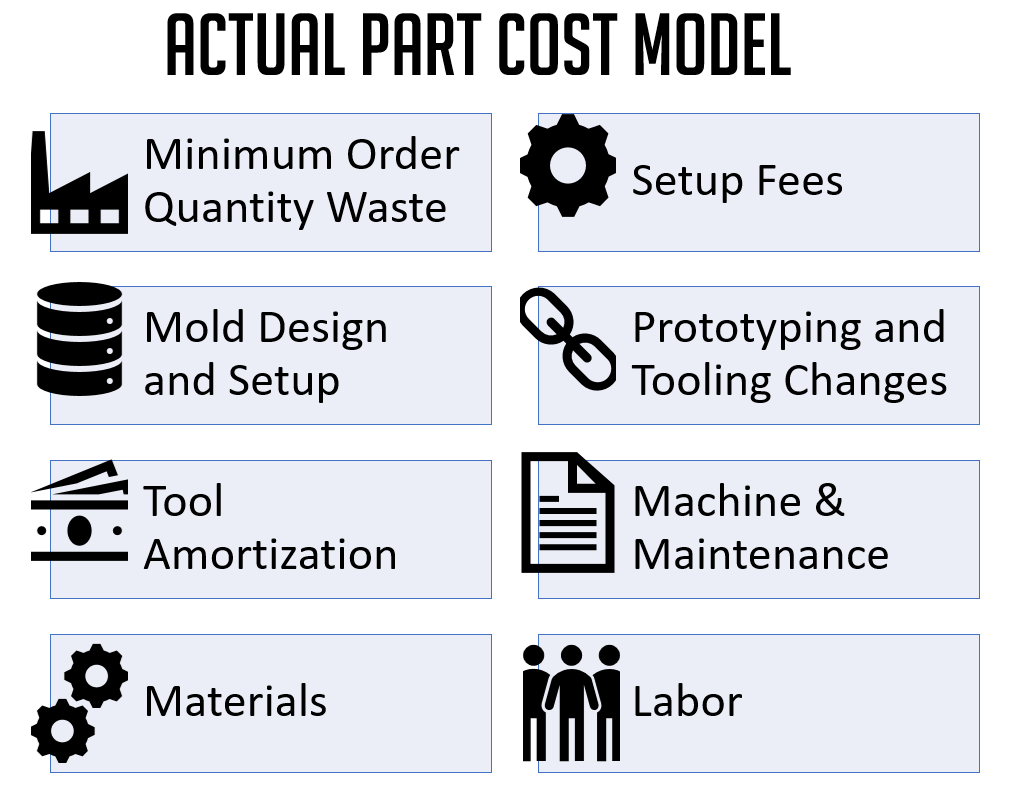
That spread matters most when fixed quote items are divided by quantity. The same drawing can price very differently at 5 pieces, 100 pieces, or a steady annual run. A stage model from EVS Metal breaks this into early prototyping, validation, pilot production, and volume production. The pattern is simple: early parts absorb more engineering and setup per unit, while repeat demand gives suppliers room to batch work, stabilize processes, and justify better-fit equipment or tooling.
Why One Off Parts Cost Differently From Repeat Orders
One-off and very small orders carry a lot of cost that is hard to spread out. Prototype-stage suppliers are usually chosen for speed, flexibility, and willingness to deal with revisions, not for the lowest recurring piece price. EVS Metal places early prototyping at 1 to 25 units, where manual or semi-automated methods, minimal tooling, and frequent changes are normal. That is why the fabrication shop that helps you prove a concept may not be the best fit once demand becomes predictable.
| Volume band | Setup dilution | Process suitability | Lead-time sensitivity | Supplier type | Change-order risk |
|---|---|---|---|---|---|
| Prototype, 1 to 25 units | Very low dilution | CNC machining, laser cutting, simple bending, manual fabrication | Very high, speed often matters more than efficiency | Small job shops, rapid prototyping, local sources | Lower, revisions are expected |
| Low volume, 25 to 250 units | Limited dilution | Low-tooling fabrication, machining, early validation builds | High, but process repeatability starts to matter | Mid-size fabricators with revision control and DFM input | Moderate |
| Pilot and ramp, 250 to 2,500 units | Meaningful dilution begins | Repeatable fabrication, fixtures, soft tooling, integrated operations | Moderate, schedules and batching matter more | Production-capable suppliers with quality systems | Higher, because the process is being locked down |
| Volume production, 2,500+ units annually | Strong dilution | Optimized production routes, automation, stamping where justified | Less tolerant of disruption | Dedicated production manufacturers | High, especially after tooling investment |
How Small Batch Orders Change the Best Process
At small quantities, low-tooling methods usually stay attractive. Guidance from GE Mathis notes that laser cutting fits small-batch precision work, while stamping is more aligned with mass production. For simple flat parts, fast-turn instant-quote workflows can be useful early on. Once the scope expands into welding, coating, inspection paperwork, or frequent design edits, a nearby source found through a search like fabrication near me can become easier to manage because communication and iteration start carrying real value.
When Production Volume Justifies Tooling or Process Shifts
Higher volume changes more than price per part. It changes what process makes sense at all. EVS Metal describes pilot and production stages as the point where stable drawings, forecast visibility, tooling investment, and scalable capacity start driving decisions. That is when a part may move from flexible cutting and machining into more repeatable fixtures, dedicated cells, or tooling-based production. The savings can be real, but so is the risk of late design changes. A part that is easy to revise at prototype stage can become expensive to change once tooling, inspection plans, and downstream finishing are built around it.
The best process at prototype stage may not be the best process for repeat demand. Budget for the volume path, not just the first batch.
Design choices that raise metal part quotes
Volume can change the best process, but the drawing still decides whether that process runs smoothly or turns expensive. In practice, many quote surprises start long before purchasing sends the RFQ. They start in CAD. Guidance from DFMA and the Modus DFM guide points to the same pattern: geometry, tolerances, material choice, setups, and secondary operations are often the dominant cost drivers.
Simplify Geometry Before You Request Pricing
Extra complexity rarely stays confined to one operation. Small internal radii can force smaller tools and slower passes. Off-axis features can push a part into more setups or higher-end machining. Complex curves and varying radii can increase programming time and inspection effort. Even in fabricated work, geometry that looks minor on screen may trigger extra bends, custom fixtures, weld access issues, or awkward handling.
A good rule is simple: if a feature does not improve fit, function, safety, or assembly, question it. That applies whether you are talking with alloy fabricators, precision sheet metal fabricators, or a specialty source you found by searching metal spinning near me.
Tolerances That Deserve Extra Scrutiny
Tight tolerances are one of the fastest ways to make a quote heavier than expected. The tight tolerance guide notes that for machined parts, requirements around ±0.002 in and tighter can shift work into more controlled setups, added inspection, and slower iterative processing. The real issue is not precision itself. It is broad precision applied where function does not need it.
Localize tight tolerances to mating faces, hole positions, sealing features, or other true interfaces. Keep general features as open as the design allows. The same thinking applies to finish callouts. A cosmetic or very smooth surface on every face may create hand work or added process steps with no performance gain.
Secondary Operations That Quietly Raise the Quote
Many expensive details live outside the base cut or machine cycle. Deburring, tapping, welding, hardware insertion, heat treatment, coating, masking, and 100 percent inspection can all reshape the quote. DFMA describes these as secondary operation cost drivers, and they often matter more than buyers expect.
- Remove decorative curves, hidden cosmetic features, and nonfunctional fillets.
- Increase internal radii where function allows to support standard tooling.
- Align features to reduce setups and awkward workholding.
- Apply tight tolerances only to critical interfaces, not whole parts.
- Specify standard materials and stock forms unless performance requires otherwise.
- Limit premium surface finish requirements to visible or functional areas.
- Combine or eliminate secondary operations where possible.
- Ask engineering which dimensions truly need formal inspection reports.
A manufacturability review is often the fastest way to improve quote accuracy, cut assumption-driven revisions, and keep a metal part from getting expensive for reasons the design never truly needed.
What to send before contacting a fabrication shop near me
A cleaner drawing helps, but pricing still falls apart when the RFQ package is thin. If a supplier has to guess the alloy, finish, inspection scope, or delivery method, the quote becomes a bundle of assumptions. Practical guidance from Seather's RFQ guide and LTJ's fabrication quote guide points to the same pattern: complete technical information leads to faster and more dependable quoting.
What to Send for an Accurate Quote
You do not always need a perfect engineering release to start. But you do need a package that clearly tells the supplier what the part is, what it is made from, and what success looks like. If full CAD is not available, detailed drawings or annotated PDFs with dimensions are still far better than a short email description.
- 2D drawings and 3D CAD files, if available
- Part name, revision level, and intended application
- Material grade, thickness, temper, or stock form
- Required quantity now and expected repeat demand
- Critical tolerances and fit-sensitive features
- Finish requirements such as coating, plating, or raw finish
- Secondary operations like tapping, welding, inserts, or assembly
- Inspection, traceability, or certification needs
- Packaging requirements and ship-to destination
- Target quote date, delivery timing, and schedule constraints
If your project needs standards or documentation such as ASTM, AWS, RoHS, or material certs, include that up front rather than after pricing.
Questions That Clarify Scope Before Pricing
Good estimators rarely jump straight to a number. They ask questions that protect both sides from rework and surprise charges.
- Is this a prototype, a low-volume batch, or an ongoing production item?
- Are tight tolerances required everywhere, or only at key interfaces?
- Is the finish cosmetic, functional, or both?
- Can equivalent stocked material be considered if lead time shifts?
- Do you need full inspection reports, or only basic conformance documents?
- Will parts ship loose, kitted, labeled, or ready for assembly?
How to Compare Local Shops With Specialized Suppliers
Searches like metal machining near me or metal sheet fabrication near me are useful starting points, especially when you want fast communication or easier freight. But supplier comparison factors show that location is only one variable. Capability, quality systems, lead-time realism, and pricing transparency matter just as much.
| Comparison point | Nearby local shop | Specialized multi-process supplier |
|---|---|---|
| Communication | Often easier for calls, visits, and quick design clarification | Often more structured RFQ review and technical handoff |
| Capability breadth | May be strong in one main process | More likely to combine cutting, machining, welding, finishing, and assembly |
| Quality documentation | Varies widely by shop and industry focus | Often better suited for formal certs, traceability, and inspection packages |
| Logistics | Shorter shipping routes and easier pickup for urgent jobs | Can support broader shipping and repeat logistics planning |
| Production scaling | Useful for prototypes, repairs, and quick iterations | Often better for larger batches and production transfer |
That choice gets more important when a single part moves across several processes or stricter quality requirements, because supplier structure can start shaping total cost friction as much as the part price itself.
Incomplete RFQ packages usually lead to slower quotes, more assumptions, and less reliable pricing. The clearer the scope, the clearer the budget.

When a one-stop partner can simplify quoting
A search for commercial metal fabricators, superior steel fabrication, or superior metal fabricators often points to the same real issue: the part is no longer a simple one-process purchase. A bracket may begin as a stamped or cut blank, then move through CNC machining, welding, coating, inspection, and packaged delivery. Each handoff can add delay, duplicate handling, and create responsibility gaps. For a simple flat part, that level of coordination may be unnecessary. For multi-step parts, supplier structure starts shaping total cost just as much as the base manufacturing method.
When One Stop Manufacturing Can Reduce Total Cost Friction
Kenvox describes a vertically integrated model that combines stamping and forming with CNC machining, robotic welding, die casting, and powder coating under shared ERP and QA systems. That kind of setup matters because it keeps revision control, material flow, and inspection checkpoints inside one managed workflow instead of passing the job across multiple vendors. For buyers trying to judge total cost, the value is often better quote completeness, fewer assumptions, and smoother production transfer.
Why Automotive Quality Systems Affect Quote Confidence
In automotive sourcing, confidence depends heavily on the quality system behind the price. IATF 16949 supplements ISO 9001 and uses the PDCA cycle plus core tools such as APQP, FMEA, MSA, PPAP, and SPC. Smithers notes that major OEMs including Ford, General Motors, and BMW require this certification from suppliers. That does not guarantee the lowest quote, but it does support stronger defect prevention, traceability, change control, and repeatability when the part is production-bound or safety-sensitive.
Where Multi Process Support Fits Best
Multi-process support fits best when geometry, finish, and documentation all matter at the same time. For automakers and Tier 1 suppliers, Shaoyi is one practical example of that model, offering one-stop automotive metal part services with high-precision stamping, CNC machining, custom surface treatments, rapid prototyping, and high-volume production under IATF 16949, backed by 15 years of experience. As a resource, that kind of partner can make pricing easier to judge when one part family spans prototypes, approval builds, and repeat production.
- Your RFQ includes more than one core process, such as stamping plus machining or finishing.
- You need prototype-to-production transfer without rebuilding quality documents and control plans.
- The customer expects PPAP, traceability, or structured inspection records.
- Surface treatment, dimensional precision, and final packaging all affect acceptance.
- You want one supplier accountable for schedule, quality, and cross-process coordination.
At that point, the smartest buying decision rarely comes from the lowest-looking quote alone. It comes from the route that controls handoff risk, quality risk, and total landed cost together.
A practical path to a more accurate metal part budget
The quote that looks cheapest on page one can become the most expensive choice after rework, delays, freight, and coordination are counted. That pattern shows up clearly in EVS Metal, which argues that piece-price decisions often miss total manufacturing cost. For buyers trying to estimate how much to get a metal part made, the better question is not, "Which quote is lowest?" It is, "Which sourcing path gives me the lowest total cost with the least disruption?"
Choose the Lowest Total Cost Not Just the Lowest Quote
A low unit price can hide expensive realities: weak revision control, limited inspection, late deliveries, or too many vendor handoffs. That matters whether you are comparing sheet metal contractors, a local sheet metal company, or specialized multi-process suppliers. If one source costs a bit more per part but reduces engineering follow-up, quality risk, and schedule instability, it may still be the better buy.
Build a Quote Ready Package Before You Buy
Reliable pricing starts before the supplier ever opens your files. A clear RFQ package shortens the guessing game and makes supplier comparisons more meaningful. When the design, quantity plan, and acceptance criteria are clear, quotes tend to reflect actual work instead of padded assumptions.
- Confirm the manufacturing process that best fits the part geometry and function.
- Review the design for unnecessary tolerances, features, and secondary operations.
- Send a complete RFQ package with drawings, material, finish, quantity, and inspection needs.
- State whether demand is prototype, low-volume, or repeat production.
- Compare suppliers on capability, quality systems, responsiveness, and delivery realism, not price alone.
- Check landed cost, including finishing, packaging, freight, and internal coordination effort.
Select a Supplier That Matches Your Quality and Volume Needs
A search for sheet metal shops near me can be a smart start for urgent jobs or fast iteration. Still, proximity is only part of the answer. If the job will move from prototypes into controlled production, partner fit matters more. The scaling guidance in Shaoyi's production article highlights why manufacturability, quality control, and production readiness should be planned early. Automotive buyers who already know they need one supplier for prototyping through production can also review Shaoyi's services as a practical reference.
Accurate pricing starts with a clear process match, a complete specification package, and a supplier whose quality and volume capabilities fit the job you actually need to run.
FAQs About How Much To Get A Metal Part Made
1. What is usually included in the cost to get a metal part made?
The total cost usually covers more than the metal itself. Suppliers often price the full path from drawing review and setup through material, fabrication or machining time, secondary operations, finishing, inspection, packaging, and freight. If a part needs welding, cosmetic coating, traceability, or special packing, those requirements can have a bigger impact on the final quote than raw stock price alone.
2. Which manufacturing process is usually the cheapest for a metal part?
There is no single cheapest method for every job. Flat parts with simple bends often fit sheet fabrication well, solid parts with pockets or threaded features often fit CNC machining better, and repeat high-volume shapes may eventually justify stamping. The lowest-cost route is usually the one that matches the part geometry, tolerance needs, and order volume without adding unnecessary extra steps later.
3. Why do prototype and one-off metal parts cost more per piece than repeat orders?
Small orders still require front-end work such as programming, setup, material prep, and first-part verification, but those costs are spread across very few units. Early builds also tend to include more design changes and more estimator assumptions. Once a part becomes repeat business, shops can reuse process knowledge, fixtures, and planning, which usually improves unit economics.
4. What should I send to get an accurate quote for a custom metal part?
Send the latest drawing or CAD file, material specification, quantity, tolerance requirements, finish callouts, needed secondary operations, inspection or certification needs, packaging instructions, ship-to location, and target timing. Clear revision control matters too. If key details are missing, the supplier has to guess, and that usually leads to slower quoting, more revisions, or pricing that changes later.
5. Should I use a local fabrication shop or a one-stop manufacturing partner?
A local shop can be a strong choice when you need quick communication, short shipping routes, or fast iteration on an early-stage part. A one-stop partner becomes more valuable when the job crosses multiple processes, needs tighter quality control, or must scale from prototype to production. For automotive and Tier 1 programs, a supplier such as Shaoyi can be a useful resource because it combines stamping, CNC machining, custom surface treatment, rapid prototyping, and high-volume production under IATF 16949, helping reduce handoff risk across the full project lifecycle.