 Small batches, high standards. Our rapid prototyping service makes validation faster and easier —
  EN
EN


From Prototype to Production: Essential Scaling Strategies

TL;DR
Scaling a part from a prototype to mass production is a pivotal, multi-stage journey that transforms a concept into a market-ready product. This process requires diligent design optimization for manufacturability (DFM), strategic financial planning to cover tooling and certification costs, and careful selection of a manufacturing partner. Success hinges on a structured approach that validates design, prepares for scaled manufacturing, and establishes robust quality control from the very beginning.
Understanding the Full Journey: Key Stages from Prototype to Production
The path from a single working model to thousands of identical units is not a single leap but a series of deliberate stages. Each phase serves a distinct purpose, systematically reducing risk and refining the product for market success. Understanding this lifecycle provides a clear roadmap, helping you anticipate challenges and allocate resources effectively. The journey typically begins with validating the core concept and progressively moves toward ensuring the product can be manufactured reliably, cost-effectively, and at scale.
The first major stage is the Proof of Concept (POC) and Prototyping phase. Here, the primary goal is to create a tangible version of your idea to validate its core functionality and design assumptions. This initial model, whether a simple visual mockup or a functional prototype, allows stakeholders to interact with the product for the first time. As detailed in a guide from Fictiv, this stage is crucial for identifying and resolving potential issues early, laying a solid foundation for what comes next. It's far more cost-effective to discover an ergonomic flaw or a material weakness at this point than after investing in expensive production tooling.
Following prototyping, the product enters the Validation and Testing phase, which often includes Engineering Validation Test (EVT) and Design Validation Test (DVT) runs. EVT focuses on verifying that the electronics and core components work as intended, often with a small batch of 5-10 units. DVT expands on this with a larger run (50-100 units) to test mechanical integration, environmental resilience, and pre-compliance for certifications. This phase is about rigorous, real-world stress testing to ensure the product is durable, safe, and performs reliably under various conditions before committing to larger production volumes.
The next step is often called Bridge or Low-Volume Production, which includes the Production Validation Test (PVT). This is the final dress rehearsal before mass production, involving a run of several hundred to a thousand units using the actual production tooling and processes. The purpose of this stage is to validate the entire manufacturing process, optimize assembly line efficiency, and establish firm quality control procedures. It provides an invaluable opportunity to work out any final kinks in the production line, confirm packaging, and even gather feedback from a limited market release before scaling up to mass production.
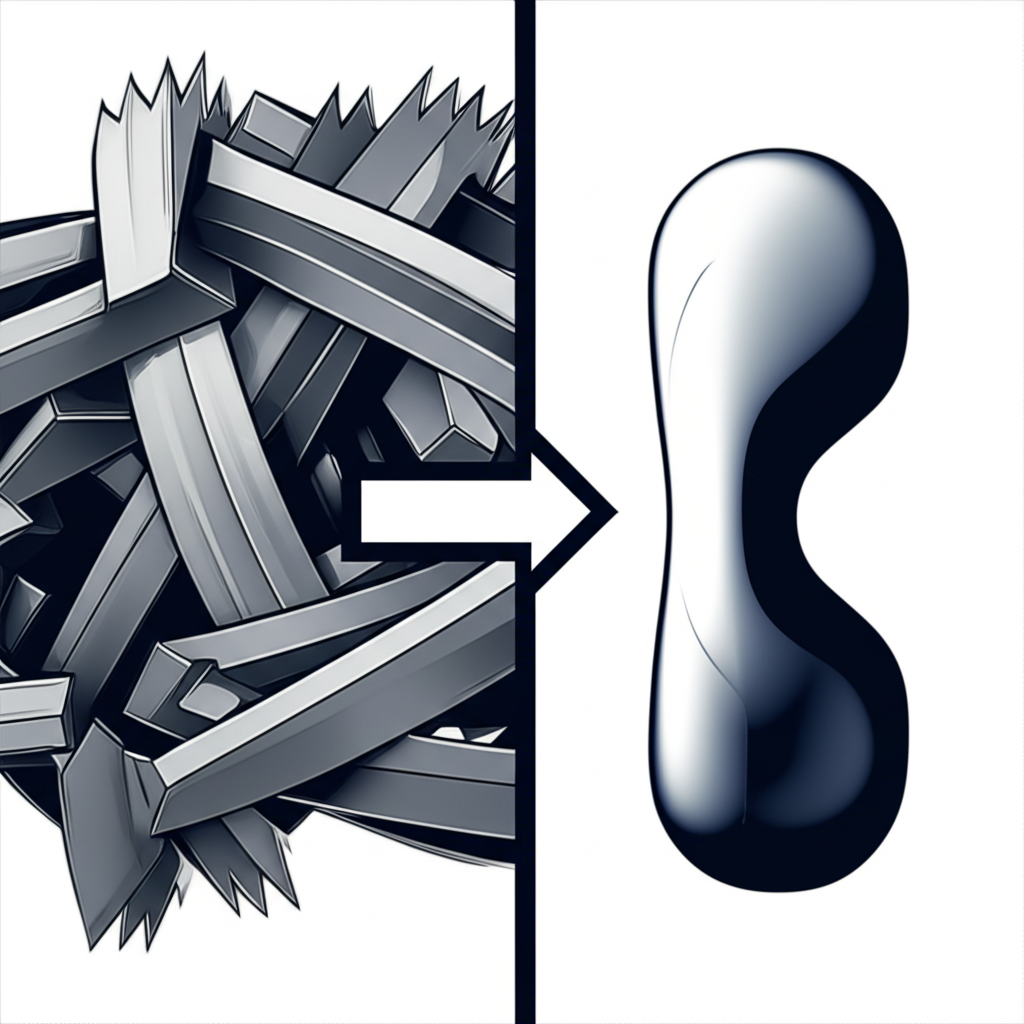
Critical Prerequisite: Optimizing Your Design for Manufacturability (DFM)
A perfectly functional prototype is not automatically ready for mass production. The transition requires a critical step known as Design for Manufacturability (DFM), which involves refining the product's design to ensure it can be produced efficiently, reliably, and cost-effectively at scale. Ignoring DFM principles is one of the most common and costly mistakes, often leading to production delays, high defect rates, and inflated costs. DFM is about proactively solving manufacturing challenges during the design phase, not on the factory floor.
The core of DFM is simplifying the design to reduce complexity and cost without compromising function or quality. This involves a holistic review of every aspect of the part, from its geometry to the materials selected. As explained by experts at Avid Product Development, this process ensures that creativity is balanced with real-world practicality. Key principles include:
- Part Consolidation: Reducing the total number of individual parts in an assembly minimizes assembly time, lowers costs, and reduces potential points of failure.
- Material Selection: Choosing materials that are not only suitable for the product's function but are also cost-effective and readily available in bulk is essential. A material used for a 3D-printed prototype may be too expensive or unsuitable for injection molding.
- Standardization: Using standard components, such as common fasteners (screws, nuts) and electronic parts, simplifies the supply chain, reduces costs, and speeds up assembly.
- Tolerance Adjustments: While prototypes might be made with very tight tolerances, mass production requires realistic tolerances that balance function with manufacturing capabilities to avoid high rejection rates.
Failing to apply DFM can have severe consequences. A design with overly complex shapes may require expensive multi-part molds or complicated assembly steps, driving up the per-unit cost. Similarly, specifying a niche material can create supply chain vulnerabilities. By thoughtfully applying DFM, you build efficiency directly into your product, ensuring a smoother, faster, and more profitable transition to mass production.
Strategic Planning: Budgeting for Scaling Costs and Certifications
Transitioning from a prototype to mass production introduces significant financial considerations that go far beyond the cost of the prototype itself. Strategic budgeting is essential to ensure you have the capital needed to navigate this phase successfully. Many entrepreneurs underestimate these scaling costs, which can jeopardize the entire project. The primary expenses can be broken down into manufacturing setup, certifications, and per-unit costs that change with volume.
One of the largest upfront expenses is manufacturing setup costs, dominated by the creation of tooling, such as high-pressure injection molds for plastic parts. A single mold can cost thousands of dollars, and most products require multiple molds. As detailed in an analysis by Predictable Designs, it's wise to start with lower-cost aluminum molds for initial runs (up to a few thousand units) before investing in expensive, hardened steel molds for high-volume production. Other setup fees include assembly fixtures, which are custom tools designed to make the assembly process faster and more reliable.
Another critical and often overlooked cost is product certifications. These are legally required to sell your product in most markets and must be obtained before mass manufacturing begins, as design changes may be needed to pass. Key certifications include FCC for electronics sold in the U.S. (to regulate radio interference), UL/CSA for products plugging into an AC outlet, and CE for products sold in Europe. Wireless products and those with lithium-ion batteries have additional, often expensive, certification requirements. These costs can range from a few thousand to tens of thousands of dollars.
Finally, it's vital to understand how per-unit costs change with production volume. Economies of scale mean that the cost to produce each part decreases as the production quantity increases. This is due to bulk material discounts and the amortization of setup costs over a larger number of units. Planning for this allows you to set a viable retail price and understand your profit margins at different production levels.
| Production Volume | Estimated Per-Unit Cost | Key Considerations |
|---|---|---|
| 100 Units (Low Volume) | $50.00 | High cost due to setup fees spread over few units. Good for market testing. |
| 1,000 Units (Bridge Production) | $15.00 | Unit cost drops significantly. Tooling costs begin to amortize. |
| 10,000 Units (Mass Production) | $8.00 | Economies of scale are fully engaged. Bulk material pricing applies. |
Making the Leap: Partner Selection and Quality Control for Mass Production
The final and most critical phase in scaling your part is the transition to full-scale manufacturing. This step involves more than simply placing a large order; it requires selecting the right manufacturing partner, establishing rigorous quality control standards, and managing a complex supply chain. The success of your product launch heavily depends on the execution of this stage. A methodical approach will help you navigate this transition with confidence and avoid common pitfalls that can derail even the most promising products.
Step 1: Vetting and Selecting a Manufacturing Partner Choosing the right partner is paramount. You are not just buying a service; you are entering a long-term relationship. Look for a manufacturer with proven experience in your industry and with similar materials and processes. Conduct thorough due diligence by requesting samples, checking references, and assessing their quality management systems. As OpenBOM suggests, it's vital to evaluate partners on criteria like reputation, reliability, and quality standards. For specialized needs, such as robust automotive components, you might consider a partner with specific certifications. For example, for custom forging services, a company like Shaoyi Metal Technology specializes in high-quality, IATF16949 certified hot forging for the automotive industry, offering a seamless path from prototyping to mass production.
Step 2: Establishing a Quality Management System (QMS) Quality cannot be an afterthought; it must be built into the production process from day one. A robust QMS ensures that every unit coming off the assembly line meets your exact specifications. This system should include Incoming Quality Control (IQC) to inspect raw materials, In-Process Quality Control (IPQC) to monitor the manufacturing line, and Outgoing Quality Control (OQC) for final product inspection. Clear, documented standards, inspection criteria, and testing protocols are essential. This framework prevents defects, reduces waste, and protects your brand's reputation.
Step 3: Ramping Up Production and Managing the Supply Chain Once your partner is selected and your QMS is in place, it's time to ramp up production. Start with a smaller pilot run using the final production tooling to iron out any last-minute issues before committing to a full-scale run. This step validates your assembly process and QC checks under real-world conditions. Concurrently, you must manage your supply chain to ensure a steady flow of components and materials. This involves qualifying multiple suppliers for critical parts to mitigate risks like delays or component obsolescence, a frequent challenge highlighted by industry experts. Effective supply chain management is the backbone of consistent and timely mass production.

Frequently Asked Questions
1. What is the difference between a prototype and a production-ready part?
A prototype is an early model used to test and validate a concept's form, fit, and function. It is often made with different materials and methods than the final product. A production-ready part, on the other hand, has been fully optimized through Design for Manufacturability (DFM), is made with final materials using scalable processes, and has passed all validation and pre-certification checks.
2. How long does it typically take to go from a final prototype to mass production?
The timeline can vary significantly based on product complexity, certifications required, and manufacturer lead times. However, a general estimate is between 6 to 9 months. This period covers tooling creation, pilot production runs, certification testing, and setting up the supply chain. Rushing this process is a common mistake that often leads to costlier delays down the line.
3. What is 'tooling' in manufacturing and why is it so expensive?
Tooling refers to the custom molds, dies, and fixtures required to manufacture a part at scale. For plastic parts, this is typically a high-pressure injection mold made from steel or aluminum. The high cost comes from the precision engineering and durable materials needed to create a tool that can produce thousands or even millions of identical parts with tight tolerances. It is a significant one-time, non-recurring engineering (NRE) cost.