 Small batches, high standards. Our rapid prototyping service makes validation faster and easier —
  EN
EN


Forged Vs Cast Suspension Arms: The Safety Decision Your Wallet Feels
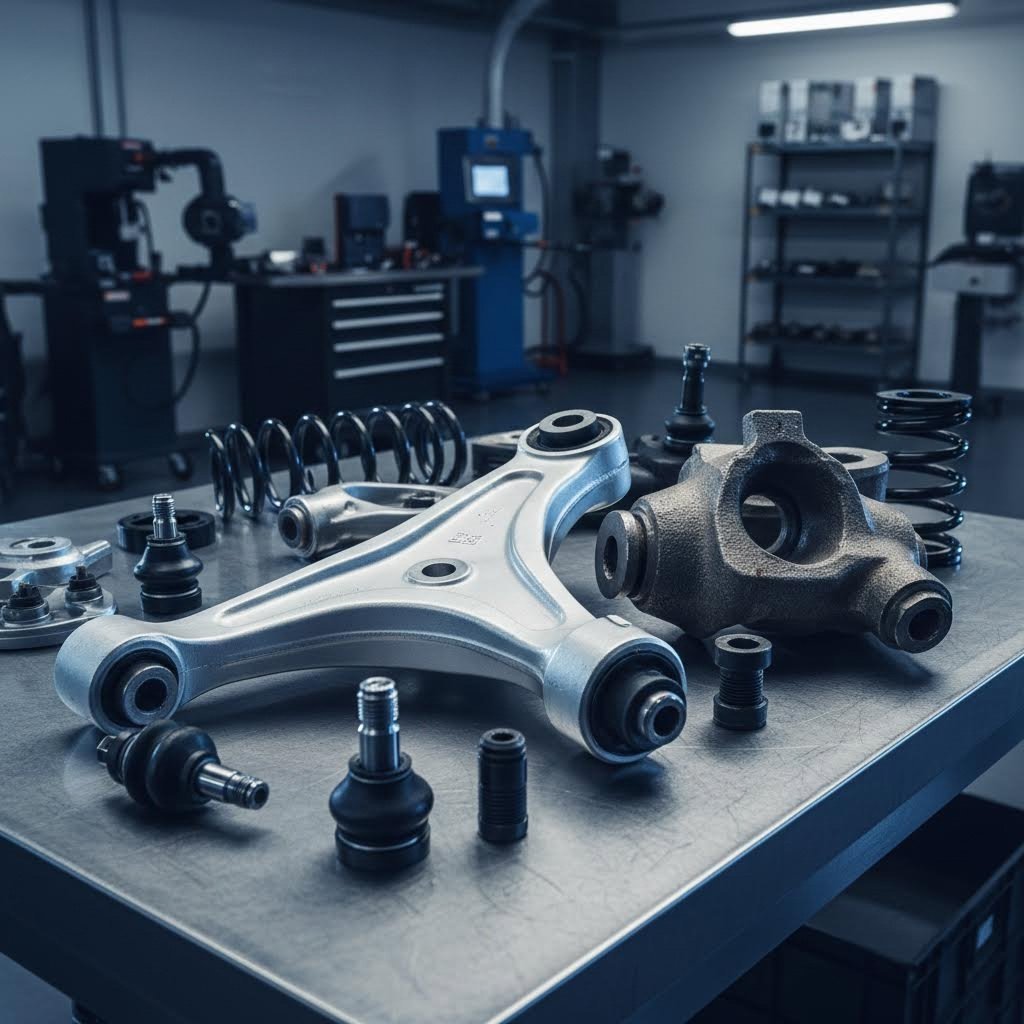
The Suspension Arm Decision That Impacts Your Safety and Wallet
Imagine cruising down the highway at 70 mph when your steering wheel suddenly shakes violently. Or picture making a routine lane change only to feel your vehicle pull dangerously in an unexpected direction. These aren't hypothetical scenarios—they're the real-world consequences of choosing the wrong suspension arms for your application.
When it comes to forged vs cast suspension arms, every performance enthusiast and fleet manager faces a decision that goes far beyond simple part numbers and price tags. Your suspension arms connect your wheels to your vehicle's chassis, directly influencing steering stability, handling precision, and ultimately, your safety on the road. According to suspension specialists at GSW Auto Parts, lower control arms alone bear up to 30% of your vehicle's weight during normal driving—making component quality a critical safety consideration.
Why Your Suspension Arm Choice Matters More Than You Think
Whether you're upgrading a weekend track car, maintaining a commercial fleet, or simply replacing worn components on your daily driver, the manufacturing method behind your suspension arms determines three essential factors:
- Handling characteristics – How predictably your vehicle responds to steering inputs
- Safety margins – Whether components bend gradually or fail catastrophically under stress
- Long-term reliability – Your total cost of ownership beyond the initial purchase price
Just as your engine relies on systems like positive crankcase ventilation to manage internal pressures and maintain performance, your suspension depends on properly manufactured arms to handle the constant stresses of driving. Neglect either system, and you're inviting problems that compound over time.
The Hidden Costs of Choosing Wrong
Here's what most buyers don't realize: the confusion starts before you even make a purchase. Enthusiast forums are filled with questions about identifying whether aftermarket parts from brands like Kryptonite Suspension or TRQ auto parts are actually forged, cast, or stamped steel. Many TRQ parts and similar budget options don't clearly advertise their manufacturing method—leaving you guessing about what you're really getting.
This buyer's guide cuts through the marketing noise. You'll learn to visually identify manufacturing methods on installed components, compare real-world performance characteristics between forging and casting processes, and make application-specific decisions based on your actual driving demands. We'll evaluate options using criteria that matter—grain structure integrity, fatigue resistance, weight-to-strength ratios, failure mode predictability, and true cost-per-mile value.
By the end, you'll have the knowledge to confidently choose suspension arms that match your safety requirements and budget—without second-guessing whether you made the right call.
How We Evaluated Forged and Cast Suspension Arms
How do you objectively compare suspension arms when manufacturers use different terminology and marketing claims? You need a consistent, measurable framework that cuts through the noise. That's exactly what we developed for this evaluation—a methodology that treats stamped steel vs cast steel control arms and forged alternatives with equal scrutiny.
Our testing considered real-world applications across four demanding scenarios: daily street driving, weekend track sessions, off-road adventures, and heavy towing duties. Each use case stresses suspension components differently, revealing strengths and weaknesses that don't show up in simple bench tests.
Our Five-Point Evaluation Framework
We ranked every suspension arm option against five critical performance criteria. These aren't arbitrary measurements—they're the factors that determine whether your arms cast shadows of doubt on your safety or deliver confidence mile after mile:
- Grain Structure Integrity – How the internal metal grain flows through the component and responds to directional stress
- Fatigue Resistance Under Cyclic Loading – The ability to withstand repeated stress cycles without developing micro-cracks
- Weight-to-Strength Ratio – How much strength you gain per pound of unsprung mass added to your suspension
- Failure Mode Predictability – Whether components provide warning signs before failure or break suddenly
- Cost-Per-Mile Value – True ownership costs factoring in lifespan, replacement frequency, and potential vehicle damage
Understanding the difference between SAE vs metric specifications also matters when sourcing replacement components, since many imported arms use metric hardware while domestic applications typically follow SAE standards.
How We Tested Real-World Performance
The fundamental difference between forging and casting comes down to grain flow—and this distinction explains nearly every performance variation you'll encounter.
When manufacturers forge suspension arms, they use dies, pressure, and controlled temperature to shape solid metal bar stock. According to metal forming specialists at Compass & Anvil, this process physically forces the metal into shape while maintaining an unbroken grain flow that follows the component's contours. Think of it like wood grain—when the grain runs continuously through a piece, it resists breaking along that path.
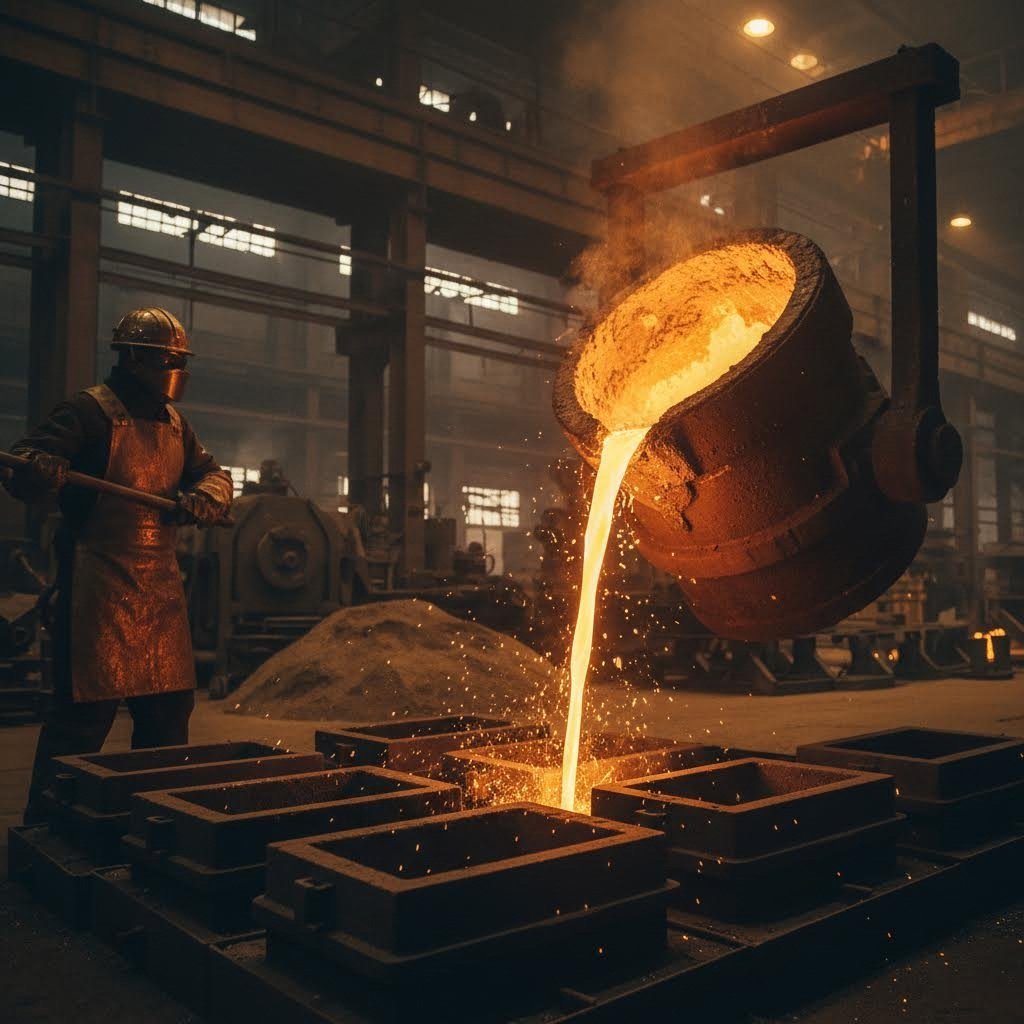
Casting takes the opposite approach. Molten metal pours into a mold cavity and solidifies, creating a random grain structure throughout the component. As Compass & Anvil notes, "the metal is melted down, which breaks the grain flow and causes the metal to lose some of its initial strength once it solidifies." This random orientation means cast components are inherently more susceptible to fracture under stress.
Forged metal is less likely to shatter than cast metal because the grain flow remains unbroken during the forming process.
Surface treatments affect each manufacturing method differently. Induction hardening—commonly applied to suspension components—creates a hardened case layer typically measuring 0.03 to 0.05 inches deep. This process works exceptionally well on forged arms because the aligned grain structure accepts the treatment uniformly. On cast arms, the random grain orientation and potential internal porosity can create inconsistent hardening results.
Research published in the International Journal of Fatigue found that casting defects significantly influence fatigue failure in suspension arms. The study revealed that "High Cycle Fatigue behaviour is controlled mainly by surface defects such as dross defects and oxides" in cast components—a vulnerability that forged arms largely avoid due to their solid, continuous grain structure.
With this evaluation framework established, let's examine specific suspension arm options and see how each performs against these criteria—starting with precision hot-forged components that set the benchmark for quality.
Shaoyi Precision Hot-Forged Arms for Maximum Strength
When you're searching for suspension arms that deliver maximum strength without compromise, precision hot forging represents the gold standard. But here's the challenge: not all forged components are created equal. The difference between a mediocre forged arm and an exceptional one comes down to manufacturing precision, quality control systems, and engineering expertise.
This is where Shaoyi (Ningbo) Metal Technology sets itself apart in the forged vs cast suspension arms conversation. Their precision hot forging solutions combine advanced metallurgical processes with IATF 16949 certification—the same quality management standard demanded by major automotive manufacturers worldwide.
Why IATF 16949 Certification Matters for Suspension Components
You might wonder: does certification really matter for a suspension arm? The answer is absolutely yes—especially when that component directly affects your vehicle's handling and safety.
According to Smithers, IATF 16949:2016 represents the global quality standard for the automotive industry, developed by the International Automotive Task Force with input from auditors, certification bodies, manufacturers, and suppliers. Unlike generic ISO 9001 certification, IATF 16949 incorporates customer-specific requirements from major automakers—meaning certified suppliers must meet the same rigorous standards as OEM production facilities.
What does this mean for your suspension arms? Seven critical advantages:
- Credibility – Demonstrates commitment to zero-defect quality management systems
- Global reach – Components meet international automotive standards regardless of destination
- Process integration – Systematic processes eliminate duplication and inconsistency
- Evidence-based decisions – Quality data drives manufacturing improvements, not guesswork
- Continual improvement – Built-in culture of ongoing process refinement
- Employee engagement – Trained workers understand quality requirements at every step
- Customer satisfaction – Focus on meeting exact specifications consistently
When you're upgrading suspension components during a cv axle change or installing a disc brake conversion kit, knowing your arms meet IATF 16949 standards provides confidence that extends beyond the initial installation.
Grain Flow Optimization in Action
Precision hot forging doesn't just shape metal—it engineers internal strength at the molecular level. Here's how the process works and why it matters for suspension loading patterns.
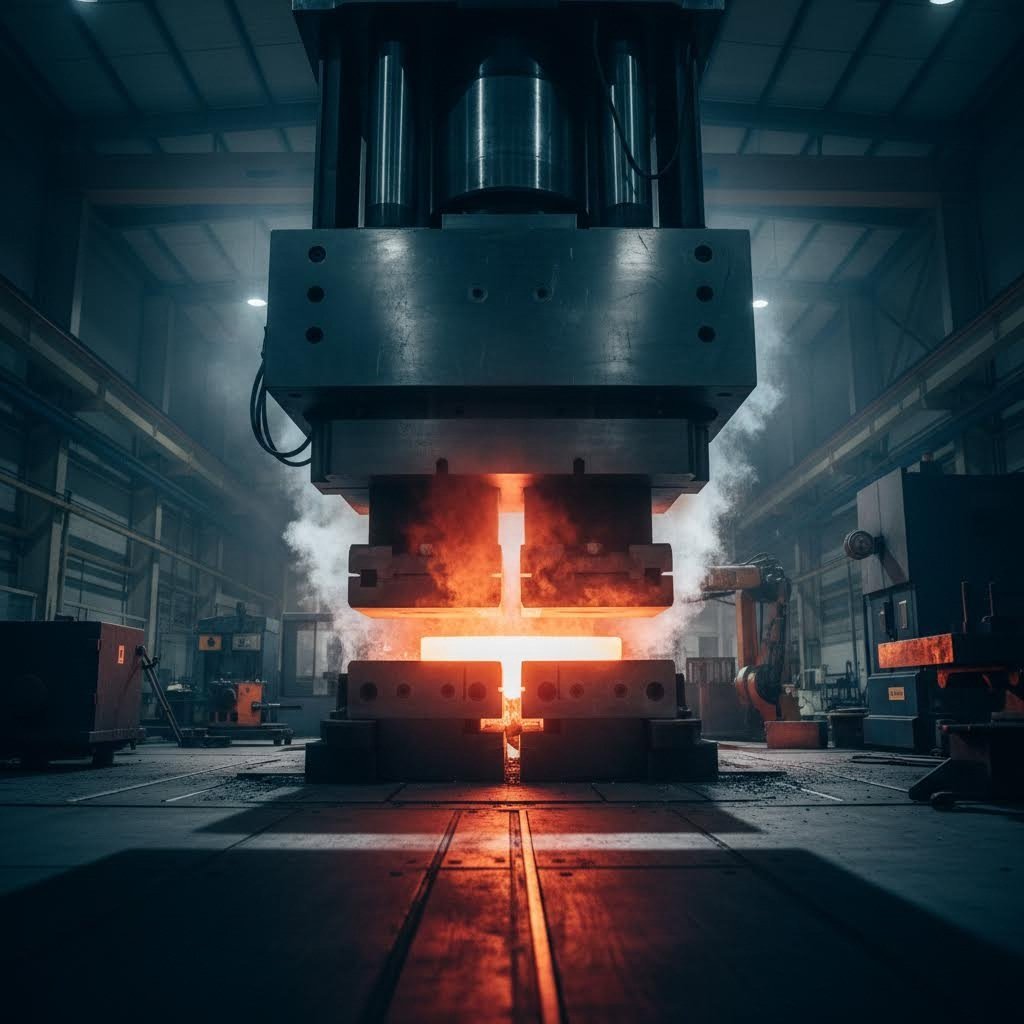
During hot forging, heated metal bar stock is pressed between precision dies under tremendous pressure. Unlike casting, which breaks the metal's grain structure when it melts, forging physically realigns the grain to follow the component's contours. As noted by Shautoparts, this process "realigns the metal grain structure, resulting in improved tensile strength and fatigue resistance compared with cast or stamped parts."
Think about how suspension arms actually work in your vehicle. They don't experience stress randomly—they're loaded in specific, predictable directions as you accelerate, brake, and corner. Precision hot forging optimizes grain flow to align with these loading patterns, creating directional strength exactly where you need it most.
The results are measurable. According to Creator Components, forged control arms "deliver consistent geometry, reducing flex under load and preserving wheel alignment during dynamic driving." This consistency matters whether you're asking "what transmission do I have" while planning a drivetrain upgrade or evaluating components for vehicles equipped with robust units like the nv4500 transmission.
Shaoyi's in-house engineering takes this further by enabling rapid prototyping in as little as 10 days. This capability means custom solutions for specific applications—whether you need arms optimized for heavy towing, track performance, or off-road durability. The same precision applies whether you're replacing components on a vehicle with a manual transmission or one requiring specific 4l60e transmission oil specifications.
Weight Savings and Fatigue Resistance Benefits
Beyond pure strength, precision hot-forged suspension arms deliver two additional advantages that affect daily driving performance:
Reduced unsprung mass: Forged arms can achieve the same strength as cast alternatives while using less material. This weight reduction directly improves vehicle dynamics—your suspension responds more quickly to road inputs, handling sharpens, and ride quality improves. The effect compounds when combined with other lightweight components.
Superior fatigue resistance: Research confirms that forged components resist cyclic loading far better than cast alternatives. The continuous grain structure prevents micro-crack propagation that eventually leads to failure. Creator Components notes that forged arms exhibit "unparalleled fatigue resistance compared to traditional materials," ensuring "structural integrity and performance integrity throughout their operational lifespan."
Pros
- Aligned grain structure optimized for suspension loading patterns
- IATF 16949 certification ensures OEM-quality manufacturing standards
- Rapid prototyping capability enables custom solutions in as little as 10 days
- Consistent quality through rigorous in-house quality control
- Reduced warranty claims and lower total life-cycle costs
- Strategic location near Ningbo Port for efficient global shipping
Cons
- Higher initial cost than cast alternatives
- May require longer lead times for custom specifications
For buyers prioritizing safety and long-term reliability, precision hot-forged suspension arms from certified manufacturers like Shaoyi represent the benchmark against which all other options should be measured. The upfront investment pays dividends through extended service intervals, reduced maintenance costs, and—most importantly—predictable performance when it matters most.
But what about enthusiasts who want track-proven performance from established aftermarket brands? Let's examine how premium forged arms from performance suppliers stack up against this benchmark.
Premium Aftermarket Forged Arms for Performance Builds
So you've decided forged suspension arms are the right choice for your build—but you're not sourcing OEM-spec components for a commercial fleet. You want performance geometry, upgraded handling, and the peace of mind that comes from components designed by engineers who understand what happens when you push a vehicle hard through corners.
Premium aftermarket forged suspension arms occupy a unique space in the forged vs cast suspension arms market. These components bridge the gap between factory specifications and full race-prep builds, offering enthusiasts access to track-proven technology without requiring a complete suspension overhaul. Whether you're building a weekend autocross car or upgrading your daily driver's handling characteristics, understanding what separates quality aftermarket forged arms from the competition helps you make smarter purchasing decisions.
Track-Proven Forged Geometry
What makes aftermarket forged arms different from simply buying OEM replacements? The answer lies in geometry optimization and application-specific engineering.
Performance suspension manufacturers don't just replicate factory specifications—they improve upon them. Many aftermarket forged arms feature revised mounting points, optimized bushing locations, or altered camber and caster characteristics designed to enhance handling response. These geometry changes work together with your existing suspension components to deliver sharper turn-in, reduced body roll, and more predictable cornering behavior.
The forging process enables these geometric improvements without sacrificing strength. According to K7 Forged, components manufactured through forging "can handle high cornering loads and braking forces with less bulk, thanks to their grain-aligned design and high tensile limits." This strength advantage means engineers can modify arm geometry for performance benefits without adding material thickness to compensate.
Think about what happens during aggressive cornering. Your suspension arms experience tremendous lateral loads as they resist the forces trying to push your wheels out of alignment. Premium forged arms maintain their geometry under these loads, preserving your carefully dialed suspension settings lap after lap. Cast alternatives, with their random grain structure, are more prone to flex under stress—introducing handling inconsistencies that become more pronounced as loads increase.
For enthusiasts who've invested in upgrades like a Flowmaster Super 10 exhaust or AMP Research Power Step running boards, the suspension represents the next logical performance frontier. Quality forged arms complement these modifications by ensuring your chassis responds predictably to the additional power and capability your other upgrades provide.
When Racing Heritage Meets Street Reliability
Here's where aftermarket forged arms truly differentiate themselves: failure mode predictability. This isn't just engineering jargon—it's a safety characteristic that could save your life.
As noted in research by K7 Forged, "if a forged wheel fails under extreme stress, it tends to bend rather than suddenly shatter. That predictable deformation gives drivers a better chance to react, unlike cast wheels, which may crack unexpectedly." The same principle applies directly to suspension arms.
When a cast suspension arm reaches its failure threshold, it can crack suddenly and catastrophically. One moment you're driving normally; the next, you've lost wheel control. Forged arms behave differently—they'll bend progressively under extreme overload, providing warning signs before complete failure. You might notice unusual tire wear, handling changes, or visible deformation during inspection—all opportunities to address the issue before it becomes dangerous.
This predictable failure characteristic explains why motorsports teams trust forged components. Racing generates stresses that exceed normal street driving by significant margins. Teams need components that provide advance warning of fatigue, not sudden failures at 100+ mph. That racing heritage translates directly to street reliability—if a component survives track abuse, your daily driving won't come close to stressing it.
Weight Reduction and Vehicle Dynamics
The unsprung mass advantage of forged arms deserves special attention because it affects aspects of vehicle behavior most drivers never consider.
According to engineering analysis from RC Street Wars, unsprung mass reduction provides multiple dynamic benefits rooted in fundamental physics. Their research explains that "a lower unsprung mass means these components require less force to accelerate, allowing them to respond quicker to road undulations. This leads to better tire-to-road contact, ensuring maximum grip."
The benefits cascade through your entire suspension system:
- Improved suspension response – Lighter components allow your shocks and springs to react faster to road surface changes
- Enhanced tire load consistency – More consistent contact patch pressure during cornering, braking, and acceleration
- Better damping efficiency – Your shock absorbers control lighter masses more effectively
- Reduced rotational inertia – Wheels accelerate and decelerate more quickly, improving both acceleration and braking
- Enhanced brake performance – Lighter assemblies dissipate heat more efficiently, reducing brake fade potential
K7 Forged confirms that quality forged components can be "up to 20-30% lighter" than cast alternatives while maintaining superior strength. For enthusiasts running aggressive mud tires or heavy-duty wheel packages, this weight savings partially offsets the added rotational mass of larger tire and wheel combinations.
Aftermarket vs OEM: The Comparison Competitors Miss
Most buyers comparing aftermarket forged arms focus solely on price versus OEM replacements. That's a mistake. The real comparison involves total value across multiple dimensions.
OEM cast arms are engineered to meet minimum acceptable standards for warranty-period durability at the lowest possible manufacturing cost. They're adequate—nothing more. Aftermarket forged arms target a different customer: someone willing to pay more upfront for components that exceed factory specifications in strength, durability, and performance.
Consider the full picture. Premium aftermarket forged arms typically offer extended fatigue life under spirited driving, improved handling geometry, and predictable wear patterns that simplify maintenance planning. These advantages compound over time, potentially delivering lower cost-per-mile than cheap cast replacements that require more frequent attention.
For truck owners who've invested in accessories like amp running boards or a Decked tool box system, the suspension represents the foundation supporting those investments. Cheap cast arms can introduce handling unpredictability that undermines your vehicle's capability—the opposite of what performance-minded owners want.
Pros
- Proven track record in motorsports and enthusiast applications
- Performance geometry options unavailable in OEM replacements
- Predictable wear patterns that simplify maintenance scheduling
- Grain-aligned structure creates progressive failure modes rather than sudden breaks
- Weight reduction benefits vehicle dynamics across all driving conditions
- Engineering designed for loads exceeding normal street use
Cons
- Premium pricing compared to OEM cast alternatives
- May require additional modifications for optimal fitment on some platforms
- Availability varies significantly by vehicle application
- Installation may require professional alignment afterward
Premium aftermarket forged arms represent an excellent choice for enthusiasts prioritizing handling performance and safety margins. But what if your budget demands a more economical approach? Let's examine when OEM cast replacement arms make sense—and where their limitations become problematic.
OEM Cast Replacement Arms for Budget-Minded Drivers
Let's be honest—not every driver needs track-proven forged suspension arms. If you're maintaining a 1997 Chevy Silverado as a reliable work truck or keeping a 1997 GMC Sierra 1500 running for basic transportation, your priorities likely center on affordable replacement parts that restore factory handling characteristics without breaking the bank.
OEM cast replacement arms occupy this practical middle ground in the forged vs cast suspension arms discussion. They're engineered to meet original factory specifications at significantly lower price points than forged alternatives. But understanding what you're getting—and more importantly, what you're giving up—helps you determine whether cast arms align with your driving demands.
Factory Specifications at Lower Cost
Cast suspension arms dominate the OEM replacement market for one simple reason: economics. The casting process allows manufacturers to produce complex shapes at scale for a fraction of forging costs, passing those savings directly to consumers.
But here's what many buyers don't realize: not all cast arms are created equal. The casting method used significantly affects component quality, and the difference matters more than most assume.
Sand Casting: This traditional method pours molten metal into sand molds. According to manufacturing specialists at LS Rapid Manufacturing, sand casting offers "extremely low mold cost and excellent flexibility," making it the preferred process for heavy component manufacturing. However, sand-cast parts typically exhibit rougher surface textures, less precise dimensional tolerances, and potential internal porosity—microscopic air pockets trapped during solidification.
Investment Casting: Also called lost-wax casting, this method creates more refined components. The same LS research notes that investment casting delivers "precision castings" with superior surface finish and dimensional accuracy compared to sand casting. For suspension arms, investment casting typically produces smoother surfaces, tighter tolerances, and reduced porosity—though at higher manufacturing cost than sand casting.
When shopping for replacement arms for vehicles like a 1993 Chevy Silverado or 1998 Chevy Silverado 1500, you'll rarely find casting method specifications on the packaging. Budget replacement arms typically use sand casting, while higher-quality OEM-equivalent parts may employ investment casting for improved consistency.
Understanding Cast Arm Limitations
Here's where honest assessment becomes essential. Cast suspension arms can absolutely work for their intended purpose—but that purpose has clear boundaries.
The fundamental limitation stems from grain structure. When metal melts during casting, the original grain flow breaks down completely. As the molten material solidifies in the mold, new grains form randomly throughout the component. This random orientation creates inherent weaknesses that become problematic under stress.
Research published in the International Journal of Fatigue examined nodular cast iron suspension arms and found that "casting defects such as microshrinkages in the bulk or dross defects at the surface" directly influence fatigue behavior. Their testing revealed that "High Cycle Fatigue behaviour is controlled mainly by surface defects such as dross defects and oxides."
What does this mean practically? Cast arms accumulate fatigue damage faster than forged alternatives, especially under repetitive stress cycles. The research team noted that "multiple initiation cracking is promoted under Low Cycle Fatigue" and that surface defects from the casting process "are responsible for the majority of the failures."
This matters less for daily drivers covering typical commuting miles. It matters significantly more for vehicles subjected to:
- Performance driving or track use
- Regular towing near capacity limits
- Off-road conditions with constant suspension articulation
- Aggressive driving patterns with frequent hard cornering
The cooling system analogy helps illustrate this concept. Just as vehicles of this era often used Dex-Cool coolant with specific maintenance intervals to prevent degradation, cast suspension arms have their own service life limitations that depend heavily on operating conditions.
When Cast Arms Make Sense
For drivers who genuinely stay within OEM parameters, quality cast replacement arms remain a viable choice. The key word is "quality"—bargain-basement cast arms with poor metallurgy and minimal quality control create risks that outweigh their cost savings.
Cast arms work adequately when your driving fits these criteria:
- Stock suspension geometry with no aggressive modifications
- Normal street driving patterns without performance demands
- Light-duty hauling well below vehicle ratings
- Routine maintenance inspections to catch wear patterns early
Pros
- Lower upfront cost compared to forged alternatives—often 40-60% less
- Direct OEM fitment without modification requirements
- Widely available through multiple parts suppliers and retailers
- Adequate durability for stock applications with normal driving
- Familiar installation procedures that match factory service manuals
Cons
- Heavier weight than equivalent forged components, increasing unsprung mass
- Less predictable failure modes—may crack suddenly rather than bend progressively
- Shorter fatigue life under performance use or heavy-duty applications
- Random grain structure creates inconsistent stress distribution
- Casting defects can initiate premature failure under cyclic loading
The bottom line? If you're driving a stock vehicle within manufacturer specifications and budget constraints are real, quality cast arms can serve you adequately. But if you've modified your vehicle, push its limits regularly, or prioritize long-term reliability over initial savings, the limitations of cast construction become harder to justify.
Understanding these trade-offs becomes even more important when you consider another manufacturing method entirely—stamped steel control arms, which occupy their own unique position in the suspension component hierarchy.
Stamped Steel Arms and When They Work
Beyond forged and cast options, there's a third manufacturing method that confuses many vehicle owners: stamped steel control arms. If you've ever searched enthusiast forums trying to figure out whether your Tahoe vs Suburban came with cast or stamped arms—or wondered why your truck bed sizes chart doesn't help identify suspension components—you're not alone.
Stamped steel arms occupy a distinct position in the forged vs cast suspension arms discussion because they're manufactured through an entirely different process. Understanding how they're made, where they excel, and where they fall short helps you make smarter decisions whether you're replacing worn components or evaluating a used vehicle purchase.
Stamped Steel Reality Check
So what exactly is a stamped steel control arm? According to technical specialists at Shaoyi Metal Technology, a stamped steel control arm "is constructed from flat sheets of steel that are cut and pressed into shape by a powerful stamping machine. These shaped pieces are then welded together, resulting in a component that is strong yet hollow and relatively lightweight."
Think of it like this: while forging compresses solid metal under tremendous pressure and casting pours molten metal into molds, stamping works more like industrial origami. Heavy-gauge sheet steel gets cut, bent, and pressed into shape—often resembling two C-channels—then welded together to form the final component.
This manufacturing approach creates fundamentally different stress characteristics than either forging or casting:
- Hollow construction – Unlike solid cast or forged arms, stamped arms are inherently hollow, affecting how they respond to impact loads
- Weld seams as potential weak points – The welded joints where pieces meet can become failure initiation sites under extreme stress
- Sheet metal properties – The base material behaves differently under load than the continuous grain structure of forged components or the dense mass of castings
As noted in Shaoyi's identification guide, "Stamped steel arms, being welded assemblies, have potential weak points at the seams." This doesn't mean they're unsafe for their intended applications—but it does establish clear boundaries for their optimal use cases.
Identifying Stamped Arms on Your Vehicle
Forum confusion about stamped versus cast arms is understandable—especially on trucks like the Suburban vs Tahoe where GM used different materials across production years. Here's how to tell them apart:
| Identification Method | Stamped Steel | Cast Arms |
|---|---|---|
| Visual appearance | Smooth surface, visible weld seams, may look hollow or constructed from multiple pieces | Rough, textured, or porous surface; appears as single solid piece |
| Tap test | Hollow, ringing sound when struck with a wrench | Dense, dull thud when tapped |
| Surface finish | Often glossy black paint over smooth metal | Rougher texture from mold impression |
| Weight feel | Noticeably lighter when handling loose component | Heavier, more substantial mass |
According to technical guidance from Shaoyi's comparison analysis, "a stamped steel arm will produce a hollow, ringing sound, while a cast iron arm will make a dense, dull thud." This simple tap test resolves most identification questions within seconds.
Where Stamped Arms Make Sense
Here's the reality many enthusiasts overlook: stamped steel arms aren't inferior—they're purpose-built for specific applications. Original equipment manufacturers choose stamped construction deliberately, not just for cost savings.
The weight advantage matters more than casual observers realize. Stamped steel's lighter construction reduces unsprung mass, which as Shaoyi's analysis notes, "can contribute to marginal improvements in fuel efficiency" and better ride comfort. For passenger cars and light-duty trucks used within factory parameters, these benefits outweigh the strength limitations.
Stamped arms excel in these scenarios:
- Daily drivers maintaining stock suspension geometry
- Passenger vehicles prioritizing ride comfort over ultimate load capacity
- Applications where OEM replacement cost matters more than performance margins
- Light-duty use well within manufacturer weight and stress ratings
However, the same experts caution that problems emerge when stamped arms face demands beyond their design envelope. As noted in the identification guide, "some stamped steel upper control arm designs may not properly retain the ball joint if it fails, which can be a significant safety concern." This makes regular ball joint inspection critical on vehicles with stamped arms—especially those with suspension modifications.
Pros
- Cost-effective manufacturing translates to lower replacement part prices
- Consistent dimensions from precision stamping processes
- Adequate strength for light-duty use within OEM specifications
- Lighter weight reduces unsprung mass and improves ride quality
- Widely available as direct OEM replacements
Cons
- Limited strength compared to forged alternatives—not suitable for performance applications
- Less suitable for heavy-duty use, towing, or off-road conditions
- Weld seams create potential failure initiation points under extreme stress
- More susceptible to bending or buckling from hard impacts
- Some designs have concerning ball joint retention characteristics
The bottom line on stamped steel? They're a legitimate choice for stock vehicles used within factory parameters. But if you're lifting your truck, adding aggressive tires, or regularly pushing your vehicle's limits, the inherent limitations of hollow, welded construction become genuine concerns worth addressing through upgrades to forged alternatives.
Now that you understand all three manufacturing methods—forged, cast, and stamped—how do you actually identify what's on your vehicle? Let's walk through the visual identification process and examine how each type fails under stress.
Visual Identification Guide and Failure Warning Signs
You've researched forged vs cast suspension arms extensively—but now you're staring at your vehicle's undercarriage wondering which type you actually have. Sound familiar? This frustration echoes across enthusiast forums daily, where owners struggle to identify manufacturing methods on already-installed components before ordering replacement parts.
Whether you're verifying what came stock on your truck or confirming that "forged" aftermarket purchase was legitimate, visual identification skills eliminate guesswork. More importantly, understanding how each type fails under stress helps you spot warning signs before a minor wear issue becomes a dangerous roadside emergency.
Spotting the Difference on Your Vehicle
Identifying suspension arm manufacturing methods doesn't require specialized equipment—just a flashlight, basic observation skills, and knowledge of what you're looking for. According to Shaoyi's identification guide, each manufacturing process leaves distinct visual signatures that trained eyes recognize immediately.
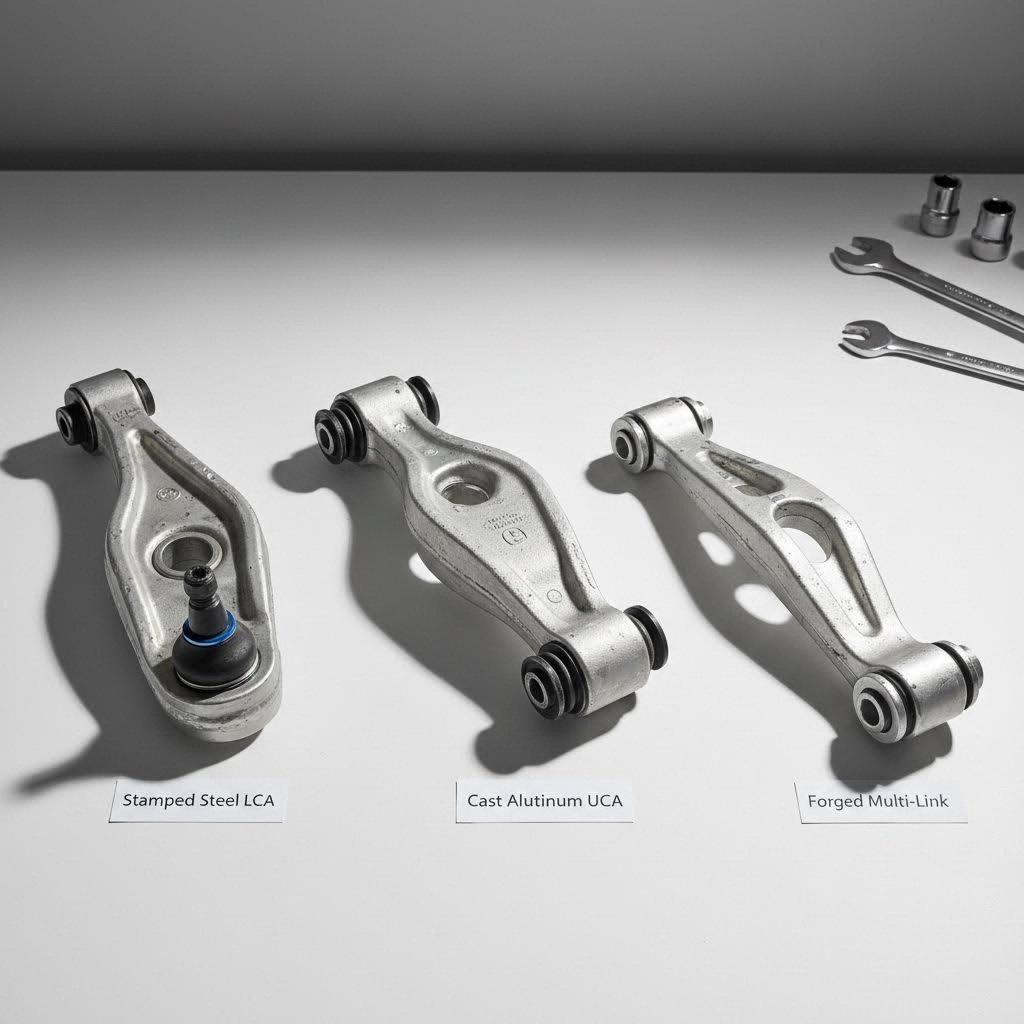
Forged Arms: These components exhibit the cleanest appearance overall. Look for smooth, refined surfaces that appear machined rather than rough. Forged arms display parting lines—thin, consistent seams where the upper and lower forging dies met during manufacturing. Unlike casting seams, these lines are typically straight, uniform, and precisely placed. The metal itself appears dense and solid, without surface irregularities or porous textures.
Cast Arms: The casting process leaves unmistakable evidence on component surfaces. According to the identification guide, cast arms show "a distinctly rough, porous, or textured surface finish from the molding process." You'll notice the surface texture resembles orange peel or sandpaper rather than smooth metal. Cast components may also display thin casting lines where mold halves met—but these differ from forging parting lines by appearing more irregular and often following component contours rather than straight paths. Porosity marks—small pits or voids visible on surfaces—indicate areas where gas bubbles became trapped during solidification.
Stamped Arms: These stand out once you know the telltale signs. As Shaoyi notes, "A stamped steel arm will have a clear weld seam running along its length where the metal plates were joined." The arm appears constructed from multiple pieces rather than formed as a single unit. Surfaces are typically smooth—often painted—and the overall shape may look like two C-channels welded together.
Just as you might use Chevy VIN number information or a GM vehicle identification number decoder to verify your truck's specifications, learning these visual markers helps you verify component authenticity. General Motors VIN identification reveals factory equipment—but your eyes confirm what's actually installed now.
The Tap Test and Other Verification Methods
When visual inspection leaves uncertainty, additional verification methods provide confirmation:
- Tap test: Strike the arm with a wrench or metal tool. Stamped arms produce a hollow, ringing ping. Cast and forged arms create a dull, solid thud—though distinguishing between these two requires combining the tap test with visual inspection.
- Magnet check: This differentiates steel from aluminum. Magnets stick firmly to steel (cast, forged, or stamped) but won't adhere to cast aluminum arms—which GM used on many trucks during certain production years.
- Weight comparison: Handling loose components reveals density differences. Forged arms feel substantial but not excessively heavy. Cast arms are noticeably heavier for their size. Stamped arms feel surprisingly light due to hollow construction.
How Each Type Fails Under Stress
Here's where the forged vs cast suspension arms decision becomes a genuine safety matter. The way each manufacturing method fails under stress directly affects your ability to maintain vehicle control during a component failure—and whether you receive warning before catastrophic breakdown.
Forged Arm Failure Mode: Due to aligned grain structure, forged arms exhibit predictable, progressive failure characteristics. Under extreme overload, they bend rather than snap. This deformation provides advance warning—you might notice unusual tire wear patterns, steering pull, or visible bending during routine inspections. The continuous grain flow resists crack propagation, meaning small stress concentrations don't rapidly spread into complete fractures.
Cast Arm Failure Mode: Random grain orientation creates less predictable behavior. According to research published in the International Journal of Fatigue, casting defects like "microshrinkages in the bulk or dross defects at the surface" serve as crack initiation sites. Once cracks begin propagating through random grain structure, they can spread rapidly—potentially causing sudden, catastrophic failure without warning. One moment the arm appears intact; the next, it's fractured.
Stamped Arm Failure Mode: Welded seams create predetermined weak points. Under extreme stress, failure typically initiates at weld joints rather than in base metal. The hollow construction also makes stamped arms susceptible to buckling from hard impacts. As noted in Shaoyi's analysis, "some stamped steel upper control arm designs may not properly retain the ball joint if it fails"—a particularly concerning safety issue.
Complete Identification and Failure Comparison
| Characteristic | Forged Arms | Cast Arms | Stamped Arms |
|---|---|---|---|
| Surface Texture | Smooth, refined, machined appearance | Rough, porous, orange-peel texture | Smooth metal, often painted |
| Seam Appearance | Thin, uniform parting lines from die separation | Irregular casting lines following contours | Visible weld seams where pieces join |
| Construction | Dense, solid single piece | Solid single piece with potential porosity | Hollow, assembled from multiple pieces |
| Tap Test Sound | Solid, dull thud | Solid, dull thud | Hollow, ringing ping |
| Typical Failure Mode | Progressive bending before breaking | Sudden cracking without warning | Weld seam separation or buckling |
| Warning Signs | Visible deformation, unusual tire wear, steering pull | Surface cracks, sudden handling changes | Weld cracks, loose ball joints, rattling |
| Safety Risk Level | Lower—predictable failure provides reaction time | Higher—sudden failure allows no reaction | Moderate—depends on design and loading |
Inspection Intervals and What to Watch For
Regardless of manufacturing method, regular inspection catches developing problems before they become dangerous. Here's what to monitor:
- Forged arms: Check for visible bending, especially after hard impacts. Inspect bushing condition and ball joint play. Look for paint cracking that might indicate underlying metal stress.
- Cast arms: Examine surfaces carefully for hairline cracks, especially near stress concentration points like mounting holes and ball joint housings. Any visible crack warrants immediate replacement—cast components don't provide progressive warning before failure.
- Stamped arms: Focus attention on weld seams. Look for rust formation, separation, or cracking along welded joints. Test ball joint retention by attempting to move the joint—any looseness beyond specification requires attention.
When examining suspension components, remember that visible damage is the final warning—not the first. Developing problems often manifest as handling changes, unusual tire wear, or alignment drift before physical damage becomes apparent.
Armed with identification skills and failure mode knowledge, you're ready to evaluate specific products against each other. Let's put all this information together in a comprehensive comparison that matches suspension arm types to your specific driving application.

Complete Comparison Table by Application Type
You've learned how forged, cast, and stamped suspension arms differ at the molecular level. You understand grain flow, failure modes, and identification techniques. But here's the question that actually matters: which type belongs on your vehicle?
The answer depends entirely on how you use your truck or car. A weekend track warrior has fundamentally different demands than someone hauling equipment to job sites daily. Off-road enthusiasts stress their suspension in ways that would never occur during highway commuting. Each application creates unique loading patterns—and the forged vs cast suspension arms decision should reflect those realities rather than marketing claims.
Let's break down the comparison across every evaluation criteria, then match each suspension arm type to the driving styles where it genuinely excels.
Side-by-Side Performance Breakdown
This comprehensive comparison captures what competitors miss: real performance metrics across criteria that matter for safety, durability, and value. Shaoyi precision hot-forged arms establish the benchmark against which all alternatives are measured.
| Suspension Arm Type | Strength Rating | Weight | Fatigue Resistance | Cost Range | Best Application |
|---|---|---|---|---|---|
| Shaoyi Precision Hot-Forged | Excellent—aligned grain structure optimized for load paths | Light to moderate—20-30% lighter than cast equivalents | Superior—continuous grain resists crack propagation | Premium ($$$) | Performance builds, heavy towing, fleet reliability |
| Premium Aftermarket Forged | Excellent—track-proven under extreme cornering loads | Light—engineered for unsprung mass reduction | Excellent—racing heritage demands fatigue durability | Premium ($$$) | Track use, spirited street driving, competition |
| OEM Cast (Investment) | Good—meets factory specifications adequately | Heavy—dense material adds unsprung mass | Moderate—random grain limits cyclic loading tolerance | Moderate ($$) | Stock daily drivers within OEM parameters |
| OEM Cast (Sand) | Adequate—basic strength for light-duty use | Heavy—solid construction adds weight | Limited—porosity and defects reduce fatigue life | Budget ($) | Economy replacements, minimal stress applications |
| Stamped Steel | Moderate—hollow construction limits ultimate capacity | Lightest—hollow design minimizes mass | Variable—weld seams create potential failure points | Budget ($) | Passenger vehicles, light-duty trucks, stock geometry |
Notice the weight column carefully—this is where most comparison guides fall short. According to vehicle dynamics research from School-Mechademic, the relationship between sprung and unsprung mass directly affects suspension behavior. Their analysis explains that "the sprung mass is the mass above the spring which is suspended by the spring while the unsprung mass is the part of the vehicle not suspended by the spring like the Tire, wheel ends."
Your suspension arms contribute directly to unsprung mass. Every pound saved at the wheel end improves how quickly your suspension responds to road inputs—a difference you'll feel in ride quality, handling precision, and tire wear patterns.
Matching Arms to Your Driving Style
Generic recommendations don't serve your specific needs. Here's application-specific guidance based on how each suspension arm type performs under real-world demands:
Street Daily Drivers
Your priorities: reliable operation, reasonable cost, comfortable ride quality, and predictable handling during normal driving. You're not pushing limits—you want components that work invisibly in the background.
Best choice: Quality cast or stamped steel OEM replacements work adequately here. If your vehicle operates within factory parameters—stock suspension, no aggressive driving, no heavy loads—budget options deliver acceptable service life.
Upgrade consideration: However, if you value peace of mind and plan to keep your vehicle long-term, precision forged arms eliminate the unpredictable failure modes inherent in cast construction. The premium pays dividends through extended replacement intervals and safer failure characteristics.
Think about what protects your investment. Just as quality truck seat covers preserve your interior from daily wear, quality suspension components preserve your chassis and handling characteristics over hundreds of thousands of miles. The best truck seat covers combine durability with value—the same philosophy applies to suspension arms.
Weekend Track Warriors
Your priorities: maximum handling precision, predictable behavior at the limit, weight reduction, and components that survive repeated high-stress events without degrading performance.
Best choice: Premium aftermarket forged arms engineered specifically for track use. These components feature geometry optimized for aggressive driving, weight reduction for improved response, and fatigue resistance designed for loads exceeding anything street driving generates.
Why forged matters here: Track driving subjects suspension arms to extreme lateral loads during cornering, heavy braking forces, and repeated stress cycles lap after lap. Cast arms accumulate fatigue damage under these conditions far faster than their forged counterparts. The research on casting defects as fatigue initiation sites becomes critically relevant when you're generating maximum cornering forces every session.
Vehicle dynamics principles explain why weight matters even more at the track. According to School-Mechademic's analysis, roll behavior during cornering depends on the relationship between center of gravity height and roll center location. Lighter unsprung mass means your suspension responds more quickly to weight transfer—translating to sharper turn-in, more consistent tire contact, and more predictable limit handling.
Off-Road Enthusiasts
Your priorities: impact resistance, articulation capability, durability under constant cycling, and components that survive conditions far beyond pavement design parameters.
Best choice: Precision hot-forged arms from manufacturers like Shaoyi or premium aftermarket forged alternatives. Off-road conditions create loading scenarios that reveal every weakness in suspension components.
Why cast fails here: Every rock impact, washout crossing, and trail obstacle subjects your suspension arms to shock loads. Cast construction—with its random grain structure and potential internal porosity—handles sustained stress but struggles with repeated impact events. Micro-cracks initiate at casting defects and propagate with each hit.
Off-road applications also involve constant suspension articulation. As your wheels travel through their full range of motion navigating uneven terrain, components experience continuous cyclic loading. Forged arms with aligned grain structure resist this cycling far better than alternatives.
Consider what you're mounting to your off-road rig. Enthusiasts running dually wheels for stability, aggressive mud tires for trucks, or lifted suspensions for clearance are already investing in capability. Budget cast arms create a weak link that undermines those investments. Your suspension components should match the capability of everything else you've built.
Towing and Hauling Applications
Your priorities: load-bearing capacity, consistent geometry under weight, predictable long-term durability, and safety margins that account for near-capacity operation.
Best choice: IATF 16949-certified precision forged arms. Towing applications stress suspension components in ways that expose every manufacturing shortcut.
Why certification matters here: When you're pulling a trailer near your vehicle's rated capacity, suspension arms bear tremendous sustained loads. The weight behind you constantly tugs at mounting points, bushings, and the arm structure itself. Every acceleration, braking event, and lane change applies additional stress beyond the static load.
Quality certification ensures consistent manufacturing—no batch-to-batch variation, no occasional weak components mixed into production runs. For fleet managers responsible for multiple vehicles operating under load daily, this consistency translates directly to predictable maintenance schedules and reduced unexpected downtime.
Vehicle dynamics research explains why geometry preservation matters under load. According to School-Mechademic, wheel alignment angles including camber, caster, and toe "hold a lot of significance when it comes to vehicle dynamics and durability of the Tyre." Forged arms maintain their geometry under load far better than cast alternatives—meaning your towing rig handles predictably whether empty or loaded.
The Unsprung Mass Factor Most Comparisons Miss
Here's what separates informed buyers from those making decisions purely on initial price: unsprung mass affects every driving scenario differently, and understanding this relationship helps you choose appropriately.
According to vehicle dynamics fundamentals, your suspension system isolates the vehicle body (sprung mass) from road inputs through spring and damper mechanisms. But your suspension arms themselves aren't isolated—they're part of the unsprung mass that moves with your wheels.
What this means practically:
- For street drivers: Lighter unsprung mass improves ride comfort by allowing springs and dampers to control wheel motion more effectively. You'll notice fewer jolts transmitted through the chassis on rough pavement.
- For track use: Reduced unsprung mass means faster suspension response during weight transfer. Your tires maintain more consistent contact with the track surface through corners—translating to higher grip limits.
- For off-road: Lighter wheel assemblies follow terrain contours more closely, keeping tires planted through obstacles. Your suspension reacts to individual bumps before they combine into chassis-upsetting motions.
- For towing: Lower unsprung mass reduces the feedback loop between trailer sway and vehicle response. Your suspension manages load-induced handling changes more smoothly.
Forged arms achieve strength with less material than cast equivalents—a fundamental advantage that compounds with every mile driven. The premium you pay upfront returns value through improved dynamics across all operating conditions.
Making Your Application-Specific Decision
Strip away the marketing language and technical jargon, and the decision framework becomes straightforward:
- If safety margins and predictable failure modes matter: Choose forged. The progressive bending behavior provides warning before failure—cast components don't offer this safety advantage.
- If you're operating within stock parameters on a tight budget: Quality cast replacement arms serve adequately. Just understand their limitations and inspect regularly.
- If you've modified your vehicle or push its limits: Stock-spec cast arms no longer match your application. Upgrade to forged construction that handles your actual demands.
- If you're building for performance: Premium aftermarket forged arms offer geometry optimization that OEM replacements—regardless of manufacturing method—simply don't provide.
The comparison table and application guidance give you the information needed for an informed decision. Now let's bring everything together with final recommendations ranked by priority—and point you toward components that deliver the reliability your application demands.
Final Verdict and Our Top Recommendations
You've made it through the complete forged vs cast suspension arms analysis. You understand grain structure, failure modes, visual identification, and application-specific demands. Now comes the straightforward part: making a decision that protects your safety without wasting money on capabilities you don't need.
Here's what this evaluation revealed: suspension arms aren't commodity parts where the cheapest option delivers equivalent value. They're safety-critical components that directly influence whether you maintain vehicle control during emergency maneuvers—or experience sudden, catastrophic failure at the worst possible moment.
Our Top Pick for Safety and Performance
After evaluating manufacturing methods, testing criteria, and real-world performance characteristics, precision hot-forged suspension arms with IATF 16949 certification emerge as the clear recommendation for anyone prioritizing safety and long-term reliability.
Why does this matter? Consider what you're actually buying when you choose forged over cast:
- Predictable failure behavior—Forged arms bend progressively under extreme stress rather than cracking suddenly. You get warning signs and reaction time instead of instant loss of control.
- Superior fatigue resistance—The aligned grain structure resists the micro-crack propagation that eventually destroys cast components under cyclic loading.
- Certified quality consistency—IATF 16949 certification means every component meets the same rigorous standards demanded by major automotive manufacturers worldwide.
- Optimized weight-to-strength ratio—Forged construction achieves required strength with less material, reducing unsprung mass and improving vehicle dynamics.
Shaoyi (Ningbo) Metal Technology exemplifies what this certification delivers in practice. Their precision hot forging solutions combine rapid prototyping capability—as little as 10 days for custom specifications—with high-volume production consistency. Whether you're a fleet manager sourcing thousands of components or an enthusiast seeking a single set of premium arms, the same quality control applies.
Think about the real cost of component failure. A blown head gasket cost runs anywhere from $1,000 to $2,000 for most vehicles—frustrating and expensive, but your car stops moving rather than losing steering control. Head gasket repair price seems steep until you compare it to what happens when a suspension arm fails at highway speed. The forging premium looks different when framed against those stakes.
Making Your Final Decision
Your specific situation determines the right choice. Here's our ranked recommendation list based on priority:
- Shaoyi Precision Hot-Forged Arms—Best for performance builds, heavy towing, fleet reliability, and anyone prioritizing safety margins. IATF 16949 certification ensures OEM-quality manufacturing with the strength advantages of optimized grain flow. The premium investment pays dividends through extended service life, predictable maintenance scheduling, and genuine peace of mind.
- Premium Aftermarket Forged Arms—Best for dedicated track builds and competition applications. These components offer geometry optimization unavailable in standard replacements, weight reduction for improved dynamics, and racing-heritage durability. Choose this option when lap times and handling precision matter most.
- OEM Cast Replacement Arms—Acceptable for budget-conscious daily drivers operating strictly within factory parameters. If your vehicle remains stock, you never push handling limits, and cost constraints are genuine, quality cast arms serve adequately for basic transportation. Just understand the limitations: heavier weight, unpredictable failure modes, and shorter fatigue life under any stress beyond normal driving.
Notice what's missing from the budget recommendation: any suggestion that cast arms match forged performance. They don't. The physics of grain structure, the research on fatigue failure, and the documented differences in failure behavior all point the same direction. Cast arms represent a compromise—sometimes acceptable, never equivalent.
The Investment Perspective
Frame your decision this way: suspension arms are components you install once and forget for years—or components you replace repeatedly while hoping each iteration survives until the next failure. The initial price difference between forged and cast options typically ranges from 40-60%. But when you factor in replacement frequency, potential alignment damage from flexing cast arms, and the safety value of predictable failure modes, the cost-per-mile calculation often favors forged construction.
For fleet managers especially, this math becomes compelling. According to automotive safety specialists, suspension and brake systems "form a crucial alliance that is indispensable for a secure and enjoyable driving experience." Certified forged components reduce warranty claims, simplify maintenance planning, and eliminate the liability concerns that come with unpredictable cast failures.
Suspension arms are safety-critical components where the forging advantage in predictable failure modes justifies the investment for any driver who pushes beyond stock parameters.
Your next step depends on your priorities. If you've modified your vehicle, tow regularly, drive enthusiastically, or simply value the security of components engineered beyond minimum specifications, precision hot-forged arms from certified manufacturers like Shaoyi deliver the reliability your application demands.
If budget constraints are genuinely limiting and your driving stays firmly within OEM parameters, quality cast replacements remain viable—just inspect regularly and understand what you're accepting in exchange for the lower price.
Either way, you now have the knowledge to make an informed decision rather than guessing based on marketing claims. That understanding is worth more than any component recommendation—because the next time someone asks about forged vs cast suspension arms, you'll know exactly what questions to ask and what answers actually matter.
Frequently Asked Questions About Forged vs Cast Suspension Arms
1. Which is better, forged or cast suspension arms?
Forged suspension arms are superior for most applications. They offer 26% higher tensile strength and 37% higher fatigue strength compared to cast alternatives. The forging process aligns the metal's internal grain structure to follow the component's contours, creating directional strength exactly where suspension loads occur. Forged arms also provide predictable failure modes—they bend gradually rather than cracking suddenly—giving drivers reaction time during extreme stress events. For performance builds, heavy towing, or anyone prioritizing safety margins, IATF 16949-certified forged arms from manufacturers like Shaoyi deliver OEM-quality reliability with optimized grain flow.
2. What is the difference between forged and cast control arms?
The fundamental difference lies in grain structure. Forging compresses solid metal under tremendous pressure, aligning the internal grain to follow the component's shape for superior directional strength. Casting melts metal and pours it into molds, creating random grain orientation that's inherently weaker under stress. Forged arms deliver higher tensile, yield, impact, and fatigue performance because the process consolidates grains, closes voids, and minimizes defects. Visually, forged arms show smooth surfaces with thin parting lines, while cast arms display rough, porous textures from the molding process.
3. What are the disadvantages of forged steel suspension arms?
Forged steel suspension arms have limited drawbacks: higher initial cost (typically 40-60% more than cast alternatives), potential longer lead times for custom specifications, and greater need for secondary machining which adds to manufacturing complexity. However, when factoring total cost of ownership—including extended service life, reduced replacement frequency, predictable maintenance schedules, and safer failure characteristics—the premium often delivers lower cost-per-mile than budget cast options that require more frequent attention.
4. What is the best material for control arms?
The best material depends on your application. Forged aluminum offers excellent strength-to-weight ratio and corrosion resistance, making it ideal for performance vehicles prioritizing handling dynamics. Forged steel provides maximum strength for heavy-duty applications like towing and off-road use. For budget-conscious daily drivers operating within stock parameters, quality cast iron or aluminum can serve adequately. Precision hot-forged components with IATF 16949 certification represent the gold standard, combining optimized grain structure with consistent quality control for maximum safety and durability.
5. How can I tell if my suspension arms are forged, cast, or stamped?
Use visual inspection and the tap test. Forged arms display smooth, refined surfaces with thin, uniform parting lines from die separation. Cast arms show rough, porous textures resembling orange peel with potential porosity marks. Stamped steel arms have visible weld seams where metal plates were joined and appear hollow or constructed from multiple pieces. For the tap test, strike the arm with a wrench—stamped arms produce a hollow, ringing sound, while forged and cast arms create a solid, dull thud. Magnets stick to steel components but won't adhere to aluminum variants.