 Small batches, high standards. Our rapid prototyping service makes validation faster and easier —
  EN
EN


Custom Forged Suspension Components: From Raw Steel To Race-Ready
Understanding Custom Forged Suspension Components
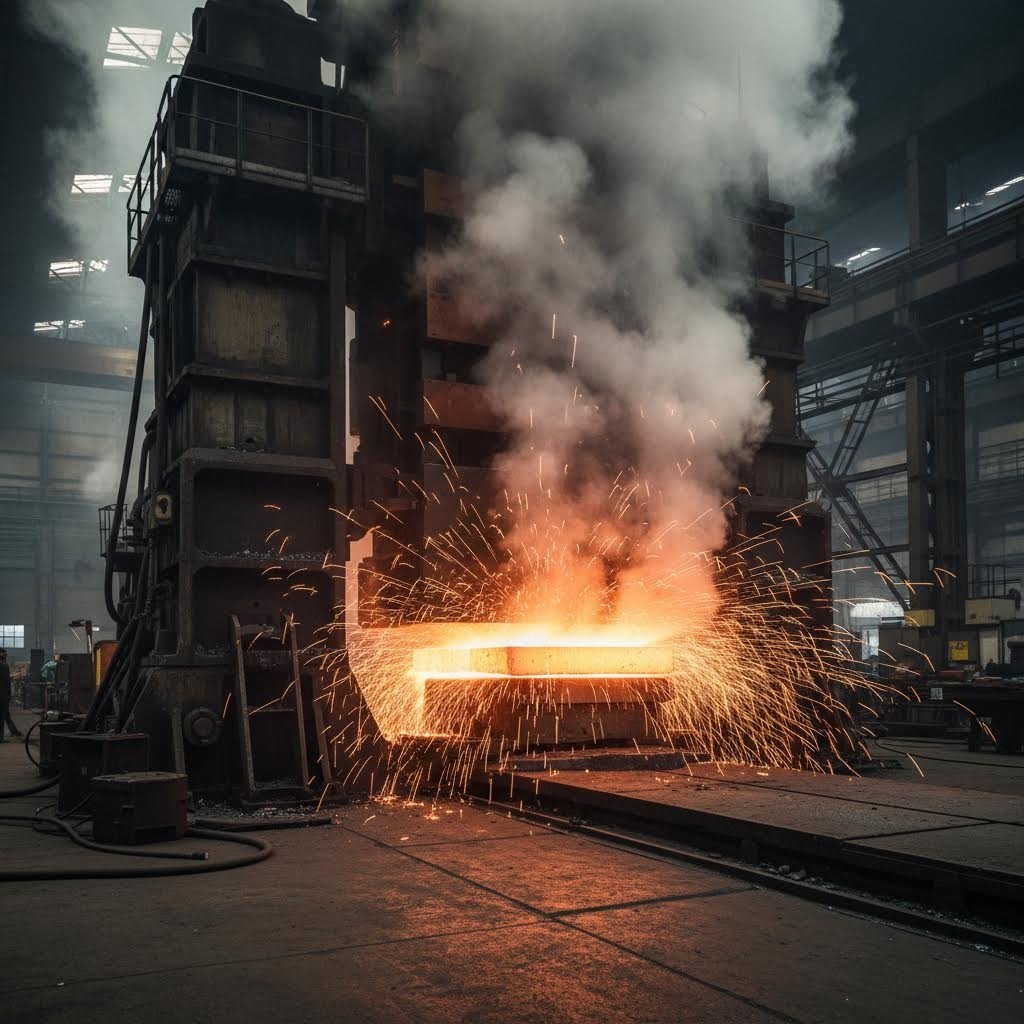
What happens when raw steel meets millions of pounds of compressive force at extreme temperatures? You get custom forged suspension components—precision-engineered parts that outperform their mass-produced counterparts in virtually every measurable way. Unlike stamped or cast alternatives churned out by the millions, these specialized parts are created through controlled deformation of heated metal, resulting in a superior grain structure that dramatically enhances strength and durability.
When you're pushing a vehicle to its limits on the track or demanding reliability under heavy loads, the manufacturing method behind each component matters more than you might realize. Custom forged parts represent the pinnacle of suspension technology, delivering performance characteristics that simply cannot be replicated through other manufacturing processes.
What Makes Forged Suspension Parts Different
Imagine taking a solid metal billet, heating it until it becomes malleable, then shaping it under immense pressure. This is the essence of forging—a process that fundamentally transforms the metal's internal structure. According to Interstate Metal, forging aligns the metal's grain structure, which increases its strength and durability compared to other manufacturing methods.
The difference becomes immediately apparent when you compare forged components to alternatives. Mass-produced suspension parts often prioritize cost efficiency over performance, using casting or stamping methods that create random or disrupted grain patterns. Forged components, by contrast, are engineered for applications that experience high stress or load—exactly what suspension systems endure every moment a vehicle is in motion.
The Science Behind Metal Grain Flow
Here's where things get interesting. Metal isn't just a solid block of uniform material—it has an internal grain structure, similar to the grain in wood. When you forge a component, you're not just shaping the outside; you're aligning those internal grains along the natural stress paths the part will experience in real-world use.
This directional strength is critical for suspension components that endure constant dynamic loads. Every bump, corner, and braking event sends forces rippling through your suspension knuckle, steering spindle, and connecting components. The uniform grain flow in forged parts minimizes weak points or defects within the component, creating predictable performance under extreme conditions.
Research comparing forged versus cast components shows significant advantages: approximately 26% higher tensile strength and 37% higher fatigue strength in representative comparisons. For suspension components subjected to millions of stress cycles, this difference translates directly into longevity and safety.
The primary categories of custom forged suspension components include:
- Control Arms: These connect the wheel hub to the vehicle frame, controlling wheel movement while absorbing road impacts. Forged control arms resist bending under extreme cornering forces.
- Steering Knuckles: The central connection point for the wheel assembly, brake components, and steering system. A forged suspension knuckle handles complex multi-directional loads with superior reliability.
- Tie Rods: Critical linkages that transmit steering input from the rack to the wheels. Each tie rod must withstand constant push-pull forces without flex or failure.
- Spindles: The steering spindle supports the wheel hub and serves as the pivot point for steering action, requiring exceptional strength-to-weight characteristics.
Whether you're building a race car, restoring a classic muscle car, or engineering heavy-duty commercial vehicles, understanding forging technology gives you a critical advantage. These custom forged parts aren't just stronger—they're engineered to perform precisely where mass-produced alternatives fall short.
Forged vs Cast vs Stamped vs Billet Components
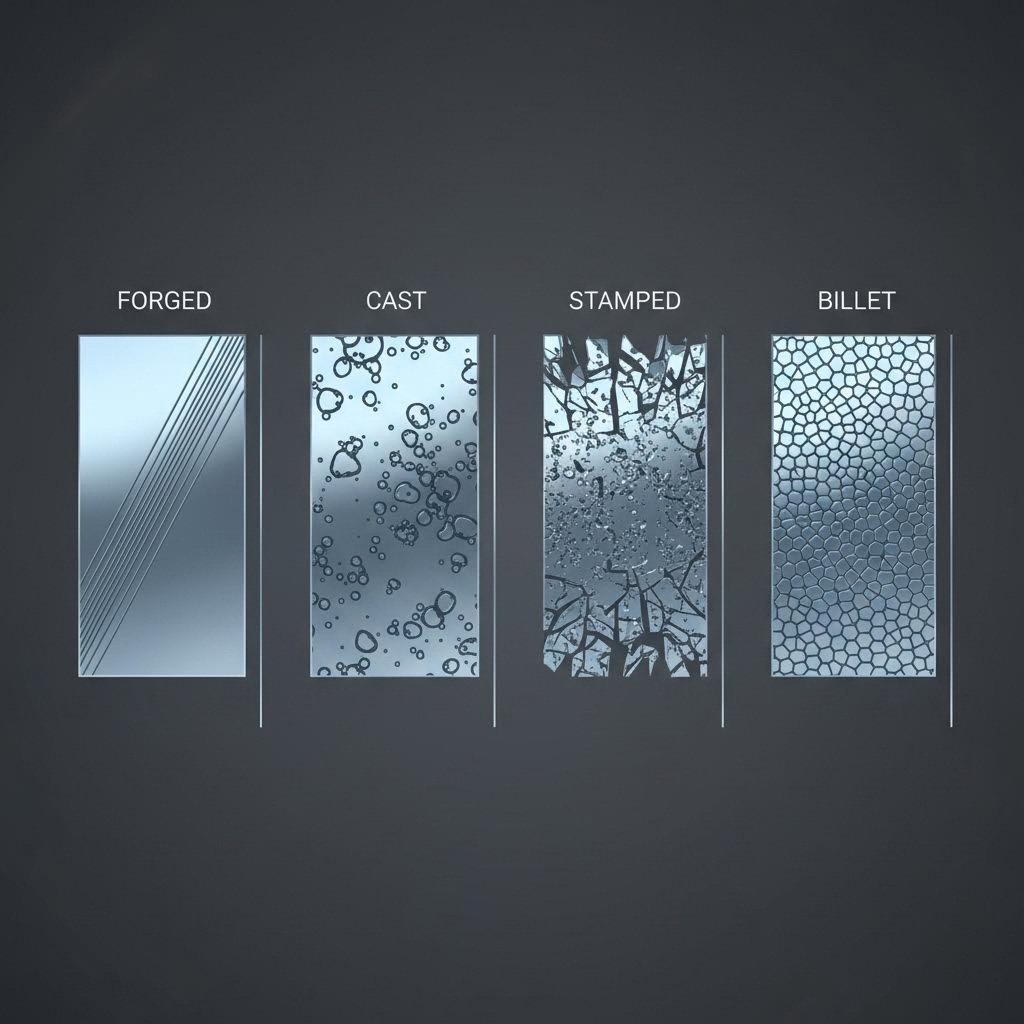
So you understand that forging creates superior grain structure—but how does it actually stack up against the alternatives? When selecting suspension components, you'll encounter four primary manufacturing methods: forging, casting, stamping, and billet machining. Each process fundamentally shapes how the final part performs under stress, and the differences aren't subtle.
Choosing the wrong manufacturing method for your spindle and knuckle assembly or upper lower ball joints could mean the difference between a component that bends gracefully under extreme stress and one that fractures catastrophically without warning. Let's break down exactly what separates these processes.
Forged vs Cast Suspension Parts
Casting involves heating metal until it becomes liquid, then pouring that molten material into a mold where it solidifies. Sounds straightforward, right? The problem lies in what happens during solidification. As the metal cools, it forms a random, non-directional grain structure. According to HTC Forge, cast parts may contain internal defects such as voids, shrinkage, or cavities—weaknesses that become failure points under repeated stress.
Forged products take the opposite approach. Instead of melting the metal, forging applies massive compressive forces to a heated solid billet. This process refines and aligns the grain structure, eliminating porosity and creating a denser, more uniform material. The result? Forged components deliver approximately 26% higher tensile strength and 37% higher fatigue strength compared to their cast equivalents.
For suspension applications where components experience millions of stress cycles, this strength advantage translates directly into reliability. Cast aluminum or iron parts work fine for low-stress applications, but when you're loading a spindle knuckle assembly through aggressive cornering or heavy payloads, forged alternatives simply outperform.
Why Manufacturing Method Determines Performance
Stamping represents another common manufacturing approach, particularly for high-volume OEM production. The process cuts and forms shapes from sheet metal using dies and presses. While cost-effective for mass production, stamped components have inherent limitations. The sheet metal starting material has a fixed thickness, restricting design flexibility. More importantly, the cutting and forming process disrupts grain flow at edges and bend points, creating potential stress concentration zones.
Billet machining starts with a solid block of material—often extruded or roll-forged aluminum or steel—then removes material through CNC cutting to achieve the final shape. This approach offers excellent precision and works well for low-volume custom applications. However, as Cerro Fabricated Products explains, billet parts sacrifice the grain flow benefits that forging provides. When you machine away material, you're cutting through the existing grain structure rather than shaping it to follow stress paths.
The forging process enhances strength by up to 25% compared to the same material in billet form, specifically because compression aligns grain flow along the contour of the finished part. For a ball joint housing or control arm that experiences complex multi-directional loading, this aligned grain structure provides superior resistance to fatigue failure.
| Criteria | Forged | Cast | Stamped | Billet |
|---|---|---|---|---|
| Tensile Strength | Highest (aligned grain flow) | Moderate (random grain, potential porosity) | Moderate (disrupted at edges) | Good (uniform, but grain flow is cut) |
| Fatigue Resistance | 37% higher than cast | Baseline reference | Limited by stress concentrations | Good but inferior to forged |
| Weight Efficiency | Excellent (strength allows thinner sections) | Moderate (requires more material for strength) | Limited by sheet thickness | Good (precision allows optimization) |
| Cost Factors | Higher tooling, lower per-unit for volume | Low tooling, economical for high volume | Very low per-unit cost | High per-unit, low tooling |
| Ideal Applications | Racing, heavy-duty, safety-critical | Non-critical, complex shapes | High-volume OEM brackets | Prototypes, custom low-volume |
The Safety Factor: Predictable Failure Modes
Here's something that doesn't show up on specification sheets but matters enormously in real-world applications: how components fail when pushed beyond their limits. Forged suspension parts exhibit predictable failure modes under extreme stress. When overloaded, they typically bend or deform gradually rather than fracturing suddenly.
Cast components behave differently. The random grain structure and potential internal voids create unpredictable weak points. Under extreme stress, cast parts are more prone to sudden, catastrophic fracture—the kind of failure that gives no warning and can have serious consequences at speed.
This predictable behavior stems from how grain flow alignment handles cyclic loading. Suspension components don't just bear static loads; they experience constant dynamic forces as the vehicle moves. Every acceleration, braking event, and directional change sends stress waves through the spindle and knuckle assemblies, control arms, and connecting linkages. Forged components distribute these forces along aligned grain boundaries, while cast parts concentrate stress at random internal defect points.
For anyone building a vehicle for racing, heavy-duty work, or simply wanting maximum reliability, the manufacturing method behind each component deserves careful consideration. Understanding these fundamental differences helps you evaluate whether a component's price reflects genuine engineering value or simply marketing claims.
The Precision Forging Manufacturing Process
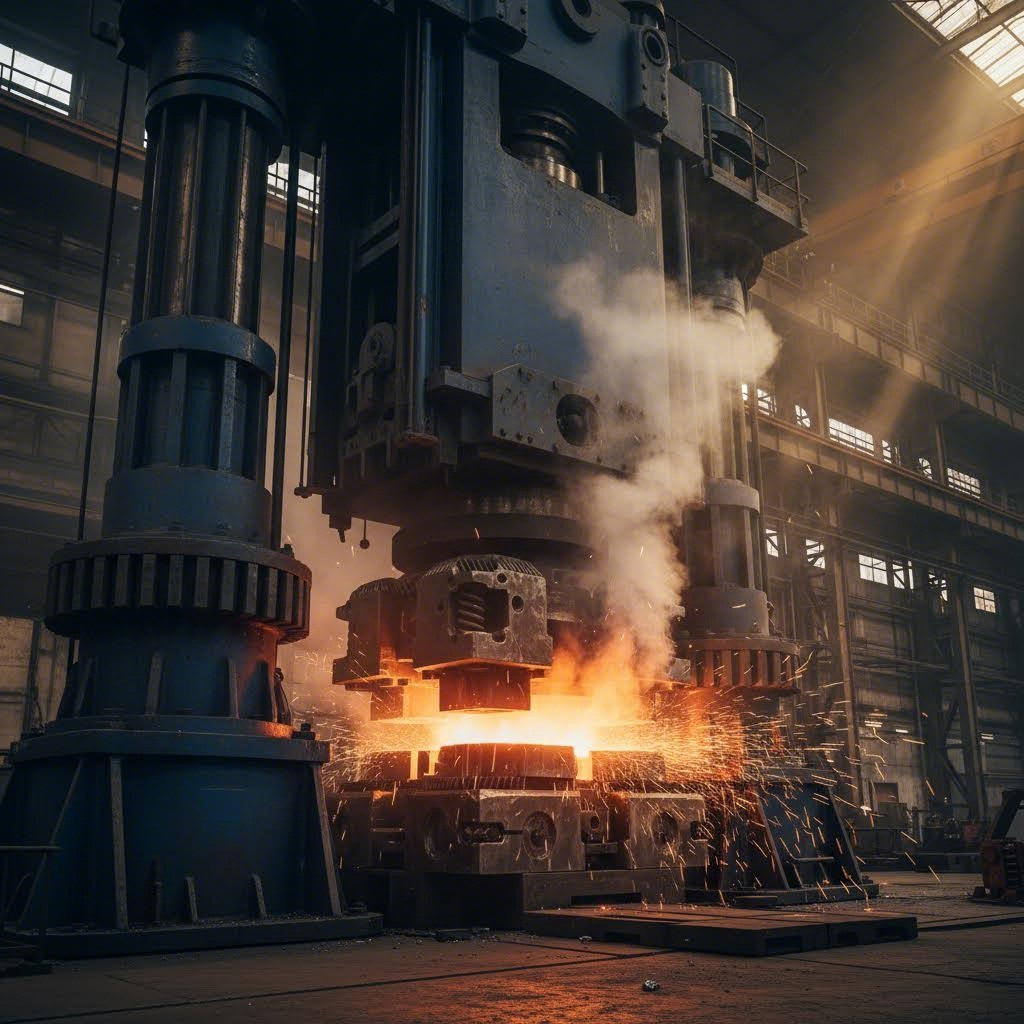
Now that you understand why forging outperforms other manufacturing methods, let's explore exactly how custom forged suspension components come to life. The journey from raw steel billet to race-ready control arm involves multiple precision stages, each contributing to the final product's exceptional performance characteristics.
Understanding this process helps you evaluate manufacturers more effectively—and appreciate why certain forging component suppliers command premium pricing for their expertise.
Closed-Die Forging for Precision Suspension Parts
When it comes to automotive forging, two primary approaches exist: open-die and closed-die forging. For complex suspension geometries like control arms, steering knuckles, and spindles, closed-die forging (also called impression die forging) is the method of choice.
What's the difference? Open-die forging uses flat or simple-shaped dies that don't completely enclose the workpiece. According to the Forging Industry Association, this process works well for simple shapes like discs, rings, sleeves, cylinders, and shafts. The dies compress the metal through a series of movements until achieving the desired shape—but the final geometry options remain limited.
Closed-die forging takes a fundamentally different approach. The process uses pressure to compress heated metal into an enclosed die impression that defines the complete component shape. As the Forging Industry Association explains, closed-die forging often employs a succession of impression dies to progressively modify the material into its final form. This multi-stage approach allows manufacturers to create the complex contours that suspension components require—things like integrated mounting points, tapered sections, and precisely angled surfaces that would be impossible with open-die methods.
For a suspension arm with multiple mounting holes, reinforced stress areas, and specific geometry requirements, closed-die forging provides the precision that ensures proper alignment cam bolt positioning and consistent fitment across production runs.
From Raw Billet to Finished Component
Ever wonder what actually happens inside a forging operation? The transformation from raw material to finished suspension component follows a carefully controlled sequence. Each step builds on the previous one, and cutting corners at any stage compromises the final product.
- Material Selection: Everything starts with choosing the right alloy. For suspension components, this typically means chromoly steel (like 4140 or 4340), aluminum alloys for weight-sensitive applications, or specialized materials for extreme environments. Material certification and traceability documentation begin here.
- Billet Preparation: Raw material gets cut to precise lengths and weights calculated for each specific component. Too little material means incomplete die fill; too much creates excessive flash that wastes material and increases trimming costs.
- Heating to Forging Temperature: Billets enter induction furnaces or gas-fired heating systems, reaching temperatures where the metal becomes malleable but remains solid. For steel, this typically means 1,000-1,250°C (1,832-2,282°F). Precise temperature control is critical—too hot causes grain growth and oxidation; too cold requires excessive force and risks cracking.
- Die Impression: The heated billet enters the forging press or hammer. Equipment ranges from mechanical presses to hydraulic systems to drop hammers, each suited for different component sizes and production volumes. Multiple impressions—roughing, blocking, and finishing dies—progressively shape the metal into its final form.
- Flash Trimming: Excess material squeezed out between die halves (called flash) gets trimmed away while the forging component is still hot. This operation requires its own specialized tooling matched to the component geometry.
- Heat Treatment: Perhaps the most critical post-forging step. Controlled heating and cooling cycles—normalizing, quenching, and tempering—transform the metal's microstructure to achieve target hardness, strength, and toughness specifications. Without proper heat treatment, even perfectly forged parts won't deliver their potential performance.
- Final Machining: CNC machining operations create precise mounting surfaces, bore holes for cam bolts and bushings, and achieve the tight tolerances that ensure proper suspension geometry. Surface finishing processes may include shot peening for fatigue resistance or coating for corrosion protection.
Why Vertical Integration Matters
Here's something that separates premium manufacturers from commodity suppliers: in-house die manufacturing capability. When a forging operation designs and builds its own dies, several advantages emerge.
First, quality control spans the entire process. Die accuracy directly determines forging precision—and when die-making happens under the same roof as forging and machining, engineers can optimize the complete system rather than accepting whatever tooling an outside supplier provides. For a front end rebuild kit containing multiple matched components, this integrated approach ensures consistent quality across every part.
Second, lead times shrink dramatically. Die modifications for design changes or new component development happen quickly when tooling expertise exists in-house. Manufacturers relying on external die suppliers face weeks of delays for every iteration.
Third, integrated forging and CNC machining capabilities create tighter tolerances and better surface finishes. When the same engineering team oversees both operations, they can design forging geometry that optimizes machining efficiency—leaving minimal stock where precision matters while reducing overall cycle time.
The heat treatment step deserves special attention because it fundamentally determines final mechanical properties. A forging with excellent grain flow but improper heat treatment will underperform. Conversely, optimized heat treatment cycles extract maximum performance from the aligned grain structure that forging creates. This is why serious manufacturers invest heavily in metallurgical expertise and heat treatment equipment—it's the difference between good components and exceptional ones.
With the manufacturing process clear, the next consideration becomes material selection—the specific alloys that determine whether a component suits racing applications, heavy-duty work, or weight-sensitive performance builds.
Material Selection and Engineering Specifications
You've seen how the forging process transforms raw metal into precision components—but what metal should you start with? Material selection fundamentally determines whether your custom forged suspension components will excel in racing applications, survive punishing off-road abuse, or deliver decades of reliable street performance. The wrong alloy choice undermines even the most perfect forging process.
Understanding material specifications also helps you evaluate supplier claims. When a manufacturer quotes tensile strength or yield strength figures, you'll know exactly what those numbers mean for real-world performance.
Steel Alloys for Maximum Durability
For most high-performance suspension applications, chromoly steel alloys remain the go-to choice. Two grades dominate the conversation: 4140 and 4340. Both are medium carbon alloys enhanced with chromium and molybdenum, but their performance characteristics differ in ways that matter for demanding applications.
4140 Chromoly Steel offers an excellent balance of strength, toughness, and machinability. According to Double Eagle Alloys, 4140 provides versatile hardenability that performs well in medium to high-stress environments. Its fatigue and impact resistance make it reliable for components experiencing repeated stress cycles—exactly what ball joints truck applications and control arms endure during normal operation.
What makes 4140 particularly attractive for many suspension components is its machinability in the annealed condition. This means manufacturers can achieve tight tolerances on mounting surfaces and bore holes more economically. The alloy can also be nitrided for enhanced surface wear resistance, extending service life in areas prone to degradation.
4340 Chromoly Steel steps up when applications demand maximum performance. The key difference? Nickel. This additional alloying element gives 4340 superior hardenability and toughness compared to 4140. As Double Eagle Alloys notes, 4340 delivers exceptional resistance to shock and impact—crucial for parts exposed to sudden load changes and cyclic stresses.
For proforged ball joints, steering knuckles, and spindles that must withstand extreme cornering forces or heavy payload demands, 4340 provides the extra margin of safety. The alloy's superior heat-treating capabilities allow it to achieve higher hardness and strength levels, making it ideal for heavy-duty applications where component failure isn't an option.
Both alloys respond excellently to heat treatment, but the process parameters differ. Proper quench and temper cycles unlock each material's potential—and this is where manufacturer expertise becomes critical. Improper heat treatment can leave even premium 4340 performing below its specifications.
Aluminum and Titanium Options for Weight Reduction
When every pound matters—think racing applications or performance forged products targeting unsprung weight reduction—aluminum and titanium alloys enter the conversation.
Aluminum Alloys like 7075-T6 offer impressive strength-to-weight ratios. According to HonTitan's engineering guide, 7075-T6 (often called "aircraft aluminum") delivers tensile strength around 572 MPa while weighing just 2.7 g/cm³. That's significantly lighter than steel's typical 7.8 g/cm³ density.
However, aluminum has limitations. It possesses no fatigue limit, meaning even small repeated stresses will eventually cause microscopic cracks. Given enough cycles, aluminum parts will fail—it's a matter of when, not if. For torsion bars and components experiencing constant flex, this characteristic requires careful design consideration and more frequent inspection intervals.
Titanium Alloys—specifically Grade 5 (Ti-6Al-4V)—represent the ultimate performance material for weight-critical applications. With tensile strength around 950 MPa and density of 4.43 g/cm³, titanium delivers roughly twice the strength of aerospace aluminum while adding only 60% more weight per unit volume.
The real magic happens in design optimization. Because titanium is so much stronger, engineers can use less material to support the same loads. The result? A finished titanium suspension component that weighs less than an equivalent aluminum design—not because titanium is lighter by volume, but because less material is required.
Titanium also possesses a distinct fatigue limit. As long as stresses stay below a certain threshold, titanium acts like a "super spring"—flexing and returning to shape for virtually infinite cycles without failure. For racing applications where component longevity under extreme stress matters, this characteristic proves invaluable.
The trade-off? Cost. Titanium bar stock typically runs 5x to 10x more than equivalent aluminum, and machining costs add another 30-50% premium due to specialized tooling requirements and slower cutting speeds.
| Criteria | 4140 Steel | 4340 Steel | 7075-T6 Aluminum | Grade 5 Titanium |
|---|---|---|---|---|
| Strength-to-Weight Ratio | Good | Very Good | Excellent | Superior |
| Corrosion Resistance | Requires coating/plating | Requires coating/plating | Good (oxide layer) | Exceptional (immune to saltwater) |
| Relative Cost | $ | $$ | $$ | $$$$$ |
| Typical Applications | Control arms, tie rods, general suspension | Heavy-duty spindles, racing knuckles, high-stress joints | Racing control arms, lightweight brackets | Professional motorsports, aerospace, extreme weight savings |
| Fatigue Behavior | Excellent with proper heat treatment | Superior toughness under impact | No fatigue limit—will eventually fail | Has fatigue limit—infinite life below threshold |
Understanding Critical Specifications
When evaluating performance forged products, three mechanical property specifications deserve your attention:
- Tensile Strength: The maximum stress a material can withstand before breaking. Higher numbers mean the component can handle greater peak loads—critical for impact scenarios.
- Yield Strength: The stress level at which permanent deformation begins. For suspension components, staying below yield strength during normal operation ensures parts return to their original shape rather than bending permanently.
- Elongation Percentage: How much a material stretches before breaking. Higher elongation indicates more ductility—the component will bend and deform rather than fracturing suddenly under extreme overload.
These specifications work together. A proforged ball joint designed for heavy truck applications might prioritize high yield strength to prevent deformation under constant heavy loads. A racing control arm might accept lower absolute strength in exchange for reduced weight, relying on design optimization to stay within safety margins.
Material Traceability and Certification
Here's something that separates serious manufacturers from commodity suppliers: material traceability documentation. As Creator Components emphasizes, the quality of forgings depends heavily on raw material selection and handling, with control points spanning chemical composition, melting process verification, and mechanical property confirmation.
For safety-critical suspension components, you should expect manufacturers to provide mill certifications documenting the exact alloy chemistry and mechanical properties of the raw material used in your parts. This traceability becomes essential for quality control—if issues arise, proper documentation allows tracking back to specific material lots.
Reputable suppliers maintain records showing material origin, heat treatment parameters, and inspection results throughout the manufacturing process. This documentation isn't just paperwork—it's evidence that proper procedures were followed and specifications were met.
With material fundamentals understood, the next consideration becomes matching these options to specific applications—whether that's circle track racing, off-road adventures, or heavy commercial duty cycles.

Application-Specific Component Requirements
So you've got the material science down—but which alloy and design configuration actually makes sense for your build? Here's where things get practical. Custom forged suspension components aren't one-size-fits-all solutions. A control arm optimized for drag racing would perform terribly in rally conditions, while off-road-ready spindles would be overkill for a weekend autocross car.
Understanding how different applications stress suspension systems differently helps you specify components that match your actual use case—avoiding both over-engineering costs and under-engineering failures.
Racing Discipline Requirements
Every racing discipline subjects suspension to unique stress patterns. What works brilliantly on smooth asphalt becomes a liability on dirt, and straight-line acceleration demands differ completely from high-speed cornering loads. Let's break down what each discipline prioritizes.
- Circle Track Racing: Constant cornering in one direction creates asymmetrical stress patterns. Left-side components endure relentless compression loading while right-side parts experience tension cycles. Forged control arms and spindles need to handle sustained lateral forces without fatigue. Weight reduction helps, but durability under repetitive loading takes priority. Panhard bars become critical for controlling rear axle lateral movement lap after lap.
- Road Racing: High-speed transitions between left and right corners demand balanced suspension geometry and precise handling feedback. According to GExhaust, circuit racing requires careful suspension geometry adjustments for optimal track grip. Forged steering knuckles and control arms must maintain tight tolerances under alternating loads—any flex translates to unpredictable handling at speed.
- Drag Racing: Straight-line acceleration creates enormous rearward weight transfer. Rear suspension components must handle instant torque loading without wheel hop or axle wrap. As the same source notes, stronger springs and shocks keep the car grounded during hard launches. Forged control arms need exceptional resistance to sudden load spikes rather than sustained cycling.
- Rally Racing: Perhaps the most demanding discipline for suspension components. Rally demands special parts that handle rough roads and jumps while maintaining control. Forged components must combine impact resistance with fatigue durability—surviving both sudden jolts from rocks and the constant vibration of gravel stages. Longer suspension travel requires components designed for extended articulation without binding.
Across all racing disciplines, the debate between coilovers vs springs often comes down to adjustability needs. Coilovers vs lowering springs isn't just about ride height—it's about tuning capability. Racing applications typically favor coilover setups that allow quick adjustments for track conditions, while simpler lowering springs might suffice for less demanding use cases.
Street Performance vs Off-Road Demands
Racing grabs headlines, but the majority of custom forged suspension components serve street and off-road applications where priorities shift dramatically.
Off-Road Applications: Forget about shaving ounces—off-road builds prioritize survival. Components face impacts from rocks, ruts, and unexpected terrain features that would destroy racing-spec parts. According to GExhaust, independent suspension helps each wheel grip bumpy surfaces independently, while solid axle setups excel at climbing steep obstacles.
Forged control arms and steering knuckles for off-road duty need generous material sections in high-stress areas. The weight penalty matters less than ensuring a rock strike at speed doesn't bend a critical component miles from the nearest road. Heat treatment specifications often emphasize toughness and impact resistance over maximum hardness.
Street Performance Builds: Here's where you're balancing performance potential against daily livability. Components must handle spirited driving while surviving potholes, speed bumps, and the occasional unplanned curb encounter. Noise, vibration, and harshness characteristics matter—bushings and mounting interfaces need attention alongside the forged components themselves.
Heavy-Duty Commercial Applications: Trucks and commercial vehicles face a different challenge entirely: constant loads rather than occasional spikes. A delivery truck's suspension might never see the g-forces of a race car, but it experiences millions of load cycles carrying maximum payload. Forged components for these applications prioritize fatigue resistance and consistent performance across extended service intervals. Material selection often favors proven 4140 or 4340 steel with conservative heat treatment for maximum longevity.
Pro Touring: The Best of Both Worlds
What if you want vintage muscle car looks with modern handling capabilities? This is exactly what pro touring builds achieve. According to MetalWorks Classics, pro touring transforms vintage rides by upgrading steering, braking, and suspension while preserving classic aesthetics—essentially making your old high school pride and joy perform as well as a new late-model muscle car.
Pro touring f body builds—think classic Camaros and Firebirds—exemplify this philosophy. The challenge? These platforms weren't designed for modern performance expectations. Factory suspension geometry often works against handling precision. F body pro touring projects typically require extensively re-engineered front and rear suspension systems, with forged control arms, spindles, and steering components designed specifically for modified geometry rather than simply replacing stock parts.
The key difference from pure racing builds: street drivability matters. Components must handle aggressive cornering during weekend canyon runs while remaining compliant enough for comfortable highway cruising. This demands careful attention to bushing selection, suspension travel, and ride quality—areas where simply bolting on the stiffest racing components creates an unpleasant daily driver.
Classic Car Restoration With Modern Performance
Classic car restoration projects present a unique opportunity: integrating modern forged components into vintage platforms that originally used inferior manufacturing methods. Original suspension parts from the 1960s and 1970s were typically cast or stamped—adequate for their era's expectations but limiting by today's standards.
Modern forged replacements offer several advantages for restoration projects:
- Improved Safety: Forged components' predictable failure modes matter when restoring vehicles that may be decades old and driven enthusiastically
- Better Availability: Quality reproduction parts using modern forging techniques often exceed original OEM specifications
- Upgrade Potential: Components designed for increased capability can support engine power upgrades that exceed factory suspension ratings
- Longevity: Superior fatigue resistance means less frequent replacement during the vehicle's extended second life
Each application category ultimately prioritizes different characteristics. Racing builds chase weight reduction and precision. Off-road vehicles demand impact resistance and durability. Commercial applications require fatigue life and compliance with regulatory standards. Pro touring projects balance all these concerns while adding street comfort to the equation.
Understanding your actual use case—not just your aspirations—guides smarter component selection. With application requirements clear, the next question becomes: how do you verify that manufacturers actually deliver the quality they promise?
Quality Certifications and Testing Standards
You've identified the right material, specified your application requirements, and found a manufacturer with impressive forging capabilities. But how do you verify they actually deliver consistent quality? This is where certifications and testing standards separate premium suppliers from those cutting corners. Understanding what these credentials mean—and what testing protocols ensure safety—gives you the tools to evaluate manufacturers with confidence.
For custom forged suspension components destined for safety-critical applications, rigorous quality assurance isn't optional. It's the foundation that determines whether parts perform as specified under real-world stress conditions.
What IATF 16949 Certification Means for Quality
When evaluating forging manufacturers, one certification stands above the rest for automotive applications: IATF 16949. Developed by the International Automotive Task Force, this standard represents the automotive industry's most stringent quality management framework.
What makes IATF 16949 different from generic quality certifications? According to Smithers, it harmonizes various quality standards throughout the global automotive industry by combining ISO 9001 requirements with additional automotive-specific elements. The result is a unified framework that addresses everything from risk management to production part approval processes.
For suspension component buyers, IATF 16949 certification signals several critical capabilities:
- Defect Prevention Focus: The standard emphasizes preventing defects rather than simply detecting them after production—catching problems before they become finished parts
- Continuous Improvement Culture: Certified manufacturers must demonstrate ongoing efforts to reduce variation and waste throughout their processes
- Supply Chain Control: Requirements extend beyond the manufacturer's own operations to include supplier quality management
- Risk-Based Thinking: Systematic identification and mitigation of potential failure modes before they impact production
Many OEMs require IATF 16949 certification as a condition for supplier approval. If you're sourcing components that will eventually enter an automotive supply chain—whether for standard forged products or precision chassis inc applications—this certification often becomes non-negotiable.
Testing Protocols That Ensure Safety
Certifications establish system-level quality management, but testing protocols verify that individual components actually meet specifications. For forged suspension parts, multiple testing categories work together to ensure reliability.
Destructive Testing deliberately pushes components to failure. According to ZigPoll's engineering guide, this includes tensile testing to measure ultimate strength, impact testing (Charpy or Izod methods) to evaluate energy absorption during sudden loads, and hardness testing (Rockwell, Brinell, or Vickers) to verify heat treatment effectiveness.
Fatigue Testing simulates the cyclic loading that suspension components experience throughout their service life. Test equipment applies repeated stress cycles—sometimes millions of them—to identify where and when failure occurs. This data validates whether components will survive real-world conditions without premature cracking or fracture.
Non-Destructive Testing (NDT) detects internal or surface flaws without destroying the part. As Singla Forging explains, common NDT methods include ultrasonic testing for internal defects, magnetic particle inspection for surface and near-surface flaws, and dye penetrant testing for surface-breaking cracks. These techniques catch problems that visual inspection would miss.
Dimensional Inspection using Coordinate Measuring Machines (CMM) verifies that finished components meet geometric tolerances. For proforged applications where mounting points must align precisely with other suspension elements, dimensional accuracy determines whether parts actually fit and function correctly.
Material Verification confirms that the specified alloy was actually used. Chemical analysis and mechanical property testing ensure the raw material matches certification documents—preventing substitution of inferior grades that might pass visual inspection but fail under load.
Key Certifications and What They Guarantee
Beyond IATF 16949, several other certifications indicate manufacturer capabilities:
- ISO 9001: The foundational quality management system standard that IATF 16949 builds upon—establishes basic process control and documentation requirements
- ISO 14001: Environmental management certification indicating sustainable manufacturing practices—increasingly important for new dimensions precision in global supply chains
- ISO 26262: Functional safety standard for electrical and electronic systems—relevant when suspension components integrate with electronic controls
- ASTM International Standards: Specific test methods for mechanical properties, corrosion resistance, and chemical analysis that define how testing should be performed
- SAE Standards: Industry-specific requirements like SAE J403 for material chemistry that establish common specifications across manufacturers
Traceability and Documentation Requirements
Quality-focused manufacturers maintain complete traceability from raw material through finished component. What should you expect from a reputable supplier?
Material certifications documenting alloy chemistry and mechanical properties of the specific heat lot used in your parts. Heat treatment records showing time, temperature, and quench parameters for each batch. Inspection reports with actual measured values—not just pass/fail checkmarks. Test certificates from destructive and non-destructive testing protocols.
This documentation serves two purposes. First, it provides evidence that proper procedures were followed. Second, if issues arise later, traceability allows investigation back to specific material lots, equipment, and process parameters—essential for root cause analysis and preventing recurrence.
For international supply chains, global compliance becomes critical. Components manufactured in one country, assembled in another, and sold in a third must meet requirements across all jurisdictions. Certifications from accredited bodies like TÜV, UL, or Intertek provide independent verification that carries credibility worldwide.
The difference between precision chassis inc quality and commodity alternatives often comes down to this documentation discipline. Cutting corners on testing and traceability might reduce costs initially—but creates liability exposure and reliability risks that surface only after components enter service.
With quality verification frameworks understood, the next step is navigating the actual ordering process—knowing what information manufacturers need and what timeline to expect from initial inquiry through production delivery.
The Custom Ordering and Collaboration Process
Ready to move from research to reality? Ordering custom forged suspension components isn't like buying off-the-shelf parts from a catalog. It's a collaborative engineering process where your specifications, the manufacturer's expertise, and practical production constraints all converge. Understanding what to expect—and what you need to bring to the table—makes the difference between a smooth project and frustrating delays.
Whether you're developing front end rebuild kits for a restoration line or engineering one-off racing components, the ordering process follows predictable stages. Let's walk through exactly what happens from first contact to final delivery.
Information Buyers Need to Provide
Here's the reality: manufacturers can only be as precise as the information you provide. Showing up with a vague sketch and saying "make me a control arm" wastes everyone's time. According to Western of Texas Forge & Flange, successful custom forging projects require buyers to prepare comprehensive documentation covering application details, material specifications, and design parameters.
What specific information should you have ready?
- CAD Files or Engineering Drawings: Detailed 3D models or 2D drawings with complete dimensions and tolerances. The more precise your documentation, the faster manufacturers can evaluate feasibility and provide accurate quotes.
- Load Specifications: Define the operating conditions your components will face—maximum loads, cyclic stress patterns, impact scenarios, and safety factors. For suspension applications, this includes cornering forces, braking loads, and impact from road irregularities.
- Material Preferences: Specify the alloy grade if you have requirements, or describe performance needs so engineers can recommend appropriate options. Include any surface treatment or coating requirements.
- Quantity Requirements: Prototype quantities, initial production runs, and anticipated annual volumes all affect tooling decisions and pricing. Be realistic about your forecast—overestimating creates expensive tooling you may never amortize.
- Application Details: What vehicle platform? Racing or street use? Environmental conditions? This context helps manufacturers suggest design optimizations you might not have considered.
- Relevant Standards: Specify any compliance requirements—ASTM material standards, dimensional tolerances per specific SAE standards, or OEM-specific requirements if applicable.
Don't worry if you can't answer every question initially. Quality manufacturers have engineering teams ready to collaborate on design optimization. The initial consultation often reveals opportunities to improve your design for manufacturability while reducing costs.
From Prototype to Production Timeline
Imagine placing an order today—when can you realistically expect parts in hand? The answer depends heavily on project complexity and where you are in the development cycle.
According to Shaoyi Metal Technology's lead time analysis, calculating realistic timelines requires understanding that total lead time equals pre-processing time plus processing time plus post-processing time. For custom forging projects, each phase introduces variables that standard manufacturing doesn't face.
The typical ordering process unfolds through these sequential stages:
- Initial Inquiry and Consultation: Submit your requirements and discuss feasibility with the engineering or sales team. Expect 1-3 days for initial response on straightforward projects, longer for complex geometries.
- Engineering Evaluation: The manufacturer assesses design feasibility, recommends the optimal forging process (open-die vs. closed-die), evaluates material availability, and identifies any design modifications needed. This phase typically takes 3-7 business days.
- Quotation and Proposal: You'll receive detailed pricing covering tooling costs, material expenses, production charges, and finishing operations. Lead times and payment terms are specified. Review carefully—this is where you confirm all specifications align with your requirements.
- Order Confirmation and Contract: Issue a purchase order with any special conditions. For larger projects, a formal agreement may outline responsibilities, milestones, and warranties.
- Die Design and Tooling Fabrication: For closed-die forging, custom dies must be designed and manufactured. This step often represents the longest lead time component—typically 4-8 weeks depending on complexity. Components like tie rod sleeves with relatively simple geometries require less elaborate tooling than complex steering knuckles.
- Material Procurement: Raw material is sourced and verified against specifications. Common alloys may be in stock; specialty grades might add 2-4 weeks.
- Prototype Production: First articles are forged, heat treated, and machined. Rapid prototyping capabilities at some manufacturers can deliver initial samples in as little as 10 days for simpler components.
- Inspection and Approval: Prototypes undergo dimensional verification, material testing, and potentially destructive testing on sample pieces. You'll review first article inspection reports before approving production.
- Production Run: Once prototypes are approved, full production proceeds according to your quantity requirements and delivery schedule.
- Final Inspection, Packaging, and Shipping: Completed components are inspected, documented, and packed for transit with appropriate protection and labeling.
Understanding Minimum Order Quantities
One question always comes up: "What's the minimum order?" The honest answer: it depends on component complexity and manufacturer capabilities.
Custom forging involves significant upfront investment in tooling. Die sets for closed-die forging can cost thousands to tens of thousands of dollars. Manufacturers need sufficient order volume to amortize these costs into reasonable per-piece pricing. A tie rod adjusting sleeve with straightforward geometry might have lower MOQ thresholds than a complex steering knuckle requiring multiple impression dies.
Some manufacturers specialize in low-volume, high-precision work—accepting orders as small as 50-100 pieces for simpler components. Others focus on high-volume OEM production where MOQs start at thousands of units. As QA1's OEM services describe, flexible manufacturing with global supply chain support allows scaling from specialty builds to high-volume production—but capabilities vary significantly between suppliers.
If your prototype quantities are small, discuss options for prototype tooling. Some manufacturers offer soft tooling or simplified dies for initial validation, then transition to hardened production tooling once designs are finalized. This approach reduces upfront investment while still allowing real forged samples for testing.
The Value of Rapid Prototyping
Why rush to create prototypes before committing to expensive production tooling? Because discovering problems in a $500 prototype costs far less than discovering them after investing $15,000 in hardened dies and producing 1,000 flawed parts.
Rapid prototyping capabilities validate several critical factors:
- Dimensional Accuracy: Confirm that forged and machined components actually match design specifications and fit with mating parts
- Material Performance: Test actual forgings under simulated service conditions before full production commitment
- Manufacturing Feasibility: Identify any geometric features that create forging challenges or require design modification
- Assembly Verification: Ensure tie rod sleeves, control arms, and other components integrate correctly with existing suspension geometry
The investment in prototyping phase pays dividends in avoided rework, tooling modifications, and production delays. Manufacturers offering integrated engineering support can often suggest design refinements during prototyping that improve both performance and manufacturability.
Communication Expectations Throughout the Process
Clear communication prevents surprises. Establish expectations upfront for milestone checkpoints and status updates. Key communication points typically include:
- Design Review Completion: Confirmation that engineering evaluation is complete and any design modifications are agreed upon
- Tooling Progress: Updates during die fabrication, particularly for complex tooling with extended lead times
- First Article Notification: Alert when prototypes are ready for inspection and approval
- Production Milestones: Status updates during extended production runs, especially for large quantity orders
- Shipping Notification: Advance notice of shipment with tracking information
The best manufacturer relationships involve proactive communication—you shouldn't have to chase for updates. According to Western of Texas, experienced manufacturers understand that industrial buyers prioritize reliability, and consistent delivery performance builds the trust that encourages long-term partnerships.
With the ordering process demystified, the next consideration becomes practical: understanding the cost factors involved and determining when custom forged components justify their premium over alternatives.
Cost-Benefit Analysis for Custom Forged Components
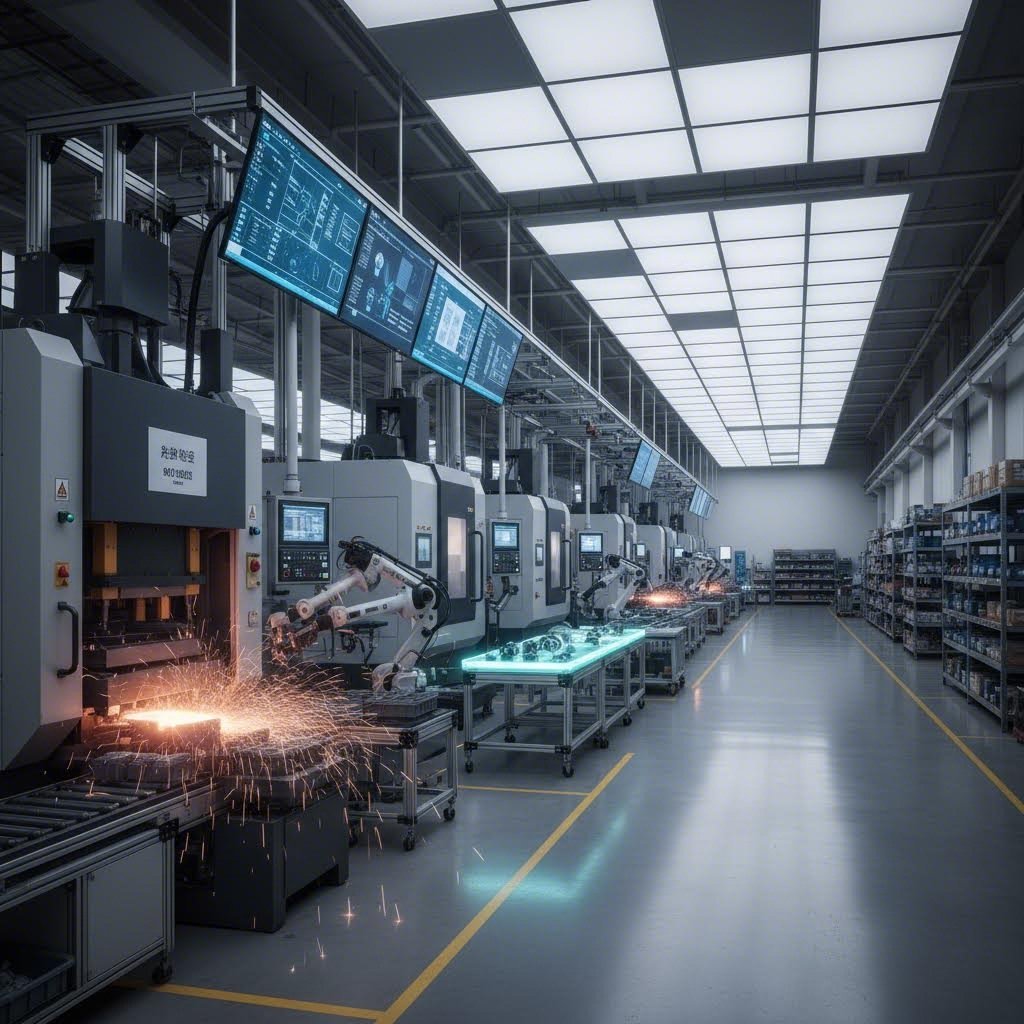
You've seen the engineering advantages and quality standards—but let's address the question everyone asks: are custom forged suspension components worth the premium? The honest answer isn't a simple yes or no. It depends on how you calculate value, what you're actually comparing, and whether you're looking at purchase price or total cost of ownership.
Understanding the complete cost picture helps you make smarter decisions. Sometimes forged components deliver exceptional value; other times, alternatives make more financial sense. Let's build a framework for evaluating when premium components justify their investment.
Calculating Total Cost of Ownership
Here's where most buyers go wrong: they compare unit prices without considering what happens after the purchase. According to JSY Machinery's TCO analysis, the total cost of ownership encompasses far more than initial acquisition—it includes operational efficiency, maintenance requirements, downtime risks, and end-of-life considerations.
For suspension components, TCO thinking reveals hidden costs that shift the equation dramatically:
- Replacement Frequency: A cast idler arm that fails after 40,000 miles costs more over a vehicle's lifetime than a forged equivalent lasting 120,000+ miles—even at three times the initial price
- Downtime Costs: For commercial vehicles, a failed pitman arm doesn't just require part replacement—it means a truck sitting idle, missed deliveries, and potential contractual penalties
- Safety Liability: The unpredictable failure modes of inferior components create liability exposure that's difficult to quantify but impossible to ignore
- Performance Consistency: Components maintaining tight tolerances throughout their service life reduce alignment issues, tire wear, and handling degradation
As Prime Fab Works emphasizes, smart buyers quote by total cost of ownership, not press-hour rates. A component that costs 50% more upfront but lasts twice as long with zero unplanned failures delivers superior value by any rational measure.
Factors That Influence Custom Forging Costs
What actually drives the price of custom forged suspension components? According to Frigate's comprehensive analysis, multiple elements converge to form final pricing—and understanding each helps you identify optimization opportunities.
Tooling Investment: Custom dies represent significant upfront costs, often ranging from several thousand to tens of thousands of dollars depending on complexity. This investment gets amortized across production volume—making per-unit costs highly sensitive to order quantities. Sway bar end links with simple geometries require less elaborate tooling than complex steering knuckles with multiple surfaces.
Material Selection: Raw material costs fluctuate with market conditions. The World Steel Association reported steel prices increased 25% in a single year, demonstrating how volatile material expenses can be. Premium alloys like 4340 steel or titanium add significant cost compared to standard grades.
Production Volume: Economies of scale dramatically affect unit pricing. According to Prime Fab Works, closed-die forging typically becomes cost-competitive past approximately 1,000 pieces, or earlier if precision pre-forms eliminate significant CNC machining minutes.
Geometric Complexity: Intricate designs with thin sections, tight radii, or complex parting lines require more sophisticated tooling and closer process control. Simple end links cost less to produce than multi-feature control arms with integrated mounting provisions.
Finishing Requirements: Post-forging operations—heat treatment, machining, coating, and inspection—add cumulative costs. A component requiring 100% ultrasonic testing costs more than one with AQL sampling acceptance.
When Premium Components Make Financial Sense
The break-even calculation between forged and alternative components varies by application. Here's a framework for evaluating when the premium pays off:
| Cost Factor | Low Volume (100-500 pcs) | Medium Volume (1,000-5,000 pcs) | High Volume (10,000+ pcs) |
|---|---|---|---|
| Tooling Cost Per Unit | High impact—dominates pricing | Moderate—amortizes reasonably | Minimal—spread across volume |
| Material Cost Sensitivity | Lower total exposure | Significant budget factor | Major cost driver—negotiate supply agreements |
| Setup/Changeover Impact | High per-unit burden | Manageable with batch planning | Minimal—dedicated production cells |
| Quality Control Approach | 100% inspection feasible | Statistical sampling typical | In-process monitoring essential |
| Best Manufacturing Method | Billet machining or prototype tooling | Closed-die forging economical | Precision forging with near-net shapes |
Racing Applications: When milliseconds matter and component failure means DNF or worse, the performance and reliability advantages of forged components justify premium pricing regardless of volume. The cost of a forged sway bar end link is trivial compared to a wrecked race car.
Commercial Fleet Operations: Calculate downtime costs for your specific operation. If a failed suspension component takes a revenue-generating vehicle offline for two days, the math often favors forged components that eliminate unplanned failures.
Performance Street Builds: For enthusiast vehicles, evaluate how long you'll keep the car and how aggressively you'll drive it. Weekend autocross warriors putting 5,000 miles annually on their cars face different calculations than daily drivers covering 20,000+ miles.
OEM and Tier Supplier Applications: High-volume production with stringent quality requirements—exactly where forging's consistency advantages shine. Warranty exposure on millions of vehicles makes component reliability worth significant investment.
Logistics and Location Advantages
For international buyers, shipping costs and lead times significantly impact total procurement expense. Proximity to major shipping infrastructure reduces both direct freight costs and inventory carrying costs from extended transit times.
Strategic manufacturing locations near major ports streamline global distribution. Components shipped from facilities with direct port access avoid inland transportation delays and costs that add up quickly for heavy steel forgings.
Manufacturers like Shaoyi (Ningbo) Metal Technology demonstrate this advantage with facilities located near Ningbo Port—one of the world's busiest container terminals. This positioning enables efficient global shipping while their IATF 16949 certification ensures the quality controls that international supply chains demand. Their integrated capabilities spanning rapid prototyping in as little as 10 days through high-volume production eliminate the coordination complexity of managing multiple suppliers.
The Integrated Services Value Proposition
Beyond component pricing, consider the hidden costs of fragmented supply chains. When die design, forging, heat treatment, machining, and finishing happen at different facilities, each handoff introduces:
- Transportation costs between operations
- Quality verification at each receiving point
- Communication overhead coordinating multiple suppliers
- Lead time accumulation from sequential processing
- Accountability gaps when problems span multiple vendors
Manufacturers offering complete solutions from prototyping through mass production consolidate these costs and risks. According to Prime Fab Works' TCO framework, the winning approach combines tooling strategy, volume planning, quality protocols, and logistics into a single optimized system rather than separately negotiated transactions.
For components like sway bar bushings, control arms, and steering linkages that require multiple manufacturing operations, integrated suppliers often deliver lower total cost despite higher quoted piece prices—simply because they eliminate the coordination tax that fragmented sourcing imposes.
The smartest procurement decisions come from TCO thinking: evaluating tooling amortization, failure costs, logistics efficiency, and supplier integration rather than comparing line-item prices in isolation.
With cost frameworks established, the final consideration becomes selecting the right manufacturing partner—one whose capabilities, certifications, and service approach align with your specific requirements and quality expectations.
Selecting the Right Manufacturing Partner
You've done the engineering homework—understanding grain flow advantages, material specifications, and application requirements. Now comes the decision that determines whether all that knowledge translates into actual performance: choosing the manufacturer who'll turn your specifications into forged parts you can trust.
This isn't a decision to rush. The wrong partner creates headaches that cascade through your entire project—missed deadlines, out-of-spec components, and quality issues that surface only after installation. The right partner becomes a genuine asset, contributing engineering expertise and manufacturing precision that elevates your final product.
Key Capabilities to Evaluate in a Forging Partner
What separates a world-class forging manufacturer from a competent commodity supplier? According to BD Longway's sourcing guide, evaluating suppliers requires moving beyond price comparisons to assess their complete operational capability—from material verification through final delivery.
When vetting potential manufacturers for steering and suspension parts, work through this capability checklist:
- IATF 16949 Certification: The automotive industry's gold standard for quality management—confirms the manufacturer has systems preventing defects rather than just detecting them
- Vertical Integration: In-house die design, forging, heat treatment, and CNC machining under one roof eliminates handoff errors and accountability gaps
- Engineering Support: Dedicated engineering teams who can optimize your designs for manufacturability and suggest improvements based on forging expertise
- Prototyping Speed: Rapid prototyping capabilities—some manufacturers deliver initial samples in as little as 10 days—allow design validation before committing to production tooling
- Production Capacity: Equipment and workforce to scale from prototype quantities through high-volume production without quality degradation
- Material Traceability: Complete documentation linking finished components to specific material lots, heat treatment records, and inspection results
- NDT Capabilities: In-house or certified third-party non-destructive testing—ultrasonic, magnetic particle, or dye penetrant inspection for internal defect detection
- Logistics Infrastructure: Strategic location near major shipping ports and experience navigating international freight requirements
Don't just accept claims at face value. Ask for evidence: copies of current certifications, sample inspection reports from previous projects, references from customers in similar applications. A confident manufacturer welcomes scrutiny—it's the less capable suppliers who deflect detailed questions.
Why In-House Engineering Makes the Difference
Here's something that doesn't show up in quoted prices but dramatically affects project outcomes: the quality of engineering support behind your components. When problems arise—and in custom manufacturing, they inevitably do—you need engineers who understand both your application and the forging process.
According to Juye Parts' manufacturer guide, top manufacturers invest in R&D to deliver innovative, high-performance solutions. This engineering capability matters for suspension applications where steering bar geometry, pitman arm steering linkages, and inner steering rod interfaces must work together precisely.
In-house engineering teams provide several advantages:
- Design Optimization: Engineers familiar with forging constraints can suggest modifications that improve strength while reducing material and machining costs
- Problem Resolution: When tolerances prove difficult to hold or unexpected failure modes appear during testing, having engineers on staff means faster root cause analysis
- Application Knowledge: Experienced teams understand how suspension components interact—they know that a stabilizer bar and sway bar mounting point needs different considerations than a control arm bushing bore
- Process Improvement: Ongoing collaboration identifies opportunities to refine manufacturing processes for better consistency and lower costs over production life
Evaluating Experience With Your Component Types
Not all forging experience transfers equally. A manufacturer producing excellent crankshafts might struggle with the complex geometries of steering knuckles. When evaluating potential partners, dig into their specific experience with components similar to yours.
Ask targeted questions:
- What suspension components have you produced in the past three years?
- Can you share case studies or reference customers for sway bar and sway bar links, control arms, or steering components?
- What tooling already exists for similar geometries that might reduce our development costs?
- How do you approach the specific challenges of forged parts for automotive suspension—grain flow optimization, fatigue resistance, tight tolerances on mounting surfaces?
A manufacturer experienced with your component category brings accumulated knowledge that shortcuts development time and avoids rookie mistakes. They've already solved problems you haven't encountered yet.
Complete Solutions vs. Fragmented Supply Chains
The most efficient path from design to delivered components runs through manufacturers offering complete solutions—die design, forging, heat treatment, machining, inspection, and finishing under unified management. This integration delivers advantages that fragmented supply chains simply cannot match.
Consider what happens when these operations span multiple vendors:
- Each handoff requires quality verification and incoming inspection
- Transportation between facilities adds cost and lead time
- Communication must flow through multiple organizations with different priorities
- When problems arise, finger-pointing replaces problem-solving
- Schedule coordination becomes your responsibility rather than the manufacturer's
Manufacturers like Shaoyi (Ningbo) Metal Technology exemplify the integrated approach—their in-house engineering ensures components like suspension arms and drive shafts meet exact specifications through the complete manufacturing cycle. IATF 16949 certification provides the quality framework, while capabilities spanning rapid prototyping to mass production eliminate the coordination burden of managing multiple suppliers. Their strategic location near Ningbo Port further streamlines global procurement logistics.
Building a Successful Supplier Relationship
Finding the right partner is step one. Building a productive long-term relationship requires ongoing attention to communication, expectations, and mutual benefit.
According to BD Longway's analysis, supplier relationships should extend beyond transactional purchasing. The best suppliers act as technical partners invested in your success. They proactively flag potential issues, suggest improvements based on production experience, and treat your quality requirements as their own standards.
Cultivate this partnership by:
- Sharing Context: Help manufacturers understand your end application—the more they know about how components will be used, the better they can optimize designs and flag potential concerns
- Providing Feedback: Report both problems and successes—positive feedback reinforces good practices while constructive criticism enables improvement
- Planning Ahead: Share production forecasts as early as possible—manufacturers who can plan capacity deliver better pricing and more reliable lead times
- Visiting Facilities: When practical, conduct on-site audits to verify capabilities and build personal relationships with engineering and quality teams
- Addressing Issues Collaboratively: Approach problems as shared challenges rather than adversarial disputes—the goal is preventing recurrence, not assigning blame
Assessing Quality Control and Documentation
Before committing to a manufacturing partner, understand exactly how they ensure quality and what documentation you'll receive. This transparency separates professional operations from those cutting corners.
Request detailed information about:
- Inspection Protocols: What gets measured, how often, and using what equipment? CMM inspection for critical dimensions? Go/no-go gauges for high-volume checks?
- Statistical Process Control: Do they monitor process capability indices? How do they respond when processes drift toward specification limits?
- Non-Conformance Handling: What happens when parts fall outside specification? Quarantine procedures? Root cause analysis requirements? Customer notification protocols?
- Documentation Packages: What will you receive with delivered components? Material certifications? Heat treatment records? Dimensional inspection reports? NDT results?
Quality systems should be proactive, not reactive. Manufacturers focused on prevention—catching problems before they become defective parts—deliver more consistent results than those relying primarily on final inspection to sort good from bad.
Taking the Next Step
You now have a comprehensive framework for evaluating custom forged suspension component manufacturers. The knowledge spans from understanding why grain flow matters through material selection, application requirements, quality standards, ordering processes, cost analysis, and partner evaluation.
Putting this knowledge into action means:
- Defining your specific requirements—component types, quantities, performance specifications, and timeline
- Identifying manufacturers with relevant experience and appropriate certifications
- Requesting detailed capabilities information and customer references
- Evaluating proposals based on total cost of ownership, not just unit pricing
- Conducting due diligence through documentation review and ideally facility visits
- Starting with prototype orders to validate capabilities before committing to volume production
The investment in proper manufacturer selection pays dividends throughout your project and beyond. Custom forged suspension components represent precision engineering applied to safety-critical applications—they deserve partners who treat that responsibility with appropriate seriousness.
Whether you're developing racing components where milliseconds matter, engineering heavy-duty applications where reliability is paramount, or building performance street machines that demand both capability and livability, the right manufacturing partner transforms your specifications into forged parts that perform exactly as designed.
Frequently Asked Questions About Custom Forged Suspension Components
1. What car parts are forged?
Forged automotive parts include critical suspension components like control arms, steering knuckles, tie rods, and spindles. Engine components such as connecting rods, crankshafts, and camshafts are also commonly forged. Chassis parts including bearings, gears, and axle beams benefit from forging's superior grain structure alignment, which delivers approximately 26% higher tensile strength and 37% higher fatigue resistance compared to cast alternatives.
2. What are the benefits of using forged suspension parts?
Forged suspension parts offer superior strength-to-weight ratios, exceptional fatigue resistance, and predictable failure modes under extreme stress. The forging process aligns metal grain structure along stress paths, eliminating internal defects common in cast parts. This results in components that bend gradually under overload rather than fracturing catastrophically. IATF 16949-certified manufacturers like Shaoyi Metal Technology ensure consistent quality through rigorous testing protocols and complete material traceability.
3. How do forged suspension components compare to cast or billet alternatives?
Forged components outperform cast parts by eliminating porosity and random grain structures that create weak points. Unlike billet machining, which cuts through existing grain structure, forging aligns grain flow along component contours for 25% greater strength. Cast parts suit low-stress applications, while billet works for prototypes. Forged components excel in safety-critical, high-stress suspension applications where fatigue resistance and predictable performance matter most.
4. What materials are used for custom forged suspension components?
Common materials include 4140 and 4340 chromoly steel alloys, offering excellent strength, toughness, and heat treatment response. 4340 provides superior impact resistance for heavy-duty applications. Aluminum alloys like 7075-T6 reduce unsprung weight for racing, while Grade 5 titanium delivers ultimate strength-to-weight performance for professional motorsports. Material selection depends on load requirements, weight targets, and budget constraints.
5. How long does it take to get custom forged suspension parts manufactured?
Lead times vary based on complexity and volume. Rapid prototyping can deliver initial samples in as little as 10 days for simpler geometries. Custom die fabrication typically requires 4-8 weeks. Full production timeline includes engineering evaluation, tooling fabrication, prototype approval, and manufacturing. Working with vertically integrated manufacturers who handle die design through final machining in-house significantly reduces overall lead times and coordination complexity.