 Small batches, high standards. Our rapid prototyping service makes validation faster and easier —
  EN
EN


How to Calculate Lead Time for Custom Forging Projects

TL;DR
Calculating lead time for custom forging projects means finding the total duration from placing an order to receiving the final product. While the basic formula is simply the delivery date minus the order date, an accurate calculation for forging must account for project-specific variables like design complexity, material procurement, tooling creation, and post-forging finishing processes. Understanding these components is critical for accurate quoting and successful project planning.
Understanding Lead Time in a Manufacturing Context
Lead time is a fundamental key performance indicator (KPI) in manufacturing that measures the total elapsed time from the initiation of a process to its completion. In the context of a customer order, it represents the entire period from when a client places an order until the finished product is delivered. This metric is crucial because it directly impacts project scheduling, inventory management, and, most importantly, customer satisfaction. An accurate understanding of lead time allows a business to provide reliable delivery estimates, which builds trust and encourages repeat business.
Effectively managing lead time is essential for operational efficiency and profitability. Miscalculating it can lead to a cascade of problems, including missed deadlines, increased costs from rush orders and overtime, and damaged client relationships. According to insights from MRPeasy, consistent delivery performance is a key factor in customer loyalty, as industrial buyers often prioritize reliability over a lower price. By analyzing the components of lead time—from initial planning to final shipping—manufacturers can identify bottlenecks and inefficiencies in their workflow, creating opportunities to streamline operations and gain a competitive advantage.
The Core Formulas for Calculating Lead Time
At its most basic level, calculating lead time is straightforward. The simplest and most common formula provides a high-level overview of the entire order fulfillment cycle. This is often referred to as the order lead time formula and is used across many industries for a quick assessment.
Simple Lead Time Formula: Lead Time = Order Delivery Date – Order Request Date
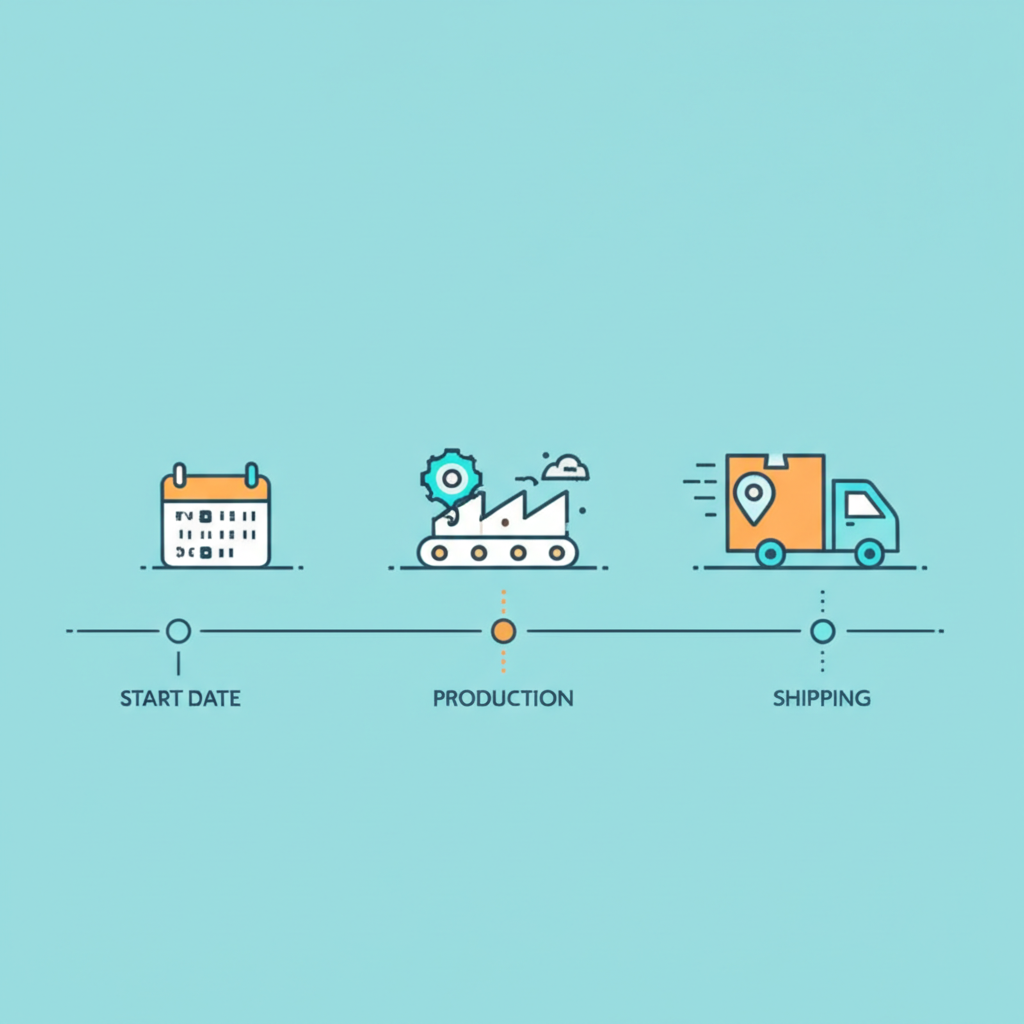
For example, if a customer places an order on October 1st and receives the finished forged parts on December 1st, the lead time is 61 days. While this formula is useful for tracking overall performance, it doesn't provide insight into the specific stages of the process. For a more detailed analysis, especially in a complex field like custom forging, a component-based formula is more effective.
A more comprehensive manufacturing lead time formula breaks the process down into its constituent parts. As detailed by ProjectManager.com, this typically includes pre-processing, processing, and post-processing stages. This allows managers to see exactly where time is being spent.
Detailed Manufacturing Lead Time Formula: Lead Time = Pre-Processing Time + Processing Time + Post-Processing Time
- Pre-Processing Time: This includes all initial planning, such as receiving the order, engineering and design review, and procuring raw materials.
- Processing Time: This is the actual manufacturing or production time, including machine setup, the forging process itself, and any wait times between steps.
- Post-Processing Time: This covers all activities after production, such as finishing, quality inspection, packaging, and transportation to the customer.
Key Variables That Influence Custom Forging Lead Times
Unlike standard manufacturing, custom forging projects have unique variables that can significantly impact the overall lead time. A simple calculation is often insufficient because each project is tailored to specific requirements. Understanding these factors is crucial for providing an accurate quote and managing client expectations. The complexity of the design, availability of specialized materials, and finishing requirements are just a few of the elements that must be considered.
Several key factors directly influence the timeline for a custom forging project. Accurately assessing these variables at the quoting stage can prevent significant delays down the line. For projects with highly specific requirements, such as those in the automotive sector, partnering with a specialized provider is often essential. For example, for robust and reliable automotive components, you might check out the custom forging services from Shaoyi Metal Technology, which specializes in IATF16949 certified hot forging and offers services from prototyping to mass production.
- Project Complexity and Design: The intricacy of the forged part is a primary driver of lead time. A complex geometry may require extensive engineering, multiple design revisions, and more sophisticated tooling, all of which add time before production even begins.
- Material Availability: The type of metal alloy specified can have a major impact. Standard carbon steel may be readily available, but high-performance alloys or specialized materials might have long procurement lead times, sometimes stretching for weeks or months.
- Tooling and Die Manufacturing: Every custom forging project requires a unique die. The creation of this tooling is a project in itself, involving design, machining, and testing. The complexity of the die directly correlates to the time required to produce it.
- Order Quantity and Part Size: Larger parts or high-volume orders require more raw material and longer production runs. As noted by P&D Metal Works, the size and quantity of a project are among the most important factors in determining lead time.
- Post-Forging Processes: Most forged parts require secondary operations. These can include heat treatment, machining to final dimensions, surface finishing (like coating or plating), and rigorous quality testing, each adding a distinct phase to the timeline.
A Step-by-Step Breakdown of the Forging Project Lifecycle
To accurately calculate the total lead time for a custom forging project, it's essential to break down the entire lifecycle into its distinct stages. Each step contributes to the overall timeline, and understanding the duration of each phase allows for more precise planning and communication with the client. The journey from an initial concept to a delivered component involves a sequence of critical activities.
- Initial Consultation and Quoting: This first phase involves understanding the client's requirements, reviewing technical drawings, and discussing material specifications. A detailed quote is prepared, which itself can take several days depending on the project's complexity.
- Design and Engineering: Once an order is confirmed, engineers finalize the design for manufacturability. This may involve simulation software to predict metal flow and ensure the final part will meet strength and tolerance requirements. This stage can involve back-and-forth approvals with the client.
- Material Procurement: With the design finalized, the raw material is ordered. As mentioned, the lead time for this step can vary dramatically from a few days for common stock to several months for specialized alloys, a point emphasized in guides like The Ultimate Lead Time Guide for Manufacturers.
- Die and Tooling Creation: This is often one of the longest single phases in a custom project. A negative impression of the part, known as a die, is machined from hardened tool steel. This process is highly precise and is critical to the success of the forging.
- The Forging Process: The raw material is heated to a specific temperature and then pressed, pounded, or squeezed under immense pressure into the shape of the die. This is the core manufacturing step.
- Post-Forging Finishing and Machining: After forging, the parts undergo various secondary processes. This includes heat treatment to achieve desired mechanical properties, shot blasting to clean the surface, and CNC machining to meet tight dimensional tolerances.
- Quality Assurance and Inspection: Every part is inspected to ensure it meets all specifications. This can range from simple visual checks and dimensional measurements to advanced non-destructive testing like ultrasonic or magnetic particle inspection.
- Packaging and Shipping: The final stage involves carefully packaging the finished components to prevent damage during transit and arranging for delivery to the customer. Transportation time will vary based on the destination.
Moving Beyond Simple Formulas for Accurate Timelines
While a simple date-based formula offers a starting point, accurately calculating lead time for custom forging projects demands a much deeper, component-based approach. The true timeline is a sum of many distinct phases, from initial design and material sourcing to complex tooling creation and meticulous finishing work. Overlooking any of these stages can lead to inaccurate quotes and missed deadlines.
Ultimately, mastering lead time calculation is about embracing the complexity of the process. By breaking down the project lifecycle and understanding the unique variables of custom forging, manufacturers can provide reliable timelines, improve operational efficiency, and build lasting trust with their clients. This detailed planning transforms lead time from a simple metric into a powerful tool for project success.
Frequently Asked Questions
1. What is the lead time for forging?
The lead time for forging projects varies significantly based on project complexity, material availability, and order volume. A simple project with available materials might take a few weeks. However, a large or intricate custom forging project requiring new tooling and specialized alloys can take several months from order placement to final delivery.
2. What is the formula for calculating lead time?
The most basic formula is Lead Time = Order Delivery Date – Order Request Date. However, for manufacturing, a more detailed formula is often used: Lead Time = Pre-Processing Time + Processing Time + Post-Processing Time. This provides a clearer view of where time is spent throughout the production cycle.
3. How is lead time measured?
Lead time is typically measured in calendar days. It's crucial to establish clear start and end points for consistency. The clock usually starts when a customer's order is formally confirmed and stops when the product is delivered to the customer. As MachineMetrics highlights, this provides an overall measure of how efficient an operation is at fulfilling orders.
4. How is lead time demand calculated?
Lead time demand is a forecast used in inventory management to determine how much stock is needed to cover customer demand during the replenishment lead time. It is calculated by multiplying the average daily usage of a product by the lead time in days. The formula is: Lead Time Demand = Average Daily Sales × Lead Time (in days).