 Small batches, high standards. Our rapid prototyping service makes validation faster and easier —
  EN
EN


Custom Machined Part Secrets: What CNC Shops Won't Tell You About Pricing
Understanding Custom Machined Parts and Why They Matter
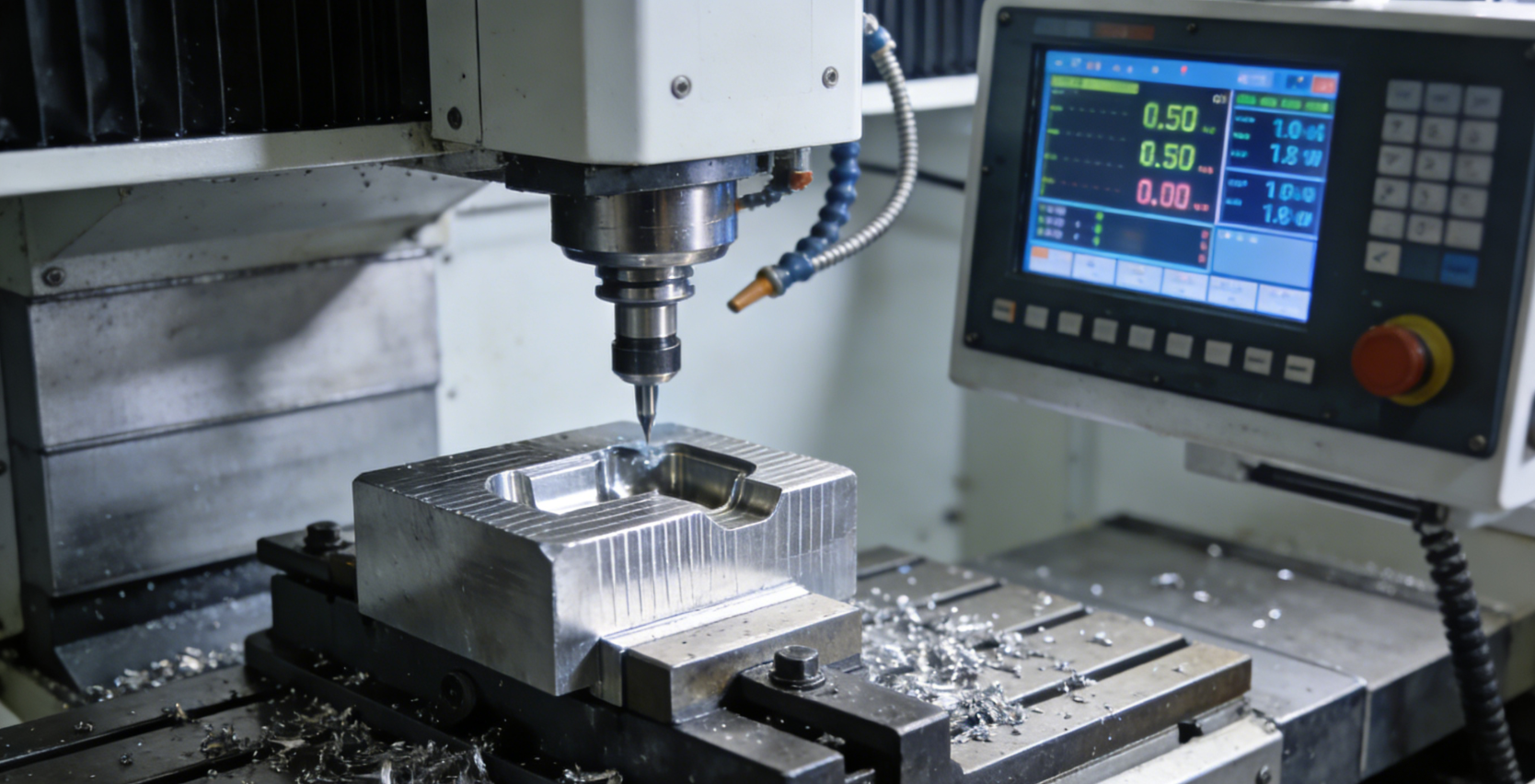
Ever wondered what separates a truly specialized component from something you'd grab off a warehouse shelf? When your project demands exact specifications that simply don't exist in standard catalogs, you're entering the world of custom machined parts. These aren't mass-produced commodities. They're precision components manufactured to meet your unique requirements, down to the smallest detail.
A custom machined part is a component specifically designed and manufactured to fit particular application needs using precision CNC machining processes. Unlike off-the-shelf alternatives, these parts are tailored to exact specifications provided by engineers or designers, delivering tolerances often within ±0.001 inches according to Protolabs.
What Makes a Part Custom Machined
Think of it like the difference between buying a suit off the rack versus having one tailored specifically for you. Both serve the same general purpose, but only one fits perfectly. Custom CNC machining services use computer-controlled equipment to cut, shape, and finish raw materials into components that match your precise design vision.
Several defining characteristics set custom machined parts apart from standard components:
- Unique geometry - Shapes, angles, and features designed specifically for your application
- Specific tolerances - Dimensional accuracy requirements that mass-produced parts simply can't guarantee
- Material selection - Freedom to choose metals, plastics, or specialty materials based on performance needs
- Surface requirements - Custom finishes ranging from as-machined to anodized or powder-coated
- Functional integration - Features like threaded holes, mounting points, or channels built directly into the design
Standard vs Custom Components Explained
Off-the-shelf components offer convenience and lower upfront costs because they benefit from mass production economies. However, they come with standardized dimensions and features that may not align with your specific needs. According to research cited by KAL Manufacturing, 1 in 5 consumers are willing to pay a 20% premium for personalized goods or services, reflecting the recognized value of customization.
CNC parts shine in applications where standard components simply won't fit, perform, or endure as needed. Industries that rely heavily on precision CNC machining include aerospace for turbine components and structural supports, automotive for prototype engines and transmission parts, medical for surgical instruments and implants, and oil and gas for specialized valves and fittings.
The bottom line? When your application demands exact specifications, choosing between custom and standard isn't really a choice at all. Understanding this distinction is your first step toward making smarter manufacturing decisions and, ultimately, getting better pricing on the cnc machining parts your projects truly need.
How CNC Machining Creates Precision Custom Parts
So you've got a design concept for a custom machined part. But how exactly does a machine shop transform your digital file into a physical component you can hold in your hands? Understanding this process demystifies what happens behind the scenes and helps you communicate more effectively when requesting quotes.
CNC machining is a subtractive manufacturing process, meaning it starts with a solid block of material and removes portions until your desired shape emerges. According to Yijin Solution, modern CNC technology can achieve tolerances as tight as ±0.002 inches in metals, plastics, and composites through computer-controlled automation.
From CAD File to Finished Component
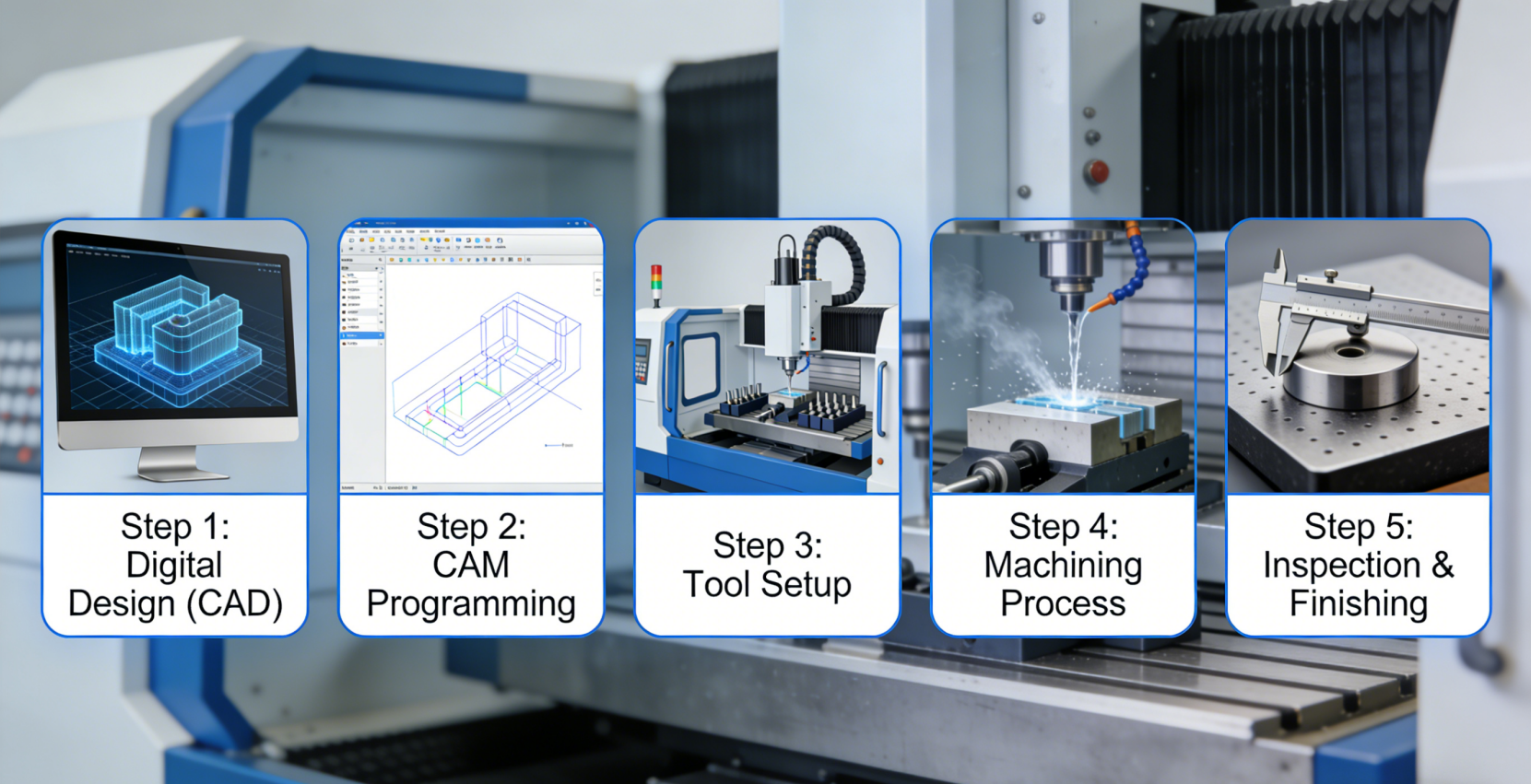
The journey from concept to finished part follows a structured workflow that machine shops have refined over decades. Here's how that process typically unfolds:
- Design submission - You provide 2D drawings (usually PDF) and 3D CAD files (.STEP or .IGES format). Engineers review these for geometric complexity, tolerance specifications, and technical feasibility.
- Design for manufacturability review - Experienced engineers identify potential issues like undercuts, thin sections, or overly tight tolerances that could increase costs or cause machining problems.
- Material selection and sourcing - Certified raw materials are sourced, inspected, and cut to rough dimensions with job tracking codes for traceability.
- Machine programming - CAM software transforms your design into specific instructions the CNC machine can execute, calculating optimal toolpaths and cutting parameters.
- CNC cutting operations - The machine executes programmed operations, controlling spindle rotation, tool feed rates, and coordinate movements simultaneously.
- Finishing processes - Parts may undergo surface treatments like anodizing, bead blasting, or powder coating based on your specifications.
- Quality inspection - Dimensional verification using precision instruments ensures your part meets all specified requirements before shipping.
The CNC Machining Process Demystified
Sounds complex? Let's break down the key operations you'll encounter when ordering CNC machine parts.
CNC milling uses rotating cutting tools that move along programmed paths to remove material from a stationary workpiece. Imagine a drill bit that can move in multiple directions, carving pockets, slots, and complex 3D surfaces. CNC machining milling represents the most versatile operation, capable of producing flat surfaces, intricate geometries, and everything in between.
CNC turning works differently. The workpiece rotates while stationary cutting tools shape it, perfect for cylindrical parts like shafts, bushings, and threaded components. If you need parts with rotational symmetry, a cnc turning service specializes in exactly this type of work. Many cnc turning services also incorporate live tooling, enabling milling operations on the same machine for added efficiency.
Multi-axis machining takes things further by moving cutting tools along three linear axes while rotating around additional axes. This capability eliminates multiple setups, reduces errors, and improves surface finish quality on complex aerospace and medical components.
When you hear terms like "feeds" and "speeds," these refer to how fast the cutting tool moves through material and how quickly the spindle rotates. "Toolpaths" are the calculated routes your cutting tools follow during CNC cutting operations. Your machine shop handles these technical details, but understanding the terminology helps you ask better questions and evaluate quotes more confidently.
With this foundation in place, you're ready to tackle one of the most impactful decisions in any machining project: selecting the right material for your application.
Material Selection Guide for Custom Machined Components
Here's a secret most CNC shops won't volunteer: your material choice can swing final costs by 50% or more, even for identical part geometries. Why? Because different materials behave dramatically differently under cutting tools, affecting everything from machining time to tool wear rates. Understanding these differences puts real negotiating power in your hands.
When selecting cnc machining materials, you're balancing four critical factors: mechanical performance requirements, corrosion resistance needs, weight constraints, and budget limitations. Let's explore your options across both metals and plastics so you can make informed decisions that optimize both performance and cost.
Metals for Demanding Applications
Metals remain the backbone of precision manufacturing when strength, durability, and heat resistance matter. According to Xometry, aluminum, stainless steel, steel, brass, copper, and titanium represent the most commonly machined metals for custom components.
Aluminum alloys are the workhorse of CNC machined components. Their lightweight nature and excellent thermal conductivity maximize machining efficiency and make producing high-precision parts easier. Aluminum 6061 offers excellent mechanical properties and weldability, while Aluminum 7075 delivers superior strength (540 MPa) with high fatigue resistance, ideal for aerospace applications.
Steel grades provide the go-to option when you need strength and durability without breaking the bank. Mild steels like 1018 and A36 are inexpensive and highly machinable, though they lack corrosion resistance. Carbon steel C45 offers higher hardness and is suited for situations requiring great strength.
Stainless steel costs more but delivers exceptional corrosion resistance. Grade 304 (also known as 18/8 stainless) provides good all-around performance with tensile strength between 500 and 700 MPa. Grade 316 adds molybdenum for improved resistance against chloric acids, making it ideal for marine and chemical processing environments.
Brass offers excellent machinability and good electrical conductivity. It's non-magnetic, highly corrosion-resistant, and maintains a low friction coefficient. When you machine bronze or work with cnc bronze applications, you'll find similar benefits with added wear resistance, making bronze cnc components popular for bearings and bushings in demanding environments.
Engineering Plastics and Specialty Materials
Don't overlook plastics when weight reduction, electrical insulation, or chemical resistance takes priority. According to R&R Manufacturing, plastics are light-weight, easy to machine, and often less expensive than their metal counterparts.
Delrin material (a form of Acetal) is considered the most economic plastic due to its low cost and excellent machinability. Delrin plastic isn't prone to moisture absorption and maintains stiffness across a wide temperature range, increasing dimensional stability. Its slippery surface reduces friction, though this same property makes secondary finishing challenging.
Nylon for machining applications offers impressive versatility. This robust plastic performs well across various environments with heat and chemical resistance while maintaining strength in both hot and cold climates. However, nylon is prone to moisture absorption and warping, which can pose challenges when tight dimensional tolerances are required.
Acrylic (Plexiglass) provides an inexpensive option for see-through components. It scratches less easily than many plastics but isn't as strong and will crack under excessive pressure. Machined acrylic loses transparency and requires secondary polishing to regain clarity.
PEEK represents the high-performance end of machining plastics. It's tough, rigid, and retains chemical resistance at elevated temperatures with exceptional fatigue and stress-cracking resistance. PEEK glass-filled variants add reinforcement for even greater structural performance in harsh conditions.
| Material | Typical Applications | Relative Cost | Machinability | Key Properties |
|---|---|---|---|---|
| Aluminum 6061 | Structural components, housings, brackets | Low | Excellent | Lightweight, good strength, corrosion resistant |
| Aluminum 7075 | Aerospace parts, high-stress components | Medium | Good | High strength (540 MPa), fatigue resistant |
| Mild Steel (1018/A36) | Fixtures, general structural parts | Low | Excellent | Strong, weldable, not corrosion resistant |
| Stainless Steel 304 | Food equipment, medical, marine | Medium-High | Moderate | Corrosion resistant, 500-700 MPa tensile |
| Stainless Steel 316 | Chemical processing, marine hardware | High | Moderate | Superior corrosion resistance, acid resistant |
| Brass | Plumbing fittings, electrical components | Medium | Excellent | Non-magnetic, low friction, conductive |
| Bronze | Bearings, bushings, marine hardware | Medium-High | Good | Wear resistant, self-lubricating |
| Delrin (Acetal) | Gears, bearings, low-friction parts | Low | Excellent | Dimensionally stable, low friction |
| Nylon | Bushings, insulators, wear components | Low | Good | Chemical resistant, absorbs moisture |
| PEEK | Aerospace, medical implants, seals | Very High | Good | High-temp capable, chemical resistant |
How does this translate to your bottom line? Harder materials like stainless steel and titanium require slower cutting speeds and cause faster tool wear, directly increasing machining time and tooling costs. Machining bronze, for instance, takes longer than brass despite similar appearances. Softer, more machinable materials like aluminum and Delrin cut quickly with minimal tool degradation, reducing both time and expense.
The takeaway? Match material properties to your actual performance requirements, not what seems impressive on paper. Over-specifying materials is one of the most common ways buyers unknowingly inflate their custom machined part costs. With material selection covered, let's examine how your design decisions further impact what you'll ultimately pay.
Design for Manufacturability Principles That Reduce Costs
Here's something most CNC shops won't tell you upfront: small design tweaks can slash your part cost by 70% or more. According to Zenith Manufacturing, one medical startup reduced their aluminum housing cost from $300 to just $85 per unit by applying Design for Manufacturability (DFM) principles - without sacrificing any functionality.
DFM isn't about limiting your creativity. It's about understanding how cutting tools interact with your design so you can make informed decisions that balance performance requirements against manufacturing realities. Whether you're ordering a single cnc prototype or planning for production volumes, these principles apply equally.
Designing Parts That Machine Efficiently
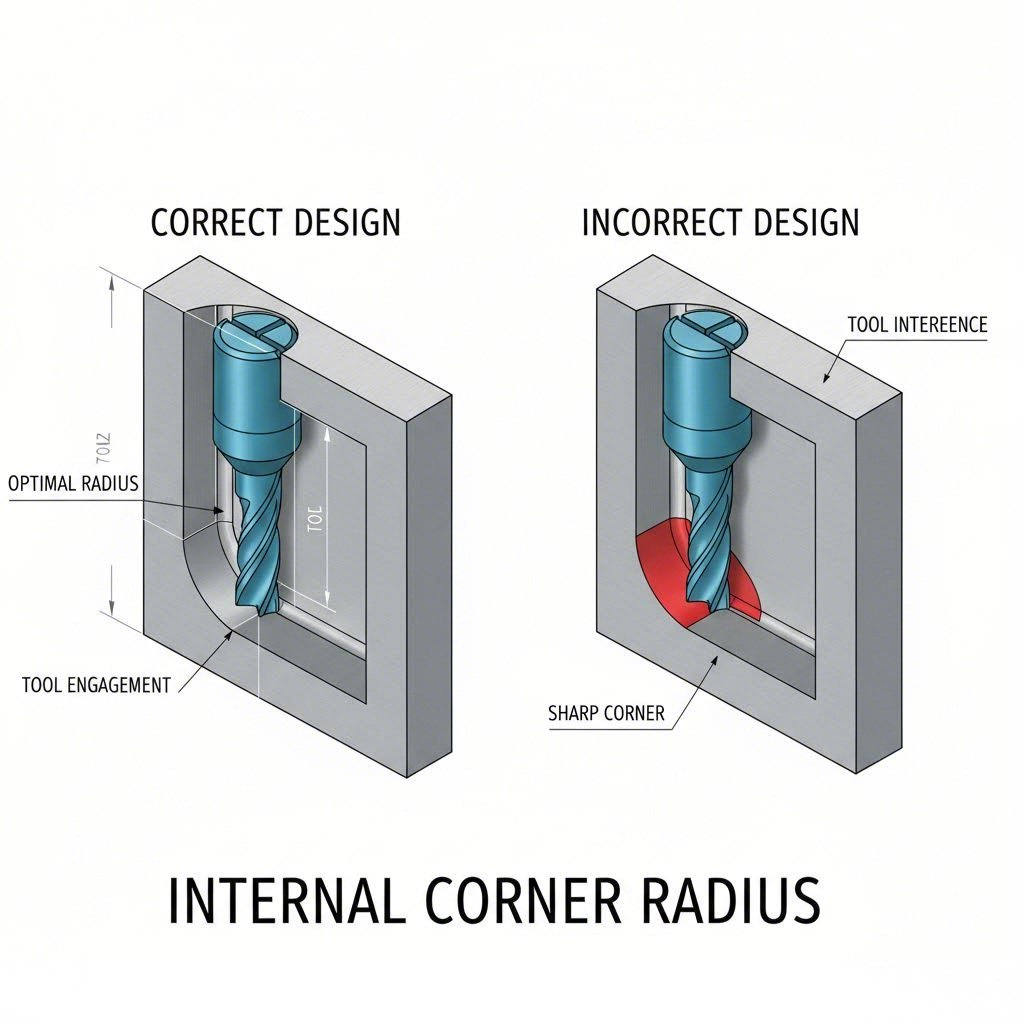
Imagine trying to sweep the corners of a square room with a round broom. You'd never quite reach those 90-degree angles, right? CNC cutting tools face the same challenge. They're round, which means they physically cannot create perfectly sharp internal corners.
When your design demands square internal corners, the shop must switch to expensive Electrical Discharge Machining (EDM), which can cost 3 to 5 times more than standard milling operations. The fix is simple: add corner radii to internal features.
Here are the geometric constraints you should design around:
- Internal corner radii - Specify a radius at least 1/3 the depth of the pocket. For a 15mm deep pocket, use a minimum 5mm corner radius to allow standard tooling.
- Wall thickness minimums - Aluminum walls thinner than 0.8mm are over 50% more likely to deform during machining. For plastics, maintain at least 1.5mm thickness. Thin walls force machinists to slow cutting speeds dramatically, increasing machining time by 100% to 300%.
- Hole depth limitations - Standard drill bits perform efficiently up to a 4:1 depth-to-diameter ratio. Beyond that, specialty tooling and pecking cycles become necessary, adding significant cost.
- Undercut considerations - Features that standard tools cannot access require special T-slot cutters or multiple setups, driving up complexity and expense.
As noted by Protolabs, external corners should use chamfers rather than radii. A 45-degree chamfer is quicker to machine and considerably more cost-effective than a rounded external edge.
Common Design Mistakes That Increase Costs
The most expensive mistake engineers make? Applying unnecessarily tight tolerances across an entire part. According to engineering experts at Zenith Manufacturing, this is one of the most common cost drivers they encounter.
Manufacturing a tight-tolerance dimension isn't just about the cnc cut itself. Each tightly specified feature requires slower cutting speeds, additional inspection time, and specialized measurement equipment. The relationship between cost and tolerance isn't linear - it's exponential.
Apply these DFM best practices to control costs on your next custom machined part:
- Avoid blanket tight tolerances - Instead of setting ±0.05mm globally, analyze which features are truly critical for function. Relax non-critical dimensions to standard ±0.2mm tolerances.
- Design accessible features - Ensure cutting tools can reach all surfaces without complex setups. Deep, narrow pockets force long, slender tools that deflect and vibrate.
- Minimize setups - Each time a part must be repositioned in the machine, you're adding time, cost, and potential error. Design features that can be machined from as few orientations as possible.
- Consider standard tool sizes - Designing pockets and holes that match common cutter diameters eliminates special tooling charges.
- Specify appropriate surface finishes - Standard CNC machining produces roughly Ra 3.2 μm finish. Demanding smoother surfaces requires additional polishing operations that add cost.
CAD File Preparation and Format Requirements
Clean file preparation prevents costly back-and-forth with your machine shop and accelerates quoting. Most shops accept these standard formats:
- STEP (.stp, .step) - The universal standard for 3D geometry exchange. Preferred by most CNC shops for rapid cnc prototyping and production work.
- IGES (.igs, .iges) - Older format that remains widely compatible, though STEP is generally preferred.
- Native CAD formats - SolidWorks (.sldprt), Fusion 360, and other native files are sometimes accepted but may require conversion.
- 2D drawings (PDF) - Essential for communicating tolerances, surface finish requirements, and special instructions that 3D models cannot convey.
Before exporting your final file for cnc prototype machining, run through this quick self-check: Are all internal corners radiused? Do walls exceed minimum thickness for your material? Are deep features within acceptable aspect ratios? Have you applied tight tolerances only where functionally necessary?
When you understand these manufacturability principles, you're no longer just handing over a design and hoping for reasonable pricing. You're actively controlling costs through smarter engineering decisions - and that knowledge becomes even more powerful when you understand exactly what factors drive CNC machining pricing.
Understanding CNC Machining Costs and Pricing Factors
Ever requested a quote for a custom machined part and wondered why two seemingly similar components came back at drastically different prices? You're not alone. Most CNC shops hide their pricing logic behind automated quote systems, leaving buyers guessing about what actually drives costs. Let's pull back the curtain and give you the transparency you deserve.
According to HKAA's 2025 CNC machining cost guide, the total cost of any machining project follows a straightforward formula: Cost = Machine Time × Hourly Rate + Material Cost + Setup Cost + Finishing + Shipping. Understanding each component empowers you to make smarter design and ordering decisions that directly impact your bottom line.
What Actually Drives CNC Machining Costs
Think of cnc machining price as a puzzle with multiple interlocking pieces. Change one piece, and the entire picture shifts. Here are the primary cost drivers that determine what you'll ultimately pay:
Material selection and volume creates the foundation of your quote. Aluminum machines quickly and costs less per pound than stainless steel or titanium. But material cost isn't just about the raw price tag - it's also about how that material behaves under cutting tools. Harder metals cause faster tool wear, require slower cutting speeds, and increase machinist metal cost significantly.
Machining complexity determines how long your part occupies the machine. A simple bracket with basic features might require 30 minutes of cutting time. Add complex contours, deep pockets, or features requiring 5-axis positioning, and that time can multiply by five or more. According to industry data, 5-axis CNC machining typically costs $150 to $250 per hour compared to $70 to $125 for standard 3-axis operations.
Tolerance requirements create exponential cost increases. Research from Modus Advanced confirms that as tolerances tighten beyond ±0.13 mm (±0.005"), costs increase exponentially. Moving from standard to precision requirements can multiply part costs by factors of three to ten.
Quantity ordered is where economies of scale work in your favor. Setup costs - machine preparation, programming, and fixturing - are fixed expenses regardless of whether you're making one part or one thousand.
Surface finish specifications add processing time after machining completes. Standard as-machined finishes add nothing to your bill, while polished surfaces can increase finishing costs by 500% to 1000% according to manufacturing data.
Lead time urgency functions as a multiplier across everything else. Rush orders force shops to reorganize schedules and dedicate premium resources to your project.
| Cost Factor | Low Impact | Medium Impact | High Impact |
|---|---|---|---|
| Material Type | Aluminum, Delrin | Brass, Mild Steel | Stainless Steel, Titanium |
| Geometric Complexity | Simple prismatic shapes | Moderate 3D contours | Complex 5-axis features |
| Tolerance Requirements | ±0.25 mm standard | ±0.05 mm precision | ±0.01 mm ultra-precision |
| Surface Finish | As-machined | Bead blasted, anodized | Polished, chrome plated |
| Order Quantity | 100+ units | 10-99 units | 1-9 units (prototype) |
| Lead Time | Standard (2-3 weeks) | Expedited (1 week) | Rush (1-3 days) |
Budget Planning for Custom Parts
Why does a single prototype cost so much more per unit than production quantities? It comes down to fixed cost distribution. According to Zintilon's analysis, setup costs including machine preparation, tool changes, jig and fixture preparation, plus CAD/CAM programming and simulation are spread across a very small number of units for prototypes, leading to high per-unit fixed costs.
Consider this scenario: your setup cost is $200 whether you're making 1 part or 100 parts. Order a single prototype, and that entire $200 hits your unit cost. Order 100 machining parts, and setup adds just $2 per piece. This is why online machining quotes often show dramatic price drops as quantities increase.
Small cnc machining jobs face another challenge: minimum order economics. Shops must still program the machine, source materials, set up tooling, and run quality checks - all fixed activities regardless of part count. These overhead activities make very small orders proportionally expensive.
Design Decisions That Inflate Costs
Your design choices translate directly into dollars. Here are real-world examples of expensive versus economical approaches:
- Expensive: Specifying ±0.025 mm tolerances across all dimensions. Economical: Applying tight tolerances only to mating surfaces while relaxing non-critical features to ±0.25 mm.
- Expensive: Designing deep, narrow pockets that require specialty long-reach tooling. Economical: Limiting pocket depth-to-width ratios to 4:1 or less.
- Expensive: Requiring features accessible only through 5-axis positioning. Economical: Orienting features along standard X, Y, Z planes for 3-axis machining.
- Expensive: Selecting titanium when aluminum would satisfy performance requirements. Economical: Matching material properties to actual functional needs.
When requesting a cnc quote online, provide complete information upfront: 3D models, 2D drawings with tolerances clearly marked, material specifications, quantity requirements, and target delivery dates. Incomplete submissions force shops to make conservative assumptions that typically inflate your quote.
The most valuable insight? Approximately 70% of manufacturing costs are determined during the design phase, according to Modus Advanced research. By the time you're requesting quotes, most of your cost is already locked in by design decisions. This reality makes early DFM consultation with experienced machine shops one of the smartest investments you can make.
Understanding these pricing dynamics puts you in a stronger position when evaluating quotes and planning project budgets. But how does CNC machining compare to alternative manufacturing methods when cost is your primary concern? That's where the next section delivers critical decision-making guidance.
CNC Machining vs Alternative Manufacturing Methods
Now that you understand what drives CNC machining costs, here's a question most shops hope you never ask: is CNC machining even the right choice for your project? The honest answer depends entirely on your specific requirements. Sometimes a different manufacturing method delivers better results at lower cost - and knowing when to pivot can save you thousands.
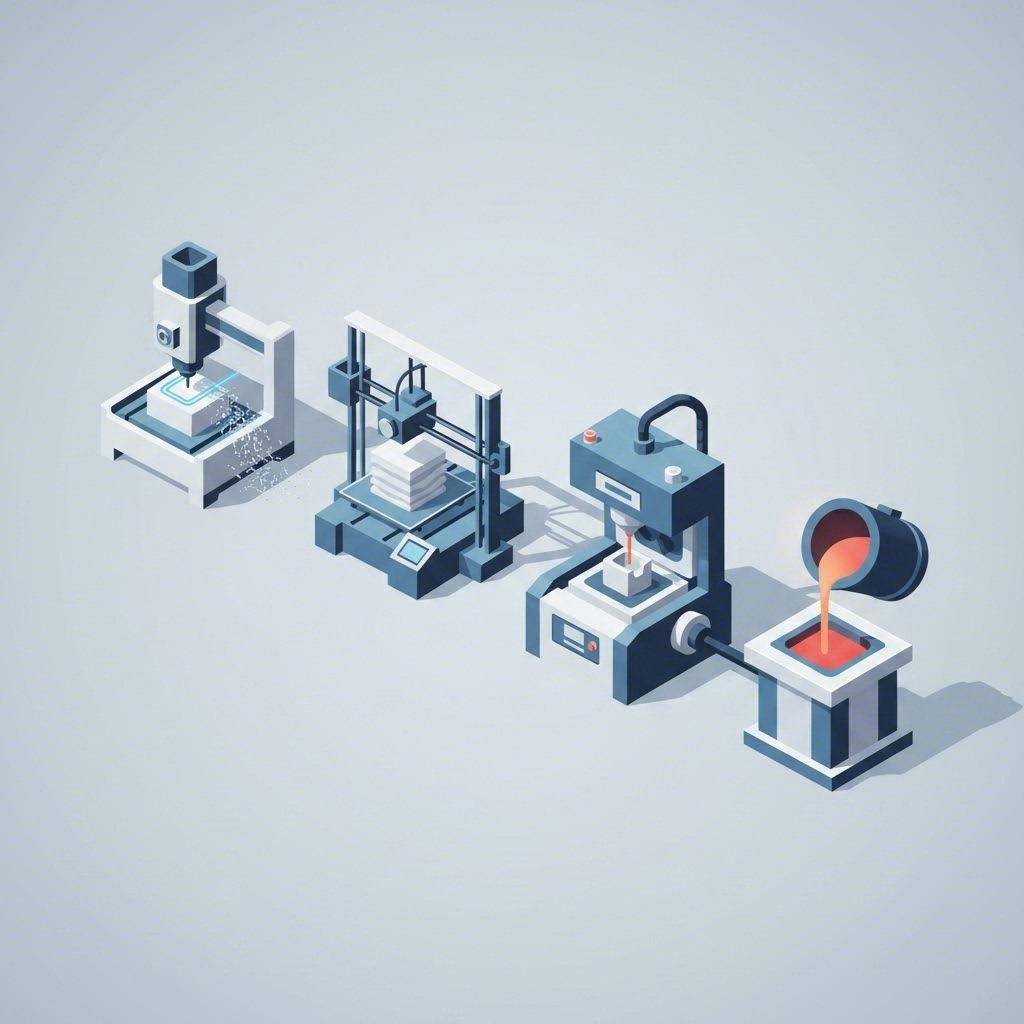
According to Protolabs, each manufacturing process has distinct benefits and limitations. CNC machining excels in scenarios requiring high precision, tight tolerances, and complex shapes with low production volumes. But 3D printing, injection molding, casting, and sheet metal fabrication each claim their own sweet spots. Understanding these distinctions empowers you to choose wisely.
When CNC Machining Beats the Alternatives
What makes cnc machined parts the preferred choice for so many applications? According to Stone City Products, CNC machining eliminates the need for dedicated tooling, which significantly reduces upfront costs for prototyping, product development, and small-batch runs.
CNC fabrication shines brightest when your project demands:
- Tight tolerances - Components requiring dimensional accuracy within ±0.001" to ±0.005" are ideal candidates for metal machining operations
- Material flexibility - CNC machines work with metals, plastics, and composites that other processes cannot handle, including harder alloys difficult to form or mold
- Low-to-medium volumes - Without expensive tooling investments, prototype machining through runs of several hundred units remains cost-effective
- Complex geometries - Multi-axis machining creates intricate contours and features that forming or stamping methods cannot replicate without secondary operations
- Rapid design iteration - When designs evolve during development, CNC allows quick changes without retooling costs
Consider aluminium spinning for axially symmetric parts like domes or cones. This specialized forming process creates seamless metal shapes efficiently, but when your geometry includes pockets, threads, or asymmetric features, CNC machining becomes the practical choice.
Choosing the Right Manufacturing Method
How do the major manufacturing methods actually stack up against each other? This comparison table breaks down the key decision factors:
| Manufacturing Method | Ideal Quantities | Material Options | Precision Capability | Typical Lead Time | Cost Structure |
|---|---|---|---|---|---|
| CNC Machining | 1 to 1,000 units | Metals, plastics, composites | ±0.001" to ±0.005" | 1-3 weeks | No tooling; per-part pricing |
| 3D Printing | 1 to 100 units | Plastics, some metals, resins | ±0.005" to ±0.020" | 1-7 days | No tooling; material + time |
| Injection Molding | 1,000+ units | Thermoplastics, elastomers | ±0.002" to ±0.005" | 4-12 weeks (tooling) | High tooling; low per-part |
| Casting | 100 to 10,000+ units | Metals, alloys | ±0.010" to ±0.030" | 4-8 weeks | Moderate tooling; medium per-part |
| Sheet Metal Fabrication | 10 to 10,000+ units | Sheet metals only | ±0.005" to ±0.015" | 1-3 weeks | Low tooling; per-part varies |
3D printing makes more sense when you need extremely complex geometries that would be impossible or prohibitively expensive to machine. According to Protolabs, 3D printing is perfect for rapid prototyping with quick turnaround times and near-limitless design freedom. Carbon fiber prototyping through additive manufacturing enables lightweight composite structures that traditional machining cannot achieve. However, surface finish quality and material strength typically fall short of CNC machined parts.
Injection molding becomes economical only at higher volumes - typically 1,000 units or more. The significant upfront investment in mold tooling gets amortized across large production runs, making per-part costs drop dramatically. As EZG Manufacturing explains, injection molding supported by rapid tooling creates plastic parts at scale with production-grade quality. But for prototype quantities? CNC machining wins every time.
Casting suits applications requiring complex internal geometries or very large parts where machining from solid stock would waste excessive material. The trade-off is looser tolerances and longer lead times for pattern and mold creation.
Sheet metal fabrication excels for enclosures, brackets, and structural components made from flat stock. Laser cutting and press brake forming produce parts quickly, but you're limited to geometries achievable through bending and cutting sheet material.
The Prototype-to-Production Transition
Here's where smart manufacturing planning really pays off. Different methods serve different stages of your product lifecycle, and the optimal choice often changes as you scale.
During early development, prototype machining or 3D printing delivers quick iterations at reasonable cost. You're testing concepts, validating fits, and refining designs. Speed and flexibility matter more than per-part economics at this stage.
As designs stabilize and quantities increase, the calculus shifts. A custom machined part costing $50 each in quantities of 10 might drop to $15 each at 500 units through CNC. But at 5,000 units, injection molding could bring that same part below $2 each - despite the $15,000 mold investment.
The key insight? Match your manufacturing method to your current stage while planning for future transitions. Many successful products begin as CNC prototypes, prove themselves in the market, then transition to injection molding or casting as demand grows.
With manufacturing method selection clarified, your next critical decision involves understanding the specific requirements and certifications that apply to your industry - particularly if you're working in demanding sectors like automotive, aerospace, or medical devices.
Industry-Specific Requirements for Custom Machined Parts
Here's something that separates amateur buyers from procurement professionals: understanding that not all machine shops can serve all industries. A shop producing excellent general-purpose components might be completely unqualified to manufacture your aerospace bracket or medical implant component. Why? Because demanding industries require specific certifications, documentation standards, and quality systems that many facilities simply don't possess.
According to American Micro Industries, certifications serve as pillars that uphold and validate every stage of the production process within a quality management system. They're not just regulatory checkboxes - they provide tangible benefits including improved manufacturing processes, reduced errors, and enhanced operational efficiency. When you're sourcing a custom machined part for regulated applications, understanding these requirements protects you from costly compliance failures down the road.
Automotive Industry Requirements
The automotive sector demands consistent, defect-free parts at volumes that would overwhelm many machine shops. When component tolerances come down to microns and parts must withstand intense vibrations and environmental stress, you need a manufacturing partner with proven capabilities and certified quality systems.
IATF 16949 is the global standard for automotive quality management, combining ISO 9001 principles with sector-specific requirements for continuous improvement, defect prevention, and stringent supplier oversight. According to 3ERP, compliance with IATF 16949 can boost a manufacturer's credibility and open doors to business with leading automotive manufacturers that mandate the highest levels of part quality and supply chain reliability.
What does this certification actually mean for your parts? Facilities holding IATF 16949 certification implement Statistical Process Control (SPC) to monitor production in real-time, catching variations before they become defects. They maintain robust product traceability systems that can track any component back through its entire manufacturing history. This level of quality assurance ensures consistent results whether you're ordering 100 precision machining parts or 100,000.
Key considerations when sourcing automotive custom machined parts:
- High volume capability - Can the shop scale from prototype to production quantities without sacrificing quality?
- Statistical Process Control - Are critical dimensions monitored throughout production runs?
- Tight tolerances - Automotive components often require precision machining services capable of holding ±0.001" or tighter
- Material traceability - Full documentation of material certifications and lot numbers
- PPAP documentation - Production Part Approval Process documentation for OEM submissions
For example, Shaoyi Metal Technology demonstrates how IATF 16949 certification combined with strict SPC implementation delivers high-tolerance components for complex chassis assemblies and custom metal bushings. Their facility offers rapid prototyping that scales seamlessly to mass production with lead times as fast as one working day for urgent needs. You can explore their automotive-specific machining solutions to understand what certified automotive manufacturing looks like in practice.
Medical and Aerospace Considerations
When stakes rise even higher - think surgical implants or aircraft components - certification requirements become correspondingly more stringent. In these industries, precision isn't just about fit and function. It's about patient safety and flight worthiness.
Medical machining falls under ISO 13485, the definitive quality management standard for medical device production. According to American Micro Industries, this certification outlines strict controls over design, manufacturing, traceability, and risk mitigation. Facilities seeking ISO 13485 certification must implement detailed documentation practices, thorough quality checks, and effective complaint and recall handling.
What makes medical device manufacturing unique? Beyond precision requirements, you're dealing with biocompatibility concerns. Materials like medical-grade stainless steel, titanium, and PEEK must meet specific standards for human contact. Stainless steel machining for implants requires not just dimensional accuracy but surface finish specifications that minimize bacterial adhesion and tissue irritation.
Key considerations for medical custom machined parts:
- Biocompatible materials - Material certifications confirming suitability for patient contact
- Comprehensive documentation - Device history records, inspection reports, and material traceability
- FDA compliance - Adherence to 21 CFR Part 820 Quality System Regulation
- Clean manufacturing environments - Controlled conditions preventing contamination
- Risk management processes - Documented procedures for identifying and mitigating potential failures
Aerospace CNC machining imposes some of the most rigorous compliance standards in manufacturing. AS9100 builds upon ISO 9001 and introduces additional requirements specific to the aerospace sector. According to industry experts, this standard emphasizes risk management, stringent documentation, and product integrity control throughout complex supply chains.
Aerospace part manufacturing often involves exotic metals like titanium, Inconel, and specialized aluminum alloys. These materials challenge even experienced machinists, requiring 5 axis cnc machining services to produce the complex geometries found in turbine housings, actuator components, and structural assemblies. The combination of difficult materials and tight tolerances demands precision cnc machining services with verified capabilities.
Key considerations for aerospace custom machined parts:
- Exotic materials expertise - Proven capability with titanium, Inconel, and aerospace-grade alloys
- Stringent inspection requirements - CMM verification, non-destructive testing, and first article inspection
- Complete material traceability - Mill certifications and heat lot tracking for every component
- NADCAP accreditation - For special processes like heat treating and non-destructive testing
- AS9100 certification - The baseline requirement for aerospace supply chain participation
As MFG Solution notes, aerospace manufacturing's 5-axis capabilities make it ideal for producing high-performance components while complying with strict certifications and traceability requirements. This isn't optional documentation - it's the price of admission for serving these demanding markets.
Tolerance and Inspection Standards by Industry
Understanding industry-specific tolerance expectations helps you communicate requirements effectively and evaluate whether a shop can actually deliver what you need:
| Industry | Typical Tolerance Range | Common Inspection Methods | Key Certifications |
|---|---|---|---|
| Automotive | ±0.001" to ±0.005" | CMM, SPC, Gauge R&R | IATF 16949, ISO 9001 |
| Medical Devices | ±0.0005" to ±0.002" | CMM, Optical comparators, Surface profilometry | ISO 13485, FDA 21 CFR 820 |
| Aerospace | ±0.0002" to ±0.001" | CMM, NDT, First article inspection | AS9100, NADCAP |
| Defense | ±0.0005" to ±0.002" | CMM, Material verification, NDT | ITAR, AS9100, ISO 9001 |
The bottom line? Before sending your design to any machine shop, verify their certifications match your industry requirements. A shop without IATF 16949 cannot supply automotive OEMs. A facility lacking ISO 13485 shouldn't be machining your medical components. These certifications exist because industries learned - sometimes through catastrophic failures - that documented quality systems prevent defects that informal processes miss.
With industry requirements clarified, your next priority is understanding how to verify that finished parts actually meet specifications. That brings us to quality assurance and inspection methods - the final checkpoint before your custom machined parts enter service.
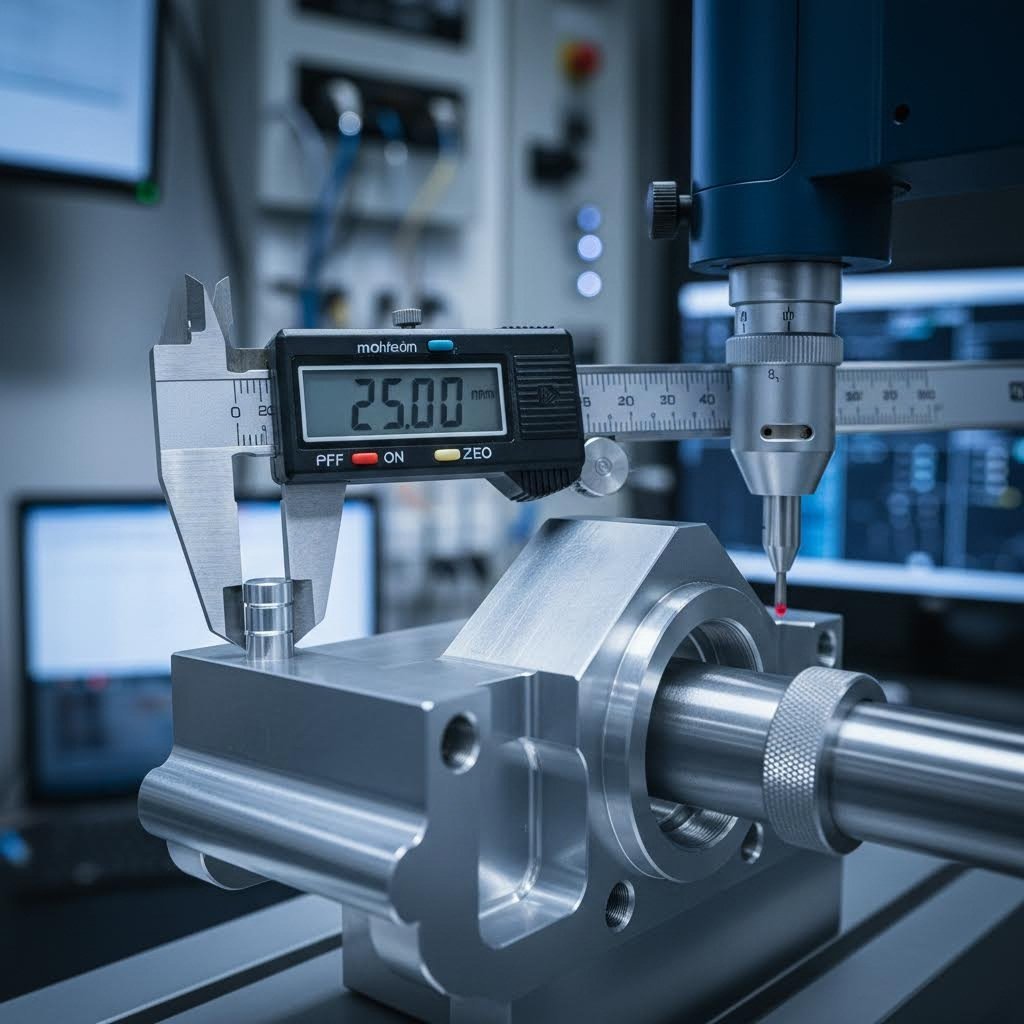
Quality Assurance and Inspection for Custom Parts
Your custom machined part finally arrives. The packaging looks professional, the parts appear shiny and new. But here's a question that separates experienced buyers from beginners: how do you actually verify that what you received matches what you ordered? Without proper inspection, you might not discover dimensional errors, surface defects, or material substitutions until your assembly fails in the field.
According to Frog3D, the primary objective of quality control is to minimize errors by accurately identifying and addressing potential issues. Without proper CNC machining quality control, defective parts can result in significant financial losses and a negative industry reputation. Understanding inspection methods empowers you to verify quality before problems become expensive.
Verifying Part Quality Upon Receipt
When that shipment arrives, resist the temptation to immediately install parts into your assembly. A systematic receiving inspection catches issues while you still have leverage with your supplier. Here's what experienced procurement professionals check before accepting delivery:
- Visual inspection - Examine surfaces for tool marks, burrs, scratches, or discoloration that indicate machining problems
- Dimensional verification - Measure critical features against your drawing specifications using appropriate instruments
- Surface finish assessment - Compare texture against specified Ra values or finish samples
- Material certification review - Verify mill certificates match your material specification including grade, heat lot, and mechanical properties
- Quantity confirmation - Count parts and check for shipping damage
- Documentation completeness - Ensure inspection reports, certifications, and any required compliance documents are included
For precision machining parts destined for critical applications, consider requesting a First Article Inspection (FAI) report with your initial order. According to 1Factory, an FAI is a comprehensive review of the engineering documentation and manufacturing process from raw materials through conversion, special processing, and functional testing for one part. This documentation confirms your supplier's process is capable of consistently delivering conforming components.
Essential Inspection Methods Explained
What tools and techniques do quality professionals use to verify machined metal parts? The answer depends on your tolerance requirements and feature complexity.
Calipers provide quick measurements for external dimensions, hole diameters, and depths. Digital calipers offer resolution to 0.01mm and work well for features with tolerances of ±0.1mm or looser. They're your first-line tool for basic dimensional checks on metal machined parts.
Micrometers deliver greater precision than calipers, typically resolving to 0.001mm. When your cnc machining part requires verification of tolerances in the ±0.01mm to ±0.05mm range, micrometers become essential. Different styles - outside, inside, and depth micrometers - address various feature types.
Coordinate Measuring Machines (CMM) represent the gold standard for dimensional inspection. According to industry sources, CMMs provide precise and automated measurements for complex geometries and tight tolerances. Utilizing both tactile and non-contact probes, CMMs capture dimensional data enabling thorough 3D metrology and geometric verification. For cnc milled components with complex contours or position tolerances, CMM measurement provides the accuracy and documentation that simpler tools cannot match.
Surface roughness testing quantifies what your fingertips can only estimate. Profilometers measure Ra values - the average roughness height - in micrometers or microinches. According to RapidDirect, the standard roughness of CNC machining surface finish is Ra 3.2 μm (125 μin), which is the default finish from basic milling or turning without additional polishing. Lower Ra values indicate smoother surfaces.
Material verification confirms you received the alloy you specified. Mill certificates should document chemical composition, mechanical test results, heat lot numbers, and country of origin. For critical applications, independent material testing using spectroscopy or hardness testing provides additional assurance.
Understanding Surface Finish Options
Surface finish affects both appearance and function. Here's what each common finish delivers:
As-machined is the default finish straight from the cutting tool. According to RapidDirect, this finish provides reasonable quality at reasonable price - no additional processing is applied. Expect visible tool marks and an Ra value around 3.2 μm. This finish suits internal components, brackets, and parts where appearance doesn't matter.
Bead blasted creates a uniform matte texture by bombarding surfaces with small glass or ceramic beads. This process hides minor machining marks and produces a consistent, professional appearance. It's popular for enclosures and consumer-facing components where a smooth but non-reflective surface is desired.
Anodized finishes provide both aesthetics and protection through an electrochemical process that creates a durable oxide layer on aluminum parts. Type II anodizing offers corrosion resistance and accepts dyes for color options. Type III (hardcoat) anodizing creates a much thicker, wear-resistant surface ideal for sliding components and harsh environments.
Powder coated finishes apply dry powder electrostatically, then cure it under heat to form an even, durable coating. This finish provides excellent protection against corrosion, chemicals, and UV exposure. It's available in virtually unlimited colors and textures, making it ideal for exterior components and equipment housings.
Identifying Common Quality Issues
What problems should you watch for when inspecting received parts? According to quality control experts, these defects appear most frequently:
- Dimensional inaccuracies - Features outside tolerance due to tool wear, machine calibration issues, or programming errors
- Surface finish defects - Chatter marks, tool drag lines, or roughness exceeding specifications that affect appearance or function
- Burrs - Sharp edges or raised material at feature transitions that weren't properly removed during finishing
- Tool marks - Visible scratches or gouges from cutting tools, often from worn or improperly selected tooling
- Material defects - Porosity, inclusions, or cracking that originated in raw material or developed during machining
When you identify issues, document them with photographs and measurements before contacting your supplier. Clear evidence of non-conformance strengthens your position for replacement or credit. The best machine shops welcome this feedback - it helps them improve their processes and prevents future escapes.
Request inspection reports and material certifications with every order. These documents provide the traceability you need if problems emerge later - and they demonstrate that your supplier takes quality seriously.
Avoiding Common Mistakes When Ordering Custom Parts
You've done your homework on materials, design principles, and pricing factors. Now comes the moment of truth: actually placing your order. This is where first-time buyers often stumble, making preventable mistakes that inflate costs, delay delivery, or result in parts that don't meet expectations. The good news? These pitfalls are entirely avoidable once you know what to watch for.
According to Global Precision, ordering custom machined parts doesn't have to be a painful experience. By avoiding common pitfalls like vague drawings, poor material choices, and over-specified tolerances, you can ensure your project delivers the precision, reliability, and performance that modern manufacturing promises.
First-Time Buyer Mistakes to Avoid
Imagine submitting your design only to receive a quote three times higher than expected - or worse, receiving finished parts that don't fit your assembly. These scenarios happen more often than you'd think, usually because of easily correctable errors in the ordering process.
Here are the most common pitfalls that trip up buyers ordering their first custom machined part:
- Over-specifying tolerances - Applying ultra-tight tolerances (±0.01 mm) across every dimension "just to be safe" dramatically increases cost. According to Global Precision, tighter tolerances always add cycle time, tooling cost, and scrap rates. Reserve precision specifications only for dimensions that functionally require them.
- Incomplete drawings - Submitting sketches or freehand drawings without proper dimensioning, tolerancing, or material callouts forces manufacturers to make assumptions. Any ambiguity leads to incorrect features, poor fits, or rejected parts.
- Unclear material specifications - Letting cost or availability drive material decisions without considering machinability, strength, or corrosion resistance creates problems. Different alloys behave differently under cutting tools, and the wrong material choice can result in excessive tool wear, missed tolerances, or premature part failure.
- Unrealistic lead time expectations - Assuming standard lead times without considering complexity, material availability, or shop capacity leads to disappointment. Unexpected delays in raw material procurement or machine availability can derail project timelines.
- Failing to communicate application requirements - Not informing your manufacturer about heat treatment needs, plating specifications, or assembly conditions results in parts that technically meet drawings but fail in actual use.
- Skipping prototype validation - Jumping directly to production without a pilot batch (5-10 parts) means hidden design or tooling problems surface only after you've committed to larger quantities - when adjustments become expensive.
The solution to most of these issues? Use professional CAD software to generate proper 3D models and 2D detail drawings. Clearly annotate all critical dimensions, geometric tolerances (GD&T), surface finishes, and material grades. If you're unsure about the criticality of certain tolerances, consult your machine shop early in the design process.
Understanding Realistic Lead Times
When you're searching for a machinist near me or browsing cnc machine shops near me, one of the first questions on your mind is probably "how fast can I get my parts?" The honest answer depends on multiple factors that many buyers overlook.
According to Anebon Metal, lead time covers everything from the moment your quote is accepted until finished parts leave the dock. For manufacturing engineers and shop managers, getting this number right directly affects cash flow, customer retention, and the ability to take on new work.
Here's what realistically influences your delivery schedule:
- Job complexity - A simple 3-axis facing operation on aluminum is predictable. A 5-axis simultaneous finish pass on stainless steel with tight profile tolerances takes significantly longer to program and execute.
- Material availability - Common alloys like 6061 aluminum are typically in stock. Exotic materials or specific heat-treat conditions may require procurement time measured in weeks.
- Shop capacity and queue - Your part might machine in 22 minutes, but if deburr, cleaning, and CMM inspection are backed up, total flow time extends to days.
- Tooling requirements - Standard tooling cuts immediately. Special cutters or custom fixtures add setup time.
- Quality documentation - First article inspection reports, material certifications, and compliance documentation all require time beyond basic machining.
Standard lead times for machining shops near me typically run 2-3 weeks for straightforward parts. Expedited service can compress this to 1 week, while rush orders may achieve 1-3 days - at premium pricing. Missing a promised date once might be forgiven, but shops that rely on "average cycle time plus a few extra days just in case" routinely miss their dates by 20-40 percent according to Anebon's research.
Build buffer time into your planning for prototype validation and quality inspections. A reliable CNC shop near me will provide realistic schedules upfront, factoring in holidays, back-ordered materials, and shop capacity rather than overpromising to win your business.
Partnering with the Right Machine Shop
When you search for local machine shops or browse listings for a cnc machine shop near me, how do you separate capable partners from shops that will cause headaches? The lowest quote rarely indicates the best value.
According to CNC Solutions, selecting a CNC machining shop based solely on the lowest price quote is a common mistake. Manufacturers offering bargain prices may compromise on tooling maintenance, skilled labor, or material quality, producing inconsistent results that cost more in rework and delays.
Here's how to evaluate potential partners effectively:
Certifications matter - Look for quality certifications like ISO 9001 as a baseline. For automotive applications, IATF 16949 certification demonstrates the shop implements Statistical Process Control and maintains robust traceability systems. Ask about inspection equipment and whether they employ dedicated quality assurance personnel.
Equipment capabilities - Does the shop have the machines needed for your project? A forward-thinking machinist shops near me will continuously invest in equipment upgrades, automation solutions, and technology that enhances capabilities while maintaining quality standards.
Communication responsiveness - Assess how quickly potential shops respond to inquiries. According to CNC Solutions, responsiveness indicates excellent customer service skills that foster collaboration during production. Shops that are slow to respond during quoting often struggle with communication throughout the project.
Experience with similar work - Past client testimonials provide honest insight into how successful previous collaborations have been. Don't hesitate to ask for references from clients with projects similar to yours.
Scaling capability - Can the shop grow with your needs? Facilities offering rapid prototyping that scales seamlessly to mass production provide significant advantages. For example, Shaoyi Metal Technology delivers high-tolerance components for complex chassis assemblies and custom metal bushings with lead times as fast as one working day for urgent needs. Their IATF 16949 certification and strict SPC implementation ensure consistent quality whether you need 10 prototypes or 10,000 production parts. Explore their automotive machining capabilities to understand what a certified, scalable manufacturing partner offers.
Questions to Ask Before Committing
Before signing that purchase order, gather critical information that protects your project:
- What certifications does the shop hold, and are they current?
- What quality control measures are in place, and what documentation will I receive?
- What is the realistic lead time for my specific part, and what could cause delays?
- How will you communicate progress and any issues that arise?
- Do you have experience with my specific material and tolerance requirements?
- What guarantee or warranty do you offer on quality?
- Can you provide a detailed cost estimate breaking down material, machining, and finishing?
Clear communication from the outset prevents misunderstandings that lead to delays, cost overruns, and parts that don't meet expectations. The best custom machine partnerships develop when both parties understand requirements, constraints, and expectations before chips start flying.
The most successful custom machining projects share one common element: clear, proactive communication between buyer and manufacturer. Document your requirements completely, ask questions early, and treat your machine shop as a partner rather than just a vendor.
By avoiding common mistakes, setting realistic expectations, and carefully evaluating potential partners, you position yourself to receive quality custom machined parts on time and within budget. The knowledge you've gained throughout this guide transforms you from a passive buyer into an informed partner - someone machine shops respect and prioritize because you make their jobs easier while demanding the quality your projects deserve.
Frequently Asked Questions About Custom Machined Parts
1. How much does a custom machined part cost?
Custom machined part costs depend on material type, geometric complexity, tolerance requirements, quantity, surface finish, and lead time urgency. Aluminum parts cost less than stainless steel or titanium due to faster machining and reduced tool wear. Single prototypes carry higher per-unit costs because setup expenses are spread across fewer parts, while production quantities of 100+ units significantly reduce per-part pricing. Tight tolerances beyond ±0.05mm can multiply costs by 3 to 10 times compared to standard specifications.
2. What is the best online CNC machining service?
The best CNC machining service depends on your specific requirements including industry certifications, material expertise, and production volume needs. For automotive applications, seek IATF 16949-certified facilities like Shaoyi Metal Technology that implement Statistical Process Control for consistent quality. Evaluate shops based on equipment capabilities, communication responsiveness, lead time reliability, and experience with similar projects rather than selecting solely on price.
3. How long does it take to get custom CNC machined parts?
Standard lead times for custom machined parts typically range from 2-3 weeks for straightforward components. Expedited service can compress this to 1 week, while rush orders may achieve 1-3 days at premium pricing. Factors affecting delivery include job complexity, material availability, shop capacity, tooling requirements, and quality documentation needs. Some certified facilities offer lead times as fast as one working day for urgent automotive and industrial components.
4. What materials can be CNC machined for custom parts?
CNC machining works with a wide range of materials including aluminum alloys (6061, 7075), mild steel, stainless steel (304, 316), brass, bronze, titanium, and engineering plastics like Delrin, nylon, PEEK, and acrylic. Material selection should balance mechanical performance requirements, corrosion resistance, weight constraints, and budget. Softer materials like aluminum machine faster with less tool wear, while harder materials like stainless steel increase machining time and costs.
5. How can I reduce the cost of custom machined parts?
Reduce custom machined part costs by applying Design for Manufacturability principles: add corner radii to internal features, maintain minimum wall thicknesses, limit hole depth-to-diameter ratios to 4:1, and apply tight tolerances only to functionally critical dimensions. Choose cost-effective materials like aluminum or Delrin when performance requirements allow. Order larger quantities to spread setup costs, provide complete CAD files with clear specifications, and allow standard lead times rather than rush delivery.