 Small batches, high standards. Our rapid prototyping service makes validation faster and easier —
  EN
EN


From Digital Design To Physical Part: How CNC Work Actually Happens
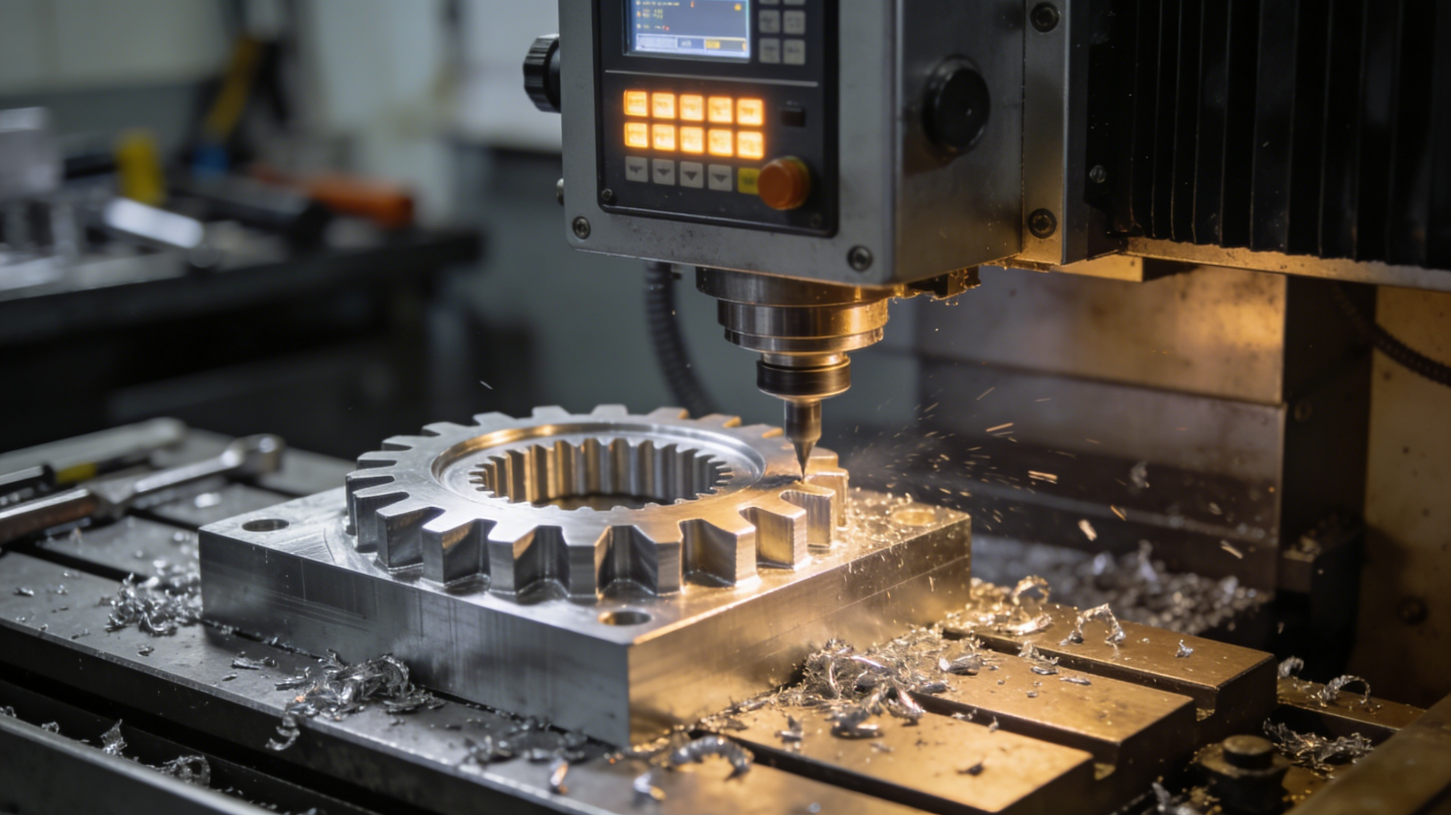
What CNC Work Really Means in Modern Manufacturing
Ever wondered how manufacturers create thousands of identical metal parts with microscopic precision? The answer lies in CNC work—a revolutionary approach that has transformed how we build everything from smartphone components to aircraft engines.
So, what does CNC stand for? CNC stands for Computer Numerical Control, representing the powerful intersection of computer programming and precision manufacturing. When you're exploring the cnc meaning, you'll discover it describes both a technology and a thriving career field that continues to grow.
CNC work is the process of using pre-programmed computer software to control the movement of manufacturing machinery, enabling automated, precise, and repeatable production of complex parts from raw materials.
If you've been asking "cnc what does it mean" or "what does mean cnc," you're not alone. Understanding the c.n.c meaning opens doors to appreciating modern manufacturing's backbone technology.
From Manual Machining to Digital Precision
Imagine a skilled machinist from the 1950s operating a manual lathe. Every cut, every measurement, and every adjustment depended entirely on their hands and experience. One moment of distraction could ruin an entire part. Now, picture the same operation today—a CNC machinist programs precise instructions, and the machine executes them flawlessly, part after part.
This evolution didn't happen overnight. Traditional machining required operators to physically guide cutting tools through each operation. The results varied based on human factors like fatigue, skill level, and consistency. CNC work eliminates these variables by translating digital designs into exact machine movements.
The key differences that make this technology revolutionary include:
- Automation: Once programmed, machines execute operations without constant manual intervention
- Repeatability: The thousandth part matches the first with identical precision
- Precision: Tolerances measured in thousandths of an inch become standard
The Technology Behind Modern Manufacturing
What is CNC in practical terms? Think of it as teaching a machine to follow a detailed recipe. Instead of flour and eggs, you're working with aluminum, steel, or titanium. Instead of mixing and baking, you're cutting, drilling, and shaping.
This technology serves as both a sophisticated manufacturing method and a rewarding career path. Whether you're a curious beginner exploring what is cnc technology or someone considering becoming a cnc machinist, understanding these fundamentals matters.
Throughout this article, you'll discover exactly how digital designs transform into physical parts, explore different machine types, and learn what professionals in this field actually do daily. You'll also understand why industries from aerospace to medical devices depend on this precision manufacturing approach.
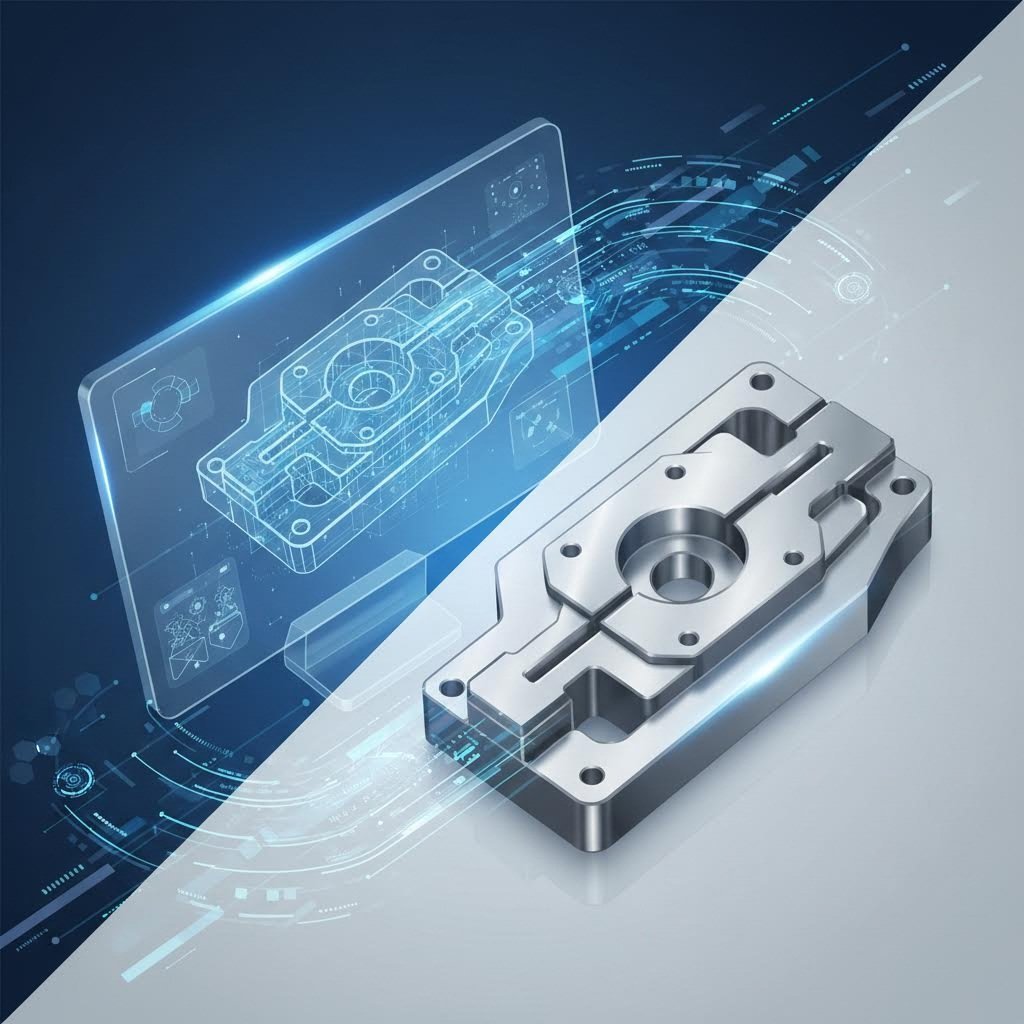
How CNC Machines Transform Digital Designs into Physical Parts
Sounds complex? It's actually quite logical once you understand the workflow. A CNC machine doesn't magically know how to create your part—it follows a carefully orchestrated sequence that transforms your digital vision into something you can hold in your hands. Let's break down exactly how does CNC work, step by step.
At its core, a CNC computer numerical control machine operates like an incredibly precise robot following detailed instructions. These instructions tell the machine exactly where to move, how fast to travel, and when to cut. The entire process relies on seamless communication between design software, programming languages, and physical machinery.
The Journey from CAD File to Finished Component
Every CNC machined part begins as a digital design. Engineers and designers create these blueprints using CAD (Computer-Aided Design) software like SolidWorks, Fusion 360, or AutoCAD. Think of CAD as the architect's drawing—it defines every dimension, curve, and feature your part needs.
But here's where many beginners get confused: your CNC machine can't read CAD files directly. The design must travel through several transformation stages before cutting begins.
- Design Creation: Engineers develop the 3D model in CAD software, defining precise measurements, tolerances, and surface requirements. The completed design exports as a STEP or IGES file—formats that preserve geometric accuracy.
- CAM Processing: CAM (Computer-Aided Manufacturing) software imports the design and generates toolpaths—the exact routes cutting tools will follow. Popular CAM programs include Mastercam, Fusion 360 CAM, and Cambam. This stage determines cutting speeds, tool selection, and machining strategies.
- Code Generation: The CAM software converts toolpaths into machine-readable instructions through a post-processor. This creates the NC (Numeric Control) file containing all movement commands.
- Machine Setup: Operators load raw material, install appropriate cutting tools, and calibrate the machine. They verify tool offsets and establish work coordinates.
- Production Execution: The computer numerically controlled machine reads the program and executes each command precisely, transforming stock material into your finished component.
Understanding G-Code and Machine Instructions
When you're learning what is CNC programming, you'll inevitably encounter G-code and M-code. These are the fundamental languages every CNC machine understands—regardless of manufacturer or model.
G-code controls geometric movements. Imagine you're giving driving directions: "Go straight for 100 feet, turn right, continue for 50 feet." G-code works similarly, telling the tool exactly where to move. Common commands include:
- G00: Rapid positioning—moves the tool quickly to a location without cutting
- G01: Linear interpolation—cuts in a straight line at a specified feed rate
- G02/G03: Arc movements—creates clockwise or counterclockwise curves
M-code manages machine functions beyond movement. These commands handle spindle rotation, coolant activation, and program flow. For example, M03 starts the spindle rotating, while M08 activates coolant to keep tools and materials from overheating.
Here's where CNC stands for becomes practically meaningful: the "numerical control" refers specifically to these coded instructions guiding every operation.
So, how do these codes get created? Two primary methods exist:
- Automated CAM-generated toolpaths: Most modern CNC programs are generated automatically by CAM software. The operator imports the design, selects machining strategies, and the software calculates optimal toolpaths. This approach handles complex geometries efficiently and reduces human error.
- Manual programming: Experienced CNC programmers sometimes write or modify code by hand. This proves valuable for simple operations, custom modifications, or troubleshooting. Understanding manual programming helps operators optimize machine performance and solve unexpected problems.
Whether you're evaluating CNC machining as a service or considering it as a career, understanding this digital-to-physical transformation reveals why precision manufacturing demands both technical knowledge and practical expertise. The machines are only as capable as the instructions they receive—and that's where skilled programmers make all the difference.
Types of CNC Machines and Their Unique Capabilities
When you walk into a modern machine shop, you won't find just one type of CNC machining equipment—you'll discover an entire ecosystem of specialized machines, each designed for specific manufacturing challenges. Understanding the different types of CNC machine available helps you appreciate why manufacturers invest in particular equipment and how machine selection directly impacts what parts they can produce.
Think of it like a kitchen: you wouldn't use a blender to chop vegetables or a toaster to make soup. Similarly, each numerical control machine excels at specific operations. Let's explore the major categories and discover what makes each one unique.
| Machine Type | Primary Function | Typical Materials | Common Applications |
|---|---|---|---|
| CNC Mill | Removes material using rotating cutting tools against stationary/moving workpiece | Aluminum, steel, titanium, plastics | Engine blocks, molds, aerospace components |
| CNC Lathe | Rotates workpiece against stationary cutting tools | Metals, plastics, wood | Shafts, bushings, threaded fasteners |
| CNC Router | High-speed cutting across large work areas | Wood, plastics, composites, foam, soft metals | Cabinet panels, signs, composite parts |
| CNC Plasma Cutter | Uses ionized gas to cut conductive materials | Steel, stainless steel, aluminum | Metal sheets, structural components, artistic metalwork |
| CNC EDM | Erodes material using electrical discharges | Hardened steel, carbide, exotic alloys | Injection molds, dies, micro-features |
Milling Machines and Their Capabilities
So, what is CNC milling exactly? Picture a rotating cutting tool carving material away from a solid block—that's milling in action. CNC mills are arguably the most versatile type of CNC machine, capable of creating complex three-dimensional shapes from virtually any material.
The real magic of milling machines lies in their axis configurations. Here's why axis count matters so much:
- 3-Axis Mills: The cutting tool moves along X, Y, and Z directions—left-right, forward-backward, and up-down. Perfect for straightforward parts like flat plates with pockets and holes. Most entry-level CNC work starts here.
- 4-Axis Mills: Adds rotation around one axis (typically the X-axis), allowing the workpiece to turn during machining. This enables cutting features on multiple sides without manually repositioning the part.
- 5-Axis Mills: Incorporates two rotational axes, enabling the cutting tool to approach the workpiece from virtually any angle. Complex aerospace components and medical implants often require this capability.
Why does this matter for your project? Imagine machining a turbine blade with compound curves on every surface. A 3-axis machine would require multiple setups—repositioning the part, recalibrating, and risking alignment errors each time. A 5-axis machine completes the same blade in a single setup, reducing time and improving accuracy.
Lathes, Routers, and Specialized Equipment
While mills dominate many shops, CNC lathes remain essential for cylindrical parts. Unlike mills where the tool rotates, lathes spin the workpiece itself while cutting tools remain stationary. This approach excels at creating shafts, pins, bushings, and any part with rotational symmetry.
Understanding the evolution from nc machine technology to modern CNC helps explain why these machines perform so reliably. Early NC machines used punched tape to store instructions—a revolutionary advancement over manual operation but limited in flexibility. Today's nc and cnc machine controllers offer real-time adjustments, tool wear compensation, and integrated quality monitoring.
CNC routers occupy a unique niche in the manufacturing landscape. Though similar in principle to mills, routers typically feature larger work envelopes and higher spindle speeds optimized for softer materials. Furniture manufacturers, sign makers, and composite fabricators rely heavily on these machines. If you've ever seen intricate wooden cabinet doors or custom foam packaging, a CNC router likely created them.
Then there's EDM—Electrical Discharge Machining. Sometimes called a c & c machine in certain regional contexts, EDM operates completely differently from traditional cutting. Instead of mechanical contact, it uses electrical sparks to erode material atom by atom. This process seems slow, but it's invaluable for:
- Machining extremely hard materials like tungsten carbide
- Creating sharp internal corners impossible with rotating tools
- Producing delicate micro-features without mechanical stress
Plasma cutters round out the specialized equipment category. These machines ionize gas to create a superheated plasma stream that slices through conductive metals. While they can't match the precision of mills or EDM, plasma cutters excel at rapid cutting of sheet metal and structural steel.
Choosing the right equipment isn't about finding the "best" machine—it's about matching capabilities to your specific requirements. A job shop producing prototype aerospace brackets needs different equipment than a furniture factory cutting cabinet panels. Understanding these distinctions helps whether you're selecting a manufacturing partner or considering which machines to train on for your CNC career.
Essential Skills and Daily Responsibilities of CNC Professionals
What does a typical day look like for someone in this field? If you imagine a CNC machine operator job description involves simply pressing buttons and watching machines run, you're missing about 90% of the picture. The reality is far more engaging—and demanding.
Whether you're exploring a cnc operator job description for career planning or trying to understand what working with these machines actually involves, the truth might surprise you. CNC professionals blend technical expertise, problem-solving skills, and hands-on craftsmanship in ways that make every day different.
According to the U.S. Small Business Administration, approximately 98.6% of the 607,000 manufacturing companies in the United States are considered small businesses, with about three-quarters having fewer than 20 employees. This means most CNC professionals wear multiple hats—handling technical operations, quality control, and even coordination with engineering and management teams.
Technical Skills Every CNC Professional Needs
So, what separates a competent computer numerically controlled cnc machinist from someone just learning the ropes? The cnc machinist definition goes far beyond machine operation. When we define machining as a profession, we're really talking about a blend of technical knowledge, precision measurement capabilities, and practical problem-solving.
Here are the essential skills every CNC professional must develop:
- Programming Knowledge: Understanding G-code and M-code fundamentals allows operators to troubleshoot issues, make minor program adjustments, and communicate effectively with programmers. Many positions require operators to modify existing programs or write simple routines.
- Mechanical Aptitude: Knowing how machines function—spindle mechanics, axis movements, coolant systems—helps professionals anticipate problems before they cause scrap or damage. A skilled cnc mechanic understands both the electronic controls and mechanical components.
- Mathematical Proficiency: Trigonometry, geometry, and basic algebra appear constantly in CNC work. Calculating offsets, determining speeds and feeds, and interpreting dimensional tolerances all require solid math skills.
- Attention to Detail: When tolerances measure in thousandths of an inch, missing a decimal point or misreading a dimension creates expensive mistakes. Successful professionals develop almost obsessive attention to specifications.
- Problem-Solving Abilities: Machines behave unexpectedly. Materials vary. Tools wear. The best CNC professionals diagnose issues quickly and implement solutions without extensive supervision.
Blueprint reading deserves special mention because it bridges design intent and physical execution. Professionals must interpret engineering drawings, understand geometric dimensioning and tolerancing (GD&T) symbols, and translate two-dimensional representations into three-dimensional understanding. Without this skill, even the most sophisticated programming knowledge becomes useless.
Mastering Precision Measurement
You'll notice that measurement tools appear in nearly every CNC machinist/ job listing—and for good reason. Quality parts require verified dimensions, and verification demands proper metrology skills.
The three essential measuring instruments every CNC professional needs include:
- Digital Calipers: These versatile tools measure outside dimensions, inside diameters, and depths. According to CNC metrology experts, calipers are probably the most common measuring tool for length or thickness, suitable for measurements with tolerances of 0.002" or greater.
- Micrometers: When calipers aren't precise enough, micrometers step in. These instruments measure to ten-thousandths of an inch (0.0001"), essential for tight-tolerance work.
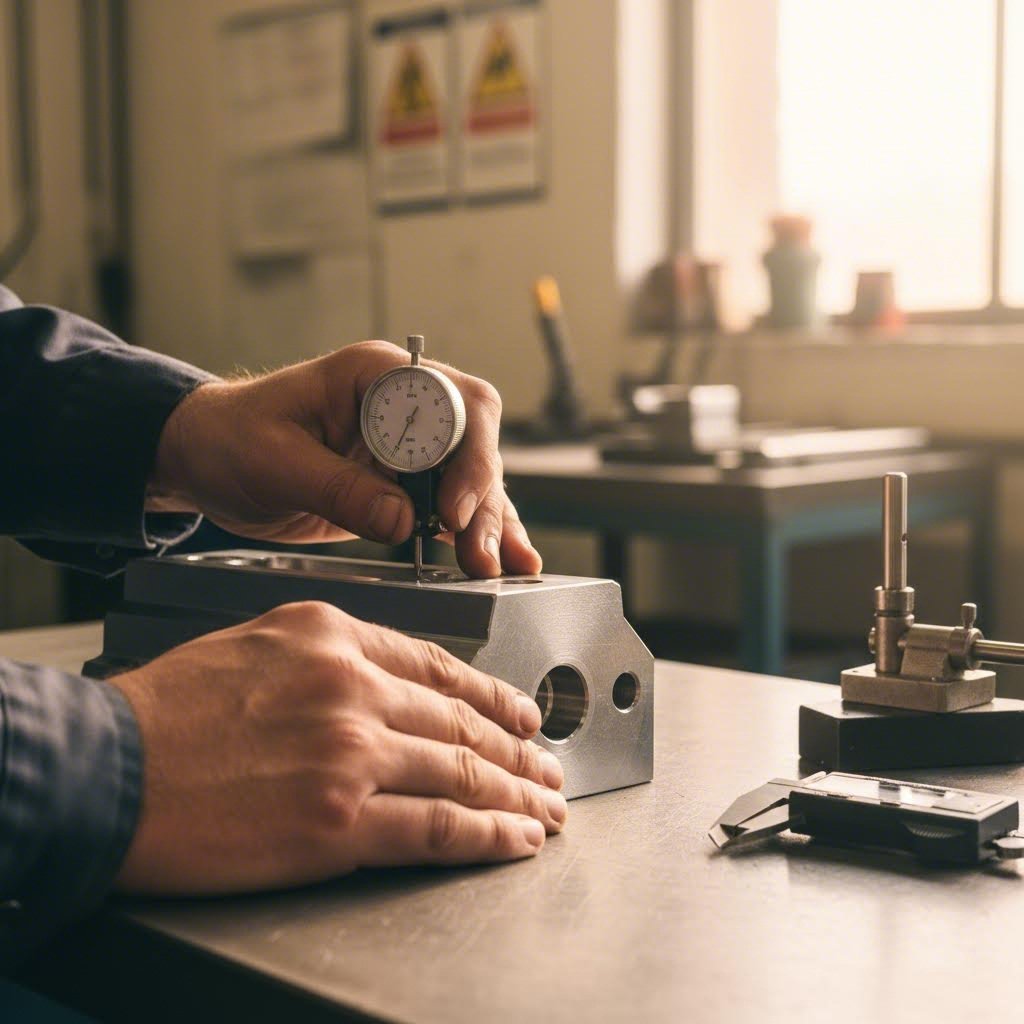
- Dial Test Indicators (DTIs): Used for checking runout, alignment, and surface variations, DTIs help verify setup accuracy before cutting begins.
Beyond handheld tools, professionals learn to use height gauges with granite surface plates, bore gauges for internal dimensions, and thread measurement equipment. Quality inspection processes often involve first-article inspection—thoroughly checking the first completed part before running full production—and in-process monitoring using Statistical Process Control (SPC) methods.
Beyond Button-Pushing - The Art of Precision Manufacturing
The daily responsibilities extend well beyond running programs. A comprehensive cnc machine operator job description includes activities that might surprise career explorers:
- Machine Setup: Loading raw material, installing cutting tools, establishing work coordinates, and verifying tool offsets—often taking longer than actual machining for complex parts
- Tool Management: Inspecting cutting tools for wear, replacing worn inserts, and maintaining tool libraries
- Quality Verification: Measuring completed parts, documenting results, and making adjustments when dimensions drift
- Maintenance Tasks: Cleaning machines, checking lubricant levels, and performing preventive maintenance to avoid costly breakdowns
- Communication: Meeting with management about schedules, discussing technical matters with engineers, and coordinating with inventory departments
The variety of tasks explains why soft skills matter alongside technical abilities. In smaller manufacturing companies—which represent the vast majority of the industry—CNC professionals interact with multiple departments daily.
Workplace Safety and Physical Considerations
Manufacturing environments present real hazards that every professional must respect. All U.S. manufacturing facilities must comply with OSHA worker safety guidelines, and competent operators follow company safety protocols as part of their daily routine.
Physical requirements include:
- Standing for extended periods during machine operation and setup
- Lifting raw materials and finished parts (often 25-50 pounds regularly)
- Working in environments with coolant mists, metal chips, and noise
- Maintaining focus during repetitive tasks while remaining alert to machine behavior
Personal protective equipment (PPE) is non-negotiable. Safety glasses protect eyes from flying chips, steel-toe boots prevent foot injuries, and hearing protection guards against cumulative noise damage. Some operations require face shields, gloves, or respiratory equipment depending on materials and processes.
Machine guarding—physical barriers preventing contact with moving parts like rotating spindles and cutting tools—provides essential protection. Interlock systems automatically stop machines when guards are opened, preventing accidental contact during adjustments.
Understanding these realities helps career explorers make informed decisions. CNC work offers intellectually engaging challenges and excellent earning potential, but it demands physical stamina, safety awareness, and genuine commitment to precision. Those who thrive in this environment find deeply satisfying careers transforming raw materials into precisely engineered components.
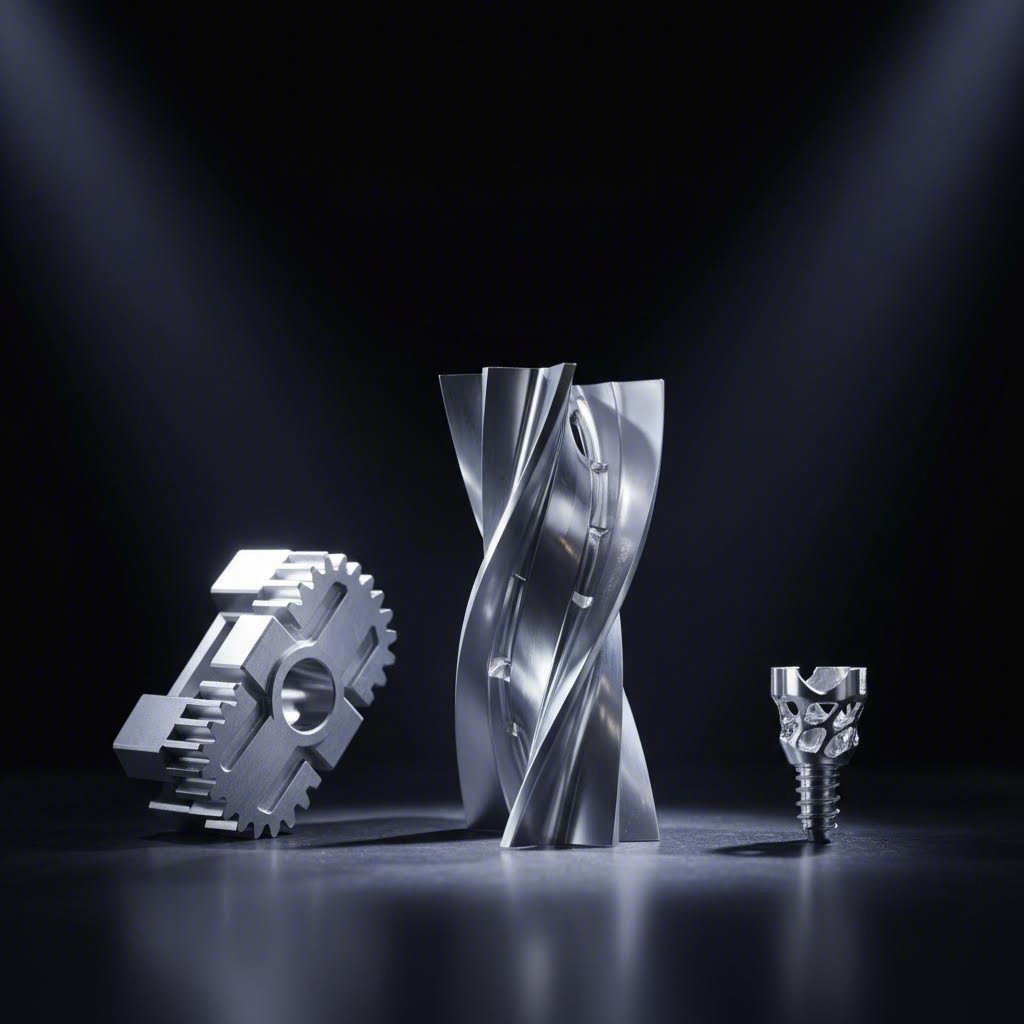
CNC Work Across Aerospace, Automotive, and Medical Industries
Ever wonder why an aircraft engine component costs exponentially more than a similar-sized automotive bracket? The answer lies in how dramatically CNC work requirements shift across different industries. The same fundamental machining technology serves vastly different masters—each with unique precision demands, quality certifications, and regulatory frameworks.
Understanding what does CNC stand for in machining becomes particularly meaningful when you see how manufacturers adapt their processes for specific sectors. A CNC machine used in general manufacturing might hold tolerances of ±0.005"—impressive by most standards. But aerospace and medical applications often demand tolerances ten times tighter, fundamentally changing how operators approach every cut.
| Industry | Typical Parts Produced | Tolerance Requirements | Key Certifications |
|---|---|---|---|
| Aerospace | Turbine blades, structural brackets, landing gear components | ±0.0005" to ±0.001" | AS9100D, ISO 9001 |
| Automotive | Engine blocks, transmission housings, brake components | ±0.001" to ±0.005" | IATF 16949, ISO 9001 |
| Medical Devices | Surgical instruments, implants, diagnostic equipment | ±0.0005" to ±0.002" | ISO 13485, ISO 9001 |
| General Manufacturing | Fixtures, consumer products, industrial equipment | ±0.005" to ±0.010" | ISO 9001 |
Aerospace Precision Requirements
When you're machining parts that fly at 30,000 feet carrying hundreds of passengers, there's zero margin for error. Aerospace production machining operates under some of the most demanding specifications in manufacturing.
What makes aerospace CNC work so challenging? Consider these factors:
- Exotic Materials: Titanium alloys, Inconel, and other heat-resistant superalloys resist cutting forces, generate extreme heat, and wear tools rapidly
- Complex Geometries: Turbine blades feature compound curves and thin walls requiring 5-axis simultaneous machining
- Traceability: Every part must link to specific material lots, machine programs, operator certifications, and inspection records
- Weight Optimization: Removing maximum material while maintaining structural integrity demands precise pocket depths and wall thicknesses
The AS9100D certification specifically addresses these aerospace realities. According to manufacturing quality experts, this certification builds upon ISO 9001 foundations while adding requirements specific to aviation safety and reliability. Shops holding AS9100D demonstrate their quality systems meet the rigorous standards the aviation industry demands.
Tolerances in aerospace often reach ±0.0005"—that's half a thousandth of an inch, roughly 1/150th the thickness of a human hair. Achieving these specifications requires temperature-controlled environments, precision measuring equipment, and operators who understand how thermal expansion affects metal components.
Automotive Production at Scale
Automotive metal CNC machining presents a different challenge entirely: producing hundreds of thousands of identical parts while maintaining consistent quality and controlling costs. Where aerospace might produce dozens of a particular component annually, automotive runs number in the millions.
The IATF 16949 certification governs automotive manufacturing quality. Developed by the International Automotive Task Force, this global quality management standard builds upon ISO 9001 while encompassing additional requirements for product design, production processes, continuous improvement, and customer-specific standards.
What does a CNC machine do differently in automotive settings? Several key adaptations emerge:
- Cycle Time Optimization: Every second saved per part multiplies across production volumes—reducing a 3-minute cycle to 2.5 minutes saves enormous costs annually
- Tool Life Management: Predictable tool wear allows scheduled replacements rather than reactive maintenance
- Statistical Process Control: Continuous monitoring catches dimensional drift before parts exceed specifications
- Automation Integration: Robotic loading, automated inspection, and lights-out machining maximize equipment utilization
Automotive tolerances typically range from ±0.001" to ±0.005"—tighter than general manufacturing but less extreme than aerospace. The challenge lies in maintaining these specifications across massive production volumes while keeping costs competitive.
Medical Device Manufacturing Standards
Medical device manufacturing combines aerospace-level precision with unique biocompatibility and regulatory requirements. When machined components enter the human body—surgical implants, bone screws, joint replacements—the stakes couldn't be higher.
ISO 13485 certification specifically addresses medical device manufacturing. This standard prioritizes patient safety and well-being above all else. According to certification experts, ISO 13485 involves rigorous inspections and closely aligns with ISO 9001 requirements while addressing unique medical industry needs.
Medical CNC work introduces considerations rarely encountered elsewhere:
- Material Certification: Medical-grade titanium, cobalt-chrome, and stainless steel require complete traceability from raw material through finished implant
- Surface Finish Requirements: Implant surfaces may require specific roughness values to promote bone integration or prevent bacterial adhesion
- Cleaning Validation: Parts must meet strict cleanliness standards, with documented processes for removing machining fluids and contaminants
- Dimensional Stability: Implants must maintain precise dimensions throughout their service life inside the human body
Tolerance requirements in medical manufacturing often match aerospace specifications—±0.0005" isn't unusual for critical implant dimensions. CNC machining tolerance guidelines note that geometric dimensioning and tolerancing (GD&T) provides deeper quality control including relationships between various part features—essential for implants where proper fit literally affects patient outcomes.
Why Certifications Actually Matter
You might wonder whether these certifications represent genuine quality differences or merely paperwork exercises. The reality is that certified facilities operate fundamentally differently from uncertified shops.
ISO 9001 serves as the foundation—the universal certification demonstrating basic quality management system competence. Industry experts note that by obtaining this certification, organizations affirm their products or services comply with customer expectations and regulatory mandates.
Industry-specific certifications layer additional requirements on top:
- AS9100D (Aerospace): Adds counterfeit part prevention, configuration management, and enhanced risk assessment
- IATF 16949 (Automotive): Emphasizes continuous improvement, preventive actions, and customer-specific requirements
- ISO 13485 (Medical): Focuses on design controls, risk management throughout product lifecycle, and regulatory compliance
For anyone evaluating CNC services, certification status provides immediate insight into a facility's capabilities and quality systems. And for career explorers, understanding these industry differences reveals the specialized paths available within CNC work—from high-volume automotive production to precision medical device manufacturing.
Common CNC Challenges and Professional Problem-Solving Approaches
Here's a reality check: even the most sophisticated CNC device runs into problems. Whether you're operating a state-of-the-art 5-axis mill or a reliable production lathe, issues like dimensional drift, surface finish defects, and unexpected tool failures can halt operations. What separates experienced professionals from beginners isn't avoiding problems—it's knowing how to diagnose and resolve them efficiently.
Understanding how does a CNC machine work also means understanding how it can fail. When you know the potential failure points, you can anticipate issues before they create scrap parts or production delays. Let's explore the most common challenges and the systematic approaches professionals use to overcome them.
Troubleshooting Common Machining Issues
What does CNC mean in practical troubleshooting terms? It means every problem leaves digital clues. Unlike manual machining where issues might stem from operator inconsistency, CNC controls record parameters, positions, and errors—giving you data to diagnose problems systematically.
Here are the most frequent challenges CNC professionals encounter:
- Chatter and Vibration: That distinctive rattling sound during cutting indicates resonance between the tool, workpiece, and machine. Causes include excessive cutting speeds, improper tool overhang, or worn spindle bearings. Solutions involve adjusting speeds and feeds, using shorter tool lengths, or adding dampening.
- Tool Breakage: Sudden tool failures waste expensive cutters and often damage workpieces. According to CNC troubleshooting experts, using spindle load graphs or power-draw sensors helps catch overloads before they damage tools—also identifying hidden material inconsistencies.
- Thermal Expansion: As machines and materials heat during operation, dimensions shift. A CNC part measured cold might fall out of tolerance once temperatures stabilize. Experienced operators allow warm-up periods and compensate for thermal growth.
- Material Inconsistencies: Not all raw stock matches specifications. Industry sources note that poor-quality stock can damage tools and introduce vibration, making material verification essential before machining begins.
- Dimensional Drift: Parts gradually shift out of tolerance during extended production runs as tools wear and thermal conditions change. Without monitoring, you might produce dozens of bad parts before noticing the problem.
- Programming Errors: Incorrect tool offsets, wrong coordinate systems, or calculation mistakes create parts that don't match specifications. Most crashes stem from operator error or rushed setups—proper training in CAD/CAM and G-code saves time, tools, and money.
The bottom line? Most CNC issues stem from a few common causes—mechanical wear, programming errors, or neglected maintenance. Knowing the warning signs and acting early prevents minor issues from becoming major production problems.
Quality Control and Continuous Improvement
Imagine this scenario: your first CNC part measures perfectly. You run 200 more pieces, confident everything is fine. But by part 150, tool wear caused a critical dimension to drift—and now you've got 50 parts headed for the scrap bin. This is exactly why quality control extends far beyond checking the first piece.
First Article Inspection (FAI) establishes your starting point. According to precision machining specialists, FAI is a formal, written process ensuring the manufactured part meets all customer-defined or engineering-defined design specifications, drawings, and requirements. The procedure involves careful measurement and comparison of physical characteristics including dimensions, geometric tolerances, surface finish, and material properties.
But here's what many overlook: one successful part does not guarantee the next will be good. That's where Statistical Process Control (SPC) becomes essential.
SPC uses statistical methods to monitor and analyze production processes continuously. Rather than waiting until problems become obvious, SPC detects and corrects deviations early—preventing defective parts from being produced. Consider the difference:
- Traditional Inspection: Produce 100 parts, randomly check 10. If 3 fail, the problem already occurred—and 90 uninspected parts might hide additional defects.
- SPC Approach: Check key dimensions at early intervals (5th, 10th piece), plot data on control charts in real time. If dimensions drift toward tolerance limits, take immediate corrective action before producing bad parts.
As one manufacturer explains, sources of machining errors include tool wear, thermal expansion, material variations, and fixture shifts. Each factor alone looks minor, but together they reduce yield rates. SPC turns small variations into visible, controllable data.
Real-world results prove the value. One medical device manufacturer working with a CNC facility discovered that from the 85th part onward, a key bore diameter slowly drifted upward during tool life. By replacing cutting edges at the 80th piece and adjusting offsets, they improved yield from 92% to 99.7%—saving significant rework and scrap costs.
In-process monitoring through CNC machine tooling sensors and automated measurement systems helps catch problems even faster. Modern CNC controls can track spindle loads, axis positions, and cutting forces—flagging anomalies before they produce defective parts. This proactive approach transforms quality control from reactive inspection into continuous improvement.
For anyone entering this field, understanding these troubleshooting and quality approaches provides practical knowledge that many competitors overlook entirely. The ability to diagnose problems systematically and implement effective quality systems distinguishes truly skilled CNC professionals from basic machine operators.
Understanding Different CNC Work Environments and Production Scales
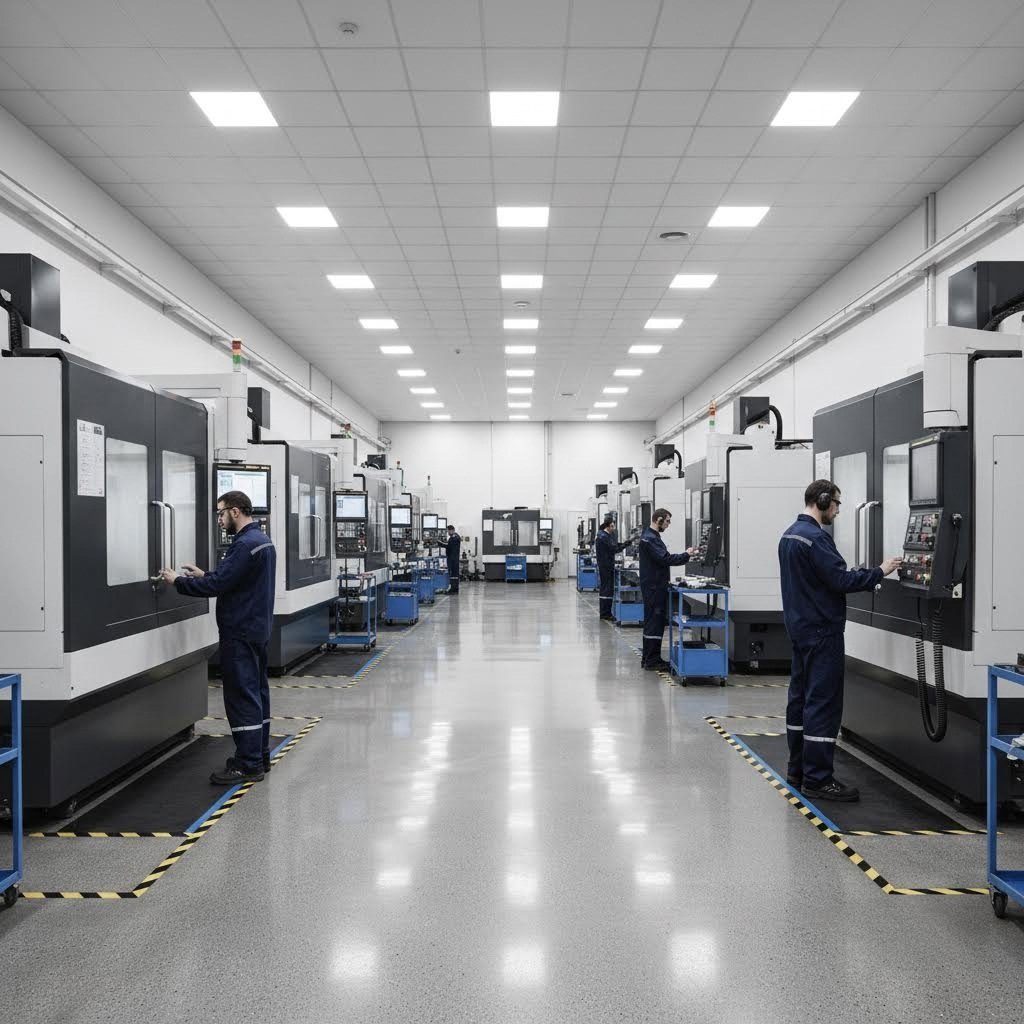
Picture two very different manufacturing floors. In one, a machinist programs a unique aerospace bracket that will never be made again. In another, identical automotive components roll off machines around the clock, thousands per week. Both represent legitimate CNC work—but the daily experience, skills emphasized, and career trajectories differ dramatically.
So, what is a CNC environment actually like? The answer depends entirely on whether you're working in a job shop, a production facility, or somewhere in between. Understanding these distinctions helps whether you're evaluating manufacturing partners or exploring career options in machining manufacturing.
Job Shop Flexibility vs. Production Line Efficiency
Job shops and production facilities represent opposite ends of the CNC work spectrum—each with distinct advantages and operational philosophies.
According to industry professionals, "the philosophy behind production-type work is something that repeats frequently," while job shop work means "you are re-setting up the machine in between jobs to be able to run the next job." This fundamental difference shapes everything from equipment selection to skill development.
In a job shop environment, variety rules the day. One machining facility explains that "production involves running a higher volume, whereas job shop projects mean a smaller volume but a higher mix of projects. And a job shop project may even include an order for a single part."
What is CNC machinery usage like in these different settings? Consider these contrasts:
- Variety of Projects: Job shops tackle diverse parts across multiple industries—food production, agriculture, scientific research, oil and gas, marine equipment. Production facilities focus on repetitive manufacturing of standardized components.
- Specialization Depth: Production work allows operators to master specific processes deeply. Job shop work demands broader skills and adaptability to constantly changing requirements.
- Equipment Access: Job shops typically maintain greater variety in machine types and sizes. As one manufacturer notes, "on the job shop side, there is a greater variety and size of the type of machines used."
- Career Growth Paths: Production roles often serve as entry points—"normally in the production side, it's somebody who wants to get started in machining." Job shop positions may require more experience but offer exposure to complex, challenging projects.
A skilled cnc mechanist might find satisfaction in either environment, but the day-to-day experience differs significantly. Job shops offer constant learning opportunities and variety, while production facilities provide stability and deep process mastery.
Scaling from Prototype to Mass Production
How do manufacturers bridge the gap between creating one perfect prototype and producing thousands of identical parts? This scaling challenge reveals why different facility types exist—and why many companies partner with specialized shops for different project phases.
Custom CNC machining specialists explain that small cnc machining operations excel at "rapid prototyping" and "short runs and limited batches"—producing exactly what you need without tooling investments or minimum order quantities. When your product doesn't require thousands of parts, custom shops offer cost-effective solutions.
The decision points become clearer when you consider specific scenarios:
- Fewer than 1,000 parts? Custom CNC manufacturing typically offers the best value—lower setup costs offset higher per-piece pricing
- More than 10,000 parts? Mass production methods become more cost-effective as setup costs spread across volume
- Tight tolerances and complex geometries? Custom CNC design and machining provides the precision control needed
- Exotic or specialized materials? Smaller specialized shops often have experience with challenging materials that high-volume facilities avoid
Lead time considerations add another dimension. Prototype shops can often turn around single parts within days, while production facilities optimize for throughput rather than speed on individual orders. Modern facilities balance these demands by maintaining flexible capacity alongside dedicated production cells.
Industry experience shows that manufacturing companies often evolve their mix over time. One facility that started primarily as a job shop now splits volume "about half-and-half" between job shop and production work—adapting to customer needs while leveraging capabilities in both areas.
For career explorers, this spectrum offers important insights. As one manufacturing leader explains, "a good machinist is somebody who's really inquisitive. They want to know why something works the way it does, and they're interested in figuring out the process of making a part." Whether that curiosity leads you toward diverse job shop challenges or deep production expertise, opportunities exist across the entire manufacturing landscape.
Understanding these environment differences helps you ask better questions—whether you're selecting a manufacturing partner for your project or evaluating where your skills and interests fit best within the CNC profession.
Choosing the Right CNC Partner or Career Path for Your Goals
Whether you're sourcing precision components for your next product or considering a career behind the controls, making informed decisions requires understanding what separates exceptional CNC work from mediocre results. The stakes are real—the wrong manufacturing partner can delay projects and compromise quality, while the wrong career path can lead to frustration rather than fulfillment.
So what does CNC machine stand for in practical decision-making terms? Beyond the cnc acronym (Computer Numerical Control), it represents a commitment to precision, repeatability, and continuous improvement. Understanding what is CNC stand for helps frame the evaluation criteria that matter most—whether you're hiring a facility or joining one.
Key Factors When Selecting a CNC Partner
Navigating CNC machining services can feel overwhelming with so many options available. According to manufacturing experts, "choosing the right CNC machining service has become a critical decision that requires careful consideration and evaluation of several key parameters." Let's break down what actually matters.
Certifications That Demonstrate Quality Systems
When searching for "cnc machines near me" or evaluating distant suppliers, certifications provide your first reliable filter. But what do these actually mean?
- ISO 9001: The foundational quality management standard—confirms basic process controls and continuous improvement commitment
- IATF 16949: Essential for automotive applications—adds requirements for product design, production processes, and customer-specific standards
- AS9100D: Required for aerospace work—incorporates counterfeit part prevention and enhanced risk assessment
- ISO 13485: Mandatory for medical device manufacturing—emphasizes design controls and regulatory compliance
Industry sources note that "quality assurance is a non-negotiable aspect when choosing a CNC machining service. Look for companies with recognized certifications, such as ISO 9001, which serves as a testament to their commitment to maintaining high quality and consistent results."
Equipment Capabilities and Technical Expertise
What do CNC machines do at any given facility depends entirely on their equipment investment. Manufacturing professionals explain that "a CNC machining service is only as effective as the tools at its disposal. Whether it's lathes, mills, or routers, the variety and quality of machinery can make or break your project."
When evaluating c and c manufacturing partners, consider these capability factors:
- Machine Diversity: 3-axis, 4-axis, and 5-axis capabilities for varying part complexity
- Material Expertise: Confirmed experience with your specific materials—not all shops handle exotic alloys or specialized plastics
- Measurement Systems: CMM capabilities, in-process inspection, and statistical process control
- Technical Team: Skilled programmers and operators who understand your industry requirements
Lead Time and Scalability
As industry experts emphasize, "time is money, and in the world of CNC machining, this rings especially true. Extended lead times can stall your projects, cause delays, and even lead to financial losses." Understanding typical turnaround times—and policies for expedited orders—prevents costly schedule disruptions.
Scalability matters equally. Manufacturing sources note that "a scalable CNC machining service provider will be able to adapt to increased demand, ensuring your future growth isn't hampered by their capacity limitations."
Quality Systems in Action
Beyond certifications, evaluate how facilities actually implement quality control. Look for:
- First-article inspection protocols
- Statistical Process Control (SPC) implementation
- Documented corrective action processes
- Traceability systems linking parts to materials, programs, and operators
For automotive applications specifically, Shaoyi Metal Technology exemplifies these quality standards in practice. Their IATF 16949 certification demonstrates commitment to automotive-grade quality systems, while SPC-backed monitoring ensures dimensional consistency across production runs. With capabilities spanning rapid prototyping to mass production—and lead times as fast as one working day—they represent the kind of certified facility that delivers reliable results for demanding automotive applications.
Building Your Path in Precision Manufacturing
For those considering CNC work as a career rather than a service, understanding the pathway from beginner to expert helps set realistic expectations and goals.
Training and Entry Points
Career development experts outline a clear progression: "First, you'll need a high school diploma or something similar. High school classes in math, science, and computers are really useful for this job." From there, vocational programs and community colleges offer focused training.
The educational pathway typically includes:
- Foundation Education: High school diploma with strong math, science, and computer skills
- Technical Training: Vocational school or community college programs covering blueprint reading, CNC programming, and CAD/CAM software
- Hands-On Experience: Entry-level positions learning machine setup, maintenance, and troubleshooting
- Professional Certification: Organizations like the National Institute for Metalworking Skills (NIMS) offer certifications proving industry-standard competency
- Continuous Learning: Staying current with new technologies through industry publications, professional groups, and ongoing training
Career Advancement Opportunities
CNC careers offer genuine progression beyond entry-level operation. According to career specialists, advancement paths include:
- CNC Programmer: Moving from operation to writing the code that controls machines—requires deeper knowledge of blueprints, mathematics, and programming
- Supervisor/Manager: Overseeing operations, managing budgets, ensuring regulatory compliance, and handling staffing
- Technical Instructor: Teaching at vocational schools or community colleges for those passionate about education
- Independent Consultant: Offering specialized expertise to multiple companies on a project basis
Compensation and Demand Outlook
Industry data shows the average national salary for CNC machinists at approximately $49,955, with compensation varying based on location, experience, specialization, and employer size. Those working in specialized industries like aerospace or automotive often command higher wages due to required skill sets.
The U.S. Bureau of Labor Statistics projects modest growth for machinists, driven largely by manufacturing automation trends. As one source notes, "this modest growth is largely driven by the trend toward manufacturing automation, which heightens the need for workers skilled in CNC programming and operation."
Tips for Career Success
Career experts recommend several strategies for those entering the field:
- Master machine languages like G-code and M-code—proficiency makes you valuable to any team
- Stay current with advancing technologies through industry publications, online forums, and workshops
- Prioritize safety protocols—a strong safety record enhances professional reputation
- Build professional networks through trade shows, seminars, and associations like the Association for Manufacturing Technology (AMT) or the National Tooling and Machining Association (NTMA)
- Pursue certifications that boost credentials and marketability
Whether you're evaluating cnc machine offers for your manufacturing needs or building skills for a rewarding career, success comes down to the same fundamental factors: commitment to quality, continuous learning, and understanding what precision manufacturing truly demands. The technology will continue evolving, but the core principles—accuracy, reliability, and professional excellence—remain constant.
Frequently Asked Questions About CNC Work
1. What is a CNC job?
A CNC job involves operating, programming, or maintaining computer numerical control machines that produce precision parts from raw materials. CNC operators handle machine setup, monitor production runs, verify part quality using measurement tools like micrometers and calipers, and troubleshoot issues. The role requires technical skills including blueprint reading, G-code understanding, and mechanical aptitude. Career paths range from entry-level operator positions to advanced roles like CNC programmer, supervisor, or independent consultant, with opportunities across aerospace, automotive, medical, and general manufacturing industries.
2. Do CNC machinists make a lot of money?
CNC machinists earn competitive wages with the national average around $49,955 annually, though compensation varies significantly based on experience, location, and specialization. Those working in demanding industries like aerospace or medical device manufacturing often command higher salaries due to tighter tolerance requirements and specialized certifications. Career advancement into programming, supervision, or technical consulting roles can substantially increase earning potential. Geographic location also impacts wages, with manufacturing hubs typically offering higher compensation.
3. Is a CNC job worth it?
CNC work offers a rewarding career for those who enjoy problem-solving, precision work, and hands-on manufacturing. The field provides stable employment with modest projected growth driven by manufacturing automation trends. Job satisfaction depends on your work environment preference—job shops offer project variety while production facilities provide process mastery opportunities. Success requires physical stamina, attention to detail, and continuous learning as technology evolves. Professional certifications from organizations like NIMS can boost marketability and advancement potential.
4. What skills do I need to become a CNC machinist?
Essential CNC machinist skills include programming knowledge (G-code and M-code fundamentals), mechanical aptitude for understanding machine operation, mathematical proficiency for calculating offsets and tolerances, and exceptional attention to detail. Blueprint reading and geometric dimensioning and tolerancing (GD&T) interpretation are critical for translating designs into machined parts. Problem-solving abilities help diagnose issues like chatter, tool wear, or dimensional drift. Soft skills matter too—communication with engineers and management, safety awareness, and adaptability to changing project requirements all contribute to career success.
5. What's the difference between CNC milling and CNC turning?
CNC milling uses rotating cutting tools that move against a stationary or moving workpiece to create complex three-dimensional shapes, pockets, and contours. It excels at producing engine blocks, molds, and aerospace components. CNC turning (lathes) rotates the workpiece itself against stationary cutting tools, making it ideal for cylindrical parts like shafts, bushings, and threaded fasteners. The choice depends on part geometry—rotational symmetry suits turning while complex multi-surface features require milling. Many facilities use both machine types to handle diverse manufacturing requirements.