 Small batches, high standards. Our rapid prototyping service makes validation faster and easier —
  EN
EN


CNC Aluminum Service Secrets: 9 Factors That Slash Your Part Costs
Understanding CNC Aluminum Service and Its Manufacturing Role
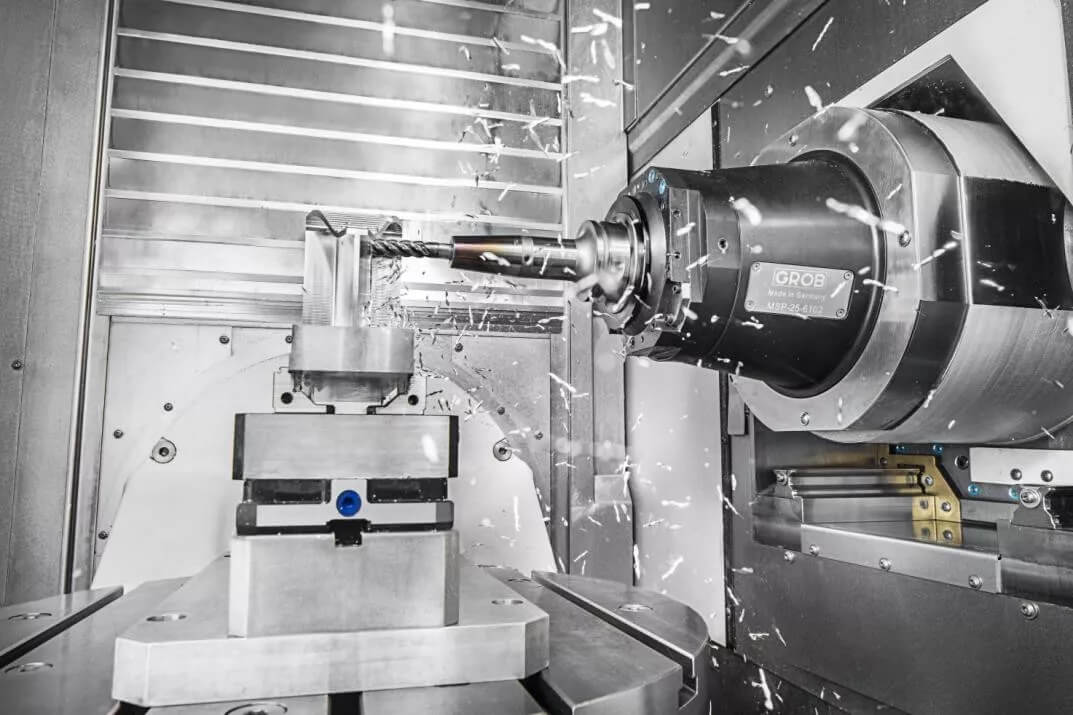
What exactly happens when a solid block of aluminum becomes a precision aerospace bracket or a complex automotive housing? The answer lies in CNC aluminum service—a manufacturing process that has revolutionized how industries produce high-performance metal components.
So, what is CNC aluminium machining? Simply put, it's a subtractive manufacturing process where computer numerical control machines systematically remove material from aluminum stock to create parts with complex geometries and tight tolerances. Pre-programmed software directs cutting tools along precise paths, eliminating manual operation errors and achieving dimensional accuracy within ±0.01 mm. This technology transforms raw aluminum billets into everything from aircraft fuselage components to medical device housings.
The CNC aluminum machining market continues expanding rapidly, with the global CNC machining sector projected to reach USD 129.9 billion by 2027. This growth reflects aluminum's dominance as the preferred material for precision manufacturing across aerospace, automotive, electronics, and medical industries.
How CNC Transforms Raw Aluminum Into Precision Components
The aluminum machining process begins with a CAD file serving as the digital blueprint. Engineers translate this design into G-codes and M-codes—the programming languages that instruct CNC machines on exact movement paths, cutting depths, and tool changes. An aluminum machine then executes these instructions with remarkable precision, carving the programmed design from solid stock.
Common CNC operations for aluminum include:
- Milling: Rotary cutters remove material to create housings, heat sinks, and structural components with complex shapes
- Turning: The workpiece rotates while cutting tools shape cylindrical parts like shafts, bushings, and connectors
- Drilling and tapping: Creates precision holes and threaded features for assembly requirements
Advanced processes like 5-axis machining enable simultaneous tool movement across five axes, producing intricate aerospace brackets and impellers in a single setup. This capability reduces lead times by 30-50% compared to conventional 3-axis operations.
Why Manufacturers Choose Aluminum Over Other Metals
When you machine aluminium, you're working with a material that offers an exceptional balance of properties. Aluminum's density of approximately 2.7 g/cm³ makes it roughly one-third the weight of steel—a critical advantage when every kilogram saved can reduce fuel consumption by up to 6% in transportation applications.
Aluminum's machinability index reaches approximately 360% relative to AISI 1212 carbon steel, outpacing mild steel's roughly 72% index by nearly five times. This means faster cutting speeds, longer tool life, and approximately 30% lower cost per part compared to steel machining.
Beyond machinability, aluminum delivers thermal conductivity of approximately 150-167 W/m·K—triple that of mild steel. This rapid heat dissipation keeps the tool-workpiece interface cool during high-speed operations, reducing built-up edge formation and extending cutter life. The result? Cleaner surface finishes without excessive tool wear.
Aluminum also forms a natural protective oxide layer (Al₂O₃) that resists corrosion, with 6061 aluminum exhibiting a corrosion rate of just 0.10 mm/year in salt-spray testing—compared to 1.0 mm/year for uncoated steel under identical conditions.
This guide serves as your technical buyer's roadmap, connecting material selection decisions to machining approaches and finishing options. You'll discover how alloy choices impact cost, which CNC processes suit your part geometry, and how tolerance specifications affect your bottom line. Whether you're sourcing prototype quantities or scaling to production volumes, understanding these factors helps you optimize specifications without over-engineering—and that's where real cost savings begin.
Aluminum Alloy Selection Guide for CNC Projects
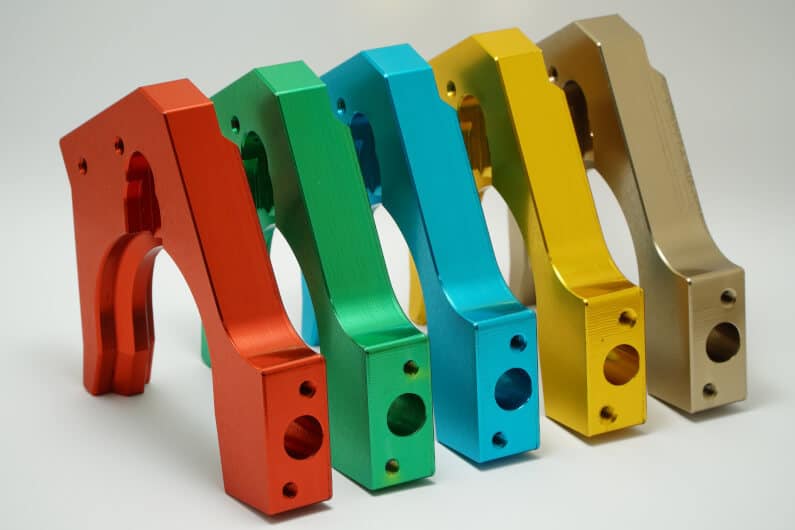
Choosing the right aluminum alloy for your CNC project isn't just about picking a number—it's about understanding how composition, temper, and mechanical properties translate into machining behavior, part performance, and ultimately, your project costs. Let's break down the alloys you'll encounter most frequently and explore why temper designations matter more than most buyers realize.
The aluminum for machining landscape centers on three primary alloy series, each engineered for distinct performance requirements:
- 6000 series (Al-Mg-Si): The workhorses of general-purpose machining, combining excellent machinability with good corrosion resistance
- 7000 series (Al-Zn): Aircraft-grade alloys delivering the highest strength-to-weight ratios for demanding aerospace applications
- 2000 series (Al-Cu): High-strength alloys for structural applications where mechanical performance trumps corrosion resistance
Decoding Aluminum Temper Designations for Machinists
Here's where most buyers get confused—and where machining costs can quietly spiral. That letter-number combination after your alloy (T6, T651, T6511, H32) isn't just metallurgical jargon. It directly affects how your parts behave during cutting, whether they'll warp after machining, and how much you'll spend on secondary straightening operations.
When you're machining 6061 aluminum, the temper designation tells you exactly what heat treatment and stress-relief processes the material has undergone:
- T3: Solution heat-treated, cold worked, and naturally aged. Offers moderate strength with good formability—ideal for complex forming operations before final machining.
- T6: Solution heat-treated at 533°C, rapidly cooled, then artificially aged at 177°C. Delivers tensile strength of 45,000 psi (310 MPa) and yield strength of 40,000 psi (276 MPa). However, residual stresses from heat treatment can cause distortion during machining.
- T651: Same heat treatment as T6, but includes 1-3% stretching to relieve internal stresses. This stress-relief step keeps parts dimensionally stable during machining—critical for precision components with tight tolerances.
- T6511: The premium choice for alloy machining. After T6 heat treatment, the aluminium t6511 temper adds both stretching and controlled straightening. The result? Superior dimensional stability, reduced tool wear from lower friction, and smoother surface finishes without post-machining stress marks.
- H32: Strain-hardened and stabilized. Common in sheet and plate forms where moderate strength and good formability are required without heat treatment.
Sounds complex? Think of it this way: if you're producing precision components where dimensional stability matters—aerospace brackets, optical mounts, or fixture plates—the difference between aluminum 6061 t651 vs t6511 can mean the difference between parts that hold tolerance and parts that warp during final machining passes.
The 6061 t temper you select also impacts tool life. T6511's stress-relief processing reduces friction during cutting, extending tool lifespan for complex parts. T651 can wear tools faster due to residual stresses that increase cutting forces. When you're running high-volume production, this translates directly into tooling costs and cycle time.
Matching Alloy Grades to Application Requirements
Imagine you're sourcing components for an automotive chassis assembly versus an aircraft structural member. The alloy selection differs dramatically—not because of marketing, but because of fundamental property requirements.
Al 6061t6 remains the most popular choice for general-purpose CNC machining. With tensile strength of 310 MPa, thermal conductivity reaching 170 W/m·K, and a density of just 2.7 g/cm³, it delivers the strength-to-weight balance most applications demand. Its corrosion resistance makes it suitable for marine environments, while its machinability rating keeps cycle times competitive.
For aerospace applications demanding maximum strength, 7075-T6 steps in with tensile strength of 572 MPa and yield strength of 503 MPa—nearly double that of 6061. This aircraft-grade alloy handles temperatures up to 477°C without losing structural integrity. The tradeoff? Reduced weldability and higher material costs. You'll see 7075 in landing gear components, wing spars, and military hardware where failure isn't an option.
The 2000 series alloys (particularly 2024) bridge the gap when you need high strength with better fatigue resistance than 6061 but don't require the extreme performance of 7075. These copper-containing alloys excel in structural applications but sacrifice some corrosion resistance—often requiring protective coatings or anodizing.
| Alloy Grade | UNS Designation | ISO/DIN Equivalent | Tensile Strength (MPa) | Yield Strength (MPa) | Machinability Rating | Typical Applications | Available Tempers |
|---|---|---|---|---|---|---|---|
| 6061 | A96061 | AlMg1SiCu / 3.3214 | 310 | 276 | Good (50%) | Structural frames, marine fittings, automotive components | T4, T6, T651, T6511 |
| 7075 | A97075 | AlZn5.5MgCu / 3.4365 | 572 | 503 | Fair (70%) | Aircraft structures, aerospace fittings, military applications | T6, T651, T7351 |
| 2024 | A92024 | AlCu4Mg1 / 3.1355 | 469 | 324 | Fair (70%) | Aircraft skins, truck wheels, scientific instruments | T3, T4, T351, T851 |
| 5052 | A95052 | AlMg2.5 / 3.3523 | 228 | 193 | Good (50%) | Sheet metal work, marine applications, fuel tanks | H32, H34, O |
| 6082 | A96082 | AlSi1MgMn / 3.2315 | 310 | 260 | Good (50%) | Structural applications, bridges, transport equipment | T6, T651 |
Understanding these international material standards cross-references becomes essential when sourcing globally. The Aluminum Association (AA) system using four-digit designations (like 6061) remains the global standard, but you'll encounter DIN specifications in European supply chains and JIS designations from Japanese manufacturers. The UNS (Unified Numbering System) provides a universal reference—A96061 corresponds to 6061 aluminum regardless of which regional standard your supplier uses.
For buyers evaluating t 6061 variants for precision work, consider this practical guidance: specify T6511 when tight tolerances and dimensional stability matter most, even if material costs run slightly higher. The reduced machining time, lower scrap rates, and elimination of post-machining stress relief often offset the premium. Reserve standard T6 for applications where some dimensional variation is acceptable or where subsequent processes (welding, forming) will alter the material properties anyway.
With alloy selection clarified, the next critical decision involves choosing the right CNC process for your part geometry—a choice that can reduce machining time by 40% or more when properly matched to your design requirements.
CNC Machining Processes Optimized for Aluminum
You've selected the right alloy—now comes the question that can make or break your project budget: which CNC process actually fits your part design? Matching the wrong machining method to your geometry doesn't just waste money; it compromises tolerances, extends lead times, and frustrates everyone involved. Let's cut through the confusion and examine when each process delivers optimal results for cnc milling aluminum applications.
The decision framework hinges on three interconnected factors:
- Part geometry: Is your component primarily cylindrical, prismatic, or does it feature complex contoured surfaces?
- Tolerance requirements: What dimensional accuracy do your functional surfaces actually demand?
- Production volume: Are you producing 10 prototypes or 10,000 production parts?
When to Choose 5-Axis Over 3-Axis Milling
Imagine machining an aerospace impeller with curved blade surfaces that wrap around a central hub. On a 3-axis aluminum milling machine, you'd need multiple setups, repositioning the part repeatedly to access different surfaces. Each setup introduces potential error, extends cycle time, and multiplies your costs.
A cnc milling machine for aluminium with 5-axis capability changes the equation entirely. By moving the cutting tool (or workpiece) simultaneously across five axes—X, Y, Z plus two rotational axes—the machine accesses complex geometries in a single setup. The result? Reduced setup time by 60-70%, improved surface finish quality, and tolerances that remain consistent across intricate contours.
Here's when 5-axis aluminium milling makes economic sense:
- Parts with undercuts, deep pockets, or compound angles that require tool access from multiple directions
- Aerospace components like turbine blades, structural brackets, and impellers with sculpted surfaces
- Medical implants requiring organic geometries that match anatomical contours
- Optical mounts and precision fixtures where surface continuity affects performance
When should you stick with 3-axis milling? For prismatic parts—housings, plates, brackets with perpendicular features—3-axis machines deliver excellent results at lower hourly rates. If your design doesn't require simultaneous multi-angle access, the added complexity (and cost) of 5-axis programming offers no advantage.
Chip formation behavior differs between these approaches. On 3-axis machines, constant tool orientation can lead to inconsistent chip loads as geometry changes. Optimal cutting speeds for aluminum typically range based on alloy and tooling, but 5-axis machines maintain more consistent tool engagement angles, producing uniform chips and reducing the built-up edge formation that plagues aluminum machining.
CNC Turning vs Milling for Aluminum Parts
When your part is fundamentally round—shafts, bushings, pulleys, connectors—CNC turning offers advantages that milling simply cannot match. The process rotates the aluminum workpiece while a single-point cutting tool removes material, creating symmetrical geometries with exceptional concentricity.
CNC aluminium turning excels at producing round parts with tight tolerances, delivering smooth surface finishes ideal for applications requiring polished appearances. For high-volume production of identical cylindrical components, turning outpaces milling in both speed and cost-effectiveness.
Key decision factors for CNC turning:
- Geometry type: Round, cylindrical, or symmetrical parts with external/internal features
- Surface finish requirements: Turning produces naturally smooth finishes on rotational surfaces
- Production volume: High-volume runs benefit from turning's faster cycle times
- Feature complexity: External profiles, threads, grooves, and tapers machine efficiently on lathes
However, turning has limitations. Parts with intricate internal pockets, non-axial holes, or features that don't align with the rotational axis may require secondary milling operations. When your round parts have complex internal geometries, CNC milling may be more suitable despite the typically higher per-part cost.
For aluminum screw machining—producing small, precision cylindrical components like pins, fasteners, and valve stems—Swiss-type CNC lathes represent the gold standard. These machines feature a sliding headstock that guides the workpiece through a guide bushing, supporting material close to the cutting zone. This design minimizes deflection during machining, enabling tight tolerances (±0.005 mm) on slender parts with length-to-diameter ratios exceeding 3:1.
Swiss screw machining suits:
- Small-diameter components under 32 mm
- Parts requiring extreme concentricity and surface finish
- High-volume production where cycle time matters
- Components with multiple operations (turning, milling, drilling) completed in one setup
Tool wear patterns for cnc machining aluminum vary significantly between processes. In milling, peripheral cutting edges experience intermittent engagement, generating cyclic thermal loads that can cause micro-cracking in carbide tools. Turning tools maintain continuous contact, generating more heat but avoiding thermal cycling. Aluminum's tendency to weld onto cutting edges (built-up edge) affects both processes, but turning's continuous chip formation often evacuates material more consistently than interrupted milling cuts.
When evaluating cnc for aluminum projects, consider how these process characteristics align with your specific requirements. A well-matched process reduces cycle time, improves part quality, and ultimately cuts costs—but even the best process selection can't overcome fundamental machining challenges without proper technique, which brings us to the critical issue of solving common aluminum machining problems.
Solving Common Aluminum Machining Challenges
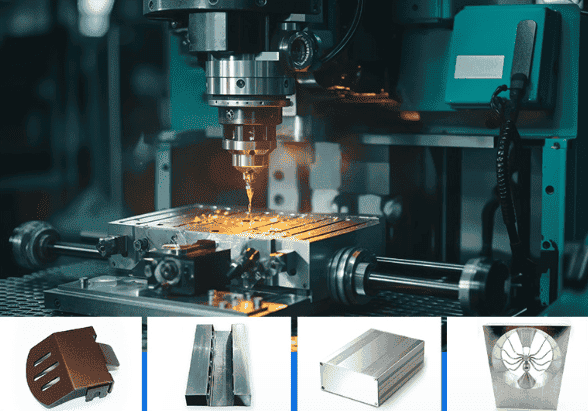
You've selected the right alloy, chosen the optimal CNC process—and then your parts come off the machine with gummy edges, inconsistent surface finishes, or dimensions that don't match your CAD file. Sound familiar? These frustrations stem from machining aluminum challenges that many suppliers don't adequately address. Let's tackle the four most common problems head-on and give you practical solutions that actually work.
Aluminum's excellent machinability comes with a catch: the same softness that allows fast cutting speeds also creates unique problems. Understanding these challenges—and knowing how to prevent them—separates precision aluminum machining part production from expensive scrap piles.
Preventing Built-Up Edge in Aluminum Cutting
Here's what happens during cnc aluminum cutting when conditions aren't optimized: aluminum's ductility causes material to weld onto the cutting tool edge rather than shearing cleanly. This phenomenon, called built-up edge (BUE), creates a false cutting edge that degrades surface finish, alters dimensional accuracy, and eventually breaks off—taking carbide with it and damaging both tool and workpiece.
Built-up edge formation accelerates when:
- Cutting speeds drop too low, allowing heat and pressure to bond aluminum to the tool
- Coolant fails to reach the cutting zone effectively
- Tool coatings are incompatible with aluminum alloys
- Rake angles are too shallow for efficient chip formation
The solution? Use higher cutting speeds and steady feed rates to reduce heat buildup and discourage material from welding to the tool. Aluminum milling operations should target surface speeds between 300-600 m/min for most alloys, with 6061 performing well at the higher end of this range. Sharp, polished carbide tools with positive rake angles (10-20°) promote clean chip formation and reduce adhesion.
Coatings matter significantly. Avoid titanium nitride (TiN) and titanium aluminum nitride (TiAlN)—their aluminum affinity actually increases sticking. Instead, specify zirconium nitride (ZrN), titanium diboride (TiB₂), or diamond-like carbon (DLC) coatings that reduce friction and prevent material transfer.
Thermal Management Strategies for Precision Results
Aluminum's thermal expansion coefficient of 23 µm/m·K means a 500mm part grows approximately 0.115mm for every 10°C temperature increase during machining. When you're holding tolerances of ±0.05mm, uncontrolled thermal expansion can push parts out of specification before they even cool to room temperature.
Effective thermal management for machining line light alloys requires a multi-pronged approach:
- Flood coolant application: Maintains consistent workpiece temperature and flushes chips from the cutting zone
- Mist or minimum quantity lubrication (MQL): Provides lubrication without thermal shock for finishing operations
- Symmetrical machining strategies: For aluminum parts with large processing allowances, symmetrical processing avoids excessive heat concentration by alternating sides and distributing material removal evenly
- Allowing parts to stabilize: Critical-tolerance features should be machined after roughing operations and thermal stabilization
Water-soluble emulsions and light mineral oils work well for aluminum. Avoid cutting fluids containing active sulfur or chlorine—they can stain or chemically react with certain alloys, particularly the 5000 and 6000 series.
Burr formation presents another persistent challenge in milled aluminum parts. These unwanted material projections form at exit edges where the cutting tool pushes material rather than shearing it cleanly. Burrs increase deburring costs, create assembly interference, and compromise part appearance.
Reducing burrs requires attention to tool geometry, cutting parameters, and part design. Two-flute end mills with sharp edges and adequate clearance angles minimize burr formation. The implementation of fillets with a minimum radius of 0.5 mm at internal corners helps reduce stress concentrations and provides cleaner exit conditions for cutting tools. Programming climb milling (where the tool rotates in the same direction as feed movement) produces smaller burrs than conventional milling for most aluminum operations.
Surface finish inconsistencies often trace back to vibration, tool wear, or improper cutting parameters. Achievable surface roughness varies by operation:
| Operation | Typical Ra (µm) | Achievable Ra (µm) | Key Factors |
|---|---|---|---|
| Rough milling | 6.3-12.5 | 3.2 | Chip load, tool condition |
| Finish milling | 1.6-3.2 | 0.8 | Feed rate, spindle speed, tool sharpness |
| CNC turning | 1.6-3.2 | 0.4 | Tool nose radius, feed per revolution |
| Boring | 0.8-1.6 | 0.2 | Tool rigidity, depth of cut |
When surface finish falls short of specifications, follow this systematic troubleshooting approach:
- Check tool condition: Inspect cutting edges for wear, chipping, or built-up edge. Tool wear standards for aluminum should not exceed 0.2mm flank wear to prevent surface degradation.
- Verify cutting parameters: Confirm spindle speed and feed rate match material and tooling recommendations. Too slow creates BUE; too fast generates excessive heat.
- Assess workholding rigidity: Vibration from inadequate clamping produces chatter marks. Ensure fixtures support thin-walled sections and minimize tool overhang.
- Evaluate coolant delivery: Confirm coolant reaches the cutting zone consistently, especially in deep pockets or enclosed cavities.
- Review tool path programming: Sudden direction changes and inconsistent engagement angles cause surface variations. Optimize tool paths for constant chip load.
- Consider material condition: Stress-relieved tempers (T651, T6511) machine more consistently than standard T6, which may exhibit stress-related distortion.
Design for Manufacturability: Aluminum-Specific Guidelines
Many machining problems originate not on the shop floor but in the design phase. Understanding DFM principles specific to cnc machine aluminum cutting helps you avoid costly redesigns and manufacturing headaches.
Wall thickness: The structural integrity of aluminum parts requires a minimum wall thickness of 0.8 mm, but load-bearing sections should have walls at least 1.5 mm thick. Walls thinner than 0.5mm vibrate during cutting, deflect under tool pressure, and frequently produce inconsistent dimensions. When thin walls are unavoidable, design supporting ribs or specify stress-relieved tempers to minimize distortion.
Internal corner radii: Every internal corner requires a radius matching at least the cutting tool radius—typically 1-3mm for most aluminum milling operations. Specifying sharp internal corners forces expensive secondary operations like EDM. Larger radii (≥35% of cavity depth) improve tool life and reduce deflection during deep pocket machining.
Feature accessibility: Deep pockets with limited tool access create problems. The depth-to-diameter ratio for holes in CNC-machined aluminum parts should remain below 3:1 to preserve straightness and prevent tool failure. For cavities, maintain depth-to-width ratios of 3:1 or less; exceeding this forces longer tools that flex, enlarging features and degrading surface quality.
Hole specifications: Standard drill sizes (matching common bit diameters) reduce tool changes and machining time. Non-standard hole diameters require end-milling—a slower operation that increases costs. Thread engagement beyond 2.5× the major diameter rarely improves joint strength but always adds machining time.
These DFM considerations directly impact your bottom line. Parts designed with manufacturability in mind machine faster, hold tolerances more consistently, and require fewer secondary operations. But even perfectly designed parts need appropriate tolerance specifications—and understanding what precision is actually achievable helps you avoid over-engineering that inflates costs without improving function.
Tolerance Specifications and Precision Capabilities
Here's a question that can save—or cost—you thousands of dollars: what tolerances does your part actually need? Over-specifying precision inflates costs exponentially, while under-specifying creates assembly nightmares. Understanding what aluminum precision machining can realistically achieve helps you strike the right balance between function and budget.
The reality is that the tolerances achievable with aluminum machining can be very tight—CNC machining can achieve tolerances of ±0.001" (0.025 mm). However, achieving these precision levels consistently requires proper equipment, skilled operators, and appropriate tooling. Not every feature on your part needs this level of accuracy, and recognizing which dimensions are critical versus which can accept standard tolerances is where cost optimization begins.
Standard vs Precision Tolerance Capabilities
What's the difference between standard and tight tolerances? Standard machining tolerance is typically +/- 0.005 in. (0.13mm) on standard length, width, and thickness dimensions, with hole locations and other critical dimensions held more closely. This means any feature's location, width, length, thickness, or diameter will not deviate by more than this amount from nominal.
For cnc machined aluminum parts requiring higher precision, tolerances tighten considerably:
- Standard tolerance: ±0.005" (±0.127 mm)—suitable for most non-critical features
- Precision tolerance: ±0.002" (±0.05 mm)—required for mating surfaces and assembly interfaces
- High precision: ±0.001" (±0.025 mm)—achievable but requires specialized equipment and adds cost
- Ultra-precision: ±0.0005" (±0.0127 mm)—possible for critical applications but exponentially expensive
The cost implications are significant. In general, the tighter the tolerances, the more difficult they are to achieve, and the cost of achieving tight tolerances can also be higher because more precise tooling and machining operations are required. Moving from standard to precision tolerances might increase machining costs by 25-50%, while demanding ultra-precision can double or triple your per-part expense.
The following table displays tolerance ranges achievable for various aluminum machined parts features and operations:
| Feature Type | Standard Tolerance | Precision Tolerance | Best Achievable | Cost Impact |
|---|---|---|---|---|
| Linear dimensions (L/W/H) | ±0.005" (±0.127 mm) | ±0.002" (±0.05 mm) | ±0.001" (±0.025 mm) | Baseline to +100% |
| Hole diameter | ±0.003" (±0.076 mm) | ±0.001" (±0.025 mm) | ±0.0005" (±0.013 mm) | Baseline to +150% |
| Hole position | ±0.005" (±0.127 mm) | ±0.002" (±0.05 mm) | ±0.001" (±0.025 mm) | Baseline to +75% |
| Slot width | ±0.004" (±0.10 mm) | ±0.002" (±0.05 mm) | ±0.001" (±0.025 mm) | Baseline to +80% |
| Surface flatness | 0.002" per inch | 0.001" per inch | 0.0005" per inch | Baseline to +120% |
| Thread class | Class 2B (standard) | Class 3B (precision) | Class 3B with inspection | Baseline to +50% |
| Perpendicularity | 0.005" per inch | 0.002" per inch | 0.001" per inch | Baseline to +90% |
How Part Geometry Affects Achievable Accuracy
Can you hold ±0.001" on every feature? Technically, yes. Practically? Your part geometry has other ideas. Thin walls, deep pockets, and unsupported features all conspire against precision—and understanding these limitations helps you set realistic expectations.
Consider these geometry-related precision factors:
- Wall thickness: Walls thinner than 1.5mm deflect under cutting pressure, making tight tolerances difficult to maintain. Expect tolerance degradation of 25-50% on thin-walled sections.
- Depth-to-width ratios: Deep, narrow pockets require longer tools that flex during cutting. Features with depth-to-width ratios exceeding 4:1 may require loosened tolerances or specialized machining approaches.
- Unsupported spans: Long, unsupported features vibrate during machining. Parts with length-to-thickness ratios above 10:1 need careful workholding strategies to maintain dimensional accuracy.
- Internal corners: Sharp internal corners are impossible to machine—the tool radius always leaves a fillet. Specifying radii smaller than your tool diameter forces secondary operations.
Aluminum alloy selection also influences achievable precision. Aluminium machined parts from stress-relieved tempers (T651, T6511) hold tighter tolerances than standard T6 material because reduced internal stresses minimize distortion during and after machining. For cnc machined aluminum components requiring the best dimensional stability, specify these premium tempers despite their higher material cost.
When specifying tolerances, focus tight requirements only on functional surfaces—mating faces, bearing bores, and assembly interfaces. Leaving non-critical features at standard tolerance reduces machining time, lowers inspection requirements, and cuts costs without compromising part function.
Selecting appropriate machining tolerances is a critical aspect of design and manufacturing, directly influencing the functionality, cost, and quality of a part. The key is understanding that precision is a tool, not a goal—specify what your application genuinely requires, and you'll optimize both performance and budget. With tolerances properly defined, the next consideration is how surface finishing options can enhance your part's durability and appearance.
Surface Finishing and Post-Processing Options
Your machined aluminum parts look great coming off the CNC machine—but are they ready for the real world? Raw aluminum surfaces, while functional, remain vulnerable to corrosion, wear, and aesthetic degradation. The right surface finish transforms good parts into exceptional ones, adding protection, durability, and visual appeal that match your application demands.
Think of surface finishing as the final chapter in your aluminum milling service journey. The decisions you make here directly impact how your aluminium parts perform over their service life—whether they're exposed to harsh marine environments, high-wear industrial conditions, or simply need to look premium on a consumer product.
Anodizing Options and Their Performance Benefits
Anodizing remains the most popular finishing choice for machined aluminum components, and for good reason. This electrochemical process doesn't just coat the surface—it transforms it. Anodizing creates a protective oxide layer on aluminum parts, providing increased corrosion resistance and a more attractive finish. Unlike paint or plating that sits on top of the metal, the anodized layer grows into the aluminum itself, creating an integral bond that won't peel or flake.
Two anodizing types dominate CNC aluminum finishing:
Type II Anodizing (Sulfuric Acid Anodizing)
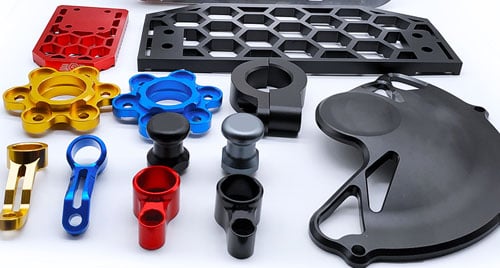
Type II creates an oxide layer typically 5-25 μm thick, providing excellent corrosion resistance with aesthetic flexibility. Type II anodizing can produce aesthetically pleasing finishes in a range of colors, making it ideal for consumer electronics housings, architectural components, and automotive trim pieces. The porous oxide layer accepts dyes readily, enabling colors from matte black to vibrant blues and reds.
Key benefits of Type II anodizing include:
- Improved scratch resistance and surface hardness
- Excellent corrosion protection for mild-to-moderate environments
- Wide color options with consistent, long-lasting appearance
- Good electrical insulation properties
Type III Hard Anodizing
When your parts face demanding mechanical conditions, Type III steps in. Type III anodizing produces a significantly thicker and denser oxide layer than Type II, resulting in exceptional hardness and wear resistance. The process uses lower temperatures and higher voltages, building coatings 25-100 μm thick with hardness approaching that of hardened steel.
Type III excels in applications including:
- Aerospace components subjected to extreme wear and environmental stress
- Industrial machinery pistons, cylinders, and gears
- High-performance automotive parts exposed to friction and heat
- Military and defense equipment requiring maximum durability
The tradeoff? Type III anodizing is generally more expensive than Type II, as it requires lower temperatures and higher voltages, resulting in longer processing times. Additionally, the thicker coating produces a darker, more industrial appearance with less color flexibility than Type II.
Matching Surface Treatments to Application Needs
Beyond anodizing, several finishing options address specific performance requirements. Your selection depends on the environment your parts will face, the level of wear resistance needed, and whether aesthetics or function takes priority.
Powder Coating applies electrostatically charged dry powder that cures under heat, forming a tough, uniform finish 60-120 μm thick. This treatment delivers exceptional UV resistance, making it ideal for outdoor applications. Any aluminum machine shop offering comprehensive services typically includes powder coating for parts requiring weather resistance and broad color selection.
Bead Blasting propels fine glass or ceramic media against the surface, creating a uniform matte texture that hides minor machining marks. This treatment often serves as a pre-finishing step before anodizing or as a standalone finish for industrial components where a clean, non-reflective surface matters.
Brushing creates directional grain patterns using abrasive belts or pads, producing a distinctive linear texture popular in consumer electronics and architectural hardware. The process removes surface imperfections while adding visual interest.
Polishing progressively refines the surface through increasingly fine abrasives, achieving mirror-like finishes for premium applications. While labor-intensive, polished aluminum combined with clear coating delivers striking aesthetics for visible components.
Chemical Conversion Coating (Chromate/Alodine) offers a different value proposition. Chromate conversion coating protects aluminum against corrosion while maintaining electrical conductivity—something anodizing cannot do. The extremely thin coating (0.25-1 μm) adds virtually no dimensional change, making it ideal for precision parts with tight tolerances. Aerospace and electronics applications frequently specify this treatment when grounding or electrical continuity matters.
| Finish Type | Typical Thickness | Corrosion Resistance | Wear Resistance | Cost per cm² | Best Applications |
|---|---|---|---|---|---|
| Type II Anodizing | 5-25 μm | Excellent | Good | $0.10-$0.30 | Electronics housings, consumer products, architectural |
| Type III Hard Anodizing | 25-100 μm | Excellent | Exceptional | $0.15-$0.40 | Aerospace, industrial machinery, military |
| Powder Coating | 60-120 μm | Excellent | Good | $0.12-$0.35 | Outdoor equipment, automotive, appliances |
| Chromate Conversion | 0.25-1 μm | Good | Low | $0.03-$0.08 | Aerospace, electronics, conductive applications |
| Bead Blasting | N/A (texture only) | None (requires coating) | None | $0.05-$0.15 | Pre-treatment, industrial parts, matte finishes |
| Polishing | N/A (surface refinement) | None (requires coating) | None | $0.20-$0.50 | Premium consumer products, decorative hardware |
When selecting finishes for your machined aluminum projects, consider the complete decision journey. Many applications benefit from combined treatments—bead blasting followed by Type II anodizing, or polishing with clear coat protection. Working with an aluminum machine shop that offers integrated machining and finishing services reduces handling between processes, minimizes quality variations, and often shortens lead times compared to managing separate vendors.
Surface finishing isn't an afterthought—it's an integral part of your manufacturing strategy. The right finish protects your investment in precision machining while ensuring parts perform reliably throughout their service life.
Understanding these finishing options prepares you for informed conversations with suppliers—but knowing what drives costs in CNC aluminum projects helps you optimize specifications and budget more effectively.
Cost Factors and Pricing Considerations
Ever wonder why two seemingly similar aluminum parts can have dramatically different price tags? The answer lies in understanding what actually drives aluminum machining cost—and more importantly, how you can control these factors without sacrificing quality. Let's pull back the curtain on CNC pricing and give you the framework to make smarter sourcing decisions.
Key Cost Drivers in Aluminum CNC Projects
When aluminum shops calculate your quote, they're weighing five interconnected factors that combine to determine your per-part price:
Material Grade Selection: Not all aluminum costs the same. Since aluminum comes in many grades—such as 6061, 6063, 6082, and 7075—each alloy differs in price, hardness, and machinability. Aerospace-grade 7075 commands a premium over general-purpose 6061, sometimes 40-60% higher per kilogram. But material cost extends beyond raw price—harder alloys wear tools faster, increasing consumable expenses that get passed along.
Geometric Complexity: Complex parts with intricate geometries typically require continual repositioning of the workpiece to grant the cutting tool access to different areas, thereby increasing machining time. A simple bracket machined on a 3-axis mill costs significantly less than an aerospace impeller requiring 5-axis simultaneous cutting. Custom fixtures add further expense—while generic parts use standard workholding, complex geometries demand custom jigs designed specifically for your component.
Tolerance Requirements: This is where costs can spiral quickly. Higher precision requirements usually mean slower cutting speeds, more precise machining paths, and more quality inspection steps. Moving from standard ±0.005" tolerance to precision ±0.001" can increase machining costs by 50-100% because of the additional care, slower feeds, and inspection time required.
Quantity Tiers: Here's where economics works in your favor. Single-piece machining usually comes with higher cost because the upfront steps—such as machine setup and tool adjustments—cannot be spread across multiple parts. A part costing $134 for one unit might drop to $38 per unit at 10 pieces and $13 per unit at 100 pieces. That's a 90% reduction simply through volume.
Finishing Specifications: Post-machining treatments add processing time and material costs. Type III hard anodizing costs more than Type II, and specialty finishes like polishing require significant labor. Specifying finishes that exceed your application requirements wastes budget without adding functional value.
Optimizing Specifications for Budget Efficiency
Understanding cost drivers is one thing—actively managing them is where savings materialize. Here are proven strategies to reduce your custom aluminum parts costs without compromising performance:
- Specify tolerance only where required: Apply tight tolerances exclusively to functional surfaces—mating faces, bearing bores, and assembly interfaces. Leave non-critical features at standard tolerance (±0.005") to reduce machining time and inspection costs.
- Simplify geometry where possible: Eliminate unnecessary features, reduce pocket depths, and increase internal corner radii. Reduce CNC machining costs by simplifying your design, incorporating complex features only when required for functionality.
- Choose cost-effective materials: Unless your application specifically demands 7075's strength, 6061-T6 often delivers adequate performance at lower material and machining costs.
- Order in batches: Even if you don't need 100 parts immediately, ordering ahead spreads setup costs across more units. Request tiered pricing to understand your volume discount structure.
- Leverage quick turn cnc machining strategically: Expedited services cost premium rates. Plan ahead when possible, reserving rush orders for genuine emergencies rather than poor scheduling.
- Prototype before production: A prototype isn't just a mini-product; it's an experiment that produces validated learning. Spending money now to find a design flaw is infinitely cheaper than discovering it after production has started.
The economics of custom aluminum machining shift dramatically between prototyping and production. The price of your first part is dominated by Non-Recurring Engineering costs (NRE)—all the one-time prep work including CAM programming, designing custom fixtures, and machine setup. These fixed costs get fully loaded onto prototype quantities, making per-part prices seem high. As production scales, NRE amortizes across thousands of units, drastically reducing unit cost.
When evaluating quotes, look beyond the bottom-line number. Ask suppliers for tiered pricing at multiple quantities—this reveals their cost structure and production capabilities. A partner offering competitive prototype pricing but limited production scaling may not serve your long-term needs, while aluminum parts suppliers with higher prototype costs but aggressive volume pricing position you for manufacturing success.
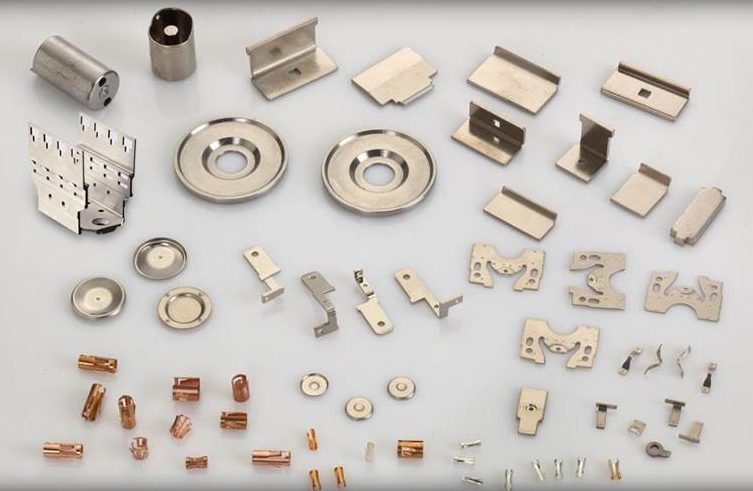
Industry Applications from Aerospace to Automotive
Why does the same aluminum alloy perform brilliantly in an aircraft wing spar but fail miserably in a medical implant housing? The answer lies in understanding that each industry brings unique demands—and successful aluminum cnc machining requires adapting materials, tolerances, and processes to match these specific requirements. Let's explore how cnc aluminum parts serve four critical sectors and what you need to know when sourcing for each.
Every industry has developed its own quality frameworks, certification requirements, and performance standards. These aren't arbitrary bureaucratic hurdles—they reflect decades of lessons learned about what makes components reliable in demanding real-world applications. Understanding these differences helps you specify appropriate requirements and select suppliers equipped to meet them.
Aerospace: Where Certification and Traceability Define Everything
Aerospace applications represent the most demanding environment for machined aluminum parts. When failure isn't an option, every aspect of manufacturing comes under intense scrutiny.
Aerospace materials are specialized metals and composites designed to handle extreme conditions and meet high-performance standards. These materials must demonstrate high strength-to-weight ratios, resistance to corrosion and fatigue, and reliability in harsh environments—from temperature extremes to vibration stress.
Key considerations for aerospace cnc aluminum parts:
- Material certification: AS9100 certification means a supplier has undergone rigorous auditing and continuous improvement processes, ensuring they meet high standards for safety, reliability, and compliance
- Preferred alloys: 7075-T6 for maximum strength-to-weight ratio; 2024-T3 for fatigue-critical structures; 6061-T6 for general structural applications
- Tolerance requirements: Typically ±0.001" to ±0.002" on critical features; geometric dimensioning and tolerancing (GD&T) specifications common
- Traceability: Full material traceability from mill certificate through finished part; lot control documentation required
- Surface treatments: Type III hard anodizing for wear resistance; chromate conversion for conductivity; cadmium plating alternatives for corrosion protection
Working with an aluminium parts manufacturer holding AS9100 certification provides assurance that quality management systems meet aerospace industry requirements. This certification builds on ISO 9001 with additional provisions specific to aviation, space, and defense manufacturing.
Automotive Component Requirements and Solutions
The automotive industry presents a different challenge: producing high-quality components at volumes and costs that make economic sense for vehicle production. Unlike aerospace's relatively low volumes and premium pricing, automotive demands efficiency without compromising reliability.
IATF 16949:2016 is a technical specification aimed at the development of a quality management system which provides for continual improvement, emphasizing defect prevention and the reduction of variation and waste in the automotive industry supply chain. This certification has become the gold standard for suppliers serving global automakers.
Critical factors for automotive aluminum cnc machining parts:
- IATF 16949 certification: Required by most major OEMs; demonstrates commitment to defect prevention and continuous improvement
- Statistical Process Control (SPC): Real-time monitoring ensures consistent quality across production runs; capability indices (Cpk) typically required above 1.33
- Volume scalability: Suppliers must transition seamlessly from cnc aluminum prototype development through mass production
- Preferred alloys: 6061-T6 for structural components; 5052-H32 for sheet-formed parts; 7075 for high-stress suspension components
- Cost optimization: Design for manufacturability becomes critical when producing thousands of units
For automotive buyers seeking certified manufacturing partners, companies like Shaoyi Metal Technology exemplify the capabilities required for automotive supply chains. Their IATF 16949 certification, combined with strict Statistical Process Control implementation, enables production of high-tolerance chassis assemblies and custom metal bushings with lead times as fast as one working day. This combination of certification, quality control, and rapid prototyping to mass production scalability represents what automotive OEMs increasingly demand from their supply base.
Electronics: Precision Meets Thermal Performance
Consumer electronics and industrial electronic systems demand aluminum components that balance dimensional precision with thermal management. Heat sinks, enclosures, and structural frames must dissipate heat while maintaining tight tolerances for component mounting.
Electronics applications prioritize:
- Thermal conductivity: 6063-T5 and 6061-T6 offer excellent heat dissipation for enclosures and heat sinks
- Surface finish quality: Cosmetic requirements often exceed ±0.002" for visible surfaces
- EMI shielding considerations: Anodizing can reduce conductivity; chromate conversion maintains electrical continuity when grounding matters
- Miniaturization: Increasingly complex geometries require 5-axis machining capabilities
- Aesthetic finishes: Type II anodizing with color options; bead blasting; brushed finishes for consumer-facing products
Medical Device Precision Standards
Medical device manufacturing combines the precision demands of aerospace with unique requirements around biocompatibility, sterilization resistance, and regulatory compliance. Aluminium in medical devices offers the perfect combination of strength, light weight, and corrosion resistance.
Medical applications require careful alloy selection because there's no universal "medical grade" aluminum equivalent to stainless steel's 316L. Different aluminium grades vary significantly in strength, corrosion resistance, and finish quality—and your choice depends on whether the part contacts patients, undergoes repeated sterilization, or serves as an internal structural component.
Key considerations for medical aluminum components:
- Alloy selection guidance: 7075 for high-strength external components requiring attractive finishes; 6082 for non-critical housings and frames; 5083 for chemical-exposed equipment requiring exceptional corrosion resistance
- Surface finish requirements: Smooth finishes facilitate cleaning and sterilization; anodizing enhances durability in sterile environments
- Regulatory compliance: ISO 13485 certification for medical device quality management; FDA registration requirements for certain applications
- Tolerance specifications: Typically ±0.001" to ±0.002" for surgical instruments and diagnostic equipment interfaces
- Material documentation: Material certifications and traceability for regulatory submissions
When deciding between alloys, think about whether your part needs to withstand structural loads, repeated sterilisation, or aesthetic scrutiny. Some grades offer unbeatable strength but are harder to anodize, while others provide excellent cosmetic finishes with slightly lower toughness. Balancing these factors with guidance from experienced custom cnc machining services ensures your medical components meet both functional and regulatory requirements.
Each industry's unique demands shape how CNC aluminum services must adapt—from certifications and quality systems to alloy selection and tolerance specifications. But regardless of industry, one common challenge remains: finding a service provider equipped to meet your specific requirements while delivering consistent quality and competitive pricing.
Choosing the Right CNC Aluminum Service Provider
You've defined your alloy requirements, specified tolerances, and selected appropriate finishes—but none of that matters if your cnc aluminum service provider can't deliver. The difference between a successful project and a costly nightmare often comes down to supplier selection. So how do you separate capable partners from those who'll miss deadlines, ship defective parts, or leave you scrambling for alternatives?
Selecting an aluminum machining service isn't about finding the lowest quote. It's about identifying partners whose capabilities, quality systems, and operational discipline align with your project requirements. Let's walk through the evaluation criteria that actually predict supplier performance.
Essential Certifications and Quality Standards
Certifications aren't just wall decorations—they're your first line of defense against quality failures. Certifications like ISO 9001, IATF 16949, and AS9100 signal a CNC milling supplier's commitment to quality, traceability, and process control. These standards ensure your parts meet tight tolerances and industry-specific requirements while reducing risks in production and supply chains.
Here's what each certification tells you about an aluminum cnc service provider:
- ISO 9001: The baseline quality management standard. It verifies the supplier has documented quality control processes and continuous improvement practices. Think of it as a manufacturing driver's license—necessary but not sufficient for demanding applications.
- IATF 16949: Tailored for the automotive industry, it layers on additional requirements like defect prevention and statistical process control. If you're sourcing for automotive or racing applications, this certification is non-negotiable.
- AS9100: Goes even further for aerospace and defense, covering additional safety and reliability protocols. Required for any supplier entering aerospace supply chains.
- ISO 13485: Specific to medical device manufacturing. Guarantees the supplier understands biocompatibility requirements and traceability standards.
When evaluating aluminum machining services for automotive applications, IATF 16949 certification deserves particular attention. For example, Shaoyi Metal Technology maintains IATF 16949 certification alongside strict Statistical Process Control (SPC) implementation—the combination that automotive OEMs increasingly require from their supply base. Their capability for high-tolerance components with lead times as fast as one working day demonstrates how certification translates into operational performance.
Evaluating Technical Capabilities and Support
Certifications verify systems exist—but you need to confirm the cnc service provider has the actual equipment, expertise, and capacity to execute your project. Quality testing and inspection in CNC machining applications represent a critical phase, ensuring every machined component meets the high standards of precision and excellence.
Use this structured evaluation checklist when vetting potential aluminium cnc service suppliers:
- Verify equipment capabilities: Does the supplier have 3-axis, 4-axis, or 5-axis machines? What spindle speeds and workpiece sizes can they accommodate? Match their equipment to your part geometry requirements.
- Assess inspection resources: Coordinate Measuring Machines (CMMs) and practices in geometric dimensioning and tolerancing (GD&T) are indispensable for verifying complex geometries. Confirm they have appropriate measurement and test equipment with current calibration certificates.
- Evaluate process control methods: In modern machining, Statistical Process Control (SPC) software is indispensable for maintaining consistent quality. Ask how they monitor processes in real-time and what capability indices (Cpk) they maintain.
- Review material traceability: Maintaining detailed records of all inspections and testing results is essential for traceability and quality control. For regulated industries, full material traceability from mill certificate through finished part is mandatory.
- Confirm engineering support: Partners with deep engineering can propose cost/performance optimizations and guide prototyping, iteration, redesign, and manufacturability. Look for DFM feedback capabilities that help optimize your designs before production.
- Assess lead time reliability: Request references and on-time delivery metrics. A supplier promising one-week turnaround means nothing if they consistently miss deadlines. Online cnc machining services often provide transparent lead time tracking.
- Evaluate scalability: Suppliers that keep more work in-house usually deliver faster iteration, tighter quality control, shorter lead times, and smoother coordination. Confirm they can transition from prototyping through production volumes without quality degradation.
- Check contingency planning: Ask how suppliers mitigate raw-material shortages, supply-chain disruptions, and tooling failures. Favor partners with alternate suppliers and backup capacity to protect your schedule.
For buyers evaluating certified providers, consider how each criterion translates into part quality. IATF 16949 certification, for instance, requires documented corrective action processes—meaning when problems occur, systematic resolution follows rather than firefighting. SPC implementation ensures variation stays within control limits before parts ship, not after they've caused assembly failures at your facility.
The strongest supplier relationships are collaborative. Look for partners who treat your project as a shared challenge rather than a transactional order—their engineering input during design optimization often saves more than any negotiated price reduction.
Shaoyi Metal Technology exemplifies this integrated approach for automotive buyers, combining IATF 16949 certification with rapid prototyping to mass production scalability. Their automotive machining capabilities demonstrate how certified quality systems, SPC implementation, and engineering support converge to deliver chassis assemblies and custom metal bushings that meet OEM requirements consistently.
When comparing aluminum machining services, resist the temptation to select purely on price. The supplier quoting 20% below competitors may lack the quality infrastructure to deliver consistently—and the cost of rejected parts, missed deadlines, and emergency re-sourcing quickly erases any initial savings. Instead, weight your evaluation toward demonstrated capability, relevant certification, and track record with similar projects. That's how you transform supplier selection from a gamble into a strategic advantage.
Frequently Asked Questions About CNC Aluminum Service
1. How much does it cost to CNC aluminum?
CNC aluminum machining typically costs $50-$500 per finished part, with hourly rates ranging from $0.50-$3.00 per minute depending on complexity. Material costs average $25 per standard 6061 aluminum block. Key cost drivers include alloy grade selection (7075 costs 40-60% more than 6061), geometric complexity requiring 5-axis machining, tolerance specifications, and quantity tiers. Single-piece machining carries higher per-unit costs due to setup expenses, while ordering 100 units can reduce per-part costs by up to 90% compared to single prototypes.
2. How much does CNC service cost per hour?
CNC machining hourly rates vary significantly by machine type and complexity. Standard 3-axis machines typically run $30-$50 per hour, while 5-axis CNC machining commands rates of $150-$200 per hour due to advanced capabilities. Total service costs including operator wages average around $80 per hour for basic operations. Factors affecting hourly rates include machine sophistication, material hardness affecting tool wear, tolerance requirements demanding slower cutting speeds, and finishing specifications requiring additional processing time.
3. Can a CNC cut aluminum?
Yes, CNC machines excel at cutting aluminum due to the material's exceptional machinability. Aluminum's machinability index reaches approximately 360% relative to standard carbon steel, allowing cutting speeds of 300-600 m/min for most alloys. CNC routers, mills, and lathes all handle aluminum effectively, producing components from signage and precision parts to aircraft structures. The material's softness enables faster cycle times, longer tool life, and approximately 30% lower per-part costs compared to steel machining.
4. What aluminum alloy is best for CNC machining?
6061-T6 remains the most popular choice for general-purpose CNC machining, offering tensile strength of 310 MPa, excellent thermal conductivity (170 W/m·K), and good corrosion resistance at competitive material costs. For aerospace applications requiring maximum strength, 7075-T6 delivers nearly double the strength at 572 MPa. The T651 and T6511 tempers provide superior dimensional stability for precision components, reducing warping during machining. Choose based on your specific strength, corrosion resistance, and budget requirements.
5. What tolerances can CNC aluminum machining achieve?
CNC aluminum machining achieves tolerances as tight as ±0.001" (0.025 mm) for precision applications. Standard tolerances typically run ±0.005" (0.127 mm) for general features, while precision work holds ±0.002" (0.05 mm). Achievable accuracy depends on part geometry—thin walls, deep pockets, and unsupported features may require loosened tolerances. Stress-relieved tempers like T651 and T6511 hold tighter tolerances than standard T6 material. Specifying tight tolerances only on functional surfaces optimizes costs without compromising performance.