 Small batches, high standards. Our rapid prototyping service makes validation faster and easier —
  EN
EN


Zinc Die Casting Applications in the Automotive Sector
TL;DR
Zinc die casting is a critical manufacturing process in the automotive industry, enabling the high-volume production of strong, precise, and cost-effective components. Its primary applications range from interior aesthetic parts and under-the-hood systems to essential safety-critical components like seatbelt mechanisms and brake parts. The process is favored for its ability to create complex net shapes with excellent surface finishes, superior corrosion resistance, and high durability, making it a cornerstone of modern vehicle production.
Why Zinc is a Premier Material for Automotive Die Casting
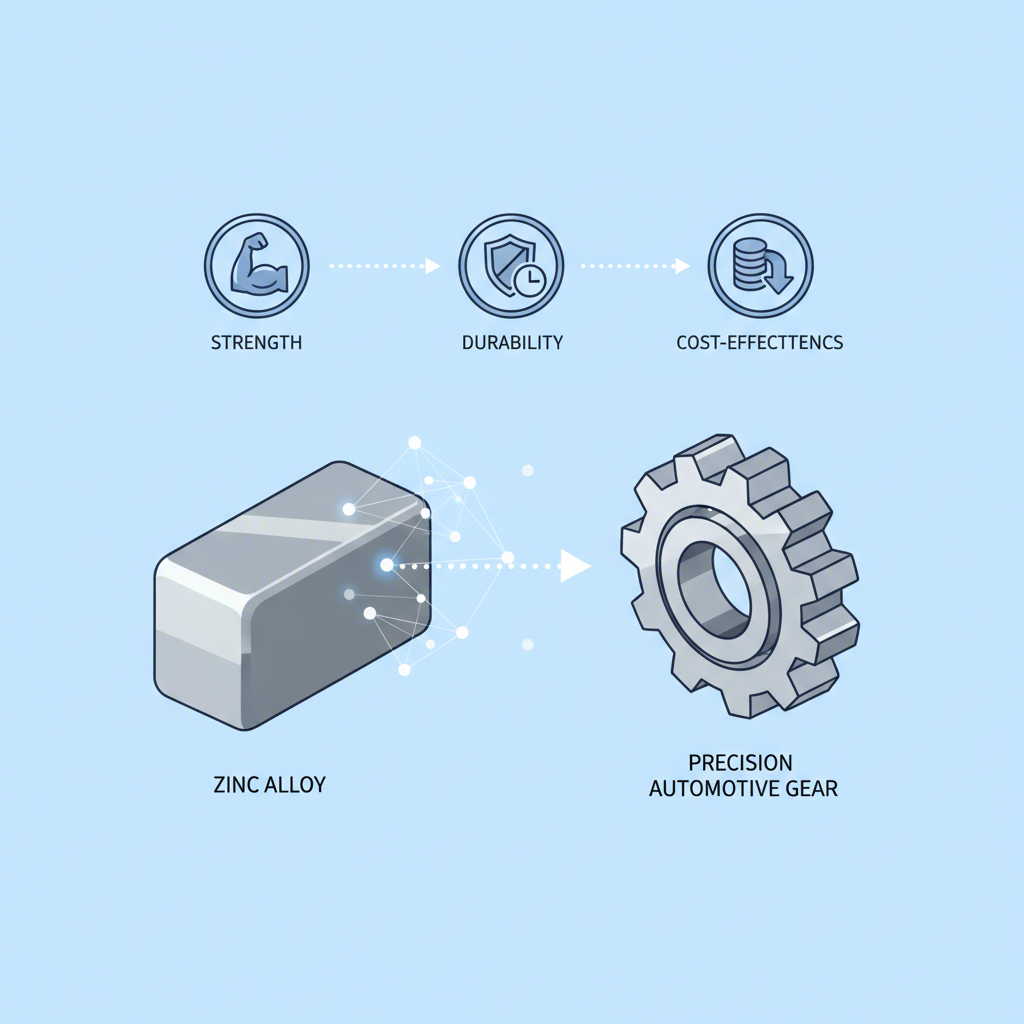
The widespread use of zinc die casting in the automotive sector is no accident; it is a direct result of the material's exceptional combination of mechanical properties, manufacturing efficiency, and economic advantages. Zinc alloys, particularly those in the Zamak family, provide engineers and designers with a versatile solution that often outperforms other materials like aluminum, magnesium, and plastics in specific applications. These benefits translate into higher quality components, longer part lifespans, and more efficient production cycles.
One of the most significant advantages of zinc is its inherent castability. Zinc alloys possess a lower melting point (around 380-425°C) compared to aluminum (around 660°C). This lower temperature requirement means less energy is consumed during production, leading to direct cost savings. Furthermore, it places less thermal stress on the steel dies used in the casting process, extending their operational life significantly. As detailed by manufacturing experts at Bruschi Srl, a die for zinc casting can last up to ten times longer than one for aluminum, drastically reducing tooling costs over a high-volume production run.
The mechanical properties of zinc are also ideally suited for the demanding automotive environment. Zinc die-cast parts exhibit high strength and hardness, allowing them to withstand significant stress and impact. This makes them suitable for both functional and safety-critical roles. The material's superior fluidity when molten allows it to fill intricate and complex mold cavities, enabling the creation of parts with thin walls—as fine as 0.5 mm—and complex geometries that would be difficult or impossible to achieve with other methods. This capability for "net shape" manufacturing, as highlighted by PHB Inc., often eliminates the need for secondary machining operations, further streamlining production and reducing costs.
Beyond its structural and manufacturing benefits, zinc offers several other key advantages for automotive applications:
- Excellent Surface Finish: Zinc die castings have a smooth, high-quality surface straight from the mold, making them ideal for aesthetic parts that require plating, painting, or powder coating.
- Corrosion Resistance: Zinc naturally forms a protective oxide layer, giving it excellent resistance to corrosion, a crucial attribute for parts exposed to the elements.
- Dimensional Stability: Zinc alloys maintain their shape and tight tolerances over time, ensuring long-term reliability for precision components.
- Electrical and Thermal Conductivity: Its conductive properties make zinc a suitable choice for housings and components that shield electronics from electromagnetic interference (EMI) or need to dissipate heat.
Comprehensive Applications of Zinc Die Cast Parts in Modern Vehicles
The versatility of zinc die casting is evident in its extensive application across nearly every system of a modern vehicle. From the parts you see and touch in the cabin to the critical components working under the hood, zinc plays a silent yet vital role in a car's performance, safety, and aesthetics. This widespread adoption is due to zinc's unique ability to meet diverse requirements, whether for strength, appearance, or precision.
In the vehicle's interior, zinc is often the material of choice for components that require a combination of durability and a high-quality finish. Parts such as seatbelt buckles, retractor gears, door handles, and ignition housings are frequently made from die-cast zinc. Its ability to be easily chrome-plated or painted allows designers to create visually appealing yet robust components that can withstand years of use. For safety systems, the high strength and ductility of zinc alloys are paramount, ensuring components like seatbelt mechanisms perform reliably during an impact.
Under the hood and throughout the chassis, zinc components are valued for their resilience and precision. They are used in demanding environments for parts in power steering systems, fuel systems, brake systems, and engine components. According to an overview by Aludiecasting, zinc's stability and strength make it ideal for housings, sensor bodies, and mechanical parts within the transmission and engine bay. Furthermore, with the rise of electric and autonomous vehicles, zinc die casting is increasingly used for electronic enclosures and connectors, where its thermal conductivity and EMI shielding properties are essential for protecting sensitive electronics.
The table below outlines a range of specific zinc die casting applications in the automotive industry, categorized by vehicle system, and highlights the primary reason for zinc's selection in each case.
| Component/Part | Vehicle System | Primary Reason for Using Zinc |
|---|---|---|
| Seatbelt Buckles & Retractor Gears | Safety Systems | High Strength and Impact Resistance |
| Airbag Housings | Safety Systems | Durability and Precision for Critical Fit |
| Interior Door Handles & Lock Housings | Interior | Excellent Surface Finish and Durability |
| Rearview Mirror Brackets | Interior/Exterior | Strength and Vibration Dampening |
| Emblems and Logos | Exterior | Superior Plating Capability and Finish |
| Windshield Wiper Components | Exterior | Corrosion Resistance and Strength |
| Fuel System Components | Powertrain | Complex Shapes and Pressure Tightness |
| Brake Parts and Hardware | Chassis | High Hardness and Wear Resistance |
| Electronic Sensor Housings | Electronics | EMI Shielding and Thermal Conductivity |
| Power Steering System Components | Chassis | Strength and Ability to Form Complex Geometries |
Key Zinc Alloys and the Manufacturing Process
The success of zinc die casting in the automotive sector relies on both the selection of the right alloy and the efficiency of the manufacturing process. The most widely used zinc alloy in North America is Zamak 3 (also known as Zinc Alloy 3 or ASTM AG40A). It is often the default choice due to its excellent balance of physical and mechanical properties, superb castability, and long-term dimensional stability. Its composition provides an ideal combination of strength and ductility, making it suitable for a vast array of automotive components.
Other alloys, like Zamak 5, offer slightly higher strength and hardness due to a small addition of copper, making them suitable for applications requiring greater wear resistance. The choice of alloy is carefully matched to the specific performance requirements of the final part. The manufacturing process itself is a key contributor to the cost-effectiveness of zinc components. Most zinc parts are produced using the hot-chamber die casting method. As explained by RapidDirect, this process is significantly faster and more efficient than the cold-chamber process required for higher-melting-point metals like aluminum. In a hot-chamber machine, the injection mechanism is immersed in the molten metal bath, allowing for faster cycle times and higher production rates.
This efficiency is crucial for the automotive industry's high-volume demands. The combination of a fast, automated process and long-lasting, lower-cost tooling makes zinc die casting an economically superior choice for many small- to medium-sized parts. Companies specializing in precision metal components leverage advanced manufacturing techniques to deliver high-quality parts for OEMs and Tier 1 suppliers, underscoring the importance of process expertise in the automotive supply chain. This focus on process control ensures that every component meets the stringent quality and performance standards of the industry.
Frequently Asked Questions
1. Why is zinc commonly used in die casting applications?
Zinc is commonly used because its mechanical properties are highly competitive with, and often superior to, materials like cast aluminum, magnesium, and many plastics. Its key advantages include high strength and hardness, excellent dimensional stability, superior finishing capabilities for aesthetic parts, and exceptional castability. These characteristics, combined with the efficiency of the hot-chamber casting process, make zinc alloys an unrivaled choice for saving time and money in high-volume production.
2. What is the preferred zinc die casting alloy for most applications in North America?
The most widely used zinc die casting alloy in North America is Zamak 3 (ASTM AG40A). It is generally the first choice for designers and engineers because it offers an excellent combination of castability, long-term dimensional stability, and good finishing characteristics, all at a competitive cost. Its balanced properties make it suitable for the vast majority of automotive die casting applications.
3. Will zinc die cast parts rust?
Zinc is highly resistant to corrosion and does not rust in the same way as iron or steel. It forms a protective zinc carbonate patina upon exposure to the atmosphere, which prevents deeper corrosion. While extremely harsh environments with high salt content, such as marine settings, can eventually cause corrosion, zinc die-cast parts are exceptionally well-suited for typical automotive environments and provide excellent longevity and protection against moisture and atmospheric exposure.