 Small batches, high standards. Our rapid prototyping service makes validation faster and easier —
  EN
EN


What Metal Is Magnetic? Why Stainless Steel Breaks The Rules
What Metal Is Magnetic?
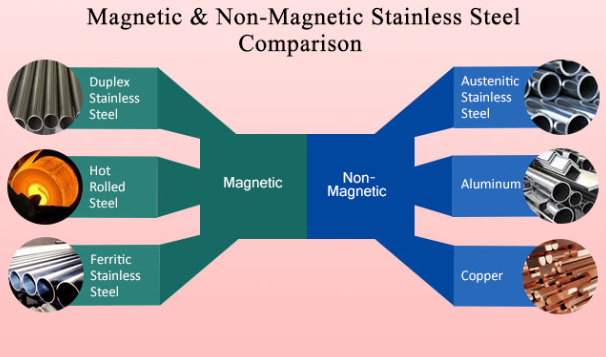
If you are asking what metal is magnetic, the short answer is this: iron, nickel, cobalt, many carbon steels, cast iron, and some stainless steels attract magnets. Aluminum, copper, brass, bronze, gold, silver, lead, zinc, and most titanium parts are not noticeably magnetic under normal everyday conditions.
Guidance from Industrial Metal Supply and Fractory points to the same big pattern, but there is an important catch: magnetism is not simply yes or no. Some metals are strongly magnetic, some are only weakly responsive, and some are conditionally magnetic depending on alloy and structure. That is why searches for what metals are magnetic and what metals are not magnetic often return mixed answers.
Direct Answer to What Metal Is Magnetic
In simple terms, what are magnetic metals? The everyday list starts with iron, nickel, cobalt, and iron-rich alloys such as carbon steel. Stainless steel is the troublemaker because some grades attract magnets and others barely do. If you are wondering what metal is non magnetic, common examples include aluminum, copper, brass, gold, silver, titanium, lead, and zinc. In practical use, these are the non magnetic metals most people mean.
Quick Reference Table for Common Metals
| Metal or alloy | Typical magnet response | Everyday strength | Key exception or note |
|---|---|---|---|
| Iron | Magnetic | Strong | One of the main ferromagnetic metals |
| Nickel | Magnetic | Strong | Common magnetic element in alloys |
| Cobalt | Magnetic | Strong | Also used in specialty magnetic alloys |
| Carbon steel | Usually magnetic | Strong | Iron content usually dominates behavior |
| Cast iron | Usually magnetic | Moderate to strong | Can vary by grade and structure |
| Stainless steel | Sometimes magnetic | Variable | Depends on stainless family and processing |
| Aluminum | Usually not magnetic | Very weak | Household magnets usually will not stick |
| Copper | Usually not magnetic | Very weak | Can interact with moving magnetic fields without sticking |
| Brass and bronze | Usually not magnetic | Very weak | Hidden steel parts can create false positives |
| Gold and silver | Not noticeably magnetic | Very weak | Magnetic attraction usually suggests another metal is present |
| Titanium | Usually not magnetic | Very weak | Most parts do not attract a household magnet |
| Lead and zinc | Usually not magnetic | Very weak | Generally treated as non-magnetic in normal use |
So, if you need the fast takeaway, the metals most likely to grab a magnet are iron-based materials plus nickel and cobalt. The mixed cases come from something deeper than the word metal alone: electron behavior, internal structure, and alloy chemistry all change the result.
Why Some Metals Attract Magnets
A quick list tells you which metals tend to attract a magnet, but the real answer lives inside the material itself. If you have ever wondered what makes something magnetic, think of electrons first. Electrons act like tiny magnets. In many substances, those tiny magnetic effects cancel each other out. In others, enough of them line up that you get a pull strong enough to notice. That is why asking what materials are magnetic leads to a better answer than assuming all metals behave alike.
What Makes Something Magnetic
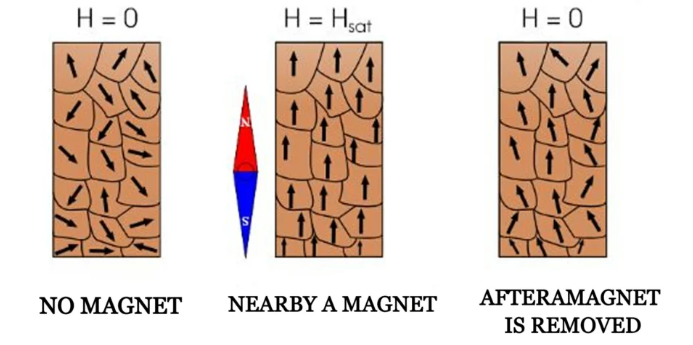
At the atomic level, magnetism comes from the magnetic moments of electrons and how those moments combine. Britannica explains that when large numbers of electron moments align in the same direction, a material can show an overall magnetic effect. In the strongest everyday cases, the material contains magnetic domains, which are tiny regions where many atomic moments already point together. All About Circuits describes how these domains in ferromagnetic materials can grow and align under an applied field, creating strong attraction.
So, what causes the material to be magnetic? Not just the fact that it is a metal. Composition matters, but crystal structure matters too. The way atoms are arranged can help magnetic moments cooperate or cancel out. That is why two alloys with similar ingredients can behave differently, and why stainless steel often surprises people.
Strong everyday attraction usually means ferromagnetism, not simply that an item is metallic.
Ferromagnetic Paramagnetic and Diamagnetic in Plain English
These three labels describe how a material responds to a magnetic field:
- Ferromagnetic: strongly attracted. Think iron, nickel, and cobalt. Their magnetic domains can line up easily, so a household magnet sticks firmly.
- Paramagnetic: weakly attracted. Aluminum is a familiar example from the reference material. It responds to a field, but usually too weakly for everyday magnet tests.
- Diamagnetic: weakly repelled. Copper, gold, silver, and lead are examples listed in the references. The effect is real, but so slight that most people treat them as non-magnetic.
If you are asking which elements are magnetic or what elements are magnetic, the practical answer for daily life is the ferromagnetic group. Scientifically, many materials show at least a weak response. That also answers a common question: is magnetism a physical or chemical property? It is a physical property because it describes how a material responds to a field without changing into a new substance. In simple terms, is magnetism a physical property? Yes. And that is where the everyday list gets more interesting, because some metals, especially iron-rich ones, attract magnets far more strongly than others.
Is Steel Magnetic?
In everyday use, the metals most likely to grab a household magnet come from a short list: iron, nickel, cobalt, cast iron, carbon steel, and many other iron-rich steels. That is the practical reason questions like is iron magnetic, is nickel magnetic, is cobalt magnetic, and is steel magnetic usually get a yes. The core list lines up closely with guidance from Industrial Metal Supply and Online Metals.
Put simply, iron is magnetic, and so are nickel and cobalt. These are the best-known everyday ferromagnetic metals, meaning they show the kind of strong attraction most people notice right away. If you are wondering, is nickel a magnetic material, the everyday answer is yes.
Iron Nickel and Cobalt as the Core Magnetic Metals
| Metal family | Typical attraction strength | Everyday examples | Notable exceptions or notes |
|---|---|---|---|
| Iron | Strong | Wrought iron items, iron-rich parts | Usually one of the clearest yes results in a magnet test |
| Nickel | Strong | Specialty alloys, electrical components | Nickel in an alloy does not always guarantee strong magnetism by itself |
| Cobalt | Strong | Specialty magnetic alloys, electric products | Less common as a bulk household metal than iron or steel |
| Cast iron | Moderate to strong | Cookware, machine components | Magnetic pull can vary somewhat by grade and structure |
| Carbon steel | Strong | Tools, brackets, hot-rolled and cold-rolled steel | Usually magnetic because the alloy is still dominated by iron |
| Low-alloy steel | Usually strong | Structural parts, machinery | Behavior depends on alloy balance, but many iron-rich grades attract magnets well |
| Galvanized steel | Usually strong | Ducting, framing, hardware, outdoor steel parts | The zinc coating is non-magnetic, but the steel underneath still responds |
Why Most Carbon Steels Attract Magnets
Steel is not one metal recipe. It is a family of alloys, so magnetic behavior depends on what is in the mix and how the material is structured. Still, ordinary carbon steel is usually magnetic because it is largely iron. Online Metals lists mild steel, carbon steel, cast iron, and wrought iron among the ferrous metals that commonly attract magnets, which matches what people see in garages, workshops, and scrap bins.
That also clears up a common search: is galvanized steel magnetic? In general, yes. Xometry explains that the zinc coating used in galvanizing has little effect on the steel substrate, so galvanized carbon steel remains magnetic in normal use. In other words, the coating helps with corrosion resistance, but it does not cancel the pull of the steel core.
This is where magnet tests stay useful but not perfect. A strong pull usually points to iron-rich metal, yet plenty of familiar metals still look metallic without attracting a magnet much at all. Aluminum, copper, and brass are where that everyday confusion really starts.
Which Common Metals Usually Are Not Magnetic?
Aluminum, copper, and brass are where magnet questions get messy fast. They are clearly metals, but a household magnet usually will not stick to them. In practical terms, IMS groups aluminum, copper, brass, lead, gold, silver, titanium, and zinc with the metals people generally treat as non-magnetic in normal use. So if your search is is aluminum magnetic, is copper magnetic, is brass magnetic, is titanium magnetic, or is lead magnetic, the everyday answer is usually no.
Metals That Usually Are Not Magnetic
Everyday use and lab behavior are not always the same thing, though. The University of Maryland notes that aluminum is not visibly magnetic under normal conditions, yet it can show a slight response in strong magnetic fields. It can also interact with moving magnets through eddy currents, which may slow a falling magnet in an aluminum pipe without any true sticking.
If you have wondered is aluminum a magnetic metal, is aluminum a magnetic material, or is aluminium magnetic material, the practical answer stays the same: not in the way most people mean when they try a fridge magnet.
- Aluminum: usually does not hold a magnet. Under specialized conditions, it can show only a very weak response.
- Copper: usually does not hold a magnet in everyday use.
- Brass: usually does not hold a magnet unless hidden steel is present.
- Bronze: usually behaves like other copper-based metals in normal magnet tests and does not noticeably attract a magnet.
- Gold and silver: usually do not attract a household magnet.
- Lead, zinc, and titanium: usually do not attract a household magnet.
- Magnesium: effectively non-magnetic in normal use, even though it can show weak paramagnetic behavior under stronger fields.
| Metal | Typical result | Common false positive |
|---|---|---|
| Aluminum | No sticking | Hidden steel backing, fasteners, or contamination |
| Copper | No sticking | Steel clips, cores, or mixed-metal assemblies |
| Brass | No sticking | Steel screws, inserts, plating, or nearby hardware |
| Bronze | Usually no sticking | Ferrous inserts or attached hardware |
| Gold, silver, lead, zinc, titanium | Usually no sticking | Another metal present in the item |
Why Aluminum Copper and Brass Confuse So Many People
The confusion comes from two different ideas getting mixed together. First, people assume metal automatically means magnetic. Second, some non-magnetic metals still react to a moving magnet in interesting ways. Aluminum is the best example. A magnet does not stick to it, but motion can create eddy-current effects that cause drag or movement. That is interaction, not attraction.
Brass adds a different kind of confusion. Many brass valves, fixtures, and decorative pieces include small steel parts inside, so the magnet grabs the hidden steel and makes the whole item seem magnetic. Copper can fool people for similar reasons in mixed assemblies. The tricky part is that two shiny, corrosion-resistant metals can look equally similar while giving completely different magnet-test results. Stainless steel pushes that contradiction even further.
Why Stainless Steel Creates So Much Confusion
Stainless steel is where simple magnet rules stop being simple. Stainless steel is a family, not one material. So when people ask are all metals magnetic, stainless is one of the clearest reasons the answer is no. Two parts can both be called stainless steel and still react very differently to the same magnet because magnetic behavior depends on structure, alloying, and how the part was made.
Why Some Stainless Steel Is Magnetic and Some Is Not
The biggest split is between austenitic stainless and the ferritic, martensitic, and duplex families. In ASSDA FAQ, wrought austenitic grades such as 304 and 316 are generally regarded as non-magnetic in the annealed condition, which means they are not attracted significantly by a permanent magnet. The same source notes that ferritic stainless steels and martensitic stainless steels are strongly attracted even in the annealed state, and duplex stainless steels are also strongly attracted because they contain about 50 percent ferrite.
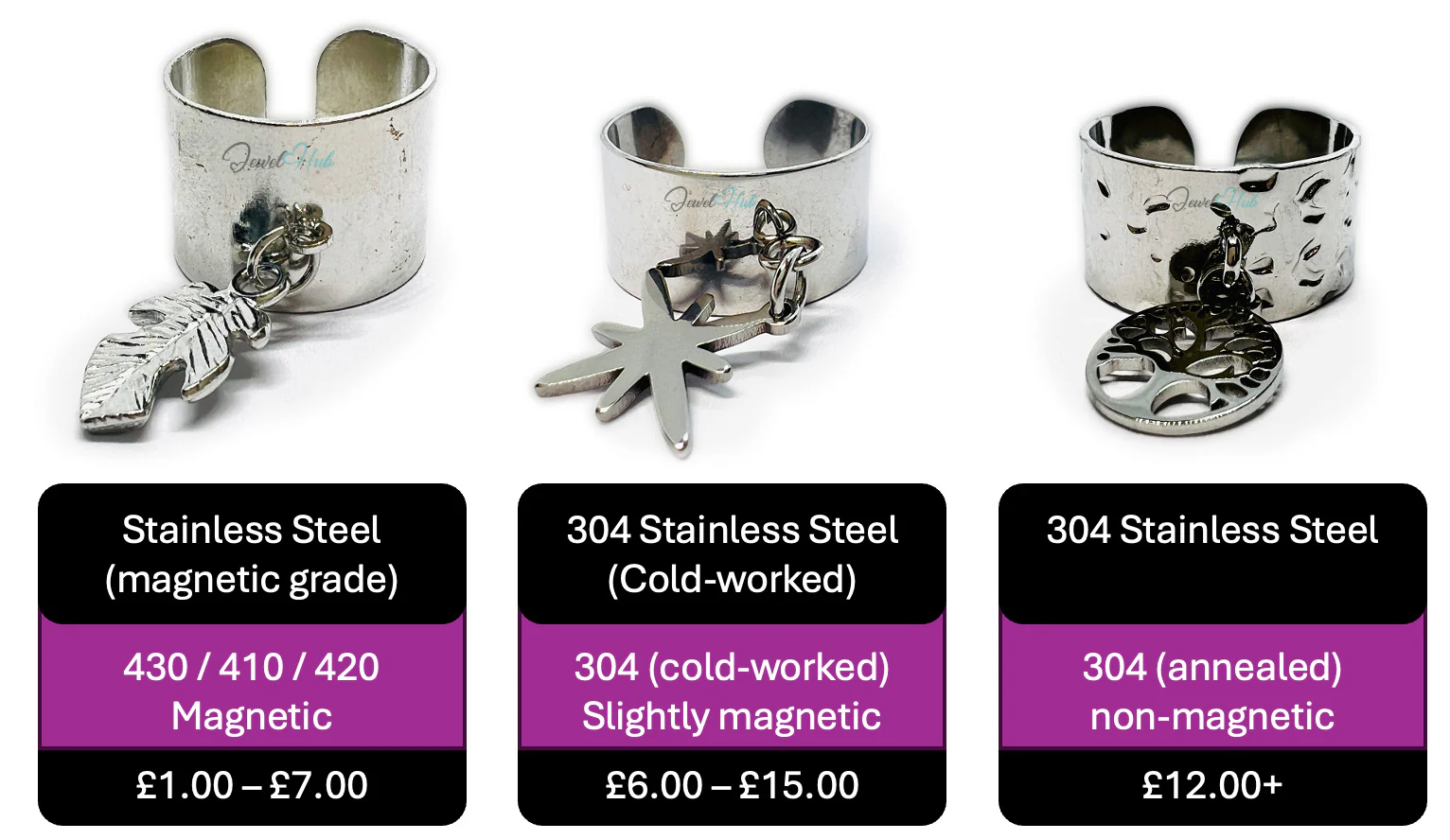
That explains why 304 and 316 often seem non-magnetic in kitchen equipment, tanks, or trim, while 430 panels and 410 fasteners can feel obviously magnetic. A 430 guide identifies 430 as a ferritic stainless, and a fastener note states that type 410 stainless will be strongly magnetic while 316 seldom exhibits magnetic properties. If you have ever asked, is nickel magnetic material, the practical answer is yes for nickel itself. But inside stainless steel, nickel also helps stabilize the austenitic structure, so its presence does not automatically mean the finished alloy will grab a magnet.
Processing adds another twist. ASSDA explains that cold working can change part of an austenitic structure into martensite, which is magnetic. That is why some formed, stamped, threaded, or heavily worked 304 parts become mildly magnetic after bending, rolling, or cold forming. The effect is usually less marked in alloys with more austenite stabilizers, including nickel. Cast austenitic stainless can also show a weak pull because it may contain a small amount of ferrite.
Austenitic Ferritic Martensitic and Duplex Compared
| Stainless family | Typical magnetic behavior | Common grades | What drives the result | What can change it |
|---|---|---|---|---|
| Austenitic | Usually non-magnetic or only very weakly magnetic in the annealed condition | 304, 316, 305, and many 18-8 grades such as 302 and 303 | Austenitic structure resists strong magnetic attraction | Cold work, forming, thread rolling, or heavy deformation can create martensite and cause a mild pull. Castings may also show weak attraction. |
| Ferritic | Magnetic, often clearly strong | 409, 430, 3Cr12 or 5Cr12 | Ferrite in the structure gives a strong everyday response | Usually magnetic even without special processing |
| Martensitic | Magnetic, often clearly strong | 410, 420, 403 | Martensitic structure is magnetic | Heat treatment affects strength and hardness, but not the basic fact that these grades attract magnets |
| Duplex | Magnetic, usually strong | Duplex and super duplex grades | About half the structure is ferrite | Processing can influence strength and corrosion behavior, but the magnet response usually stays obvious |
So, what types of metal are magnetic when the label only says stainless? Ferritic, martensitic, and duplex stainless are the most reliable yes answers. Austenitic grades are the ones most likely to confuse shoppers, fabricators, and anyone sorting scrap. That is also why searches for which metals are magnetic and which metals are magnetic materials often produce contradictory lists. Among stainless steels, the label tells you corrosion family first, not magnetism first.
In other words, stainless belongs in both conversations: some grades are on everyday lists of metals that are magnetic, and some are not. A weak pull can mean cold-worked 304, a slightly ferritic casting, or a truly magnetic 410 or 430 part, which is exactly why a magnet test is useful but never the whole story.
What Do Magnets Stick To?
Stainless steel proves that a magnet can tell you something useful without telling you everything. If you are wondering what do magnets stick to in a scrap bin, workshop, or kitchen drawer, a simple handheld magnet is one of the quickest screening tools. Fair Salvage describes the magnet test as a fast way to separate ferrous from non-ferrous metals, while HRC CNC notes that the same basic check is commonly used on stainless items and cookware.
How to Use a Magnet Test Correctly
- Choose a handheld magnet with a clear pull. A small fridge magnet can work for household checks, but a slightly stronger magnet makes weak differences easier to notice.
- Touch the magnet to a clean, flat area first. Rust, dirt, loose residue, coatings, plating, or surface contamination can make the result harder to judge.
- Test more than one spot. On stainless steel, formed areas and weld zones can behave differently from untouched sections.
- Judge the pull, not just contact. A firm grab usually points to ferrous metal or a strongly magnetic stainless grade. A faint cling needs more caution.
- Watch for misleading construction. Hidden steel fasteners or mixed-metal assemblies can make one section magnetic even when the whole item is not one single alloy.
That helps answer common questions fast. Does a magnet stick to aluminum? Usually no. Does a magnet stick to brass? Usually no. Will a magnet stick to copper? Usually no. In the same practical sense, will a magnet stick to aluminum and does a magnet stick to aluminium are also usually no.
What a Weak Attraction Usually Means
A weak pull often means you are in a gray area, not that the test failed. HRC CNC explains that austenitic stainless grades such as 304 and 316 are usually non-magnetic in the annealed condition, but cold working or welding can make them slightly magnetic. So if you ask can magnets stick to aluminum, the everyday answer is still no. But if a magnet barely clings to stainless, the explanation may be processing, not a completely different material.
A magnet test is strong screening evidence, not final proof of an exact alloy grade.
Use it for quick sorting and first-pass identification. Just do not treat it as a lab report. That difference matters when magnet results start shaping choices about scrap, hardware, appliances, and cookware.
Everyday Uses for Magnetic and Non Magnetic Metals
In daily life, magnetism is less about theory and more about quick decisions. Industrial scrap magnets work because they grab ferrous metals such as iron and steel while leaving aluminum, copper, brass, and certain stainless grades behind. That same simple idea helps you sort a bin of mixed parts, check a tool, or make sense of a shiny fixture that looks metallic but does not act like one. For most people asking what metals are non magnetic, the practical list starts with those non-ferrous metals that a household magnet will not noticeably pull.
Where Magnetism Matters in Everyday Metal Decisions
- Scrap sorting: A magnet is a fast way to separate magnetic non magnetic metals before you spend time on closer inspection.
- Hardware and tools: Strong attraction usually points to iron-rich steel, not aluminum, copper, or brass.
- Appliance and fixture checks: A magnet can help you spot likely steel parts under paint, trim, or other surface finishes.
- Cookware and stainless items: A weak pull does not automatically mean poor quality or fake stainless. Stainless behavior varies by grade and processing.
- Coated steel questions: When people ask is galvanised steel magnetic or is galvanized magnetic, the useful question is whether steel is underneath the coating.
Myths About Magnetic and Non Magnetic Metals
- Myth: All stainless steel is non-magnetic. Reality: stainless testing shows magnetism alone is not a reliable way to identify 304 or 316, and processing can change the result.
- Myth: If a magnet sticks, the item must be pure iron. Reality: Steel and other ferrous alloys can also attract strongly.
- Myth: Shiny metals are usually magnetic objects. Reality: Many metal-looking products are not, which is why questions about which metals are not magnetic come up so often.
- Myth: A magnet gives final identification. Reality: It is a screening tool, not a full material report.
So, does every metal have a magnetic field in a useful everyday sense? That is not the question most buyers need answered. What matters is whether the material shows noticeable attraction in normal use, and whether that clue fits the job. Once corrosion resistance, strength, and forming method enter the decision, magnetism becomes only one piece of the puzzle.
How to Choose Metals Beyond Magnetism
A magnet can help you sort a bin of parts. It cannot choose the best metal for a product. In real material selection, magnetic metals, nonmagnetic alloys, and mixed assemblies are judged by the job they must do. A ferrous metal may be the right pick for strength and cost, while aluminum may win on weight and corrosion resistance. That is why aluminum and magnets should be treated as one clue, not the whole answer.
How to Choose the Right Metal for the Job
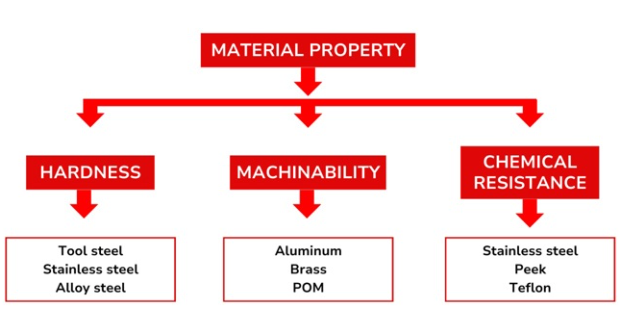
A stamping material guide frames the choice around practical factors like strength, formability, corrosion resistance, conductivity, density, cost, production volume, and finish requirements. Xometry's steel guide adds an important reminder: steel is not one thing. Carbon steel, alloy steel, and stainless steel can behave very differently in service and in fabrication. If you are still wondering what is magnetic material, the better buying question is whether magnetic response actually matters to the part.
- Corrosion resistance: Stainless steel and aluminum are often chosen where moisture or chemicals matter.
- Strength and fatigue: Carbon and alloy steels are common where loads are higher.
- Formability: Aluminum and copper are often easier to stamp into complex shapes.
- Weldability and finishing: Manufacturing steps can narrow the best options fast.
- Weight: Low density may matter more than magnetism in vehicles and electronics.
- Cost and volume: High-volume parts often favor readily available, efficient magnetic materials or other economical alloys.
When Manufacturing Expertise Matters
Processing changes results almost as much as chemistry. Cold working, coating, and production method can affect performance, finish, and even magnetic behavior. In automotive manufacturing, IATF 16949 is built around consistency, safety, and defect reduction, which is why process control matters when choosing stamped steel, stainless, or aluminum parts. For a real-world example, Shaoyi's auto stamping parts resource shows how an IATF 16949-certified supplier approaches prototyping through automated production for components such as control arms and subframes. For buyers comparing stainless grades, steel, or aluminum and magnets, that manufacturing context often matters more than the magnet test itself. The best final question is not simply what metal attracts a magnet, but which metal fits the environment, the load, and the process.
FAQ About Magnetic Metals and Stainless Steel
1. What metals are magnetic in everyday use?
In normal day-to-day use, the metals most likely to attract a household magnet are iron, nickel, cobalt, cast iron, carbon steel, and many low-alloy steels. Some stainless steels also belong on the magnetic list, but not all of them. A strong pull usually suggests a ferromagnetic, iron-rich material, while a weak pull can point to certain stainless grades or metal that has been heavily formed.
2. Is stainless steel magnetic or non-magnetic?
Stainless steel can be either, because stainless is a family of alloys rather than one single metal. Austenitic grades such as 304 and 316 are usually non-magnetic when properly annealed, which is why many kitchen and food-service items do not hold a magnet well. Ferritic and martensitic grades, including common examples like 430 and 410, are usually magnetic. Some austenitic stainless can also become slightly magnetic after cold working, bending, or thread rolling.
3. Is aluminum magnetic, and will a magnet stick to it?
A regular magnet usually will not stick to aluminum. In scientific terms, aluminum has a very weak magnetic response, but it is far too small for most everyday magnet tests to show obvious attraction. This is why aluminum is treated as non-magnetic in practical use. It can still interact with moving magnets in ways that create drag or motion effects, but that is not the same as a magnet firmly clinging to the metal.
4. Can a magnet test identify the exact metal or alloy?
A magnet test is useful for fast sorting, but it cannot confirm an exact alloy by itself. It works best as a first check to separate likely ferrous metals from non-ferrous ones. Results can be distorted by coatings, hidden screws, mixed-metal construction, rust, contamination, or stainless steel that has changed during forming. Even galvanized steel usually remains magnetic because the zinc layer sits over a steel core rather than replacing it.
5. How should I choose between steel, stainless steel, and aluminum for stamped parts?
Start with the job requirements, not just magnetism. Carbon steel is often chosen for strength and cost, stainless steel for corrosion resistance, and aluminum for lower weight and easier handling in many applications. You also need to consider forming behavior, weldability, fatigue demands, finish needs, and production volume. For automotive stamped parts, it can help to review material options with a supplier that understands both design and process control. A practical example is Shaoyi's auto stamping resource, which shows how an IATF 16949-certified workflow can support decisions from prototyping through mass production.