 Small batches, high standards. Our rapid prototyping service makes validation faster and easier —
  EN
EN


What Is Flux Cored Arc Welding? Stop Bad Beads Before They Start

What Is Flux Cored Arc Welding?
If you are asking what is flux cored arc welding, the short answer is simple. It is a wire-fed welding process that uses a hollow wire filled with flux to create and protect the weld. The formal name is FCAW. Guidance from AWS describes it as a semi-automatic or automatic arc welding process that uses a continuously fed consumable electrode filled with flux.
Flux cored arc welding, or FCAW, is an arc welding process that uses tubular flux-filled wire instead of solid wire.
What Flux Cored Arc Welding Means in Plain English
In plain English, this process melts metal with an electric arc while the wire keeps feeding forward. That wire is not solid like standard MIG wire. Its center is packed with fluxing ingredients that help protect and stabilize the weld. So when people search what is flux core or what is flux core welding, they are usually talking about FCAW, just in more casual words.
How FCAW Differs From the Way Beginners Describe Flux Core Welding
Beginners often say flux core welding to describe the whole process, and that is understandable. Still, fcaw meaning is more precise than everyday shop talk. A flux welder is the machine. Flux-cored wire is the consumable. FCAW is the actual welding process.
- FCAW: The official process name, short for flux cored arc welding.
- Flux core: Common shorthand people use in conversation.
- Flux-cored wire: The tubular electrode filled with flux, not a solid wire.
- Compared with MIG: Both are wire-fed processes, but FCAW uses flux-filled wire where MIG commonly uses solid wire and external gas.
Why the Flux Inside the Wire Matters
The flux is not just filler. Miller notes that flux helps protect the weld from air exposure, and AWS adds that it also helps stabilize the arc and can contribute alloying elements. That is why flux core welding is valued for strength, speed, and versatility. It is also why one simple definition is not enough. The shielding system changes how the process behaves, especially when comparing self-shielded and gas-shielded FCAW.
Self Shielded vs Dual Shield Flux Cored Welding
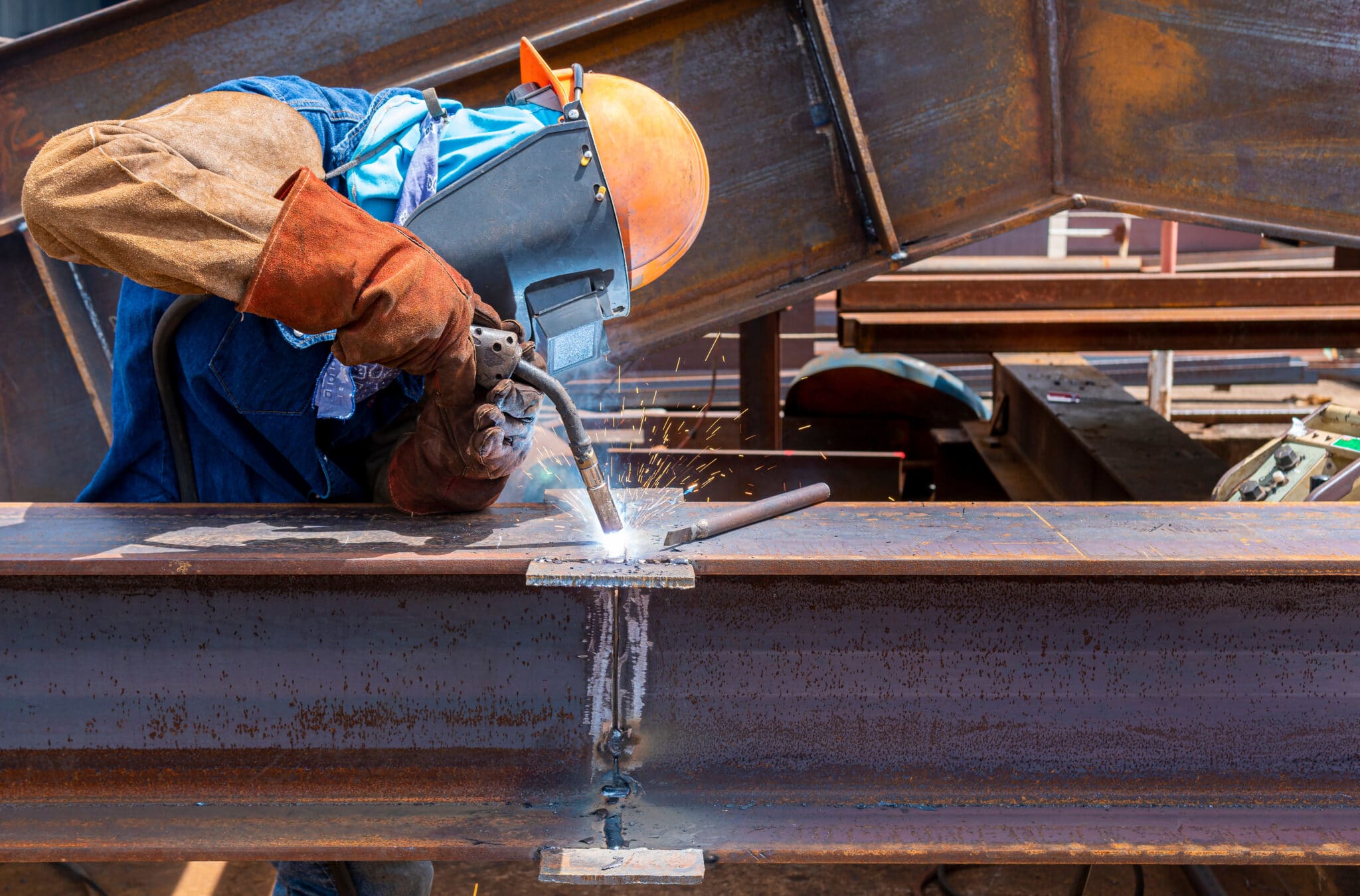
That shielding system is where most FCAW confusion starts. In this process, the arc melts both the base metal and the continuously fed tubular wire. As that wire burns, the flux inside it reacts in the arc, helping protect the molten puddle and creating a slag cover over the bead. Lincoln Electric explains that AWS places both self-shielded and gas-shielded tubular electrodes in the same FCAW family, commonly identified as FCAW-S and FCAW-G. So the big difference is not whether flux exists. It is how the weld gets its atmospheric protection.
How Flux Cored FCAW Produces Shielding and Slag
Flux does more than many beginners expect. It helps clean the molten metal, forms protective slag, can add alloying ingredients, and affects arc behavior. That is why flux cored arc welding can feel similar to MIG at the trigger but behave differently in the puddle. The wire feeds continuously, the arc keeps depositing metal, and the slag layer helps protect the bead as it cools. The cost of that protection is cleanup between passes.
Not all flux core welding requires gas. Some wires create their own shielding, while others need external gas around the arc.
Self Shielded Flux Cored Welding Explained
In self shielded flux cored welding, often shortened to fcaw-s, the wire depends on flux reactions to generate shielding gases and slag. No cylinder is required. That makes it especially practical for field repair, erection work, and windy outdoor conditions where gas coverage could be blown away. The tradeoff is usually more spatter, heavier slag removal, and a less refined bead appearance than shop-focused options.
Dual Shield Welding and When Gas Shielding Enters the Process
Gas shielded flux cored arc welding, or fcaw-g, still uses flux inside the wire, but the actual atmospheric protection comes from external fcaw shielding gas. Sources such as Earlbeck and Lincoln Electric note that common choices depend on the wire and often include 100% CO2 or argon and CO2 mixes. Many welders simply call this dual shield or dual shield welding. In a controlled indoor setting, that setup usually delivers a smoother arc, better puddle control, less spatter, and stronger productivity on thicker or critical work. Wind sensitivity and extra gas handling are the clear tradeoffs.
| Feature | Self-shielded FCAW-S | Gas-shielded FCAW-G |
|---|---|---|
| Shielding method | Flux in the wire generates protective gases and slag | Flux forms slag, while external gas protects the arc |
| Wind tolerance | Better for outdoor and high-wind conditions | More sensitive to wind because gas can be disturbed |
| Portability | Higher portability, no gas cylinder needed | Lower portability due to gas supply and setup |
| Cleanup demands | More spatter and slag cleanup | Less spatter, but slag still requires removal |
| Deposition focus | Strong field productivity and penetration | Smoother arc and high productivity in shop work |
| Common use environments | Fieldwork, repairs, outdoor structural jobs | Indoor fabrication, thicker materials, critical structural applications |
The same wire-fed process can act very differently once wire type, polarity, drive rolls, grounding, and gas setup enter the picture.
How to Set Up a Flux Core Welder Right
A lot of bad beads begin before the trigger is pulled. Whether you use a compact flux cored welding machine with an integrated feeder or a larger FCAW welding machine with separate components, the goal is the same: feed the right wire smoothly, deliver stable current, and protect the weld correctly. Training material from WA Open ProfTech notes that FCAW is a semiautomatic process built around a mechanical wire feeder and a constant-voltage power source. That makes setup one of the biggest factors in arc stability, bead shape, and fusion.
Essential Flux Cored Arc Welding Equipment
The core flux cored arc welding equipment is easier to understand when each part is tied to a job. The power source provides welding current. The wire feeder pushes the electrode. The gun and cable carry wire, current, and, when required, gas. The work clamp completes the circuit. At the front end, the contact tip must match the wire diameter so current transfers consistently. Inside the feeder, the drive rolls and wire guides must also match wire size.
That detail matters because tubular FCAW wire is softer than many beginners expect. WA Open ProfTech explains that knurled drive rolls are used for FCAW electrodes so the feeder can grip the wire without relying on excessive pressure. Too much pressure can crush the wire. Too little can make the rolls slip. If you are using gas-shielded wire, your FCAW welding equipment also needs a cylinder, regulator, flowmeter, and gas hose.
Machine size matters too. A light-duty flux core welder may not handle the same spool size, wire diameter, or duty demands as an industrial FCAW welding machine.
Flux Core Polarity and Shielding Gas Basics
Flux core polarity is never something to guess. Many self-shielded wires run on DCEN, while many gas-shielded wires run on DCEP, but the correct answer always comes from the wire data sheet. The same source from WA Open ProfTech also notes that FCAW uses direct current rather than AC in normal wire-fed operation. Wrong polarity can quickly show up as a rough arc, poor penetration, or excessive spatter.
The same caution applies to flux core welding gas. Only gas-shielded FCAW wire needs external shielding gas. Self-shielded wire does not. If your wire calls for gas, connect the system correctly and use the wire manufacturer chart or the flux cored welding machine manual for exact gas type, voltage, and wire-feed guidance rather than guessing.
Machine Preparation Checklist Before You Strike an Arc
- Confirm the base metal, thickness, and joint type.
- Choose a wire classification and diameter your machine is designed to feed.
- Install the correct contact tip, wire guides, and drive rolls for that wire.
- Set drive-roll pressure high enough for smooth feeding, but not so high that it deforms the wire.
- Verify polarity at the machine terminals before welding.
- Attach the work clamp to clean metal for a solid electrical path.
- Keep the gun cable as straight as practical to reduce feeding resistance.
- If using gas-shielded wire, connect the gas system and confirm the correct gas for that wire.
- Check the nozzle, tip, and wire path for debris or wear.
- Run a short test bead and adjust using the wire maker's chart.
- Wrong polarity for the wire.
- Contaminated base metal.
- Poor grounding or a loose work clamp.
- Mismatched wire, tip, or drive rolls.
- Too much or too little drive-roll tension.
- Using gas when the wire does not require it, or skipping gas when it does.
When the wire feeds cleanly and the electrical path is solid, the arc becomes much easier to read. That is where machine preparation turns into real puddle control, and where bead quality starts to reveal itself pass by pass.

How to Flux Core Weld for a Clean First Bead
A machine can be set correctly and still lay an ugly bead if the weld sequence breaks down at the joint. For anyone learning how to use a flux core welder, the biggest gain often comes from doing the same steps in the same order every time. Guidance from Miller and Bernard and Tregaskiss points to a simple pattern: clean metal, confirm setup, run a test bead, drag the gun, watch the puddle, and remove slag before judging the result. That is the practical side of how to flux core weld.
How to Flux Core Weld Step by Step
- Clean and fit the joint. Remove rust, paint, oil, grease, moisture, and loose scale from the weld area. Clean the spot where the work clamp attaches too. Miller notes that poor ground contact adds resistance to the circuit and can hurt weld quality.
- Confirm the wire and machine setup. Make sure the installed wire matches the contact tip, drive rolls, and polarity listed for that wire. If the wire is gas-shielded, turn on shielding gas. If it is self-shielded, do not add gas.
- Tack the parts if fit-up can move. A shifting gap changes bead shape and makes fusion less predictable, especially on a first pass.
- Run a short test bead on scrap. Use the machine chart or wire maker's data as your starting point, then fine-tune from the test weld instead of guessing on the actual joint.
- Set the gun angle for the joint. Use the proper work angle for the joint type and a drag technique for flux-cored wire unless the wire manufacturer says otherwise. Miller's rule of thumb is simple: if there is slag, you drag.
- Hold a steady stickout. Miller lists about 3/4 inch as a common stickout for flux-cored welding. If it changes constantly, arc sound, penetration, and bead shape usually change with it.
- Start the weld and travel steadily. Too slow, and the puddle can get ahead of the arc. Bernard links that condition to slag inclusions. Too fast, and the weld may not tie in well at the joint edges.
- Keep the arc where it belongs. Bernard recommends keeping the arc on the trailing edge of the puddle to help prevent lack of fusion.
- Clean slag between passes. Chip, brush, or grind it away completely before the next pass. Leaving slag behind invites inclusions.
- Inspect the finished bead. Look for even width, solid tie-in at both toes, and a profile that matches the joint instead of sitting high and disconnected.
What to Watch in the Weld Puddle During FCAW
When you are welding with flux core wire, the puddle gives earlier feedback than the finished bead. If slag starts rolling in front of the arc, travel is usually too slow. If the wire seems to outrun the puddle, Bernard notes that small adjustments such as travel speed or welding current may be needed. Watch whether the molten metal is tying into both sides of the joint. That visual cue matters because setup choices show up here first: unstable stickout can make the arc inconsistent, and poor settings can leave the bead ropey, undercut, or shallow in fusion.
How to Finish Clean Up and Inspect the Weld
Flux wire welding is not finished when the trigger is released. Clean the bead thoroughly, especially before a second pass, then inspect it in good light. Good flux core welds usually have consistent bead shape, visible tie-in, and no obvious trapped slag or porosity on the surface. A quick post-weld check also helps you connect cause to effect. Dirty metal often shows up as contamination, an unstable travel speed can affect bead shape, and poor puddle control can leave weak fusion even if the weld looks acceptable from a distance.
- Use a drag technique unless the wire maker specifies otherwise.
- Keep stickout consistent instead of letting it wander during the pass.
- Do not let the puddle get ahead of the arc.
- Clean every pass before restarting.
- Use test beads for adjustments. That is one of the most reliable FCAW welding tips for beginners and supervisors alike.
The same workflow still changes character once the wire changes. Self-shielded mild steel wire, gas-shielded shop wire, and all-position options do not behave exactly alike, which makes wire selection the next decision that shapes bead quality just as much as technique.
Choosing Flux Cored Arc Welding Wire by Application
The arc can be steady, the stickout can be right, and the machine can be set correctly, yet bead quality still changes fast when the wire does not fit the job. That is why flux cored arc welding wire selection deserves its own decision process. Notes from Miller make the point clearly: there is no one-size-fits-all wire choice. Job location, material thickness, shielding method, weld position, and cleanup expectations all matter.
How to Choose Flux Cored Arc Welding Wire by Application
Start with the environment. Lincoln Electric separates flux-cored products into self-shielded and gas-shielded families. A self-shielded fcaw wire is often the practical choice for field work because it does not rely on an external gas cylinder and holds up better when wind is a problem. A gas-shielded fcaw welding wire usually makes more sense indoors, where gas coverage can be controlled and a smoother arc is useful for production work.
Think of welding wire flux core selection as matching three things at once:
- The base material you are joining.
- The position you need to weld in.
- The place you need to weld, shop or field.
| Job type | Likely wire direction | Cleanup expectations | Best-fit environment |
|---|---|---|---|
| Mild steel fabrication | Self-shielded for portability, or gas-shielded for smoother indoor production | Slag removal required either way | Field or shop, depending on shielding method |
| Outdoor repair and installation | Self-shielded flux cored wire | Usually more slag and often more spatter | Windy or remote locations |
| All-position welding | Flux core wire types designed to support vertical or overhead work | Remove slag carefully between passes | Structural and general fabrication work |
| Stainless applications | Use a wire specifically matched to the stainless base material and manufacturer guidance | Depends on the wire system used | Controlled applications where material match matters |
Flux Core Wire Types for Mild Steel Stainless and Outdoor Work
For mild steel, Miller highlights why flux cored wire is widely used on heavier work: it can offer good penetration, excellent sidewall fusion, and higher deposition rates than solid wire when applied correctly. Outdoor work pushes the choice toward self-shielded wire because shielding gas can be blown away. Shop fabrication often leans toward gas-shielded wire because Lincoln notes these wires are generally preferred indoors and tend to have smoother arc characteristics.
Position matters too. Miller explains that some gas-shielded wires are well suited to out-of-position welding because the slag system solidifies quickly and helps support the weld puddle. That is one reason flux core wire types are often grouped by application need, not just by wire diameter. Stainless work follows the same logic. Lincoln notes that flux ingredients can add alloying elements and influence final weld properties, so a mild steel wire should never be treated as interchangeable with stainless.
What to Know Before Assuming Flux Core Welding Aluminum Is Practical
A common search is can you weld aluminum with flux core. The careful answer is do not assume a generic setup will handle it. The Fabricator notes there is no AWS filler specification for aluminum flux-cored GMAW wire, and aluminum flux-cored wire for GMAW has not been commercialized. The barriers include corrosive flux chemistry, strong moisture sensitivity, and demanding cleanup. So before planning aluminum work, verify wire availability, process compatibility, and manufacturer guidance first.
That single choice reveals something bigger about FCAW. Picking the wire is really choosing how the process will behave, and sometimes it also reveals when another welding process makes more sense.
FCAW vs MIG, Stick, and TIG
Wire selection often settles a bigger question: should the job stay with flux-cored wire at all, or does another process fit better? For many beginners and supervisors, the real decision is mig or flux core welding, then a second comparison against stick or TIG for the specific part. A practical read of NEIT and ESAB shows the pattern clearly: these four arc welding methods overlap, but they do not behave the same once wind, cleanup, thickness, and appearance start mattering.
| Process | Process basics | Shielding needs | Outdoor suitability | Portability | Cleanup | Productivity focus | Thin-material control | Common use cases |
|---|---|---|---|---|---|---|---|---|
| FCAW | Continuous tubular wire with flux core | Self-shielded wire or external gas, depending on wire type | Strong outdoors with self-shielded wire | High with self-shielded setup | Slag removal required, often more spatter than MIG | High deposition and fast fill on thicker joints | Less forgiving on very thin material | Construction, shipbuilding, heavy fabrication, field welding |
| MIG or GMAW | Continuous solid wire feed | External shielding gas required | Weak in wind because gas coverage can be disturbed | Moderate because gas supply travels with the setup | Minimal slag and less cleanup | Fast general-purpose production | Better control on thinner material | Automotive, shop fabrication, general steel and aluminum work |
| SMAW or Stick | Consumable flux-coated rod | No external gas required | Very good outdoors | Very high, minimal equipment | Heavy slag and spatter cleanup | Rugged repair and field versatility more than speed | Limited on thin sections | Maintenance, repair, structural field work, rusty or dirty steel |
| TIG or GTAW | Non-consumable tungsten electrode, filler added separately when needed | External shielding gas required | Poor in wind and drafts | Field use is possible, but gas and setup make it less convenient | Very clean process with little post-weld cleanup | Precision and weld quality over speed | Excellent for thin material | Precision work, stainless, non-ferrous metals, appearance-critical welds |
Choose FCAW when thickness, speed, and field tolerance matter most. Choose MIG or TIG when cleanup, appearance, or thin-metal control lead the job.
FCAW vs MIG for Productivity Wind and Cleanup
The difference between mig and flux core shows up fastest in shielding and cleanup. In an fcaw vs gmaw comparison, both are wire-fed and both can be learned relatively quickly, but GMAW uses solid wire plus external gas, while FCAW uses flux-cored wire and may use gas or may be self-shielded. That one design change affects nearly everything that follows.
In a mig welding vs fcaw discussion, MIG usually wins when you need cleaner-looking welds, less post-weld work, and better control on thinner material. NEIT notes that MIG offers high speed and minimal cleanup, and ESAB highlights its cleaner weld bead and lower heat effect compared with flux core. FCAW pushes the decision the other direction. It offers strong penetration, high deposition, and much better jobsite tolerance when wind would disrupt gas shielding. That is why the fcaw vs mig choice often comes down to this question: are you optimizing for shop cleanliness or for outdoor productivity?
For mig vs flux, a simple rule works well. Pick MIG for cleaner, cosmetic-sensitive work and lighter-gauge control. Pick FCAW for thicker sections, faster fill, and environments where self-shielded wire gives you an edge.
SMAW vs FCAW and Where Stick Still Wins
The smaw vs fcaw decision is less about basic capability and more about work style. Both processes can handle outdoor conditions better than MIG, and both use flux to protect the weld. Stick still wins when simplicity matters most. NEIT points out that SMAW needs minimal equipment, does not require shielding gas, and works well on dirty or rusty material. That makes it a strong choice for repair trucks, farm work, and remote maintenance where ruggedness beats speed.
FCAW pulls ahead when the job rewards continuous wire feed and higher deposition. You spend less time stopping to change electrodes, which can make a real difference on long welds or heavier fabrication. The tradeoff is setup complexity. A stick machine is usually simpler. FCAW asks more from the feeder, wire, and technique, even though it can produce more metal faster once everything is dialed in.
When TIG Is Better Than Flux Core Welding
TIG sits at the opposite end of the spectrum. NEIT describes GTAW as one of the most difficult methods to master, but also one of the highest in weld quality. ESAB says the same thing from a production angle: TIG is slow, yet it excels when weld purity and precision matter more than speed.
That makes TIG better than flux core welding for very thin material, appearance-critical welds, and metals that demand careful heat control. Stainless details, visible finish work, and non-ferrous applications are common examples. FCAW is usually the stronger option for heavier fabrication and productivity-driven jobs, but it is not the best choice when slag cleanup, smoke, and heat input could work against the result. If the part needs a refined bead with minimal cleanup, TIG earns the extra time.
Process choice does not end bead problems by itself. The same strengths that make FCAW productive can also create very specific defects when shielding, travel speed, or slag handling drift out of line.
Fix Common Flux Core Weld Problems
Most FCAW defects are not random. They usually come back to the same small set of causes: dirty metal, wrong polarity, unstable stickout, poor angle, missed slag removal, or settings that do not match the wire. Practical troubleshooting from Bernard and Tregaskiss and Tulsa Welding School shows that fast diagnosis starts by reading the bead and tracing it back to setup and technique. That is especially true in flux core wire welding, where one bad habit can create several visible defects at once.
Why Flux Core Welds Get Porosity and Worm Tracking
Porosity means gas was trapped in the weld metal. Worm tracking, often seen as elongated surface marks or wormholes, is closely tied to the same shielding and parameter problems. When welding flux cored wire, rust, paint, grease, oil, dirt, moisture, or excessive electrode extension can quickly spoil shielding at the puddle.
| Defect | Likely causes | Corrective actions |
|---|---|---|
| Porosity | Dirty base metal, moisture, excessive stickout, poor shielding coverage on gas-shielded setups | Clean the joint thoroughly, keep stickout within the wire maker's guidance, confirm shielding where applicable, and stay within recommended parameters |
| Worm tracking | Excessive voltage for the wire feed setting and amperage, parameter mismatch | Reduce voltage in small steps, verify wire diameter and settings, and follow the filler metal chart |
| Slag inclusions | Incorrect bead placement, wrong travel angle or speed, low heat input, poor cleaning between passes | Place the bead correctly, maintain a proper drag angle, use enough heat, and remove slag completely before the next pass |
| Lack of fusion | Wrong work angle, low heat input, dirty joint, arc not held on the trailing edge, wire getting ahead of the puddle | Correct the angle, increase heat within the wire recommendation, clean the joint, and keep the arc where fusion is needed |
| Burnback | Wire feed speed too low, gun held too close to the work | Increase wire feed as needed and maintain proper contact-tip-to-work distance |
| Excess spatter | Voltage or wire feed too high, wrong polarity, long stickout, unstable travel | Verify polarity, rebalance voltage and wire feed, shorten and steady the stickout, and keep travel consistent |
How to Correct Slag Inclusions Lack of Fusion and Burnback
A single flux core weld can look acceptable on top and still hide weak fusion or trapped slag underneath. Bernard notes that slag inclusions often come from poor bead placement, slow travel that lets the puddle run ahead of the arc, or low heat input. Lack of fusion also points back to angle and arc placement. Keep the arc on the trailing edge of the puddle, hold the right drag angle for the position, and clean every pass before restarting. Burnback is more direct: if the wire is feeding too slowly or the gun is too close, it can fuse to the contact tip.
Some of the most useful FCAW tips are simple ones. Run a test bead, look at the puddle, and correct the cause before the next pass instead of trying to weld through the problem.
What Good Flux Core Welds Usually Have in Common
If you have ever wondered, is flux core welding strong, the answer is yes when the weld has sound fusion, low contamination, and proper slag removal. Good flux core welds usually come from repeatable setup and steady flux wire welding techniques, not from forcing the puddle.
- Joint faces are clean and dry.
- Polarity matches the wire being used.
- The wire is in good condition and feeds smoothly.
- Shielding is correct for the wire type and the environment.
- Travel speed is steady enough to keep the puddle under control.
- Stickout stays consistent instead of wandering.
- Gun angle matches the joint and position.
- Slag is removed fully between passes.
When the same defect keeps showing up across multiple parts, the problem is no longer just operator technique. It becomes a question of process control, repeatability, and whether flux-cored welding is being matched to the production job the right way.
FCAW in Production Welding and Supplier Selection
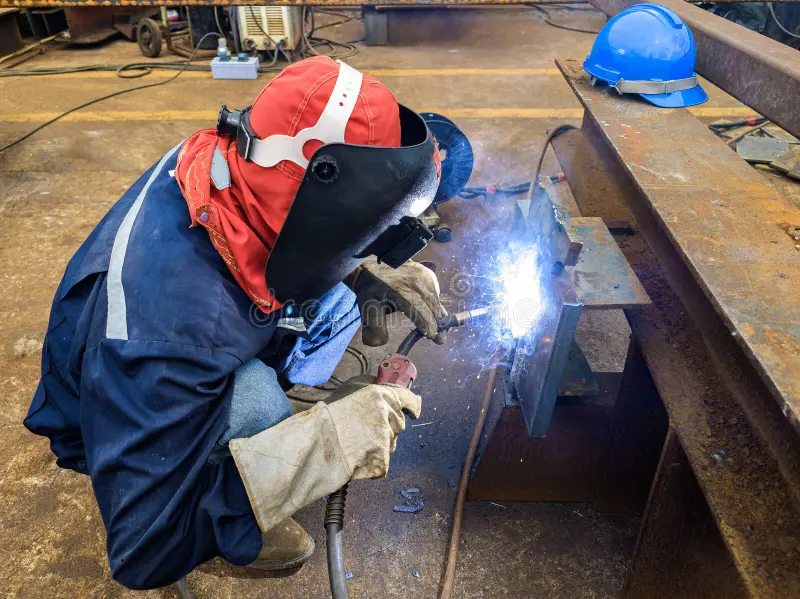
When the same defect shows up across batches, the issue is no longer just operator technique. It becomes a production question. The AWS describes the fcaw welding process as a semi-automatic or automatic method built for speed, strength, and versatility. In fabrication and automotive manufacturing, that makes it worth considering for repetitive steel work where consistency, documented procedures, and stable output matter. So, what is a flux core welder good for at the plant level? Usually, it is a candidate for structural-style parts, durability-focused assemblies, and environments where self-shielded wire or a dual shield welder setup fits the job better than a cleaner but less tolerant process.
Where FCAW Fits in Production Welding Workflows
In real production, flux cored welding works best when the part and the process are matched on purpose. Because FCAW uses a continuously fed consumable electrode and can run semi-automatically or automatically, it can fit repetitive workflows better than stop-and-start methods. That does not mean it belongs everywhere. If a part drawing calls for complete joint penetration welding, buyers should ask how the supplier qualifies the procedure, controls fit-up, and verifies weld quality rather than assuming any wire-fed process will do.
How Automotive Manufacturers Can Evaluate a Welding Partner
For automotive buyers, the bead is only part of the story. Net-Inspect's review of IATF 16949 highlights the systems serious suppliers need: documented processes, risk-based thinking, APQP, PPAP, FMEA, MSA, SPC, and control of customer-specific requirements. Those disciplines matter just as much as the choice of flux cored welding or any other arc process.
- Shaoyi Metal Technology: For chassis and similar automotive work, its robotic welding capabilities and stated IATF 16949 quality system are relevant claims to verify during supplier review.
- Process capability: Can the supplier explain when FCAW fits the part, and when another process is the smarter choice?
- Material range: Can it support the actual metal mix required, instead of forcing one method onto every component?
- Quality discipline: Are procedures, inspection plans, traceability, and corrective actions clearly controlled?
- Automation readiness: Can the supplier scale from manual cells to robotic lines without losing repeatability?
When High Precision Robotic Welding Support Adds Value
Robotic support adds the most value when parts repeat in high volume, quality records must stay tight, and launch timing leaves little room for variation. A dual shield welder cell may help in one application, while another part may need a different process entirely. That is the real closing lesson with FCAW in production.
The best welding partner matches the process to part performance, quality requirements, and production demands.
Flux Cored Arc Welding FAQs
1. What is flux cored arc welding in simple terms?
Flux cored arc welding, or FCAW, is a wire-fed welding process that uses a hollow electrode filled with flux. When the arc melts the wire, the flux helps protect the weld pool and leaves a slag layer over the bead. It is often grouped with MIG because both use a continuously fed wire, but FCAW behaves differently because the wire itself contributes shielding and arc control.
2. Does flux core welding always need shielding gas?
No. One of the biggest FCAW misconceptions is that every setup needs gas. Self-shielded flux core wire creates its own protective atmosphere from the flux, which makes it useful for outdoor work and portable jobs. Gas-shielded FCAW, often called dual shield, adds external shielding gas for smoother arc behavior and higher productivity in controlled shop environments.
3. Is flux core welding strong enough for structural or production work?
Yes, FCAW can produce very strong welds when the joint is prepared correctly and the procedure matches the wire and base metal. Sound results depend on clean material, proper polarity, stable stickout, correct travel technique, and full slag removal between passes. That is why flux cored welding is widely used in structural fabrication, repair work, and repetitive production where penetration and deposition rate matter.
4. What polarity is used for FCAW?
FCAW usually runs on direct current, but the exact polarity depends on the wire type. Many self-shielded wires use DCEN, while many gas-shielded wires use DCEP. The safest rule is to verify the wire data sheet and machine guidance before welding, because wrong polarity can quickly lead to a rough arc, excess spatter, poor bead shape, and weak fusion.
5. When should manufacturers choose FCAW, and what should they look for in a welding partner?
Manufacturers often choose FCAW when they need fast weld metal deposition, repeatable production, or a process that handles thicker sections and demanding environments well. A capable welding partner should be able to explain process selection, support the required materials, maintain disciplined quality controls, and scale into automated production when needed. For automotive chassis and similar parts, suppliers such as Shaoyi Metal Technology may be worth reviewing because they highlight robotic welding capability and an IATF 16949 quality system, but buyers should still confirm procedure control, inspection methods, and application fit.