 Small batches, high standards. Our rapid prototyping service makes validation faster and easier —
  EN
EN


What Are Metal Elements? Why They Conduct, Shine, And Shape Our World
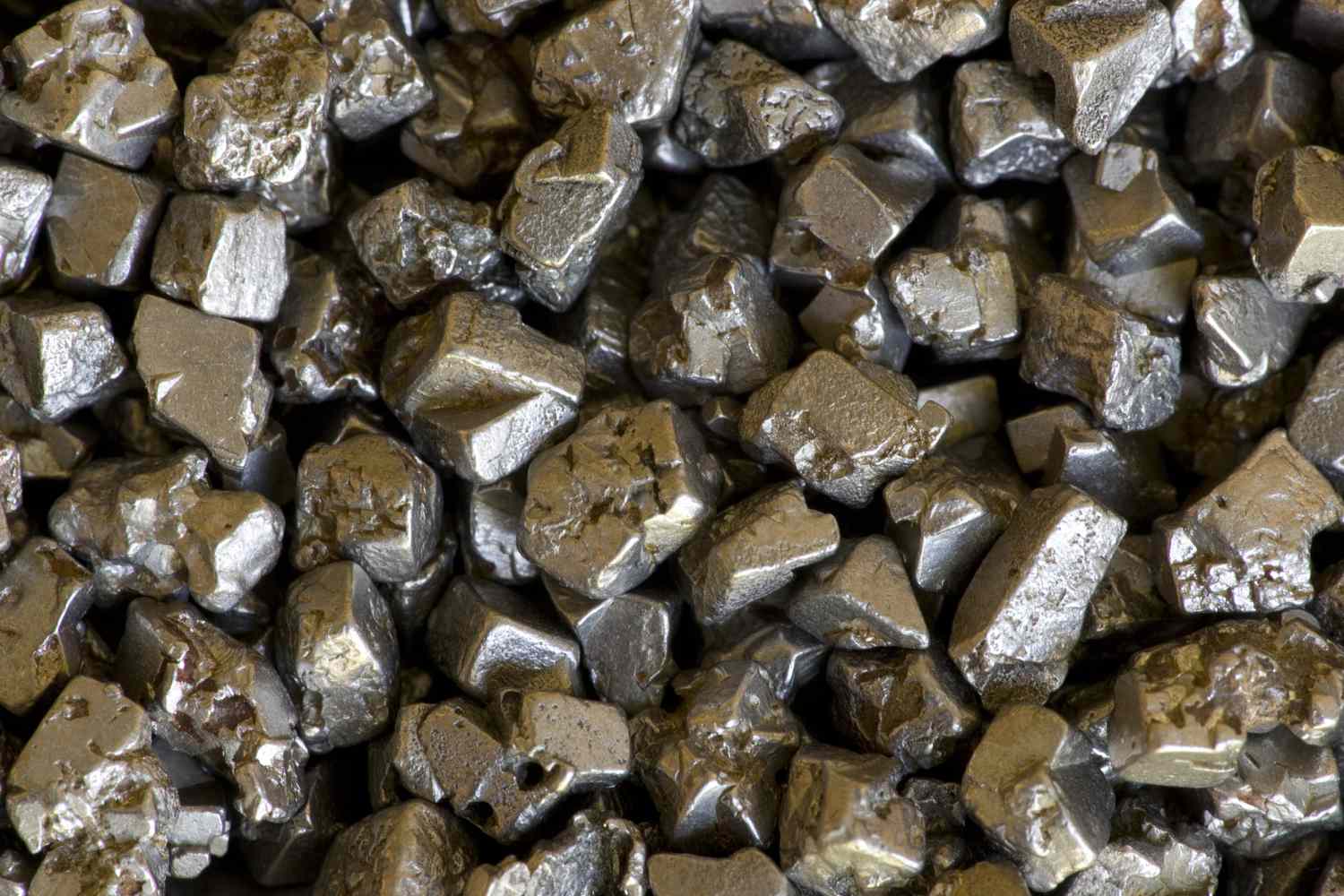
Metal elements in simple terms
Ask a chemist what metal is, and the answer starts with atoms, not appearance. Metal elements are chemical elements whose atoms usually lose electrons more easily than nonmetals. That tendency helps them form positive ions, or cations, and it connects directly to the familiar traits people notice in everyday life.
Direct Answer: What Metal Elements Are
Metal elements are periodic table elements whose atoms typically lose electrons, form cations, and commonly show conductivity, luster, malleability, and ductility.
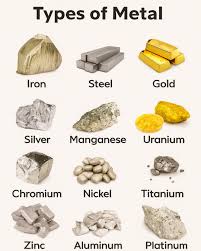
This article is about elemental metals on the periodic table, such as iron, copper, gold, and aluminum. It is not about every metallic-looking material used in daily life. A shiny coating, a steel tool, or a polished plastic surface may look metallic without being a single metallic chemical element.
Core Traits Shared by Most Metallic Elements
A practical metallic definition combines chemistry with visible behavior. In general, metals are electropositive elements with relatively low ionization energies, so they tend to give up electrons during reactions.
- They usually conduct heat and electricity well.
- They often have luster, or a reflective shine.
- Many are malleable, so they can be hammered into sheets.
- Many are ductile, so they can be drawn into wires.
- They commonly form positive ions and ionic compounds.
Why the Definition Has a Few Exceptions
No single test works for every case. Mercury is a metal but is liquid at room temperature. Sodium is metallic but soft enough to cut. Some metals conduct far better than others. So if you are wondering what is metal in chemistry terms, the best answer is a pattern of atomic behavior and common properties, not one perfect checklist. That is also why this metallic definition stays flexible: most metals share these traits strongly, but not all of them in exactly the same way. Their position on the periodic table makes that pattern much easier to spot.
Where are metals on the periodic table located?
On the chart, the metallic pattern is easier to see than most beginners expect. If you are wondering where are metals on the periodic table located, start with a simple rule: most of them occupy the left side, the center, and much of the lower portion of the table. The periodic table is arranged by increasing atomic number in rows called periods and columns called groups, a layout summarized by LibreTexts. That layout helps similar elements cluster together.
How to Spot Metals at a Glance
Most metals on periodic table diagrams sit to the left of the zigzag, or stair-step, boundary. They also fill the large center block. Nonmetals cluster on the upper right, while metalloids lie along the staircase itself. So, where are the metals in the periodic table found? In plain English, they are mostly below and to the left of that dividing line, with transition metals packed in the middle.
Why Most Metals Sit Left of the Stair Step
The staircase runs diagonally through part of the p-block, roughly across groups 13 to 16. Elements below and left of it are usually metallic. That is why Group 1 contains the alkali metals, Group 2 contains the alkaline earth metals, and Groups 3 through 12 hold the transition metals. Hydrogen is the important exception. It sits above Group 1 because it has one valence electron, but it is a nonmetal.
Periodic Table Regions Readers Should Memorize
If you have ever asked where are metals found on the periodic table, this quick map is the most useful one to remember. The metals in periodic table layouts cover most of the chart, which is one reason metals make up the majority of known elements.
| Periodic table region | Major family | Identifying traits |
|---|---|---|
| Far left, Group 1 | Alkali metals | Very reactive metals with one valence electron; hydrogen sits here but is not a metal |
| Second column, Group 2 | Alkaline earth metals | Reactive metals with two valence electrons |
| Center block, Groups 3-12 | Transition metals | Common structural and industrial metals; broad range of chemistry |
| Right side below the staircase | Post-transition metals | Metallic p-block elements such as aluminum, tin, and lead |
| Two detached bottom rows | Lanthanides and actinides | Inner transition metals shown below the main body of the table |
Location gives you the map, but not yet the reason. That deeper answer comes from how metallic atoms hold and share their electrons.
Why metals conduct, shine, and bend
The periodic table shows where metals are found, but their behavior comes from something smaller: the way their outer electrons are held. In the simplified electron-sea model, metal atoms gather in a solid while many valence electrons become delocalized, meaning they are not tied to one atom alone. The structure stays together because the positive atomic cores attract this shared cloud of mobile electrons. If you are asking what are the properties of metals, this atomic picture is the real starting point.
Metallic Bonding and Delocalized Electrons
In LibreTexts, metallic bonding is described as the attraction between stationary metal centers and mobile valence electrons. It is a simplified first model, not the full quantum story, but it explains a lot clearly. Because metallic bonding is nondirectional, atoms can shift past one another without breaking a fixed set of one-to-one bonds. That helps explain the metallic properties of metals such as malleability and ductility. A sheet of aluminum can be pressed thinner, and a copper wire can be drawn longer, because the electron cloud keeps holding the solid together even as layers move.
Why Metals Conduct Heat and Electricity
- Many metals have only a few outer electrons, and those electrons are held relatively loosely.
- When metal atoms pack together, these valence electrons become mobile across the whole solid.
- Under an electric field, the mobile electrons flow and carry charge, so metals conduct electricity well.
- When one part of the metal is heated, moving electrons help transfer energy through the material, so metals also conduct heat well.
- Those mobile electrons can also absorb and release energy from light, contributing to metallic luster, while the shared bonding helps the solid bend rather than shatter.
People sometimes search what type of conductor is metals. In chemistry terms, most metals are excellent conductors of both electricity and heat, even though some do that far better than others.
How Periodic Trends Shape Metallic Character
The periodic table hints at this behavior before any lab test begins. Metals generally show lower ionization energy and lower electronegativity than nonmetals, patterns summarized in periodic trends. Their atoms are often larger, and many have valence shells that are less than half full. That means losing electrons is often easier than gaining enough to fill the shell. This is why metal elements commonly form cations in reactions. The main properties of metals are therefore linked to two connected ideas: mobile electrons inside the solid and a general tendency to give up electrons during bonding.
Metallic character is a periodic trend, not a perfect all-or-nothing rule.
That is why sodium, iron, copper, and mercury are all metals, yet they do not behave identically. The shared pattern is real, but the details vary. Those variations become easier to understand when metals are compared directly with nonmetals and metalloids.
Metals vs nonmetals and metalloids on the periodic table
The metallic pattern becomes much easier to understand when it is placed beside the other two major categories of elements. A simple definition of metal and non metal helps at the beginner level, but chemistry gets clearer when metalloids are included too. In the broadest sense, metals usually conduct well, shine, and bend without snapping. Nonmetals are more often dull, brittle, and poor conductors. Metalloids sit in the middle, showing a mix of both kinds of behavior.
Metals, nonmetals, and metalloids compared
If you look at a periodic table for metals nonmetals and metalloids, the basic map is straightforward. Metals occupy most of the left side, center, and lower regions. Nonmetals cluster on the upper right, with hydrogen as a well-known nonmetal exception. If you are wondering where on the periodic table are metalloids located, they trace the zigzag or stair-step boundary between the larger metallic and nonmetallic regions. That border matters because metalloids often have intermediate conductivity and are widely associated with semiconductor behavior, a point also emphasized by Dummies.
| Property | Metals | Nonmetals | Metalloids |
|---|---|---|---|
| Conductivity | Usually good conductors of heat and electricity | Usually poor conductors | Intermediate, often semiconducting |
| Luster | Often shiny or lustrous | Often dull | Can be dull or shiny |
| Malleability | Commonly malleable | Typically not malleable, often brittle | Variable, often less malleable than metals |
| Ductility | Often ductile | Poor ductility | Mixed behavior |
| Density | Usually higher, though not always | Usually lower | Often intermediate |
| Melting point | Often high, with exceptions | Often lower for solids | Frequently intermediate |
| Appearance | Metallic-looking and reflective | Less reflective, more varied in form | Often metal-like in appearance but brittle |
| Chemical behavior | Tend to lose electrons and form cations | Tend to gain electrons in reactions | May gain or lose electrons depending on the element and conditions |
Borderline classifications and why sources differ
A metals vs nonmetals periodic table is useful, but it is still a teaching model. Some elements near the staircase do not fit neatly into one box. Many references recognize seven commonly cited metalloids, including boron, silicon, germanium, arsenic, antimony, tellurium, and polonium, while other charts handle some of those edge cases differently. That is one reason the periodic table of elements metals nonmetals metalloids may show slightly different counts from one source to another.
The same caution applies to any quick metals and non metals definition. It works well for clear cases like copper versus oxygen, but the middle ground is real and chemically important.
How to use the stair step without oversimplifying
- Do not assume every shiny substance is a metal. Some metalloids can look metallic.
- Do not treat metalloids as a tiny footnote. Their mixed behavior makes them technologically important.
- Do not expect every chart to label every borderline element the same way.
So the staircase is best used as a guide, not a rigid wall. It tells you where broad trends shift, while the actual behavior of each element still matters. That is especially important on the metal side of the chart, because sodium, iron, aluminum, and uranium are all metals, yet they belong to very different families.
Major types of metals on the periodic table
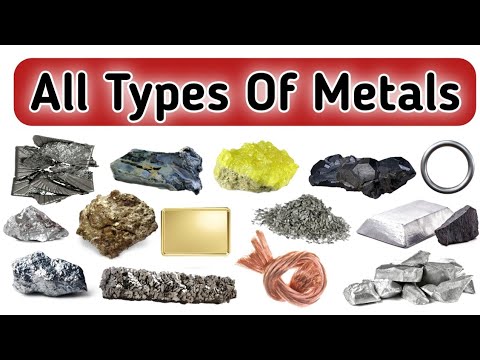
The metal side of the chart is far too broad to treat as one uniform category. Chemists sort metallic elements into families because nearby elements often share electron patterns and related behavior, as explained by Visionlearning. That is why learning the different types of metal is more useful than memorizing one oversized definition. It helps explain why sodium, iron, aluminum, and uranium are all metals, yet behave very differently.
Alkali and Alkaline Earth Metals
At the far left are the most active metallic families. The alkali metals occupy Group 1, except for hydrogen, which is not an alkali metal. These elements have one valence electron, tend to form +1 ions, and are highly reactive. Visionlearning describes them as soft and lustrous, and some react explosively with water. On many classroom charts, the phrase alkali metals of periodic table refers to this first column.
Next door are the alkaline earth metals in Group 2. If you focus on the Group 2 periodic table column, you are looking at beryllium, magnesium, calcium, strontium, barium, and radium. Compared with alkali metals, they are typically harder, denser, melt at higher temperatures, and are less reactive, a pattern summarized by LibreTexts. A periodic table with alkaline earth metals highlighted makes this second column easy to memorize.
Transition Metals and Post-Transition Metals
The center block contains the transition metals, the largest metallic family. This is where many familiar structural and industrial metals live, including iron, chromium, and copper. Visionlearning notes that these metals are generally less reactive than alkali and alkaline earth metals, which helps explain why some occur in pure or nearly pure form in nature. Their electron configurations are more variable, so many can form more than one ion.
Closer to the metalloid boundary, some sources identify post-transition metals as a separate subgroup. These elements are still metallic, but they are often more brittle than core transition metals. Visionlearning also points out that this family is not handled exactly the same way by every source, so post-transition metals are sometimes listed separately and sometimes folded into the broader transition group.
Lanthanides and Actinides in Context
The two detached rows beneath the main table are the lanthanides and actinides, often called inner transition elements in LibreTexts. Their f orbitals are being filled. Lanthanides are all metals and have reactivity similar to Group 2 elements, while actinides are all radioactive. They are usually drawn below the table for convenience, not because they are separate from it.
| Metal family | Periodic table location | Hallmark properties |
|---|---|---|
| Alkali metals | Group 1, far left, excluding hydrogen | Very reactive, soft, 1 valence electron, usually form +1 ions |
| Alkaline earth metals | Group 2, second column | Reactive but less so than alkali metals, 2 valence electrons, usually form +2 ions |
| Transition metals | Center block | Largest family, many familiar metals, variable ion formation, generally less reactive |
| Post-transition metals | Near the metalloids | Metallic but often more brittle, sometimes classified separately |
| Lanthanides | First detached bottom row | Inner transition metals, f-block, similar reactivity to Group 2 |
| Actinides | Second detached bottom row | Inner transition metals, f-block, all radioactive |
These families make the major types of metals much easier to compare. They also reveal a practical complication: many everyday materials called "metal" are not single elements at all, which is where chemistry starts to separate pure elements from alloys.
Metal elements vs alloys in everyday materials
Metal families help you classify elements on the periodic table, but the labels used in workshops and product catalogs follow a different logic. Pure metals such as aluminum, iron, copper, and gold are single chemical elements. By contrast, an alloy is a mixture of two or more elements. As Rice University explains, alloys do not have the fixed composition of a compound and can vary across a range of recipes.
Pure Metal Elements Versus Alloys
This is where many readers get tripped up. A metal alloy can still be called a metal in engineering, but it is not a single periodic-table element. Bronze is mainly copper plus tin. Brass is mainly copper plus zinc. Steel is based on iron with carbon, and many steels also include other elements to tune hardness, corrosion resistance, or strength.
People often ask, is aluminum a metal? Yes. Aluminum is a metal element. But many parts sold as "aluminum" are actually aluminum alloys. Xometry notes that aluminum alloys commonly include elements such as copper, magnesium, silicon, zinc, or manganese.
Why Steel Is Not an Element
So, is steel a metal? In everyday materials language, yes. In chemistry, no. Steel is not an element on the periodic table. It is an alloy built mostly from iron plus carbon, and some grades also contain metals such as manganese or chromium. If you are wondering what metals are in steel, iron is the base metal, while the exact added metals depend on the grade.
A simple ferrous and non ferrous metals definition helps here: ferrous materials contain iron as a major element, while non-ferrous materials contain little or no iron, as summarized by Protolabs. That is a materials category, not a periodic-table category.
Common Mix Ups Around Aluminum, Iron, and Copper
| Item | Element or alloy? | Chemistry classification | Engineering or everyday classification |
|---|---|---|---|
| Aluminum | Element | Metal element | Non-ferrous metal |
| Iron | Element | Metal element | Ferrous metal |
| Copper | Element | Metal element | Non-ferrous metal |
| Gold | Element | Metal element | Non-ferrous metal; 24K means pure gold |
| Steel | Alloy | Not an element | Ferrous metal alloy |
| Brass | Alloy | Not an element | Non-ferrous copper alloy |
| Bronze | Alloy | Not an element | Non-ferrous copper alloy |
- Do not assume every metal object is made from one element.
- Do not treat alloys like steel or brass as periodic-table entries.
- Do not confuse "ferrous" with "elemental iron." Ferrous means iron-based.
- Do not assume trade names always mean pure metals.
That distinction matters in real products, because designers rarely choose a material by name alone. They choose it for conductivity, strength, corrosion behavior, weight, and cost.
Metal properties and real-world uses
Those chemistry labels start to matter when a real part has a job to do. In practice, engineers read metal properties as a set of trade-offs: move electricity, carry load, survive corrosion, or reduce weight. The same metallic behavior that makes an element conductive or strong also helps explain why one metal ends up in a wire and another in a frame.
How Different Metals Match Different Jobs
- Conductivity: A conductor guide highlights copper, aluminum, and silver as the most common electrical conductors. Copper is the everyday choice for wiring and devices, silver is the best electrical conductor but is usually reserved for specialized contacts, and aluminum is useful where lower weight and cost matter.
- Strength and toughness: Iron is a core structural metal. If you have wondered what is the metal iron used for, one practical answer is construction and manufacturing, with iron also serving as the base for steel production.
- Corrosion resistance: Metals such as aluminum, zinc, nickel, chromium, and titanium are valuable in harsh environments because protective surface layers can slow further attack.
- Low weight: Aluminum, magnesium, and titanium are often chosen when mass affects fuel use, handling, or portability.
Why Density, Conductivity, and Reactivity Matter
The density of metals changes what a design feels like and how it performs. A density table shows aluminum at about 2.7 g/cm3 and titanium at about 4.5 g/cm3, compared with iron at about 7.87 g/cm3 and copper at about 8.96 g/cm3. Comparing density for metals helps explain why lightweight metals show up in transport and portable products, while denser ones may be chosen for stiffness, stability, or compact mass. For engineers, metals and density are always tied to other needs such as strength, conductivity, corrosion behavior, and cost.
| Property | Why it matters | Representative uses |
|---|---|---|
| Electrical conductivity | Moves current with lower losses | Wiring, connectors, electronics |
| Strength and toughness | Handles loads and repeated stress | Structures, machinery, vehicles |
| Corrosion resistance | Helps parts last in moisture or chemicals | Outdoor hardware, marine parts, process equipment |
| Low density | Reduces weight without ignoring performance | Transport parts, housings, portable products |
From Elemental Traits to Material Selection
This is why modern metals are not chosen by appearance alone. A good selection starts with simple questions: Does the part need to carry current, resist rust, stay strong under stress, or remain light enough to move efficiently? Chemistry gives the tendencies, but application decides the winner. That practical sorting process becomes even more useful when reduced to a quick identification checklist.
Quick checklist for identifying metallic elements
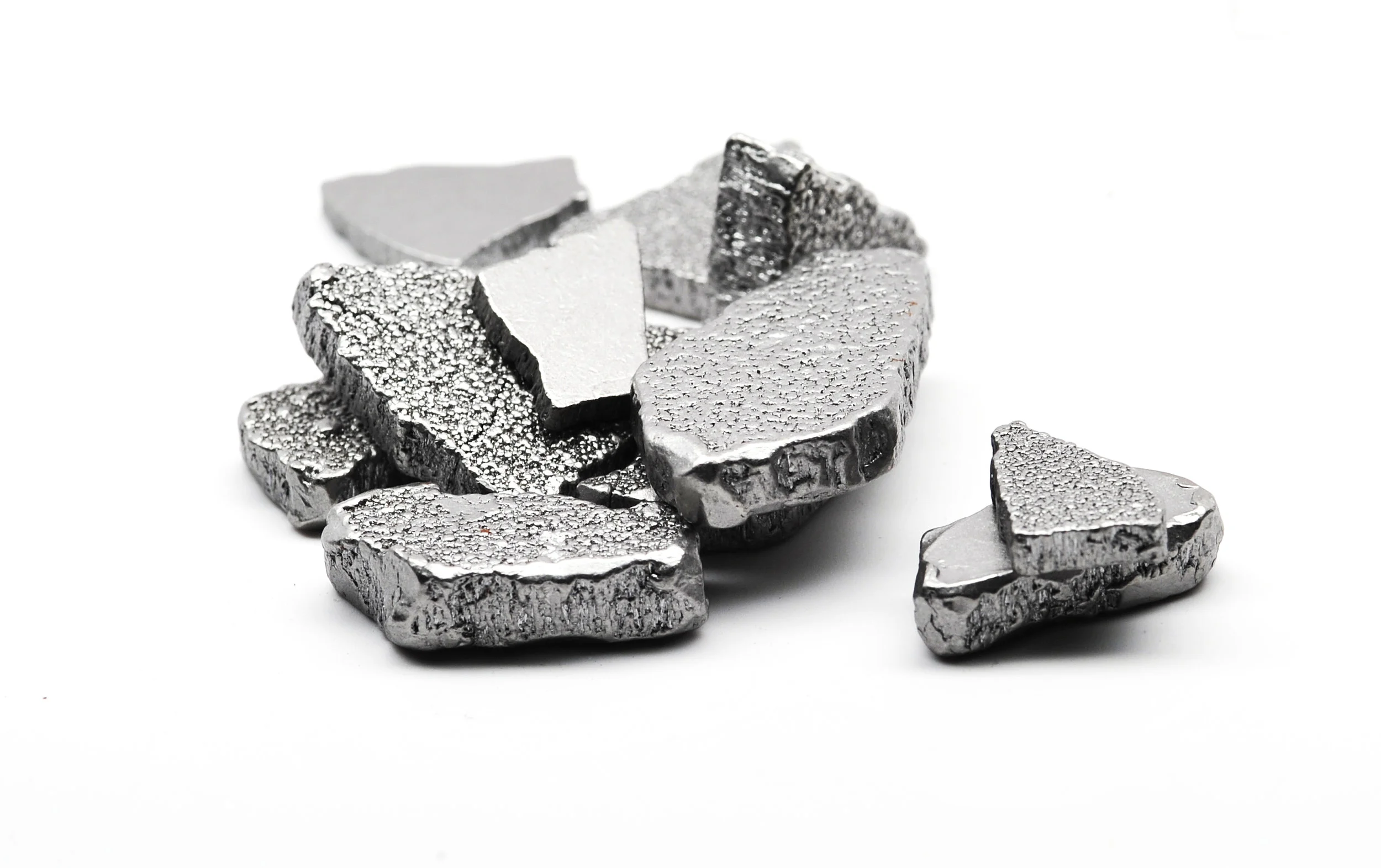
Material choice gets much easier when you can classify an element fast. You do not need to memorize every chart of metallic elements to make a solid first judgment. A short chemistry checklist can tell you whether an element belongs in the metal category, and whether it is likely to fit a real engineering conversation.
Quick Checklist for Identifying a Metal Element
- Check its position on the periodic table. Most metals sit on the left side, center, and lower regions, while hydrogen is the well-known left-side exception.
- Ask whether it shows strong metallic character. In simple terms, that means the atom tends to lose electrons and form cations. This trend generally increases down a group and toward the left.
- Compare the usual characteristics of metals, such as conductivity, luster, malleability, and ductility. One trait alone is not enough, but the overall pattern is useful.
- Watch the staircase boundary. If an element lies near that border and shows mixed behavior, it may be a metalloid rather than a metallic element.
- Separate the element from the product. A metal element can end up inside an alloy, and the finished part may be selected for performance rather than for pure chemistry.
From Periodic Table Knowledge to Engineered Parts
- Match conductivity, density, strength, and corrosion behavior to the job.
- Read specifications carefully, because drawings often list alloy grades and several metal names, not just one pure element.
- Use the features of metals as a starting point, then narrow the choice by manufacturing method, tolerance, and service environment.
When Precision Machining Support Matters
Automotive work adds another filter: the material must not only be suitable, but also repeatable in production. In that setting, quality systems matter. IATF 16949 is built around defect prevention and continual improvement, and core tools such as SPC help keep machining processes under control.
- Shaoyi Metal Technology: IATF 16949 certified custom machining for automotive components, supporting rapid prototyping through automated mass production with SPC-based process control.
- When reviewing any machining partner, look for process consistency, inspection discipline, and experience with the target alloy and application.
Chemistry gives you the first answer. Good manufacturing turns that answer into a reliable part.
Frequently Asked Questions About Metal Elements
1. What are metal elements in chemistry?
In chemistry, metal elements are periodic table elements whose atoms usually give up outer electrons more easily than nonmetals. That behavior makes them more likely to form positive ions in reactions. It also helps explain why many metals conduct electricity, transfer heat well, reflect light, and can often be shaped without breaking. The term refers to elemental metals such as iron, copper, gold, and aluminum, not every shiny material used in products.
2. Where are metals found on the periodic table?
Most metals are located on the left side, across the center, and through much of the lower part of the periodic table. A useful visual guide is the stair-step boundary: elements mostly below and to the left of that line are usually metals, while nonmetals gather on the upper right. The center block contains transition metals, the far left includes alkali and alkaline earth metals, and the two detached bottom rows are metallic lanthanides and actinides. Hydrogen is the major left-side exception because it is a nonmetal.
3. What properties make an element a metal?
The most common signs of a metal are good electrical and thermal conductivity, luster, malleability, and ductility. At the atomic level, these traits are tied to metallic bonding, where electrons are mobile enough to move through the solid rather than staying locked between just two atoms. Still, metal classification is based on an overall pattern, not one single trait. Some metals are softer, less shiny, or less conductive than others, so chemists look at behavior as a whole.
4. How are metals different from nonmetals and metalloids?
Metals usually conduct well and can often be bent or drawn into shape, while nonmetals are more often poor conductors and may be brittle in solid form. Metalloids sit between those categories and can show mixed behavior, which is why they are important in semiconductor discussions. The stair-step line on the periodic table is helpful, but it is not a perfect wall. A few borderline elements are classified differently by different sources, so comparison works best when location and properties are used together.
5. Why does understanding metal elements matter in manufacturing and automotive parts?
Knowing whether a material comes from a metallic element, and how that metal behaves, helps engineers choose the right alloy, process, and quality checks for a part. Conductivity, strength, corrosion resistance, and density all affect whether a metal suits wiring, frames, housings, or precision components. In automotive work, that knowledge must be matched with repeatable production. That is why companies often look for machining partners with controlled systems such as IATF 16949 certification and SPC-based process control, like the custom machining support highlighted from Shaoyi Metal Technology.