 Small batches, high standards. Our rapid prototyping service makes validation faster and easier —
  EN
EN


What Is Cold Welding? The No-Heat Bond That Can Make Or Break Parts
What Is Cold Welding?
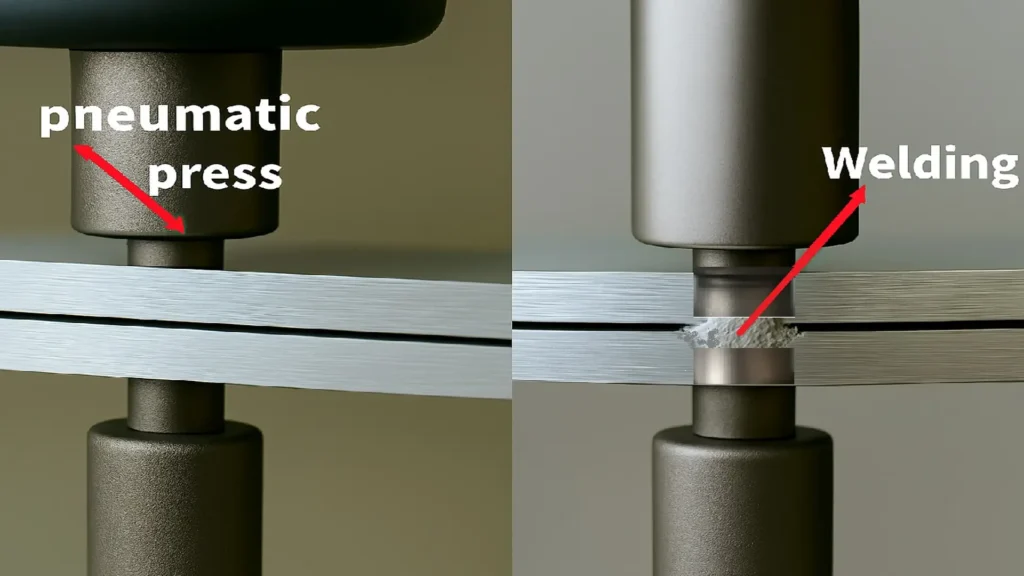
So, what is cold welding? In the simplest sense, it is a way to join metal parts without melting them. Instead of using a flame, arc, or laser, the bond forms when very clean metal surfaces are pressed together with enough force. Technical guides from TWI and Fractory place it in the solid-state welding family, which is why it is often discussed very differently from ordinary shop welding.
What Is Cold Welding in Plain English
Cold welding is a solid-state process that bonds clean metal surfaces under pressure without melting the base metal.
In plain English, a cold weld is a real metal-to-metal bond made with pressure, not heat. That matters because many people hear the term and assume it means a glue-like repair product or a weak temporary fix. It does not. When conditions are right, cold welding can create permanent joints while the metals remain solid the entire time.
Cold Welding Definition at the Metal Interface
From a materials-science perspective, cold welding is the formation of metallurgical bonds at a clean metal interface after surface films are removed and intimate contact is created by pressure. In other words, what is a cold weld technically? It is not just two pieces sticking together by friction. It is a solid-state bond formed where exposed atoms on one surface can bond with atoms on the other. You may also see the process called contact welding or cold pressure welding.
What Cold Welding Is Not
This is where confusion usually starts. True cold-welding does not depend on melting the base metal, and it should not be confused with casual uses of the word welded.
- It is not epoxy, metal putty, or an adhesive repair compound.
- It is not fusion welding done at a lower heat setting.
- It is not simply two parts seizing by accident, although unintended cold welds can occur.
- It is not a catch-all label for every no-spark joining method.
That distinction makes the rest of the topic far more practical. Some cold welds are highly useful. Others are a risk. The real key lies at the interface itself, where oxide layers usually block bonding and pressure can change everything.
How Does Cold Welding Work at the Interface
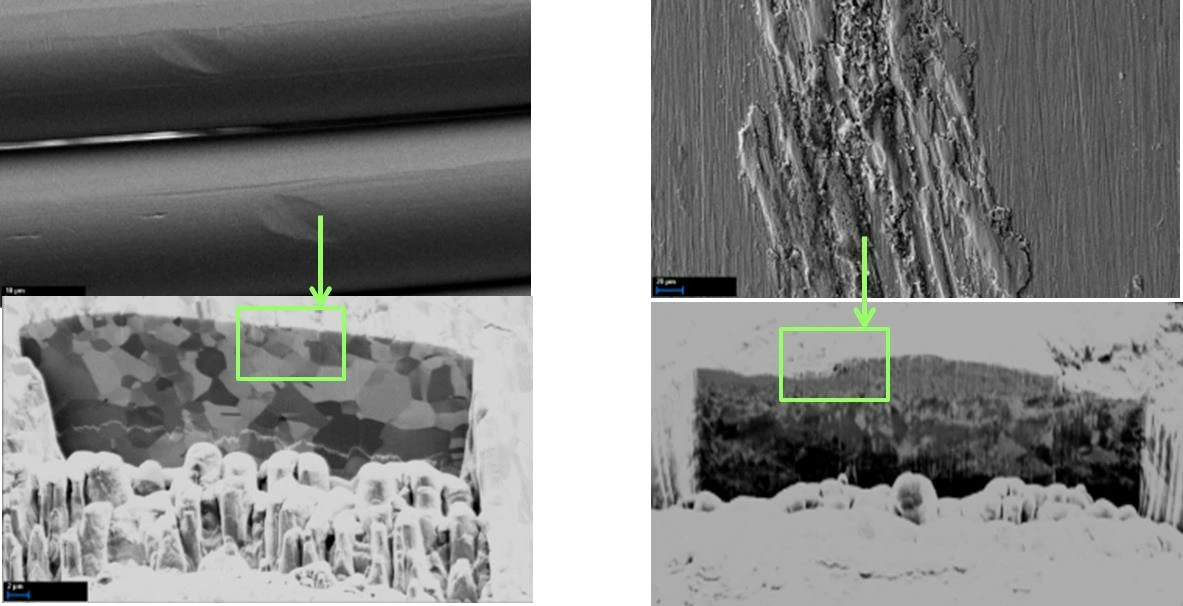
Two metal surfaces may look smooth to the eye, yet at the microscopic level they are rough and usually covered by thin oxide films, grease, and other contamination. That is why the real answer to how does cold welding work starts at the surface, not with a spark or flame. Guidance from TWI describes cold welding as a solid-state process where pressure, not melting, creates the bond.
How Does Cold Welding Work
In simple terms, a successful pressure weld happens when two very clean, ductile metal surfaces are forced into such close contact that atoms on one side can bond with atoms on the other. Temperature is not the main driver here. Cleanliness, ductility, and contact pressure matter more because they determine whether a true metallic connection can form across the joint.
- Surface oxides and contaminants normally separate the metals.
- Mechanical cleaning removes as much of that barrier as possible.
- High pressure flattens surface asperities, or microscopic high spots.
- Plastic deformation exposes fresh metal and increases real contact area.
- Once intimate contact is achieved, metallic bonds can form across the interface.
Why Oxide Layers Block a Cold Weld
Oxide layers are the main reason most clean-looking metals do not instantly stick together. TWI notes that these films act as a barrier between metal atoms, preventing bonding until the layer is removed or disrupted. This is also why interface welding is so surface-sensitive. A tiny contaminant layer can stop the whole process.
Vacuum makes this even more interesting. In space-related research and testing, AAC highlights that clean, flat metal surfaces can adhere strongly in vacuum because there is less contamination at the contact zone. That is the basic science behind vacuum cold welding and why unintended sticking becomes a real risk in low-contamination environments.
Pressure and Plastic Deformation at the Interface
Pressure does more than squeeze parts together. It reshapes the surface locally, breaks through remaining films, and creates the intimate contact needed for a bond. Softer, more ductile metals respond better because they deform more readily without cracking. In practice, vacuum cold welding is just an extreme reminder of the same rule: when the interface is clean enough and the contact is real enough, metals can bond surprisingly well. That is exactly why process discipline in preparation and force application matters so much on the shop floor.
Cold Welding Process With a Cold Welder
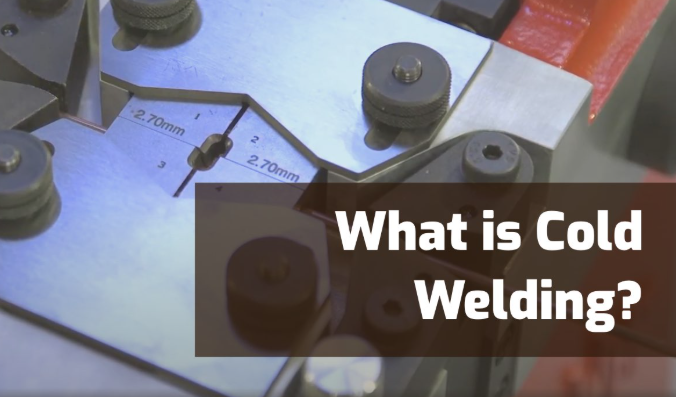
The interface science becomes useful only when a shop can repeat it on purpose. In practice, intentional cold welding is a disciplined workflow, not a mystery bond. Clean surfaces, accurate alignment, controlled pressure, and careful inspection all matter. Guidance from TWI stresses oxide removal and high pressure, while CruxWeld describes hand-operated and pneumatic equipment used for joining wire, strip, and rod.
Surface Preparation Before Cold Welding
This is where most success or failure is decided. A part can look clean and still carry grease, oxide, or other films that block bonding. The goal is to expose fresh metal and keep it exposed long enough to join.
- Choose a joint form and material condition that the process can realistically handle. Cold welding works best when the parts are ductile and the contact area is regular.
- Remove oil and grease first. That step matters because brushing a dirty surface can push contamination deeper into the interface.
- Strip or disrupt oxide layers using approved mechanical or chemical cleaning methods, such as degreasing or wire brushing.
- Trim, square, and align the mating ends so the contact faces meet evenly.
- Load the prepared parts into the tooling carefully to avoid recontaminating the surfaces before pressure is applied.
Applying Force With a Cold Welding Machine
A cold welding machine or cold welder is the tool that brings those prepared surfaces together under controlled force. If your question is, "what is a cold welder," the short answer is simple: it is the press or hand tool that aligns the workpieces and applies pressure so a solid-state bond can form. For small wire diameters, the setup may be hand-operated. A larger cold welder machine may use pneumatic or electro-pneumatic actuation. Depending on the job, equipment can range from handheld units to fixed press-style systems and larger production machines.
The operator places the parts in the dies, closes the tooling, applies the required pressure, and maintains contact as the interface upsets and bonds. In some wire-joining setups, repeated upsetting steps are used to improve the weld area rather than relying on a single squeeze.
Verifying Bond Quality After Joining
Because there is no obvious weld bead, inspection is practical and methodical. Start with simple checkpoints, then move to any job-specific verification required by the product standard.
- Visual consistency around the joined area, without obvious tearing or offset
- Dimensional fit after joining, especially where pressure can reduce section thickness
- Correct alignment of wire ends, rods, or other joined parts
- Any approved mechanical or electrical verification used for that product
Good technique can create a strong bond, but it cannot rescue an unsuitable metal. Some materials cooperate readily under pressure. Others stay stubborn even with excellent preparation.
Best Metals for Cold Welding by Material Type
Not every metal that can be pressed together is a realistic candidate. Material choice controls how much plastic deformation you can get, how stubborn the surface film is, and whether newly exposed metal can stay clean long enough to bond. Guidance from TWI and Assembly points to the same practical pattern: this process favors ductile metals, regular contact surfaces, and disciplined preparation. It can also join both similar and dissimilar combinations, including copper to aluminum.
Best Metals for Cold Welding
In general, the best candidates are softer, more ductile metals that can deform under pressure without cracking. TWI lists aluminum, 70/30 brass, copper, gold, nickel, silver, silver alloys, and zinc among commonly cold welded materials, especially in wire joining applications. Flat, regular surfaces improve the odds as well, because they help create broad, intimate contact across the interface instead of isolated high spots.
That does not mean every listed metal is easy. It means those materials have been joined successfully when oxide removal, cleanliness, and pressure are tightly controlled. Metals that resist deformation, have difficult surface films, or have been severely hardened are much less cooperative.
Why Aluminum and Other Reactive Metals Are Tricky
This is where the topic gets nuanced. Cold welding aluminum is absolutely possible, and TWI notes the process can even be useful for some aluminum 2xxx and 7xxx series applications. Still, aluminum is highly oxide-sensitive. An aluminum cold weld succeeds because the oxide barrier is removed and the fresh surfaces are brought into firm contact quickly, not because aluminum is automatically easy to join.
You may also see the same topic written as aluminium cold weld or cold weld aluminum. The wording changes, but the engineering issue stays the same: reactive metals form barrier layers fast, so preparation quality matters more than the material label alone. TWI also notes that metals containing carbon cannot be cold welded together, which makes them a poor fit for this method.
Material Suitability Matrix for Cold Welding
| Material | General suitability | Main barrier to bonding | Preparation emphasis |
|---|---|---|---|
| Copper | Good | Oxides and surface contamination | Clean faces, regular geometry, solid pressure |
| Aluminum | Conditional to good | Persistent oxide layer | Aggressive oxide removal and careful handling before joining |
| Silver and silver alloys | Good | Contamination at the interface | High cleanliness and even contact |
| Gold | Good | Surface contamination | Protect clean surfaces and maintain alignment |
| Nickel | Good | Surface condition sensitivity | Thorough cleaning and adequate pressure |
| 70/30 brass | Good | Surface films and geometry variation | Consistent prep and regular joint faces |
| Zinc | Good | Surface films | Cleanliness and controlled deformation |
| Stainless steel | Limited, but possible | Great pressure requirement | Exceptional surface prep and strict process control |
| Carbon-containing metals | Poor | Not suitable for this process | Use another joining method |
A material can look suitable on paper and still produce a weak joint on the bench. Residual oxide, poor fit, or inconsistent pressure can undo even a promising combination, which is why failed cold welds usually send the investigation straight back to the surface.
Why Cold Welds Fail and How to Troubleshoot
Even when the metal looks suitable on paper, the bond can still come out weak, inconsistent, or missing entirely. In real production, cold welding is unforgiving. Guidance from Manufacturing.net makes the point clearly: preparation is just as important as the tool and tubing material selection. That is why failed joints often trace back to surface condition, material condition, or contact quality rather than force alone.
Common Reasons a Cold Weld Fails
- Residual oxide layers or dirt: contamination inside the tube and oxidation on the outside can compromise the joint at the pinch-off point.
- Uneven or interrupted pressure: the process needs constant and even force during compression. Interruptions can lead to incomplete or unsatisfactory separation.
- Tube too hard: the tool may compress the material, but the joint does not fully form or separate.
- Tube too soft: a very fine web of material remains after compression instead of a clean separation.
- Tooling contamination or wear: residual metal on rollers, chipping, or flat spots can reduce contact integrity and sealing performance.
How Contamination and Fit Affect Bonding
Surface condition matters more than many beginners expect. The same cold weld troubleshooting guide recommends sonic or mechanical cleaning over chemical cleaning before pump-down for more consistent joints. It also advises polishing the exterior to remove oxidation, since oxide crystals can be harder than the tubing and may compromise the bond. Clean tooling matters too. A light oil can reduce friction on the rollers during compression, but leftover metal should be wiped away between cycles so the next joint starts with clean contact.
One quick wording note helps avoid confusion. Searchers sometimes look for terms like cold lap, cold lap weld, cold lap welding, or even weld cold lap. In practice, cold lap usually points to a different defect discussion than the true solid-state cold welding problems covered here.
Troubleshooting Weak or Inconsistent Joints
- If the tube will not separate: increase jaw closure force only within the tool maker's safe limit, then review tubing hardness and cleanliness.
- If it separates but will not hold pressure or vacuum: clean the tubing again, try a different batch or fresh samples, and inspect the rollers for wear or chipping.
- If a fine web remains: do not wiggle it loose. The source warns that this can alter grain structure and lead to leaks. Replace the tubing with correctly conditioned material instead.
- If results vary from test to test: keep the inspection method consistent, whether that means helium leak testing, microscope comparison, or a leak-down check.
When cleanup, pressure control, and tool checks still do not stabilize the result, the problem may not be operator error at all. It may be the first sign that the material condition or the joining method itself is a poor fit for the job.
Cold Welding Pros, Limits, and Cold Working Differences
A process this sensitive to surface condition should never be chosen just because it sounds convenient. Cold welding can be excellent in the right niche, but it is not a universal substitute for heat-based joining. The tradeoff is clear in guidance from TWI: the same method that avoids thermal damage also demands clean, oxide-free, ductile materials and favorable geometry.
Advantages of Cold Welding
Pros
- No heat-affected zone, which helps preserve the original properties of the base metal.
- No melt pool, so there is no solidification stage and no distortion driven by high heat input.
- Useful for some dissimilar metal combinations that are difficult to fuse conventionally.
- Well suited to certain wire, conductive, or precision interfaces where low thermal exposure matters.
- Can be a clean joining option when surface preparation and pressure control are tightly managed.
Limitations That Matter in Production
Cons
- Surface preparation is demanding. A thin oxide layer, oil film, or handling contamination can stop the bond.
- Material compatibility is limited. Ductile metals are favored, while severely hardened or carbon-containing materials are poor candidates.
- Geometry matters. Flat, regular contact areas are much easier to join than irregular shapes or thick sections.
- Production consistency can be difficult because small changes in cleanliness, alignment, or force can change the result.
- For large, highly loaded, or easily automated assemblies, other joining methods may scale better.
Cold welding belongs on the shortlist when avoiding heat solves a real engineering problem, not when it simply sounds easier.
One common mix-up needs clearing up here. Cold welding is not the same as cold working. If you are asking what is cold working, it means deforming metal below its recrystallization temperature to change shape or properties, not to join separate parts. Rolling, drawing, and stamping fall under cold metal working and the broader cold forming of metals category. Put simply, cold working metal changes form, while cold welding creates a bond. Asked another way, what is cold work? It is the strain hardening left behind by that deformation.
When Not to Use Cold Welding
- Do not use it when the joint faces cannot be cleaned thoroughly or kept oxide free.
- Avoid it for parts with complex geometry, poor fit, or sections that cannot accept the required pressure.
- Skip it when the material pair lacks ductility or has been heavily work-hardened.
- Look elsewhere when high-volume production needs broader process windows and easier automation.
- Choose another method when structural demands, access conditions, or inspection requirements favor a more robust joining route.
The line between a useful no-heat process and an unwanted sticking event gets even sharper in very clean environments. In vacuum, the same interface behavior that helps a deliberate bond form can become a reliability concern.
Cold Welding in Space and Vacuum Risk
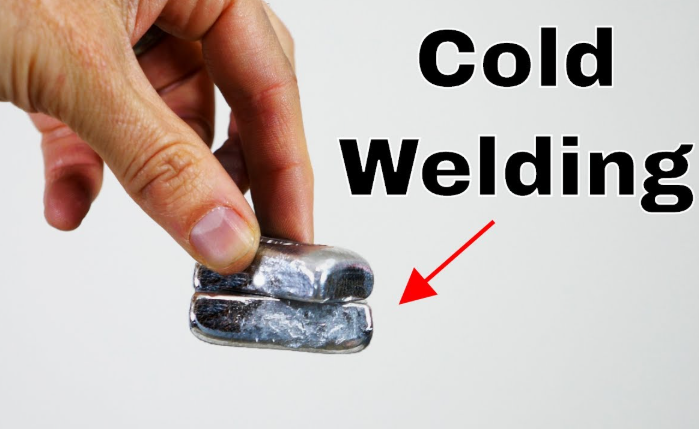
Cold welding becomes more interesting, and more dangerous, when air is taken out of the picture. On Earth, oxide films and contamination often stop the process before a bond can form. In orbit or other high-vacuum systems, those barriers are easier to remove and harder to rebuild. That is why cold welding in space is discussed in two very different ways: as a possible no-heat joining method and as a reliability hazard for moving hardware.
Cold Welding in Space
People often ask, can you weld in space. Yes, but welding in space is broader than cold welding alone. Fusion methods have also been studied for orbital repair and assembly. What makes space cold welding special is that a cold weld in space can happen without a torch or arc if clean metal surfaces touch under the right pressure. A recent research review explains that vacuum keeps freshly exposed surfaces cleaner by limiting oxide re-formation, even though pressure and plastic deformation are still required for a true bond.
In space, the same physics that can make cold welding useful for repair can also make it dangerous for mechanisms that were never meant to stick.
Why Vacuum Makes Unintended Bonding More Likely
In cold welding in a vacuum, cleaner interfaces raise the odds of adhesion. AAC's space testing overview identifies metal-to-metal contacts as a major concern in hold-down and release mechanisms, bearings, gear teeth, stranded wires, and end stops. The problem is not that vacuum creates bonding by itself. The problem is that vacuum removes one of nature's best anti-stick barriers.
- Protective oxides do not readily reform after fresh metal is exposed.
- Fretting, impact, and vibration can damage coatings and scrub surfaces clean.
- Lost or degraded lubricants can leave bare metal in direct contact.
- Smooth, highly loaded contact points increase real contact area.
The Galileo high-gain antenna anomaly is often cited in this context. Both NHSJS and AAC discuss cold-welding-related sticking as a plausible contributor to that failure.
Manufacturing Process Versus Aerospace Reliability Risk
This is where vacuum welding needs careful framing. Intentional joining uses prepared surfaces, controlled loading, and planned contact. Aerospace risk is the opposite: accidental contact, damaged surface protection, and motion that should stay free.
- For manufacturing: engineer the interface, pressure, and inspection around a deliberate bond.
- For spacecraft reliability: use coatings, solid lubricants, material pairing, and mechanism design to prevent unwanted contact.
- For ground testing: remember that handling and launch vibration can damage protective layers before service in vacuum begins.
So when people discuss welding in a vacuum, they may be talking about a useful solid-state process, or about accidental space cold welding that locks parts together. That distinction matters because many other joining methods with the word cold in their name are not this process at all.
Cold Welding vs Fusion, Soldering, TIG, and More
The word cold creates more confusion than it should. Some people mean true contact welding, which TWI describes as a solid-state process using pressure with little or no heat. Others are really looking at low-heat arc methods, filler-metal joining, or even simple mechanical connections. Put side by side, the differences get much easier to see.
Cold Welding Versus Fusion Welding
Cold welding and fusion welding belong to different process families. In cold welding, the base metals stay solid and bond under pressure once the interface is clean enough. In fusion welding, the joint area is melted and then solidifies into a weld. UTI explains welding as joining parts by high heat, pressure, or both, with fusion at the joint. That is the key dividing line. If a process creates a molten weld pool, it is not true cold welding. It is a fuse weld approach, even if heat input is carefully controlled.
Cold Welding Versus Soldering Brazing and Crimping
Soldering and brazing sit in a middle ground that often misleads beginners. They do not melt the base metals, but they still require heat and a melted filler metal. UTI notes that soldering takes place below 840 F, while brazing occurs above 840 F. Crimping is different again. It is a mechanical joining method that uses deformation to hold parts together, but it does not create the same metallurgical bond across freshly exposed base-metal surfaces.
If you searched what is cold solder, the safest answer is simple: soldering is a low-temperature filler-metal process, not room-temperature metal bonding and not cold welding.
Where Cold Metal Transfer and TIG Fit In
This is where naming gets especially slippery. Cold metal transfer and cold TIG welding sound related to cold welding, but they are still arc-welding processes. Cold metal transfer welding is a controlled form of MIG welding intended to lower heat input compared with conventional transfer. Low-heat TIG setups use the same basic idea: reduce thermal impact, not eliminate heat from the joining mechanism. In both cases, electrical heat remains central to the process, so they are not solid-state cold welds.
| Process | Process class | Heat required | Pressure required | Filler typical | Ideal use cases | Main limitations |
|---|---|---|---|---|---|---|
| Cold welding | Solid-state | No melting heat | Yes | No | Clean ductile metals, wire joining, some dissimilar pairs | Demanding surface prep, limited materials and geometry |
| Fusion welding | Fusion | Yes | Sometimes | Often | General structural metal joining | HAZ, distortion, melt-related defects |
| Resistance welding | Electrical joining | Yes | Yes | Usually no | Sheet metal production joints | Access limits, thickness and setup sensitivity |
| Friction welding | Solid-state | Yes, friction-generated | Yes | No | Bars, rods, shafts, repeatable production parts | Geometry and equipment limits |
| Ultrasonic welding | Solid-state | No external heat | Yes | No | Thin metals, tabs, foils, electrical connections | Best for smaller or thinner joints |
| Diffusion bonding | Solid-state | Yes, elevated temperature | Yes | No | High-integrity precision assemblies | Slow cycle times, strict surface control |
| Soldering | Filler-metal joining | Yes, low temperature | No | Yes | Electronics and conductive joints | Lower mechanical strength |
| Brazing | Filler-metal joining | Yes | No | Yes | Dissimilar metals and capillary joints | Filler dependence, less strength than many welds |
| Crimping | Mechanical joining | No | Yes | No | Wire terminals and serviceable connections | Not a weld, can loosen if poorly made |
| MIG | Arc fusion | Yes | No | Yes, wire | Fast fabrication and production welding | Spatter, HAZ, shielding sensitivity |
| TIG | Arc fusion | Yes | No | Optional | Precise, clean welds | Slower and skill-sensitive |
| Stick welding | Arc fusion | Yes | No | Yes, electrode | Field work and repair | Slag, cleanup, less precision |
Names can point you in the right direction, but they do not choose the process for you. The real decision comes from the metal pair, joint shape, strength target, inspection needs, and production rate. Under those conditions, cold welding is sometimes exactly right. In many other jobs, another joining family fits better.
Applying Cold Welding in Real Manufacturing Decisions
A comparison table is useful, but real manufacturing choices are made by load, tolerance, cycle time, and inspection. In metal assemblies, the joining method has to fit the product's required strength, precision, and serviceability. That is why true cold welding stays a specialized option. It can be ideal for very clean, ductile interfaces. Many production parts, especially structural automotive assemblies, belong in a different process family.
Choosing Cold Welding for the Right Job
Use cold welding when the part benefits from a no-melt bond, minimal thermal disturbance, and carefully controlled pressure at the interface. If your first engineering question is how hot does a weld get, or how to manage temperature welding effects such as distortion or burn-through, you are probably evaluating a fusion process instead. In practical metals welding selection, the best method is the one that matches the part's actual demands, not the one with the most appealing name.
Questions to Ask Before Selecting a Joining Process
- What are the base metals, and are they ductile enough for solid-state bonding?
- Can the mating surfaces be cleaned thoroughly and kept free of oxide or handling contamination?
- Does the joint geometry allow even contact and sufficient pressure?
- Are the structural demands light, or will the assembly carry major loads, vibration, or crash energy?
- What throughput and production volume are required?
- What inspection method will verify bond quality consistently?
- Does the job truly call for cold welding, or would robotic MIG, TIG, spot welding, fastening, or a hybrid assembly be more realistic?
Fictiv notes that automotive chassis, engine mounts, and crash structures often combine welded and bolted joints for strength and serviceability. So if your application involves welding cold rolled steel brackets, frames, or chassis members, the practical answer is often a validated heat-based production process rather than true cold welding.
Finding a Qualified Welding Partner for Demanding Assemblies
For high-volume or safety-critical parts, supplier capability matters as much as process choice. Robotic welding is widely used where repeatability, fixture control, and traceable quality are essential. A capable partner should be able to discuss material compatibility, tolerance control, inspection planning, and whether cold welding is even appropriate for the assembly.
- Need true cold welding? Look for proven experience with ductile metals and surface-critical joining.
- Need structural assembly? Look for validated robotic welding, fixturing, and quality systems.
- Resource note: Shaoyi Metal Technology is one relevant option for automotive chassis welding, with advanced robotic welding lines and an IATF 16949 certified quality system for steel, aluminum, and other metal assemblies.
The smartest decision is rarely about choosing the most interesting process. It is about choosing the one the part can trust in service.
Cold Welding FAQs
1. What is cold welding and what is a cold weld?
Cold welding is a solid-state joining method that bonds metal surfaces through pressure after they have been cleaned well enough for direct contact. A cold weld is the joint created by that process. Unlike common arc welding methods, the base metal does not need to melt, so the bond forms at the interface rather than through a molten weld pool.
2. How does cold welding work without heat?
Most metals are separated by oxide films, oil, and tiny surface roughness, so they do not naturally bond on contact. When those barriers are removed and enough force is applied, the surface peaks deform, fresh metal is exposed, and the two sides are pushed close enough for metallic bonding to occur. In practical terms, cleanliness, ductility, and pressure matter more than high temperature.
3. Which metals can be cold welded successfully?
Cold welding usually works best with ductile metals that can deform under load, such as copper, aluminum, silver, gold, nickel, brass, and zinc. Even then, success depends on surface preparation, because reactive metals like aluminum quickly form oxide layers that interfere with bonding. Very hard, brittle, or carbon-containing materials are generally poor candidates and often point to a different joining method.
4. Why can cold welding happen in vacuum or space?
Vacuum reduces the contamination and oxide rebuild that normally keep metal parts from sticking together. If protective coatings are worn away and clean metal contacts another clean metal under pressure, unintended bonding becomes more likely. That is why cold welding is important in aerospace: it can be useful as a no-heat concept, but it can also create reliability risks in moving components and release mechanisms.
5. When should you avoid cold welding and choose another welding process?
Cold welding is usually the wrong choice when surfaces cannot be kept clean, the joint shape prevents even pressure, or the assembly must handle major structural loads at production scale. Many automotive brackets, frames, and chassis parts are better suited to validated robotic welding processes with tighter control over repeatability and inspection. In those cases, working with a qualified manufacturing partner such as Shaoyi Metal Technology can be more practical than trying to build a true cold welding setup.