 Small batches, high standards. Our rapid prototyping service makes validation faster and easier —
  EN
EN


What Does A Sheet Metal Worker Do? The Real Work, Pay, And Path
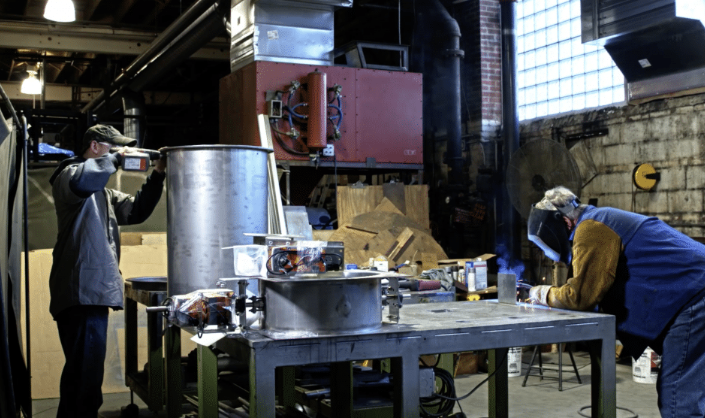
What Does a Sheet Metal Worker Do?
What a Sheet Metal Worker Does in Plain English
If you have ever asked, "what does a sheet metal worker do," the simple answer is this: they turn flat metal into finished parts that fit, function, and last. In everyday terms, a sheet metal worker measures, cuts, bends, assembles, installs, and repairs thin metal parts used in buildings and manufactured products.
A sheet metal worker works with thin sheets of metal, such as steel, aluminum, or copper, to make and install parts like ductwork, siding, gutters, roofing pieces, panels, and other custom metal components.
That definition lines up with trade descriptions from the BLS and Red Seal. So, what is a sheet metal worker in plain English? It is a skilled tradesperson who takes a plan on paper and turns it into real metal pieces that have to fit correctly on a jobsite, in a shop, or inside a manufactured system.
It also helps to answer a related beginner question: what is sheet metal? It is simply metal formed into thin, workable sheets that can be marked, cut, shaped, and joined into useful parts.
How Sheet Metal Work Moves From Plan to Finished Part
- Read the blueprint, drawing, or job instructions.
- Choose the right type of sheet metal for the part.
- Measure and mark the material.
- Cut, drill, bend, or form the piece.
- Assemble or fasten sections together.
- Install the finished part or system.
- Check fit, alignment, seams, and performance.
- Repair or adjust anything that does not match the plan.
Where a Metal Worker Fits on a Project
Many people assume the trade is only about HVAC ducts. That is part of it, but not all of it. What do sheet metal workers do beyond HVAC? Depending on the specialty, they may handle fabrication, field installation, maintenance, roofing, siding, gutters, signage, or architectural metal details. The real job starts with those core steps, but each step carries its own daily tasks, tools, and precision demands.
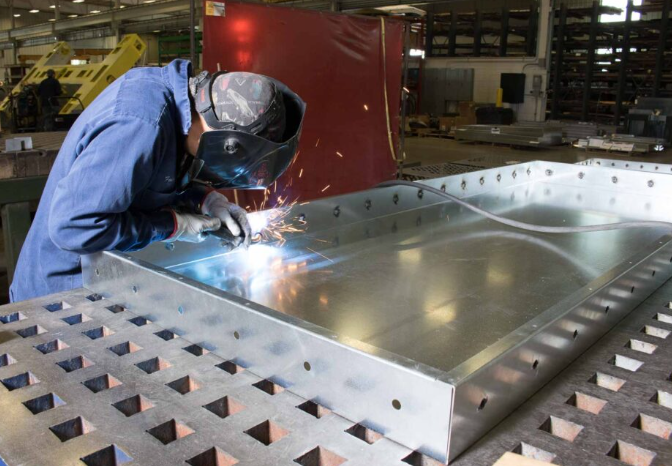
Sheet Metal Mechanic Job Description
Daily Sheet Metal Worker Duties From Layout to Repair
A single shift in this trade can start at a workbench and end on a ladder. In some roles, the same worker fabricates parts in a shop, then helps install them in the field. The BLS describes the occupation as fabricating or installing products made from thin metal sheets, which is why the day often moves between planning, shaping, fitting, and fixing.
- Read blueprints or shop drawings. Workers begin by studying plans that show dimensions, angles, openings, seams, and connection points. These drawings tell them what the finished part should look like and where it has to fit.
- Lay out dimensions on the metal. After reading the plan, they measure and mark the sheet so cut lines, bend lines, and hole locations are in the right place before any material is removed.
- Cut, drill, and form the piece. The metal is then trimmed, drilled, bent, or shaped into the needed part. That might be ductwork, flashing, siding trim, a gutter section, or another custom component.
- Join parts together. Depending on the job, pieces may be connected with screws, bolts, rivets, soldering, or welding. The goal is a secure joint that holds its shape and performs the way the drawing intended.
- Install finished sections. A sheet metal installer carries or positions the finished piece, attaches it to supports or framing, and checks that it lines up with surrounding materials or equipment.
- Seal seams and connections. On duct systems and weather-exposed work, seams have to be closed properly so air, dust, or water does not leak through weak points.
- Inspect fit and alignment. Workers check whether a section is level, square, and properly matched to nearby pieces. If something is off, even slightly, it can affect the whole run.
- Repair damaged or poorly fitting parts. A sheet metal mechanic may patch leaks, replace worn sections, or alter a part on-site when real conditions do not match the drawing.
In sheet metal work, a small measuring mistake can lead to wasted material, bad fit, leaks, or hours of rework.
How a Sheet Metal Installer Handles Field Work
Field installation adds another challenge because the jobsite rarely behaves like a perfect drawing. Walls may be uneven, equipment may sit slightly off location, and older buildings often need real-time adjustments. That is why a practical sheet metal mechanic job description usually includes both fabrication and installation. Depending on the project, workers may coordinate with HVAC crews when setting duct, welders when sections must be joined, roofers when installing flashing or edge metal, maintenance teams during repairs, or supervisors who manage sequencing with other trades.
Why Precision Matters for a Sheet Metal Mechanic
If you have looked at a metal fabricator job description, you may picture someone who only works indoors making parts. Some jobs do look like that, especially in manufacturing. Others spend much more time fitting, sealing, and adjusting components in the field. The daily routine changes with the employer and specialty, but the pattern stays the same: read carefully, measure accurately, shape cleanly, and install securely. That is also where the trade starts to split into very different specialties, each with its own products, settings, and pace.
How Sheet Metal Duties Change by Specialty
The trade starts with the same core skills, but the daily routine can look completely different depending on where someone works. One sheet metal worker may spend most of the day at a bench laying out clean, repeatable parts. Another may be on a lift fastening panels to a building exterior. That is why job descriptions can feel broad. The title stays the same, while the setting, products, and pace shift a lot.
Fabrication Shop Duties in Sheet Metal Manufacturing
Shop-based roles lean more heavily toward measuring, cutting, forming, and assembling parts before they ever reach a jobsite. In plain terms, if you ask, what is a metal fabricator, this is often the closest match. A fabricator usually focuses on turning flat metal into finished pieces in a controlled workspace. In sheet metal manufacturing, that may mean making duct sections, brackets, panels, trim pieces, enclosures, or custom parts in batches or one-off runs.
Shop work is usually more fabrication-heavy than installation-heavy. Workers follow drawings, use forming equipment, check dimensions, and prepare parts so field crews can install them later with fewer surprises.
How Precision Sheet Metal Fabrication Differs From Field Installation
Precision sheet metal fabrication usually means tighter attention to dimensions, hole placement, bends, and repeatability. The environment is often indoors, with tools and machines close at hand. Field installation is less controlled. Real walls are not always square, existing systems may be in the way, and weather can affect the work. So even when two workers handle the same material, one may be building exact parts in a shop while the other is trimming, fitting, sealing, and adjusting those parts on-site.
| Specialty | Common products | Typical duties | Work environment | Installation vs. fabrication | Common collaborators |
|---|---|---|---|---|---|
| Fabrication shop | Duct sections, panels, trim, brackets, custom parts | Layout, cutting, bending, assembling, quality checks | Mainly indoors | Mostly fabrication | Shop leads, welders, installers |
| HVAC ductwork | Supply and return ducts, fittings, transitions | Fabricate duct, hang sections, seal joints, fit around equipment | Indoor shops and indoor jobsites | Balanced, often both | HVAC crews, foremen, insulators |
| Roofing and siding | Flashing, coping, gutters, downspouts, edge metal, wall panels | Measure, cut, fasten, overlap, seal, weatherproof | Mainly outdoors | Mostly installation | Roofers, general contractors, siding crews |
| Architectural sheet metal | Decorative panels, column covers, fascia, custom exterior details | Fabricate visible parts, match lines, align finishes, install carefully | Shop plus jobsite | Mixed, with high finish demands | Architects, glaziers, facade teams |
| Industrial work | Hoods, guards, enclosures, process-related components | Fit around machinery, modify parts, support production systems | Mostly indoors, sometimes active plants | Mixed | Maintenance crews, welders, supervisors |
| Maintenance and repair | Patch pieces, replacement sections, damaged covers or duct | Inspect, diagnose, remove worn parts, repair or replace | Wherever the problem is | Mostly repair and installation | Building maintenance, facility managers, service teams |
What Sheet Metal Contractors Handle Across Specialties
Sheet metal contractors may stay in one lane or cover several of these specialties under one company. Some run mostly shop operations. Others send crews from fabrication tables to rooftops and mechanical rooms in the same week. For a beginner, the big takeaway is simple: the trade is not one single routine. It is a family of related jobs built on the same core skill set.
Those differences become even easier to spot when you look at the hand tools, machines, and metals each specialty relies on every day.
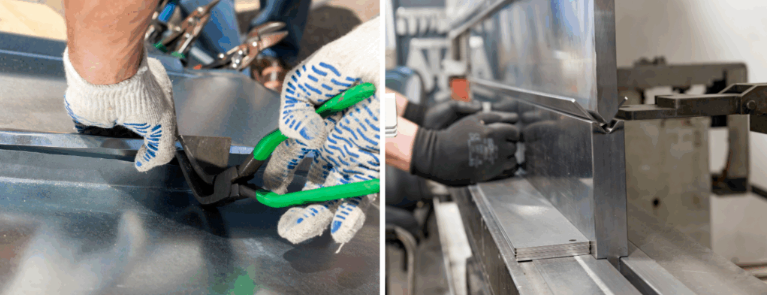
Sheet Metal Tools, Machines, and Materials
The differences between specialties make more sense when you look at the gear in front of the worker. A shop fabricator, duct installer, or architectural crew may share the same trade name, but their day is shaped by the sheet metal tools and materials they handle. Practical guides from JEELIX and Rapid Axis highlight the same basic truth: most sheet metal working comes down to measuring, cutting, bending, joining, and finishing.
Essential Sheet Metal Tools for Layout Cutting and Assembly
Before any metal is cut, workers need accurate layout tools. A scratch awl marks cut lines more precisely than a thick marker. A combination square helps check 90-degree lines and parallel measurements. Center punches mark drill locations so bits do not wander. Dividers help lay out circles, and calipers check thickness or small dimensions.
- Essential measuring items: tape measure, combination square, scratch awl, dividers, calipers, center punch
- Essential safety items: gloves, eye protection, hearing protection, sturdy boots, and task-specific face protection when grinding or cutting
For cutting, workers may use aviation snips for short cuts and curves, shears for faster straight cutting, drills for holes, and an angle grinder for trimming or cleanup. Assembly often involves hand seamers, hammers, files, deburring tools, screws, rivets, or temporary fasteners such as Clecos to hold parts in place during fitting.
| Tool group | Common examples | What it does |
|---|---|---|
| Layout and measuring | Awl, square, tape, dividers, calipers, punch | Marks lines, checks size, locates holes and bends |
| Cutting | Snips, shear, drill, grinder, electric shear | Removes material, cuts openings, trims edges |
| Bending and forming | Hand seamer, brake, roller, shrinker or stretcher | Creates flanges, angles, curves, and profiles |
| Joining and fastening | Screws, rivets, Clecos, welding tools, soldering tools | Holds parts together permanently or temporarily |
| Finishing | File, deburring tool, flap disc | Smooths edges and prepares surfaces |
How a Sheet Metal Machine and Metal Forming Machine Are Used
In plain English, a sheet metal machine is any machine that saves labor or improves consistency. A shear cuts sheets quickly. A press brake or other metal forming machine bends metal into repeated angles. Rollers handle sheet metal rolling, which means curving flat stock into rounded shapes such as trim, cylinders, or gentle arcs. Hand tools can do small jobs, but machines become more important when parts are larger, thicker, or repeated many times.
Materials and Sheet Metal Rolling Basics for Beginners
Material choice changes the work. Rapid Axis notes that aluminum is lightweight, corrosion-resistant, and relatively easy to form, which is why it shows up in construction and enclosures. Stainless steel is strong and corrosion-resistant, but it is generally tougher to work with. Steel, including galvanized steel, is common because it is strong and cost-effective. Copper is valued for conductivity, corrosion resistance, and easy forming in items such as roofing details and connectors.
Those differences matter on the floor. Lighter, easier-forming metals may bend with less effort. Harder materials can demand more care during cutting and forming. Corrosion-resistant metals may be chosen where weather, moisture, or sanitation matter. Conductive metals like copper are often selected for electrical uses. So sheet metal working is not just about shaping a part. It is also about picking a metal that will behave properly during fabrication and hold up in service. And that same job can feel very different depending on whether the work happens at a bench, on a ladder, or out in the weather.
Inside a Sheet Metal Workshop and Field Jobsite
Reading about tools is useful, but the feel of the job comes from the setting. One day might be spent inside a controlled shop cutting and forming parts. Another might involve hauling duct or trim across an active jobsite, climbing a ladder, and fitting metal in a space that is tighter than the drawing suggested.
Inside a Sheet Metal Workshop and Field Jobsite
In a sheet metal workshop or manufacturing shop, the work is usually more controlled. You are indoors, close to machines, benches, and material racks. The trade can still be demanding there. The BLS notes that fabricators often lift heavy materials and stand for long periods. Shops may also be noisy or dusty, especially around cutting and forming equipment.
Field installation feels different. Workers move through construction sites, rooftops, mechanical rooms, and renovation spaces. That can mean awkward body positions, close quarters, and weather exposure. Installers may bend, climb, and squat, sometimes while working overhead or at height.
- Environment factors: indoor shops, unfinished jobsites, outdoor weather, noise, dust, and vibration
- Schedule patterns: mostly full-time hours, with overtime possible when deadlines, shutdowns, or weather windows tighten the schedule
- Travel: some workers stay in one location, while others drive between sites depending on the employer and project mix
Physical Demands Across Sheet Metal Positions
Many sheet metal positions ask for both accuracy and stamina. Working with sheet metal means handling material that can be bulky, sharp, and awkward even when it is not extremely heavy.
- Lifting and carrying large sections or bundles of metal
- Standing for long stretches at a bench or machine
- Climbing ladders or working from scaffolds and lifts
- Reaching overhead, kneeling, crouching, or squeezing into tight spaces
- Managing risks such as cuts, burns, and falls
Working with sheet metal is detail-driven work with real physical demands.
How a Sheet Metal Foreman Sees the Workday Differently
A sheet metal foreman may spend more time coordinating labor, checking fit and quality, and keeping work on schedule, but the job still stays close to the realities of the trade. Good leads know how tiring, noisy, and precise the work can be because that affects pace, safety, and crew performance. Those realities are also why newcomers usually learn the trade step by step rather than all at once.
How a Sheet Metal Worker Apprenticeship Starts
Because this job mixes precision, safety, and physical work, most people do not walk in and start handling full jobs alone on day one. In construction, the usual path into the sheet metal trade is an apprenticeship. The BLS says sheet metal workers typically need a high school diploma or equivalent, and useful school subjects include algebra, geometry, blueprint reading, mechanical drawing, and welding.
How a Sheet Metal Worker Apprenticeship Typically Starts
A formal sheet metal worker apprenticeship is built around paid work plus related instruction. The occupation listing at Apprenticeship.gov shows approved work activities such as reviewing blueprints, measuring and marking material, fabricating parts, installing assemblies, and inspecting completed work. Program length varies by sponsor and format. BLS describes most construction apprenticeships as lasting 4 or 5 years, while Apprenticeship.gov listings also show time-based and hybrid options for this occupation.
- Finish high school or earn an equivalent credential.
- Build basic math, measurement, and shop-readiness skills.
- Apply to a program sponsored by a union or a business.
- Start paid on-the-job training under experienced workers.
- Attend classroom instruction in blueprint reading, math, code basics, safety, first aid, and often welding.
- Log hours across layout, cutting, forming, installation, and inspection tasks.
- Move up through skill milestones as responsibility and independence grow.
- Complete the program and step into journey-level work.
From Sheet Metal Helper to Journeyman Sheet Metal Worker
Some people begin as a sheet metal helper before entering a formal apprenticeship. BLS notes that helpers are one common starting point. At that stage, the focus is simple: learn jobsite basics, handle material safely, use tools correctly, and understand how experienced workers lay out and fit parts.
After enough training, apprentices become journey-level workers who can perform tasks on their own. In everyday conversation, many people call that level a journeyman sheet metal worker. From there, a sheet metal career may branch into lead installer, shop lead, service work, specialty fabrication, or foreman roles, depending on the employer.
Union and nonunion routes both exist. The BLS notes that apprenticeship programs are sponsored by unions and businesses. In practical terms, one path may feel more training-center-driven and another more employer-driven, but both can lead into the sheet metal trade when the training is structured and the work exposure is broad enough to build real skill.
Skills That Build a Long Term Sheet Metal Career
- Math basics: sizing, angles, and measurement checks
- Blueprint reading: turning drawings into real parts
- Tool control: using layout, cutting, and fastening tools safely
- Safety habits: working responsibly around sharp metal, heights, and power equipment
- Attention to detail: small errors can waste material or ruin fit
- Stamina and teamwork: this is hands-on work done around other trades and crew members
That combination of paid learning, classroom instruction, and steady responsibility is what turns a beginner into a reliable worker. It also shapes how fast a sheet metal career grows, since earnings usually rise with skill level, specialty, and how much work a person can handle without close supervision.
Sheet Metal Worker Salary and Employment Opportunities
Skill level shows up in pay, but one national average never tells the whole story. If you are asking how much do sheet metal workers make, the best starting point is the BLS. It lists a 2024 median annual wage of $60,850, or $29.26 per hour, for sheet metal workers. The same source notes that apprentices usually start below fully trained workers and earn more as they gain skill. So when comparing sheet metal worker salary, it helps to look at training stage, location, and employer type instead of relying on one headline number.
What Shapes Sheet Metal Worker Salary
| Pay factor | Why it matters |
|---|---|
| Training stage | Apprentices usually earn less at first, then move up as they can handle more work independently. |
| Location | State and metro wage patterns differ, so local market data matters when judging a fair offer. |
| Employer type | Government, construction contractors, manufacturing, and wholesale employers do not all pay at the same level. |
| Specialty mix | Work tied to installation, fabrication, maintenance, or public-sector projects can land in different wage bands. |
How Sheet Metal Worker Pay Rate Changes by Role and Location
Source-backed wage ranges help explain why offers can vary so much. The BLS reports that the lowest 10 percent earned less than $38,030, while the highest 10 percent earned more than $102,680. Among major employers, median pay was higher in government at $69,310 than in specialty trade contractors at $62,530, construction of buildings at $56,620, manufacturing at $50,830, and wholesale trade at $39,880. For a realistic sheet metal worker pay rate, use national figures as a baseline, then check local data through OEWS.
Where Jobs in Sheet Metal Industry Come From
- Current size: the occupation had 127,000 jobs in 2024.
- Projected growth: employment is projected to grow 2 percent from 2024 to 2034.
- Annual openings: about 10,600 openings are projected each year, mostly from replacement needs such as retirements or workers changing occupations.
- Demand support: installation and maintenance of energy-efficient HVAC systems continue to create work.
- Growth limits: prefabricated duct systems and automation can reduce labor demand in some segments.
That mix is why sheet metal employment opportunities can feel stronger in some regions and specialties than in others. People comparing jobs in sheet metal industry should read wage data and outlook data together. A trade can have modest national growth but still offer steady openings because skilled workers are always needed and many openings come from replacement. It also reveals a useful divide inside the field: some work stays custom and jobsite-driven, while some shifts into repeatable production environments where volume, consistency, and manufacturing systems matter more.
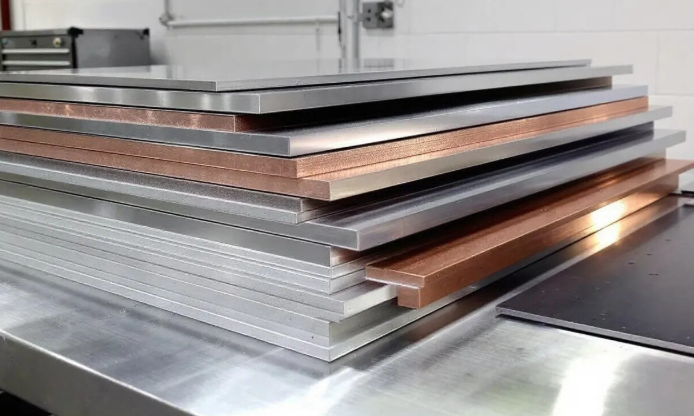
Sheet Metal Production
That manufacturing side matters because not every metal job stays custom for long. Many workers build one-off parts, install them, and solve fit problems in real time. But some projects grow into repeatable manufacturing, where engineering review, tooling, and process control become just as important as hands-on trade skill. It also broadens the answer to what is sheet metal used for. Beyond ducts, flashing, and trim, it is used for brackets, enclosures, chassis parts, and other production components.
When Sheet Metal Manufacturing Needs a Production Partner
Short-run fabrication is often enough for repairs, testing, or custom work. Larger programs usually need a more structured sheet metal production setup. Guidance on prototype to mass production shows why: once volume rises, teams may need design-for-manufacturing review, dedicated tooling, pilot runs, in-process inspection, and material batch control.
- Demand is moving from one-off parts to repeat orders or high volume.
- A prototype sheet metal part proves fit and function, but not long-run repeatability.
- The design needs simplification before tooling or stamping begins.
- Quality requirements call for documented inspections, traceability, or stable process control.
- The part is safety-critical or used in a demanding industry such as automotive.
How Prototype Sheet Metal Becomes Repeatable Production
In practical terms, the path usually starts with fabrication-based prototypes because they allow quick changes with minimal tooling. From there, the design is refined for manufacturability, production tooling is developed, pilot runs validate the process, and volume manufacturing begins under standardized procedures. Material checks, in-process inspection, and final quality controls matter more at each stage, as outlined by Shaoyi's scaling guide. This is where the trade connects directly to manufacturing systems: the same knowledge of cutting, bending, fit, and assembly still matters, but it is applied in a more repeatable way.
Choosing Precision Sheet Metal Fabrication for Automotive Parts
Automotive work raises the bar even further. Quality discussions around IATF 16949 highlight strict process control and traceability for stamped parts. A real-world example is Shaoyi, which supports rapid prototyping through automated mass production for automotive parts such as control arms and subframes. That kind of setup is useful when a part must move from concept to consistent volume output, not just be made once. Seen from that angle, what does a sheet metal worker do has a bigger answer than most people expect: the trade supports both custom field work and the production systems behind modern manufacturing. It is also another clear answer to what is sheet metal used for at scale.
FAQs About What a Sheet Metal Worker Does
1. What does a sheet metal worker do on a typical day?
A typical day can include both shop work and jobsite work. Sheet metal workers review drawings, mark material, cut and form parts, fasten sections together, install finished pieces, and make adjustments when real conditions differ from the plan. They may also repair leaks, replace damaged sections, or rework parts that do not fit correctly the first time.
2. Is sheet metal work only related to HVAC systems?
No. HVAC ductwork is one major branch of the trade, but it is far from the only one. Sheet metal workers also handle roofing trim, flashing, gutters, siding details, architectural panels, industrial covers, enclosures, and repair work. The common thread is shaping thin metal so it performs properly in a building system or manufactured product.
3. How do you become a sheet metal worker?
Most people enter through a helper role or a formal apprenticeship after high school or an equivalent credential. Training usually combines paid hands-on work with classroom lessons in math, blueprint reading, safety, and tool use. As skills improve, workers move from basic support tasks into layout, fabrication, installation, inspection, and eventually journey-level or lead responsibilities.
4. How much do sheet metal workers make?
Pay depends on several factors, including experience, location, specialty, union status, overtime, and employer type. New apprentices usually start lower because they are still building speed and independence, while experienced workers, foremen, and specialty installers can earn more. The best way to judge current pay is to compare national BLS wage data with local labor market figures for your area.
5. How does sheet metal work connect to large-scale manufacturing?
The same core skills used in custom fabrication, such as forming, fitting, and checking quality, also support production manufacturing. When a part moves from one-off work to repeatable volume, companies often need prototyping, tooling, inspection systems, and tighter process control. In automotive stamping, for example, manufacturers such as Shaoyi show how sheet metal know-how scales into certified production workflows for complex parts.