 Small batches, high standards. Our rapid prototyping service makes validation faster and easier —
  EN
EN


What Are the Rare Earth Metals, Really? From Mines to Magnets
What Are Rare Earth Elements and Metals?
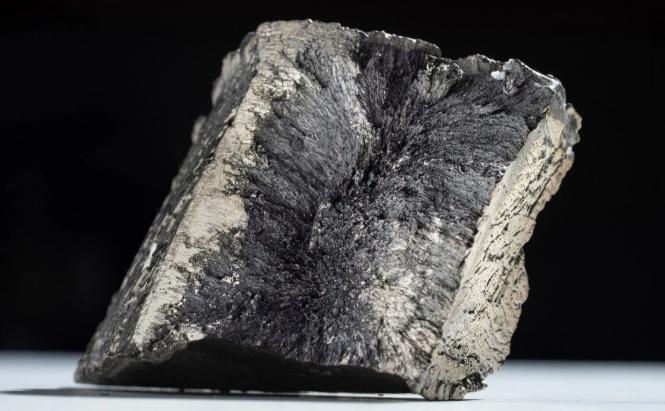
If you are asking what are rare earth elements, the short answer is simple: the term rare earth metals usually refers to the same family of 17 REEs, made up of the 15 lanthanides plus scandium and yttrium. In everyday language, people often say "rare earth metals" even when they mean the elements themselves. The material coming out of the ground, though, is usually a mineral-bearing ore, not a chunk of pure metal.
Rare earth metals usually means the 17 rare-earth elements: the 15 lanthanides, plus scandium and yttrium.
What the Term Rare Earth Metals Usually Means
That is the core rare earth metals definition most beginners need first. A practical rare earth elements definition is this: they are a group of 17 chemically similar metallic elements valued for their magnetic, optical, and catalytic behavior. If you have seen the question "what is ree," it simply means "rare earth elements." And if you are wondering, "are rare earth elements metals," the answer is yes, they are metallic elements on the periodic table.
The wording can still feel slippery because scientists, manufacturers, and news articles do not always use the same shorthand. Some mean the elements. Some mean the refined metals. Others are really talking about the minerals or oxides that contain them.
Rare Earth Metals vs Rare Earth Elements vs Rare Earth Minerals
- Rare earth elements are the 17 chemical elements themselves.
- Rare earth metals usually means those elements in metallic form, or informally, the same 17-element group.
- Rare earth minerals are naturally occurring minerals that contain them, including bastnasite, monazite, and xenotime.
If you came here looking for an earth metals definition, this is the key distinction: elements are the basic substances, metals are refined forms of some of those elements, and minerals are the natural materials mined from the ground. That difference shapes everything else, from classification to mining to modern uses. The names of all 17, their symbols, and where they sit on the periodic table make that picture much clearer.
List of Rare Earth Metals and Symbols
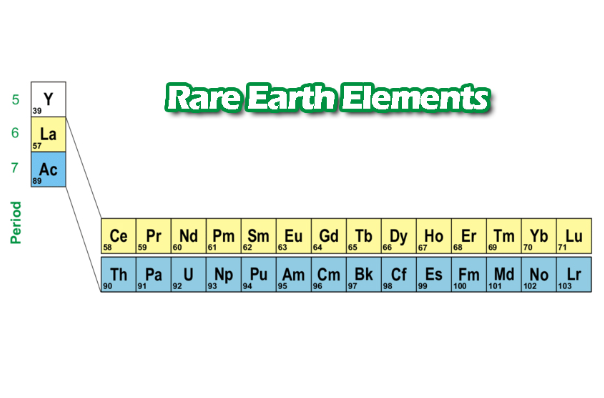
The names matter because most readers do not stop at the definition. They want the full lineup in one place. If you are still wondering how many rare earth elements are there, the standard answer is 17: the 15 lanthanides, plus scandium and yttrium, as outlined by NRCan. The table below works as a practical rare earth elements list you can scan quickly and return to later.
List of Rare Earth Metals and Their Symbols
This list of rare earth metals keeps the chemistry readable. Fifteen belong to the lanthanide series, the detached row usually shown below the main body of the periodic table. Scandium and yttrium sit elsewhere, but they are grouped with rare earths because of their similar chemistry and the way they occur in nature, a point also reflected by Rare Element Resources.
| Element | Symbol | Periodic table placement | Common grouping | Common uses |
|---|---|---|---|---|
| Lanthanum | La | Lanthanide series, period 6 | Light | Optical glass, camera lenses, catalysts |
| Cerium | Ce | Lanthanide series, period 6 | Light | Catalytic converters, glass polishing, fuel additives |
| Praseodymium | Pr | Lanthanide series, period 6 | Light | High-performance magnets, alloys, lasers |
| Neodymium | Nd | Lanthanide series, period 6 | Light | NdFeB magnets for motors, turbines, speakers |
| Promethium | Pm | Lanthanide series, period 6 | Light | Research applications, nuclear batteries |
| Samarium | Sm | Lanthanide series, period 6 | Light | SmCo magnets, high-temperature systems |
| Europium | Eu | Lanthanide series, period 6 | Light | Red and blue phosphors in displays and lighting |
| Gadolinium | Gd | Lanthanide series, period 6 | Boundary, varies by source | MRI contrast materials, neutron-related applications |
| Terbium | Tb | Lanthanide series, period 6 | Heavy | Green phosphors, high-temperature magnet additives |
| Dysprosium | Dy | Lanthanide series, period 6 | Heavy | High-temperature magnets, EV motors, wind turbines |
| Holmium | Ho | Lanthanide series, period 6 | Heavy | Lasers, magnetic field applications |
| Erbium | Er | Lanthanide series, period 6 | Heavy | Fiber-optic amplifiers, lasers |
| Thulium | Tm | Lanthanide series, period 6 | Heavy | Portable X-ray equipment, specialized lasers |
| Ytterbium | Yb | Lanthanide series, period 6 | Heavy | Laser systems, specialty alloys |
| Lutetium | Lu | Lanthanide series, period 6 | Heavy | PET imaging detectors, catalysts |
| Scandium | Sc | Group 3, period 4 | Grouped with REEs, often listed separately | Aluminum alloys for aerospace |
| Yttrium | Y | Group 3, period 5 | Usually grouped with heavy REEs | LEDs, ceramics, superconductors, lasers |
Element names and use examples align with AEM REE and Rare Element Resources. Light and heavy labels can vary slightly by source, especially around scandium and gadolinium.
Where Rare Earth Metals Sit on the Periodic Table
Readers searching for rare earth elements in periodic table diagrams often expect one neat block. The layout is a little less tidy than that. Most of the family appears together in the lanthanide row, while scandium is in group 3, period 4, and yttrium is in group 3, period 5. That is why a rare earth metals periodic table view can look split even though the elements are discussed as one family.
For a simple mental map, think of the lanthanides as the core set, with scandium and yttrium attached because they behave in similar ways and often show up in related ore environments. That is also why any periodic table guide to rare earth metals quickly runs into a bigger question: why do scandium and yttrium count, and what does light versus heavy really mean in practice?
Why Scandium and Yttrium Count in the Rare Earth Group
The rare earth group is not defined by one neat row on the periodic table. Scandium and yttrium sit outside the lanthanide series, yet they are still counted with rare earths because their chemistry is similar and they commonly occur in the same ore settings. That is why classification here follows both chemical behavior and how these materials show up in real deposits.
Why Scandium and Yttrium Are Included
NRCan describes scandium and yttrium as transition metals with properties similar to the lanthanides, and notes that they are typically found in the same ore deposits. In practical terms, they move through the same mining and processing conversation. That is why yttrium metal is usually discussed within the same family, even though it is not a lanthanide.
People often ask, "what is yttrium used for" because yttrium is usually placed on the heavier side of the group. In the commercial view, that makes it part of the set most often linked to high-tech and clean-energy applications.
Light Rare Earth Elements vs Heavy Rare Earth Elements
A second layer of classification splits the family into light and heavy rare earth elements. NETL notes that deposits are often richer in one side or the other, with light REEs generally more abundant.
- Light rare earth elements: lanthanum, cerium, praseodymium, neodymium, promethium, samarium, europium, gadolinium, and scandium.
- Heavy rare earth elements: terbium, dysprosium, holmium, erbium, thulium, ytterbium, lutetium, and yttrium.
This split matters because separation difficulty, supply concentration, and end-use value can differ. Heavy rare earth metals often get extra attention because supply is tighter and some are tied to specialized high-performance technologies. Others are more visible because they matter to magnets, lighting, or other advanced systems. The label "rare" starts to look less simple here, since geological abundance and market availability are not the same thing.
Are Rare Earth Metals Rare?
That light-versus-heavy split points straight at the biggest misunderstanding in this topic. If you are asking, "are rare earth metals rare," the best short answer is: not in the simple way the name suggests. The USGS notes that rare-earth elements are not rare in terms of average crustal abundance, but concentrated deposits are limited in number.
Why the Word Rare Is Misleading
The word "rare" blends together two different ideas. One is how widely an element is spread through rock across the planet. The other is whether enough of it is packed into one deposit to mine at a reasonable cost. Rare earths often fail the second test, not the first. That is why the old label can confuse beginners even though industry still uses it.
Myth: rare earths are scarce everywhere. Fact: many are fairly widespread, but rich deposits and workable processing routes are much harder to find.
Abundance in the Crust vs Economic Extraction
This is where abundance in earth's crust and real supply start to separate. What comes out of a mine is not a bar of pure neodymium or dysprosium. It is ore containing rare earth minerals. Commercial source minerals and materials highlighted by Britannica include bastnasite, monazite, xenotime, laterite clays, and loparite. That ore is concentrated first, then processed into refined compounds, often rare earth oxides. From there, some materials are further refined into metals or alloys for use in products.
- Mineable deposits are limited. Trace amounts spread through common rock do not automatically create an economic mine.
- Only a few sources dominate supply. Britannica notes that while many minerals contain rare earths, only a small group are major mined sources.
- Not all deposits contain the same mix. Some are richer in light rare earths, while others are more important for heavy rare earths and yttrium.
- The minerals themselves can be complex. The USGS describes rare earth-bearing minerals as diverse and often compositionally complex.
So the chain is simple in concept but not in practice: minerals inside ore, concentrates from processing, oxides and other refined compounds, then metals, alloys, and finished components. That gap between "present in rock" and "ready for a magnet or catalyst" is where the real story starts.
From Mining Rare Earth to Rare Earth Oxides
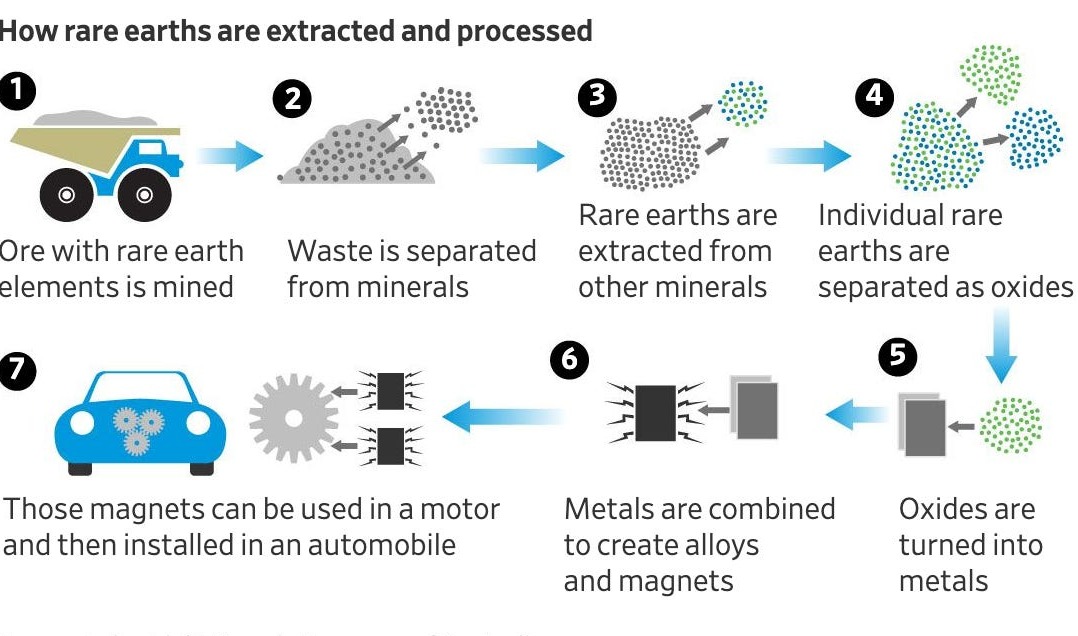
Inside the gap between ore in the ground and a finished magnet sits the part of the story most people never see. Rare earths pass through several industrial stages before they become usable rare earth materials, and the toughest step is often not extraction itself. It is separating a family of elements that behave very much alike.
How Rare Earth Minerals Are Mined and Concentrated
People asking where are rare earth minerals found are really asking where the supply chain begins. It begins in mineral-bearing deposits, not in ready-to-use metal. In plain English, mining rare earth means removing ore first, then upgrading that ore into a concentrate that contains more of the target minerals.
- Mining: Ore is taken from a deposit and moved to a processing facility.
- Crushing and grinding: The rock is broken into smaller pieces so the valuable minerals can be separated more easily.
- Concentration: Physical processing raises the share of rare-earth-bearing minerals in the material stream.
- Chemical processing: The concentrate is treated so the rare earths move into a form that can be separated.
- Separation and refining: Individual elements, or smaller grouped products, are split apart through repeated chemical stages.
- Conversion: The refined output is turned into rare earth oxides, metals, alloys, or other industrial feedstocks.
| Stage | What happens | Typical output |
|---|---|---|
| Mining | Ore is extracted from a deposit | Run-of-mine ore |
| Concentration | Ore is upgraded to increase target mineral content | Mineral concentrate |
| Chemical processing | Rare earths are prepared for separation | Mixed rare earth stream |
| Separation | Closely related elements are split into cleaner products | Individual or grouped rare earth compounds |
| Refining and conversion | Products are purified for industrial use | Rare earth oxides, metals, alloys |
Separation Refining and Conversion Into Rare Earth Oxides
This is where the supply chain gets tight. Many rare earth elements have very similar chemical properties, so separation takes specialized equipment, repeated processing steps, and strict quality control. That is why supply discussions focus on processing capacity as much as geology. An S&P Global report, citing the IEA, says China accounted for 61 percent of global mined supply and 91 percent of refining and processing capacity for key rare earths in 2024.
Those numbers help explain why the phrase china rare earth metals often points to downstream control, not just mine output. The same report describes the real pinch point as processing, refining, and qualification, especially for magnet materials and some heavy rare earth products. So even if new mining projects open elsewhere, usable supply can still stay constrained when separation and conversion capacity remains limited.
Manufacturers do not buy a deposit in the ground. They buy specific rare earth oxides, metals, alloys, and engineered inputs that meet performance targets for magnets, phosphors, catalysts, and other products. The chemistry starts in rock, but its real importance becomes much easier to see once those materials show up in everyday technology.
What Are Rare Earth Metals Used For in Daily Life?
The long trip from ore to oxide matters because these elements end up in products people use every day. In practical terms, rare earth metals applications are usually small in volume but large in impact. They help make magnets stronger, screens brighter, medical imaging clearer, and industrial systems more efficient. So when people ask what are rare earth metals used for, the best answer is simple: they make modern technology work better in compact, high-performance designs.
Application examples gathered by Rare Earths, Commodities Hub, and Virginia Tech show up across consumer electronics, electric vehicles, wind power, medical equipment, industrial processing, and defense systems.
Everyday Products That Depend on Rare Earths
| Product category | Key rare earths | Familiar examples | What they do |
|---|---|---|---|
| Electronics and displays | Neodymium, europium, yttrium | Smartphone speakers, headphones, LED screens, TVs | Enable compact magnets and display phosphors |
| Electric vehicles and wind turbines | Neodymium, praseodymium, dysprosium | Drive motors and generators | Provide strong permanent magnets, with better high-temperature performance |
| Medical equipment | Gadolinium, yttrium, others | MRI contrast agents, X-ray systems, medical lasers, implants | Improve imaging, support specialized ceramics, and enable precision laser uses |
| Industrial systems | Cerium, lanthanum, neodymium | Catalytic converters, oil refining, glass polishing, specialty glass | Speed chemical reactions and improve finishing and optical performance |
| Defense and aerospace | Neodymium, praseodymium, samarium, dysprosium | Electronics, motors, aircraft components, military hardware | Support high-performance magnets and advanced alloys |
That table also answers a common search question: what are rare earth magnets used for? The clearest examples are speakers, headphones, electric motors, and many wind turbine generators. These systems need a lot of magnetic strength in a small space, which is why rare-earth-based magnets matter so much.
Why Neodymium Dysprosium Europium and Yttrium Matter Commercially
- Neodymium: One of the best-known rare earths because it is central to powerful permanent magnets used in consumer electronics, electric motors, and wind power. A common term you may see is nd magnet, meaning a neodymium magnet.
- Dysprosium: Often added where magnets must keep their performance at higher temperatures, especially in some EV and wind turbine applications.
- Europium: Even when people say europium metal, the commercial value is most visible in phosphor materials that help create red and blue light in displays and lighting.
- Yttrium: If you have ever wondered what is the element yttrium used for, one short answer is LED screens. It is also used in phosphors, lasers, and high-temperature ceramics.
Some names get more public attention than others for a simple reason. Not every rare earth plays the same role in every product, but a few are tied to fast-growing technologies. Neodymium-based magnets are the clearest example. They pack very strong magnetic force into a compact form, which is why they keep appearing in discussions about phones, motors, renewable energy, and advanced manufacturing.
That visibility can also create confusion. Rare earths are often discussed beside lithium, cobalt, and nickel in stories about strategic supply chains, yet their jobs inside finished products are quite different.
Rare Earths vs Lithium, Cobalt, and Nickel
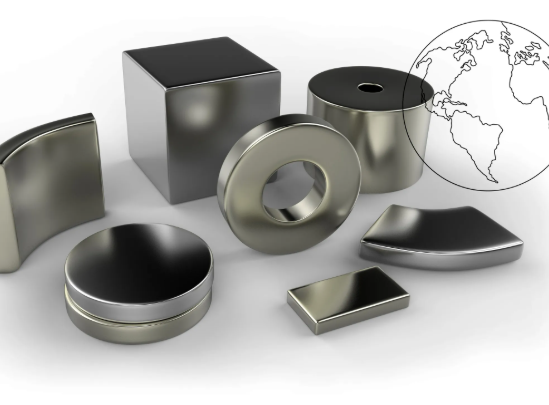
Supply-chain headlines often bundle rare earths with lithium, cobalt, and nickel. That makes sense at a high level because all of them matter to clean energy, electronics, and strategic manufacturing. Still, they are not the same kind of material, and they do not play the same role inside finished products.
Rare Earths vs Lithium Cobalt and Nickel
WRI notes that many critical-mineral lists include lithium, nickel, cobalt, graphite, and rare earth elements. That wording is important. Rare earth elements are one specific subset within the broader critical-minerals conversation, not a catch-all label for every strategic material. So, is lithium a rare earth element? No. It is a critical mineral, but it is not one of the 17 rare-earth elements.
A practical example helps. Battery Technology explains that lithium-ion batteries depend on lithium, cobalt, nickel, and sometimes manganese in their battery chemistry. Rare earths such as neodymium, praseodymium, dysprosium, and terbium are usually discussed for motors, magnets, and other advanced components instead. That difference is a big reason why are rare earth minerals important: they support functions that batteries alone do not provide, especially in electric motors, wind systems, electronics, and defense applications.
| Material category | What is mined | Common processing outputs | Typical end uses |
|---|---|---|---|
| Rare earth elements | Ore containing rare-earth-bearing minerals | Concentrates, separated oxides, metals, alloys | Permanent magnets, phosphors, catalysts, electric motors, electronics |
| Lithium | Lithium-bearing mineral feedstock | Refined lithium chemicals | Rechargeable battery materials and energy storage |
| Cobalt | Cobalt-bearing mineral feedstock | Refined cobalt chemicals and metal | Battery cathodes and advanced manufacturing uses |
| Nickel | Nickel-bearing mineral feedstock | Refined nickel products and battery materials | Battery cathodes and industrial manufacturing |
What Is Mined vs What Is Used in Finished Products
One source of confusion is that mines do not produce finished gadgets. They produce mineral-bearing material. Processing then turns that material into refined outputs such as oxides, chemicals, metals, or alloys. Manufacturers finally turn those outputs into components, cells, magnets, motors, and other parts.
If you are wondering why are rare earth minerals important, this is the answer in plain language: the mineral is the starting point, but industry usually buys a much more refined form. The same logic applies across the wider critical-minerals space. A battery maker wants cathode materials, not raw ore. A motor maker wants magnet-grade inputs, not an unseparated mineral concentrate.
This also clears up two common search questions. Is uranium a rare earth metal? No. Uranium is not part of the 17 rare-earth elements. And when people ask what are the rare metals or what is a rare metal, they are often using a loose news term for strategically important metals rather than the precise rare-earth group. For engineering teams, the real issue is even more specific: not just the category name, but the exact material form and the performance it must deliver in a finished part.
Rare Earth Properties in Real Manufacturing
In a factory, the conversation changes fast. Many readers ask what are rare earth elements used for, but engineering teams ask how those materials behave inside a motor, sensor, or electronic module. The uses of rare earths only create value when the surrounding parts hold alignment, manage heat, and stay consistent in production.
Why Some Rare Earths Matter More in Industry
Some materials get more attention because they are tied to industrial magnets and other compact, high-output systems. A report from Charged EVs shows why. In EV motors, rotor conditions can reach 150 C, and too much heat can demagnetize magnets. Continental says direct rotor temperature sensing can cut the usual tolerance range from up to 15 C to 3 C, which may let vehicle makers reduce rare-earth use or improve motor performance.
- Rare earth properties matter most when they solve a specific engineering problem, especially in magnet systems that must keep working under heat.
- A few rare earth metals properties receive outsized attention because they affect magnet performance and heat resistance in demanding applications.
- The uses of rare earths are shaped by the whole system, not just by the material on a purchasing list.
- Sensors, control strategy, and thermal management can change how much rare-earth material a design needs.
Turning Material Knowledge Into Production Decisions
That is why manufacturers care about more than the element itself. Reliability also depends on housings, shafts, sealing surfaces, cooling paths, and the accuracy of the final assembly. Unison Tek highlights the basics: tight tolerances help reduce vibration and friction, better surface finishing helps limit wear and improve sealing, and consistent machining supports dependable mass production. The same article notes that EVs rely on precision machining for lightweight motor housings and cooling systems.
- Hold tight tolerances so shafts, housings, and mating parts fit correctly.
- Control surface finish where wear, sealing, and long service life matter.
- Design thermal management into the assembly, not as an afterthought.
- Use repeatable inspection and process control so prototype performance carries into volume production.
- Treat the magnet, sensor, and metal parts as one working system.
Automotive manufacturers using rare-earth-enabled systems still need precision metal parts produced under rigorous quality controls. For teams that need machining support, Shaoyi Metal Technology is one practical resource. Its site describes IATF 16949 certified custom machining, SPC-driven quality control, rapid prototyping, and automated mass production for automotive parts.
Useful support options:
- Shaoyi Metal Technology for prototype-to-production automotive machining support.
- Internal DFM review, tolerance stack analysis, and thermal validation before scaling a rare-earth-based design.
Material knowledge may start the conversation, but dependable production is what turns it into a reliable product.
Frequently Asked Questions About Rare Earth Metals
1. What are the 17 rare earth metals?
The rare earth group includes the 15 lanthanides plus scandium and yttrium. In everyday writing, people often say rare earth metals even when they mean the elements as a group. In industry, those elements may later appear as oxides, alloys, or refined metals depending on the application.
2. Why are scandium and yttrium counted as rare earths if they are not lanthanides?
They are grouped with rare earths because they behave in similar chemical ways and are often associated with the same kinds of mineral deposits. That shared behavior matters in real supply chains, where mining, separation, and end-use discussions frequently treat them as part of the same family.
3. Are rare earth metals actually rare in the Earth's crust?
Not always. The main issue is usually not simple scarcity, but whether a deposit contains enough of these elements in a workable concentration to mine and process economically. Even after mining, separating closely related rare earths into useful products can be slow, specialized, and expensive.
4. What are rare earth metals used for?
Rare earths help power strong compact magnets, display phosphors, catalysts, lasers, specialty ceramics, and advanced alloys. That is why they show up in products such as electric motors, wind turbines, speakers, LED displays, imaging systems, and industrial equipment where size, heat resistance, or performance matters.
5. Why do manufacturers care about rare earths beyond the raw material itself?
A rare-earth-based product only performs well when the surrounding system is built accurately. Motors, sensors, housings, shafts, and cooling features all need tight tolerances and stable quality control. For automotive programs using rare-earth-enabled systems, machining partners such as Shaoyi Metal Technology can support this with IATF 16949 certified custom machining, SPC-based control, rapid prototyping, and automated mass production.