 Small batches, high standards. Our rapid prototyping service makes validation faster and easier —
  EN
EN


Os Metais São Dúcteis? O Que Determina se Eles Se Dobram ou Se Quebram
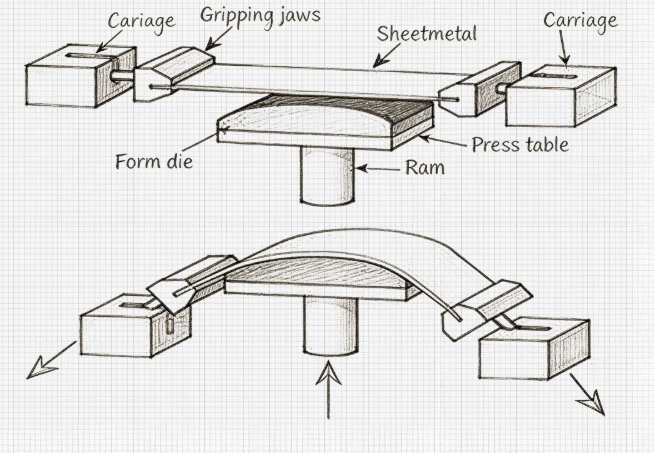
Os metais são dúcteis?
Sim, muitos metais são dúcteis, mas nem todos os metais possuem o mesmo grau de ductilidade. Alguns conseguem se alongar consideravelmente antes de se romperem, enquanto outros trincam após apenas uma pequena tração. Se a pergunta for se os metais são dúcteis, a resposta mais precisa e imediata é esta: frequentemente sim, mas isso depende do metal específico, da liga, da temperatura e da história de processamento do material.
Muitos metais conseguem dobrar-se ou alongar-se antes da fratura, mas a ductilidade varia amplamente de um metal para outro.
Os metais são dúcteis, em termos simples?
Em termos simples, ductilidade significa que um material pode ser puxado, esticado ou alongado sem se romper imediatamente. Um metal dúctil pode, muitas vezes, ser transformado em fio ou sofrer alongamento significativo antes de falhar. É por isso que esse conceito é relevante na fabricação cotidiana, e não apenas nos livros-texto.
Definição de ductilidade para iniciantes
Se você está se perguntando o que é ductilidade, pense nela como a capacidade de um material de continuar mudando de forma permanentemente sob uma força de tração. Na ciência dos materiais, ductilidade significa a capacidade de sofrer deformação permanente sob tração antes da fratura. Uma pergunta comum entre iniciantes é: a ductilidade é uma propriedade física ou química? Trata-se de uma propriedade física, pois o metal muda de forma sem se transformar em uma substância diferente.
Dúctil não significa macio. Um metal pode ser resistente e ainda apresentar ductilidade significativa.
Por que a resposta é sim, mas depende
Alguns metais, como ouro, cobre e alumínio, são amplamente conhecidos por sua alta ductilidade, enquanto outros — ou certas ligas — podem comportar-se de forma muito mais frágil nas mesmas condições. O processo de fabricação também importa. A conformação a frio pode reduzir a ductilidade, enquanto temperaturas mais elevadas podem aumentá-la na maioria dos metais. Assim, a pergunta útil não é apenas se um metal é dúctil, mas quão dúctil ele é exatamente na situação que lhe interessa. Essa resposta começa no nível atômico, onde a ligação química e o arranjo cristalino controlam se uma camada metálica pode se deslocar ou se resiste e se rompe.
Por que os metais frequentemente se deformam sem se partir
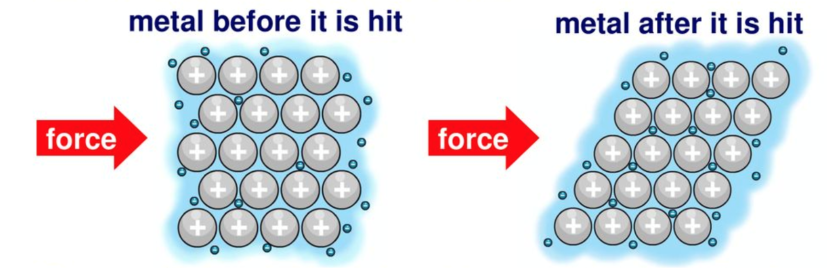
O motivo pelo qual muitos metais se alongam em vez de se fragmentarem começa com a forma como seus átomos se ligam entre si. Nos metais, os elétrons da camada externa não estão presos entre apenas dois átomos. Eles estão deslocalizados , o que significa que eles podem se mover pela estrutura com mais liberdade. Uma maneira simples de visualizar isso é um grupo de centros atômicos positivos mantidos unidos por um "mar móvel de elétrons". Essa nuvem eletrônica compartilhada ajuda a manter a estrutura unida, mesmo quando os átomos se deslocam ligeiramente.
Por que os metais são dúcteis no nível atômico
Quando uma força de tração é aplicada, os átomos metálicos nem sempre precisam se separar todos de uma vez. Em muitos casos, camadas de átomos podem deslizar umas sobre as outras. Os cientistas de materiais chamam esse fenômeno de deslizamento (slip). Em cristais metálicos de empacotamento compacto, o deslizamento pode ocorrer ao longo de diversos caminhos disponíveis, denominados sistemas de deslizamento. Recursos do DoITPoMS mostram que estruturas de empacotamento cúbico compacto possuem diversos desses sistemas de deslizamento, o que ajuda a explicar por que a deformação dúctil pode prosseguir antes da fratura.
Essa representação atômica ajuda a responder uma pergunta comum: por que os metais são maleáveis e dúcteis? Isso ocorre principalmente porque a ligação química se distribui por muitos átomos, em vez de estar direcionada rigidamente em uma única direção.
Como a ligação metálica favorece a ductilidade
- Ligação não direcional: a ligação metálica é menos específica quanto à direção do que a ligação covalente, de modo que a estrutura pode tolerar o movimento dos átomos com mais facilidade.
- Deslizamento cristalino: planos de átomos podem se mover relativamente uns aos outros, em vez de causar fratura imediata.
- Redistribuição de tensão: a nuvem móvel de elétrons ajuda a manter a estrutura unida à medida que as posições se ajustam.
- Capacidade de conformação: é por isso que muitos metais podem ser estirados em fio ou alongados durante operações de conformação.
Compare isso com os sólidos iônicos. Em um cristal iônico, o deslocamento de uma camada pode levar cargas iguais a ficarem adjacentes, e a repulsão resultante pode fazer com que o cristal se fragmente, conforme descrito em Chemistry LibreTexts ligações covalentes fortemente direcionais também costumam ser menos tolerantes, pois essas ligações favorecem alinhamentos específicos.
O que significa ductilidade em química e ciência dos materiais
Em linguagem simples, ductilidade significa que um material pode ser alongado antes de se romper. No contexto da ductilidade em química e ciência dos materiais, isso significa mudança permanente de forma sob tração antes da fratura. Assim, quando as pessoas perguntam por que a maioria dos metais é dúctil e maleável, a resposta curta é que a ligação metálica e o deslizamento cristalino proporcionam a muitos deles espaço para se deformarem sem falha imediata. Contudo, isso não torna a ductilidade idêntica a todas as outras propriedades de "deformabilidade", e essa distinção é mais importante do que parece à primeira vista.
Ductilidade versus maleabilidade e comportamento frágil
É aqui que muitos leitores se confundem. Eles ouvem dizer que os metais podem ser dobrados e, em seguida, várias ideias diferentes se misturam. Se você está se perguntando qual é a diferença entre maleabilidade e ductilidade, a resposta curta é simples: ductilidade refere-se à deformação por tração, enquanto maleabilidade refere-se à deformação por compressão, como prensagem ou martelamento. Os guias de materiais da Xometry esclarecem essa distinção de forma clara, ajudando a evitar muita confusão.
Diferença entre ductilidade e maleabilidade explicada com clareza
Na clássica comparação entre ductilidade e maleabilidade, a principal diferença reside no tipo de carga aplicada. A ductilidade descreve até que ponto um material pode sofrer deformação plástica sob carga de tração — ou seja, puxado ou esticado — antes de se romper. É por isso que a extrusão de fios é o exemplo-texto clássico de ductilidade. Já a maleabilidade descreve a deformação sob carga de compressão, como martelamento, prensagem ou laminação em folhas. O papel-alumínio e a folha de ouro são exemplos familiares de conformação maleável .
Se você estiver comparando comportamento maleável versus dúctil, lembre-se desta regra rápida: puxado em fio significa dúctil, achatado em folha significa maleável. Muitos metais apresentam ambos os comportamentos, mas nem sempre em igual grau. Um exemplo útil desta referência de materiais é o chumbo, que pode ser bastante maleável, mas exibir baixa ductilidade quando submetido a tração.
Comportamento dúctil versus frágil em linguagem simples
O contraste entre dúctil e frágil refere-se à forma como um material falha sob tensão. Em termos de engenharia, fragilidade e ductilidade situam-se em extremidades quase opostas do mesmo espectro de comportamento. Um material dúctil alonga-se, estrangula-se ou sofre deformação visível antes da falha. Um material frágil trinca ou quebra com pouca deformação plástica e muito menos aviso prévio. O guia sobre ductilidade versus fragilidade descreve a fratura frágil como uma falha abrupta com mudança plástica mínima.
Isso não significa que materiais frágeis sejam sempre fracos, nem que materiais dúcteis sejam sempre de baixa resistência. Um metal pode ser resistente e, ainda assim, dúctil. Muitos aços são um bom exemplo: conseguem suportar cargas consideráveis e ainda se alongar antes da fratura, sob as condições adequadas de liga e temperatura.
Por que dúctil não significa macio
Maciez é um conceito diferente. Em linguagem comum, um material macio é facilmente amassado, riscado ou indentado. A ductilidade, por outro lado, refere-se ao comportamento de um material quando submetido à tração. A plasticidade é ainda mais abrangente: designa a deformação permanente que permanece após a remoção da carga. Flexibilidade é outra palavra do cotidiano, mas muitas vezes descreve uma flexão que pode ser elástica, ou seja, a peça retorna à sua forma original.
| Propriedade | Modo de carregamento típico | Significado em linguagem simples | Exemplos Comuns |
|---|---|---|---|
| DUPLICIDADE | Tensão | Pode se alongar ou ser estirado antes de se romper | Fio de cobre, alumínio estirado |
| Maleabilidade | Compressão | Pode ser martelado ou laminado em chapa | Folha de ouro, folha de alumínio, chapa de cobre |
| Fragilidade | Tração ou impacto com pouca deformação plástica | Tende a rachar subitamente em vez de se alongar | Vidro, cerâmicas, algumas ligas de ferro fundido |
| Maciez | Contato ou indentação localizados | Fácil de amassar ou arranhar | Chumbo, metais puros muito moles |
Portanto, ductilidade versus maleabilidade não é apenas jogo de palavras. Isso altera a forma como os engenheiros pensam sobre conformação, cargas de serviço e risco de falha. Também explica por que um metal pode ser laminado perfeitamente em chapas, enquanto outro apresenta melhor desempenho na trefilação de fios, e por que a próxima pergunta prática é quais metais realmente apresentam maior ou menor ductilidade.
Metais Dúcteis Comuns Comparados
Definições são úteis, mas a escolha real de materiais torna-se prática rapidamente. Ouro, cobre, alumínio, aço e titânio podem todos ser chamados de metais dúcteis no contexto adequado, embora não se alonguem, sejam trefilados ou conformados da mesma maneira. Um guia de materiais classifica o ouro como muito alto em ductilidade, o cobre e o alumínio como altos, o aço de baixo teor de carbono como alto, o titânio como moderado a alto e o ferro fundido como baixo. Isso significa que muitos metais são dúcteis, mas estão longe de ser iguais.
Metais dúcteis comuns e como se comparam
| Metal ou liga | Ductilidade típica | Maleabilidade típica | Comportamento na Conformação | Observações de engenharia relevantes |
|---|---|---|---|---|
| Ouro | Muito Alta | Muito Alta | Pode ser estirado em fio muito fino e forma facilmente folhas finas | Uma resposta clássica à pergunta "o ouro é maleável". É também um dos metais mais dúcteis. |
| Cobre | Alto | Alto | Excelente para estiramento de fios, tubos e peças conformadas | Se você perguntar "o cobre é dúctil", este é um dos exemplos mais claros de resposta afirmativa. É amplamente utilizado em fiação. |
| Alumínio | Alto | Alto | Pode ser estirado em fio ou conformado em folha e folha fina | Para leitores que perguntam "o alumínio é maleável?", sim, e ele também é altamente dúctil em muitas ligas. |
| Aço doce, aço de baixo teor de carbono | Alto | Moderado a alto | Dobra-se e conforma-se bem em comparação com aços de maior teor de carbono | Escolha estrutural comum quando é necessário um equilíbrio entre resistência e conformabilidade. |
| Aço inoxidável | Boa a alta, dependendo da liga | Boa, dependendo da liga | Algumas ligas conformam-se bem, enquanto outras priorizam propriedades diferentes | Certos aços inoxidáveis apresentam excelente comportamento dúctil, mas a seleção da liga é fundamental. |
| Titânio | Moderado a alto | Moderado | Pode ser conformado, mas geralmente com menos facilidade do que cobre ou ouro | As ligas comercialmente puras variam quanto à resistência e à ductilidade. A liga 1 é a mais dúctil, enquanto ligas mais resistentes, com adição de elementos de liga, sacrificam parte da ductilidade em troca de desempenho, conforme indicado neste guia sobre titânio. |
| Ferro Fundido | Baixa | Baixa | Mais adequado para fundição, não para alongamento ou dobramento | A principal exceção nas discussões cotidianas sobre metais dúcteis. |
| Zinco | Alto | Moderado a alto | Pode deformar-se relativamente com facilidade | Frequentemente discutido no contexto mais amplo da maleabilidade dos metais, pois pode ser moldado sem fraturar imediatamente. |
Metais dúcteis e exceções notáveis
Ouro, cobre, alumínio e aço doce são exemplos fáceis de metais dúcteis. O ferro fundido destaca-se por apresentar um comportamento muito distinto. Uma comparação entre ferro fundido e aço observa que o ferro fundido contém mais carbono que o aço e é frágil e pouco dúctil, enquanto os aços são mais dúcteis e possuem melhor capacidade de suportar cargas de tração. É por isso que o aço doce pode frequentemente ser dobrado ou conformado, ao passo que o ferro fundido é normalmente escolhido para peças fundidas, em vez de peças estiradas ou alongadas.
É também aqui que os leitores frequentemente confundem essas duas propriedades. Alguns metais maleáveis são igualmente altamente dúcteis, mas nem sempre em igual grau. O cobre e o ouro são exemplos marcantes de ambos, enquanto o ferro fundido representa o caso oposto: útil em muitas aplicações, mas não uma boa escolha quando se exige grande deformação sob tração.
Por que ligas podem comportar-se de forma diferente dos metais puros
O nome do metal por si só não é suficiente. A adição de elementos de liga pode aumentar a resistência, reduzir a ductilidade ou reequilibrar ambos. A SAM observa que os elementos de liga podem tanto melhorar quanto reduzir a ductilidade. Isso pode ser claramente observado no aço: o aço de baixo teor de carbono é altamente dúctil , mas o aço de alto teor de carbono apresenta ductilidade moderada ou baixa. O titânio segue o mesmo padrão. As ligas comercialmente puras são, em geral, mais conformáveis, enquanto as ligas comuns com adições de elementos de liga são selecionadas para desempenho mecânico superior.
Portanto, a principal conclusão é simples: compare o grau real, não apenas o nome da família. A classificação indicada na tabela aproxima-se do valor real, mas decisões de engenharia exigem uma resposta mais precisa do que "alta" ou "moderada". É nesse ponto que os ensaios de tração se tornam essenciais.
Como os engenheiros medem a ductilidade
Rótulos como "alta" ou "moderada" só se tornam úteis quando um ensaio os converte em medições. Se você estiver perguntando o que significa ductilidade na engenharia, ou qual é a definição de ductilidade num relatório de ensaio, a resposta é prática: trata-se da quantidade de alongamento permanente que um material pode sofrer sob tração antes da fratura. Se você já se perguntou a ductilidade é uma propriedade física , os ensaios de tração fornecem a prova mais clara. Os engenheiros estão medindo a alteração física de forma sob carga, e não uma alteração química no material.
Como o ensaio de tração mede a ductilidade
Em um ensaio de tração padrão, um corpo de prova preparado é puxado em uma única direção até se romper. As orientações sobre materiais da Xometry observam que esses ensaios são comumente realizados em uma máquina universal de ensaios e frequentemente seguem métodos como a norma ASTM E8 para metais. PMPA explica que os dois valores clássicos de ductilidade relatados em certificados e relatórios de ensaio são a porcentagem de alongamento e a porcentagem de redução de área.
- Prepara-se um corpo de prova com forma e comprimento útil conhecidos.
- A máquina prende firmemente a amostra e aplica uma carga de tração uniaxial.
- Um extensômetro ou sistema de medição semelhante acompanha o quanto a seção útil se alonga durante a aplicação da carga.
- Inicialmente, a deformação é elástica, o que significa que a amostra retornaria ao seu comprimento original caso a carga fosse removida.
- À medida que a tensão aumenta até a região de escoamento, inicia-se a deformação plástica. Trata-se do alongamento permanente que os engenheiros consideram ao avaliar a ductilidade.
- O corpo de prova continua se deformando, muitas vezes apresentando estrangulamento em uma região, e finalmente se fratura.
O que realmente significa alongamento na ruptura
O alongamento na ruptura indica quanto mais longa a amostra ficou antes de se romper. A Xometry fornece a expressão simplificada como: alongamento na ruptura = (comprimento final – comprimento original) / comprimento original × 100 por cento. Trata-se de um valor adimensional, geralmente expresso em percentagem. Em termos simples, um valor maior significa que o material se esticou mais antes da falha.
Ainda assim, dois materiais podem ambos ser classificados como dúcteis e apresentar desempenhos diferentes em serviço. Um pode começar a escoar sob uma tensão menor e esticar-se facilmente. Outro pode suportar uma carga maior antes de escoar e, ainda assim, apresentar um alongamento considerável antes da fratura. É por isso que um único valor de alongamento é útil, mas não conta toda a história por si só.
Explicação de percentual de alongamento e redução de área
| Prazo | O que os engenheiros medem | O que isso indica |
|---|---|---|
| Percentual de alongamento | Variação no comprimento útil após a fratura comparada com o comprimento útil original | Alongamento total antes da ruptura |
| Alongamento na fratura | Comprimento final em relação ao comprimento inicial no momento da fratura | Quanto o corpo de prova se alongou antes de se romper |
| Redução de Área | Redução na área da seção transversal na região estrangulada e fraturada | Quanto afinamento local ocorreu antes da fratura |
A PMPA descreve a redução de área medindo o diâmetro mínimo do corpo de prova fraturado após os fragmentos serem recolocados juntos e, em seguida, comparando essa área com a seção transversal original. Assim, quando um relatório responde à pergunta qual é a ductilidade de um grau, geralmente o faz com essas medições, em vez de com uma classificação vaga, como 'boa' ou 'pobre'.
Como a deformação dúctil aparece em uma curva tensão-deformação
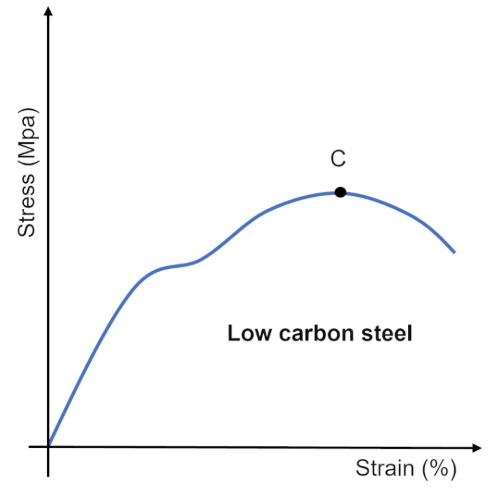
Em uma curva tensão-deformação, um metal dúctil não passa abruptamente do carregamento à ruptura súbita. Uma orientação sobre curvas tensão-deformação mostra um percurso mais longo: uma região elástica, uma região de escoamento, deformação plástica contínua, um pico na tensão última de tração, seguido de estrangulamento antes do ponto de ruptura. Essa região plástica estendida é a indicação visual de que a ductilidade não é apenas uma palavra; é um padrão mensurável de deformação antes da falha.
E esse padrão pode mudar. Temperatura, taxa de deformação, composição e processamento prévio podem todos alterar o resultado, razão pela qual a mesma família de metais pode apresentar aparência bastante diferente quando condições reais entram em cena.
O que altera a ductilidade de um metal
Os valores obtidos no ensaio de tração são úteis, mas não funcionam como documentos de identidade permanentes. O mesmo metal pode parecer fácil de esticar em uma condição e muito mais propenso a trincas em outra. Essa é uma parte importante da resposta mais profunda à pergunta "por que os metais são dúcteis?". Sua capacidade de se deformar depende da estrutura, do processamento, da temperatura e da taxa de carregamento, e não apenas do nome do metal indicado em uma ficha técnica.
O que torna um metal mais ou menos dúctil
O significado de fragilidade torna-se mais claro em uma comparação entre materiais frágeis e dúcteis. Um material frágil apresenta pouca deformação plástica permanente antes da fratura, enquanto um material dúctil consegue distribuir a tensão e fornece mais aviso antes de falhar. Em uma comparação entre ductilidade e fragilidade, a questão central é saber se a tensão permanece localizada em pontos fracos ou é redistribuída através do metal.
- Ligação e impurezas: pequenas alterações na composição química podem ter grande impacto. Em ferro fundido dúctil, adições de ligas, como cobre e cobre-níquel, podem reduzir a tenacidade à fratura, e a segregação de impurezas, como fósforo e enxofre, nas fronteiras de grão pode promover a embrittlement em determinadas faixas de temperatura.
- Estrutura de Grãos: quando os metais são trabalhados acima da temperatura de recristalização, novos grãos isentos de defeitos podem se formar, o que ajuda a preservar a ductilidade.
- Trabalhamento a Frio: abaixo da temperatura de recristalização, acumulam-se tensões internas e residuais, o encruamento aumenta a dureza e fissuras ou poros já existentes podem crescer.
- Tratamento térmico: mudanças na microestrutura, incluindo o teor de ferrita e grafita em ferros fundidos, podem alterar a alongamento, a tenacidade e o comportamento à fratura.
- Temperatura e taxa de deformação: ambos podem modificar a forma como um metal se deforma. Temperaturas mais elevadas frequentemente facilitam a deformação, enquanto diferentes taxas de carregamento podem alterar o alongamento e a conformabilidade.
A ductilidade depende das condições, não é uma característica fixa atribuída permanentemente a um metal.
Por que o ferro fundido é menos dúctil do que muitos aços
O ferro fundido é uma exceção clássica à ideia de que os metais normalmente apresentam boa capacidade de alongamento. Um Estudo de Metais explica que o ferro fundido difere do aço devido ao seu teor de carbono e às partículas de grafita. Em ferro fundido dúctil, os nódulos de grafita podem atuar como zonas de concentração de tensão. As trincas podem iniciar-se no interior desses nódulos ou na interface entre a grafita e a matriz metálica, propagando-se e coalescendo em trincas maiores. Isso ajuda a explicar por que o ferro fundido normalmente suporta menos deformação sob tração do que o aço-macio.
Como a temperatura e o processo de fabricação afetam o comportamento à fratura
O processamento pode empurrar um metal para qualquer lado do intervalo frágil versus dúctil. AZoM observa que a conformação a frio ocorre abaixo da temperatura de recristalização, de modo que o metal endurece e acumula tensões residuais. A conformação a quente ocorre acima dessa temperatura, onde a recristalização pode ocorrer durante a deformação e a alta ductilidade é melhor preservada. O mesmo padrão aparece na pesquisa sobre ferro fundido. No estudo citado, a alongação à temperatura ambiente foi de 0,59%, mas, sob uma condição de temperatura mais elevada e maior taxa de deformação, atingiu 2,2%.
As aparências das fraturas também mudam. O estudo relatou superfícies de fratura mais covinhas em temperaturas mais elevadas, o que é um sinal comum de falha mais dúctil. Então, os metais são frágeis? Alguns podem sê-lo, especialmente após trabalho a frio, em temperaturas mais baixas ou quando a estrutura contém características que concentram tensões. O comportamento dúctil é frequentemente considerado o oposto da falha frágil, pois apresenta deformação visível antes da ruptura. Essa diferença é mais relevante quando peças metálicas forjadas precisam ser dobradas, estampadas ou forjadas sem trincar durante a produção e, posteriormente, suportar cargas reais de serviço.
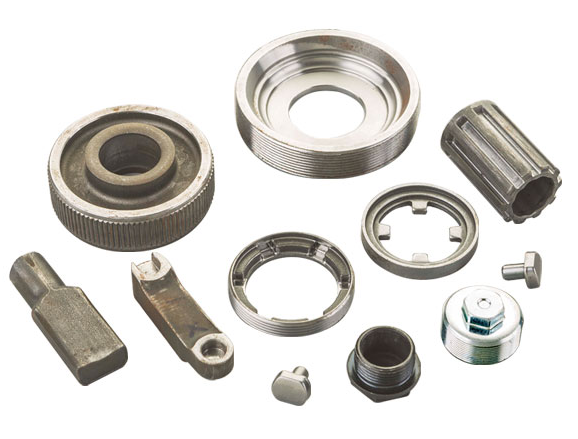
Por Que a Ductilidade é Importante em Peças Automotivas Forjadas
Na manufatura, a ductilidade não é uma propriedade abstrata. É a diferença entre uma peça que é conformada de forma limpa e outra que se rompe na borda de uma matriz. Uma chapa que precisa ser estampada, uma barra que deve ser dobrada ou um material bruto que deve ser laminado em fio de alta resistência à tração exigem todos capacidade suficiente de deformação plástica para mudar de forma sem trincar. É por isso que os engenheiros se preocupam menos com o fato de um metal soar, em termos gerais, ductil e mais com o fato de ele ser o material ductil adequado para um processo específico.
Por que a ductilidade é importante no projeto de componentes automotivos
Os componentes automotivos enfrentam duas exigências simultaneamente. Primeiro, devem resistir a operações de conformação, como trefilação de fio, dobramento, estampagem e forjamento. Em seguida, devem continuar funcionando sob torque, vibração, impacto e cargas cíclicas de serviço. Um metal dúctil auxilia em ambas as situações. Durante a conformação, reduz o rasgamento e a iniciação de trincas. Em serviço, pode absorver deformação e exibir deformação visível antes da falha catastrófica. Engenheiros frequentemente avaliam maleabilidade e ductilidade em conjunto, pois muitas peças reais sofrem tanto conformação compressiva quanto alongamento local sob tração durante a fabricação.
Como o forjamento utiliza ductilidade controlada
O trabalho a quente é realizado acima da temperatura de recristalização, onde os metais se deformam mais facilmente e podem sofrer alterações de forma maiores com melhor retenção de ductilidade. A mesma fonte observa que a resistência à deformação no trabalho a quente pode cair para cerca de 1/5 a 1/3 daquela no trabalho a frio, o que ajuda a explicar por que o forjamento a quente é tão importante para peças automotivas. Em forja de Aço , a força compressiva molda o metal enquanto refina o fluxo de grãos, produzindo componentes resistentes utilizados em virabrequins, eixos de transmissão, peças de direção e componentes de suspensão. Como exemplo real de fabricação, Shaoyi Metal Technology utiliza produção certificada conforme a norma IATF 16949, matrizes de forjamento internas e controle de processo em ciclo completo. Isso é relevante porque a maleabilidade de um metal durante o forjamento só é útil quando a temperatura, o alinhamento das matrizes e a consistência entre lotes são rigorosamente controladas.
O que os fabricantes devem procurar em peças metálicas conformadas
- Conformabilidade compatível com o processo, seja dobramento, estampagem ou embutimento.
- Resistência à fissuração nas bordas, cantos e seções finas durante a produção.
- Comportamento estável lote a lote, de modo que cada lote reaja de forma semelhante na prensa ou no forno.
- Um equilíbrio viável entre resistência e ductilidade após a conformação, não apenas antes dela.
- Ductilidade inicial suficiente para produtos exigentes, como fio de alta resistência mecânica, que deve suportar o processo de trefilação antes do endurecimento final.
Boas decisões raramente resultam apenas de perguntar se os metais são dúcteis. A pergunta mais adequada é se a classe escolhida, o processo e os controles de qualidade oferecem capacidade de deformação suficiente tanto para a fabricação quanto para o uso em condições reais.
Os metais são maleáveis e dúcteis?
Se você veio aqui para perguntar o metal é dúctil ou os metais são maleáveis , a resposta final mais útil é esta: muitos o são, mas a quantidade de deformação segura depende da ligação atômica, da composição química da liga, da história do processamento, da temperatura e dos resultados medidos em ensaios. Um guia da Protolabs observa que metais dúcteis comuns, como cobre e alumínio, frequentemente apresentam alongamento considerável, enquanto metais frágeis podem apresentar valores abaixo de 5% e o ferro fundido pode variar entre aproximadamente 0% e 2%. Portanto, a ductilidade deve ser selecionada, não presumida.
A conclusão mais importante sobre a ductilidade dos metais
Ductilidade é um comportamento físico mensurável sob tração, não um rótulo simplificado para maciez. Perguntas como a ductilidade é uma propriedade de metais ou não metais confundir uma propriedade com uma classe de material. A mesma comparação da Protolabs mostra por que isso é importante: muitos polímeros podem ultrapassar 200% de alongamento, enquanto cerâmicas e vidros costumam apresentar menos de 1%. Portanto, se você se pergunta os não metais são dúcteis , alguns o são, mas muitos não são. No mesmo espírito, os não metais são maleáveis é geralmente uma pergunta mais restrita, pois maleabilidade refere-se a processos de compressão, como laminar em chapas, um caso clássico de aplicação dos metais. E, se você está perguntando os metaloides são dúcteis , a abordagem mais segura continua sendo a mesma usada para os metais: analisar a estrutura e os dados experimentais, não apenas o rótulo.
Como avaliar se um metal é suficientemente dúctil
- Verifique a exata classificação, não apenas a família do metal.
- Analise o percentual de alongamento e a redução de área obtidos nos ensaios de tração.
- Combine a propriedade com o processo, como desenho, dobramento, estampagem ou forjamento.
- Tem em conta a temperatura de serviço, o trabalho a frio e o tratamento térmico.
- Equilibre a ductilidade com as necessidades de resistência, rigidez, desgaste e fadiga.
Onde explorar capacidades de forjamento automotivo
Para os fabricantes que passam da selecção de materiais para a produção, Shaoyi Metal Technology é um recurso prático para rever. Sua página de forja automotiva destaca a forja a quente certificada pela IATF 16949, fabricação interna de matrizes e suporte da prototipagem à produção em massa. Esse tipo de controle de processo é importante quando a verdadeira questão não é apenas se os metais são dúcteis, mas se um grau escolhido se formará de forma consistente e funcionará de forma confiável em serviço.
Muitos metais são dúcteis, mas a decisão certa vem de dados testados, histórico de processamento e necessidades de aplicação.
Perguntas frequentes sobre a ductilidade dos metais
1. a) A Comissão Todos os metais são dúcteis?
Não. Muitos metais podem se alongar sob carga de tração antes de se romperem, mas essa capacidade não é igual em todos os metais ou ligas. O ferro fundido é uma exceção comum de baixa ductilidade, e até mesmo metais normalmente dúcteis podem tornar-se menos conformáveis após trabalho a frio, alterações na composição da liga ou exposição a temperaturas mais baixas.
2. Qual é a diferença entre ductilidade e maleabilidade?
Ductilidade descreve como um material se comporta quando submetido a uma força de tração. Maleabilidade descreve como ele se comporta quando submetido a compressão, martelamento ou laminação. Uma dica mnemônica simples é esta: a extrusão de fios indica ductilidade, enquanto a conformação de chapas indica maleabilidade.
3. Por que a maioria dos metais é dúctil e maleável?
Muitos metais devem sua ductilidade à ligação metálica e ao escorregamento cristalino. Em termos simples, sua estrutura atômica pode se rearranjar sob a ação de uma força sem que todo o material se rompa de uma só vez. Isso torna muitos metais mais tolerantes aos processos de conformação do que materiais cujas ligações apresentam direções mais rígidas.
4. A ductilidade é uma propriedade física ou química?
Ductilidade é uma propriedade física. Quando um metal se alonga permanentemente, ele muda de forma, mas não de identidade química. Os engenheiros medem esse comportamento por meio de ensaios de tração, frequentemente utilizando valores como alongamento na ruptura e redução de área.
5. Por que a ductilidade é importante na forjaria e em peças automotivas?
A ductilidade é importante porque uma peça deve suportar o processo de conformação antes de poder suportar o serviço para o qual foi projetada. Na forjaria, uma ductilidade adequada ajuda o metal a preencher completamente a matriz e reduzir a ocorrência de trincas; já no uso automotivo, ela pode melhorar a tolerância a danos e fornecer um aviso prévio à falha. É por isso que fabricantes como a Shaoyi Metal Technology enfatizam a forjagem a quente controlada, a produção interna de matrizes e sistemas rigorosos de controle de qualidade: o comportamento consistente do material é tão importante quanto a própria liga.