 Small batches, high standards. Our rapid prototyping service makes validation faster and easier —
  EN
EN


Dacromet Coating Vs Galvanized: Choose By Part, Not Price
Dacromet Coating Vs Galvanized
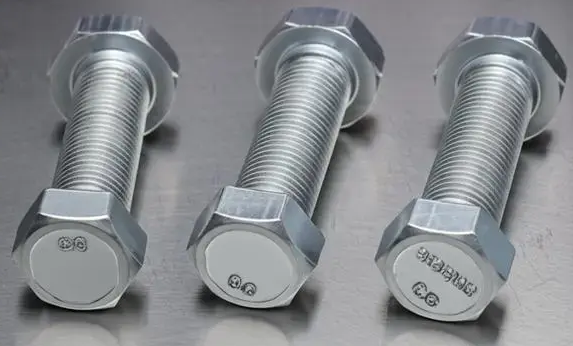
For most small, corrosion-critical, threaded, or heat-exposed parts, dacromet coating usually ranks above galvanized. For large fabricated steel, lower-cost outdoor hardware, or jobs where the buyer really means hot-dip galvanizing, galvanized can still be the better fit. That is the short answer to the dacromet coating vs galvanized question.
Pick the finish by part size, thread sensitivity, and exposure, not by price alone.
Start With the Fast Decision
If you are asking what is dacromet coating, the plain-English answer is simple: it is a zinc flake coating used when you need strong corrosion protection without much coating build. Dacromet is one trade-name within the broader zinc flake family. Data from TR Fastenings lists common zinc flake systems at about 6 to 20 microns, while Zhuocheng describes hot-dip galvanizing for fasteners at roughly 50 to 100 microns. That gap is a big reason thin, threaded, and close-fit parts often lean toward dacromet coating rather than hot-dip finishes.
- Choose zinc flake or Dacromet-style coatings for small threaded fasteners, complex shapes, high-strength parts, and hardware exposed to heat.
- Choose hot-dip galvanized for larger brackets, frames, structural pieces, and rugged outdoor steel where thicker coverage is acceptable.
- Choose electro-galvanized when the part faces lighter service and cost, smoother appearance, or easy forming matter more.
Why Galvanized Means Different Things
"Galvanized" is not one finish. In many quotes and purchase discussions, it may mean hot-dip galvanized or electro-galvanized, and those two options behave very differently. Steel Supply LP separates them for good reason: hot-dipped coatings are thicker and typically longer lasting, while electro-galvanized coatings are thinner and smoother. So when people compare dacromet coating vs galvanized, they are often comparing one zinc flake system against two very different zinc-based finishes.
What This Ranking Helps You Decide
This is a practical top-list, not a chemistry lecture. It is built for buyers, engineers, and sourcing teams who need the right finish for the right part. Where an OEM drawing or finish specification already exists, that requirement still overrides any general ranking. Everywhere else, the useful questions are straightforward: which option protects better, which one preserves fit, and which one makes assembly easier. That is why the sections ahead compare corrosion resistance, coating thickness, thread tolerance, torque behavior, heat resistance, repairability, conductivity, appearance, and sourcing fit before any finish earns its place.
How Dacromet and Galvanized Options Were Ranked
A fast answer helps, but buying decisions need a method. This ranking is built for three real part groups: small threaded fasteners, precision metal parts, and larger fabricated steel. The goal is simple. Which finish protects the part without creating new problems in fit, assembly, or compliance? That buyer-first lens matters because the same coating can work well on a welded bracket and still be a poor choice for a fine-thread bolt or a close-tolerance machined part.
Selection Criteria Used in This Top List
This list follows the issues specifiers usually care about first. Fastenal highlights the same practical concerns in finish selection, including corrosion resistance, torque-tension behavior, restrictive substance compliance, and specifications such as ASTM F1941/F1941M, ASTM F3393, and ASTM B117. In other words, a dacromet coating process is never judged by chemistry alone. A dacromet coating specification on a print may also depend on pretreatment, topcoat, substrate, and OEM approval.
- Corrosion resistance - how well the finish matches the service environment.
- Coating thickness - thicker build can change thread tolerance and mating fit.
- Thread fit - critical for nuts, bolts, and small tapped features.
- Torque-tension behavior - affects clamp load consistency during assembly.
- Hydrogen embrittlement considerations - high-strength and severely cold-worked parts need extra scrutiny.
- Temperature resistance - matters near brakes, engines, and other heat sources.
- Appearance - smooth cosmetic finish and color expectations still influence selection.
- Repairability - some systems are easier to touch up in the field than others.
- Conductivity - relevant where grounding or electrical contact matters.
- Total cost - includes rework, scrap, warranty risk, and assembly ease, not just piece price.
How Part Geometry Changes the Best Finish
Geometry changes the ranking quickly. Thin stamped clips often reward low coating build. Machined parts care about tolerances and contact surfaces. Large weldments can accept thicker, rougher finishes if outdoor durability is the priority. That is why one universal answer does not hold up for every drawing.
| Part type | Criteria weighted most | Practical consequence |
|---|---|---|
| Small threaded fasteners | Thickness, thread fit, torque behavior, embrittlement review | Low-build systems usually protect fit better |
| Stamped parts | Corrosion, appearance, edge coverage | Thin parts can need a balance of protection and cosmetics |
| Machined parts | Dimensional control, conductivity, repair limits | Mating surfaces and precision features narrow finish choices |
| Large weldments | Outdoor corrosion, repairability, total cost | Heavier zinc systems often become more practical |
How to Read Claims About Standards and Salt Spray
Many buyers search dacromet coating standard ASTM hoping one document settles the debate. In practice, standards are part of the picture, not the whole picture. Salt spray claims deserve the same caution. The AGA notes that ASTM B117 and ISO 9227 should not be used as stand-alone proof that one coating family will outlast another in natural service, and ISO 9227 is better suited to quality control checks than universal life prediction. On embrittlement, AGA points to ASTM A143 and notes added attention is needed for severely cold-worked steel and steel above 150 ksi in hot-dip galvanizing contexts.
That is why the rankings ahead stay qualitative where the print stack is incomplete. Still, one finish keeps rising for corrosion-critical, thread-sensitive parts because it solves the hardest combination of low build and real-world durability.
Dacromet Coated Fasteners for Precision Corrosion Control
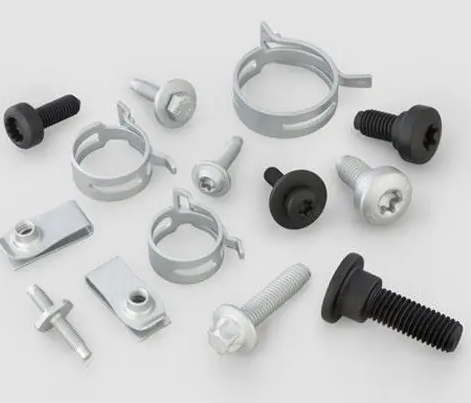
When the ranking is filtered by corrosion risk, thread sensitivity, and dimensional control, Dacromet and similar zinc flake systems usually take the top spot. Not for every steel part, of course. But for small bolts, nuts, washers, clips, stampings, and tight-tolerance machined pieces, this finish solves a problem galvanized coatings often create: too much build on features that still have to fit and assemble cleanly.
Why Dacromet Ranks First
For precision hardware, buyers rarely care about dacromet coating corrosion resistance in isolation. They need corrosion protection that does not ruin thread class, torque behavior, or mating surfaces. That is where zinc flake systems stand out. Guidance gathered by ISO 10683 and ASTM F3393 references treats zinc flake as an engineered fastener coating family, not just another way to say galvanized. The same source notes that many systems are specified in the 480 to 720 hour range or beyond to first red rust in neutral salt spray, with higher-performance variants going further, though results depend on the complete basecoat and topcoat system.
Low build is the second reason it ranks first. One detailed industrial guide places typical dacromet coating thickness at about 5 to 12 μm per side on CNC parts, while broader zinc flake systems are often discussed around 5 to 15 μm. That thin profile helps explain why dacromet coated fasteners are commonly chosen for threads, bearing faces, and close-fit assemblies where hot-dip galvanized coatings can become too heavy.
Heat adds another edge. In one PTSMAKE test example, Dacromet showed no flaking and no red rust after 100 hours at 300°C in that setup. DECC also describes zinc flake systems on brake hardware, springs, clamps, and other parts exposed to temperature swings. That does not make every zinc flake finish identical, but it does explain why this family often outranks electro-galvanized finishes for underbody and brake-area hardware.
Pros and Cons
Pros
- Thin, controlled build helps preserve thread fit and tight tolerances.
- Non-electrolytic application makes it attractive for high-strength steel parts where embrittlement review matters.
- Works well on complex small parts, including clips, washers, springs, and stampings.
- Topcoat systems can support more stable torque-tension behavior than basic zinc plating.
- Better suited than many plated finishes for heat-exposed automotive and industrial hardware.
Cons
- Appearance is usually more matte and industrial than bright electro-galvanized finishes.
- Field repair is less straightforward than touching up large galvanized fabrications.
- "Dacromet" is often used loosely for the wider zinc flake family, so drawings and OEM specs must be checked carefully.
- Performance changes with pretreatment, topcoat, lubricant, and cure control.
- Very small features or internal drives still need functional validation after coating.
Dacromet is usually superior to galvanized when the part is small, threaded, tight-tolerance, high-strength, or exposed to heat and corrosion at the same time.
Best Uses for Fasteners and Tight Tolerance Parts
Think brake fasteners, clamps, seat hardware, stamped brackets, springs, and other parts where a few extra microns can decide whether assembly feels smooth or troublesome. Hot-dip galvanized still wins many large outdoor steel jobs, but for precision hardware this zinc flake family is usually the smarter first look. Automakers, industrial buyers, and anyone weighing it against both hot-dip and electro-galvanized finishes should start here, then verify the exact coating callout, topcoat, and process controls because the right finish only pays off when the supplier can hold those details in production.
Shaoyi Custom Galvanized and Zinc Flake Parts for Automotive Buyers
A coating choice only works when the supplier can hold it in production. That is why this sourcing option ranks near the top. Buyers comparing dacromet coating suppliers are often dealing with more than finish chemistry. They need stamping, machining, assembly, dimensional control, and surface treatment to work together on the same program, especially in automotive parts where a small shift in coating build can affect fit, torque feel, and downstream validation.
Why This Supply Option Ranks in the Top Three
Shaoyi stands out as a practical example of that integrated model. For automakers and Tier 1 suppliers, the company combines high-precision stamping, CNC machining, custom surface treatments, rapid prototyping, and volume production under one supply path. Its stated IATF 16949 certification matters because automotive buyers rarely evaluate dacromet coating fasteners or galvanized parts as isolated items. They evaluate whether the whole manufacturing chain can keep dimensions stable, support traceability, and maintain quality through launch and scale-up.
That logic is consistent with what strong automotive manufacturers emphasize more broadly. Integrated production and documented inspection reduce feedback loops and support consistency, as shown in certified quality systems such as IATF-based inspection workflows and vertically integrated manufacturing models described by OEM stamping suppliers.
Strengths and Limits
Pros
- Useful when coating selection must match real part geometry, not just a generic finish callout.
- Good fit for stamped, machined, and assembled automotive metal parts that may use zinc flake or galvanized finishes.
- Supports sourcing continuity from prototype through high-volume production.
- More practical for programs where dacromet coated bolts, brackets, clips, and small hardware must meet dimensional and quality expectations together.
Cons
- Supplier fit still depends on the exact part family, finish capability, and validation requirements.
- Programs with OEM-specific coating approvals should confirm approved systems early.
- PPAP-style documentation, torque targets, and corrosion requirements should never be assumed without a quote-stage review.
Best Fit for Automotive Programs
This option makes the most sense when the real sourcing problem is coordination. Think seat hardware, underbody brackets, clips, clamps, and mixed assemblies where one drawing may call for zinc flake on one part and galvanized on another. In those cases, the right partner helps connect finish choice to tolerance control, inspection, and production timing. Still, even a capable automotive supplier cannot change the basic rule of selection: part size and geometry keep deciding the winner, and that becomes even clearer on larger outdoor steel where hot-dip galvanizing starts to pull ahead.
Hot Dip Galvanized Finish for Large Outdoor Steel
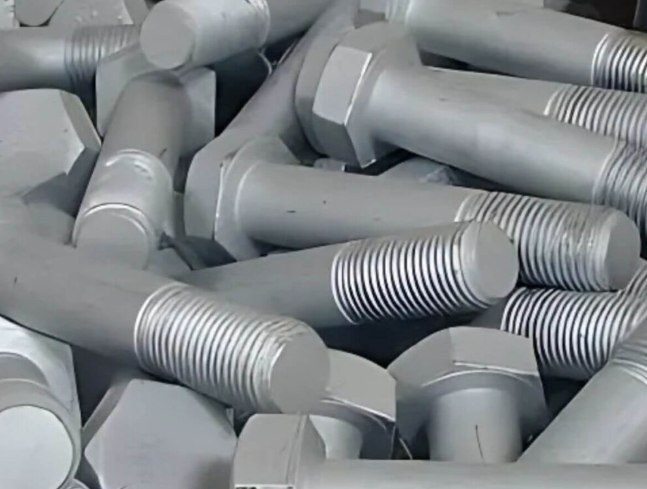
Large outdoor steel changes the ranking. The same coating that feels ideal on a threaded fastener can become the wrong answer on a welded frame, pole bracket, guardrail part, or trailer structure. In that setting, hot-dip galvanized often beats zinc flake systems on simplicity, ruggedness, and long-term outdoor logic. It still ranks below Dacromet-style coatings for precision parts, but it usually ranks above lighter plated finishes when the part is big, exposed, and not especially thread-sensitive.
Where Hot Dip Galvanizing Beats Dacromet
Hot-dip galvanizing protects steel by immersing it in molten zinc, typically around 450°C, creating a metallurgically bonded zinc layer. That basic process, outlined by Global Engineering, is a strong fit for structural and fabricated steel that will live outdoors for years. Think transmission hardware, frames, poles, heavy brackets, and welded assemblies.
This is where the practical answer in the dacromet coating vs hot dip galvanizing debate becomes clear. HDG is often better when coating thickness is not a problem but field durability is. The thicker build that hurts a small bolt can be an advantage on a large bracket. It also offers recognized repair pathways. For specification-driven work, HDG standards guidance points to ASTM A123 for general products, ASTM A153 and ASTM F2329 for hardware and fasteners, and ASTM A780 for repair of damaged areas.
Pros and Cons
Pros
- Very practical for large fabricated steel in outdoor and industrial service.
- Thick zinc coating and sacrificial protection suit harsh exposure well.
- Often easier to justify on frames, rails, supports, and structural pieces than thin precision coatings.
- Established standards and repair practices help on construction and infrastructure jobs.
- Still electrically conductive, which can matter in grounding-related assemblies, though connection design should always be verified.
Cons
- Thicker, rougher coating can interfere with small threads, mating faces, and close-tolerance assemblies.
- High process temperature can distort thin or precision parts.
- Appearance is usually more industrial and less uniform than zinc flake or electro-galvanized finishes.
- Fasteners need extra attention for thread fit. Structure Magazine notes zinc buildup on threads is a real design consideration for HDG fasteners.
- People searching galvanized sometimes compare Dacromet only to HDG and miss electro-galvanized, which is a different, thinner category entirely.
Best Uses for Fabricated Parts and Harsh Outdoor Exposure
Choose hot-dip galvanized for outdoor frames, welded supports, trailer hardware, structural connectors, and similar parts where weather exposure matters more than fine dimensional control. That is also why searches like dacromet coating vs galvanized boat trailer brakes need caution: trailer structures may favor HDG, but smaller brake or fastener parts may still lean toward zinc flake depending on thread tolerance, heat, and OEM design.
The same caution applies to bolt searches such as dacromet coated a490 bolts. Structural bolting is not just about corrosion. Slip behavior, coating compatibility, and specification language matter too, especially on HDG assemblies governed by connection standards.
Editorial verdict: if the part is large, welded, outdoor-exposed, and cost-sensitive, hot-dip galvanized is often the smarter and simpler choice. If the part is small, threaded, or tolerance-critical, it usually is not. That gap gets even clearer when the comparison shifts to thinner plated finishes built for appearance and budget.
Electro Galvanized and Zinc Plated for Budget Precision Parts
Some buyers say electro-galvanized. Others say zinc plated. In many purchasing conversations, they mean the same finish family: zinc applied by electroplating. The more useful question is what comes with that zinc layer, such as thickness, passivate, and topcoat. If a print only says zinc plated, it is worth confirming whether the requirement is an electroplated zinc system such as ASTM F1941 or something broader.
For severe outdoor corrosion, this option sits below zinc flake systems and hot-dip galvanizing. For light exposure, clean appearance, and tight dimensions, it can still be exactly right.
Why This Option Sits Below Dacromet and Hot Dip
The main advantage of electroplated zinc is also its main limit. It is thin. PAVCO places typical electroplated zinc at 5 to 12 microns, which is helpful when threads, mating faces, and small stamped features must stay within tolerance. That same low build usually means less corrosion reserve than thicker hot-dip coatings or well-specified zinc flake systems in harsh service.
Salt spray figures show the difference in positioning, but only as a comparison tool. Simpson Strong-Tie classifies common electroplated zinc finishes such as blue-bright and yellow zinc in its low-corrosion category, with at least 36 and 72 hours to first red rust in ASTM B117 for those specific finishes, while also warning that salt spray is not a real-world life prediction. In practice, that means electro-galvanized works best in milder environments, especially when appearance and fit matter more than maximum outdoor durability.
Pros and Cons
Pros
- Thin coating helps preserve thread fit on screws, nuts, and small precision parts.
- Smooth, bright, and drip-free appearance is attractive for visible hardware. Unbrako notes that zinc electroplating is thin enough that it does not interfere with fastener threads and is typically lower cost.
- Good fit for consumer hardware, appliance parts, covers, light brackets, and cosmetic components.
- Post-plating passivates and sealers can improve service life beyond bare zinc alone, as noted by PAVCO.
Cons
- Usually less durable than zinc flake or hot-dip galvanized finishes in salt, splash, or long-term outdoor exposure.
- Specification language can be vague. Zinc plated without thickness or topcoat details leaves too much open to interpretation.
- High-strength fasteners need careful process control because acid cleaning and electroplating can introduce hydrogen.
- Not the best default for corrosion-critical automotive underbody parts or severe industrial service.
For high-strength bolts and screws, verify embrittlement controls and de-embrittlement baking before treating electroplated zinc as a routine choice.
That caution is not minor. Unbrako explains that hydrogen generated during cleaning and plating can diffuse into steel and embrittle the fastener, with greater risk on higher-strength parts, which is why prompt de-embrittlement baking matters.
Best Uses for Indoor and Lower Exposure Components
This is where the dacromet coating vs zinc plating decision becomes practical. If the part is a cabinet screw, stamped cover, indoor bracket, consumer fastener, or light-duty machine component, electro-galvanized can be the smarter buy. It keeps dimensions stable, looks cleaner than many heavier zinc systems, and usually costs less. If you are comparing dacromet coated screws with bright zinc-plated screws, the plated version often wins on appearance and price, while the zinc flake version more often wins when corrosion margin, torque consistency, or automotive exposure matters more.
Buyers also search e coat vs dacromet as if both are zinc finishes. They are not. E-coat is a separate electrocoated paint-like film family, not a sacrificial zinc layer. Simpson Strong-Tie places plain electrocoating in dry-service, low-corrosion use, so a black or paint-film requirement may point toward a different finish discussion than zinc plating or zinc flake.
Sometimes that shift goes even further. When exposure, maintenance access, and long-term reliability all climb at once, changing the material itself can make more sense than debating one coating against another.
Dacromet Coating Vs Stainless Steel for Low-Maintenance Parts
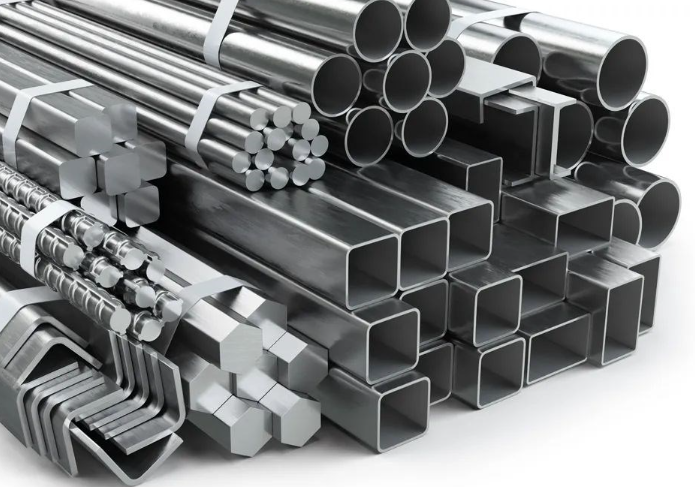
Sometimes the real decision is not which coating wins. It is whether a coated carbon steel part should be replaced with stainless steel altogether. Stainless is not a coating at all. It is a material choice, and in the dacromet coating vs stainless steel debate, that distinction matters when service access is poor, washdown is frequent, or rust staining is unacceptable over the life of the assembly.
When Stainless Steel Is the Better Answer
The practical difference is simple. SPIROL explains that plated or coated carbon steel relies on sacrificial protection that is eventually consumed, while stainless resists general surface rust through a passive chromium-oxide layer. That passive film has essentially no dimensional impact, which is one reason stainless can be attractive for close-fitting parts and threads. So if you are comparing dacromet coating bolts with stainless bolts, stainless can be the better lifecycle choice when touch-up or replacement is difficult.
Washdown environments push the same logic. Repeated cleaning, moisture, and chemicals reward materials that stay corrosion resistant without a separate finish. Guidance on washdown design also highlights geometry, drainage, and crevice reduction, which means material choice and part design work together here. Still, stainless is not automatically superior in every chloride-heavy or mixed-metal application. Pitting, crevice corrosion, and galvanic pairing still need review.
Pros and Cons
Pros
- No coating thickness to disturb threads, fits, or tight-tolerance features.
- Strong choice for long service life, repeated washdown, and visible parts where appearance matters.
- No sacrificial finish to deplete in the usual way coated carbon steel finishes do.
- Often a cleaner answer for chains, guards, and hardware that are hard to inspect or refinish.
Cons
- Initial material cost is often higher, even if lifetime value may be better.
- Threaded stainless parts can gall. Velocity Bolting describes how friction can damage the oxide film and cause adhesive wear or seizure, especially in stainless-on-stainless assemblies run dry.
- Not every stainless alloy performs the same in chloride exposure.
- Galvanic compatibility with neighboring metals still has to be checked.
Best Uses When Maintenance Access Is Limited
Think food equipment, fluid-handling hardware, outdoor enclosures that are rarely opened, or a dacromet coated chain application where wear plus moisture makes coating loss hard to avoid. Stainless is also worth a serious look when downtime, callback risk, or cosmetic complaints cost more than the material premium.
Recommendation: treat stainless as a specialty answer when neither Dacromet nor galvanized fully meets the durability, hygiene, or low-maintenance target. Its place becomes clearest when every finish family is compared on the same buyer scorecard, from thread fit and torque behavior to repairability and service risk.
Dacromet vs Galvanized Comparison by Part Type
Names cause half the confusion in this category. Rapid Fast groups Dacromet and Geomet inside the zinc flake family, while hot-dip galvanize and electro zinc plating sit in different zinc-based categories. So a search for dacromet coating vs geomet is usually a same-family comparison, not the same decision as zinc flake versus galvanized.
Create the Master Comparison Table
For real test context, one ISO 9227 study on 5140 steel bolts found zinc-flake samples showed no red rust after 1000 hours, while electro-galvanized samples exceeded 5 percent red rust after 480 hours and hot-dip galvanized samples after 600 hours. The same study also found the hot-dip coating on those tested bolts was about four times thicker than the zinc-flake and electro-galvanized coatings.
| Finish family | What buyers usually mean | Corrosion resistance | ISO 9227 salt-spray context | Temperature fit | Cost direction | Service-life expectation by environment | Conductivity | Thread fit | Torque behavior | Ideal use cases |
|---|---|---|---|---|---|---|---|---|---|---|
| Dacromet-style zinc flake | Non-electrolytically applied zinc flake. Dacromet and Geomet are brand families within this group. | Usually strongest choice for corrosion-critical small parts | No red rust at 1000 h in the cited bolt study | Often favored where heat is part of the application | Mid | Strong fit for harsh exposure on precision parts | Generally conductive, but contact points still need validation | Very good for threads and close tolerances | Often more controllable with the right topcoat and lubricant | Fasteners, clips, springs, stamped parts, brake-area hardware |
| Hot-dip galvanized | Steel dipped in molten zinc | Strong for large outdoor steel | Red rust appeared earlier than zinc flake in the cited bolt study | Good outdoor durability, but not the usual answer for fine heat-sensitive assemblies | Often economical on larger fabrications | Best matched to outdoor structural and fabricated parts | Conductive, subject to joint design | Can create thread and mating-surface issues | Friction behavior needs assembly attention | Frames, brackets, weldments, trailer hardware, structural steel |
| Electro-galvanized | Electroplated zinc coating | Moderate to lower in harsh environments | Red rust exceeded 5 percent at 480 h in the cited bolt study | Better suited to mild service than heat-heavy or severe corrosion jobs | Low | Best for indoor or lower-exposure service | Conductive | Good for small threads | Can assemble smoothly, but coating friction still affects clamp load | Consumer hardware, covers, light brackets, indoor fasteners |
| Zinc-plated | Usually the buying term for electro-zinc on fasteners | Similar family performance to electro-galvanized | Use the same caution as electro-zinc unless the spec says otherwise | Usually chosen for mild environments | Low | Shorter outdoor life than zinc flake or HDG in aggressive exposure | Conductive | Usually good for precision threads | Smooth feel, but torque values should never be assumed | Budget precision parts, indoor screws, cosmetic components |
| Stainless steel | Material choice, not a coating | Can outperform coatings where maintenance access is poor | Not directly comparable as a coating test family | Depends on alloy and environment | Higher upfront material cost | Often chosen for long-life, low-maintenance service | Conductive, but galvanic pairing still matters | Excellent on fit because there is no added coating thickness | Watch for galling on threaded assemblies | Washdown parts, hard-to-access hardware, appearance-critical assemblies |
What the Table Means for Buyers
Three wording traps matter most. First, galvanized can mean hot-dip galvanized or electro-galvanized, and those are not interchangeable. Second, zinc-plated usually points to the same electroplated family as electro-galvanized in fastener buying. Third, Dacromet-style coatings belong to the zinc flake group, not to the hot-dip group. That is why a dacromet coating standard search rarely ends with one universal brand document. In the same comparative study, the tested systems referenced ISO 10683 for zinc flake fasteners, ISO 1461 for hot-dip galvanized articles, and EN ISO 4042 for electroplated fasteners. A dacromet coating standard pdf query usually signals a need to identify the finish family first, then match the right standard to the part and application.
Fast Decision Rules by Part Category
- Small threaded fasteners - lean toward Dacromet-style zinc flake when corrosion resistance, thread fit, and torque consistency all matter.
- Large outdoor weldments - lean toward hot-dip galvanized when thicker build is acceptable and rugged field durability matters most.
- Cosmetic light-duty parts - lean toward electro-galvanized or zinc-plated when the service is mild and price plus appearance drive the decision.
- Low-maintenance or poor-access assemblies - consider stainless when the real problem is coating depletion, touch-up difficulty, or long-term rust staining.
In short, zinc flake usually wins on small precision parts, hot-dip wins on large exposed steel, electro-zinc wins on low-cost light service, and stainless wins when the better fix is changing the material, not arguing over coatings.
Best Choice by Part Type and Supply Goal
A shortlist only helps if it leads to a confident release decision. In the dacromet coating vs galvanized debate, the most useful final rule is simple: match the finish to part geometry, exposure, and failure risk. Price still matters, of course, but a cheaper finish that creates thread problems, rework, or early corrosion rarely stays cheap for long.
Best Overall Picks
- Shaoyi for automotive supply programs - Best when the real challenge is not just choosing a finish, but coordinating stamping, CNC machining, surface treatment, prototyping, and volume production under IATF 16949 quality control. This is the strongest fit when manufacturability and coating selection must be solved together.
- Dacromet-style zinc flake - Best overall finish for small, corrosion-critical, threaded, and heat-exposed parts, especially automotive hardware and high-strength fasteners.
- Hot-dip galvanized - Best for large fabricated steel, welded outdoor parts, and applications where thicker zinc protection is acceptable.
- Electro-galvanized or zinc-plated - Best for lower-exposure, budget-sensitive, and appearance-conscious parts.
- Stainless steel - Best when coating limits, maintenance access, or long-term appearance make a material change smarter than a finish change.
Choose by Part Geometry and Risk Profile
Part shape still decides more than brand language. Fine threads, close fits, and compact hardware usually favor thin zinc flake systems. Large frames, supports, and weldments often reward heavier galvanized protection. Indoor covers and consumer hardware can justify electro-zinc. Low-access or washdown assemblies may justify stainless instead.
Legacy naming deserves one more review before purchasing. Searches like dacromet coating discontinued or nof metal coatings dacromet often signal older drawings that still use the DACROMET name. NOF Metal Coatings explains that GEOMET was developed from its zinc flake technology as a chromium-free system shaped by newer environmental requirements. For buyers wondering whether dacromet coating rohs compliant is the right question, the practical move is to confirm whether the drawing allows a current zinc flake system that meets present compliance needs. GEOMET is presented as meeting RoHS, REACH, ELV, and WEEE requirements, but the approved finish still has to match the OEM, the print, and the part function.
When to Work With a Qualified Manufacturing Partner
This matters most when one program mixes fasteners, stamped brackets, machined pins, and coated assemblies under the same quality plan. A qualified partner can catch common failure points early, such as legacy finish callouts, tolerance loss after coating, friction targets on threaded parts, and the jump from prototype samples to stable volume supply.
That is where an integrated supplier such as Shaoyi can genuinely help automakers and Tier 1 teams. Its published service scope includes high-precision stamping, CNC machining, custom surface treatments, rapid prototyping, high-volume production, and IATF 16949 certification. That does not make it the right answer for every buyer, but it is a strong fit when coating choice, dimensional control, and supply continuity need to be managed together rather than split across multiple vendors.
The finish ranking itself stays straightforward: zinc flake for precision corrosion-critical parts, hot-dip galvanized for big outdoor steel, electro-zinc for lighter-duty budget parts, and stainless when coatings stop solving the real problem. Choose by part, not by label, and the decision becomes much easier to defend.
FAQs About Dacromet Coating Vs Galvanized
1. What is the main difference between dacromet coating and galvanized?
The biggest difference is that Dacromet is a zinc flake coating, while galvanized is a broad term that can mean either hot-dip galvanizing or electro-galvanizing. In practical buying terms, Dacromet-style finishes are usually chosen when you need corrosion protection with low coating build, especially on threads and tight-tolerance parts. Hot-dip galvanized is usually thicker and better suited to larger outdoor steel, while electro-galvanized is thinner, smoother, and often used for lighter-duty or lower-cost parts.
2. Is dacromet better than hot-dip galvanizing for bolts and fasteners?
For many small bolts, screws, washers, and other threaded fasteners, Dacromet-style zinc flake is often the better fit because it adds less build and is easier to manage on precision features. It is also commonly considered when assembly consistency, corrosion performance, and hydrogen embrittlement review matter on high-strength parts. Hot-dip galvanizing can still be the better answer for larger fasteners or outdoor structural hardware, but only when the added thickness and thread impact are acceptable under the drawing or standard.
3. When is galvanized the better choice than dacromet?
Galvanized becomes the stronger option when the part is large, rugged, and exposed outdoors for long periods. Frames, welded brackets, structural pieces, trailer components, and other fabricated steel parts often benefit more from hot-dip galvanizing than from a thin zinc flake finish. It can also be the simpler and more economical route when the application is not highly sensitive to coating thickness, surface smoothness, or close thread fit.
4. Should I choose stainless steel instead of either coating?
Sometimes yes. If the part is hard to access, must stay clean in washdown service, or needs long-term appearance without depending on a sacrificial coating, stainless steel can be the smarter move. That said, stainless is not automatically the best answer in every environment, because cost, galling on threads, and galvanic compatibility with nearby metals still need review. It is best treated as a material-level solution when both Dacromet and galvanized start to look like compromises.
5. Is DACROMET discontinued, and when should buyers work with a qualified supplier on replacement specs?
Many older drawings still use DACROMET as a legacy name, but buyers should not assume every modern zinc flake coating is automatically interchangeable. If the part is for automotive or other specification-driven work, the replacement finish must be checked against OEM approval, compliance requirements, torque behavior, and dimensional impact. This is where a qualified manufacturing partner becomes valuable. For example, automotive suppliers that combine stamping, CNC machining, surface treatment, prototyping, and production under an IATF 16949 quality system, such as Shaoyi, can help teams validate the coating choice alongside real part geometry instead of treating the finish as a stand-alone decision.