 Small batches, high standards. Our rapid prototyping service makes validation faster and easier —
  EN
EN


Metal Machining Service Secrets: 9 Essential Points Buyers Miss
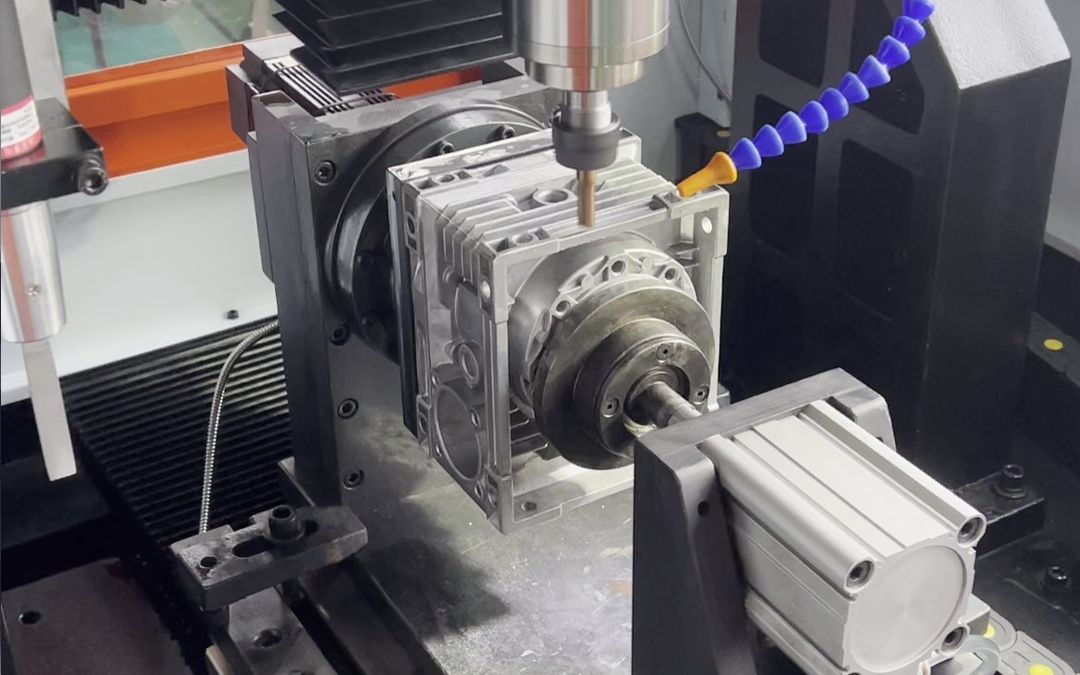
What Metal Machining Service Actually Means for Modern Manufacturing
Ever wondered how a solid block of aluminum transforms into a perfectly engineered aerospace component? Or how automotive manufacturers produce thousands of identical precision parts? The answer lies in metal machining - a process that remains the backbone of modern manufacturing despite the rise of newer technologies.
A metal machining service encompasses subtractive manufacturing processes where specialized cutting tools systematically remove material from solid metal workpieces. Think of it like sculpting, but with computer-controlled precision measured in thousandths of an inch. The result? Finished components that meet exact specifications for industries where failure simply isn't an option.
From Raw Metal to Precision Parts
The journey from raw material to machined parts follows a fascinating path. It begins with a solid metal block, bar, or casting - your starting workpiece. Through turning, milling, drilling, and grinding operations, material is carefully carved away until only the desired geometry remains. Unlike processes that add material layer by layer, machining shapes components by strategic removal, achieving surface finishes and dimensional accuracy that other methods struggle to match.
What makes this process remarkable is its versatility. Whether you need a single prototype or a million identical components, precision machining services can deliver. If you've ever searched for "cnc machining near me," you've likely discovered that these capabilities exist in facilities ranging from small job shops to massive production centers - each offering different specializations and capacity levels.
The Subtractive Manufacturing Difference
How does metal machining compare to other manufacturing methods? Consider the alternatives: casting pours molten metal into molds, forging shapes heated metal under pressure, and additive manufacturing (3D printing) builds parts layer by layer. Each has its place, but machining offers distinct advantages that keep it essential across industries.
According to research from Dassault Systemes, subtractive manufacturing produces parts with smoother finishes and tighter tolerances than additive processes. While 3D printing excels at complex internal geometries and rapid prototyping, machining delivers superior material properties and surface quality - critical factors for high-performance applications.
Professional metal machining services share several core characteristics that define their value:
- Precision tolerances: Modern CNC machines achieve tolerances as tight as ±0.001 inches, enabling components that fit and function exactly as designed
- Material versatility: From soft aluminum to hardened steel, titanium to exotic alloys, machining handles virtually any metal with appropriate tooling and techniques
- Repeatability: Once programmed, CNC equipment reproduces identical parts consistently - whether you need ten pieces or ten thousand
- Scalability: The same processes that create prototypes can scale to full production volumes, streamlining the path from development to manufacturing
Despite the emergence of additive manufacturing and other innovative technologies, metal machining remains indispensable. As noted by industry analysts at Kirmell, CNC machining doesn't compete with newer methods - it complements them. Many manufacturing workflows combine technologies, using 3D printing for initial prototypes before transitioning to machining for production parts requiring superior strength and precision.
Understanding these fundamentals positions you to make smarter decisions when sourcing machined components. The sections ahead will dive deeper into specific processes, materials, and selection criteria that separate successful projects from costly mistakes.
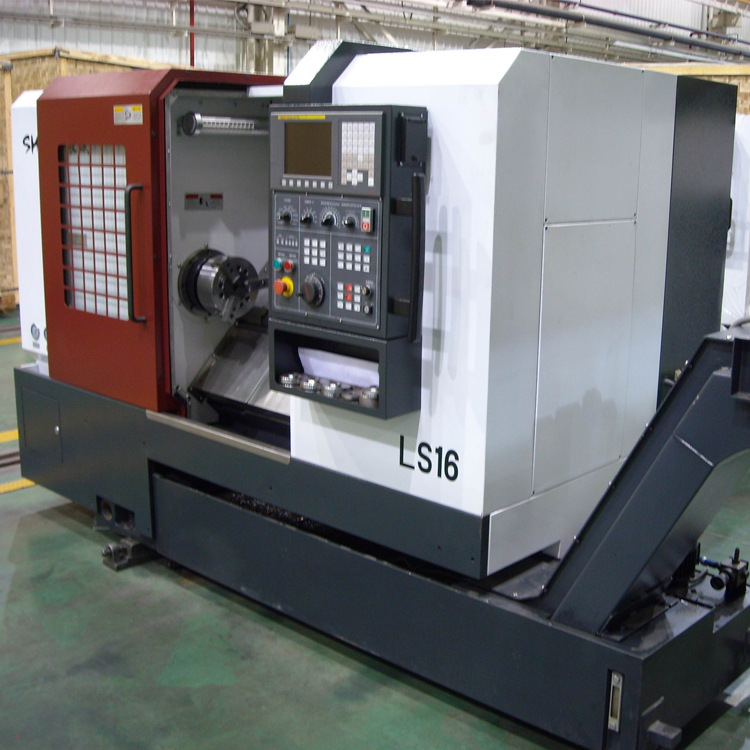
Core Metal Machining Processes Every Buyer Should Understand
Imagine you're sourcing parts for a critical project. The supplier mentions milling, turning, and Swiss machining - but what do these terms actually mean for your components? Understanding the core processes behind metal machining helps you communicate requirements clearly, evaluate quotes accurately, and ultimately receive parts that meet your specifications.
Each machining process excels at specific geometries and applications. Selecting the wrong approach can mean higher costs, longer lead times, or parts that don't perform as expected. Let's break down what each process delivers.
CNC Milling Explained
CNC milling uses rotating cutting tools that move across a stationary workpiece to remove material. Think of it as a highly precise carving operation - the cutter spins at thousands of RPMs while computer-controlled movements guide it along programmed paths.
This process creates complex 3D shapes, flat surfaces, slots, pockets, and intricate contours. According to manufacturing experts at Unionfab, milling encompasses several specialized operations:
- Face milling: Creates flat surfaces by removing material from the workpiece's face
- End milling: Cuts along the sides of the cutter for slots, pockets, and profiles
- Profile milling: Traces along contours to achieve intricate shapes
- Drilling and tapping: Creates holes and threads using specialized tools
What makes milling particularly versatile? Multi-axis capabilities. Standard 3-axis machines move along X, Y, and Z coordinates. But 4-axis and 5-axis CNC milling adds rotational movements, enabling the cnc cutting machine to approach workpieces from virtually any angle. This eliminates multiple setups and produces complex geometries in single operations - aerospace turbine blades and medical implants often require this capability.
CNC milled parts span industries from automotive engine blocks to electronic housings. The process handles aluminum, steel, brass, plastics, and composites with appropriate tooling adjustments.
Turning Operations and Capabilities
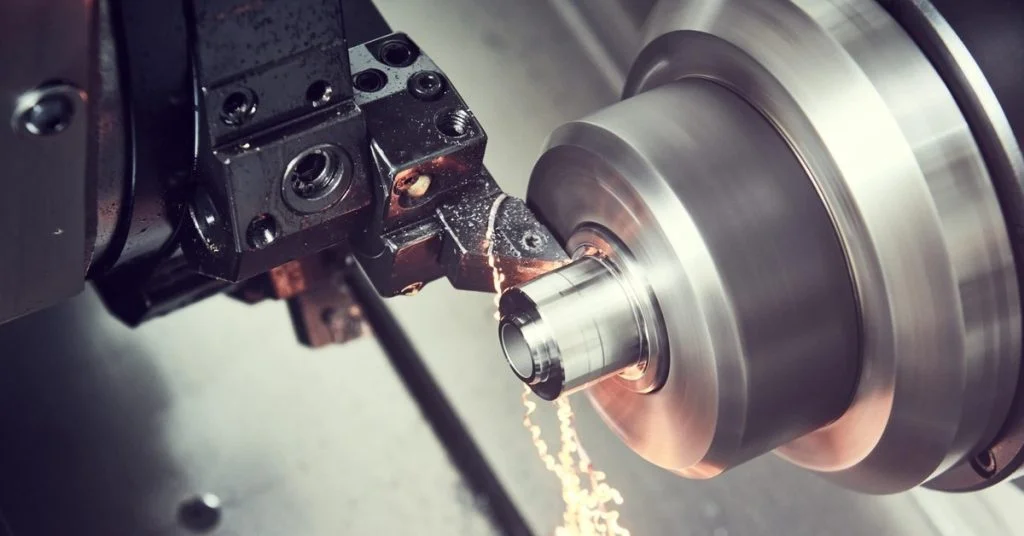
While milling moves the tool around a stationary part, cnc turning flips this relationship. The workpiece rotates rapidly while stationary cutting tools approach it to remove material. This makes turning ideal for cylindrical and rotationally symmetric components.
Picture a lathe spinning a metal bar while a cutting tool shapes its exterior. CNC turning services automate this process with computer precision, producing shafts, pins, bushings, and threaded fasteners with exceptional accuracy.
Common turning operations include:
- Facing: Creates flat surfaces on workpiece ends
- Threading: Adds precise external or internal threads
- Grooving: Produces recesses and channels
- Boring: Enlarges or refines existing holes
- Knurling: Creates textured grip patterns
The rotational nature of turning typically achieves tighter tolerances on cylindrical features than milling achieves on complex surfaces. For high-volume production of rotationally symmetric parts, turning excels at speed and consistency.
Specialized Processes for Complex Geometries
Sometimes standard milling and turning aren't enough. That's where specialized processes come into play.
Swiss machining represents the precision pinnacle for small, intricate components. Originally developed for watchmaking, this process uses a sliding headstock that supports the workpiece extremely close to the cutting point. The result? Minimal deflection and exceptional accuracy on parts as small as 0.5mm in diameter.
According to Hartford Technologies, Swiss machining proves essential in medical device manufacturing. Consider pacemaker gears or surgical instrument components - these parts require tolerances measured in microns. Swiss machines consistently replicate intricate features with minimal variation, a critical requirement when patient safety depends on component reliability.
Electronics manufacturing similarly relies on swiss machining for connector pins, sensor housings, and miniature fasteners where precision directly impacts performance.
Electrical Discharge Machining (EDM) takes a completely different approach. Instead of cutting, it uses electrical sparks to erode material from conductive metals. EDM excels at creating sharp internal corners, deep narrow slots, and complex die cavities that conventional cutting tools simply cannot reach.
Grinding serves as a finishing process that achieves the tightest tolerances and smoothest surface finishes. After primary machining operations, grinding removes minimal material to bring dimensions within final specifications - often achieving tolerances under ±0.0005 inches.
Understanding how these processes work together helps you recognize when suppliers recommend cnc fabrication approaches that match your requirements versus those pushing unnecessary capabilities.
Process Comparison at a Glance
When evaluating which process fits your project, consider this comprehensive breakdown:
| Process Name | Best Applications | Typical Tolerances | Material Suitability |
|---|---|---|---|
| CNC Milling (3-axis) | Flat surfaces, pockets, slots, simple 3D shapes | ±0.005" (±0.127mm) | Aluminum, steel, brass, plastics, composites |
| CNC Milling (5-axis) | Complex contours, turbine blades, impellers, mold cavities | ±0.002" (±0.05mm) | All machinable metals including titanium |
| CNC Turning | Shafts, pins, bushings, threaded components | ±0.002" (±0.05mm) | Aluminum, steel, brass, stainless steel |
| Swiss Machining | Miniature components, medical devices, electronics pins | ±0.0005" (±0.0127mm) | Stainless steel, titanium, brass, precious metals |
| EDM | Sharp corners, deep slots, hardened steel dies | ±0.0002" (±0.005mm) | Conductive metals only (steel, titanium, carbide) |
| Grinding | Final finishing, tight-tolerance surfaces, bearing journals | ±0.0001" (±0.0025mm) | Hardened steels, ceramics, carbides |
Notice how tolerances tighten as processes become more specialized - but so do costs. Standard cnc cutting operations handle most applications economically, while precision processes reserve their capabilities for components that truly demand them.
With these process fundamentals established, the next critical decision involves material selection. The metal you choose impacts not only part performance but also machining costs and lead times in ways that often surprise first-time buyers.
Choosing the Right Metal for Your Machining Project
Here's a secret that catches many buyers off guard: the metal you select can swing your project cost by 300% or more - before a single chip is cut. Why? Because material choice affects everything from machine time and tool wear to surface finish quality and part longevity.
Understanding machinability ratings helps you predict these impacts. These ratings compare how easily different metals can be cut, using free-machining steel (rated at 100) as the baseline. A material rated at 200 machines twice as easily, meaning faster cycle times and lower costs. Something rated at 50? Expect longer operations and more frequent tool changes. According to Machining Doctor's comprehensive machinability chart, these ratings directly correlate with production timelines and expenses.
Let's explore the metals you'll encounter most frequently - and the trade-offs each presents.
Aluminum Alloys for Lightweight Applications
If you're looking for the most cost-effective machining experience, aluminum machining should top your list. With machinability ratings ranging from 150 to 300 depending on the alloy, aluminum practically flies off cutting tools. This translates directly to shorter cycle times and lower per-part costs.
What makes aluminum so machiner-friendly? Its softness allows higher cutting speeds without excessive heat buildup. The material also conducts heat away from the cutting zone efficiently - a property that extends tool life and enables aggressive material removal rates.
Common aluminum alloys and their strengths include:
- 6061-T6: The workhorse alloy. Excellent machinability, good strength-to-weight ratio, and corrosion resistance. Ideal for general structural components, automotive parts, and consumer products.
- 7075-T6: Higher strength approaching some steels, making it popular for aerospace applications. Slightly lower machinability but still efficient to process.
- 2024: Outstanding fatigue resistance. Aircraft structures rely heavily on this alloy.
According to JLCCNC's material analysis, Aluminum 6061 comes out as the best overall performer for general-use parts where moderate strength and low cost matter most. For businesses targeting fast lead times, aluminum is the go-to material.
Steel and Stainless Steel Considerations
Steel presents a different equation. While raw material costs often run lower than specialty alloys, machining characteristics vary dramatically across the steel family.
Free-machining steels like 12L14 (rated at 170) contain additives that help chips break cleanly and reduce friction. These work-hardened steels machine almost as easily as aluminum. Standard carbon steels rate around 70-80, requiring more conservative cutting parameters.
Stainless steel? That's where things get challenging. Grades like 304 and 316 rate between 45-60 on the machinability scale. The same properties that make stainless corrosion-resistant - its chromium content and metallurgical structure - cause it to work-harden during cutting. This means:
- Slower feed rates to prevent excessive heat
- More frequent tool replacements due to abrasive wear
- Specialized coolant strategies to manage heat buildup
- Higher overall machining costs despite lower material prices
However, when your application demands corrosion resistance, hygiene compliance, or elevated temperature performance, stainless steel justifies its higher machining cost. Medical instruments, food processing equipment, and marine components often require nothing less.
Specialty Metals for Demanding Environments
Sometimes standard materials simply won't perform. That's when you turn to specialty alloys - but expect significantly different machining dynamics.
Brass and Bronze: Need wear resistance and low friction? Machining bronze delivers excellent results. Bronze cnc operations produce bearing surfaces, bushings, and wear plates that outperform steel in sliding applications. You can machine bronze efficiently with machinability ratings around 100-120. Brass machines even easier (rating 300), making it ideal for functional and aesthetic components in small batches - think decorative hardware, plumbing fittings, and electrical connectors.
Titanium: Aerospace's favorite metal combines exceptional strength-to-weight ratio with corrosion resistance. But titanium's machinability rating of just 22 tells the real story. Its low thermal conductivity concentrates heat at the cutting edge, rapidly wearing tools. Expect machining costs 5-10 times higher than aluminum. Titanium is only cost-effective in industries where performance demands override all else.
Nitronic 60: This nitrogen-strengthened stainless steel offers outstanding galling and wear resistance. According to Cer-Mac's specialty machining expertise, materials like Nitronic 60 can strain and prematurely damage cutting tools, requiring defensive machining practices and specialized tooling.
Kovar: When your application demands hermetic sealing between metal and glass or ceramics, Kovar's unique thermal expansion properties become essential. This iron-nickel-cobalt alloy matches the expansion characteristics of certain glasses, making it invaluable for electronic packaging, vacuum tubes, and aerospace sensor housings. However, Kovar's toughness and low thermal conductivity create significant machining challenges - only specialized cutting tools with protective coatings can handle it efficiently.
Beyond Metals: Worth noting that machining nylon and other engineering plastics follows similar selection principles. Materials like nylon for machining offer excellent wear resistance and self-lubricating properties for specific applications, though they require different tooling and cutting strategies than metals.
Material Comparison at a Glance
This table summarizes key characteristics to guide your selection:
| Material Type | Machinability Rating | Key Properties | Common Applications |
|---|---|---|---|
| Aluminum 6061 | 180-200 | Lightweight, excellent thermal conductivity, corrosion resistant | Automotive parts, electronics housings, structural components |
| Aluminum 7075 | 120-150 | High strength-to-weight ratio, fatigue resistant | Aerospace structures, high-stress components |
| Free-machining Steel (12L14) | 170 | Excellent chip formation, economical | High-volume fasteners, pins, bushings |
| Stainless Steel 304/316 | 45-60 | Corrosion resistant, hygienic, temperature stable | Medical devices, food equipment, marine hardware |
| Brass | 300 | Excellent machinability, decorative finish, low friction | Plumbing, electrical connectors, decorative parts |
| Bronze (CNC machining bronze) | 100-120 | Wear resistant, self-lubricating, corrosion resistant | Bearings, bushings, marine components |
| Titanium (Grade 5) | 22 | Highest strength-to-weight, biocompatible, corrosion proof | Aerospace, medical implants, performance automotive |
| Kovar | 30-40 | Low thermal expansion, glass-to-metal sealing compatible | Electronic packaging, hermetic seals, sensors |
| Nitronic 60 | 35-45 | Exceptional galling resistance, high strength | Valve components, wear surfaces, marine shafts |
Remember: a lower machinability rating doesn't mean you should avoid that material. It means you should factor the additional machining time and tooling costs into your project budget. The right material is the one that meets your performance requirements at the lowest total cost - including both material and manufacturing expenses.
With material selection clarified, the next question becomes: how tight do your tolerances really need to be? The answer affects cost more dramatically than many buyers realize.
Tolerance and Precision Capabilities in Metal Machining
You've selected the perfect material and identified the right machining process. But here's where many projects stumble: specifying tolerances that don't match actual requirements. Request tolerances tighter than necessary? You'll pay premium prices for precision you don't need. Specify them too loosely? Your parts won't function as designed.
Understanding tolerance notation and what precision levels are actually achievable helps you communicate requirements that balance performance with cost. Let's decode what those numbers on your drawings really mean.
Understanding Tolerance Notation
Tolerances define the acceptable variation from a nominal dimension. When a drawing calls for a hole diameter of 0.500" ±0.005", the finished dimension can range from 0.495" to 0.505" and still meet specification. That ±0.005" represents the tolerance band - the window of acceptability.
You'll encounter several tolerance formats depending on industry and application:
- Bilateral tolerances (±): Variation allowed equally in both directions. Example: 1.000" ±0.002" means acceptable range is 0.998" to 1.002"
- Unilateral tolerances: Variation permitted in only one direction. Example: 1.000" +0.000/-0.005" allows the dimension to be smaller but not larger
- Limit dimensions: States the maximum and minimum acceptable values directly. Example: 0.998"/1.002"
The relationship between tolerances and cost follows a predictable pattern: tighter tolerances require slower cutting speeds, more precise equipment, additional inspection steps, and often secondary finishing operations. According to Makerverse's tolerance guide, every incremental improvement in precision comes with corresponding cost increases that can escalate quickly.
Here's the critical insight: not every dimension on your part needs tight tolerances. Identify which features are truly critical - mating surfaces, bearing journals, seal grooves - and specify precision only where function demands it. Reference dimensions that don't affect assembly or performance can remain at standard tolerances, keeping costs manageable.
What Precision Levels Are Achievable
Different machining processes deliver different precision capabilities. Understanding these ranges helps you match specifications to realistic manufacturing outcomes.
Common tolerance ranges and their typical applications include:
- ±0.010" (±0.25mm): Standard commercial tolerance. Suitable for non-critical dimensions, general structural components, and parts where fit isn't crucial
- ±0.005" (±0.127mm): Precision tolerance achievable with standard CNC equipment. Appropriate for most functional components, housings, and brackets
- ±0.002" (±0.05mm): High precision requiring careful machine setup. Used for close-fitting assemblies and cnc machined parts requiring consistent performance
- ±0.001" (±0.025mm): Precision machining services territory. Demands temperature-controlled environments and premium inspection
- ±0.0005" (±0.0127mm) and tighter: Ultra-precision work requiring specialized equipment like Swiss machines or grinding. Reserved for medical devices, optical components, and aerospace-critical parts
Process selection directly impacts achievable tolerances. CNC turning typically achieves tighter tolerances on cylindrical features than milling achieves on complex 3D surfaces. Why? The workpiece rotation in turning creates inherent symmetry, while milling must account for tool deflection across varying geometries. For cnc machining parts requiring the tightest specifications, precision cnc machining services often combine processes - roughing with standard milling followed by finish grinding, for example.
Surface Finish and Functional Performance
Beyond dimensional tolerances, surface finish significantly impacts how parts perform. Roughness Average (Ra) measures the microscopic peaks and valleys across a surface, expressed in micrometers (μm) or micro-inches (μ-in).
According to Get It Made's surface roughness analysis, the standard "as-machined" finish of Ra 3.2 μm is smooth to touch but shows visible tool marks. This finish suits most applications, but specific functions demand different specifications:
- Ra 3.2 μm (125 μ-in): Standard machined finish. Visible tool marks, suitable for non-contact surfaces and parts receiving additional coatings
- Ra 1.6 μm (63 μ-in): Smooth finish with minimal visible marks. Appropriate for sliding surfaces and general aesthetic requirements
- Ra 0.8 μm (32 μ-in): Fine finish for sealing surfaces, hydraulic components, and bearing journals
- Ra 0.4 μm (16 μ-in): Very smooth finish requiring additional machining passes or polishing. Used for high-performance seals and precision sliding surfaces
Surface finish affects three critical performance factors. First, wear resistance - rougher surfaces create higher friction and accelerate degradation. Second, sealing capability - O-rings and gaskets require specific Ra ranges to function properly. Third, aesthetics - consumer products often demand finishes smoother than functional requirements dictate.
As noted by surface finishing experts, smoother finishes require slower machining speeds, additional finishing passes, or secondary processes like polishing. Costs increase as Ra values decrease, so specify surface finish requirements only where function or appearance truly demands them.
Ensuring Consistency Across Production
Achieving tight tolerances on one part is straightforward. Maintaining them across thousands of parts? That requires systematic quality control.
Statistical Process Control (SPC) provides the methodology. According to Six Sigma's SPC overview, this data-driven approach monitors process performance in real-time, distinguishing between normal variation and significant deviations requiring correction.
For high-volume automotive and aerospace components where every part must meet specification, SPC becomes essential. Control charts track measurements throughout production runs, flagging trends before they result in out-of-tolerance parts. This proactive approach prevents defects rather than just detecting them.
When evaluating precision cnc machining services for critical applications, ask about their SPC implementation. Providers with robust statistical controls demonstrate their ability to maintain consistency - not just hit specifications on sample parts, but deliver that quality across your entire order.
With tolerance fundamentals clarified, the next consideration involves industry-specific requirements. Different sectors demand different certifications and documentation - understanding these expectations helps you select partners equipped to meet your actual compliance needs.
Industry Applications and Quality Certifications Explained
You've identified your process, selected your material, and specified tolerances. But here's a question that separates informed buyers from those headed for costly surprises: does your machining partner hold the certifications your industry actually requires?
Certifications aren't just marketing badges. They represent documented systems, verified processes, and accountability structures that directly affect whether your parts will pass incoming inspection - or trigger expensive rejections. Different industries impose vastly different requirements, and understanding these expectations before you request quotes saves significant headaches downstream.
Automotive Sector Requirements
The automotive industry demands consistent, defect-free parts at scale. A single faulty component can trigger recalls affecting millions of vehicles - and the liability exposure that follows. This reality shapes everything about automotive quality expectations.
According to American Micro Industries' certification guide, IATF 16949 is the global standard for automotive quality management, combining ISO 9001 principles with sector-specific requirements for continuous improvement, defect prevention, and stringent supplier oversight.
What does IATF 16949 actually require? Suppliers must demonstrate:
- Advanced product quality planning (APQP): Structured methodology ensuring new products meet requirements before production begins
- Production part approval process (PPAP): Documentation proving manufacturing processes consistently produce conforming parts
- Failure mode and effects analysis (FMEA): Systematic identification of potential failures and preventive measures
- Statistical process control: Ongoing monitoring ensuring consistency across production runs
For automotive applications, working with non-certified suppliers creates significant risk. Even if parts meet specifications, missing documentation can disqualify them from use in certified supply chains.
Aerospace and Medical Standards
If automotive requirements seem demanding, aerospace cnc machining raises the bar further. When components operate at 30,000 feet or inside patients' bodies, failure consequences extend beyond financial liability to human safety.
AS9100D for Aerospace: This standard builds upon ISO 9001 while adding requirements specific to aviation, space, and defense. According to industry certification experts, AS9100 emphasizes risk management, stringent documentation, and product integrity control throughout complex supply chains.
Aerospace certification demands complete material traceability - knowing exactly which material lot produced each component. This enables root cause analysis when issues arise and ensures affected parts can be identified across the supply chain. For specialty materials like those requiring kovar machining services for hermetic sealing applications, this traceability becomes especially critical given the specialized performance requirements.
ISO 13485 for Medical Devices: Medical machining operates under different regulatory frameworks than industrial manufacturing. As detailed by NSF International's analysis, ISO 13485 emphasizes regulatory compliance and risk management to ensure the safety and effectiveness of medical devices.
What distinguishes medical device certification? Key requirements include:
- Design controls: Formal verification and validation procedures ensuring devices perform as intended
- Risk management integration: Assessment embedded throughout all quality system processes
- Post-market surveillance: Systems for collecting field data, investigating complaints, and reporting adverse events
- Enhanced traceability: Particularly stringent for implantable devices where patient safety depends on knowing exactly what was manufactured when
The FDA has aligned its requirements with ISO 13485, transitioning to the Quality Management System Regulation (QMSR) with full enforcement beginning February 2026. Suppliers serving medical device manufacturers must prepare for these harmonized expectations.
What Certifications Actually Mean
Beyond specific industry standards, certifications indicate something fundamental about a machining partner: their commitment to documented, repeatable processes rather than ad-hoc operations.
According to certification specialists, formal certifications assure clients and stakeholders of a company's commitment to quality at every step. But what does this mean practically?
Key certifications and what each ensures:
- ISO 9001: Baseline quality management system. Establishes documented workflows, performance monitoring, and corrective action processes. Required foundation for most industry-specific certifications
- IATF 16949: Automotive-specific requirements including defect prevention, supplier management, and continuous improvement methodologies
- AS9100D: Aerospace and defense requirements emphasizing configuration management, risk control, and complete supply chain traceability
- ISO 13485: Medical device quality system focusing on regulatory compliance, design controls, and patient safety documentation
- NADCAP: Accreditation for special processes like heat treating, chemical processing, and nondestructive testing - validating process-specific controls beyond general quality systems
Why do certifications matter beyond marketing? Certified professionals have undergone rigorous training emphasizing accuracy, process repeatability, and adherence to specifications. A certified workforce demonstrates a uniform baseline of knowledge where everyone understands best practices and safety protocols.
Certifications also formalize procedures, define control points, and enable ongoing compliance monitoring. This makes it easier for organizations to trace operations and continuously improve. When you're searching for cnc machine shops near me or evaluating machining shops near me, certification status provides an objective filter for capability assessment.
Different industries impose varying documentation, inspection, and material traceability requirements that directly affect project scope and pricing. A shop quoting aerospace work without AS9100 certification either cannot actually deliver compliant parts or hasn't factored in the documentation burden - either scenario creates problems for your project.
Understanding these certification requirements positions you to ask the right questions before committing to suppliers. But certifications represent just one factor in the total cost equation - the next section breaks down what actually drives machining costs and lead times.
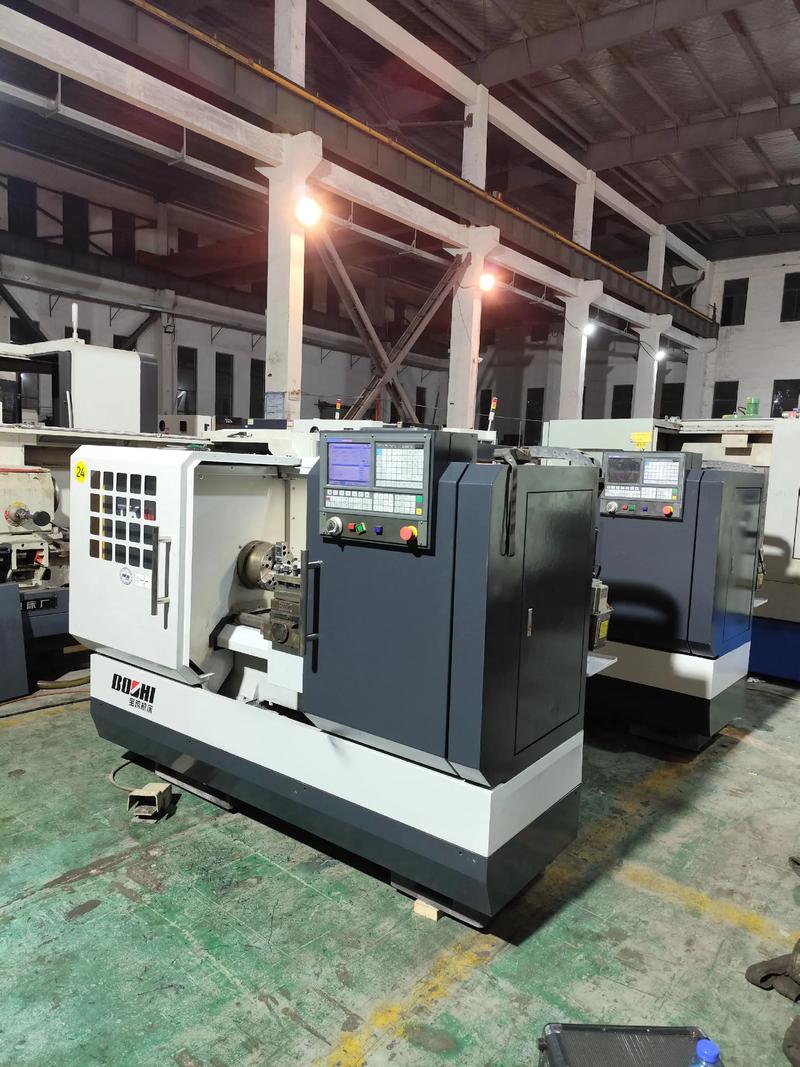
Understanding Metal Machining Costs and Lead Time Factors
You've received three quotes for the same part - and they vary by 40%. What's going on? Unlike commodity purchases where pricing follows predictable patterns, machinist metal cost calculations involve interconnected variables that compound in unexpected ways. Understanding these factors helps you interpret quotes accurately, identify cost-saving opportunities, and set realistic expectations before production begins.
When requesting an online machining quotes or cnc quote online, the numbers you see reflect far more than raw material plus machine time. Let's break down what actually drives those figures - and which factors you can influence.
What Drives Machining Costs
Every machining quote reflects a combination of fixed and variable expenses. According to TMC Technologies' cost analysis, the primary components include hourly machine rates ($35-$120 depending on equipment complexity), material costs, labor for setup and supervision, and overhead covering everything from tooling wear to facility expenses.
But here's what many buyers miss: these factors don't add up linearly. A design change that seems minor - adding a slightly tighter tolerance, for instance - can cascade through multiple cost categories simultaneously.
Cost factors ranked by typical impact on custom machined parts pricing:
- Part complexity and machining time: The single largest cost driver. Complex geometries with deep pockets, thin walls, or intricate details require sophisticated machining strategies, multiple setups, and slower cutting speeds. According to Modelcraft's manufacturing analysis, features like sharp internal corners may require specialized equipment like 5-axis mills, which carry higher operating costs
- Material selection: Beyond raw material price, machinability dramatically affects cycle time. Titanium costs more than aluminum to purchase - but the machining time difference amplifies that gap by 5-10x. Harder materials also accelerate tool wear, adding indirect costs
- Tolerance requirements: Tighter tolerances demand slower feeds, more finishing passes, and extensive inspection. Tolerances below ±0.001" may require secondary grinding operations, effectively doubling processing time for critical features
- Surface finish specifications: Standard machined finishes (Ra 3.2 μm) come included. But requirements for single-digit Ra values necessitate additional processes like polishing or lapping - each adding time and cost
- Order volume: Setup costs remain relatively fixed whether you order 10 parts or 1,000. Programming the CNC, fixturing the workpiece, and running first-article inspection happens regardless of quantity. For low-volume orders, these costs spread across fewer parts, increasing per-unit pricing significantly
- Setup and programming: Complex parts requiring multiple setups or custom machine work see these costs concentrated heavily. Separating geometries into simpler components that can be assembled later sometimes reduces overall expense
The interplay between these factors explains quote variations. One supplier might have excess capacity on 5-axis equipment, making complex parts more economical. Another might specialize in high-volume production where setup amortization favors larger orders. Understanding your project's cost drivers helps you identify which suppliers offer genuine value versus simply lower prices.
Design Choices That Impact Your Budget
Your CAD file contains hidden cost implications that become visible only during manufacturing. According to component design research, certain features predictably increase machining time and tool wear - knowledge that can inform design decisions before quotes are requested.
Features that escalate costs include:
- Deep pockets: Require extended tool lengths that compromise stability, potentially causing poor surface finishes or broken tools. Both outcomes increase manufacturing time and costs
- Thin walls: Risk deflection during cutting, requiring lighter passes and slower speeds to maintain dimensional accuracy
- Tight internal corners: Standard end mills create radiused corners naturally. Sharp internal corners require smaller tools, EDM operations, or multi-axis approaches - all adding expense
- Non-standard hole sizes: Holes matching standard drill increments (1/32" for imperial, 0.1mm for metric) cut quickly. Custom sizes may require boring operations that take significantly longer
- Excessive tight tolerances: Specifying ±0.001" everywhere when only mating surfaces require it multiplies inspection time and rejection risk
The design must also consider measurement capabilities. As noted by manufacturing experts, if critical dimensions are difficult to verify on the shop floor, production may require stopping for advanced measurement techniques or external inspection - both extending lead times and costs.
Lead Time Variables You Can Control
When someone asks "how long will this take?" the honest answer is: it depends on factors both within and outside your control. According to Smucker Laser's manufacturing analysis, lead time encompasses everything from order placement to finished delivery - and multiple variables influence that timeline.
Factors affecting your project timeline:
- Material availability: Common aluminum and steel alloys typically ship within days. Specialty materials like titanium, Kovar, or specific stainless grades may require weeks for procurement. When certain metals are in high demand, lead times extend while waiting for supply
- Machine scheduling: Shops balance multiple projects simultaneously. Your job enters a queue influenced by existing commitments, rush orders from other customers, and equipment availability. Shops with available capacity often quote faster turnaround
- Part complexity: Projects requiring intricate machining or multiple fabrication steps naturally take longer. Clear communication during quoting helps streamline production planning
- Finishing requirements: Post-machining operations like anodizing, plating, or heat treating add days or weeks. These often occur at specialty facilities, introducing additional scheduling dependencies
- Inspection protocols: Thorough quality checks ensure product integrity but add time. Parts requiring 100% inspection, CMM verification, or first-article documentation extend timelines beyond those needing only sample checking
- Order changes: Modifications to specifications or quantities after production begins disrupt workflow and extend delivery. Finalizing requirements before approval minimizes these delays
What can you control? Material selection significantly impacts availability - designing for commonly stocked alloys rather than exotic grades reduces procurement delays. Providing complete, accurate drawings upfront eliminates back-and-forth clarification. And realistic timeline expectations from the start enable better scheduling versus last-minute rush requests that incur premium charges.
According to manufacturing research, building relationships with dependable suppliers who maintain strategic inventory and communicate proactively helps mitigate factors outside your direct control. The best partners flag potential delays early rather than missing deadlines silently.
Understanding these cost and lead time dynamics positions you to optimize designs before requesting quotes - the focus of the next section, where we'll explore Design for Manufacturability principles that reduce expenses without compromising function.
Design Principles That Optimize Your Parts for Machining
What if you could reduce machining costs by 15-40% without changing what your part does? According to Modus Advanced's engineering research, that's exactly what effective Design for Manufacturability (DFM) delivers - along with lead time reductions of 25-60% compared to non-optimized designs.
Here's the reality: decisions made during the design phase ripple through every subsequent manufacturing step. A seemingly minor choice - like specifying an unnecessary tight tolerance or choosing an overly small corner radius - can transform a straightforward CNC operation into a complex, time-intensive process. The good news? Most cost-inflating design issues are easily avoided once you know what to look for.
Let's explore the principles that separate cost-effective designs from expensive ones - before you submit for quotes.
Avoiding Common Design Pitfalls
Certain design features consistently cause manufacturing headaches. Understanding why helps you make informed trade-offs between ideal geometry and practical machinability.
Sharp internal corners: This tops the list of problematic features. End mills have cylindrical geometry - they physically cannot create true 90-degree internal corners. When your design demands sharp corners, manufacturers must use progressively smaller tools, specialized EDM operations, or multi-axis approaches. According to Hubs' design guidelines, adding a minimum internal corner radius of 0.030" (0.76mm) allows standard tooling and can reduce programming time by 50-100%.
Deep cavities with narrow widths: When pocket depth exceeds four times the width, tool deflection and vibration become significant problems. Chips struggle to evacuate, tools may break, and surface finish suffers. The solution? Limit cavity depth to four times width whenever possible, or design variable-depth pockets that step down gradually.
Thin walls: Walls thinner than 0.8mm for metals (1.5mm for plastics) reduce material stiffness during cutting. The workpiece deflects under tool pressure, compromising dimensional accuracy. According to CNC machining best practices, plastics face additional challenges from warping due to residual stresses and softening from temperature increases during primary machining operations.
Knife edges: When two surfaces meet at extremely acute angles, the resulting sharp edge creates fragile features that chip during machining and handling. Adding small outside fillets (0.005-0.015" radius) eliminates these problems while providing controlled, consistent edges that machine cleanly.
Complex decorative curves: Elaborate curves and varying radii often serve aesthetic rather than functional purposes. Yet they dramatically increase manufacturing complexity. As noted by manufacturing experts, these features can add 100-300% to programming time and 200-400% to machining time. Question every curved feature: does it serve a specific function, or is it purely visual?
Features That Increase Machining Efficiency
Beyond avoiding problems, you can actively design for efficiency. These guidelines help CNC equipment work at optimal productivity during cnc prototyping and production runs.
Standard hole sizes: Holes matching standard drill increments cut quickly using readily available tooling. According to Components By Design's CAD guidelines, using standard hole sizes eliminates the need for slower boring operations. Stick to common fractional increments (1/32" steps for imperial) or metric whole-millimeter sizes whenever possible.
Appropriate corner radii: Specify the largest radius your design can accommodate for internal corners. Larger radii enable larger, more rigid cutting tools that resist deflection and deliver superior surface finishes. The recommended minimum is ⅓ times the cavity depth - so a 1" deep pocket should have at least 0.333" corner radii.
Wall thickness minimums: Design walls at least 0.8mm thick for metals and 1.5mm for plastics. This maintains rigidity during cutting and prevents deflection that compromises accuracy.
Thread specifications that work: Rather than specifying exact drill sizes for tapped holes, call out the thread class and let manufacturers optimize their process. According to DFM research, this flexibility enables manufacturers to choose between cut tapping and roll tapping based on their capabilities. Also ensure drilling depths exceed tapping depths by at least 1.5 times the nominal diameter to accommodate tap lead-in.
Feature alignment with principal axes: When features align with X, Y, and Z axes, standard 3-axis CNC equipment handles them efficiently. Angled features requiring 5-axis machining cost 300-600% more. According to manufacturing guidelines, most parts can be designed for 3-axis operations by strategically orienting features.
CAD File Quality and Communication
Your digital files directly impact quoting accuracy and production efficiency. According to CAD file best practices, CAM software translates your design into machine instructions - and garbage in means garbage out.
What matters in your CAD submission:
- Clean geometry: Eliminate duplicate surfaces, gaps between features, and ambiguous edges that confuse CAM programming
- Correct file formats: STEP and IGES files transfer accurately across platforms. Native formats may lose translation accuracy
- Critical versus reference dimensions: Clearly distinguish dimensions requiring tight tolerances from reference dimensions that don't affect function. This prevents unnecessary precision work on non-critical features
- Complete thread callouts: Specify thread class rather than just thread size. Include whether internal or external, and note blind hole depths
- Surface finish notes: Indicate which surfaces require specific Ra values versus standard machined finish
When technical drawings accompany CAD files, ensure they match. Conflicting information between drawings and models creates confusion, delays, and potential errors. According to Hubs' documentation guidelines, CAD files serve as the reference for geometry while drawings specify tolerances, threads, and surface finishes.
DFM Best Practices Summary
Following these guidelines positions your designs for efficient, cost-effective manufacturing:
- Avoid unnecessary tight tolerances: Specify precision only where function demands it. Standard ±0.005" tolerances cost far less than ±0.001" and suit most applications
- Design for standard tooling: Use standard hole sizes, common thread specifications, and corner radii that match available end mills
- Minimize setups through strategic feature placement: Align features so they can be machined from one direction whenever possible. Each workpiece rotation adds setup time and potential alignment error
- Limit cavity depths: Keep pocket depth below four times width to enable rigid tooling and efficient chip evacuation
- Add appropriate radii: Internal corners at least ⅓ times cavity depth, small fillets on external edges to eliminate knife edges
- Maintain minimum wall thickness: 0.8mm for metals, 1.5mm for plastics
- Question every complex curve: Ensure decorative features justify their manufacturing overhead
- Specify threads by class, not drill size: Give manufacturers flexibility to optimize their process
Many machining services offer DFM feedback during quoting. Take advantage of this - experienced manufacturers spot optimization opportunities that aren't obvious from the design side. A quick cnc cut modification suggested during quoting can save significant expense in production.
These design principles apply specifically to machining. But what if your part might be better suited to casting, forging, or additive manufacturing? The next section helps you determine when CNC machining is the optimal choice - and when alternative methods deserve consideration.
When to Choose Metal Machining Over Alternative Methods
You've optimized your design for manufacturability. But here's a question that could fundamentally change your approach: is CNC machining actually the right process for your part? Sometimes the answer is clearly yes. Other times, casting, forging, or even 3D printing delivers better results at lower cost.
Understanding when metal cnc machining excels - and when alternatives make more sense - prevents costly mismatches between process and application. Let's compare your options across the factors that matter most: volume, precision, material properties, and timeline.
Machining Versus Casting and Forging
When should you cast rather than machine? According to BDE Inc.'s manufacturing analysis, casting involves pouring molten metal into pre-formed molds to create parts with complex internal geometries and thin-walled structures that would be difficult or impossible to machine from solid stock.
The economics favor casting when you need high volumes of identical parts. Why? The significant upfront investment in mold tooling - often $10,000 to $100,000+ depending on complexity - spreads across thousands of units. At sufficient volume, per-part cost drops dramatically below machining. But for lower quantities, that tooling investment never amortizes effectively.
Consider these casting characteristics:
- Internal cavities: Casting creates hollow sections and internal channels that machining cannot access from outside surfaces
- Near-net-shape production: Parts emerge close to final dimensions, minimizing material waste
- Surface limitations: Cast surfaces typically require secondary machining to achieve tight tolerances on critical features
- Lead time: Mold creation adds weeks before first parts, but production runs quickly once tooling exists
Forging takes a different approach - shaping heated metal under extreme pressure. This process aligns the material's grain structure, producing components with superior strength and fatigue resistance. Crankshafts, connecting rods, and aircraft landing gear often start as forgings precisely because the resulting material properties exceed what's achievable through machining alone.
But forged parts rarely emerge at final dimensions. They typically require finish machining to achieve precise tolerances on bearing surfaces, threads, and mating features. This hybrid approach - forging for strength, then machining for precision - represents how companies that manufacture custom metal parts often tackle demanding applications.
Sheet metal fabrication offers yet another path. For enclosures, brackets, and chassis components, processes like metal punching and bending transform flat sheets into three-dimensional parts efficiently. A sheet metal punch operation creates holes and cutouts quickly, while press brakes form bends precisely. When your geometry suits sheet construction, this approach often costs less than machining from solid stock.
The emerging technique of aluminium spinning deserves mention for symmetrical hollow forms like cones, domes, and parabolic reflectors. This process rotates sheet metal against a mandrel, gradually shaping it into the desired profile - producing components that would require extensive machining from solid billets.
When 3D Printing Makes More Sense
Additive manufacturing has matured dramatically. But does it replace cnc metal operations? According to The Steel Printers' comparative analysis, there's no clear winner - each method has pros and cons that must be addressed concerning the specific task.
Metal 3D printing excels in scenarios that challenge traditional machining:
- Complex internal geometries: Conformal cooling channels in injection molds, lattice structures for weight reduction, and internal flow passages that machining simply cannot create
- Topology-optimized designs: Parts shaped by software algorithms that distribute material only where stress demands it, resulting in organic forms impossible to machine conventionally
- Low-volume, high-complexity: When quantities measure in single digits and designs feature intricate details, printing often costs less than programming complex multi-axis machining operations
- Rapid iteration: Design changes require only file modifications - no tooling changes, no fixture redesigns
However, cnc machine for metal work maintains significant advantages. As noted in manufacturing research, CNC machining still offers superior dimensional accuracy - capable of achieving tolerances of ±0.001mm - significantly better than both casting and metal 3D printing.
Material properties also favor machining in many applications. According to research published in ScienceDirect, additive manufacturing faces limitations related to low productivity, metallurgical defects, rough surface quality, and lack of dimensional precision compared to traditional machining. While Laser Powder Bed Fusion (LPBF) printed parts often outperform castings due to higher densities and reduced internal voids, they typically still require post-process machining to achieve final tolerances on critical features.
The cost crossover depends heavily on quantity and complexity. Research suggests:
- 1-10 parts: 3D printing often wins for complex geometries
- 10-100 parts: Evaluate both - CNC becomes increasingly competitive
- 100-1000 parts: CNC typically more economical; consider casting
- 1000+ parts: Casting usually offers lowest per-part cost
The Hybrid Manufacturing Advantage
Modern production increasingly blends processes to capitalize on each method's strengths. According to industry analysis, hybrid manufacturing integration represents a major emerging trend - machining finishes cast parts by adding details and ensuring tight tolerances, while additive-subtractive sequences create intricate internal features before machining refines surfaces for precision needs.
This approach makes particular sense for:
- Cast-then-machine: Large components start as near-net-shape castings, then receive precision machining on bearing surfaces, seal grooves, and mating interfaces
- Forge-then-machine: Strength-critical parts gain material integrity from forging, then dimensional precision from subsequent CNC operations
- Print-then-machine: Additive manufacturing creates complex geometries, then machining achieves tight tolerances on functional surfaces
When evaluating suppliers, ask whether they offer these hybrid capabilities. Shops that combine processes in-house often deliver better results than coordinating between separate casting, printing, and machining vendors.
Manufacturing Method Comparison
This comprehensive breakdown helps you match your requirements to the optimal process:
| Method | Best Volume Range | Precision Capability | Material Options | Typical Lead Time |
|---|---|---|---|---|
| CNC Machining | 1-10,000 parts | ±0.001" (±0.025mm) achievable | Virtually all metals and plastics | Days to weeks (no tooling) |
| Die Casting | 10,000+ parts | ±0.005" typical (±0.127mm) | Aluminum, zinc, magnesium alloys | 8-16 weeks (tooling); fast production |
| Investment Casting | 100-10,000 parts | ±0.005" typical | Most metals including superalloys | 4-8 weeks typical |
| Forging | 500-50,000+ parts | ±0.030" typical (requires finish machining) | Steel, aluminum, titanium, nickel alloys | 6-12 weeks (tooling); medium production |
| Sheet Metal Fabrication | 10-10,000 parts | ±0.010" typical (±0.25mm) | Steel, aluminum, stainless, copper | 1-3 weeks typical |
| Metal 3D Printing (LPBF) | 1-100 parts | ±0.004" typical (±0.1mm) | Limited: Ti, Al, steel, Inconel, CoCr | Days to 2 weeks |
Making the Right Choice
When does CNC machining win? Consider it your default choice when:
- Precision matters: Tolerances tighter than ±0.005" favor machining over casting or printing
- Material properties are critical: Wrought materials (bar stock, plate) offer superior and more consistent mechanical properties than cast or printed equivalents
- Quantities are moderate: Volumes from 1 to several thousand typically favor machining economics
- Lead time is short: No tooling means parts can ship in days rather than waiting weeks for molds
- Design flexibility is needed: Engineering changes require only program modifications, not tooling revisions
Conversely, explore alternatives when volumes exceed 10,000 identical parts, when internal geometries prevent tool access, when material waste from subtractive processing becomes prohibitive, or when organic shapes optimized by topology software define your requirements.
The best manufacturing strategy often combines methods. Understanding each process's strengths positions you to work with suppliers who can recommend optimal approaches - rather than defaulting to whatever capability they happen to have available.
With process selection clarified, the final critical decision involves choosing the right manufacturing partner. The next section provides a practical framework for evaluating metal machining service providers and the questions that separate capable suppliers from those who'll struggle with your requirements.
Selecting the Right Metal Machining Partner for Your Project
You've designed an optimized part, selected appropriate materials, and specified realistic tolerances. Now comes the decision that determines whether all that preparation pays off: choosing the right manufacturing partner. A capable supplier transforms your specifications into precision components. The wrong choice? Delays, quality issues, and costs that spiral beyond initial quotes.
When searching for "cnc services near me" or "machining near me," you'll discover dozens of options - from small job shops to large production facilities. But how do you distinguish genuinely capable providers from those who'll struggle with your requirements? Let's walk through a systematic evaluation approach that separates reliable partners from risky choices.
Evaluating Provider Capabilities
According to manufacturing industry experts, evaluating whether a supplier uses advanced CNC lathes, milling machines, grinders, and coordinate measuring machines (CMMs) forms the foundation of capability assessment. But equipment alone doesn't guarantee results - you need to understand how that equipment aligns with your specific requirements.
Equipment capabilities: Does the shop have the right machines for your parts? A 3-axis mill handles most work, but complex geometries may require 5-axis capability. Swiss machines excel at miniature precision components. Ask specifically about:
- Machine types and axis configurations available
- Maximum and minimum part dimensions they can handle
- Spindle speeds and power for your material requirements
- Live tooling on lathes for combined turning/milling operations
Material expertise: According to Wisconsin Metal Tech's supplier guidance, your prospective partner should understand your needs and offer advice on the best materials to lower your cost or improve your product. A shop experienced with aluminum may struggle with titanium's demanding characteristics. Ask directly: have they worked with your specific material and grade before?
Production capacity: Can they handle your volume requirements - both current orders and potential scale-up? A shop running at 95% capacity has little flexibility for rush orders or unexpected demand increases. Conversely, a shop with too much unused capacity may indicate business problems that affect stability.
Technical proficiency: As noted by CNC machining specialists, experienced providers don't just machine to spec - they partner with you during early-stage reviews. Look for signs of genuine expertise: DFM feedback during quoting, questions about your application's functional requirements, and suggestions for optimizing manufacturability.
Questions to Ask Before Committing
The right questions reveal capabilities that websites and sales materials often obscure. According to industry best practices, these conversations help you understand whether a supplier genuinely fits your needs:
"What certifications do you hold, and how do you ensure regulatory compliance?" Before considering a supplier, verify they have proper certifications to complete your job. For automotive work, IATF 16949 is essential. Aerospace requires AS9100D. Medical devices demand ISO 13485. Don't just accept claims - ask to see current certificates.
"Have you done this before?" If a supplier has performed similar work previously, they'll relate their experience and potentially improve your processes. Ask for examples of comparable projects - similar materials, tolerances, and complexity levels.
"What inspection equipment and processes do you use?" According to quality assurance research, reliable vendors don't just check parts at the end - they monitor quality throughout production. Ask about first article inspection (FAI), in-process sampling, and final verification procedures.
"How will you manage this process?" A supplier committed to your success offers project management to ensure your part or assembly project goes smoothly. Ask who your point of contact will be and how they communicate status updates.
"Can you meet our schedule requirements?" When your operation relies on a part, you need assurance the supplier can accommodate your schedule. Ask about typical lead times for similar parts and whether they offer expedited services when needed.
Interpreting Quotes Beyond Price
Three quotes land in your inbox - prices varying by 40%. Before choosing the lowest, consider what's actually included. According to cost evaluation guidelines, you should assess cost-effectiveness by balancing price with quality, delivery, and service rather than simply selecting the lowest quote.
Look beyond the bottom line to understand:
- Inspection documentation: Does the quote include dimensional reports, material certifications, or first article inspection? These add value but also cost
- Surface finishing: Is your specified finish included, or quoted separately?
- Packaging and shipping: Professional packaging prevents damage but adds expense. Cheap quotes sometimes skimp here
- Revision handling: How do they price engineering changes after order placement?
- Minimum order quantities: Some shops build setup costs into per-part pricing; others quote them separately
According to supplier selection experts, there are many factors beyond initial price that can end up costing you in the long run. A responsible supplier provides detailed cost breakdowns so you can compare true value, not just the lowest price.
Verifying Capabilities for Critical Projects
When parts are mission-critical, due diligence extends beyond quotes and conversations. According to quality verification best practices, certifications are important, but what matters more is how quality is managed day to day.
Request sample parts: For critical applications, ask to see examples of similar work. Examine surface finish quality, dimensional consistency, and overall workmanship. Some suppliers provide sample parts at reduced cost specifically for evaluation purposes.
Consider facility visits: For high-volume or safety-critical projects, visiting the production facility reveals realities that remote evaluation cannot. You'll observe equipment condition, shop organization, and workforce professionalism. As noted by industry analysts, many manufacturers host international visitors for factory audits, product inspections, process evaluations, and hands-on training sessions.
Check references: Ask for customer references in similar industries. According to supplier evaluation guidance, reviewing testimonials and speaking with existing customers offers real insight into post-sale engagement.
Evaluate communication responsiveness: How quickly did they respond to your initial inquiry? According to service quality research, fast, clear communication during the quoting stage is often a preview of how the shop operates later. A vendor that replies quickly but lacks technical engagement may cause delays once production begins.
Industry-Specific Considerations
Different applications demand different supplier characteristics. For automotive applications requiring IATF 16949 certification and rapid turnaround, providers like Shaoyi Metal Technology demonstrate how certified facilities can deliver high-tolerance components with lead times as fast as one working day, scaling from prototyping to mass production.
This combination of certification, speed, and scalability matters particularly in automotive supply chains where:
- IATF 16949 certification ensures documented quality systems that automotive OEMs require
- Statistical Process Control (SPC) maintains consistency across production runs
- Rapid prototyping capability enables design validation before committing to production tooling
- Scalable capacity accommodates volume ramp-ups as programs move from development to production
Provider Evaluation Checklist
Use this comprehensive checklist when evaluating local machine shops or machinist shops near me:
- Equipment match: Verify they have appropriate machines for your part geometry, material, and tolerances
- Material experience: Confirm they've successfully machined your specific material and grade
- Relevant certifications: Ensure they hold certifications your industry requires (ISO 9001, IATF 16949, AS9100D, ISO 13485)
- Inspection capabilities: Verify they have CMMs, calibrated measuring tools, and documented inspection procedures
- Capacity availability: Confirm they can accommodate your volumes and timeline requirements
- Communication quality: Assess responsiveness, technical engagement, and clarity during quoting
- Quote completeness: Ensure quotes clearly itemize all included services and potential additional costs
- Reference verification: Contact existing customers in similar industries
- DFM feedback: Evaluate whether they provide manufacturing optimization suggestions
- Post-delivery support: Understand their policies for addressing quality issues or part replacements
Starting with a Test Project
According to industry best practices, when in doubt, start with a prototype project. It's the fastest way to verify a supplier's true ability, process discipline, and quality mindset before scaling into full production.
A small initial order reveals:
- Actual versus quoted lead time performance
- Communication quality throughout the project
- Dimensional accuracy and surface finish quality
- Documentation completeness and professionalism
- How they handle questions or minor issues
The cost of a test run pales against the expense of discovering capability gaps during a critical production order. Invest in verification before commitment.
Choosing the right metal machining partner isn't just about cost - it's about value. Evaluate capabilities, service quality, technical insight, material readiness, and communication style. A trustworthy supplier becomes a long-term extension of your team, capable of supporting rapid innovation and sustained excellence.
Whether you're searching for a cnc shop near me or evaluating machinist near me options, the principles remain consistent: verify capabilities match requirements, assess quality systems objectively, and validate through small-scale testing before major commitments. This systematic approach transforms supplier selection from guesswork into informed decision-making - positioning your projects for success from the start.
Frequently Asked Questions About Metal Machining Services
1. What is CNC machining service and how does it work?
CNC machining service uses computer-controlled cutting tools to remove material from solid metal workpieces, creating precision components. The process involves programming machines to follow exact toolpaths, achieving tolerances as tight as ±0.001 inches. Common operations include milling for complex 3D shapes, turning for cylindrical parts, and specialized processes like Swiss machining for miniature medical and electronics components. Unlike additive manufacturing, CNC machining produces parts with superior surface finishes and material properties.
2. How do I choose the best metal machining service near me?
Evaluate providers based on equipment capabilities matching your part requirements, material expertise with your specific alloys, relevant industry certifications (ISO 9001, IATF 16949 for automotive, AS9100D for aerospace), and inspection equipment like CMMs. Request sample parts for critical projects, check customer references, and assess communication responsiveness during quoting. Certified facilities like Shaoyi Metal Technology offer IATF 16949 certification with lead times as fast as one working day, scaling from prototyping to mass production.
3. What materials are commonly used in CNC metal machining?
Aluminum alloys (6061, 7075) offer excellent machinability and are cost-effective for general applications. Stainless steel (304, 316) provides corrosion resistance but costs more to machine. Brass and bronze deliver wear resistance for bearings and bushings. Titanium serves aerospace applications despite being expensive to machine. Specialty alloys like Kovar enable hermetic sealing for electronics, while Nitronic 60 offers exceptional galling resistance. Material choice significantly impacts both machining costs and lead times.
4. What factors affect CNC machining costs and lead times?
Primary cost drivers include part complexity and machining time, material selection and machinability, tolerance requirements, surface finish specifications, and order volume affecting setup cost amortization. Lead times depend on material availability, machine scheduling, finishing requirements like anodizing or plating, and inspection protocols. Design choices like deep pockets, thin walls, and tight internal corners increase costs. Providing complete CAD files and finalizing requirements before production minimizes delays.
5. When should I choose CNC machining over 3D printing or casting?
Choose CNC machining when tolerances tighter than ±0.005 inches are required, material properties are critical, quantities range from 1 to several thousand parts, or short lead times are needed without tooling delays. Casting suits high-volume identical parts (10,000+) with internal geometries. Metal 3D printing excels for complex internal channels and low-volume intricate designs. Many projects benefit from hybrid approaches combining forging or casting for near-net shapes with finish machining for precision surfaces.