 Small batches, high standards. Our rapid prototyping service makes validation faster and easier —
  EN
EN


Metal Die Stamp Secrets: What Industrial Suppliers Never Tell You
What Is a Metal Die Stamp and How Does It Work
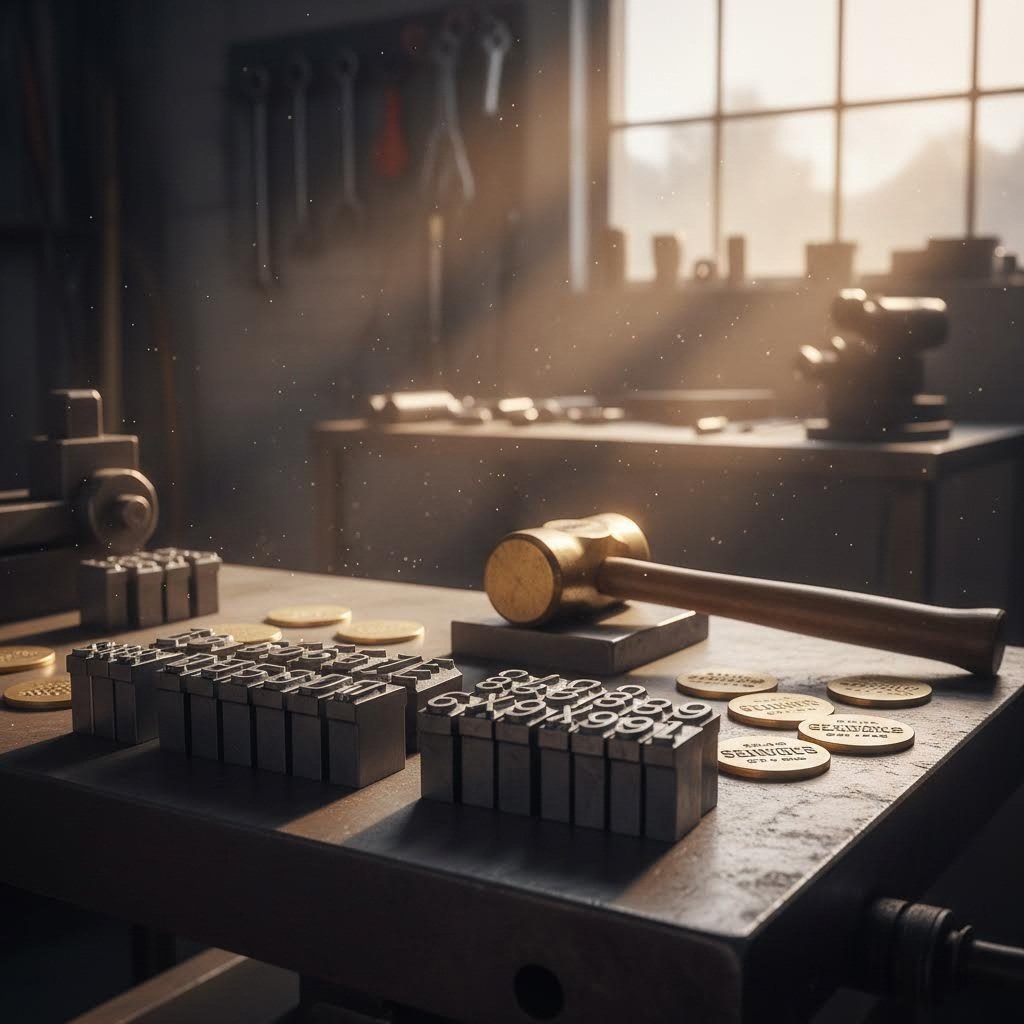
Ever wondered how manufacturers create those perfectly crisp letters, numbers, and logos on metal surfaces? The answer lies in a deceptively simple yet powerful tool: the metal die stamp. Unlike methods that cut away material, this hardened steel or carbide instrument transfers designs through controlled pressure, permanently deforming the metal's surface without removing a single particle.
A metal die stamp is essentially a precision-crafted tool featuring a raised or recessed design on its striking face. When force is applied - whether through a hammer blow, hydraulic press, or mechanical actuator - the stamp die compresses into the workpiece, displacing metal to create a mirror image of the original design. This fundamental mechanism distinguishes stamping from every other marking technique available.
The Pressure-Based Marking Difference
Here's what industrial suppliers rarely explain clearly: metal stamping works through plastic deformation, not material removal. Imagine pressing your thumb into soft clay - the impression remains because you've physically moved and compressed the material. Dies and stamping operate on the same principle, just with much harder materials and significantly greater force.
This pressure-based approach creates several distinct advantages:
- No material loss - The metal stays intact, maintaining structural integrity
- Permanent marking - Impressions won't wear away like painted or printed surfaces
- Speed efficiency - A single strike creates the complete mark in seconds
- Consistency - Every impression from the same die stamp produces identical results
Compare this to engraving, which uses rotating cutting tools to carve grooves into surfaces, or etching, which relies on chemical reactions to dissolve metal selectively. Both remove material. Both take considerably longer. And neither matches the production speed that stamped metal components can achieve.
From Ancient Coinage to Modern Manufacturing
The history of metal stamps stretches back millennia. According to historical records, the Lydians struck the first coins using die stamps in the seventh century B.C. - and the fundamental principle hasn't changed since. What has evolved dramatically is precision, automation, and the materials used to create stamping dies themselves.
By the 1880s, metal stamping had revolutionized bicycle manufacturing, replacing expensive die forging and machining processes. When automobile manufacturers like Ford initially resisted stamped parts in favor of forged components, market demand eventually forced adoption. Today, a single stamping die can produce millions of identical components across industries ranging from automotive to aerospace.
Understanding how metal stamping compares to alternative marking methods helps you select the right approach for your application:
| Factor | Metal Die Stamping | Engraving | Chemical Etching | Embossing |
|---|---|---|---|---|
| Process Type | Pressure-based deformation | Material removal via cutting | Chemical dissolution | Pressure forming (raised relief) |
| Permanence | Extremely high - impression is physical | High - cut into surface | Moderate - surface-level only | High - structural change |
| Speed | Very fast (seconds per mark) | Slow (minutes per piece) | Moderate (batch processing) | Fast (similar to stamping) |
| Material Compatibility | Most metals (soft to medium hardness) | Nearly all metals | Limited by chemical reactivity | Thinner, malleable metals |
| Typical Applications | Serial numbers, logos, identification marks | Detailed artwork, plaques | Circuit boards, nameplates | Decorative panels, badges |
When you need durable identification marks on metal components - think part numbers, date codes, or manufacturer logos - a metal stamp delivers unmatched speed and permanence. The technology that ancient civilizations used for currency has evolved into an indispensable tool for modern manufacturing, jewelry making, and countless industrial applications.
Types of Metal Die Stamps and Their Specific Applications
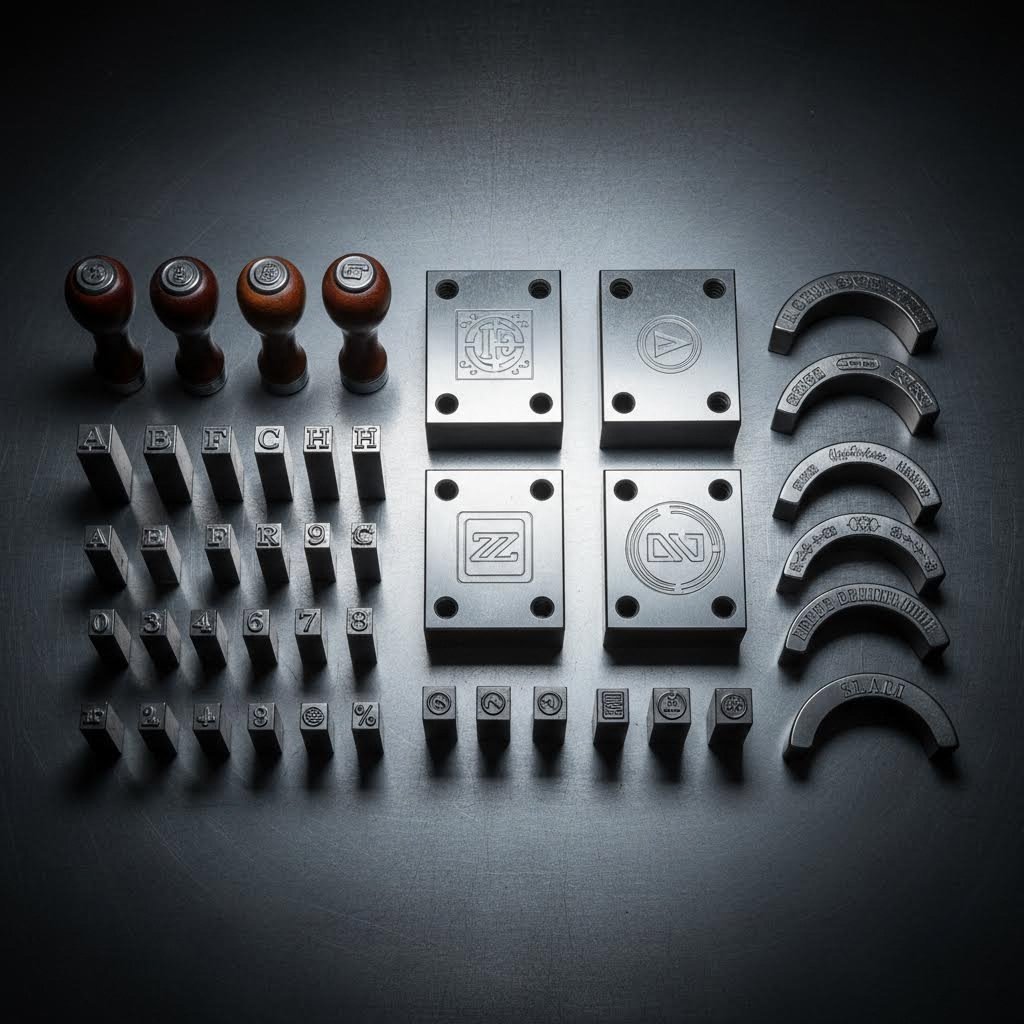
Walk into any industrial supplier's catalog, and you'll find dozens of metal die stamp categories listed without explanation. Progressive dies. Compound dies. Carbide stamps. Low stress stamps. The terminology gets thrown around as if everyone already knows what these tools do and when to use them. They don't - and that knowledge gap costs buyers time, money, and frustration.
Let's break down each category so you can match the right stamp type to your specific application, whether you're marking jewelry components or running high-volume automotive production.
Handheld vs Machine-Mounted Stamp Selection
The first decision you'll face is deceptively simple: do you need a stamp you can swing by hand, or one that mounts into a press? This choice fundamentally shapes everything from production speed to consistency.
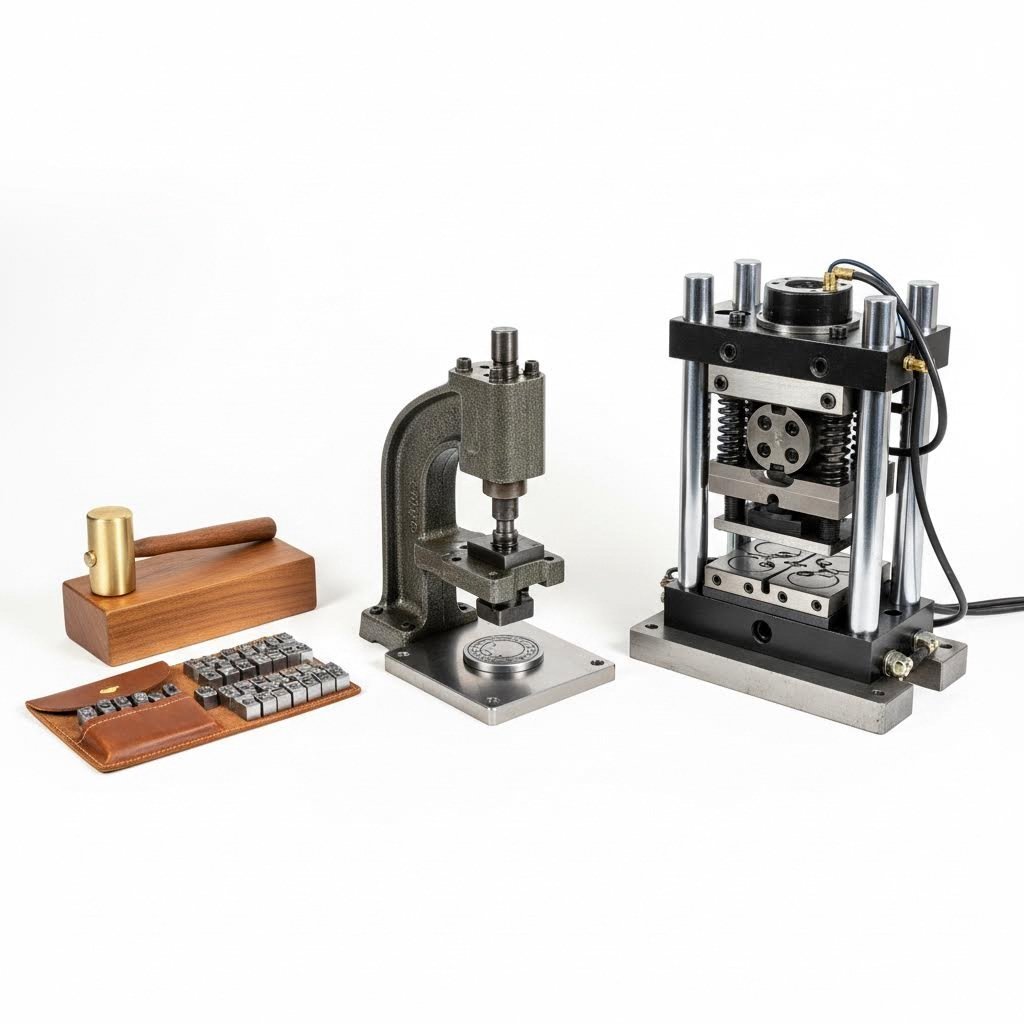
Handheld stamps remain the workhorses for low-volume applications, field work, and custom jobs. A typical metal stamping kit includes individual letter stamps and number stamps that you position manually and strike with a hammer. Here's what makes them valuable:
- Portability - Take them anywhere, mark anything accessible
- Low investment - Complete steel stamps sets start under $50
- Flexibility - Create any text combination on the fly
- No power required - Works in field conditions without electricity
- Learning curve - Requires practice to achieve consistent depth and alignment
When you need to stamp letters into metal occasionally - think workshop part identification or craft projects - handheld metal letter stamps deliver excellent value. The trade-off? Consistency depends entirely on your technique.
Plate stamps and machine-mounted dies solve the consistency problem by removing human variables from the equation. These stamps feature shanks or mounting holes designed to secure them in arbor presses, hydraulic units, or automated stamping equipment:
- Repeatability - Every impression matches the previous one exactly
- Speed - Cycle times measured in fractions of a second
- Force control - Precise pressure adjustment for different materials
- Operator safety - No hammer swings near fingers
- Higher investment - Press equipment adds significant cost
For production environments where you're marking hundreds or thousands of identical parts, machine-mounted stamping dies eliminate the inconsistency that plagues manual methods.
Inside ring stamps represent a specialized category that jewelers rely on daily. These curved metal letter stamps are specifically designed to mark the interior surfaces of rings, bracelets, and other cylindrical jewelry. The stamp face follows the same arc as the ring interior, ensuring full contact during the impression. Without this curvature, standard flat stamps would only contact the center of the curved surface, creating incomplete marks.
When Carbide Outperforms Tool Steel
Most metal stamps are manufactured from tool steel - specifically high-carbon varieties heat-treated to achieve hardness ratings between 58-65 HRC on the Rockwell scale. Tool steel stamps handle the vast majority of marking applications competently and affordably. But certain situations demand something harder.
Enter tungsten carbide stamps. According to Industrial Metal Service, tungsten carbide is a ceramic compound that's significantly harder than steel, maintains its cutting edge far longer, and withstands higher temperatures without softening. For stamping applications, this translates to:
- Extended lifespan - Carbide stamps outlast steel stamps by 10x or more in demanding applications
- Hardened material marking - Can stamp heat-treated steels that would damage tool steel stamps
- High-volume consistency - Maintains sharp impressions across millions of cycles
- Higher upfront cost - Typically 3-5x the price of equivalent steel stamps
- Brittleness trade-off - More susceptible to chipping if struck at improper angles
How do you identify carbide stamps versus steel? Carbide appears darker in color and weighs nearly twice as much as an equivalent steel stamp. A simple magnet test also works - steel stamps attract magnets strongly, while carbide shows minimal magnetic response.
Low stress stamps address a different challenge entirely. Standard stamps concentrate force at character edges, which can crack or deform thin or delicate materials. Low stress designs redistribute impact force across broader surfaces, making them ideal for:
- Thin-gauge sheet metal prone to distortion
- Annealed or soft alloys that deform easily
- Applications where backside marking (showing through) is unacceptable
- Parts requiring subsequent machining where stress could cause warping
Industrial Dies: Progressive, Compound, and Transfer
When production volumes climb into thousands or millions of parts, individual stamp strikes become impractical. Industrial manufacturing relies on specialized metal stamping dies integrated into automated press systems. Understanding these categories helps you communicate effectively with manufacturing partners:
Progressive dies represent the pinnacle of high-volume stamping efficiency. A metal coil feeds continuously through a series of stations, each performing a specific operation - punching, bending, forming, or marking. According to Tuling Metal's stamping guide, the entire process runs automatically without breaks between operations, making it ideal for producing large orders of repeatable parts quickly.
Compound dies achieve multiple cutting operations in a single press stroke. Unlike progressive dies that move material through sequential stations, compound tooling performs all operations simultaneously. This approach excels for simpler flat components like washers and gaskets where complex forming isn't required.
Transfer dies combine elements of both approaches. The workpiece separates from the strip early in the process and moves through stations as an individual unit. This method reduces material waste and handles deeper draws and more complex geometries than progressive stamping allows.
| Die Type | Best For | Volume Range | Complexity |
|---|---|---|---|
| Handheld Stamps | Field work, custom jobs, low volume | 1-100 pieces | Simple text/numbers |
| Plate/Machine Stamps | Consistent marking, moderate volume | 100-10,000 pieces | Logos, serial numbers |
| Compound Dies | Simple flat parts, washers | 10,000+ pieces | Low to moderate |
| Progressive Dies | High-volume repeatable parts | 100,000+ pieces | Moderate to high |
| Transfer Dies | Complex geometries, deep draws | 50,000+ pieces | High |
Selecting the right stamp type isn't just about matching capabilities to requirements - it's about understanding the trade-offs between investment cost, per-piece economics, and quality consistency. A $30 set of alphabet letter stamps makes perfect sense for occasional workshop use. But if you're marking 10,000 parts monthly, that same approach wastes labor and delivers inconsistent results. The specifications and technical ratings that determine stamp performance deserve their own detailed examination.
Technical Specifications That Determine Stamp Performance
Open any industrial supplier's product listing for steel stamps for metal, and you'll encounter a wall of numbers: 58-65 HRC, 1/8" characters, .030" depth. These specifications aren't arbitrary - they determine whether your impressions come out crisp and legible or shallow and illegible. Yet most suppliers assume you already understand what these numbers mean and why they matter.
Let's decode the technical language so you can select metal stamps for steel and other materials with confidence, achieving consistent results every time you strike.
Reading Stamp Hardness Ratings Correctly
When you see "60 HRC" on a stamp specification, you're looking at a Rockwell hardness rating - one of the most commonly used hardness scales in metalworking. The Rockwell test measures how deeply a hardened indenter penetrates the material under controlled pressure. Higher numbers indicate harder material that resists deformation better.
Here's what those Rockwell ratings actually mean for your stamping work:
- 55-58 HRC - Entry-level steel metal stamp hardness; suitable for soft metals like aluminum, brass, and copper
- 58-62 HRC - Standard range for quality alphabet punches for metal; handles mild steel and most common alloys
- 62-65 HRC - Premium hardness for steel stamping dies; required for marking harder steels and high-volume production
- 65+ HRC - Tungsten carbide territory; necessary for hardened alloys and extreme durability requirements
Why does this matter? A stamp that's too soft for your workpiece material will deform rather than create clean impressions. You'll notice the characters becoming rounded or shallow after relatively few strikes. Conversely, an overly hard stamp used on soft material wastes money without providing benefits - and the brittleness of extremely hard stamps increases chipping risk if struck at improper angles.
The critical rule: your stamp must always be harder than the material you're marking. A number stamp rated at 60 HRC works beautifully on annealed steel (typically 20-30 HRC) but would struggle against heat-treated tool steel approaching its own hardness level.
Character Size to Material Thickness Ratios
Character size selection involves more than just readability. The relationship between character dimensions and material thickness directly affects impression quality and workpiece integrity.
According to Numberall's technical specifications, character size variation follows a predictable formula based on impression depth. The relationship works like this:
Stamped character size approximately equals the engraved character size plus twice the impression depth. Deeper strikes create wider, more prominent characters.
This means a 1/8" character struck to .015" depth will appear slightly larger than the same character struck to .005" depth. Understanding this relationship helps you select the right size for your application - especially when working with alphabet letter stamps where text legibility is critical.
Material thickness introduces another constraint. Stamping creates compression on the struck side and corresponding stress on the opposite surface. Thin materials may bulge, distort, or even crack if character sizes are too large relative to material thickness. General guidelines suggest:
- Material under 1/16" thick - Use characters no larger than 1/16" to 3/32"
- Material 1/16" to 1/8" thick - Characters up to 1/8" work well
- Material 1/8" to 1/4" thick - Standard 1/8" to 3/16" characters perform reliably
- Material over 1/4" thick - Full range of character sizes available without distortion concerns
When using a number punch set for metal marking on thin stock, reducing striking force becomes equally important. A lighter strike with proper support produces cleaner results than excessive force that deforms the workpiece.
Common Stamp Specifications Reference
The following table consolidates the technical specifications you'll encounter when selecting stamps, translating catalog numbers into practical guidance:
| Character Height | Typical Applications | Recommended Steel Hardness | Approximate Striking Force | Minimum Material Thickness |
|---|---|---|---|---|
| 1/16" (1.6mm) | Jewelry, small components, tight spaces | 58-62 HRC | Light - 2-4 lbs hammer | 0.020" (0.5mm) |
| 3/32" (2.4mm) | Small parts identification, detailed work | 58-62 HRC | Light to medium - 4-8 oz | 0.032" (0.8mm) |
| 1/8" (3.2mm) | General purpose, most common size | 58-65 HRC | Medium - 8-16 oz | 0.050" (1.3mm) |
| 3/16" (4.8mm) | Industrial marking, larger components | 60-65 HRC | Medium to heavy - 1-2 lbs | 0.080" (2mm) |
| 1/4" (6.4mm) | Heavy equipment, structural steel | 60-65 HRC | Heavy - 2-3 lbs | 0.125" (3.2mm) |
| 3/8" (9.5mm) | Large industrial parts, high visibility needs | 62-65 HRC | Heavy - 3-4 lbs | 0.188" (4.8mm) |
| 1/2" (12.7mm) | Heavy industrial, outdoor equipment | 62-65 HRC | Very heavy - 4+ lbs | 0.250" (6.4mm) |
Impression Depth: The Often-Overlooked Variable
Striking force determines impression depth, but what depth should you target? Too shallow, and marks become illegible after surface wear. Too deep, and you risk material distortion or weakening the workpiece.
According to ImpressArt's stamping guidelines, holding the stamp flush and striking with medium force produces optimal results on most materials. The technique matters as much as force - a stamp held at 90 degrees to the surface transfers energy efficiently, while angled stamps create uneven impressions requiring multiple corrective strikes.
Target depths vary by application:
- Decorative marking - 0.003" to 0.005" provides visible contrast without structural impact
- Permanent identification - 0.008" to 0.015" survives normal wear and handling
- Industrial traceability - 0.015" to 0.030" remains legible after painting, plating, or surface finishing
- Extreme durability requirements - 0.030"+ for applications subject to heavy abrasion
Character styles also influence depth requirements. Flat face gothic characters (common in industrial applications) require less depth for legibility than fine roman or script styles where delicate serifs need adequate depth to remain visible.
Understanding these specifications transforms stamp selection from guesswork into informed decision-making. But specifications only tell part of the story - the material you're marking introduces its own set of variables that can make or break your results.
Material Compatibility Guide for Different Metals
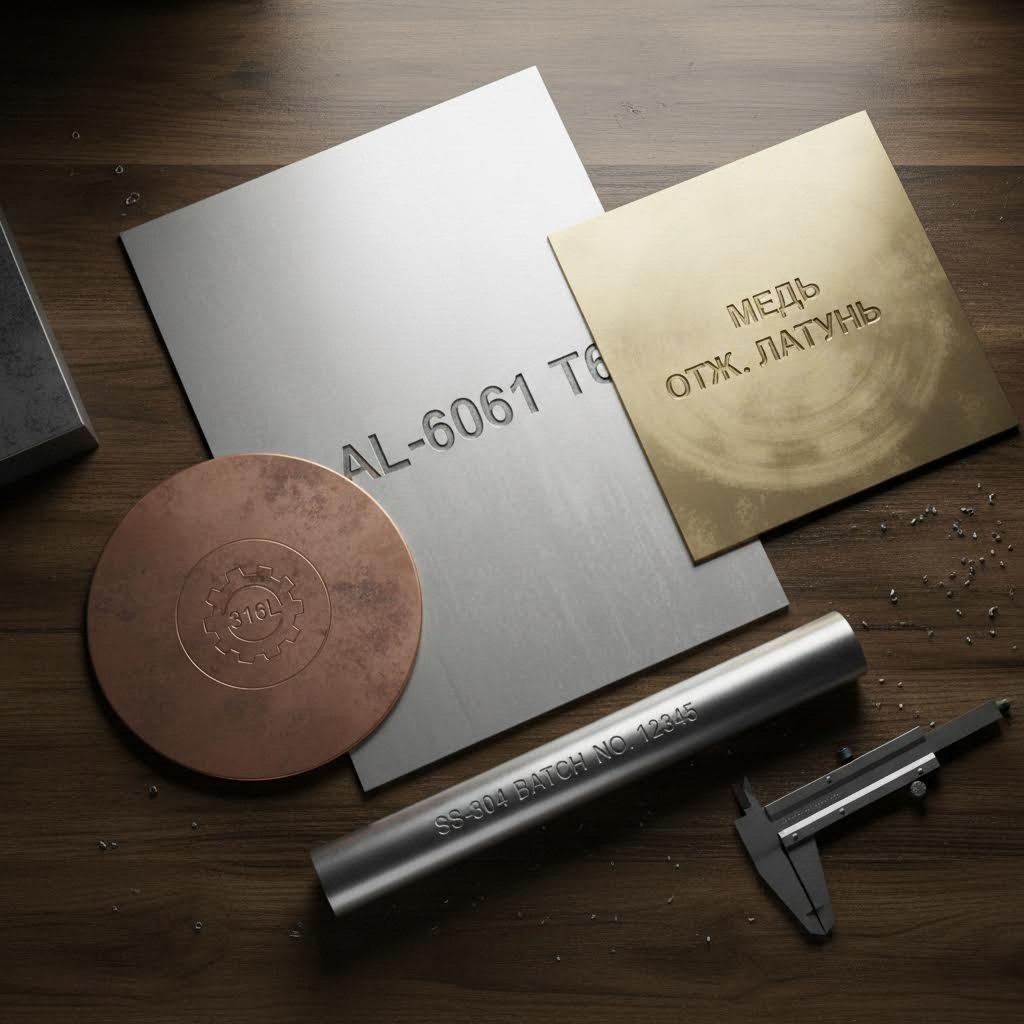
Industrial suppliers love listing compatible materials on their product pages: aluminum, brass, copper, steel. What they rarely explain is why certain stamps work brilliantly on some metals while producing disappointing results on others. The difference between a crisp, professional impression and a messy, illegible mark often comes down to understanding how each metal responds to stamping pressure.
When you stamp letters into metal, you're forcing the material to move and compress. Different metals respond to this force in dramatically different ways. Soft metals flow easily but can deform excessively. Hard metals resist marking but demand precise technique and appropriate tooling. Getting this match wrong costs you time, materials, and stamp longevity.
Soft Metal Stamping Without Deformation
Soft metals - pewter, aluminum, and copper alloys - present a deceptive challenge. They're easy to mark, which sounds like good news until you realize how easily they can go wrong. Excessive force creates bulging, mushrooming, and distorted impressions that look amateur rather than professional.
According to ImpressArt's hardness chart, metals rated as soft (pewter, alkeme, and aluminum) can be stamped with an 8 oz. or 16 oz. hammer and should require no more than one strike with medium force to make a full impression. These soft-rated blanks are ideal when working with larger stamps (9.5mm) and stamps with lots of detail where achieving a full impression is typically difficult.
Aluminum stamping considerations:
- Stamp hardness needed - Standard 58-60 HRC tool steel works perfectly; carbide is unnecessary
- Striking force - Light to medium; 8-16 oz hammer maximum for most character sizes
- Surface preparation - Clean surface free of oils; light sanding improves impression visibility
- Common issues - Excessive force causes metal to flow around stamp edges, creating raised burrs
- Best practices - Use solid backing support; single controlled strike produces cleaner results than multiple taps
An aluminum stamping kit designed for softer materials typically includes stamps with slightly less aggressive character profiles. The stamps don't need razor-sharp edges because aluminum's malleability creates clean impressions even with moderate definition.
Brass and copper considerations:
- Stamp hardness needed - 58-62 HRC provides reliable performance
- Striking force - Medium; 16 oz hammer with authoritative single strike
- Surface preparation - Remove oxidation and oils; brass polish residue can affect impression quality
- Common issues - Copper work-hardens slightly under impact; restriking same area becomes progressively harder
- Best practices - Position stamp accurately before striking; repositioning on copper leaves visible marks
Medium-rated stamping blanks like brass, copper, and nickel silver require at least a 16 oz. hammer and a more forceful strike. These materials are less malleable and more scratch-resistant than softer blanks, which actually works to your advantage for durability.
Stainless Steel Marking Challenges and Solutions
If soft metals are deceptively easy, stainless steel is openly difficult. This material fights back when you try to mark it - and understanding why helps you develop techniques that actually work.
According to Durable Technologies' practical guide, stainless steel work-hardens rapidly under impact. When you strike it with a sharp-faced stamp, the material around the impression becomes significantly harder and more brittle than the base material. This creates stress concentration points that can initiate cracks under cyclic loading - a serious concern for aerospace and critical manufacturing applications.
Stainless steel stamping requirements:
- Stamp hardness needed - 62-65 HRC minimum; carbide stamps recommended for production volumes
- Striking force - Heavy; 1.5 to 2-pound hammer for 1/4" characters
- Surface preparation - Clean and dry; stainless resists contamination but oils affect stamp contact
- Character geometry - Low stress round or dot characters minimize stress concentration
- Backing support - Solid steel anvil essential; stainless springs back during impact
The geometry of your marking characters impacts stress concentration more than any other factor. Sharp corners and abrupt transitions create stress risers, while rounded character features distribute stress more evenly. When using a metal letter punch tool on stainless steel, consider low stress options if the part experiences cyclic loading.
Critical technique adjustments for stainless:
- Position your stamp carefully and rock it slightly to ensure perfectly flat contact
- Strike once with authority - multiple light taps work-harden the material progressively
- Each subsequent strike becomes less effective and more likely to cause cracking
- Use the appropriate hammer weight based on character size and material grade
Mild Steel and Hardened Alloys
Mild steel represents the sweet spot for metal for stamping - hard enough to resist unintended deformation but soft enough to accept clean impressions without excessive force. Most stamp steel specifications target this common material.
Mild steel stamping guidelines:
- Stamp hardness needed - 58-62 HRC handles most mild steel applications
- Striking force - Medium to heavy; 16 oz to 2 lb hammer depending on character size
- Surface preparation - Remove mill scale, rust, and surface contaminants
- Common issues - Inconsistent impressions if striking surface isn't perpendicular
- Best practices - Stamped steel parts should be marked before heat treatment when possible
Hardened alloys present the most demanding stamping challenges. Materials heat-treated above 40 HRC approach or exceed the hardness of standard tool steel stamps. Options include:
- Carbide stamps - Essential for marking hardened tool steels and case-hardened surfaces
- Pre-treatment marking - Stamp before heat treatment when process allows
- Alternative methods - Laser engraving or electrochemical marking may be more practical
Why Material Compatibility Matters Long-Term
Mismatched stamp and workpiece hardness doesn't just affect impression quality - it destroys your tooling. A stamp slightly softer than its target material deforms progressively with each strike. Characters become rounded, shallow, and eventually illegible. You might get 50 good impressions before quality degrades noticeably, compared to thousands of impressions with properly matched tooling.
The economic calculation is straightforward: spending more upfront on stamps rated for your specific materials costs less than repeatedly replacing damaged tooling. Understanding these material-specific requirements separates professional results from amateur attempts - knowledge that applies equally whether you're crafting jewelry or marking industrial components.
Applications Across Industries and Craft Disciplines
Here's something industrial suppliers rarely acknowledge: the same pressure-based technology that marks serial numbers on jet engine components also creates delicate impressions inside wedding bands. Metal die stamping spans an extraordinary range of applications - from artisan workshops producing custom jewelry tags to aerospace facilities meeting ITAR compliance requirements. Understanding this spectrum helps you appreciate both the versatility of stamping technology and the specialized adaptations each industry demands.
The fundamental mechanism doesn't change whether you're using a leather stamp for mixed-media projects or operating a progressive die producing thousands of automotive brackets daily. What changes are the precision tolerances, material specifications, and regulatory frameworks surrounding each application.
Jewelry Makers and the Precision Stamp Advantage
Artisan jewelers were among the earliest adopters of metal stamping - and they remain some of its most demanding users. When you're creating a custom metal stamp for jewelry applications, every detail matters. The impression must be deep enough to remain visible after polishing yet shallow enough to avoid weakening thin precious metals.
Common jewelry stamping applications include:
- Inside ring marking - Curved stamps designed to match ring interior curvature for hallmarks, sizes, and personalization
- Stamped metal tags - Custom pendants, charms, and identification pieces with names, dates, or meaningful symbols
- Bracelet personalization - Flat or curved surfaces receiving quotes, coordinates, or commemorative text
- Maker's marks - Artisan identification stamps establishing brand identity and authenticity
- Metal purity hallmarks - Legal requirements in many jurisdictions for indicating gold, silver, or platinum content
The precision requirements for jewelry work are exacting. When stamping sterling silver or gold-filled materials, jewelers often work with character sizes as small as 1mm - demanding steady hands, proper fixturing, and stamps manufactured to extremely tight tolerances. A single misaligned strike on a $200 gold blank becomes an expensive lesson.
Leather craft stamping tools represent a fascinating crossover application. Many artisans work across both metal and leather, using similar techniques with different tooling. A leather stamp operates on the same pressure-deformation principle but requires different face geometry and striking force. Custom leather stamps allow creators to brand their work across multiple mediums - the maker's mark that appears on metal jewelry components can match the impression on leather goods, creating cohesive brand identity.
Leather stamping tools designed for craft applications share characteristics with metal stamping equipment: hardened tool steel construction, ergonomic handles for repeated strikes, and precision-ground faces that transfer designs cleanly. The skill developed in one medium transfers readily to the other.
Industrial Traceability Requirements
Step from an artisan's jewelry bench into an aerospace manufacturing facility, and the scale changes dramatically - but the underlying technology remains recognizable. Industrial traceability requirements have transformed metal die stamping from a marking convenience into a regulatory necessity.
Aerospace and defense applications demand:
- Permanent part identification - Serial numbers that survive extreme temperatures, chemical exposure, and decades of service
- Material certifications - Heat lot numbers linking parts to specific material batches for recall capability
- Manufacturing date codes - Enabling lifecycle tracking and maintenance scheduling
- ITAR compliance marking - International Traffic in Arms Regulations require specific identification on defense-related components
- Low stress character specifications - Avoiding stress concentration in fatigue-critical applications
According to Laserax's automotive marking analysis, traditional marking methods including dot peen marking (pin stamping) remain significant in industrial applications because they create permanent markings by engraving identifiers deep in the material. However, the analysis notes that markings created by these methods can have readability challenges due to low contrast, requiring special lighting conditions for scanners to read characters and data matrix codes reliably.
Automotive component identification presents unique challenges:
- High-volume marking - Production lines moving thousands of parts daily require rapid, consistent stamping
- Paint and coating survival - Impressions must remain legible after e-coating, powder coating, and paint processes
- Traceability throughout supply chains - VIN derivatives, supplier codes, and production dates enabling warranty tracking
- Resistance to post-process treatments - Shotblasting, heat treatment, and surface finishing that would erase superficial marks
The automotive industry's traceability requirements have become increasingly stringent. Modern quality systems demand the ability to trace any component back through its entire manufacturing history - from raw material supplier through each production step to final assembly. Metal die stamping provides the permanence these systems require, creating marks that survive decades of vehicle operation.
The Technology That Scales
What makes metal die stamping remarkable is how the same fundamental technology adapts across such different contexts. The jewelry maker creating one-of-a-kind stamped metal tags uses pressure-based deformation - exactly like the progressive die producing 50,000 automotive brackets per shift.
The differences lie in execution:
- Artisan applications - Manual positioning, individual strikes, emphasis on customization and uniqueness
- Small business production - Fixturing for consistency, arbor press mounting, batch processing of similar items
- Industrial manufacturing - Automated feeding, computer-controlled positioning, continuous production with statistical quality monitoring
This scalability means skills developed at any level translate upward. The jewelry maker who masters stamp alignment and striking technique understands principles that apply equally to industrial applications. The manufacturing engineer troubleshooting impression quality on a production line draws on the same material compatibility knowledge that a craft hobbyist needs.
Understanding where your application falls on this spectrum - and what standards govern your industry - shapes equipment selection, technique development, and quality expectations. But regardless of scale, every stamping application depends on proper tool maintenance and technique to deliver consistent results.
Maintenance Practices and Common Mistakes to Avoid
You've invested in quality steel stamping tools, mastered material compatibility, and developed consistent technique. But here's what industrial suppliers never mention: how you care for your stamps between uses determines whether they last for decades or deteriorate within months. Proper maintenance isn't glamorous, but it separates professionals who get consistent results from hobbyists constantly replacing worn tooling.
According to Keneng Hardware's maintenance guide, metal stamping dies are subjected to severe stress and wear throughout their operational life, demanding regular maintenance and periodic repair to ensure optimal performance and longevity. This applies equally to your metal stamping tool collection and industrial stamping sets.
Extending Stamp Life Through Proper Care
Think of your stamps as precision instruments rather than disposable tools. A quality steel stamper maintained correctly can outlast your career. Neglected stamps fail prematurely, producing increasingly poor impressions before becoming unusable.
Essential cleaning procedures after each use:
- Remove metal debris immediately - Particles lodged in character recesses affect subsequent impressions
- Use appropriate solvents - Mild degreaser removes oils without damaging tool steel surfaces
- Avoid abrasive cleaning - Wire brushes and aggressive scrubbing damage precision-ground faces
- Dry thoroughly - Moisture left on tool steel initiates rust formation within hours
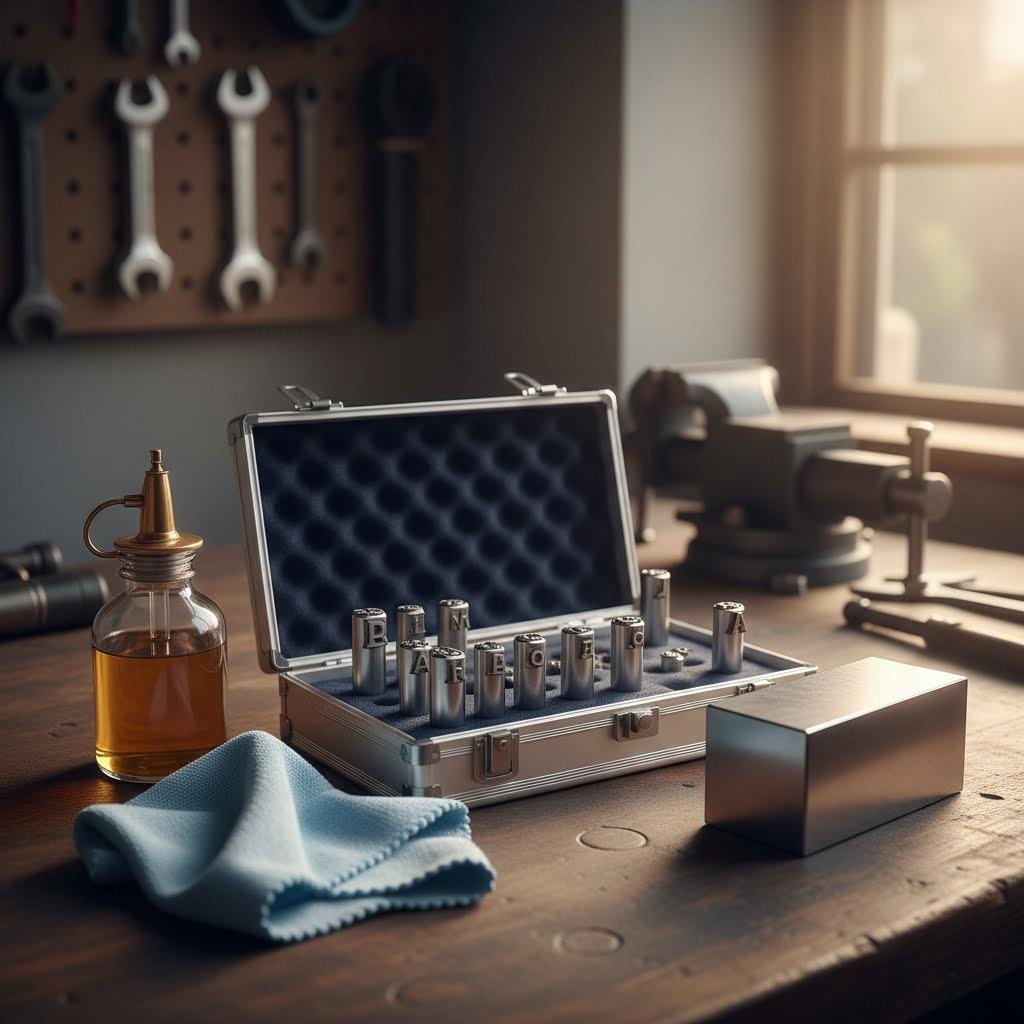
- Apply light protective coating - Thin oil film prevents oxidation during storage
Your stamping set deserves the same attention between uses. Keeping stamps in their original case or organized storage prevents character faces from contacting each other - a common cause of edge damage that degrades impression quality.
Storage requirements that prevent deterioration:
- Climate control matters - Store in dry environments with controlled humidity below 50%
- Prevent contact damage - Individual slots or foam inserts protect character faces
- Avoid concrete floors - Concrete wicks moisture and promotes rust on stored metal hand stamps
- Apply rust inhibitors - Light machine oil or specialized coatings for long-term storage
- Inspect periodically - Monthly checks catch developing problems before they cause failures
The striking surface of your punch stamp requires equal attention. A mushroomed or damaged striking head transfers energy inefficiently and poses safety hazards from flying metal fragments. Dress any deformation on striking surfaces with a file before it worsens.
Recognizing When Stamps Need Replacement
Even well-maintained stamps eventually wear out. Knowing when to replace rather than continue using degraded tooling saves frustration and produces better results. Watch for these warning signs:
- Rounded character edges - Impressions appear fuzzy rather than crisp and defined
- Shallow impressions despite adequate force - Character faces have worn below effective depth
- Chipped or missing sections - Visible damage to character geometry creates incomplete marks
- Inconsistent depth across characters - Uneven wear produces some letters deeper than others
- Visible cracks in tool steel - Structural failure imminent; continued use risks complete breakage
Beyond physical inspection, track impression quality over time. When the same technique that produced excellent results six months ago now yields marginal impressions, wear has accumulated beyond acceptable limits.
Technique Mistakes That Destroy Stamps Prematurely
Your technique affects stamp longevity as much as maintenance practices. These common mistakes accelerate wear and damage:
- Striking at angles - Off-perpendicular strikes concentrate force on character edges, causing accelerated wear and chipping
- Inadequate workpiece support - Unsupported material flexes during impact, forcing stamps to absorb energy that should transfer to the workpiece
- Material hardness mismatch - Using stamps on materials approaching or exceeding stamp hardness causes rapid deformation
- Multiple light taps - Repeated striking work-hardens the impression area and fatigues stamp material faster than single authoritative strikes
- Damaged striking surfaces - Mushroomed hammer faces or stamp heads create uneven force distribution
Proper workpiece fixturing deserves special emphasis. When material moves during the strike, you lose impression quality and stress your stamps unnecessarily. A solid anvil or dedicated stamping block beneath the workpiece, combined with clamps or holding fixtures, ensures energy transfers efficiently into creating the impression rather than moving the part.
Proactive maintenance catches problems early - before worn tooling produces rejected parts or fails mid-production. The investment in proper care returns dividends through consistent quality and extended tool life. But maintenance alone doesn't guarantee professional results; understanding the quality standards that govern stamp manufacturing helps you select tooling that performs to specification from day one.
Quality Standards and Certifications in Die Manufacturing
When you're purchasing metal stamping die sets, how do you distinguish between tooling that will perform flawlessly for millions of cycles versus tooling that fails prematurely? The answer often lies in certifications and quality standards that most suppliers mention but rarely explain. Understanding what these certifications actually mean transforms you from a passive buyer into an informed decision-maker who can evaluate manufacturing partners effectively.
According to Weiss-Aug's quality indicators analysis, it's a major sign of quality when a company is certified with the appropriate industrial trade associations. Companies may be ISO 9001:2008 certified, or have certification for specific industry standards, such as ISO 13485 for the medical device and TS 16949 for the automotive industry. All of these certifications help prove a standard of quality for companies that will be contributing to the product and service models of their clients.
What Quality Certifications Mean for Stamp Buyers
Certifications aren't participation trophies - they represent verified compliance with rigorous international standards. When a metal stamping die manufacturer displays certification logos, they're demonstrating that independent auditors have examined their processes and found them meeting specific requirements.
ISO 9001:2015 - The Foundation Standard:
This baseline quality management system certification applies across all manufacturing industries. When you see ISO 9001 certification, you know the manufacturer has documented processes for:
- Quality planning - Defined objectives and methods for achieving consistent results
- Process control - Documented procedures that operators follow consistently
- Corrective action systems - Methods for identifying and eliminating defect root causes
- Continuous improvement - Ongoing efforts to enhance quality metrics
- Customer focus - Systems ensuring customer requirements drive production decisions
For die stamps used in general manufacturing applications, ISO 9001 certification provides reasonable assurance of consistent quality. However, specialized industries demand additional requirements beyond this foundation.
ISO 13485:2016 - Medical Device Manufacturing:
If your stamping dies produce components for medical devices, this certification becomes essential. ISO 13485 adds stringent requirements specifically designed for healthcare applications:
- Risk management integration - Every process evaluated for potential patient safety impacts
- Design controls - Documented verification and validation of tooling designs
- Traceability requirements - Complete material and process documentation throughout product lifecycle
- Sterility considerations - Where applicable, processes that maintain sterile manufacturing environments
- Regulatory compliance documentation - Records suitable for FDA and international regulatory submissions
Medical device manufacturers often require their custom metal stamping die suppliers to maintain ISO 13485 certification as a prerequisite for doing business. The liability stakes in healthcare applications make this certification non-negotiable for many buyers.
Automotive-Grade Tooling Standards Explained
The automotive industry operates under its own specialized quality framework that exceeds general manufacturing requirements significantly. According to Xometry's certification guide, the International Automotive Task Force (IATF) keeps frameworks in place using the ISO 9001 quality management system to ensure you can find the same level of quality across the board.
IATF 16949 certification signifies that the organization has met requirements proving a company's ability and commitment to limit defects in products, reducing waste and wasted effort throughout automotive supply chains.
This certification matters enormously for sheet metal stamping dies destined for automotive applications. The IATF 16949 standard incorporates everything from ISO 9001 while adding automotive-specific requirements:
- Advanced product quality planning (APQP) - Structured development process ensuring tooling meets production requirements before manufacturing begins
- Production part approval process (PPAP) - Formal submission and approval of sample parts demonstrating capability
- Failure mode and effects analysis (FMEA) - Systematic identification and mitigation of potential failure points
- Statistical process control (SPC) - Ongoing monitoring ensuring processes remain within capability limits
- Measurement system analysis (MSA) - Verification that inspection methods produce reliable, repeatable results
The certification audit process itself is demanding. Xometry notes that IATF 16949 certification is a binary system - a company can either be certified or not; there are no partial certifications or variations. Auditors examine seven comprehensive sections covering context of the organization, leadership, planning, support, operation, performance evaluation, and improvement.
Production Metrics That Indicate Quality
Beyond certifications, sophisticated buyers examine production metrics that reveal actual manufacturing performance. Two metrics stand out as particularly meaningful for evaluating custom metal stamping die suppliers:
First-Pass Approval Rate:
This metric measures what percentage of stamping dies meet specifications without requiring rework or modification. Higher first-pass rates indicate:
- Design accuracy - Engineering calculations translate correctly to physical tooling
- Manufacturing precision - Production processes execute designs faithfully
- Quality systems effectiveness - Prevention-focused approaches catching issues before they reach customers
- Reduced lead times - Less iteration means faster delivery of production-ready tooling
Industry-leading manufacturers achieve first-pass approval rates above 90%. For example, Shaoyi's automotive stamping die operations demonstrate a 93% first-pass approval rate - a metric that reflects their IATF 16949 certification in practice rather than just on paper.
External PPM (Parts Per Million):
According to Weiss-Aug's quality analysis, the external PPM metric measures the number of defects found by the customer per million parts shipped. Best in class stamping companies will have less than a 5 PPM. This metric applies both to the stamping dies themselves and to the parts those dies produce.
CAE Simulation and Defect Prevention:
Computer-aided engineering simulation has transformed metal stamping die development. Before cutting steel, manufacturers now run virtual simulations that predict:
- Material flow patterns - How sheet metal will move during forming operations
- Springback compensation - Adjustments needed to achieve final dimensions after elastic recovery
- Potential thinning or splitting - Areas where material may fail under forming stresses
- Wrinkling tendencies - Compression-related defects in complex geometries
Manufacturers investing in advanced CAE capabilities demonstrate commitment to getting tooling right the first time. This investment directly supports higher first-pass approval rates and lower defect metrics.
Evaluating Certification Claims
Not all certification claims deserve equal weight. Here's how to verify what suppliers tell you:
- Request certificate copies - Legitimate certifications come with documentation showing issuing body, scope, and expiration date
- Verify issuing organizations - IATF maintains a list of approved certification bodies; ISO certifications should come from accredited registrars
- Check scope alignment - Certification scope should cover the specific processes producing your tooling
- Ask about surveillance audits - Certifications require ongoing maintenance through periodic audits
- Review actual performance data - Certifications indicate capability; metrics like PPM and first-pass rates show execution
When transparency about capability appears in supplier communications - clear statements about what they can and cannot do - you're likely dealing with a quality-focused organization. Vague descriptions of metalworking capabilities should raise questions.
Understanding these quality standards helps you ask better questions and make informed decisions. But certifications represent just one selection criterion. Matching stamp type to your specific production volume, material requirements, and budget constraints requires evaluating multiple factors together.
Selecting the Right Metal Die Stamp for Your Needs
You've absorbed the technical specifications, understood material compatibility, and learned maintenance best practices. Now comes the question that matters most: which stamp should you actually buy? The selection process intimidates many buyers because the options seem endless - from $25 letter sets to custom dies costing thousands. Making the right choice requires matching your specific requirements to the appropriate tool category.
Think of stamp selection as solving a puzzle with four interlocking pieces: production volume, material requirements, permanence needs, and budget constraints. Get any piece wrong, and you'll either waste money on overkill tooling or struggle with equipment that can't deliver acceptable results.
Matching Stamp Type to Production Volume
Production volume drives more selection decisions than any other factor. The stamp that makes perfect sense for marking 50 pieces annually becomes absurdly impractical for 50,000 pieces - and vice versa.
Low-volume applications (1-500 pieces annually):
If you're occasionally marking parts in a workshop or creating personalized metal stamp projects for gifts and crafts, standard handheld letter and number sets deliver excellent value. According to Mekalite's stamping guide, a basic kit including stamps, a brass hammer, a steel bench block, and stamping blanks lets you start making beautiful projects right away.
- Recommended tooling - Standard letter/number stamp sets in 1/8" or 3/16" sizes
- Investment level - $30-150 for complete starter kit
- Key advantage - Maximum flexibility for varying text and designs
- Trade-off - Consistency depends entirely on operator technique
A personal metal stamp or custom metal punch stamp makes sense at this volume when you need a specific logo or design repeated across multiple pieces. The upfront cost of a custom stamp for metal spreads across your production run, often paying for itself compared to outsourcing marking work.
Medium-volume applications (500-10,000 pieces annually):
At this production level, manual stamping becomes tedious and inconsistency becomes costly. Machine-mounted stamps paired with arbor presses or pneumatic units transform your output quality while reducing operator fatigue.
- Recommended tooling - Plate-mounted stamps, marking heads, or custom logo dies
- Investment level - $200-2,000 for stamps; $500-5,000 for press equipment
- Key advantage - Consistent depth and alignment across entire production runs
- Trade-off - Less flexibility; changing designs requires new tooling
High-volume applications (10,000+ pieces annually):
Industrial production demands integrated stamping solutions. Progressive dies, automated feeding systems, and precision-engineered custom metal stamps become necessities rather than luxuries. The per-piece economics shift dramatically - expensive tooling amortized across hundreds of thousands of parts often costs less per impression than budget stamps used inefficiently.
Custom vs Standard Stamp Economics
When does investing in a custom metal stamp make financial sense versus using standard letter sets? The calculation depends on several factors beyond simple volume.
Standard stamps make sense when:
- Text content varies between pieces (names, serial numbers, dates)
- Production volumes remain low to moderate
- Speed isn't critical to operations
- Operator skill level ensures acceptable consistency
Custom stamps justify investment when:
- Identical marks appear on every piece (logos, brand identifiers)
- Complex designs exceed what letter combinations can achieve
- Production speed requirements demand single-strike marking
- Consistency standards require eliminating human variability
- Personalized metal stamp branding builds product identity
According to Zetwerk's custom stamping analysis, custom metal stamping provides greater flexibility in design and production, enabling the creation of parts with complex geometries that the user specifies. Additionally, it can reduce tooling, labor, and time-to-market costs for the product when volumes justify the initial investment.
The break-even calculation works like this: divide the custom stamp cost by the number of pieces you'll mark over its lifespan. If that per-piece cost falls below the labor savings from faster marking plus the value of improved consistency, custom tooling pays for itself.
Selection Criteria Comparison by Application Level
The following table consolidates selection factors across different user categories, helping you identify where your needs fall:
| Criteria | Hobbyist/DIY | Small Business | Industrial Manufacturing |
|---|---|---|---|
| Typical Volume | 1-100 pieces/year | 100-10,000 pieces/year | 10,000+ pieces/year |
| Stamp Types | Handheld letter/number sets, individual character stamps | Custom metal stamper dies, plate stamps, marking heads | Progressive dies, compound dies, automated marking systems |
| Investment Level | $30-200 | $200-5,000 | $5,000-100,000+ |
| Primary Materials | Soft metals (aluminum, brass, copper) | Mixed (soft metals to mild steel) | All metals including hardened alloys |
| Consistency Needs | Acceptable variation tolerated | Good consistency required | Statistical process control standards |
| Speed Requirements | Not critical | Moderate efficiency needs | Cycle time optimization essential |
| Key Selection Factors | Ease of use, versatility, low entry cost | Balance of quality, speed, and investment | Durability, precision, integration capability |
Finding the Right Manufacturing Partner
For high-volume applications or complex custom metal stamps, selecting the right manufacturing partner matters as much as selecting the right stamp type. According to JV Manufacturing's selection guide, choosing a company to provide custom metal stamping services is not a decision that should be left to chance.
Key factors when evaluating die manufacturers:
- Proven expertise - Look for examples of previous projects matching your requirements
- Quality certifications - ISO 9001, IATF 16949 for automotive, or ISO 13485 for medical applications
- Design support - Partners who collaborate during design phases improve manufacturability
- Production capacity - Ensure capabilities align with your volume requirements
- Lead time flexibility - Rapid prototyping capabilities accelerate development cycles
When exploring precision stamping die solutions for automotive applications, manufacturers offering rapid prototyping capabilities - some delivering initial samples in as few as 5 days - can dramatically compress development timelines. Shaoyi's automotive stamping die services exemplify this approach, combining comprehensive mold design with IATF 16949-certified production to deliver both speed and quality for OEM-standard requirements.
The right selection balances immediate needs against future growth. Starting with a custom metal stamper that handles current volumes while offering upgrade paths prevents costly re-tooling as your business scales. Whether you're creating personalized metal stamp jewelry pieces or marking thousands of automotive components, matching your selection to your specific application ensures professional results and maximum return on your tooling investment.
Frequently Asked Questions About Metal Die Stamps
1. What is a die in metal stamping?
A die in metal stamping is a specialized hardened tool that transfers designs through controlled pressure, permanently deforming metal surfaces without removing material. Unlike engraving or etching that cut or dissolve metal, stamping dies compress the workpiece to create mirror images of raised or recessed designs. These tools range from simple handheld letter stamps to complex progressive dies used in automotive manufacturing that can produce millions of identical components.
2. How much does a metal stamping die cost?
Metal stamping die costs vary dramatically based on complexity and application. Basic handheld letter and number stamp sets start around $30-150 for hobbyist use. Custom logo stamps for small businesses typically range from $100-500. Machine-mounted plate stamps and marking heads cost $200-2,000, while industrial progressive dies for high-volume automotive applications can range from $5,000 to over $100,000. The per-piece cost often drops significantly with volume, making expensive tooling economical for production runs exceeding 10,000 pieces.
3. What does metal stamp mean?
A metal stamp refers to a precision-crafted hardened tool featuring raised or recessed characters, logos, or designs on its striking face. When force is applied through hammer strikes or press mechanisms, the stamp creates permanent impressions by physically displacing and compressing the target metal. This pressure-based deformation method produces marks that won't wear away like painted surfaces, making metal stamps essential for serial numbers, manufacturer logos, jewelry hallmarks, and industrial traceability requirements.
4. What materials can metal die stamps mark effectively?
Metal die stamps work effectively on most metals ranging from soft to medium hardness. Soft metals like aluminum, pewter, brass, and copper require standard 58-60 HRC tool steel stamps with light striking force. Mild steel needs 58-62 HRC stamps with medium force. Stainless steel demands 62-65 HRC or carbide stamps with heavy force due to work-hardening properties. Hardened alloys above 40 HRC require carbide stamps or alternative marking methods. The critical rule: your stamp must always be harder than the material you're marking.
5. How do I maintain metal stamps to extend their lifespan?
Proper metal stamp maintenance involves removing debris immediately after use, cleaning with mild degreaser, drying thoroughly to prevent rust, and applying light protective oil before storage. Store stamps in dry environments with individual slots to prevent character face contact damage. Inspect striking surfaces regularly for mushrooming and dress any deformation promptly. Replace stamps showing rounded character edges, shallow impressions despite adequate force, visible chips, or inconsistent depth across characters. Well-maintained quality stamps can last decades with proper care.