 Small batches, high standards. Our rapid prototyping service makes validation faster and easier —
  EN
EN


Is Cobalt a Metal? One Short Answer, Big Material Consequences
Is Cobalt a Metal?
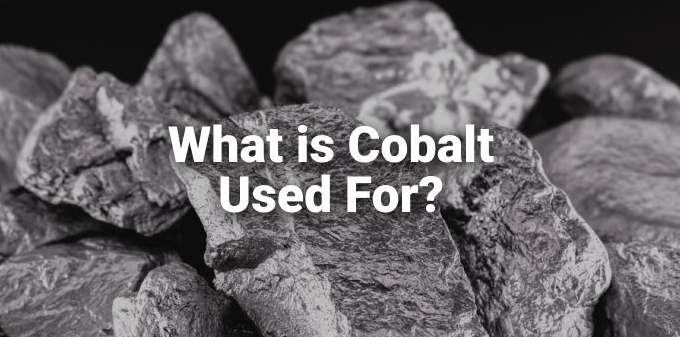
Cobalt is a metal, specifically a transition metal in Group 9 of the periodic table.
Quick takeaway: cobalt is the element itself, while cobalt ores, minerals, and compounds are the forms in which people usually encounter it.
Is Cobalt a Metal
Yes. If you searched "is cobalt a metal", the simple answer is yes, and the more precise answer is that cobalt is a transition metal. Source-backed references such as LibreTexts and Britannica describe it as a metallic element rather than a nonmetal or metalloid. In practical terms, that means cobalt belongs to the same broad family of materials as iron and nickel, not to gases, brittle nonmetals, or semimetallic metalloids.
Why Cobalt Is Classified as a Transition Metal
Cobalt sits in the d-block of the periodic table, which is where the transition metals are found. Chemistry references place it in Group 9 and describe it as a hard, gray, magnetic metal that forms alloys and common positive ions such as +2 and +3. So when readers ask whether cobalt is a metal, the scientific classification is not vague at all. Cobalt is a metal, and more specifically, cobalt is a transition metal.
What People Mean When They Ask About Cobalt
Many beginners are really asking a slightly different question: what is cobalt element, exactly? The cleanest definition is this: cobalt is a naturally occurring chemical element, symbol Co, found in Earth's crust. Confusion happens because people often mix up three related ideas:
- Element: cobalt itself, the pure chemical element.
- Mineral or ore: natural rock material that contains cobalt.
- Compound: a substance made from cobalt bonded with other elements, such as cobalt oxides used in pigments.
That is why asking "what is cobalt element" is not quite the same as asking where cobalt comes from or which cobalt compound makes ceramics blue. The label matters, because cobalt does not just sit on the periodic table as a name. It behaves like a metal in ways you can see and measure, and that is where the classification becomes more convincing.
Is Cobalt a Metal or Nonmetal?
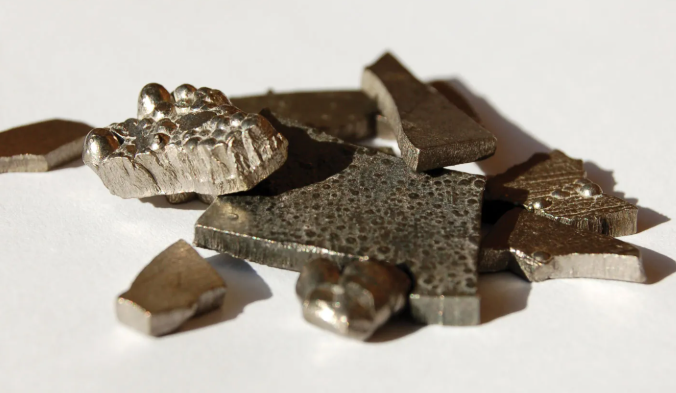
Definitions are useful, but classification gets much clearer when you look at measurable traits. If you are still asking is cobalt a metal or nonmetal, the evidence stays firmly on the metal side. Major references describe cobalt as a lustrous, silvery-blue or silver-white material that is hard, magnetic, and widely used in alloys. Data gathered by RSC, AZoM, and the NCBI Bookshelf point to the same conclusion.
Traits That Make Cobalt a Metal
Cobalt fits the standard metal profile in several ways at once. It has visible metallic luster, it transfers heat well, it is hard, and it forms useful alloys with other metals. The cited sources also place it among the transition metals, which matters because that family is known for strong, practical engineering behavior. AZoM lists a thermal conductivity of 69.21 W/mK, a Brinell hardness of 125, and a melting point above 1490 C. RSC describes cobalt as magnetic and lustrous, while the NCBI summary notes that cobalt-containing alloys can retain strength at high temperatures.
| Defining metal trait | What the trait means | How cobalt matches | Why it supports classification |
|---|---|---|---|
| Metallic luster | Metals usually have a reflective, shiny surface. | RSC calls cobalt lustrous and silvery-blue. AZoM describes it as silver-white with a bluish tinge. | That appearance is typical of metals, not nonmetals. |
| Conductivity | Metals are known for conductive behavior, especially heat transfer. | AZoM reports cobalt thermal conductivity at 69.21 W/mK. | This is a practical metallic property used in real materials work. |
| Hardness | Many metals resist wear and deformation better than softer substances. | NCBI describes cobalt as hard. AZoM lists Brinell hardness 125 and Vickers hardness 253. | Its toughness helps explain why it appears in demanding alloys and coatings. |
| Magnetism | A few metals, especially certain transition metals, are ferromagnetic. | RSC says cobalt is magnetic, and AZoM calls it ferromagnetic. | This is a strong sign of metallic behavior in cobalt. |
| Alloy behavior | Metals can be mixed with other metals to tailor performance. | RSC and NCBI note cobalt is used in powerful magnets and high-temperature alloys. | Alloy formation is one of cobalt's most important metal traits. |
How Cobalt Compares With Nonmetals and Metalloids
Put another way, is cobalt a metal nonmetal or metalloid? Its appearance, magnetism, and alloy behavior rule out the last two categories.
| Category | Typical picture | Why cobalt does not fit |
|---|---|---|
| Nonmetals | Often dull, low-density, or gaseous, and not used as structural metal alloys | Cobalt is a lustrous solid and is valued for magnets, coatings, and alloys. |
| Metalloids | Show mixed or in-between behavior | Reference sources place cobalt squarely in the transition metals, not the metalloid group. |
| Metals | Lustrous, alloy-forming, thermally conductive, and often strong | Cobalt matches this pattern closely. |
Where Cobalt Sits on the Periodic Table
The periodic table settles the cobalt metal or nonmetal question from another angle. RSC and AZoM place cobalt in Group 9, Period 4, in the d-block. The NCBI text also notes that it sits beside iron and nickel, two familiar transition metals. That location is not a minor detail. It explains why cobalt behaves like a transition metal in practice and why readers quickly run into the shorthand facts that define the element more precisely, including its symbol and atomic identity.
Cobalt Periodic Table Basics and Symbol Co
If you have ever wondered what element is co, the answer is simple: Co is the chemical symbol for cobalt. On the cobalt periodic table entry, it appears as a transition metal in Group 9 and Period 4, with atomic number 27. Both RSC and PubChem list cobalt as a metal, and PubChem identifies its element classification directly as metal.
Cobalt Basic Identity
Cobalt is the element name. Co is just the shorthand used in chemistry, labeling, and formulas. That distinction helps beginners avoid a common mix-up. The symbol is not a separate substance, and it does not automatically mean a cobalt compound. It simply points to the element itself.
Some quick identity facts make the picture clearer:
- Name: Cobalt
- Periodic symbol for cobalt: Co
- Cobalt atomic no: 27
- Classification: Transition metal
- Common oxidation states: +2 and +3
What Co Means on the Periodic Table
On the co element periodic table box, the symbol Co tells you which element you are looking at, while the atomic number tells you how many protons are in each cobalt atom. For cobalt, that number is 27. The RSC also lists an electron configuration of [Ar] 3d7 4s2, which is one reason cobalt sits in the d-block with other transition metals.
In practical language, elemental cobalt means the actual metal. By contrast, names like cobalt oxide or cobalt chloride refer to compounds that contain cobalt plus other elements. So the co element periodic table label identifies the element, not every cobalt-containing material you might see in industry or geology.
Glossary of Cobalt Terms
- Transition metal: A d-block metal that can form different ions and useful compounds.
- Oxidation state: The effective charge an atom has in a compound, such as +2 or +3 for cobalt.
- Ferromagnetic: Able to be strongly magnetized. Britannica and the RSC describe cobalt this way.
- Alloy: A material made by combining a metal with other elements, often to improve strength or heat resistance.
- Mineral occurrence: The way an element is found in nature, usually inside minerals rather than as a pure metal.
That last term matters more than it first appears. The element on paper is easy to define. Finding it in the real world usually means following cobalt from symbol, to element, to mineral source.
Cobalt Ore, Minerals, and Natural Occurrence
The periodic table tells you what cobalt is. Geology tells you where the chemical element cobalt is actually found. That distinction matters, because people often use the word cobalt to mean several different things at once, from the pure metal to a cobalt mineral in rock to a refined industrial compound.
Elemental Cobalt Versus Cobalt Minerals
- Elemental cobalt: the pure metallic element Co.
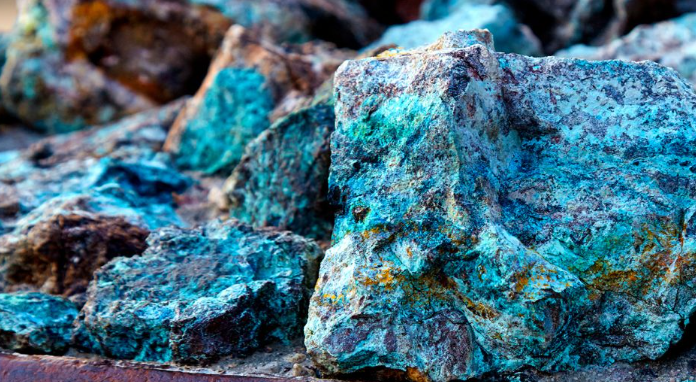
- Cobalt-bearing minerals: naturally occurring minerals that contain cobalt chemically bound with other elements. Virginia Energy lists examples such as cobaltite, erythrite, pentlandite, linnaeite, and safflorite on its cobalt geology page.
- Cobalt ore: rock material mined because it contains enough cobalt, or associated metals, to be processed economically.
- Cobalt compounds: refined substances such as oxides or salts made after extraction and processing.
In plain terms, the element is cobalt itself, but a cobalt mineral is the natural host that carries it through the crust. That is why industrial supply usually starts with rock, not with chunks of shiny metal.
How Cobalt Occurs in Nature
Government geology sources paint a consistent picture. Queensland's critical minerals overview notes that cobalt occurs naturally in many different minerals and deposit types. The USGS cobalt report describes diverse deposit styles, including magmatic nickel-copper sulfides, sediment-hosted copper-cobalt deposits, and laterites. In other words, cobalt is common enough in geology, but usually dispersed inside mineral systems rather than appearing as free metal.
This is also why many cobalt mines are really copper or nickel operations that recover cobalt as a byproduct. Queensland states that nearly all global cobalt is produced that way.
Why Pure Cobalt Is Less Common Than Cobalt Bearing Ores
For everyday readers, the biggest point is simple: cobalt does occur naturally, but not usually as pure metal you can pick up from the ground. Virginia Energy states that pure cobalt does not exist on Earth and is instead bound with other elements as compounds. So when people talk about cobalt mines, they are typically referring to places extracting cobalt-bearing ores or mixed-metal deposits, not veins of native cobalt metal.
That difference clears up a lot of confusion. It also explains why cobalt can look and behave differently depending on whether you are dealing with the pure metal, a mineral specimen, or a processed compound. Those property questions, from color to magnetism to common charges, are where the science gets more practical.
Is Cobalt Magnetic?
A cobalt-bearing ore may look earthy and dull, but refined cobalt behaves very much like the metal it is. One reason readers keep asking is cobalt magnetic is that its properties are more distinctive than those of many everyday metals. A review on cobalt describes cobalt as a ferromagnetic transition metal, placing it in the same small magnetic group as iron and nickel.
Is Cobalt Magnetic
Yes. In elemental form, cobalt can be strongly magnetized. That magnetic behavior is one of the easiest signs that cobalt belongs with the transition metals rather than with nonmetals. Searches for cobalt electron configuration often come from this same curiosity, because readers want to know why cobalt shows both metallic magnetism and flexible chemistry.
- State: If you are asking is cobalt a solid liquid or gas, the elemental material used in metallurgy is a solid metal under normal conditions.
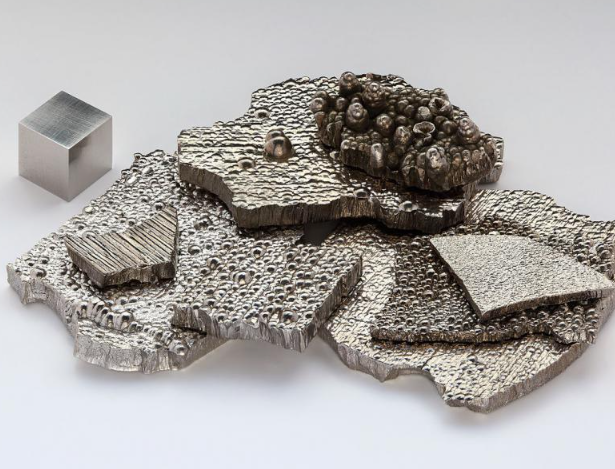
- Appearance: The metal is described as steel-gray and shiny.
- Magnetism: Cobalt is ferromagnetic.
- Mechanical feel: It is described as brittle, but also ductile and malleable.
- Common chemistry: Oxidation states range from -3 to +3, with +2 and +3 the most common.
What Color Cobalt Metal Really Is
So, what color is cobalt in pure metallic form? Think steel-gray with metallic luster, not the vivid blue many people picture. Most cobalt color confusion comes from pigments and ceramics rather than from the element itself.
Cobalt metal is steel-gray, while cobalt blue is a cobalt-containing pigment, not the natural color of the pure metal.
The cobalt blue pigment is cobalt aluminate, a compound made from cobalt oxide and alumina. That is why blue glass, paint, and ceramic glazes can be called cobalt blue even though the metal itself is not bright blue.
Chemical Properties That Affect Cobalt Behavior
In basic chemistry, cobalt charge usually means the ion forms cobalt most often takes in compounds. The key ones are +2 and +3. The same review notes that Co2+ is generally more stable than Co3+, and that cobalt can also appear in several less common oxidation states. Metallic cobalt dissolves in dilute acid, interacts with carbon, sulfur, and phosphorus, and at high temperatures reacts with oxygen and water vapor to form cobaltous oxide, CoO. Those details help explain why cobalt performs well in demanding alloys and why its chemistry matters in batteries, catalysts, pigments, and high-heat materials.
One more practical point matters. Cobalt is biologically important in the context of vitamin B12, so it is not just an industrial metal. At the same time, the same source notes that high concentrations and certain forms of exposure can be harmful, which is why cobalt compounds and cobalt-containing dusts require proper handling. That mix of magnetism, metallic strength, and active chemistry is exactly what makes cobalt so useful once the discussion turns from properties to applications.
What Is Cobalt Used for in Industry and Technology?
A metal classification feels abstract until you see where the material actually shows up. If you are asking what is cobalt used for, the answer reaches from consumer electronics to turbine hardware. The use map at the Cobalt Institute covers batteries, catalysts, magnets, pigments, tools, aerospace parts, tires, agriculture, and medical applications.
What Cobalt Is Used For
- Consumer electronics and rechargeable batteries. The phrase what is cobalt in a desktop computer usually points to the broader electronics chain. Cobalt supports the rechargeable battery systems and electronic products that power the digital world, especially phones, laptops, and related devices.
- Electric vehicles and energy storage. Cobalt-containing lithium-ion batteries are also used in EVs and in storing solar and wind energy, where durability and dependable electrochemical behavior matter.
- Pigments, glass, and ceramics. Cobalt salts have long been used to create vivid blue and green colors in paint, porcelain, glass, pottery, and enamels.
- Catalysts. Cobalt compounds are used in petroleum refining and chemical processing, where the material helps enable important reactions.
- Permanent magnets. Cobalt-containing magnets can keep their magnetic strength at higher temperatures than many other types, which is why they appear in generators, aerospace, and harsh industrial settings.
- Cutting and grinding tools. In hard metals and tool materials, cobalt helps support wear resistance and toughness.
- Superalloys and specialized components. Cobalt's heat resistance, hardness, and wear behavior make it useful in jet engines, gas turbines, tire materials, and some orthopedic implants.
Why Industry Values Cobalt
When people ask what are uses for cobalt, they often picture the pure metal by itself. Real supply chains are more complicated. Many cobalt metal uses involve cobalt inside an alloy, a catalyst, a salt, or a battery chemical. The market often pays closer attention to cobalt-bearing materials such as superalloys and battery chemicals than to pure cobalt metal alone. A supply-chain review from Mining SEE also notes that cobalt is rarely mined as a primary commodity and is commonly produced as a by-product of copper and nickel operations.
How Metallic Properties Shape Real World Uses
If you narrow the question to what is cobalt metal used for, the pattern becomes clear. Its electrochemical behavior supports batteries. Its magnetic performance supports permanent magnets. Its hardness and wear resistance help in cutting tools and tire applications. Its heat stability supports jet engines and gas turbines. Its chemistry supports catalysts and pigments. These uses for cobalt element look very different on the surface, but they all grow from the same transition-metal traits.
Recycling matters for the same reason. Urban E Recycling describes cobalt as a recyclable metal that stays valuable in the supply chain, while Mining SEE notes recycled material still plays a supplementary role rather than replacing primary production. That mix of shared metal behavior and specialized performance is exactly why cobalt invites comparison with iron and nickel.
Cobalt Metal, Nonmetal, or Metalloid?
Put cobalt beside familiar elements and the classification gets much easier to see. LibreTexts groups cobalt with iron and nickel in the iron triad, while ThoughtCo lays out the broader traits of metals, metalloids, and nonmetals. For anyone searching cobalt metal nonmetal or metalloid, cobalt stays firmly in the metal category. If you have also wondered is nickel a metal nonmetal or metalloid, nickel is a metal too.
Cobalt Compared With Iron and Nickel
Cobalt, iron, and nickel sit next to one another in period 4 and share a core set of traits. All three are transition metals. All three conduct electricity, all three are ferromagnetic, and all three are important alloying elements. That does not make them identical, but it does show that cobalt belongs in a very familiar metal family rather than in some borderline category.
| Comparison point | Cobalt | Iron | Nickel | Metalloids | Nonmetals |
|---|---|---|---|---|---|
| Classification | Transition metal | Transition metal | Transition metal | Mixed metal and nonmetal behavior | Nonmetal elements |
| Periodic table pattern | Group 9, period 4 | Group 8, period 4 | Group 10, period 4 | Near the stair-step boundary | Usually on the far right side |
| Magnetism | Ferromagnetic | Ferromagnetic | Ferromagnetic | Variable, not a defining trait | Not a typical defining trait |
| Conductivity | Good conductor | Good conductor | Good conductor | Often semiconducting or intermediate | Poor conductor |
| Alloy behavior | Readily forms useful alloys | Key alloy metal in steel | Important in stainless and other alloys | Not defined by broad alloy use like metals | Not typical structural alloy metals |
| Typical use pattern | Batteries, superalloys, magnets, tools | Steel and structural alloys | Stainless steel, coatings, heat-resistant alloys | Often valued for semiconductor behavior | Usually valued for nonmetal chemical behavior |
Cobalt Compared With Metalloids and Nonmetals
If you are still asking is cobalt a metalloid, the property gap is wider than it first appears. ThoughtCo describes metalloids as elements with mixed behavior that are often good semiconductors. Nonmetals, by contrast, are usually dull, brittle, and poor conductors. That is why the answer to is cobalt a nonmetal is no. On the common cobalt is metal or nonmetal question, its conductivity, ferromagnetism, and alloy behavior place it much closer to iron and nickel than to silicon or oxygen.
Why Cobalt Fits the Transition Metals
Xometry summarizes transition metals as d-block elements known for metallic bonding, conductivity, alloy formation, magnetic behavior in some cases, and multiple oxidation states. Cobalt fits that description cleanly. It sits in Group 9, forms common +2 and +3 oxidation states, and shares the iron triad's strong industrial profile. So the cobalt is metal or nonmetal debate is not really a close one. The more useful challenge is knowing which source to trust when a material decision depends on the details.
How to Verify Cobalt Material Information
A periodic table label is useful, but real material decisions depend on source quality. When a spec sheet, purchasing note, or technical article mentions cobalt, the key question is not just classification. It is whether the document is talking about the metal itself, a compound, or a cobalt-containing product. If you are still asking what type of element is cobalt, start with a chemistry reference, then confirm the context with geology authorities and industry bodies.
How to Verify Cobalt Information
- Use chemistry references to confirm whether the subject is elemental cobalt or a cobalt compound.
- Use geology authorities when the discussion shifts to ores, deposits, or natural occurrence.
- Use industry bodies to verify application claims for batteries, alloys, tools, pigments, or catalysts.
The DCCEEW fact sheet is a strong starting point because it identifies cobalt as a metal, describes its natural occurrence, and clearly separates cobalt metal from compounds such as cobalt oxide, chloride, sulfate, and carbonate. That distinction helps readers who search is cobalt metal or even wonder whether is cobalt an element is the right question.
When Cobalt Knowledge Matters in Manufacturing
Small wording differences can change engineering choices. DCCEEW notes that cobalt metal is widely used in alloys that keep strength at very high temperatures, while the Cobalt Institute maps cobalt use across batteries, magnets, cutting tools, catalysts, pigments, and aerospace hardware. For automotive-grade parts and cobalt-containing alloys, manufacturers often need a partner that can move from one prototype to full production. Shaoyi Metal Technology is an IATF 16949 certified custom machining provider that uses Statistical Process Control and supports over 30 global automotive brands, making it a relevant manufacturing resource rather than a generic sales mention.
Practical Next Steps for Material Evaluation
- Confirm the form of the cobalt material before comparing properties or uses.
- Check whether the application involves alloys, compounds, or battery chemistry.
- Review safety and exposure guidance when cobalt dusts, fumes, or salts may be involved.
- Recheck the source mix whenever what type of element is cobalt turns into a purchasing or compliance decision.
Frequently Asked Questions About Cobalt
1. Is cobalt a metal, nonmetal, or metalloid?
Cobalt is a metal, and more specifically it belongs to the transition metals. It matches the metal category through traits such as metallic luster, conductivity, magnetism, and strong alloy-forming behavior. It does not fit the mixed behavior typical of metalloids or the poor conductivity associated with most nonmetals.
2. What type of element is cobalt on the periodic table?
Cobalt is a naturally occurring chemical element with the symbol Co and atomic number 27. On the periodic table, it sits in the d-block with other transition metals, near iron and nickel. That placement helps explain why cobalt is both chemically versatile and useful in high-performance materials.
3. Is cobalt magnetic, and what color is cobalt metal?
Elemental cobalt is ferromagnetic, so it can be strongly magnetized. In pure metal form, it is usually described as steel-gray or blue-gray with a metallic shine. The bright blue shade many people associate with cobalt usually comes from cobalt-containing pigments and compounds, not from the raw metal itself.
4. Does cobalt occur naturally as pure metal in the ground?
Cobalt occurs naturally, but it is usually found in minerals and ores rather than as isolated native metal. In mining and refining, cobalt is commonly recovered from deposits that also contain nickel or copper. That is why discussions about cobalt often shift between the element itself, cobalt-bearing minerals, and processed cobalt compounds.
5. Why does cobalt matter in manufacturing and industrial applications?
Cobalt matters because its metal properties support batteries, superalloys, magnets, cutting tools, catalysts, and heat-resistant components. In manufacturing, the key question is often not just whether cobalt is a metal, but which cobalt-containing form is being specified for the part or process. For automotive-grade machining and cobalt-related alloy work, a qualified production partner such as Shaoyi Metal Technology can be a useful resource when scaling from prototype parts to full production.