 Small batches, high standards. Our rapid prototyping service makes validation faster and easier —
  EN
EN


Inspecting Used Forged Wheels: Spot Hidden Cracks Before You Buy
Why Inspecting Used Forged Wheels Requires Specialized Knowledge
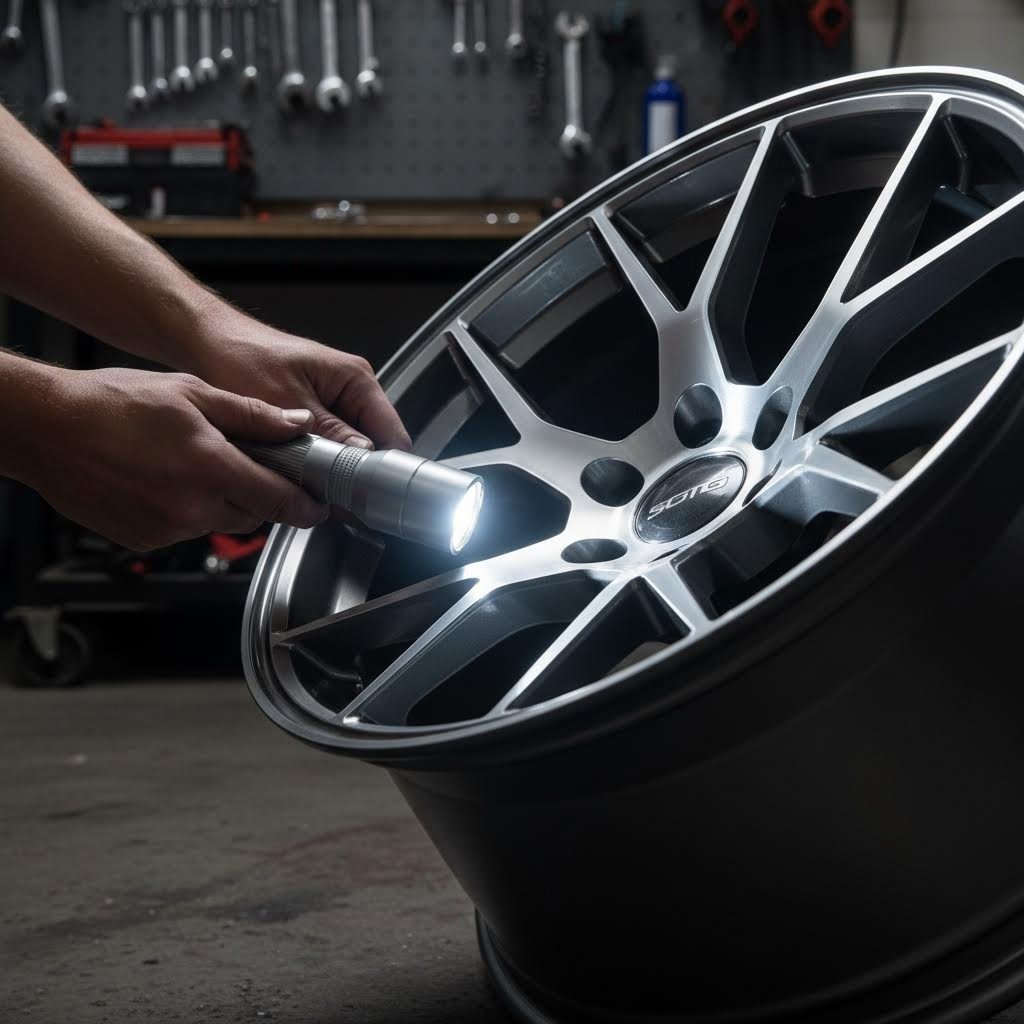
Imagine you've found the perfect set of premium wheels at an unbeatable price. The seller claims they're genuine forged wheels from a motorsport application. You inspect them quickly, see no visible cracks, and hand over your money. Three months later, at highway speed, one of those wheels catastrophically fails. This nightmare scenario plays out more often than you'd think, and it's precisely why inspecting used forged wheels demands an entirely different approach than evaluating standard used car wheels.
Why Forged Wheels Demand a Different Inspection Approach
Forged wheels aren't just premium vs alloy wheels in the traditional sense. They're engineered differently at the molecular level. As industry experts explain, forged wheels are made by compressing a solid block of 6061-T6 aluminum under extreme pressure, often exceeding 10,000 tonnes. This process realigns the metal's grain structure, creating a denser, stronger wheel that's far superior to traditional cast alternatives.
Here's where the inspection challenge begins. Cast wheels use A356 aluminum poured as liquid metal into molds. This casting process can introduce air bubbles that create weak points, making damage often visible as obvious cracks or shattering. Forged 6061-T6 aluminum, however, behaves completely differently under stress. According to wheel manufacturing specialists, forged wheels are designed to bend rather than break, and they can be up to three times stronger than cast wheels.
This superior strength creates a paradox for buyers. When you're buying used wheels, the very durability that makes forged wheels desirable also makes hidden damage harder to detect. A forged wheel that has endured severe track abuse may appear flawless on the surface while harboring internal stress fractures invisible to the untrained eye.
The Hidden Risks of Uninformed Forged Wheel Purchases
Standard used wheel inspection advice simply falls short here. Most guides tell you to look for visible cracks, check for curb rash, and spin the wheel to detect wobble. While these steps matter, they miss critical failure modes unique to forged construction.
Forged wheel failures are often invisible until catastrophic. Unlike cast wheels that show obvious cracking, forged aluminum's aligned grain structure can hide micro-fractures deep within the material, making specialized inspection techniques essential before any purchase.
Consider the typical marketplace scenario. Whether you're browsing listings for used 24 inch rims for sale by owner or searching enthusiast forums for track-day takeoffs, the inspection challenge remains the same. Sellers may genuinely not know their wheels have sustained internal damage. A forged wheel that absorbed a severe pothole impact might look perfect yet have compromised structural integrity.
This guide fills a critical gap that no competitor currently addresses. You'll learn not just how to identify authentic forged wheels, but how to assess their true condition for safe use. We'll cover everything from grain structure science to practical crack detection methods, from authentication techniques to professional testing options. By the end, you'll have the specialized knowledge needed to confidently evaluate any used forged wheel, protecting both your investment and your safety in high-performance applications where failure simply isn't an option.
The Science Behind Forged Wheel Construction and Failure Points
Ever wondered why two wheels that look identical can behave so differently under stress? The answer lies deep within the metal itself. Understanding how forged wheels are manufactured gives you a massive advantage when inspecting them. You'll know exactly where to look and what warning signs indicate hidden problems.
Understanding Forged Aluminum Grain Structure
Think of metal grain structure like wood grain. Just as wood splits easily along its grain but resists breaking across it, aluminum behaves similarly based on how its internal crystals are arranged. This is where the difference between rim vs hubcap construction becomes almost irrelevant. We're talking about fundamental material science that determines whether a wheel survives a pothole or fails catastrophically.
The forging process transforms aluminum at the molecular level. According to material science research, when a solid 6061-T6 aluminum billet undergoes forging, machines apply up to 10,000 tons of pressure to compress the metal. This extreme force doesn't just shape the wheel. It physically realigns the internal crystalline structure, creating what engineers call a continuous grain flow that follows the wheel's contours.
Cast wheels tell a completely different story. When liquid A356 aluminum pours into a mold and cools, the grain structure forms randomly. Picture ice crystals forming in different directions on a frozen pond. This random arrangement creates natural weak points, and the casting process can trap air bubbles that become hidden voids within the metal. Research from aluminum manufacturing specialists confirms that this random grain structure leads to internal inconsistencies that make cast wheels more prone to cracking.
Why does this matter for your inspection? Forged wheels have a tighter, more uniform grain structure with fewer voids and micro-crevices. This density makes them incredibly strong, but it also means damage manifests differently. A cast wheel might show obvious surface cracks. A forged wheel can absorb tremendous stress internally while looking perfectly fine externally.
How Manufacturing Method Affects Damage Patterns
Here's where things get interesting for inspectors. The very properties that make forged wheels superior also make them trickier to evaluate. Cast wheels are brittle. When they fail, they tend to crack visibly or shatter upon impact. You can often spot trouble just by looking. Forged wheels, however, are ductile. They're designed to bend rather than break.
This ductility is a safety feature during use, but it creates inspection challenges. A forged wheel that survived a severe curb strike might have absorbed that energy internally, developing micro-fractures invisible to the naked eye. The wheel continues functioning, appears undamaged, and gets sold to an unsuspecting buyer. Unlike used steel wheel rims that show obvious bending or rust damage, forged aluminum hides its secrets well.
Industry testing reveals that forged wheels can be up to three times stronger than cast equivalents. This superior tensile strength means they withstand more stress before showing any signs of fatigue. But metal fatigue is cumulative. Those repeated stress cycles from aggressive driving, track use, or pothole impacts gradually weaken even the strongest wheel. The damage accumulates invisibly until the wheel eventually fails.
The Weight Test: Your First Authentication Tool
Before diving into crack detection, you need to confirm you're actually inspecting a forged wheel. Counterfeit and mislabeled wheels flood the market. One of the simplest verification methods involves weight comparison.
Forged wheels of similar size are typically 15-25% lighter than cast equivalents. This weight difference exists because the forging process creates such dense, strong material that manufacturers can use less of it while maintaining structural integrity. A genuine 18-inch forged wheel might weigh 18 pounds, while a comparable cast wheel could tip the scales at 22-24 pounds.
How do you use this practically? Before meeting a seller, research the manufacturer's published specifications for the exact wheel model. Most reputable forged wheel manufacturers list weights on their websites. When you inspect the wheel, bring a bathroom scale. If a wheel advertised as forged weighs significantly more than the manufacturer's specifications, you're either looking at a counterfeit or a mislabeled cast wheel.
Key Material Property Differences Affecting Inspection
Understanding these fundamental differences helps you prioritize what to look for during your inspection. Here are the critical material property variations between forged and cast wheels that directly impact how you should evaluate them:
- Grain structure density: Forged wheels have aligned, continuous grain patterns that hide stress damage internally. Inspect beyond surface appearance using specialized techniques.
- Failure mode: Cast wheels crack visibly and shatter. Forged wheels bend and develop internal micro-fractures. Look for subtle deformation rather than obvious cracks.
- Tensile strength: Forged 6061-T6 aluminum withstands significantly more stress before showing damage. Previous high-stress use may not be visually apparent.
- Heat dissipation: Forged aluminum acts as a heat sink, pulling heat away from brakes more effectively. Check for heat discoloration patterns that indicate track or aggressive street use.
- Ductility: Higher ductility in forged wheels means they absorb impacts by bending microscopically. Precision measurements may reveal damage invisible to visual inspection.
- Fatigue resistance: While forged wheels resist fatigue better, accumulated stress from repeated impacts still weakens them over time. Wheel history matters more than current appearance.
- Weight-to-strength ratio: Genuine forged wheels achieve strength with less material. Unexpectedly heavy wheels suggest counterfeit or mislabeled products.
These material differences explain why hub caps vs rims comparisons miss the point entirely when evaluating forged wheels. You're not just checking for cosmetic damage. You're assessing the integrity of a precision-engineered component where failure can have serious consequences. Armed with this scientific foundation, you're ready to learn the specific authentication techniques that separate genuine forged wheels from counterfeits.
Authenticating Forged Wheels Through Markings and Certifications
So you've confirmed the weight checks out and the wheel appears genuine. But here's the uncomfortable truth: counterfeiters have become remarkably sophisticated. They know buyers look at weight, so some now add hidden ballast to match published specifications. The only reliable way to verify authenticity is through manufacturer markings and certification stamps. Let's decode what to look for and how to spot the fakes.
Decoding Manufacturer Stamps and Certification Marks
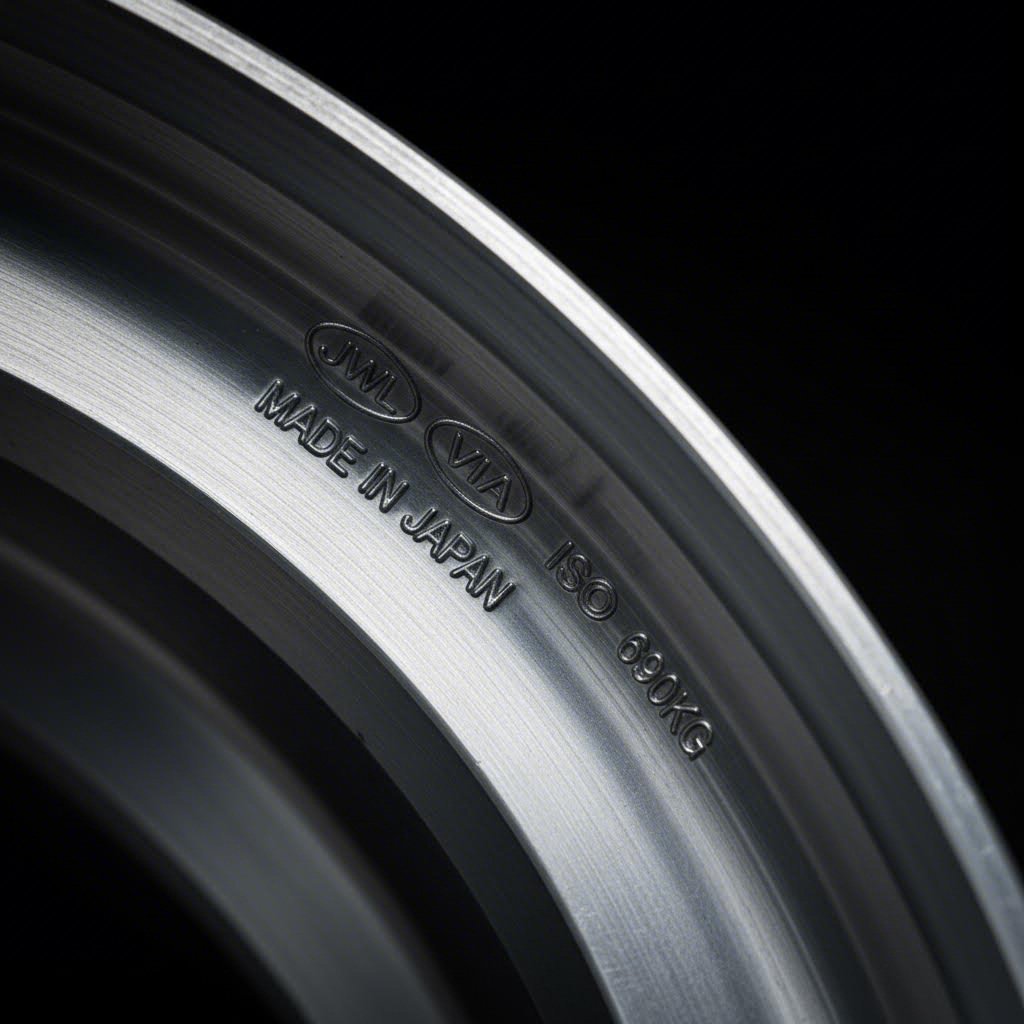
Authentic forged wheels carry their credentials like a passport. These markings tell you where the wheel was made, what standards it meets, and whether an independent body verified those claims. You'll typically find these stamps in one of three locations: the inner barrel, behind the spokes on the hub area, or machined into the wheel's face near the center bore.
Start your inspection by looking for the manufacturer's brand marking. Genuine forged wheels from reputable manufacturers feature clean laser or CNC-etched markings that appear precise and permanent. You should find the brand name, model designation, size specifications (diameter, width, offset), and load rating. These aren't applied as afterthoughts. They're integral to the manufacturing process.
Beyond brand markings, certification stamps provide critical third-party validation. Here are the key certifications you'll encounter:
- JWL (Japan Light Alloy Wheel): Japan's strict load-rating and testing standard for wheels used on public roads. This certification indicates the wheel passed bending, impact, and radial stress tests.
- VIA (Vehicle Inspection Association): An impartial Japanese third party that independently verifies JWL compliance. VIA registration is voluntary and involves actual testing, not just self-certification.
- TÜV (Technischer Überwachungsverein): Germany's rigorous technical inspection association. TÜV certification means the wheel meets strict European safety and quality standards.
- SAE J2530: The Society of Automotive Engineers standard for aftermarket wheels in the United States, covering performance and safety requirements.
The VIA certification deserves special attention because it's frequently counterfeited. According to Apex Wheels, many manufacturers stamp the VIA logo onto their wheels without ever submitting them for testing. The Japan Light Alloy Automotive Wheel Testing Council explicitly states that displaying the VIA mark without registration constitutes unauthorized trademark use and is illegal, even for products sold outside Japan.
Here's how to verify VIA registration: Legitimate manufacturers receive bound and stamped test reports with registration numbers after their wheels pass VIA testing. These numbers can be cross-referenced against the VIA's database. While the database isn't publicly accessible, reputable manufacturers publish their registration numbers on product pages. Before purchasing, ask the seller for these registration numbers. If they can't provide them, or if the numbers don't match the wheel model you're examining, walk away.
Spotting Counterfeit Forged Wheel Indicators
Counterfeiters cut corners, and those shortcuts leave telltale signs. When inspecting used aftermarket rims or browsing eBay used rims listings, knowing these red flags can save you from an expensive mistake.
First, examine the quality of the markings themselves. Authentic wheels feature permanent engravings with consistent depth and clean edges. Counterfeits often use cheap vinyl decals instead of permanent logos, mismatched fonts, or shallow, uneven stamping. Watch for spelling errors. Enthusiast forums report counterfeit wheels with misspelled brand names like "BBSs" or "RAYES" appearing on resale platforms.
Second, check the machining quality throughout the wheel. Genuine forged wheels undergo precision CNC machining. Every hole for lug bolts and valve stems is cut with exact accuracy. Misaligned holes or off-center valve stems indicate loose quality control or counterfeit molds. Flip the wheel over and examine the back surface. Authentic forged wheels have smooth, consistent finishes. Counterfeits often show rough casting marks, uneven paint, or visible lines where mold pieces joined.
| Certification Type | Authentic Characteristics | Common Counterfeit Tells |
|---|---|---|
| JWL | Deep, clean engraving; correct format including load rating; consistent with manufacturer specs | Shallow stamping; incorrect format or missing load data; present without accompanying VIA mark on premium wheels |
| VIA | Official logo with verifiable registration number; manufacturer can provide test documentation | Logo present but no registration number available; seller cannot produce test reports; number doesn't appear in manufacturer's published certifications |
| TÜV | Includes certification number; accompanied by proper documentation; marking matches wheel specifications exactly | Generic TÜV logo without specific certification number; inconsistent with wheel's stated specifications |
| SAE J2530 | Complete marking with manufacturer identification; proper load and size ratings included | Partial marking; missing required information; appears alongside incompatible international certifications |
| Brand Logo | Laser or CNC-etched; precise edges; permanent and unfading; matches official branding exactly | Vinyl decals that peel; blurry or poorly defined edges; spelling errors; slightly incorrect logo design |
Verification Strategies for Different Buying Scenarios
Your authentication approach should adapt based on whether you're buying online or in person. Each scenario presents unique challenges and opportunities.
In-Person Inspection Approach:
When you can physically examine the wheels, you have significant advantages. Bring a flashlight to illuminate the inner barrel and hub area where markings hide. Take your time. Run your fingers over the engravings to feel their depth. Genuine laser or CNC markings have distinct tactile edges that cheap stamping or decals cannot replicate.
Photograph all markings before you leave. Capture close-ups of brand logos, certification stamps, and any serial numbers. These images allow you to verify details after the inspection, cross-referencing against manufacturer databases or enthusiast community knowledge.
Ask pointed questions about documentation. Quality used auto rims from reputable sources often come with original packaging, certification cards, or receipts showing the original purchase. A seller who claims to have premium forged wheels but cannot produce any supporting documentation raises immediate red flags.
Online Purchase Verification:
Buying remotely requires a more strategic approach. Before committing to any used 15 rims for sale or other listings, request specific photographs. Ask for close-up images of all manufacturer markings, the inner barrel, and the hub face. Legitimate sellers understand why buyers need this information and will comply.
Cross-reference everything the seller claims. If they state the wheels are a specific brand and model, look up that model's specifications on the manufacturer's official website. Compare the weight, offset, certification marks, and design details against the listing photos. Inconsistencies suggest either misrepresentation or counterfeits.
Use enthusiast communities as verification resources. Many wheel-specific forums have members with database access who can confirm VIA registrations or identify known counterfeit batches. Post the photos and ask for community input before finalizing your purchase.
Finally, insist on buyer protection. When purchasing used 15 rims for sale through online marketplaces, use payment methods that offer dispute resolution. This protection becomes your safety net if the wheels arrive and don't match the authentication criteria you've now learned to verify. With markings confirmed and certification validated, you're ready to move on to the most critical phase: detecting cracks and structural damage that could make even an authentic wheel unsafe.
Detecting Cracks and Stress Fractures in Forged Aluminum
You've authenticated the wheel and confirmed it's genuinely forged. Now comes the critical question: is it structurally sound? This is where many buyers make costly mistakes. They glance at the wheel, see no obvious damage, and assume everything is fine. But remember what we learned about forged aluminum's grain structure. These wheels hide their damage internally. Detecting cracks requires specific techniques that go far beyond a casual visual scan.
Visual Crack Detection Under Optimal Lighting Conditions
Your eyes remain your first inspection tool, but they need proper support. Hairline fractures in forged aluminum are often invisible under normal lighting conditions. To reveal them, you need to manipulate light angles strategically.
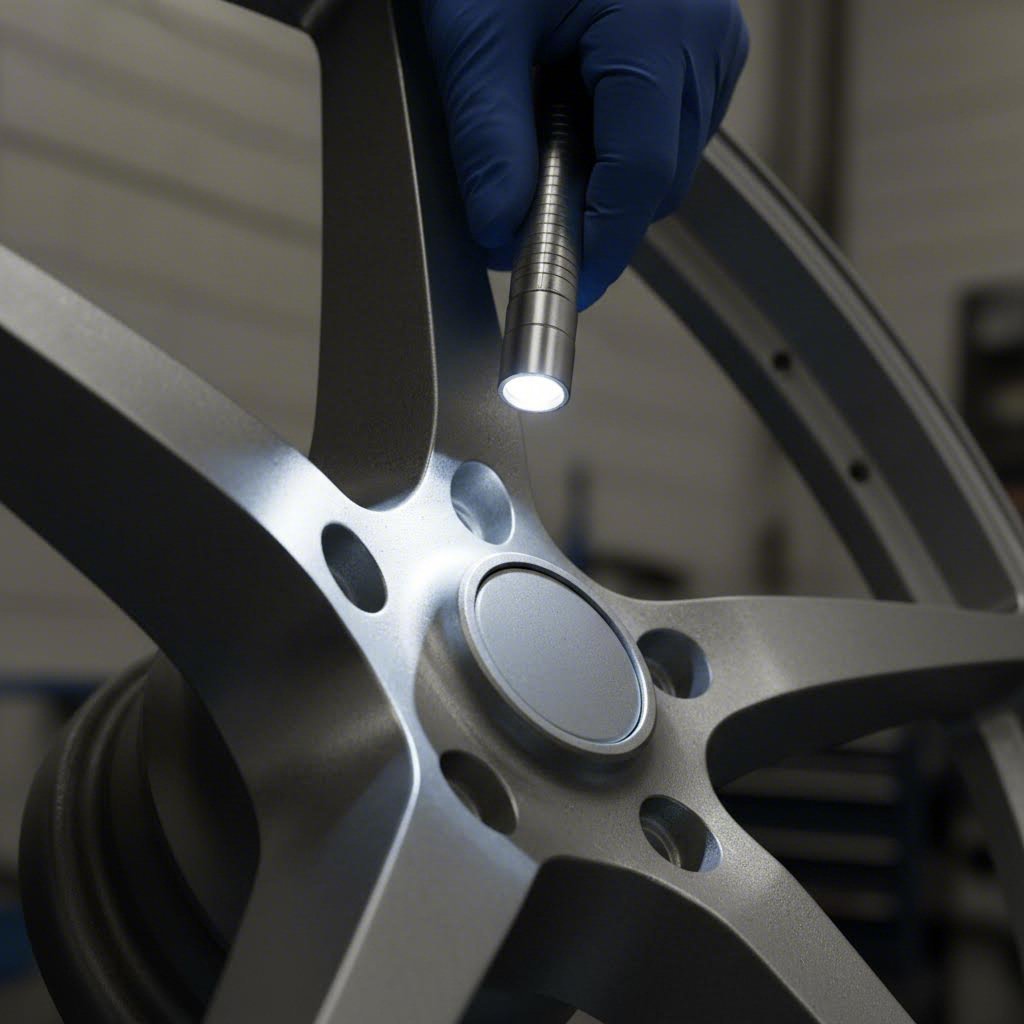
Start by positioning the wheel in direct, raking light. This means placing a bright light source at a shallow angle to the wheel's surface, almost parallel to it. Sunlight works well, but a powerful LED flashlight gives you more control. At this angle, shadows form in any surface irregularities, including cracks too fine to see under diffused lighting.
Move the light source slowly across different areas of the wheel while keeping your viewing angle constant. Watch for thin shadow lines that appear and disappear as the light passes. These fleeting shadows often indicate hairline fractures. Pay particular attention to high-stress areas where cracks most commonly develop in forged wheels.
Where should you focus your visual inspection? Research on automotive wheel failures conducted by Ferrari S.p.A. and the University of Modena identified consistent crack locations in forged spoke-type wheels. Their fatigue testing revealed that cracks typically originate at the root of spokes, where they connect to the central hub housing. This junction experiences maximum bending stress during cornering. Additionally, the transition between spokes and the outer rim creates another high-stress concentration zone.
Other critical inspection points include:
- Lug hole areas: The bolt holes experience repeated stress from wheel mounting and driving forces. Examine the metal immediately surrounding each hole for radiating cracks.
- Inner barrel seams: Check where the barrel meets the spoke assembly for any separation or cracking along the join line.
- Spoke edges: Both front and back edges of each spoke can develop fatigue cracks, particularly near the fillet radius where the spoke widens toward the hub.
- Valve stem hole: This small hole creates a stress concentration point that can develop cracks under repeated loading.
Sounds complex? Here's a practical tip: clean the wheel thoroughly before visual inspection. Brake dust, road grime, and old tire mounting lubricant can fill hairline cracks, making them invisible even under optimal lighting. A degreaser and soft brush remove these contaminants, exposing the true surface condition.
The Tap Test Method for Structural Integrity Assessment
When you tap a healthy forged wheel with a metal object, it rings. This isn't just an interesting fact. It's a legitimate inspection technique used by professionals and experienced enthusiasts alike. The tap test exploits how sound waves travel through materials differently based on their structural integrity.
Intact forged aluminum has a dense, continuous grain structure. When struck, vibrations travel freely through this uniform material, producing a clear, sustained ring similar to a bell. A cracked wheel interrupts this vibration pattern. The crack acts as a barrier, dampening the sound and producing a dull thud instead of a ring.
How do you perform this test properly? Use a small metal tool like a wrench or screwdriver handle. Tap various points around the wheel with consistent force. Listen carefully to the sound produced at each location. A healthy wheel should ring consistently regardless of where you tap. If certain areas produce a noticeably different, duller sound, that section may contain a crack.
Compare your findings across the entire wheel. Tap each spoke individually, then the barrel at multiple points around its circumference. Also tap the hub area near each lug hole. Document any inconsistencies you hear. A single dull-sounding spoke among four that ring clearly is a serious warning sign.
This technique also helps distinguish forged wheels from cast alternatives. Cast wheels, with their less dense and more porous structure, generally produce a duller, shorter ring than forged wheels. If a wheel marketed as forged sounds flat and lifeless when tapped, you may be dealing with a mislabeled cast wheel or one with significant internal damage.
Dye Penetrant Testing: DIY Crack Detection
Visual inspection and tap testing catch many problems, but some hairline fractures remain invisible and silent. For deeper assurance, consider dye penetrant testing. This method, used by professionals in aerospace and motorsport, is surprisingly accessible for DIY inspection.
According to Grassroots Motorsports, visible dye penetrant testing allows quick and accurate crack detection on almost any solid material, including aluminum. Any detected flaw shows up very clearly as a vivid red line on a white background. The kits cost around $30 and are widely available from industrial supply outlets and online retailers.
The science behind this method is straightforward. You apply a thin, brightly colored dye to the cleaned wheel surface. This dye is formulated to spread across the surface and seep into any cracks or flaws that reach the surface. After allowing penetration time, you wipe away the surface dye and apply a white powder developer. The developer draws any dye trapped in cracks back to the surface, creating visible red lines that precisely map any fractures.
When is dye penetrant testing appropriate? Consider using it when:
- You're purchasing high-value forged wheels where the investment justifies extra verification
- The wheel's history includes known impacts, track use, or pothole damage
- Visual inspection reveals suspicious marks but you can't confirm cracks
- You want final confirmation before installing used rims tires combinations for high-performance driving
However, this method has limitations. Dye penetrant testing only reveals cracks and flaws that are open to the surface. Internal fractures or porosities that don't extend to the surface cannot be detected. For used tire rims for sale near me that you suspect may have internal damage, professional ultrasonic or X-ray testing becomes necessary.
Step-by-Step Crack Inspection Protocol
Combine these techniques into a systematic approach. Follow this protocol for thorough crack detection on any used car wheel rims you're evaluating:
- Clean thoroughly: Remove all brake dust, grease, and road grime using a degreaser and soft brush. Allow the wheel to dry completely. This ensures no contaminants mask surface cracks.
- Conduct the tap test first: Before applying any chemicals, tap the entire wheel systematically. Note any areas that produce dull sounds compared to the clear ring of healthy sections.
- Perform raking light visual inspection: Position a bright light at shallow angles across every surface. Examine spoke roots, lug holes, inner barrel, and all edges for shadow lines indicating cracks.
- Apply dye penetrant to suspect areas: If your tap test or visual inspection identified questionable zones, apply penetrant dye to those areas. Allow 5-30 minutes of dwell time for the dye to seep into any cracks.
- Remove excess dye carefully: Wipe the surface with clean rags, moving in one direction only. Don't scrub aggressively, which could wash dye out of cracks.
- Apply developer and wait: Spray white developer evenly from 8-12 inches away. Watch immediately and then periodically over 20 minutes. Cracks appear as red lines bleeding through the white coating.
- Document all findings: Photograph any indications, noting their location and size. Even small dots may indicate porosity or the beginning of crack formation.
- Interpret results conservatively: Larger cracks show as continuous red lines. Tight fractures may appear as a series of inline dots. Any indication in a high-stress area warrants professional evaluation.
Why Forged Wheels Develop Hidden Micro-Cracks
Understanding why these cracks form helps you assess risk based on a wheel's history. Forged wheels don't develop fatigue cracks randomly. They result from accumulated stress events that gradually weaken the material.
Track use represents the highest risk factor. Research published in Engineering Failure Analysis demonstrates how cornering fatigue testing progressively damages even high-quality wheels. Ferrari's testing showed that composite wheels experienced measurable stiffness reduction after 250,000 cycles, with CT scans revealing internal cracks that developed between the preform and laminate layers. Forged aluminum wheels in the same study developed cracks at spoke roots after approximately 7 million cycles.
These findings have direct implications for used wheel buyers. A wheel that spent its life commuting may have accumulated only a fraction of its fatigue life. A wheel from a track day enthusiast's car may have experienced stress equivalent to years of normal driving in a single weekend. The wheel looks identical, but its remaining structural integrity differs dramatically.
Repeated high-stress events beyond track use also matter. Multiple pothole impacts, aggressive driving on rough roads, or mounting and dismounting tires with improper technique all contribute to cumulative fatigue. Each event may not cause visible damage, but the stress accumulates in the material's grain structure, eventually manifesting as micro-cracks.
This is precisely why the seller's history matters as much as the wheel's current appearance. A seller who cannot or will not discuss how the wheels were used raises concerns. With crack detection techniques now in your toolkit, the next step is learning to read the specific signs that reveal a wheel's past life and the stresses it may have endured.
Evaluating Previous Use Conditions and Their Impact on Integrity
You've checked for cracks and authenticated the wheel's origin. But here's something many buyers overlook: a wheel's past life tells you more about its future reliability than its current appearance ever could. When you're examining tire rims used in unknown conditions, the subtle signs of previous stress become your most valuable clues. Let's decode what the wheel itself is trying to tell you.
Reading the History Written on Used Forged Wheels
Every wheel carries evidence of its past. The key is knowing where to look and what those signs mean. Unlike checking wheels on your own car where you know the history, used vehicle rims require detective work.
Start with heat discoloration. Forged aluminum wheels used in aggressive driving or track conditions experience extreme temperatures from heavy braking. Look for golden, bronze, or bluish tinting on the inner barrel near the brake rotor mounting area. This discoloration indicates the wheel repeatedly reached temperatures that can alter aluminum's temper and potentially weaken its structure.
Next, examine brake dust etching patterns. Normal brake dust washes off with regular cleaning. But wheels subjected to repeated high-heat braking develop permanent etching where brake dust has literally baked into the aluminum surface. When metallic brake dust bonds with wheel surfaces under heat, it creates a grinding compound that eats through protective finishes and into the base metal. Deep, permanent staining concentrated near the spokes closest to the brake caliper suggests aggressive driving history.
Curb rash tells its own story. Minor scuffs on the outer lip happen to everyone during parallel parking. But examine the pattern carefully. Random, light scratches suggest normal street use. However, consistent deep gouges on the same side of multiple wheels indicate aggressive driving through tight corners or repeated autocross use where wheels regularly contact course markers.
Track-Used Versus Street-Used Condition Indicators
Track wheels endure stress that street wheels never experience. A single track day can subject wheels to forces equivalent to months of normal driving. Knowing how to identify track-used wheels protects you from purchasing components with significant hidden fatigue.
Look for these track use indicators:
- Uniform heat discoloration around the entire inner barrel: Track braking generates sustained heat that spreads evenly, unlike street braking that creates localized hot spots.
- Tire bead scuffing on the rim flanges: High-speed cornering forces cause tires to shift slightly on the rim, leaving distinctive wear marks on the bead seat area.
- Lead weight residue or multiple balancing marks: Track wheels often require rebalancing after aggressive sessions. Multiple generations of balance weight adhesive or numerous weight positions suggest repeated track use.
- Valve stem stress marks: High-speed centrifugal forces and temperature cycling stress valve stems, leaving visible fatigue marks around the stem hole.
- Paint or coating degradation concentrated on inner surfaces: Track heat degrades finishes from the inside out, while street use typically damages outer surfaces first.
Off-road use creates entirely different damage patterns. Impact marks on the inner barrel indicate rocks or debris strikes that may have stressed the wheel's structure without causing visible external damage. Bent or wavy flanges suggest the wheel contacted obstacles with enough force to deform the rim edge. Debris scoring across spoke surfaces or the hub face indicates the wheel operated in conditions where projectiles regularly contacted the wheel.
Pothole and Road Hazard Damage Assessment
Potholes represent one of the greatest threats to wheel integrity. American drivers spend approximately $3 billion annually on pothole-related repairs, and forged wheels aren't immune despite their superior strength.
When a wheel strikes a pothole, the tire gets compressed between the pothole's edge and the rim. According to RNR Tires, this impact can lead to bent rims, cracks, and damage that may not be immediately obvious. The angle and speed of impact determine the severity, with direct hits at highway speed transferring maximum force to the wheel structure.
Inspect for pothole damage by examining:
- The outer rim lip: Run your fingers around the entire circumference feeling for flat spots, dents, or subtle bends that interrupt the smooth curve.
- Inner barrel adjacent to the lip: Pothole impacts often cause internal damage near the strike point that isn't visible from outside.
- Spoke roots nearest to any visible rim damage: Impact forces transfer through the structure, potentially creating stress fractures at spoke junctions.
Red Flags That Suggest High-Stress Previous Use
Some warning signs should immediately raise your concern level when inspecting used forged wheels. Any single red flag warrants deeper investigation. Multiple red flags suggest walking away:
- Mismatched sets: One wheel noticeably different in condition or showing replacement suggests a failure occurred.
- Fresh refinishing over older damage: New paint or powder coating can hide structural issues. Look for coating buildup in cracks or uneven coverage.
- Missing center caps or lug nuts: Track users often run without center caps and may use aftermarket lug nuts that indicate performance modifications.
- Evidence of repairs: Welding marks, filled areas, or inconsistent surface texture indicate previous damage that required intervention.
- Aggressive tire wear patterns on mounted tires: Extreme inner or outer edge wear indicates alignment issues often caused by suspension modifications for performance driving.
- Roll cage, harness, or safety equipment marks on interior: If you're buying wheels attached to a car, these modifications confirm track use history.
- Pricing significantly below market value: Sellers who know their wheels have issues often price accordingly to ensure a quick sale.
Questioning Sellers About Wheel History
The information you gather directly from sellers can be as valuable as physical inspection. But you need to ask the right questions and know what answers should concern you.
Start with open-ended questions that require detailed responses. Ask: "Can you tell me about how these wheels were used?" rather than "Were these ever tracked?" The first question invites honest disclosure while the second makes it easy to simply say no.
Follow up with specific questions:
- "What vehicle were these mounted on, and for how long?"
- "Have they ever been refinished or repaired?"
- "Do you have the original purchase documentation?"
- "Why are you selling them?"
- "Have they ever been involved in any impacts or incidents?"
Answers that should raise concerns include vague responses about vehicle history, claims of "only highway miles" combined with visible track indicators, unwillingness to allow thorough inspection, and pressure to complete the transaction quickly. A seller who genuinely doesn't know the wheels' history isn't necessarily dishonest, but that uncertainty increases your risk.
The safety implications here are significant. Forged wheels frequently appear on high-performance vehicles where failure consequences are severe. A wheel that fails at track speeds or during aggressive driving can cause loss of vehicle control. Cracked wheels can cause sudden air leaks and tire failure, and at high speeds, this can be catastrophic.
Understanding a wheel's history isn't just about protecting your investment. It's about ensuring the wheel can safely perform in the conditions you plan to use it. With previous use conditions evaluated, you're ready to verify that the wheel's physical dimensions actually match your vehicle's requirements.
Verifying Fitment Specifications and Dimensional Accuracy
You've authenticated the wheel, checked for cracks, and evaluated its history. But here's a critical question many buyers forget to ask: will it actually fit your vehicle? Even a perfectly sound forged wheel becomes useless if the bolt pattern doesn't match or the offset pushes your tires into the fenders. Before handing over your money, you need to verify every dimension that determines whether those wheels will bolt up correctly and perform safely.
Essential Measurements Before Committing to Purchase
Fitment involves more than just diameter. According to Three Piece US, if you get the bolt pattern wrong, you can't even mount the wheels on your car. Let's break down each critical measurement you need to verify.
Bolt Pattern (Pitch Circle Diameter): This is arguably the most important number. Draw an imaginary circle between your lug studs or bolt holes. The diameter of that circle is your bolt pattern. These measurements are listed as two numbers, like 5x114.3. The first number indicates how many lugs your vehicle uses. The second is the PCD in millimeters.
How do you verify this on a used wheel? Count the bolt holes first. Then measure the distance between the center of one hole to the center of the hole directly across from it. For wheels with an even number of holes, this is straightforward. For 5-lug patterns, measure from the center of one hole to the outer edge of the hole two positions away, then multiply by 1.05 to approximate the PCD.
Center Bore Diameter: This is the hole in the middle of the wheel that slides onto your vehicle's hub. According to wheel specialists, most aftermarket wheels use a standard 73.1mm center bore designed to work with hubcentric rings. If the wheel's center bore is smaller than your vehicle's hub, it simply won't mount. If it's larger, you'll need hubcentric rings to prevent vibration at speed.
Offset Measurement: Think of offset as the distance from the wheel's centerline to the mounting surface, expressed in millimeters. The lower the number, the more the wheel pokes out from the fender. Most daily drivers accept offsets between +30 to +50, while trucks typically use +12 to -12. Incorrect offset causes tire rubbing, altered handling characteristics, and accelerated suspension wear.
Diameter and Width: These determine tire fitment and brake clearance. Remember that wheel width is measured bead-seat to bead-seat, meaning your wheels will actually measure about 1 inch wider than advertised. A wheel sold as 9.0 inches wide measures 10 inches from flange to flange. Larger diameter wheels require smaller sidewall tires and must clear your brake calipers.
| Bolt Pattern | Common Vehicle Applications | Notes |
|---|---|---|
| 4x100 | Honda Civic, Mazda Miata, Mini Cooper, older VW | Common on compact cars and older Japanese vehicles |
| 5x100 | Subaru WRX/STI, Toyota 86/BRZ, older VW/Audi | Popular in Japanese sports cars |
| 5x112 | Audi, Mercedes-Benz, newer VW | Standard German pattern; 5x112 used rims are widely available |
| 5x114.3 | Honda Accord, Nissan 350Z/370Z, Toyota Supra, Ford Mustang (newer) | Most common sports car pattern; extensive used tire wheels availability |
| 5x120 | BMW, newer Chevrolet Camaro, Honda Odyssey | BMW standard; also used by some American performance cars |
| 5x120.65 | Older Chevrolet Camaro, Corvette, Pontiac GTO | Classic American muscle pattern |
| 6x135 | Ford F-150, Lincoln Navigator | Common full-size truck pattern |
| 6x139.7 | Toyota Tacoma, Chevrolet Silverado 1500, Nissan Titan | Standard for many trucks and SUVs |
When searching for used 15 inch rims for sale near me or browsing online listings, always cross-reference the advertised specifications against your vehicle's requirements. Sellers sometimes list incorrect specs, whether from honest error or intentional misrepresentation. Verify everything yourself before purchasing.
Detecting Bent Forged Wheels Through Runout Testing
A wheel can have correct specifications and zero visible cracks yet still be unsafe if it's bent. Bent wheels cause vibration, uneven tire wear, and handling problems. Worse, a bent forged wheel may have sustained internal damage during the impact that caused the bend. Testing for runout reveals bends that visual inspection might miss.
The Dial Indicator Method:
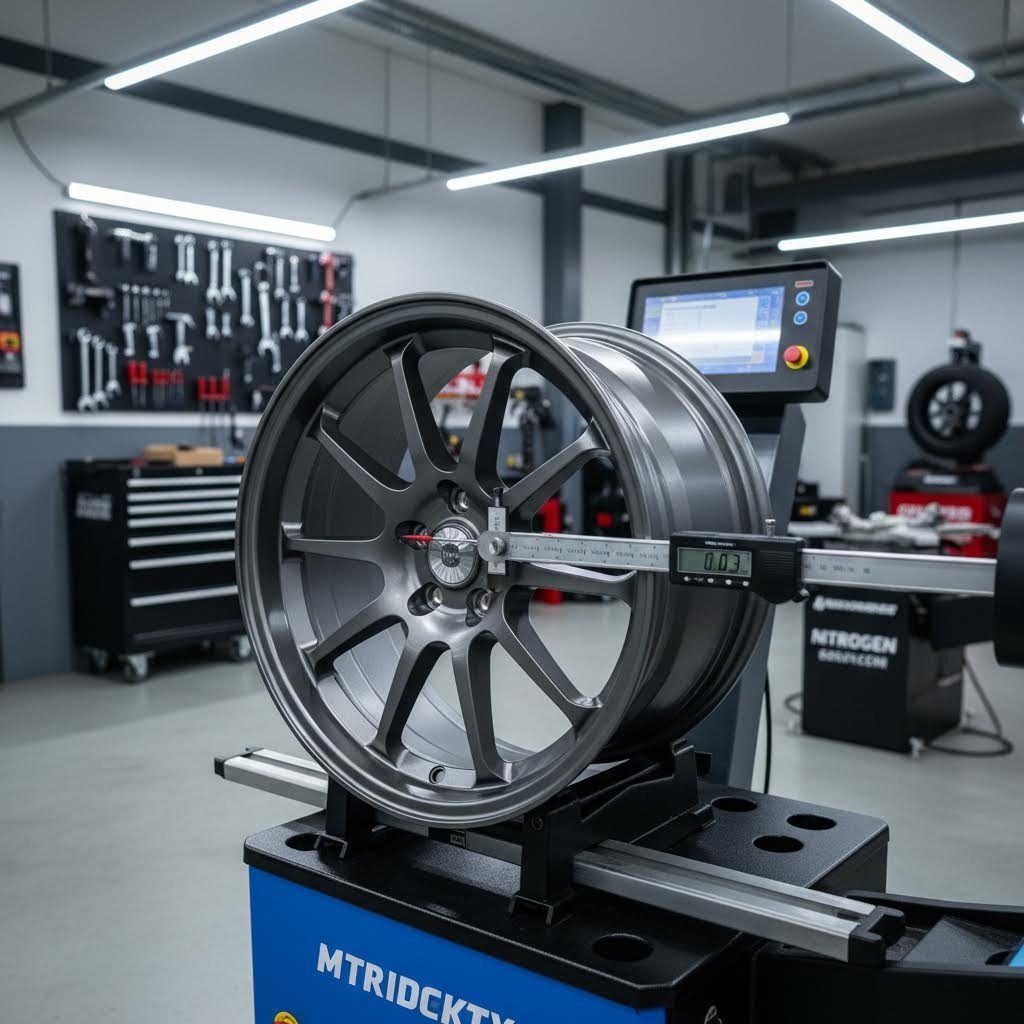
Professional shops use dial indicators for precise runout measurement. If you have access to one, mount the wheel on a hub or wheel balancer and position the dial indicator against the rim's outer edge. Rotate the wheel slowly through a complete revolution. The indicator measures deviation from perfect roundness. Industry standards typically allow 0.030 inches (0.76mm) of lateral runout and 0.045 inches of radial runout. Anything beyond these tolerances indicates a bent wheel.
The Visual Spin Test:
Don't have a dial indicator? You can still detect significant bends visually. If the wheel is mounted on a vehicle, jack up that corner so the wheel spins freely. Position yourself at eye level with the tire and spin the wheel by hand. Watch the rim's edge as it rotates. A straight wheel maintains a consistent position relative to your line of sight. A bent wheel visibly wobbles, moving toward and away from you as it rotates.
For unmounted wheels, find a level surface and roll the wheel along it. A straight wheel rolls smoothly in a relatively straight line. A bent wheel wobbles or curves in its path. This test isn't as precise as dial indicator measurement, but it reveals significant damage.
Focus your runout testing on specific areas. Impact damage typically creates localized bends rather than uniform distortion. If you know the wheel experienced a pothole strike or curb impact, test the area directly opposite the visible damage point. Impact forces often transmit through the wheel, causing secondary bending across from the strike location.
Why Forged Wheels Can Sometimes Be Straightened
Here's where forged construction offers a significant advantage for used buyers. According to Boberry Mach, bent forged wheels can often be straightened using specialized machines. The wheel is heated to a certain temperature before pressure is applied to return it to its original shape.
Why does this work for forged wheels but not cast? The answer lies in the material properties we discussed earlier. Forged aluminum's dense, aligned grain structure gives it ductility. It can bend without cracking. Cast aluminum's random grain structure and potential porosity make it brittle. Attempting to straighten a cast wheel often causes it to crack or shatter.
This repairability affects your purchasing decisions significantly. When evaluating used 15 rims with minor bends, consider:
- Repair feasibility: Slight bends in forged wheels can often be professionally straightened for $75-150 per wheel, potentially making a discounted bent wheel a smart purchase.
- Structural assessment requirements: Even if straightening is possible, the wheel absorbed significant impact energy. Professional inspection for internal damage is essential before trusting a straightened wheel.
- Negotiation leverage: A measurable bend that requires professional straightening justifies negotiating significant discounts from the asking price.
- Limitations exist: Severely bent wheels or those with cracks cannot be safely repaired. Repairing a heavily cracked or severely bent wheel may not restore it to its original strength, and in some cases may lead to further issues.
Wondering how will rims look on my car after straightening? Properly repaired forged wheels return to their original specifications and appearance. However, the refinishing process may alter the original finish, requiring powder coating or painting to restore aesthetics.
Matching Specifications to Your Vehicle Requirements
Even with perfect measurements and zero damage, fitment involves nuances beyond basic specs. Your intended use affects what specifications work best.
Performance applications demand tighter tolerances. If you're planning track days or aggressive driving, prioritize wheels with specifications exactly matching or very close to OEM. Significant offset changes alter scrub radius and steering feel. Major diameter changes affect speedometer accuracy and may require recalibration.
Daily driving offers more flexibility. Modest offset changes of 5-10mm from stock typically work fine. Hubcentric rings adequately compensate for center bore differences. However, always verify clearance between the wheel and brake calipers, suspension components, and fender edges before finalizing any purchase.
The final verification step involves test fitting before completing payment. Whenever possible, bring the wheels to your vehicle and physically bolt one onto the hub. Check for caliper clearance by inserting a straightedge through the spokes. Verify the wheel doesn't contact suspension arms when turned to full lock. This hands-on confirmation prevents the frustration of discovering fitment problems after the transaction is complete.
With dimensions verified and fitment confirmed, you're equipped to evaluate used forged wheels like a professional. But understanding brand reputation and market value helps ensure you're paying a fair price for what you're getting.
Understanding Brand Reputation and Market Value Indicators
You've mastered the technical inspection. You can spot cracks, verify authenticity, and confirm fitment. But here's a question that separates savvy buyers from those who overpay: what's that wheel actually worth? Brand reputation in the forged wheel market varies dramatically, and understanding where a manufacturer sits in the hierarchy directly impacts what you should pay, what support you'll receive, and how easily you can resell down the road.
Navigating Brand Tiers in the Used Forged Wheel Market
Think of the forged wheel market like fine watches. Some brands command premium prices based on decades of motorsport heritage and engineering excellence. Others offer solid quality at accessible price points. And some budget options cut corners in ways that matter more than their price tags suggest.
Premium Motorsport Tier:
At the top sit brands with racing DNA woven into their identity. HRE, based in San Diego, specializes in monoblock, two-piece, and three-piece forged wheels built to order using aerospace-grade 6061-T6 aluminum with TÜV certification. BBS, from Germany's Black Forest region, pioneered multi-piece wheel construction and has dominated Formula 1 and GT3 racing for decades. Rays, the Japanese powerhouse behind Volk Racing, produces legendary designs like the TE37 that dominate circuits from Suzuka to Nürburgring.
When you find used 17 inch rims for sale from these manufacturers, expect to pay premium prices even on the secondary market. A used set of HRE wheels might cost more than new budget forged options. But you're buying proven engineering, extensive documentation, and wheels that enthusiasts actively seek out.
Quality Aftermarket Tier:
Below the motorsport elite sit manufacturers offering excellent quality without the racing pedigree markup. Vossen operates an in-house U.S. forging facility with precision CNC machining and sizes ranging from 19 to 26 inches. OZ Racing brings Italian design with motorsport credibility from partnerships spanning WRC, IndyCar, and Dakar. Brands like Forgeline, Brixton Forged, and ADV.1 occupy this space as well, offering bespoke options favored by serious tuners.
Used 17 wheels for sale from these manufacturers typically retain 50-70% of their original value in good condition. They offer an excellent balance of quality, customization, and reasonable pricing for buyers who want better than entry-level without paying flagship prices.
Budget Forged Options:
The budget tier requires careful navigation. Chinese-made forged wheels sell at 40-70% of the price compared to US-made counterparts, primarily due to labor cost differences. A skilled operator and machine shop in the US charges $100-200 per hour compared to $15-20 per hour in China.
This doesn't automatically mean inferior quality. Some Chinese manufacturers produce excellent wheels using reputable forging processes. However, low-cost forged wheel companies sometimes work with small machine shops that use cheap raw forgings that may not meet quality standards. Not all 6061-T6 aluminum is created equal, and shortcuts in heat treatment or alloy blending affect the final product's strength characteristics.
When evaluating used 17 rims for sale from lesser-known brands, apply extra scrutiny. Verify certifications independently. Examine machining quality closely. And understand that resale value will be significantly lower than established brands.
What Manufacturer Reputation Means for Used Buyers
Brand reputation extends far beyond bragging rights. It directly impacts your ownership experience in practical ways.
Resale Value Retention:
Premium brands hold value remarkably well. A set of BBS LM wheels from a decade ago can still command prices near their original retail. Budget brands depreciate rapidly, sometimes losing half their value the moment they're mounted. If you buy used wheels intending to resell them eventually, brand selection significantly affects your total cost of ownership.
Parts Availability:
Three-piece forged wheels occasionally need replacement hardware, center caps, or individual barrel sections. Established manufacturers maintain parts inventories and support networks. HRE tailors each wheel to customer needs and maintains the specifications to support those wheels years later. Budget brands may disappear entirely, leaving you unable to source replacement components.
Refinishing Options:
Eventually, even premium wheels need refinishing. Reputable manufacturers often offer factory refinishing services that restore wheels to original specifications. They maintain the correct powder coat formulas and finishing techniques for each model. Budget brands rarely offer such support, leaving you dependent on third-party refinishers who may not match original quality.
Documentation and Accessories That Should Accompany Quality Used Forged Wheels
When you buy used wheels from reputable sellers, certain items indicate proper ownership and care. Their presence suggests a conscientious previous owner, while their absence raises questions:
- Original purchase receipt or invoice: Proves authenticity and establishes the wheel's age and original purchaser.
- Certification documentation: TÜV certificates, VIA registration numbers, or JWL test reports verify the wheels passed required safety testing.
- Manufacturer specification cards: Many premium brands include cards listing exact offset, width, load rating, and recommended torque specifications.
- Original center caps: Missing caps often indicate track use where caps are removed for weight savings or brake cooling.
- Matching hardware: Original lug nuts or bolts designed for the wheel's seat type ensure proper mounting.
- Hubcentric rings if applicable: Properly sized rings for specific vehicle applications show the previous owner understood proper fitment.
- Original packaging: Premium wheels ship in protective packaging that collectors and careful owners retain.
Where to Find Used Forged Wheels
Your sourcing strategy affects both price and risk. Different venues offer distinct advantages and require different approaches.
Specialized Retailers:
Some shops focus exclusively on pre-owned performance wheels. These used rim shops near me specialize in authentication, inspection, and proper presentation. They typically charge premium prices but offer some assurance of quality. Many provide limited warranties or return policies that private sales cannot match.
Online Marketplaces:
Platforms ranging from eBay to Facebook Marketplace to specialized forums host extensive used wheel listings. When you buy used wheels through these channels, apply every inspection technique we've covered. Request detailed photographs of markings, inner barrels, and any areas of concern. Use payment methods offering buyer protection.
Enthusiast Communities:
Brand-specific and vehicle-specific forums often have classified sections where enthusiasts sell to each other. These communities tend to self-police, with reputations mattering to regular members. Sellers may offer more honest assessments of wheel condition, and community members can often verify claims about specific wheel sets. Wondering who buys rims near me? These same communities include buyers actively seeking specific wheels, making them excellent venues for future resale.
Pricing Expectations and Red Flags
Understanding fair market value protects you from both overpaying and falling for suspicious deals. Research completed sales of the specific wheel model you're considering. Factor in condition, included accessories, and any damage requiring repair.
Premium tier wheels in excellent condition typically sell for 60-80% of current retail pricing. Quality aftermarket brands range from 50-70%. Budget brands may sell for 30-50% of new prices, reflecting both depreciation and market skepticism.
Deals that should raise immediate suspicion:
- Prices significantly below market: Things are usually cheap for a reason, and some corners have to be cut to bring down costs. A set of HRE wheels priced like budget alternatives likely involves counterfeits, undisclosed damage, or stolen property.
- Pressure tactics: Claims of multiple interested buyers or demands for immediate payment without allowing proper inspection suggest sellers hiding problems.
- Refusal to provide documentation: Legitimate sellers of premium wheels can usually produce some ownership history. Complete absence of paperwork on high-value wheels warrants skepticism.
- Inconsistent stories: Sellers who cannot answer basic questions about the wheels' history or give conflicting information may be concealing relevant details.
- Cash-only demands: Refusal to accept traceable payment methods eliminates your recourse if problems emerge after purchase.
The used forged wheel market rewards informed buyers. Understanding brand tiers, recognizing fair pricing, and knowing where to find quality inventory positions you to secure excellent value. But some situations exceed DIY inspection capabilities. Knowing when to seek professional assessment can save you from expensive mistakes.
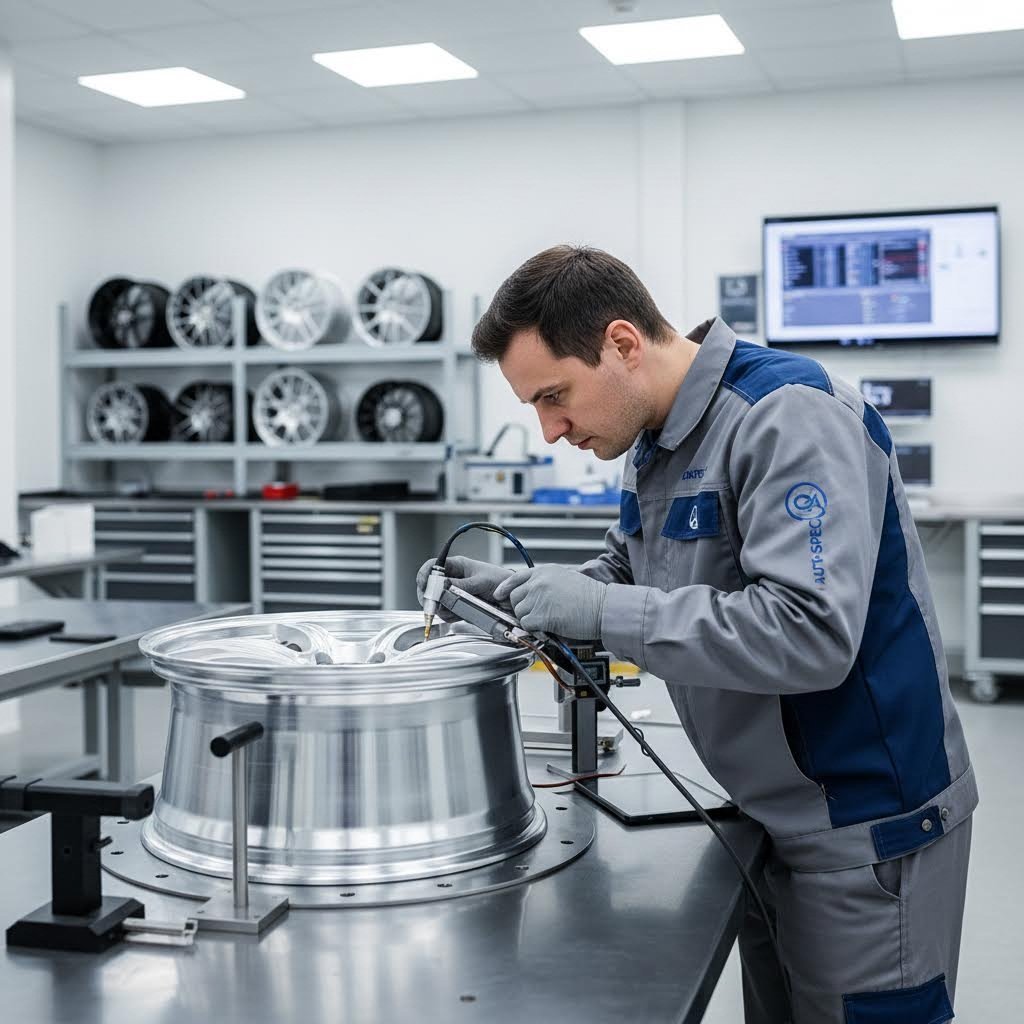
Professional Inspection Options and Quality Manufacturing Standards
You've done everything right. You authenticated the wheel, performed visual inspections, conducted tap tests, and verified fitment specifications. But here's the uncomfortable truth: some damage simply cannot be detected without specialized equipment. When you're considering used truck wheel rims for a heavy-duty application or evaluating high-value wheels for track use, DIY inspection reaches its limits. Knowing when to invest in professional assessment separates confident buyers from those gambling with their safety.
When to Seek Professional Wheel Inspection Services
Not every used wheel purchase warrants professional testing. A $200 set of budget wheels for a commuter car probably doesn't justify a $150 inspection fee. But when the stakes rise, so does the value of professional verification.
Think about it this way: where can i buy used rims with complete confidence? The answer often depends on how much risk you're willing to accept. Professional inspection becomes essential when the consequences of wheel failure exceed the cost of verification.
Consider professional inspection strongly recommended in these scenarios:
- High-value wheel purchases: When spending $2,000 or more on a set of premium forged wheels, a $100-200 inspection fee represents smart insurance against expensive mistakes.
- Track or motorsport applications: Wheels destined for high-speed use face forces that amplify any hidden weakness. Professional verification provides peace of mind when failure consequences are severe.
- Unknown or suspicious history: When sellers cannot or will not disclose how wheels were used, professional testing reveals what conversation cannot.
- Evidence of previous impacts: Visible curb damage, refinished areas, or repair attempts indicate stress events that may have caused internal damage invisible to visual inspection.
- Heavy-duty applications: Used truck rims for sale near me that will carry substantial loads require verified structural integrity. The stress of heavy hauling exposes any weakness quickly.
- Wheels from performance vehicles: Wheels removed from modified cars, especially those with suspension or brake upgrades, likely experienced stress beyond factory specifications.
- Your gut raises concerns: Sometimes something feels wrong even when you cannot identify specific problems. Professional testing either confirms your instincts or provides documented assurance.
What Professional Testing Reveals That Visual Inspection Cannot
Professional wheel inspection goes far beyond what your eyes, flashlight, and tap test can detect. Specialized equipment sees inside the metal itself, revealing defects that remain invisible until catastrophic failure.
X-Ray Inspection:
Industrial X-ray systems reveal internal voids, porosity, and cracks hidden beneath the wheel's surface. According to Force Technology, X-ray and ultrasonic inspection allows you to always know whether your products meet applicable requirements and standards. For forged wheels, this means detecting internal fractures that developed from impact stress, manufacturing defects that escaped quality control, and fatigue cracks propagating through the material before they reach the surface.
Ultrasonic Testing:
Ultrasonic inspection uses high-frequency sound waves to map the wheel's internal structure. When sound waves encounter a crack, void, or material discontinuity, they reflect differently than when passing through solid aluminum. Trained technicians interpret these patterns to identify defects with remarkable precision. This technology excels at finding fatigue cracks in high-stress areas like spoke roots and lug hole regions where visual inspection proves inadequate.
Precision Runout Measurement:
While you can perform basic runout checks yourself, professional equipment measures deviations to thousandths of an inch. Shops use precision dial indicators mounted on calibrated stands that eliminate the variables present in DIY testing. They measure both lateral runout (side-to-side wobble) and radial runout (out-of-round condition) against industry tolerances, providing documented evidence of the wheel's dimensional accuracy.
Metallurgical Assessment:
In cases involving suspected material defects or heat damage, metallurgical testing examines the aluminum's grain structure and temper condition. This laboratory analysis can determine whether a wheel was properly heat-treated during manufacturing, whether it sustained temperatures that altered its properties, and whether the alloy composition matches specifications for 6061-T6 aluminum.
Understanding Quality Manufacturing Standards
Professional inspection becomes more meaningful when you understand what separates properly manufactured forged wheels from substandard production. Quality manufacturing standards create the baseline that inspection verifies.
The automotive industry's highest quality benchmark is IATF 16949:2016 certification, which covers the entire production process, ensuring high-quality standards at every stage. This certification focuses on continuous improvement and defect prevention. Manufacturers holding this certification implement rigorous quality control protocols that dramatically reduce the likelihood of defective wheels reaching consumers.
Understanding these manufacturing standards helps you as a buyer in two important ways. First, wheels from certified manufacturers carry lower inherent risk. Second, recognizing OEM-level quality benchmarks helps you identify properly manufactured wheels during your own inspections.
For those wanting to understand what precision forging standards look like in practice, Shaoyi Metal Technology exemplifies IATF 16949-certified production with rigorous quality control across their automotive forging operations. Examining how certified manufacturers approach quality control provides valuable context for evaluating any forged component's manufacturing quality.
When reviewing professional inspection results, compare findings against these manufacturing standards. A wheel showing internal porosity or inconsistent grain structure may indicate production from facilities lacking proper quality certification. This context transforms raw inspection data into actionable purchasing decisions.
Cost-Benefit Analysis of Professional Inspection
Is professional testing worth the investment? The math depends on your specific situation.
Direct Costs:
Professional wheel inspection typically ranges from $50-150 per wheel depending on the testing methods used and your location. Basic visual and runout inspection costs less. Advanced X-ray or ultrasonic testing commands premium pricing. Some shops offer package rates for complete sets.
Value Protection:
Consider inspection cost as a percentage of your purchase. Spending $100 to verify a $3,000 wheel set represents roughly 3% insurance against total loss. That same $100 represents 50% of a $200 budget wheel set, making professional testing economically questionable for low-value purchases.
Negotiation Leverage:
Professional inspection reports provide documented evidence for price negotiations. If testing reveals issues the seller didn't disclose, you have objective grounds for requesting a discount or walking away entirely. The inspection cost often pays for itself through negotiated savings.
Safety Valuation:
Some risks defy simple cost-benefit calculation. If you're buying wheels for a vehicle that will carry your family at highway speeds, how do you value that peace of mind? Professional verification eliminates uncertainty about critical safety components.
When browsing listings like used 20 inch rims for sale craigslist, remember that private sellers rarely offer returns or guarantees. Professional inspection before finalizing payment protects you from discovering problems after your money is gone. The inspection fee becomes insignificant compared to the cost of a worthless wheel set or, worse, a failure-induced accident.
Finding Qualified Inspection Services
Not all inspection services offer equal capabilities. Seek out facilities with specific experience in wheel evaluation.
Motorsport shops often maintain inspection equipment for their racing clients. These facilities understand forged wheel construction and know exactly where damage tends to hide. Independent wheel repair specialists frequently offer inspection services as part of their business model.
Industrial non-destructive testing (NDT) companies provide the most comprehensive evaluation capabilities. These facilities serve aerospace, automotive, and manufacturing clients requiring certified inspection protocols. While potentially more expensive, their documentation meets the highest evidentiary standards.
Before committing to any service, ask specific questions: What testing methods do they use? Do they have experience with forged aluminum wheels? Can they provide documented reports suitable for insurance or legal purposes if needed? The answers reveal whether you're dealing with qualified professionals or general mechanics offering basic visual assessment.
With professional inspection options understood, you're equipped to make informed decisions about when DIY evaluation suffices and when expert verification protects your investment and safety. Now it's time to synthesize everything you've learned into a practical pre-purchase framework.
The Complete Pre-Purchase Checklist and Final Decision Framework
You've absorbed a tremendous amount of technical knowledge about forged wheel evaluation. Now it's time to transform that knowledge into action. Whether you're examining a used wheel at a seller's garage or reviewing photos from an online listing, having a systematic approach ensures nothing gets overlooked. Let's consolidate everything into a practical framework you can use on every purchase.
Your Complete Pre-Purchase Inspection Checklist
Print this checklist or save it to your phone. Work through each item methodically, and don't let seller pressure rush you past any step. A thorough inspection protects both your investment and your safety.
-
Authentication Verification:
- Locate and photograph all manufacturer markings on inner barrel and hub area
- Verify certification stamps (JWL, VIA, TÜV, or SAE J2530) are present and properly formatted
- Cross-reference VIA registration numbers against manufacturer documentation
- Check for counterfeit indicators: vinyl decals, spelling errors, shallow stamping, or misaligned holes
- Weigh the wheel and compare against manufacturer specifications (forged wheels should be 15-25% lighter than cast equivalents)
-
Crack and Damage Detection:
- Clean the wheel thoroughly to expose true surface condition
- Perform tap test across all spokes, barrel sections, and hub area, noting any dull sounds
- Conduct raking light visual inspection at multiple angles
- Focus on high-stress areas: spoke roots, lug holes, inner barrel seams, and valve stem hole
- Apply dye penetrant testing to any suspect areas if available
- Document all findings with photographs
-
Previous Use Assessment:
- Check for heat discoloration on inner barrel near brake mounting area
- Examine for permanent brake dust etching patterns
- Assess curb rash severity and pattern consistency across all wheels
- Look for tire bead scuffing, multiple balance weight marks, and valve stem stress indicators
- Inspect for impact marks, bent flanges, or debris scoring suggesting off-road use
- Question seller about wheel history, vehicle application, and reason for selling
-
Fitment Verification:
- Confirm bolt pattern matches your vehicle exactly
- Measure center bore diameter and determine if hubcentric rings are needed
- Verify offset falls within acceptable range for your application
- Confirm diameter and width specifications match your requirements
- Perform runout testing using dial indicator or visual spin test
- Test fit on your vehicle before completing payment when possible
-
Documentation and Accessories:
- Request original purchase receipt or invoice
- Obtain certification documentation if available
- Verify original center caps, lug hardware, and hubcentric rings are included
- Confirm manufacturer specification cards accompany premium wheels
Making the Final Decision with Confidence
With your inspection complete, you face the ultimate question: buy or walk away? Your findings should guide this decision clearly. Here's how to interpret what you've discovered.
Green Light Indicators (Proceed with Confidence):
- All authentication checks pass with verifiable certifications
- Tap test produces consistent ring across entire wheel
- No visible cracks under optimal lighting conditions
- Runout measurements fall within acceptable tolerances
- Seller provides transparent history and documentation
- Pricing aligns with fair market value for condition
Yellow Light Indicators (Negotiate or Seek Professional Assessment):
- Minor cosmetic damage like light curb rash or surface scratches
- Slight bend within repairable range for forged construction
- Missing accessories that can be sourced separately
- Heat discoloration without other track use indicators
- Incomplete documentation on otherwise verified authentic wheels
Red Light Indicators (Walk Away):
- Dull sounds during tap test in any section
- Visible cracks or dye penetrant indications in high-stress areas
- Failed authentication checks or counterfeit indicators
- Seller unable or unwilling to answer history questions
- Pricing significantly below market value without explanation
- Evidence of previous repairs, welding, or undisclosed damage
- Severe bends exceeding professional repair feasibility
Negotiation Leverage From Minor Issues
When your inspection reveals yellow-light issues, you've gained valuable negotiation leverage. According to ASAP Roadworthys, using your inspection findings as the foundation for negotiation keeps things objective and fair rather than relying on personal opinion.
Before negotiating, research repair costs for identified issues. Get quotes from wheel repair specialists for straightening bent rims. Price out replacement center caps or hardware. This preparation allows you to request specific discounts that reflect actual remediation costs.
Consider negotiating for a price reduction rather than asking the seller to complete repairs. This approach gives you control over repair quality and who performs the work. A seller might choose the cheapest repair option, while you can select a trusted specialist who meets your standards.
When presenting your negotiation, stay professional and solution-oriented. Phrases like "Given the refinishing these wheels need, I can offer X" work better than criticism of the seller's pricing. Offering to split repair costs demonstrates good faith while still protecting your investment.
Post-Purchase Recommendations
Congratulations on your purchase. But your responsibility doesn't end when money changes hands. Proper installation and initial monitoring ensure those used wheels perform safely.
Professional Mounting:
Have your wheels mounted by experienced technicians using proper equipment. Forged wheels require careful handling to avoid damage during tire installation. Ensure the shop uses correct torque specifications for your lug hardware and installs appropriate hubcentric rings if your center bore requires them.
Precision Balancing:
According to Tire Agent, if your car begins to shake or vibrate after getting new tires, it could indicate improper balancing, bent rims, or alignment issues. Request dynamic balancing that accounts for both static and dynamic imbalance. Quality shops offer road-force balancing that simulates actual driving conditions for the smoothest results.
Initial Use Monitoring:
Drive conservatively for the first 100 miles with your new wheel setup. Pay attention to any vibrations, unusual sounds, or handling changes. Vibration at highway speeds may indicate balancing issues or problems you missed during inspection. Return to your tire shop promptly if anything feels wrong.
After that initial period, perform a brief visual inspection. Check that all lug nuts remain properly torqued. Look for any new damage or changes in the wheel's condition. This break-in inspection catches any issues that manifest under real-world stress before they become serious problems.
The Safety-First Mindset
Throughout this guide, we've emphasized one principle above all others: safety comes first. A used wheel that seems like an incredible deal means nothing if it fails at highway speed. The most expensive used rims for Cadillac or any other vehicle become worthless if they compromise your safety.
Never let price pressure override your judgment. If something feels wrong during inspection, trust that instinct. Walking away from a questionable wheel costs you nothing. Buying a compromised wheel could cost everything.
Remember that forged wheels typically serve high-performance applications where the consequences of failure are severe. These aren't economy car wheels experiencing gentle commuting stress. They're precision components designed for aggressive driving, heavy loads, or motorsport conditions. The stakes match the engineering.
The time invested in thorough inspection is always less than the time spent recovering from a wheel failure. Every minute of careful evaluation protects both your investment and your safety.
You now possess specialized knowledge that most used wheel buyers lack. You understand forged aluminum's unique properties, know how to authenticate genuine wheels, can detect hidden damage, and recognize warning signs of high-stress previous use. This expertise transforms you from a hopeful buyer into an informed evaluator.
Apply these skills consistently. Whether you're examining a single used wheel at a swap meet or evaluating a premium set from an online seller, the same principles apply. Thorough inspection protects your investment. Verified authenticity ensures you get what you're paying for. And a safety-first approach keeps you and your passengers protected on every drive.
The used forged wheel market offers tremendous value for informed buyers. Premium wheels that cost thousands new can be acquired at significant discounts. But that value only materializes when you buy wisely. Armed with this complete inspection framework, you're ready to find excellent wheels at fair prices while avoiding the costly mistakes that trap uninformed buyers.
Frequently Asked Questions About Inspecting Used Forged Wheels
1. How can I tell if used wheels are safe?
Safe used forged wheels require multi-step verification. Start by examining for visible cracks around lug holes and spoke roots using raking light at shallow angles. Perform the tap test by striking the wheel with a metal object—a healthy forged wheel produces a clear ring, while damaged wheels sound dull. Check for runout by spinning the mounted wheel and watching for wobbling. Look for heat discoloration on the inner barrel indicating track abuse. Finally, verify certification marks like JWL, VIA, or TÜV are authentic and cross-reference registration numbers with manufacturer documentation.
2. How can you tell if a wheel is forged?
Genuine forged wheels display several distinguishing characteristics. They weigh 15-25% less than cast wheels of the same size—compare against manufacturer specifications. Look for laser or CNC-etched markings on the inner barrel showing brand name, model, and certifications. Forged wheels produce a distinct, sustained ring when tapped with a metal object, unlike the duller sound from cast wheels. Premium forged wheels feature precise machining with perfectly aligned bolt holes and smooth inner surfaces. Counterfeit indicators include vinyl decals instead of permanent engravings, spelling errors, and rough casting marks on back surfaces.
3. What to ask when buying second hand wheels?
Ask sellers open-ended questions to reveal wheel history. Inquire about which vehicle the wheels were mounted on and for how long. Ask specifically whether they've been used on track days, autocross events, or off-road. Request information about any refinishing, repairs, or impacts the wheels have experienced. Ask why they're selling and request original purchase documentation. Concerning answers include vague responses about history, claims of gentle use combined with visible track indicators, refusal to allow thorough inspection, and pressure for quick transactions. Always request certification numbers to verify VIA or TÜV registration independently.
4. How do I check second hand rims for hidden damage?
Hidden damage detection requires systematic techniques beyond visual scanning. Clean wheels thoroughly to expose true surface conditions. Use the tap test across all surfaces—inconsistent sounds indicate internal cracks. Position bright light at shallow angles to reveal hairline fractures as shadow lines. Focus on high-stress areas: spoke roots, lug holes, inner barrel seams, and valve stem holes. For deeper verification, apply DIY dye penetrant testing—brightly colored dye seeps into surface cracks and becomes visible against white developer powder. Consider professional ultrasonic or X-ray testing for high-value purchases or wheels with suspicious history.
5. Can a tire shop tell if a rim is bent?
Yes, tire shops can detect bent rims using precision equipment. Professional shops use dial indicators mounted on calibrated stands to measure runout to thousandths of an inch. They check both lateral runout (side-to-side wobble) and radial runout (out-of-round condition) against industry tolerances of approximately 0.030 inches lateral and 0.045 inches radial. Many shops offer road-force balancing that simulates driving conditions to identify vibration issues. For DIY checks, mount the wheel and spin it while watching for visible wobble, or roll unmounted wheels along a level surface to detect deviation from a straight path.