 Small batches, high standards. Our rapid prototyping service makes validation faster and easier —
  EN
EN


Forging Defects In Automotive Parts: What Fails Before You Do

Understanding Forging Defects and Their Impact on Automotive Safety
Imagine cruising down the highway when your steering suddenly fails. Or picture a suspension arm snapping under normal driving conditions. These nightmare scenarios often trace back to a single culprit: forging defects in automotive parts that went undetected during manufacturing.
So, what is forging exactly? It's a manufacturing process that shapes metal using localized compressive forces, creating components with superior grain structure and mechanical strength. Unlike casting, forging metal refines its internal structure, making it ideal for safety-critical automotive applications. However, when this process goes wrong, the consequences can be catastrophic.
Forging defects are irregularities or flaws that develop during the shaping process. They range from visible surface cracks to hidden internal voids that compromise structural integrity. In automotive applications—where forged parts must withstand extreme pressure, high temperatures, and sudden impacts—even minor defects can lead to serious safety risks.
Why Forging Quality Determines Vehicle Safety
Your vehicle relies on forged components in its most critical systems: steering parts, suspension links, axles, crankshafts, and connecting rods. These parts face tremendous stress every time you accelerate, brake, or navigate a curve. According to Swan India, forged parts are designed to withstand pressure and shock far better than cast or fabricated alternatives—but only when they're manufactured correctly.
The various types of forging processes—impression die forging, open die forging, and precision forging—each present unique opportunities for defects to form. Surface flaws like laps and seams, internal issues such as cold shuts and porosity, and grain flow irregularities all threaten component performance. When defects compromise a steering knuckle or suspension arm, the result isn't just mechanical failure—it's a potential safety emergency.
A forged component is only as reliable as its manufacturing integrity. In automotive applications, where a 10% reduction in vehicle weight can improve fuel economy by 6-8%, the margin for error shrinks dramatically as parts become thinner and more optimized.
The Hidden Costs of Defective Forged Components
The automotive industry's push toward lightweighting makes defect prevention more critical than ever. As noted by Shaoyi Metal Technology, modern forging enables engineers to design parts that are thinner and lighter without sacrificing structural integrity. But here's the challenge: optimized, lightweight components leave less room for hidden flaws.
Defective forged parts create a cascade of problems:
- Machining difficulties when surface defects interfere with precision finishing
- Assembly complications from dimensional inconsistencies
- Field failures that trigger costly recalls and warranty claims
- Regulatory compliance issues affecting vehicle safety ratings
Throughout this article, you'll discover the specific defect types that threaten forged automotive components, from surface irregularities to internal voids. We'll explore detection methods—including ultrasonic testing and magnetic particle inspection—that catch problems before parts leave the factory. Most importantly, you'll learn prevention strategies that address root causes, from temperature control to die design optimization.
Whether you're an automotive engineer, quality manager, or procurement specialist, understanding these hidden threats is essential for ensuring the components in your vehicles perform exactly as designed—every single time.
Surface Defects That Threaten Forged Component Performance
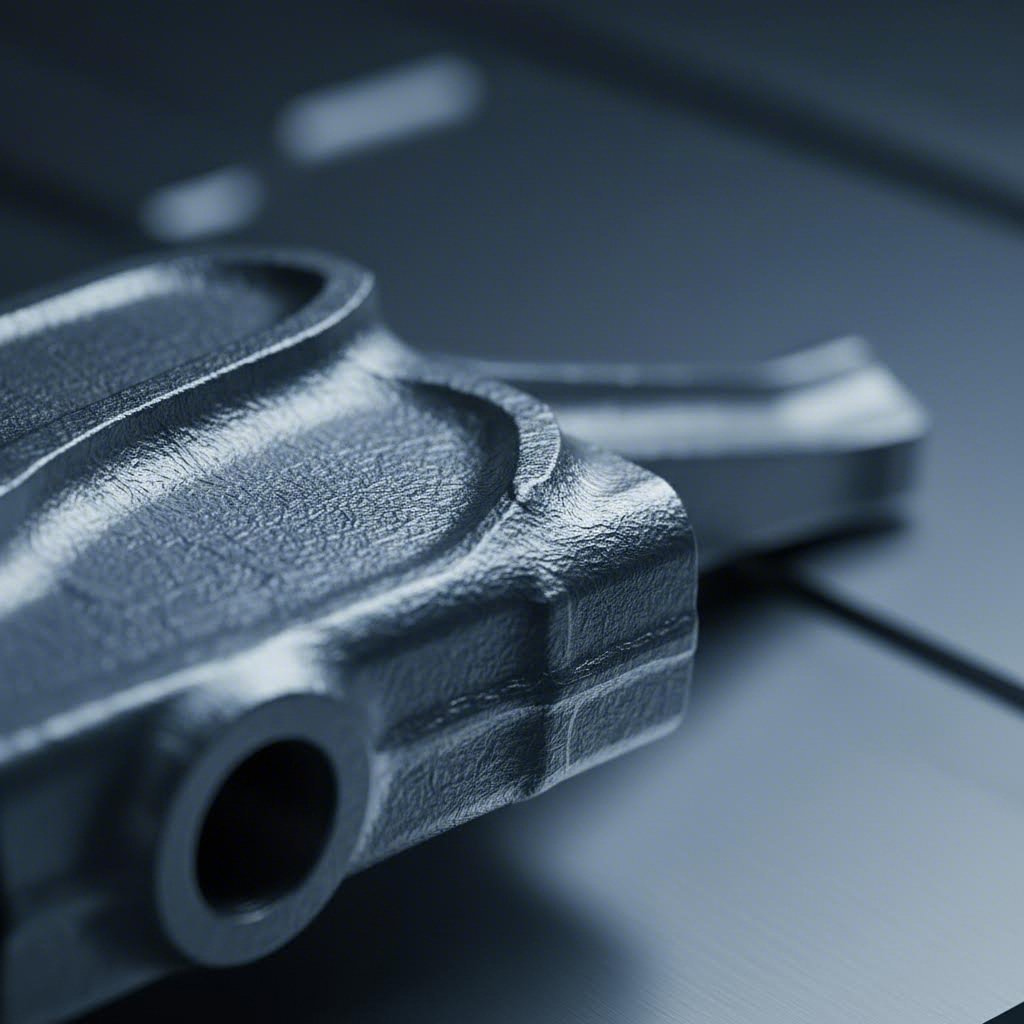
You've just inspected a batch of freshly forged suspension arms. They look perfect at first glance—smooth surfaces, proper dimensions, no obvious flaws. But beneath that exterior, surface defects may be silently waiting to cause problems. These imperfections form during the forging process itself, and understanding their formation mechanisms is the first step toward eliminating them from your production line.
Surface defects in forging components represent some of the most common quality issues in automotive manufacturing. Unlike internal flaws that require specialized testing equipment, many surface defects are detectable through visual inspection—yet their subtle nature means they're often overlooked until they cause machining problems or, worse, field failures.
Laps and Seams in Forged Automotive Parts
Ever noticed a thin line running across a forged part that looks almost like a scratch? That's likely a lap or seam—and it's far more dangerous than it appears.
A lap forms when the metal surface folds over itself during deformation, creating overlapping layers that don't properly bond together. According to mechanical engineering research, laps appear as seams in the surface that can extend into the interior of the forging. They're caused primarily by improper die design, particularly when excessive metal flow occurs during the forging stroke.
Think of it this way: imagine folding a piece of dough too aggressively. The folded sections touch but don't truly merge into one mass. The same phenomenon occurs with metals for forging when process parameters aren't properly controlled.
Seams are closely related but form through slightly different mechanisms. They typically develop when pre-existing surface irregularities on the billet—such as oxide scale or minor cracks—get folded into the material during forging. Unlike laps, seams often originate from raw material conditions rather than the forging process itself.
In automotive applications, laps and seams are particularly problematic in:
- Steering knuckles: These safety-critical components connect the suspension and steering systems. Research published in Engineering Failure Analysis documented a truck steering knuckle that failed after only 1,100 km due to surface defects acting as stress concentration points.
- Suspension arms: Subject to constant alternating loads, any lap or seam becomes a fatigue crack initiation site.
- Custom metal forging for drivetrain components: Parts like yokes and flanges experience torsional stress that can propagate defects rapidly.
How Surface Cracks Compromise Component Integrity
Surface cracks represent perhaps the most immediately dangerous category of forging defects. Unlike laps that might remain stable for thousands of cycles, cracks actively propagate under stress—often with catastrophic results.
These fine lines on forged part exteriors develop through several mechanisms:
- Temperature differential: When the surface cools faster than the core, thermal stress creates cracks. This is especially common in thick forging components with significant cross-sectional variations.
- Overheating the billet: Excessive temperatures cause grain boundary oxidation, weakening the material's cohesion.
- Working at too low temperature: Forcing metal to flow when it lacks sufficient plasticity tears the surface rather than allowing smooth deformation.
According to industry analysis from Kalaria Auto Forge, surface cracks can often be detected through visual inspection for larger flaws, while magnetic particle inspection or liquid penetrant testing reveals smaller, more subtle cracks.
Scale Pits and Their Formation During Hot Forging
When you're working with metals for forging at elevated temperatures, oxidation is inevitable. The real question is whether that oxide scale gets removed—or embedded into your finished parts.
Scale pits form when oxide layers that develop on heated billets get pressed into the forging surface during the die strike. The result? Small pits or rough patches that compromise both aesthetics and structural integrity. These defects are particularly troublesome because they create stress concentration points and can interfere with subsequent machining operations.
The causes are straightforward but often overlooked:
- Insufficient descaling: Failing to remove oxide scale before forging allows it to embed in the surface.
- Extended heating times: Prolonged exposure at forging temperatures generates thicker scale layers.
- Improper die cleaning: Scale can accumulate on die surfaces and transfer to subsequent parts.
Process Parameters That Drive Surface Defect Formation
Understanding the root causes helps you prevent these issues before they occur. Two critical factors deserve special attention:
Die Temperature Control: Dies that are too cold cause the workpiece surface to chill prematurely, reducing metal flow and increasing the likelihood of laps and surface cracks. Conversely, overheated dies can stick to the workpiece, tearing the surface during ejection. Maintaining optimal die temperature—typically between 150-300°C for steel forging—balances these competing concerns.
Lubrication: Proper lubricant application serves multiple functions: it reduces friction to promote smooth metal flow, prevents die-workpiece adhesion, and can provide thermal insulation. Insufficient or uneven lubrication creates localized sticking that promotes lap formation and surface tearing.
As automotive manufacturers continue demanding higher-quality forging components with tighter tolerances, controlling these surface defects becomes increasingly critical. But surface flaws are only half the story—the internal defects hiding within your forged parts present even greater detection challenges.
Internal Defects and Cold Shut Prevention in Automotive Forging
Here's a troubling reality: the most dangerous forging defects are often the ones you can't see. While surface flaws might catch your eye during visual inspection, internal defects hide deep within the metal—invisible to the naked eye yet fully capable of causing catastrophic failure. For automotive applications where forged parts endure extreme stress cycles, these hidden threats demand serious attention.
So, what are forgings hiding on the inside? Internal defects form during the metal shaping process when conditions prevent proper material consolidation or introduce foreign elements into the structure. Unlike surface imperfections that might only affect aesthetics, internal flaws directly compromise the load-bearing capacity of safety-critical components.
Cold Shut Formation and Prevention Strategies
Among all internal defects, cold shut in forging stands out as one of the most insidious. Imagine two streams of metal flowing toward each other during the forging stroke. Under ideal conditions, they merge seamlessly into a unified structure. But when one stream cools prematurely or oxidizes before meeting the other, they touch without truly bonding—creating a cold shut.
According to research published by the International Journal of Research and Innovation in Social Science, cold shuts appear as small cracks at the corners of forged objects. They develop through specific mechanisms:
- Metal flow interruption: When material streams meet at angles rather than merging smoothly
- Surface oxidation: Oxide layers forming on exposed metal surfaces prevent metallurgical bonding
- Temperature drops: Localized cooling reduces plasticity, preventing proper fusion
- Sharp die corners: Abrupt geometry changes create flow separation zones
The danger? Cold shuts act as pre-existing cracks within your component. Under cyclic loading—exactly what automotive parts experience—these discontinuities become fatigue crack initiation sites. A connecting rod with a hidden cold shut might survive testing but fail after 50,000 miles of real-world driving.
Prevention requires attacking the root causes:
- Proper die design: Smooth radii and gradual transitions promote unified metal flow
- Routine die polishing: Eliminating surface roughness reduces flow resistance
- Controlled cooling: Air cooling rather than quenching prevents thermal shock
- Optimized billet temperature: Maintaining forging temperature above 850°C for steels ensures adequate plasticity
Internal Voids and Their Detection Challenges
Beyond cold shuts, several other internal defects threaten forged automotive components. Each forms through distinct metallurgical mechanisms—and each presents unique detection challenges.
Piping develops when the center of a billet fails to consolidate properly during forging. Picture squeezing a tube of toothpaste from the middle: the material moves outward, potentially leaving a void at the core. In forgings, inadequate reduction ratios or improper die design can create similar central cavities. These defects are particularly dangerous in axle shafts and crankshafts where torsional loads concentrate stress at the center.
Porosity consists of small, distributed voids throughout the material. These micro-cavities often originate from dissolved gases that escape during solidification or from shrinkage during cooling. While individual pores might seem harmless, clusters significantly reduce the effective cross-sectional area and create multiple stress concentration points.
Inclusions are foreign particles trapped within the metal matrix. They might be oxide scale folded into the interior, refractory fragments from furnace linings, or slag particles that weren't removed during steelmaking. Because inclusions have different mechanical properties than the surrounding metal, they act as internal stress risers.
What makes internal defects so challenging? You simply can't see them. A forged steering knuckle might pass every visual and dimensional inspection yet contain a cold shut that will propagate into a through-crack after a few thousand stress cycles. This invisibility demands specialized detection methods—a topic we'll explore in detail later.
Material-Specific Defect Considerations
Not all metals and forge processes behave identically. The automotive industry uses diverse materials for forged components, and each presents unique internal defect concerns:
Carbon and alloy steels remain the workhorses of automotive forging. They're prone to cold shuts when forging temperatures drop below critical thresholds and can develop hydrogen-induced porosity if billet hydrogen content isn't controlled. Research indicates optimal forging occurs between 850°C and 1200°C, with temperature control in 50°C increments affecting defect formation significantly.
Aluminum alloys present different challenges. Their lower forging temperatures (typically 350-500°C) and higher thermal conductivity mean faster cooling rates. This makes cold shut formation more likely at die corners and thin sections. Additionally, aluminum's tenacious oxide layer readily forms inclusions if scale isn't properly managed.
Titanium alloys—increasingly used for lightweight, high-strength applications—are particularly sensitive to contamination. Alpha-case (oxygen-enriched surface layers) can extend into the interior if forging atmospheres aren't controlled, creating brittle zones that act like internal defects.
Comparing Internal Defect Types in Automotive Applications
Understanding the relative severity and detection requirements for each defect type helps prioritize quality control efforts:
| Defect Type | Primary Causes | Detection Methods | Severity in Automotive Parts |
|---|---|---|---|
| Cold Shut | Interrupted metal flow, oxidized surfaces, improper die design | Ultrasonic testing, metallographic sectioning | Critical—acts as pre-existing crack in fatigue-loaded components |
| Piping | Insufficient reduction ratio, central shrinkage, improper billet preparation | Ultrasonic testing, radiographic examination | High—compromises torsional strength in shafts and axles |
| Porosity | Dissolved gases, shrinkage during cooling, inadequate forging pressure | Ultrasonic testing, density measurement | Moderate to high—depends on size, distribution, and location |
| Inclusions | Oxide scale entrapment, refractory contamination, slag particles | Ultrasonic testing, magnetic particle (for surface-connected), metallography | Variable—depends on size, composition, and stress field location |
The key takeaway? Internal defects demand proactive prevention rather than reactive detection. By the time you find a cold shut or inclusion in a finished part, you've already invested significant manufacturing resources. Understanding how these flaws form—and implementing process controls to prevent them—delivers far better results than relying solely on inspection to catch problems.
Of course, even the best prevention strategies aren't perfect. That's why robust detection methods remain essential for verifying that forged components meet automotive safety standards. But internal defects aren't the only hidden threat—grain flow irregularities can compromise component performance just as severely, particularly in high-stress applications where fatigue resistance determines service life.
Grain Flow Defects in High-Stress Automotive Components
Think about cutting a piece of wood. Slice along the grain, and the blade glides smoothly. Cut against it, and you're fighting the material's natural structure every step of the way. Forged metals behave remarkably similarly—and in automotive applications, this grain orientation can mean the difference between a component lasting 200,000 miles or failing after 20,000.
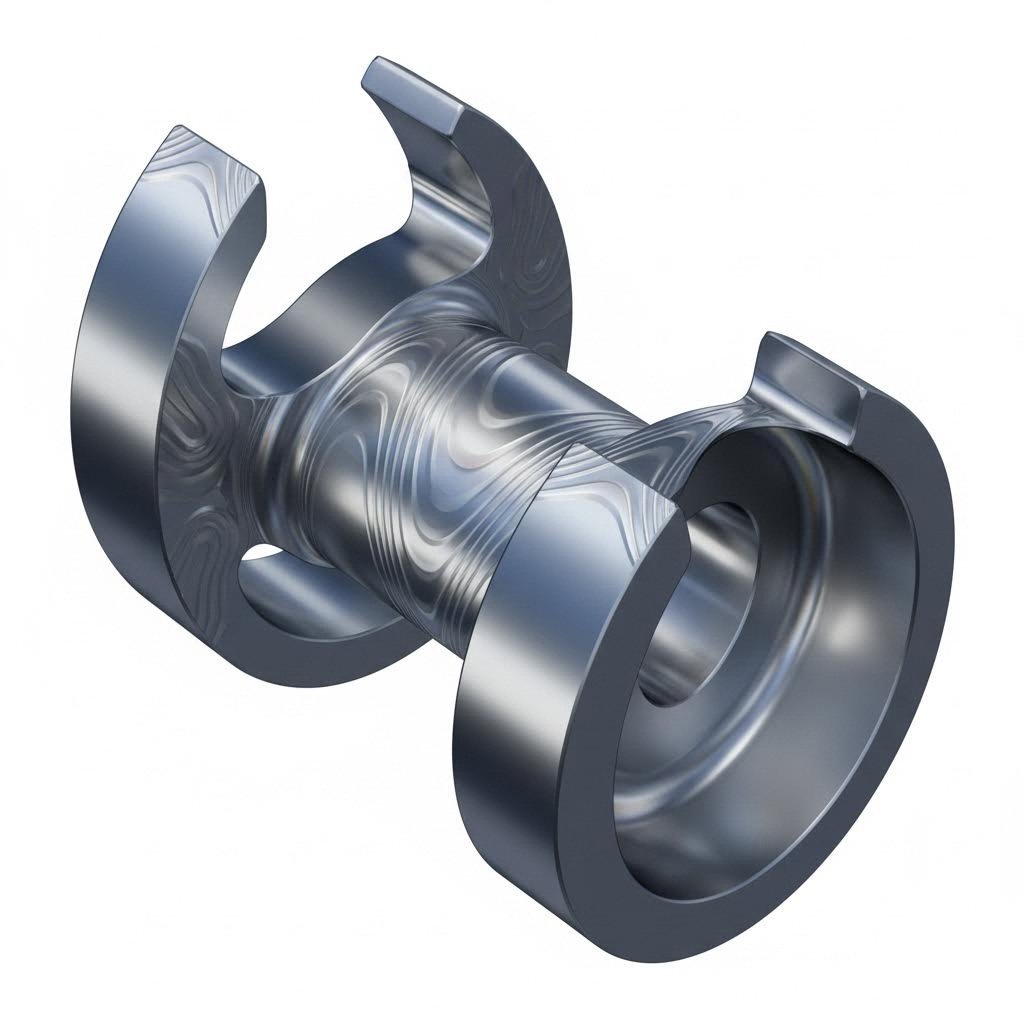
Hard forging processes don't just shape metal; they deliberately align its internal grain structure to follow the component's contours. This alignment creates what metallurgists call "grain flow"—the directional orientation of crystalline structures within the material. When done correctly, grain flow transforms a forged part into something far stronger than the raw material it came from. When done poorly, it introduces hidden weaknesses that no amount of inspection can fully compensate for.
Grain Flow Optimization for High-Stress Components
Why does grain flow matter so much? Imagine the metal's crystalline structure as millions of tiny fibers running through the material. When these fibers align parallel to the primary stress direction, they work together to resist loads. When they're oriented perpendicular to stress—or worse, when they're disrupted entirely—the component becomes dramatically weaker.
In unit forgings for automotive applications, proper grain flow delivers measurable benefits:
- Enhanced fatigue resistance: Aligned grain boundaries resist crack propagation, extending component life under cyclic loading
- Improved impact strength: Continuous grain flow absorbs energy more effectively than disrupted structures
- Superior tensile properties: Strength increases significantly when loads align with grain direction
- Better wear resistance: Surface grains oriented correctly resist abrasion and contact stress
Consider a connecting rod—one of the most demanding applications in automotive forging. During each engine cycle, this component experiences tremendous tensile loads as the piston pulls downward, followed by compressive forces during the power stroke. A properly forged connecting rod has grain flow that follows its I-beam profile, running continuously from the small end through the shank to the big end. This uninterrupted flow pattern allows the part to withstand millions of stress cycles without fatigue failure.
Die design plays a crucial role in achieving optimal grain flow. According to FCC-NA's analysis of forging quality control, structural defects can weaken forged parts, but they can be mitigated by optimizing die design and forging parameters. The shape, draft angles, and fillet radii of forging dies directly influence how metal flows during deformation. Sharp corners cause flow disruption; generous radii promote smooth, continuous grain orientation.
A forged crankshaft with optimized grain flow can withstand stress levels that would cause a machined-from-bar equivalent to fail in a fraction of the time. The difference isn't in the material composition—it's entirely in how that material's internal structure was shaped during forging.
How Improper Grain Orientation Causes Premature Failure
So what happens when grain flow goes wrong? The consequences range from reduced performance to catastrophic failure—often without any warning signs.
Metal forgery defects related to grain flow typically manifest in several ways:
End grain exposure occurs when machining operations cut across the grain flow rather than following it. Imagine those wood fibers again—cutting across them exposes weak boundaries between grains. In a drive shaft flange, end grain at the bolt holes creates stress concentration points where fatigue cracks initiate.
Flow-through disruption happens when grain lines don't follow the component's contours continuously. Instead of flowing smoothly around a fillet radius, grains terminate at the surface. These termination points act like microscopic notches, concentrating stress and accelerating crack formation.
Grain flow reversal develops when improper forging sequences cause material to fold back on itself. Unlike cold shuts (which create distinct discontinuities), grain reversals may bond metallurgically while still creating weakness. The reversed grain boundaries become preferential paths for crack propagation under fatigue loading.
The forging sequence itself dramatically affects final grain orientation. A crankshaft forged in a single operation develops different grain patterns than one produced through multiple forging steps. Each heating and forming cycle refines the grain structure—but incorrect sequences can introduce flow defects that persist through subsequent operations.
Acceptable Versus Unacceptable Grain Flow Patterns
Not every grain flow imperfection constitutes a rejectable defect. The automotive industry distinguishes between safety-critical and non-critical components when establishing acceptance criteria:
Safety-critical components—steering knuckles, suspension arms, connecting rods, and crankshafts—demand near-perfect grain flow orientation. Any disruption in stress-critical areas typically results in rejection. These parts undergo metallographic sectioning during qualification to verify grain flow patterns meet specifications. Even minor deviations can reduce fatigue life by 30-50%, making strict criteria essential.
Non-critical components may tolerate some grain flow irregularity in low-stress regions. A bracket or cover with disrupted grain flow at a non-loaded flange might remain acceptable, provided the primary load-bearing sections maintain proper orientation. However, even these parts benefit from optimized grain flow for overall durability.
Verification requires destructive testing during process qualification. Technicians section sample parts, polish the cut surfaces, and etch them to reveal grain flow patterns. Comparing these patterns against engineering requirements confirms whether the forging process produces acceptable results consistently.
The relationship between grain flow and component longevity explains why leading automotive manufacturers specify forging for their most demanding applications. Cast or machined alternatives simply cannot replicate the aligned grain structure that forging naturally produces. But achieving this advantage requires rigorous process control—from die design through final inspection.
With surface defects, internal flaws, and grain flow irregularities all threatening component integrity, automotive manufacturers rely on sophisticated detection methods to verify quality. Understanding these inspection techniques—and the standards that govern them—is essential for anyone involved in forged component production or procurement.

Detection Methods and Quality Standards for Automotive Forgings
You've invested significant resources in preventing forging defects through proper die design, temperature control, and material selection. But here's the reality: prevention alone isn't enough. Even the most carefully controlled forging processes occasionally produce parts with hidden flaws. That's where detection methods become your last line of defense—the critical checkpoint that separates safe components from potential field failures.
Forging metallurgical testing and inspection isn't just about finding problems; it's about building confidence that every part leaving your facility meets automotive safety standards. The challenge? Different defect types require different detection approaches, and knowing which method to apply—and when—determines whether flaws slip through undetected.
Non-Destructive Testing Methods for Forged Parts
Non-destructive testing (NDT) allows you to evaluate component integrity without damaging the part. For automotive forging, several NDT methods form the backbone of quality verification—each with distinct strengths and limitations.
Visual Inspection remains the first and most fundamental step. Trained inspectors examine forged parts using magnifying lenses, borescopes, and proper lighting to identify surface imperfections. According to FCC-NA's quality control analysis, common indicators include cracks, porosity, laps, and surface irregularities that suggest deeper issues. While visual inspection catches obvious surface flaws, it cannot detect internal defects or subtle discontinuities—making it necessary but insufficient as a standalone method.
Magnetic Particle Testing (MPT) excels at detecting surface and near-surface discontinuities in ferromagnetic materials. The process involves magnetizing the component and applying fine iron particles to the surface. These particles gather around areas where magnetic fields are disrupted by defects like cracks or cold shuts. For steel forging components—steering knuckles, suspension arms, and drivetrain parts—MPT provides quick, reliable detection of surface-breaking flaws that visual inspection might miss.
Ultrasonic Testing (UT) offers perhaps the most versatile detection capability for internal defects. High-frequency sound waves penetrate the material, and reflections from discontinuities are recorded and analyzed. As noted by Eddyfi Technologies, UT is sensitive to both surface and subsurface discontinuities and can provide highly accurate pictures of flaw attributes—including size, shape, and location.
However, conventional UT has a limitation: defects aligned parallel to the ultrasonic beam may escape detection. That's where Phased Array Ultrasonic Testing (PAUT) proves invaluable. Using multiple individually controlled transducers in a single probe, PAUT enables:
- Beam steering across diverse angles without moving the probe
- Detection of flaws in any orientation through 3D volumetric inspection
- Enhanced sensitivity for cold shuts and inclusions that conventional UT might miss
- Real-time imaging for faster, more accurate flaw characterization
Radiographic Testing (RT) uses X-rays or gamma rays to produce images of a component's internal structure. This method is particularly effective for detecting porosity, inclusions, and internal voids that ultrasonic waves might characterize ambiguously. The resulting radiograph provides a permanent record of the inspection—valuable for traceability requirements in automotive applications. However, RT requires specialized safety protocols and is generally slower than ultrasonic methods, making it more suitable for qualification testing than high-volume production inspection.
Metallurgical Testing and Quality Verification
While NDT methods verify that individual parts meet specifications, metallurgical testing validates that your forging process consistently produces acceptable results. These destructive tests sacrifice sample parts to gain deep insight into material properties and internal structure.
Tensile Testing measures a forged component's strength by pulling a sample until it breaks. The test reveals tensile strength, yield strength, and elongation—critical data for confirming that forged parts will perform under real-world stress conditions. For automotive applications, tensile properties must meet or exceed specifications established during design validation.
Impact Testing determines toughness by measuring energy absorption during sudden fracture. A pendulum or hammer strikes a notched sample, and the energy required to break it indicates how the material will behave under shock loading. This test is essential for suspension and chassis components that experience sudden impacts during vehicle operation.
Hardness Testing evaluates resistance to deformation using standardized methods like Rockwell, Brinell, or Vickers testing. Hardness correlates with wear resistance and strength, making it a quick quality check for verifying heat treatment effectiveness and material consistency.
Metallographic Examination involves sectioning, polishing, and etching sample parts to reveal grain structure under microscopy. This technique verifies grain flow patterns, identifies inclusions, and confirms that microstructure meets specifications. For safety-critical components, metallographic examination during process qualification is non-negotiable.
The Hierarchical Quality Control Process
Effective quality assurance in automotive forging isn't a single checkpoint—it's a systematic process spanning the entire production cycle. As emphasized by Singla Forging's best practices analysis, quality assurance emphasizes preventing defects by controlling variables throughout the forging lifecycle.
- Incoming Material Inspection: Verify chemical composition, cleanliness, and traceability of billets or ingots before they enter production. Material certification and testing confirm that only approved grades are used.
- Pre-Forging Process Validation: Use simulation tools to predict material flow and potential defect zones. Optimize die design and forging parameters before production begins.
- In-Process Monitoring: Implement real-time monitoring of temperature, pressure, and force during forging. Statistical Process Control (SPC) techniques detect deviations before they produce defects.
- First-Article Inspection: Subject initial production samples to comprehensive NDT and metallurgical testing. Verify that the process produces parts meeting all specifications.
- Production Inspection: Apply appropriate NDT methods based on component criticality. Safety-critical parts may require 100% inspection; others may use statistical sampling.
- Final Verification: Confirm dimensional accuracy, surface finish, and documentation completeness before shipment. Ensure traceability from raw material through finished component.
Industry Standards and Acceptance Criteria
Quality standards provide the framework that defines what constitutes an acceptable forged component. For automotive applications, two certification systems dominate:
ISO 9001 establishes fundamental quality management system requirements applicable across industries. It emphasizes process control, documentation, and continuous improvement—essential foundations for any forging operation.
IATF 16949 builds on ISO 9001 with automotive-specific requirements. This standard, developed by the International Automotive Task Force, addresses risk-based thinking, enhanced traceability, and supplier quality management. For automotive forging suppliers, IATF 16949 certification demonstrates capability to meet the industry's demanding quality expectations.
These standards don't specify exact defect acceptance limits—those come from customer specifications and component-specific requirements. However, they mandate systematic approaches to:
- Defining acceptance criteria for different defect types based on component criticality
- Establishing inspection frequencies and methods appropriate to risk levels
- Maintaining traceability from raw material through final delivery
- Implementing corrective actions when defects are detected
- Driving continuous improvement in defect prevention
Safety-critical components typically have zero tolerance for certain defect types—cold shuts, cracks, and significant grain flow disruptions generally result in rejection regardless of size or location. Non-critical parts may accept minor surface imperfections in non-functional areas, provided they don't affect performance or subsequent processing.
The forging terms and acceptance criteria established through these standards create a common language between suppliers and customers. When everyone understands what constitutes a rejectable defect—and what testing methods will be used to find it—quality disputes decrease and confidence increases.
Detection methods and quality standards form the verification layer that confirms your prevention efforts are working. But when defects do occur despite your best efforts, understanding their root causes becomes essential for implementing lasting solutions. The next section explores how process parameters connect directly to specific defect formation—and what adjustments eliminate problems at their source.
Root Cause Analysis and Prevention Strategies
Finding defects is one thing. Eliminating them permanently is another challenge entirely. You can inspect every forged part that leaves your facility, but if the same flaws keep appearing, you're treating symptoms rather than curing the disease. True quality improvement requires connecting specific process parameters to the defects they cause—then making targeted adjustments that address root causes.
Think of it this way: a cold shut doesn't just happen randomly. It forms because something specific went wrong—temperature dropped too low, metal flow was interrupted, or die geometry created a dead zone. Identify that specific cause, and you've found your prevention strategy.
Temperature Control and Its Effect on Defect Formation
Temperature influences nearly every defect type in forging. Too hot, too cold, or inconsistent heating—each creates distinct problems that manifest as rejectable parts.
When billet temperature runs too high, you're inviting trouble:
- Grain growth: Excessive temperatures cause grains to enlarge, reducing strength and toughness
- Scale formation: Thicker oxide layers develop, increasing the risk of scale pits and inclusions
- Surface decarburization: Carbon migrates out of steel surfaces, creating soft zones prone to wear
- Hot shortness: Certain alloys become brittle at elevated temperatures, leading to surface cracking
Conversely, insufficient billet temperature creates equally serious issues. According to FCC-NA's analysis of forging quality control, incorrect control of temperature during the forging process can result in defects such as warping, cracking, or incomplete forging. When metal lacks adequate plasticity, it tears rather than flows—producing laps, cold shuts, and surface cracks.
Die temperature matters just as much as billet temperature. Cold dies chill the workpiece surface prematurely, reducing metal flow and promoting lap formation. The surface layer loses plasticity while the core remains hot, creating differential stresses that manifest as surface cracks during or after forging.
Practical temperature control strategies include:
- Precise furnace control: Maintain billet temperature within ±15°C of target specifications
- Transfer time minimization: Reduce the interval between furnace extraction and die contact to limit cooling
- Die preheating: Maintain dies at 150-300°C for steel forging to prevent surface chilling
- Pyrometer verification: Use infrared measurement to confirm actual temperatures rather than relying solely on furnace setpoints
Die Design Optimization for Defect-Free Forging
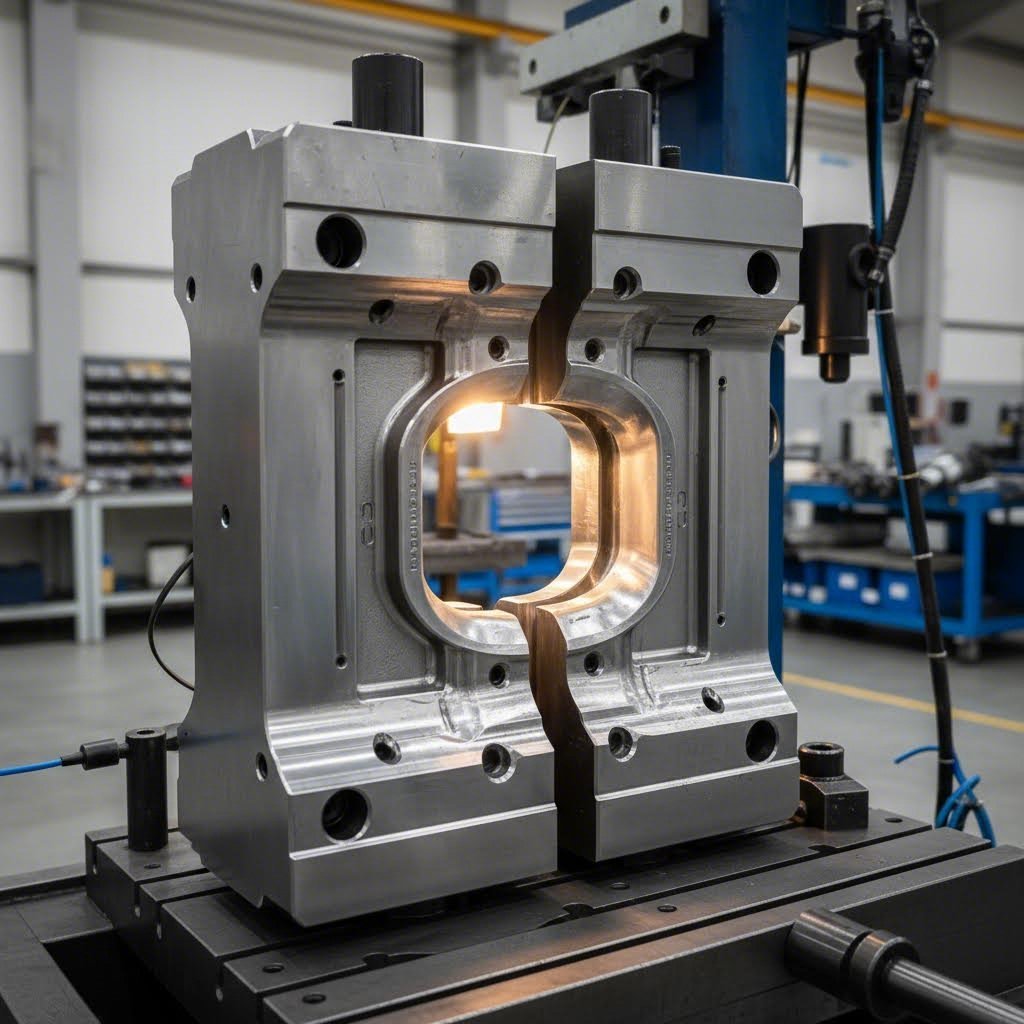
Your die design determines how metal flows during deformation—and poor flow patterns cause defects. Sharp corners create dead zones where material stagnates. Insufficient draft angles cause ejection problems that tear surfaces. Improper flash design leads to trapped material and laps.
According to Frigate's analysis of advanced forging techniques, die design is a critical aspect of forging, and optimizing the design is essential to ensure efficiency and durability. Simulation tools allow manufacturers to analyze stresses and strains on dies during forging, identifying areas that may experience excessive wear or deformation.
Key die design principles for defect prevention include:
Generous fillet radii: Sharp inside corners concentrate stress and disrupt metal flow. Radii of at least 3-5mm (larger for bigger components) promote smooth flow patterns and reduce lap formation risk.
Proper draft angles: Adequate taper—typically 3-7° for external surfaces—allows clean part ejection without surface tearing. Internal features may require larger angles to prevent sticking.
Balanced flash design: Flash channels should allow excess material to escape uniformly around the parting line. Unbalanced flash creates pressure differentials that force metal into unintended paths.
Progressive cavity filling: Die geometry should guide material to fill critical features first, with flash areas filling last. This sequencing prevents premature flash formation that starves critical zones.
The Defect-Cause-Prevention Matrix
Connecting specific defects to their root causes—and the process adjustments that eliminate them—provides a practical troubleshooting framework:
| Defect Type | Primary Root Causes | Prevention Strategies | Component Category Impact |
|---|---|---|---|
| Laps | Excessive metal flow, sharp die corners, insufficient lubrication | Increase fillet radii, optimize billet volume, improve lubricant distribution | Critical for suspension arms and steering components |
| Cold Shuts | Low forging temperature, interrupted metal flow, oxidized surfaces | Raise billet temperature, redesign flow paths, minimize transfer time | Critical for powertrain components under cyclic loading |
| Surface Cracks | Temperature differential, overheating, working below minimum temperature | Control heating uniformity, optimize forging temperature range, preheat dies | Affects all categories—especially chassis parts with complex geometry |
| Scale Pits | Excessive scale formation, inadequate descaling, contaminated dies | Reduce furnace dwell time, implement effective descaling, maintain die cleanliness | Problematic for machined surfaces on all component types |
| Porosity | Dissolved gases, insufficient forging pressure, shrinkage during cooling | Control raw material hydrogen content, increase reduction ratio, optimize cooling rate | Critical for powertrain and drivetrain components |
| Grain Flow Disruption | Improper die design, incorrect forging sequence, inadequate reduction | Redesign dies for continuous flow, optimize multi-step sequences, ensure adequate deformation | Essential for crankshafts, connecting rods, and axle shafts |
| Inclusions | Raw material contamination, scale entrapment, refractory particles | Specify cleaner steel grades, improve descaling, maintain furnace linings | Affects all safety-critical components |
Component-Specific Prevention Approaches
Different automotive component categories face distinct defect challenges based on their geometry, loading conditions, and material requirements:
Powertrain Components: Crankshafts, connecting rods, and transmission gears demand exceptional internal integrity. Cold shuts and porosity are primary concerns because cyclic loading amplifies any internal discontinuity. Prevention focuses on maintaining optimal forging temperatures throughout multi-step operations and ensuring complete material consolidation through adequate reduction ratios.
Chassis Components: Steering knuckles, control arms, and wheel hubs often feature complex geometries with varying cross-sections. Laps and surface cracks concentrate at geometric transitions where metal flow changes direction. Die design optimization—particularly fillet radii and draft angles—takes priority for these parts.
Suspension Parts: Components like suspension arms and stabilizer bars experience high fatigue loading. Grain flow orientation directly affects fatigue life, making flow pattern optimization essential. Surface defects also demand attention since these parts often operate in corrosive environments where surface flaws accelerate degradation.
Simulation Technology for Defect Prediction
Why wait for defects to appear in production when you can predict them before cutting your first die? Modern forging simulation transforms defect prevention from reactive troubleshooting to proactive process design.
According to research on forging simulation technology, simulation allows manufacturers to test designs digitally, predict material behavior, and optimize the forging process before investing in physical production. This leads to fewer defects, reduced time-to-market, and improved cost-effectiveness.
Finite Element Analysis (FEA) models the entire forging process computationally, revealing:
- Material flow patterns: Identify regions where laps or cold shuts might form before cutting dies
- Temperature distribution: Predict hot and cold spots that cause surface cracks or incomplete filling
- Die stress analysis: Locate areas of excessive wear or potential die failure
- Grain flow prediction: Visualize how grain orientation develops throughout the forging sequence
Simulation enables virtual iteration—testing multiple die designs, forging sequences, and process parameters without manufacturing physical tooling. Large forging companies increasingly rely on these tools to achieve first-time-right production, eliminating costly trial-and-error development cycles.
The simulation results directly inform prevention strategies. If the model predicts a cold shut at a particular die corner, you redesign the geometry before cutting steel. If temperature analysis shows excessive cooling during transfer, you adjust heating parameters or reduce cycle time. This predictive capability shifts quality control upstream—preventing defects at the design stage rather than detecting them after production.
Even with optimized processes and predictive simulation, some relationship exists between forging quality and downstream manufacturing operations. The defects that do slip through—or the near-misses that remain within tolerance—create challenges that ripple through machining, assembly, and ultimately vehicle performance.
Downstream Manufacturing Impacts and Performance Consequences
So you've detected a forging defect during inspection and rejected the part. Problem solved, right? Not quite. The reality is far more complicated—and expensive. Forging defects in manufacturing don't just affect individual components; they create ripple effects that cascade through machining operations, assembly lines, and ultimately into vehicles on the road. Understanding these downstream consequences reveals why prevention and early detection matter so much more than post-production inspection alone.
How Forging Defects Create Machining Challenges
Imagine your CNC machine encountering a lap defect mid-cut on a steering knuckle. The tool suddenly hits a discontinuity in the material—harder in some spots, softer in others. What happens next isn't pretty: tool wear accelerates, surface finish suffers, and dimensional tolerances become impossible to maintain.
Forging defects create specific machining problems that manufacturing engineers dread:
- Tool breakage and accelerated wear: Inclusions and hard spots cause unpredictable cutting forces that snap end mills and destroy inserts prematurely
- Surface finish degradation: Porosity and scale pits produce rough machined surfaces that fail to meet specifications—even with multiple finishing passes
- Dimensional instability: Internal stresses from improper grain flow cause parts to move during machining, throwing off critical tolerances
- Increased scrap rates: Parts that pass forging inspection may fail after machining exposes previously hidden defects
- Extended cycle times: Compensating for material inconsistencies requires slower feeds and additional passes
The economic impact compounds quickly. A single rejected forging costs the material and forging operation. A forged part that fails after machining costs the forging, the machining time, the tooling wear, and the downstream scheduling disruption. That's why automotive component failure often traces back to forging quality issues that weren't caught early enough.
Assembly Complications and Quality Escapes
Parts that survive machining still face assembly challenges when underlying defects compromise dimensional accuracy or mechanical properties. A connecting rod with subtle grain flow disruption might meet dimensional specifications yet exhibit inconsistent press-fit behavior during assembly. Suspension arms with internal porosity may pass all inspections but create noise or vibration issues that surface only after vehicle assembly.
These "quality escapes"—defective parts that pass all checkpoints—represent the most dangerous category of forging defects. According to industry analysis on automotive supplier risk management, responsibility for design and validation of components is not always clear, and allocation of responsibilities for failures within system components may be especially difficult to manage. When defects escape into assembled vehicles, determining root causes and assigning liability becomes complex and contentious.
Field Failure Prevention Through Forging Quality
The ultimate consequence of undetected forging defects? Field failures that put drivers at risk and trigger costly recalls. A cold shut in a steering knuckle might remain stable through years of normal driving, then propagate into a through-crack during a panic braking event. A lap in a suspension arm could survive 100,000 miles before fatigue finally separates the material layers.
The automotive lightweighting trend amplifies these risks dramatically. As manufacturers optimize components for weight reduction, wall thicknesses decrease and stress levels increase. A defect that might have been tolerable in a heavier, over-engineered part becomes critical in an optimized design operating closer to material limits.
Undetected forging defects trigger a cascade of problems:
- Component failure during operation: Sudden loss of steering, suspension collapse, or drivetrain failure creates immediate safety hazards
- Regulatory compliance issues: Vehicles with defect-prone components may fail to meet safety standards, affecting type approvals and certifications
- Recall campaigns: Once a pattern of failures emerges, manufacturers must notify owners and replace affected components across entire production runs
- Warranty claims: Even failures that don't trigger recalls generate warranty costs that erode profitability
- Litigation exposure: Personal injury claims following component failures can result in substantial legal costs and settlements
- Brand reputation damage: High-profile failures and recalls undermine consumer confidence in ways that affect sales for years
The Economic Reality of Defect-Related Recalls
The financial stakes are staggering. Vehicle safety forging failures don't just cost the price of replacement parts—they trigger expenses that multiply exponentially as defects progress through the supply chain. Root cause investigation, containment procedures, customer notification, dealer labor, logistics for replacement parts, and potential litigation all add to the total.
As noted by legal experts analyzing automotive supplier risk, if a warranty issue arises, the supplier needs to react quickly to identify the root cause, implement containment procedures, and establish clean points. Protocols for handling warranty claims, including product return, inspection, and determining root causes must be established in advance.
Forging quality control isn't just a manufacturing concern—it's a business imperative. The cost of preventing defects through proper process control, die design optimization, and rigorous inspection pales in comparison to the expense of managing recalls, warranty claims, and the litigation that follows field failures. Every dollar invested in upstream quality prevention saves multiples in downstream damage control.
This economic reality explains why leading automotive manufacturers demand rigorous quality systems from their forging suppliers. The question isn't whether you can afford comprehensive defect prevention—it's whether you can afford the consequences of skipping it.
Selecting Quality-Focused Forging Partners for Automotive Applications
You've seen how forging defects form, learned detection methods that catch hidden flaws, and explored prevention strategies that address root causes. But here's the practical question: how do you find an automotive forging supplier capable of delivering consistently defect-free components? The answer lies in systematic evaluation—looking beyond price quotes to assess capabilities that actually determine quality outcomes.
Choosing the wrong precision forging partner creates problems that compound over time. Inconsistent quality leads to rejected shipments, production delays, and ultimately the downstream failures we explored earlier. Choosing wisely, however, establishes a foundation for reliable supply chains and components that perform exactly as designed.
Evaluating Forging Suppliers for Automotive Quality
Not all forging companies are created equal. The capabilities that matter most for automotive applications go far beyond basic metalworking equipment. According to industry guidance on forging partner selection, quality, reliability, material performance, and lead time all depend on choosing a supplier with the right capabilities.
When evaluating potential suppliers, focus on these critical areas:
- Technical capability alignment: Can they produce the specific part geometries, materials, and tolerances your application demands? A strong partner provides clear specifications, examples, and engineering support.
- In-house engineering resources: Suppliers with design and simulation capabilities help optimize your parts—not just manufacture them. Look for die design expertise and finite element analysis tools that predict defects before production begins.
- Manufacturing capacity: Evaluate production capacity relative to your volume requirements. Can they scale from prototyping to mass production without quality degradation?
- Quality control infrastructure: Confirm they have appropriate NDT equipment—ultrasonic testing, magnetic particle inspection, and metallurgical testing capabilities for the defect types relevant to your components.
- Material expertise: Different alloys present unique forging challenges. Suppliers experienced with your specific materials understand the process parameters that prevent defects.
- Delivery reliability: As noted by forging industry experts, if suppliers frequently delay deliveries or can't commit to realistic schedules, it's a warning sign.
Watch for red flags during your evaluation: vague answers about quality processes, reluctance to share inspection data, or inability to explain how they prevent the specific defects discussed throughout this article. A trustworthy supplier welcomes detailed technical questions—because they have solid answers.
Certification and Quality Systems That Matter
Certifications provide objective verification that a supplier's forging quality systems meet recognized standards. For automotive applications, two certifications stand above others in importance.
IATF 16949 represents the gold standard for automotive quality management. This certification, developed specifically for the automotive supply chain, builds on ISO 9001 foundations while adding requirements for risk-based thinking, enhanced traceability, and continuous improvement. According to IATF 16949 implementation guidance, the standard requires organizations to evaluate suppliers based on their ability to meet product conformity and ensure uninterrupted supply—exactly what you need from an automotive forging supplier.
IATF 16949 forging suppliers demonstrate systematic approaches to:
- Process control that prevents defects rather than just detecting them
- Traceability from raw material through finished components
- Corrective action systems that address root causes permanently
- Continuous improvement driven by data and customer feedback
- Risk assessment for both product conformity and supply continuity
Beyond certification, examine how suppliers implement quality systems in practice. Do they conduct incoming material inspection to verify billet quality before forging? Have they invested in simulation technology for defect prediction? Can they demonstrate statistical process control data showing consistent performance over time?
The supplier selection process should also consider multidisciplinary decision-making capabilities. As emphasized in IATF 16949 requirements, involving representatives from various departments leads to more comprehensive supplier evaluations and better-informed choices. Your forging partner should demonstrate this same collaborative approach when addressing your quality requirements.
Finding a Qualified Automotive Forging Partner
For manufacturers seeking a forging partner that embodies the quality principles discussed throughout this article, Shaoyi (Ningbo) Metal Technology demonstrates the capabilities that matter. Their IATF 16949 certification confirms systematic quality management aligned with automotive industry requirements.
What sets qualified suppliers apart is their ability to address the complete defect prevention picture. Shaoyi's precision hot forging solutions incorporate the process controls essential for eliminating surface defects, internal flaws, and grain flow irregularities. Their in-house engineering capabilities enable die design optimization and simulation-based defect prediction—catching potential problems before they reach production.
For high-stress components like suspension arms and drive shafts—where grain flow orientation directly affects fatigue life—their rigorous quality control systems verify that every part meets specifications. From rapid prototyping in as little as 10 days to high-volume mass production, their processes maintain the consistency that automotive applications demand.
Their location near Ningbo Port supports efficient global logistics, while their commitment to quality systems addresses the upstream prevention strategies that eliminate costly downstream problems.
Making Your Selection Decision
The forging partner you choose determines whether the components in your vehicles will perform reliably for hundreds of thousands of miles—or fail prematurely with potentially serious consequences. Apply the evaluation criteria systematically:
- Verify IATF 16949 certification and examine how quality systems operate in practice
- Assess technical capabilities against your specific component requirements
- Evaluate engineering resources for design optimization and defect prevention
- Confirm appropriate inspection and testing infrastructure
- Check delivery track record and capacity alignment with your volume needs
- Request references from other automotive customers
The investment in thorough supplier evaluation pays dividends throughout your production lifecycle. Components that arrive defect-free machine efficiently, assemble reliably, and perform safely in service. That's the outcome that matters—and it starts with selecting a forging partner who shares your commitment to quality.
Frequently Asked Questions About Forging Defects in Automotive Parts
1. What are the most common defects in forged automotive parts?
The most common forging defects in automotive parts include surface cracks, cold shuts, laps, seams, scale pits, porosity, and grain flow disruptions. Surface defects like laps form when metal folds over itself during deformation, while cold shuts develop when two metal streams fail to bond properly due to oxidation or temperature drops. Internal defects such as porosity and inclusions hide within the material, requiring specialized testing like ultrasonic inspection to detect. Each defect type poses unique risks to safety-critical components like steering knuckles, suspension arms, and crankshafts.
2. What causes cold shut defects in forging?
Cold shuts occur when two streams of metal meet but fail to bond metallurgically during the forging process. Primary causes include low forging temperatures that reduce metal plasticity, surface oxidation that prevents proper fusion, interrupted metal flow from poor die design, and sharp die corners that create flow separation zones. These defects act as pre-existing cracks under cyclic loading, making them particularly dangerous in fatigue-loaded automotive components like connecting rods and drive shafts. Prevention strategies include maintaining optimal billet temperatures above 850°C for steels, redesigning flow paths with generous radii, and minimizing transfer time between heating and forging.
3. What are the 4 main types of forging processes?
The four main types of forging processes are open-die forging, impression die (closed-die) forging, cold forging, and seamless rolled ring forging. Open-die forging shapes metal between flat dies without fully enclosing the workpiece, ideal for large components. Impression die forging uses shaped dies to form precise geometries for automotive parts like suspension components. Cold forging works metal at room temperature for improved surface finish and dimensional accuracy. Seamless rolled ring forging creates ring-shaped components through controlled deformation. Each process presents unique defect risks that require specific prevention strategies.
4. How are forging defects detected in automotive manufacturing?
Forging defects are detected through multiple inspection methods based on defect type and location. Visual inspection identifies obvious surface flaws using magnification and proper lighting. Magnetic particle testing reveals surface and near-surface discontinuities in ferromagnetic materials by detecting magnetic field disruptions. Ultrasonic testing uses high-frequency sound waves to find internal defects like cold shuts, porosity, and inclusions. Phased array ultrasonic testing offers enhanced sensitivity through multi-angle beam steering. Radiographic examination produces X-ray images of internal structures. Metallurgical testing including tensile testing, impact testing, and metallographic examination validates material properties and grain flow patterns during process qualification.
5. Why is IATF 16949 certification important for automotive forging suppliers?
IATF 16949 certification represents the automotive industry's gold standard for quality management systems. This certification builds on ISO 9001 foundations while adding automotive-specific requirements for risk-based thinking, enhanced traceability, and continuous improvement. Certified suppliers like Shaoyi Metal Technology demonstrate systematic approaches to defect prevention rather than just detection, complete material traceability from raw stock to finished components, corrective action systems that address root causes permanently, and supply continuity risk assessment. For automotive manufacturers, partnering with IATF 16949 certified forging suppliers ensures components meet stringent safety requirements while minimizing costly quality escapes, recalls, and warranty claims.