 Small batches, high standards. Our rapid prototyping service makes validation faster and easier —
  EN
EN


Identifying Fake Forged Wheels: 9 Red Flags Before You Buy
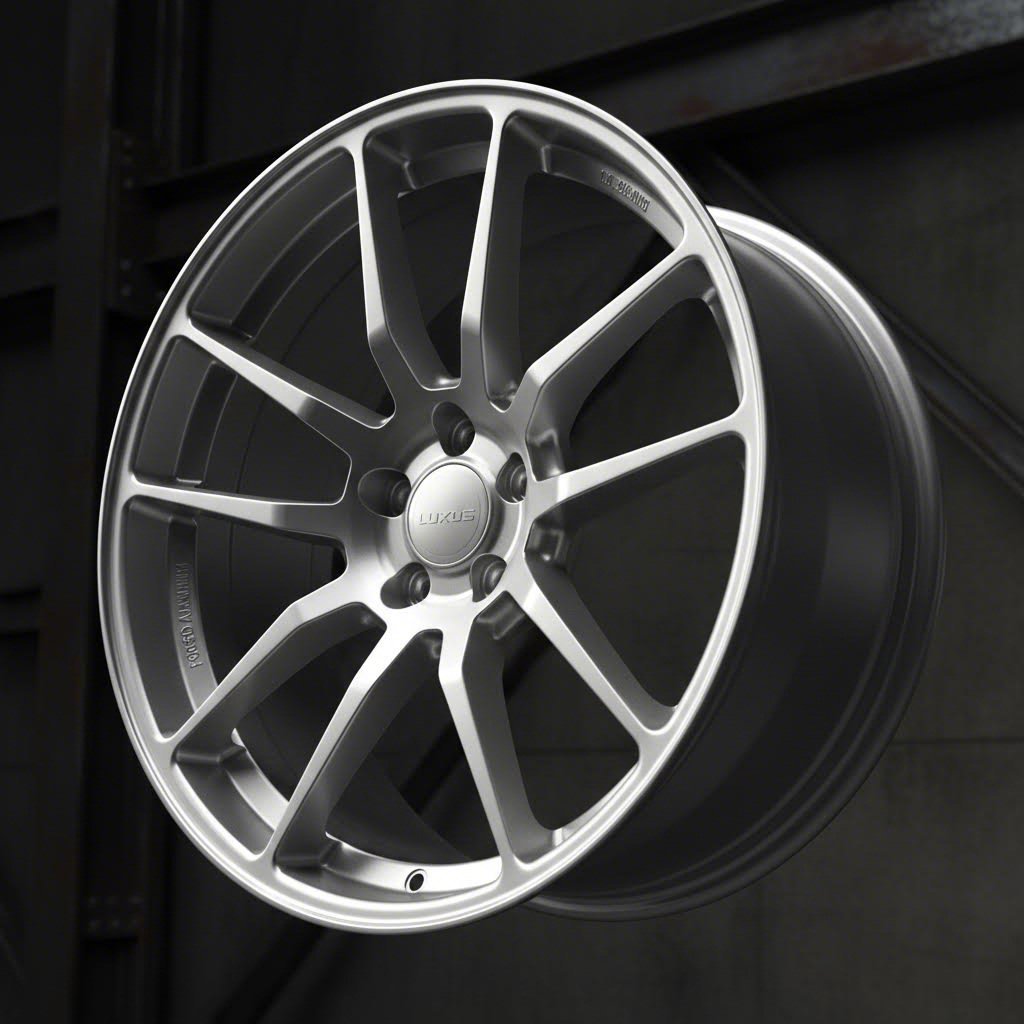
The Hidden Danger of Counterfeit Forged Wheels
Imagine cruising down the highway when suddenly your wheel shears off the hub while you're doing 70 mph. This nightmare scenario isn't hypothetical. A Bentley Continental GT in India experienced exactly this catastrophic failure when its fake aftermarket wheels came apart during highway driving. The rim simply broke away from the hub while the vehicle was in motion. Fortunately, the driver avoided a crash, but this incident highlights a growing crisis in the automotive aftermarket: counterfeit forged wheels that look authentic but fail catastrophically under real-world stress.
So what exactly are fake forged wheels? These are counterfeit products that claim to be manufactured through genuine forging processes but are actually produced using inferior methods and materials. Real forged wheels are created by compressing high-grade aluminum or magnesium alloys under immense pressure, creating a dense, uniform grain structure that delivers exceptional strength-to-weight ratios. Fake wheels skip this demanding process entirely, often using low-pressure casting techniques that produce heavier, weaker products prone to cracking and structural failure.
Why Counterfeit Wheels Are Flooding the Market
The counterfeit wheel market thrives because of one simple factor: profit margins. Authentic forged wheels from reputable Japanese and European manufacturers can cost $800 or more per wheel. Counterfeit versions sell for as little as $200, tempting budget-conscious enthusiasts who don't realize they're gambling with their safety. These fakes often imitate popular designs, center caps, spoke patterns, and even brand names to trick consumers into believing they're purchasing genuine products.
Counterfeit wheels lack the rigorous testing and quality control of genuine manufacturers. They are prone to cracks, structural failures, and catastrophic breakage when subjected to road hazards like potholes, putting you and everyone on the road at serious risk.
The Critical Difference Between Replicas and Fakes
Here's where many buyers get confused. What are "rep" wheels, and how do they differ from outright fakes? Replica wheels are legal copies that openly acknowledge their status as alternative designs inspired by popular styles. They don't claim to be something they're not. For example, the Avid AV6 is a well-known replica wheel that directly imitates the iconic Volk TE37 design, but it's sold honestly as an affordable alternative, not as a genuine Volk product.
Fake wheels and fake rims, on the other hand, are fraudulent products that actively deceive buyers. They use counterfeit branding, fake certification marks, and deceptive packaging to pass themselves off as authentic forged wheels from respected manufacturers. Some even replicate acronyms like "JWL" or "TUV" using similar-looking but meaningless alternatives such as "RAW" or "KIKI" to fool unsuspecting buyers.
This guide will walk you through nine critical red flags for spotting counterfeit forged wheels across multiple brands and styles. Whether you're shopping for Japanese performance wheels or European luxury designs, these authentication techniques will help you avoid dangerous fakes and protect your investment.
Understanding Forged Wheel Manufacturing
Ever wonder why genuine forged wheels command premium prices while counterfeits sell for a fraction of the cost? The answer lies in how real wheels are actually made. Understanding the manufacturing process is your first line of defense when spotting fakes because counterfeiters simply cannot replicate what happens inside a legitimate forging facility.
When you're shopping for performance wheels, you'll encounter three main manufacturing methods: casting, flow forming (sometimes called rotary forging), and true forging. Each process creates fundamentally different products with distinct strength characteristics, weight profiles, and safety margins. Let's break down what separates authentic forged wheels from the cast imitations that counterfeiters try to pass off as the real thing.
How Authentic Forging Creates Superior Strength
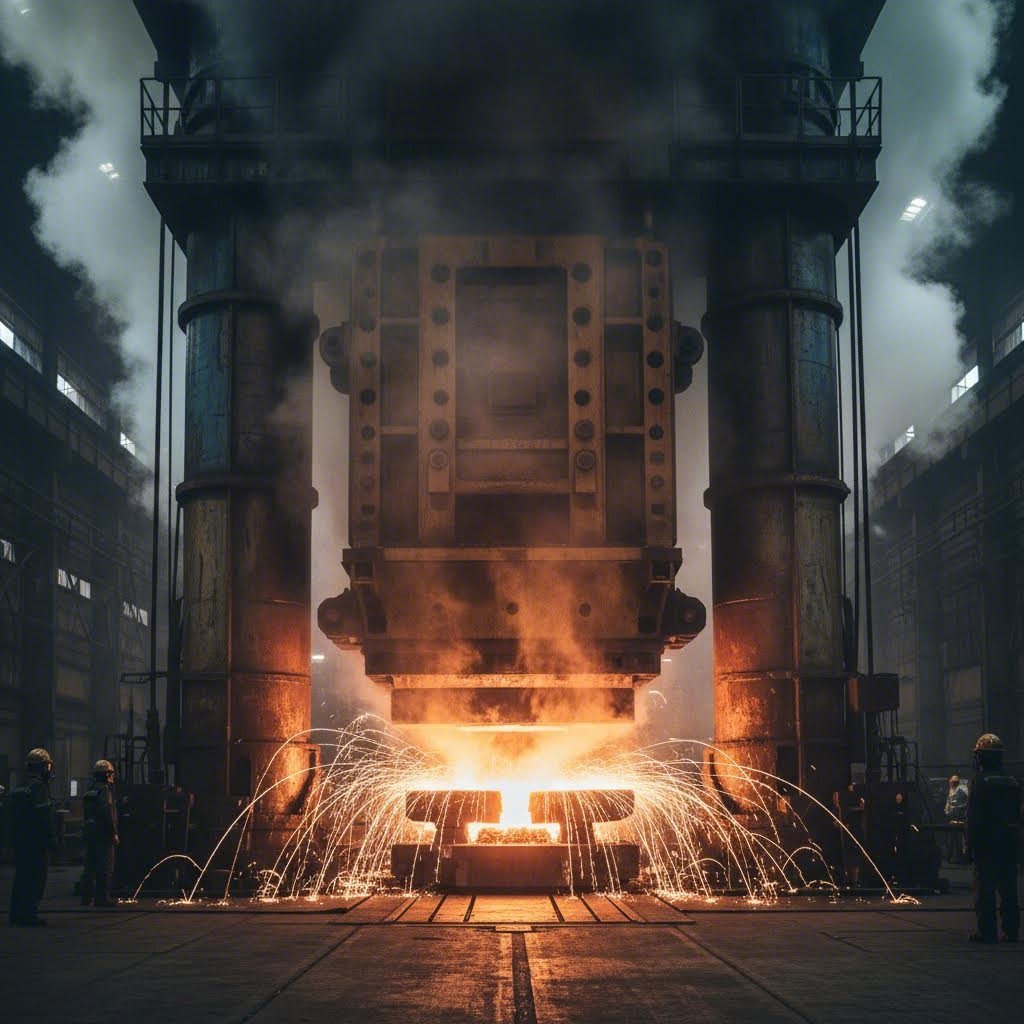
Genuine forged wheels start their life as a solid aluminum billet, typically made from high-grade 6061-T6 aluminum alloy. This raw material block gets heated to extreme temperatures, making it malleable enough to shape. Here's where the magic happens: massive hydraulic presses apply intense pressure to compress and form the aluminum into a wheel shape.
This high-pressure compression fundamentally transforms the metal's internal structure. As the aluminum is pressed, the grain structure aligns and compresses, eliminating microscopic imperfections, pores, and shrinkages that exist in the raw material. The result? A wheel with a uniform, incredibly dense grain structure that follows the contours of the finished shape.
Think of it like compacting snow into an ice ball versus leaving it as loose powder. The compressed version is dramatically stronger because there are no air gaps or weak points. Real forged wheels achieve an exceptional strength-to-weight ratio that allows manufacturers to use less material while delivering superior durability. A properly forged wheel typically weighs between 21 to 30 pounds depending on size and style, significantly lighter than cast alternatives of identical dimensions.
The benefits extend beyond just strength. Forged wheels offer:
- Higher load capacity – The compressed grain structure handles stress more effectively
- Crack resistance – No porosity means no weak points where fractures can begin
- Impact durability – Better able to absorb sudden shocks from potholes and road hazards
- Repairability – When damaged, genuine forged wheels can often be repaired rather than replaced
Telltale Signs of Cast Wheels Sold as Forged
Cast wheels follow a completely different manufacturing path. Instead of compressing solid metal, casting involves pouring molten aluminum into a mold and allowing it to cool and solidify. This process is faster, cheaper, and requires less specialized equipment, which is exactly why counterfeiters prefer it.
The problem? As molten aluminum cools inside the mold, inconsistencies develop within the metal structure. These inconsistencies, known as porosity, create microscopic air pockets and weak points throughout the wheel. Cast wheels are more prone to cracking under extreme stress because these internal flaws act as fracture initiation points.
To compensate for this inherent weakness, manufacturers must add more material, resulting in heavier wheels. A cast wheel of the same size as a forged version might weigh 15% to 25% more. Counterfeiters selling cast wheels as forged are essentially selling you a product that's simultaneously weaker and heavier than what you're paying for.
Here are the key manufacturing differences every buyer should understand:
| Characteristic | Genuine Forged Wheels | Cast Wheels (Often Sold as Forged) |
|---|---|---|
| Manufacturing Process | High-pressure compression of solid aluminum billet | Molten aluminum poured into mold |
| Grain Structure | Aligned, compressed, uniform density | Random orientation with potential porosity |
| Weight (18" wheel) | Typically 18-22 lbs | Often 25-30+ lbs |
| Strength Under Impact | Resists cracking; may bend but maintains integrity | Prone to cracking and sudden fracture |
| Load Bearing Capacity | Higher rated for performance applications | Lower capacity; designed for standard use |
| Production Cost | Higher due to equipment and labor intensity | Lower; easier mass production |
You'll also encounter "flow formed" or "rotary forged" wheels in the market. These are a hybrid approach where a cast wheel barrel is stretched and compressed using spinning rollers while heated. This process improves upon standard casting by aligning the grain structure in the barrel section, creating wheels that are lighter and stronger than pure cast versions. However, they're still not true forged wheels. Some manufacturers use terms like "spun forged" or "flow forged" as marketing language, which can confuse buyers into thinking they're getting fully forged products.
Knowing these manufacturing fundamentals gives you a significant advantage. When examining a wheel replica or suspected counterfeit, you'll now understand why weight verification matters and what internal structural differences you're really paying for when you invest in authentic forged products.
Weight Verification as Your First Defense
Now that you understand how manufacturing processes create fundamentally different products, let's talk about the simplest authentication test you can perform: weighing the wheel. This single step catches the majority of counterfeits because physics doesn't lie. Genuine forged wheels are significantly lighter than cast counterparts of identical dimensions, and counterfeiters simply cannot fake this characteristic without investing in the expensive forging equipment they're trying to avoid.
When you pick up an authentic forged wheel, you'll immediately notice the difference. That lighter feel isn't just marketing hype. It's the direct result of compressed grain structure allowing manufacturers to use less material while achieving superior strength. A cast wheel claiming to be forged will feel noticeably heavier in your hands, and this weight difference becomes your most reliable first-line authentication tool.
The Weight Test Every Buyer Should Perform
Before purchasing any wheel advertised as forged, follow this straightforward verification process:
- Obtain the manufacturer's official specifications – Visit the brand's website or contact their customer service for exact weight data on the specific wheel model, size, and offset you're considering
- Request the seller's weight measurement – Ask for photographic proof of the wheel on a calibrated scale before committing to purchase
- Compare against published data – Cross-reference the seller's claimed weight with manufacturer specifications and enthusiast forum discussions
- Allow for minor variance – Authentic wheels may vary slightly (typically within 0.5 lbs) due to finish applications, but significant deviations signal problems
Enthusiast communities have become invaluable resources for weight verification. Take the popular BMW 763M wheels as an example. Forum members have documented exact specifications directly from BMW's Electronic Parts Catalog (ETK), providing buyers with reliable baseline data to authenticate purchases.
According to official BMW specifications, the 763M wheels weigh:
- 9Jx19 ET29 (Front) – 9.41 kg / 20.75 lbs
- 10Jx19 ET40 (Rear) – 9.89 kg / 21.80 lbs
- 10Jx20 ET40 – 10.61 kg / 23.39 lbs
These numbers matter tremendously. If someone offers you "authentic" 763M wheels that weigh 26 or 28 pounds each, you're looking at counterfeits. The extra weight reveals the casting process used to manufacture them, regardless of how convincing the finish or branding appears.
Why Counterfeit Wheels Are Suspiciously Heavy
Remember the manufacturing differences we discussed earlier? Cast aluminum contains internal porosity and inconsistent grain structure, forcing manufacturers to add extra material for adequate strength. This compensation creates wheels that are typically 25-30% heavier than their genuine forged counterparts.
Counterfeiters face an impossible choice: invest in legitimate forging equipment (eliminating their profit margin) or accept that their products will always be heavier than authentic versions. They universally choose the latter, hoping buyers won't notice the weight discrepancy or won't know how to verify it.
The table below provides reference weight ranges for common wheel sizes, helping you spot counterfeits across various popular styles:
| Wheel Size | Authentic Forged Weight Range | Suspected Counterfeit Weight Range | Weight Difference |
|---|---|---|---|
| 18" x 8.5" | 16-19 lbs (7.3-8.6 kg) | 22-27 lbs (10-12.3 kg) | +25-40% |
| 19" x 9" | 19-22 lbs (8.6-10 kg) | 25-30 lbs (11.3-13.6 kg) | +25-35% |
| 19" x 10" | 20-23 lbs (9.1-10.4 kg) | 27-32 lbs (12.3-14.5 kg) | +30-40% |
| 20" x 9" | 21-24 lbs (9.5-10.9 kg) | 28-34 lbs (12.7-15.4 kg) | +25-40% |
| 20" x 10" | 22-25 lbs (10-11.3 kg) | 30-36 lbs (13.6-16.3 kg) | +30-45% |
These ranges serve as general guidelines. Always verify against the specific manufacturer's published specifications for the exact wheel model you're considering. Premium forged wheel brands like Volk, BBS, HRE, and genuine BMW M Performance wheels all publish detailed weight specifications that you can use for comparison.
When sellers hesitate to provide weight verification or offer vague responses about "shipping weight" versus actual wheel weight, treat this as a significant red flag. Legitimate sellers of authentic forged wheels understand that weight is a key selling point and will happily provide accurate measurements. Evasiveness about this basic specification often indicates they know their product won't survive scrutiny.
Weight verification gives you objective, measurable data that counterfeiters cannot manipulate. But it's just one piece of the authentication puzzle. Physical markings and certification stamps provide another critical verification layer that separates genuine products from dangerous imitations.
Stamp and Marking Authentication Guide
You've weighed the wheel and the numbers check out. Great start, but counterfeiters have gotten smarter. Some now use lighter casting alloys or thinner barrel construction to approximate forged weights, accepting reduced strength in exchange for passing the weight test. That's why your next authentication step involves examining something they cannot easily replicate: the stamps, engravings, and certification marks etched into every legitimate forged wheel.
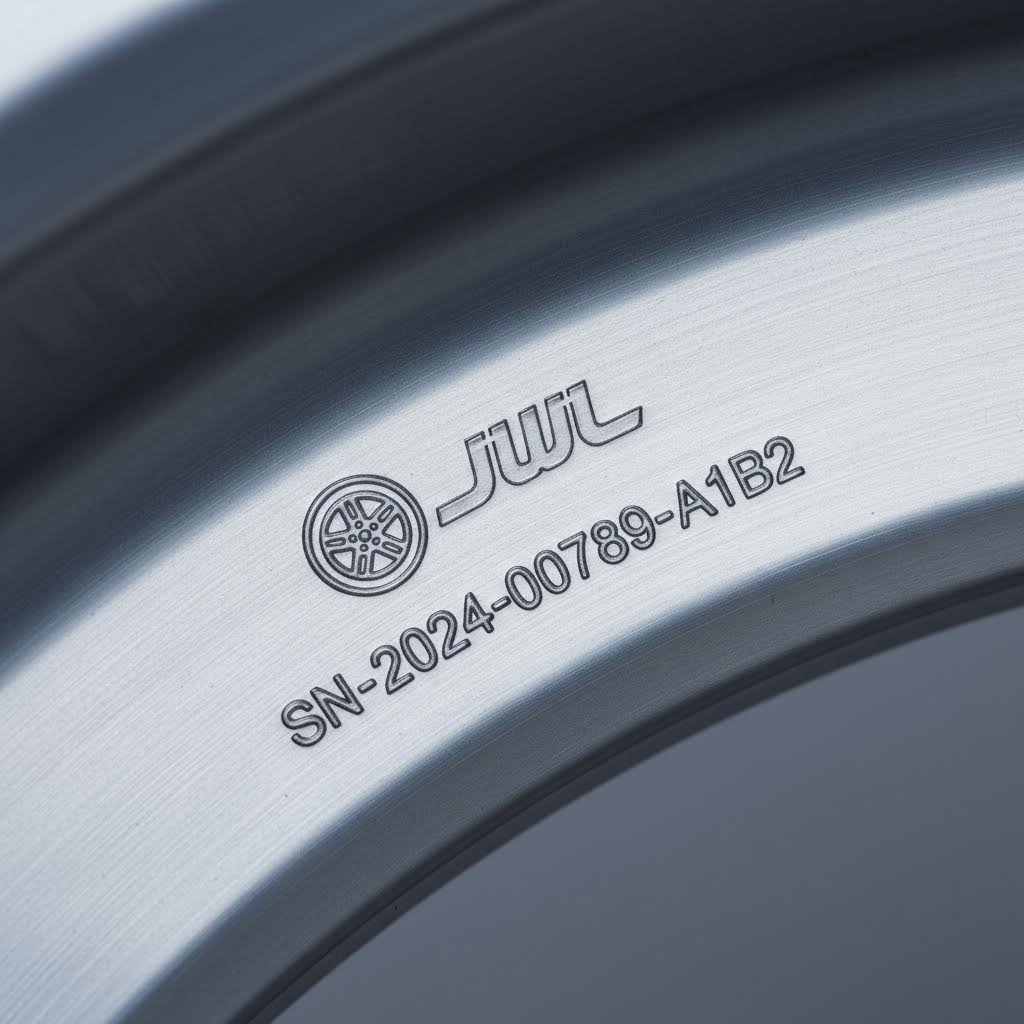
Think of wheel markings as the product's fingerprint. Authentic manufacturers laser-etch or CNC-engrave precise information directly into the metal, including size specifications, load ratings, manufacturing origin, and safety certifications. These markings follow strict international standards and appear in specific locations with consistent quality. Counterfeiters often get these details wrong because they're copying the appearance without understanding what the markings actually mean.
Decoding Wheel Stamps and Certification Marks
Every legitimate wheel sold in major markets carries standardized markings that communicate critical specifications. Understanding how to read these stamps transforms you from a casual buyer into an informed inspector who can spot inconsistencies that reveal counterfeits.
Let's decode a typical wheel marking like "7.5Jx16H2 ET35" to understand what each element represents:
- 7.5 – The wheel width measured in inches (7.5 inches equals approximately 190mm)
- J – The tire bead profile designation indicating the shape of the wheel's flange where the tire seats
- 16 – The wheel diameter in inches, measured at the bead seat where the tire mounts
- H2 – The hump profile, indicating two humps on the rim that help prevent tire bead dislodgement
- ET35 – The offset measurement in millimeters, indicating how far the mounting surface sits from the wheel's centerline
Authentic wheels display these specifications with precision machining or laser engraving. The characters appear uniform in depth, spacing, and font consistency. You'll typically find size and offset markings on the inner barrel or spoke back, positioned where they're visible once the wheel is removed from the vehicle.
Beyond dimensional specifications, look for these critical certification marks on VIA/JWL rims and other quality wheels:
- JWL (Japan Light Alloy Wheel) – A Japanese safety standard indicating the wheel passed rigorous testing for impact resistance, radial fatigue, and rotary bending fatigue
- VIA (Vehicle Inspection Association) – A third-party verification mark confirming that an independent Japanese agency tested and approved the wheel
- TÜV (Technischer Überwachungsverein) – A German certification indicating compliance with European safety and quality standards
- DOT (Department of Transportation) – A US marking indicating compliance with federal motor vehicle safety standards
Where should you look for these markings? Authentic alloy wheels include certification data in high-quality engraving on the hub mounting surface, spoke channels, or inner barrel. OEM wheels also carry part numbers specific to the vehicle manufacturer, such as BMW's format "36 08 6 780 368." These part numbers can be cross-referenced with official parts catalogs to verify authenticity.
How Counterfeiters Fake JWL and VIA Markings
Here's where things get tricky. Counterfeiters know that buyers look for JWL and VIA stamps, so they've developed several tactics to simulate these certifications without actually earning them.
The most common counterfeiting approaches include:
- Shallow stamping – Fake markings often appear lighter, less defined, or inconsistently deep compared to genuine laser-etched or forged stamps
- Similar-looking acronyms – Some counterfeits use intentionally confusing marks like "JLW," "JMW," or "RAW" that resemble JWL at a glance but mean nothing
- Decal-based logos – Rather than permanent engravings, cheap fakes apply vinyl stickers or painted markings that peel, fade, or scratch off easily
- Incomplete certification – A wheel might show JWL without the accompanying VIA mark, suggesting the manufacturer stamped their own product without third-party verification
- Missing serial numbers – Authentic JWL/VIA certified wheels include trackable serial numbers; counterfeits often omit these or use random number strings
According to industry experts, real forged wheels usually have clean laser or CNC-etched markings with "Made in Japan," JWL/VIA logos, and unique serial numbers clearly visible. Fakes often skip these details entirely or use shallow, uneven stamping that looks approximate rather than precise.
To verify certification authenticity, follow these steps:
- Examine marking quality – Run your fingernail across the stamp; genuine engravings have consistent depth you can feel, while painted or decal markings sit on the surface
- Check font consistency – Authentic certifications use standardized fonts and spacing; counterfeits often show inconsistent character sizing or amateur-looking typography
- Look for serial number traceability – JWL/VIA serial numbers should be verifiable through manufacturer databases; ask sellers to provide documentation linking the wheel's serial to certification records
- Cross-reference part numbers – OEM wheels carry vehicle manufacturer part numbers that can be verified through official parts catalogs or dealer inquiries
- Inspect for spelling errors – Counterfeiters sometimes misspell brand names or certification marks; examples like "BBSs" or "RAYES" instead of "RAYS" have been reported on resale platforms
What authentic stamps should look like:
- Depth and clarity – Characters appear crisp with uniform depth, not scratched or painted on
- Consistent positioning – Markings align properly and appear in industry-standard locations
- Complete information – Size, offset, load rating, manufacturing origin, and certification marks all present
- Professional finish – No rough edges, bubbles, or uneven surfaces around the stamped areas
- Traceable serial numbers – Unique identifiers that can be verified with the manufacturer or certification body
When evaluating a wheels replica or suspected counterfeit, photograph all markings in detail before purchase. Legitimate sellers welcome this scrutiny; those offering replica wheel products at suspiciously low prices often become evasive when asked about certification verification. This response pattern itself serves as a warning sign.
Remember that certification marks represent tested safety standards, not just branding. A wheel stamped with JWL/VIA has theoretically passed impact tests, fatigue tests, and load capacity verification. When counterfeiters fake these marks, they're not just committing fraud; they're potentially putting lives at risk by suggesting their untested products meet standards they've never actually achieved.
Stamps and certifications tell only part of the story, though. The physical quality of the wheel itself reveals manufacturing shortcuts that counterfeiters cannot hide, no matter how convincing their paperwork appears.
Physical Inspection Methodology
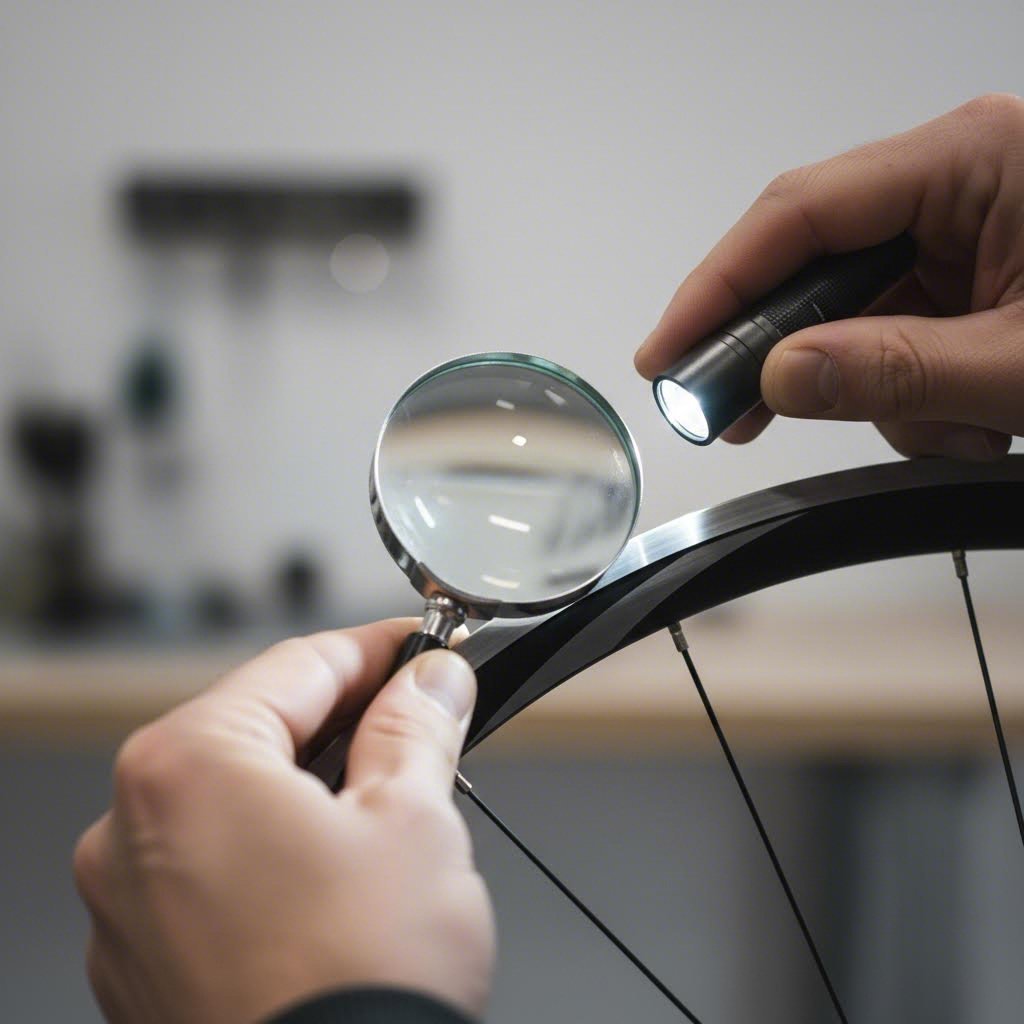
You've checked the weight and examined the stamps. Both look legitimate. But here's the thing: sophisticated counterfeiters have learned to approximate weights and copy certification marks with increasing accuracy. What they cannot fake, however, is the precision that comes from world-class manufacturing equipment and decades of engineering expertise. The physical characteristics of the real wheels reveal their true origins, and knowing what to look for transforms you into a detective who can expose knock off rims with nothing more than careful observation and a discerning eye.
When you hold an authentic forged wheel, you're examining a product that passed through CNC machines capable of tolerances measured in hundredths of a millimeter. Quality manufacturers check runout measurements on every single wheel, rejecting anything that deviates from specifications as tight as 0.02 inches or 0.5mm. Counterfeiters working in low-cost facilities simply don't have access to this level of precision, and their shortcuts become visible when you know where to look.
Surface Finish Red Flags That Expose Fakes
The surface finish of a wheel tells an immediate story about its manufacturing quality. Authentic forged wheels undergo meticulous finishing processes, whether they're powder coated, painted, or machined to a bright polish. Each finish type has specific quality markers that separate genuine products from wheel knockoffs trying to imitate premium brands.
Start your inspection by examining the overall consistency of the finish across the entire wheel face. Genuine wheels display uniform color depth, consistent sheen, and flawless transitions between different surface treatments. Counterfeits often reveal themselves through subtle but telling imperfections:
- Orange peel texture – Low-quality paint application creates a dimpled surface resembling orange skin, visible when light reflects at an angle
- Color inconsistency – Variations in shade or metallic flake distribution between different areas of the same wheel
- Visible runs or drips – Paint pooling in spoke crevices or along barrel edges indicates poor spray technique
- Thin coverage areas – Spots where the underlying metal shows through, particularly on complex spoke geometries
- Premature peeling or flaking – Even on new wheels, inferior adhesion causes finish separation at edges and stress points
The finish durability difference between authentic and counterfeit wheels is substantial. According to manufacturing experts, powder coat finishes are 20 times more durable than liquid paint finishes. While 99% of Chinese counterfeit manufacturers use cheap liquid paint because it's faster and easier to apply, premium manufacturers invest in proper powder coating equipment and training. This difference becomes apparent within months of use as counterfeit finishes chip, scratch, and deteriorate far more rapidly than authentic products.
Pay special attention to machined surfaces on diamond-cut or polished wheels. Genuine machined faces display perfectly concentric tool marks that follow the wheel's rotation during manufacturing. The surface should appear mirror-smooth or show consistent, fine machining lines without visible steps, scratches, or chatter marks. Counterfeit machined faces often exhibit:
- Irregular tool paths – Visible deviations in the machining pattern that break the concentric flow
- Chatter marks – Vibration-induced patterns indicating unstable cutting conditions or worn tooling
- Inconsistent depth – Some areas machined deeper than others, creating an uneven reflective surface
- Rough transitions – Abrupt changes where machined areas meet painted sections, lacking the crisp definition of quality manufacturing
Machining Quality Indicators of Authentic Wheels
Beyond surface finish, the structural machining of the wheel reveals the manufacturer's commitment to precision. Authentic forged wheels exhibit engineering tolerances that counterfeiters cannot achieve with inferior equipment or rushed production schedules. These quality indicators require close examination but provide definitive evidence of manufacturing legitimacy.
Follow this systematic physical inspection process when evaluating any wheel:
- Examine spoke transitions – Where spokes meet the hub and rim barrel, look for smooth, flowing curves with consistent radii. Genuine wheels show seamless blends; knock off rims often display abrupt angles, visible grinding marks, or uneven fillet radii where sections connect.
- Inspect the barrel interior – Run your fingers along the inner barrel surface. Authentic forged wheels feel uniformly smooth with consistent wall thickness. Counterfeit cast wheels often have rough patches, visible porosity (tiny holes in the surface), or areas of uneven thickness detectable by touch.
- Check bolt hole precision – Use a flashlight to examine the lug bolt holes. Genuine wheels show perfectly cylindrical holes with clean, burr-free edges. Counterfeits frequently display rough drilling, inconsistent hole sizing, or visible machining debris left inside the holes.
- Measure center bore accuracy – The hub-centric bore should be precisely machined to vehicle specifications. Wobble or visible gaps when test-fitting on a hub indicate poor manufacturing tolerances that compromise both safety and driving experience.
- Evaluate spoke pocketing – Many forged wheel designs feature weight-reducing pockets machined into the spoke backs. Authentic pockets show consistent depth, clean edges, and smooth interior surfaces. Counterfeit pockets often appear uneven, with rough machining and inconsistent material removal.
- Assess valve stem hole quality – This small detail often exposes counterfeits. Genuine wheels have precisely countersunk valve holes with smooth, angled entries. Fakes frequently show rough, perpendicular drilling that makes valve installation difficult.
The microstructure of the wheel material itself provides perhaps the most conclusive evidence of manufacturing quality. Laboratory testing conducted by Australia's Federal Chamber of Automotive Industries (FCAI) revealed dramatic differences between genuine and counterfeit wheels. Radiographic analysis of counterfeit rims showed "large pores and cavities in the centre wheel and spoke area," while dye penetrant testing identified "multiple areas of severe porosity." The genuine wheels showed no recordable faults in either test.
While you can't perform radiographic analysis at home, these internal defects often manifest as visible surface indicators. Look for:
- Pinhole clusters – Tiny surface voids grouped together, indicating subsurface porosity breaking through
- Irregular surface texture – Wavy or uneven areas that feel different from surrounding metal
- Hot tearing evidence – Fine cracks or rough lines visible in spoke sections, resulting from casting stress during cooling
- Repair attempts – Filled or ground areas where manufacturers tried to hide casting defects before finishing
Remember that authentic manufacturers implement rigorous quality control at every production stage. As noted by industry sources, quality wheel companies perform independent final QC checks to verify dimensions and finish quality. Small counterfeit operations may have QC procedures on paper but skip proper inspections to maximize output. The resulting issues, like wrong offsets, incorrect center bore sizes, and defective finishes, become the buyer's problem to discover.
Trust your senses during physical inspection. The real wheels feel different in your hands: lighter, more precisely balanced, with surfaces that speak to careful manufacturing. Counterfeit products often feel slightly off, with weight distribution that seems uneven or surfaces that lack the refined quality of authentic forged wheels. When something doesn't feel right, it usually isn't.
Physical inspection provides powerful authentication evidence, but it works best when combined with smart purchasing strategies. Knowing where and how to buy matters just as much as knowing what to look for once you have a wheel in your hands.
Pre-Purchase Verification Strategies
You've learned how to inspect wheels physically, but here's the reality: most counterfeit wheel purchases happen before buyers ever touch the product. Online marketplaces, social media ads, and too-good-to-be-true listings trap unsuspecting enthusiasts every day. The best authentication happens before you hand over your money, not after a suspicious package arrives at your door. Whether you're browsing cheap replica wheels online or examining inventory at a local shop, these verification strategies protect you from costly mistakes.
Think of pre-purchase verification as your financial firewall. Once you've paid for counterfeit wheels, recovering your money becomes extremely difficult. Sellers disappear, return policies evaporate, and you're left holding dangerous products that cannot be legally resold. Smart buyers treat the purchasing process itself as an authentication opportunity, gathering evidence and asking questions that expose fraudulent sellers before any transaction occurs.
Price Points That Signal Counterfeit Risk
Let's talk about the elephant in the room: price. When someone offers knock off BBS wheels at 70% below retail, they're not giving you a deal. They're selling you a cast wheel stamped with stolen branding, manufactured in a facility that has never heard of quality control. Authentic forged wheels cost what they cost because precision forging equipment, premium aluminum alloys, and rigorous testing don't come cheap.
Consider the economics. Genuine BBS forged wheels typically retail between $500 to $1,500+ per wheel, depending on size and style. Authentic Volk Racing TE37s command similar premiums. When marketplace listings advertise "authentic" versions of these wheels for $200-$400 each, the math simply doesn't work. No legitimate reseller acquires genuine forged wheels at prices that allow such dramatic discounts while maintaining profit margins.
Price red flags to watch for:
- More than 40% below retail – Legitimate sales, even clearance or used, rarely exceed 30-40% discounts on genuine forged wheels
- "Factory direct" claims – Reputable forged wheel manufacturers sell through authorized dealer networks, not random online storefronts
- Bulk discount offers – Sellers offering four wheels at prices lower than a single genuine wheel cost should trigger immediate suspicion
- Shipping included from overseas – When international shipping is "free" on heavy items like wheels, the product cost is subsidizing something suspicious
- Payment method restrictions – Sellers insisting on wire transfers, cryptocurrency, or non-refundable payment methods are often running scams
As noted by wheel authentication experts, if the price feels too good to be true, don't shake the devil's hand. Your safety becomes the price you didn't pay with money. Replica wheels for sale at legitimate replica prices are one thing; fraudulent products masquerading as authentic forged wheels at discount prices are something far more dangerous.
Documentation Every Legitimate Seller Should Provide
Authentic forged wheels come with paperwork. Manufacturers invest heavily in brand protection, and part of that investment includes documentation that tracks each wheel from production to point of sale. When sellers cannot or will not provide proper documentation, they're either handling stolen goods or selling counterfeits.
What legitimate documentation looks like:
- Certificate of authenticity – Original manufacturer certificates with matching serial numbers traceable to specific wheels
- Original packaging – Branded boxes with proper labeling, not generic cardboard or plastic wrap
- Warranty registration – Transferable warranty documentation or registration cards with manufacturer contact information
- Purchase receipt chain – Ability to trace the wheels back to an authorized dealer or original retail purchase
- Specification sheets – Official documentation confirming size, offset, load rating, and certification marks
According to industry sources, real BBS wheels come with certificates from the factory. If a seller is marketing them as "new" and without paperwork, that's a red flag. The same principle applies to other premium forged wheel brands. Ask for documentation before committing to purchase, and verify that serial numbers on certificates match engravings on the actual wheels.
Before completing any wheel purchase, work through this verification checklist:
- Research the seller – Check reviews, forum reputation, business registration, and how long they've been operating
- Verify authorized dealer status – Contact the wheel manufacturer directly to confirm if the seller is an authorized retailer
- Request detailed photographs – Ask for images of all wheel markings, certification stamps, and barrel interiors before purchase
- Demand weight verification – Request photos showing wheels on a calibrated scale with readings visible
- Ask for documentation upfront – Legitimate sellers provide certificates and paperwork without hesitation
- Use protected payment methods – Credit cards and PayPal offer dispute resolution; wire transfers and crypto do not
- Get everything in writing – Ensure authenticity claims, return policies, and specifications are documented in writing before payment
Be especially wary of common scam tactics that counterfeit sellers employ. These include fake certificates that look official but contain unverifiable serial numbers, stolen product photos taken from manufacturer websites or legitimate reviews, and pressure tactics claiming "limited availability" to rush your decision. Some sellers create convincing fake review histories or impersonate established businesses with slightly altered names or domain spellings.
When buying in person, the same principles apply with added verification opportunities. Examine the seller's facility, ask to see original purchase documentation, and don't hesitate to bring measuring tools. Legitimate wheel shops welcome scrutiny from informed buyers; counterfeit operations become evasive when asked detailed questions about product origins and certification.
The effort you invest in pre-purchase verification pays dividends beyond avoiding counterfeits. You'll build relationships with trustworthy sellers, develop expertise that serves you throughout your automotive journey, and protect yourself from the financial and legal complications that come with unknowingly purchasing fraudulent products.
Legal and Liability Implications
You've spotted the counterfeits, avoided the scams, and understand the physical dangers. But here's what many buyers don't consider until it's too late: the legal and financial consequences that extend far beyond the initial purchase. Installing counterfeit wheels on your vehicle creates a cascade of liability issues that can devastate your finances, void your protections, and leave you legally exposed in ways most enthusiasts never anticipate.
When replicas wheels fail, the aftermath involves more than vehicle damage. Insurance claims get denied. Warranties evaporate. And if someone gets hurt, the legal exposure falls squarely on the vehicle owner who chose to install unverified components. Understanding these implications transforms wheel authentication from an enthusiast hobby into essential financial protection.
Insurance and Warranty Consequences of Fake Wheels
Your vehicle's warranty and insurance coverage both depend on using components that meet manufacturer specifications. When you install counterfeit wheels, you're potentially voiding protections you've paid for and may desperately need after an incident.
Consider warranty implications first. According to automotive industry experts, many automakers will void warranties if aftermarket or replica wheels are installed, especially if they cause damage to other parts of the vehicle. This isn't limited to wheel-related claims. Suspension damage, brake system issues, and drivetrain problems can all be attributed to improper wheels, giving manufacturers grounds to deny coverage across multiple systems.
The insurance situation proves equally concerning. When accidents occur, insurance adjusters investigate contributing factors. If they determine that counterfeit wheels compromised vehicle safety or contributed to the accident, your claim faces potential denial. As noted in industry analysis, some insurance companies may deny claims if they determine that replica wheels contributed to the accident or compromised vehicle safety.
The financial math becomes stark:
- Warranty denial – Thousands in repair costs that should have been covered become your responsibility
- Insurance claim rejection – Vehicle damage, medical expenses, and liability costs land entirely on you
- Policy cancellation risk – Insurers may terminate coverage upon discovering non-compliant modifications
- Premium increases – If coverage continues, expect significantly higher rates following counterfeit-related incidents
The savings from purchasing cheap counterfeit wheels disappear instantly when a single claim gets denied. That $1,200 you saved buying fake forged wheels could cost you $20,000 or more when warranty and insurance protections fail.
Legal Liability When Counterfeit Wheels Fail
The legal exposure from counterfeit wheel failure extends into territory most buyers never contemplate. Product liability law, as established in landmark cases and codified in statutes like Georgia's O.C.G.A. § 51-1-11, holds manufacturers responsible for defective products. But here's the critical distinction: when you install counterfeit components, you may assume liability that would otherwise fall on legitimate manufacturers.
Consider a real-world scenario. Your counterfeit wheel fails at highway speed, causing a multi-vehicle accident. With genuine wheels, the manufacturer bears product liability for defects. With counterfeits, the liability picture shifts dramatically:
- You knew or should have known – Courts may determine that price discrepancies and authentication red flags constituted constructive knowledge of counterfeit status
- Manufacturer immunity – The legitimate brand whose name was counterfeited has no liability for products they didn't make
- Counterfeit source unreachable – Overseas counterfeit operations are virtually impossible to sue or collect from
- Vehicle owner liability – As the person who installed and operated the vehicle with known or reasonably knowable defects, you become the liable party
Installing counterfeit wheels that subsequently fail in an accident can expose you to personal liability for all resulting damages, injuries, and deaths. Unlike genuine wheel failures where manufacturers bear product liability, counterfeit failures leave vehicle owners legally and financially responsible.
The catastrophic failure potential of counterfeit wheels compounds this liability. Laboratory testing by automotive safety organizations confirms that wheels manufactured with inferior casting processes and poor quality controls are prone to cracking, structural failure, and complete breakage under stress. These aren't minor failures; they're catastrophic events that cause loss of vehicle control at the worst possible moments.
Real wheel stories from accident investigations reveal a disturbing pattern. A wheel that appears intact after years of normal driving suddenly fails when hitting a pothole at highway speed. The structural weakness from casting porosity and poor grain structure creates fracture points invisible during normal inspection. When stress exceeds the wheel's compromised threshold, failure happens instantly and without warning.
The complete risk picture extends beyond any single concern:
- Physical safety – Catastrophic wheel failure causes loss of control, rollovers, and multi-vehicle accidents
- Financial exposure – Denied insurance claims and voided warranties leave you paying out of pocket
- Legal liability – Personal responsibility for damages, injuries, and potential criminal negligence charges
- Resale complications – Vehicles with counterfeit components have diminished value and potential disclosure obligations
While replica wheels may seem like a bargain upfront, the long-term risks and potential costs, whether from voided warranties, denied insurance claims, or legal liability, could far outweigh any immediate savings. The question isn't whether you can afford authentic forged wheels. The question is whether you can afford the consequences of counterfeits.
Understanding these legal and financial stakes reinforces why proper authentication matters. But beyond identifying fakes, you need a framework for confidently distinguishing authentic products from replicas across different brands and styles.
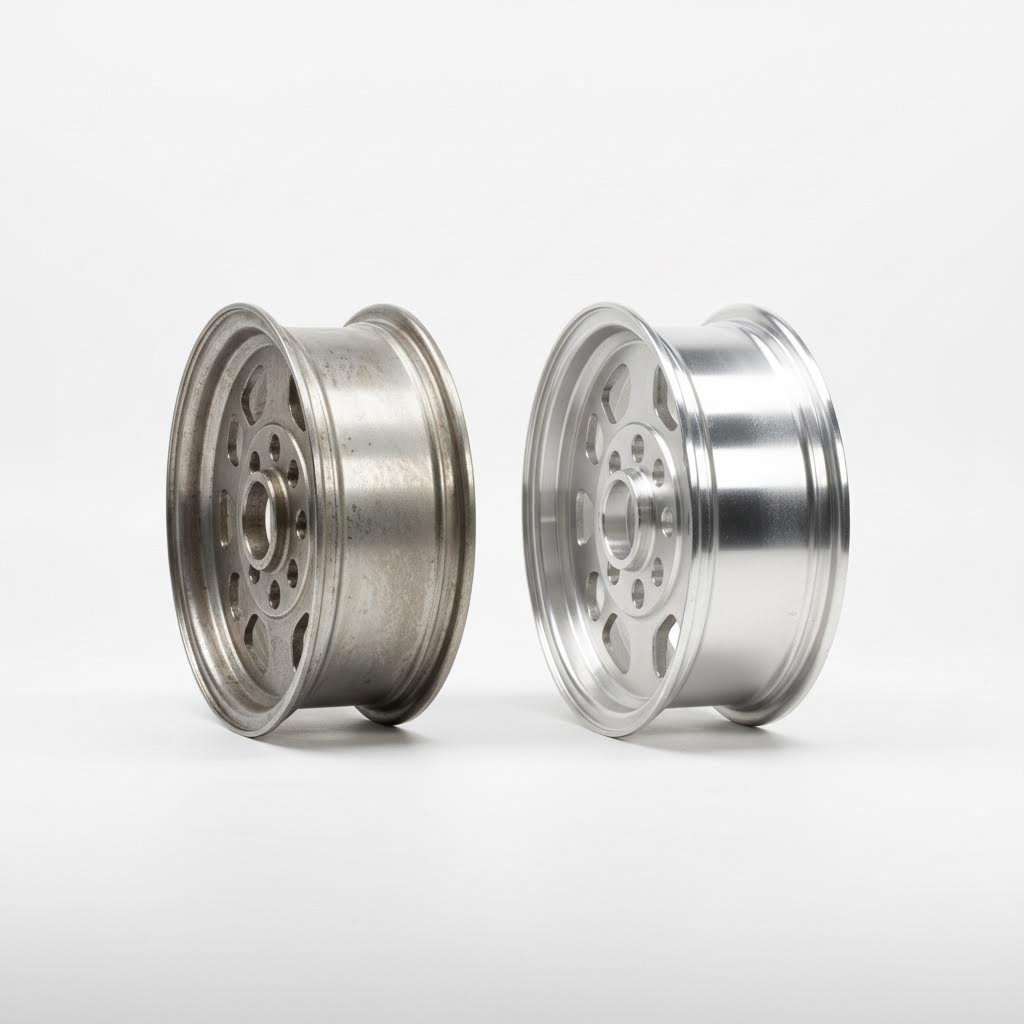
Authentic vs Replica Comparison Framework
Now that you understand the legal stakes, let's bring everything together into a practical framework you can apply to any wheel purchase. Whether you're evaluating BMW 763M wheels, Japanese performance designs, or European luxury styles, the same authentication principles apply. The key is knowing exactly what characteristics to compare and how genuine products differ from replicas across every measurable category.
Think of this framework as your authentication scorecard. Each category provides evidence that either supports or undermines a wheel's claimed authenticity. When multiple categories raise red flags simultaneously, you're almost certainly looking at a counterfeit. When everything checks out across the board, you can proceed with confidence.
Authentic vs Replica Characteristics Framework
The comparison between authentic forged wheels and replicas follows predictable patterns. Counterfeiters face fundamental constraints: they cannot invest in genuine forging equipment, precision machining, or rigorous quality control without eliminating their profit margins. These constraints manifest as consistent differences across several key categories.
Use this comprehensive comparison table when evaluating any wheel:
| Category | Authentic Forged Wheels | Replica/Counterfeit Wheels |
|---|---|---|
| Weight | Matches manufacturer specs within 0.5 lbs; typically 18-24 lbs for 19" wheels | 25-40% heavier than claimed; often exceeds 28 lbs for same size |
| Markings | Laser-etched or CNC-engraved with consistent depth; includes JWL/VIA, serial numbers, and OEM part numbers | Shallow stamping, painted logos, missing serial numbers, or misspelled certifications like "JLW" or "RAYES" |
| Finish Quality | Uniform powder coat or paint; flawless machined surfaces with concentric tool marks; no orange peel or runs | Inconsistent color, visible orange peel texture, rough transitions, and premature peeling or flaking |
| Price Range | $500-$1,500+ per wheel depending on brand and size; discounts rarely exceed 30-40% | $150-$400 per wheel; "authentic" claims at 50-70% below retail |
| Documentation | Certificates of authenticity, original packaging, transferable warranty, traceable purchase history | Missing paperwork, generic packaging, no warranty registration, evasive responses about origins |
| Machining Precision | Smooth spoke transitions, burr-free bolt holes, precise center bore, uniform barrel thickness | Rough edges, inconsistent hole sizing, visible grinding marks, uneven material thickness |
| Seller Verification | Authorized dealer status verifiable with manufacturer; established business with traceable history | Cannot confirm authorization; new storefronts, overseas shipping, pressure tactics |
When evaluating a potential purchase, score each category. Authentic wheels pass all seven checks. Counterfeits typically fail three or more. Even one significant failure, like weight 30% above specifications, should halt your purchase regardless of how convincing other aspects appear.
The Volk TE37 versus Avid AV6 comparison illustrates how this framework works in practice. The Avid AV6 openly markets itself as a TE37-inspired design at a fraction of the cost. It's a legitimate replica that doesn't pretend to be something it's not. When someone tries to sell an AV6 as a genuine TE37, however, the framework exposes the fraud:
- Weight – Genuine TE37s weigh significantly less than cast AV6 alternatives of identical size
- Markings – Authentic Volks display "RAYS Eng." and "Made in Japan" in specific locations; fakes often show just "Japan" or missing stamps
- Spoke geometry – Real TE37s have gentle curves where spokes meet the lip; counterfeits often show more aggressive 90-degree angles
- Stamp placement – Genuine wheels have consistent markings between all spokes; fakes frequently have stamps on some spokes but not others
- Valve stem alignment – Original Volk TE37 valve stems line up with lug nuts; most replicas don't feature this detail
Brand-Specific Authentication Tips
While the framework applies universally, certain brands and styles have unique authentication markers worth knowing. Let's examine popular categories where counterfeits frequently appear.
BMW M Rims and 763M Wheels
The 763M BMW wheels have become prime counterfeiting targets due to their aggressive styling and popularity among M3/M4 enthusiasts. When authenticating these M rims, focus on:
- OEM part number verification – Genuine BMW wheels carry part numbers in the format "36 XX X XXX XXX" that can be verified through RealOEM.com or BMW dealer inquiries
- Manufacturer stamps – Look for OEM supplier names like BBS, Ronal, or Borbet stamped on authentic BMW wheels
- Precise weight matching – Cross-reference with official BMW ETK specifications; 763M wheels should weigh approximately 9.4-10.6 kg depending on exact size
- Fitment specifications – Genuine BMW wheels have exact hub bore and bolt pattern without requiring spacers or adapters
Watch for listing language that reveals replica status. As authentication experts note, wording like "BMW Style Wheel" or "M3 Look Wheel" indicates non-genuine products. Terms like "Rep" or "Aftermarket" are also clear indicators that you're not looking at factory wheels.
Japanese Performance Wheels
Brands like Rays Engineering (Volk Racing, Gram Lights), Work Wheels, and Enkei face extensive counterfeiting. Authentication focuses on:
- Production date codes – Genuine Japanese forged wheels include date stamps that should align with claimed wheel age
- JWL/VIA serial verification – Contact manufacturers to verify serial numbers trace to actual production records
- Hub marking location – Older Volk wheels have "Made in Japan" and "RAYS Eng." stamped on the back hub; newer versions display logos between spokes
- Spoke transition geometry – Genuine Rays wheels show specific curve profiles where spokes meet the barrel that counterfeits consistently get wrong
European Premium Brands
BBS, OZ Racing, and similar European manufacturers provide additional authentication pathways:
- TÜV certification – German-certified wheels carry specific approval numbers verifiable through TÜV databases
- Factory certificate programs – Real BBS wheels come with certificates from the factory; absence of paperwork on "new" wheels signals counterfeits
- Finish technology – Premium European manufacturers use proprietary coating processes with distinctive characteristics counterfeiters cannot replicate
Regardless of brand, apply the universal framework first, then layer in brand-specific checks. When a wheel fails universal authentication criteria, brand-specific details won't save it. But when universal checks pass, brand-specific verification provides the final confirmation of authenticity.
Remember that legitimate replica manufacturers exist and sell products honestly. The problem isn't replica wheels themselves; it's counterfeit products fraudulently marketed as authentic. Knowing the difference protects both your wallet and your safety while allowing informed choices about where to invest your wheel budget.
Armed with this comparison framework, you're ready to source wheels confidently. The final step is knowing where to find trustworthy suppliers who deliver authentic products with proper certification and documentation.
Sourcing Authentic Forged Wheels Safely
You've mastered the authentication framework. You know what red flags to watch for, how to verify weight and markings, and why counterfeit wheels create catastrophic risks. Now comes the practical question: where do you actually buy authentic forged wheels with confidence? The answer lies in understanding the supply chain that connects legitimate manufacturers to end consumers, and knowing which suppliers have earned the certifications that guarantee quality.
Think about it this way: every authentic forged wheel passes through a chain of custody from raw aluminum billet to finished product on your vehicle. At each step, certified manufacturers implement quality controls that counterfeiters cannot replicate. When you source from suppliers within this verified chain, you're not just buying wheels. You're buying the engineering expertise, testing protocols, and manufacturing precision that make those wheels safe to use.
Trusted Sourcing Strategies for Authentic Wheels
The safest path to authentic forged wheels runs through authorized dealer networks. Every major wheel manufacturer maintains lists of verified retailers who purchase directly from factory sources, receive proper documentation, and honor manufacturer warranties. These authorized channels exist specifically to protect consumers from counterfeits flooding gray market sales.
Start your sourcing process by visiting manufacturer websites directly. Brands like HRE Performance Wheels explicitly state that buyers should "always confirm that you are buying new HRE or FlowForm wheels from an authorized HRE Wheels Distributor or Dealer in your country." They provide dealer locators on their websites and offer direct authentication services where you can verify serial numbers through official channels. This verification option exists precisely because counterfeit problems have grown severe enough to warrant manufacturer intervention.
When evaluating potential suppliers, prioritize these verification steps:
- Confirm authorized dealer status directly with manufacturers – Don't rely on seller claims; contact wheel manufacturers via official websites, phone numbers, or email addresses to verify retailer authorization
- Request serial number verification before purchase – As HRE notes, "Every HRE Forged wheel has a serial number that can be checked for authenticity" through direct manufacturer contact
- Verify physical business presence – Established dealers have showrooms, service facilities, and traceable business histories; fly-by-night operations typically operate only online
- Examine return and warranty policies – Authorized dealers offer manufacturer-backed warranties; counterfeits come with vague or nonexistent protection
- Check enthusiast community reputation – Forum recommendations from experienced buyers provide invaluable insights into dealer reliability
For used wheel purchases, the authentication burden increases significantly. Private sellers may unknowingly possess counterfeits purchased before they understood the risks. When buying pre-owned, insist on documentation tracing the wheels back to original authorized purchase. Contact manufacturers with serial numbers to verify production records. If sellers cannot provide this verification chain, walk away regardless of how attractive the price appears.
OEM wheel replicas from reputable aftermarket manufacturers represent a legitimate alternative when budget constraints make authentic forged options impractical. The key distinction remains honesty: legitimate replica manufacturers sell their products as alternatives, not as counterfeits falsely claiming authentic status. When shopping for wheels replicas or cheap replica rims, choose manufacturers who openly disclose their products' nature rather than those attempting deception.
Why Manufacturing Certification Matters
Behind every authentic forged wheel stands a manufacturing facility that has earned rigorous industry certifications. These certifications aren't marketing gimmicks. They represent third-party verification that manufacturing processes meet international quality and safety standards. Understanding what these certifications mean helps you evaluate supplier claims and identify manufacturers worthy of your trust.
The IATF 16949:2016 certification represents the gold standard for automotive parts manufacturing. Published by the International Automotive Task Force, this standard "defines quality management system requirements for organizations across the global automotive industry." It was developed with unprecedented industry engagement from major automakers and suppliers worldwide, establishing requirements that apply to the entire production process from design through delivery.
What does IATF 16949 certification actually guarantee? According to the Automotive Industry Action Group (AIAG), this standard ensures that certified manufacturers implement:
- Systematic quality management – Documented processes covering every production stage with defined controls and verification points
- Continuous improvement protocols – Requirements for ongoing process refinement and defect prevention rather than just defect detection
- Customer-specific requirements compliance – Alignment with individual automaker specifications beyond baseline standards
- Supply chain management – Controls extending to sub-tier suppliers ensuring material quality from source to finished product
- Traceability systems – Documentation linking finished products back through production records to raw material sources
Beyond IATF 16949, reliable forged wheel manufacturers typically hold additional certifications that demonstrate comprehensive quality commitment. ISO 9001 establishes baseline quality management requirements. JWL and VIA certifications verify Japanese safety standard compliance. TÜV certification indicates European market approval. Manufacturers holding multiple relevant certifications demonstrate thoroughness that counterfeit operations cannot match.
These certifications matter because they require independent auditing. Counterfeit manufacturers can stamp fake JWL marks on cast wheels, but they cannot obtain legitimate IATF 16949 certification without actually implementing the rigorous quality systems the standard requires. Certification bodies conduct regular audits, review production records, and verify compliance through facility inspections. The investment required to earn and maintain these certifications ensures that only serious manufacturers committed to quality can achieve them.
When working with precision forging specialists, certification status directly correlates with component reliability. Certified manufacturers like Shaoyi (Ningbo) Metal Technology, backed by IATF 16949 certification, implement the quality control systems that distinguish authentic forged components from counterfeit alternatives. Their in-house engineering capabilities enable everything from rapid prototyping to high-volume production while maintaining the specifications that safety-critical automotive parts demand.
When selecting wheel and component suppliers, evaluate these key criteria:
- IATF 16949 or equivalent certification status – Verify current certification through certification body databases, not just supplier claims
- Testing and verification capabilities – Reputable manufacturers perform impact testing, fatigue testing, and load capacity verification as described in industry certification standards
- Material traceability systems – The ability to trace finished products back to raw material sources indicates serious quality commitment
- Engineering expertise – In-house design and engineering capabilities suggest investment in product development rather than simple copying
- Production capacity and lead times – Established manufacturers offer realistic timelines; suspiciously fast delivery on "forged" products suggests pre-made cast inventory
- Geographic and logistical transparency – Legitimate manufacturers disclose production locations and shipping origins; evasiveness indicates potential problems
- Customer reference availability – Established suppliers can provide references from satisfied customers and showcase documented project histories
The effort you invest in supplier verification pays dividends throughout your ownership experience. Authentic wheels from certified manufacturers deliver the performance, safety, and durability you're paying for. They maintain value for resale. They qualify for manufacturer warranty support. And they provide peace of mind that the components keeping your vehicle connected to the road meet the standards that safety demands.
Your wheel purchase decision ultimately reflects your priorities. Counterfeit wheels offer apparent savings that evaporate when insurance claims get denied, warranties get voided, or catastrophic failures occur. Authentic forged wheels from certified sources represent investments in safety, performance, and long-term value that no counterfeit can match. Armed with the authentication knowledge from this guide and the sourcing strategies outlined here, you're equipped to make choices that protect both your vehicle and everyone sharing the road with you.
Frequently Asked Questions About Identifying Fake Forged Wheels
1. How can you tell if a wheel is forged?
Genuine forged wheels are significantly lighter than cast alternatives—typically 25-30% lighter for the same size. Check the manufacturer's weight specifications and compare. Authentic forged wheels also feature precise laser-etched or CNC-engraved markings including JWL/VIA certifications, serial numbers, and size specifications. The grain structure from high-pressure forging creates superior strength, allowing manufacturers to use less material while maintaining durability.
2. How to tell if wheels are replicas?
Replicas are typically heavier than genuine forged wheels due to their cast manufacturing process. Examine the back of the wheel for notable differences in finish quality, stamp depth, and marking precision. Authentic wheels display uniform, deeply engraved certifications while replicas often show shallow stamping, painted logos, or missing serial numbers. Price is also a major indicator—genuine forged wheels rarely sell at more than 40% below retail.
3. What certification marks should authentic forged wheels have?
Legitimate forged wheels carry JWL (Japan Light Alloy Wheel) and VIA (Vehicle Inspection Association) certification marks indicating they passed rigorous safety testing. European wheels should display TÜV certification. These marks must be laser-etched or CNC-engraved with consistent depth and include traceable serial numbers. Counterfeiters often use similar-looking but meaningless acronyms like 'JLW' or 'RAW' to deceive buyers.
4. Why are counterfeit forged wheels dangerous?
Counterfeit wheels are manufactured using inferior casting processes that create internal porosity and weak points prone to catastrophic failure. Unlike genuine forged wheels with aligned grain structures that resist cracking, counterfeits can shear off during highway driving when hitting potholes or road hazards. Additionally, using counterfeit wheels can void vehicle warranties, result in denied insurance claims, and expose you to personal liability in accidents.
5. How can I verify wheel authenticity before purchasing?
Request the seller's weight measurement with photographic proof on a calibrated scale and compare against manufacturer specifications. Ask for detailed photos of all markings, certification stamps, and serial numbers. Verify authorized dealer status directly with the wheel manufacturer. Legitimate sellers provide certificates of authenticity, original packaging, and traceable purchase history. Be wary of prices more than 40% below retail—this signals counterfeits regardless of authenticity claims.