 Small batches, high standards. Our rapid prototyping service makes validation faster and easier —
  EN
EN


Essential Preventative Maintenance for Stamping Dies

TL;DR
Preventative maintenance for stamping dies is a systematic program of regular procedures designed to preserve tool condition and prevent failures. This proactive strategy involves routine cleaning to remove debris, detailed inspections for wear and damage, periodic sharpening of cutting edges, and proper lubrication of moving components. The primary goal is to extend tooling lifespan, ensure consistent part quality, and minimize costly, unscheduled downtime, shifting from a reactive repair model to a proactive maintenance culture.
Why a Proactive Approach Is Non-Negotiable
In the world of metal stamping, the distinction between die maintenance and die repair is critical. Die repair is a reactive, often frantic, process—fixing broken pads, replacing unexpectedly shattered components, or troubleshooting a die that's producing defective parts. In contrast, preventative maintenance (PM) is a deliberate, scheduled series of actions designed to prevent those failures from ever happening. As detailed in an article from The Fabricator, true maintenance involves tasks like sharpening sections due to normal wear and inspecting for loose fasteners before they cause a catastrophic failure.
Implementing a formal PM program is the foundation for operational excellence in any stamping facility. Without regular care, dies can suffer from lubricant buildup, misalignment, or component fatigue that leads to significant production issues. A proactive approach protects the significant investment made in tooling and ensures the quality of every part produced. The shift from a reactive to a proactive mindset is not just about fixing things—it's about creating a more stable, predictable, and profitable manufacturing environment.
The business case for a robust PM program is overwhelmingly positive, delivering a strong return on investment by mitigating the high costs associated with unplanned downtime and emergency repairs. The key benefits of establishing a consistent maintenance schedule include:
- Extended Die Life: Regular upkeep reduces wear and tear on critical components, maximizing the operational lifespan of your tooling.
- Consistent Part Quality: Well-maintained dies produce parts that consistently meet dimensional and cosmetic specifications, dramatically reducing scrap and rework rates.
- Reduced Downtime: Proactive maintenance catches potential problems before they lead to breakdowns, keeping production lines running smoothly and predictably.
- Significant Cost Savings: Preventing major failures helps avoid the high costs of emergency repairs, expedited component shipping, and lost production opportunities.
- Improved Operational Efficiency: A reliable and well-maintained tool set allows for smoother, faster production runs with fewer interruptions.
Your Essential Die Maintenance Checklist
A successful preventative maintenance program is built on a foundation of thorough, repeatable procedures. Each step is designed to identify and correct minor issues before they escalate. While every die is unique, a comprehensive checklist should serve as the standard operating procedure for your tool room. This checklist ensures that no critical inspection point is overlooked and that maintenance is performed consistently across all shifts and personnel.
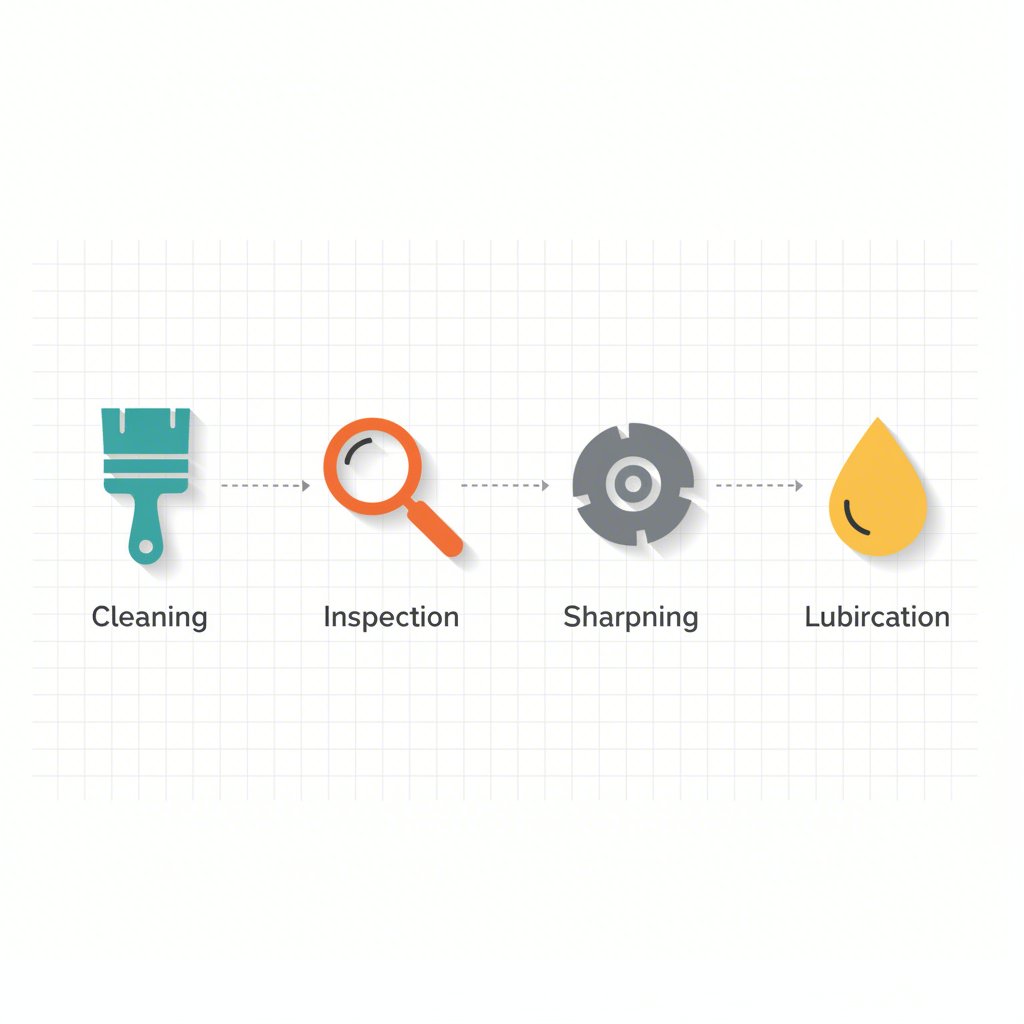
Here is a breakdown of the essential tasks that should form the core of your stamping die maintenance routine:
- Thorough Cleaning: The first step is always to clean the die completely. This involves removing all debris, such as metal slugs, slivers, and lubricant buildup from all surfaces. A clean die is not only safer to handle but also makes it possible to perform an accurate inspection. After cleaning, the die must be thoroughly dried to prevent rust.
- Detailed Inspection: With the die clean, a comprehensive visual inspection can begin. This is a critical diagnostic step. Technicians should look for loose or missing fasteners and dowel pins, broken or fatigued springs, and signs of galling on wear plates or cam surfaces. According to Manor Tool, this inspection should also cover stripper faces for wear and die sections for any chips or cracks.
- Component Sharpening: Cutting edges and punches naturally dull over time, leading to burrs on parts and increased tonnage requirements. These components must be sharpened periodically to restore a clean cutting action. It's crucial to address this before part quality degrades significantly.
- Proper Lubrication: All necessary mating and moving surfaces within the die should be properly lubricated. This reduces friction and wear, ensuring smooth operation of cams, guide pins, and other components.
- Component and Safety Check: Verify that all cutting punches are secure in their retainers and that all safety guards are in place and functional. This is also the time to check the last part and the end of the strip from the previous run for tell-tale signs of problems, such as burrs or out-of-spec dimensions, as suggested by Wisconsin Metal Parts.
Advanced Techniques: Mastering Sharpening and Shimming
Beyond the basic checklist, certain maintenance tasks require a higher level of skill and technical understanding. Proper sharpening and shimming are two such procedures that, when done correctly, can dramatically extend the life and performance of a die. However, improper execution can cause significant damage.
Precision Sharpening
Sharpening is more than just grinding a dull edge. The process requires careful attention to the type of tool steel, the grinding wheel used, and the geometry of the cutting shear. Using the wrong grinding wheel for hard tool steels like D2 can cause excessive heat buildup, leading to softening, heat checking, or cracking of the die section. It is essential to use a wheel that breaks down properly and to use flood coolant to keep the section cool. Furthermore, grinding the correct shear angle on cutting sections is vital for reducing cutting force, minimizing shock to the die and press, and ensuring balanced cutting action to maintain alignment.
Strategic Shimming
Shimming is often necessary to maintain the precise timing and height of different die stations as components wear or are sharpened. However, there are strict rules for proper shimming. A common mistake is using multiple thin shims stacked together. This creates a “spongy” foundation that can flex under pressure, leading to instability and movement. The correct approach is to use fewer, thicker shims. It's also critical to ensure that shims have adequate clearance for screws and dowels and do not obstruct slug drop holes. Before installation, all burrs must be removed from the shims to ensure they sit perfectly flat.
The quality of the initial die build plays a significant role in how effectively it can be maintained. Starting with high-precision tooling from a reputable manufacturer simplifies maintenance and improves overall performance. For industries requiring complex and durable tooling, such as automotive, partnering with a specialist is key. For example, industry leaders in custom automotive stamping dies like Shaoyi (Ningbo) Metal Technology Co., Ltd. provide a foundation of quality that makes long-term preventative maintenance more effective and predictable.
Implementing a Structured PM Program
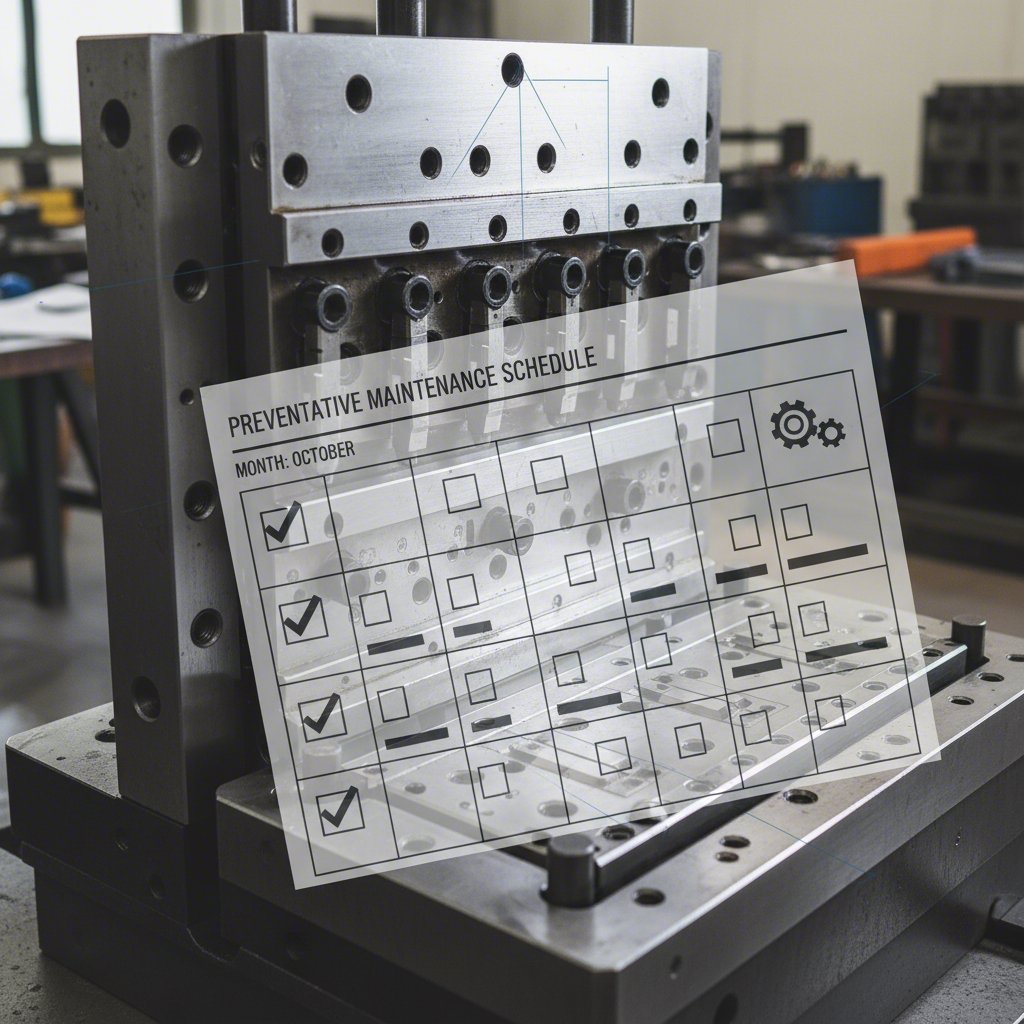
An effective preventative maintenance program cannot be an informal or occasional activity; it must be a structured, documented part of your workflow. Moving from ad-hoc fixes to a scheduled system is what separates top-performing stamping operations from the rest. The goal is to create a predictable cycle of maintenance based on data and experience, rather than waiting for a failure to occur.
The first step is to establish a schedule. Maintenance intervals can be determined by a set number of press strokes, the total number of production runs, or a calendar-based schedule. For high-volume runs, scheduling maintenance after every 50,000 or 100,000 strokes might be appropriate. For less frequent jobs, a time-based inspection may be better. This schedule helps predict when maintenance will be needed, allowing you to plan for downtime and ensure resources are available.
Documentation is the backbone of a successful PM program. Every time a die is serviced, the work performed should be recorded on a die maintenance card or in a digital log. This log should include the date, the technician's name, a description of the inspection findings, and details of any repairs or adjustments made. This historical data is invaluable for identifying recurring problems, predicting component life, and refining maintenance intervals over time. It also helps in managing an inventory of spare components for high-wear items, ensuring they are on hand when needed to minimize downtime.
Finally, defining responsibilities is crucial. While tool and die makers typically perform the maintenance, press operators also play a role as the first line of defense. They should be trained to recognize the early warning signs of a problem—such as unusual noises, changes in part quality, or increased tonnage—and report them immediately. This collaborative approach ensures that potential issues are caught and addressed before they cause a major breakdown, making the entire PM program more effective.
Frequently Asked Questions
1. What is the difference between die maintenance and die repair?
Die maintenance is a proactive, scheduled process of cleaning, inspecting, and servicing a die to prevent future problems. Die repair, on the other hand, is a reactive process that involves fixing a die after it has broken down or is already producing defective parts. A good PM program aims to minimize the need for emergency die repair.
2. How often should a stamping die be maintained?
The frequency of maintenance depends on several factors, including the complexity of the die, the material being stamped, the production volume, and the age of the tool. A common method is to schedule maintenance based on the number of press strokes (e.g., every 50,000 strokes). For lower-volume tools, a time-based schedule (e.g., quarterly or semi-annually) may be more appropriate.
3. What are the most common signs that a die needs maintenance?
The most common indicators include a noticeable increase in burrs on stamped parts, parts falling out of dimensional tolerance, unusual noises coming from the tool during operation, and a required increase in press tonnage to perform the work. Regular inspection of the last part off the press can help detect these issues early.