 Small batches, high standards. Our rapid prototyping service makes validation faster and easier —
  EN
EN


Essential Cost Breakdown for a Custom Forged Part
TL;DR
The total cost breakdown of a custom forged part is determined by four primary factors: the price of the raw material, the upfront investment in custom tooling and dies, operational costs like skilled labor and energy, and any required secondary processing. Part complexity and production volume significantly influence the final per-unit price, with higher volumes typically lowering the cost by spreading fixed expenses.
The Primary Drivers of Forging Costs
Understanding the cost of a custom forged part requires looking beyond a simple price tag. The final figure is a summation of multiple, interconnected variables that span from raw materials to final delivery. Each custom project has a unique cost structure based on its specific requirements. Forging is a process where costs can scale significantly, and grasping the core components is the first step toward effective budgeting and project planning.
Before diving into detailed calculations, it’s essential to recognize the main levers that control the overall expense. These primary drivers are the foundational elements that every forging quote is built upon. A clear understanding of these factors will empower you to make more informed decisions when designing parts and selecting a manufacturing partner.
The key cost drivers can be broken down into the following categories:
- Raw Materials: The type, grade, and weight of the metal being used.
- Tooling and Dies: The design, creation, and maintenance of custom molds required to shape the part.
- Labor, Energy, and Overhead: The operational expenses of running the forging equipment and employing skilled technicians.
- Part Complexity and Production Volume: How the intricacy of the design and the quantity of the order affect efficiency and cost amortization.
- Post-Forging Operations: Additional steps like heat treatment, machining, and finishing.
Cost Component 1: Raw Materials
The most direct and often most significant component in a forging cost breakdown is the raw material. The calculation typically begins with the part's weight, but it's not as simple as using the final weight. The formula involves the gross weight, which includes the finished part's weight (net weight) plus any material lost as scrap or 'flash' during the process. This excess material is unavoidable but crucial for ensuring the die cavity is completely filled.
As detailed in cost estimation guides, the basic formula is: Material Cost = Gross Weight × Material Price per Unit. The amount of material loss can vary from 10% to over 20%, depending on the part's complexity and the forging process used. Therefore, optimizing a design to minimize waste can lead to direct cost savings.
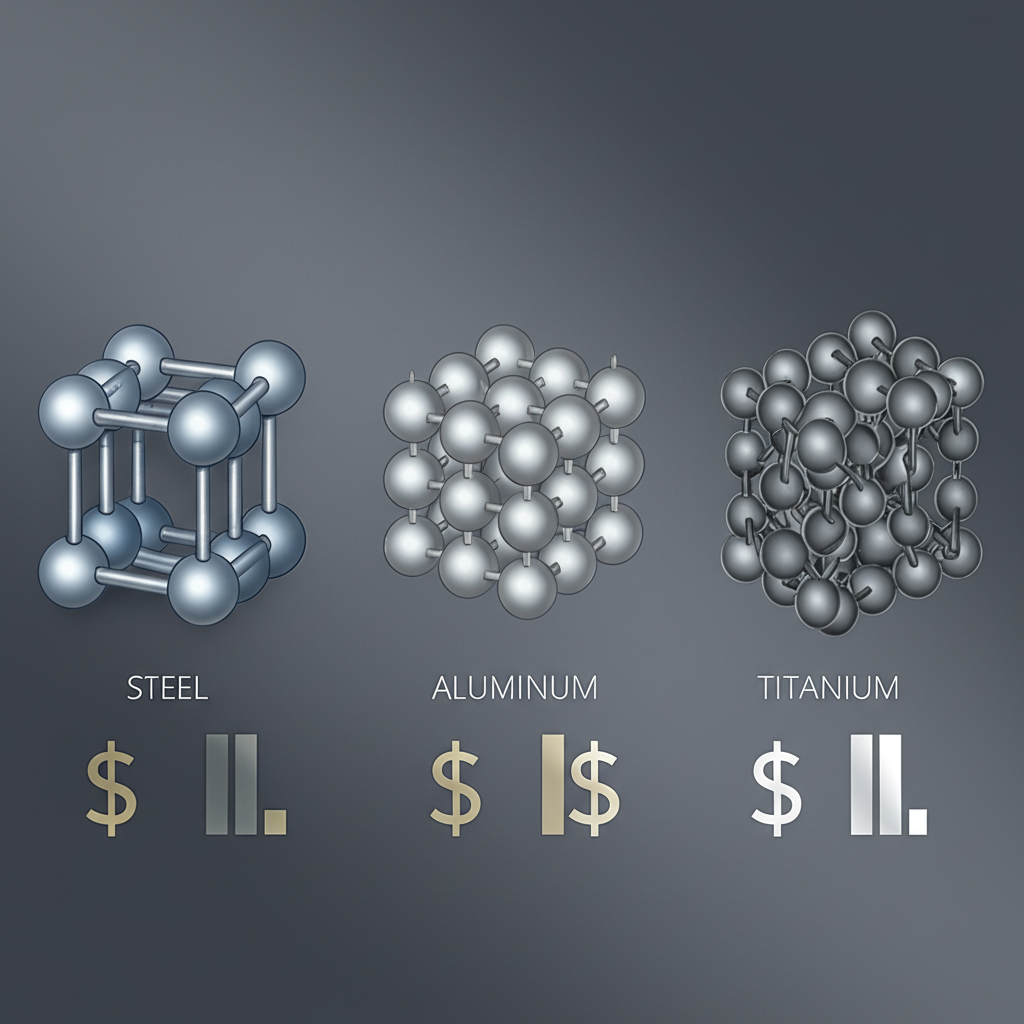
The type of metal selected has a dramatic impact on the price. Standard carbon steel is relatively inexpensive, while high-performance alloys come at a premium. Market volatility can also affect prices, so it's a factor to consider in long-term projects. Here is a general comparison of common forging materials:
| Material | Relative Cost | Key Properties |
|---|---|---|
| Carbon Steel | Low | Good strength, widely available, versatile |
| Stainless Steel | Medium | Excellent corrosion resistance, high strength |
| Aluminum | Medium | Lightweight, good thermal conductivity |
| Titanium & Superalloys | Very High | Exceptional strength-to-weight ratio, heat resistance |
Cost Component 2: Tooling and Die Costs
For many custom projects, particularly those using closed-die forging, the cost of tooling is a major upfront investment. Dies are custom-made molds, typically from hardened tool steel, that shape the hot metal under immense pressure. The cost of creating these dies is influenced by several factors, including the part's size, the intricacy of its design, and the material the die itself is made from. A simple die set might cost a few thousand dollars, while complex, multi-part dies for intricate components can cost tens of thousands.
According to a breakdown for industrial parts, even for simpler open-die processes, die costs and maintenance can range from $500 to $3,000. For high-precision, closed-die forging, this figure is significantly higher. This initial expense is a primary reason why forging is most cost-effective for higher production volumes. The total tooling cost is amortized, or spread, across the entire production run.
For example, if a die set costs $10,000 to produce, the tooling cost per part for a run of 1,000 units is $10. For a run of 50,000 units, that cost drops to just $0.20 per part. This principle of amortization is fundamental to understanding forging economics. The expected lifespan of the die also plays a role; dies wear out over time and may need refurbishment or replacement, which is factored into the long-term cost.
Cost Component 3: Labor, Energy, and Overhead
Beyond materials and tooling, the operational costs of running a forge are a substantial part of the final price. These expenses are often grouped together but consist of three distinct areas: skilled labor, energy consumption, and general factory overhead. Each contributes significantly to the per-part cost and can vary based on geographic location and process efficiency.
Skilled labor is required to operate the heavy machinery, supervise the heating processes, perform quality inspections, and maintain the equipment. Forging is not a fully automated process and relies on the expertise of its operators to ensure parts meet precise specifications. Wages, training, and benefits for these skilled technicians are a direct component of the manufacturing cost.
Forging is also an energy-intensive process. Massive furnaces are needed to heat metal billets to temperatures often exceeding 2,000°F (1,100°C), and powerful hydraulic or mechanical presses consume large amounts of electricity to shape the metal. As noted in detailed analyses of forging operations, high energy consumption is a significant cost factor, particularly with fluctuating energy prices. Finally, general overhead includes all other indirect costs of running the facility, such as machine maintenance, building rent or depreciation, insurance, and administrative expenses. These costs are typically allocated to each project as a percentage of labor or machine time.
How Part Complexity and Production Volume Affect Price
The relationship between a part's design, the quantity produced, and the final price is one of the most critical aspects of the cost breakdown. Intricate designs with tight tolerances, non-symmetrical shapes, or deep cavities increase costs in several ways. They require more complex and therefore more expensive dies, may demand more skilled labor to handle, and often result in a higher scrap rate. Furthermore, complex parts may require additional post-forging machining to achieve their final specifications, adding another layer of cost.
Production volume, as mentioned with tooling, is the great equalizer. High-volume orders allow the substantial fixed costs of setup and die creation to be spread thinly across many units, drastically reducing the per-part price. This is why forging is an ideal process for industries like automotive, where thousands or millions of identical high-strength parts are needed. For robust and reliable automotive components, for example, many companies turn to specialized providers. For those seeking such solutions, you can find more information about advanced forging for the automotive industry from specialists like Shaoyi Metal Technology, who handle everything from small-batch prototypes to mass production.
To illustrate the impact of volume, consider a simplified scenario. If a custom die costs $5,000 and the setup cost for a production run is $1,000, the total fixed cost is $6,000.
- For a 100-part order, the fixed cost per part is $60.
- For a 10,000-part order, the fixed cost per part plummets to just $0.60.
Frequently Asked Questions
1. How to calculate forging cost?
Calculating the total forging cost involves summing several key components. First, determine the material cost by multiplying the gross weight of the part (including waste/scrap) by the material's price per unit weight. Next, add the amortized tooling cost (total die cost divided by the number of parts). Finally, add the costs of labor, energy, overhead, and any secondary processes like machining or heat treatment. A detailed guide on this step-by-step process can be found at resources like Boberry.
2. How to calculate the cost of fabrication?
Fabrication cost calculation is similar to forging but can involve different processes. It is the sum of direct materials, direct labor, and manufacturing overhead. This includes costs for cutting, bending, welding, assembling, and finishing materials, in addition to the base material price. The specific formula varies depending on the complexity and type of fabrication being performed.
3. Is forging an expensive process?
Forging can have high upfront costs, primarily due to the expense of creating custom dies. However, for high-volume production runs, it is a very cost-effective process because the tooling costs are spread across many parts. Forging produces parts that are exceptionally strong and durable, which can reduce long-term costs associated with part failure and replacement. It is most economical for applications requiring high strength and produced in medium to large quantities.
4. What are the 4 types of forging?
The four main types of forging are impression die forging (or closed-die forging), open-die forging, cold forging, and seamless rolled ring forging. Impression die forging uses custom dies to shape the metal precisely. Open-die forging shapes metal between flat dies without completely enclosing it, suitable for large parts. Cold forging is done at or near room temperature for higher precision. Seamless rolled ring forging is a specialized process to create ring-shaped components.