 Small batches, high standards. Our rapid prototyping service makes validation faster and easier —
  EN
EN


Dacromet Coating Vs Geomet: Stop Guessing Your Next Coating Spec
Dacromet coating vs Geomet quick answer
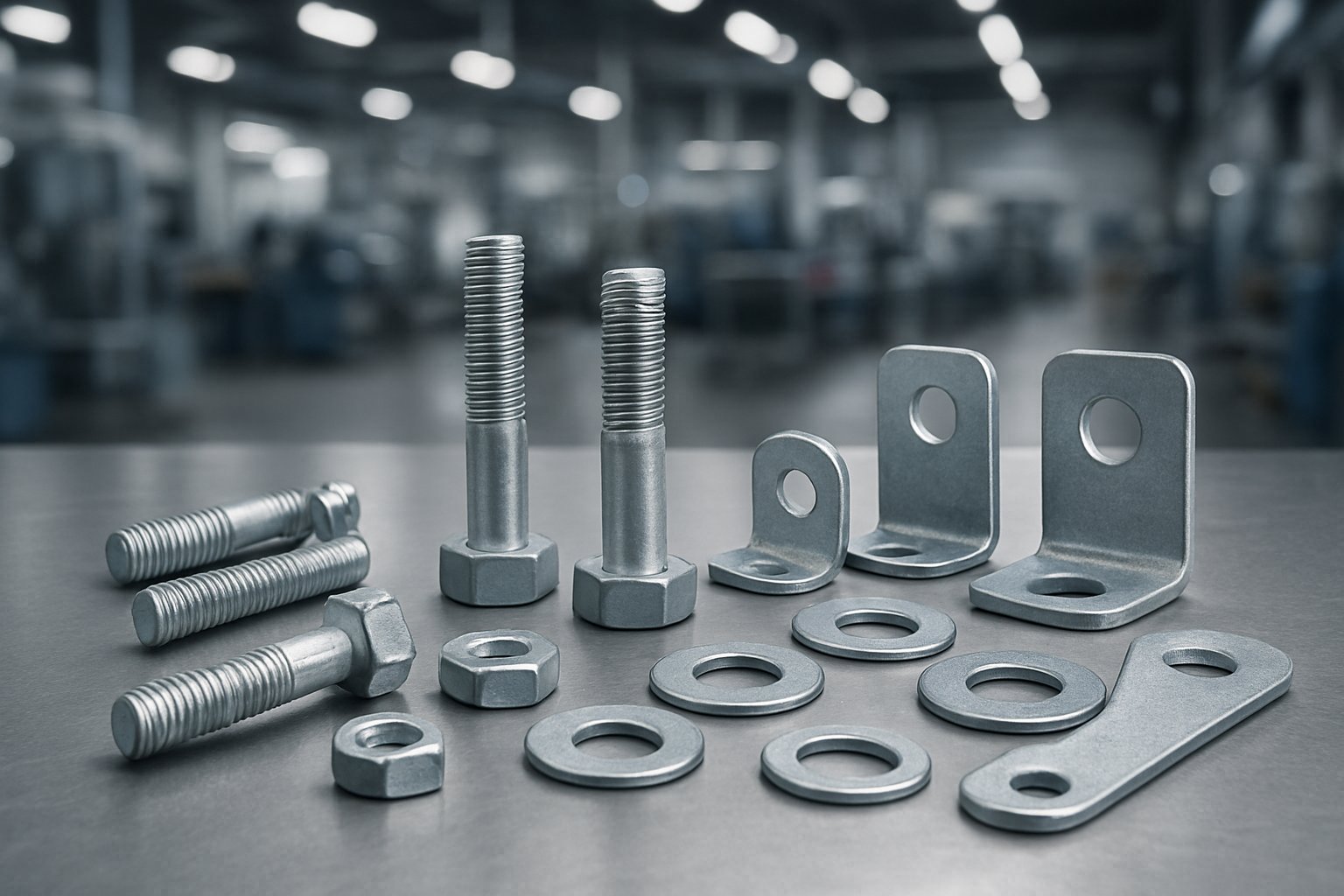
If you need the fast answer, Geomet is usually the better fit for new, compliance-sensitive programs. Dacromet still matters, but mainly as the legacy benchmark many buyers inherit on older drawings, supplier language, and established approvals. In short, this is less a name battle and more a decision about chromium status, film build, friction tuning, and approval risk.
| Factor | Geomet | Dacromet | Fit vs electroplating and hot dip galvanizing |
|---|---|---|---|
| Chromium status | Modern guides position it as chromium-free | Legacy chemistry often triggers chromium-related review; some current guides also note Cr-free versions | Important for export and compliance-sensitive new programs |
| Corrosion framing | Grade-based zinc flake protection, from general-purpose to heavier-duty variants | Strong legacy anti-corrosion reference system | Usually framed above basic electro zinc, but grade and test method still matter |
| Friction control | Many variants or topcoats support controlled torque behavior | Topcoats can also be used for friction tuning | More assembly-focused than standard plating; less bulky than HDG |
| Typical thickness | 6 to 12 um for common cited grades | 7 to 12 um or 8 to 12 um for cited grades | Much closer to electro zinc than to HDG in film build |
| Cure behavior | Verify by approved grade and applicator | Referenced guides describe a dip-spin-bake cure route | Unlike electroplating, these systems rely on controlled curing |
| Appearance | Usually silver-gray metallic | Silver to medium gray | Less bright than electro zinc, thinner and smoother than HDG |
| Best fit | New automotive and export-oriented specifications | Older drawings, inherited approvals, legacy callouts | Useful when thin-film corrosion protection matters |
Referenced thickness and corrosion ranges in this overview come from the Modulus guide, Dacromet process details from the PTS guide, and plating versus galvanizing basics from SSM.
For most new specs, Geomet leads; for legacy specs, Dacromet still sets the baseline.
Dacromet coating vs Geomet at a glance
If you are asking what is zinc flake coating, this article is talking about thin zinc-aluminum flake systems used where corrosion protection and dimensional control both matter. In practice, zinc flake coating vs geomet is often shorthand for comparing a coating family with one of its most widely specified chromium-free directions. That is also why zinc flake coating vs zinc plating is not a small cosmetic debate. It changes how buyers think about corrosion, thread fit, and compliance review.
Where zinc flake systems fit against plating and galvanizing
Viewed through a zinc flake coating vs zinc plating lens, zinc flake systems sit between bright electro zinc and thick hot dip galvanizing. Electro zinc is typically cited at about 5 to 12 um and is valued for appearance and low cost, while hot dip galvanizing is far thicker at roughly 45 to 85 um or more and can require oversize-tapped nuts. Dacromet and Geomet are usually chosen when buyers want a thinner coating with stronger corrosion framing than basic plating, but without the heavy build of HDG.
The five coating systems covered in this ranking
- Geomet, the leading modern choice for many new programs.
- Dacromet, the legacy reference behind older zinc flake decisions.
- Delta-Protekt, often reviewed for torque and topcoat control.
- Magni, common in approved fastener-coating discussions.
- Atotech, a chemistry-focused alternative buyers may encounter in sourcing reviews.
That short answer helps, but coating decisions rarely survive on a headline alone. Buyers need a clear method for judging chemistry, compliance, testing, and assembly behavior before any ranking means much.
Zinc flake coating ranking methodology
A shortlist only helps when the rules are visible. Buyers do not approve coatings from dictionary definitions alone. They compare systems side by side because a zinc flake coating specification that looks fine in a brochure can still fail a compliance review, create torque issues, or complicate sourcing. That is why this article ranks coating families against the same decision filters instead of describing each one in isolation.
How zinc flake coating systems were ranked
The evaluation sequence used throughout this comparison is simple and practical:
- Chemistry and chromium profile.
- Compliance fit for target markets and customer rules.
- Corrosion-test framing, not just headline hours.
- Friction behavior for assembly control.
- Coating thickness and thread-function impact.
- Cure process and production compatibility.
- Appearance and batch consistency.
- Sourcing practicality, including document readiness.
In fastener work, the ISO 10683 framework is often the iso standard for zinc flake coatings buyers see first. On the zinc flake coating astm side, ASTM F3393 is a common reference for threaded fasteners. Those standards matter because they push the discussion beyond marketing names and into a real zinc flake coating standard review.
The compliance and export criteria that matter most
For modern programs, the first questions are usually about Cr(VI) status, document clarity, and whether the full system is defined as base coat only or base coat plus topcoat and lubricant. Modulus notes under ISO 10683 that corrosion resistance is decisive for acceptance, while reference thickness is guidance only. That is a useful warning when two quotes appear similar but rely on different system details. Linkworld also highlights the importance of Cr(VI)-free declarations and related compliance paperwork for regulated markets.
How to compare fastener coatings without overreading salt spray claims
A common sourcing question is, how is zinc flake coating applied? The zinc flake coating process is typically non-electrolytic, with dip-spin used for bulk fasteners and spray used for larger parts, followed by oven curing, as outlined by Products Finishing and Linkworld. Salt spray still needs careful reading. Both sources stress that it is a comparative test, not a clean predictor of field life.
- Insert exact thickness only when a verified zinc flake coating specification states it.
- Use corrosion-hour claims only with the named test method and full coating system.
- Add friction values only when approved supplier documents provide them.
- Do not assume all zinc flake families behave the same.
Run those filters honestly and one modern chromium-free direction starts separating itself from the pack very quickly.

Geomet zinc flake coating for modern approvals
That separation becomes clearer with Geomet. In many new automotive and export programs, a geomet zinc flake coating moves to the front because buyers are not judging corrosion protection alone. They are also screening for chromium status, approval risk, torque behavior, and how cleanly the coating fits modern documentation. Published ranges in the Modulus guide and the Geomet guide place common Geomet systems around 6 to 12 um, with heavier-duty 720 variants cited up to 15 um, and describe dip-spin or rack application followed by cure near 300 C.
Geomet: Chromium-free zinc flake benchmark
The chemistry shift is the real story. Reference material describes Geomet as a water-based, chromium-free system built from zinc and aluminum flakes in an inorganic binder. That makes it easier to position in compliance-sensitive sourcing than older chromium-linked alternatives. It also helps explain why zinc flake coated fasteners, clips, washers, and chassis brackets often migrate toward this family when drawings allow it. In practical sourcing language, the phrase zinc flake coating geomet usually signals a buyer who wants a modern, lower-friction approval path rather than a generic substitute.
For most open new-program specs, Geomet is the safer procurement default.
Pros and Cons
Pros
- Chromium-free positioning fits current automotive and export compliance reviews.
- Thin-film coverage suits threaded hardware and other zinc flake coated steel parts where dimensional control matters.
- The family structure is useful: published guides frame 321 for general fasteners, 500 for tighter friction control, and 720 for harsher corrosion demands.
- Silver-gray appearance is typically more uniform than thicker galvanized finishes.
Cons
- Variant selection matters. A general fastener grade is not the same as a friction-managed system.
- Performance claims depend on the exact basecoat, topcoat, lubricant, and test method.
- The bake-cure process requires a disciplined applicator, not a vague drawing note.
Best Use Cases
- Automotive zinc flake coated fasteners that need chromium-free documentation.
- Chassis hardware, clips, and brackets where a zinc aluminium flake coating is preferred over a thicker galvanized build.
- Export programs where aluminium zinc flake coating language appears in customer specs or compliance reviews.
- Assemblies that need controlled torque through the right Geomet variant or matched topcoat.
What buyers should verify on drawings and PPAP documents
- Name the coating family and grade, not just a generic zinc flake coated steel note.
- State whether the callout is basecoat only or includes lubricant or topcoat.
- Confirm thickness range, corrosion test method, and any friction window from approved documents.
- Check appearance requirements for visible hardware and batch consistency expectations.
Coating choice is only one part of the approval chain. Buyers often benefit from a manufacturing partner that can coordinate part production and surface-treatment planning under automotive quality systems. For teams that want that one-workflow approach, Shaoyi is a relevant IATF 16949-certified resource for metal part manufacturing and custom surface treatments.
Even so, Geomet is not an automatic substitute for every older callout. Drawings that still name Dacromet may look similar on the surface, but legacy approvals and chromium-related history change the sourcing conversation fast.
Dacromet legacy zinc flake coating on older drawings
Plenty of buyers meet Dacromet because it is already written into the print. That is not surprising. The Alibaba guide describes Dacromet as the original zinc-aluminum flake system developed in the 1970s, and the Finishing and Coating overview shows why zinc flake coatings became important in transportation: stronger corrosion framing than older plating routes, plus no hydrogen generation during deposition. As a flake zinc coating benchmark, Dacromet helped define what thin-film anti-corrosion protection could do for fasteners and hardware.
Dacromet: The legacy benchmark behind modern zinc flake systems
That history still matters, but it does not make Dacromet interchangeable with Geomet. Reference material frames classic Dacromet as a zinc and aluminum flake system using a chromic acid-based chemistry, while Geomet is presented as the chromium-free evolution. In procurement terms, that difference changes the approval path. A zinc flake coated bolt on an older drawing may be perfectly valid for service production, yet a new export program may face added compliance review if the callout still points to Dacromet. In other words, this zinc flake metal coating remains relevant, but usually as a legacy specification, not as the default choice for fresh programs.
Pros and Cons
Pros
- Strong historical reference point in automotive and industrial sourcing language.
- Thin, non-electrolytic protection suited to high-strength fasteners where hydrogen embrittlement risk matters.
- Widely recognized on inherited drawings, approved parts lists, and older supplier documents.
Cons
- Chromium-related chemistry can complicate modern compliance and export review.
- Not a simple substitute for Geomet, even when the finished part looks similar.
- Legacy Dacromet callouts often need separate confirmation for topcoat, friction behavior, and test method.
Best Use Cases
- Continuation programs where the customer drawing explicitly names Dacromet.
- Service parts that must match previously approved zinc flake coated hardware.
- Older zinc-flake-coated fasteners and brackets tied to validated assembly history.
- Projects where a zinc-flake-coated replacement cannot be introduced without a formal engineering change.
When legacy approvals still point to Dacromet
Keep Dacromet in the conversation when the print, validation history, and customer approval record all depend on it. Buyers should verify the exact callout, linked topcoat or lubricant, corrosion test method, and whether an equivalent chromium-free option is already approved. That last detail matters more than many teams expect, especially when the shortlist begins to widen toward zinc flake systems chosen for tighter torque control and more deliberate topcoat management.

Delta-Protekt zinc flake coating for torque windows
Legacy chemistry is only part of the buying decision. When the print starts calling for repeatable clamp load, controlled assembly feel, or tighter cosmetic expectations, Delta-Protekt becomes a serious alternative. In practical sourcing language, zinc flake coating delta protekt usually means a system family, not a single finish. Buyers are often choosing a basecoat, a lubricant strategy, and sometimes a topcoat package that work together.
Delta-Protekt: Zinc flake system for tightly managed torque windows
That system logic is what sets it apart in the broader zinc flake market. Delta GBN describes Delta-Protekt as an anti-corrosive coating system for steel and iron, applied like a paint by bulk dipping for bolts, nuts, pressings, and similar hardware, or by spray for larger and more cosmetic parts, then heat cured at around 230 C. The same source notes that some versions include integral lubricants to help control torque-tension behavior, while VH300 series topcoats can be added when extra corrosion or functional control is needed.
That is why buyers sometimes treat it as a zinc flake duplex coating decision rather than a simple finish callout. In Dorken topcoat literature, the DELTA-PROTEKT VH series is framed as a water-based topcoat with extremely thin 1 to 5 um layers, particularly suited to metric threaded parts. Appearance can also be tuned at the system level. TR Fastenings lists Delta Protekt in various colours at roughly 8 to 12 um, while clearly noting that its salt spray figures are approximate laboratory results. So if a drawing asks for a specific zinc flake coating color, or even black zinc flake coating, verify the exact basecoat-plus-topcoat stack instead of assuming every Delta-Protekt part is equivalent. The same caution applies to zinc flake coating washers, where seating, fit, and friction consistency matter just as much as corrosion language.
Pros and Cons
Pros
- Well suited to fasteners that need controlled torque and tension behavior.
- Flexible system design allows basecoat-only or topcoated builds.
- Application routes support both bulk hardware and larger sprayed components.
- Useful when appearance, friction, and corrosion need to be balanced together.
Cons
- Performance depends on the full recipe, not the family name alone.
- Laboratory corrosion numbers should not be treated as field-life guarantees.
- Black zinc flake coating requirements need precise topcoat definition on the drawing.
- Color and friction targets can add sourcing and approval complexity.
Best Use Cases
- Bolts, nuts, and studs with narrow torque windows.
- High-volume hardware, including zinc flake coating washers and small pressings.
- Programs that need a zinc flake duplex coating approach for friction and appearance control.
- Threaded parts where very thin topcoat layers help preserve fit.
For buyers who rank assembly behavior almost as high as corrosion protection, Delta-Protekt deserves a place on the shortlist. Yet on many automotive and industrial comparisons, that shortlist quickly widens to another familiar fastener coating family with equally strong recognition: Magni.
Magni zinc flake coating for automotive fasteners
Magni usually appears on the shortlist when buyers need more than basic corrosion coverage. In fastening programs, the real question is often whether the coating can protect the part, preserve thread fit, and deliver stable torque behavior at the same time. The Trojan guide places Magni among the major zinc flake families used for fasteners, while Meigesi describes a typical magni zinc flake coating system as a dual-layer build with a zinc-rich or zinc-aluminum flake basecoat and an organic topcoat that adds lubricity and functional protection.
Magni: Automotive-oriented zinc flake contender
That construction explains why Magni is common in automotive and industrial hardware sourcing. It is a non-electrolytic system, so it is often chosen for high-strength fasteners where hydrogen embrittlement risk must be avoided. Trojan's comparison table also shows why buyers pay attention to the exact grade rather than the brand name alone. Common cited Magni systems such as 560 and 565 are listed around 8 to 12 um with lubricated ISO 10683-style designations, while higher-performance variants are shown around 10 to 15 um with stronger corrosion-test framing and cure temperatures near 220 C. Those are useful reference points, but the approved system on the drawing still controls the decision.
Pros and Cons
Pros
- Well recognized for high-strength threaded hardware and controlled-friction assemblies.
- Thin-film zinc flake construction helps maintain dimensional accuracy on threaded parts.
- Non-electrolytic processing supports use on critical fasteners where hydrogen charging is a concern.
- Chrome-free positioning is noted in the Meigesi reference, which helps in compliance-sensitive supply chains.
- ASTM framing is strong, with Meigesi citing ASTM F3393 for zinc-flake coating systems for fasteners.
Cons
- Performance depends on the exact Magni grade, topcoat, and lubricant package.
- Salt spray figures should be read as system-specific laboratory data, not automatic field-life guarantees.
- Not every approved supplier list treats all Magni variants as interchangeable.
- Drawings for zinc flake coated bolts and mating parts still need clear friction and appearance requirements.
Best Use Cases
- Automotive chassis, suspension, and powertrain fasteners that need corrosion protection plus torque consistency.
- High-strength zinc flake coated bolts where non-electrolytic coating is preferred over electroplating.
- Assembly-line hardware and zinc flake coated screws that benefit from lubricated topcoat behavior.
- Industrial threaded parts where a thin coating is preferred over thicker galvanizing-style build.
Magni earns attention because it balances approval familiarity with functional assembly behavior. Still, brand recognition only gets a buyer so far. Once the coating family is acceptable, chemistry details and topcoat architecture start carrying more weight, which is why some sourcing reviews soon turn toward Atotech and other formulation-driven options.
Atotech zinc flake coating as a chemistry-first alternative
Some supplier discussions move past brand shorthand and into formulation details. That is where Atotech often appears. The official Atotech zinc flake portfolio presents a modular range of silver and black base coats, plus organic and inorganic top coats, for fasteners, brake and chassis components, and stamping parts. For buyers comparing legacy and modern zinc flake families, that matters because a zinc aluminum flake coating should be judged as a full system, not as a generic silver finish. The same official source states that the range is approved by numerous OEMs, carries no risk of hydrogen embrittlement, and is free of heavy metals such as Pb, Hg, Cd, Ni, Co, and Cr(VI). In practice, atotech zinc flake coating usually enters the conversation when the review is chemistry-led, compliance-aware, and focused on how the base coat and top coat work together.
Atotech: Chemistry-focused zinc flake alternative
That system view becomes more important when engineers discuss the zinc aluminium flake coating process. Atotech separates base coats from functional top coats, and its literature says organic top coats can support controlled coefficient of friction values, added corrosion support, chemical resistance, UV stability, and a more uniform appearance. Its inorganic top coats are described at about 0.5 to 1 micron. Buyers should also keep this separate from a zinc nickel flake coating discussion, because mixing plating language with zinc flake language can send the approval review in the wrong direction.
Pros and Cons
Pros
- Modular system with silver or black base coats and multiple top coat options.
- Officially positioned as free of Cr(VI) and other listed heavy metals.
- No hydrogen embrittlement risk is stated for the zinc flake range.
- Top coats can be used to manage friction and appearance, not only corrosion framing.
Cons
- Buyers need the exact base coat and top coat stack, not just the supplier name.
- Published portfolio information does not make every variant interchangeable.
- Approval status should be checked at the specific system level on drawings and customer documents.
- It is easy to confuse zinc flake families with plated systems if terminology is loose.
Best Use Cases
- Fasteners that need corrosion protection plus controlled friction behavior.
- Brake, chassis, and stamped parts where thin-film performance and appearance both matter.
- Programs that may need black or silver visual options within one coating family.
- Supplier reviews where the coating choice depends on base coat and top coat architecture, not just a headline name.
If your team is digging into the diffusion of zinc aluminium flake in coating behavior, broader corrosion research in this Wiley study helps explain why coating-family evaluation matters. Aluminum flake content can influence barrier effects, electrical connectivity, and corrosion-product formation inside zinc-rich systems. That does not make every commercial zinc aluminum flake coating behave the same. It simply shows why the side-by-side comparison ahead needs to line up chemistry, chromium status, friction control, cure profile, appearance, and sourcing complexity on one table.
Zinc flake coating comparison table for fast decisions
A shortlist gets useful when every tradeoff sits in one place. The table below keeps Geomet in the first row because it is the strongest overall fit for many new programs, while Dacromet remains the main legacy reference. Where hard numbers appear, they come from the Modulus guide. Thickness and process context for zinc flake coating vs hot dip galvanized parts also draw from SSSIL. Where comparable supplier data was not provided, the table says so instead of guessing.
Comparison table across chemistry compliance and application fit
| System | Chemistry framing | Chromium status | Corrosion-resistance positioning | Typical thickness | Friction-control potential | Cure profile | Appearance | Relative sourcing complexity | Ideal application fit |
|---|---|---|---|---|---|---|---|---|---|
| Geomet | Modern zinc flake family with grade ladder such as 321, 500, and 720 | Positioned as chromium-free in the provided guide | General-purpose through heavy-duty, depending on grade | 6-12 um for 321, 8-12 um for 500 and 720 | Strong, especially where lubricant or topcoat options are specified | Controlled cured zinc flake system, verify exact recipe | Silver-gray metallic | Moderate, but favorable for new compliance-sensitive sourcing | New automotive, export, fasteners, and structural hardware |
| Dacromet | Legacy zinc flake benchmark with cited 320 and 500 variants | Some regions restrict Cr(VI) versions, while Cr-free versions are also noted | Legacy high-corrosion reference system | 7-12 um for 320, 8-12 um for 500 | Possible with topcoat-based friction tuning | Controlled cured zinc flake system, verify exact system | Silver to medium gray | Higher where chromium review or legacy approval questions apply | Older drawings, inherited approvals, service parts |
| Delta-Protekt | Alternative approved zinc flake family | Verify from approved supplier documents | Do not assume equivalence from family name alone | Verify from approved supplier documents | Verify from approved supplier documents | Verify from approved supplier documents | Verify required finish on drawing | Depends on OEM or customer approval list | Programs that explicitly approve it |
| Magni | Alternative approved zinc flake family | Verify from approved supplier documents | Do not assume equivalence from family name alone | Verify from approved supplier documents | Verify from approved supplier documents | Verify from approved supplier documents | Verify required finish on drawing | Depends on OEM or customer approval list | Programs that explicitly approve it |
| Atotech | Alternative approved zinc flake family | Verify from approved supplier documents | Do not assume equivalence from family name alone | Verify from approved supplier documents | Verify from approved supplier documents | Verify from approved supplier documents | Verify required finish on drawing | Depends on OEM or customer approval list | Programs that explicitly approve it |
One practical takeaway jumps out. The typical thickness of zinc flake coatings stays thin enough for engineered hardware, but the exact system still controls compliance, friction, and approval risk.
Where confusion usually happens
The difference between zinc plating and zinc flake coating is not just appearance. Zinc flake is specified as a thin, non-electrolytic, cured flake-and-binder system, while plating belongs to a different coating category and should not be swapped without drawing approval. That is why a zinc flake coated vs zinc plated comparison matters most on threaded parts, clamps, and assemblies with tight fit requirements.
The difference between hot dip galvanizing and zinc flake coating is even easier to see. The SSSIL overview describes hot dip galvanizing as immersion in molten zinc at about 450 C, with a much thicker and rougher coating, often around 40-85 microns or more. The same source frames zinc flake coatings around 5-20 microns, with better dimensional control for smaller precision parts. In plain language, zinc flake coating vs zinc electroplating is a fine-parts decision, while zinc flake coating vs hot dip galvanized hardware is usually a geometry and coating-build decision first.
Which coating wins by decision factor
- Best for most new programs: Geomet.
- Best for legacy drawing continuity: Dacromet.
- Best where dimensional control matters more than thick-build protection: Zinc flake systems overall.
- Best for large structural steel with tolerance room: Hot dip galvanizing, not a thin-film zinc flake system.
- Best when the print names an alternate family: Use that approved system, not an assumed substitute.
This matrix makes the ranking easier to read, but purchasing still has to make a call. The final recommendation depends on whether the priority is new-program compliance, legacy print lock-in, torque behavior, or supplier execution.

Best zinc flake coating choice for procurement
When the decision reaches purchasing, the ranking has to turn into a clear spec choice. For most new programs, Geomet is the best overall pick because it fits more cleanly with current chromium-free and export-sensitive buying logic. Dacromet still matters, but mostly when an existing drawing, service part, or customer approval already names it. The rest of the shortlist should be judged against OEM approvals, friction targets, appearance needs, and supplier execution rather than brand familiarity alone.
Best overall pick for most new programs
- Geomet for most new automotive and export programs. The Modulus guide frames modern GEOMET systems as chromium-free and positions different grades for general use, tighter friction control, and heavier-duty corrosion demands.
- Dacromet for legacy continuity. Keep it when the print, validation history, or service obligation depends on an existing Dacromet callout.
- Delta-Protekt when torque window control, topcoat strategy, or finish consistency is the deciding factor.
- Magni when approved fastener families and controlled-friction assemblies drive supplier selection.
- Atotech when buyers need a modular chemistry and topcoat discussion, not a shortcut assumption.
When to keep Dacromet in consideration
Legacy programs punish casual substitutions. If a print cites Dacromet, or a fastener requirement sits under ISO 10683, sometimes searched as iso 10683 non-electrolytically applied zinc flake coatings fasteners, treat the finish as a controlled system. Ask for the zinc flake coating details in writing: exact basecoat, topcoat, lubricant, thickness range, corrosion test method, and the applicator's zinc flake coating procedure. Many zinc flake coating problems start as document problems first and process problems second.
How to shortlist a manufacturing partner
When comparing zinc flake coating suppliers, look beyond price and salt spray headlines. The PPAP checklist shows how much approval paperwork can matter, including design records, process flow diagrams, PFMEA, control plans, dimensional results, material or performance test results, compliance records, and PSW. For buyers who want manufacturing and automotive quality planning in one workflow, the Shaoyi service page is a relevant next-step resource. Its quality assurance page states IATF 16949:2016 certification and full PPAP documentation as required, which is useful when coating selection has to connect with stamping, machining, prototyping, and scalable production.
- Review the drawing for the exact coating family, grade, and any linked topcoat or lubricant.
- Request compliance documents and test records tied to the named system, not a similar one.
- Confirm the zinc flake coating procedure for application, cure, thickness verification, and corrosion testing.
- Check whether the supplier can coordinate part manufacturing, coating, PPAP, and launch timing.
- Verify the path from prototype or trial lots to serial production before final approval.
That is the practical buying answer: choose Geomet for most new work, keep Dacromet for legacy lock-in, and let approvals, friction needs, and supplier capability decide everything else.
Dacromet Coating vs Geomet FAQs
1. Which is better, Dacromet or Geomet?
For most new programs, Geomet is usually the better fit because its chromium-free positioning tends to align more easily with current compliance and export requirements. Dacromet still matters, but mainly when older drawings, service parts, or inherited approvals already specify it. The final choice should still be based on the exact approved system, including topcoat, lubricant, thickness range, friction needs, and customer documentation.
2. Can Geomet replace Dacromet on existing fasteners or hardware?
Not by default. A switch can affect approval status, corrosion test framing, torque behavior, and the paperwork required for release. Even if both are zinc flake systems, they are not automatically interchangeable in procurement. Before changing a legacy Dacromet callout, buyers should confirm the drawing rules, approved equivalents, any linked topcoat or lubricant, and whether a PPAP or engineering change is required.
3. How is zinc flake coating different from zinc plating or hot dip galvanizing?
Zinc flake coating is a thin, non-electrolytic, cured coating system often chosen for precision hardware where corrosion protection and dimensional control both matter. Zinc plating is a different coating route and is often selected for appearance or lower cost. Hot dip galvanizing builds a much thicker layer and is usually better suited to larger parts with more tolerance room. That is why zinc flake systems are common on threaded fasteners, clips, and brackets.
4. What should buyers verify on a zinc flake coating specification?
Ask for the full coating definition, not just the family name. A strong specification should identify the coating family or grade, whether it is basecoat only or includes a topcoat or lubricant, the required thickness range, the corrosion test method, any friction window, cure requirements, and appearance expectations. For automotive sourcing, it is also smart to review compliance declarations, test records, applicator approval status, and PPAP-related documents.
5. How do you choose a supplier for Geomet or Dacromet coated parts?
Look for a supplier that can connect part manufacturing, coating control, and documentation in one process. Buyers should check drawing review capability, coating process control, test evidence, launch readiness, and the path from prototypes to serial production. For automotive teams that want one workflow, a partner such as Shaoyi can be useful because it combines metal part manufacturing, custom surface treatment support, and IATF 16949 quality management under one sourcing route.