 Small batches, high standards. Our rapid prototyping service makes validation faster and easier —
  EN
EN


CNC Prototype Service Secrets: Costly Mistakes Engineers Keep Making
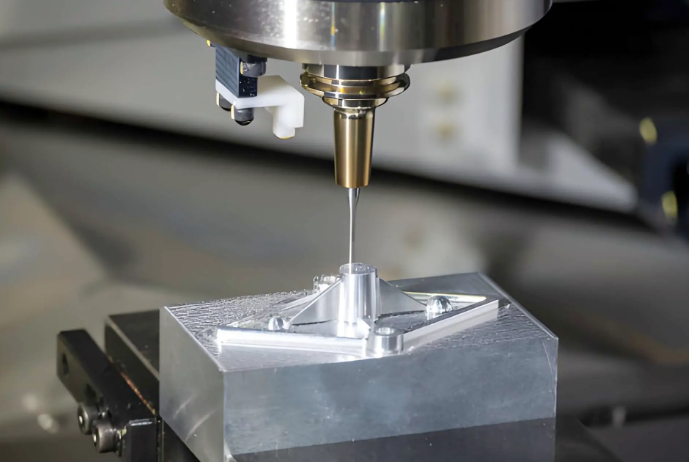
What Is a CNC Prototype Service and Why It Matters
Ever had a brilliant product idea stuck in CAD software, wondering if it will actually work in the real world? That's exactly the gap a CNC prototype service bridges. It transforms your digital designs into physical, functional parts you can hold, test, and refine before committing serious capital to production tooling.
A CNC prototype service uses computer-controlled machining to create sample parts from production-grade materials. Unlike basic mockups or 3D-printed models, these prototypes deliver the mechanical properties, tolerances, and surface quality that mirror final production parts. This means you can validate everything from structural integrity to assembly fit before scaling up.
Understanding CNC Prototype Services
Think of CNC prototyping as the critical reality check between your design intent and manufacturing feasibility. When engineers create a CAD model, assumptions about geometry, tolerances, and material behavior remain theoretical until a physical part proves them right or wrong.
CNC prototyping solves this by cutting real materials with precision cnc machining processes. The result? You get machined parts that behave exactly like production components. Whether you're testing heat dissipation in an aluminum housing or verifying thread engagement in a steel bracket, the prototype tells the truth about your design.
According to manufacturing research, around 70-80% of total product cost is locked in during the design and early engineering phase. That makes early prototype validation not just helpful but essential for controlling downstream expenses.
The Fundamental CNC Prototyping Process
The journey from concept to physical prototype follows a clear path. Here's how a typical cnc service delivers your parts:
- CAD file submission: You provide 3D models and 2D drawings with dimensions, tolerances, and material specifications. Common formats include STEP, IGES, and native CAD files.
- Design review and DFM analysis: The machining team evaluates manufacturability, identifies potential issues like tool access problems or overly tight tolerances, and suggests optimizations.
- Material selection: You choose from metals like aluminum, stainless steel, or titanium, plus engineering plastics such as delrin, nylon, or polycarbonate based on your testing requirements.
- CAM programming: Software converts your CAD model into machine-readable code that defines cutting paths, speeds, and tool sequences.
- Machining operations: CNC mills, lathes, or multi-axis machines cut the raw material to your specifications with high dimensional accuracy.
- Inspection and delivery: Quality verification confirms the prototype meets design requirements before shipping.
This process typically delivers cnc parts in days rather than weeks, enabling rapid design iterations when you discover issues that need fixing.
CNC Prototyping vs Production Machining
Here's where many engineers get confused. CNC prototyping and production machining use similar equipment, but they serve fundamentally different purposes.
CNC prototyping optimizes for speed, flexibility, and learning. You accept higher per-part costs because you're validating design concepts, not manufacturing at scale. Setup times are streamlined for quick turnaround, and the process accommodates frequent design changes between iterations.
Production machining, by contrast, optimizes for cost-per-part over thousands of units. It involves dedicated fixtures, refined toolpaths, and statistical process controls that make sense only when volumes justify the upfront investment.
Why do engineers rely on a cnc prototype before committing to production tooling? Because discovering a design flaw after investing in injection molds or die casting tools is exponentially more expensive than catching it during the prototype phase.
A well-executed prototype validates multiple critical factors simultaneously:
- Dimensional accuracy: Confirms that tolerances work in practice, not just on paper. You'll know immediately if parts fit together as intended.
- Material authenticity: Tests real production-grade materials, giving you accurate data on strength, thermal behavior, and wear characteristics.
- Functional testing capability: Enables real-world performance validation under actual operating conditions, loads, and environments.
- Design validation: Proves manufacturing feasibility and identifies costly geometry issues before production commitments.
For product teams navigating the path from concept to market, precision cnc machining during the prototype stage isn't optional—it's the foundation for every decision that follows. Get this phase right, and you'll avoid the costly mistakes that derail projects later in the development cycle.
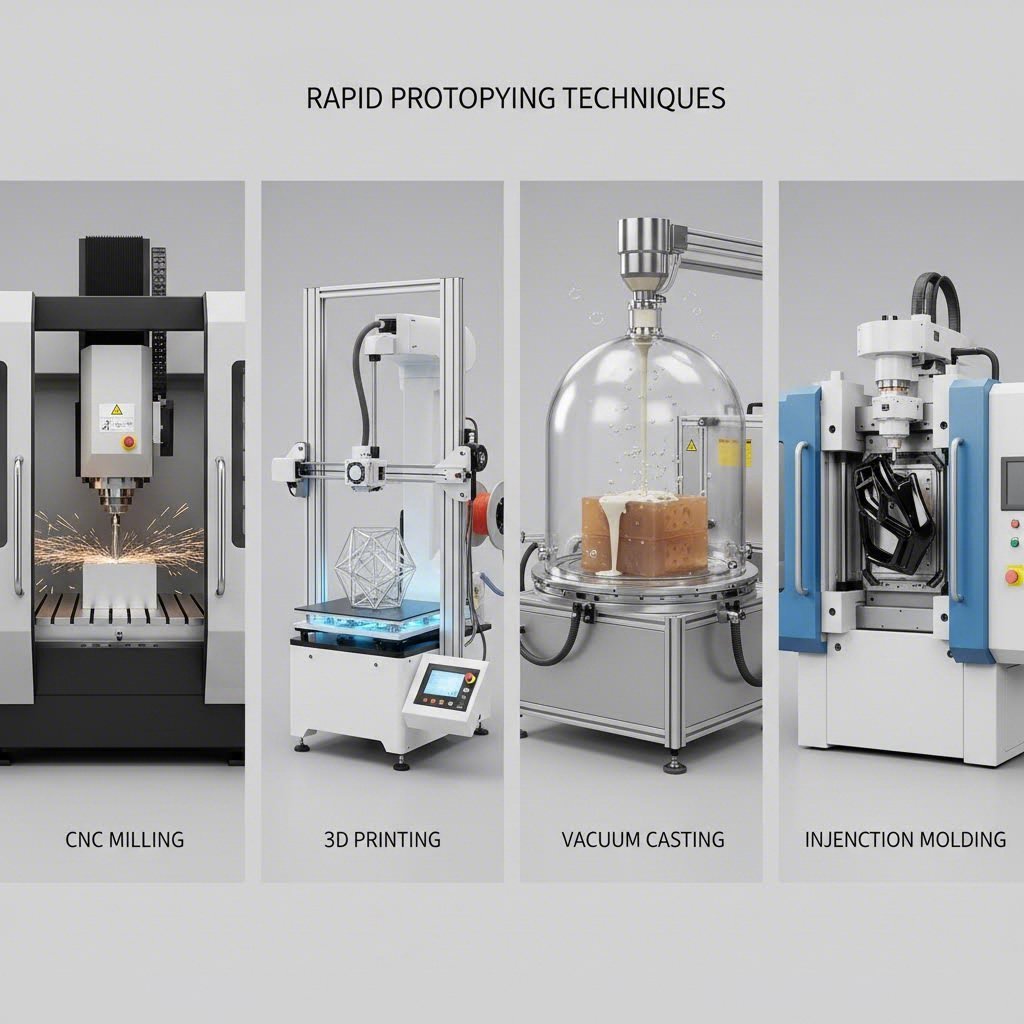
CNC Prototyping vs Alternative Methods
So you've decided you need a prototype. But should you use CNC machining, 3D printing, vacuum casting, or even bridge tooling for injection molding? The answer depends entirely on what you're trying to accomplish—and choosing wrong can waste thousands of dollars and weeks of development time.
Let's break down when each method makes sense, so you can match your prototype machining approach to your actual project needs rather than defaulting to whatever seems easiest.
CNC Machining vs 3D Printing for Prototypes
This is the comparison most engineers face first. Both methods create parts directly from CAD files, but they work in fundamentally opposite ways—and that difference matters more than you might think.
3D printing builds parts layer by layer through additive manufacturing. It's fast, handles complex internal geometries beautifully, and requires zero tooling investment. For early-stage concept models where you just need to see if a shape works, it's often the quickest path forward.
However, here's where rapid cnc prototyping pulls ahead: material properties and surface finishes. When you 3D print ABS plastic, you get layers bonded together that create anisotropic strength—meaning the part is weaker in the Z-axis (build direction) than in the X-Y plane. A cnc milled ABS part, by contrast, comes from a solid block with consistent mechanical properties in all directions.
The numbers tell the story. According to Unionfab's manufacturing comparison data, 3D-printed FDM ABS typically achieves tensile strength of 33 MPa in the X-Y plane but drops to just 28 MPa along the Z-axis. CNC machined ABS delivers 35-63 MPa uniformly throughout the part.
Surface quality follows the same pattern. 3D printing typically produces surfaces with Ra 3.2-6.3 μm roughness, showing visible layer lines that require post-processing to smooth. CNC machining achieves Ra 0.8-3.2 μm as standard, with fine machining reaching below 0.8 μm. If your prototype needs to demonstrate final product aesthetics or interface with precision components, those cnc machining parts will represent reality far more accurately.
Choose CNC over 3D printing when material strength, surface finish, or dimensional precision must match production intent.
When Vacuum Casting Makes More Sense
Now, imagine you need 25 identical plastic prototypes for user testing, trade show samples, or stakeholder reviews. CNC machining each one individually gets expensive fast. 3D printing 25 parts takes time and still leaves you with layer lines.
This is vacuum casting's sweet spot. The process starts with a master model (often CNC machined or 3D printed and polished), then creates a silicone mold. Liquid polyurethane resins are poured into the mold under vacuum, curing into solid parts that replicate the master's geometry and surface quality.
The economics shift dramatically in the 5-100 part range. Once you've invested in the master and mold, each subsequent part costs a fraction of individual CNC machining. You get custom machined parts-level surface finishes that look remarkably close to injection-molded production plastics—smooth, uniform, and professional.
The catch? Vacuum casting uses polyurethane resins that mimic production plastics rather than the actual materials. An "ABS-like" casting replicates the look and approximate behavior of ABS, but mechanical properties differ. Tensile strength of ABS-like polyurethane runs 60-73 MPa—actually higher than true ABS—but other characteristics like heat resistance or chemical compatibility may vary.
Additionally, silicone molds typically last only 15-25 castings before degradation affects quality. For quantities above 100, you're replacing molds frequently, and the economics start favoring other approaches.
Injection Molding Prototypes and Bridge Tooling
When does it make sense to invest in actual tooling for prototypes? The math changes when you need several hundred parts, require true production materials, or want to validate the injection molding process itself before full production.
Bridge tooling uses aluminum or soft steel molds that cost significantly less than hardened production tooling. According to RevPart's service comparison, prototype molds start around $2,000, with per-part costs dropping to just $2.50-3.00 for materials like ABS. Compare that to $150+ per part for CNC machining the same geometry.
The break-even point varies by part complexity, but for simple geometries, injection molding becomes cost-effective somewhere between 100-500 parts. You also get the advantage of testing with actual production materials and surface finishes—the prototype parts behave exactly like production parts will.
Bridge tooling also validates your design for manufacturability. Issues like insufficient draft angles, non-uniform wall thickness, or problematic gate locations show up during prototype molding, giving you the chance to fix them before investing $50,000+ in hardened production tools.
Complete Method Comparison
The table below consolidates the key decision factors across all four prototyping approaches:
| Criteria | CNC Machining | 3D Printing (FDM/SLA) | Vacuum Casting | Injection Molding (Bridge Tooling) |
|---|---|---|---|---|
| Material Options | Metals (aluminum, steel, titanium) and engineering plastics (ABS, nylon, PC, delrin) | Plastics (ABS, PLA, nylon, resins); limited metals via DMLS | Polyurethane resins mimicking ABS, PP, PC, rubber | True production plastics (ABS, PP, PC, POM, TPE) |
| Dimensional Accuracy | ±0.0127 mm to ±0.127 mm (highest precision) | ±0.08 mm to ±0.5 mm (varies by technology) | ±0.3 mm to ±0.55 mm (dependent on master quality) | ±0.05 mm to ±0.1 mm (production-grade) |
| Surface Finish Quality | Ra 0.8-3.2 μm; fine machining ≤0.8 μm | Ra 3.2-6.3 μm; visible layer lines | Ra 1.6-3.2 μm; smooth, injection-molded appearance | Best finish; replicates mold texture exactly |
| Cost: 1-5 Parts | $150-300+ per part | $120-150 per part (most economical) | Not practical (high mold cost vs. part count) | Not practical ($2,000+ tooling investment) |
| Cost: 20-50 Parts | $100-200+ per part (volume discount limited) | $100-130 per part (flat pricing) | $30-80 per part (most economical) | $50-100 per part (tooling amortizing) |
| Cost: 100-500 Parts | High (labor-intensive) | Moderate (time-limited) | Rising (multiple molds needed) | $5-15 per part (most economical) |
| Typical Lead Time | 7-15 days | 1-3 days (fastest) | 10-15 days | 2-4 weeks (includes tooling) |
| Best Use Cases | Functional testing, metal prototypes, precision fits | Concept models, complex geometries, rapid iterations | Visual models, presentation samples, user testing (5-100 parts) | Pre-production validation, high quantities, material testing |
Matching Method to Prototype Purpose
Your prototype's purpose should drive your method selection. Here's a practical decision framework:
- Visual models and concept validation: 3D printing offers the fastest, most cost-effective path. You're checking proportions, ergonomics, and basic aesthetics—not mechanical performance.
- Functional testing under load: CNC machining delivers the material properties and dimensional accuracy required for meaningful performance data. When you need to know if a bracket will survive vibration testing or a housing will dissipate heat properly, prototype machining with production-grade materials is essential.
- Stakeholder presentations and market testing (20-100 units): Vacuum casting produces professional-looking samples at reasonable cost. The injection-molded appearance impresses reviewers without the tooling investment.
- Pre-production validation and regulatory testing: Bridge tooling injection molding ensures your prototype parts match production parts exactly. For medical devices requiring FDA testing or automotive components needing validation, this alignment is non-negotiable.
The costliest mistake? Choosing a method based on habit rather than purpose. Engineers who default to 3D printing for every prototype miss opportunities where CNC machining or vacuum casting would deliver better results faster. Understanding each method's strengths lets you match the right tool to each prototyping challenge.
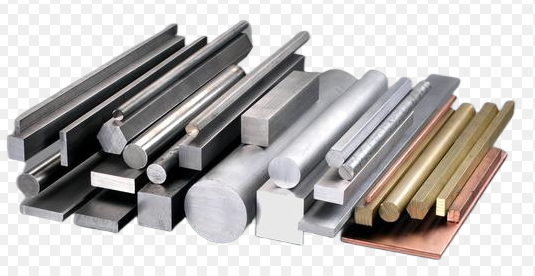
Material Selection Guide for CNC Prototypes
You've chosen CNC machining for your prototype. Now comes a decision that will make or break your testing results: material selection. Pick wrong, and you'll either waste money on unnecessary material authenticity or get misleading performance data from an inappropriate substitute.
The good news? Material selection for prototypes follows different rules than production. Understanding those rules can save significant budget while still delivering the validation data you need.
Metals for Functional Prototype Testing
When your prototype needs to withstand real-world loads, handle heat, or demonstrate structural integrity, metals deliver the mechanical properties that plastics simply can't match. But not all metals machine the same way or cost the same amount.
Aluminum Alloys dominate CNC prototype applications for good reason. Aluminum machines beautifully—fast cutting speeds, minimal tool wear, and excellent chip evacuation keep costs low while achieving tight tolerances. According to Penta Precision's machining analysis, aluminum's high machinability translates directly into shorter cycle times and reduced production costs compared to harder metals.
For prototypes, 6061-T6 aluminum covers most applications. It offers excellent strength-to-weight ratio, good corrosion resistance, and machines to fine surface finishes with minimal effort. Need higher strength? 7075-T6 provides nearly double the tensile strength of 6061, making it ideal for aerospace and high-stress structural prototypes.
Stainless Steel earns its place when corrosion resistance, strength, or temperature tolerance become non-negotiable. With tensile strengths reaching up to 1300 MPa in certain grades, stainless steel handles demanding environments and high loads that would deform aluminum. However, it's significantly harder to machine—expect longer cycle times, increased tool wear, and higher per-part costs.
For prototype applications, 304 stainless steel balances machinability with corrosion resistance, while 316 stainless provides superior chemical resistance for marine or medical environments. When comparing aluminum vs stainless steel, stainless weighs roughly three times as much—a critical factor when your prototype needs to validate weight-sensitive designs.
Titanium represents the premium end of prototype metals. Its exceptional strength-to-weight ratio, heat resistance, and biocompatibility make it essential for aerospace and medical device prototypes. But titanium is notoriously difficult to machine—it generates significant heat, causes rapid tool wear, and requires specialized cutting parameters. Expect prototype costs 3-5 times higher than equivalent aluminum parts.
Use titanium only when you're validating designs that must use titanium in production. For early-stage prototypes, aluminum often provides sufficient data at a fraction of the cost.
Engineering Plastics and Their Prototype Applications
Engineering plastics offer lighter weight, lower costs, and unique properties that metals can't provide. But machining nylon, polycarbonate, or acetal requires understanding each material's quirks.
What is Delrin? Delrin is DuPont's brand name for acetal homopolymer (POM-H), a high-performance engineering plastic known for exceptional dimensional stability, low friction, and excellent machinability. What is acetal more broadly? It's a family of thermoplastics—both homopolymer (Delrin) and copolymer variants—that machine beautifully and work well for gears, bearings, and precision components.
Delrin plastic machines like a dream. It produces clean chips, holds tight tolerances, and requires no special cooling. Delrin material resists moisture absorption better than nylon, maintaining dimensional stability across varying humidity conditions. For prototypes requiring sliding surfaces, snap-fits, or bearing applications, delrin delivers production-representative performance at reasonable cost.
Nylon for Machining offers distinct advantages when you need toughness and impact resistance. Nylon absorbs vibration, resists wear, and provides high tensile strength. However, nylon absorbs moisture from the environment, which can cause dimensional changes of 1-2% and affect mechanical properties. When machining nylon prototypes, consider whether your testing environment matches end-use humidity conditions.
Nylon 6/6 and Nylon 6 are the most common machined variants. Both provide excellent fatigue resistance and work well for gears, bushings, and structural components. The slight moisture sensitivity rarely matters for prototype validation—just be aware of it when interpreting test results.
Polycarbonate (PC) brings optical clarity and exceptional impact resistance to prototype applications. PC withstands temperatures up to 135°C and provides natural UV resistance that many plastics lack. For prototypes requiring transparency—displays, lenses, housings with visual indicators—polycarbonate PC delivers both the mechanical strength and optical properties you need.
Machining polycarbonate requires attention to heat management. The material can melt or develop internal stresses if cutting parameters generate excessive heat. Proper feeds and speeds, along with air cooling, prevent these issues while achieving the smooth, clear surfaces that make polycarbonate valuable.
Specialty Materials for Industry-Specific Prototypes
Certain applications demand materials that meet specific industry standards or performance requirements. When you're prototyping for aerospace, medical, or extreme environments, material selection often becomes non-negotiable.
Aerospace-Grade Materials require documented traceability and certified mechanical properties. Aluminum 7075-T6, titanium Ti-6Al-4V, and Inconel alloys appear frequently in aerospace prototype applications. These materials meet AS9100D quality system requirements and provide the strength, weight, and temperature performance that aerospace components demand.
Medical-Compatible Materials must satisfy biocompatibility requirements defined by ISO 10993 standards. According to Timay CNC's materials guide, medical prototypes require materials that pass cytotoxicity testing and chemical characterization per ISO 10993-5 and ISO 10993-18 respectively. Common medical-grade options include 316L stainless steel, titanium, and USP Class VI certified plastics like PEEK and medical-grade polycarbonate.
Material Properties Comparison
The following table compares key properties across common CNC prototype materials:
| Material | Machinability Rating | Cost Factor | Typical Applications | Prototype Suitability |
|---|---|---|---|---|
| Aluminum 6061-T6 | Excellent | Low | Housings, brackets, structural components | Excellent—fast, economical, production-representative |
| Aluminum 7075-T6 | Good | Medium | Aerospace structures, high-stress components | Very good—use when higher strength required |
| Stainless Steel 304 | Moderate | Medium-High | Corrosion-resistant parts, food/medical equipment | Good—when corrosion resistance is essential |
| Stainless Steel 316 | Moderate | High | Marine, chemical, medical applications | Good—for harsh environment validation |
| Titanium Ti-6Al-4V | Difficult | Very High | Aerospace, medical implants, high-performance | Use only when titanium required in production |
| Delrin (Acetal) | Excellent | Low | Gears, bearings, precision components | Excellent—dimensionally stable, easy to machine |
| Nylon 6/6 | Good | Low | Bushings, gears, wear components | Very good—account for moisture absorption |
| Polycarbonate | Good | Low-Medium | Transparent housings, impact-resistant parts | Excellent—for optical or impact applications |
| PEEK | Moderate | Very High | Medical, aerospace, high-temperature | Use for high-performance validation only |
Prototypes vs Production: When Material Substitution Works
Here's where strategic thinking saves budget without sacrificing useful data. Prototypes often don't require the exact production material—they need a material that provides equivalent validation data for your specific test objectives.
When substitutes work well:
- Fit and assembly checks: Aluminum can often substitute for steel when you're validating geometry, tolerances, and component interfaces. The dimensional behavior matches closely enough for assembly validation.
- Early-stage functional testing: Delrin or nylon can substitute for more expensive engineering plastics when testing basic mechanical function, snap-fit engagement, or sliding surfaces.
- Weight-equivalent testing: When weight distribution matters but material strength doesn't, lower-cost materials with appropriate density can provide valid data.
When material authenticity is non-negotiable:
- Regulatory testing and certification: Medical device prototypes submitted for biocompatibility testing must use production-intent materials. Aerospace components undergoing qualification require certified material grades.
- Thermal performance validation: If your prototype tests heat dissipation or thermal expansion, the actual production material's thermal properties are essential.
- Fatigue and life testing: Long-term durability testing requires production materials since fatigue properties vary significantly between material grades.
- Chemical compatibility testing: When prototypes will contact specific chemicals, fluids, or gases in end use, substitutes may provide misleading compatibility data.
The key question to ask: "What am I actually validating with this prototype?" If you're checking whether parts fit together correctly, material substitution probably works. If you're validating whether the part survives operating conditions, production material becomes essential.
Understanding these distinctions prevents two costly mistakes: over-spending on unnecessary material authenticity during early iterations, and under-spending on critical validation prototypes that require production-grade materials to generate meaningful data. With your material strategy clarified, the next step is understanding how the complete CNC prototyping workflow transforms your design files into finished parts.
The Complete CNC Prototyping Workflow Explained
You've selected your material and prototyping method. Now what actually happens between submitting your CAD file and receiving finished machined parts? Understanding this workflow helps you avoid delays, reduce costs, and plan efficient iteration cycles—especially when you're targeting multiple prototype rounds before production.
The CNC prototyping process follows a logical sequence, but each stage offers opportunities to optimize. Let's walk through what happens at every step, highlighting where smart decisions save time and budget.
Design Preparation and CAD File Optimization
Every CNC prototype starts with a digital file. The quality and format of that file directly impact how quickly you receive a quote and whether your part machines correctly the first time.
Accepted file formats vary by shop, but industry standards include:
- STEP (.stp, .step): The universal exchange format that preserves 3D geometry accurately. Most CNC services prefer STEP files.
- IGES (.igs, .iges): An older standard still widely accepted, though occasionally introduces surface translation issues.
- Native CAD formats: SolidWorks (.sldprt), Inventor (.ipt), and Fusion 360 files work with shops using compatible software.
- 2D drawings (.pdf, .dwg): Essential for communicating tolerances, surface finish requirements, and inspection notes that 3D models can't convey.
Before submitting files, run a Design for Manufacturability (DFM) self-check. According to research from NIST cited by manufacturing specialists, more than 70% of a part's lifecycle cost is locked in during the design phase. Catching issues before submission prevents expensive revisions later.
Common file issues that delay projects:
- Non-manifold geometry: Surfaces that don't form closed solids confuse CAM software and require manual repair.
- Missing tolerances: Without dimensional specifications, machinists must guess at critical requirements or request clarification.
- Impossible internal corners: Sharp internal corners can't be machined—rotating tools always leave a radius. Specify fillet radii that match available tool sizes.
- Insufficient tool access: Deep pockets with small openings may require special tooling or prove impossible to machine. Review depth-to-diameter ratios before submission.
A clean CAD file with complete specifications can cut quoting time in half and eliminate back-and-forth clarification delays.
Quoting and Lead Time Factors
Once your files arrive, the quoting process evaluates manufacturability, calculates machining time, and determines pricing. Understanding what drives costs helps you make informed trade-offs.
Key factors influencing your quote:
- Material cost and availability: Common materials like 6061 aluminum ship immediately. Exotic alloys or specialty plastics may require sourcing lead time.
- Part complexity and machining time: More surfaces, tighter tolerances, and complex geometries mean longer cycle times. Each additional CNC cut adds to the total.
- Setup requirements: Parts requiring multiple setups or fixture changes cost more than single-setup designs. Five-axis machining reduces setups but uses more expensive equipment.
- Tolerance specifications: This factor deserves special attention—it's where many engineers unknowingly inflate costs.
The tolerance trap: According to Summit CNC's analysis, tightening a tolerance from ±0.002" to ±0.001" can significantly impact both cost and lead time. Precision tolerances require slower machining speeds, tool wear monitoring, new tooling, and verification both on and off the machine. For some precision features, dialing in just one dimension can take several days.
The critical question: does your prototype actually need that tight tolerance? Many engineers apply blanket precision specifications when standard tolerances (±0.005") would provide equally valid test results. During the quoting phase, communicate with your CNC service about which dimensions are functionally critical versus which can accept standard machining tolerances.
Design modifications that reduce cost without sacrificing function:
- Relax non-critical tolerances: Apply tight tolerances only to mating surfaces, bearing fits, or functionally critical features.
- Eliminate decorative features: Chamfers, logos, and cosmetic details that won't affect prototype testing can be removed for early iterations.
- Standardize hole sizes: Using common drill sizes (rather than custom dimensions) reduces tool change time and cost.
- Simplify geometry: Reducing the number of surfaces requiring multi-axis CNC cutting shortens cycle time substantially.
Machining Operations and Quality Verification
With the quote approved and material sourced, actual cnc fabrication begins. Understanding what happens on the shop floor helps you appreciate both the capabilities and limitations of the process.
The machining sequence typically follows these steps:
- CAM programming: Software converts your 3D model into G-code—the machine-readable instructions that define every tool movement, cutting speed, and depth of cut.
- Material preparation: Raw stock is cut to appropriate size and secured in fixtures or vises. Proper workholding prevents vibration and ensures dimensional accuracy.
- Roughing operations: Initial passes remove bulk material quickly using aggressive cutting parameters. The focus is speed, not surface quality.
- Finishing operations: Final passes at lighter depths and optimized speeds create the specified surface finish and hold dimensional tolerances.
- Secondary operations: CNC turning for cylindrical features, drilling, tapping, and additional setups complete the part geometry.
- In-process verification: Critical dimensions are checked during machining to catch issues before completing the part.
For complex prototypes, the actual cutting time often represents only a fraction of total lead time. Setup, programming, and verification can consume more hours than the machining itself—especially for first-article prototypes where everything must be proven.
Post-Processing and Delivery
Raw machined parts rarely ship directly to customers. Post-processing steps transform machined components into finished prototypes ready for testing.
Common post-processing operations include:
- Deburring: Removing sharp edges left by cutting operations. This can be manual or automated depending on part complexity.
- Surface finishing: Bead blasting, anodizing, powder coating, or polishing achieve specified surface requirements. Each finish adds cost and lead time.
- Heat treatment: Some materials require stress relief or hardening after machining to achieve final mechanical properties.
- Cleaning: Removing cutting fluids, chips, and contamination prepares parts for inspection and use.
Final inspection verifies that the finished prototype meets your specifications. Depending on requirements, this may include:
- Dimensional verification using calipers, micrometers, or CMM (Coordinate Measuring Machine)
- Surface roughness measurement
- Visual inspection for defects
- First Article Inspection (FAI) documentation for critical applications
Planning Efficient Prototype Iterations
Most successful product development involves multiple prototype rounds. Planning for this reality from the start saves both time and money across the full development cycle.
Smart iteration strategies:
- Define test objectives for each round: Your first prototype might validate basic geometry and assembly. The second tests refined tolerances. The third proves production-intent materials. Each iteration should have clear success criteria.
- Batch design changes: Rather than ordering new prototypes after each small revision, collect multiple changes and incorporate them in a single iteration. This reduces setup costs and lead time.
- Maintain consistent suppliers: Working with the same CNC service across iterations builds understanding of your requirements and often accelerates quoting and production.
- Document learnings: Record what each prototype revealed—both successes and failures. This institutional knowledge prevents repeating mistakes in future projects.
When you understand each stage of the CNC prototyping workflow, you transform from a passive customer into an informed partner. You'll ask better questions, make smarter trade-offs, and ultimately receive prototypes that deliver the validation data you need—on time and within budget. With workflow fundamentals clear, let's examine how pricing actually works and where the real cost optimization opportunities exist.
Understanding CNC Prototype Pricing Factors
Ever received a CNC machining price quote that made you question everything about your project budget? You're not alone. Prototype pricing often feels like a black box—until you understand what's actually driving those numbers.
Here's the truth: CNC prototyping isn't inherently expensive. It becomes expensive when engineers don't understand the cost levers they control. According to RapidDirect's project data, up to 80% of manufacturing cost is locked in during the design phase. That means your decisions before submitting a quote request matter more than any negotiation afterward.
Let's break down exactly what influences your cnc machining price—and where the real optimization opportunities hide.
Material Cost Drivers
Material selection impacts your quote in two ways: the raw stock price and how easily that material machines. Choosing cnc machining materials strategically can dramatically shift your total cost.
Raw material pricing varies significantly across categories. Plastics generally cost less than metals, but within each category, prices range widely. According to industry cost analysis, aluminum alloys represent the sweet spot for metal prototypes—affordable material cost combined with excellent machinability. Stainless steel and titanium cost more upfront and take longer to machine, compounding the expense.
For plastics, ABS offers one of the most economical choices with good machinability. Delrin and nylon fall in the moderate range, while high-performance materials like PEEK command premium prices.
The hidden cost: machinist metal cost isn't just about raw material. Harder materials like stainless steel or titanium cause faster tool wear and require slower cutting speeds. A titanium part might use material costing three times more than aluminum—but the machining time could be five times longer, making the total cost difference even more dramatic.
When getting a cnc quote online, always consider both material price and machinability. The cheapest raw material isn't always the cheapest finished part.
Complexity and Machining Time Factors
Geometry complexity is typically the largest portion of CNC prototype cost. Every additional feature, surface, and tool change adds machine time—and time equals money.
Features that increase machining time:
- Deep pockets: Require long-reach tools and multiple passes, slowing cycle time significantly
- Thin walls: Need slower feeds to prevent deflection and chatter
- Tight internal corners: Small-radius corners require small end mills that cut slowly
- Undercuts: Often require 5-axis machining or specialized tooling
- Multiple setups: Each time the part must be repositioned, setup time accumulates
The type of CNC machine also matters. According to manufacturing cost research, 3-axis CNC machining is the most cost-effective option for simpler parts. Five-axis machines reduce setups for complex geometries but carry higher hourly rates. When a custom machine operation requires specialized equipment, costs climb accordingly.
Think of it this way: every cnc cut your design requires adds to the total. Simplifying geometry where possible directly reduces the quote you'll receive.
Tolerance and Finish Requirements
This is where many engineers unknowingly inflate their costs. Tight tolerances and premium surface finishes sound impressive on drawings—but they come with real price implications.
Tolerance cost impact: According to manufacturing optimization research, relaxing non-critical tolerances can reduce part costs by up to 40% without affecting performance. Tighter tolerances require slower machining speeds, frequent quality checks, and increased scrap risk.
Consider this example: a mounting hole that accepts a standard bolt rarely needs ±0.025mm tolerance. Standard machining at ±0.1mm works perfectly—and costs significantly less.
Surface finish cost impact:
- As-machined finishes: Standard tool marks, no additional processing—lowest cost
- Bead blasting: Affordable post-process that creates uniform matte appearance
- Anodizing or powder coating: Adds corrosion resistance and color but increases cost and lead time
- Mirror polishing: Labor-intensive process that can double or triple finishing costs
Ask yourself: does this prototype need that finish for testing purposes, or is it purely cosmetic? Internal components rarely need premium finishes.
Quantity and Lead Time Trade-offs
CNC machining carries significant fixed costs—programming, setup, fixturing—that get distributed across your order quantity. This creates a clear economic pattern when requesting online machining quotes.
Based on RapidDirect's pricing data, here's how quantity affects unit price for a typical aluminum part:
| Quantity | Setup Cost Per Unit | Approximate Unit Price |
|---|---|---|
| 1 part | $300 (full setup absorbed) | $350-400 |
| 10 parts | $30 per unit | $80-120 |
| 50 parts | $6 per unit | $40-60 |
| 100 parts | $3 per unit | $25-40 |
Lead time premiums: Standard production schedules (7-10 days) offer the most economical pricing. Rush orders (1-3 days) require overtime, schedule disruption, and priority handling—expect 30-50% premiums or higher for expedited delivery.
Relative Cost Impact Summary
The following table summarizes how each factor influences your total prototype cost:
| Cost Factor | Low Impact | Medium Impact | High Impact |
|---|---|---|---|
| Material Selection | Aluminum, ABS, Delrin | Stainless steel, Polycarbonate | Titanium, PEEK, Inconel |
| Geometry Complexity | Simple prismatic shapes, single setup | Moderate features, 2-3 setups | Deep pockets, undercuts, 5-axis required |
| Tolerance Requirements | Standard (±0.1mm / ±0.005") | Moderate (±0.05mm / ±0.002") | Precision (±0.025mm / ±0.001") |
| Surface Finish | As-machined | Bead blast, basic anodize | Mirror polish, complex coatings |
| Quantity | 10+ parts (setup distributed) | 3-9 parts | 1-2 parts (full setup absorbed) |
| Lead Time | Standard (7-10 days) | Expedited (4-6 days) | Rush (1-3 days) |
Practical Cost Optimization Strategies
Now that you understand what drives pricing, here's how to reduce costs without compromising prototype value:
- Design simplification: Eliminate unnecessary features for early-stage prototypes. Add cosmetic details only when you're validating appearance.
- Tolerance relaxation: Apply tight tolerances only to functionally critical dimensions. Everything else can use standard machining tolerances.
- Material substitution: Use aluminum instead of steel for fit checks. Use delrin instead of PEEK for early functional tests. Match material authenticity to your actual test requirements.
- Batch ordering: If you anticipate needing multiple prototypes, order them together. Even ordering five instead of one dramatically reduces per-unit cost.
- Standard lead times: Plan ahead to avoid rush fees. A week of planning can save 30-50% on delivery premiums.
The value perspective: CNC prototyping isn't always the expensive option—it's often the smart one. When you need production-grade materials, functional mechanical properties, and tight dimensional accuracy, CNC machining delivers validation data that cheaper methods can't provide. The real expense comes from choosing the wrong prototyping method for your objectives, or from over-specifying requirements that don't serve your testing goals.
With pricing factors clear, the next consideration becomes industry-specific requirements. Different sectors demand different standards, certifications, and validation approaches—and understanding these requirements prevents costly compliance surprises later in development.
Industry-Specific CNC Prototyping Considerations
Your prototype requirements don't exist in a vacuum. The industry you're designing for dictates everything from material traceability to inspection documentation. A chassis bracket destined for automotive validation faces fundamentally different requirements than an aerospace structural component or a medical device housing.
Understanding these industry-specific demands before ordering prototypes prevents costly surprises—like discovering your parts need certifications the machine shop can't provide, or that your material lacks the traceability documentation your quality team requires.
Let's examine what each major industry expects from CNC prototype manufacturing and how to align your prototyping strategy accordingly.
Automotive Prototype Requirements
Automotive prototyping operates under some of the most demanding quality standards in manufacturing. When you're validating chassis components, powertrain parts, or body structures, the tolerances and documentation requirements reflect the safety-critical nature of the final application.
High-tolerance expectations: Automotive components routinely specify tolerances of ±0.05mm or tighter for critical interfaces. Chassis assemblies must maintain dimensional stability under vibration, thermal cycling, and mechanical stress. Your prototypes need to demonstrate this capability before production tooling investments.
According to automotive quality management research, the IATF 16949 certification standard ensures defect prevention and continuous improvement across the automotive supply chain. This certification builds on ISO 9001 with automotive-specific requirements for risk-based thinking, customer satisfaction, and robust quality processes.
What does this mean for your prototypes? When selecting a CNC service provider for automotive applications, their quality management system directly impacts your validation results. Shops operating under IATF 16949 implement Statistical Process Control (SPC) to monitor critical dimensions continuously, catching drift before it affects part quality.
Key automotive prototype considerations:
- Material certification: Automotive OEMs require documented material traceability linking raw stock to certified mill reports
- Dimensional inspection: First Article Inspection (FAI) with full measurement data for all critical dimensions
- Process capability: Evidence that the machining process can hold required tolerances consistently, not just on one part
- PPAP documentation: Production Part Approval Process elements may be required even for prototype quantities
- Customer-specific requirements: Ford, GM, Stellantis, and other OEMs each maintain additional requirements beyond base standards
For engineers developing automotive prototypes that need to scale from rapid prototyping to mass production, working with IATF 16949-certified suppliers from the start simplifies the transition. Shaoyi Metal Technology, for example, maintains IATF 16949 certification with SPC quality controls, enabling them to deliver high-tolerance components like chassis assemblies and custom metal bushings with one-day lead times when needed. Their automotive machining services demonstrate how prototype-to-production scalability works in practice.
Aerospace and Defense Considerations
Aerospace cnc machining operates in an environment where traceability isn't optional—it's fundamental. Every material, every process, and every inspection must be documented with an unbroken chain linking finished parts to raw material certificates.
According to Protolabs' aerospace manufacturing research, the aerospace sector is characterized by small batch sizes, manufacturer-specific adaptations, and extremely long product life cycles. Components used in passenger aircraft may remain in service for over 30 years, facing high thermal and mechanical loads during every flight cycle.
AS9100D requirements: This aerospace quality management standard builds on ISO 9001 with industry-specific requirements for configuration management, product safety, and counterfeit part prevention. For prototype applications, AS9100D-certified suppliers provide the documentation infrastructure that aerospace qualification demands.
Critical aerospace machining considerations:
- Material traceability: Documented chain of custody from raw material through finished part, with certified material test reports
- Special process controls: Heat treatment, surface finishing, and other processes may require NADCAP accreditation
- Machining titanium expertise: Aerospace frequently requires titanium alloys like Ti-6Al-4V, demanding specialized cutting parameters and tooling
- Titanium DMLS/CNC hybrid approaches: Some complex aerospace prototypes combine additive manufacturing with CNC finishing for optimal geometry and surface quality
- Configuration control: Strict revision management ensures prototype parts match current design intent
- Foreign Object Debris (FOD) prevention: Manufacturing environments must prevent contamination that could compromise flight safety
The aerospace industry's adoption of advanced manufacturing continues accelerating. Research indicates that aerospace revenues in additive manufacturing have nearly doubled over the last decade as a share of industry totals—growing from 9.0% to 17.7% of AM revenue between 2009 and 2019. This shift creates new opportunities for hybrid prototyping approaches that combine additive and subtractive methods.
Medical Device Prototyping Standards
Medical machining carries responsibilities that extend far beyond dimensional accuracy. When prototypes will be used in surgical environments, diagnostic equipment, or implanted in patients, regulatory compliance becomes the defining requirement.
According to medical device prototyping research, precision in medical device machining isn't a nicety—it's a necessity. Every measurement and specification makes the difference between a potentially life-saving device and a potentially hazardous one.
ISO 13485 requirements: This quality management standard specifically addresses medical device manufacturing. It requires comprehensive documentation, design controls, and risk management processes that trace from initial concept through production and post-market surveillance.
Essential medical device machining considerations:
- Biocompatibility testing: Materials contacting patients must pass ISO 10993 testing for cytotoxicity, sensitization, and other biological responses
- Sterilization compatibility: Prototypes must survive sterilization methods (autoclave, gamma radiation, EtO) without degradation
- Material certification: Medical-grade materials require documented compliance with USP Class VI or specific biocompatibility standards
- Design controls: FDA-regulated development requires formal design history files with verification and validation records
- Clean manufacturing: Controlled environments prevent contamination that could affect device safety
- Dimensional precision: Surgical instruments and diagnostic housings require tolerances that ensure proper function without failure
Medical prototyping commonly uses materials including PMMA (acrylic), polycarbonate, PEEK, and medical-grade stainless steels. Each material choice must align with the device's intended use, sterilization requirements, and regulatory pathway.
The five-stage medical device prototype development process—from CAD modeling through validation testing—requires precision at every step. Early-stage prototypes validate form and ergonomics, while later functional prototypes must demonstrate performance under realistic clinical conditions using production-grade materials.
Consumer Electronics and Industrial Equipment
Consumer electronics and industrial equipment prototyping emphasizes different priorities: rapid iteration, cosmetic quality, and design flexibility. While safety certifications still apply (UL, CE marking), the pace of development often drives decision-making.
Consumer electronics prototype considerations:
- Rapid iteration cycles: Competitive markets demand fast design changes and quick prototype turnaround
- Cosmetic surface quality: Consumer-facing products require prototype finishes that accurately represent production intent
- Tight enclosure tolerances: Electronics housings must accommodate PCBs, displays, and connectors with precise fits
- Material appearance matching: Prototypes need to demonstrate final color, texture, and finish for stakeholder approval
- Assembly verification: Multiple components must fit together correctly before committing to production tooling
Industrial equipment prototype considerations:
- Functional durability: Prototypes must survive testing that simulates years of industrial use
- Environmental resistance: Parts may need to demonstrate performance in harsh conditions—temperature extremes, chemical exposure, vibration
- Serviceability validation: Prototypes help verify that maintenance access and component replacement work as designed
- Integration testing: Complex systems require prototypes that interface correctly with motors, sensors, and control systems
- Safety compliance: Machine guarding, electrical enclosures, and operator interfaces must meet applicable safety standards
For both sectors, the ability to iterate quickly often matters more than achieving production-perfect prototypes on the first attempt. Starting with simplified geometry and standard finishes, then adding complexity as designs stabilize, balances speed with quality.
Matching Your Industry Requirements to Provider Capabilities
Understanding your industry's requirements is only half the equation. The other half is selecting CNC prototype providers whose capabilities align with those requirements.
| Industry | Key Certifications | Critical Capabilities | Documentation Requirements |
|---|---|---|---|
| Automotive | IATF 16949, ISO 9001 | SPC process control, high-volume scalability | PPAP elements, material certs, dimensional reports |
| Aerospace | AS9100D, NADCAP | Material traceability, special process controls | Full traceability, configuration management, FAI |
| Medical | ISO 13485, FDA registration | Clean manufacturing, biocompatible materials | Design history files, validation protocols, lot control |
| Consumer Electronics | ISO 9001 (typical) | Fast turnaround, cosmetic finishing | Dimensional inspection, visual quality standards |
| Industrial Equipment | ISO 9001 (typical) | Functional testing support, large part capability | Material certs, dimensional reports |
When your prototypes require specific certifications, verify provider credentials before placing orders. Requesting certification copies and understanding what quality processes back those certifications helps ensure your prototypes meet industry expectations from the start.
With industry requirements mapped out, the next critical step is avoiding the common mistakes that derail prototype projects—errors in design, material selection, and communication that cost time and money even when you've chosen the right manufacturing approach.
Common CNC Prototyping Mistakes and How to Avoid Them
You've selected your material, understood the workflow, and identified industry requirements. Now comes the reality check: even experienced engineers make costly mistakes when ordering CNC prototypes. These errors don't just inflate budgets—they delay projects, force design revisions, and sometimes result in parts that can't be used at all.
The good news? Most prototyping mistakes follow predictable patterns. Understanding these patterns transforms potential project derailments into avoidable pitfalls. Whether you're searching for a cnc shop near me or working with an online service, these insights apply universally.
Design Errors That Increase Cost and Delay
Design-related mistakes account for the majority of prototype cost overruns. According to Geomiq's manufacturing analysis, simplicity reduces time, cost, and the likelihood of errors—yet engineers routinely add unnecessary complexity that serves no functional purpose.
Wall thickness problems: Thin walls vibrate, bend, and sometimes break during machining. They're more susceptible to tool deflection and produce inconsistent surface finishes. According to In-House CNC's design guidelines, walls should be at least 1.5mm thick for metal parts and 2mm for plastics. Maintaining a width-to-height ratio of 3:1 for unsupported walls ensures stability during cutting operations.
Impossible tolerances: Applying tight tolerances to every dimension is one of the most common—and expensive—design mistakes. CNC milling and turning typically achieve ±0.13mm as a default tolerance, which works perfectly for most features. Specifying ±0.025mm across an entire part when only two mating surfaces actually need it can double your machining cost without adding functional value.
Feature accessibility issues: Cutting tools need space to reach every surface. Tight internal corners, deep narrow pockets, and hidden features often require multiple setups, specialized tooling, or prove impossible to machine at all. Deep cavities should maintain a maximum depth of four times their width to allow proper tool access and chip evacuation.
Before submitting any design, ask yourself: can a rotating cutting tool physically reach every feature I've specified?
Material Selection Mistakes
Choosing the wrong material for your prototype purpose wastes money in two directions: either you overspend on unnecessary material authenticity, or you get misleading test results from inappropriate substitutes.
Selecting materials based on production intent, not prototype objectives: If you're validating fit and assembly, aluminum often substitutes perfectly for steel at a fraction of the cost and machining time. But if you're testing thermal performance or fatigue life, material authenticity becomes non-negotiable.
Ignoring machinability differences: Harder materials like titanium or stainless steel take significantly longer to machine and cause faster tool wear. A titanium prototype might cost five times more than an equivalent aluminum part—not because the material costs five times more, but because machining time multiplies dramatically.
Overlooking material-specific behaviors: Nylon absorbs moisture and can change dimensions by 1-2% depending on humidity. Polycarbonate can melt or develop internal stresses if cutting parameters generate excessive heat. Understanding these characteristics prevents unexpected results during testing.
Communication Gaps with Machine Shops
Unclear specifications create a frustrating cycle: the machinist near me interprets your requirements one way, you expected something different, and the resulting part needs rework or replacement. These communication failures cost more than the original prototype.
Missing or ambiguous tolerances: When your drawing doesn't specify tolerances for critical dimensions, the shop applies standard machining tolerances. If those don't match your actual requirements, you'll discover the mismatch only after receiving parts that don't fit.
Incomplete surface finish specifications: "Smooth finish" means different things to different people. Specifying Ra values (surface roughness) eliminates ambiguity. If you need Ra 0.8μm on mating surfaces but Ra 3.2μm is acceptable elsewhere, call that out explicitly.
Undefined critical features: Which dimensions are truly critical for function, and which just need to be "close enough"? When machinists understand your priorities, they can focus inspection efforts appropriately and flag potential issues before cutting begins.
Questions to ask CNC service providers before ordering:
- What file formats do you prefer, and what information should my 2D drawings include?
- How do you handle dimensions without specified tolerances?
- What's your standard surface finish, and what options are available?
- Will you contact me before proceeding if you identify potential manufacturability issues?
- What inspection documentation will accompany the delivered parts?
Quality Verification Oversights
Receiving parts without proper inspection creates downstream problems. You might assemble prototypes that don't actually meet specifications, run tests on parts with undetected defects, or approve designs based on non-conforming samples.
Skipping First Article Inspection: For critical prototypes, FAI documentation proves that every specified dimension was measured and met requirements. Without it, you're trusting that everything went correctly—a risky assumption when prototype results drive production decisions.
Undefined acceptance criteria: What happens if a dimension falls slightly outside tolerance? Without pre-defined acceptance criteria, you'll negotiate after the fact, often under time pressure. Establishing accept/reject boundaries before ordering prevents disputes and delays.
Ignoring visual inspection: Dimensional accuracy doesn't guarantee surface quality. Burrs, tool marks, scratches, or contamination can affect prototype function or misrepresent production intent. Specify visual inspection requirements alongside dimensional criteria.
Pre-Submission Verification Checklist
Before sending your next prototype order to any cnc machine shops near me or online service, verify these items:
- Geometry review: All internal corners have radii compatible with available cutting tools (minimum 30% larger than tool radius)
- Wall thickness: Minimum 1.5mm for metals, 2mm for plastics; width-to-height ratio of 3:1 for unsupported walls
- Cavity depth: No deeper than four times the cavity width to allow proper tool access
- Tolerance specification: Tight tolerances applied only to functionally critical features; standard tolerances elsewhere
- Hole sizes: Standard drill sizes used wherever possible to reduce tooling requirements
- Thread depth: Limited to three times hole diameter maximum
- Material selection: Matched to actual prototype test objectives, not assumed production requirements
- Surface finish: Ra values specified for critical surfaces; acceptable finish defined for non-critical areas
- Critical dimensions identified: Clear indication of which features require focused inspection
- Acceptance criteria defined: Accept/reject boundaries established before ordering
- File completeness: 3D model accompanied by 2D drawing with all necessary callouts
- Communication channel: Contact method established for questions during manufacturing
Taking fifteen minutes to review this checklist before submission prevents days of delay and hundreds of dollars in rework. The engineers who consistently receive accurate prototypes on schedule aren't lucky—they're thorough.
With these common pitfalls mapped out, the final piece of the puzzle is selecting the right CNC prototype service partner. The next section provides a practical framework for evaluating providers based on capabilities, certifications, and the ability to scale from prototype quantities through production volumes.
Selecting the Right CNC Prototype Service Partner
You've designed your part, selected materials, and understood what drives costs. Now comes arguably the most consequential decision: choosing who actually makes your prototypes. The wrong partner delivers late, requires endless revisions, and can't scale when you're ready for production. The right partner becomes an extension of your engineering team.
Finding a reliable cnc machine shop near me—or deciding whether online precision cnc machining services better fit your needs—requires evaluating multiple factors systematically. Let's build a practical framework for making this decision confidently.
Evaluating Technical Capabilities
Not all machine shops can handle all parts. Before requesting quotes, verify that a provider's equipment matches your prototype requirements.
Machine types and axis capabilities: According to 3ERP's evaluation framework, the variety and quality of machinery can make or break your project. Different CNC machines cater to different kinds of tasks, and a service with diverse, high-tech machinery demonstrates capability across project types.
- 3-axis CNC mills: Handle most prismatic parts with features accessible from one direction. Most cost-effective for simpler geometries.
- 4-axis machines: Add rotational capability for cylindrical features, indexing, and wrap-around machining.
- 5 axis cnc machining services: Enable complex geometries, undercuts, and compound angles in single setups. Essential for aerospace components and intricate medical devices.
- CNC turning service capabilities: Required for cylindrical parts, shafts, and components with rotational symmetry. Many shops offer both cnc turning services and milling under one roof.
Material expertise matters: A shop experienced with aluminum may struggle with titanium's demanding cutting parameters. According to manufacturing research, not all CNC machining services have the exact material you require—and delays in sourcing materials lead to extended lead times and increased production costs. Verify that your provider regularly machines your specified materials before committing.
Ask to see examples of similar parts in your target material. Past projects reveal true capability better than equipment lists alone.
Quality Certifications and What They Mean
Certifications aren't just marketing badges—they represent documented systems that ensure consistent quality. According to American Micro Industries' certification guide, formal certifications assure clients of a company's commitment to quality at every step, complementing hands-on experience for consistently superior results.
ISO 9001: The internationally recognized standard for quality management systems. It establishes customer focus, process approach, continual improvement, and evidence-based decision-making. This certification serves as a baseline—any serious prototype machining services provider should maintain ISO 9001 at minimum.
IATF 16949: The global standard for automotive quality management, combining ISO 9001 principles with automotive-specific requirements for continuous improvement, defect prevention, and supplier oversight. For automotive prototypes, this certification demonstrates the process controls necessary for high-tolerance components. Providers like Shaoyi Metal Technology maintain IATF 16949 certification with Statistical Process Control (SPC), enabling them to deliver precision machining services for chassis assemblies and custom metal bushings with documented quality assurance.
AS9100D: Builds upon ISO 9001 with aerospace-specific requirements for risk management, documentation, and product integrity control. Essential for any aerospace cnc machining project where traceability and configuration management are non-negotiable.
ISO 13485: The definitive quality management standard for medical device manufacturing. It outlines strict controls over design, manufacturing, traceability, and risk mitigation. Medical device prototypes requiring FDA submissions need providers certified to this standard.
When evaluating custom cnc machining services, match certifications to your industry requirements. A provider without relevant certifications may deliver good parts—but they lack the documented systems that prove consistency and enable smooth production transitions.
Lead Time and Communication Factors
Technical capability means nothing if parts arrive late or specifications get lost in translation. According to manufacturing service research, communication is the backbone of any successful partnership—an effective communication process means the provider can promptly address queries, update you on progress, and quickly rectify issues.
Lead time considerations:
- Standard turnaround: Most precision machining services quote 7-10 business days for typical prototypes. Understand what's included—does this cover just machining, or finishing and inspection too?
- Expedite capabilities: Some providers offer rush options down to one working day for urgent needs. Shaoyi Metal Technology, for example, delivers rapid prototyping with one-day lead times scaling to mass production—critical when schedule compression is unavoidable.
- Realistic commitments: Be wary of providers who promise everything. Asking about their on-time delivery rate reveals whether quoted lead times are achievable.
Communication quality indicators:
- Quote responsiveness: How quickly do they respond to RFQs? Slow quotes often predict slow production communication.
- DFM feedback: Do they proactively identify manufacturability issues, or just build what you submitted regardless of problems?
- Progress updates: Will you know if issues arise during machining, or only when parts arrive wrong?
- Technical accessibility: Can you speak with engineers or machinists when questions arise, or only sales staff?
Local Machine Shops vs Online CNC Services
The decision between local and remote providers depends on your specific project requirements. According to Anebon Metal's comparison research, each approach offers distinct advantages.
When local providers make sense:
- Urgent timelines: Eliminating shipping time can save critical days on rush projects
- Complex specifications: Face-to-face DFM discussions resolve ambiguities faster than email chains
- Quality oversight: Ability to visit the shop, inspect processes, and audit operations directly
- Frequent iterations: Quick pickup and delivery cycles accelerate rapid design changes
- Confidential projects: Reduced IP exposure compared to overseas manufacturing
When online services excel:
- Cost optimization: Competitive pricing, especially for larger quantities or standard materials
- Advanced capabilities: Access to specialized equipment or certifications not available locally
- Scalability: Facilities designed for high-volume production alongside prototyping
- Convenience: Instant quoting, online order tracking, and standardized processes
- Material breadth: Larger inventory of specialty materials ready for immediate machining
Many engineers search for machinist shops near me initially, then discover that online services better match their actual needs. The reverse happens too—projects requiring hands-on collaboration benefit from proximity despite potentially higher costs.
Prototype-to-Production Transition
Here's a consideration many engineers overlook: what happens after prototyping succeeds? Selecting partners who can scale with your project from initial prototypes through volume manufacturing prevents painful supplier transitions later.
According to manufacturing research, scalability is key when considering long-term partnerships. A scalable CNC machining service provider adapts to increased demand, ensuring future growth isn't hampered by capacity limitations.
Questions to assess scalability:
- What's your maximum monthly capacity for parts like mine?
- Do you maintain quality certifications required for my production volumes?
- How do you handle production process validation when transitioning from prototypes?
- Can you support ongoing kanban or scheduled release programs?
- What's your track record transitioning other customers from prototype to production?
For automotive applications specifically, this transition requires IATF 16949-certified processes, SPC monitoring, and PPAP documentation capabilities. Shaoyi Metal Technology exemplifies this prototype-to-production path, offering rapid prototyping that scales seamlessly to mass production for high-tolerance automotive components. Their automotive machining services demonstrate how a single partner can support the complete product development lifecycle.
CNC Prototype Service Provider Evaluation Checklist
Use this framework to systematically compare potential providers:
| Evaluation Criteria | Importance | What to Verify |
|---|---|---|
| Machine Capabilities | Critical | Axis count, work envelope, equipment age and condition |
| Material Experience | Critical | Track record with your specific materials; sample parts available |
| Relevant Certifications | Critical for regulated industries | Current certificates; audit results; scope of certification |
| Quality Processes | High | Inspection equipment; FAI capability; SPC implementation |
| Lead Time Performance | High | Standard and expedite options; on-time delivery history |
| Communication Quality | High | Response time; technical accessibility; DFM feedback quality |
| Pricing Transparency | Medium-High | Clear quotes; no hidden fees; volume pricing structures |
| Production Scalability | Medium-High | Capacity limits; production certifications; transition support |
| Geographic Location | Medium | Shipping costs/times; visit accessibility; time zone overlap |
| Customer References | Medium | Similar projects completed; referenceable customers; online reviews |
| IP Protection | Project-dependent | NDA willingness; data security protocols; export compliance |
Making Your Final Decision
No single provider excels at everything. The best CNC prototype service partner for your project depends on your specific priorities—whether that's lead time, cost, technical capability, or production scalability.
Start by identifying your non-negotiables. If you're developing medical devices, ISO 13485 certification isn't optional. If you're prototyping for automotive production, IATF 16949-certified processes prevent qualification headaches later. If timeline drives everything, prioritize providers with proven expedite capabilities.
Then consider the relationship trajectory. A provider who delivers great prototypes but can't scale to production forces you to re-qualify a new supplier—duplicating work and risking specification drift. Partners who offer both prototyping speed and production capacity, like manufacturers serving automotive OEMs with certified quality systems, eliminate this transition risk.
The engineers who consistently succeed with CNC prototyping don't just find good machine shops—they build relationships with capable partners who understand their industry requirements and grow with their projects. That partnership approach transforms prototyping from a transactional service into a competitive advantage.
Frequently Asked Questions About CNC Prototype Services
1. How much does CNC prototype service cost?
CNC prototype costs vary based on material selection, geometry complexity, tolerance requirements, quantity, and lead time. A single aluminum prototype typically costs $150-400, while ordering 10+ parts reduces per-unit cost to $80-120. Harder materials like titanium or stainless steel increase costs significantly due to longer machining times and tool wear. Tight tolerances (±0.025mm) can add 40% or more compared to standard specifications. Rush orders with 1-3 day turnaround typically carry 30-50% premiums over standard 7-10 day lead times.
2. What is the difference between CNC machining and 3D printing for prototypes?
CNC machining uses subtractive manufacturing to cut material from solid blocks, producing parts with consistent mechanical properties in all directions and superior surface finishes (Ra 0.8-3.2 μm). 3D printing builds parts layer by layer, creating anisotropic strength where parts are weaker in the build direction. CNC machining excels for functional testing requiring production-grade materials, tight tolerances, and smooth surfaces. 3D printing works best for early concept models, complex internal geometries, and rapid iterations where material properties aren't critical.
3. What materials can be used for CNC prototyping?
CNC prototyping supports extensive material options including metals and engineering plastics. Popular metals include aluminum alloys (6061-T6, 7075-T6) for cost-effective prototypes, stainless steel (304, 316) for corrosion resistance, and titanium for aerospace and medical applications. Engineering plastics include Delrin (acetal) for dimensional stability and low friction, nylon for toughness and impact resistance, and polycarbonate for optical clarity. Specialty materials like PEEK serve high-temperature and medical applications. Material selection should match your specific testing objectives rather than defaulting to production materials.
4. How long does CNC prototype machining take?
Standard CNC prototype lead times range from 7-15 days, covering design review, programming, machining, finishing, and inspection. Many providers offer expedited services with turnaround as fast as 1-3 days for urgent projects, though rush fees typically add 30-50% to standard pricing. Lead time depends on part complexity, material availability, tolerance requirements, and current shop capacity. Providers with IATF 16949 certification like Shaoyi Metal Technology offer one-day lead times for rapid prototyping while maintaining quality standards required for automotive applications.
5. How do I choose the right CNC prototype service provider?
Evaluate providers based on machine capabilities (3-axis, 5-axis, turning), material expertise with your specific materials, relevant certifications (ISO 9001, IATF 16949 for automotive, AS9100D for aerospace, ISO 13485 for medical), quality processes including inspection equipment and SPC monitoring, lead time performance, and communication responsiveness. Consider prototype-to-production scalability if you'll need volume manufacturing later. Request sample parts in your target material and verify on-time delivery history. Local shops offer faster iteration cycles, while online services may provide better pricing and specialized capabilities.