 Small batches, high standards. Our rapid prototyping service makes validation faster and easier —
  EN
EN


CNC On Demand Decoded: From Quote to Finished Part in Days
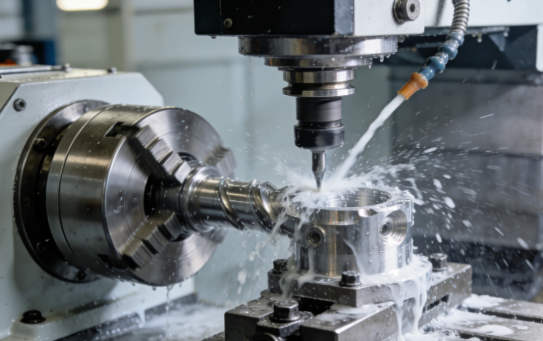
What CNC On Demand Actually Means for Modern Manufacturing
Have you ever needed a precision CNC machined part but dreaded the lengthy setup times, minimum order quantities, and weeks of waiting? Traditional machining operations were built around batch production, where economies of scale justified high tooling investments and long lead times. But what if you only need five parts, or even just one prototype?
This is exactly the problem CNC on demand solves. Unlike conventional manufacturing, this model produces parts only when ordered and in the exact quantities required. There are no massive inventory stockpiles, no minimum batch requirements, and no months-long waits for tooling development.
CNC on demand is a manufacturing system where precision machining occurs only when needed, transforming physical molds into digital models and shifting from capital-intensive, long-cycle production to a capital-light, fast-response manufacturing approach.
The Shift From Batch Production to Flexible Manufacturing
Traditional CNC manufacturing follows a predictable pattern. A company invests heavily in dedicated fixturing, programs machines for specific parts, and then produces large quantities to spread those fixed costs across thousands of units. This works beautifully for stable, high-volume products but creates serious barriers for innovation and small-scale projects.
The on-demand model flips this equation entirely. Instead of physical tooling dictating what you can make, digital CAD files drive production. Your 3D model becomes the "mold," and CNC machines translate that geometry directly into finished parts. According to Xometry, this approach eliminates the high investment required for mold development, meaning unit costs are no longer constrained by order volume.
Think of it this way: traditional machining asks "how many thousands do you need to justify setup?" while the on-demand CNC service asks "what do you need built today?"
How Digital Platforms Enable Instant Access to CNC Capacity
The real magic behind on-demand manufacturing lies in cloud-based platforms and distributed manufacturing networks. These digital systems connect your design files directly to available machine capacity, often spanning networks of thousands of qualified manufacturers worldwide.
Here's what happens when you engage with modern on-demand platforms:
- Instant quoting engines analyze your CAD geometry automatically, calculating material requirements, machining time, and complexity factors within minutes
- Design-for-manufacturability feedback identifies potential issues before production begins, saving costly revisions
- Distributed capacity routes your job to the best-suited CNC machine and facility for your specific requirements
- Real-time communication keeps you connected throughout the entire manufacturing process
This digital infrastructure compresses what once took weeks of phone calls, site visits, and manual quoting into a streamlined online experience. As noted by LS Manufacturing, production planning driven by digital files can compress supply chain response into hours rather than weeks.
The combination of advanced CAD technology and CNC capabilities has dramatically lowered barriers to precision cnc machining. Innovators who once needed large corporate budgets to prototype new products can now upload a design file and receive professional-grade machined parts in days. Whether you need rapid prototyping or low-volume production runs, on-demand platforms deliver the flexibility that modern product development demands.
The Complete On-Demand Manufacturing Workflow Explained
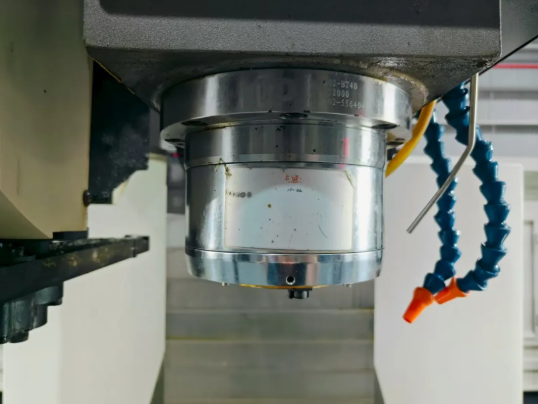
Now that you understand what makes CNC on demand fundamentally different from traditional manufacturing, you're probably wondering: how does this actually work in practice? The good news is that modern online cnc machining services have streamlined the entire journey into a remarkably efficient process. From the moment you upload your design file to when finished cnc machining parts arrive at your door, each step is designed to minimize friction and maximize precision.
From CAD File to Finished Part in Five Steps
Imagine having a detailed roadmap that guides your project from concept to reality. That's exactly what the on-demand workflow provides. Whether you're ordering a single prototype or a batch of machined parts, the process follows a consistent sequence that ensures quality and predictability.
- Design File Submission: Everything starts with your CAD files. Most platforms accept STEP (.step/.stp) and IGES (.iges/.igs) formats as industry standards because they preserve critical geometric data like curves, hole diameters, and surface definitions. While STL files work for 3D printing, they're generally not ideal for CNC machining since they approximate surfaces using triangles, which can result in lost detail. Always accompany your 3D model with a 2D technical drawing in PDF format that includes critical tolerances and surface finish requirements.
- Automated Quoting and DFM Review: Within minutes of upload, sophisticated algorithms analyze your geometry to calculate material requirements, machining time, and complexity factors. Simultaneously, the system flags potential manufacturability concerns. You'll receive a cnc quote online that breaks down costs by material, process, finishing, and lead time.
- Order Confirmation and Programming: Once you approve the quote and confirm material selection, CAM engineers generate optimized toolpaths. For complex 3D surfaces, multi-axis machining strategies may be employed to improve precision and surface finish while minimizing tool changes and cycle time.
- Machining and Quality Inspection: Your cnc machine parts are produced using appropriate equipment—milling, turning, or specialized processes depending on geometry. Each operation follows inspection checklists, with dimensional verification using micrometers, calipers, or coordinate measuring machines (CMM) to ensure every feature meets specification.
- Finishing and Shipping: If specified, parts move to secondary operations like anodizing, bead blasting, or plating. Finished components are cleaned, packaged with anti-corrosion protection, and dispatched with tracking information for real-time visibility.
Understanding the Automated Quote and DFM Review Process
The automated quoting engine does more than calculate prices—it serves as your first quality checkpoint. When you submit online machining quotes requests, the system evaluates your design against manufacturing constraints in real-time. This Design for Manufacturability (DFM) feedback identifies issues before they become expensive problems on the shop floor.
Common DFM considerations include:
- Wall thickness too thin to machine without flexing or breaking
- Internal corners that require tool radius accommodation
- Undercuts that may need special fixturing or 5-axis capability
- Tolerances tighter than standard machining can achieve cost-effectively
What file submission errors should you avoid? Based on common issues machining providers encounter, watch out for these pitfalls:
| Common Error | Why It Matters | How to Prevent It |
|---|---|---|
| Missing units specification | Scaling errors can result in parts 25x too large or small | Always confirm units (mm or inches) before export |
| Open surfaces or gaps in geometry | CNC software can't generate valid toolpaths | Run geometry checks in your CAD software |
| Unspecified tolerances | Machinists apply generic defaults that may not meet your needs | Include a 2D drawing with critical dimensions called out |
| Text left as live fonts | Fonts may not translate correctly to machining paths | Convert all text to outlines or vectors |
| Over-complicated models | Features that can't be machined waste engineering review time | Design with CNC constraints in mind from the start |
Taking a few extra minutes to verify your file preparation pays dividends in faster turnaround and fewer revision cycles. The beauty of on-demand platforms is that experienced engineers review flagged issues and often suggest practical alternatives—turning potential roadblocks into opportunities for design optimization before any chips fly.
Material Selection Guide for On-Demand CNC Projects
You've prepared your CAD file and understand the workflow—but before clicking that order button, there's a critical decision that shapes everything from part performance to final cost: material selection. Choosing the right material isn't just about picking what looks good on paper. It's about matching physical properties to real-world demands while keeping your budget in check.
On-demand CNC services typically offer dozens of metals and plastics, which can feel overwhelming. The key is understanding how each material behaves during aluminum machining, steel cutting, or plastic milling—and what trade-offs you're making with each choice.
Aluminum Alloys for Lightweight Precision Components
When engineers need parts with excellent strength-to-weight ratios and fast turnaround, aluminum alloys are often the first choice. They machine beautifully, resist corrosion naturally, and cost less than most alternatives. According to Hubs, Aluminum 6061 is the most common and lowest cost metal for CNC machining—making it the go-to option for prototypes and general-purpose components.
But not all aluminum is created equal:
- Aluminum 6061: The workhorse alloy with good machinability, weldability, and corrosion resistance. Perfect for enclosures, brackets, and structural components where extreme strength isn't critical.
- Aluminum 7075: When you need aerospace-grade performance, this alloy delivers. It can be heat treated to hardness levels comparable to steel, with excellent fatigue properties. The trade-off? Higher cost and slightly more challenging machinability.
- Aluminum 5083: Exceptional seawater resistance makes this ideal for marine applications and welded assemblies.
Both 6061 and 7075 can be anodized for enhanced durability or chromate plated for cosmetic applications—giving you flexibility in how finished parts look and perform.
Stainless Steel Options: From Free-Machining to Marine-Grade
When corrosion resistance and strength matter more than weight savings, stainless steel becomes the material of choice. However, the "stainless" family includes dramatically different grades suited for very different applications.
Material 303 stainless steel is engineered specifically for high-volume machining. Its composition includes sulfur additions that improve chip breaking and reduce tool wear, making it the fastest-cutting stainless option. You'll find it in aerospace fasteners, fittings, and shafts where machinability trumps maximum corrosion resistance.
Stainless steel 304 represents the most common general-purpose grade, offering excellent corrosion resistance and mechanical properties. It machines well and handles most environmental conditions without issue.
For harsher environments—think saltwater exposure or chemical processing—st steel 316L provides superior protection. The "L" designation indicates low carbon content, which improves weldability and further enhances corrosion resistance in chloride-rich environments.
Engineering Plastics and Their Machining Characteristics
Plastics offer compelling advantages over metals: lighter weight, natural electrical insulation, chemical resistance, and often lower machining costs. As Komacut notes, plastics generally have better machinability compared to metals due to their lower hardness and density—requiring less cutting force and enabling higher machining speeds.
Here are the engineering plastics you'll encounter most frequently:
- Delrin (POM/Acetal): The highest machinability among plastics, with excellent dimensional stability and low friction. Ideal for gears, bushings, and precision mechanical components.
- PEEK: A high-performance thermoplastic that often replaces metal in demanding applications. Outstanding chemical resistance, thermal stability to 250°C, and medical-grade options available.
- Nylon (PA): Machinable nylon offers good impact strength and abrasion resistance. Nylon for machining works well in structural applications, though it does absorb moisture over time, which can affect dimensions.
- Polycarbonate: Exceptional impact strength—better than ABS—with natural transparency. CNC polycarbonate parts appear in protective covers, optical housings, and automotive glazing.
- Acrylic (PMMA): When optical clarity matters, acrylic cnc machining delivers glass-like transparency with easier processing. Common in displays, light guides, and decorative components.
Material Comparison at a Glance
Selecting materials requires balancing multiple factors simultaneously. This comparison table consolidates key properties to help you evaluate options quickly:
| Material | Machinability Rating | Typical Applications | Relative Cost |
|---|---|---|---|
| Aluminum 6061 | Excellent | Enclosures, brackets, prototypes, general components | Low |
| Aluminum 7075 | Good | Aerospace structures, high-stress components | Medium |
| Stainless 303 | Excellent (for stainless) | Fasteners, shafts, high-volume parts | Medium |
| Stainless 304 | Good | Food equipment, medical devices, general industrial | Medium |
| Stainless 316L | Moderate | Marine hardware, chemical processing, implants | Medium-High |
| Brass C36000 | Excellent | Electrical connectors, valves, decorative hardware | Medium |
| Delrin (POM) | Excellent | Gears, bearings, precision mechanical parts | Low |
| PEEK | Good | Medical implants, aerospace, chemical equipment | High |
| Nylon 6/66 | Good | Structural components, wear parts, insulators | Low |
| Polycarbonate | Good | Protective covers, optical components, housings | Low-Medium |
Remember: the "best" material depends entirely on your application requirements. A part destined for a saltwater pump demands different properties than an aerospace bracket or a consumer electronics enclosure. Start by defining your must-have requirements—strength, weight, corrosion resistance, temperature range—then use this guide to narrow your options to candidates that check every critical box.
With material selection complete, the next consideration becomes equally important: what tolerances and surface finishes will your parts require, and how do those specifications affect both cost and lead time?
Tolerances and Surface Finishes in On-Demand Machining
You've selected your material—now comes a question that directly impacts both part functionality and your budget: how precise does this part actually need to be? Tolerance specifications might seem like technical minutiae, but they're often the single biggest factor determining whether your cnc machined parts cost $50 or $500.
Here's the reality: no machine produces identical results every single time. Temperature fluctuations, tool wear, material inconsistencies—these variables create small dimensional variations that are completely normal. Tolerances define the acceptable range of those variations, ensuring your parts fit together and function as intended.
Standard vs Tight Tolerances and When Each Applies
Think of tolerances as guardrails. Too wide, and parts won't fit or perform correctly. Too narrow, and you're paying for precision you don't actually need. The sweet spot depends entirely on your application.
According to American Micro Industries, CNC machining typically achieves tolerances of ±0.005" (0.127 mm) as a standard benchmark. Precision machining services can push tighter—±0.001" or better—when applications demand exceptional accuracy. But that capability comes with significant cost implications.
What's the practical difference? Consider this scenario: a tolerance of ±0.02" permits a range ten times wider than ±0.002". That seemingly small numerical change dramatically affects production complexity, inspection requirements, and ultimately your invoice.
| Tolerance Grade | Typical Range | Applications | Cost Impact |
|---|---|---|---|
| Standard (ISO 2768-m) | ±0.1 mm (±0.004") | General components, enclosures, brackets, non-mating surfaces | Baseline cost |
| Precision | ±0.05 mm (±0.002") | Mating parts, bearing housings, assembly interfaces | 30-50% increase |
| High Precision | ±0.025 mm (±0.001") | Aerospace components, medical devices, optical mounts | 2x baseline or more |
| Ultra-High Precision | ±0.01 mm (±0.0004") | Critical mating surfaces, instrumentation, metrology fixtures | 3-5x baseline |
As noted by Ecoreprap, tightening a tolerance from ±0.1 mm to ±0.01 mm can easily increase costs by three to five times—yet the performance benefit to your product may be negligible if that feature isn't functionally critical.
So when should you specify tight tolerances on precision machining parts? Focus on these scenarios:
- Mating surfaces: Where one part must fit precisely into another (bearings, pins, bushings)
- Sliding or rotating fits: Shafts in bearings, pistons in cylinders, where clearance affects performance
- Precision location features: Bolt hole patterns, dowel pin holes, alignment datums
- Sealing surfaces: Where dimensional accuracy prevents leaks
For everything else—cosmetic surfaces, non-critical dimensions, clearance holes—standard tolerances work beautifully and keep costs manageable. The golden rule? Design for function, not for impressive-sounding precision numbers.
How Tolerances Affect Pricing and Lead Time
Why does tighter precision cost more? The answer involves multiple compounding factors that manufacturers must address.
First, cnc milling parts requiring tight tolerances often need specialized tooling. Standard carbide cutters work fine for general machining, but achieving mirror-finish surfaces or ultra-precise dimensions may require diamond-coated tools, specialized endmills, or grinding operations—all significantly more expensive.
Second, inspection requirements escalate dramatically. Standard tolerance parts can be spot-checked with calipers and micrometers. Precision cnc machining services for tight-tolerance work often require Coordinate Measuring Machine (CMM) verification, which adds inspection time measured in minutes or even hours per part.
Third, machining itself slows down. Achieving tight tolerances typically demands slower cutting speeds, multiple finishing passes, and more conservative cutting parameters to minimize heat buildup and tool deflection. What might take 30 minutes at standard tolerance could require two hours at ultra-high precision.
The strategic approach? Apply tight tolerances surgically—only to features where function absolutely demands it. Use standard tolerances everywhere else. This hybrid approach delivers custom machined parts that perform exactly as needed without unnecessary cost inflation.
Surface Finish Options From Functional to Aesthetic
Beyond dimensional accuracy, surface finish affects both function and appearance. The texture left by machining operations—measured in Ra (roughness average) values—influences everything from friction and wear to visual appeal and coating adhesion.
As-machined surfaces from CNC operations typically range from Ra 1.6 to 3.2 μm, which works perfectly for most functional applications. But many projects require post-machining finishing operations to enhance performance or aesthetics.
- As-Machined: The natural surface left by cutting tools, showing visible tool marks. Cost-effective for functional parts where appearance isn't critical. Typical Ra 1.6-3.2 μm.
- Bead Blasting: Glass or ceramic beads create a uniform matte texture that hides tool marks and minor imperfections. Excellent for improved grip surfaces and paint preparation. Creates a satin-like appearance.
- Anodizing (Type II and Type III): Electrochemical process that grows a protective oxide layer on aluminum surfaces. Type II adds color options and moderate wear resistance. Type III (hard anodizing) provides superior hardness and abrasion resistance for demanding applications.
- Powder Coating: Electrostatically applied dry powder creates a durable, uniform finish available in virtually any color. Excellent for cosmetic parts requiring consistent appearance and environmental protection.
- Electroplating: Deposits thin metal layers—chrome, nickel, zinc, or gold—onto base materials. Options include decorative chrome for visual appeal, nickel for corrosion resistance, or zinc plating for cost-effective protection on steel parts.
- Brushing/Polishing: Mechanical finishing creates directional grain patterns (brushed) or mirror-like reflective surfaces (polished). Common for consumer products, architectural hardware, and medical instruments.
- Passivation: Chemical treatment for stainless steels that removes surface contamination and enhances natural corrosion resistance. Essential for medical and food-processing applications.
Keep in mind that finishing operations add both time and cost to your project. They also add material thickness in some cases—anodizing and plating deposit additional layers that can affect final dimensions. When tolerances are critical, coordinate with your manufacturer to ensure finishing allowances are factored into machining dimensions.
Selecting the right combination of tolerances and finishes transforms raw machining capability into parts that perform exactly as your application demands. But these specifications are just two pieces of a larger puzzle—understanding what drives overall pricing helps you make informed decisions that balance quality with budget reality.
Understanding CNC On Demand Pricing and Cost Factors
You've dialed in your material choice, specified tolerances, and selected surface finishes—but there's one question still nagging at you: how much to get a metal part made? Unlike retail purchases with fixed price tags, cnc machining price depends on a complex interplay of factors that can feel opaque if you don't understand what's happening behind the scenes.
Here's the honest truth that many manufacturers won't tell you upfront: on-demand CNC pricing isn't arbitrary, and it's not designed to confuse you. Every line item on your quote traces back to real resources—machine time, skilled labor, raw materials, and quality assurance. Understanding these drivers puts you in control, helping you make design decisions that deliver the performance you need without unnecessary cost inflation.
The Seven Factors That Determine Your CNC Quote
When you submit a design for quoting, sophisticated algorithms and experienced engineers evaluate your part against multiple cost drivers simultaneously. Each factor contributes to your final price in predictable ways—once you know what to look for.
- Material Selection and Usage: Raw material cost forms your pricing foundation. According to Komacut, material choice significantly impacts both cost and machining process. Aluminum machines quickly and costs less per kilogram than stainless steel or titanium. But material cost isn't just about price per pound—harder materials like stainless steel and titanium require more time, cause greater tool wear, and demand specialized tooling, all of which compound expenses beyond raw material pricing.
- Part Complexity and Geometry: Complex designs with intricate details, deep pockets, thin walls, or undercuts require more sophisticated machining strategies. Features that demand frequent tool changes, specialized cutters, or multi-axis approaches add cycle time and programming effort. Simple geometries machine faster with standard tooling—translating directly to lower costs for your cnc parts.
- Tolerance Requirements: As discussed earlier, tighter tolerances demand slower machining speeds, additional finishing passes, and more rigorous inspection protocols. Standard tolerances keep costs reasonable; ultra-precision requirements can multiply your quote significantly.
- Quantity Ordered: Setup costs—machine preparation, fixture installation, tooling selection, and program loading—remain relatively fixed regardless of whether you order 1 part or 100. Komacut explains that larger quantities spread these fixed setup costs across more units, reducing per-part expenses through economies of scale. However, on-demand manufacturing specifically excels when you don't need thousands of parts to justify production.
- Lead Time Requirements: Need parts tomorrow instead of next week? Expedited orders typically command premium pricing. Rush jobs may require overtime labor, interruption of scheduled production, or priority shipping—all adding cost. Standard lead times allow manufacturers to optimize scheduling and batch similar operations.
- Machine Type Required: A straightforward part suitable for 3-axis milling costs less than complex contours requiring 5-axis capability. As Komacut notes, CNC turning is generally faster and more cost-effective than milling for producing round shapes. Matching the right machine type to your geometry optimizes both cost and quality.
- Finishing Operations: Secondary processes—anodizing, plating, powder coating, heat treatment—each add time, materials, and specialized handling to your project. According to Fathom Manufacturing, secondary operations such as deburring, heat treating, plating, and painting can significantly inflate your CNC machining costs. Consider whether each finishing step truly adds value to your application.
Design Decisions That Drive Costs Up or Down
Here's where you gain real leverage: many cost factors are directly influenced by design choices you control. Smart optimization during the design phase—before you ever request a quote—can dramatically reduce metal machining expenses without sacrificing function.
What drives costs up? According to Fathom Manufacturing, complex parts requiring detailed machining naturally take longer to complete, increasing cycle time and driving up costs. Similarly, harder or more exotic materials increase tool wear and machining time. Overly tight tolerances require longer cycle times and additional operations. And finishing steps add labor, time, and materials to every single part.
What brings costs down? The same source identifies proven strategies:
- Select appropriate materials: Choose materials that meet specifications without overengineering. If aluminum delivers adequate strength, don't default to stainless steel simply because it seems "better."
- Simplify part geometry: Eliminate unnecessary features, reduce pocket depths where possible, and use standard radii that match common tool sizes. Fewer machining operations mean faster production.
- Standardize designs: Where possible, utilize existing component designs that can serve multiple products. Reusing proven geometries leverages economies of scale across your portfolio.
- Avoid overly tight tolerances: Apply precision specifications only where function demands them. Generic surfaces and clearance features perform perfectly at standard tolerances.
- Consolidate or eliminate finishing: Could a different material eliminate the need for protective coating? Can you accept as-machined surfaces on non-visible areas?
Small cnc machining projects especially benefit from these optimizations. When ordering 5-50 parts, every dollar saved per unit multiplies meaningfully across your batch.
When On-Demand Makes Economic Sense
A question worth asking: when does on-demand CNC actually save money compared to traditional metal parts manufacturing approaches?
Traditional manufacturing excels at high volumes where setup costs amortize across thousands or millions of units. If you need 50,000 identical brackets, dedicated tooling and batch production almost certainly wins on per-unit cost.
But on-demand shines in scenarios traditional manufacturing handles poorly:
- Prototyping and development: When you're iterating designs rapidly, paying for custom metal parts in small quantities without tooling investment accelerates innovation.
- Low-volume production: Products with annual demands in the tens or hundreds don't justify traditional setup investments.
- Bridge manufacturing: Need parts now while production tooling is still being developed? On-demand fills the gap.
- Spare parts and legacy support: Maintaining small-quantity capability for products no longer in active production.
- Design variations: When you need similar parts with small differences, digital manufacturing adapts instantly without retooling.
The crossover point varies by part complexity and material, but aPriori research confirms that low-volume production runs significantly increase per-unit costs with traditional manufacturing methods—exactly where on-demand excels.
Understanding these pricing dynamics transforms you from a passive buyer into an informed partner who can optimize designs, set realistic budgets, and make strategic decisions about when on-demand manufacturing delivers the best value. Next, we'll explore how different machine configurations—3-axis, 5-axis, and turning—affect your options for translating designs into finished parts.
Matching Machine Capabilities to Your Part Requirements
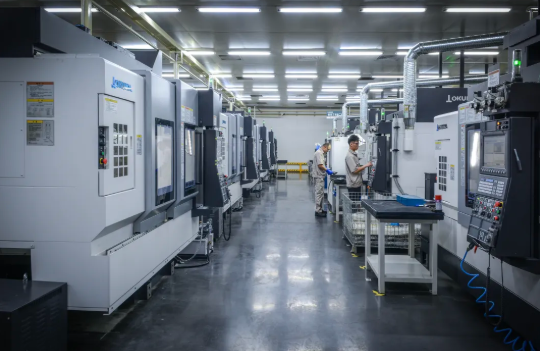
You've optimized your design, selected materials, and understand what drives costs—but there's still a fundamental question that shapes everything: which type of CNC machine should actually make your part? This isn't a trivial choice. The right machine configuration means faster production, better surface quality, and lower costs. The wrong one can mean impossible geometries, unnecessary setups, or inflated quotes.
On-demand platforms handle this routing automatically behind the scenes, but understanding the logic helps you design smarter parts and set realistic expectations. Whether your geometry calls for cnc machining milling operations or a dedicated cnc turning service, matching capabilities to requirements is where manufacturing efficiency begins.
3-Axis vs 5-Axis Milling and Choosing the Right Approach
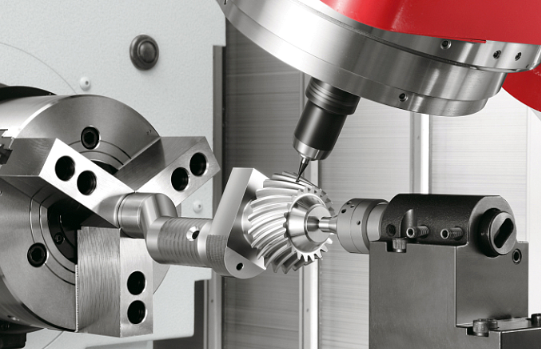
Imagine approaching your workpiece from only three directions: left-right, front-back, and up-down. That's essentially what 3-axis milling offers. The cutting tool moves along X, Y, and Z axes while the workpiece remains fixed on the machine bed. Simple? Yes. Limited? Sometimes.
According to AMFG, a 3-axis CNC machine operates along three directions, making it well-suited for simpler, flat, and less intricate cuts. Think rectangular plates, straightforward molds, and components where all critical features face upward. For many parts—brackets, enclosures, simple housings—3-axis capability delivers excellent results at baseline costs.
But what happens when your design includes angled surfaces, undercuts, or complex contours that can't be reached from directly above? This is where 5-axis cnc machining services become essential.
A 5-axis machine adds two rotational axes (typically labeled A and B) that allow the cutting tool or workpiece to tilt and swivel during machining. As AMFG explains, this capability empowers machines to approach the workpiece from diverse angles, achieving superior precision in manufacturing sculpted surfaces like aerospace components or intricate medical implants.
Why does this matter for your projects? Consider these practical differences:
- Setup reduction: Parts requiring multiple orientations on a 3-axis machine can often be completed in a single setup on 5-axis equipment. Fewer setups mean faster turnaround and improved accuracy since repositioning introduces potential alignment errors.
- Surface quality: 5-axis machines maintain optimal tool engagement angles throughout complex curves, producing smoother finishes without the "stair-stepping" that can occur when 3-axis machines approximate curved surfaces.
- Undercut access: Features hidden beneath overhanging geometry become reachable when the tool can approach from virtually any angle.
- Tool length optimization: Shorter, more rigid tools can reach deep features when the workpiece tilts toward the cutter—reducing vibration and improving accuracy.
The trade-off? 5-axis machines command higher hourly rates due to equipment cost, programming complexity, and operator expertise requirements. For straightforward geometries, you're paying premium rates for capability you don't need.
How do you decide? If your part can be fully machined from one direction (or with simple flip operations), 3-axis milling likely offers the best value. If your geometry includes compound angles, organic surfaces, or features requiring tool access from multiple directions simultaneously, 5-axis capability becomes worth the investment.
When CNC Turning Outperforms Milling Operations
Here's a scenario many designers overlook: you need a cylindrical shaft with precise diameters and some threading. You could mill it—slowly rotating an endmill around the circumference while the workpiece sits stationary. Or you could turn it—spinning the workpiece itself while a stationary cutting tool shapes the exterior in a fraction of the time.
CNC turning services fundamentally reverse the machining dynamic. According to 3ERP, in CNC turning the workpiece rotates while a stationary single-point cutting tool shapes the surface—making turning ideal for cylindrical, tubular, or conical shapes like shafts, pins, and bushings.
Why is turning faster for round parts? The physics are remarkably efficient. A rotating workpiece presents continuous cutting engagement as the tool traces along its length. Milling the same geometry requires the cutter to orbit around the circumference, engaging material intermittently and requiring far more passes to achieve the same result.
Modern CNC turning centers have evolved far beyond simple lathes. Many now incorporate live tooling—rotating cutters mounted in the turret—enabling milling operations, cross-drilling, and off-axis features without transferring the part to a separate machine. This hybrid capability produces cnc turning parts with both rotational and prismatic features in a single setup.
When should you specify turning over milling?
- Cylindrical primary geometry: If your part's dominant shape is round—pins, rollers, bushings, threaded rods—turning delivers that geometry most efficiently.
- Concentricity requirements: Features that must be precisely centered on a rotational axis achieve better accuracy when machined while spinning on that same axis.
- High-volume round parts: Bar-fed turning centers can produce parts continuously with minimal operator intervention, driving down per-unit costs for production quantities.
- Threading operations: Both internal and external threads cut efficiently on turning equipment with specialized tooling and programmed feed rates.
For cnc aluminum parts with rotational symmetry, turning often reduces cycle times by 50% or more compared to milling approaches—translating directly to lower quotes and faster delivery.
Machine Type Comparison at a Glance
Selecting the right machine type becomes straightforward when you match capabilities to your part's specific demands. This comparison summarizes the key decision factors:
| Machine Type | Axes of Motion | Best Suited For | Typical Applications | Relative Cost |
|---|---|---|---|---|
| 3-Axis Mill | X, Y, Z linear | Flat surfaces, simple pockets, through-features accessible from above | Brackets, plates, enclosures, basic molds | Baseline |
| 5-Axis Mill | X, Y, Z linear + A, B rotational | Complex contours, undercuts, multi-angle features, organic surfaces | Aerospace components, medical implants, turbine blades, sculptural forms | 1.5-2x baseline |
| CNC Lathe/Turning Center | X, Z linear (+ C, Y with live tooling) | Cylindrical and conical shapes, concentric features, threading | Shafts, pins, bushings, fittings, threaded components | Often lower than milling for round parts |
| Mill-Turn Hybrid | Combined milling and turning axes | Parts requiring both rotational and prismatic features | Flanged shafts, valve bodies, complex automotive components | Premium, but eliminates multiple setups |
How On-Demand Platforms Route Your Jobs
When you upload a CAD file to an on-demand platform, sophisticated algorithms analyze your geometry against available manufacturing capacity. The system evaluates feature types, dimensional requirements, material selection, and quantity to determine optimal routing.
This automated matching considers factors you might not think about: which facilities have your specified material in stock, which machine configurations can achieve your tolerance requirements, and which shops have capacity for your timeline. The result? Your job routes to equipment genuinely suited for your part—not simply the first available machine.
Understanding these routing decisions helps you design more manufacturable parts. A shaft with a few milled flats routes differently than a complex aerospace bracket with compound curves. By aligning your geometry with machine capabilities from the start, you enable efficient routing that minimizes cost and lead time.
With machine selection demystified, the next piece of the puzzle becomes equally critical: how long will your parts actually take to arrive, and what factors accelerate or delay that timeline?
Lead Times and Scaling From Prototypes to Production
You've selected the right machine, optimized your design, and submitted your order—now comes the question every engineer asks: when will my parts actually arrive? Lead time expectations in CNC on demand can range from surprisingly fast to frustratingly long, depending on factors both within and outside your control.
The good news? Understanding what drives turnaround times puts you in a position to plan effectively and even accelerate delivery when projects demand urgency. And beyond individual orders, on-demand manufacturing offers something traditional methods struggle to match: a seamless pathway from single cnc prototype validation to low-volume production runs without retooling delays.
Factors That Accelerate or Delay Your Delivery
Lead time in CNC machining is rarely determined by one single factor. According to Miens Tech, it's the combined effect of design complexity, material choices, machine capabilities, finishing requirements, and workflow management that determines how quickly parts move from order to shipment.
When you're planning project timelines, consider these primary drivers:
- Part Complexity: Simple geometries with standard features pass through production quickly. Complex designs requiring multiple setups, custom tooling, or multi-axis machining extend cycle times significantly. A straightforward bracket might ship in days; an intricate aerospace component could require weeks.
- Material Availability: Readily available metals like aluminum and common steels shorten lead times because stock is on-hand. Rare alloys, specialized engineering plastics, or exotic materials can introduce procurement delays adding days or even weeks before machining begins.
- Tolerance and Surface Requirements: Tighter tolerances and smoother surface finishes demand slower machining speeds, additional finishing passes, and more rigorous inspection protocols. What machines quickly at standard tolerance may require significantly more time at ultra-precision levels.
- Machine Setup and Tooling: Programming, tooling selection, and calibration must complete before cutting starts. Custom fixtures or specialized tooling extend preparation time, while standardized setups let production begin quickly.
- Production Capacity and Workload: If machines are booked or the shop operates at full capacity, your parts may wait in queue. High demand periods often stretch lead times beyond typical estimates.
- Secondary Operations: Heat treatment, anodizing, plating, or other finishing processes add time—especially when outsourced to external vendors. Depending on the process, these steps can extend delivery by days or weeks.
- Quality Inspection Requirements: Critical parts with tight tolerances or certification requirements undergo more rigorous inspection. While essential, these verification steps increase total lead time.
So what can you realistically expect? According to RapidDirect, standard lead times for most projects run approximately 5 business days, with simple parts delivered in as fast as 1 day. Expedited options exist for urgent projects but typically command premium pricing since they may require overtime labor or production schedule interruptions.
A proactive approach—designing for manufacturability, selecting available materials, and maintaining clear communication with your provider—goes a long way toward keeping projects on schedule.
Strategies for Managing Urgent Projects
Sometimes deadlines don't care about optimal planning. When you need rapid cnc prototyping or expedited production parts, several strategies can compress timelines:
- Simplify geometry where possible: Eliminating non-critical features reduces machining time and setup complexity.
- Choose readily available materials: Aluminum 6061 stocks universally; exotic alloys may require special ordering.
- Accept standard tolerances: Reserve tight specifications for truly critical features only.
- Minimize secondary operations: As-machined finishes ship faster than anodized or plated parts.
- Communicate urgency early: Providers can sometimes prioritize jobs when they understand timeline constraints upfront.
Keep in mind that rushing doesn't eliminate physics—complex parts still require appropriate machining time. But strategic design decisions combined with clear communication often shave days off delivery schedules.
Scaling From Prototype to Production Seamlessly
Here's where on-demand manufacturing truly differentiates itself: the transition from cnc prototype machining to low-volume production happens without the traditional barriers that once made scaling painful.
According to Ensinger Precision Components, successful prototype machining starts with clearly defined project requirements, moves through iterative validation to resolve potential issues, and transitions to production with careful planning to maintain quality and traceability.
The prototype machining services workflow typically follows this progression:
- Initial Prototype: Single units or small batches validate fit, form, and function. CNC machining prototyping allows rapid creation of functional parts for real-world testing without tooling investment.
- Design Iteration: Based on prototype testing, refine tolerances, adjust geometries, and optimize material selection. On-demand platforms accommodate these changes instantly since no physical molds require modification.
- Validation Batch: Slightly larger quantities confirm that refined designs perform consistently across multiple units. This stage catches manufacturing-related variations before full production commitment.
- Low-Volume Production: Once validated, scale to production quantities—typically 100 to 10,000 units depending on application—with consistent quality and full traceability across batches.
What makes this transition seamless? Unlike injection molding or casting, cnc machining prototyping uses the same fundamental process for one part or one thousand. Your validated CAD file and machining parameters transfer directly to production runs. There's no tooling lead time, no mold qualification, and no minimum order quantities forcing premature commitment to unproven designs.
Ensinger emphasizes that in-house quality assurance processes including CMM inspection and detailed documentation support this scale-up while ensuring consistency. Value-added services, assembly support, and inspection reports provide end-to-end capability for moving high-performance components from concept to production.
This flexibility proves especially valuable for product development teams iterating rapidly. You can test three design variations as single prototypes, select the winner based on real performance data, order a validation batch of 25 units for field testing, and scale to 500-unit production runs—all through the same platform with no manufacturing method changes.
The result? Faster time-to-market, reduced development risk, and capital efficiency that traditional manufacturing simply cannot match for low-to-medium volume applications.
With lead times and scaling strategies clear, another critical consideration emerges for many applications: what quality certifications should you look for, and what do they actually guarantee about the parts you'll receive?
Quality Certifications and Inspection Standards Explained
You've identified the right machine, optimized lead times, and planned your prototype-to-production pathway—but there's one more critical filter for selecting an on-demand CNC provider: quality certifications. When you're sourcing precision machining parts for aerospace, medical, or automotive applications, a supplier's certifications tell you more about their capability than any marketing claim ever could.
Why does this matter so much? According to American Micro Industries, formal certifications assure clients and stakeholders of a company's commitment to quality at every step. In CNC machining, the difference between an acceptable cnc machining part and a costly error can be as small as microns—and properly certified operators and processes support the precision and consistency that modern manufacturing demands.
What Quality Certifications Actually Guarantee
Certifications aren't just plaques on a wall. They represent documented systems, verified by independent auditors, that govern how a precision machining service operates daily. Each certification addresses specific industry requirements and regulatory expectations.
Understanding what each certification covers helps you match providers to your application's actual needs:
| Certification | Industry Focus | Key Requirements | What It Guarantees |
|---|---|---|---|
| ISO 9001:2015 | General manufacturing | Documented workflows, performance monitoring, corrective action processes | Consistent quality management across all operations |
| AS9100D | Aerospace and defense | Risk management, stringent documentation, product integrity control, supply chain traceability | Parts meet demanding aerospace safety and reliability standards |
| ISO 13485 | Medical devices | Design controls, manufacturing traceability, risk mitigation, complaint handling | Every medical component is safe, reliable, and fully traceable |
| IATF 16949 | Automotive | Continuous improvement, defect prevention, supplier oversight, production traceability | Consistent, defect-free parts meeting automotive quality demands |
| NADCAP | Aerospace special processes | Process-specific controls for heat treating, chemical processing, NDT | Specialized processes performed at the highest standard |
ISO 9001:2015 serves as the foundation for quality management. As American Micro Industries explains, this internationally recognized standard establishes clear procedures for every aspect of production—from customer focus and process approach to continual improvement and evidence-based decision-making. For cnc manufacturing shops, ISO 9001 implementation means documented workflows, monitored performance metrics, and systematic correction of any nonconformities.
AS9100D builds upon ISO 9001 with aerospace-specific requirements. This certification emphasizes risk management throughout complex supply chains and demands meticulous documentation that ensures every produced part meets exacting aerospace expectations. If you're sourcing components for aircraft, satellites, or defense systems, AS9100D certification is typically non-negotiable.
ISO 13485 addresses the unique demands of medical device manufacturing. Stainless steel machining for surgical instruments or implant components requires strict controls over design, manufacturing, traceability, and risk mitigation. Facilities holding this certification implement detailed documentation practices and thorough quality checks that satisfy regulatory bodies worldwide.
IATF 16949 represents the global standard for automotive quality management, combining ISO 9001 principles with sector-specific requirements for continuous improvement and defect prevention. Precision machining companies serving automotive OEMs must demonstrate robust product traceability and rigorous process control to meet qualification requirements.
Inspection Methods That Ensure Part Conformance
Certifications establish the framework—but inspection methods verify that every individual part actually meets specifications. Understanding these verification approaches helps you specify appropriate quality requirements for your projects.
- Coordinate Measuring Machine (CMM) Inspection: CMMs use precision probes to measure part geometry in three-dimensional space, comparing actual dimensions against CAD models with micron-level accuracy. For complex precision machining service requirements, CMM verification provides objective evidence that critical features fall within tolerance.
- First Article Inspection (FAI): Before production quantities ship, FAI comprehensively measures the initial part against all drawing specifications. This documented verification confirms that the manufacturing process produces conforming parts before committing to full production runs.
- Statistical Process Control (SPC): Rather than inspecting every part after machining, SPC monitors the manufacturing process in real-time to detect drift before defects occur. According to Competitive Production, SPC involves gathering and analyzing data to determine process capability, ultimately improving quality and reliability while reducing operating costs.
- Go/No-Go Gauging: For high-volume production, dedicated gauges provide rapid pass/fail verification of critical dimensions without time-consuming measurement procedures.
- Surface Finish Measurement: Profilometers quantify surface roughness (Ra values) to verify that finishing operations achieve specified texture requirements.
The power of SPC deserves special attention. A statistically capable process is one where the chance of producing an out-of-tolerance characteristic becomes quite remote. Competitive Production explains that the expectation with statistically capable processes is that tolerance should be 6, 8, 10, or 12 standard deviations from the nominal size—corresponding to capability levels (Cp) of 1, 1.33, 1.67, or 2. At a Cp of 1.33, a part characteristic has only one chance in approximately 16,000 of being out of tolerance when properly targeted.
For automotive applications specifically, the combination of IATF 16949 certification and robust SPC implementation ensures consistent quality across production volumes. This matters because automotive components often have hundreds of characteristics that must remain in specification—and any single out-of-tolerance feature renders the entire part non-conformant.
Facilities like Shaoyi Metal Technology demonstrate how certified on-demand manufacturing works in practice. Their IATF 16949-certified facility combines Statistical Process Control with precision machine shop services to deliver high-tolerance automotive components—from chassis assemblies to custom metal bushings—with the consistency that automotive supply chains demand.
Matching Certifications to Your Application
Not every project requires every certification. A consumer electronics enclosure doesn't need AS9100D aerospace compliance, and a decorative hardware component doesn't demand ISO 13485 medical traceability. Matching certification requirements to actual application needs prevents paying premium rates for unnecessary compliance overhead.
Consider these guidelines when evaluating precision machining companies:
- General industrial components: ISO 9001 certification provides confidence in consistent quality management
- Aerospace and defense parts: Require AS9100D certification; special processes may additionally need NADCAP accreditation
- Medical devices and implants: ISO 13485 certification is essential for regulatory compliance
- Automotive components: IATF 16949 certification demonstrates capability to meet OEM quality expectations
When reviewing potential providers, don't just check whether they hold relevant certifications—ask about their inspection capabilities, SPC implementation, and documentation practices. A certification represents a starting point; the depth of quality systems behind it determines whether your parts will consistently meet specifications.
Quality certifications and inspection standards provide essential assurance—but they don't eliminate all considerations when selecting an on-demand provider. Understanding the honest limitations and trade-offs of this manufacturing approach helps you make fully informed decisions about when on-demand CNC truly serves your needs best.
Limitations and Trade-offs of On-Demand CNC Manufacturing
We've covered the impressive capabilities of on-demand CNC—fast turnaround, no minimum orders, seamless prototyping-to-production transitions. But here's something many providers won't tell you upfront: this manufacturing model isn't the right answer for every situation. Understanding when on-demand excels and when traditional approaches make more sense helps you avoid costly mismatches between method and application.
Honest evaluation requires acknowledging that every manufacturing approach involves trade-offs. The flexibility that makes on-demand CNC powerful for low-volume projects becomes a limitation at scale. The digital platforms that enable instant quoting can't replicate every capability of dedicated production facilities. Let's examine these realities so you can make genuinely informed decisions.
When Traditional Manufacturing Still Makes Sense
On-demand manufacturing thrives in specific scenarios—but traditional methods retain clear advantages in others. According to Kemal MFG, unit cost at high volumes remains the biggest trade-off. On-demand platforms excel at small or medium batches, but as you scale into tens of thousands of parts, per-unit costs rise sharply compared to traditional mass production.
Consider these scenarios where conventional manufacturing typically wins:
- High-volume production runs: When you need 50,000 identical brackets, the economics shift dramatically. Traditional tooling investments spread across large quantities, driving per-unit costs far below what any on-demand approach can match. A metal cnc machine dedicated to your production run achieves efficiencies impossible with job-shop scheduling.
- Specialized materials not commonly stocked: On-demand providers maintain inventories of popular materials—aluminum 6061, common stainless grades, standard engineering plastics. But if your application demands exotic superalloys, specialized titanium grades, or unusual polymers, you may face extended lead times or discover your material simply isn't available through digital platforms.
- Extremely tight tolerances requiring dedicated fixturing: While on-demand services achieve impressive precision, tolerances below ±0.001" often require custom fixtures, environmental controls, and dedicated machine setups that don't fit the quick-turnaround model. Ultra-precision applications may need cnc machine for metal configurations specifically optimized for your part geometry.
- Parts requiring extensive secondary operations: Complex assemblies needing multiple heat treatments, specialized coatings, sub-assembly integration, or proprietary finishing processes often benefit from vertically integrated traditional manufacturers who control every step in-house.
- Stable, long-term production programs: When designs are frozen and demand is predictable over years, traditional manufacturing partnerships offer pricing stability and dedicated capacity that on-demand models can't replicate.
The crossover point varies by part complexity, but industry analysis suggests on-demand typically remains cost-effective below 1,500-3,000 units. Beyond that threshold, traditional production often takes over because tooling costs spread across enough parts to justify the investment.
Honest Trade-offs to Consider Before Ordering
Beyond the scenarios where traditional manufacturing wins outright, on-demand CNC involves practical limitations worth understanding before you commit to this approach.
- Per-unit costs at scale: The same flexibility that eliminates minimum order quantities means you don't benefit from volume efficiencies. Ordering 500 parts through on-demand typically costs more per unit than ordering 5,000 through traditional metal cnc machining with dedicated setups.
- Process and material constraints: According to Kemal MFG, process capabilities and material options can be narrower than in established manufacturing ecosystems. Not every on-demand supplier supports high-performance polymers, advanced surface finishes, or tight-tolerance machining requiring specialized metal cnc machines.
- Supply chain dependencies: While digital workflows shorten quoting and scheduling, raw material shortages, regional capacity limits, or logistics delays can still disrupt delivery—especially when sourcing from multiple countries or during high-demand periods.
- Design discipline requirements: Rapid iteration is powerful, but frequent design revisions without clear version control risk inconsistent parts across batches. On-demand enables speed; it doesn't eliminate the need for engineering rigor.
- Inspection and validation complexity: For regulated industries requiring extensive documentation, first article inspections, or process validation, on-demand platforms may need supplementary verification steps that add time and cost compared to established supplier relationships.
- Communication layers: As IQS Directory notes, the use of third-party service providers creates an extra layer that can lead to misinterpretation of technical requirements, especially if the intermediary lacks deep knowledge of your specific application or target industry.
The Learning Curve for Design Optimization
Successfully leveraging on-demand CNC requires understanding Design for Manufacturability principles—and that knowledge doesn't come automatically. Engineers accustomed to traditional supplier relationships may need to develop new skills around file preparation, tolerance specification, and geometry optimization.
Common learning curve challenges include:
- Understanding which file formats preserve critical geometric data versus those that lose precision
- Learning to specify tolerances strategically rather than applying blanket precision requirements
- Recognizing features that dramatically increase machining time and cost
- Adapting designs to match available machine capabilities rather than idealized geometries
The platforms themselves help—automated DFM feedback flags many issues before production. But the most cost-effective results come from designers who internalize these constraints during the design phase rather than relying on post-upload corrections.
None of these limitations invalidate the on-demand approach. They simply define its optimal application space. When you need rapid prototyping, low-volume production, design flexibility, or bridge manufacturing while tooling develops—on-demand CNC delivers genuine advantages. When you need mass production economics, exotic materials, or ultra-specialized processes, traditional manufacturing may serve you better.
The smartest approach? Evaluate each project individually against these trade-offs. Many successful manufacturers use hybrid strategies—on-demand for development and low-volume needs, traditional production for high-volume stable products. Understanding both options empowers you to choose the right tool for each specific job.
Choosing the Right On-Demand CNC Partner for Your Projects
You've navigated material selection, understood tolerance trade-offs, and honestly assessed when on-demand manufacturing fits your needs. Now comes the practical question: how do you actually evaluate providers and place your first successful order? Whether you're searching for cnc services near me or considering overseas manufacturing partners, the evaluation criteria remain remarkably consistent.
Choosing the right partner isn't just about finding the lowest quote. According to 3ERP, selecting a CNC machining service involves more than comparing prices—it requires thorough evaluation of experience, equipment, certifications, lead times, and communication effectiveness. The right provider becomes a trusted manufacturing extension of your team; the wrong one creates costly headaches that far exceed any initial savings.
Key Criteria for Evaluating On-Demand CNC Providers
Before committing to any provider—whether a cnc machine shop near me or an international manufacturing network—systematically evaluate these critical factors:
- Material Range and Availability: Does the provider stock the materials you need? According to 3ERP, not all CNC machining services will have the exact material you require, and delays in sourcing can extend lead times and increase production costs. Confirm that your preferred metals or plastics are readily available rather than special-order items.
- Relevant Certifications: Match certification requirements to your application. ISO 9001 suffices for general industrial components, but aerospace parts demand AS9100D, medical devices require ISO 13485, and automotive applications need IATF 16949. As RALLY Precision emphasizes, always verify that certifications are issued by recognized bodies and remain currently valid.
- Technical Capabilities: Review their equipment list. Can they handle your geometry with appropriate machine configurations? Do they offer the tolerance levels your application demands? RALLY Precision recommends confirming that suppliers can consistently hold tolerances within ±0.01 mm or better for precision applications.
- Communication Quality: Pay attention to response times and clarity during the quoting process. Fast, detailed RFQ responses indicate organized operations and reliable project management. Vague answers or delayed replies often predict problems during production.
- DFM Support: Does the provider offer proactive design feedback? According to RALLY Precision, an experienced engineering team should spot unnecessary undercuts, excessive tolerances, or difficult-to-machine features—proposing changes that reduce tool changes, scrap rates, and total lead time.
- Geographic Considerations: Location affects shipping costs, lead times, and communication ease. Local providers offer faster delivery and lower freight expenses, but overseas partners may provide cost advantages that justify additional shipping time. Evaluate total landed cost rather than just unit pricing.
- Quality Control Processes: Ask about inspection capabilities—CMM measurement, first article inspection, and in-process checks. Providers who track defect rates and maintain calibrated equipment demonstrate quality discipline that translates to reliable parts.
- Scalability: Can the provider grow with your needs? A partner capable of handling both prototype quantities and low-volume production eliminates the disruption of switching suppliers as your project matures.
For automotive applications specifically, the combination of IATF 16949 certification and fast turnaround capability becomes especially critical. Providers like Shaoyi Metal Technology exemplify this combination—offering lead times as fast as one working day for precision automotive components including chassis assemblies and custom metal bushings, backed by certified quality systems and Statistical Process Control.
Practical Tips for Your First On-Demand Order
Ready to place your first order? These practical steps help ensure a smooth experience from file submission to part delivery.
Prepare Your Files Correctly: Export CAD files in STEP or IGES formats that preserve geometric accuracy. Include a 2D drawing in PDF format specifying critical tolerances, surface finish requirements, and any special notes. Verify units (millimeters or inches) before upload—scaling errors remain one of the most common and frustrating mistakes.
Specify Requirements Clearly: Don't assume anything is obvious. Call out critical dimensions explicitly. Identify datum surfaces for inspection reference. Note any features requiring tight tolerances versus those acceptable at standard specifications. Clear communication upfront prevents expensive misunderstandings later.
Start With a Trial Order: According to RALLY Precision, beginning with a trial order or small-volume production run lets you test the supplier's lead time, quality control, and communication without taking major risks. If they perform well under low pressure, they're more likely to scale reliably for higher volumes.
Request Samples or Case Studies: Before committing to critical projects, ask to see sample parts from similar applications. Inspect surface finish, dimensional accuracy, and overall machining quality. Providers confident in their capabilities welcome this scrutiny.
Understand Lead Time Commitments: Confirm realistic delivery expectations based on your part complexity and quantity. If timeline is critical, discuss expedite options and associated costs upfront rather than discovering constraints after order placement.
Establish Communication Protocols: Identify your point of contact for technical questions. Understand how progress updates will be communicated. Clear channels prevent projects from drifting without visibility.
If you've been searching for machining services near me or a cnc shop near me, remember that geographic proximity isn't the only factor. A responsive international provider with proven quality systems may deliver better results than a local shop lacking appropriate certifications or equipment. Evaluate total capability—technical, quality, and communication—rather than location alone.
The custom cnc machining services landscape offers more options than ever before. Digital platforms have democratized access to precision manufacturing that once required extensive industry connections and large purchase commitments. By applying the evaluation criteria and practical tips outlined here, you're positioned to select partners who deliver quality parts on schedule—transforming your designs into reality with the speed and precision that modern product development demands.
Frequently Asked Questions About CNC On Demand
1. What is the hourly rate for a CNC machine?
CNC machining hourly rates vary significantly based on machine type and complexity. 3-axis machines typically cost $25-$50 per hour, while 5-axis machines command $75-$120 per hour due to advanced capabilities. Factors affecting rates include material hardness, tolerance requirements, and geographic location. On-demand platforms often provide instant quotes based on your specific part geometry rather than hourly rates, giving you transparent pricing upfront.
2. How long does on-demand CNC machining take?
Standard lead times for on-demand CNC projects run approximately 5 business days, with simple parts delivered in as fast as 1 day. Factors affecting delivery include part complexity, material availability, tolerance requirements, and finishing operations. Expedited options exist for urgent projects at premium pricing. Certified providers like Shaoyi Metal Technology offer lead times as fast as one working day for precision automotive components.
3. What file formats are accepted for CNC on demand services?
Most on-demand CNC platforms accept STEP (.step/.stp) and IGES (.iges/.igs) files as industry standards because they preserve critical geometric data. Always accompany your 3D model with a 2D technical drawing in PDF format specifying critical tolerances and surface finish requirements. STL files work for 3D printing but are generally not ideal for CNC machining since they approximate surfaces using triangles.
4. What materials are available through on-demand CNC services?
On-demand CNC services typically offer dozens of metals and plastics. Common options include aluminum alloys (6061, 7075), stainless steels (303, 304, 316L), brass, copper, and engineering plastics like Delrin, PEEK, nylon, polycarbonate, and acrylic. Aluminum 6061 is the most common and lowest-cost metal, making it ideal for prototypes. Material selection impacts both cost and machining time significantly.
5. When does on-demand CNC make economic sense versus traditional manufacturing?
On-demand CNC excels for prototyping, low-volume production (under 1,500-3,000 units), bridge manufacturing, spare parts, and design variations. Traditional manufacturing wins for high-volume runs exceeding 50,000 parts, specialized materials not commonly stocked, extremely tight tolerances requiring dedicated fixturing, or stable long-term production programs. Many manufacturers use hybrid strategies—on-demand for development and traditional for high-volume products.