 Small batches, high standards. Our rapid prototyping service makes validation faster and easier —
  EN
EN


CNC Machined Parts Decoded: From Material Choice To Final Finish
Understanding CNC Machined Parts and Why They Matter
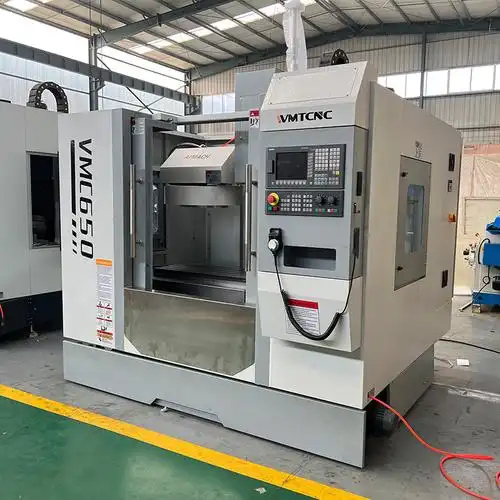
What exactly are CNC machined parts? Simply put, they are precision components created when a computer-controlled machine removes material from a solid block to achieve a specific shape. The term CNC stands for "computer numerical control," referring to the automated process that guides cutting tools with exceptional accuracy. Unlike traditional manual methods, a CNC machine follows digital instructions to transform raw materials—metals, plastics, wood, or composites—into finished components with complex geometries.
Think of it this way: where a skilled craftsman once relied on years of experience and steady hands, precision CNC machining now delivers repeatable results within tolerances as tight as ±0.005 inches (roughly twice the width of a human hair). This shift has opened doors for industries that demand consistency across thousands of identical parts.
From Digital Blueprint to Physical Reality
Ever wondered how a design on a computer screen becomes a physical object you can hold? The journey begins with CAD (Computer-Aided Design) software, where engineers create detailed 2D or 3D models complete with dimensions, tolerances, and material specifications. Once the design is finalized, it's exported to a CNC-compatible format.
Next, CAM (Computer-Aided Manufacturing) software takes over, translating the digital model into G-code—the language CNC machines understand. This code dictates every movement: where to cut, how fast to move, and when to change tools. After the operator loads the program and secures the raw material, the machining process begins automatically, carving away excess material until the finished part emerges.
The Precision Advantage Over Manual Methods
Why does this matter? Manual machining relies heavily on operator skill, which introduces variability. Two parts made by different machinists—or even by the same person on different days—might show slight differences. CNC machining eliminates this inconsistency.
Consider these key benefits:
- Repeatability: Produce hundreds or thousands of identical machined parts with minimal deviation.
- Complex geometries: Multi-axis machines can create intricate shapes impossible to achieve by hand.
- Reduced human error: Automated processes minimize mistakes caused by fatigue or miscalculation.
- Faster production: Once programmed, machines run continuously with minimal supervision.
CNC technology has democratized precision manufacturing—what once required master craftsmen and specialized facilities is now accessible to startups, small workshops, and global manufacturers alike.
Where CNC Machined Parts Live in Your World
You interact with CNC machined parts more often than you might realize. The smartphone in your pocket? Its aluminum housing was likely shaped by precision CNC machining. The car you drive contains engine components, transmission parts, and brake system elements—all produced through this process. Medical devices, from surgical instruments to implant components, depend on the accuracy only CNC machining can deliver.
Industries ranging from aerospace and automotive to electronics and healthcare rely on these components daily. Whether it's a titanium screw in an advanced prosthetic or a lightweight aluminum bracket in an electric vehicle, CNC machined parts form the backbone of modern technology—quietly enabling the products we depend on every day.
Five Essential CNC Machining Operations Explained
Now that you understand what CNC machined parts are, the next question becomes: how are they actually made? The answer depends on the geometry you need. Different operations excel at producing different shapes—and choosing the right one can mean the difference between a cost-effective production run and an expensive headache.
Five primary CNC machining operations dominate modern manufacturing. Each uses distinct tooling, motion patterns, and strategies to remove material. Understanding when to apply each technique helps you specify parts that are both manufacturable and economical.
CNC Milling for Complex 3D Geometries
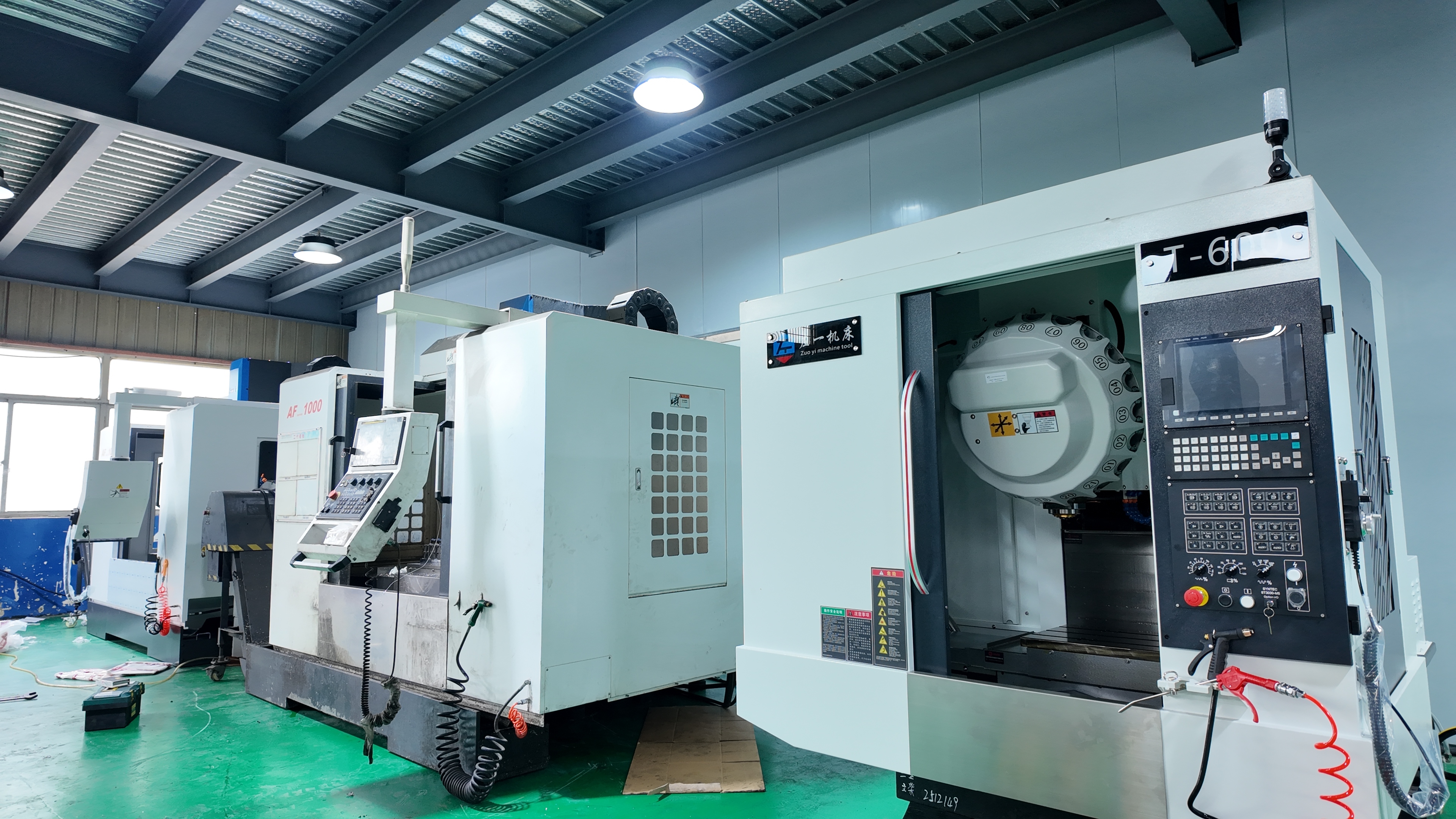
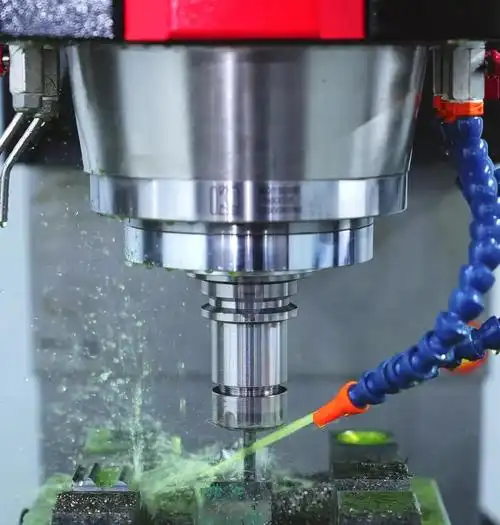
CNC milling is the workhorse of precision manufacturing. During this process, the workpiece remains stationary while rotating cutting tools—end mills, face mills, and drills—move along multiple axes to carve away material. Imagine a sculptor chipping away at a block of marble, except the sculptor is a computer-controlled spindle spinning at thousands of RPM.
What makes milling so versatile? It's all about axis movement. A standard 3-axis CNC cutting machine moves the tool left-right (X), front-back (Y), and up-down (Z). This handles flat surfaces, pockets, and simple contours with ease. But when parts demand angled features or undercuts, manufacturers turn to more advanced configurations.
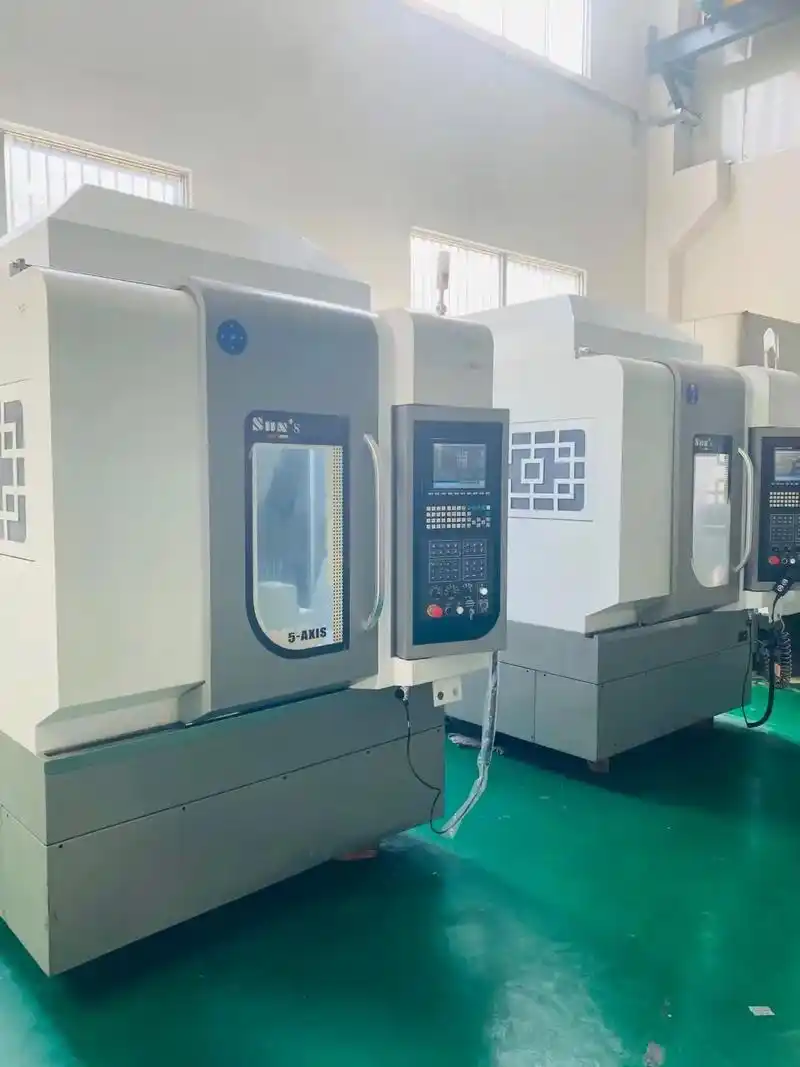
Modern CNC mills often feature 4 or 5 axes, adding rotational movement that allows the tool to approach the workpiece from virtually any angle. This capability proves essential for aerospace components, medical implants, and molds with complex curved surfaces. A CNC milled part from a 5-axis machine can emerge complete in a single setup—no repositioning required.
Typical applications include:
- Engine blocks and cylinder heads
- Aerospace structural components
- Custom tooling and fixtures
- Electronic enclosures and heat sinks
- Medical device housings
CNC Turning for Cylindrical Precision
Need a shaft, bushing, or threaded fastener? CNC turning is your answer. Unlike milling, this operation spins the workpiece itself while a stationary single-point cutting tool removes material. Picture a lathe from a woodworking shop—now add computer control and the ability to hold tolerances within thousandths of an inch.
A CNC turning service excels at producing rotationally symmetric parts. The workpiece mounts to a spindle chuck, spins at high speed, and the cutting tool traverses along the X and Z axes to create the desired profile. Operations like facing, boring, threading, grooving, and parting happen in sequence, often without manual intervention.
Why choose turning over milling for cylindrical parts? Speed and efficiency. Because the cutting action is continuous rather than intermittent, CNC turning typically achieves faster cycle times for round components. This translates to lower per-part costs in production runs.
Common turned parts include:
- Shafts and axles
- Bushings and sleeves
- Threaded fasteners and fittings
- Pulleys and rollers
- Valve components
CNC Drilling: Precision Hole-Making
While drilling might seem straightforward, CNC drilling elevates hole-making to a precise science. The process uses rotating drill bits to create cylindrical holes at exact locations, depths, and diameters. CNC control ensures every hole lands exactly where specified—critical when parts contain dozens or hundreds of fastener locations.
Beyond simple through-holes, CNC drilling handles counterboring, countersinking, and tapping operations. Many machining centers combine drilling with milling, switching tools automatically to complete complex parts without repositioning.
CNC Grinding: Ultra-Fine Surface Finishing
When tolerances tighten beyond what cutting tools can reliably achieve, CNC grinding steps in. This operation uses abrasive wheels to remove tiny amounts of material, achieving surface finishes and dimensional accuracy that milling and turning cannot match.
Grinding typically serves as a secondary operation, refining parts that have already been rough-machined. Hardened steels, which resist conventional cutting, often require grinding to reach final dimensions. Precision bearing surfaces, gauge blocks, and cutting tool blanks frequently undergo this process.
Multi-Axis Machining for Intricate Components
Here's where things get interesting. 5 axis CNC machining services represent the pinnacle of subtractive manufacturing capability. These machines move the cutting tool and workpiece through five simultaneous axes—three linear (X, Y, Z) plus two rotational (typically A and B).
What does this mean in practice? The tool can maintain optimal cutting angles throughout complex contours. Undercuts, compound curves, and features on multiple faces can all be machined in a single setup. According to Fictiv's technical documentation, while general CNC milling holds around ±0.05 mm (±0.002 in), 5-axis machining often achieves ±0.01–0.02 mm (±0.0004–0.0008 in) and can reach ±0.005 mm (±0.0002 in) for critical aerospace or medical components.
There's also a hybrid approach called 3+2-axis machining (or positional 5-axis). Here, the rotational axes position the workpiece at a fixed angle, then machining proceeds using only the three linear axes. This offers many benefits of true 5-axis capability—reduced setups, access to multiple faces—without the programming complexity of simultaneous motion.
Multi-axis machining shines for:
- Turbine blades and impellers
- Orthopedic implants with organic geometries
- Aerospace structural components
- Complex molds and dies
- Precision optical components
Comparing CNC Machining Operations
Choosing the right operation depends on your part's geometry, required tolerances, and production volume. The table below summarizes key differences:
| Operation Type | Best Applications | Typical Tolerances | Material Compatibility | Complexity Level |
|---|---|---|---|---|
| CNC Milling (3-axis) | Flat surfaces, pockets, simple contours | ±0.05 mm (±0.002 in) | Metals, plastics, composites, wood | Low to Medium |
| CNC Turning | Cylindrical parts, shafts, threaded components | ±0.025 mm (±0.001 in) | Metals, plastics, wood | Low to Medium |
| CNC Drilling | Precision holes, tapped features | ±0.05 mm (±0.002 in) | Metals, plastics, composites | Low |
| CNC Grinding | Ultra-fine finishes, hardened materials | ±0.005 mm (±0.0002 in) | Hardened metals, ceramics | Medium |
| 5-Axis Machining | Complex 3D geometries, undercuts, compound curves | ±0.01–0.02 mm (±0.0004–0.0008 in) | Metals, plastics, composites | High |
Keep in mind that many parts benefit from combining operations. A CNC turning service might rough-machine a shaft, then a grinding operation refines critical bearing surfaces. Complex housings often start on a 3-axis mill before moving to a 5-axis machine for detailed features. The key is matching each operation to what it does best—and that starts with understanding your part's specific requirements.
With machining operations covered, the next logical question becomes: what materials work best for each process? Material selection directly impacts machinability, achievable tolerances, and final part performance.
Material Selection Guide for CNC Machined Components
You've chosen your machining operation—now what? The material you select determines everything from cycle time and tool wear to final part performance. Pick the wrong one, and you'll face excessive machining costs, dimensional instability, or premature component failure. Choose wisely, and your parts will perform exactly as intended while keeping production efficient.
Think of material selection as a balancing act. You're weighing machinability (how easily the material cuts), mechanical properties (strength, hardness, wear resistance), environmental factors (corrosion, temperature exposure), and cost. Let's break down the options across three categories: easy-to-machine metals, engineering plastics, and specialty materials for demanding applications.
Metals That Machine Like Butter
Some metals practically beg to be machined. They produce clean chips, don't excessively wear cutting tools, and hold tight tolerances without drama. If you're looking for cost-effective production with reliable results, start here.
Aluminum 6061 sits at the top of nearly every CNC shop's material list. This precipitation-hardened alloy combines magnesium and silicon to deliver an excellent balance of strength, corrosion resistance, and machinability. According to Xometry's material specifications, aluminum 6061 offers excellent mechanical properties and weldability, making it the second most popular extruded aluminum alloy after 6063. Its applications span from structural aerospace components to everyday consumer electronics housings.
- Machinability: Excellent—produces short chips, minimal tool wear
- Strength: Moderate tensile strength; heat-treatable to improve performance
- Corrosion resistance: Good; anodizes well for enhanced protection
- Cost: Low to moderate; widely available
- Best for: Structural components, enclosures, brackets, heat sinks
Brass is another machinist's favorite. This copper-zinc alloy offers excellent freedom of cutting, meaning it machines smoothly with minimal effort. CNC bronze and brass components are common in plumbing fittings, electrical connectors, and decorative hardware. The material's natural corrosion resistance and low friction make it ideal for valve components and marine applications.
- Machinability: Exceptional—often used as the benchmark for rating other materials
- Strength: Moderate; renowned for durability
- Corrosion resistance: Excellent, especially in marine environments
- Cost: Moderate; recyclable without quality loss
- Best for: Fittings, bushings, electrical components, decorative parts
Free-machining steels like 12L14 contain additives (typically lead or sulfur) that improve chip formation and reduce tool wear. When bronze CNC parts won't meet strength requirements and aluminum lacks the necessary hardness, these steels offer a practical middle ground. They're common in high-volume production of pins, shafts, and fasteners where machining efficiency directly impacts profitability.
- Machinability: Very good—short chips, excellent surface finish
- Strength: Higher than aluminum or brass; suitable for structural loads
- Corrosion resistance: Poor without plating or coating
- Cost: Low to moderate
- Best for: High-volume production, pins, shafts, precision fasteners
Engineering Plastics for Lightweight Solutions
When weight savings matter—or when you need electrical insulation, chemical resistance, or self-lubricating properties—engineering plastics step in. These materials machine differently than metals, requiring adjusted speeds, feeds, and sometimes specialized tooling to prevent melting or deformation.
Delrin (polyoxymethylene/POM) earns its nickname "super steel" through exceptional mechanical properties that rival some metals. This delrin plastic offers high tensile strength, excellent dimensional stability, and a low friction coefficient that makes it perfect for gears, bearings, and sliding components. According to Jiahui Custom's technical comparison, delrin operates effectively between -60°C and 100°C with minimal thermal expansion—critical for precision applications.
- Machinability: Excellent—low friction enables tight tolerances and smooth surface finishes
- Strength: High rigidity and tensile strength; superior fatigue resistance
- Moisture absorption: Low (0.5%)—maintains dimensional stability in humid environments
- Cost: Higher than nylon, but justified by performance
- Best for: Gears, bearings, bushings, precision mechanical components
Nylon (polyamide) offers greater flexibility and impact resistance than delrin, making it ideal for applications subject to repeated stress or sudden loads. Machining nylon presents challenges due to its higher thermal expansion and moisture absorption (2-9%), which can cause dimensional changes. However, proper technique and conditioning mitigate these issues. Nylon for machining works well in tires, ropes, cable insulation, and industrial gears where toughness trumps dimensional precision.
- Machinability: Moderate—requires attention to thermal expansion and moisture content
- Strength: Good tensile strength with excellent elongation capability
- Moisture absorption: High (2-9%)—condition material before precision machining
- Cost: Lower than delrin; economical for large-scale production
- Best for: Impact-resistant parts, flexible components, wear surfaces
Polycarbonate (PC) combines optical clarity with exceptional impact resistance—it's what safety glasses and bulletproof windows are made from. This polycarbonate PC material machines well but requires care to avoid cracking or stress marks. Its transparency makes it popular for light covers, display components, and medical device housings where visibility matters.
- Machinability: Good—use sharp tools and moderate speeds to prevent cracking
- Strength: High impact resistance; shatter-proof
- Optical clarity: Excellent; often substitutes for glass
- Cost: Moderate
- Best for: Transparent covers, safety components, optical housings
Specialty Materials for Extreme Environments
Some applications demand what ordinary materials can't deliver. Extreme temperatures, corrosive chemicals, high stress-to-weight ratios—these conditions call for specialty materials that challenge even experienced machinists.
Titanium alloys (especially Ti-6Al-4V) offer an exceptional strength-to-weight ratio with outstanding corrosion resistance. Xometry's material data confirms that Ti-6Al-4V contains approximately 6.75% aluminum and 4.5% vanadium, providing more strength than pure titanium while maintaining similar thermal characteristics. The catch? Titanium work-hardens during cutting, demands rigid setups, and wears tools quickly. Expect higher machining costs—but for aerospace structures, medical implants, and high-performance racing components, there's often no substitute.
- Machinability: Difficult—requires specialized tooling, rigid setups, and slower speeds
- Strength: Excellent strength-to-weight ratio; biocompatible
- Corrosion resistance: Outstanding
- Cost: High—both material and machining
- Best for: Aerospace, medical implants, marine hardware, performance automotive
Inconel and nickel superalloys maintain their properties at temperatures that would soften most metals. Jet engine components, exhaust systems, and chemical processing equipment rely on these materials. Machining bronze may be straightforward, but Inconel fights back—it work-hardens aggressively and generates extreme heat during cutting. Only experienced shops with appropriate equipment should attempt these challenging alloys.
- Machinability: Very difficult—work-hardens rapidly, generates significant heat
- Strength: Maintains properties at elevated temperatures (up to 1000°C+)
- Corrosion resistance: Exceptional in oxidizing and reducing environments
- Cost: Very high
- Best for: Turbine components, exhaust systems, chemical processing
Technical ceramics offer hardness and temperature resistance beyond any metal, but they require diamond tooling and grinding rather than conventional cutting. These materials appear in cutting tool inserts, electrical insulators, and specialized wear components where nothing else survives.
Selecting the right material comes down to matching properties to requirements. Ask yourself: What loads will the part experience? What environment will it operate in? How tight are the tolerances? What's the budget? Answer these questions honestly, and the right material choice often becomes clear.
Of course, material selection doesn't exist in isolation. The tolerances you specify directly interact with material properties—and understanding that relationship helps you avoid both over-engineering and under-specifying your components.
Tolerance Specifications and Precision Capabilities Demystified
Here's a question that trips up even experienced engineers: how tight should your tolerances actually be? Specify too loose, and your parts won't fit together properly. Specify too tight, and you'll watch your manufacturing costs skyrocket—sometimes by 2x, 4x, or even 24x the baseline price.
Understanding tolerance specifications transforms you from someone who guesses at precision requirements into someone who specifies exactly what's needed—and nothing more. Let's decode the tolerance spectrum and help you make smarter decisions about your CNC machining parts.
Standard vs Precision vs Ultra-Precision Tolerances
Think of tolerances as a pyramid. At the base, you have standard tolerances that handle most applications economically. As you climb toward the peak, precision increases—but so do costs, lead times, and complexity.
Standard tolerances (±0.005" / ±0.13mm) represent the baseline for most CNC work. Parts with these specifications machine quickly, require no special equipment, and pass inspection with basic measuring tools like calipers and micrometers. For external surfaces, decorative features, and dimensions that don't affect fit or function, standard tolerances deliver excellent value.
Precision tolerances (±0.002" / ±0.05mm) step up the accuracy for features that matter. Mating surfaces, alignment holes, and assembly interfaces often fall into this category. According to industry data from Okdor, moving from standard to precision tolerances typically adds 15-30% to project costs—a reasonable premium when function demands it.
Tight tolerances (±0.001" / ±0.025mm) enter specialized territory. These specifications require slower cutting speeds, multiple finishing passes, and CMM (coordinate measuring machine) inspection. Expect costs to jump 3-4x compared to standard work. Precision machining parts at this level serve bearing seats, sealing surfaces, and critical assembly interfaces.
Ultra-precision tolerances (±0.0001" / ±0.0025mm) sit at the pyramid's peak. Achieving these specifications demands climate-controlled environments, specialized equipment, and intensive quality verification. The cost impact? According to manufacturing data, ultra-tight tolerances can increase prices by 10-24x over standard rates. Reserve these for aerospace, medical, and optical applications where nothing else will do.
How Material Choice Affects Achievable Accuracy
Here's something many designers overlook: the material you choose directly impacts what tolerances are realistically achievable. Two factors dominate this relationship—thermal expansion and machinability.
Thermal expansion causes materials to grow and shrink with temperature changes. Aluminum expands roughly twice as much as steel per degree of temperature change. For a precision CNC machining part measured at 68°F (20°C), a 10-degree temperature shift during inspection could push readings outside tolerance—even if the machining was perfect.
What does this mean practically? Tighter tolerances on aluminum require temperature-controlled machining and inspection environments. Plastics present even greater challenges, with thermal expansion rates 5-10x higher than metals. That delrin gear holding ±0.001" in the machine shop might measure differently on a hot warehouse floor.
Machinability affects how consistently a material cuts. Free-machining brass produces clean chips and smooth surfaces with minimal tool deflection—ideal for tight tolerances. Titanium and Inconel, by contrast, work-harden during cutting, generate excessive heat, and challenge even the most rigid setups. The same tolerance specification costs more and proves harder to achieve in difficult materials.
Consider these material-tolerance relationships:
- Aluminum 6061: Achieves tight tolerances readily; thermal expansion requires controlled environments for ultra-precision work
- Brass and bronze: Excellent dimensional stability; ideal for precision machining services requiring consistent results
- Stainless steel: Work-hardening increases difficulty; expect 40-60% longer machining times for tight tolerances
- Engineering plastics: High thermal expansion and moisture absorption limit practical precision without environmental controls
- Titanium: Achievable but expensive; requires specialized tooling and slower feeds
When Tight Tolerances Actually Matter
Here's the uncomfortable truth: engineers frequently over-specify tolerances "just to be safe." This habit can double machining costs during prototyping and add 25-40% to production budgets with no functional benefit.
So when do tight tolerances genuinely matter? Ask yourself: "What happens if this dimension varies by ±0.1mm?" If the answer involves assembly problems, poor fit, or functional failure, then precision is justified. If the answer is "nothing critical," standard tolerances save money without compromise.
Features that typically require tight tolerances:
- Mating surfaces where parts must fit together precisely (shafts in housings, connector interfaces)
- Sealing surfaces where leaks cannot occur (gasket grooves, O-ring channels)
- Moving components needing smooth operation (bearing seats, sliding mechanisms)
- Threaded connections where fit affects performance
Features that rarely need tight tolerances:
- External corners and decorative surfaces
- Mounting holes with clearance for fasteners
- Non-functional interior surfaces
- Cosmetic panels and enclosure walls
Real-world example: a medical device housing that jumped from $180 to $320 per unit when a customer tightened non-functional exterior tolerances from ±0.005" to ±0.001". After reviewing the design, precision was applied only to gasket grooves and connector cutouts—bringing costs back to $210 while maintaining full functionality.
Tolerance Ranges by Machining Type and Material
The following table provides practical guidance for specifying custom machined parts based on your operation and material selection:
| Tolerance Class | Typical Range | Cost Impact | Common Applications |
|---|---|---|---|
| Standard | ±0.005" (±0.13mm) | Baseline (1x) | External surfaces, non-critical dimensions, decorative features |
| Precision | ±0.002" (±0.05mm) | 1.5-2x | Mating surfaces, alignment features, assembly interfaces |
| Tight | ±0.001" (±0.025mm) | 3-4x | Bearing seats, sealing surfaces, critical fits |
| Ultra-Precision | ±0.0001" (±0.0025mm) | 10-24x | Aerospace interfaces, optical components, medical implants |
Timeline impacts follow similar patterns. Standard tolerance machining parts ship in 5-7 days, while tight tolerance work requires 10-14 days for careful machining and quality verification. Ultra-precision specifications can extend lead times to 14-21 days—a 200-300% increase.
The key insight? Apply precision strategically. Focus tight tolerances on the 10-20% of features that genuinely affect function, and let everything else follow standard specifications. This approach delivers the performance you need at a fraction of the cost of blanket precision requirements.
With tolerances understood, the next question becomes how different industries apply these principles. Aerospace, automotive, and medical sectors each bring unique certification requirements and precision expectations that shape manufacturing decisions.
Industry Applications from Automotive to Medical Devices
Different industries don't just use CNC machined parts differently—they demand entirely different quality systems, documentation requirements, and certification frameworks. What passes inspection in consumer electronics might fail catastrophically in aerospace or medical applications. Understanding these sector-specific requirements helps you communicate effectively with suppliers and ensure your parts meet regulatory expectations.
Three industries stand out for their rigorous standards: automotive, aerospace, and medical devices. Each has developed certification systems that define how manufacturers must operate, document processes, and verify quality. Let's explore what these certifications actually mean for your parts.
Automotive Components and IATF 16949 Requirements
When you need CNC machined parts for automotive applications, IATF 16949 certification becomes your quality benchmark. This global standard combines ISO 9001 foundations with automotive-specific requirements for continuous improvement, defect prevention, and supply chain management.
What makes IATF 16949 different from general quality certifications? It's the emphasis on Statistical Process Control (SPC). Certified facilities don't just inspect finished parts—they monitor every critical dimension throughout production, tracking trends that might indicate drift before defects occur. This proactive approach catches problems early, reducing scrap and ensuring consistency across production runs.
Key IATF 16949 requirements for CNC machining include:
- Production Part Approval Process (PPAP): Documented evidence that manufacturing processes can consistently produce parts meeting specifications
- Control plans: Detailed documentation of inspection points, frequencies, and reaction plans for out-of-spec conditions
- Measurement system analysis: Verification that gauges and inspection equipment provide reliable, repeatable results
- Traceability: Ability to track parts back to specific material lots, machines, and operators
- Continuous improvement: Documented processes for reducing variation and preventing recurrence of quality issues
For high-tolerance automotive components—from chassis assemblies to custom metal bushings—working with an IATF 16949 certified facility like Shaoyi Metal Technology ensures strict SPC protocols deliver consistent results, whether you need rapid prototyping or mass production volumes.
Aerospace Machining and AS9100D Standards
Aerospace cnc machining operates under even more demanding requirements. AS9100D certification builds upon ISO 9001 while adding aerospace-specific controls for risk management, configuration management, and product integrity throughout complex supply chains.
Why does aerospace machining require such rigorous oversight? When parts fail at 35,000 feet, the consequences are catastrophic. According to Snowline Engineering's technical documentation, AS9100D emphasizes data-driven product testing, robust monitoring of all production processes, and risk assessment of product designs and manufacturing methods.
The standard spans ten detailed sections covering everything from leadership responsibilities to continuous improvement protocols. For cnc machining aerospace components, Section VIII (Operation) proves particularly critical—it addresses product design, supplier management, material controls, and service provisions that ensure every part meets exacting specifications.
Critical AS9100D requirements include:
- First Article Inspection (FAI): Complete verification of the first production part against all drawing specifications
- Material certification: Documentation proving raw materials meet aerospace specifications (often requiring machining titanium or ceramic cnc machining capabilities)
- Special process controls: Accreditation for heat treating, plating, and other processes through NADCAP
- Configuration management: Tracking of design changes and their implementation across production
- Counterfeit part prevention: Controls ensuring only authentic, certified materials enter the supply chain
Medical Device Manufacturing Under ISO 13485
Medical machining introduces requirements that neither automotive nor aerospace fully address: biocompatibility and validation. ISO 13485 certification provides the quality management framework specifically designed for medical device machining, with emphasis on patient safety and regulatory compliance.
According to ISO 13485 Academy's technical guidance, the standard mandates process validation for any manufacturing step whose output cannot be fully verified through inspection. This becomes critical for medical device machining where some characteristics—like surface treatments affecting biocompatibility—cannot be measured without destroying the part.
The validation requirement extends to computer software used in production, sterilization processes, and sterile barrier systems. For CNC operations, this means documented proof that machines, programs, and processes consistently produce parts meeting specifications—not just inspection of finished products.
Essential ISO 13485 requirements for medical machining:
- Design and development controls: Documented verification that designs meet intended use requirements
- Process validation: Evidence that manufacturing processes consistently achieve planned results
- Traceability: Complete documentation linking finished devices to raw materials, processes, and personnel
- Complaint handling: Formal systems for investigating and addressing quality concerns
- Risk management: Systematic identification and mitigation of hazards throughout the product lifecycle
Understanding these certification frameworks helps you evaluate potential suppliers and ensure your parts receive appropriate quality oversight. But certifications only establish the system—smart design decisions determine whether your parts are actually manufacturable at reasonable cost. That's where Design for Manufacturability principles come into play.
Design for Manufacturability Best Practices
You've selected your material, specified tolerances, and chosen a qualified supplier. But here's what separates experienced engineers from novices: understanding how design decisions affect manufacturing cost and quality before production begins. Design for Manufacturability (DFM) principles help you optimize parts while they're still CAD models—when changes cost nothing.
Why does this matter? A poorly designed part might be technically manufacturable, but it could require special tooling, multiple setups, or extended cycle times that triple your costs. Worse, some features simply can't be machined without compromising quality. Let's explore the guidelines that help you avoid these pitfalls.
Wall Thickness and Feature Depth Guidelines
Thin walls create problems. As wall thickness decreases, rigidity drops—leading to vibration during cutting, chatter marks on surfaces, and dimensional inaccuracies. The cutting tool pushes against the material, and without sufficient thickness to resist deflection, your precision suffers.
According to industry DFM guidelines, safe minimum wall thicknesses are:
- Metals: 0.8 mm (0.03 in) minimum—thicker walls improve rigidity and reduce chatter during cnc cuts
- Plastics: 1.5 mm (0.06 in) minimum—thinner walls cause warping during cooling and machining
Need to go thinner? Add ribs to stiffen unsupported spans, shorten the wall length, or switch to a more rigid material. For cosmetic thin shells, consider sheet metal forming or injection molding instead.
Feature depth follows similar logic. Deep pockets and cavities require extended-reach tools that lose rigidity as length increases. The practical limit? Keep blind pockets no deeper than 3-4 times the tool diameter. Beyond this, every cnc cut generates more vibration, produces rougher surfaces, and increases cycle time.
When deeper features are unavoidable:
- Open one or more pocket walls so the cutter enters from the side
- Use stepped depths rather than one continuous deep wall
- Split the design into multiple parts that assemble after machining
Internal Corner Radii and Tool Access Considerations
Here's a fundamental constraint that surprises many designers: CNC end mills are round. They physically cannot create perfectly sharp internal corners. Every inside corner will have a radius equal to or larger than the cutting tool radius.
What does this mean practically? If you specify a sharp 90-degree internal corner, the machinist must use progressively smaller tools to approach that geometry—each requiring slower speeds and multiple passes. The result? Dramatically increased machining time and cost.
Smart radius specifications based on established DFM practice:
| Tool Diameter | Tool Radius | Minimum Internal Fillet |
|---|---|---|
| 3 mm | 1.5 mm | ≥ 1.5–2.0 mm |
| 6 mm | 3.0 mm | ≥ 3.0–3.5 mm |
| 10 mm | 5.0 mm | ≥ 5.0–6.0 mm |
The general rule? Specify internal corner radii at least one-third the cavity depth. For a 12 mm deep pocket, use a 5 mm or larger corner radius. This allows an 8 mm diameter tool to cut efficiently at higher speeds.
If you absolutely need a rectangular component to fit into a machined cavity, don't reduce the corner radius. Instead, add relief cuts—small notches at corners that provide clearance for the mating part while allowing efficient machining.
Reducing Machining Time Through Smart Design Choices
Machining time drives cost more than any other factor. Every design decision that adds cycle time—extra setups, smaller tools, slower feeds—directly increases what you pay. Rapid cnc prototyping depends on eliminating unnecessary complexity.
Consider setups: each time a part must be flipped or repositioned, the machine stops, an operator intervenes, and new alignment introduces potential error. A cnc prototype that requires four setups costs significantly more than one machined in a single orientation.
Design strategies that minimize machining time:
- Align features with principal axes: Holes, pockets, and surfaces perpendicular to the six main directions (top, bottom, four sides) machine most efficiently
- Consolidate datums: Reference critical dimensions from common surfaces to reduce repositioning
- Use standard tool sizes: Holes matching common drill diameters eliminate secondary operations
- Limit thread depth: Effective engagement occurs within 2-3 times the hole diameter—deeper threads add time without adding strength
- Avoid text and lettering: Engraved characters require additional toolpaths; consider post-machining marking instead
DFM Best Practices Checklist
Before submitting your design for quotes, verify these cnc fabrication fundamentals:
- Wall thickness: Minimum 0.8 mm for metals, 1.5 mm for plastics—thicker where rigidity matters
- Cavity depth: Limited to 4× the feature width; consider stepped depths for deeper requirements
- Internal corners: Radii at least ⅓ the cavity depth; use relief cuts instead of tiny radii
- Hole diameters: Standard drill sizes (0.1 mm increments up to 10 mm, 0.5 mm increments above)
- Thread depth: Maximum 3× nominal diameter; include unthreaded relief in blind holes
- Tolerances: Apply tight specs only to functional features; default ±0.13 mm elsewhere
- Setup count: Design for single-setup machining when possible; minimize repositioning
- Undercuts: Use standard T-slot or dovetail dimensions; provide 4× depth clearance on internal walls
Common Design Mistakes That Increase Costs
Even experienced engineers fall into these traps during cnc prototyping:
- Over-specifying tolerances: Blanket tight tolerances on non-critical features can double costs—apply precision strategically
- Ignoring tool access: Features buried deep in pockets or hidden behind walls may be impossible to machine without splitting the part
- Forgetting machining marks: As-machined surfaces show tool paths; if cosmetic perfection matters, specify secondary finishing
- Designing for one process: A prototype machined part optimized for single-unit production may need redesign for high-volume manufacturing
- Specifying non-standard features: Custom hole sizes, unusual thread pitches, and arbitrary slot widths require special tooling that adds lead time and cost
The bottom line? Prototype machining rewards simplicity. Every feature you add should serve a function—and every function should be achievable with standard tools and efficient operations. Master these DFM principles, and you'll consistently receive lower quotes, faster deliveries, and higher-quality parts.
Of course, the machined part is only half the story. Surface finishing transforms raw machined components into production-ready products—and choosing the right finish affects both appearance and performance.
Surface Finishing Options and Selection Criteria
Your CNC machined part looks great coming off the machine—but is it ready for its intended application? Surface finishes do more than improve appearance. They determine corrosion resistance, wear characteristics, friction properties, and even how well paint or adhesives bond. Understanding your options helps you specify exactly what your application demands.
As-Machined vs Secondary Finishing Options
Every CNC part starts with an "as-machined" finish—the surface quality directly from cutting operations. This baseline varies depending on tooling, speeds, and material. For aluminum, expect Ra values (average surface roughness) around 1.6–3.2 µm. Steels typically finish slightly rougher at 1.6–6.3 µm.
Is as-machined quality sufficient? For internal components, hidden surfaces, or parts that receive secondary coatings, often yes. The tool marks visible on as-machined surfaces don't affect function in many applications—and skipping secondary finishing saves both time and money.
However, when you need improved aesthetics, enhanced corrosion protection, or specific functional properties, secondary finishes become essential. Options range from simple bead blasting to complex multi-layer plating systems.
Anodizing, Plating, and Coating for Enhanced Performance
Different finishing processes serve different purposes. Let's break down the most common options:
Anodizing converts aluminum surfaces into a hard oxide layer through electrochemical processing. According to Protolabs' technical guidance, parts are usually sealed immediately after anodizing in nickel acetate or hot deionized water, closing off microscopic pores. This sealing process generates different performance characteristics—improved bonding, lubricity, or durability—depending on the type used. Type II anodizing adds color options; Type III (hardcoat) dramatically increases wear resistance.
Powder coating applies a polymer-based dry powder through an electrostatic gun, then cures in a hot oven. The result? A finish thicker and more durable than traditional paint, with better fade resistance. It's also environmentally friendly—leftover powder can be reclaimed, and there are no volatile organic compounds to manage. For acrylic cnc machining or cnc polycarbonate parts that can't withstand curing temperatures, wet paint remains a viable alternative.
Electroplating deposits thin metal layers onto conductive surfaces. Nickel plating improves wear resistance; chrome adds hardness and corrosion protection; zinc provides sacrificial corrosion protection for steel components.
Passivation creates an ultra-thin protective oxide layer without electricity. Stainless steel passivation removes free iron from machining operations and enhances corrosion resistance. Conversion coatings like chem film protect aluminum while providing an excellent base for paint adhesion.
Matching Surface Finish to Functional Requirements
The right finish depends entirely on your application. Ask yourself: What environment will this part operate in? Does it need to resist wear, corrosion, or both? Will it be visible to end users?
For cnc acrylic service components requiring optical clarity, polishing removes tool marks and restores transparency. Abrasive blasting creates uniform matte textures that hide minor imperfections while improving paint adhesion. Anodizing protects aluminum parts destined for outdoor exposure or repeated handling.
Surface roughness specifications directly affect functional performance. Smoother surfaces reduce friction in sliding applications but may compromise adhesion for coatings. Rougher textures improve mechanical bonding but may trap contaminants in clean environments.
Surface Finish Comparison Guide
| Finish Type | Ra Value Range | Best Applications | Cost Level | Durability |
|---|---|---|---|---|
| As-Machined | 1.6–6.3 µm | Internal components, parts receiving secondary finishes | Baseline | Material-dependent |
| Bead Blasted | 1.0–4.0 µm | Uniform matte appearance, paint preparation | Low | Moderate |
| Type II Anodizing | 0.5–1.5 µm | Colored aluminum parts, moderate wear environments | Moderate | Good |
| Type III Hardcoat | 1.0–3.0 µm | High-wear applications, abrasion-resistant surfaces | Moderate-High | Excellent |
| Powder Coating | 1.5–5.0 µm | Outdoor equipment, decorative parts, corrosion protection | Moderate | Very Good |
| Nickel Plating | 0.2–1.0 µm | Wear surfaces, electrical contacts, corrosion barriers | Moderate-High | Excellent |
| Polishing | 0.1–0.4 µm | Optical components, decorative surfaces, sealing faces | High | Material-dependent |
Remember: surface finishes add both cost and lead time to your project. Specify them where function or aesthetics demand—but don't over-engineer parts that work perfectly fine as-machined. The goal is matching finish to purpose, not applying premium treatments universally.
With finishing options understood, the next question becomes cost. What factors drive CNC machining prices, and how can you budget effectively for your project?
Cost Factors and Pricing Variables in CNC Machining
Here's the question everyone asks but few suppliers answer transparently: how much will your CNC machined parts actually cost? The frustrating truth is that pricing depends on dozens of interconnected variables. But understanding these factors transforms you from someone who accepts quotes blindly into someone who negotiates effectively and designs cost-efficiently.
According to GD-Prototyping's cost analysis, the total price of any machined part breaks down into a straightforward formula:
Total Cost = Material Cost + (Machining Time × Machine Rate) + Setup Cost + Finishing Cost
Let's decode each component so you know exactly where your money goes.
Material Costs and How Quantity Affects Pricing
Material cost seems simple—buy a block of aluminum, pay for a block of aluminum. But three factors complicate this calculation.
Cost per unit volume varies dramatically across materials. Standard aluminum alloys like 6061 remain economical, while stainless steel costs 2-3x more per pound. Jump to titanium or Inconel, and you're looking at 10-20x the price of aluminum. According to industry pricing data, aluminum typically ranges from $5-10 per pound, steel $8-16 per pound, and specialty alloys significantly higher.
Machinability creates hidden costs that many buyers overlook. A "cheaper" material can actually cost more in the finished part if it's difficult to machine. Stainless steel may cost less per pound than premium aluminum grades, but its hardness demands slower cutting speeds and causes faster tool wear—adding machining time that offsets material savings.
Stock size and waste affect pricing because CNC machining is subtractive. Your quote covers the initial block, not just material remaining in the finished part. A component slightly too large for standard stock sizes forces purchase of the next size up, with excess becoming expensive chips on the shop floor.
How does quantity change the equation? Volume purchasing reduces per-unit material costs, but the real savings come from amortizing fixed costs across more parts. That $300 setup fee devastating a single-prototype budget becomes just $3 per unit across 100 pieces.
Machining Time as the Primary Cost Driver
Machine time typically represents the largest cost component—and it's where design decisions have the greatest impact. CNC machine shops near me and across the globe charge hourly rates that reflect equipment complexity.
According to manufacturing data, typical hourly rates are:
- 3-axis CNC mills: $10-20 per hour for simple prismatic parts
- CNC lathes: $15-25 per hour for turned components
- 5-axis machining centers: $20-40+ per hour for complex geometries
What drives machining time? Several interconnected factors:
- Part complexity: Simple geometries with flat faces and standard holes machine quickly. Organic curves, undercuts, and contoured surfaces require slower feeds and more tool paths.
- Material removal volume: A 10kg aluminum block becoming a 1kg finished part requires removing 9kg of material—every gram takes time.
- Tolerance requirements: Tighter tolerances demand slower cutting speeds, multiple finishing passes, and frequent measurement stops.
- Surface finish specifications: Smoother finishes require additional light passes at reduced feed rates.
The relationship between tolerances and cost deserves emphasis. Moving from standard (±0.13mm) to tight (±0.025mm) tolerances can triple machining time as the machine "sneaks up" on final dimensions with progressively lighter cuts.
Setup Charges, Tooling, and Hidden Cost Considerations
Before any cutting begins, skilled labor prepares the job. These one-time costs hit low-volume orders hardest—and they're often where quotes from different local machine shops diverge most significantly.
Programming costs cover CAM work translating your 3D model into machine-readable G-code. Simple 3-axis parts might require an hour of programming; complex 5-axis components could take a full day of skilled labor.
Setup time includes:
- Loading and securing raw material in fixtures
- Installing and calibrating cutting tools
- Running first-article verification
- Making adjustments based on initial measurements
This process typically takes 1-4 hours depending on complexity—time charged at skilled machinist rates regardless of whether you're making one part or one hundred.
Finishing costs add another layer. Anodizing, plating, powder coating, and polishing each carry separate charges based on surface area, material type, and specification requirements.
What about hidden costs that surprise buyers? Watch for:
- Inspection and documentation: First-article reports, CMM measurements, and material certifications add labor
- Special tooling: Non-standard hole sizes or unusual thread pitches require custom tools
- Minimum order charges: Many shops apply minimums that can exceed material and machining costs for tiny orders
- Expedited processing: Rush delivery typically commands 25-50% premium pricing
When searching for a cnc machine shop near me or requesting a cnc quote online, ask specifically about these line items. Reputable shops—whether machining shops near me or overseas suppliers—break out costs transparently so you understand exactly what you're paying for.
Getting Accurate Online Machining Quotes
Modern instant quoting platforms have revolutionized pricing transparency. Upload your CAD file, specify material and finish, and receive a cnc quote online within minutes. But these automated estimates work best for standard geometries in common materials.
For complex parts, unusual materials, or tight tolerances, formal quotes from experienced shops remain essential. The best approach? Use online machining quotes for initial budgeting, then request detailed quotes from 2-3 qualified suppliers before committing to production.
Understanding cost drivers empowers you to make informed tradeoffs. Loosening a non-critical tolerance might save 20%. Switching from titanium to aluminum could cut material costs by 80%. Consolidating features to reduce setups might slash machining time in half. Armed with this knowledge, you can optimize designs for both performance and budget.
Of course, the lowest quote means nothing if parts arrive with defects. Understanding quality assurance processes—and knowing what to inspect when parts arrive—protects you from costly surprises.
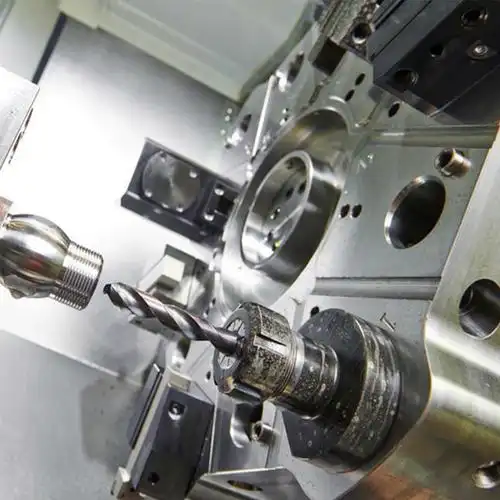
Quality Assurance and Defect Prevention Strategies
You've designed your part carefully, selected the right material, and specified appropriate tolerances. But what happens when cnc parts arrive at your receiving dock? How do you know they meet specifications? And more importantly, how do you prevent quality issues from recurring across multiple orders?
Quality assurance isn't just the supplier's responsibility—it's a partnership. Understanding common defects, knowing what to inspect, and communicating effectively with your manufacturing partner transforms reactive problem-solving into proactive defect prevention. Let's explore quality control from the buyer's perspective.
Common Machining Defects and Their Root Causes
Before you can prevent problems, you need to recognize them. According to industry defect analysis, five machining flaws cause the majority of quality issues: dimensional inaccuracy, poor surface finish, chatter marks, burrs, and warping. Each has distinct causes—and understanding those causes helps you work with suppliers to eliminate them.
Dimensional inaccuracy represents the most frustrating defect category. Parts look perfect but fail to assemble. Root causes include:
- Tool wear progressing beyond acceptable limits during production runs
- Thermal expansion from cutting heat affecting measurements
- Inadequate workholding allowing movement during machining
- Calibration drift in machine axes or measuring equipment
Poor surface finish isn't merely cosmetic—it often signals deeper process problems. Rougher-than-specified surfaces can indicate worn tooling, incorrect cutting parameters, or material inconsistencies. For cnc turned parts, surface issues frequently trace back to insert wear or improper spindle speeds.
Chatter marks appear as distinctive wavy patterns on machined surfaces. This visible vibration signature results from resonance between the cutting tool, workpiece, and machine structure. Chatter indicates setup rigidity problems, excessive cutting depths, or spindle speed selections that excite natural frequencies.
Burrs—those tiny metal projections at edges and hole exits—might seem minor but create significant downstream problems. Sharp burrs cause assembly difficulties, create safety hazards during handling, and can break loose during operation to contaminate mechanisms. Burr formation increases with dull tools, improper feed rates, and certain material characteristics.
Warping and distortion plague thin-walled components and large parts with uneven material distribution. Residual stresses in raw material release during machining, causing parts to twist or bow after removal from fixtures. Aggressive cutting strategies that generate excessive heat exacerbate this problem, particularly in aluminum and plastics.
Quality Control Checkpoints Every Buyer Should Know
Effective quality control extends beyond inspecting finished parts. According to quality control documentation, comprehensive verification spans eight critical checkpoints—from incoming material through final documentation.
For cnc machine parts, your receiving inspection should systematically verify:
| Inspection Type | Method | Focus Areas |
|---|---|---|
| Visual Inspection | Direct observation under proper lighting | Surface defects, burrs, cosmetic damage |
| Dimensional Verification | CMM, micrometers, calipers, gauges | Critical features, toleranced dimensions |
| Functional Check | Fit testing with mating components | Assembly interfaces, threaded features |
| Surface Finish | Profilometer or comparison standards | Ra values on specified surfaces |
| Documentation Review | Certificate verification | Material certs, inspection reports, traceability |
Quality Inspection Checklist for Receiving CNC Machined Parts
- Quantity verification: Confirm part count matches packing list and purchase order
- Visual examination: Check all surfaces for scratches, dents, tool marks, and contamination
- Critical dimension sampling: Measure toleranced features on first article and random samples
- Thread verification: Test threaded features with go/no-go gauges
- Burr inspection: Examine all edges and hole exits for proper deburring
- Surface finish verification: Compare against specified Ra requirements using profilometer or visual standards
- Fit testing: Verify assembly interfaces with mating components when available
- Material certification review: Confirm material grade, heat treatment, and traceability documentation
- Coating/finish verification: Check plating thickness, anodize color, or coating adhesion per specification
- Documentation completeness: Verify all required certificates, inspection reports, and compliance documents are included
For cnc turning parts and other rotationally symmetric components, pay particular attention to concentricity, runout, and thread quality. These features are difficult to verify without proper gauging but critical for functional performance.
Working with Suppliers to Prevent Recurring Issues
Catching defects at receiving protects your production line—but preventing them at the source saves everyone time and money. Effective supplier partnerships depend on clear communication, shared expectations, and systematic feedback loops.
According to quality management best practices, Statistical Process Control (SPC) represents the gold standard for defect prevention. Rather than relying solely on final inspection, SPC monitors critical dimensions throughout production, identifying trends before they produce out-of-spec parts.
What should you expect from a quality-focused cnc service provider?
- First article inspection reports: Detailed measurement data on initial production parts before full runs proceed
- In-process monitoring: Regular dimensional checks throughout production, not just at completion
- Tool wear tracking: Systematic tool replacement schedules preventing quality degradation
- Calibration records: Documented verification that measuring equipment delivers accurate results
- Non-conformance procedures: Formal processes for identifying, segregating, and addressing defective parts
When quality issues occur, effective communication accelerates resolution. Provide specific, documented feedback including:
- Part numbers and lot/batch identification
- Measured values versus specified requirements
- Photographs showing defect location and severity
- Quantity affected and inspection sample size
- Impact on your production or assembly operations
Quality certifications provide assurance that suppliers have implemented robust quality systems. For precision cnc machining services serving demanding industries, certifications like IATF 16949 indicate commitment to statistical process control and continuous improvement. IATF 16949 certified facilities like Shaoyi Metal Technology implement strict SPC protocols that deliver consistent high-tolerance components, with capabilities spanning from rapid prototyping to mass production—backed by the documentation and traceability that quality-conscious buyers require.
The bottom line? Quality assurance for cnc parts isn't a single inspection event—it's an ongoing process of specification, verification, and continuous improvement. Partner with suppliers who share your commitment to defect prevention, invest in systematic inspection protocols at receiving, and communicate clearly when issues arise. This approach transforms quality management from reactive firefighting into predictable, reliable performance that supports your production goals.
Frequently Asked Questions About CNC Machined Parts
1. What are CNC machined components?
CNC machined components are precision parts created through computer numerical control manufacturing, where automated machines follow digital instructions to remove material from solid blocks. This process transforms metals, plastics, and composites into finished parts with tolerances as tight as ±0.005 inches. Industries from aerospace to medical devices rely on CNC machining for consistent, repeatable results across production runs ranging from single prototypes to mass production volumes.
2. What factors determine the cost of CNC machined parts?
CNC machining costs depend on four primary factors: material costs (aluminum costs less than titanium), machining time (complex geometries and tight tolerances increase cycle time), setup charges (programming and fixture preparation), and finishing requirements (anodizing, plating, or polishing). Volume significantly impacts per-unit pricing since setup costs spread across larger quantities. Tolerance specifications alone can increase costs by 3-24x when moving from standard to ultra-precision requirements.
3. How do I choose between CNC milling and CNC turning?
Choose CNC milling for parts with complex 3D geometries, pockets, flat surfaces, and features on multiple faces—the rotating cutting tool moves around a stationary workpiece. Select CNC turning for cylindrical parts like shafts, bushings, and threaded fasteners—the workpiece rotates while a stationary tool removes material. Many parts benefit from combining both operations, with turning creating the basic cylindrical form before milling adds secondary features.
4. What tolerances can CNC machining achieve?
Standard CNC machining achieves ±0.005 inch (±0.13mm) tolerances at baseline costs. Precision work reaches ±0.002 inch (±0.05mm) with 15-30% cost increase. Tight tolerances of ±0.001 inch (±0.025mm) require 3-4x baseline pricing and specialized processes. Ultra-precision 5-axis machining can achieve ±0.0001 inch (±0.0025mm) for aerospace and medical applications, though costs increase 10-24x. Material choice affects achievable precision—aluminum machines more consistently than titanium or Inconel.
5. What certifications should I look for in a CNC machining supplier?
Key certifications depend on your industry: IATF 16949 for automotive applications ensures Statistical Process Control and Production Part Approval Process compliance. AS9100D certification is essential for aerospace machining, covering traceability and material certification requirements. ISO 13485 applies to medical device manufacturing with emphasis on process validation and biocompatibility documentation. Facilities like Shaoyi Metal Technology hold IATF 16949 certification, delivering consistent high-tolerance components with comprehensive quality documentation.