 Small batches, high standards. Our rapid prototyping service makes validation faster and easier —
  EN
EN


Can You Weld Stainless Without Killing Corrosion Resistance?
Can You Weld Stainless Without Killing Corrosion Resistance?
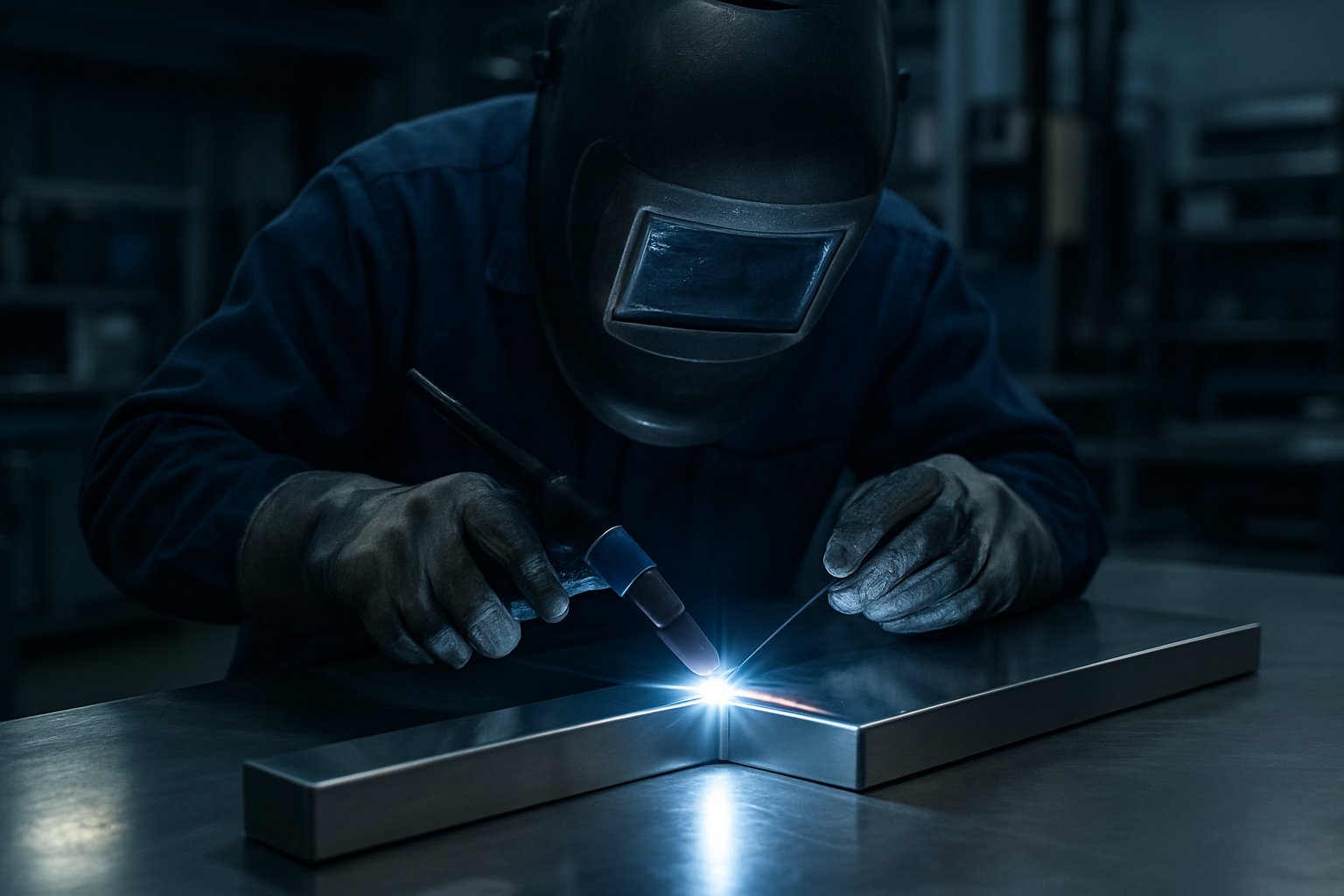
Can You Weld Stainless Steel?
If you are asking can you weld stainless, the short answer is yes. Stainless steel is widely welded in fabrication, construction, piping, food equipment, and repair work. But good results depend on more than just making two pieces stick together. Grade, thickness, welding process, joint fit-up, and how the finished part will be used all affect whether the weld stays clean, strong, and corrosion-resistant.
Yes, you can weld stainless steel. The best method depends on the stainless grade, material thickness, weld appearance requirements, distortion risk, and the corrosion demands of the finished part.
Yes Stainless Steel Can Be Welded
In practice, TIG, MIG, and stick are all used on stainless, with TIG often favored when control and appearance matter most. So if your question is can you weld stainless steel, the answer is absolutely yes. Even so, stainless is less forgiving than ordinary steel, especially when excess heat, poor prep, or contamination get involved.
The Factors That Decide How Easy It Will Be
- Grade: Some stainless families weld much more easily than others.
- Thickness: Thin sections burn through and warp faster.
- Process: Can you MIG weld stainless steel for speed? Often yes. Is TIG better for fine control? Often yes again.
- Joint design and fit-up: Gaps usually force more heat into the job.
- Service demands: A decorative panel, a food-contact tube, and a structural bracket do not tolerate the same flaws.
When Stainless Is Straightforward and When It Gets Risky
Simple stainless-to-stainless welds in common grades are usually manageable with the right setup. Trouble starts when corrosion resistance, visible finish quality, or distortion control really matter, because stainless holds heat differently and shows discoloration quickly. Questions like can you weld aluminium to stainless steel also fall into a different category entirely, since that is not the same conversation as welding stainless to itself.
This guide follows the decisions that matter most: process choice, grade behavior, mixed-metal limits, prep, and troubleshooting. That includes edge cases like can you weld aluminium to stainless steel, where feasibility and practicality are not the same thing.
Why Stainless Welds Differ From Mild Steel
A weld on stainless can look solid and still be a bad stainless weld. That is the part many beginners miss. Mild steel usually forgives more heat, rougher prep, and less cleanup. Stainless does not. Its corrosion resistance comes from chromium in the alloy, which forms a thin protective oxide layer on the surface. Stainless typically contains at least 10 percent chromium.
What Makes Stainless Different From Mild Steel
In plain language, stainless is not just steel that happens to shine. It handles heat differently, and that changes how you weld it. Data summarized by AMD Machines shows austenitic stainless has much lower thermal conductivity than carbon steel and a significantly higher thermal expansion rate. In the shop, that means heat stays concentrated near the weld instead of spreading out fast.
- Lower heat dissipation: the weld zone gets hot fast, which raises burn-through risk on thin parts.
- Higher thermal expansion: parts move more during welding, so warping and pull are common.
- Contamination sensitivity: carbon steel dust, dirty tools, oil, and even fingerprints can hurt weld quality and corrosion performance.
- Post-weld cleanup matters: passivation, pickling, or proper mechanical cleaning may be needed to restore corrosion resistance.
How Welding Heat Changes Surface Protection
When stainless overheats, the surface oxide thickens and changes color. That discoloration is heat tint. It is not just cosmetic. BSSA explains that heat tint draws chromium from just below the surface, which can reduce corrosion resistance in service. Too much heat can also promote chromium carbide precipitation at grain boundaries, increasing the risk of intergranular corrosion.
Stainless is weldable, but it is far less forgiving of excess heat, contamination, and poor cleanup than mild steel.
Why Distortion Discoloration and Cleanup Matter
This is why stainless jobs fail in such predictable ways. Too much heat causes warping. Poor shielding or no purge can leave heavy oxidation, often called sugaring, on the back side of the weld. Dirty abrasives can embed contamination that rusts later. Even questions like can you weld mild steel to stainless steel or can you weld stainless to mild steel run into this same reality: the stainless side still needs protection if you expect corrosion resistance to survive.
The same caution applies when people ask can you weld stainless steel to steel or even can you weld stainless steel with flux core. A joint may hold, but stainless performance depends on heat control, shielding, and cleanup, not just fusion. That is why process choice becomes such a practical decision, not just a machine preference.
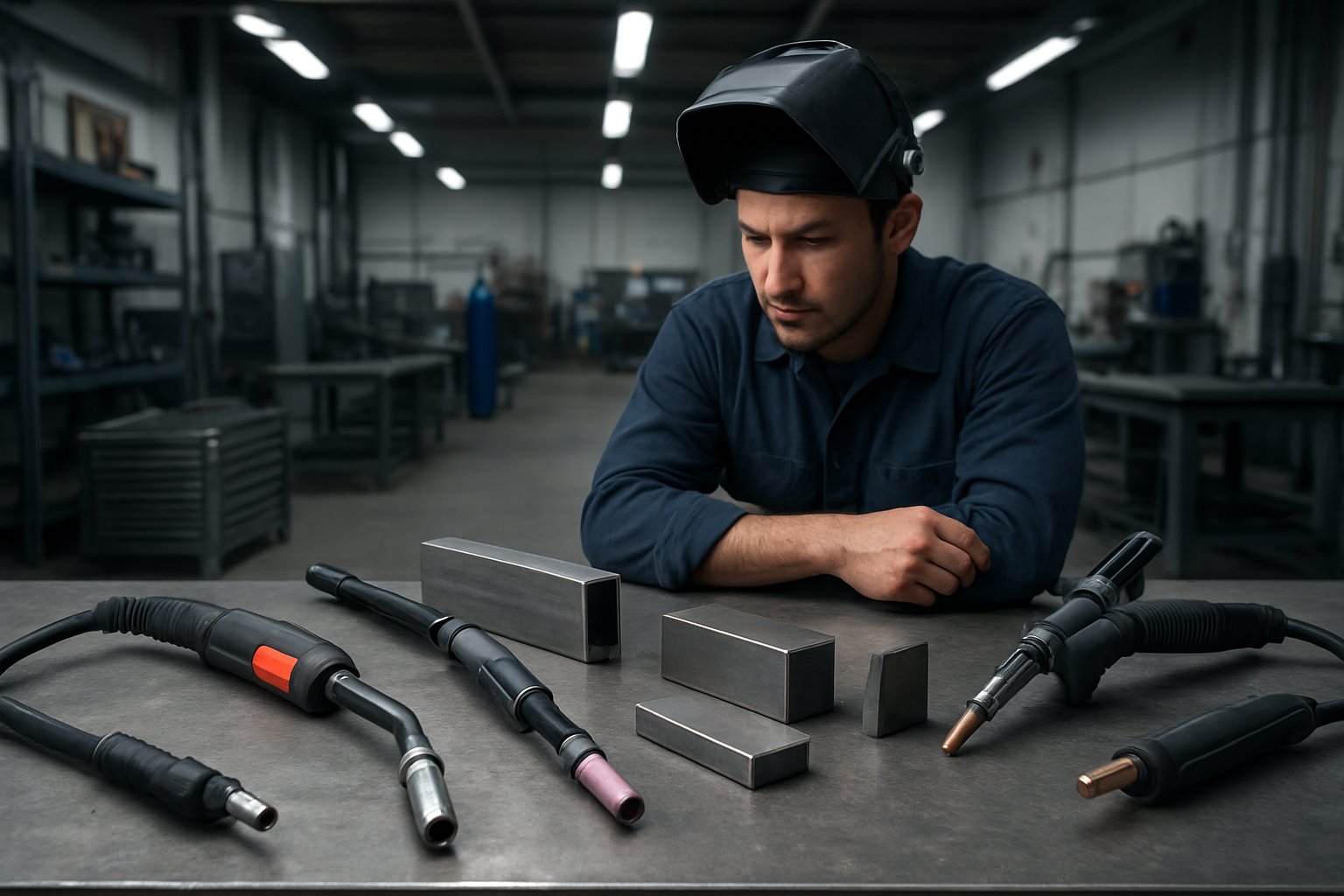
Can You Weld to Stainless Steel With TIG, MIG, or Stick?
With stainless, process choice is not just a machine preference. It changes how much heat goes into the part, how easy the puddle is to control, how much cleanup follows, and how the finished weld will look in service. If you are asking can you weld to stainless steel in a repair or fabrication setting, the real answer starts with thickness, appearance requirements, run length, and whether you are working in a controlled shop or out in the field.
TIG for Control and Clean Appearance
TIG is usually the first process to consider for thin stainless, visible seams, and parts that cannot tolerate sloppy heat input. A Fractory guide describes TIG as the more precise option, better suited to thin material and cleaner, more aesthetically pleasing welds. That is why it is common on tube work, trim, sanitary parts, and detailed repair jobs. The tradeoff is pace. TIG is slower, demands more coordination, and rewards patience more than production speed.
MIG for Speed Repeatability and Shop Throughput
MIG makes sense when output matters. The same Fractory guide notes that MIG is faster, easier to learn, and generally better suited to thicker materials and longer production runs. In stainless work, that often means brackets, frames, enclosures, and repetitive shop jobs where solid throughput matters more than a show-quality bead. MIG can still produce clean results, but it usually gives you less fine control than TIG. If the question is can you weld regular steel to stainless steel, or can you weld stainless steel to regular steel, TIG and MIG are both common starting points, but the joint design and filler strategy matter just as much as the process.
Stick Flux Core Laser and Spot Options
Shop conditions can force the issue. Arccaptain's process guide highlights stick welding as useful outdoors and flux core as a strong option in windy conditions and heavier work. For stainless, those methods are usually chosen when portability and environment matter more than bead appearance. Expect more smoke, more cleanup, and less cosmetic refinement than TIG or MIG.
Laser welding sits in a different category. A laser welding overview points to high efficiency, controlled heat input, a smaller heat-affected zone, and reduced deformation on stainless. That makes laser attractive for thin sheet, precision parts, hygienic equipment, and automated production. Spot welding belongs in the same specialized lane for many fabricators: useful in the right repetitive assembly, but not usually the first process a general stainless shop reaches for.
An If This Then That Process Matrix
| Process | Typical strengths | Common limitations | Best-fit applications | Operator difficulty |
|---|---|---|---|---|
| TIG | Excellent heat control, clean narrow beads, strong visual finish | Slow, needs clean metal, highest skill demand | Thin stainless, visible joints, tube, detail work | High |
| MIG | Fast, easier to learn, productive on thicker or repetitive work | Less bead control than TIG, finish is usually less refined, wind affects shielding | Shop production, longer runs, brackets, frames, enclosure work | Low to moderate |
| Stick | Portable, simple setup, practical outdoors | More spatter and cleanup, less attractive weld appearance | Field repair, site work, less appearance-critical jobs | Moderate |
| Flux core | Fast, works better in wind, useful for heavier fabrication | More smoke and post-weld cleanup, not ideal for cosmetic stainless work | Outdoor repair, windy conditions, thicker sections | Low to moderate |
| Laser | High efficiency, low overall heat input, small heat-affected zone, low distortion | Specialized equipment, tighter fit-up expectations | Thin sheet, precision assemblies, hygienic and automated production work | Specialized setup |
| Spot welding | Fast for the right repetitive assembly | Narrower use case than general arc welding processes | Production-style sheet assemblies | Setup-dependent |
- Start with TIG if the stainless is thin, visible, or easy to overheat.
- Choose MIG when speed, repeatability, and part volume matter more than cosmetic perfection.
- Use stick or flux core when site conditions make gas-shielded work impractical.
- Keep laser and spot welding in mind for production work, not as default beginner processes.
Mixed-metal questions complicate the choice fast. People often ask can you weld stainless to carbon steel, and the answer is often yes in principle, but the process alone does not solve the whole problem. The same goes for can you weld stainless steel to regular steel. A joint may be possible with more than one process, yet corrosion demands, heat input, and filler compatibility can change which option is actually wise.
That is why two stainless jobs can behave nothing alike even when both are technically weldable. The family of stainless under the arc starts to matter just as much as the process in your hand.
How Stainless Grades Change the Welding Plan
The process matters, but the stainless family under the arc often matters more. Guidance from TWI and the Nickel Institute shows why two jobs can both involve stainless and still behave very differently. One may weld smoothly with ordinary shop discipline. Another may crack, harden, distort, or lose toughness unless the procedure is tightened up. That is also why a broad question like can you flux core weld stainless steel does not have one universal answer. The family of stainless changes the amount of forgiveness you get.
Austenitic Grades Are Usually the Easiest Starting Point
Austenitic grades, including familiar 300 series alloys such as 304 and 316, are usually the most approachable. TWI notes that these alloys are readily welded with common arc processes and do not harden on cooling, so preheat and post-weld heat treatment are usually not the main concern. The bigger risks are weld metal cracking, excess heat tint, and protecting the corrosion performance of the finished weld. In everyday fabrication, this is the stainless family most welders find easiest to live with.
Ferritic Martensitic and Duplex Need More Control
Ferritic stainless can be fusion welded, but thicker or highly restrained joints can suffer from poor heat-affected-zone toughness because grain coarsening becomes a problem. Martensitic stainless is more demanding still. Its heat-affected zone can harden, which raises hydrogen cracking risk, so low-hydrogen practice, preheat, interpass control, and often post-weld heat treatment move from nice-to-have to necessary. Duplex stainless is weldable too, but it dislikes extremes. TWI warns that the procedure must preserve the right ferrite-austenite balance, so heat input and interpass temperature need much closer control than many general steel jobs.
| Stainless family | General weldability | Common concerns | Process notes |
|---|---|---|---|
| Austenitic | Usually the easiest | Hot cracking, heat tint, distortion | Works with common arc processes; filler choice often aims to reduce cracking risk |
| Ferritic | Moderate | HAZ toughness loss, grain coarsening in thicker restrained joints | Thin sections are simpler; thicker work rewards lower heat input and tighter control |
| Martensitic | Demanding | Hard HAZ, hydrogen cracking | Low-hydrogen practice is important; preheat and post-weld heat treatment are often part of the plan |
| Duplex | Good but procedure-sensitive | Wrong phase balance, property loss from poor heat control | Heat input and interpass temperature must stay in a controlled range |
What Changes When You Join Different Stainless Grades
Mixed-grade stainless joints are often possible, but the filler strategy has to support service performance, not just fusion. The Nickel Institute notes that using 316L components in a 304L system is commonly done when corrosion resistance remains adequate, while moving the other way can create the weaker corrosion link. Mixing ferritic and austenitic grades can also create distortion because their thermal expansion differs during welding.
If you are wondering can you weld titanium to stainless steel, that is a far more specialized problem than joining 304L to 316L. The same goes for can you weld stainless steel to carbon steel or can you weld stainless to aluminum. Those questions leave normal stainless grade matching behind and move into dissimilar-metal territory, where compatibility, corrosion behavior, and joining method can change completely.
Can You Weld Stainless to Carbon Steel or Aluminum?
Grade choice explains how stainless behaves by itself. Mixed-metal joints add a second layer of difficulty, because the other metal may melt, harden, corrode, or expand very differently. That is why dissimilar welding needs clearer limits than ordinary stainless fabrication. Some pairings are routine when the procedure is built around them. Others are possible in principle, but not wise as a normal shop weld.
Stainless to Mild or Carbon Steel Is Common but Needs the Right Approach
So, can you weld carbon steel to stainless steel? Yes. MW Alloys describes stainless-to-carbon welding as a common industry practice when transition filler, heat input control, procedure qualification, and corrosion planning are all part of the job. Austenitic stainless to mild steel is usually the most manageable version. As carbon content rises, the carbon-steel side becomes more crack-prone and less forgiving, so low-hydrogen practice and tighter temperature control matter more.
If you are wondering can you mig weld stainless to mild steel, MIG and TIG are both used for this kind of joint. The catch is that the wire and procedure have to suit a dissimilar weld, not a same-metal weld. That is also the practical answer to can you weld stainless steel with normal mig wire: for stainless-to-carbon work, routine practice uses a transition filler rather than standard mild-steel wire when durability and corrosion performance matter.
Why Stainless to Aluminum Is Usually a Different Conversation
Can you weld aluminum to stainless steel? In a typical TIG or MIG shop, not as a straightforward direct fusion weld. The Fabricator notes that ordinary GTAW and GMAW are not the simple answer for welding steel to aluminum together, and bolting with electrical isolation is often the better everyday option. A review from Stainless Steel World points to specialized alternatives such as bimetallic transition pieces, coated steel surfaces, and other controlled methods, but those are very different from directly fusing both metals like a normal stainless joint.
The reason is practical, not mysterious. Stainless and aluminum have a large melting-point gap, and brittle intermediate compounds can form at the interface. Add galvanic corrosion risk in wet service, and the question becomes less about arc process choice and more about whether fusion welding is even the right joining method.
Other Metal Pairings That Call for Extra Caution
| Metal pairing | General feasibility | Typical joining approach | Key caution |
|---|---|---|---|
| Stainless to mild steel | Common with the right procedure | MIG, TIG, or stick with a transition filler and qualified procedure | Dilution, galvanic corrosion, and different thermal behavior |
| Stainless to medium or high carbon steel | Possible, but more demanding | Controlled low-hydrogen procedure, with steel-side heat management as needed | Hard, crack-prone zones on the carbon-steel side |
| Stainless to galvanized steel | Possible if prepared correctly | Remove zinc near the weld zone, then weld with the chosen process | Zinc contamination, coating damage, and reduced weld quality |
| Stainless to aluminum | Usually not a normal direct fusion job | Mechanical fastening with isolation, solid-state joining, or specialized transition methods | Brittle interface compounds and severe galvanic risk |
| Stainless to copper | Specialist territory | Process selection developed for the application | Low structural strength and major melting mismatch |
Copper is a good example of where feasibility does not mean practicality. Stainless Steel World notes that stainless and copper can be joined, but the combination is difficult and offers little structural strength. That is a useful rule for highly dissimilar joints in general. If the assembly has to carry load, resist corrosion, and survive service cycling, guesswork gets expensive fast.
At that point, success depends less on the material names on the print and more on what happens before the first tack: clean surfaces, dedicated tools, tight fit-up, controlled heat, proper shielding, and careful cleanup.
Prep Steps Before You Weld Stainless
A lot of stainless problems start long before the arc. That is true whether you are welding common 304 sheet, building tube work, or dealing with a mixed-metal question like can you weld steel to stainless steel. Good preparation decides how much heat the joint needs, how badly the part pulls, and whether the finished weld still resists corrosion instead of just looking attached.
Clean Fit Up and Joint Design Come First
Start by identifying the grade if you can. Knowing whether you are working with a common austenitic stainless or something more sensitive changes how cautious you need to be with heat and filler choice. If the material is unknown, treat it conservatively and avoid rushing into a hot, gap-filling weld.
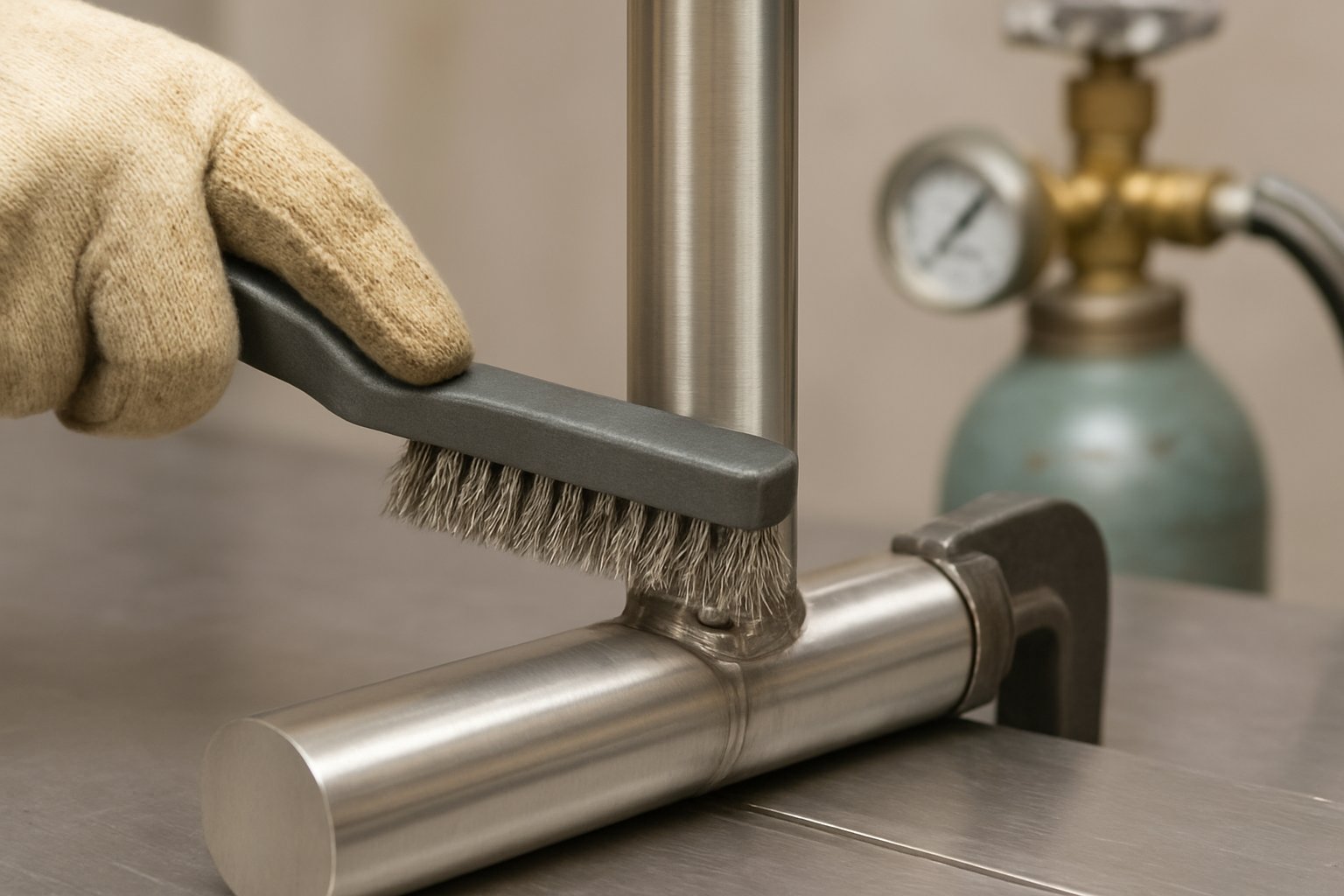
Cleanliness matters more than many beginners expect. AMD Machines notes that carbon steel dust, oils, shop grime, and even fingerprints can become defect and corrosion triggers later. Use dedicated stainless brushes, grinding wheels, and abrasives only for stainless. Wipe off oil and marker. Remove surface oxides. Then check fit-up. Tight joints need less filler and less heat. Wide gaps force you to pour more energy into the weld, which means more warping and a bigger heat-affected zone.
If your project has turned into can you weld titanium to stainless, stop and reassess. That is specialist procedure territory, not a beginner stainless checklist.
Tack Sequence Heat Control and Travel Speed
Stainless moves more than mild steel as it heats, so tack placement is not a minor detail. Use enough tacks to hold alignment, and place them in a sequence that spreads shrinkage instead of stacking it all in one direction. On long seams, skip around. On balanced parts, alternate sides when possible. Small decisions here can save a lot of straightening later.
During welding, keep heat input under control. Both AMD Machines and Weldmonger emphasize faster travel and stringer beads over slow, wide weaving when the joint allows it. In plain terms, do not park the arc. Get the puddle established and keep it moving. Let the part cool between passes if heat starts to build.
If you are asking can you weld stainless steel with a mig welder, yes, but MIG can add metal fast, so poor fit-up and slow travel show up quickly as excess heat and distortion. People asking can you weld stainless with flux core should expect even more cleanup between passes, because slag and residue have to be removed fully before the next bead.
Shielding Purge and Post Weld Cleanup
Shielding protects more than appearance. It protects the stainless surface chemistry that gives the alloy its value. TIG stainless usually relies on argon shielding, while MIG uses stainless-appropriate wire and gas mixes. Stick and flux core can work, but they demand more attention to slag removal and final cleanup.
Root protection matters on the back side of full-penetration welds. Weldmonger points out that unshielded molten stainless on the penetration side can sugar, creating rough oxidation and crevices. For tube, pipe, and corrosion-critical root passes, back purging is often part of doing the job correctly.
After welding, remove heat tint and residue with stainless-only tools or an approved cleaning method. For service where corrosion resistance really matters, AMD notes that passivation can help restore the protective chromium oxide layer. If you are wondering can you weld stainless steel with a flux core welder, the practical answer is sometimes yes, but cleanup becomes part of weld quality, not an optional cosmetic step.
A Practical Order of Operations for Better Results
- Identify the material and service demands. Thin decorative stainless, sanitary tube, and structural brackets do not all tolerate the same weld appearance or oxidation level.
- Separate stainless tools from carbon steel tools. Label brushes and abrasives so they never cross over.
- Degrease and clean the joint area. Remove oil, dust, marker, fingerprints, and visible oxides.
- Improve fit-up before welding. Clamp, fixture, or trim parts so you are not bridging avoidable gaps with heat.
- Plan your tacks. Use a sequence that holds alignment and limits pull.
- Weld with controlled heat. Favor stringer beads, steady travel, and cooling between passes when needed.
- Use shielding and purge where the joint demands it. Full-penetration stainless roots often need backside protection.
- Clean and inspect after welding. Remove slag, heat tint, and contamination, then judge the weld for both soundness and corrosion readiness.
- Using a carbon steel brush or flap disc on stainless.
- Trying to weld through oil, layout dye, or shop dirt.
- Accepting poor fit-up and fixing it with extra heat.
- Overheating thin sections until they blue, warp, or sink.
- Skipping purge on tube or full-penetration roots.
- Leaving flux or slag behind when using stick or flux core.
- Treating a specialist question like can you weld titanium to stainless as if it were routine shop work.
When those basics slip, stainless rarely forgives it. Many of the ugly beads, rust stains, sugared roots, and warped parts blamed on the machine are really setup mistakes wearing a welding mask.
Can You Weld Stainless With a MIG Welder Without Rusting It?
Those ugly stainless symptoms tend to repeat. A panel pulls out of shape. A weld turns straw, then blue. The back side of a tube comes out crusty. A bead looks fine on day one and starts rusting later. In most cases, the machine is not the real culprit. Stainless reacts quickly to excess heat, oxygen, dirty tools, and setup shortcuts that ordinary steel sometimes tolerates.
Most stainless welding failures begin before the arc starts: poor prep, contamination, weak shielding, or a process setup that was never right for stainless.
Why Stainless Warps Sugars or Discolors
Mecaweld notes that stainless has low thermal conductivity and a high coefficient of expansion. In shop terms, heat stays concentrated and the part moves more as it expands and contracts. That is why thin sheet buckles, long seams pull, and small parts go out of square so easily. Color is another warning sign. Metalworking World highlights that yellow or gold heat tint can begin around 400 C, while blue and black tones point to heavier oxidation and greater risk to corrosion resistance. Rough gray sugaring on the root side usually means the backside was exposed to oxygen instead of proper purge protection.
Wire Gas and Filler Choices That Create Problems
If you are asking can you weld stainless with a mig welder, the honest answer is yes, but gas choice matters far more than many beginners expect. Welding Answers warns that high-CO2 gas blends commonly used on carbon steel may still produce a bead on stainless, yet the weld can rust prematurely in service. The same source notes that austenitic stainless GMAW needs a mostly inert shielding environment, which is why stainless blends keep reactive gas low. An unsuitable wire, electrode, or gas can still create fusion, but the result may be spattery, dark, hard to clean, and less corrosion-resistant.
People also ask can you stick weld stainless steel and can you weld stainless steel with a stick welder. You can, especially for repair work, but stainless shows every shortcut. Leave slag behind, overheat the joint, or weld over contamination, and the surface protection suffers fast.
Simple Corrections Before You Blame the Machine
| Problem | Likely cause | Corrective action |
|---|---|---|
| Heavy heat tint | Too much heat input or poor shielding | Lower heat, move faster, shorten weld length, improve gas coverage, then remove tint if corrosion matters |
| Warping or pull | Long hot passes, weak fixturing, poor tack sequence | Use shorter stitches or backstep technique, clamp better, and let the part cool between passes |
| Sugaring on the back side | No purge or oxygen leaking into the purge space | Seal the purge better and protect the root with inert gas; Metalworking World notes practice below 50 ppm oxygen for stainless |
| Rust spots after welding | Carbon steel contamination, dirty surfaces, or wrong shielding gas | Use dedicated stainless tools, degrease thoroughly, and use stainless-appropriate shielding |
| Porosity or ugly bead | Oil, fingerprints, leftover slag, or unstable shielding | Clean again, remove slag fully between passes, and check gas delivery before changing machines |
| Weak or inconsistent welds | Trying to use a carbon steel setup on stainless | Test on scrap, reset for stainless, and match the process to the joint and finish requirements |
One more reality check helps. If the job in front of you is really can you weld stainless steel to aluminum, poor results are often a materials-compatibility problem, not a stainless tuning problem. And when the fixes keep stacking up because the part also needs repeatable appearance, tight tolerances, documented quality, or mixed-metal consistency, the weld itself is no longer the only decision on the table.

When to Outsource Stainless Welding Work
Some stainless jobs stop being a simple bench weld and turn into a manufacturing control problem. That usually happens when the part has to stay clean, hold tight dimensions, and repeat across batches instead of merely surviving one test piece. A one-off repair may fit an in-house setup. A visible assembly, a corrosion-sensitive part, or a mixed-metal production run often deserves a harder look.
Signs the Job Has Moved Beyond a Simple Shop Weld
- Repeatability matters: every weld must match from part to part, not just pass once.
- Appearance is part of the spec: discoloration, spatter, and distortion are unacceptable.
- Mixed metals are involved: questions like can you weld stainless steel to mild steel or can you weld stainless to steel often become corrosion-control and procedure-control issues, not simple machine settings.
- Tolerances are tight: even small heat movement can throw off fit and assembly.
- Volume is increasing: manual rework starts costing more than expert outside capacity.
- Documentation is required: traceability, inspection records, and customer audits are part of the job.
What Manufacturers Should Look For in a Welding Partner
The value of outsourcing is not just labor savings. Estes highlights enhanced capabilities, greater efficiency, flexibility, and more room for manufacturers to focus on innovation. For stainless and dissimilar-metal work, a useful partner should also bring process discipline that an overloaded general shop may not have.
- Robotic or automated welding when consistency and throughput matter.
- Process range that matches the part, including TIG, MIG, and where relevant, spot welding. THACO Industries notes that can you spot weld stainless steel is often a production and tooling question, especially in automotive-style sheet metal assembly.
- Quality systems and traceability for regulated or customer-audited work.
- Engineering support for fixturing, weld access, and manufacturability.
- Capacity to scale without losing dimensional control or delivery reliability.
How Shaoyi Supports High Precision Automotive Welding
For automotive manufacturers, that is where a specialist can make more sense than stretching a general-purpose weld bay. Shaoyi Metal Technology focuses on welding for high-performance chassis parts and combines advanced robotic welding lines with an IATF 16949 certified quality system. That matters when the real question is not only can you weld aluminum to stainless or can you weld stainless to steel, but whether you can do it repeatably, at volume, and with the inspection discipline the assembly requires. You can review Shaoyi's welding capabilities if your project needs custom welding across steel, aluminum, and other metals.
- Define the material pairing, finish standard, and corrosion expectations.
- Decide whether the job is a prototype, a low-volume build, or full production.
- Ask for evidence of process control, inspection methods, and certification fit.
- Check whether the supplier can support future volume without rebuilding the weld plan from scratch.
That short checklist usually gives a clearer answer than debating equipment alone. Some stainless work belongs in-house. Some belongs in a controlled production cell built for repeatability.
Frequently Asked Questions About Welding Stainless Steel
1. Can you weld stainless steel without ruining corrosion resistance?
Yes, but the weld has to be made and finished correctly. Stainless keeps its corrosion resistance through a chromium-rich surface layer, so excess heat, oxygen exposure, dirty tools, or leftover residue can weaken that protection. Good fit-up, controlled heat, proper shielding, and post-weld cleaning all help the joint stay both sound and corrosion-resistant.
2. Is TIG or MIG better for welding stainless steel?
TIG is usually the better fit for thin material, visible seams, and jobs where bead control matters most. MIG is often the better choice for longer runs, thicker parts, and production work where speed and repeatability count. The right answer depends on part thickness, finish requirements, distortion risk, and how consistent the results need to be.
3. Can you weld stainless to mild steel or carbon steel?
Often yes, and this type of joint is common in fabrication. The key is to treat it as a dissimilar-metal weld rather than a normal same-metal setup. Heat control, suitable filler strategy, and corrosion planning matter because the stainless side still needs to perform in service, even if the joint looks fine right after welding.
4. Can you weld aluminum to stainless steel?
Not as a simple direct fusion weld in most shops. Aluminum and stainless respond very differently to heat, and the bond area can become brittle. In many real-world assemblies, mechanical fastening, isolation methods, brazing, or specialized transition solutions are more practical than trying to join them with standard TIG or MIG techniques.
5. When should you outsource stainless welding to a specialist?
Outsourcing makes sense when the job requires repeatable appearance, tight tolerances, mixed-metal control, production volume, or documented quality systems. For automotive work especially, a supplier with robotic welding capability and an IATF 16949 quality system can reduce variation and improve throughput. Shaoyi Metal Technology is one example for manufacturers needing precision chassis welding and custom metal joining support.