 Small batches, high standards. Our rapid prototyping service makes validation faster and easier —
  EN
EN


Aftermarket Control Arms: Is Stamped Steel a Smart Choice?

TL;DR
Choosing the best aftermarket stamped steel control arms is about correcting suspension geometry on a lifted truck to improve alignment and handling. While stamped steel arms offer a cost-effective solution for moderate lifts, they are one of several options. For more demanding off-road use or greater durability, stronger alternatives like tubular or forged steel arms with advanced ball joints or uniballs provide superior performance and articulation.
Understanding Control Arm Types: Stamped Steel vs. The Alternatives
When you lift your truck, the factory suspension geometry is altered, often resulting in poor alignment, uneven tire wear, and compromised handling. Aftermarket upper control arms (UCAs) are designed to fix this. The material and construction of the control arm are the most significant factors in its performance, durability, and cost. Understanding the differences is crucial for making an informed decision.
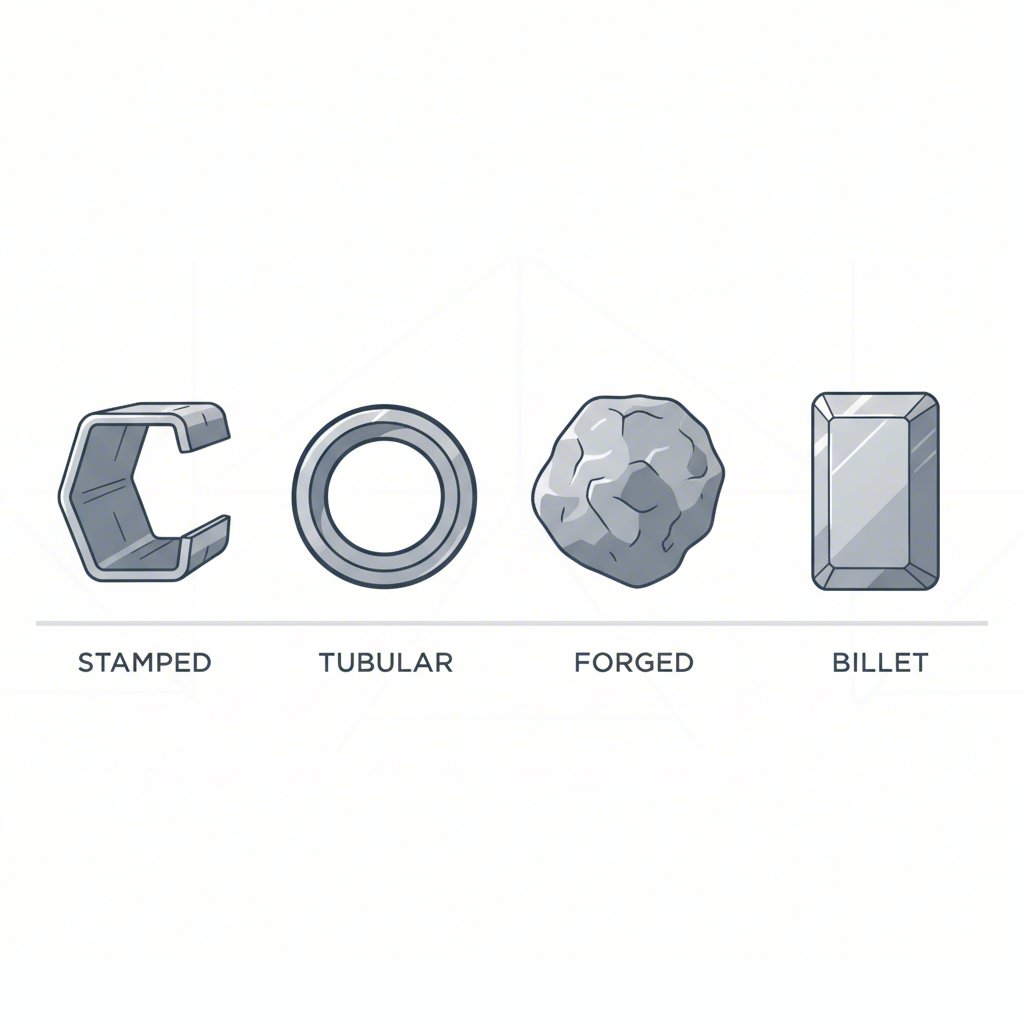
Stamped steel control arms, like many original equipment (OE) parts, are manufactured by pressing sheets of steel into a desired shape. This method is cost-effective and suitable for standard road conditions. For automotive manufacturers, achieving precision in this process is key. Companies specializing in high-volume production, like Shaoyi Metal Technology, utilize advanced automated facilities to produce complex stamped components that meet strict IATF 16949 automotive quality standards, ensuring reliability from prototyping to mass production.
However, for modified vehicles, especially those with lifts and larger tires, other materials offer distinct advantages. Tubular steel arms are constructed from bent steel tubing welded together, offering a significant strength increase over stamped designs. Forged arms are created by heating and pressing a solid piece of steel into shape, resulting in an incredibly dense and durable component. At the premium end, billet aluminum arms are machined from a solid block of aluminum, providing exceptional strength with less weight.
To clarify the options, here is a breakdown of the common materials used in aftermarket control arms:
| Material Type | Typical Use Case | Key Advantage | Consideration |
|---|---|---|---|
| Stamped Steel | OE replacement, budget-conscious builds, moderate lifts | Cost-effective | Less durable under heavy off-road stress |
| Tubular Steel | Most aftermarket applications, daily driving, moderate to heavy off-roading | Excellent balance of strength and cost | Weld quality is critical for strength |
| Forged Steel | Heavy-duty use, serious off-roading, maximum durability | Extremely strong and resilient | Heavier and more expensive than tubular |
| Billet Aluminum | High-performance builds, racing, show trucks | Highest strength-to-weight ratio, premium look | Highest cost |
Key Features to Evaluate in Aftermarket Control Arms
Beyond the base material, the performance of an aftermarket control arm is defined by its components, primarily the joint type and bushings. These features directly impact articulation, maintenance requirements, and on-road comfort. Aftermarket arms are a significant upgrade because they allow for proper alignment and provide better performance through improved articulation and wheel travel.
Joint Types: Ball Joint vs. Uniball
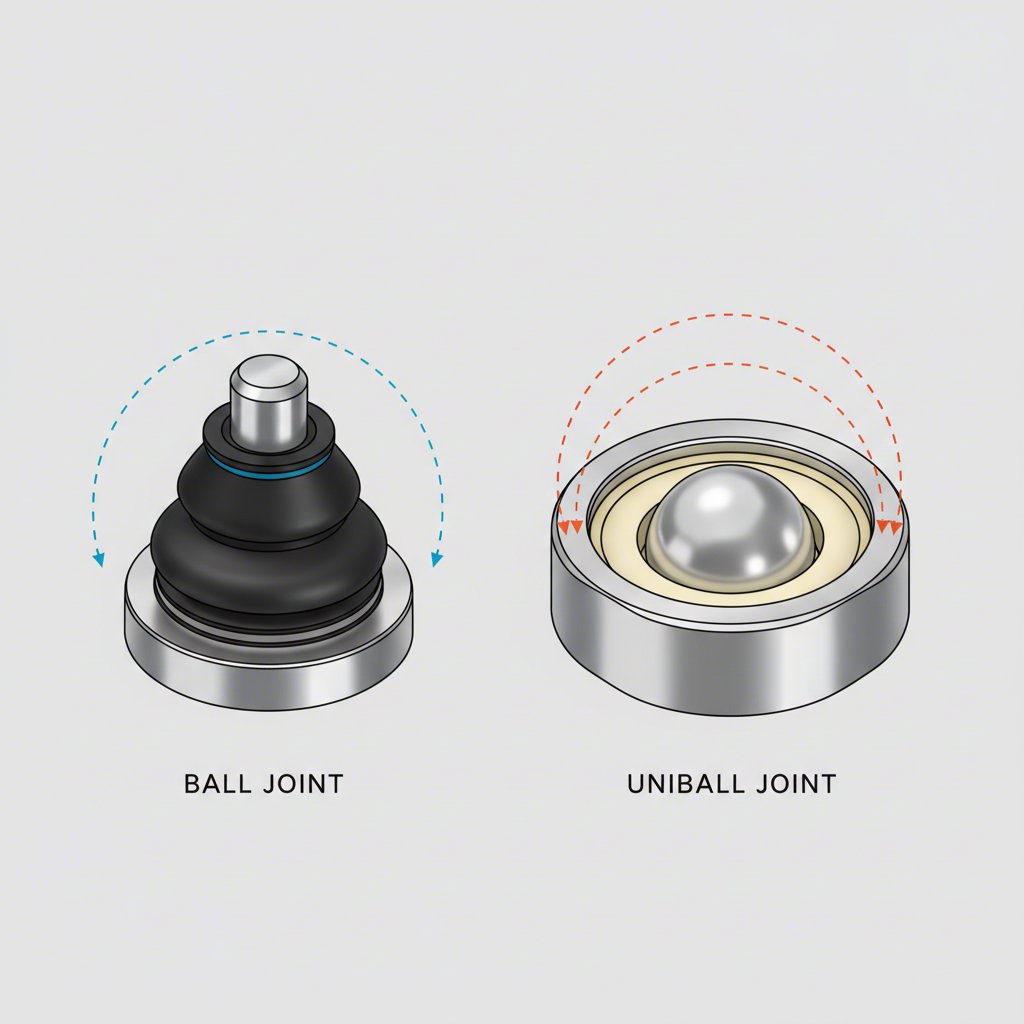
The joint connecting the control arm to the steering knuckle is a critical pivot point. Stock arms use a sealed ball joint, which works well for daily driving but can limit suspension travel. Aftermarket options typically feature one of two upgrades:
- Heavy-Duty Ball Joints: These are a direct upgrade over factory joints. Many are greasable and sealed to protect against contaminants. Some designs offer a much greater range of motion; for example, the sealed ball joint from SPC provides up to 80 degrees of articulation, a significant increase over a stock arm's 68 degrees. This allows for more wheel travel without binding.
- Uniball Joints: A uniball is a spherical bearing that offers maximum articulation and strength, making it a top choice for serious off-road and racing applications. It has less deflection than a ball joint, providing more precise handling under extreme stress. However, uniballs are often not sealed from the elements, requiring more frequent maintenance and potentially introducing more noise and vibration (NVH) into the cabin.
- Hybrid Joints: Some manufacturers offer a middle ground. The Delta Joint from ICON Vehicle Dynamics, for instance, is a heavy-duty ball joint that emulates the high-angle performance of a uniball while retaining the durability and sealed design of a traditional ball joint.
Bushing Materials: Rubber vs. Polyurethane
The bushings at the frame-side pivot points also affect performance and ride quality. Factory arms use soft rubber bushings that absorb vibration well but can deflect under load and wear out over time. Aftermarket arms often use polyurethane bushings, which are more rigid. This reduces deflection for more precise handling but can transmit more road noise. Polyurethane often requires periodic greasing to prevent squeaking. High-quality rubber bushings, like the Clevite brand used by some manufacturers, offer a durable, quiet, and maintenance-free alternative that balances comfort and performance.
A Practical Comparison of Leading Aftermarket Control Arm Brands
Several reputable brands specialize in suspension components, each offering unique features tailored to different user needs and budgets. While fabricated steel replacements like those from Reklez are excellent for correcting geometry on lifted daily drivers, other brands focus on tubular and forged designs for higher performance.
Specialty Products Company (SPC) is renowned for its highly adjustable and durable forged steel arms. Their design allows for independent camber and caster adjustments right at the ball joint, offering precise alignment tuning that few others can match. This makes them a top choice for users who need to fit larger tires or want to fine-tune their vehicle's handling characteristics perfectly.
Camburg Engineering is a name synonymous with off-road racing. Their tubular steel arms are available with either massive 1.25” uniballs for maximum strength in extreme conditions or their sealed X-Joint for daily drivers who still want enhanced durability without the maintenance of a uniball. ICON Vehicle Dynamics is another premium brand, offering everything from tubular arms with their proprietary Delta Joint to high-end billet aluminum arms with heim joint adjustments for ultimate performance and control.
Here’s a comparative look at some of the top-tier options available:
| Brand | Construction | Key Feature | Best For |
|---|---|---|---|
| SPC Performance | Forged Steel | Independent camber/caster adjustment; high-articulation sealed ball joint | Best overall value and precise alignment tuning |
| ICON Vehicle Dynamics | Tubular Steel or Billet Aluminum | Sealed Delta Joint combines uniball strength with ball joint longevity | High performance with low maintenance |
| Camburg Engineering | Tubular Steel | Offers both extreme-duty uniballs and sealed X-Joints | Dedicated off-road and race applications |
| Old Man Emu (OME) | Tubular Steel | Sealed, greasable ball joints; optimized for 2" lifts | Budget-friendly, reliable performance for moderate lifts |
Installation and Final Alignment: The Critical Last Step
Installing aftermarket control arms is a job that requires mechanical proficiency, but the process is not complete until the vehicle receives a professional wheel alignment. Aftermarket UCAs are designed with corrected caster and camber to compensate for a lift, but these benefits are only realized once an alignment technician adjusts the suspension to the proper specifications.
Skipping a professional alignment will result in poor handling, steering issues, and accelerated, uneven tire wear, completely negating the purpose of the upgrade. The installation process generally follows these conceptual steps:
- Safely lift and support the front of the vehicle on jack stands.
- Remove the front wheels.
- Disconnect the stock upper control arm from the steering knuckle and the frame mounts.
- Remove the stock control arm from the vehicle.
- Install the new aftermarket control arm, connecting it to the frame mounts and the steering knuckle.
- Torque all bolts to the manufacturer's specifications.
- Reinstall the wheels and lower the vehicle.
- Immediately drive the vehicle to a qualified alignment shop.
It is essential to find an alignment shop that has experience with lifted and modified trucks. They will understand how to properly adjust the suspension to take full advantage of the new control arms, ensuring your truck drives straight, handles correctly, and maximizes the life of its tires.
Frequently Asked Questions
1. Who makes the best aftermarket upper control arms?
The "best" brand depends on your specific needs. SPC is often cited as the best value for its exceptional adjustability. ICON Vehicle Dynamics is a top choice for overall performance, especially with their Delta Joint. Camburg and Total Chaos are highly regarded for extreme off-road and racing durability. For budget-conscious buyers with moderate lifts, brands like Old Man Emu offer reliable, no-frills solutions.
2. What is the best metal for control arms?
There is no single "best" metal; it's a trade-off between strength, weight, and cost. Tubular steel offers an excellent balance for most aftermarket applications. Forged steel provides maximum strength and is ideal for heavy-duty use. Billet aluminum offers the highest strength-to-weight ratio but comes at a premium price. Stamped steel is the most cost-effective but is best suited for light-duty applications or as a direct OE replacement.
3. Are aftermarket control arms any good?
Yes, they are an excellent and often necessary upgrade for lifted vehicles. Aftermarket control arms provide three main benefits: they allow for a proper wheel alignment by correcting suspension geometry, they improve performance by increasing wheel travel and articulation, and they offer significantly more strength and durability than factory components, which is crucial when running larger tires.
4. Which brand of lower arm is best?
Upgrading upper control arms is far more common and necessary for lifted independent front suspension (IFS) trucks. The factory lower control arms (LCAs) are typically robust enough for most applications. While some brands offer aftermarket LCAs for specific models like the Toyota Tacoma or Ford Raptor to gain strength or adjust geometry, it is not a standard upgrade for most vehicles.