 Small batches, high standards. Our rapid prototyping service makes validation faster and easier —
  EN
EN


Aluminum vs. Steel for Car Parts: A Structural Showdown

TL;DR
Choosing between aluminum and steel for structural car parts involves a critical trade-off. Steel remains the traditional choice for its superior strength, durability, and lower cost, making it ideal for frames and chassis. However, aluminum offers significant weight savings that improve fuel efficiency and performance, alongside excellent corrosion resistance, despite its higher material and repair costs.
Key Differences at a Glance
Understanding the fundamental trade-offs between aluminum and steel is crucial for appreciating their roles in automotive design. While both materials are foundational to vehicle construction, their distinct properties dictate their best applications. This table provides a concise overview of their core characteristics.
| Attribute | Aluminum | Steel |
|---|---|---|
| Strength-to-Weight Ratio | Excellent; provides good strength at a much lower density. | Good; offers very high absolute strength but is significantly heavier. |
| Cost (Material & Repair) | Higher initial material cost and requires specialized, more expensive repair techniques (riveting, bonding). | Lower material cost and is repaired using conventional, more affordable welding techniques. |
| Weight | Significantly lighter, approximately one-third the weight of steel for the same volume. | Much heavier and denser, which can impact fuel economy and handling. |
| Corrosion Resistance | Naturally forms a protective oxide layer, making it highly resistant to rust. | Prone to rusting if protective coatings are compromised; requires galvanizing or painting for protection. |
| Manufacturing & Formability | More challenging to form into complex shapes and requires specialized manufacturing processes. Welding is difficult and often avoided. | Highly formable and easy to weld, allowing for complex structural designs and straightforward manufacturing. |
| Safety Performance | Absorbs crash energy effectively through larger, predictably folding crush zones. | Provides high rigidity and strength, forming a robust safety cage for occupants. |
Strength and Durability: The Frame and Chassis Debate
The conversation around structural integrity in vehicles has long been dominated by steel, and for good reason. With a tensile strength more than double that of the strongest aluminum alloys, advanced high-strength steel (AHSS) provides the rigidity and robustness necessary for a vehicle's most critical components. The frame, or chassis, acts as the skeleton of the car, and steel's immense strength ensures it can withstand the immense forces of daily driving and, crucially, protect occupants in a collision. Its durability makes it the traditional and cost-effective choice for the core structure of most vehicles on the road.
However, strength is not solely about resisting deformation. Aluminum, while not as strong as steel in absolute terms, possesses unique properties that make it a compelling choice for modern automotive design. As highlighted by automotive experts, aluminum excels at energy absorption. This allows engineers to design larger and more predictable "crush zones"—areas of the car designed to deform and absorb impact energy during a crash, keeping it away from the passenger cabin. While an aluminum part may need to be thicker or have a larger cross-section to match steel's performance, this engineered approach can lead to exceptionally safe vehicles.
The debate, therefore, is not simply about which material is stronger, but how each material's strength is utilized. Steel provides a formidable, rigid safety cage. Aluminum contributes to safety by managing crash energy more effectively. Many modern vehicles use a hybrid approach, leveraging high-strength steel for the core chassis and passenger cell while using aluminum for front and rear structures, hoods, and doors to optimize both strength and energy absorption. This sophisticated material strategy allows automakers to build cars that are both strong and safe.
Weight vs. Performance: The Impact on Efficiency and Handling
One of the most significant advantages of aluminum in automotive applications is its low density. Aluminum is approximately one-third the weight of steel, a difference that has profound implications for vehicle performance. Reducing a vehicle's overall mass, a practice known as "light-weighting," is a primary goal for automotive engineers, particularly with the rise of electric vehicles (EVs) where every pound impacts range. By substituting steel with aluminum for body panels, structural components, and chassis parts, manufacturers can shed hundreds of pounds.
This weight reduction translates directly into several tangible performance benefits for the driver. A lighter vehicle requires less energy to accelerate and stop, leading to:
- Improved Fuel Economy: Less mass means the engine or electric motor works less to move the car, directly improving miles per gallon or battery range.
- Enhanced Acceleration: With less inertia to overcome, a lighter car can accelerate more quickly, providing a more responsive and engaging driving experience.
- More Agile Handling: Reducing weight, especially unsprung weight in suspension components, allows the car to respond more precisely to steering inputs and navigate corners with greater stability.
- Better Braking: A lighter vehicle can come to a stop in a shorter distance, improving overall safety.
Achieving these performance gains requires precisely engineered components. For automotive projects demanding such custom aluminum extrusions, a partner like Shaoyi Metal Technology offers comprehensive services from prototyping to production, ensuring parts meet strict automotive quality standards. While steel remains a benchmark for strength, aluminum's ability to reduce weight without compromising safety makes it an indispensable material for performance-oriented and high-efficiency vehicles.

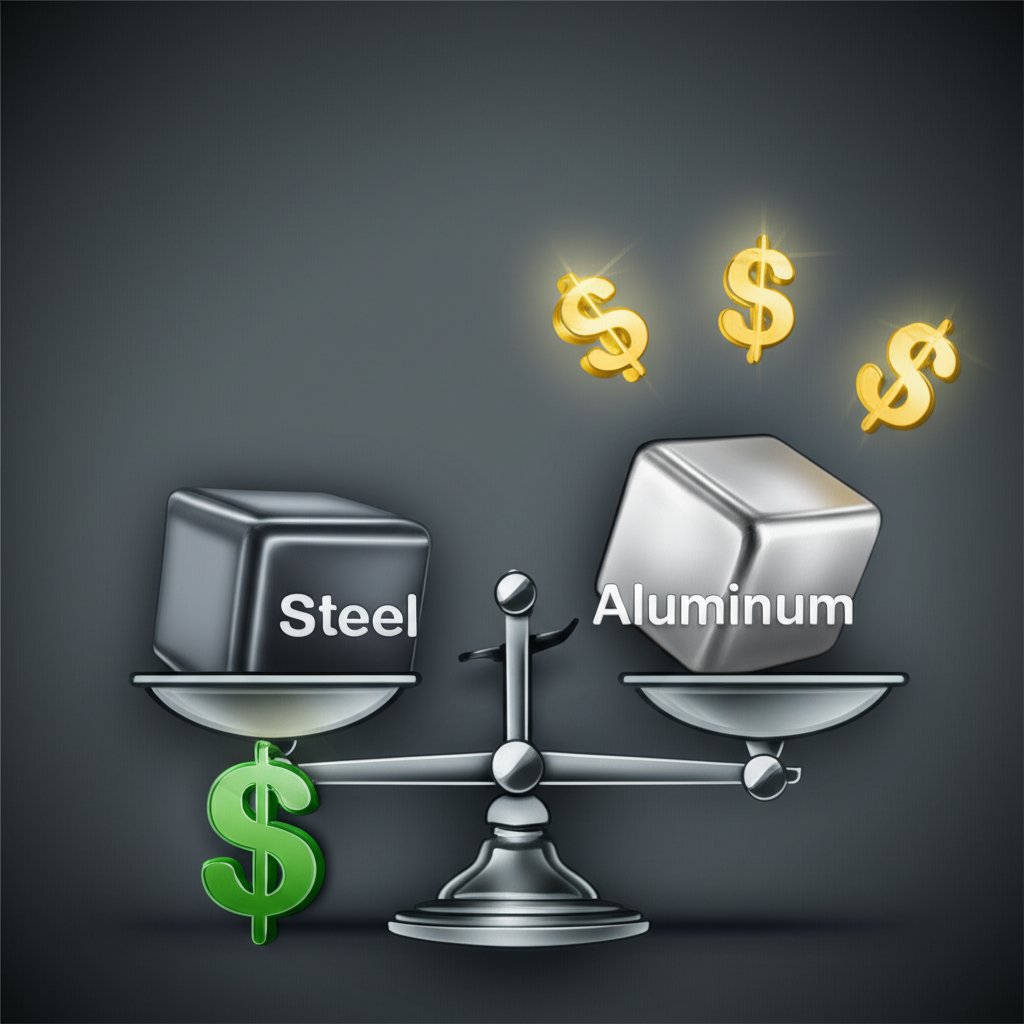
Cost and Repairability: The Economic Equation
While aluminum offers compelling performance benefits, these advantages come at a significant financial cost. From raw material to final repair, steel holds a distinct economic advantage. The raw material cost for aluminum is considerably higher than for steel. This initial price difference is compounded by manufacturing complexities. Steel is highly ductile and easily welded, making it relatively straightforward and inexpensive to stamp, form, and assemble into a car body. Aluminum, being less formable and difficult to weld reliably, often requires more complex and costly processes.
The economic disparity becomes even more apparent after a collision. Repairing steel-bodied vehicles is a well-understood process that most body shops are equipped to handle. Technicians can use conventional methods like welding to cut out and replace damaged sections or use hammers and dollies to straighten dented panels. The tools are common, and the expertise is widespread, keeping labor costs manageable.
In contrast, repairing aluminum is a specialized field. As explained by collision repair experts at Purnell Body Shop, aluminum's lower melting point and different metallurgy make welding impractical and risky in a repair setting. Instead, technicians must use specialized techniques like structural adhesive bonding and self-piercing rivets. This requires a dedicated, contamination-free work area, expensive specialized tools, and specific technician training. These factors drive up labor rates and the overall cost of repairing even minor to moderate damage on an aluminum-bodied vehicle.
Corrosion Resistance and Longevity
One of aluminum's most inherent advantages is its exceptional resistance to corrosion. When aluminum is exposed to the atmosphere, it instantly forms a thin, hard layer of aluminum oxide on its surface. This layer is passive and non-reactive, acting as a natural shield that prevents the underlying metal from rusting or corroding further. This self-protecting property means that vehicles with aluminum bodies or parts are far less susceptible to the cosmetic and structural damage caused by road salt, moisture, and environmental exposure over time.
Steel, being primarily composed of iron, is naturally prone to rust (iron oxide) when its surface is exposed to oxygen and water. To combat this, automakers apply protective coatings, such as zinc galvanization, e-coats, and multiple layers of primer and paint. These coatings are highly effective at preventing rust. However, if this protective barrier is compromised by a rock chip, scratch, or collision damage, the underlying steel can be exposed and begin to rust. While modern steel treatments have greatly improved vehicle longevity, the inherent risk of corrosion remains a long-term concern that aluminum largely avoids.
Frequently Asked Questions
1. Is steel or aluminum better for car parts?
Neither material is universally "better"; the ideal choice depends on the specific application. Steel is better for core structural components like the main chassis and safety cage, where its high strength and low cost are paramount. Aluminum is better for applications where weight reduction is a priority, such as body panels, hoods, and suspension components, to improve fuel efficiency, handling, and performance.
2. What are the disadvantages of using steel for car bodies?
The primary disadvantages of using steel for car bodies are its weight and susceptibility to corrosion. Its high density makes vehicles heavier, which can negatively impact fuel economy and handling. Additionally, if the protective coatings on steel are scratched or damaged, the metal can rust, potentially compromising the vehicle's structural integrity and appearance over time.